If you remember a 2025 album review by me, about the composer Linda Catlin Smith, titled The Plains, you also remember all the good things I said about it. Otherwise, I invite you to revisit it to better understand this Canadian who weaves an ultra-delicate sound world, but also one that is rich in construction and timbral complexity.
REVIEW OF THE ALBUM THE PLAINS
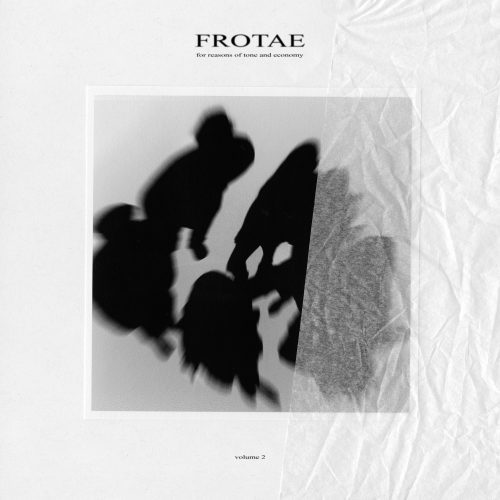
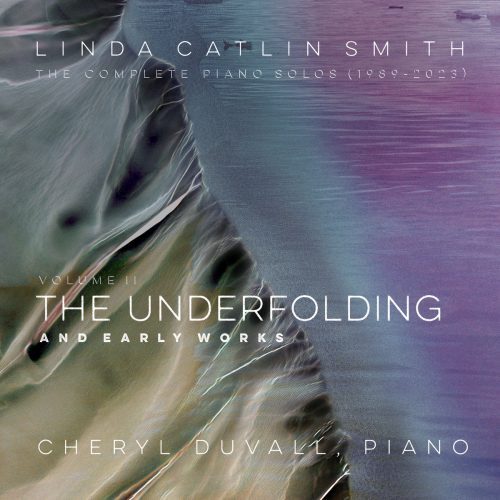
A rare thing for a living composer, a label (here Redshift Records, from Vancouver) has taken the initiative to record the complete piano music of Ms. Smith. The Plains was Volume 1, so here is Volume 2. Unlike The Plains, a single work of over an hour (a tour de force), this Volume 2 presents a series of nine pieces, written between 1983 and 2023. One thus gets a taste of the entire career of the American who became Canadian, through her very personal pianistic writing, although largely rooted in the post-Webernian stylistic school and abstract Minimalism.
Smith constructs her short pieces (most are about five minutes long, with a few exceptions, such as The Underfolding which is over 21 minutes) like meticulous Miro paintings, in terms of construction, but more austere, less flamboyant.
All this to say that Linda Catlin Smith creates very delicate and refined worlds, embroidered with ultra-graceful lines, rarely supported by full and fleshy harmonic textures. Ms. Smith’s phrases float in a murmured ether, in a microgravity rarely disturbed. From the very first measures of the first piece of the program, Poire, the tone is set, and you will find yourself in the Webern of the Four Pieces for Violin and Piano, Op. 7.
Further on, it is Cage and then Feldman who are summoned (a natural lineage). Titles like Iceberg and Zart confirm this for us. Again, Feldman in The Underfolding, which allows a sparse abstraction to flourish on a writing made of short motifs repeated but subtly metamorphosed over a long duration, in a calm and gradual development. Smith creates sound chrysalises from which some fantastic being slowly emerges.
That said, the references to Cage, Feldman, and others are merely indicative because Smith has a personal voice that allows her to stand out. I mainly notice an attachment of the Toronto-based artist to the creation of often bright atmospheres, in any case more than in her predecessors, in addition to an attention to movement. Indeed, despite the impression of dynamic stasis that envelops the entire program, Smith infuses it with a whisper of activity and liveliness. This reconciliation of movement and tranquillity is powerfully and primarily palpable in The Underfolding.
The pianist Cheryl Duvall, a passionate advocate of Smith’s music, is outright excellent, everywhere.
Another great success from our friends at Redshift Records.