Additional Information
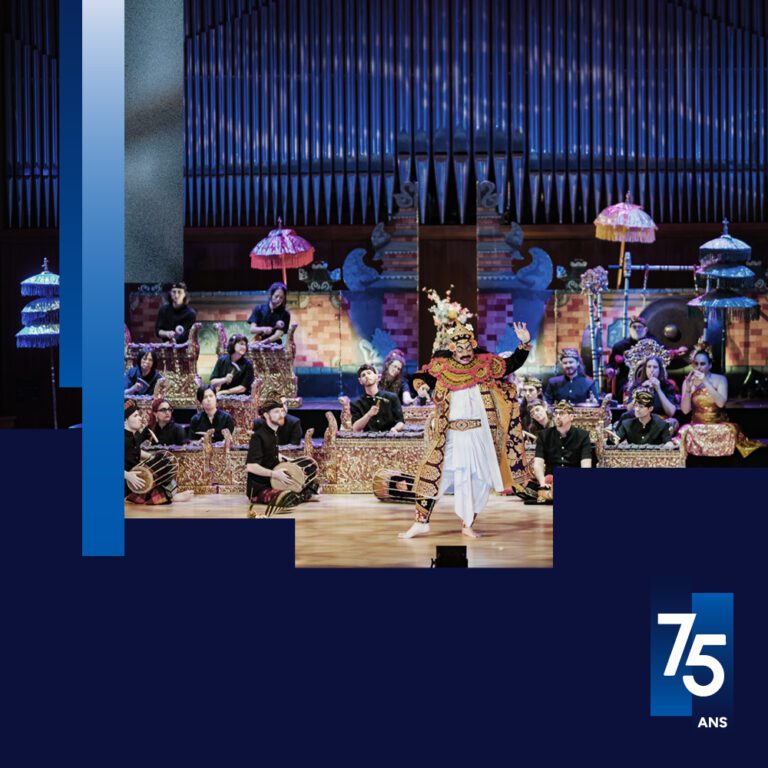
Like a temple nestled in the vertiginous heights of the Himalayas, as suggested by the Neige sur le gong program, the Gamelan studio is isolated from the city, on the top floor of the UdeM’s music faculty. The space is filled with ancient objects, passed down from generation to generation, creating a fantastical atmosphere: representations of Hindu deities, paper lamps, and gilded ornamental banners.
It’s a world unto itself, a gateway to Balinese culture, kept alive with fervor for nearly 40 years, not only by the faculty but also thanks to the selfless dedication of its members. I’ve been playing gamelan for almost a year now, but some members of the group have been there since the very beginning, in the late 1980s. That clearly shows that something magical happens there.
The biannual gamelan concerts are among the most attended at the faculty. There are several reasons for this.
Although it may seem like a fringe art form in North America, gamelan is a vibrant cultural phenomenon in Bali, continuing to produce virtuoso composers and performers. Between conservatories and a vast network of villages with distinct sounds, there’s always something to revitalize this art, and the many members of Giri Kedaton who regularly travel to Bali return with a wealth of inspiration and skill.
Before the concert on December 20th, I met with Laurent Bellemare to better understand the pieces, the people and the story behind this music.