Additional Information
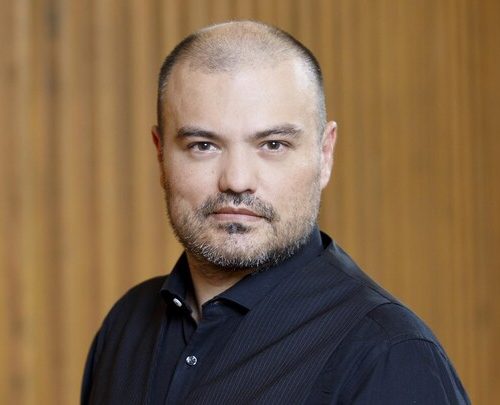
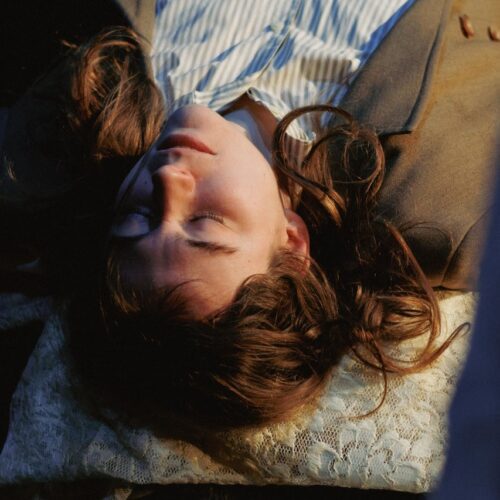
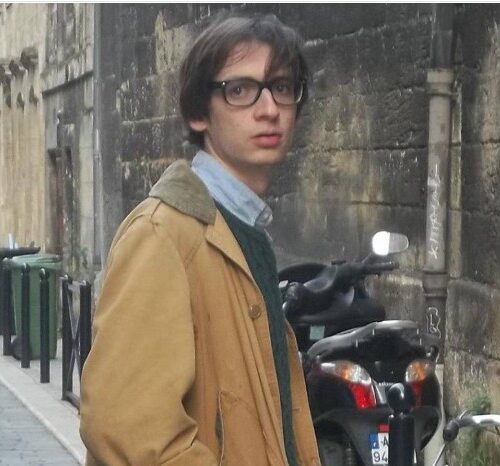
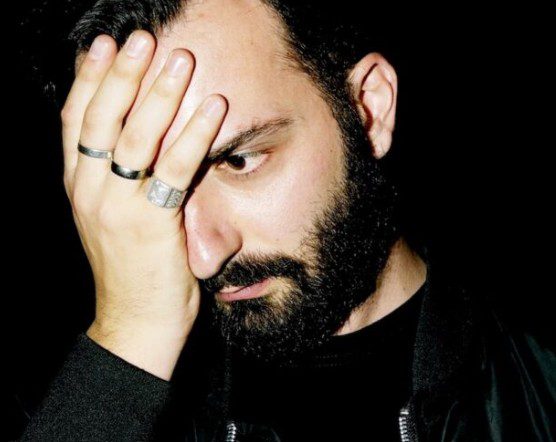
Tomas More, also known as December, explains how he found the perfect creative process: accepting that there isn’t one, but despite this fact, having fun. He expresses with conviction that for him, tinkering is vital. But this looseness isn’t reckless; rather, it’s a nuance he brings to a refined and delicate practice. His latest album, released in September, I Stumble, I Walk, attests to this fact. A free but structured music, familiar textures renewed by a powerful emotional current. I wanted to interview December to expand on this sometimes elusive idea of creativity, but I came away with a completely different perspective.
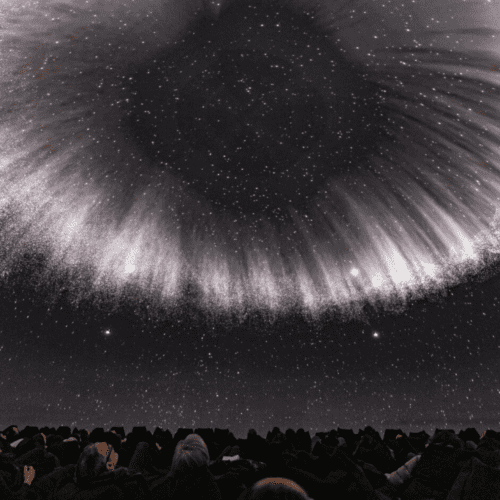
“Les Yeux Fermés” invites imagination to take the place of the image and listening to fully embrace space. This acousmatic experience will reveal the Satosphère in cinema for the ear, where two renowned artists unveil the fruit of a spatialization residency. While December will explore this new musical territory in an ambient style composed for the image, Sébastien Forrester will develop his hybrid practice, at the crossroads of percussion and electroacoustic composition. An experience not to be missed.
Until you experience that, here’s that conversation with December.
DECEMBER 23, UNDER THE SAT DOME. TICKETS AND INFO HERE
PAN M 360: In your artist statement on the album Stumble, I Walk, your vision of experimentation is to “hold on to creation as a movement.” I’d like to expand on that a bit: Was there a time in your creation where you tended to get creatively stuck? How did you learn to keep moving forward?
December: At the heart of the December project is this story of blockage. I have no academic training; I didn’t go to a conservatory, I don’t know music theory, I didn’t play an instrument when I was little. Electronic music attracted me because it allowed people who didn’t have classical training to be able to tinker; to test things with a lot of spontaneity, in a self-taught way.
Before using the name December, I had another alias, and the creation of the December project came precisely from a fairly long period of blockage during which I… It’s not that I couldn’t make music, but I couldn’t be satisfied with it, let’s say.
I wasn’t very excited or inspired by what I was producing and I wanted to change musical direction. Making music is one thing, but making music that feels personal is very different, and that’s important to me. For a good year, let’s say, I struggled with this idea.
So I was doing things, but I found that it wasn’t unique, not original enough, not different enough perhaps from what was being done today.
For a year, I really wasn’t very satisfied, I was doing things that I didn’t really like. And one day, there was the beginning of something that wasn’t at all finished, but there was a lead, you know, the beginning of something that excited me again, that I liked again.
And even the name December came from there, that is to say, I was looking for a new name, which I couldn’t find. When I made this first piece that excited me a little, it was the first day of December, and I said to myself, well, we need something simple, and that’s where it came from.
PAN M 360: It’s curious that this December appearance happened a bit suddenly, you could say. Can you tell us a bit about what happened? Any tools or just a passing thought?
December: The title of this album refers to that. I think it’s quite mysterious; why, for a while, we can’t do what we want to do, we do things we don’t like and then suddenly it happens. It’s inexplicable. And the desire to change the name was more linked to a kind of boredom.
Sometimes, in fact, when we are performing, especially in interviews, we use promotional or journalistic formulas, we are all a little tempted to sell an ideal version of what the creative process is, when in fact, there are plenty of moments where we are disappointed, where we don’t succeed, where we are blocked, where we are bored. And for me it is important that this is not made invisible.
PAN M 360: It may seem like a silly question, but why is it important for you, in your music, to experiment, to renew yourself?
December: So, I think there are several things to answer. First of all, I want to say that experimentation or experimental are words that annoy me a little sometimes, because it can have a bit of an arrogant side when you say about yourself that you make experimental music. Experimentation? I would say yes and no. I do try to avoid formulas and comfort zones. At the same time, I don’t want to make people believe that I’m constantly experimenting.
I think it’s a bit of a cross between the two. It’s about being yourself, being consistent, and making sure there’s a line. It’s important to me in records that things aren’t constantly revolutionary, that they have both a guiding principle and a renewal. So, it’s neither experimentation nor formula, as you say.
It’s a bit of something that’s quite intangible, quite mysterious between the two. How do you avoid reinventing yourself to the point of no longer being recognizable? It happens between redundancy and renewal. It’s a balance. Inevitably, our creations reflect our innermost functioning. I think I have a relationship with music. I say it often and I really mean it, that I wouldn’t like music to become something too serious for me. That is to say, I wouldn’t like to over-intellectualize it. For it to become something too conceptual, too cerebral, too stuffy.
I want it to be a space where I’m a little free because life outside of that is already difficult enough, full of rules, codes, and other things that limit you. Earning a living, managing to survive, living in a world that’s becoming more and more reactionary, even fascist. Having little places where you can feel free to tinker isn’t that common, I think. And it’s very important. I think it’s almost vital, in fact. It rebalances other areas of life where we can do it less, and it keeps us going. I feel like it keeps me going.
PAN M 360: How do you feel about a residency at the S.A.T.? How do you see yourself tinkering in this space?
December: I’ve never been there, it’s the first time I’ll be going to Montreal and Canada. From the outside, it seems like the quintessence of something extremely precious, a very sophisticated, very complex technological screen, which doesn’t seem at all conducive to tinkering. My little pleasure is because I only know how to make music like that.
I wouldn’t be able to invent myself and suddenly become a technician. I’m going to tinker with something that will be, in my opinion, much less sophisticated, much less technical or purely mastered than what many other people, musicians, who perhaps come with the baggage of having done this many times, do. For me, it will be the first time that I’ve done a piece for an acousmonium, at least for spatialization. I’m going to do it in my own slightly tinkered way.
PAN M 360: Earlier, you were telling me that for the SAT project, you have new musical ideas that you wanted to propose, a bit like the beginning of a project moving away from what we hear in your music, which can be more “club”. Can you tell us a bit about this new approach?
December: Since I was a kid, my dream has been to make film music, soundtracks. And despite having this job for about fifteen years in the cinema, I never wanted to force this practice. I always wanted to wait for the right moment, especially because I’m annoying, I have rather annoying tastes in cinema, quite specific. And I wanted to wait for people whose films I really like to eventually suggest a moment to do this kind of exercise. And it turns out that for the past year or two, some friends around me have been making films and have asked me to write the music for their films.
And so, this piece that I’m going to play at the SAT is part of a kind of evolution over the last year and a half, two years, where I’ve been working on music for images. Maybe next year I’ll have a new alias that will really be dedicated only to more ambient things, without rhythm. There, it will be something where there will be very little rhythm or none at all, much more ethereal, much more minimalist and which has, let’s say, the particularity of stepping back a little and leaving space for the image. And what interested me in the approach of the SAT concert, which Guillaume Sorge invited me to play, is that there, it’s an evening where there will be no image. We will be in this magnificent room, a dome with screens everywhere, but which will be turned off.
I think that often, when we listen to music, we imagine shapes, images, even when we don’t have any images in front of us. When we listen to records that we like, that was a bit of an exercise that I wanted to try.
PAN M 360: It reminds me of cinema for the ear. Music composed visually, without images. You now work in the film industry, composing soundtracks. How would you describe the relationship between sound and image?
December: I find that we underestimate sound, in a society of omnipresent images, we underestimate the power of sound. And what you describe, I didn’t know, but it interests me, to imagine that almost the best way to evoke cinema is not to show images, it’s to just listen to music that would make you think of cinema, or of scenes, or of images.
For me, there’s nothing purer. And in the history of cinema, there are multiple examples of films that, for example, don’t have music, but are nevertheless very musical in their own way. Or film scenes where there are no images, only sound. And yet, they are extremely powerful from a formal point of view. And the relationship between image and sound, I find that it’s always like that. One is always linked to the other, even when it’s not present. Especially when things are minimalist.
I find that minimalism is very powerful for that. So, for example, I’m going to play this music that I’m going to call ambient because I don’t have any other words and language is annoying because we don’t always have the precise words, but we have to use it. So I want to say ambient to be quick, but it will be mixed with field recordings that I recorded in different places, notably during a residency at the same time last year.
Exactly a year ago, I was lucky enough to receive a grant from the French Institute to go to Hong Kong for six weeks to record a sound project. And I recorded sounds in different neighborhoods, including a completely crazy neighborhood that was destroyed in the 90s. When the British colonial administration handed Hong Kong back to the Chinese regime, they destroyed a neighborhood that was crazy, that was very, very unsanitary, but that was quite fascinating, in West Kowloon, the Kowloon citadel.
And I recorded in this place where now there’s a park and everything, a lot of sounds, and I’m going to play some of it at the SAT. So there will be a mix of field recordings: street noises, kids, people playing basketball, and very ethereal ambient music. And I think the field recordings are really powerful too. You really feel like you can feel things more sometimes when you just have the sound of a street. Focusing only on the sound is sometimes more powerful as a truth.
PAN M 360: Yes, there is a beautiful tradition of concrete music with recordings, Luc Ferrari is a good example.
December: A fairly modest example, yes.
PAN M 360: What would you say are some cinematic references, in terms of sound and image, that have had a big impact on you?
December: In terms of imagery, it’s Memoria by Apichatpong Weerasethakul, which is really a film about someone who hears a sound. It’s almost a film without music, you see, it’s a film that has the courage, the intelligence to think of sound as something other than this often hackneyed idea that music is orchestral compositions, stuff that’s always hyper-melodic, hyper-demonstrative.
There, it’s someone who hears a sound and doesn’t know where it’s coming from, who goes looking for it. What is this almost visceral relationship with sound? It’s a crazy film for that. There’s a scene for me that is really incredible at the end, when Tilda Swinton meets this man who scales fish along a river and who talks to her about things a bit like often in Apichatonga’s films, about ghosts, past lives, previous lives, things that are a bit crazy, a bit psychedelic.
She follows him into a house, they sit down at the table and they have a rather long discussion where he tells her about past scenes that he is supposed to have experienced in previous lives. And at one point, he describes a scene that we don’t see and the sound of their discussion, the sound of the scene we are watching disappears. And it is the sound of these stories that just appears like that.
Honestly, it’s something technically super simple. It’s been around since the Lumière Brothers, since the invention of cinema. It’s almost a basic trifecta in the history of the invention of cinema, but it’s incredibly powerful. When I saw it, I said to myself, damn, but in fact, all the 3D, CGI, 4DX in the world will never have this power of simple things when they’re done, of seeing a scene and having the sound of something else. And for a few seconds, you say to yourself, what the hell is this? It’s something physically super powerful. Really, really, it’s very powerful.
The scene in the studio too, where she’s trying to get a producer to find the sound she’s hearing, and he’s playing her samples of kicks, percussion and everything, it’s great.
PAN M 360: I imagine you can relate to that feeling.
December: It’s a pretty common feeling to hear something and not know what it is. You think, but wait, what was that noise? Especially a sound, though, that doesn’t exist. There are a lot of concepts in this film that are fascinating.
PAN M 360: Thomas, thank you very much for this discussion. Very interesting!
December: Thanks, Loïc. It was great.