Additional Information
In his last orchestral configurations that marked the history of jazz, the ensemble of the famous pianist Oscar Peterson consisted of the late prodigious Danish double bassist Niels-Henning Ørsted Pedersen (NHOP), the late English drummer Martin Drew, and Swedish guitarist Ulf Wakenius, who is part of the Oscar Peterson Centennial Quartet. The main purpose of this ensemble, needless to say, is to commemorate the centenary of the Montreal-based super-virtuoso, who passed away on December 23, 2007.
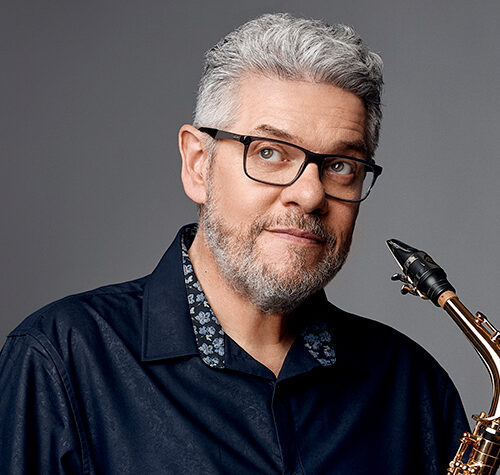
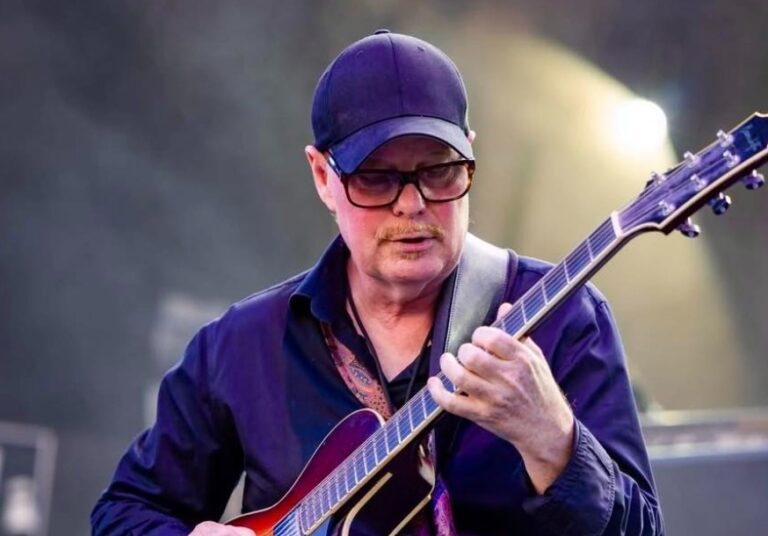
As he did last summer at the Maison symphonique de Montréal during the Montreal International Jazz Festival, guitarist Ulf Wakenius will perform on Friday, October 24 at the Palais Montcalm. This outstanding guitarist will be performing alongside the superb Canadian pianist (of Hungarian and Gypsy origin) Robi Botos, Manitoba double bassist Mike Downes, and Montreal drummer Jim Doxas, who is also the 2025 recipient of the Oscar Peterson Award presented by the FIJM and handed over personally by our own Oliver Jones.
The biographical profile of Sweden’s Ulf Wakenius reminds us that he is one of Scandinavia’s most renowned jazz guitarists. His reputation dates back to the 1980s with the band Guitars Unlimited. Then came his association with the late Niels-Henning Ørsted Pedersen, Oscar Peterson’s fabulous sideman, with whom he recorded Those Who Were (1996) and This Is All I Ask (1998). Wakenius led the group Venture (1992), which attracted drummer Jack DeJohnette, saxophonists Bill Evans (not the other one) and Bob Berg, trumpeter Randy Brecker, pianist Niels Lan Doky, and bassists Chris Minh Doky and Lars Danielsson. With pianist Haakon Graf, he formed the group Graffiti, which welcomed leading American musicians. His discography is extensive, with more than fifteen albums as a leader (including several opuses on the Act label) and even more as a sideman.
In addition to Oscar Peterson’s famous quartet, the guitarist was also part of the Trail of Dreams adventure with the duo OP and Michel Legrand (2000).
Ahead of the concert in Quebec City on Friday, October 24 at Palais Montcalm, PAN M 360 spoke for a good half hour with Ulf Wakenius, who we reached at his home in Sweden.
PAN M 360: We are delighted to speak with you at your home. Where do you live in Sweden?
Ulf Wakenius : In Gothenburg.
PAN M 360: You came to play in Canada for several months, before and after OP’s death. Now you are the only living member involved in this Oscar Peterson Centennial ensemble. So you are its most prominent member!
Ulf Wakenius: I would start by saying this: joining Oscar Peterson’s band was a dream come true for me as a guitarist. It was a tremendous honor! For more than 10 years, I found myself following in the footsteps of my guitar idols who had played with OP in the past, such as Joe Pass, Barney Kessel, and Herb Ellis. I was able to experience the generosity and greatness of spirit that our Oscar showed us. So when I have the chance to honor him by playing his music, I do so with great pleasure, anywhere in the world. Many musicians from Canada, the United States, and Europe have had the honor of playing with him.
PAN M 360: Some musicians have told me that OP wasn’t always the coolest with some of his sidemen. What about you?
Ulf Wakenius: Maybe, but… in my day, he was happy, welcoming, and calm with his colleagues. My experience with him was always super encouraging and fostered loyalty. When you were accepted into that group, it was because you could play, and so you had his respect. And I have to repeat that Niels Henning and I loved him. It was the experience of a lifetime to play with such a legend.
PAN M 360: Yes, a worthy successor to his main influences: Teddy Wilson, Nat King Cole (an excellent pianist before becoming a crooner), and first and foremost Art Tatum. Nearly two decades after OP’s death, how does it feel to be involved in a tribute band alongside Canadian musicians who are younger than you?
Ulf Wakenius: Honestly, I can only play tribute concerts for Oscar with musicians like these, who are exceptionally good.
My Canadian friends are fantastic! It’s a pure pleasure to play Oscar’s music with them.
PAN M 360: Canadian and Scandinavian jazz musicians certainly have northern affinities!
Ulf Wakenius: Yes! I always feel a bit at home when I’m in Canada. Of course, the nature is very similar. The forests, the cold, the snow… And we’ve exported a few hockey players to your country!
PAN M 360: That’s right! We have some very good ones. From Sweden, Finland, Denmark.
Ulf Wakenius: I’m Swedish, I love hockey!
PAN M 360: How do you see your own evolution through these fantastic experiences as a guitar player? What have you learned or what things have you changed by playing with OP?
Ulf Wakenius: I was always impressed by his stage presence, beyond his virtuosity. One of the best men I’ve ever met in my life. He really gave his all for the audience, night after night. So I learned that you always give 100%. If OP could do it, so could we. It was very inspiring! Every night, he played beautifully. It was simply wonderful!
PAN M 360: And how did things go after his stroke, which affected his left hand?
Ulf Wakenius: He had to relearn how to move his left hand. And it was also very brave of him to explore and discover new sides of himself. Oscar became more tender and lyrical. This led him to write pieces like When Summer Comes, one of his most beautiful compositions, which we always play in our tribute concerts. I remember we performed at the Hollywood Bowl in Los Angeles, and when Oscar played, every note retraced the history of half a century of jazz piano. His touch was sublime! Even after his serious illness, his left hand could still do so much.
PAN M 360: I imagine that after his stroke, the bonds between you and him grew stronger, and you musicians became a closer family.
Ulf Wakenius: Yes. Once you were accepted, you were part of the family. And he was exceptionally generous, you know. We would gather at his home in Mississauga; while his wife cooked for us, he would tell us extraordinary stories. Extremely generous!
PAN M 360: His daughter Céline accompanies you in several concerts to pay tribute to her father. She was also there last summer at the Montreal concert.
Ulf Wakenius: That’s right. I’ve traveled all over the world with Céline. It’s like family to me, you know.
PAN M 360: And in this family, the pianist must be extremely talented because he has to evoke OP without imitating him. So you have with you a Hungarian and Gypsy pianist who was listened to by Oscar and who learned from him: Robi Botos.
Ulf Wakenius: So it’s crucial to have a fantastic player to pay tribute to Oscar Peterson. And Robie is fantastic; he was spotted by Oscar for that very reason. He has Oscar’s swing, but at the same time he’s curious and can do other things on the piano.
PAN M 360: What is the relationship with the members of the Oscar Peterson Centennial Quartet?
Ulf Wakenius: They are exceptionally good. Mike Downes is more than just a very good bass player; he arranged the song Trail of Dreams, which we played in Japan. And Jim Doxas is more than just a rhythm section player; he does a lot of things on the drums, he’s great.
PAN M 360: Yes, and Jim played for many years with Oliver Jones, who was an emulator of Oscar Peterson, raised in the same neighborhood and musically educated by Daisy Peterson-Sweeney.
Ulf Wakenius: Yes, Oliver Jones was a wonderful player.
PAN M 360: How do you manage the two harmonic instruments in this kind of ensemble? Oscar has played a lot with guitarists since his early days. But at the same time, it’s not always easy to have a guitar and a piano in a quartet and maintain a real-time dialogue between these two instruments.
Ulf Wakenius: That’s true. You know, I get asked that question a lot. And I always give the same answer: It’s very easy, use your ears, play when you need to play, and also stop at the right moment. It’s just a matter of listening.
PAN M 360: How much creative freedom did OP give you?
Ulf Wakenius: Oscar was extremely generous. He let me play a lot of solos, I had a lot of space to express myself. I pinch myself when I think back on it. It was fantastic.
PAN M 360: Did you change last summer’s program for the Quebec City concert?
Ulf Wakenius: There will be some new songs, others will be the same, I don’t want to reveal the set list! Let’s just say that there are two songs that always have to be played: Hymn to Freedom and When Summer Comes. They’re so beautiful! I also love Cakewalk…. And then we play different songs from different eras.
PAN M 360: One thing is certain: we are very happy to have you back with us in Quebec!
Ulf Wakenius: Yes, I can’t wait, it’s going to be great!
PAN M 360: Can you tell us about your other upcoming activities?
Ulf Wakenius: In short, I play my music all over the world, with different groups. And I will be participating in another tribute in Vienna, with a European ensemble featuring strings and, of course, piano. Whenever I am given the opportunity to pay tribute to Oscar, I do so. So I am a happy man!