Additional Information
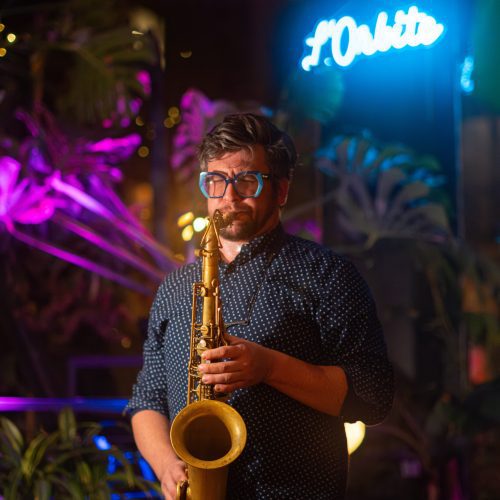
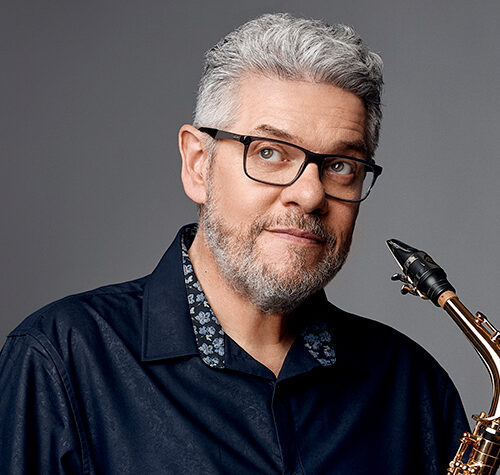
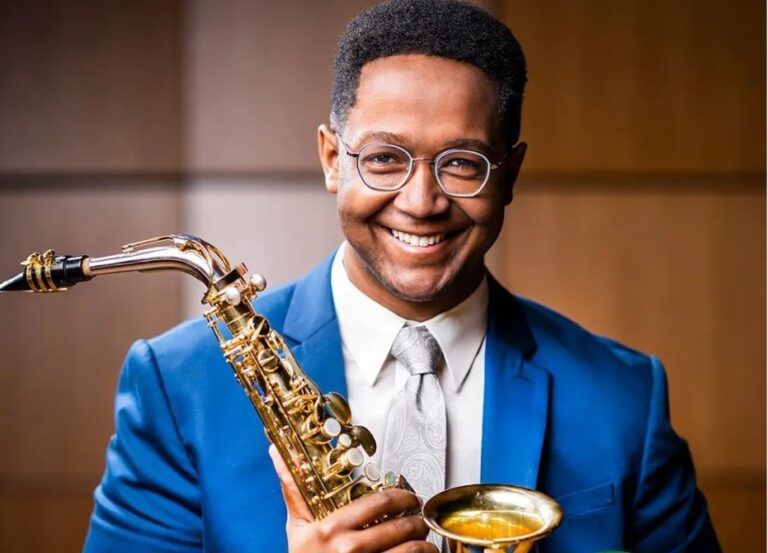
The American saxophonist Steven Banks will be in Montreal this week to take part in two concerts with the Orchestre symphonique de Montréal. Starting on Wednesday and Thursday at the Maison Symphonique, where he will present the saxophone concerto by Grammy-winning composer Billy Childs Diaspora before a more intimate concert at the Bourgie Hall on Friday evening, where he will join a string quartet to perform pieces from Mozart but also his own composition Cries, Sighs and Dreams. Banks sat down with us to discuss everything from the pieces he will be performing this week to the importance of making classical music available to everyone.
PAN M 360: Thank you for taking the time to talk with me today. Next week, you’ll be in Montréal for two concerts. One of them will be with the Orchestre Symphonique, where you will perform Diaspora, a piece that Billy Childs wrote for you. What can you tell me about this piece?
Steven Banks: So, basically, it’s Billy Child telling the story of the African American diaspora, and to do so he uses three poems as what he calls guideposts in this piece, written by African American poets Niyura Waheed, Claude McKay, and Maya Angelou. The music goes through all sorts of character shifts and uses both soprano and alto saxophones.
There are battles in the piece, and there are moments that are beautiful cadenzas that I think are sort of maybe aside from the story in the way, that they are sort of like reflections on what’s happening, what’s been happening.
It’s essentially a story of resilience, and he uses anchors like the Black church in America to talk about how, despite all these things that happened, we were able to be resilient and look forward to a brighter future.
PAN M 360: So you’ve played this piece for now, like what, I think it’s your third year starting right now, playing this piece. What attracts you to this piece, and has your performance of it evolved over the years in any way?
Steven Banks: Yeah, definitely. I mean, I’m biased, but I think it’s the best saxophone concerto that there is, partially because it allows the saxophone to do so many things that it’s good at. You’re playing the soprano and alto saxophones, there’s lyrical playing, there’s intense playing, there’s, you know, there’s even a multiphonic in there at one point, and I just think he uses the instrument very well, and audiences really take to the piece.
In terms of what and how it’s changed over the years, I think, honestly, it changes every time I play it, is really what I’ve noticed, because I’ve played it with several conductors now, and each conductor has their own interpretation, each orchestra is completely different, each hall is different. I think that has been a good exercise for me in terms of flexibility and needing to be able to adapt to whatever the circumstances are with the piece and allow it to be organic in any situation.
PAN M 360: What would you say, would you like the audience to remember after hearing this piece? What goal as a soloist are you trying to achieve by touring with this piece across North America ?
Steven Banks: Yeah, there, well, I think I really want people to be aware of the story of the piece. I want them to look up the poets and learn more about their poetry. I want them to look up Billy Childs and learn about the vast repertoire of classical music that he’s written. I want them to hear the saxophone playing in a classical context. I also want them to see this piece as the future of classical music, because I think it has a way of defying genre boundaries. I mean, it is a classical piece that uses the orchestra, but it’s also not jazzy, but it has elements of jazz that allow the storytelling to move forward. I think that is something that might stay with people, and I also just hope that on a base level that they feel emotionally moved, and that it sticks with them for that reason as well.
PAN M 360: You started the Come As You Are initiative, which tries to bring classical music to underrepresented communities. Why was it important for you in your musical practice to include this kind of advocacy?
Steven Banks: Yeah, well, I think that’s been the central aspect of my career, and once I was able to have a platform with different orchestras and composers, it was like, how can I bring them into that? Because I think there are so many people, I think there’s so much potential with music that hasn’t been realized, because everyone doesn’t feel like it’s for them. And so whenever I go anywhere to play this piece or other pieces, I want people to feel as if they belong there and welcome there.
So really, the Come As You Are initiative is, it has a couple of different goals. One is to do these community concerts before a main concert, and the point of the community concert is almost like a lecture recital in which I walk through the piece and I’m playing and walking through the story as we go, reading the poems and all that kind of stuff. And I think it really helps people when they come to the concert feel like they actually know what’s going on and that they can be in on what’s happening.
PAN M 360: How has the industry changed in recent years to make those people feel welcome? And what do you think we need to do more to make sure that, like you said, those barriers slowly go away and more people can enjoy the music that we play in the halls?
Steven Banks: Yeah, I think there’s been a lot more music that’s been performed by all types of people, basically women and people from a lot of different backgrounds and that’s really great. For me, I think that the next step is just continuing to connect the music beyond the concert hall, but getting people to actually come to concerts is my thing. I believe that it is advantageous to perform in a school or community centre, but it is also crucial to bring the audience to the venue. A significant aspect of our work is the incredible sound of a concert hall and the ability to witness the orchestra in action.
PAN M 360: You will also be doing a second concert in Montréal, at the Bourgie Hall. The concert will be centred around strings and saxophone and include one of your own compositions. So how did composing come into your life as a performer?
Steven Banks: So I started writing in 2016 or 2017 during my master’s degree, and I was just going through a transitional time and trying to figure out where I am going next in life, and one of my friends was hearing me talk about it all the time, and he was like, you really should just write music about this. And I was like, I mean, I’m not a composer; I don’t even know where to start. And he was like, just do it.
And so I did. And I started by literally just going to a practice room and sitting down at a piano and turning on a voice recorder and improvised for a while. And then I listened back to it and started finding things that felt resonant to me or I felt could evolve into something. And so I just started writing it down by hand and that organically sort of turned into my first piece. I mean, it took me a really long time to write a very short piece, and now it’s really sort of integral to what I do.
PAN M 360: And how would you say that composition itself has changed you as a performer? How did it change your scope on creating new music and just performing in general?
Steven Banks: I think it makes me a better performer because I understand how I fit into the process of making music a little bit more. When you play and think like a composer, I believe you will perform better than if you think like a saxophonist. A lot of the things we think about as saxophonists are not relevant to how the audience perceives the music. And so I think it helped me release a lot of the things that I thought I should do or shouldn’t do and just really focus on the composer’s intentions.
And especially on a fundamental level, as a saxophonist, a lot of times we think about our parts as opposed to the score that has been written. And that’s the first thing that really changed. I almost never play the saxophone part anymore because the composer writes the whole piece. Even in a concerto, you’re just a part. It’s not like, oh, the saxophone is the thing and then everyone’s background. It’s all one thing. I think that really started to sink in when I started writing.
PAN M 360: You also initiated the (Our Time) commissioning project, which aims to promote the creation of new work for saxophone and establish it as an essential element of the 21st century musical landscape. What do you search for when commissioning pieces?
Streven Banks: One thing I would like to mention about the music I’m creating is that I really want to provide composers with opportunities to express themselves in their own way. I know that a lot of people, when they commission, they ask for specific things, as I really want this to be flashy, or I want this to be lyrical. And when I think about the great works of the past, Brahms Violin Concerto and Rachmaninoff or any important pieces, a lot of times those pieces weren’t commissioned really at all. The composer had something that they wanted to write, they wrote it and because it was genuine and unencumbered, they were able to create this great thing.
I really want us as saxophonists to have that music so that we don’t have to always do transcriptions and stuff like that, because I think we have a unique offering to music that other instruments just actually don’t have.
PAN M 360: So the second concert is called Strings and Saxophone. In this concert, you will be playing a quintet with an oboe, of course, with the soprano saxophone from Mozart. And you will also play your piece that is a string quartet with a saxophone. What captures your attention about mixing string instruments and the saxophone?
Steven Banks: I just love the sound. Like, I think that the string instruments have a lot of upper overtones in their sound, and that often allows the audience to perceive the saxophone as having a darker sort of richer and lusher sound, which I am attracted to.
I think that the saxophone, you know, generally speaking, doesn’t have enough repertoire in that vein. And so I’ve now written three quintets with a saxophone and a string quartet and I just love the possibilities that are there.
PAN M 360: Can you tell me a bit more about this piece of yours? Which is because the concert is like, very classical in some ways, you know, you have Mozart, you have Joseph Bologne, and then you have this more contemporary piece. So can you tell me a bit about this piece?
Steven Banks: Yeah so this piece, in many ways, I wanted to write something that would contrast with, you know, Mozart and more traditional programming. That was a thought that I was having. It’s not the reason I wrote it, but it is a thought. But specifically, the title comes from a quote from Hector Berlioz, where he says that the saxophone cries sighs and dreams, and it possesses a crescendo and can gradually diminish until the sound is an echo of an echo. And I love the idea of reaching the outer limits of something.
And I wrote this piece during the pandemic, when I felt like we were sort of reaching the outer limits of our psychological abilities and I feel like the piece is really like a journey to acceptance. And realizing that when you get to a point of acceptance, that you don’t go back to how you were at the beginning, but that you’re changed inherently in some way, and there are still some remnants of the things that have transpired over time.
I sort of have two streams of composition, I feel like I have some pieces that I write that are. They use a lot of extended techniques and are really out there and sort of crazy. And then I have some that are very, very classical sounding pieces that use cadences and all that kind of stuff. So this is kind of crazy. There are these harmonic glissandos happening in the strings that are supposed to create a feeling of confusion or something like the mind when it’s busy. Like, there’s a lot there and you can’t really focus on anything. But there’s, you hear all these things happening.
PAN M 360: So what would you like the audience to remember after the concert? Seeing all those ways of using the saxophone not only in a classical way, but more in a contemporary way.
Steven Banks: I guess I struggle with that because I want everyone to remember whatever they remember. I just want them to enjoy the music and some people come to music to get maybe a sense of relief and enjoyment and they will be drawn to Mozart because it’s beautiful and playful. But I also, I remember once when I performed Cries, Sighs, and Dreams, someone came up after me, came up to me afterwards and was crying and was like, I just needed to hear that, but I would also imagine that there are people who will be like, oh, that piece was kind of crazy and weird. So I want people to get whatever they get out of it and I hope they enjoy something.
PAN M 360: Well, thank you for your time. I cannot wait to see those concerts next week. And yeah, well, thank you so much for taking the time to speak with me today.
Steven Banks: Yeah, thank you. And I hope to get to meet you in person !
Artists
Rafael Payare, conductor
Steven Banks, saxophone
Nikola Hillebrand, soprano
Program
Jimmy López, Perú Negro (17 min)
Billy Childs, Diaspora, Concerto for Saxophone and Orchestra (23 min)
Intermission (20 min)
Gustav Mahler, Symphony No. 4 (54 min)
à