Additional Information
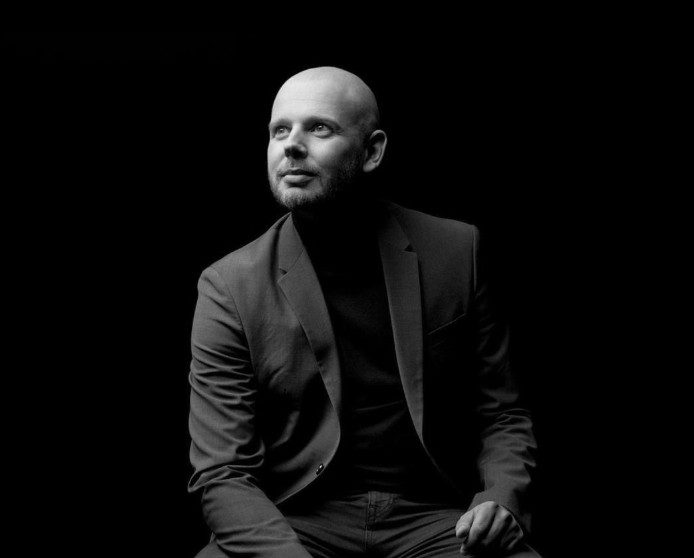
In Europe, there is growing interest in the work of Lucas van Woerkum, a Dutch filmmaker who devotes himself exclusively to symphonic music and great classical works. At a time when audiovisual experiences are multiplying with symphony orchestras and filling concert halls, the filmmaker suggests an alternative to simply accompanying a blockbuster or a video game, namely, a fully-fledged audiovisual work.
This is why the OSM chose to include this musical film linked to Rachmaninov’s symphonic poem, The Isle of the Dead, which premiered in Moscow in 1909. Since Halloween coincides with the Day of the Dead period, the title of the work became the title of the program presented at the Maison symphonique this Thursday, October 30, by the OSM under the direction of Dina Gilbert. And this is why PAN M 360 chose to interview Lucas van Woerkum.
PAN M 360: Why did you choose this niche? The link between cinema and symphony orchestras is thriving these days, not to mention video games. However, live symphonic accompaniment is generally associated with extremely popular film productions. But more in-depth cinematic creation—that is, the production of original films inspired by great musical scores—is much rarer. Why and how did you choose this path?
Lucas van Woerkum: Actually, it all started with classical music, since I trained as a horn player. I’ve played the horn since I was seven. When I was studying at the conservatory, I noticed a problem with audiences who didn’t know much about the history of the works. Of course, classically trained musicians know a lot about music history, just like visual art enthusiasts who frequent museums and know the great painters. However, I observed that the audiences I was playing for weren’t very well-versed in classical music. So I thought about trying to solve this problem through narrative. Even before studying film, I thought about how to transform a script through the lens of a musical masterpiece.
It took me a while, of course, to start making symphonic films, and it began with five short films about The Isle of the Dead in 2011. From then on, I wanted to show the general public the masterpieces of classical music through film. I made a conscious decision to choose pieces interesting enough to become a film, but without ever altering the score during editing.
PAN M 360: So you mean that some pieces, some symphonic works, may not work with a film.
Lucas van Woerkum: Yes. For me, for example, there’s no reason to make a film with a Beethoven symphony, because there are pieces like The Firebird (Stravinsky) or Daphnis and Chloe (Ravel) that were composed for ballet. So, there’s already a different art form linked to this music-dance approach. And it’s the same for The Isle of the Dead, where Rachmaninov was inspired by a painting by Böcklin with the same title. So, as a director, I saw a kind of natural connection. Because Rachmaninov was inspired by painting.
PAN M 360: In this particular case, the link between the composer and the visual art was obvious, but that’s not always the case if you’ve worked on other works, is it?
Lucas van Woerkum: Yes, that’s true. Actually, my film about Mahler isn’t based on a story as such. In fact, it’s a bit different from the rest. Because I included a biographical element from Mahler’s life, which forms the basis of the script. With Gustav Holst’s The Planets, my new film, there isn’t really a story either. Gustav Holst didn’t write the music to express a story. So, I tend to make decisions with the music that are perhaps less programmatic, but nonetheless very evocative.
PAN M 360: It will be a good response (from another Lucas) to Star Wars, and the music by John Williams – whose theme is very much inspired by Holst, not to mention…
Lucas van Woerkum: Of course, yes. There’s a good story behind it. That’s why I’m so happy that the London Symphony Orchestra will be premiering my film.
PAN M 360: So you’ve become a specialist in this approach. Will you still be associated with it, or are you still open to other forms of cinema?
Lucas van Woerkum: Of course, I specialize in silent film. But as a filmmaker, I think it’s good to also use sound design and dialogue. In Corona Times, for example, I wrote a four-part series with a friend about Johannes Brahms. So, I’m thinking about presenting stories about classical music through different formats.
PAN M 360: What are your thoughts on the musical independence of the works you adapt for film? These scores are fantastic, why should we add images to them? We live in an era where audiovisual media is perhaps much more powerful for audiences than music. What are your thoughts on this?
Lucas van Woerkum: I don’t think that’s the case. I think that, in fact, we also need to be aware of the narrative power of music. Music is also a very powerful medium when you have 100 performers on stage. By combining it with a film, you also structure the music; you can highlight certain key moments. So I think that combining these two art forms brings something new. I don’t think that by adding a film to a great work, the music should remain isolated. Some works lend themselves to this fusion; Daphnis and Chloe is a good example, requiring a “visual composition” to complement the musical work. It can even create new spaces for one art form to be linked to another.
In the case of Daphnis Glow, you could say it’s ballet music, so you need that visual composition. You also see in the composition that composers sometimes make space for other art forms. That’s why Beethoven’s symphony is too absolute, too dense, too orchestrated to be adapted into a film.
With Mahler, it’s also difficult because his music is very dense and layered. It’s actually the longest film I’ve made so far—70 minutes. I think a third of it is related to nature and abstract imagery. If you made a Harry Potter film with Mahler’s music, it wouldn’t work; the music would be overwhelmed by the film’s story.
So I truly believe that as a film director, I have to work with music as if the image were a counterpoint. For example, if there’s only a string solo, I can perhaps say a little more with the film, but if there’s a powerful climax in the music, I have to take a step back.
PAN M 360: It is interesting that your work is becoming a new art form in itself, which uses musical forms prior to those of our time.
Lucas van Woerkum: It’s the opposite of a symphonic concert serving a popular film. For me, the music is the starting point, not the support. Also, for the actors, there’s no dialogue; there’s only the emotion of the music expressing itself within them. It’s interesting to discuss with them what needs to be added to their performance to complement or contrast it. In a production I did with Emma Thompson, it was really interesting to see her process, that is, to experience something completely new. She even felt liberated by not having to say any words in that context. We never played the music on set because she wanted to gauge the emotional atmosphere before merging with the music.
PAN M 360: What motivated you to choose The Isle of Dead?
Lucas van Woerkum: First, of course, because the music is incredible and very evocative, and because of the theme of painting. More importantly, I was very interested in the themes of death and the afterlife. Isle of the Dead is actually part of this trilogy, which also includes Echoes of a Life (about Mahler) and Holst’s The Planets. I can’t make a film if I’m not interested in the theme.
You could say I was inspired by the music, but before that, I wanted to make a film about the afterlife and express my ideas about what it might be like. So, Isle of the Dead is much more abstract than the films that came later. It’s also a much smaller-budget film. It was also one of my first steps in experimenting with how live editing works (as opposed to a separate post-production phase). It’s already been 14 years since I made that film. That said, I still love the film and I’m still in love with the music I chose. And I’m still in love with the music itself, a piece that can still be performed today.
PAN M 360: Its quality is undeniable, as it has been performed continuously since the dawn of the 20th century. Perhaps your film will accompany this piece for centuries to come!
Lucas van Woerkum: Yes! So far at least, 15 years after its conception, the film is being shown abroad, on the other side of the Atlantic.
PAN M 360: And what are your expectations for the Montreal Symphony Orchestra’s version?
Lucas van Woerkum: I’m in close contact with Dina Gilbert, who will be conducting the orchestra. She wants to perform the music much more slowly than the version in my film. My film is 18.5 minutes long, and her version is 21 minutes. This means I have to work on a subtle edit with an additional alternative.
PAN M 360: A bonus track?
Lucas van Woerkum: Yes! (laughs) Especially in the final scenes, I have some problems. But I can slow down and speed up my film except towards the end. In Beijing, I already had to work on a 24-minute performance; it was a real problem to avoid any “stuttering” in the editing. Again, the 18.5-minute version is the best in my opinion. So I’ll be sitting right next to the orchestra with a touchscreen to synchronize each scene. With Dina Gilbert and the OSM, I hope to achieve the cinematic tension necessary for its success.
PAN M 360: Finally, I would like to remind you that the OSM is presenting this program in the context of Halloween. What is your perception of this choice?
Lucas van Woerkum: Actually, this is the first time my film has been presented in a thematic program. It’s a bit strange, but on the other hand, my film is also, in a way, soothing. It’s not a lighthearted film, but it’s not a dark and dramatic one either. At times, it’s even a bit festive. And I know that the programmers have already done similar work and assure me that it fits well with the program’s concept. I’ll also be able to explain it to the audience in a talk planned before the concert. And this Symphony House is magnificent; tickets for this concert are selling well!
PAN M 360: After Holst’s Planets, what are your next projects?
Lucas van Woerkum: I’m working on Berlioz’s Symphonie fantastique, which is, in itself, a symphonic film before its time. And I’m working on another film in which I’ve chosen five symphony finales linked to five short stories that, in the end, are interconnected in a kind of grand finale. This is because I’m artistically interested in constructing my own soundtrack. Also, because the idea of symphonic cinema is to reach this new, less musically educated audience while offering them powerful moments from the classical repertoire.
PAN M 360: Of course, new music lovers were born into a digital environment and are used to absorbing audiovisual works, and so they can also elevate their listening with works like yours.
Lucas van Woerkum: These experiments represent another offering. For about fifteen years, I’ve been involved in the invention of this genre and finding the ideal balance between image and sound. I’m a true specialist and I don’t do marketing; I dedicate myself 100% to this project. The classical world is one of the most conservative in art, I don’t need to remind you of that. And I’m a child of my time!
PROGRAM
Artists
Dina Gilbert, associate chef
Godwin Friesen, piano
André Moisan, solo clarinet
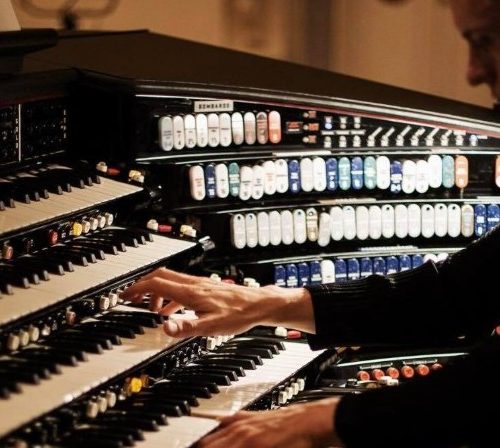
Jason Roberts, organ
Jean-Willy Kunz, organ
Andrew Goodlett, octobasse
Lucas van Woerkum, filmmaker
Mathieu Roy, lighting design
Works
Paul Dukas, L’apprenti sorcier (12 min)
Camille Saint-Saëns, Danse macabre, op. 40, excerpt from the theme in jazz style (1 min)
Le fantôme de l’opéra, excerpts with projections (5 min)
Camille Saint-Saëns, Danse macabre, op. 40, excerpt in jazz style(2 min)
Serguei Rachmaninov, L’Île des morts, op. 29,with projection(20 min)
Camille Saint-Saëns, Danse macabre, op. 40, arrangement for octobass, clarinet and organ (5 min)
Franz Liszt, Totentanz, S. 126 (17 min)
No intermission