Additional Information
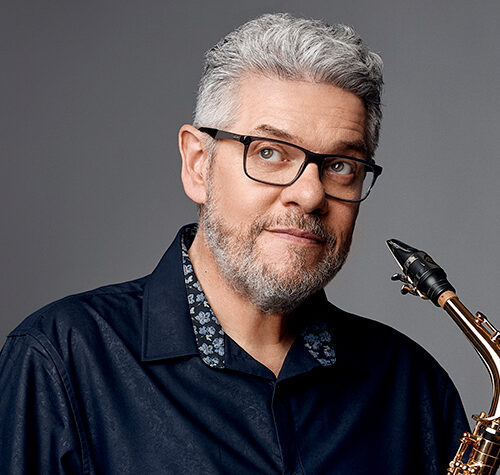
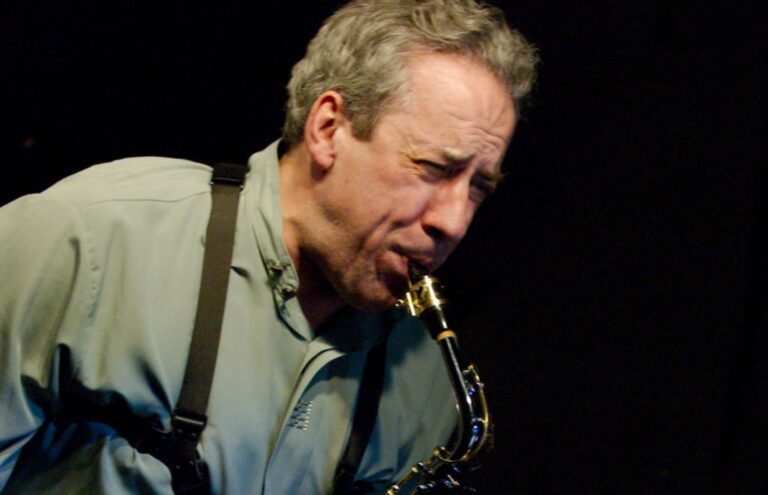
Since the 1970s, when he was a member of the Montreal group Nébu, Jean Derome has remained one of the most prolific instrumentalists (saxophones and flutes), composers, and improvisers in Quebec’s creative music scene. Although never completely associated with contemporary or modern jazz, Jean Derome comes from that background and has always returned to it in his work, which can easily be described as multipolar, multireferential, and undoubtedly considerable. It therefore makes perfect sense that his work should be highlighted by the Orchestre national de jazz de Montréal (ONJ). The same goes for the title of this evening event on Thursday, February 12, at the Cinquième salle de la Place des Arts: The Audacity of Jean Derome, whose two long pieces on the program, orchestral suites entitled 5 Pensées and La Force et la Beauté, with the composer participating among the orchestra’s instrumentalists, are presented here by their creator.
PAN M 360: The NGO and Jean Derome have a somewhat natural relationship, since you have known its director, Jacques Lorain, since the 1970s.
Jean Derome : Since the days of the band Conventum.
PAN M 360: Jacques Lorain played in Conventum before becoming the bassist for the Orchestre Sympathique, that’s true!
Jean Derome : He played on Conventum’s second album. The bass lines he came up with on it were magnificent. I’ve known him since that time. I also knew him back when he wanted to start an association of jazz musicians. Then various circumstances led us down different paths, and I don’t know everything about his career… Just before the pandemic, there was talk of me singing classics of my choice by Duke Ellington and Billy Strayhorn.
PAN M 360: And that didn’t happen?
Jean Derome : I was writing a play called La force et la beauté (Strength and Beauty) at the time, and that’s the one we performed. It was only performed as a web concert. This play was performed in the first half, and the second half featured a series of songs.
PAN M 360: I remember that you were, if my memory serves me correctly, a big fan of saxophonist Johnny Hodges.
Jean Derome : Yes, I love Johnny Hodges.
PAN M 360: Who was the viola player in Duke Ellington’s big band?
Jean Derome : Yes. And Ellington, I studied that inside out and upside down.
PAN M 360: For this period of his professional life, spanning more than half a century, it is perhaps the greatest of them all.
Jean Derome : It’s an incredible production too. High quality, but also phenomenal in terms of the amount of work he put into it.
PAN M 360: But ultimately, people know very little about him.
Jean Derome : What struck me, even while putting this project together, was that I realized that songs I had been listening to for a long time were very, very little known. We know the series of hits: Satin Doll, Take the A Train (Strayhorn), etc.
So, well, it was an opportunity to start again. Then, basically, as time had passed, Jacques, instead of wanting to restart that show, suggested that I do a show featuring only my music.
So to complete the program, apart from the piece I had written for the ONJ, I proposed a piece composed for a Vancouver orchestra, the Hard Rubber Orchestra. The piece was premiered in 2001 and was performed once in Montreal as part of the Hard Rubber Orchestra’s Canadian tour. A piece like that, a large suite, is a lot of work. From my point of view, it’s precious. I won’t be writing many more like it. I feel a duty of loyalty to my pieces, to give them a chance to be heard. So I’m very, very happy that this piece is being performed again.
PAN M 360: And you won’t be conducting the ONJ this time?
Jean Derome : No, it will be Samuel Blais. For the 2020 concert, I was the conductor, and there was no conductor for the Ellington section. I had planned to play, but in the end I couldn’t play as much as I wanted to because I had to keep the group together, so I ended up conducting more than I had planned. So this time I’ll be part of the orchestra rather than in between. Now I’ll really be able to play, so I’m giving myself a little more space, I’ll be doing a few more solos than in the original version.
PAN M 360: Let’s now describe the program and the specific features of your pieces in the program. First, the one composed for the Hard Rubber Orchestra.
Jean Derome : It is called Five Thoughts for Hard Rubber, a piece in five movements. These movements do not have titles but different characters. The first is described as dark, dramatic, mysterious; the second is relaxed and spiritual; the third is processional, noble, and expressive; the fourth is energetic; the fifth is crazy, festive, almost frenetic, dedicated to the great Dutch drummer Han Bennink.
PAN M 360: From a formal point of view, is it really jazz?
Jean Derome : Yes, it’s jazz, but not that much… As you know, I have a very broad view of jazz.
PAN M 360: That’s your style. Except that sometimes you do things that are totally improvised, with instructions that have nothing to do with sheet music. So this time, you’re working in a more jazz-like mode, so to speak.
Jean Derome : It’s true, but the Hard Rubber Orchestra also did Latin music shows, so I kept some Latin elements in this piece dedicated to the memory of Ken Pickering, the late director of the Vancouver Jazz Festival, who was, I believe, the best artistic director of Canadian jazz festivals of his time.
PAN M 360: Let’s move on to the second part of the concert.
Jean Derome : The piece is entitled La force et la beauté (Strength and Beauty), commissioned by the ONJ.
PAN M 360: OK, and did the order come with any instructions?
Jean Derome : Nothing.
PAN M 360: It was carte blanche, in fact.
Jean Derome : Yes, yes, yes, the idea was to put together a concert combining Ellington’s songs. I went to see Kim Richardson’s show, where she sang Ellington with the ONJ, and it was very good. But it was funny because there were several pieces that I had chosen for the concert I did in 2020.
PAN M 360: So, in the end, the work you did was indirectly useful?
Jean Derome : Yes, exactly.
PAN M 360: Let’s go back to Thursday’s program. Can you tell us about the second piece from a compositional point of view?
Jean Derome : The subtitle of this piece is Clin d’œil amoureux au jazz, seven pieces that are actually dances. In this suite, I used a number of themes in different ways. That is to say, for example, the themes you hear in the first movement, Scat Funk Gospel, are presented in different ways. Later in the work, they return in other incarnations, other moods. The second and third parts are linked, one is called Intro Bossa, another is called Bossa dedicated to Hermeto Pascoal. Then there is a section called Intro Groove, which reprises motifs from Bossa, leading to the next section, Groove, which is almost a funk base, dedicated to Gil Evans. The last one is called Stride, which illustrates different adventures in a style reminiscent of film scores.
Seven pieces that are actually dances. In this suite, I used a number of themes in different ways. That is to say, for example, the themes you hear in the first movement, Scat Funk Gospel, are presented in different ways. Later in the work, they return in other incarnations, other moods. The second and third parts are linked together, one is called Intro Bossa, the other is called Bossa, dedicated to Hermeto Pascoal. Then you have a section called Intro Groove, which reprises motifs from Bossa, leading into the next section, Groove, which is almost a funk base, dedicated to Gil Evans. The last one is called Stride, which illustrates different adventures in a way that’s a bit like film music.
PAN M 360: Stride refers to a style of jazz from a century ago, doesn’t it?
Jean Derome : It starts like that, but gradually it modernizes, almost exploding. I take the stride more relaxed than James P. Johnson, Willie “The Lion” Smith, or Fats Waller. I take it more “medium,” and then it doubles in speed, with almost all the themes of the piece coming back and overlapping at the end. This layering is really complex because the themes don’t have the same number of bars. In any case, these are beautiful moments of music.