Additional Information
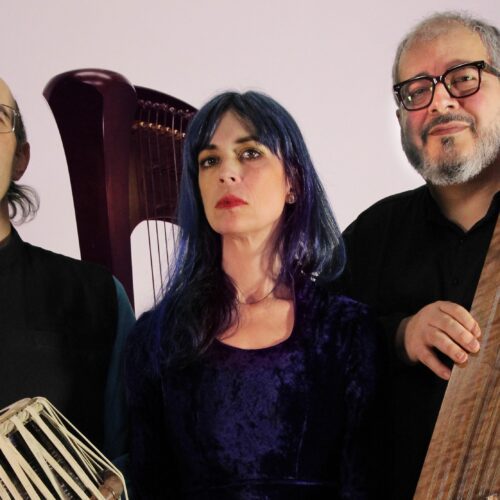
Among the jewels of choral singing, one of the great specialties of English music in the classical repertoire, The Tallis Scholars are considered pioneers. A veritable institution in the United Kingdom, founded in 1973 by Peter Phillips, whom we interviewed in the US during a tour by this magnificent vocal ensemble, which will be stopping in Montreal on Saturday, December 13, at St. Andrew & St. Paul’s Church (3415 Redpath Street, corner of Sherbrooke, Montreal, QC, Canada).
So, for an intimate, spiritual, and enveloping Christmas program, here is a suggestion that cannot disappoint anyone who loves sacred music. Let Peter Phillips kindly explain it all to us!
PAN M 360: You have devoted your life to it, achieving great mastery. You will soon be arriving in Montreal with your ensemble. You will be presenting a very interesting program of English sacred music from several eras, from Benjamin Britten to John Taverner.
Peter Phillips : Yes, old John Taverner, since there are two of them—there is also his contemporary, without an r (John Tavener, 1944–2013).
PAN M 360: How do you feel about your position as music director today in 2025, after 52 years of working with the same ensemble, which has probably changed a lot over the years?
Peter Phillips : As you say, we have been singing this music for 52 years, and I myself believe I have become a true expert in Renaissance polyphony. I do not claim to be a conductor of orchestras, soloists, or large choirs. I am a specialist in a very specific field, namely chamber vocal ensembles with 10 singers. In the same vein, I have had a career as a conductor for other ensembles, but I also have a career as a conductor of other chamber vocal ensembles, particularly in Europe.
PAN M 360: Over the years, how have you been able to refine this approach and make it more sensitive?
Peter Phillips : You know, there are different stages to go through. Even if it’s early or baroque music, we’ve reached certain levels of interpretation and understanding of this repertoire. We’ve achieved this by working tirelessly, trying to understand what the composers of early music did, rather than trying to force it into a modern mold.
People have often tried to make this vocal music sound like those 19th-century romantic ensembles, with vibrato, incorrect intonation, in short, a bad mix. Soloists have also been highlighted, when in fact, with this kind of music, the spotlight is not on any one person. It is a collective activity, like that of a string quartet.
When we are on stage, there are 10 singers in front of me, and we can embody a very sensitive, very small ensemble that speaks to you. It’s done on a small scale; it’s not huge music.
PAN M 360: It’s more subtle, more intimate, and more spiritual.
Peter Phillips : Yes.
PAN M 360: Since The Tallis Scholars have been around for 52 years, one imagines a multigenerational team. How do you manage this artistically?
Peter Phillips : I would say that my vision hasn’t changed fundamentally. What I wanted from these singers from the beginning is what I want today, even though this style is much better known now. So the younger performers who sing with us arrive with greater knowledge. They know what they want and what is expected of them.
When we started, we began with nothing. Today, our oldest singers are now very experienced and they continue. I dare to believe that they are happy, that they sincerely love this repertoire, otherwise they wouldn’t spend all their time devoted to it!
PAN M 360: So, let’s talk about the program for this North American tour. First, Missa Puer natus est nobis (A Mass: A Child Is Born to Us) by Thomas Tallis (1505-1585).
Peter Phillips : Of course, we chose this piece for a Christmas concert. It is also one of Tallis’ most beautiful works. Written for seven voices, this music is grandiose and designed for a grand occasion. It was performed at the wedding of King Philip II of Spain and Mary Tudor, Queen of England. It was an occasion for the composer, and Tallis composed music as grand as he could. Sometimes this work is accompanied by instruments, but that is not the case here.
PAN M 360: Yes. Now let’s talk about this work by William Byrd (1540-1623), Votive Mass of the Virgin, composed of five parts.
Peter Phillips : It’s a somewhat mismatched list because the first part (Ave maris stella) isn’t actually part of this mass. I included it in this program because it’s very beautiful and supports the rest of the works. Ave maris stella is obviously a reference to Mary, and all the pieces that follow, as the title suggests, are votive antiphons for the Virgin. This music by Byrd, who excelled in composing for small ensembles, unfolds like a puzzle whose small pieces gradually come together. And if you understand what is happening during the performance, you realize that it is very satisfying to sing this and also, of course, to listen to it.
PAN M 360: Let’s continue with the contemporary work by Matthew Martin (1976-), Salve Regina.
Peter Phillips : It’s an exciting project, commissioned by Columbia University. In my opinion, it’s a great work by Matthew Martin, a young British composer who knows us well. What’s great about him is that he understands this aesthetic for small vocal ensembles. And the thing about him is that he knows how to write for such an ensemble, but it’s not ordinary or normal. He provides an unusual score, consisting of four soprano parts, and then two alto parts below the sopranos, which creates a very special sound. A composer who wants to write for us has to understand this use of voices, and Matthew is capable of doing that.
PAN M 360: How does this work fit into the contemporary corpus?
Peter Phillips : Yes, it’s wonderfully tonal, but it can also be very dissonant! The idea here is not simply to sound intelligent, and even less to produce a work that has nothing to do with the others.
PAN M 360: Dissonance here is a tool, a means to an end, not an end in itself.
Peter Phillips :I think so! I find this contemporary style very compelling. I enjoy listening to it all the time. We don’t want to exclude difficult pieces and stick only to the “normal” harmonies that we also like. We also enjoy recent contributions and mix them in with the rest. We present this ancient and contemporary music as a whole.
PAN M 360: Let’s move on to the second work by Thomas Tallis on the program: Missa Puer natus est nobis – Sanctus et Agnus Dei.
Peter Phillips : When listening to this piece, you may wonder where the Credo is. Well, there is no Credo, because it has been lost. The other movements have been found, but the score for the Credo has never been recovered. I’m afraid there’s nothing we can do about it, unless a miracle happens and this piece of the score is hidden away in other ancient manuscripts that haven’t been analyzed in depth or haven’t been found yet. So it’s a challenge for the ensemble to play this work without the Credo.
PAN M 360: Very interesting! Early music specialists like you are also historians, archaeologists, and investigators!
Peter Phillips : Yes, you’re right. It’s a kind of wonderful detective work! When you play early or Baroque music, if you don’t like history, you shouldn’t work on this repertoire. But the most important thing is to love this music.
PAN M 360: Of course. But historical knowledge is part of the enjoyment and passion that leads to a deep understanding of the period in which this music was composed.
Peter Phillips : That’s absolutely right. Also, one of the most exciting aspects of this work is, in fact, that some parts have a seven-voice structure. That’s how the score was written, even though we’re missing a piece of it. So it’s the job of a modern person like you or me to fill in those missing notes.
PAN M 360: Absolutely! Now Benjamin Britten (1913-1976), the second modern composer on the program, and my favorite English composer, whose work A Hymn to the Virgin you will be playing.
Peter Phillips : It’s a central theme of this program. And also, it’s extremely beautiful. Apparently, Britten wrote this music when he was 16 years old. Like Mozart, he was already excellent at that young age! You know, England and the United Kingdom don’t have that many great composers.
PAN M 360: On the other hand, the present period is very prolific, and you can count on a fantastic tradition in choral music. And The Tallis Scholars are at the heart of this tradition.
Peter Phillips :Yes, it’s exciting, that’s true.
PAN m 360: So let’s move on to John Taverner (1490–1545) and his work Mater Christi.
Peter Phillips : Well, it’s an antiphony and also a prayer to the Virgin Mary. Antiphony is a musical technique in which two vocal subgroups respond to each other alternately and come together in chorus. Mater Christi is also a central theme of the concert and an unusual piece for England, as the work was begun when Catholicism was very much present. This sacred work is very elaborate and rich, and Taverner was particularly skilled in this style, which he later had to adapt to the Protestant Reformation. In my opinion, it is one of his most concise pieces. His genius is very evident in it. So let’s perform the score from before the Protestant Reformation, which Taverner had kept. Another interesting aspect is that this piece was composed for young boys or castrati, with very high parts and also low parts. This compositional technique has been lost over time, but we manage to keep it alive in a way. For the high parts, we had to develop appropriate techniques to render the score properly. It was a difficult challenge.
PAN M 360: As we said earlier, the resurgence of baroque music dates back half a century now. There is a much deeper, more advanced knowledge, I would say. It’s your whole life. You’ve discovered so many things!
Peter Phillips : Yes. The expertise is very different from what it was in the 1970s. There are more people practicing this art, more talent, more interest. In the beginning, there were people who were passionate about it, but not necessarily the best singers. Now that passion is complemented by education, training, and technical refinement. We have both: passion and virtuosity. And singers can work more, instead of pursuing a career in opera.
PAN M 360: Let us conclude with the Magnificat by John Nesbett (?-1488).
Peter Phillips : It’s a difficult piece to describe, but it’s very enjoyable to perform. That’s why we chose it! It’s worth noting that this work appears very early in The Eton Choirbook, which brings together a large number of works written during this specific period. I don’t know how to describe this work without you hearing it, but it has a style of music very similar to brass instruments, with fairly sharp cuts. It’s really fun to sing! It’s also a beautiful conclusion to this program.