Additional Information
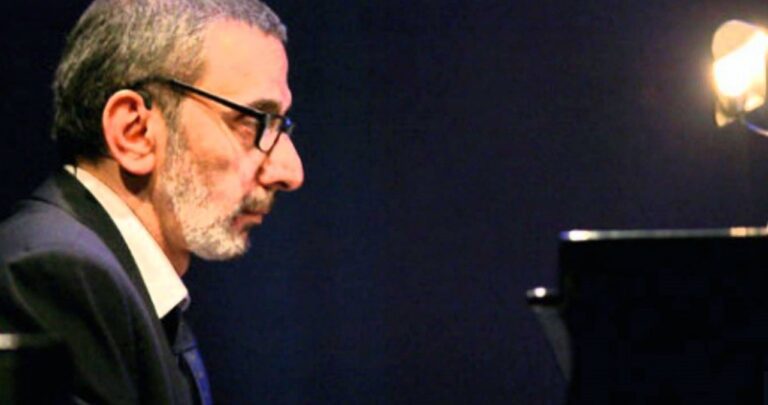
Today we’re talking about Ziad Rahbani (1956-2025), a great musician, reformer, and visionary of oriental jazz. It’s also worth mentioning that he was the son of Fayrouz, the Levantine superdiva whom some consider the greatest Lebanese singer of all time. His late father, Assy Rahbani, was one of Fayrouz’s two main songwriters. Ziad Rahbani died on July 26th from kidney problems; he was 69 years old.
Music lovers with a passion for modern oriental music, classical Arabic music, and modern jazz may be familiar with the historical importance of Ziad Rahbani and his contribution to music. A complete artist, he was also a lyricist and playwright. His tragicomic plays were imbued with a profound opposition to religious or communal sectarianism, and his leftist leanings were also well-known in Lebanon.
His progressive stance, always marginal in Lebanon and the region, had led him to gradually withdraw from active cultural life, to the point of living in seclusion in his Hamra home in Beirut and rarely leaving his house. What Ziad dreamed of did not come to pass in his country; disappointment, demobilization, and isolation preceded his physical death.
A sad decline, a sad end, it’s truly regrettable. Ziad Rahbani remains no less important, and expatriate Lebanese and Beirut artists (for obvious reasons) have undertaken to pay tribute to him with a musical and theatrical performance of his work. Since everyone should discover the art of this great Lebanese artist and visionary, PAN M 360 presents this interview with Johnny El Hage, a man of the theater and a great admirer of Ziad Rahbani.
THIS MONDAY, NOVEMBER 3RD AT THE CLAUDE-LÉVEILLÉE HALL OF THE PDA
PAN M 360: This blend that Ziad offered was quite unique and, unfortunately, little known to Western audiences. This November 3rd is an opportunity for the Montreal public to experience it. Late, too late, but… better late than never. Johnny El Hage, you’ve created a show—tell us about it!
Johnny El Hage: It’s a journey into the world of Ziad Rahbani. We’ll focus on his music and theatre, as well as radio programs he produced between 1965 and 1990. And we’ll also reflect a bit on his political ideas as expressed in his work.
PAN M 360: Because he was very political, indeed. Very left-wing, he sharply criticized all the Lebanese governments in power under which he lived.
Johnny El Hage: He even supported Hezbollah at times, which he sometimes tended to see as a Lebanese resistance force rather than a terrorist organization. So, yes, he was a controversial figure. For a long time, he was an advocate for the resistance, and therefore anti-establishment. He was very left-wing. He was even close to the Communist Party.
What’s special about him is that he comes from a family whose political stance is diametrically opposed to this one. In his twenties, he left his family in East Beirut and moved to the west of the city during the civil war. His music and theater inevitably reflected his political vision. He longed for a shared life, a recognition of the other—the other Lebanese—whom we still don’t know, of a different religion, a different way of thinking, a different conviction.
PAN M 360: He therefore wanted the reconciliation of the Lebanese factions and also a unified response from Lebanon towards Israel and all forces deemed imperialist.
Johnny El Hage: Yes, he tried to dismantle national divisions. He tried to live with the Muslims of Beirut, he worked with them, he did everything in his power to make the Christians of Lebanon understand that their Muslim compatriots were much less different from them than they thought. And that these Muslims were fighting against the Israeli occupation of the country, and that they also wanted equality.
PAN M 360: Let’s try to quickly see his contribution to music. Ziad created songs but also a modern jazz including Cuban, Brazilian and, of course, Arabic music.
Johnny El Hage: He was a pioneer in integrating modern Arabic music and classical Arabic music into jazz. He even diverted the original work of his mother, Fayrouz, his father, Assy, and his uncle, Mansour. The Rahbani brothers and their interpreter, Fayrouz, were very romantic and traditional in their songs, their aim being to bring joy, hope, and dreams to the Lebanese people. And when Ziad wrote songs for his mother (after his father’s death), Fayrouz deviated from this approach. Now expressed in a language (or dialect) closer to the people, Fayrouz’s songs evoked the daily lives of ordinary people, what humans were truly experiencing in Beirut and Lebanon—poverty, political violence, and so on.
PAN M 360: And his theatre was also expressed in this way, one imagines.
Johnny El Hage: That political theater was brilliant. And during the civil war, he performed in both West and East Beirut. He played for Christians and for Muslims. It was also one of his very strong critiques of those in power. It was his struggle, and it’s still our struggle. His tragicomic theater provoked laughter and tears by reflecting our everyday realities. Even if our lives were shit, we could laugh about it after crying—or vice versa.
PAN M 360: Formally, how was his theatre structured?
Johnny El Hage: Ziad wrote scripts inspired by ordinary people from all corners of the city. These ordinary people were involved and expressed their concerns on stage through Ziad’s texts. His actors were therefore citizens who had other daily jobs besides art or theater—bartender, day laborer, reporter, etc.
PAN M 360: At some point, we were told, this theatre ceased to exist. Why?
Johnny El Hage: Yes, in the late 1990s, he stopped doing theater. He said he no longer knew what to say, that he had said everything he had to say because nothing had changed on the political scene in Lebanon. He gradually isolated himself while dedicating himself to music.
PAN M 360: How did you put together this show dedicated to Ziad?
Johnny El Hage: We’ve incorporated excerpts from his plays and radio programs. There’s narration drawn from his plays, monologues, and even his personal diary. We’ve also included his songs and music that reflect the political situation and the life we experienced there. Many of his songs, which we know by heart, were introduced to us through his plays. So, we’ve taken some of his songs that were composed and released in concerts, others from theatrical pieces, and we’ve blended them with some of his theatrical works—a few theatrical monologues—from four different plays created between 1975 and 1995. It’s a combination, in a way, of this colossal work encompassing music, theater, radio, and politics.
PAN M 360: Let’s also talk about his music. An excellent pianist and composer, Ziad mixed Arabic, modern, popular and classical music with modern and contemporary jazz, even fusing jazz with soul, funk, Cuban or Brazilian music.
Johnny El Hage: Ziad refused the label “Arab jazz.” He said no, it’s not Arab jazz, it’s jazz and other world music with Arab elements.
PAN M 360: Was it important for you to put on this show, to what extent?
Johnny El Hage: When Ziad died on July 26th, people started calling me and asking what I would do. Without any plan, without any preparation, people spontaneously showed up at our cultural space dedicated to Arabic expression. Not just regular customers, but also musicians and actors. And in four days, we put together a show with about ten artists.
We then realized together our love and admiration for his work. That’s why we proposed refining this spontaneous concept for presentation at the FMA, with actors, singers, and musicians—oud, keyboards, bass, percussion, violin, trumpet, guitar. A wonderful fusion of instruments, both Arabic and Western.
PAN M 360: In memory of Ziad, whose work survives him and will survive him.