Additional Information
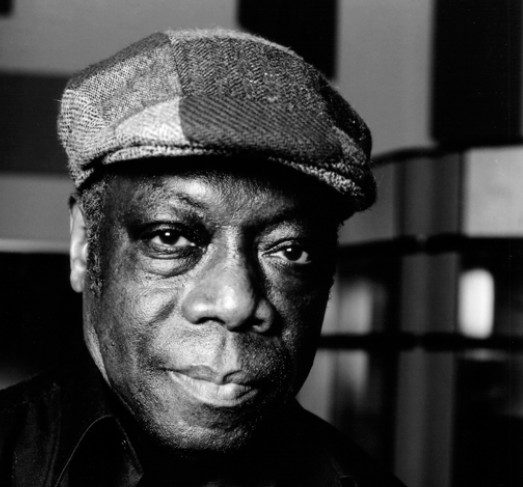
Drummer and composer Andrew Cyrille intended to pursue advanced studies in chemistry and ultimately opted for the chemistry of sounds and improvised music. Of Haitian descent, the octogenarian is among the great American musicians who have experienced the transition from modern to contemporary jazz. He was heard alongside saxophonist Coleman Hawkins in his early days, then in pianist Cecil Taylor’s band. Later, he was associated with saxophonist David Murray, pianists John Hicks and Marilyn Crispell, and many others. This Saturday at La Chapelle / Scènes contemporaines, he is performing the second part of a program as part of the FLUX festival, presented jointly by Le Vivier. We reached him in New York earlier this week, and here is the conversation transcribed for PAN M 360 readers.
PAN M 360: You’ve performed in Montreal several times in the past, and this time you’re coming in a different context. Perhaps you could briefly explain this solo project to us, and tell us how it came together?
Andrew Cyrille: It’s built on original compositions and also on concepts that come from other artists. I express my music through the medium of percussion.
PAN M 360: And if we try to be more specific, can you give us examples of these experiences, or of your relationship with your compositions as a percussionist?
Andrew Cyrille: Yeah, well, I did something a few years ago on an album called What About, it has to do with trying to give an example of birth, the first breaths, the first sounds that can be communicated to other human beings. Another one on What About focused on drum frames, this included overdubs of whistles or flutes. Another piece was recorded with Gene Lee and Jimmy Lyons on the Nuba album and I’m playing the Nuba piece that I designed and in which I do a percussion solo in homage to Art Blakey and Max Roach, like the Seven for Max that I’ve already recorded. If I give you all the examples, I’m not going to play them all!
PAN M 360: Can you tell us about this specific project planned in Montreal?
Andrew Cyrille: I’m coming alone. And I gave Flux Festival instructions on how to assemble the drum kit that would suit me. I photographed my instruments and sent them to the FLUX organizers.
PAN M 360: You have always been involved in new forms of jazz, as a drummer, performer, composer, or leader. And what place does the solo concert have in all this?
Andrew Cyrille: I’ve done a lot of percussion solos throughout my career, and I would say that soloing is also included in a jazz composition for any ensemble. I just presented a solo concert at a club in the New York area.
PAN M 360: So it’s always changed, you’ve been able to refine your approach and go further.
Andrew Cyrille: Whatever the jazz compositions, that’s what we do within those compositions: make them different. In other words, to take a piece and transform it by adding new ingredients. We start with a composition and transform it with our own influences.
PAN M 360: Are your Haitian roots reflected in your music? Haiti’s rhythmic heritage is so rich!
Andrew Cyrille: I was born in the United States to Haitian parents. There are reminiscences of Haitian culture in my playing, but it’s rather subconscious. The fact is that my musical education was received in the United States, at music schools like Juilliard, and that made me who I am. Of course, the musicians from all over the world with whom I played also contributed to forging my musical personality. I learned through all of that to become who I am.
PAN M 360: You stayed connected to the music.
Andrew Cyrille: The thing about music is that you don’t see the notes, you don’t taste the notes, you don’t put them in your pocket. You feel the notes, and it’s a spiritual connection. If you find a common thread and a way to connect with other human beings regardless of the clothes they wear or the food they eat, then you can make music.
PAN M 360: Are you involved in many ensembles or do you still focus on your solo project?
Andrew Cyrille: I focus on what people ask me to do. For example, I just played with the trio of pianist David Virelles, who is of Cuban origin and lives in New York with double bassist Reggie Workman, or with the group of pianist Adegoke Steve Colson. There is no specific plan in my collaborations, there are rather possibilities, opportunities. There is also my own quartet that recently performed at the Village Vanguard, with Bill Frisell, guitar, David Virelles, piano and Ben Street, double bass. I will soon return there with an ensemble including Joe Lovano, saxophone and Dave Douglas, trumpet. In addition, I teach at The New School. For me, it works like this: I can really only manage the present, try to improve myself in the present and stay alive (creatively). Yes, I think about what may happen in the future. But for me, when the future unfolds, it is the present. And that is what matters to me.
PAN M 360: Are memories important to you? You have a long and varied career, but you are still active.
Andrew Cyrille: You know, there are things in the past that I can remember, experiences that have made me grow spiritually. For example, I had the opportunity to play with Coleman Hawkins for his album The Hawk Relaxes. I was 21 when I did that, and I had never met Coleman Hawkins before, and I had a recording date with him, and who was it? Ron Carter was on bass, and Kenny Burrell was on guitar, Ronel Bright was on piano. I was Sarah Vaughan. That was the only time we played together, Coleman Hawkins accepted me and we played his music.
PAN M 360: Coleman Hawkins was already old at this time, but he had a reputation as a very open man, which was not the case for the majority of his colleagues of his generation.
Andrew Cyrille: One person I had a phenomenal time with and who taught me a lot was the great pianist Mary Lou Williams. I was a student at Juilliard at the time, and Mary Lou taught me other dimensions of music, including having me sing melodic patterns from modern jazz before she played them. I learned not to be afraid of my voice and to do what she told me to.
PAN M 360: A bit like in Indian classical music, where the ragas are said out loud before being played.
Andrew Cyrille: Many things on this planet are interconnected.