Additional Information
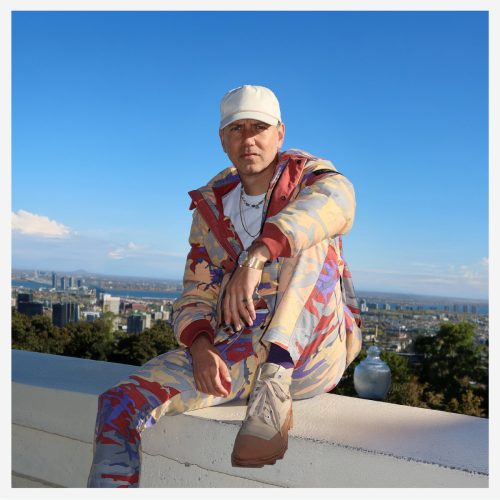
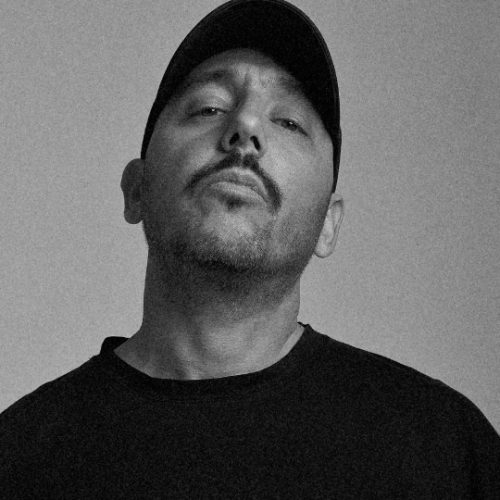
Walla P lives and breathes groove. His love for funk, soul, and disco is pure, eternal, and particularly contagious when he talks about it. On a cold January afternoon, his voice resonates with enthusiasm, his gestures filling the small screen. As he reveals the secrets of a life as a professional music lover, it becomes clear why his project, Voyage Funktastique, has garnered so much acclaim. Carefully curated, this series of events, this label, and this radio show constantly exude a vibrant energy, a welcome escape from the Montreal winters where Voyage Funktastique was born. Ahead of his concert at the Dômesicle on the night of January 17-18, Walla P reflects on the venue’s influence, his hip-hop philosophy, and shares some of the secrets that have made him a key figure in the nightlife scene.
PAN M 360: You are the founder of Voyage Funktastique, a monthly party firmly established in Montreal for over ten years. Can you tell us about the project and what brings you to participate in Dômesicle today?
Walla P : Voyage Funktastique has existed since November 8, 2013. Originally, it was a monthly event in Montreal, and it still is today. The idea has always been to play music that grooves, that funks, that makes you dance, but that also remains very sophisticated. Tracks that aren’t necessarily easy to find, but that are still very physical, very visceral.
Over time, the project has taken different forms: the party, the radio show, and the label, all under the same name. The label has existed since 2015. It’s all part of the same universe.
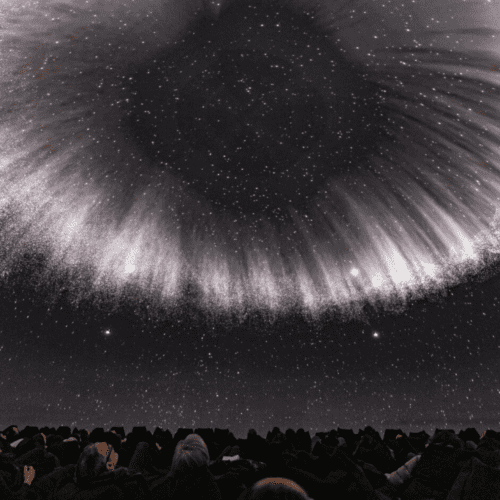
For me, it’s an interesting context, because the SAT dome is a special, immersive space that requires a different kind of attention, both in terms of sound and visuals.
PAN M 360: Do you prepare your sets in advance or do you work more through improvisation?
Walla P : To be honest, I never plan anything. It’s always based on feeling. I don’t like to put myself in a box, like in sports, with a fixed strategy. Because if it doesn’t work, you’re left without a solution.
Whether it’s a digital or vinyl set, I always work the same way. Of course, I have a mental outline of what I’d like to play, but I never make a fixed list like “song 1, 2, 3, 4.” I often discover the transitions on the spot, sometimes even just before playing them in front of the audience.
For Dômesicle, it will probably be digital on a CDJ, even though I prefer playing with records. I also play with Alina de Ferias, so I’ll be drawing inspiration from what she’s doing. It’s an exchange. I like discovering what sounds good to my ear and testing it almost immediately in the venue. That’s what keeps things fresh, both for me and for the audience.
PAN M 360: You often talk about sequences and context. How does this influence your playing style?
Walla P : There are certain sequences that I know almost always work, but I don’t really like repeating them. I try to avoid doing the same thing night after night.
There are also songs that people love and that you know they’re waiting for, but often I don’t play them when they expect me to. I like to delay it a bit, keep it a surprise.
Everything is very situational. Like wine. You can drink the same bottle at home and find it incredible, then drink it somewhere else with other people and experience something completely different. For me, music is exactly the same.
PAN M 360: You are known for your musical research. How do you approach crate digging and record selection?
Walla P : I was buying records even before I started DJing, back when I was mostly doing hip-hop and sampling, around 2004–2005. At first, it was mostly the album covers that attracted me. Over time, you develop other habits: the labels, the musicians, the studios, the credits in the liner notes. You see, for example, a bassist like Ron Carter who played on a record in 1972, then you find him on another project in 1979 or 1982 on a different label. You figure that if his bass lines were good at one time, they’ll probably be good elsewhere too.
I’m very interested in labels, in the years, especially between 1979 and 1987, and in the connections between records. I’ve always said that I buy records to play them with other records. It’s rare that I buy a completely isolated record, an anomaly, because otherwise you have to buy several others to be able to contextualize it.
With 45s, it’s even more instinctive because there’s so little information. You develop a knack for it: a label color, a typeface, a visual detail. Often, you can’t even listen to the record right there. You take a risk, and the surprise arrives at home.
PAN M 360: You often talk about maturity and time in your relationship with music. Can you explain that?
Walla P : I often try to explain to younger people that you might listen to a record today and find it okay, nothing more. But maybe in five years, you’ll love it.
It comes with experience. I bought hip-hop records that I didn’t understand at the time, and five or ten years later, I rediscover them and wonder why I didn’t listen to them sooner.
When I was a teenager, I listened almost exclusively to hip-hop. Anything jazz or soul didn’t interest me. Today, it’s almost the opposite. It’s taught me a kind of humility: just because you don’t like something now doesn’t mean you never will.
PAN M 360: Does your relationship with a record change when you play it in front of an audience?
Walla P : Absolutely. There are records I’ve been listening to for ten years and I’m still discovering details when I play them in public, depending on the sound system, the venue or the environment.
There are also very technical aspects: some records are well pressed, others very poorly. Styrene 45s, especially those produced in the United States between 1979 and 1983, wear out extremely quickly. After a few plays, certain frequencies disappear. You have to adapt the way you play them.
But beyond that, context is key. Some records work very well in one specific venue and not at all in another. The higher the ceilings, the more records I find difficult to play. Some pieces require intimacy, a small audience, attentive listening.
A song might work in front of 2,000 people at Igloofest, but completely lose its impact in front of 50 people in a more intimate setting. I’ve tested these things. It’s not just theoretical.
PAN M 360: The dome is a very unique immersive space. How do you approach it?
Walla P : I’ve been lucky enough to play there several times, both when it was packed and during COVID, with a very reduced capacity. Each time, I approached the set in a completely different way.
What I love about the dome is the visual immersion. For me, the music has to be in sync with what’s happening on the ceiling, with the projections. Everything has to work together. It’s a challenge, but a stimulating one.
I’m going to stay true to what I do. I’m not going to try to play something that isn’t me, even though I also play house music. If I’m having fun, the audience will have fun. If I’m not having fun, I can’t be the vehicle that transmits the music.
It might be a little selfish, but that’s always worked for me.
PAN M 360: You have a very strong vision of the role of the DJ and of ethics. How would you define it?
Walla P : For me, I am not the author. I am the messenger. The music is popular, not me. I did not create the art.
A DJ who becomes popular thanks to someone else’s art without acknowledging that person—I find that a strange relationship. It’s like taking a book written by someone else and claiming it as your story.
I come from a 90s hip-hop ethic, where respect for elders is fundamental. You don’t put yourself before the art. You acknowledge those who created before you.
There are a few DJs with whom I share this vision, like Aerosol, Chris Guilty, and Lexis. We’re on the same wavelength. The art doesn’t belong to me because I bought it. I didn’t create this music. I’m just passing it on, that’s all.
PAN M 360: To conclude, are there any upcoming projects that particularly excite you?
Walla P :I’m trying not to plan as far ahead as I used to. I worked for a long time with short-, medium-, and long-term plans, but now I’m more in the moment. There are still some releases coming up on the label, including an album with Bes Kept and Teddy Bryant. The Voyage Funktastique evening continues at the Belmont. The radio station is on hiatus for the time being, perhaps awaiting a new platform.
There are also trips, tours in Europe, possibly Japan and Brazil, always with Dr. Mad, who has co-founded Voyage Funktastique with me since 2013. And then there’s life around it: a restaurant to manage, other responsibilities. Everything is going well, quietly.