On Wednesday evening, the OSM presented the concert López, Childs, and Mahler: Hope in Exile, a rich and diverse program that explored the different facets of classical music.
The first part of the concert featured two contemporary pieces, beginning with Perú Negro by Jimmy López, composer-in-residence with the OSM. This six-movement work was the ideal way to start the concert. Drawing inspiration from Afro-Peruvian music, López takes us on a journey through Peruvian culture in a rhythmic atmosphere, punctuated with effects and strongly supported by percussion.
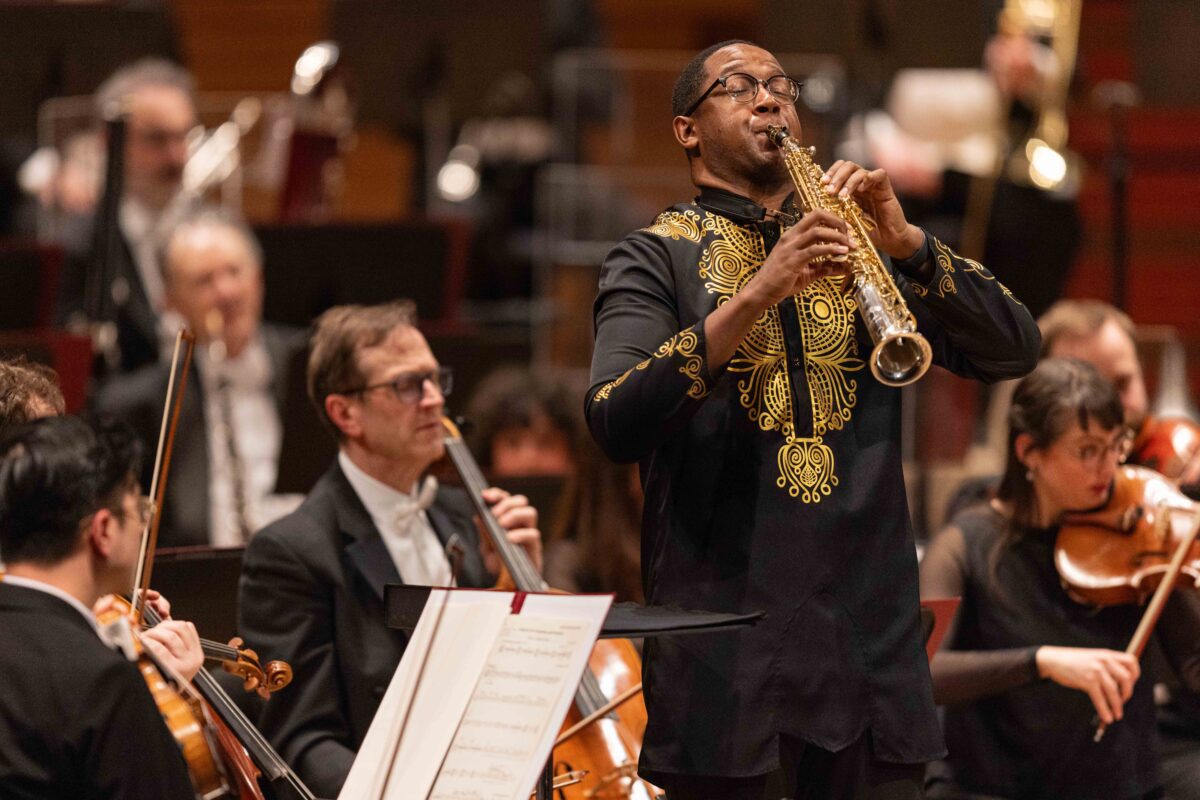
The concert continues with American saxophonist Steven Banks, who is visiting to perform composer Billy Childs’ saxophone concerto, Diaspora. The piece, which traces the exile of the African American people, illustrates a dark world rooted in fear and internal strife for this people sent by ship to America by slave traders.
Steven Banks’ performance lived up to expectations. Not only did the saxophonist deliver a series of virtuoso passages, but he also demonstrated great sensitivity during the cadences surrounding the three sections of the piece. After two dramatic movements, the work ends on a much more joyful note, illustrating the resilience of the African American people.
As for the second part of the concert, Rafael Payare continues his cycle of Mahler symphonies with the composer’s Fourth. If you are used to associating Mahler with drama, think again, because this is certainly not the case with this symphony. Here, Mahler uses a much more classical language than in some of his other works.
Payare, for his part, successfully illustrated the numerous changes in character, as well as the wide range of nuances required to bring the piece to life. The concert ended with the fourth movement, which featured soprano Nikola Hillebrand, who stepped in to replace Vuvu Mpofu, who was unable to attend. The German soprano gave a brilliant performance of this final movement, offering a particularly interesting vocal texture.