Baroque / classique

OSM | The Messiah… in Advent!

by Ariel Rutherford

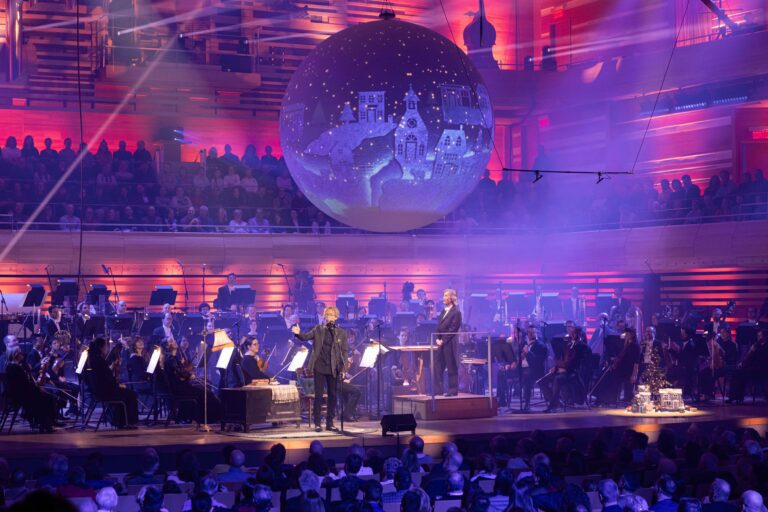
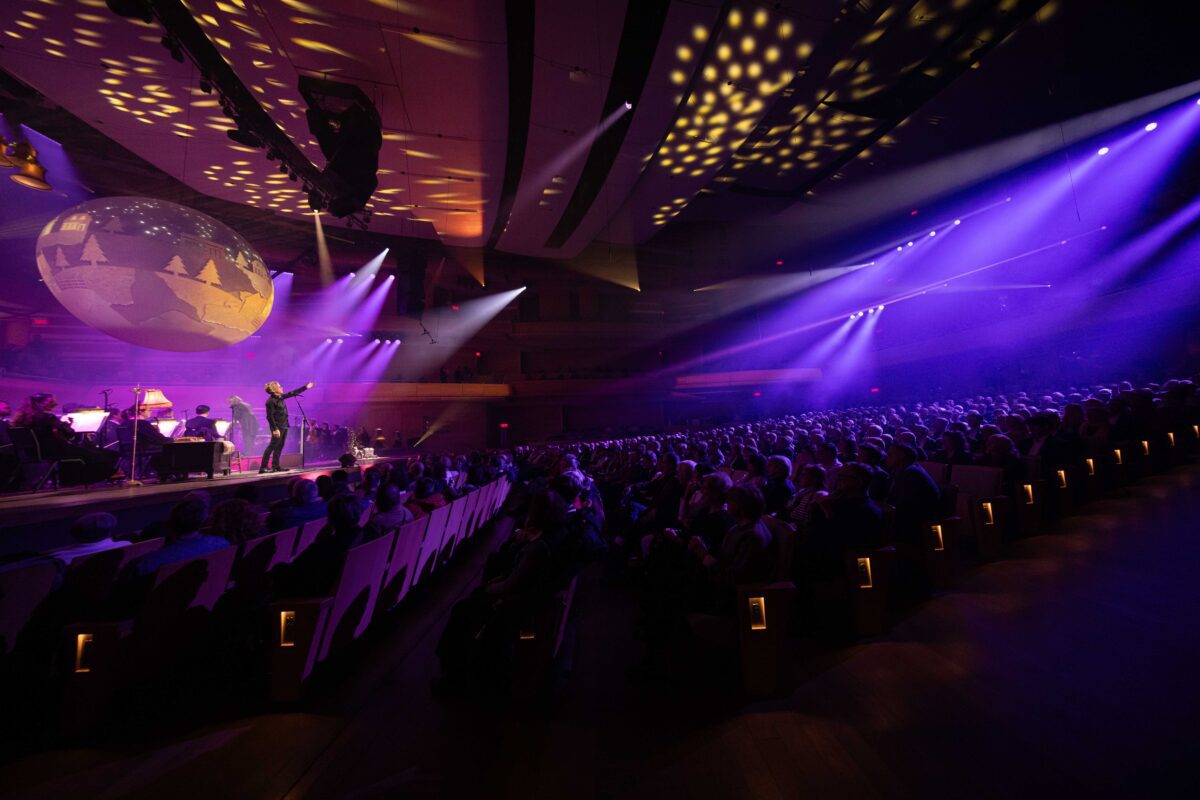
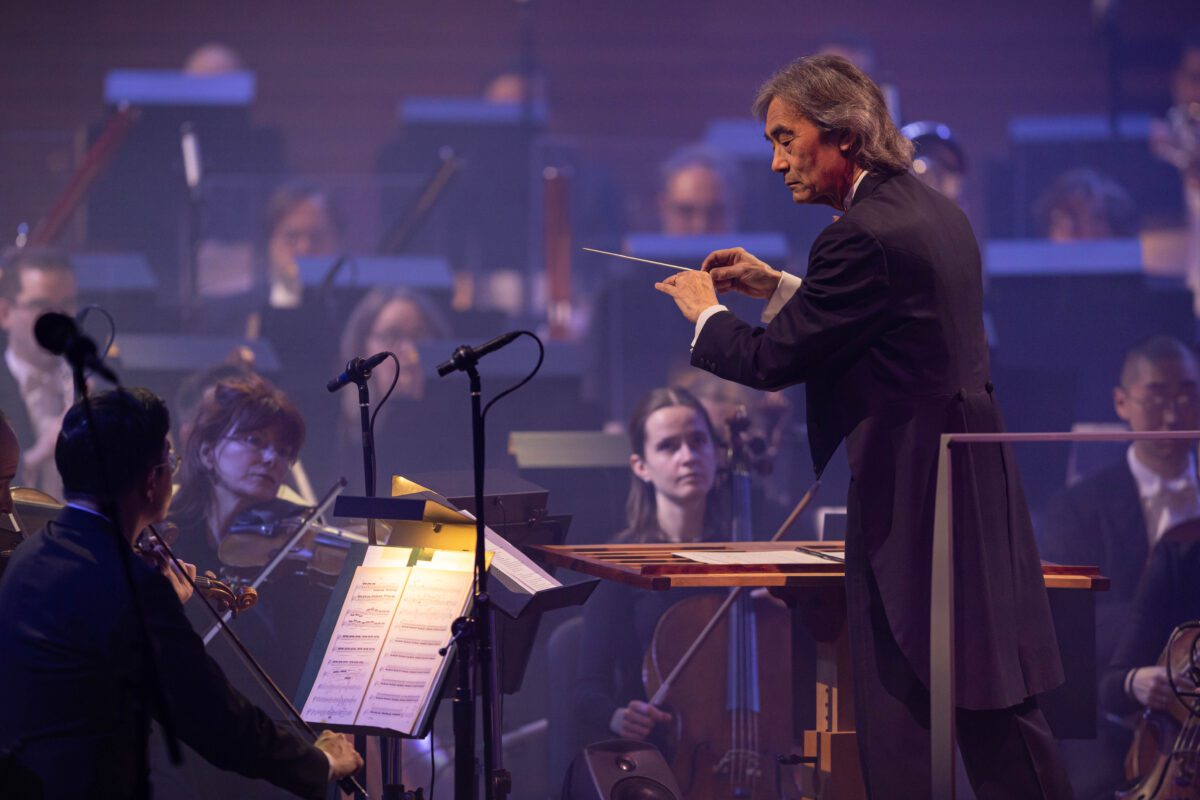
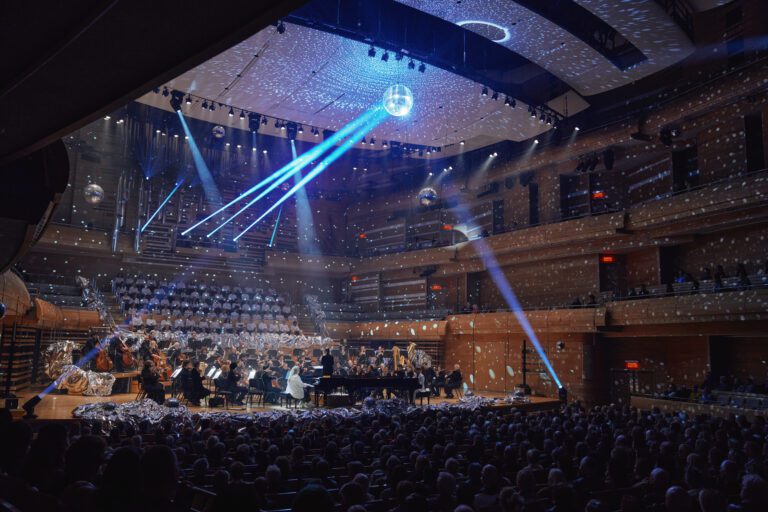
December 10, 2025, Advent is in full swing. In the heart of Montreal’s Maison symphonique, the OSM is preparing, once again, to breathe new life into the great Baroque classic, Handel’s Messiah. I’m sitting in row J, seat 23, my bag at my feet. I’m about to discover and listen to the entire Messiah for the first time. I can’t wait.

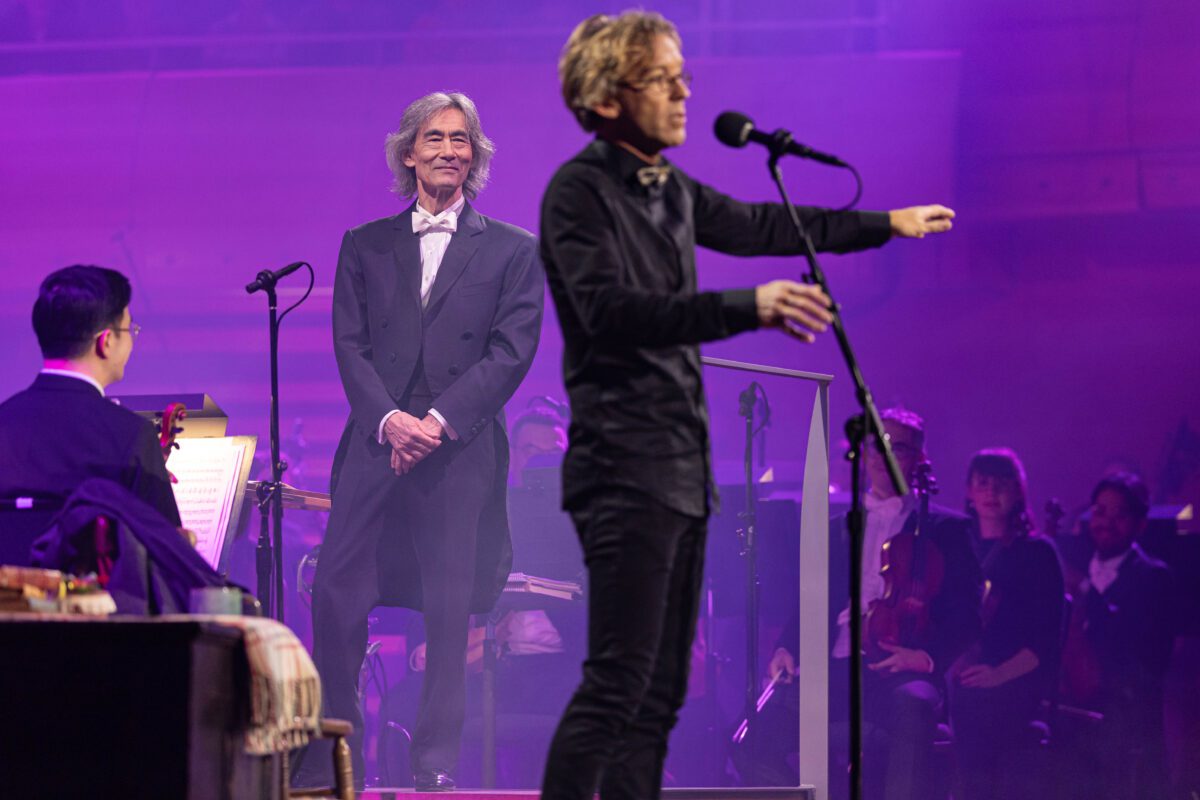
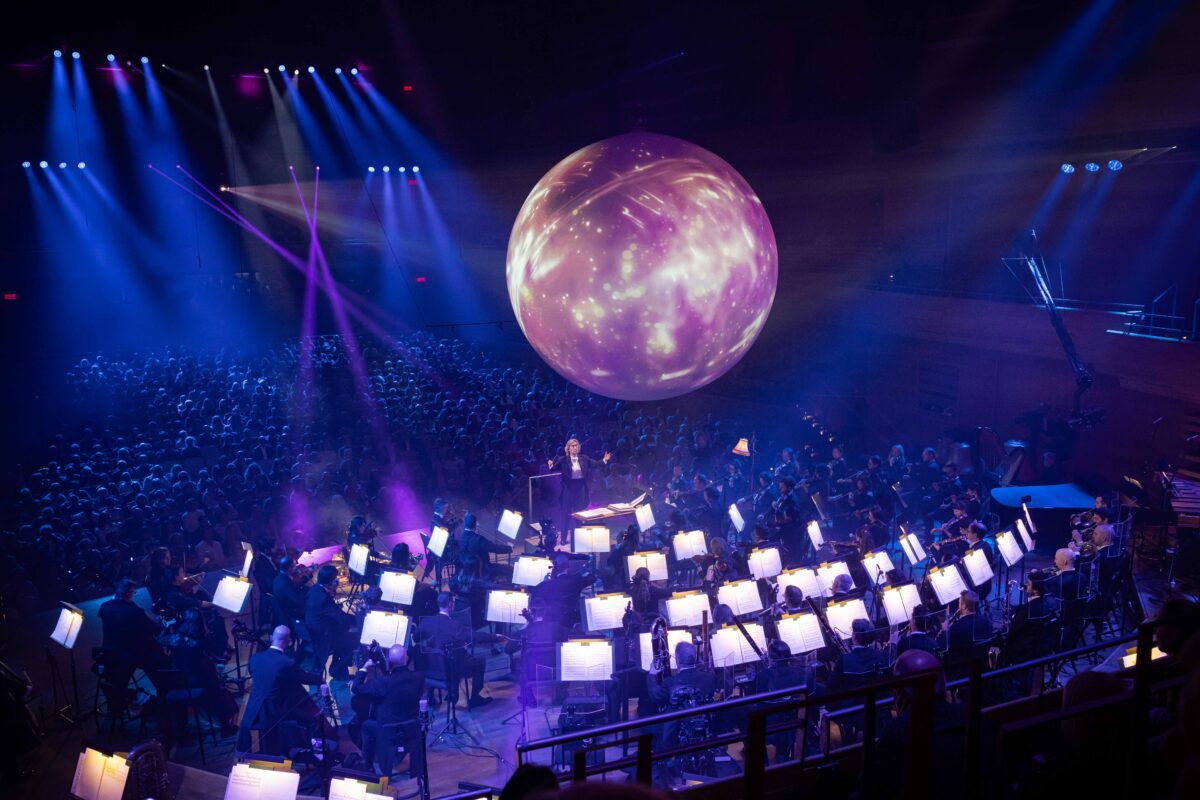
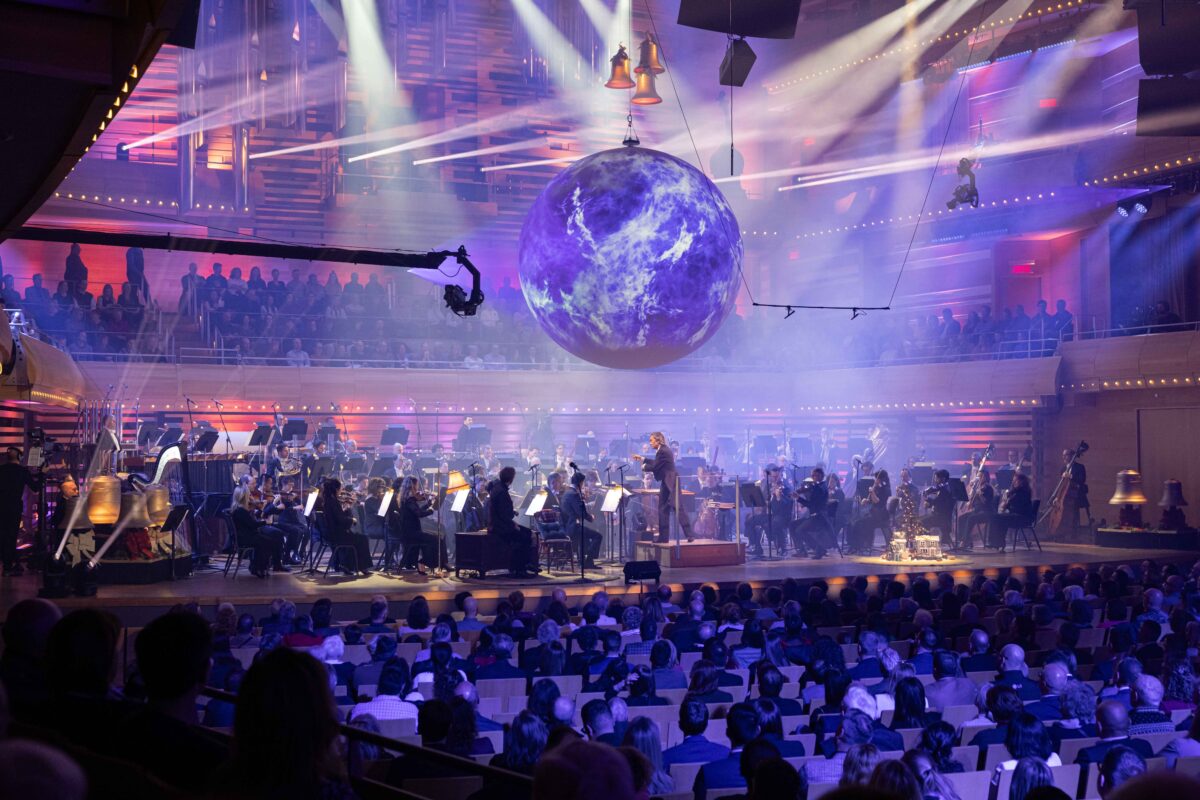
The musicians enter the stage: choir, first violin, soloists, Payare, applause. Silence. It begins. First movement, Symphony: the oratorio emerges from the crypt of time, as vibrant as it was 284 years ago. The miracle of music. Then the first soloist of the evening rises, a tenor, and it doesn’t stop.

I take notes, I scribble, and above all, I listen. It’s a massive and rich work that Handel left to posterity. Time flies by, the music envelops me, and then it’s already intermission. Applause, hubbub, bathroom break.

I already have some favorites. Luciana Mancini, the mezzo-soprano, has a magnificent voice: warm and powerful, it speaks to me, it enchants me. It’s her voice that seems the most powerful to me tonight. Every time she rises, in her turquoise velvet dress, and walks toward the center of the stage, I eagerly anticipate what awaits me. The choir, however, remains the star of the evening: 35 voices that merge, clash, play, and harmonize, 35 voices that become a single instrument. An instrument that lets me hear glimpses of paradise. The fluctuations in register and volume, from low to high, from a whisper to thunder, both sudden and imperceptible, give me chills, momentarily pulling me away from Assiah. When I see the singers rise at the back of the stage, I almost purr.

The intermission ends. Three knocks, I sit back down. The musicians return to the stage: choir, first violin, soloists, Payare, lights, music. Here we go again. Act two begins: before Christ can be resurrected, he must first be killed—since Handel’s Messiah was originally composed for Easter. The soloists give it their all; they are at their best, even more assured than in the first movement. Each movement is like a new chocolate from an Advent calendar, a delight. The violins, trumpets, and harpsichords are equally impressive: it’s beautiful, dramatic, triumphant, and tragic. The melodies resonate in my ears and touch my heart. I must have shed a tear or two, and it wasn’t from dust. Christ dies, rises again, Alleluia. The third and final movement left me a little unmoved, but the time flew by—three hours of pure bliss. Applause, three encores. I go home to write my review, a smile on my face.

Photos: Antoine Saito

Latin Jazz / latino

UdM World Music Ensemble: A Good Vintage, Born in The Cold

by Frédéric Cardin

At the end of each semester, the University of Montreal’s world music ensemble, under the direction of Julian Gutierrez Vinardell, presents the work of the program’s students. If you’re looking for a good, free Latin music concert (Vinardell’s specialty), featuring respectable performances of salsa, merengue, cha-cha-cha, and other classic Latin rhythms, all heavily influenced by jazz, you should add this group’s concerts to your calendar.

Last night was the end-of-fall session concert, with Julian Gutierrez Vinardell tasked with offsetting the early darkness and the (also early!) chill with good cheer, sunshine, and warmth. He succeeded rather well, playing the role of an effective, yet thankfully restrained, entertainer. The young musicians (with the exception of two additional veterans on trumpet and percussion) readily grasped the fluid nature of Latin rhythms in a program consisting of two Vinardell compositions, a traditional Dominican tune, several songs arranged for the occasion, and a version of Michel Legrand’s “La valse des lilas.”

I noticed the fine performances of David Gareau on vocals and Raphaël Labonté-Mathieu on piano. The former for his seductive timbre, his ease with Spanish and Latin rhythmic legato, the latter for beautiful improvisational and jazzy flourishes.

An evening that pleasantly warmed the vast and rather formal space of the Claude-Champagne hall, which was, incidentally, quite sparsely attended. On that note, I wonder if it wouldn’t be more interesting to offer this kind of concert in a more suitable venue like the Balattou or the Sala Rossa? The efficiency and proximity of the musicians greatly enhance the performance.

In any case, another program will be offered in May 2026. I’m really looking forward to it because I’ve been convinced. I suggest you give it a try too, if you haven’t already.

OTHER PANM360 PUBLICATIONS ON THE SUBJECT:

Entrevue de Vinardell par Frédéric Cardin il y a quelques jours

Entrevue de Vinardell par Michel Labrecque en mai 2025

Recension de l’album De Ti Lo Quiero Todo de Vinardell, sorti en 2024

Contemporary / Musique de création

Quatuor Molinari | Blair Thomson’s Miniatures, Kelly-Marie Murphy’s Dark Energy, R. Murray Schafer’s No. 4

by Jeremy Fortin

On Friday, December 5, the Molinari Quartet presented the program Canadian Rhythms, highlighting the compositions of three composers in communion with rhythm.

The concert began with Kelly-Marie Murphy’s “Dark Energy,” a work exploring the cosmos and the universe’s continued expansion, culminating in its eventual implosion. This description perfectly illustrates the piece, which unfolds in a grand crescendo, beginning with a sublime melody that the quartet members continuously exchange over a blend of tremolos and sustained notes, executed with delicate grace by the other members. However, one shouldn’t be fooled, for just as the universe expands, the quartet ignites, unleashing a series of virtuoso passages played with passion.

The second piece, the only new work in the concert, comes from composer Blair Thomson, who is presenting his very first string quartet for this occasion. Based on a series of miniatures, this creation by the Molinari Quartet strings together a series of short pieces that explore the many possibilities of a string quartet. The Molinari Quartet thus embarked on this exercise with great virtuosity, succeeding brilliantly.

The concert concluded with R. Murray Schafer’s String Quartet No. 4, a work particularly beloved by the Molinari ensemble. Having performed this same string quartet at their very first concert in 1997, the ensemble presents this magnificent piece in the midst of its 29th season.

The distinctive feature of this piece is its spatialization of sound: as the piece begins, violinist Olga Ranzenhofer is positioned at the back of the stage, in constant dialogue with the quartet. Throughout the first section, the violinist emerges from the back of the stage and quietly approaches her colleagues, a dramatic moment executed with great expressiveness. After a more traditional second section, which the quartet plays impeccably, the piece concludes gently with a distant voice from the back of the stage, a moment of pure melancholy.

Publicité panam

Baroque / classique / Sacred Music

Caprice/ArtChoral at the Maison symphonique | The Christmas Table is Set

by Alain Brunet

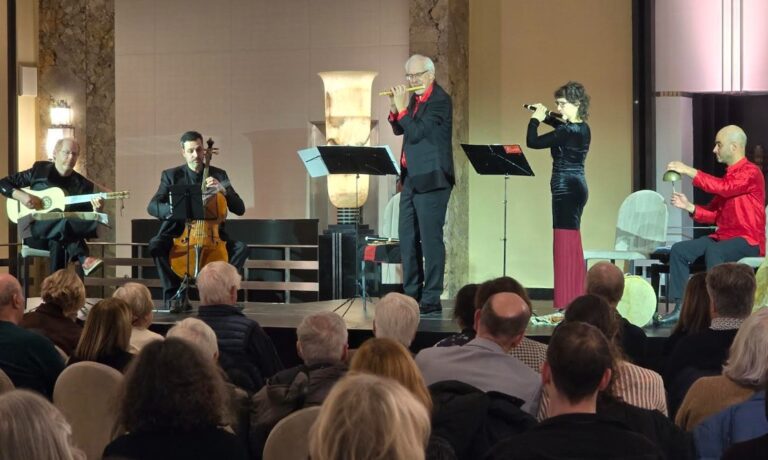
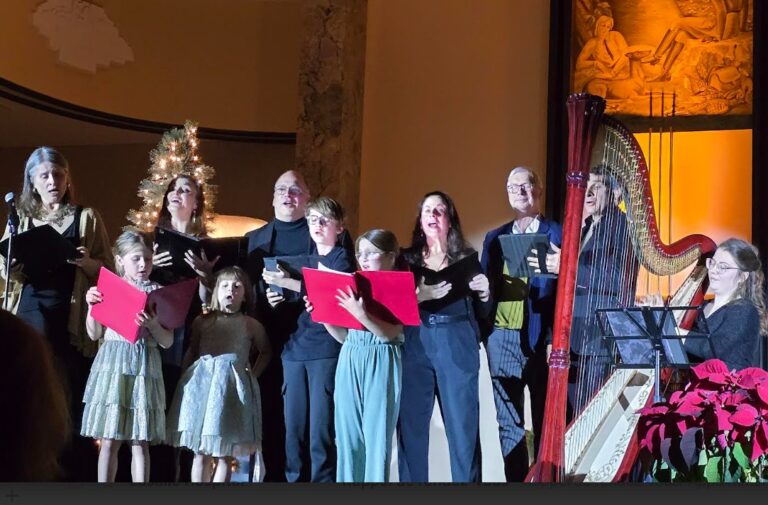
With the program Hallelujah!, presented on Thursday, December 4th at Maison symphonique, the Caprice and ArtChoral ensembles set the festive table. This was one of the first concerts in a long December series, where essential works are presented to audiences devoted to sacred and secular traditions. Matthias Maute is an excellent master of ceremonies in this regard; his humor and communication skills are on par with his musical abilities. The audience remains attentive throughout, and there are also plenty of opportunities to smile and laugh heartily.

From the outset, a work by the conductor himself is performed with the audience joining in. The songs and structure of Hallelujah are retro-nuovo in style, in that they respect the sacred spirit of the Baroque era, with a touch of the modern, as contemporary songs might employ similar techniques in their construction.

The rest of the program consisted of compelling excerpts from the two most emblematic works of the Baroque era, performed annually for the Nativity.

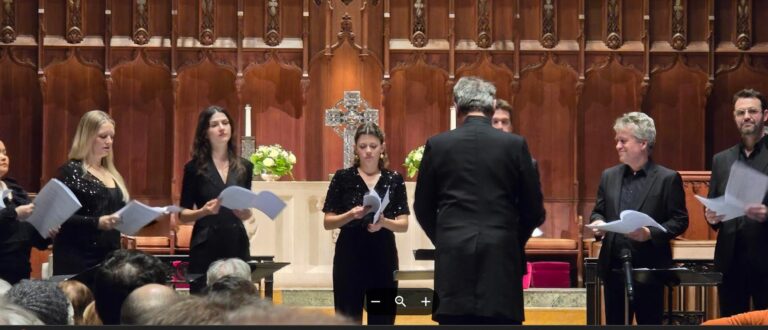
First, Cantata No. 1 from J.S. Bach’s Christmas Oratorio, a choral abundance magnified by the brass and woodwind sections of the orchestra. The nine movements of this cantata are undoubtedly mastered by ArtChoral and Caprice, led by a single conductor and artistic director. Matthias Maute, it should be noted, is a master of Baroque music with a Lutheran background, and therefore inclined towards grand choral works – he hails from southern Germany, in the greater Stuttgart area.

We are treated to compelling contributions from mezzo-soprano Florence Bourget, whose vocal range is not intended to demonstrate power but rather texture and precision in this context (parts 3 and 4). Tenor Emmanuel Hasler, whom our hockey commentators would call a “big guy,” expresses a high and firm voice in parts 2 and 6. In part 7, bass William Kraushaar struck me as a most eloquent soloist, both for his power and his stage presence. He shared the stage for a time with soprano Marianne Lambert, who offered an interesting complement to the main soloist in this section, while the reeds provided counterpoint. The bass then masterfully performed his role in part 8, before the chorale of part 9 brought the whole piece to a close.

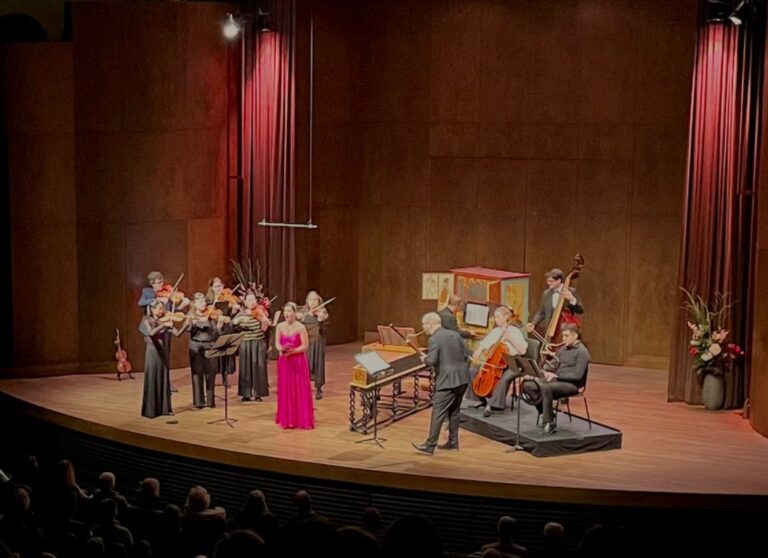
George Frideric Handel was selected for the second half of the program. A justified choice, since Messiah is the most frequently performed work during Advent, even though it was originally composed to celebrate the resurrection of Christ. The luminous and sensual delivery of the sections entrusted to soprano Marianne Lambert (There were shepherds abiding in the fields and Rejoice, greatly, O daughter of Zion) were among the highlights of this performance. The Nativity, the first part of Messiah, was impeccably performed by the ensembles, supported by period instruments, and the soloists before the famous Hallelujah!, which normally concludes the second part of Messiah, was added as a final flourish. How could it have been otherwise?

classique / Modern Classical / post-romantique

OSM | Folkloric and Hollywood

by Jeremy Fortin

The OSM presents an evening with a folk and Hollywood flavour. Violinist Simone Lamsma takes the stage as soloist at Maison symphonique with the concert Éclatante nostalgie: De l’Europe à Hollywood, which the OSM presented two consecutive evenings, with a symphonic happy hour version on Tuesday, before presenting the program in a more traditional version on Wednesday.

The program, bearing the “poetic” label in the orchestra’s programming, highlights Béla Bartók and Erich Wolfgang Korngold, two composers from Eastern Europe who emigrated to the United States during their respective lifetimes. In a folkloric and sometimes even Hollywood-esque atmosphere (as the title suggests), this program marked Rafael Payare’s return to the helm of the OSM as the holidays approached.

A work by Claude Debussy opened the concert with an orchestration of L’isle joyeuse, originally composed for piano. With the orchestra playing bellows beautifully and a sound that filled the Maison symphonique, the audience was able to relax and be lulled during this first piece of the concert.

Korngold’s Violin Concerto, performed by Simone Lamsma, continued the concert in fine style. The piece draws on several film themes composed by Korngold, illustrating the more Hollywood-esque feel of the concert, particularly in the first two movements where the soloist played the concerto’s soaring, lyrical passages with great delicacy before concluding with a virtuosic third movement. In this third movement, we witnessed the rapport between Lamsma and Payare, who shared knowing smiles throughout. The orchestra allowed the soloist to shine while also providing ample space in the tutti passages.

The concert concluded with Bartók’s Concerto for Orchestra. While the concerto genre is traditionally for a solo instrument accompanied by an ensemble, it is clear upon listening that Bartók intended to give voice to the various sections of the orchestra, with tutti passages and solos throughout. Regarding the interpretation of the piece, Rafael Payare once again demonstrated his ability to make the orchestra resonate in the most intense passages, particularly with the brass section, which was prominently featured last night. This intensity allowed him to create a welcome contrast in the second and fourth movements, which, despite their gentleness and fluidity, were somewhat overshadowed by the other three movements, which possess a decidedly greater force of character.

Photo Antoine Saito

Brazilian / Forró / Samba

A Double Carnival Celebration

by Sandra Gasana

The Sala Rosa was packed to capacity for the double anniversary celebration of Forró Rasta Paix and Tamboréal Samba Bloco. While the former was celebrating its second anniversary, the latter was celebrating its very first.

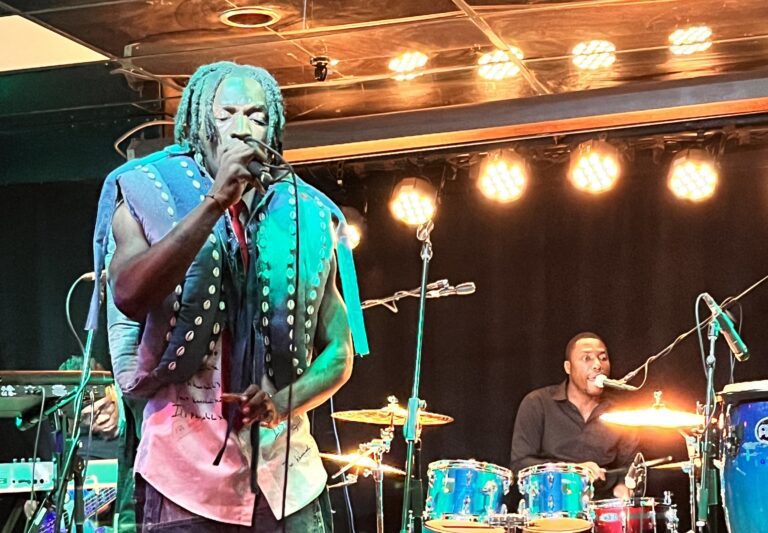
The evening began with Forró Rasta Paix, a five-member group including Fabio Stilben, whom we interviewed. While he sang and played the triangle, he was accompanied by Pablo Majlis on accordion, Alexandre Monteiro on flute, Vovô Saramanda on percussion, and Anit Ghosh on violin or bass, depending on the song.

We were treated mainly to covers from the wide repertoire of forró, including classics by Luis Gonzaga, but also xote, a style similar to reggae. The dance floor filled with couples, as this style is primarily danced in pairs.

“For the next song, we’re going to invite our godmother, Bïa, who has supported forro for a long time,” Fabio announced before welcoming the great Brazilian singer and presenter.

For the final songs, Fabio handed over his triangle to Lissiena Neiva, another prominent figure in Montreal’s Brazilian music scene, primarily involved in samba circles, to focus entirely on singing. This allowed him to express himself more freely and even dance.

My favorite of the evening was the cover of Vamos Fugir, by Gilberto Gil but especially Bebê by Hermeto Pascoal, perfectly mastered by Alexandre Monteiro and his flute.

As Fabio described to us during our interview, the evening began with some rather mellow pieces before ending in a full-blown, carnival-like celebration. The audience danced wildly, sang along to every song by heart, and had even started a sort of tunnel that wound its way through the entire venue. In short, after the first set, the bar had already been set incredibly high.

After a short break, Tamboréal kicked things off with two pieces played by the students. In fact, in addition to being a percussion group, Tamboréal has also been offering percussion classes for a few months, and this was the students’ first public performance. This was followed by the full Tamboréal Samba Bloco ensemble, composed of 18 percussionists, 3 musicians (bass, electric guitar, and cavaquinho), and of course, the conductor Carlos, with whom we had the opportunity to speak.

Each of the musicians had the opportunity to sing on some tracks, but the rest of the time, it was singer Thaynara Perí who perfectly filled that role. She alternated between her percussion instrument and singing, but it was clearly in the singing that she shone. Despite the imposing sound of the percussion, her voice still carried through.

Their repertoire consists of covers but also original compositions, including a song that bears the group’s name.

“I would like us to applaud all the Capoeira enthusiasts and what they have done to make this martial art known throughout the world,” said Carlos before introducing the song “Capoeira.” Just like Thaynara, he alternated between his roles as bandleader, percussionist, and MC, speaking between songs to provide context or talk about the tracks.

Some pieces had a rather rock feel, partly thanks to the electric guitar, but otherwise we were treated to a mix of samba, forró, maracatu and axé.

Carlos even took the time to invite Fabio to feature on a track, reinforcing this idea of ​​collaboration. Meanwhile, in the audience, people started line dancing, some improvising as dance instructors while others followed along.

“It took us many hours of work, love, and sweat to offer you a show like this, I hope you enjoy it,” Thaynara shares with us in Portuguese, between two songs.

I have a feeling these double-anniversary parties are becoming a ritual, since this is already the second time these two groups have celebrated together. And even though there was another major event in the Brazilian community this weekend (Sambakana), it didn’t stop a good crowd from gathering at Sala Rosa, another indicator of the significant size of the Brazilian community in Montreal. There’s something for everyone.

Electronic

EAF x S.A.T. | IRL’s Ocean of Sound

by Loic Minty

After a long night of music, I woke up remembering what I thought had been a dream.

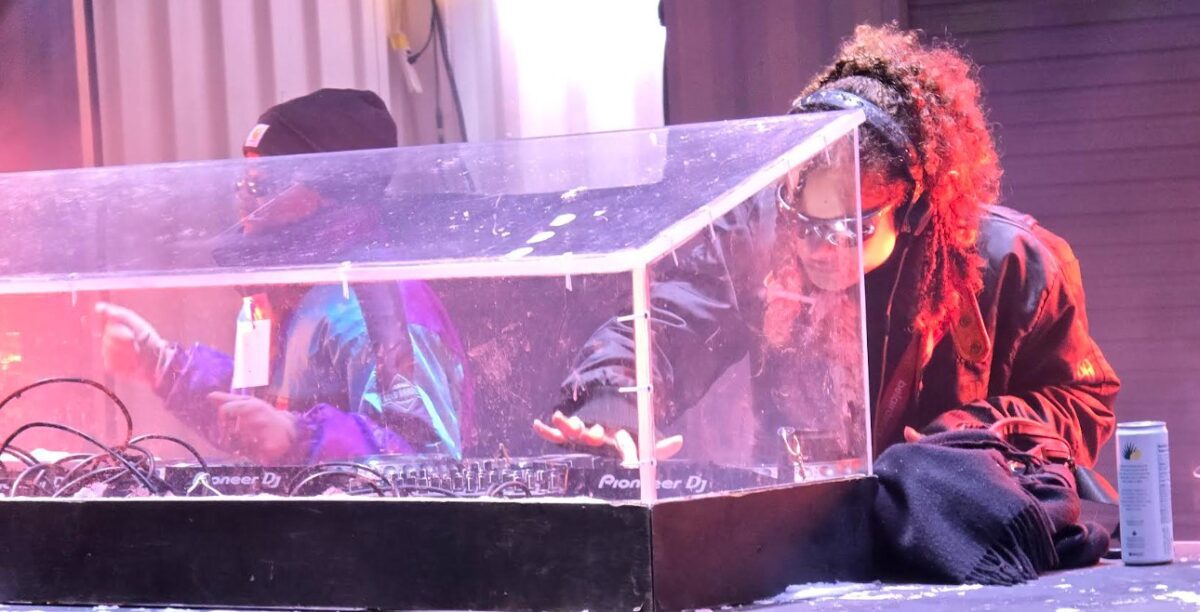
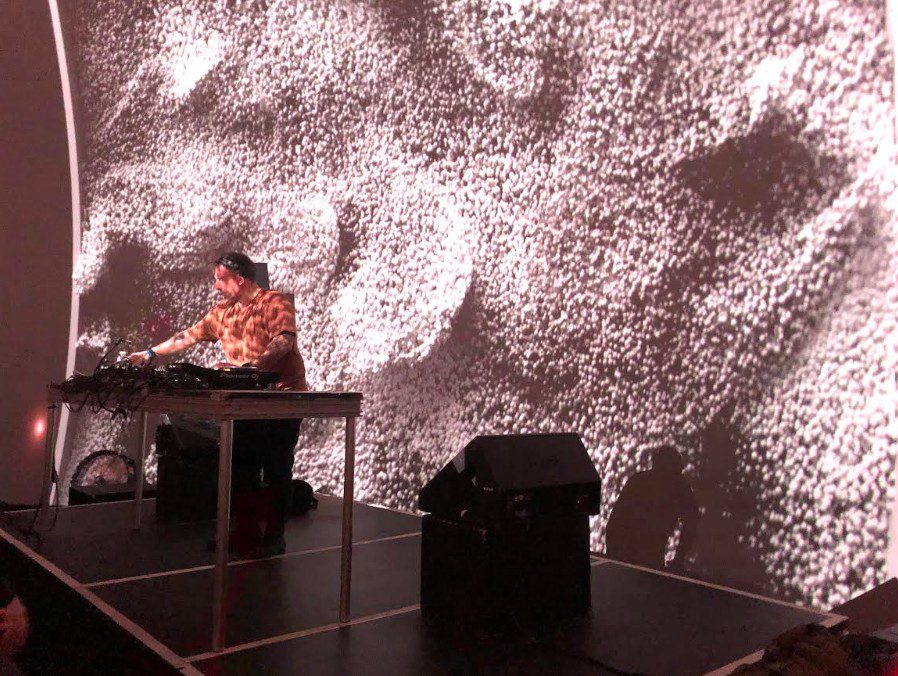
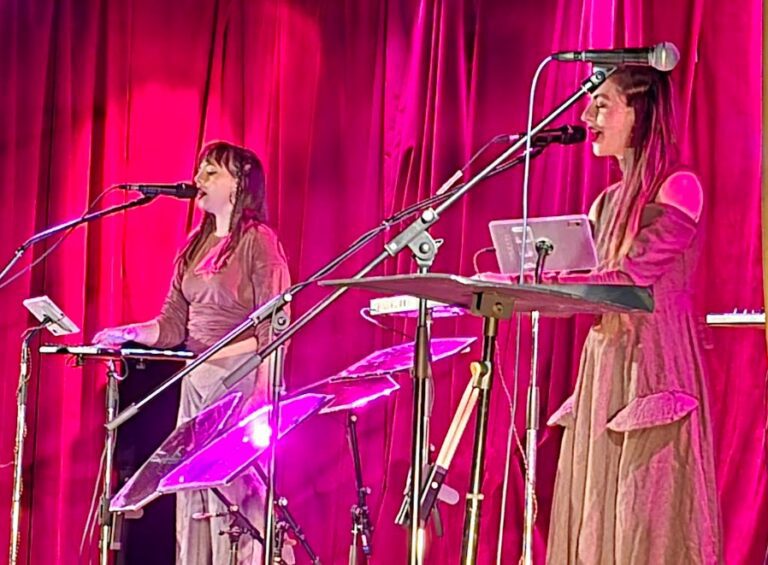
IRL, a.k.a. Amanda Harvey, opened with an ode to her anthropocenic listening practice: a field recording of an ocean soundscape.

Immediately, wandering thoughts dulled and narrowed into the rocking of waves. Ever so slowly, as we reached for the bottom rung of attention, ears opened in anticipation of the first notes of a warm pad. Quietly but surely, IRL began.

From deep under the water’s surface came the emergence of a drone. Then, as the patterns of her sampler wove into each other, rhythms filled the space with what seemed to be an ocean between each note. From above, a keyboard softly blew the symphony of a thousand angels with their horns. It was high and airy but also just as grounded in the space. Moving back and forth, IRL took pauses, listened, felt the crowd. The “performance” felt second to a desire to channel something greater. As time went on, the channel only became clearer, and the static rolled into a little ball of lint.

Behind her was what looked like found 16mm footage, perpetually reconfiguring its frame, giving space to imagine what life was held in those blurs of light. There was no subject or story, but the theme was very strong. It sparked pictures in the mind’s eye and, together with the music, created what Michel Chion dubbed the audiovisual illusion. We were simultaneously seeing the sound and hearing the images move on the screen. With that, what we were experiencing felt beyond both mediums -a poem of sorts, speaking to the deep recesses of memory, to some shared recurring dream we’ve yet to sleep through. Over IRL’s field recordings and deep drones, the images of seafoam breaks, deserted mountain ranges, lava trails -all became internalized as one. And there, if you listened closely, the voiceless could be heard.

From our interview last winter preparing for her Substrat show, Amanda Harvey spoke extensively about how listening has shaped her practice, and I realize I hadn’t understood what that meant until last night. Her music felt closer to a sonic meditation practice from a Pauline Oliveros prompt than to a strict live performance, and her selfless, experiential approach meant that presence was needed -something that a secondhand description often fails to convey.

EAF is a magnet that draws these unique beings. There is much to be said about this series’ growing influence, and it feels as though the chrysalis has begun to crack. Yet it is still by and for the artists. Small bubbles of surrounding subcultures regularly pop in to give some air to this now-familiar exploratory formula -that is, an engagement with the non-defined. And so, the story continues, forward into the unexplored present moment.

Bebop / Jazz / saxophone

A Big Band of Strings and Saxophones Celebrates Charlie Parker

by Michel Labrecque

Upon entering the Fifth Hall of Place des Arts, twenty minutes before the concert, the string ensemble was already in a state of high excitement: the instruments were tuning, practicing scales and twirling around.

The National Jazz Orchestra transformed itself into a string ensemble, as it sometimes does. This particular occasion was to pay tribute to Charlie Parker with Strings, that rare moment when, between 1949 and 1951, the great bebop saxophonist recorded with a string ensemble. A moment that marked history at the time.

To commemorate this event, the ONJ pulled out all the stops: on stage were some twenty violinists, violists and cellists, accompanied by a harpist, an oboist and an English horn player. In addition, there was a rhythm section with drums, bass, guitar and piano.

The musical director for that evening, Samuel Blais, told me in an interview that Charlie Parker, aka Bird, had never had such a large ensemble. At the time, the producer wanted to save money, so it was a small string ensemble that collaborated with the great saxophonist.

To portray Charlie Parker, Samuel Blais called upon regulars from the ONJ: the excellent Montreal saxophonists Jean-Pierre Zanella, Rémi Bolduc, André Leroux and Alexandre Côté. Each of them had their moment of dialogue with the string ensemble.

How can I put it simply? It all sounded fantastic! It was fluid and rich. The ONJ meticulously respected the original arrangements, but the saxophonists had the freedom to improvise, without trying to copy Parker. Of course, you have to appreciate the style of the era. The strings sometimes sound like a soundtrack from a Walt Disney film. But it’s finely arranged, and in these dreary times, it adds a little color to our lives.

Don’t even ask me which of the four soloists was the best. Each had their own unique sound. And that’s perfectly fine.

Finally, the four musicians reunited on stage and indulged in a series of solos, accompanied by the rhythm section, for a final piece. The string and wind orchestra, almost entirely composed of women, tapped their feet and smiled.

In the room, we were doing the same thing….

It was a very nice evening, sold out, although around me there were a few empty seats.

The ONJ’s next event will be dedicated to Ellington. On January 15, 2026, Kim Richardson will sing Duke Ellington, conducted by Marianne Trudel. Happy New Year!

Publicité panam
Jazz / Latin Jazz / orchestre / saxophone

Melissa Aldana’s Soul Pierces The UdeM Big Band

by Michel Labrecque

With the cold and torrential rain pouring down on Montreal, it took a bit of courage to venture to the concert hall at the University of Montreal’s Faculty of Music. But it was well worth it: the radiant saxophone of Chilean Melissa Aldana awaited us, accompanied by a student Big Band that seemed to be firing on all cylinders. Rain? What rain?

Melissa Aldana has garnered much praise in recent years for the originality of her playing and the quality of her compositions. “She’s one of the best saxophonists on the planet,” João Lenhari, trumpeter, teacher, and musical director of the Big Band, told me during our interview. And by that, he meant regardless of gender.

Melissa usually performs in a sextet or quintet. Her only experience with a big band was a project with the Frankfurt Radio Big Band, inspired by the Mexican artist Frida Kahlo. It was a version of this project that we were treated to at the Salle Claude Champagne.

João Lenhari stated it from the outset, in his French beautifully tinged with a Portuguese accent: reproducing these compositions by Melissa Aldana arranged by Jim McNeely was a serious and complex undertaking that required many rehearsals.

Overall, the concert was excellent. The kids did a fantastic job. These pieces, which are jazz with a subtle Latin influence, are indeed difficult to perform. But overall, everything flowed smoothly. The rhythm section was particularly impeccable, in my opinion as a layperson who listens to a lot of music.

What’s particularly wonderful about this kind of concert is the humility of the “star.” Melissa Aldana gave the students plenty of space for their solos, applauding and encouraging them. I don’t know if you find that in classical music. There was a particularly moving moment when tenor saxophonist Maude Gauthier and Melissa Aldana were in dialogue, responding to each other. I wondered how fast Maude’s heart was beating. It’s an incredible opportunity!

In short, it was a warm and musically excellent evening. The only slight drawback: at times, the Big Band somewhat overpowered Melissa’s saxophone, which often conveys very subtle emotions. Fortunately, she was able to showcase her full talent in an unaccompanied solo, where the breadth of her range and nuances was evident.

I therefore recommend that you listen to her latest album Echoes Of The Inner Prophet, to appreciate her talents as a saxophonist and composer.

On December 7, the Salle Claude Champagne will host saxophonist Bob Minzer, accompanied by the university’s alumni Big Band.

Pop

M For Montreal I Léonie Gray’s Songs For Female Power

by Marilyn Bouchard


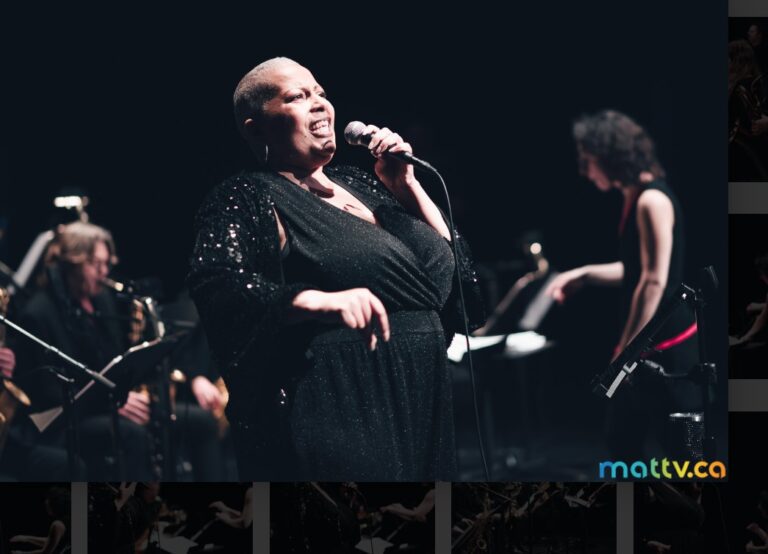
Leonie Gray took the Théâtre Plaza, stage by storm, as part of M for Montreal, to offer us a groovy and full-of-energy performance. In front of a smiling and dancing crowd, she presented this Friday, November 21, an assortment of songs, mainly from her most recent album Crève-Cœur, but also some from her previous album Who?. Accompanied by an exclusively female band on drums and piano, the girls presented a 45-minute setlist mixing pop, soul and jazz, with touches of funk and R&B here and there, for a catchy moment. The powerful voice of Gray, who won several singing competitions in the early 2000s, punctuated the evening with intensity and raw emotion, where the female power recovery was in the spotlight. Very physically involved, the artist used the stage as her home by using every corner/position with ease to sometimes create proximity effects with the public and sometimes bursts of energy lifting the room. An exciting show that set the table well for the finale.

Dark Pop / Indie Rock

M For Montreal I Kandle Dances in the Shade

by Marilyn Bouchard

Kandle, our favourite western Canadian adoptee, was back on the scene at the l’Esco on St-Denis in a program alongside Babyteeth and APACALDA during to M for Montreal. Surrounded by an intimate formation of two musicians, the singer-songwriter, who has been travelling the roads recently alongside her father (54-40’s, Neil Osborne) was back in town for an expected meeting with his Montreal Fans.

Going through mainly songs from for album Set the Fire, but also Holy Smoke and In Flames, she introduced us to an assortment of bluesy rock songs, languorous and dancing shades inspired by her childhood on the road, her pain chronicles, and her love life with authenticity and ardour. In a dark and smoky atmosphere, straight out of the ’90s, where only neon lights illuminated, the backing tracks and the musicians harmonized to offer us an emotional moment filled with guitar-inspired solos and melancholic vocal flights. An evening where, clearly, Kandle had as much fun as the audience in Montreal!

Electro-Jazz / Jazz Fusion / jazz groove / Jazz Rock

M For Montreal I BADBADNOTGOOD storm l’Olympia

by Marilyn Bouchard

The Toronto electro-jazz band BADBADNOTGOOD, accompanied by Colin Stetson and Rebecca Foon FOR the opening, closed the last night of M for Montreal at the Olympia. Obviously very happy to be back in front of the Montreal public, the four musicians set the stage on fire by presenting an assortment of pieces consisting of must-haves such as “Time Moves Slow” and “In Your Eyes” but also of their most recent material from Mid Spiral and Talk Memory. For the occasion, Leland Whitty spoiled us with even longer and more complex saxophone solos than on record and was quickly equalled by, Alexander Sowinski (drums and sampler) and Chester Hansen (bass and synths), who all gave themselves to heart joy on their instruments, giving us the real impression of being in their (very large) local.

In front of hypnotic and abstract projections, the public immersed themselves in the musical trance by dancing and tapping the bar in the air, while we had the right to a few words and a lot of warm smiles. A busy evening of interpretations (and improvisations!) inspired by frantic or languid rhythms where everyone had a blast. A supercharged and packed room, with the energy at the ceiling, for a final in beauty!

Subscribe to our newsletter