Vans Warped Tour Montreal: Bearings Brought Pop Punk Bliss to Ghost Stage
by Stephan Boissonneault
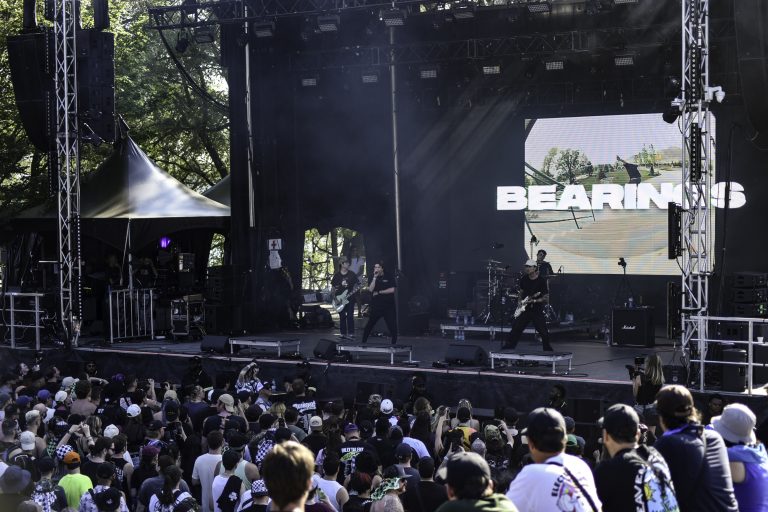
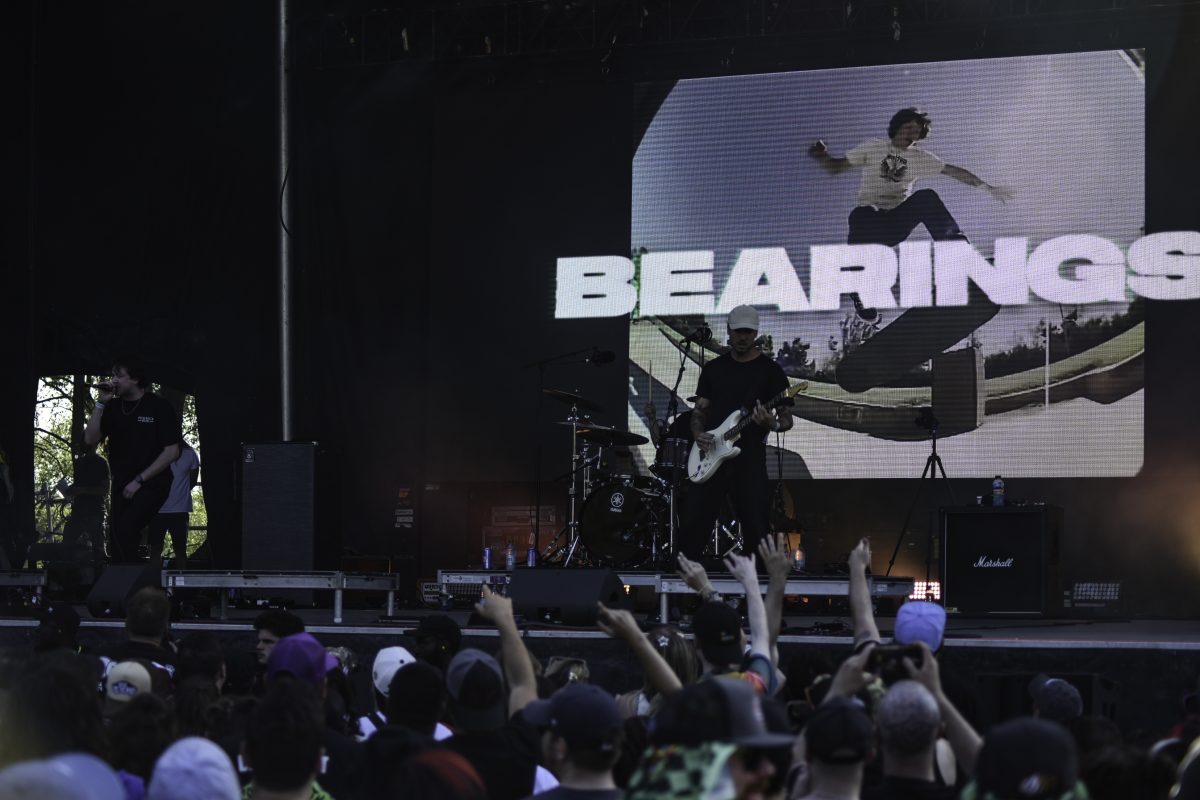
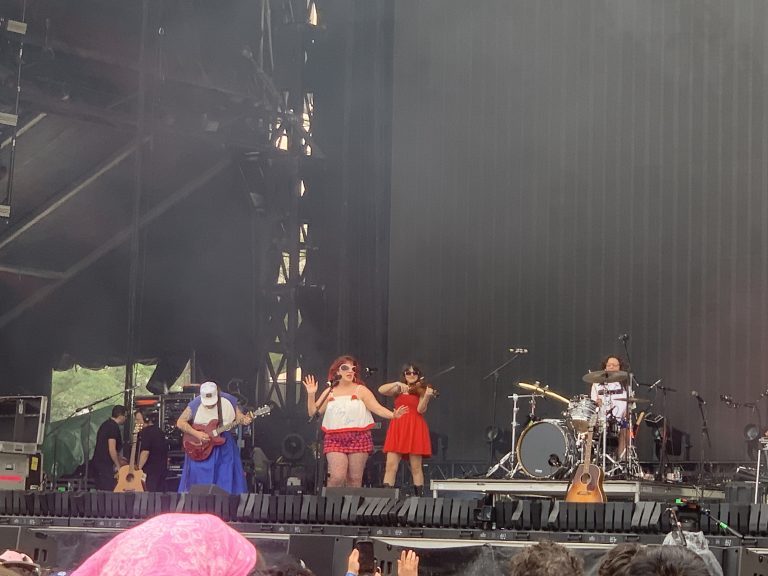
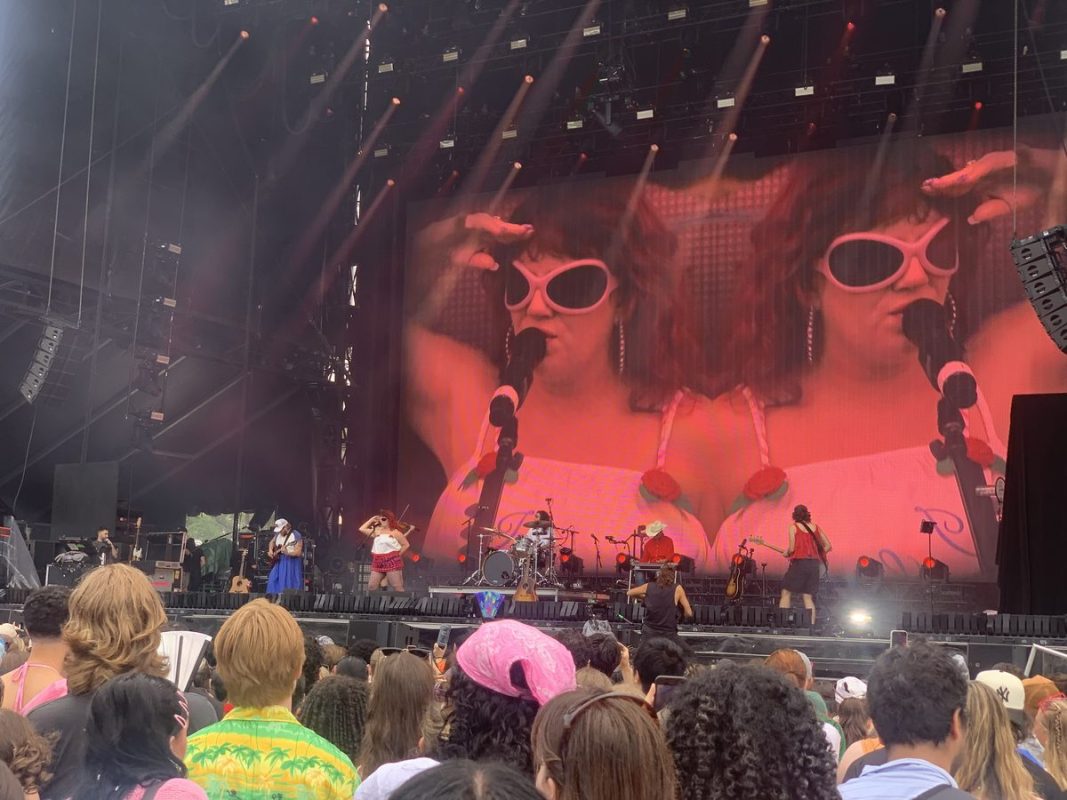
There is nothing better than losing your shit for a skate pop punk band in 2026. At least, that was my experience at Vans Warped Tour from the VIP terrace hanging above the Ghost stage. Bearings has been around for around 10 years, but this was mine, and much of the crowd’s, introduction to these scrappy Ottawa punks. Though they did have some super fans pressed up against the barrier, screaming all of the words. The group remided me of old PUP, and don’t say that lightly. I used to love PUP.
But Bearings has that clean and crisp, perfected stadium pop punk sound that is easy to digest at max volume. Hearing and watching them tear through older tracks and newer ones from last year’s Comfort Company was punky bliss.
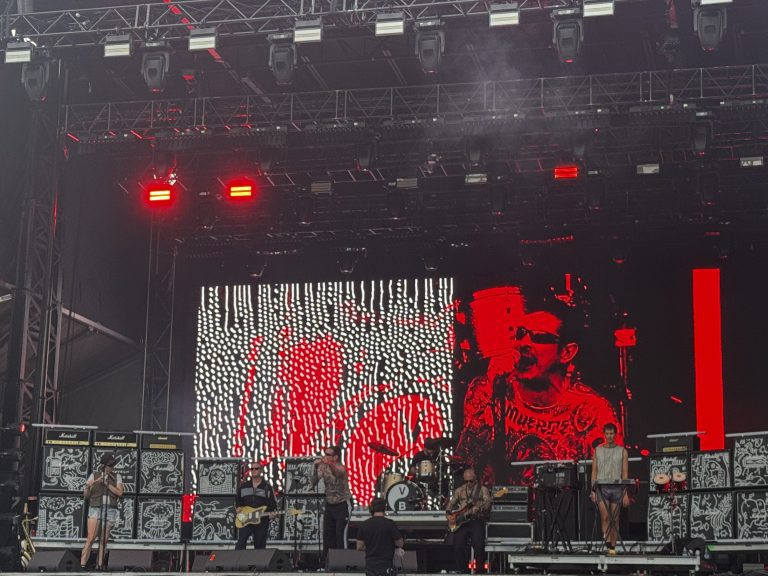
It felt like a proper Warped Tour, or at least what I imagined, experience—the band bouncing around the stage with reckless abandon while skate videos played in sepia VHS tint on the backdrop screen. This is what it’s all about. The only thing that would have made it better was having another half-pipe (the only one was in front of the main stage). Honestly, if Warped Tour continues, those old nostalgic bands will fade, but newer-ish groups like Bearings are ready to have their day in the sun.
Vans Warped Tour Montreal: Bowling For Soup is the Greatest Band of All Time
by Stephan Boissonneault
“Ladies and gentlemen, give it up for us, Bowling For Soup, the greatest band in the world.” So crooned Jaret Reddick, vocalist/guitarist and the only founding member of the Texas band, which dates back to 1994. I never thought I’d ever see this hilarious pop-punk group live. During my skater days, they were always on in the background. Usually it was “1985,” and “Next-Ex Girlfriend,” both of which they played live. You can guess which one was last. No, this was a fantastic set list, filled with hit singles from the bands 30 plus career, from albums like A Hangover You Don’t Deserve, Drunk Enough to Dance, and TheGreat Burrito Extortion Case (which might be one of the best album titles I just remembered.)
But what makes this show so memorable is their stage presence. Reddick is still an absolute clown, probably even more so at 54, with his constant dad jokes and banter on stage. He’s constantly taking the piss out of the audience, stopping a song midway for the “First and only Bowling for Soup photo op,” before jumping back into “High School Never Ends.” “Ladies and gentlemen, this song is about Texas. It’s called Ohio!”
We heard two newer ones, at least newer to me, who haven’t thought about Bowling For Soup in some time. They were “Getting Old Sucks (But Everybody’s Doing It),” which has the lyrics “You had a heart attack I’ve got two bum knees / We don’t wanna live forever / What the fuck is TikTok?” And a somewhat cringey and too-on-the-nose acoustic number, “Turbulence,” about mental health. It kind of bummed out the fun pop-punk atmosphere, but Bowling For Soup corrected it with “Punk Rock 101,” a killer “Teenage Dirtbag” cover, and of course, “1985,” another cover that everyone thinks Bowling For Soup wrote. “I want you all to lose it like its Simple Plan singing “Perfect”‘ Reddick screamed. It wasn’t the last time we would see him. He made an appearance during the over-the-top Simple Plan set on Main Stage a few hours later. To really understand the majesty, this Bowling For Soup show was kind of a “you had to be there” moment.
The OSM at the BIG O, A Symphonic Pop Fiftieth Anniversary
by Alain Brunet
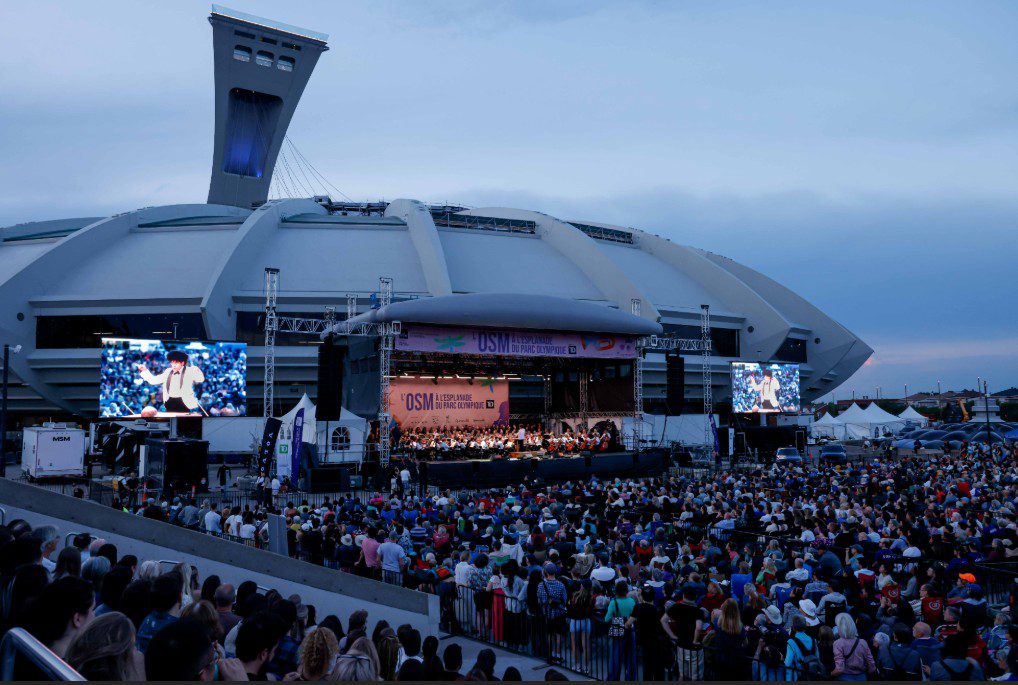
On August 12, under a clear sky, the fiftieth anniversary of Montreal’s Olympic Stadium, our unloved Big O, coincided with the Perseids, the partial solar eclipse and this annual concert given by the Montreal Symphony Orchestra, on the Esplanade of Olympic Park, at the foot of the imposing structure which is being renovated and for which we hope acceptable acoustics – which was by no means the case during 5 decades of sporting and cultural activities.
The discussion touched on the stadium’s construction, the Expos’ long stay until their relocation, Diane Dufresne and her 1984 “Magie rose” show, and the occasional concerts by U2, the Rolling Stones, and Pink Floyd. They also reminisced about the mega-shows by Madonna, George Michael, Verdi’s Aida with its grandiose (or bombastic, depending on your perspective) sets, David Bowie, George Michael, Michael Jackson, Genesis, and even the Montreal Symphony Orchestra under Vic Vogel’s direction at the 1976 Olympic Games opening ceremony. Notably omitted were the appearances of Bruce Springsteen, Sting, Peter Gabriel, and the riot at the Metallica/Guns N’ Roses concert in 1992.
I myself covered most of these concerts for La Presse, and I thoroughly enjoyed them while trying to downplay the major acoustic frustrations, as the Big O was considered a vast and deplorable echo chamber—a conceptual flaw on the part of its architect, Roger Taillibert. Let me emphasize: the announced renovation of the stadium’s interior furnishings will be unforgivable if this major irritant isn’t addressed.
After receiving Montreal’s highest honour from our mayor Soraya Martinez Ferrada, Rafael Payare took his seat.
The first work on the program, Dmitri Shostakovich’s Festive Overture, was created in 1954 for the Bolshoi, in the context of the 37th anniversary of the October Revolution, a year after the death of Stalin with whom he had a complex relationship, to say the least. In this piece, the great Russian composer continued to thwart the dictates of Soviet authority by mixing symphonic evidence with daring and virtuoso writing for the strings and a brass section placed in the foreground – 4 horns, 3 trumpets, 3 trombones.
This was followed by a text evoking the construction and history of our fifty-year-old stadium, read by actress Sophie Cadieux, set to John Adams’s “A Final Shaking,” the fourth movement of Shaker Loops, a work originally composed in 1978 for a septet and later adapted for a symphonic setting. It’s clear that the narration largely overshadowed the music, as one might expect.
I was 17 when I watched the opening ceremony of the 1976 Olympics on TV; it was the first time in my life that I listened to the music of André Mathieu (1929-1968), a piano prodigy and composer little appreciated in his time, whose excerpts had been put together under the impetus of Vic Vogel (1935-1919), an essential Montreal jazzman and also André Mathieu’s neighbor in the 60s. I don’t remember exactly the style of the arrangements of the time then performed by the OSM under the direction of our late Vic, the arrangements of Alexandre David probably strengthened the rhythm, all followed by Daphnis et Chloé, Orchestral Suite No. 2 by Maurice Ravel, a composer very popular with jazzmen.
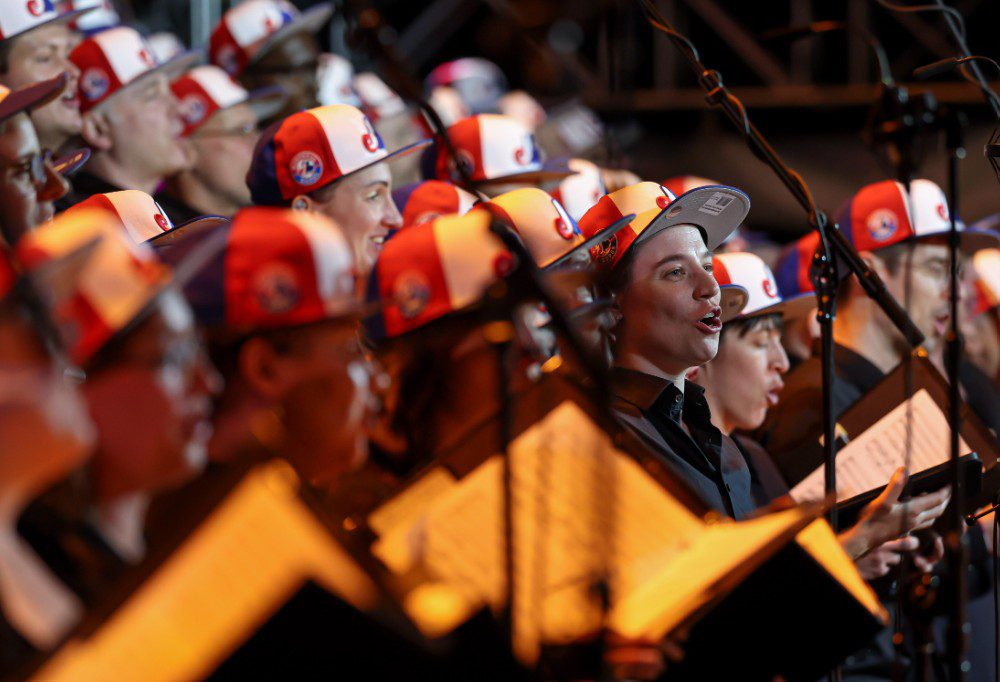
It’s hard to imagine the highly talented Alexandre David, a former metal musician turned contemporary composer, arranging a Johann Strauss waltz, Frühlingsstimmen, usually reserved for New Year’s balls and skaters. Once again, we observed a more pronounced rhythm, an almost pop-rock attitude… and why not!? This famous Strauss waltz was “mashupped” with Take Me Out to the Ballgame (Jack Norworth/Albert Von Tilzer), the absolute anthem of baseball fans since 1908, all sung by choir members wearing Expos caps to the delight of the large crowd gathered on the Esplanade.
Arranged by Hugo Bégin, the Stade’s greatest pop-rock hits were a medley of the mega-hits played at the time: U2’s “Sunday Bloody Sunday” (which wasn’t the focus of the Irish band’s sets; we remember the tracks from the albums Achtung Baby and The Joshua Tree), George Michael’s “Faith,” Madonna’s “Vogue,” Michael Jackson’s “Billie Jean” (he came to the Stade in 1984 with the Jackson Five, not for his first solo tour), David Bowie’s “Let’s Dance,” and Pink Floyd’s “Money” (whose album Dark Side of the Moon had been performed in its entirety at the Autostade in June 1975 and wasn’t a central work in the concerts given at the Olympic Stadium, unlike Another Brick in the Wall, which was indeed the signature song of a show at the Stade). We also recognized the Rolling Stones’ “Paint It Black,” released in 1966, not during the Stade’s run and the Steel Wheels album era.
Finally… we can deduce that the arranger sometimes preferred well-known hits to pieces emblematic of these concerts given at the Big O. Enough of this consideration, on Wednesday we observed the increased ability of classical musicians to get into the groove of pop or rock, which was not obvious not so long ago.
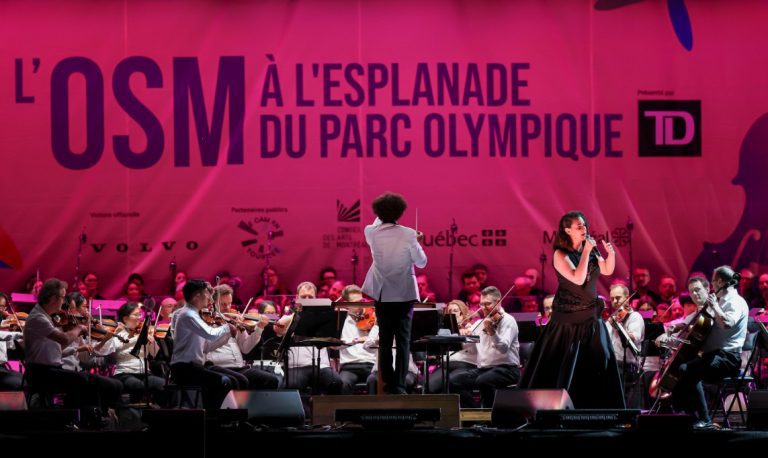
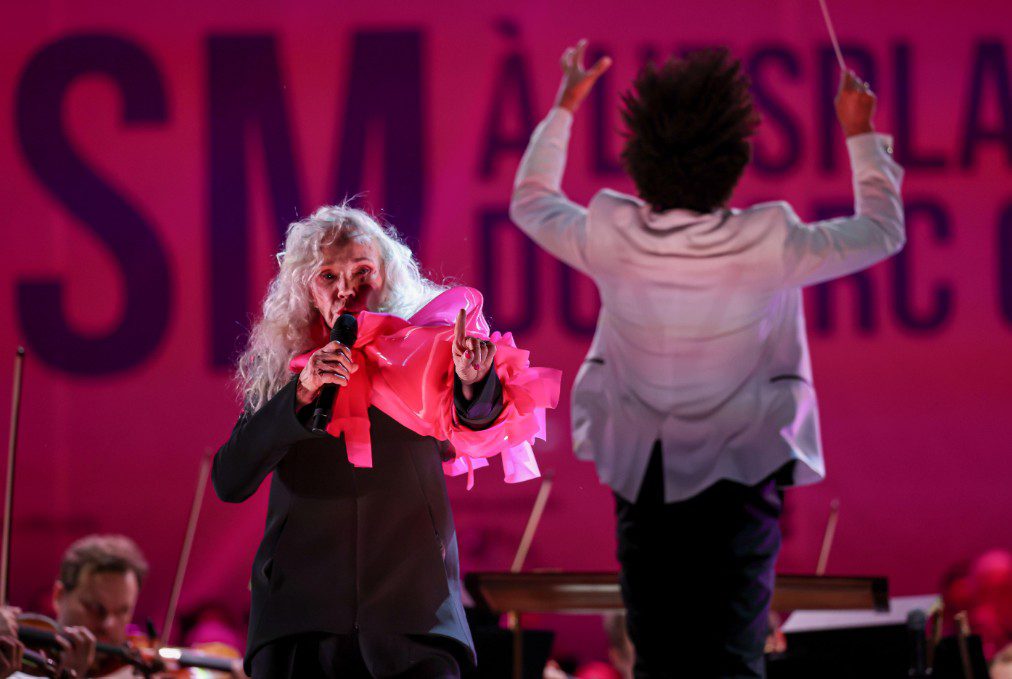
And it continued! The triumphant march from Verdi’s Aida preceded the fabulous alto/contralto Rose Naggar-Tremblay in a solid lyrical interpretation of “Je voulais te dire que je t’attends,” a classic by Michel Jonasz, originally performed by our very own Diane Dufresne. Acclaimed for her environmentalist mashup of “Oxygène” and “L’hymne à la beauté du monde,” complete with choir, the unparalleled Quebec performer brought the house down, with the audience seemingly unconcerned by her obvious vocal limitations, inherent to her 81 years.
Thus, the OSM, its conductor, and their guests were in top form before a European tour that could prove triumphant. The ever-popular Ode to Joy, the celebrated finale of Beethoven’s Ninth Symphony, was impeccably performed with the precision, grandeur, and passion necessary for a successful interpretation. Soprano Lauren Margison, alto Rose Naggar-Tremblay, tenor Frédéric Antoun, and bass Alex Halliday were the soloists; the choir was masterful; the brass section positioned to the left of the giant screen performed brilliantly; the OSM and its maestro rose to the occasion, making this a highly successful and universally acclaimed event, all capped off by the dazzling fireworks display.
Photo credit: Antoine Saito/Montreal Symphony Orchestra
Présence Autochtone I Anyma Ora Captivates Place Des Festivals
by Michel Labrecque
There’s a lot of buzz right now about Anyma Ora, whose real name is Danyka Sioui. The Wendat musician from Wendake, a suburb of Quebec City, won ROSEQ, Stingray, and LOJIQ awards in 2025. She has been touring extensively in Quebec in recent months and will continue to do so this fall.
“It’s definitely a great honor to be performing on the main stage at the Présence Autochtone festival,” she tells me in an interview. “With this kind of event, in a big city, you can also sense an openness from non-Indigenous people toward our culture, and that’s amazing,” adds Anyma-Danyka.
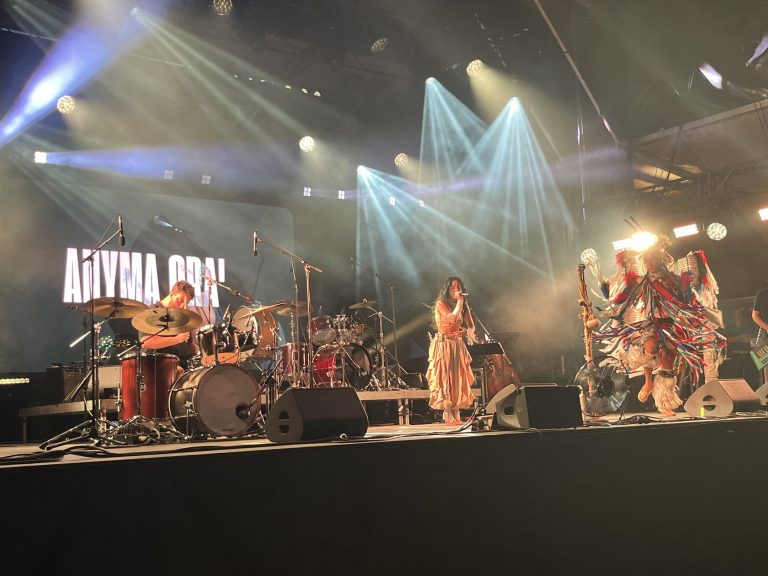
Yet her discography is tiny: an EP, Humans, released in 2021, and a single from this year, Fish. Her music leans toward electro-pop, with lyrics in English. But it’s when you see her on stage—where she blends these tracks with traditional Wendat songs, dance…and her live voice, which takes on all sorts of inflections—that you realize Anyma Ora has incredible potential.
“For me, being Indigenous doesn’t mean you have to make traditional music,” says this daughter of musicians, who grew up listening to pop and attended elementary and high school in English. Her father, Gaétan Sioui, produced and composed music that sought to fuse tradition and modernity in the early 2000s.
“He passed on his passion for music to me; when I was 4 or 5 years old, he used to make me listen to Pink Floyd at full volume,” Danyka says with a hint of sadness, as her father passed away in 2014 at the age of 49.
On stage at Place des Festivals, however, there are many nods to Indigenous culture. And it’s when she sings a song in Wendat—that nearly extinct language Anyma is currently learning—against a subtle backdrop of electronic keyboard, that her soul and her voice pierce us most deeply.
It’s important to understand that the young artist is still defining her artistic path. Although she sings in English, she addressed the crowd exclusively in French, which she speaks like a girl from Quebec City.
“I’ve started writing a song in French, but it’s totally different from what I do in English,” she told me.
Anyka Ora is also considering a record project in the Wendat language. “But I want to take as much time as it takes, deepen my knowledge of the language, and visit the communities before I do it.”
In the meantime, a second EP will be released soon, from which Anyma sang a few tracks on Wednesday night. Polished, meditative electro-pop—a logical follow-up to Humans, but a touch more sophisticated.
By a twist of fate, I was accompanied by a young British man, a student at an American university, who was visiting Montreal for the first time.
“Wow, she’s really fantastic,” he kept telling me over and over, convinced that she was a local music star. That goes some way toward explaining the potential I’ve been talking about. To be continued…
OSHEAGA 2026 I Mother Mother is Still Ghosting Our Dreams
by Charly Blais
While I was a big Mother Mother fan back in the day, I haven’t listened closely to a new Mother Mother album since Very Good Bad Thing came out in 2014. Yet, I still knew almost every song in their nostalgia-drenched, crowd-pleasing Osheaga set in the year of our lord 2026. Not only that, but I found myself singing all the words, somehow effortlessly pulling them from the depths of my dusty-ass teenage memories, a testament to how damn catchy they still are.
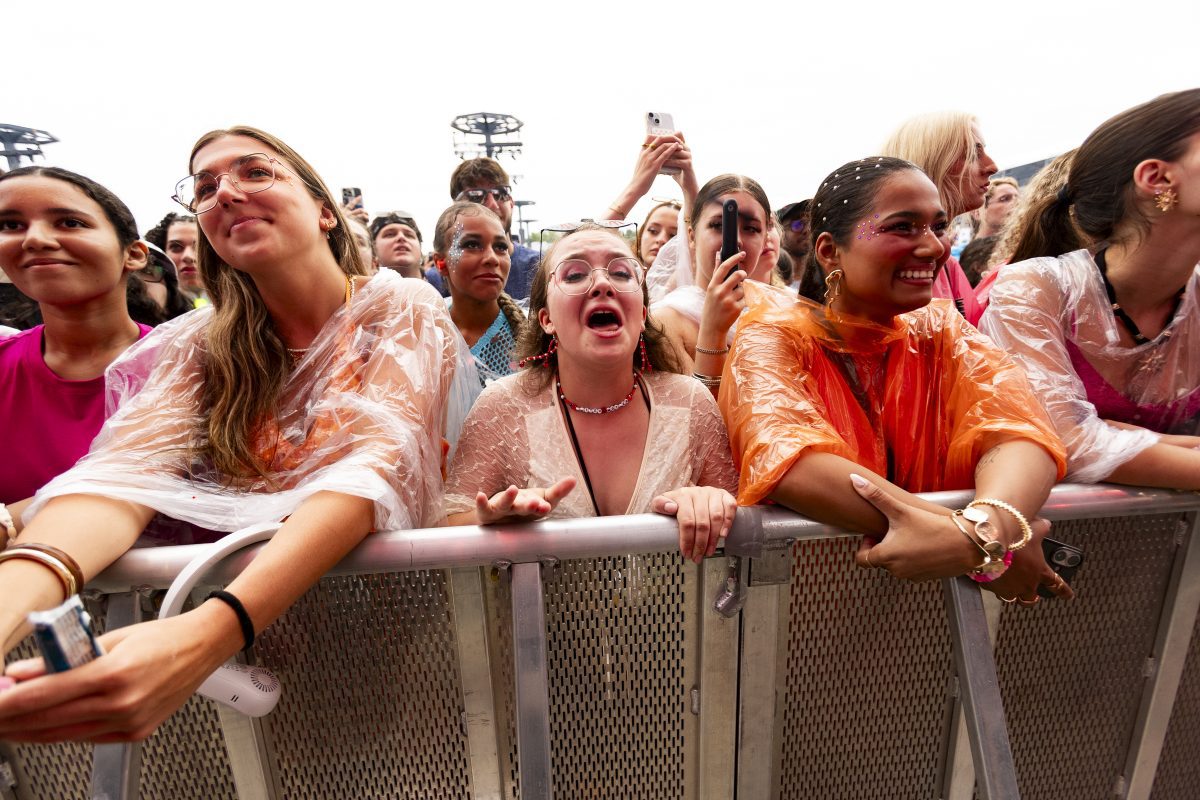
By the time they started in on their second song, “Verbatim,” I was compelled to drag my partner deeper into the pit. And I wasn’t the only one rocking out: people of all ages were having as much fun as the band seemed to be.
After doing this for more than 20 years, it’s no surprise that Mother Mother’s set was as tight as my 30-something-year-old neck on the last day of a music festival weekend, with flawless vocals, magnetic chemistry between band members, and quick, seamless transitions.
The blasts from the past were not limited to Mother Mother’s catalogue. They also performed two meticulously arranged medleys: “Hayloft” mashed up with Nirvana’s “In Bloom” and “The Matrix” combined with The Pixies’ “Where is My Mind?”
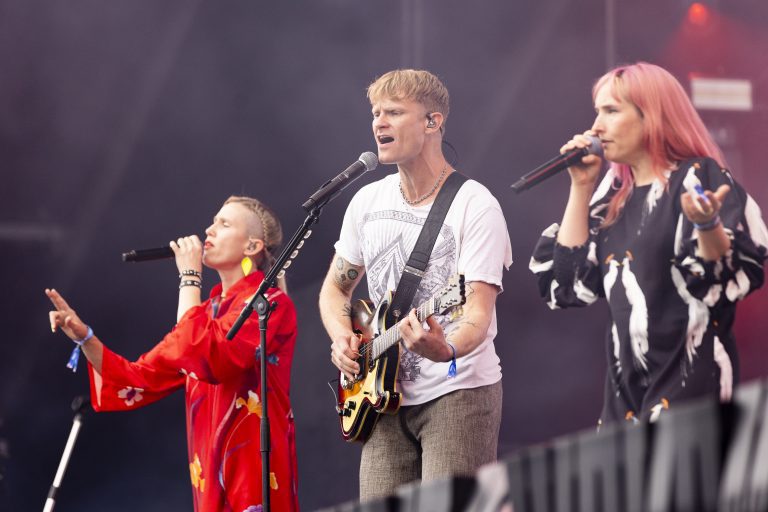
An unreleased song, “Rot,” led vocally by the incomparable Molly Guldemond, reminded us that they aren’t just welcome ghosts, but still very much alive and kicking. I, for one, was moved enough to add the next Mother Mother album to my mental watchlist.
Irish country-pop sensation CMAT’s electrifying Osheaga set almost didn’t happen. As she strutted onto the stage, CMAT, aka Ciara Mary-Alice Thompson, proclaimed that she and her band had been up since 4 a.m., her keyboardist had been taken out by food poisoning, and the airline had mistakenly sent all of their gear to Washington, D.C.
But apparently nothing can stop this redheaded tour de force. If anything, the resulting rage fueled a grittier, more explosive performance.
Kicking off with “The Jamie Oliver Petrol Station,” the so-called Dunboyne Diana channelled everything she had into guttural screams and operatic vocals that had the whole crowd on her side despite some imperfections in the sound due to the missing equipment.
Without their usual setup, the setlist was out the window. Instead, she took requests from the audience and paid tribute to Leonard Cohen the “only way [she] knew how”: by getting her guitarist, Jack Wolter, to do The Worm while violinist Holly Carpenter played “Hallelujah.”
Cheekily flashing her red bloomers, CMAT radiated playful confidence. The lack of in-ear monitors meant she could barely hear herself, but the flip side of that was that she could hear the audience singing along clearly for the first time.
And sing they did, Irish and Pride flags waving. I heard multiple people exclaim, “She’s so fun!” and at one point a group of fans started chanting, “Diva! Diva! Diva!”
She ended the emotional set by parting the crowd like the Red Sea, running deep into the pit to shout the chorus of her last song, “Stay For Something,” among the people.
OSHEAGA 2026 | Lorde Closes Osheaga Wired to Her Own Heartbeat
by Stephan Boissonneault
Her Osheaga Main Stage closing set began with a heart monitor—a video recording of Ella Marija Lani Yelich-O’Connor (better known as Lorde)—and then her walking out to the side stage and grooving on some bass on a Korg Kaoss pad. We then got a one-minute version of “Royals,” which came out (my god … 13 years ago) on the Pure Heroine album, which launched this unconventional, introspective pop star into the stratosphere.
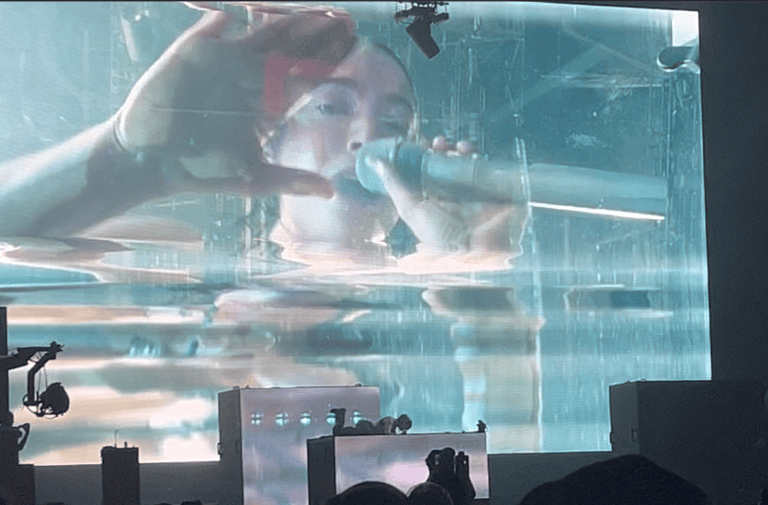
I immediately clocked the camera movement during Lorde’s set—top-down and cinematic, bouncing between very intimate moments where we are close up on her face and outfit (a black Arc’teryx rain coat and track pants). Lorde was also strapped to a heart monitor, and the visual backdrop would switch to her readings (esoteric and album-thematic vital signs like “Melodrama”, her actual heart rate and rhythms, and ECG readings. The visual backdrop also played different videos of the show—more of the background setting, made up of two flamboyant dancers, a backing band (which was super surprising given much of the new album is very studio-computer made), and a silver water fountain at the left of the stage, which Lorde and the dancers utilized quite a bit during the set.
Lorde ran around every part of the stage in synchronized madness, and the visuals would glitch out into these post-technology, computerized blurs, going on brand with the track “Shapeshifter,” and the suburbia industrial tinge of the newest album.
At one point, she hopped on a rectangular box (that doubles as an LCD screen) and sang the “Shapeshifter” Virgin track, as the box slowly opened and revealed a worm’s-eye view of Lorde singing over pressed plastic glass—like a titan over her prey. For one maximalist moment, during “Man of the Year,” Lorde switched from her activewear fit into a shining black jacket that blasted out red lasers.
And then Lorde fooled all of Montreal into believing that she had brought out Charli xcx for the track “Girl, so confusing,” by saying “Give it up for Charli xcx,” when it was really only a backing track of Charli’s voice. Well played, Lorde.
OSHEAGA 2026 I Zara Larsson’s Lush, Yet Dull Symphony
by Stephan Boissonneault
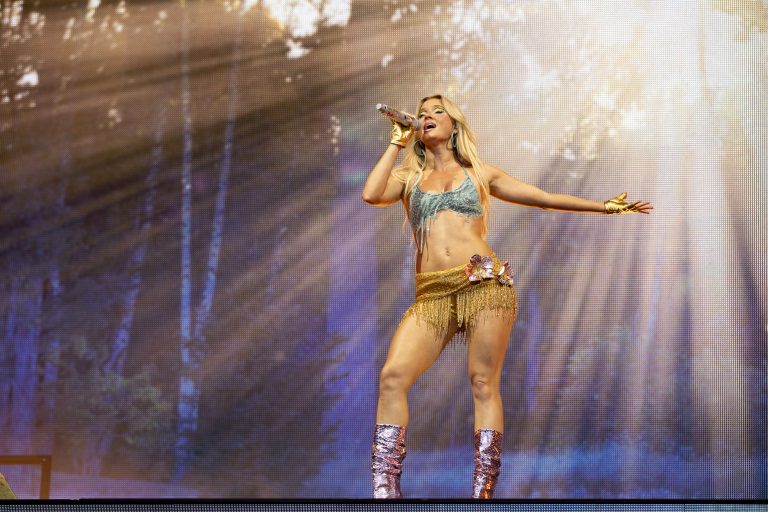
Based on the attendance of her Osheaga (and Lollapalooza) headlining shows, I’m probably definitely in the minority when I say I find Zara Larsson’s music quite dull and manufactured. Still, as she appeared on stage with her host of dancers at her River stage show, the crowd—packed to the gills—went bonkers for this real-life Swedish Barbie. She also had a band, which I can appreciate in this modern pop backing track age, but much of their Midnight Sun instrumentation was blown out and overshadowed by the generic pop beats and Larsson’s vocals.
The big pop star shows at Osheaga always have an eye-catching set, but Zara Larsson’s, which featured (what looked like cardboard) cut-outs of rolling hills and tropical flowers, felt like window dressing that added nothing to the songs. If you want to actually make your set dressing thematically mean something, take inspiration from Not For Radio or even Lorde’s Osh art decor. Theirs had a pulse, and Zara Larsson’s felt like a Pinterest board.
Larsson’s one addition was the pink sports car (with the license plate Puss Puss 97), which was funny, but fleeting as it disappeared into the “lush” landscape. Zara Larsson herself has an amazing voice, but the songwriting is very paint-by-numbers Top 40 pop — a little cumbia beat here, a 4/4 dance shimmer there, with some sexual innuendos there —there’s no real grit to it, and I couldn’t pick it out from the other pop tracks. You could put these plain-jane lyrics under any beat, and the result would be the same. Great voice, boring songwriting.
Again, these songs are not for me. They’re for Olivia, the young girl who was at the front of the barricade and was picked by Zara Larsson to dance with her on stage and received a signed t-shirt in front of 50,000 people. I’m sure that will be a memory many hold dear. Not me.
OSHEAGA 2026 I Clipse Drip with Swag on the Mountain
by Stephan Boissonneault
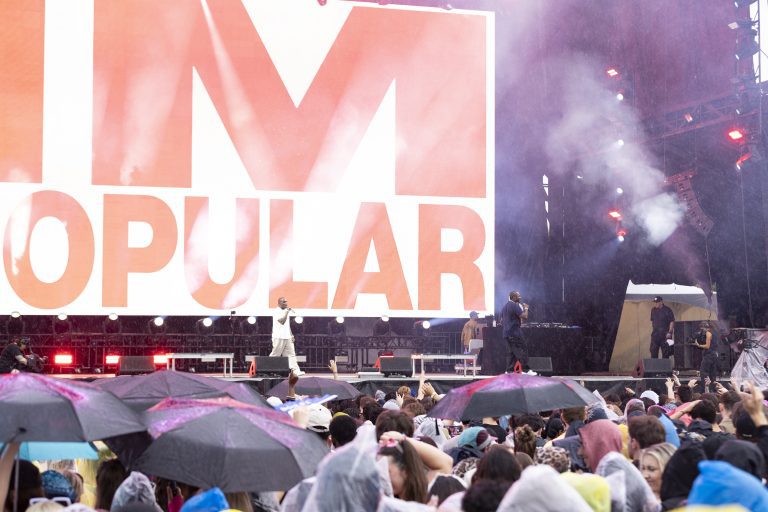
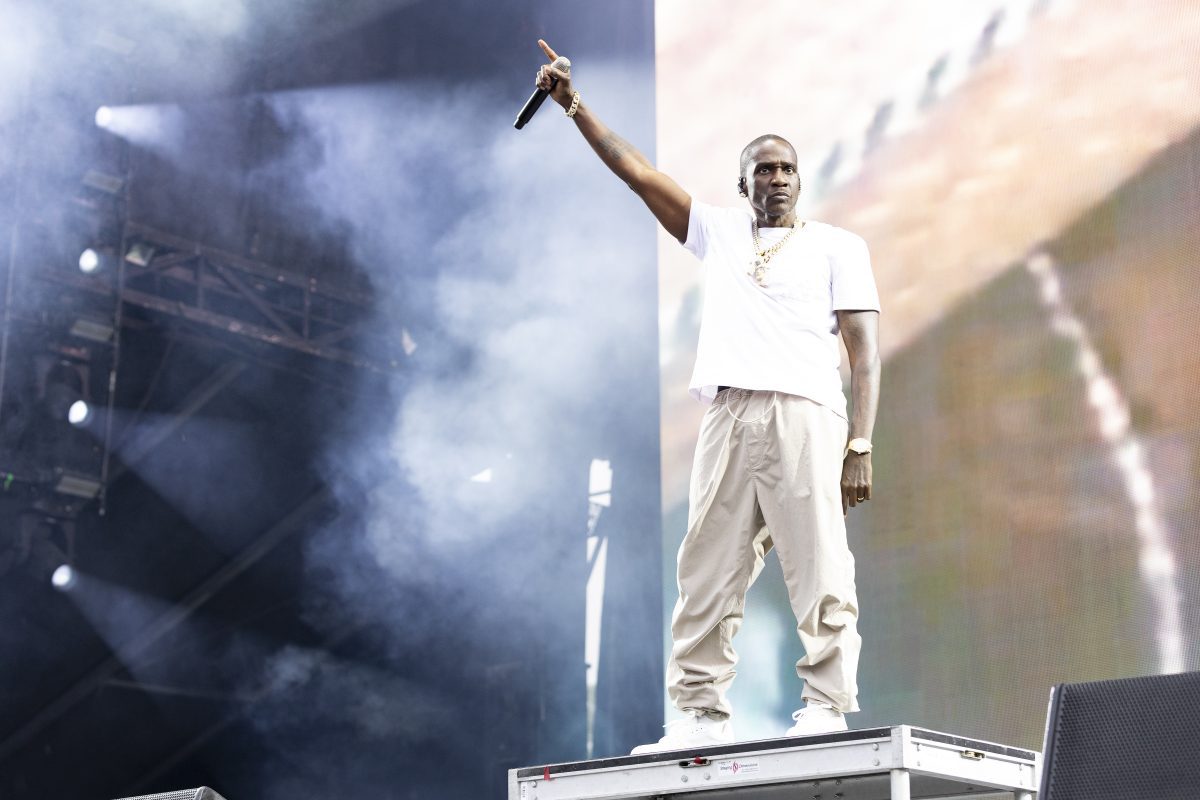
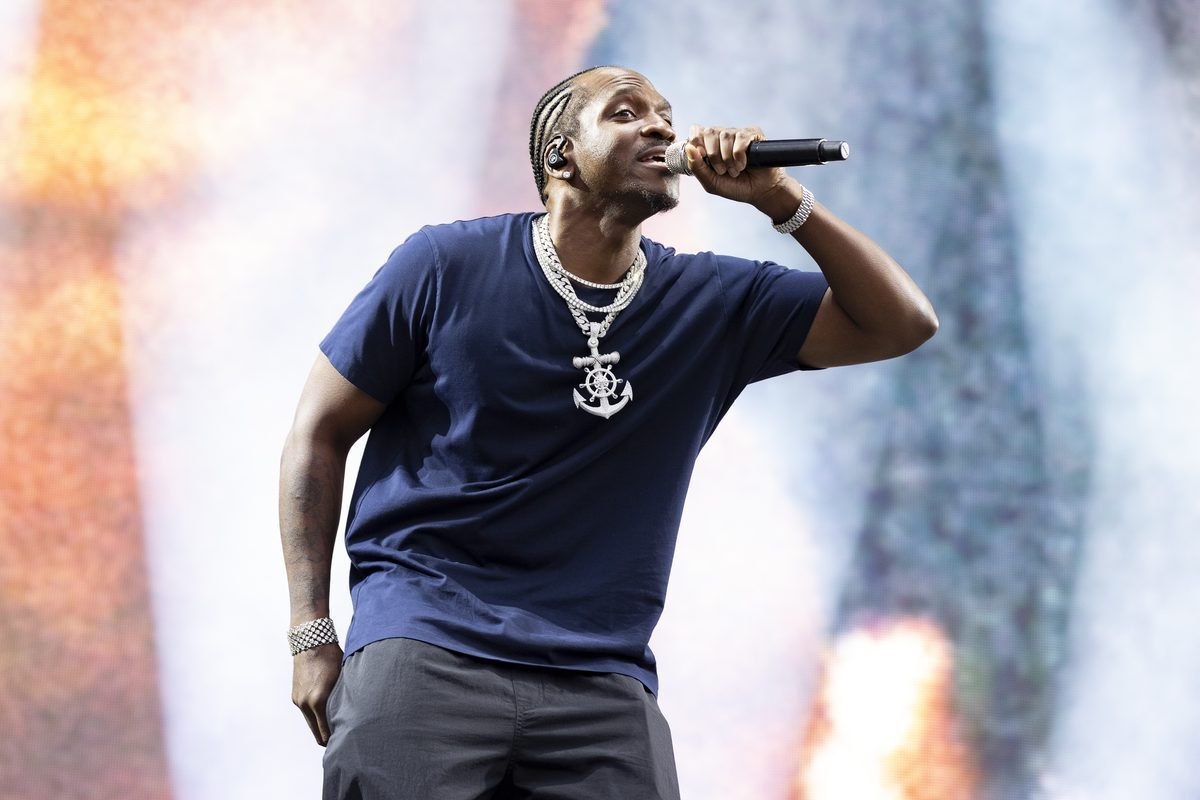
As buckets of rain poured from the sky and flooded the VIP terrace floors, I was able to witness hip-hop royalty slay the Mountain stage. Clipse, the mad duo of brothers Gene “Malice” and Terrence “Pusha T” Thornton, burst onto the stage with “Chains & Whips,” the second track off their fantastic comeback album, Let God Sort Em Out, which came out of nowhere last year.
As the bassy beat thundered, Clipse looked as if they were trying to show each other up—both wearing expensive jackets (Louis Vuitton, of course) and then switching into T-shirts and each wearing three to four luxury, blinged-out diamond chains (easily costing over a million dollars). The luxury swag, rappers-living-in-paradise vibe was quickly conveyed by these legends.
As the show continued, the visual backdrop featured moments in time for the Clipse brothers, like the time a few of their gangster friends were arrested for drug and weapons charges. We saw many of these images: legions of pistols, machine guns and bags of delicious cocaine on a quick slideshow that felt very early 2000s. It was real gangster shit, and hit harder than any hip-hop throwback act of the previous 10 years.
I was taken back to my boom bap discovery days during “Keys Open Doors,” from the 2006 album Hell Hath No Fury and grooved my heart out to “Popular Demand (Popeyes).” We heard a bunch of Let God Sort Em Out, including the closer “The Birds Don’t Sing,” but alas, John Legend did not appear. Clipse are legends, and I’m glad they’re back.
OSHEAGA 2026 I Not For Radio Reincarnates on the Forest
by Stephan Boissonneault
For me, five years or so into attending this festival, there is always a discovery at Osheaga, and this year it was Not For Radio. This is the solo project of The Marías’ Maria Zardoya, and my god, was it atmospheric and ethereal. I adore The Marías’ album Submarine (2024), so had I known it was the same artist, I would have rushed to the Forest stage and moved with feeling.
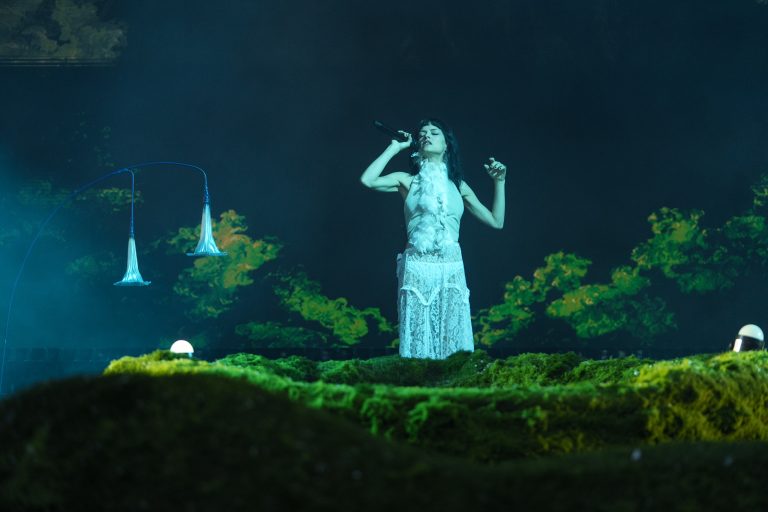
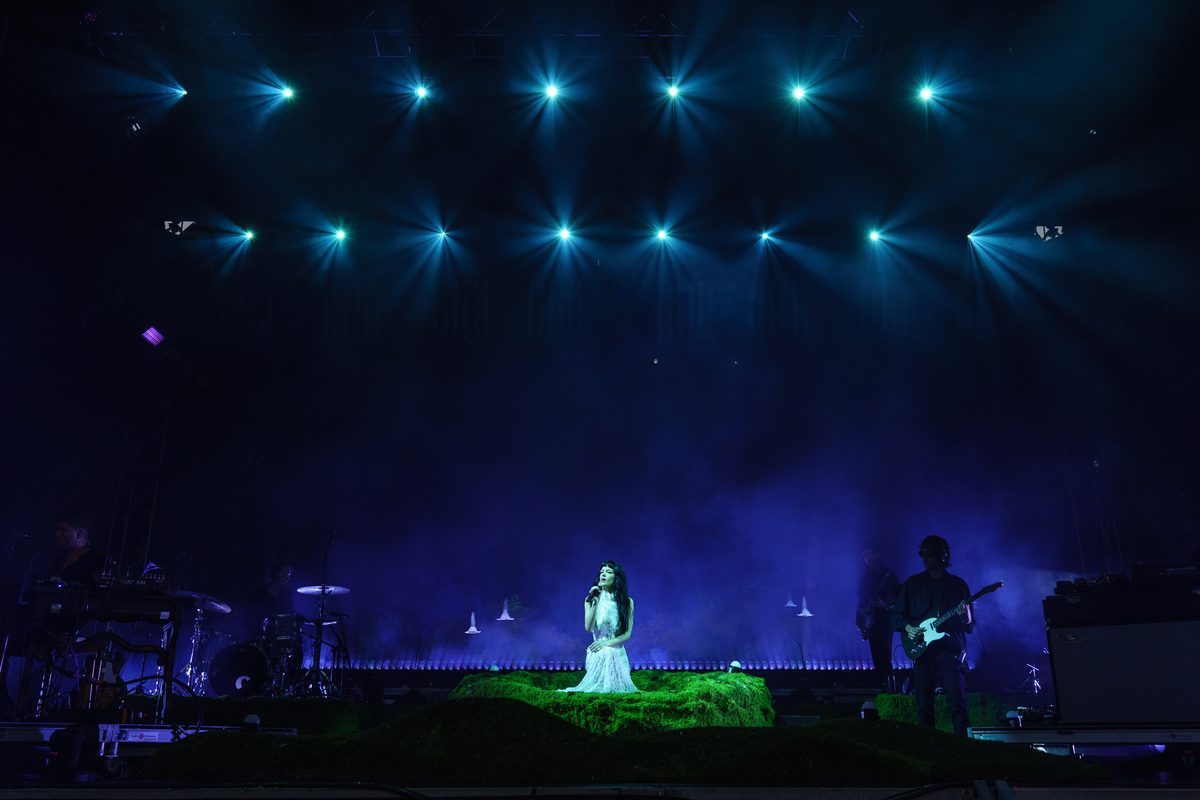
I was only able to witness that last half of the set, but Zardoya immediately pulled me in while she sang “Comet,” dressed in an alabaster mesh dress, while the set was covered in a mossy nature theme, featuring a mound of green grass in the middle. The teal lighting echoed off the walls of rain falling, adding to the mystical quality of everything.
While most of The Marías’ music relies on catchy riffs and falsettos under a wall of shoegaze-y dream pop, Not For Radio has an alternative trip-hop rock, almost Portishead quality to the music, with songs lulling you into a hazy slumber and then exploding in a fury of gossamer repetition. Maria Zardoya’s voice has this silky feel, with her powerful falsettos reverberating into the sky. I appreciated the live band because this is a kind of sound that could have just been a backing track, but it’s so much more elevated with live instrumentation. After one song, Zardoya lay down into the grassy mound, as if petrified, while singing the repetitive chorus of “Back To You.”
A man clad in black — giving Guillermo del Toro’s Frankenstein picked up Zardoya and carried her off stage. After her band jammed on a synthy Castlevania-esque organ tune, Zardoya reappeared dressed in a gothic black dress. I suppose the White Not For Radio died and reincarnated into this darker, black swan version. It was all very theatrical and deliberate and made quite an impact in such a short amount of time. Now, I’ll be checking out everything Not For Radio has done and will do in the future, thanks.
OSHEAGA 2026 I Chaos on the Loose with Viagra Boys
by Marc-Antoine Bernier
On Saturday at 6:55 p.m., on the Osheaga Valley Stage, the Viagra Boys wasted no time, turning the venue into a massive party. Right from “Man Made of Meat,” the Infinite Anxiety Tour logo appeared behind the band before gradually giving way to a succession of high-contrast black-and-white footage, red light showers, and glitch effects punctuated by almost subliminal images. At the centre of this visual onslaught, Sebastian Murphy took the stage shirtless, his tattoos on full display, with the confidence of a provocateur as unpredictable as he is charismatic. Behind him, the six musicians drive the whole thing forward with massive bass lines, relentless drums, and a wild saxophone that constantly shifts the post-punk sound toward something much more danceable.
Viagra Boys quickly prove that behind their absurd humour lies a formidable musical machine. Each track is built on a relentless groove that transforms this raw, edgy post-punk into an irresistible invitation to dance. The crowd sings along at the top of their lungs to “Punk Rock Loser,” “Ain’t No Thief” spontaneously gets everyone clapping, while “Uno II” offers a more laid-back moment without letting the energy drop. The saxophone solo that concludes “Down in the Basement” even sparks an unlikely scene: part of the crowd begins to shout out the notes, as if the musician were issuing a call to which his own clan was responding.
Murphy punctuates the concert with a few irreverent remarks, notably shouting “Free Palestine” before “Troglodyte,” then lets the songs speak for themselves. The absurdity reaches its peak with “Sports,” whose litany of words delivered in a detached voice is taken up with contagious enthusiasm by an audience that knows exactly what’s coming and erupts at the first “SPORTS!”
The finale on “Research Chemicals” perfectly captures the band’s spirit. Murphy surfs the crowd before attempting a few push-ups with a determination inversely proportional to his athletic ability, while the saxophone goes wild over a hypnotic bassline. Viagra Boys give the impression that a group of misfits has accidentally found a way to become an excellent dance machine, and no one wants to correct the mistake.
There’s something unique about Turnstile. Though rooted in hardcore, the Baltimore-based quintet pushes the genre’s boundaries by emphasizing groove, melodies, and a sense of community rarely associated with the genre. On Saturday night, on Osheaga’s Scène de la Vallée, this vision came to life before an excited crowd, confirming why Turnstile is now one of the hottest rock bands around.
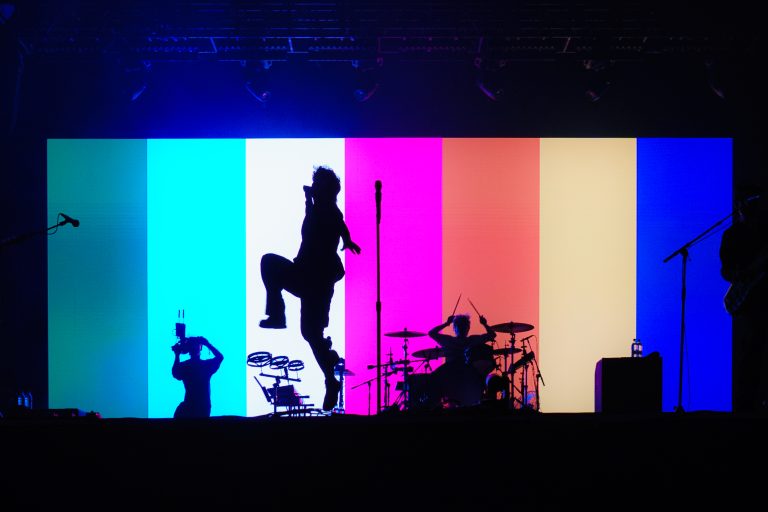
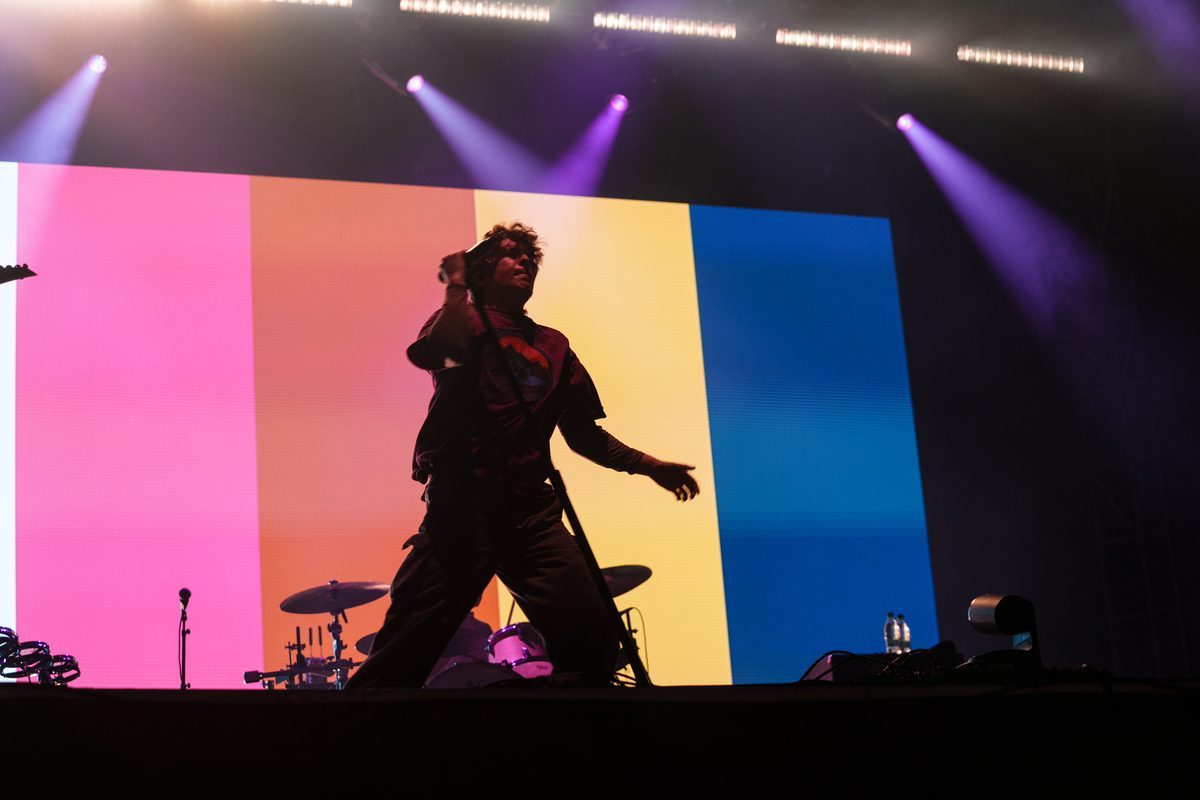
As a simple pattern of colored bars fills the giant screen, the musicians calmly take their places at their instruments on an almost minimalist stage. Seemingly innocuous, this visual choice stands in stark contrast to the traditionally dark aesthetics of punk and post-hardcore. The whole scene is accompanied by the synth pads of “Never Enough,” the opening track from their latest album. From the very first chords, this bright, modern identity takes hold, as does the crowd’s anticipation as they wait for Brendan Yates to sing the opening lyrics. When he belts out the first lines—immediately echoed by thousands of fans—the pent-up energy finally erupts.The transition to “T.L.C.” (Turnstile Love Connection) instantly ramps up the intensity. Short, fast, and unrestrained, the song evokes the urgency of bands like Bad Brains and Black Flag. Yates’s screams and the physical energy of the entire audience set the tone for a performance where each song seems to propel the crowd a little further into euphoria.
One of the most striking aspects of the concert, however, is its staging. Rather than relying on elaborate visuals, Turnstile chooses to place its audience at the center of the experience. The screens constantly display footage captured from within the mosh pits and circle pits, as well as shots filmed with a camera held directly in the crowd. Bathed in harsh white light, these images evoke the aesthetic of an old video camera and reinforce the impression of witnessing a spontaneous moment rather than a perfectly choreographed show. Moreover, they highlight the diversity of the audience: young teenagers, parents, and people in their sixties—all seem to share the same enthusiasm.
The setlist, consisting mainly of songs from Glow On and Never Enough, constantly maintains this balance between adrenaline-fueled bursts and more contemplative moments. Songs like “Holiday” and “Birds” spark the wildest crowd reactions, while “I Care,” “Mystery,” and the extended “Look Out for Me” provide breathing room where more alternative textures, synthesizers, and danceable rhythms take over without ever breaking the show’s momentum.
The climax comes precisely with “Birds,” performed as the finale. The moment Brendan Yates invites the crowd to jump and thousands of people sing along in unison to “Finally I can see it / These birds not meant to fly alone,” the concert transcends a mere display of energy. It becomes a moment of communion where everyone seems carried along by the others.
Leaving the La Vallée stage, what remained most of all was the impression of having participated in an immense collective liberation. Turnstile no longer seeks merely to shatter the conventions of hardcore: the band transforms them into a space where rage, vulnerability, and joy coexist, making this performance one of the most unifying moments of the day.