Jazz

Back In the Ella Days With Caity Gyorgy and ONJ

by Vitta Morales

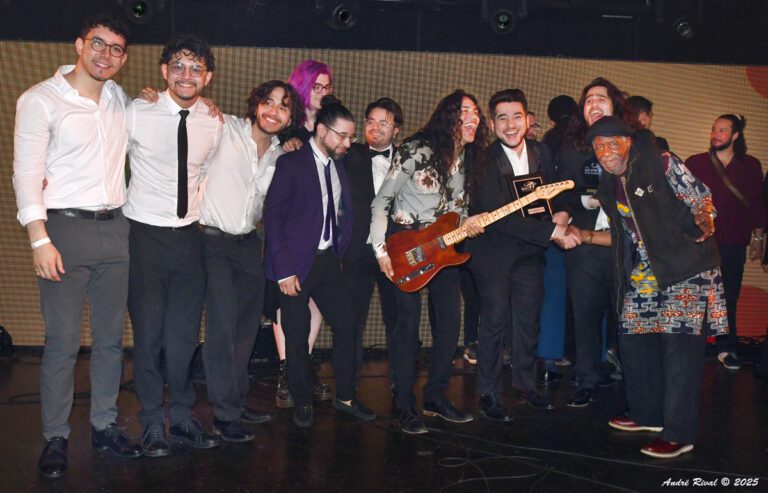
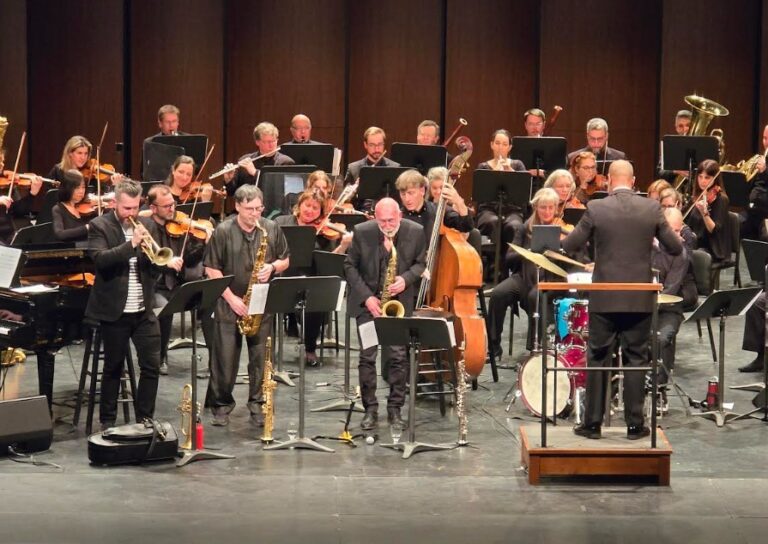
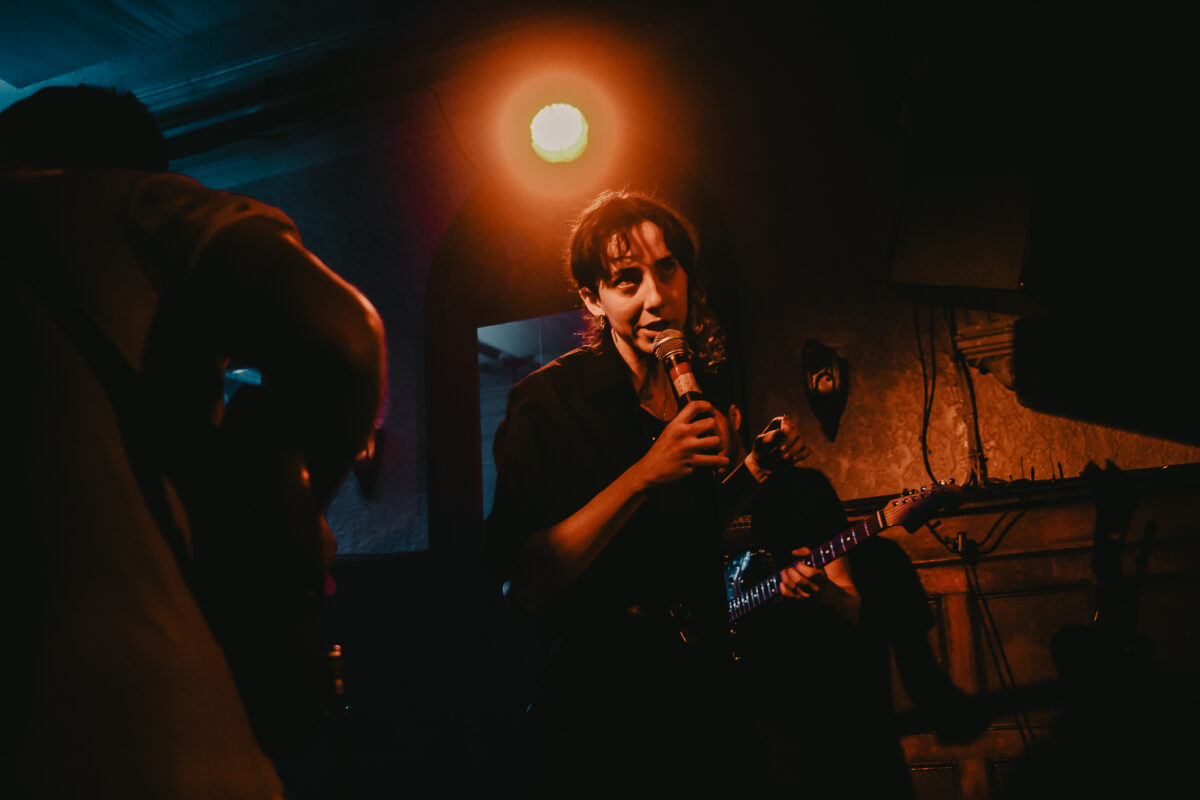
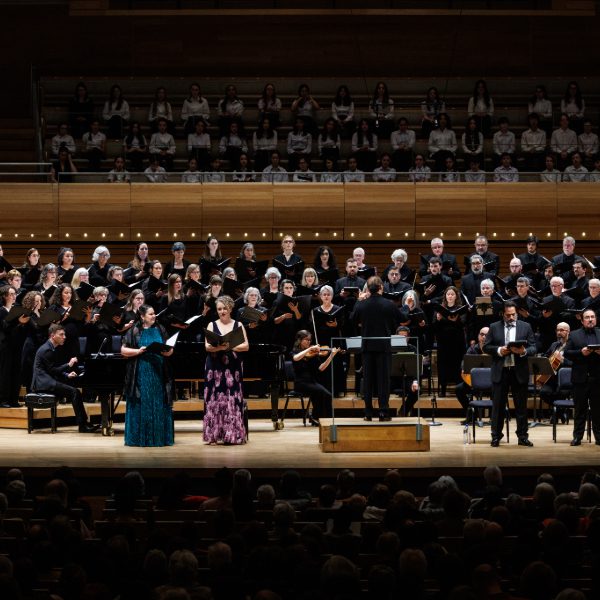
Thursday night, the Orchestre National de Jazz, together with two-time Juno winner Caity Gyorgy, treated a sold out Cinquième Salle to ninety minutes of Irving Berlin compositions as they were arranged for Ella Fitzgerald. Gyorgy was not shy to divulge just how impactful the music of Fitzgerald has been in her own career and it was immediately obvious how much she has studied and internalized this repertoire.

Homage concerts necessarily leave one open to extra scrutiny since it is often the case that audiences will know the music well and have certain expectations with respect to how it should sound. I’m happy to report, however, that the ONJ and Gyorgy’s combined powers resulted in a concert which respectfully and accurately paid homage to Berlin and Fitzgerald while also being tastefully stylized at times. 

Musically, everyone played their role effectively and nearly everyone had moments to solo throughout the show; of course, Gyorgy herself was no exception and she showed off her improvisational prowess early on in the evening soloing over “Blue Skies.” Notably, her note selection did not falter during the denser 16th note flurries of her solo. Even some saxophonists tend to get lazy in this regard so it is admirable and impressive that she chose to sing these passages with clarity and confidence instead of faking something only semi serviceable. 

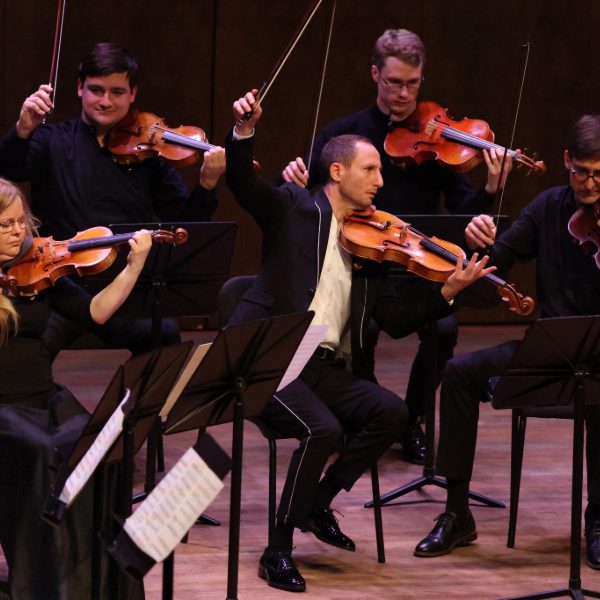
Other notable soloists came from the usual suspects including trumpeter Bill Mahar and pianist Marianne Trudel who injected some more modern vocabulary in what was otherwise a night of straight forward swing. Even the occasional lapse in concentration took basically nothing away from the evening; the drums coming in with a different tempo from the rest of the band on “Heat Wave,” a flubbed lyric on “You Can Have Him” and a strange application of reverb out of nowhere on Gyorgy’s voice during “Putting on the Ritz” were really the only ones I noted. 

However, despite everyone’s combined talent and effort, (and despite the inclusion of two non Irving Berlin compositions), I must admit feeling some fatigue about three quarters into the show. Big band swing music is a testament to great arranging and high energy at the best of times, but this music was written to grace the dancefloors. And so after nearly ninety minutes I began to feel the weight of how repetitive swing music could be; something compounded by that we have, largely, left behind the tradition of dancing to this music in favour of sitting down and listening to it with reverence. 

My interest only picked up again during the encore, which was decided in typical jam session fashion, that is to say on the fly. Gyorgy and the ONJ rhythm section played a version of “Mack the Knife” at the audience’s request. Gyorgy sang the song with half remembered lyrics which she compensated for by improvising melodies and making up her own verses both in English and clunky French. It was such a spontaneous and skillful display one couldn’t help but laugh along with them. 

We are now nearly a century removed from when this music was new and from when Ella Fitzgerald first gained notoriety for singing with Chick Webb’s band. As such, much of the audience, and even the orchestra itself, was either grey-haired or no-haired; but for those who periodically fear for the future of jazz and how its traditions will be remembered and passed down, I have good news: there are still skillful young adults who champion, perform, and keep this music relevant for future audiences. Caity Gyorgy being one of them, it goes without saying. 

Auspiciously, I even happened to be seated beside two university jazz students who remained invested throughout the entire show. I think that as long as they have access to shows like the one put on by the ONJ and Caity Gyorgy last night, the kids will probably be alright; and so too will jazz.

classique

Successful Start to The OSM Season

by Alexis Desrosiers-Michaud

The Orchestre symphonique de Montréal opened its 91st season this week with Arnold Schoenberg’s rare and impressive Gurrelieder, to mark the 150th anniversary of his death.

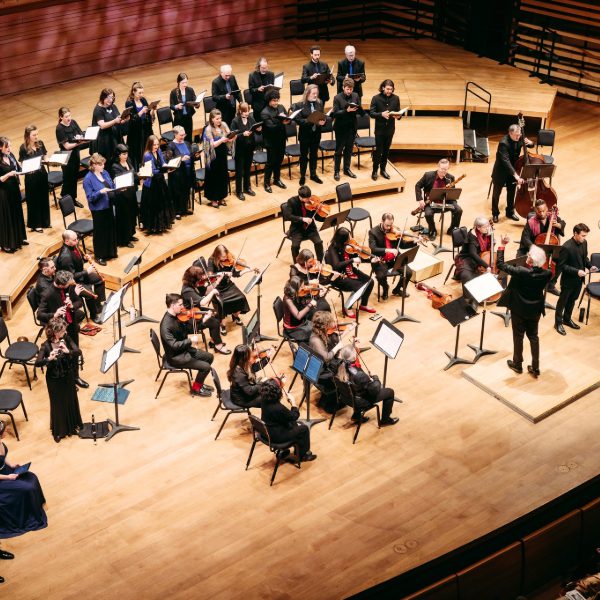
This is a rare and impressive work, due to the sheer number of performers required: a very large orchestra (on Friday, for example, there were 7 trombones and 14 double basses), 6 soloists and a huge choir; in other words, between 300 and 350 performers for a duration of around 1 hour 45 minutes.

The Gurrelieder (pronounced Gourrelider) is one of Schoenberg’s last compositions before his breakthrough three years later, and the reason for his worldwide fame. By way of background, in 1913 with Pierrot Lunaire, he broke away from the system on which all composers had written since Bach, to treat sounds separately rather than according to the notion of scale, or tonality. To situate the reader, the Gurrelieder are halfway between Richard Wagner’s aesthetic for melodies and themes and that of Richard Strauss for orchestration. The poems are written by Danish poet Jans Peter Jacobsen, and tell the story of King Waldemar, who falls in love with Tove. His jealous bride, Dove Waldemar, causes Tove’s death. Furious, the king rages against God, whom he blames for making the event happen. The king then raises an army of the dead who, for one night, sow terror and destruction.

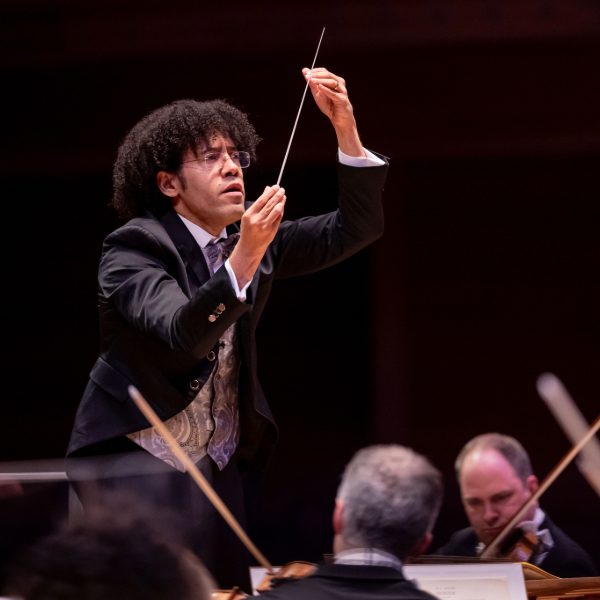
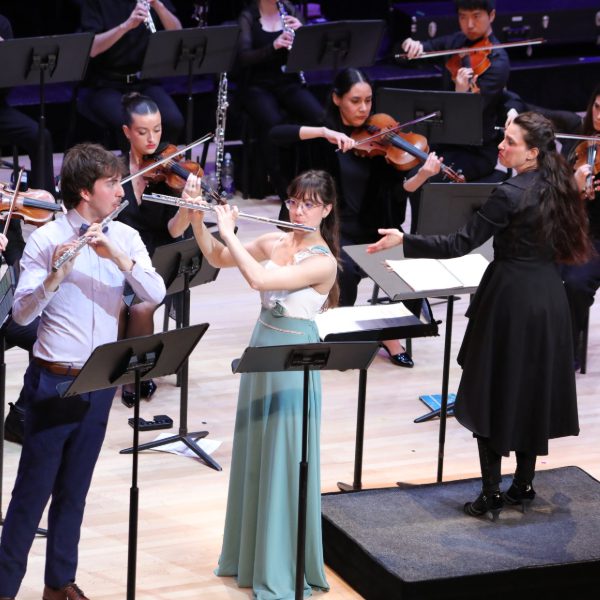
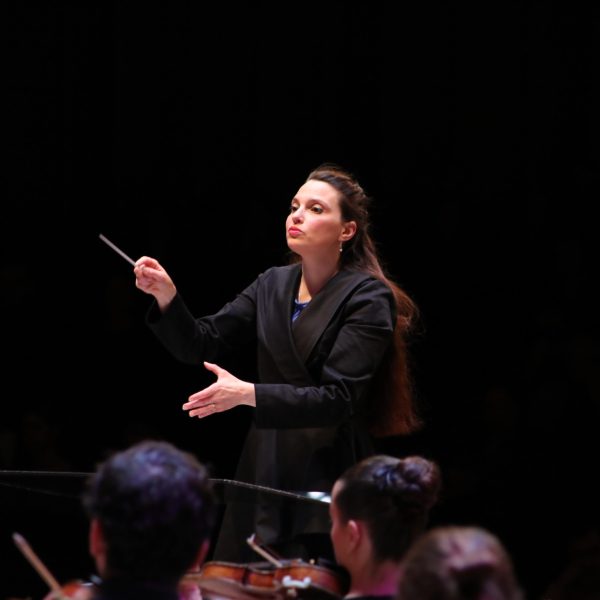
The first thing you notice is Rafael Payare’s incredible accompaniment skills. Constantly attentive, he manages to ensure that the huge orchestra follows the melodic line sung by the soloists with great precision. With such a large orchestra, it’s only natural that the soloists should be buried here and there, but it’s during the purely instrumental moments that we see just how restrained and attentive the musicians were. Seeing this, we’re already looking forward to the concert versions of Mozart’s operas he’ll be conducting later this season.

Speaking of soloists, two stand out; Clay Hilley (tenor, Waldemar) and Karen Cargill (alto, Dove). The former excels with clear melodic lines and convincing stage presence, and the latter is downright terrifying in announcing Tove’s death at the end of the first part. Slowly but surely, her single intervention led brilliantly into a tragic B-flat minor chord in the trombones. Her deep voice was so touching that we couldn’t even measure the length of this lied, so carried away were we. Honorable mention to Ben Heppner (narrator); by far the most audible above the orchestra.

After more than an hour of music, the choir entered the stage, and despite the distance between us, we were surprised by the men’s first, powerful “Holà”. In crisp German and surgical accuracy, they offered us another sublime moment when accompanied by a few musicians (woodwinds and trombones). Symbolizing the army of the dead, the men’s chorus with low brass brought us a rare, long moment of calm. This kind of open passage is dangerous when the sound mass has been dense for a long time; it was mastered.

This concert would have been excellent without it, but we thought it would be interesting to add a lighting effect, the cherry on top of the sundae. This addition immersed the audience in the spirit of the story, helping them to follow its course. Depending on character and emotion, the background lighting changed subtly or drastically, without ever suddenly catching our eye. A perfectly justified exception was the end of the work, where at sunrise, the entire auditorium was illuminated in a majestic apotheosis.

Photo: Antoine Saito

Publicité panam
Bossa Nova / Brazilian / Jazz

Brazilian Days | Saudade According to Erivan GD

by Sandra Gasana

On this second Brazilian day, we were treated to a sextet of high-calibre musicians on Duluth Avenue, to kick off the musical program. Under the direction of bassist Erivan GD, who accompanies several artists on the Montreal Brazilian scene, they concocted a colorful and emotional set.

I had the pleasure of seeing him at La Brassée a few months ago, but this time he had expanded his line-up for the occasion. So we had Jean-Philippe Grégoire on guitar, Santiago Ferrer on piano, saxophonist Thiago Ferté, Olivier Bussières on percussion of all kinds and drummer Shayne Assouline. Together, they managed to make us forget the cold weather at the beginning of September.

What I like about this type of performance, without vocals, is the length of the solos. From the very first tracks, we were treated to several solos, not always in the same order, alternating with each other. We had time to immerse ourselves fully in the musician’s world, in the meanders of his rhythms, before moving on to another musician. The percussionist varied his instruments, sometimes using a pandeiro, or other typically Brazilian instruments, among others.

“It’s cold so I need to move. If you want, you can move with me,” says Erivan, after opening with Afternoons by Milton Nascimento, who has just released an album with Esperanza Spalding.(MILTON + ESPERANZA – PAN M 360).

He then follows up with three of his own compositions, including Déjà vu. The instruments enter gradually, giving the impression that the musicians are dressing up the piece, layer by layer. Even during his solos, Erivan manages to maintain the rhythm and structure of the piece, allowing him to return with the ensemble seamlessly. In his role as conductor, he communicates with his musicians, who know when to come in and when to go out, all very subtly. The intensity was at its highest during Everything is sound, which at times included abrupt stops, before continuing with rhythmic flights.

“The third piece is very special to me on this day, and is called Saudade, which is a Portuguese term that’s difficult to translate into French, a bit like nostalgia,” Erivan explains, before playing a jazz / bossa, my favorite of the show. The progression was a natural one, with moments of solos but also instruments in unison. At this point, the percussionist adds his pandeiro to accentuate the group’s Brazilian touch, before ending the piece in the same way they began it.

We couldn’t end the mini-concert without including another classic, Tom Jobim’s Samba de Verão, with its goosebump-inducing piano solos. And not just because of the cold, but above all because of the intense emotions felt by the audience, who grew in number throughout the show.

Publicité panam
Bossa Nova / Brazilian / Brazilian jazz / Música Popular Brasileira

Brazilian Days | Bianca Rocha: A Lot of Calor In The Cold!

by Michel Labrecque

Sunday September 8 will go down in Montreal history as an unusually cold day. It couldn’t have come at a worse time for the Journées Brésiliennes, which celebrate the culture of a tropical country. But the Brazilian artists didn’t let it get them down. Bianca Rocha injected warmth into our souls, with inspired MPB (Brazilian popular music) that delighted a large audience, some of whom knew most of the lyrics.

Bianca Rocha’s smile is totally infectious when she sings. Irresistible. Her music is a blend of bossa nova, Afro-Brazilian music, gaucho music from southern Brazil, pop and jazz, impeccably arranged by guitarist Rodrigo Simoes. Everything flows naturally, with highly competent musicians, including drummer/percussionist Lara Klaus, who instantly conveys the joy of making music…even when it’s freezing.

Bianca has a versatile vocal range, alternating between meditative sweetness and power. Most of her songs are sung in her native Portuguese, but she did deliver a composition in French, about the possibility of creating paradise on earth; as well as a very feminist song by the excellent Canadian-Colombian artist, Lido Pimienta.

Bianca Rocha is also a committed singer, but with a playful perspective. Even her song Fim Do Mundo (End Of The World) makes you want to dance. In fact, it’s the title of her only album, released in 2021.

This woman, originally from Curitiba in southern Brazil, came to Montreal in 2019 because of the rise to power of far-right politician Jair Bolsonaro, she tells me in an interview after her show. Her partner landed an interesting professional opportunity and the family moved north. Since then, Bianca Rocha loves to live Montreal and plans to stay here, while eventually opening up to the Brazilian music market.

Bianca Rocha is thus a welcome addition to Montreal’s increasingly rich Brazilian musical ecosystem, as we heard this weekend.

Let’s face it: there’s musical talent from all over the world in Montreal. And all these people are mixing and creating together. No matter what some politicians think, it makes Montreal great. Even for native Quebecers, who were present at the Journées brésiliennes

Publicité panam
Electro-Punk

Palomosa | Pelada Lays Down Their Swords

by Lyle Hendriks

Though I haven’t been around for much of Pelada’s reign across Montreal’s scene, it’s hard to go anywhere without hearing them mentioned.

Comprised of Chris Vargas (vocals) and Tobias Rochman (instrumentalist, producer), Pelada has long been known for their unique blend of tense, almost punk-inspired influences alongside more danceable club tracks.

Pelada has created an impressive legacy over 10 years of performing—which is why it was sad to hear that Palomosa was Pelada’s last ever set. The pair put on a rousing performance, especially considering their early time slot and the never ending rain. Vargas is ferocious on the mic, growling in Spanish and English with a frenetic, ever-climbing energy that makes them impossible to ignore.

Gritty and piercing, each pointed phrase cuts into us like a knife, with Pelada’s already-intense energy only elevated by the knowledge that it’s the last time. Like a cloud heavy with acid rain, there’s an impending overhang when Pelada is onstage, with Vargas’ larger-than-life persona perfectly supported by Rochman’s grungy, skillful instrumentation. 

In the final moments of what I suppose is Pelada’s final performance as a duo, Vargas led the crowd in chants of “Palestina Libre!”. Where a lesser artist might have taken this moment to hear their name chanted one final time, this powerful gesture just shows that the punk rock vitality at the core of Pelada was never just for show. In the end, Palomosa offered a worthy send-off to the unforgettable life and work of Pelada.

Pop

Palomosa | Jai Paul Has Finally Arrived

by Lyle Hendriks

I guess I just saw one of Jai Paul’s first live shows ever, which feels unbelievable. The elusive British songwriter/producer has freshly returned from a nearly decade-long hiatus, having performed his first ever live set as a Coachella headliner in April.

It seems incredibly improbable that, of all places, the brand new Palomosa fest would be the place I see this enigmatic artist perform.

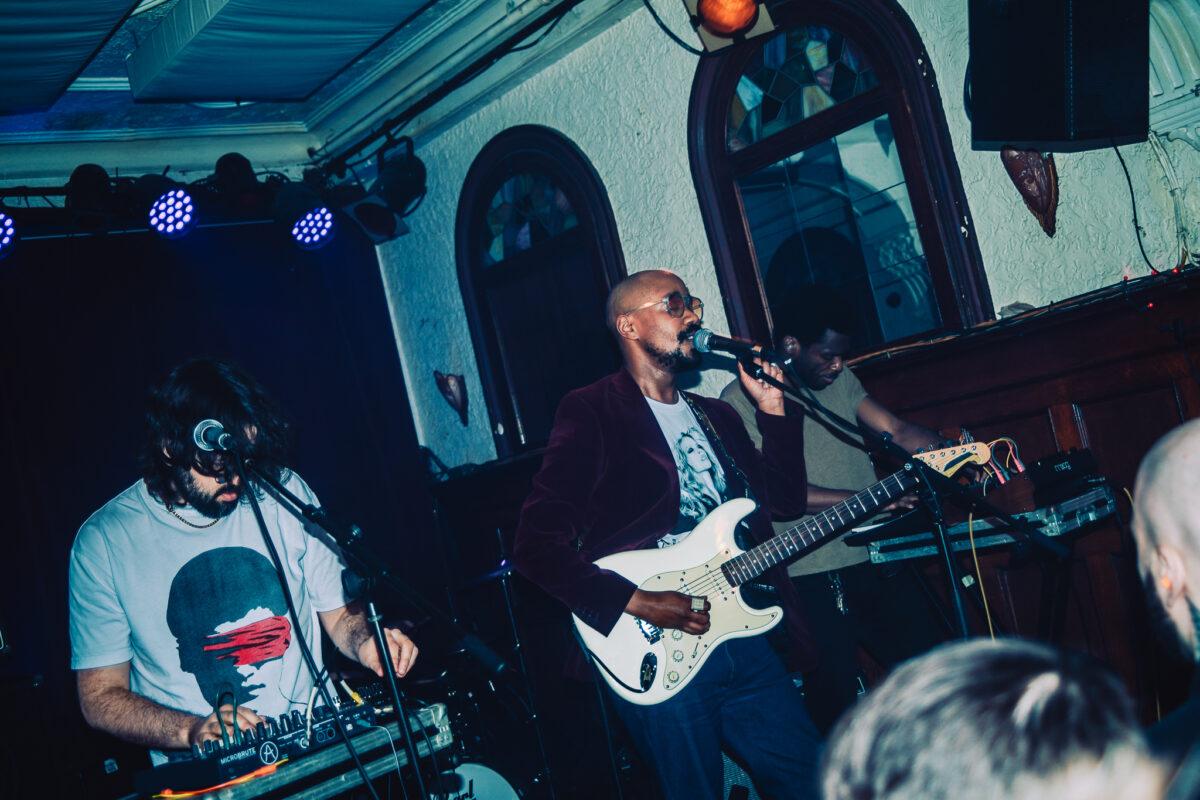
Jai Paul is one of the strangest performers I’ve ever seen. Unlike most shows of this level, he’s obviously still getting his sea legs for playing live. That’s not to say that he’s making mistakes (the entire band played flawlessly), but that you can see the joy and the novelty painted all over Paul’s face. With the rain finally, mercifully, gone, it was a beautiful evening to watch Paul glide over his strange, labyrynthian instrumentals with his incredible vocals. Restrained, even delicate, his voice is almost textural at points, mixed way down so that it becomes enmeshed with everything else.

With rock-solid percussion and disco-inspired slap bass, Jai Paul sounds like an oddball blend of Daft Punk and Mk.gee. His compositions are irregular and hard to predict, and yet they glide right by like fireflies in the night. From time to time, Paul would step up the vocals and deliver a goosebump-inducing high note, never failing to elicit a huge cheer from the crowd. 

He played the perfect mix of old and new, covering all of the hits—including “Str8 Outta Mumbai” (2013), which was going so hard that he stopped mid-song and started over. It was a truly gorgeous set, one where every single person, including Paul, seemed delighted to be there. As Jai Paul embarks on his first ever tour later this month, we can only hope this is the beginning of a beautiful new era for one of pop music’s most unsung heroes.

Palomosa | The Dare: Slutty, Gen-Z Elvis

by Lyle Hendriks

If you’ve blinked recently, you might have missed the rapid but inevitable comeup of The Dare, the moniker for LA popstar Harrison Patrick Smith. Having arose to stardom after collaborations with Charli XCX, The Dare is enjoying sudden icon status amidst the release of his debut LP, What’s Wrong With New York? (2024, Republic Records).

Smith took the stage during the afternoon of Palomosa’s second day, greeting a soaking wet crowd of impressive size, considering the torrential rain. Dressed in his signature, Blues-Brothers-meets-Alex-Turner look of a slim-fit black suit and Ray-Bans, he immediately launched into a rousing performance of “Perfume”, bringing incredible energy with nothing but a backing track and two modular synths behind him.

From what little I knew, I expected The Dare to be a more aloof performer. But fortunately, he moves constantly, meaning the energy never dipped from its starting point of 100%. He marched up and down the stage, folding himself in half over the mic stand, kicking his knee out like a slutty, Gen-Z Elvis. Although he was singing to the complete track (vocals included), he still gave a powerful performance on the mic, with crystal clear diction that has harkened so many comparisons to LCD Soundsystem.

Admittedly, I hadn’t listened to much of The Dare prior to this show, but it turned out to be no problem at all. His energy onstage is nothing short of infectious—a much-needed shot of adrenaline as we stood hunkered in the downpour. And by the time he closed the set with his biggest hit, the debaucherous, degenerate “Girls” (which saw approximately 100% of the audience bouncing around and screaming the oh-so-catchy hook), I think we had forgotten all about the weather. 

Brazilian / Brazilian jazz / Jazz

Brazilian Days | Manoel Vieira : A Tribute to João Donato Better Than The Original?

by Michel Labrecque

On Saturday, September 7, Duluth Street was transformed into a mini-Brazil. Churrascos (Brazilian barbecues), food stalls of all kinds, hundreds of people speaking mostly Brazilian Portuguese, and music. It was on this note that the Brazilian Days kicked off, before rain spoiled the party in the afternoon.

Pianist and composer Manoel Vieira and his musician friends were the first to take to the stage. Just hearing them warm up, it was clear to my ears that we were in for an above-average concert of Brazilian music.

Manoel gave us a tribute concert to the great Brazilian jazzman and composer João Donato, who died last year. It started with Vento do Carnaval and ended with Bananeira. And we were floating for just over an hour.

Manoel Vieira studied classical piano while being an adept of improvised music. In 2020, he released Rhizome, a blend of bebop and Brazilian forro. He teaches at the Université de Montréal and occasionally performs with Brazilian symphony orchestras. Listen to my interview with him on PANM360 to learn more.(Manoel Vieira to Launch Brazilian Days – PAN M 360)

On stage, he was supported by a group of super-solid musicians. Erivan Duarte on bass, Laurent Cauchy on trombone, Thiago Ferté on saxophone, Aquiles Melo on drums and percussion, and João Lenhari on trumpet and flugelhorn. The latter also teaches at the Université de Montréal and leads his big band. I joked with him that Brazil was invading the university’s music faculty. What do you expect,” he replied, ”we’re the best.

Indeed, the musicians in this group are excellent. While following João Donato’s skilful melodies, they gave their all in improvisations and solos. A mixture of virtuosity and emotion. Unfortunately, as it was the beginning of the day, there weren’t enough of us. But those who were there were all smiles.

Let’s hope this concert is repeated soon in a venue more conducive to listening. A magical musical moment. Knowledgeable and festive!

Publicité panam
Pop / Pop-Punk / Shoegaze

Palomosa | Underscores Wins Us Over

by Lyle Hendriks

It’s not every day that I find a performer loveable onstage, but Underscores managed to do just that. April Harper Grey, the performer behind this sensational San Francisco pop act, has a charming energy, and you can’t help but root for her as she thrashes around alone on the massive, empty Palomosa stage. 

Although her set began a little tame and timid as the crowd started to fill out, Grey quickly found her footing within the first few songs, commanding far more attention than most backing track solo artists could muster. From shoegaze-inspired pop-punk to autotuned, baby voice bangers, we got a full introduction to Underscores for the uninitiated.

A daylight set is never easy for a performer of this type, whose music is no doubt better suited to a dark club show. Despite this, Underscores methodically won the crowd over one track at a time. She showed more of her personality when speaking between songs, showing off a sweet side that made her easy to like. I was particularly impressed when she politely asked us to kneel down for a quiet part of the set: “I know it’s early, but it would be cool if everyone got down for this part and jumped around when it drops. You don’t have to if you don’t want to.” How can you refuse an offer like that? I kneeled, looked around, and realized virtually 100% of the audience was doing the same thing. It’s a small display, but it’s also not something that every artist could pull off. 

By the end, people were moving hard, thoroughly on Underscores side as both she and the crowd amped things up. Halfhearted fistbumps morph into frenetic dancing. Restrained applause give way to full-spirited hollers, and all this energy clearly makes it up to Grey onstage, who feeds off of it in a beautiful, reciprocal display of entropy and joy. Subtle, yet insistent, restrained, yet confident, Underscores did everything she could without ever doing too much, and we loved her for it. 

Electro-Pop

Palomosa | Snow Strippers, Ice-Cold Heat

by Lyle Hendriks

Effortless, sexy, and beyond confident, Detroit-based electropop duo Snow Strippers bring nothing short of ice-cold heat to their live performance.

Vocalist Tatiana Schwaninger strikes a delightful balance between soft, feminine delivery and thunderous hype, bringing Snow Strippers’ signature duality to life for a live audience. Dressed in a mismatched crochet set, Schwaninger is like your playground crush all grown up, pulling us onto the dancefloor by the hair with each dirty track they play.

Some people might be turned off by Snow Strippers’ use of early Youtube-esque instrumentals, corny soundbites, and relentless irony. But to me, the genuine love for this music shines so brightly that you can’t help but get into it, sinking your teeth into each vulgar, indulgent musical moment.

DJ/producer Graham Perez is offers incredibly skilled support for the vocals. He sounds like he’s gotten so good at DJing that he’s begun to reject whatever is cool and subversive, instead sinking to the level of primally-satisfying beats that worm their way into your brain and refuse to let go. He has an awkward, yet strangely loveable stage presence, dressed like a Gucci frat boy and obnoxiously fist-bumping his way across the stage like he just took a pill in Ibiza. As annoying as it sounds, it’s actually completely indispensable for the set, offering the perfect counterbalance for the sultry, feminine energy of Schwaninger. 

The music of Snow Strippers is good enough for them do nothing at all up there, and yet they continuously throw their intentionally corny energy right in your face, easily bringing the irresistible, dark club vibes of their performance—even in broad daylight.

cloud rap

Palomosa | Yung Lean Reigns Supreme

by Lyle Hendriks

The highlight of my Friday at Palomosa was, without a doubt, Swedish rapper/singer Yung Lean. Yung Lean has come a long way since his earliest cloud-rap releases in 2012 and 2013, delving further into R&B and acoustic ballads rather than the signature, bass-boosted crimewave sounds that defined his early careers.

It was a pleasant surprise, then, that Yung Lean’s set at Palomosa wasn’t restricted to his more recent influences. Instead, we were treated to a captivating journey through the very best of Yung Lean’s entire catalogue. From his opening track (the ethereal “Ginseng Strip 2002”), Yung Lean brought an incredible stage presence despite being a rather reserved performer, urging us to lean in and pay attention, commanding our emotions like the moon commands the tides.

Few artists can so convincingly perform both 808-heavy crime anthems and soft, devastatingly beautiful odes to love and self—Yung Lean refuses to pick a lane, bringing both sides of his energy together into a greatest hits set for the ages. Swaying, raging, collapsing into a weeping heap—all of it is on the table when the criminally unassuming Yung Lean takes the stage. 

Despite some of these songs being more than a decade old, he manages to deliver them as something fresh and new, bringing the older, wiser version of himself as he revisits teenage emotional ballads and odes to Afghani kush alike. It never feels inauthentic when Yung Lean dips into his back catalogue, but rather feels like a revisiting of old emotions, reflected through a more adult lens that adds new dimensions to these classic tracks. 

Yung Lean got on the mic near the end, right before dipping into the devastatingly beautiful, generation-defining ballad of “Agony”. “I started Yung Lean when I was 16,” he said, thanking us for being there, “And this is just the beginning.” Here’s to another decade of Yung Lean reigning supreme.

EDM / Electronic / Techno

Palomosa | Gesaffelstein at the top of the festival

by Sami Rixhon

Palomosa’s big hit: French electronic artist Gesaffelstein performed late Friday evening, bringing the first day of this new festival to a close. The performance was convincing, and confirmed the organizers’ choice of Gesaffelstein as headliner.

On the remnants of an already nostalgic summer, in memory of the defunct Montréal Électronique Groove, Palomosa presented a fine line-up of urban artists to get the most curious Montreal fans of the genre on their feet.

At 9.50pm, Gesaffelstein kicks off the final performance of the day at the Videotron stage with The Urge, from his third and most recent album, Gamma. The piercing yellow eyes of Gesaffelstein’s headphones, known as “the black prince of French techno”, pierce the darkness of the venue. The artist stands at the top of the stage podium, his mixers resembling long black crystals. Laser beams and space-like projections accompany the oppressive music orchestrated by Gesaffelstein. The dark, bass-heavy musical style recalls the compositions of Justice, who performed just a few hundred meters away at Osheaga 2024 a month ago.

The atmosphere never lets up throughout the set, and the audience seems more than satisfied with what they see on stage. The festival-goers’ outfits aren’t all suited to the September evening temperatures, but give a jolt of reminder of Palomosa’s primary mandate: here, you’re free, here, you’ll always feel welcome.

Subscribe to our newsletter

Inscription
Infolettre

"*" indicates required fields

Type of Suscribers