Garage Rock

POP Montréal | The Fleshtones, Another Rise in Coolness

by Alain Brunet

In addition to its role as a showcase for emerging culture, POP Montréal is also an occasion for resurrections and the revival of coolness. Beverly Glenn-Copeland was the big catch this year. The Fleshtones’ protopunk-infused garage rock was also a prime catch.

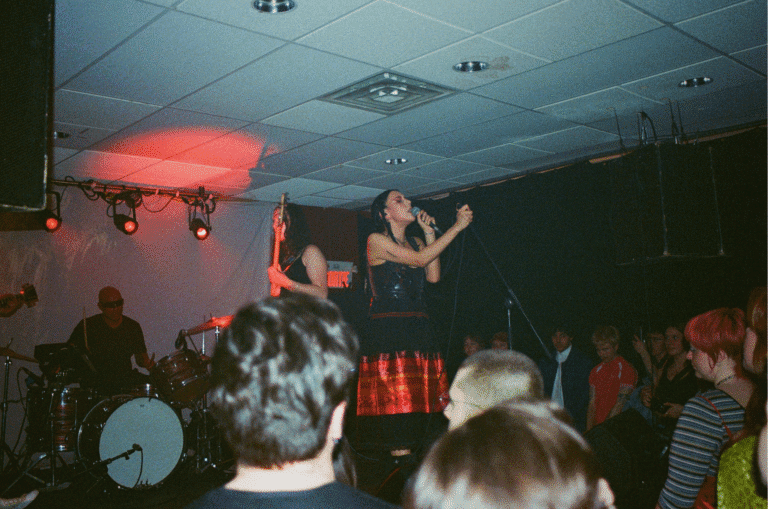
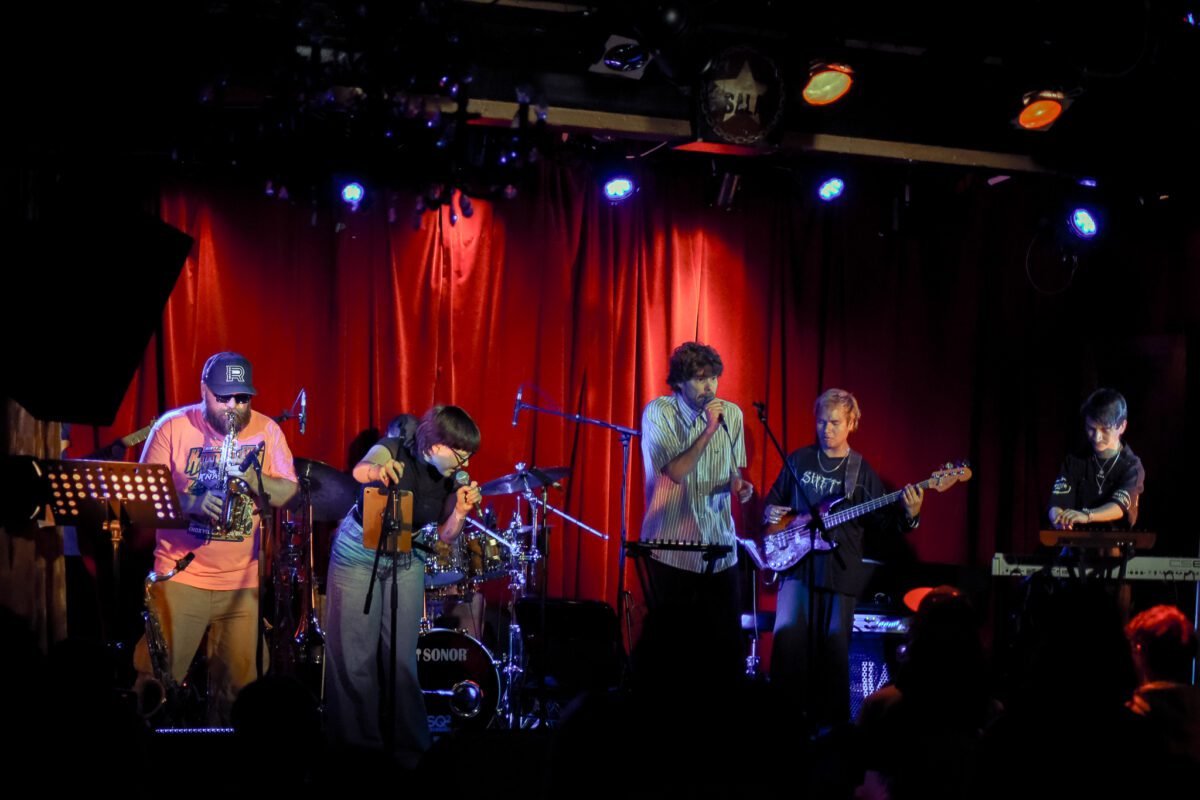
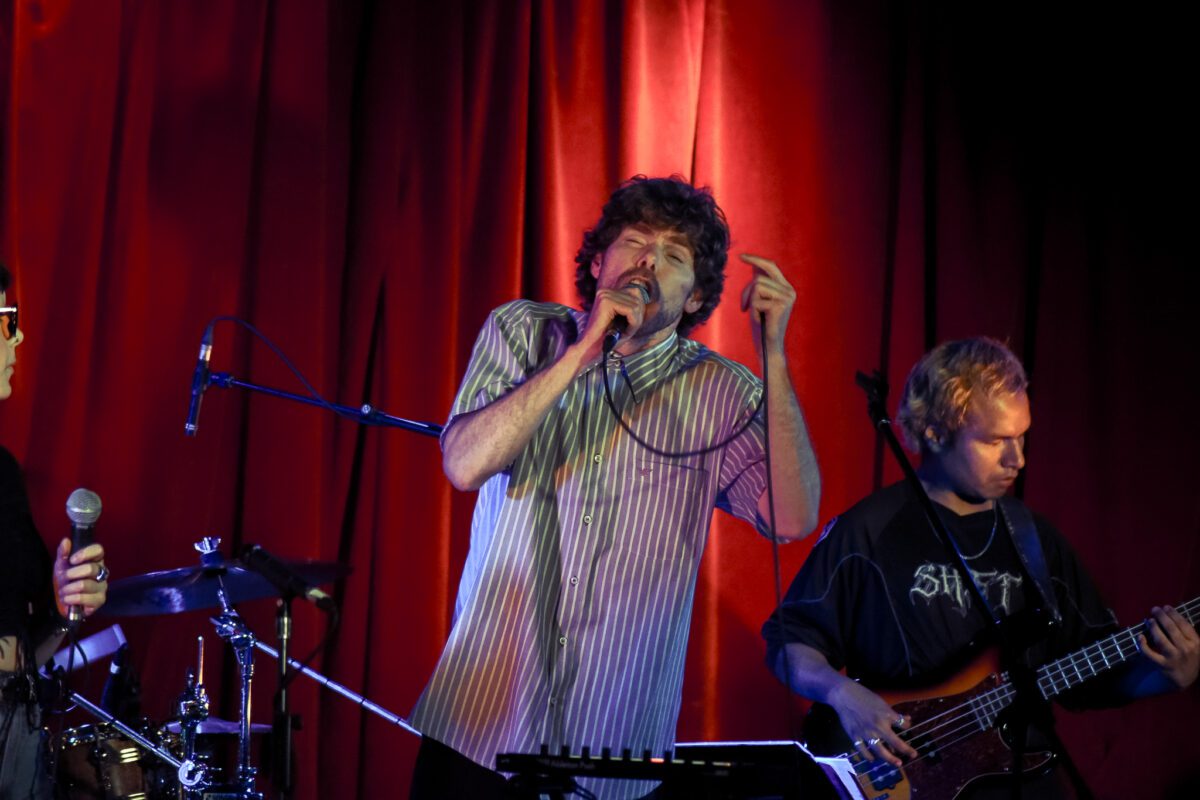
Since the 70s, these creatures from New York have been raking, ploughing and ruminating on a rock that’s still as wonderfully unfinished as ever.

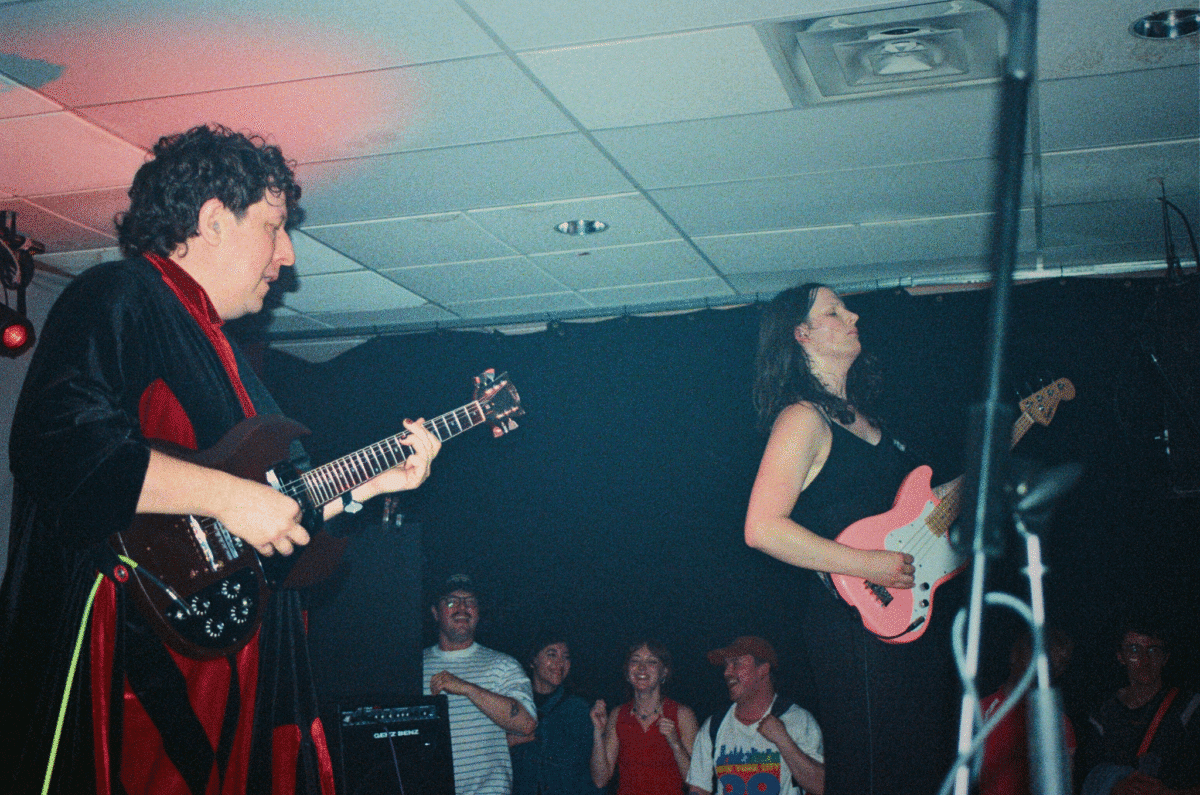
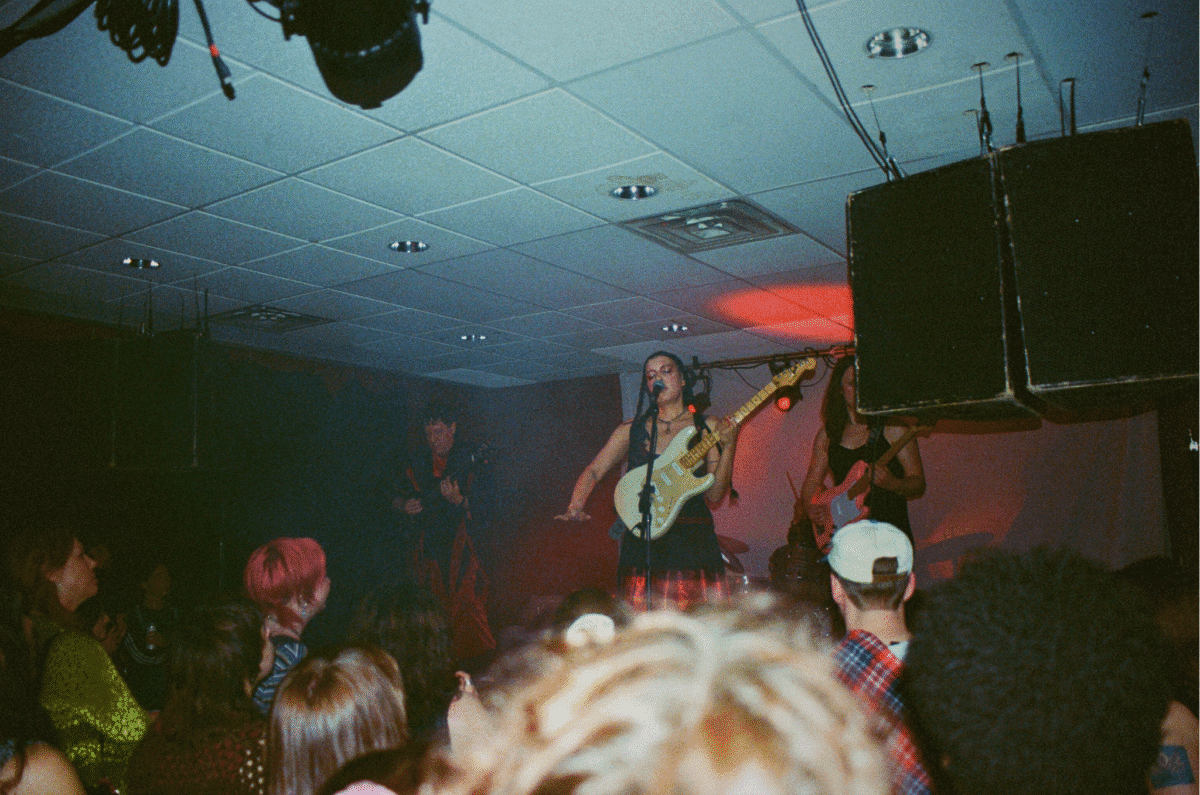
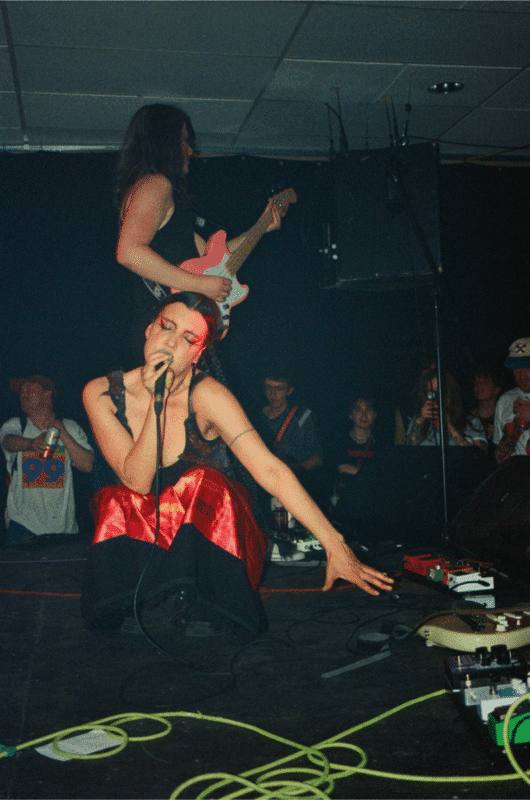
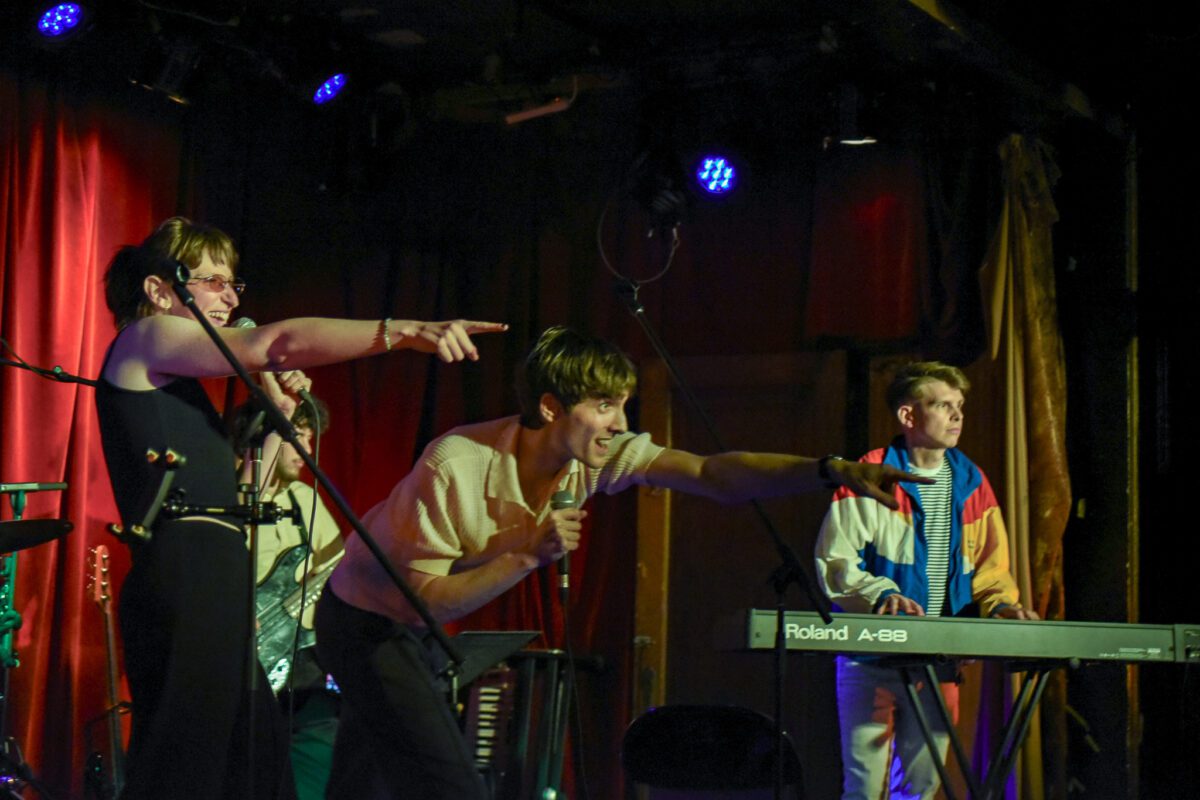
This crookedness, a little soft and clumsy in execution, this groove a tad Stonian at times, could have produced a short-lived effect. And yet, 40 years on, The Fleshtones are still throwing us a good sludge! They themselves are part of the work, it has to be said. Their energy isn’t that of their 20s, but that of their 60s remains remarkable and inspiring for younger fans of the rock thing, who weren’t able to experience that rock effervescence in New York in the 70s and 80s.

In 2024, Peter Zaremba knows how to lead the slams, interspersing his introductions with charming phrases in French for the MTL audience, and quoting the feats of arms of the Fleshtones and colleagues of their era – Television, Stooges, Blondie, Ramones, etc. Fellow bassist Ken Fox can count on a screaming voice à la Brian Johnson (AC/DC), he contributes to Bill Milhizer’s groove on drums, while guitarist Keith Streng feeds them with gravelly riffs.

In short, Zaremba and his henchmen still know how to shake the cage, or more precisely, Pop Montreal’s marquee (Marché des Possibles). The set ended with an impromptu parade of Fox and Zambera around the sound console, after a series of joyful encores.

Nice!

Publicité panam
Alt Folk / alt-latino / Electronic / latino

POP MONTRÉAL | A Deep, Feminist Latina Evening

by Michel Labrecque

The Sala Rossa was packed for this triple concert of Spanish-speaking voices. They sang a lot, applauded a lot, shouted a lot. A mostly Latino audience, but not the only one. Because the musical creativity of this part of the world also attracts curious onlookers seduced by the genre. 

The highlight of the evening was Mexican singer Silvana Estrada, who brought the evening to a close. What can I say? Her very special voice pierces us, bewitches us, captivates us, lulls us. Whether we understand the words or not, her vocal range and tremolos, inspired by both Western and indigenous music, plunge us into the depths of the Mexican soul. And we are transfixed by the journey.

Alone on stage, with guitar, ukulele and electric piano, Silvana Estrada says she’s delighted to be coming to Montreal this season. Her last show in the middle of winter traumatized her. She will also be part of the tribute to Lhasa De Sela, at Rialto on September 29 and 30.

Half the room knew the words to her songs. It was total communion between Silvana and her audience. A Mexican woman standing next to me was immersed in total ecstasy.

It was a moment of grace. Silvana’s solo performance enhanced her voice, which is still magnificent on the studio recordings, but a little more subdued due to the more sophisticated orchestrations.

In the second half, Colombian-born Montrealer Lapelúda presented the inner journey of an abused woman on the road to healing.

It’s an introspective alt-folk musical proposition, led by Lapelúda’s warm voice, with a tightly-knit quartet of musicians, including two percussionists. We journey with the artist on the road to recovery. The music becomes less sad and more soothing as the concert progresses. She tells us about a love song written in a state of traumatic shock.

Lapelúda sometimes speaks in Spanish, sometimes in English, sometimes in Quebecois French without a Spanish accent. In fact, her album Caidas (2022) includes songs in French. By the way, it’s a magnificent album. 

Lapelúda (The Hairy) is definitely one to watch.

This Latin evening was kicked off by the Mexicoise Gabriella Olivo, who grew up in Quebec City, the daughter of a Mexican-Quebec couple. Along with Maritza and Noé Lira, this young woman is part of this trend of reappropriating their origins, despite having essentially grown up and lived in Quebec.

Gabriella composes in both French and Spanish, with a hint of English thrown in for good measure. Her music is largely indie-folk, which would benefit from being presented with a live band. Yesterday, there was only an accompanist, with instrumental samplings.

Gabriella Olivo will soon be releasing a new EP. She’s an emerging artist to watch, with undoubted talent and creativity.

In short, I spent a wonderful evening in the company of these ladies. It’s extremely interesting to see the nebula of new Latin music growing, both here and in the Americas. And the audience that follows.

Muy bien…No?

Publicité panam
Pop / Synth-Glam / Synth-Pop

POP Montréal | Faux Real… Real Madness!

by Marianne Collette

To say that Franco-American duo Faux Real have a good stage presence is a perfect understatement.

On Thursday evening at the Piccolo Rialto, the tandem spared no effort in delighting their audience, who gave it their all. Most of the tunes were taken from their debut album, Faux Maux, which is still in gestation and should be available in its entirety on October 11.

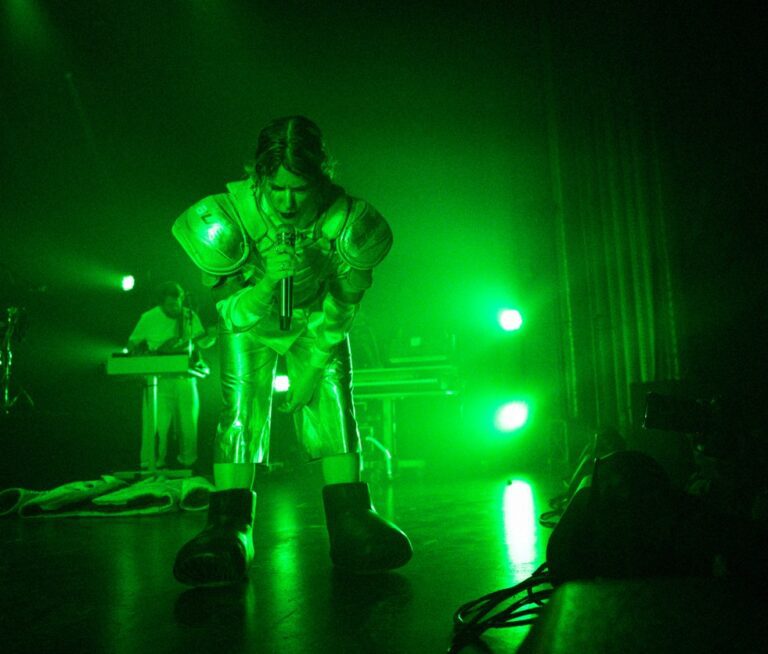
How to describe them? If you put an ’80s boy band, glam rock and a healthy dose of synth-pop in a blender, you’d probably get something like this.

With their boundless energy, brothers Virgil and Elliot Arndt performed a succession of classics (but can they really be called “classics”?), accompanied by synchronized dance moves to the delight of the audience, who were frequently invited to dance in turn.

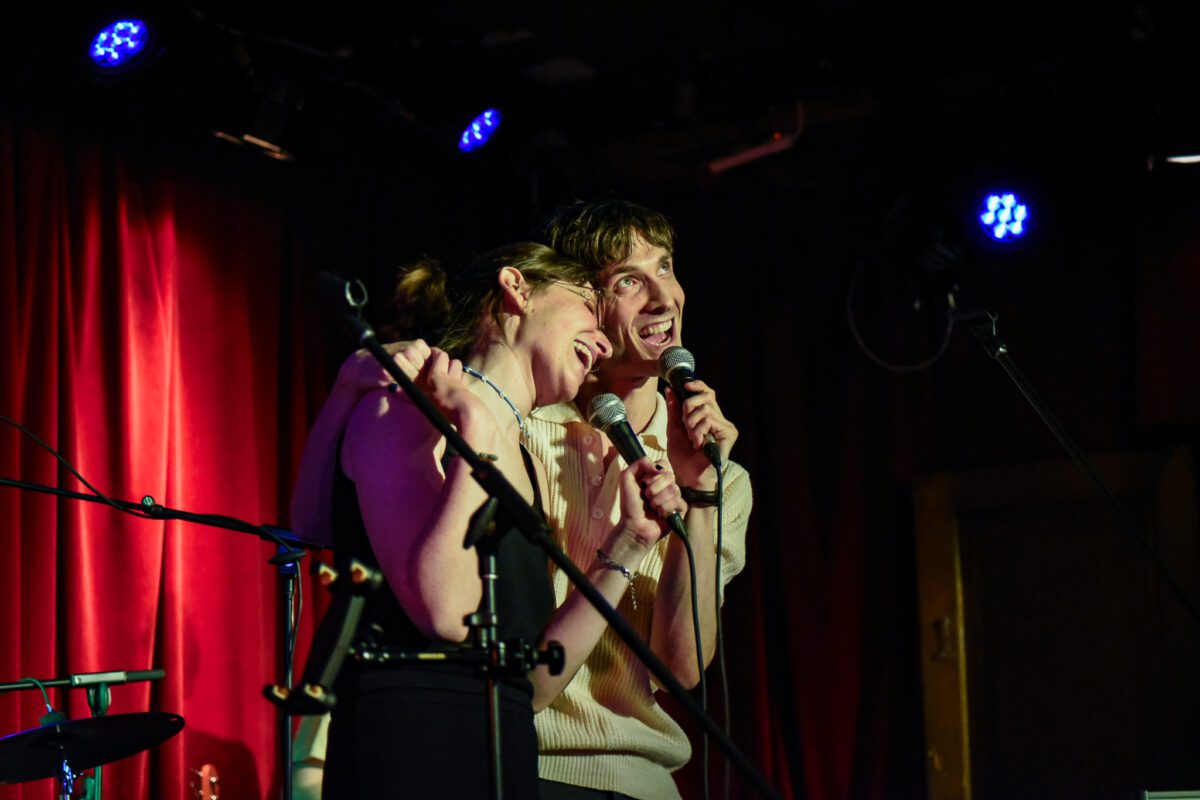
And it was inspiring to see a band that manages to pull it off without a huge budget. Just give them a microphone and a soundtrack and off they go. Even the stage seems optional, as the duo leave it at every moment to join the crowd. The show even came to an intimate close, with the duo asking to be lit only by the light of the crowd’s cell phones. All in all, a great atmosphere was created for what was undoubtedly a perfectly successful party.

Photo Credit: Sarah Driscoll

Publicité panam
chanson keb franco / Drum & Bass / Électronique / Footwork / Ghettotech / jungle / Pop / Synth-Pop

POP Montreal | And God Created Virginie B

by Alain Brunet

Nearly an hour spent Thursday evening with Virginie B at the Belmont imposes this testimony of approval.

The singer attracts attention for her extravagant and (very) sexy outfits, her infectious lasciviousness and her ability to throw herself all over the place in front of an audience. Virginie B has the talent to surround herself with excellent musicians, and her artistic direction is fine, enlightened and visionary in a pop context.

A backdrop of a circular screen, highly competent musicians, a genuine stage beast, a talented frontwoman who soon made us forget the relative tenuity of her vocal organ, reminiscent of feminine French pop.

Their musical influences, however, have little to do with the pop of their cousins, drawing instead on Flying Lotus and all those LA jazz funksters converted to hip-hop à la J Dilla. Virginie B is also inspired by the frenetic grooves of footwork and ghettotech in the USA and (less) jungle/drum’n’bass in the UK.

His soul-pop tunes and penchant for easy-listening soften these pointed references, while the lyrics (mostly) written in good-natured Quebecois French create a certain familiarity and certainly raise the level of our local pop.

As we saw after the release of her album Insula (2022), Virginie B has great taste. Because she knows how to put her sharp sense of pop culture to good use. Because she also knows how to build her own whimsical, sensual persona, with just the right touch of self-mockery.

In short, she puts on quite a show!

The 100-euro question then comes to mind: will Virginie B break into the European market and increase her fan base tenfold? Let’s hope so, because the album Astral 2000, just released by Bonsound, is in no way inferior to any production of its kind beyond our borders… and extremely rare in the French pop world.

Publicité panam
Americana / classique / Gospel

POP Montréal | A Touching Evening With Beverly and Elizabeth Glenn-Copeland

by Alain Brunet

Beverly Glenn-Copeland enjoyed success in her twilight years. The major success of a documentary film, Keyboard Fantasies: The Beverly Glenn-Copeland Story, had the effect of inflating the coolness and propelling the career of this non-binary octogenarian, a trans man with no apparent gender, whose personality exudes grace and goodness.

Beverly Glenn-Copeland’s biographical profile indicates that her African-American father could play the great romantic works on the piano, and that her mother knew a vast repertoire of gospel songs.

This astonishing artist was one of the first Afro-descendant students to come from the USA to study music at McGill University, at the turn of the 60s.

What we heard at the Rialto on Thursday evening perfectly illustrates this balance between European classical heritage and Afro-American culture: her contralto or tenor voice bears witness to classical training, but is also imbued with gospel, reminiscent of Afro-descendant classical singers singing the sacred songs of American gospel.

Accompanied by his lifelong companion, singer-songwriter Elizabeth, Beverly performed to a packed house, featuring a seasoned choir, keyboards and light percussion.

In front of an attentive audience, admiring if not dazzled by this experience, the Glenn-Copeland couple offered a retrospective program based on beautiful folk or gospel melodies, songs arranged for several voices.

Beverly Glenn-Copeland was welcomed as a pioneer of his own composite identity, but also as a new-age composer before that label existed, an iconoclastic designer who even created constituent materials of techno, taken up by its founding fathers – Juan Atkins, Kevin Saunderson, Derrick May.

On Thursday evening at the Rialto, there was no question of this contribution, but rather a concert focusing on the choral repertoire of Beverly and Elizabeth Glenn-Copeland, with a few percussive returns to the African legacy.

Really nothing memorable compositionally, but a very touching, warm, comforting and hopeful evening for the humans of the LGBTQ+ community. And for all of us, too.

Publicité panam

Afro Fusion / Afro-Electro / afro-pop / Jazz

POP Montréal | SAM.IITO, A Promising New Cycle

by Michel Labrecque

In the small, sparsely packed Rialto Hall on Thursday evening, SAM.IITO (Samito) introduced us to his new musical project, DesDobramento (deployment), whose main theme is shame.

For the Mozambican-born musician, who has lived in Montreal for almost two decades, this project is a return to his roots: after having worked extensively in the electro sphere, this African musician trained in jazz admitted in an interview that he also listens to a lot of soft music. So, he wanted to bring all these parts of himself together in a new musical adventure.

And the result on stage is very promising, if unfinished. SAM.IITO himself said as much at the start of the concert, and even asked the audience for feedback on how to improve. SAM.IITO really doesn’t do things the way most people do them, and that’s what makes him so endearing.

This sonic journey takes us into all kinds of musical textures, from extreme mellowness to dance party, with intriguing jazz harmonies, aided by saxophonist and keyboardist Alex Ambroise, drummer Salin Cheewapansri, violinist Elsasosa Jousse and bassist Milla Thyme, also on keyboards.

SAM.IITO sings, mostly in Portuguese, and we also play keyboards. Added to this assemblage are processed samples of choral singing, speeches and instruments played.

While some arrangements still need to be perfected, the overall experience is one of Samito’s most accomplished musical offerings. The fusion of his various musical heritages floats us in an emotional bubble. It’s at once learned and playful, lulling and challenging.

Desdobramento is a work in progress, unfinished, but very interesting indeed. Let’s hope we’ll soon be able to witness the continuation of this embryonic project.

Publicité panam

Alternative / Art Folk / Experimental Folk / Folk Rock / Indie Folk

POP Montréal I Forgotten Stories with Nap Eyes

by Stephan Boissonneault

Have you ever discovered a band that feels like a warm hug from a distant friend that you may or may not have actually met? That’s Nap Eyes from Halifax. From the moment this four-piece—actually five for this show featuring the one and only Yves Jarvis on guitar and synths—took the stage, the artsy-drab basement of La Sotterenea felt a bit brighter. Nap Eyes at its best is backed by soft, yet full acoustic guitar, a steady bass and drum section, pristine, halcyon lead guitar licks, and lyrics that feel a bit Rolling Thunder Revue-era (think “Isis”) Bob Dylan. For years, I’ve been told in strange music media hype circles to check out this band live, and now I know why.

These musical tales, led by vocalist/guitarist, Nigel Chapman, are deeply descriptive, but vague, kind of like a piece of magical realism. Just check out “Passageway,” the single for Nap Eyes’ upcoming album, The Neon Gate. For most bands, the instrumentation leads the lyrics, but with Nap Eyes, it’s the reverse. I found myself floating, drifting in and out of the basement and into the Nap Eyes fantastical narrative, and then I was pulled back by the lead guitar, sometimes harmonized by Jarvis, who was just too cool on stage. I also loved how Chapman would just smile and “This is nice,” into the microphone and crack a smile like a kid who just discovered ice cream. You could tell that he, and the band, were really cherishing the moment.

The Nap Eyes show sort of felt like listening to an old Yo La Tengo record or reading Hermann Hesse; the songs are long, but rightfully so, like a story told by someone who has had a bit too much wine at a party. But because of that imagery and delirium, we all stay for the denouement. That might sound a bit too pretentious, but it’s the truth. Yes, Nap Eyes might have been one of the most authentic performances I’ve seen in some time.

Indie Rock / Shoegaze

POP Montréal I Sunnsetter’s Sound Bath

by Stephan Boissonneault

I caught the tail end of the acoustic stylings singer-songwriter styling of Devarrow (after hearing a few minutes I’ll definitely check him out) and waited a while to be bathed in sound by Sunsetter, the project of Andrew McLeod. As a consistent collaborator and live performer with Zoon, I’ve seen McLeod before, but this was my first ever Sunsetter show.

The sound man at La Sotterenea seemed to be having some trouble with McLeod’s microphone, but after around 15 minutes of Tim Carelton’s “Opus No. 1” (you know if from being on hold on the phone anywhere in Canada) blasting on the speakers, McLeod strummed his cherry red SG, of which he had three, and the show was on. Sunnsetter utilizes a healthy mix of shoegaze with pedals that, added up, probably cost thousands of dollars, but their tones are just like honey. He also loves to loop a line off one guitar and switch to the next. I was half expecting him to pull out a whammy bar and slam some glide guitar vibratos, but he didn’t which was a breath of fresh hair. Too many shoegaze artists overuse the Kevin Shields techniques.

The vocals for Sunnsetter, for the most part, are quite simple, coming from Mcleod’s worn voice, sometimes a combination of Billy Corgan’s and Mark Gardener’s, touching on the themes of death, isolation, and love; very shoegazey. The audio levels seemed to be all over the place, bouncing from extremely loud to hushed murmurs, which definitely lost some people. Regardless, those down for a sleepy sound bath got one. I’ll definitely be checking out the upcoming album, Heaven Hang Over Me, in November, especially when I have the urge to astral project.

Folk / Folk Pop / Indie Rock / Pop

Basia Bułat: a luminous twilight

by Marianne Collette

On Thursday evening, composer and multi-instrumentalist Basia Bulat set the Montreal skies ablaze with her dynamic, catchy folk tunes. It was an excellent appearance at the POP Montréal festival by a singer who interrupted her The Garden Tour for one evening to treat her audience to a succulent selection of some of her best songs.

“I feel like we’re the Beatles!” exclaimed Basia Bulat at the start of the show. It’s true that in terms of location, you can hardly do better than the roof of the Rialto, especially when the concert takes place at the same time as the sunset. As the first chords of Heart of My Own sounded, the sky turned to pink and the golden, vibrant atmosphere of twilight enveloped every track of this short, but very successful concert.

Speaking of location, let’s not forget the undeniable talent of the sound team, who perfectly balanced zither, guitars, bass, keyboards and drums, all in a space that was both outdoor and limited. It’s a tour de force we’d be wrong to forget, especially when it comes to folk music: despite the challenges of the environment, the audience was able to appreciate the works on all their levels, from the energy of the percussion to the sweetness of the vocals to the more delicate ardor of the string instruments.

Fans of Basia Bulat were in full force, as the show quickly sold out. The adopted Montrealer even took the time to say hello to a few familiar faces. In the end, it seemed as if the musicians were playing for their friends – old and new alike – infusing the event with a warm, casual feel that in no way detracted from the quality of the performance. The singer was generous with her audience, even going so far as to perform three completely new songs, My Angel, Disco Polo and Baby. The theme of family was at the heart of all three songs, and Basia Bulat candidly confessed that her next album would draw heavily on her experience as a new mom.

Baroque Pop / Indie Rock / Musiques du Monde / psychédélique

Vampire Weekend at Place Bell | Hardened and generous

by Sami Rixhon

Ezra Koenig and his band of vampires set foot on Quebec soil for the first time in five years this Wednesday, as the band presented their fantastic new album, Only God Was Above Us, to the Place Bell audience. For over two hours, Vampire Weekend drew perfectly on their different eras to demonstrate the immense musical palette they are capable of conceiving.

Four days after welcoming the legendary PJ Harvey, the Place Bell audience was once again spoiled by talented American alternative artists, namely the New York trio Vampire Weekend.

The set kicks off at around 8:20 p.m. in classic fashion, with “Campus, Boston (Ladies of Cambridge)” and “One (Blake’s Got a New Face)”, all from their 2007/2008 career. The trio stand in front of a curtain with the band’s name spelled out soberly in white on black, until… well, until the curtain falls on the climax of “Ice Cream Piano”, revealing four more musicians, a retro-futuristic backdrop and another set of spotlights. In the back of our minds, we had a sneaking suspicion that the performance wasn’t going to be quite so conventional throughout. An effect like this in concert is always a big yes.

Vampire Weekend presents hits from its first four albums(Vampire Weekend, Contra, the excellent Modern Vampires of the City and Father of the Bride), but naturally focuses on its latest offering, Only God Was Above Us, released just over five months ago. In all, nine of the opus’ 10 songs will be performed. Let’s talk about the album, by the way: after a slightly more “classic” pop turn with Father of the Bride in 2019, this year the Vampires treated themselves to a return to their roots with indie rock, baroque pop, shoegaze, Latin and Caribbean rhythms… name it. A jewel to be listened to in one go, and personally my album of the year.

Koenig is an excellent frontman, not the most expressive in his movements or attitude, but he does exactly what is asked of him in the case of Vampire Weekend: excel in all styles. Sentimental on “Unbearably White”, reflective on “Mary Boone” and powerful on “Capricorn”. To bring the full musical richness of the tracks to the stage, the musicians move from instrument to instrument, including Ezra Koenig, who takes a saxophone solo on the wacky “New Dorp. New York”. Multi-instrumentalists of the kind you see less and less these days. In my humble opinion, Vampire Weekend are certainly one of the most talented and innovative bands on the alternative scene since 2008, the year of their recording debut.

Between songs, the Vampire Weekend frontman addresses a 9-year-old fan of the band in the audience, who learns that this is her first concert, thanking her for coming. He also takes the opportunity to say hello to the people of Laval, but especially those of Montreal, knowing that Place Bell isn’t particularly full of North Shore residents (also knowing that they’re simply not in Montreal at the moment). It’s little touches like these that confirm that the band doesn’t go completely on autopilot during a tour.

After a two-hour concert, Vampire Weekend close the regular part of their show with “Hope”. One by one, the members leave the stage, until the band’s bassist, Chris Baio, plays the last notes, alone in front of the audience.

As a reminder, Vampire Weekend proposes an original and perilous exercise, to say the least: take any request for songs not written by Vampire Weekend. From “Don’t Look Back in Anger” to “Chop Suey!” not forgetting “So Long Marianne”, “Man! I Feel Like a Woman!” and “I’m Still Standing”. Each time, the interpretations are haphazard, with Koenig admitting every other song that half the band doesn’t know the chords. An amusing, good-will closing.

Until next time, dear Vampires.

PLACE BELL CONCERT SETLIST

1. Campus
2. Boston (Ladies of Cambridge)
3. One (Blake’s Got a New Face)
4. Ice Cream Piano
5. Classical
6. Connect
7. White Sky
8. Step
9. This Life
10. Sympathy
11. New Dorp. New York (SBTRKT cover)
12. The Surfer
13. Unbearably White
14. Oxford Comma
15. Capricorn
16. Gen-X Cops
17. Diane Young
18. Cousins
19. A-Punk
20. Prep-School Gangsters
21. Mary Boone
22. Obvious Bicycle
23. Harmony Hall
24. Hope

RAPPEL

1. Tempted (Squeeze cover)
2. Don’t Look Back in Anger (Oasis cover)
3. So Long Marianne (Leonard Cohen cover)
4. Here Comes Your Man (Pixies cover)
5. Chop Suey! (System of a Down cover)
6. How You Remind Me (Nickelback cover)
7. Dangerous Night (The Night Is a Knife cover)
8. The Boys Are Back in Town (Thin Lizzy cover)
9. Man! I Feel Like a Woman! (Shania Twain cover)
10. You’re Still the One (Shania Twain cover)
11. I’m Still Standing (Elton John cover)
12. This Must Be the Place (Naive Melody) (Talking Heads cover)
13. Walcott

Publicité panam

IDLES is the air fryer of post-punk & English Teacher is a class-act

by Vanessa Barron

On a crisp autumn night, the punk-adjacent congregations of Centre-Ville gathered at the sold-out MTELUS, donning their finest black band t-shirts, to witness the advent of English post-punk quintet IDLES with support from English Teacher. 

My prior knowledge of these acts came from a speed-run listen of their discographies along with a few conversations with IDLES fans over the years that suggested this band garners a passionate fanbase. Like the “I’ve seen them five times and got their lyrics tattooed” kind of passion. English Teacher is fresher to the scene, but they’re already making a big impression, as their first LP This Could Be Texas released this year won the esteemed Mercury Prize.

English Teacher / Amir Bakarov

English Teacher was a pleasure to have in class, so to speak. I wouldn’t normally describe a rock band as elegant, but a lot of rock bands don’t feature piano and upright bass, do they? Vocalist Lily Fontaine gracefully navigated spoken word and full-throttle belting, moving between rawness and clarity in her tone. “Nearly Daffodils” showcased this full range of vocal flexibility along with some crisp 7/8 time signature breakdowns from the strings that created both a tense and energetic atmosphere. I was unexpectedly reminded of the indie-Brit-pop singer Kate Nash (who, by the way, is coming to Foufounes Electrique in October) in the way that the lightness of the plinky piano chords and guitar arpeggios complemented the punchy lyrics and warm basslines. 

IDLES / Amir Bakarov

Then the crowd did, in fact, go fucking nuts for IDLES. I witnessed at least two walls of death and an innumerable number of flying sweatshirts and appendages from crowd-surfers. The energy of both the crowd and the performers was equally matched: guitarist Mark Bowen swung his instrument around like a hula hoop, drummer Jon Beavis had no hesitation to fire off blast beats on the kick drum, and the lead singer Joe Talbot maintained an unbridled shout-singing voice for a whopping hour and a half. It felt like these songs were really designed with the live performance in mind; they sounded more complete with hundreds of raspy voices providing the backing vocals to the singer’s thick-accented declarations on tracks like “Gift Horse,” screaming “LOOK AT HIM GOOOOO” in a blissful and unified fervor. It’s like listening to “Seven Nation Army” on YouTube in comparison to hearing a football stadium hooting and hollering along to the infamous bassline.

IDLES / Amir Bakarov

I vibed with IDLES the most when they ventured into groovier tracks with snare rim-clicks and syncopated beats like on “Samaritans” and “POP POP POP” from their newest album TANGK. At worst, I found songs like “Car Crash” to drag on with a monotonous drone and a plodding beat, more aptly comparable to a deflating tire than an explosion. Nevertheless, there’s no denying that IDLES’ intensity and drive remained unwavering throughout the show, with the audience fully matching their raw enthusiasm.

classique / période romantique

OM Goes Big with Bruckner’s Final Symphony

by Alain Brunet

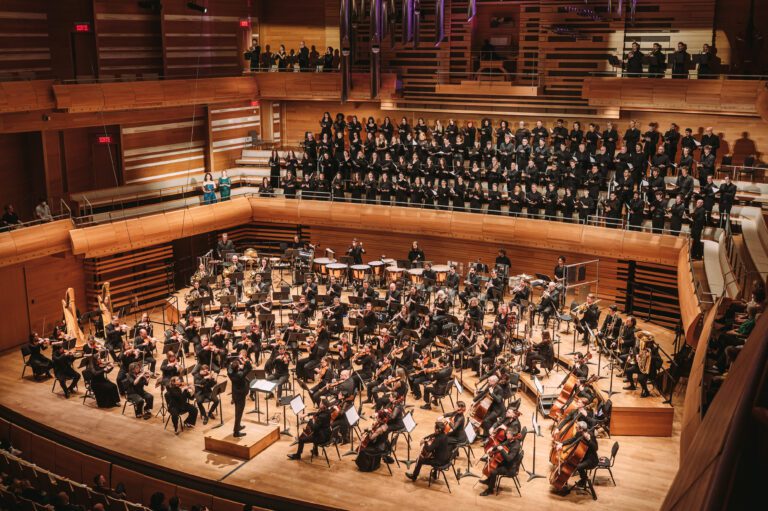
On Sunday, the Orchestre Métropolitain played the unfinished symphony by Anton Bruckner (1824-1896), the Ninth, of which he was unable to write a satisfactory version of the last movement after having attempted several sketches, because he was very ill and “overwhelmed by his own genius”, which means unable to conclude such strong movements, particularly the scherzo, the 2nd, “so imposing, with a visceral, telluric force”, to use Yannick Nézet-Séguin’s epithets, before he explains the addition of the Te Deum, a choral work by Bruckner, as a complement to the symphony, at the suggestion of its creator.

“If there’s one composer who has accompanied the orchestra, it’s Bruckner,” emphasizes the Quebec maestro in his opening remarks. YNS conducted the composer’s 9th for the first time in 2002, then again in 2009, as part of a vast project to record all Bruckner’s symphonies from 2006 to 2017, with the critical success we all know.

The opening program is a “ceremony” without applause, without pause. Bruckner’s 9th was thus coated with Te Deum at the end and beginning, as has been the case for some years now with an Auotchtone composition by Cree artist Andrew Balfour, Mamachimowin. According to the composer, this 6-minute choral and orchestral work expresses the difficult relationship between the spirituality of the aboriginal nations and the influence of the Catholic religion on these peoples, who were mistreated by the Westerners who came to settle in the Americas. An eminently colonial relationship between the monotheistic French conqueror and the native polytheism and shamanism deemed primitive by the Europeans.

Thus, this spectral contemporary work was a judicious choice to introduce the unfinished symphony. Bruckner is arguably a signature repertoire for the OM and its conductor, and his performance on Sunday was exemplary. Indeed, much of the first movement and the entire second movement reveal an uncommon density and power, surely among the most remarkable achievements of 19th-century symphonic music. The horns, trombones and trumpets lend such force to Bruckner’s orchestral discourse. In the end, this humble, pious man was inspired to the point of foreshadowing what was to come, allowing himself an almost modern harmonic audacity, paving the way for his successors, starting with Gustav Mahler.

Obeying the conductor’s instructions, the audience was exemplary, silent until the end of this hour and a half of contemplation. The only blot on this masterly picture was the soloists seated with the choir for the Te Deum: at the very back of the orchestra, the voices of tenor Limmie Puliam (especially), mezzo Jennifer Johnson Cano and bass Ryan Speedo Green were hard to make out in space, while soprano Latonia Moore cut through it as she should.

Photo Credit: François Goupil for OM

Subscribe to our newsletter

Inscription
Infolettre

"*" indicates required fields

Type of Suscribers