Africa / Mandingo Blues / Soul/R&B

Nuits d’Afrique | Tyrane Mondeny: The Rising Star Has Reached Her Destination

by Sandra Gasana

I said that Tyrane Mondeny was a rising star following my interview with her a few days before her arrival in Montreal. But after last night’s show on the Scène Loto Québec in the Femmes du monde des Nuits d’Afrique series, Lionne Tyrane showed us that she is now playing in the big league.

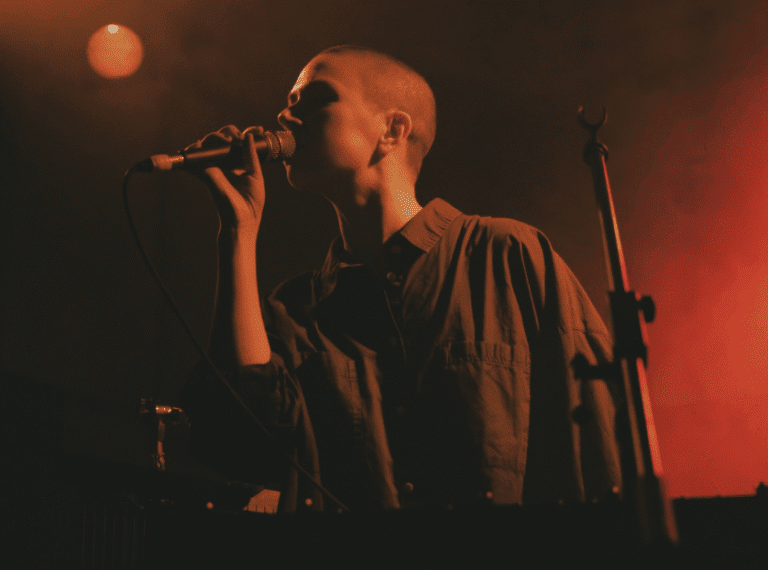
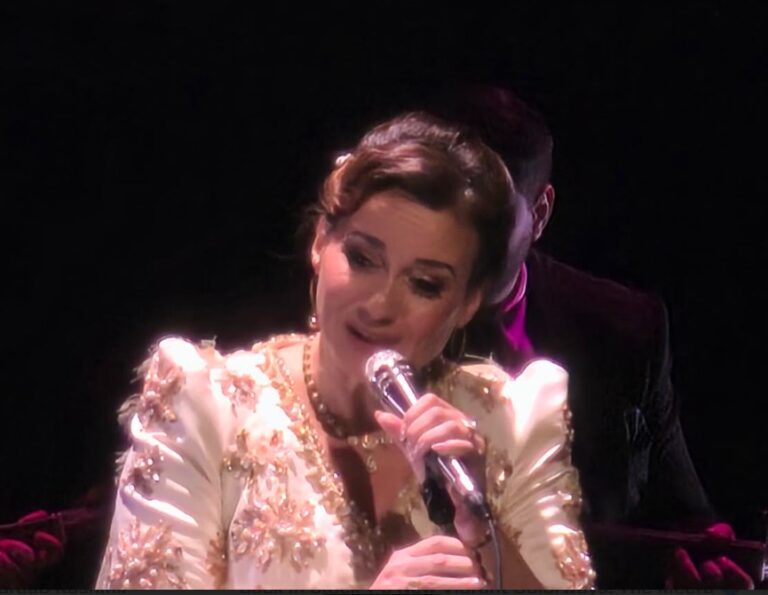
Always with an African touch in her outfits, she arrived on stage after her musicians, and from the very first track she was already on fire, presenting us with her Mandingo soul, mixed with gospel and R&B, with rhythms from her home in Côte d’Ivoire. Keyboard, bass, guitar, drums – these were the instruments that accompanied the artist who loves to showcase her musicians. On several occasions, she moved closer to them to let them shine in their turn. I recognized the one everyone’s been snatching up on guitar, the Senegalese giant Assane Seck, who accompanies several artists in Montreal.

We recognize some Arab sounds in one of the opening tracks, a small allusion to her adopted country, Morocco, but also American soul, which she masters particularly well, with impeccable English.

“I’ve travelled 12,000 km to be here tonight,” she says, before launching into a song paying tribute to women and denouncing the violence they suffer.

A new feature of this concert is that she plays guitar, an instrument she adds to her many strings, in addition to the percussion she plays on stage and a traditional Ivorian instrument consisting of a metal rod.

She also pays a moving tribute to her parents in heaven, in the track Prayer, which the audience felt even without understanding the lyrics. After this gentle passage, she’s back to being the lioness we know, and continues her rampage, with dance steps worthy of a professional (she has a background as a dancer) while interacting with her guitarist.

“Are there any Ivorians in the audience?” she asked the growing crowd, but we didn’t have many answers.

She covered a classic of her own, which seemed to be appreciated by the audience for its spiritual aspect, before paying tribute to the children, in a song rich in emotion. She managed to get the crowd singing along, responding to her every instruction. It’s clear that Tyrane is in control and feeling increasingly comfortable on stage.

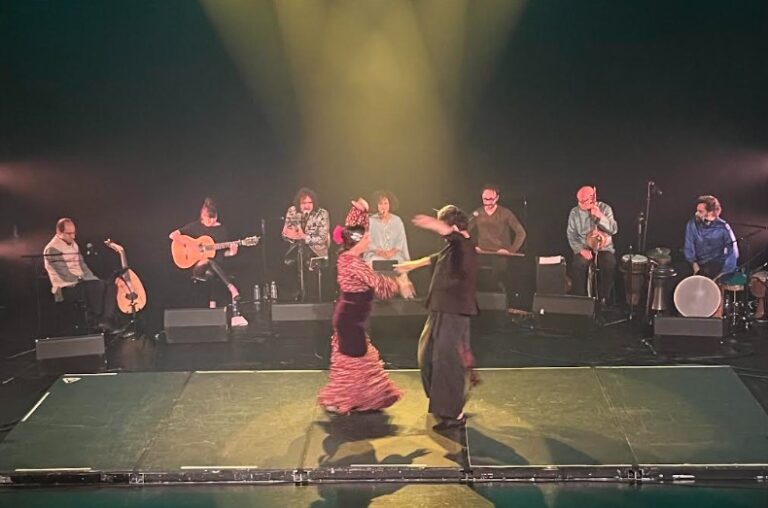
She quickly invites a dancer on stage, whom I didn’t know, and with whom she does a few traditional dance steps.

“If I’m here tonight, it’s thanks to two people who are here tonight: Veeby and Fredy Massamba”, alluding to the instigators of the Festival afropolitain nomade, in which she has participated on several occasions.

She finished with some of her classics, including her hit Hakuna Matata, in a joyous and cheerful mood, in front of an audience who were discovering her for some, who may have seen her at Balattou last November, or at Afromusée in June 2024 for others.

The rising star has arrived at his destination, and the Nuits d’Afrique audience was there to see it. We wish him even bigger stages, an even bigger audience and endless success.

Photo Credit: M. Belmellat

Publicité panam
Brazilian

Nuits d’Afrique | Mateus Vidal & Axé Experience, “Uma Festa” in The Rain

by Michel Labrecque

Part of Montreal’s Brazilian community was eagerly awaiting Mateus Vidal, ex-singer and percussionist of the legendary Salvador da Bahia band Olodum, on the free outdoor Nuits d’Afrique stage at the Espace tranquille. Except that the intense thunderstorms of this torrid late afternoon delayed the show and put the crowd to the test.

Mateus Vidal now lives in Montreal with his family. He has set up a new band called Axé Expérience, which mixes axé music with samba-reggae. Both genres were popularized in the 80s, blending samba, African percussion and Jamaican beats. These rhythms have been dubbed “Afro-Brazilian”, hence their rightful presence at Nuits d’Afrique.

Mateus Vidal was undaunted by the elements. With his section of three percussionists, accompanied by a bassist, a keyboardist, a guitarist and a saxophonist-flautist, he took to the stage, singing and jumping. After ten minutes, the sun came out, only to disappear under the rain after another 10 minutes.

It was a magical moment, despite the inclement weather: as Mateus Vidal moved from one side of the stage to the other, dozens of umbrellas did the same choreography. Others continued to dance under large umbrellas, or in the open air despite the rain.

The sparse audience was overwhelmingly Brazilian, of all generations. Smiles abounded, despite the circumstances. Still, I’d like to question the Festival’s decision to program an Afro-Brazilian celebrity at 5pm, for one hour. But festival programming is always unpredictable.

Mateus Vidal aimed for a broad musical spectrum, covering hits such as Gilberto Gil’s Bahia, in samba-reggae mode, and pieces by Olodum, among others.

Then the jinx set in again: the sound system broke down. No problem: the band continued with percussion only, bringing back the sun and creating another magical moment.

Magic and the unexpected! Sometimes it works. We can only hope that the new Montrealer and his new band will be able to take advantage of a better window of opportunity, so that people here, Brazilians or not, can get to know him better and dance to his music.

Photo Credit: André Rival

Publicité panam


Africa / conte / Hip Hop / percussions

Nuits d’Afrique | Les mamans du Congo x Rrobin: A Successful Bet!

by Sandra Gasana

With a dance-based introduction, we first hear recorded ambient noises, mixed with sounds played by the DJ and his percussion. It’s only then that Gladys Samba, the band’s leader, appears on stage, blowing into a saucepan whose dust we can see.

The two dancers, on either side of the artist, are talented: they sing, they play characters, they dance, while Gladys alternates between hip-hop, singing, storytelling, and shares engaged messages, mainly honoring women or denouncing violence against women.

“Matondo means thank you in my language,” she tells us between songs.
Movements from everyday life have found a way of integrating with the music offered by this band. The dancers, for example, are seen pounding millet to the same rhythm played by the DJ and percussionist.

Gladys is also an actress, judging by the little scene played out with the two dancers. So we moved from dance to theater, storytelling, singing and percussion. A whole range of arts came together in this hour-long performance, under a blazing sun.

We were treated to several traditional lullabies but revisited, “not to make you sleep, but to make you smile”, she announced, while getting the crowd involved in the song dedicated to her sister Tombo.

The second part of the concert focused on the return to the village and the vital role of mothers, with a climactic finale featuring drumming by all the artists, followed by a gentle closing, swapping the drum for maracas.

Photo Credit: André Rival

Publicité panam
Cumbia / latino

Nuits d’Afrique | Less Toches: A Latin-Montreal Fusion Worth Discovering

by Michel Labrecque

The Montreal cumbia group Less Toches performed three times at Nuits d’Afrique. Each concert was different, with special guests, allowing us to explore the diversity of this style… while getting everyone dancing.

It all began on July 13 with a Vallenato evening featuring Remberto Zuniga, a veteran singer and percussionist based in Montreal. Vallenatos are a kind of Colombian griot who travel from village to village singing.

After five minutes, no one was sitting down anymore, even though the crowd was small on this late evening of torrential rain. This concert would have to be repeated in a different context.

The second concert on July 14 aimed to bring cumbia closer to traditional Quebec music. The special guest was Alice Bro, a tattooed banjoist with a radiant, contagious smile and a husky voice, who offered a Tom Waits version of trad-keb. The mix wasn’t perfect, but it was very promising. To be explored further. The crowd, significantly larger than the previous day, danced enthusiastically, including a Serbian university professor whom we met by chance. These concerts provide opportunities for unexpected encounters.

The third concert, on the 15th, was the only one I missed. The guest was Ons Barnat, a musicologist, professor at UQAM, and reggae and dub music enthusiast. Another bold choice, which must have brought a lot of people to the dance floor at Balattou.

Less Toches are anthropologists of cumbia. Daniel Rodriguez, the percussionist and flutist who perfectly imitates birdsong, tells you, in impeccable French, lots of stories about the different styles and their more recent adaptations. A bottomless well of knowledge.

Less Toches is a gathering of new Montrealers of Colombian, Argentinean, Cuban, and Mexican origin. Unlike other recent cumbia offerings, such as Brussels-based Chiva Gantiva, heard at Nuits d’Afrique on July 8, Less Toches does not mix cumbia with electronic music. Nor does it mix it with brass instruments. The group is based on multiple percussion instruments and the accordion, with electric bass providing support and sometimes the traditional flute. But it hits the mark.

It will be interesting to follow Less Toches in the coming months. The group is currently working on its first full-length album. In the meantime, it will be performing at numerous festivals this summer. Get ready to “cumbier”!

Photo Credit: M. Belmellat

Publicité panam
Gnawa / Psychedelia

Nuits d’Afrique: Bab L’ Bluz Summons The Desert

by Stephan Boissonneault

Bab L’ Bluz, the Marrakesh Gnawa rock group, played their first ever Montreal show during Nuit D’afrique like they were summoning something older than any of us. Under the sprawl of Scene TD, the air was dense with heat, and the band’s Moroccan gnawa trance-rock felt less like a performance and more like a rite.

The guembri’s thick, rubbery basslines threaded through the air like low-flying drones, while Yousra Mansour stood in the centre—voice sharpened with reverence and defiance, curls haloed in sweat. She sang and wailed in Darija, the Moroccan Arabic, each phrase riding the deep pulse of percussion and fuzzed-out electric riffs, her double-necked guembri slung like an electric talisman. Even if I didn’t know the words, the urgency was unmistakable: liberation, history, the slow unfurling of a people’s soul music braided on stage. There were some absolute rhythmic bangers in songs like “AmmA,” and others from their 2024 album, Swaken.

At one point, Mansour raised her hands mid-song as if conducting spirits. The band surged louder, gnawa rhythms clashing with desert blues and wah-pedal grit, making the tent feel too small for whatever force was churning inside. Mansour absolutely rips on the geumbri, playing it like a slide guitar without a slide. We have to give props to the bass guembri/ backing vocalist Brice Bottin, drummer Ibrahim Terkemani, and percussionist, Mehdi Chaïb.

By the time the set closed, the night air felt different, like it had been stirred by something heavy and ecstatic. Bab L’ Bluz had cracked something open.

Caribbean / Dancehall / Reggae

Nuits d’Afrique | Blaiz Brought The “Fayah” to The TD Main Stage

by Sandra Gasana

He lives up to his name. Fayah, or fire pronounced in Jamaican, was not chosen at random in my opinion, because as soon as he arrived on stage, the temperature, which was already high, exploded. We were treated to pure, unadulterated shatta, the Martinican dancehall style that is so successful.

The artist’s official DJ played an instrumental role in getting the crowd ready and in the right mood to welcome Blaiz. Like Mo’Kalamity and several other artists interviewed for this edition, this is his first visit to Canada. He came accompanied by his two dancers and all the musicians, guitarist, and drummer, and they had a dress code: white and blue, the colors of the fleur-de-lys flag that he wore at times. Indeed, wings could be seen on the back of his T-shirt, the one whose career has been taking off for several years now.

The crowd went wild when the guitarist started playing kompa rhythms, which he seemed to master very well. The DJ and Blaiz even started dancing with the dancers, imitated by several festival-goers. Probably one of the highlights of the evening, just like when the artist and his DJ took a dip in the crowd at the end of the concert.

“This is my first time here, and I want us to remember it for the rest of our lives,” he said, putting a little pressure on his new audience.

We were treated to a few pull-ups, which aim to interrupt the song a few seconds after it starts, to go back and redo it until the end this time.

We were treated to all of his hits, and there are many, including Money Pull Up, Gimme This, LifeStyle, and Best Gyal, during which the dancers put on quite a show. Several tracks from his latest album, Shatta Ting, were featured, but that wasn’t all.

He takes the time to thank the fans, who were numerous to my surprise, acknowledging that it is thanks to them that they exist. What is impressive about this artist is that he can sing in both high and low registers, sometimes switching between the two in the same song. This is the case in Bubble and Wine, where the chorus is sung in a high register while the verses are sung in a low register.

My favorite part of the evening: the only song I really knew, Propaganda, which is simply impossible to sit still to. It came right after One Life, which he performed as a calm reggae song, against a red backdrop, with guitar.

By the end of the concert, Blaiz Fayah had won over his audience, who were ready to do anything he asked, even when he asked them to “move back, move forward, jump, and shout.”

Not only did festival-goers enjoy the show, they also danced from start to finish, as they simply couldn’t help themselves. The evening was fayah, both literally and figuratively.


Photo Credit: Production Luna

Publicité panam
Reggae / Roots Reggae

Nuits d’Afrique | Far From Being a Calamity, Mo’Kalamity Was a Blessing.

by Sandra Gasana

Despite the sweltering heat, Mo’Kalamity still managed to heat up the Loto Québec stage during her very first Montreal performance. For the occasion, she was accompanied by two guitarists, a stylish flutist who also provided backing vocals, a drummer, a bassist, and a keyboardist. She appeared on stage dressed entirely in red, wearing her famous headscarf, which has become her signature look.

Throughout the concert, she danced with a smile on her face, clearly delighted to meet her new Montreal audience, which grew larger and larger as the evening progressed. We were treated to several tracks from her latest album, Shine, as well as other classics from the 2007 album Warriors of Light and the 2013 album Freedom of the Soul.

“Good evening, Montreal! Are you ready for a trip to Kingston?” she asks us, just before Gotta Get Away. She addresses the audience in French but also in English, while the intensity increases from one song to the next, sometimes without transition. The song What A Time was well received, probably because it is so relevant in the current context.

Of course, a song in Portuguese had to be included in the set list, and she chose Cima Vento from the album Freedom of the Soul. She took the opportunity to honor her guitarist by inviting him to the front of the stage for an electrifying solo. She did the same with her flutist, who treated us to a lively dancehall number that was greatly appreciated by the audience. We would have benefited from more moments like this. In fact, the flute blended perfectly with the electric guitar effects in the song Shine. She even got the crowd singing along to this last song, a gamble that paid off handsomely.

The microphone had a minor technical issue in the middle of the concert, but fortunately, it only lasted a few seconds. This may be her first concert in Montreal, but I wouldn’t be surprised if she comes back very soon, now that her career has been relaunched after what I consider to be a too long pause.

Photo Credit: Mark Lachovsky

Publicité panam
Afro Funk / afro-pop

Festival Nuits d’Afrique 2025 | Sahad: The star of Dakar Shines on Balattou

by Frédéric Cardin

It is said that he embodies the renewal of Senegalese music, an honor that the singer and guitarist Sahad carries as a responsibility, in order to make the art and culture of his country shine.

READ THE INTERVIEW WITH SAHAD

Last night, at the Balattou club, and on the occasion of the 2025 Nuits d’Afrique Festival in Montreal, the energetic and devilishly effective artist lit up the famous Montreal bar with his captivating blend of afrobeat, sometimes leaning towards pop, plenty of funky and well-brass-heavy tunes, and rare echoes of mbalax, because Sahad doesn’t really do mainstream Senegalese pop music, but is not impervious to it either. He rather offers a tightly woven fusion propelled by lively singing and simple yet effective melodies. An ultra-coordinated band responded to the Senegalese star’s every command. They deserve to be named, exceptional as they were, and all-Montreal based : Rémi Cormier (trumpet), Lou Gael Koné (bass), Raphael Ojo (drums), Louis Plouffe (alto sax), and David Ryshpan (keyboards). Sahad is with family in Montreal, so he invited local friends like Vox Sambou, Freddy Massamba (who raised the roof with an exciting Funk rant), Afrotronix, Seydina Ndiaye, and the duo Def Mama Def. A tour of the existing albums made up the first set and the beginning of the second, but the end of the latter allowed us to appreciate a few tracks from the next, African West Station, scheduled for the fall. Funky Nation, We Can Do, tracks that made us sing and sway, and which promise a rather remarkable album, thank you. Yes, Sahad is truly one of the most captivating and irresistible voices in the Senegalese artistic firmament.

Publicité panam
Africa / afro-rock / afro-soul / Auteur Pop / Folk Rock / West African traditional music

Nuits d’Afrique | Daby Touré Restarts His Machine

by Alain Brunet

One might have feared a has-been’s failed rendezvous. Daby Touré hasn’t made an album in a decade. He may have claimed to have composed enough material for three new albums, but we couldn’t vouch for this, as we’d never heard any of his previously unreleased songs. With these doubts in mind, it’s fair to say that the West African artist still had enough aura left to reboot and recreate the buzz around him.

Having been taken under Peter Gabriel’s wing a quarter century earlier remains a trump card, at least powerful enough to attract mainstream media and add fans to those who hadn’t forgotten his talent.

Obvious talent. I have no idea what Daby Touré’s working abilities are, but his acute intelligence and singular vision of the world are undeniable.

So we were able to reconnect with his “classics” from albums released from the zeroties to 2015, and remember him as a seasoned melodist, an inspired riffer, a percussionist for guitar soundboards (the Godin had better watch out, its owner uses it like a frame drum!), a charismatic communicator, a naturally gifted singer, and a switched-on improviser who knows how to extend grooves with his musicians, all locals. Guitars, bass, drums/percussion, vocals: all the members of this new quartet hail from Africa (Ivory Coast, Cameroon, Senegal, Mauritania), and all are professionals of the highest calibre.

What interests us most about Daby Touré is his blend of modern West African music (Soninke, Peulh, Moorish, etc.) and more Western folk-pop-rock. With him, we’re here and there at the same time. A little more over there from the outset, but also at home, because the music of home also engraves the stones of this edifice inhabited by the spirits of music.

The fact that Daby Touré has regained the energy to get the machine going again, and to already offer over two hours of concerts to a multi-generational Nuits d’Afrique audience, is excellent news in itself.

Photo: M Belmellat

Publicité panam

Hip Hop / Jazz Rock / Soul Jazz

Nuits d’Afrique | Stogie T, South African Rainbow, Hip-Hop, Soul, Rock, Jazz

by Michel Labrecque

STOGIE T is a hip-hop star in South Africa. Real name Tobi Molekane, he made his name with the group Tumi and the Volume, who reinvented the South African rap scene. Now on a solo career, he took to the Balattou stage surrounded by a real musical group, which is becoming a trend in the international rap ecosystem.

Not only was there a beatmaker on stage, but also a guitarist, a keyboardist, a drummer and a singer. The result was an extraordinary rap show. Of course it was. Stogie T gives us flow and sometimes very political lyrics, but the musicians have plenty of room to improvise. And many of them have a jazz background, a strong element of South African culture. As for the singer nicknamed Bonj, she’s got a soulful gospel voice that’s hard to beat.

This rock-jazz-soul music with a hint of African influences blends very well with Stogie T’s prose. Some purists might argue that the overall sound isn’t particularly South African… But Tobi Molekane’s lyrics are. Deeply so. He speaks of violence, of the ghosts of apartheid that are always present. But also of everyday happiness and beauty.

Another note: this band truly represents the new rainbow South Africa. There are blacks, whites and coloureds all getting on like a house on fire. It sends out an unequivocal message. And the audience appreciated this unprecedented mix. A pity: the Balattou was less full than at previous Nuits d’Afrique shows. Perhaps the organizers need to do a better job of reaching the potential audience for this kind of concert.

So remember this name, Stogie T, the next time he comes to our land. You won’t regret it.

Photo : M. Belmellat

Publicité panam

Caribbean / Haitian / Reggae / soul-pop

Nuits d’Afrique | Jean Jean Roosevelt and The Afro-Realist Song

by Alain Brunet

There’s afrofuturism, and here we’re in afro-realism. It’s hard to make a more realistic song! Author, composer, guitarist, singer, Jean Jean Roosevelt is a Haitian troubadour model 2025.

Through his rhymes, he exposes his values, his aspirations, his vision of living together, his feelings of exile, his free will over his destiny, his suffering from an absent mother, his planetary humanism and even his hilarious perception of the Quebec winter he has had to endure since his migration to Montreal – a relatively recent one, it seems.

Thus, Jean Jean Roosevelt’s texts are very close to direct thought set in rhyme, to opinion, to civic thought, to a moral stance… perhaps less so to poetry.

Musically, however, the man is an artist. He’s a very good singer, a good backing guitarist, and he knows how to surround himself with very solid musicians: sax, keyboards, drums, bass, quality backing vocals, and I’ll always remember the exceptional playing of Ronald Nazaire, an authentic Haitian master drummer.

It’s clear that Jean Jean Roosevelt first and foremost mobilizes his audience in the Afro-Caribbean community, without any fever or buzz, at least for the time being. He knows how to blend troubadour, rasin, konpa-soul, reggae-soul and power ballad styles – in short, the dominant trends in the Caribbean – with a songwriting approach.

One imagines that there is a vast market for Jean Jean Roosevelt and his good feelings. We hope this market will find him, which is not yet entirely clear in Montreal, at least not this week at Nuits d’Afrique – the Fairmount Theatre was far from full. A question of timing…

Publicité panam

Africa / Afropop / Central African traditional music

Nuits d’Afrique | A Groovy Night with Fulu Miziki Kolektiv

by Alain Brunet

After a notable appearance at FIJM, Fulu Miziki Kolektiv filled the Balattou to the brim and fulfilled their mission: to set the place on fire! The buzz was more than tangible for this most recent Kinshasa outfit to invade the Nuits d’Afrique with an armada of invented instruments and costumes.

Recovered lutherie has become a trademark for street music in Kinshasa, with groups such as Staff Benda Bilili, Kokoko! and Beta Mbonda becoming famous and fascinating non-African audiences.

Like its predecessors, Fulu Miziki Kolektiv relies essentially on percussion and strings cobbled together from recyclable garbage: plumbing, wood, cans, bits of metal and other odds and ends. Dressed in afro-futuristic disguises also cut from recycled fabrics and ornaments, these self-taught musicians have succeeded in assembling a show full of rhythms, songs, rallying cries, hypnotic electro-inspired motifs and pop hooks reminiscent of Congolese soukouss, but also in tune with the afropop hits radiating across the black continent.

This Fulu Miziki Kolektiv signature is a spectacular extension of urban street music in DR Congo, with new percussive sounds and electric strings that are quite similar to the idea of a bass or guitar – created by the famous Kinshasa luthier Socklo?

From the Ngwaka district of Kinshasa, this Kolektiv suggests a five-block vision: eco-friendly-afro-futuristic-punk. Musics played by warrior artists aware of environmental issues, simple and cohesive, highly energetic and massive. Obviously exotic…

Publicité panam
Subscribe to our newsletter

Inscription
Infolettre

"*" indicates required fields

Type of Suscribers