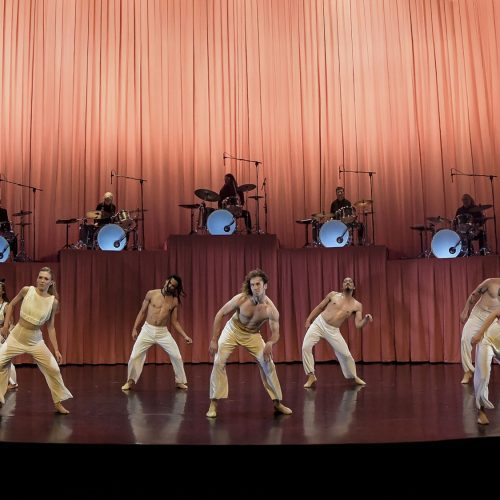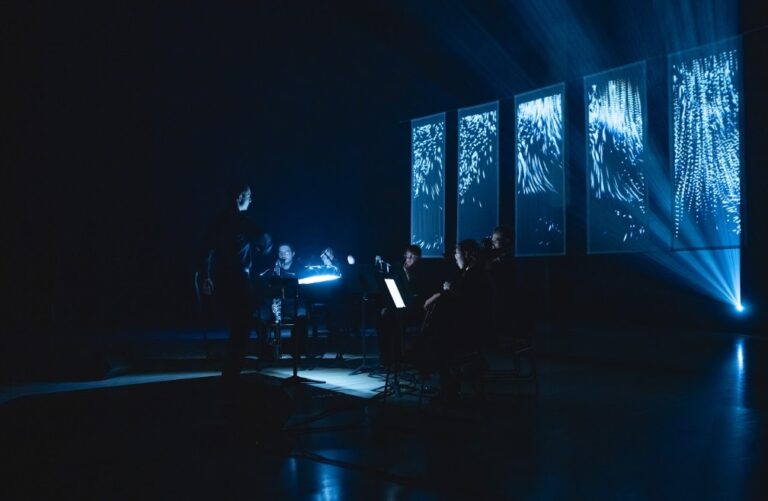
On Wednesday, Ensemble Éclat presented its program Broken Space at the Wilder, as part of Semaine du neuf. The concert, which was both continuous and immersive, blended mixed and electronic music, accompanied by digital visuals created specifically for the performance.
Although the concert included several highlights, the first piece, Gone by composer Jérôme Combier, while well performed by the five musicians on stage, stretched on for more than 20 minutes, leaving room for some lengthy passages. The strength of the piece lies—much like the rest of the concert—in the electronics, which at times add an extra dimension to the dialogue between the musicians.
The concert then moved directly into Interpolation by Audréanne Fillion, one of the two purely acousmatic works presented that evening. For me, these two pieces were undoubtedly the highlight of the concert. Intended as transitions between the instrumental sections, they managed—through their visuals and sound effects—to create a clear break from the three instrumental works presented at Espace Orange on Wednesday.
Ephphata by composer Quentin Lauvray was performed as a solo by the ensemble’s violinist, Jeanne-Sophie Baron. With great confidence, she carried the piece, which includes effects produced both with the violin and with her own breath.
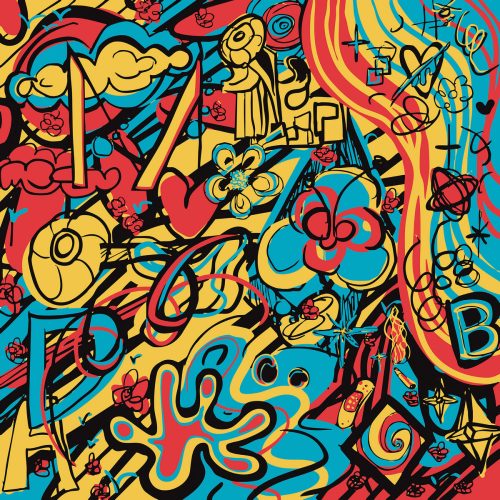
The second acousmatic piece of the concert—and my personal favorite of the evening—came from composer Philippe Macnab-Séguin, who presented excerpts from his work Gone For Eggs. The visuals created for the occasion by Myriam Bleau allowed the audience to immediately immerse themselves in the composer’s universe and greatly enriched the listening experience.
The concert concluded with Plier l’horizon sur son milieu by Omer Barash, a powerful proposal that allowed the ensemble to shine one last time in what was overall a successful concert for Ensemble Éclat.
Crédit photo: Philippe Latour