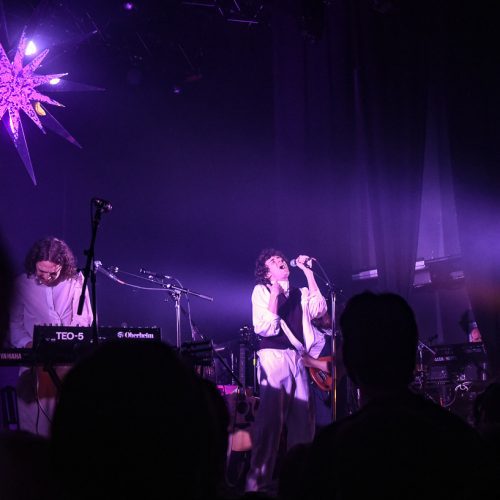
The evening has the sweetness of an ancient dream. In the dim light of Espace SAT, a languor floats, an almost tangible melancholy. We whisper, we wait, as if something rare were about to happen. EAF evenings have this quality: they bring together the curious, the music lovers, the dreamers, around a common promise: that of listening differently.
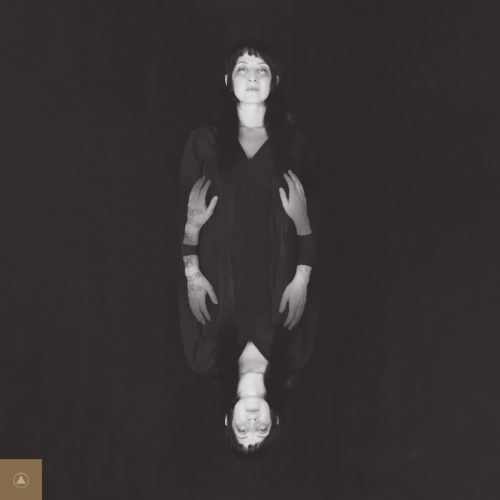
On stage, a harp sits alone, poised in the dim light. Its presence intrigues: what dialogue can emerge between this ancestral instrument and experimental electronics? Enter Nadah El Shazly. A key figure in Cairo’s alternative scene, she is known for blending Arabic vocal tradition with bold electronic textures. Her critically acclaimed album Ahwar (2017) had already revealed this rare ability to combine lamentation and trance, memory and rupture. Tonight, she immerses us in a new, more intimate, more visceral dimension: that of her new album, الشاذلي Laini Tani (2025).
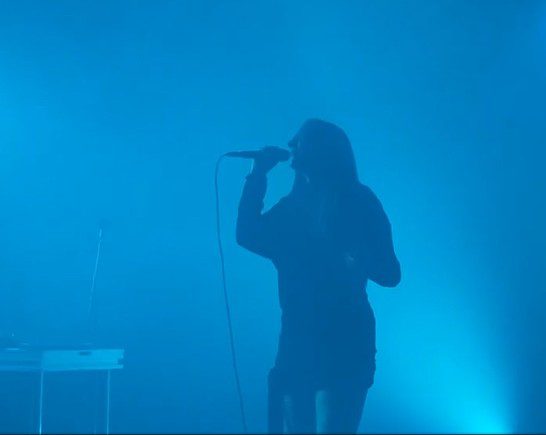
She arrives accompanied by a harpist. Two mirrored presences: one upright, motionless; the other moving, inhabited. Even before a sound rises, we sense that the evening is shaping up to be a ritual. Nadah’s voice cuts through the air in a deep, vibrant way, laden with history. It carries within it the nostalgia of Arabic song, while escaping from it, to inject the strangeness of the present.
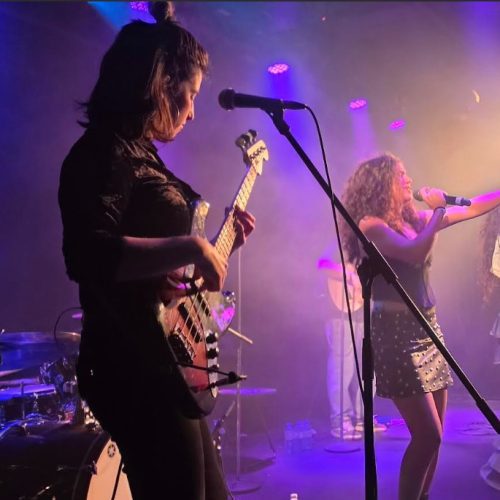
Synthesizers and bass intertwine with the harp in a sensual dialogue. The light unites them, making them bloom like two flowers from the same sonic garden. Nadah undulates, moves, breathes the music. But behind her lamentations, we can sense a discreet smile, an assumed mischievousness. At times, she plays with the dramatic tension she creates, almost mockingly. She knows exactly what she’s doing: her voice becomes both tragedy and comedy, gravity and joke. We later learn that some of the lyrics were cheeky, full of humor and irony, a delicious contrast to the solemnity of the tone.
A suspended moment occurs when she announces an improvised game. She steps toward her controller, and suddenly, the sound distorts. Noise emerges, raw, incandescent. Nadah lowers her head, lost in a trance. Electronic pulses collide with traditional Egyptian motifs, as if the past and the future meet in a single breath.
This passage encapsulates the power of her performance: the tension between mastery and abandonment, between myth and machine. When it all ends, an emotional silence fills the room. There is loud applause, but also softly, as if to maintain the spell.
I let myself be carried away by Nadah El Shazly’s voice, without understanding the words. Perhaps it’s better this way: the music spoke in another language, that of bodies, echoes and breath. Thanks to Nadah El Shazly, we all felt like we were living, for the space of an hour, a lucid, sensual and witty moment.