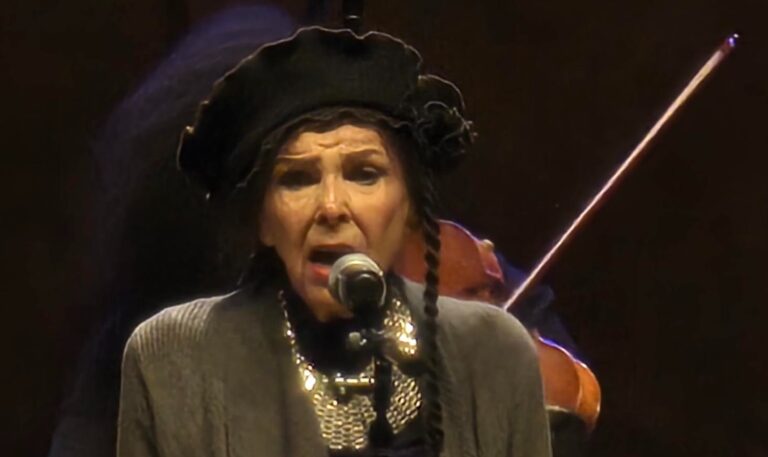
This Wednesday evening at Bourgie Hall took place under the theme of Indigenous transmission. A dialogue between generations, the nonagenarian Alanis Obomsawin, Abenaki filmmaker and multidisciplinary artist who can easily be described as mythical, and the thirty-something Jeremy Dutcher, power singer, composer, musicologist, visionary, two-time winner of the Polaris Prize.
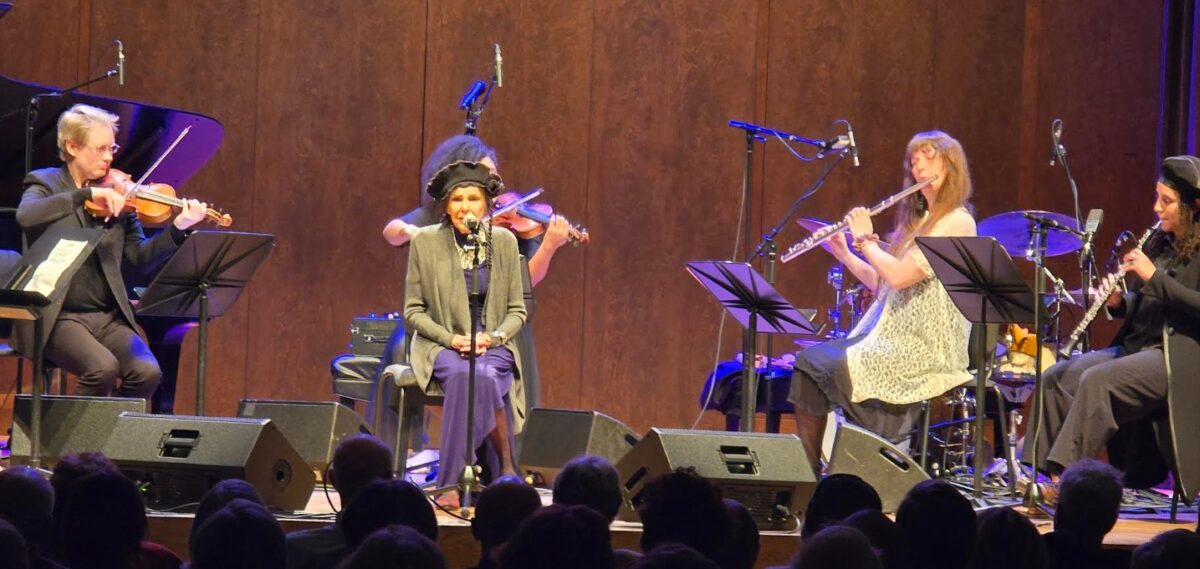
At 93 years old, she walked slowly arm in arm with her musical director Radwan Ghazi Moumneh, leaning on her cane before sitting down in the center of our field of vision. Greeted with a standing ovation, she undoubtedly appeared to us as a leading figure of modern indigenous culture.
Having not performed in front of an audience for some time, she couldn’t hide her touching nervousness as she took her place in front of the microphone. There was a palpable solemnity in the room as she began the first verse of Odana, the opening track from Bush Lady, an album released in 1988 and revamped in 2018 by Constellation.
It is understood that the grand lady did not have the physical resources necessary for a great performance, that her voice had aged…
It was far from perfect, but that wasn’t the point: the point was to see this major artist, there before us, breathing new life into her early work. A tribute, in fact. It felt like family, like a lullaby sung by our grandmother. It was beautiful because it was her, possibly for the last time in such a setting. Because it was important, because it was the appearance of a legend. There was a warmth in that fragile voice, carried by the music of the frame drum, flutes, English horn, and violins. Fittingly, Obomsawin concluded her short performance with a Cree nursery rhyme before slowly leaving to a second ovation.
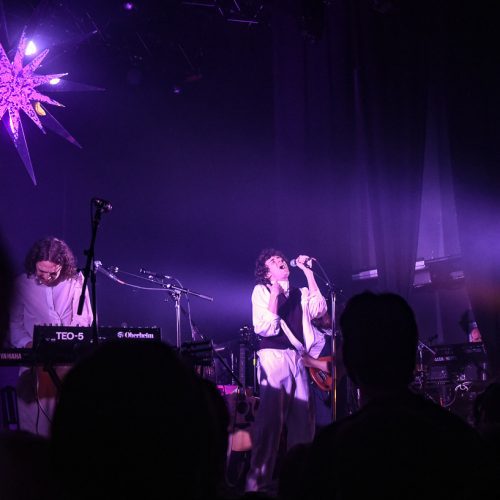
Let’s not forget the second part of the evening: Jeremy Dutcher is a fantastic showman, full of verve and humor, whose powerful tenor voice thrilled the audience. A flamboyant figure who carries the torch, two generations after Alanis Obomsawin. Resurrecting ancestral melodies in Wolastoqey, English, and French, engaging with the past through century-old recordings, the singer deeply moved the audience. Accompanied by drums and a bass clarinet, he also accompanied himself on the piano in the style of a jazz trio. In short, Jeremy Dutcher offered us beauty.
I will conclude by quoting the friend who accompanied me: “When it’s really good, I can no longer criticize. I am only capable of loving.”
- By Ariel Rutherford with editorial support