Additional Information
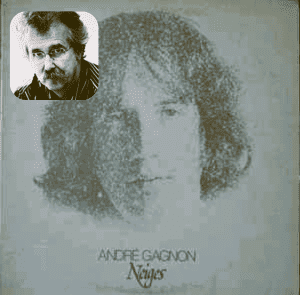
Fifty years ago, an iconic album of Quebec, and indeed international, pop was released. André Gagnon’s Neiges shattered sales records and remained in the Billboard top 10 for six months! Twenty-five musicians were in the studio (including Jean Carignan), in addition to the backing vocalists, including Renée Claude. As the Orchestre Métropolitain prepares to pay tribute to this little masterpiece of instrumental pop (with some choral parts), why not revisit the memories of one of the musicians who played on it, percussionist Robert Leroux? Those famous conga solos in “Wow”? That was him! At the time, Robert Leroux was a very young musician, primarily associated with classical and contemporary music (as he has been throughout his life), but contracts and gigs in pop and advertising music were also on his radar. Here is a look behind the scenes of André Gagnon’s album Neiges, with a privileged witness, one of the few still alive to talk about it.
INFORMATION AND TICKETS FOR THE ORCHESTRE MÉTROPOLITAIN CONCERTS IN HOMAGE TO ANDRÉ GAGNON’S NEIGES
PANM360: How did you come to participate in this recording?
Robert Leroux : They were short a percussionist, so they called me in. It was my first time working with André. I was replacing the guy who’d been working with him before. I was keen to do it because I knew André wrote interesting timpani parts. Later, André asked me to keep on and do the shows. It was such a success! Honestly, we musicians who were there weren’t expecting it. “Wow” was the driving force, and the funny thing is, it was the song that was the least ready when we went into the studio.
PANM360: How did it go?
Robert Leroux : That was the last piece André wanted to add, but he wasn’t sure what he wanted. He had the melody in his head, but not the rest. He asked us to try things out, and we fiddled around for a while. I was trying out rhythms on the congas, but it wasn’t working. And then, at some point, we found the right balance between my congas, Jean-Guy’s (Chapados) bass, and André’s driving keyboard part. That worked!
PANM360: Absolutely! The bassline is irresistible, and the congas are unforgettable! And recorded with such presence! They are brought to the forefront in a spectacular way.
Robert Leroux : Yes. The sound engineer, Pete (Pierre) Tessier, did a very, very good job. The timpani were also well recorded. I’ve often worked with him and I’ve always appreciated his work. But you know, this solo really isn’t difficult. I had suggested other, more complicated rhythms, but my colleagues didn’t like them. So we settled on the now well-known, very simple formula.
PANM360: Were you generally well prepared, with the music sheets in advance and everything?
Robert Leroux : Except for “Wow,” everything was ready, everything was well organized by André. He was very well prepared. We didn’t have the sheet music in advance, but it was on the music stands when we arrived. It was well organized.
PANM360: What did you and others think when you first saw this? What was the atmosphere like?
Robert Leroux : I don’t know about my colleagues, but for me, it was initially just another job. I’d arrive, set up, and play. But with André, the atmosphere was fantastic. We had so much fun. Later on, when he asked if I could play in one of the touring shows, if it fit my schedule, I gladly went. It wasn’t really my thing; I was more into contemporary music, even though I still often recorded commercials (with Dompierre or François Cousineau). But whenever I had the chance to go back with Dédé, I always accepted, it was just so enjoyable.
PANM360: Difficulty level, nothing to report?
Robert Leroux : No, the music was quite simple, and besides, André had meticulously prepared everything. The only one that required a bit more work was “Wow,” as I said. He hadn’t fully developed that one in his mind. It was still a work in progress. Ultimately, it became THE hit of the album.
PANM360: What is your perspective on this? And on the fact that 50 years later, the Orchestre Métropolitain is paying tribute to him?
Robert Leroux :We weren’t thinking about it at all back then, when we were recording. But in our line of work, there are often surprises like that. I can’t say I’m surprised, but I certainly wasn’t expecting so much success when I was playing the parts. The stars really aligned at that time. If I had known, I would have negotiated my contract differently! (Laughs) At the same time, I’m not complaining; we were all paid fairly, according to the going rates at the time.
PANM360: Any thoughts on this musical style?
Robert Leroux : It was in the air. At that time, there was this movement to mix classical and popular music. It manifested itself through this kind of sound. It’s perhaps the modern equivalent of neoclassicism. Of course, the two styles are quite different, but in the principle of classical music, finding a specific language to reach a very wide audience, there are parallels to be drawn.
That said, Neiges is a rather unique album in André’s discography. His true style was long, romantic melodies, and he would return to this in the 1980s, using many strings or just the piano, focusing on it until the end of his career. Nelligan also belongs to this lyrical vein. So, Neiges remains a very particular creation.
PANM360: Did you often play with him afterwards for shows?
Robert Leroux : Sometimes, yes. But I also had a career in contemporary and classical music, which meant that at one point, I was replaced by Luc Boivin, who stayed with André longer. But every time I went, I really enjoyed it. André was incredibly talented, and he also put on a great show for the audience. He had the soul of an entertainer. He even did a tap dance number at one point in the show.
PANM360: I didn’t know this side of him… This tribute from the Orchestre Métropolitain, what do you imagine?
Robert Leroux : I’m not entirely sure, but I’m very curious to see how they’re going to transform all of this.
——————————————————————————————————-
Montreal since 1973, he was Vice-Dean of Undergraduate Studies from 1985 to 1988, and Dean from 1988 to 1997. In 2007, he participated in the founding of the Sixtrum Percussion Ensemble, which we have often talked about here at PANM360.
Credits for the album Neiges, according to the website Québec Info Musique :
Musicians –
André Gagnon: piano, synthétiseur, piano électrique;
Mauricio Fuks: violin;
Michel Fauteux: drums;
Jean-Guy Chapados: bass;
Gilles Pinard: guitar;
Richard Ring: guitar;
Marcel Rousseau: electric piano;
Jean-François Roch: timbales;
Richard Beaudet: flute;
Robert Leroux: percussions, timbales;
Jean-Carignan: violin.
Chords –
first violins: Mauricio Fuks, Adolfo Bornstein, Reynald L’Archevêque, Pierre Jean Ireneusz Bogajewicz;
seconds violins: Mario Masella, Denise Sergent, Claude Hamel, Françine Bang, Ronald Taddeo;
altos: Marc Bélanger, Lorraine Desmarais, Charles Meinen, Sylvie Laville;
cellos: Jean-Luc Morin, Michael Kilburn, Kristina Melnyk.
Choir: Renée Claude, Chœur des étudiantes de l’École Normale de Musique.
Arrangements: André Gagnon
Directed by: André Gagnon, Pierre Tessier
Sound: Pierre Tessier
Mixing: Pierre Tessier
Studio: studio Son Québec
Production: Les Disques Star inc.
Pouch and booklet –
Graphic design: Marcel Cadieux;
Photos: Jean-Guy Thibodeau