classique

OSM : Payare dirige l’émouvant Requiem de Mozart

by Rédaction PAN M 360

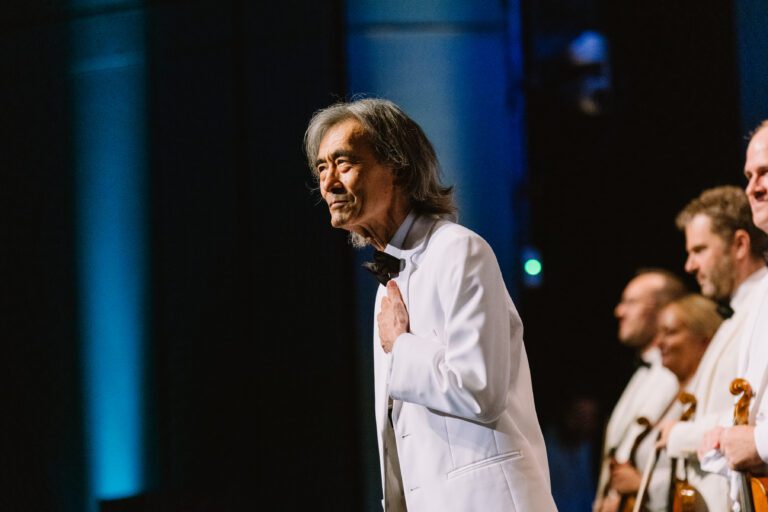
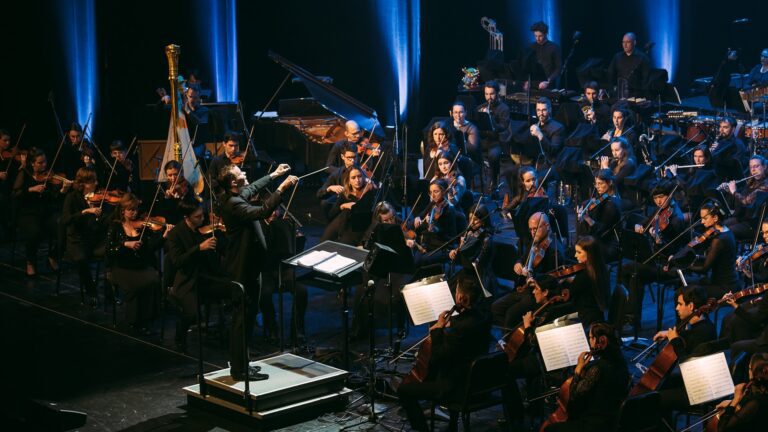
L’intensité dramatique et la sincérité des sentiments exprimés par Mozart dans son Requiem contribuent à la fascination que cette œuvre continue d’exercer plus de 200 ans après sa composition. La thématique de la mort est également abordée par Bach avec humanité, et le climat contemplatif du motet Jesu, meine Freude offre une vision sereine de l’au-delà. Le génie de Bach et de Mozart sera magnifié par l’Orchestre et le Chœur de l’OSM.

The dramatic intensity and emotional candour expressed in Mozart’s Requiem contribute to the fascination this work continues to arouse more than 200 years after it was written. Bach similarly approaches the theme of death through an aura of contemplative humanism in the motet Jesu, meine Freude, in which a serene vision of the afterlife is offered. The genius of both Bach and Mozart will be celebrated by the Orchestra and the OSM Chorus.

POUR ACHETER VOTRE BILLET, C’EST ICI!

Ce contenu provient de l’Orchestre symphonique de Montréal et est adapté par PAN M 360

Classical

Université de Montréal: Stars shine on music’s next gen

by Frédéric Cardin

Saturday evening, April 12, saw the Université de Montréal’s Rising Stars concert. Graduates in conducting, composition and flute performance presented the results of years of learning. It was inspiring.

Conductor Marie-France Mathieu began by presenting the first three pieces on the programme, creations by three composition students, Gabriel José Melim Schwarz, Amichai Ben Shalev and Charles-Vincent Lemelin. Schwarz offered a tonal and rather sunny neo-romantic piece, ironically entitled Folle (Crazy). Vibrant with energy and inspired by Schwarz’s native Brazil, it is a work that is pleasant to listen to and not very demanding for the listener.

This was followed by A Groyse Metzieh by Ben Shalev, a musician also known as a member of the ensemble Les Arrivants. The title means ‘a beautiful find’, which is in fact a sarcastic formula typical of Jewish humour, meaning ‘not much of anything’. I really enjoyed this post-modern piece, which mixes tonality with noisy avant-gardism, thanks to a wide range of instrumental techniques linked to experimentation. It begins in a sombre atmosphere with a warm string theme, quickly interspersed with bursts of colour that would not have displeased Messiaen. The rest moves slowly but surely towards saturation, punctuated by thunderous stridencies, before ending with a return to consonance, but with the brass choir. Superb.

Finally, Lemelin’s Passacaille had the greatest effect on me. In this piece, which treats the orchestra as a living mass, dark but nonetheless criss-crossed by many luminous streaks, and which gradually swells to its maximum sonic and harmonic density, I perceived echoes of Saariaho and Rautavaaraa, but also of a certain Straussian monumentalism and the muscular expressionism of ex-Hollywood composer Goldenthal. Passacaille is a demonstration of quiet power, perfectly calibrated and constructed. Your humble reviewer thoroughly enjoyed it.

The rest of the programme featured Romantic repertoire, starting with a charming Concerto for two flutes by Franz Doppler, the king of the flute (along with his brother) in the 19th century. It was an opportunity to see and hear at work two young performers who won 3rd prize in the OUM 2024 Concerto Competition, Gabriel Lapointe Guay and Sarah Billet. The two artists injected all the right sparkle into this smiling, feel-good music.

The second part was devoted to Schumann’s Manfred Overture and Stravinsky’s Firebird Suite (1919). Above all, it was an opportunity to judge the conducting work of Marie-France Mathieu and Paul Karekezi. It was the latter who gave us a Manfred full of drama, inhabited by a necessary discharge of conflicting emotions. Perhaps a little tempered, but beautifully embodied.

The Firebird was brought to life with beautiful colours and crystalline details, powerfully underlined by conductor Mathieu.

Since the two young conducting artists also led the OUM (Orchestre de l’Université de Montréal) in the creations mentioned above, I noticed two different but complementary personalities of baton and control.

Paul Karekazi, who conducted Lemelin’s Passacaille (and, as I just said, Manfred), gave a clear performance, but above all one imbued with emotional intensity and inner strength. This favoured strong nuances and a legato imbued with heartfelt lyricism.

Marie-France Mathieu, on the other hand, is more sober in her outpourings, but nevertheless skilfully brings out the detailed colours and textural contrasts in a limpid manner, thanks to a surgical baton that leaves no room for doubt. She conducted the pieces by Schwarz and Ben Shalev, the Doppler (and of course the Stravinsky) very well.

Karekazi and Mathieu are students of Paolo Bellomia, the two flautists come from Denis Bluteau’s class, and the three composers benefit from the knowledge of Jimmie Leblanc, Ana Sokolovic, François-Hugues Leclair and Olivier Alary.

It was a wonderful evening for the future of music in Montreal, Quebec and Canada.

Photos: Tiago Curado

classique / Modern Classical / post-romantique

Pro Musica : Lucas Debargue à la salle Pierre-Mercure

by Rédaction PAN M 360

« Depuis le passage de Glenn Gould à Moscou et la victoire de Van Cliburn au Concours Tchaïkovski en pleine guerre froide, un pianiste étranger n’avait jamais suscité pareille effervescence. » Olivier Bellamy, Le HUFFINGTON POST
Révélé par le 15e Concours International Tchaïkovski à Moscou en juin 2015, Lucas Debargue est aujourd’hui un des pianistes les plus demandés au monde.
Il s’est déjà produit dans les salles les plus prestigieuses, parmi lesquelles le Théâtre Mariinski et la Grande Salle de la Philharmonie de Saint-Petersbourg, la Philharmonie et le Théâtre des Champs Elysées à Paris, le Wigmore Hall et le Royal Festival Hall à Londres, le Concertgebouw d’Amsterdam, le Victoria Hall à Genève, les Konzerthaus de Vienne et Berlin, le Carnegie Hall de New York, le Prinzregententheater de Munich et la Philharmonie de Berlin, la Philharmonie de Varsovie, le Konserthuset à Stockholm, la Grande Salle du Conservatoire Tchaïkovski et la Salle Tchaïkovski de Moscou, et bien d’autres à Seatle, Chicago, Montréal, Toronto, Mexico, Tokyo, Osaka, Beijing, Taipei, Shanghai, Séoul …
Il joue régulièrement sous la baguette de chefs tels que Valery Gergiev, Mikhaïl Pletnev, Vladimir Jurowsky, Andrey Boreyko, Tugan Sokhiev, Vladimir Spivakov, Bertrand De Billy, et a déjà joué en musique de chambre avec Gidon Kremer, Janine Jansen, Martin Fröst.
Lucas Debargue consacre aussi une grande partie de son temps à la composition et est l’auteur d’une vingtaine de pièces pour piano seul et pour ensembles de musique de chambre.

“Since Glenn Gould’s visit to Moscow and Van Cliburn’s victory at the Tchaikovsky Competition during the Cold War, no foreign pianist has caused such a stir.”
— Olivier Bellamy, Le Huffington Post
Revealed at the 15th International Tchaikovsky Competition in Moscow in June 2015, Lucas Debargue is now one of the most sought-after pianists in the world.
He has already performed in the most prestigious venues, including the Mariinsky Theatre and the Grand Hall of the Saint Petersburg Philharmonic, the Philharmonie and Théâtre des Champs Elysées in Paris, Wigmore Hall and Royal Festival Hall in London, the Concertgebouw in Amsterdam, Victoria Hall in Geneva, the Konzerthaus in Vienna and Berlin, Carnegie Hall in New York, Prinzregententheater in Munich, the Berlin Philharmonie, the Warsaw Philharmonie, Konserthuset in Stockholm, the Grand Hall of the Tchaikovsky Conservatory and Tchaikovsky Hall in Moscow, and many others in Seattle, Chicago, Montreal, Toronto, Mexico, Tokyo, Osaka, Beijing, Taipei, Shanghai, Seoul…
He regularly performs under the baton of conductors such as Valery Gergiev, Mikhaïl Pletnev, Vladimir Jurowsky, Andrey Boreyko, Tugan Sokhiev, Vladimir Spivakov, Bertrand De Billy, and has already performed in chamber music with Gidon Kremer, Janine Jansen, and Martin Fröst.
Lucas Debargue also dedicates a significant part of his time to composition and is the author of around twenty pieces for solo piano and chamber music ensembles.

Programme

Saison Prodige – Lucas Debargue, piano
MAURICE RAVEL, Jeux D’eau, M.30
MAURICE RAVEL, Sonatine, M.40
GABRIEL FAURÉ, Mazurka en si bémol majeur, op. 32
GABRIEL FAURÉ, Barcarolle no.9, op.101
GABRIEL FAURÉ, Nocturne no.12, op.107
GABRIEL FAURÉ, Impromptu no.5, op. 102
GABRIEL FAURÉ, Valse caprice no.4, op. 62
-ENTRACTE-
LUCAS DEBARGUE, Suite en ré mineur
LUCAS DEBARGUE, Prélude
LUCAS DEBARGUE, Pantomime
LUCAS DEBARGUE, Sarabande
LUCAS DEBARGUE, Menuet Guerrier
LUCAS DEBARGUE, Gigue
ALEXANDRE SCRIABIN, Sonate no.3 en fa dièse mineur, op. 23.

Program

Prodigy Season – Lucas Debargue, piano
MAURICE RAVEL, Jeux D’eau, M.30
MAURICE RAVEL, Sonatine, M.40
GABRIEL FAURÉ, Mazurka in B-flat major, Op. 32
GABRIEL FAURÉ, Barcarolle No. 9, Op. 101
GABRIEL FAURÉ, Nocturne No. 12, Op. 107
GABRIEL FAURÉ, Impromptu No. 5, Op. 102
GABRIEL FAURÉ, Valse caprice No. 4, Op. 62
INTERMISSION
LUCAS DEBARGUE, Suite in D minor
LUCAS DEBARGUE, Prelude
LUCAS DEBARGUE, Pantomime
LUCAS DEBARGUE, Sarabande
LUCAS DEBARGUE, Menuet Guerrier
LUCAS DEBARGUE, Gigue
ALEXANDER SCRIABIN, Sonata No. 3 in F-sharp minor, Op. 23

POUR ACHETER VOTRE BILLET, C’EST ICI!

Ce contenu provient de Pro Musica et est adapté par PAN M 360

R&B / rap

Nelly au Centre Bell

by Rédaction PAN M 360

Artiste hip-hop récompensé aux Grammy Awards, Nelly a enregistré avec les St. Lunatics. Il s’est fait connaître grâce à l’album “Country Grammar” sorti en 2000 qui s’est vendu à plus de huit millions de copies.

A Grammy Award-winning hip-hop artist, Nelly has recorded with the St. Lunatics. He made his name with the album “Country Grammar”, released in 2000, which sold over eight million copies.

POUR ACHETER VOTRE BILLET, C’EST ICI!

Ce contenu provient d’evenko et est adapté par PAN M 360

Experimental Rock / Indie Rock / Lo-Fi

Mount Eerie au Théâtre Fairmount

by Rédaction PAN M 360

Sous le nom de Mount Eerie, l’auteur-compositeur, multi-instrumentiste et producteur originaire de l’État de Washington Phil Elverum prolonge l’exploration introspective et profondément personnelle entamée avec The Microphones. Ses paroles confessionnelles et sa narration fluide restent les constantes de sa musique, un mélange impressionniste d’ambient, de folk et de black metal qui amplifie le sentiment d’émerveillement propre à son œuvre. Sur ses premiers albums, comme No Flashlight (2005), la différence entre Mount Eerie et The Microphones était subtile, mais les disques suivants ont révélé l’étendue de son évolution. La majesté influencée par le metal de Wind’s Poem (2009), les méditations électro-acoustiques sereines de Clear Moon et les paysages sonores denses de Ocean’s Roar ont apporté des nuances distinctes à ses réflexions sur la vie et la mort. Elverum a documenté le deuil de sa femme Geneviève Castrée sur A Crow Looked at Me (2017) et Now Only (2018), deux albums salués pour leur expression poignante et sans fard de la douleur. Avec Night Palace (2024), il boucle la boucle en réunissant les sonorités lo-fi des débuts de Mount Eerie avec une écriture poétique.

As Mount Eerie, Washington state songwriter/multi-instrumentalist/producer Phil Elverum expands on the searching, deeply personal feel of his work with the Microphones. His confessional lyrics and free-flowing storytelling are the main constants of his music, an impressionistic blend of ambient, folk, and black metal that heightens the feeling of wonder in his work. On early albums such as 2005’s No Flashlight, the difference between Elverum’s work as Mount Eerie and the Microphones was subtle, but later releases showed how much his range had grown. The metal-influenced majesty of 2009’s Wind’s Poem, the serene electro-acoustic meditations of Clear Moon, and the dense soundscapes of Ocean’s Roar imbued his musings on life and death with distinct nuances. Elverum documented the aftermath of his wife Geneviève Castrée’s death on 2017’s A Crow Looked at Me and 2018’s Now Only, both widely acclaimed for their eloquent, unflinching expressions of grief. On 2024’s Night Palace, Elverum brought Mount Eerie full-circle by uniting the lo-fi sounds of the project’s early days with poetic songwriting.

POUR ACHETER VOTRE BILLET, C’EST ICI!

Ce contenu provient d‘AllMusic et est adapté par PAN M 360

Chanson francophone / hommage

Francos de Montréal : D’eux, 30 ans déjà – Célébrons Céline! à la salle Wilfrid-Pelletier

by Rédaction PAN M 360

Il y a 30 ans, Céline Dion lançait l’album D’eux écrit et réalisé par Jean-Jacques Goldman, union parfaite entre une interprète à la voix unique et un auteur-compositeur des plus doués. Succès historique : D’eux fracasse tous les records, gagne le cœur du public et devient le disque de langue française le plus vendu mondialement, s’écoulant à près de 10 millions d’exemplaires, inspirant au passage une multitude d’artistes. Pour célébrer ces immenses chansons, ainsi que quelques autres succès nés de cette union légendaire, et pour rendre hommage à notre grande Céline Dion : 7 artistes d’âges et d’horizons différents monteront sur scène pour interpréter ensemble cette œuvre culte, qui depuis trois décennies a marqué plus d’une génération. Une soirée qui s’annonce exceptionnelle en compagnie de Marie Denise Pelletier, Ariane Roy, Martine St-Clair, Lou-Adriane Cassidy, Brigitte Boisjoli, Safia Nolin et Rita Baga. Sept voix d’exception qui feront certainement vivre de grandes émotions et un moment inoubliable aux spectatrices et aux spectateurs présent·es !  De « Destin » à « Je sais pas », « Les Derniers seront les premiers », « Cherche encore », « Regarde-moi » sans oublier « Pour que tu m’aimes encore », il faut assurément se remettre en tête et en voix ces classiques avant d’assister à cette soirée unique où chanter en chœur sera bienvenu. Pour célébrer Céline, ça commence avec ce refrain : J’irai où tu iras / Qu’importe la place / Qu’importe l’endroit. C’est une invitation !

Thirty years ago, Céline Dion released D’eux, an album written and produced by Jean-Jacques Goldman — a perfect union between a one-of-a-kind vocalist and one of the most gifted songwriters of his generation. A historic success, D’eux shattered records, captured the hearts of listeners, and became the best-selling French-language album of all time, with nearly 10 million copies sold worldwide. Its impact has inspired countless artists over the years. To celebrate these timeless songs — as well as other beloved tracks born of this legendary collaboration — seven artists from different generations and backgrounds will come together on stage to pay tribute to our beloved Céline Dion. Get ready for an extraordinary evening featuring Marie Denise Pelletier, Ariane Roy, Martine St-Clair, Lou-Adriane Cassidy, Brigitte Boisjoli, Safia Nolin, and Rita Baga. Seven remarkable voices sure to stir deep emotion and create an unforgettable experience for everyone in the audience. From Destin to Je sais pas, Les Derniers seront les premiers, Cherche encore, Regarde-moi, and of course Pour que tu m’aimes encore, it’s time to refresh your memory — and your vocal cords — before this one-of-a-kind night where singing along will be more than welcome. To celebrate Céline, it all begins with this refrain: J’irai où tu iras / Qu’importe la place / Qu’importe l’endroit. This is your invitation!

POUR ACHETER VOTRE BILLET, C’EST ICI!

Ce contenu provient de Place des Arts et est adapté par PAN M 360

Afro Funk / Afrobeat / Blues

Festival International Nuits d’Afrique : Boulila Fusion gnawa avec Jean-Philippe Grégoire au Balattou

by Rédaction PAN M 360

Le gnawa. Un rite, une musique, des danses. Un art inscrit au patrimoine culturel immatériel de l’humanité de l’Unesco. La mémoire ancestrale, mystique, d’une ascendance d’Afrique sub-saharienne. Profondément ancrée dans la tradition, portée par les vibrations graves des cordes du guembri et le son claquant des karkabous, amplifiée par des répétitions entêtantes, ferment d’une transe libératrice, la musique de Boulila, lauréat des Syli d’or de la musique du monde 2021, renouvelle les codes de ce genre à la fois festif et thérapeutique par une instrumentation alliant guitare, saxophone, basse, piano et batterie, révélant l’africanité des musiques populaires occidentales.
La versatilité des rythmes marocains sera à l’honneur de ces trois soirées étoilées où Boulila jammera avec trois émissaires de la scène montréalaise.
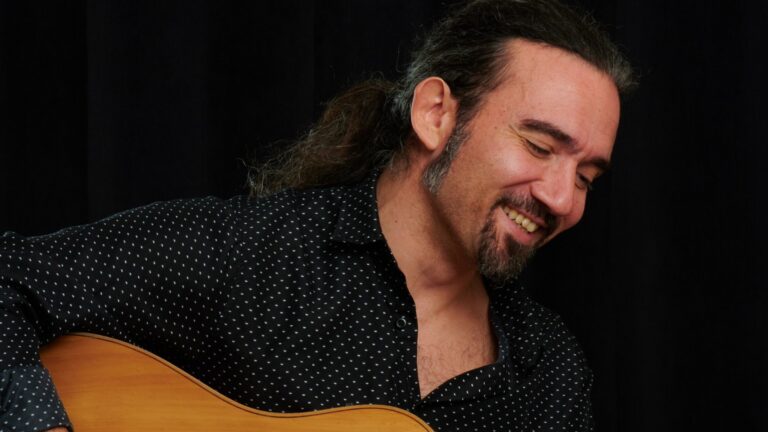
Soirée fusion gnawa | avec Jean-Philippe Grégoire: Ce guitariste jazz formé au Conservatoire de Paris, détenteur d’une licence en musicologie de la Sorbonne, et passé par la Berklee College of Music à Boston, “essaie d’intégrer des éléments d’improvisation jazz à la musique traditionnelle gnaouie, tout en veillant à en respecter l’intégrité”.

Gnawa. Ritual, music, dance. This artistic form of expression, inscribed on UNESCO’s Representative List of the Intangible Cultural Heritage of Humanity, stems from a distant and mystical cultural memory rooted in sub-Saharan Africa. Boulila’s music is strongly grounded in tradition, carried by the low vibrations of the guembri’s strings and the clinking of the krakebs, and is amplified by intoxicating repetition and the ferment of a liberating trance. Winners of the 2021 Syli d’or de la musique du monde, the group revisits the conventions of this festive and therapeutic musical genre with instrumentation that combines guitar, saxophone, bass, piano and drums, exposing the African roots of popular Western music.
The versatility of Moroccan rhythms will be the focus of these three star-studded evenings, as Boulila jams with three emissaries from the Montreal scene.
Gnawa Fusion evening | with Jean-Philippe Grégoire: This jazz guitarist, who trained at the Conservatoire de Paris, holds a Musicology degree from the Sorbonne and studied at Boston’s Berklee College of Music, “tries to integrate aspects of jazz improvisation into traditional Gnawa music, while taking care to respect its integrity.”

POUR ACHETER VOTRE BILLET, C’EST ICI!

Ce contenu provient du Festival International Nuits d’Afrique et est adapté par PAN M 360

Maloya

Festival International Nuits d’Afrique : Kozé à la scène TD

by Rédaction PAN M 360

En créole réunionnais, “kozé” signifie “parler, communiquer”. L’ambition du groupe est de partager le folklore de son île. 100 % maloya, avec ses roulèr, kayamb, pikèr et sati qui donnent le tempo, la musique de Kozé est aussi sauvage et rafraîchissante que l’océan, aussi dense et précieuse que la forêt, aussi rugueuse et impétueuse que le volcan. Inscrit sur la liste du Patrimoine culturel immatériel de l’humanité depuis 2009, mémoire métissée des esclaves du passé, devenu hymne contestataire, le maloya, dont l’aura est quasi sacrée, est un chant, une musique, une danse… une identité.

In Reunionese Creole, “kozé” means “to speak, to communicate,” and that’s how this group spreads its island’s folk traditions. With roulèr, kayamb, piker and sati rhythms providing the tempo, Kosé’s music is 100% maloya: as wild and refreshing as the ocean, as dense and precious as the forest, as rugged and impetuous as a volcano! Inscribed on the Representative List of the Intangible Cultural Heritage of Humanity in 2009, maloya retains the memory and mixed heritage of slaves from the past as a kind of protest anthem, and its quasi-sacred aura means that it is much more than traditional songs, music and dance—it has become the island’s identity.

CE SPECTACLE EST GRATUIT!

Ce contenu provient du Festival International Nuits d’Afrique et est adapté par PAN M 360

Africa / Reggae

Festival International Nuits d’Afrique : Idriss LeViking Noir à la scène TD

by Rédaction PAN M 360

Il occupe pleinement la scène et ça bouge. Il faut dire que, comme son nom l’indique, il en impose, Idriss le Viking Noir! Avec 25 ans de métier derrière la cravate… qu’il ne porte pas, Tonton n’a pas la langue dans sa poche. C’est un ambianceur. Sur des grooves mandingues du feu de Dieu, cadeaux d’un orchestre composé de musiciens aguerris, tel un sage un peu frondeur qui pompe dans son passé d’animateur, Idriss, conquérant sympathique et décomplexé, distille ses conseils et conte la vie, de sa voix qui porte et de laquelle pointent des accents reggae.

As his name suggests, Idriss le Viking Noir sets the stage ablaze with his fiery energy. Twenty-five years into his musical career, Tonton Idriss is never at a loss for words, and he certainly knows how to light up a crowd with his performances. Against a backdrop of exuberant mandinka rhythms, courtesy of his band of seasoned musicians, this wise, slightly rebellious man becomes a friendly, easy-going conqueror who draws on his background as an entertainer to spread his wisdom and tell life’s story in his powerful voice with a hint of a reggae accent.

CE SPECTACLE EST GRATUIT!

Ce contenu provient du Festival International Nuits d’Afrique et est adapté par PAN M 360

Afro Latin / Free Improvisation / Samba

Festival International Nuits d’Afrique : Tamboréal Samba Bloco à la scène TD

by Rédaction PAN M 360

On vous invite à danser? Un parfum de carnaval de Rio embaumera la nuit montréalaise ce soir-là. Surdo, conga, caisse claire, tamborim, repique, chocalho: les percussions sont reines dans l’univers de ce joyeux cercle qui égraine avec puissance et à une cadence élevée les samba de roda, cabula, maracatu et autres rythmes afro-brésiliens. Relevée d’impros jazzistiques et de chants entraînants, la musique foisonnante de ce collectif énergétique, fondé en 2022 par Carlos Henrique Feitosa, concurrence sans l’ombre d’un doute celle des réputées écoles de samba brésiliennes.

Come and dance! There’s sure to be a whiff of the Rio Carnaval floating in the Montreal evening air. Surdo, conga, snare drum, tambourine, repinique, chocalho—percussion instruments reign supreme with this exuberant group that delivers a powerful mix of Samba de Roda, Samba de Cabula, maracatu and other Afro-Brazilian rhythms in rapid tempo. Formed in 2022 by Carlos Henrique Feitosa, this lively collective, with its jazzy, spiced up improvisations and upbeat vocals, certainly holds its own against anything coming out of the famous Brazilian samba schools.

CE SPECTACLE EST GRATUIT!

Ce contenu provient du Festival International Nuits d’Afrique et est adapté par PAN M 360

Drum & Bass / Hip Hop / Trap

Tunisian Goddess Emel Presents MRA

by Sandra Gasana

If there’s one thing Emel Mathlouthi has mastered, it’s the art of staging a performance worthy of a tragedy. Accompanied by her two musicians, on drums and keyboards, Emel Mathlouthi, known as “the voice of the revolution,” made a spectacular entrance on stage, adding lighting effects and appearing like a goddess on top of her throne. Wearing a sophisticated crown and an antique-style white dress from the 15th century, the Tunisian artist presented her most recent album, MRA, which means woman in Arabic, released in 2024 and produced entirely by a team of women.

Always with a screen behind her, her voice is rarely in its natural state. She uses a lot of reverb and plays with her microphone, adding an enigmatic effect to her universe in which trap, hip-hop, and drum ‘n’ bass cohabit harmoniously. Emel really gets into her character and lets herself go, inserting saccadic dance movements on several tracks. She taps her drum at times, complementing the work of her drummer and adding to the danceable effect.

At the end of the third song, the audience starts dancing, contrasting the solemn style of the first two tracks. Emel also adds pre-recorded sounds that merge with the looped images, a true sensory cocktail. Most of her songs are in Arabic, but she also sings in English, a language she mastered, and French. She switches from one to the other when addressing the audience.

Unfortunately, Naya Ali, who was due to perform, was unable to attend after all. That said, one of the highlights of the concert was when artist Narcy took to the stage for the track Yemenade. And that’s when the evening took a turn for the better, as his energy was felt throughout the room. He managed to get us singing, dancing, all in one song, while Emel danced behind him, banging her golden drum.

The other artist I was looking forward to seeing again was Ziya Tabassian. Also performing on four tracks, he added a traditional Middle Eastern touch to the show. He was perfectly attuned to the drummer’s rhythms, with whom he exchanged glances.

“I hope you like crazy percussion like we do! We don’t know how it sounds from your end, but we like it,” she says between songs. “I can’t seem to make soft songs, I can’t help it,” she confides.

During the song “Souty,” which means “My voice”, she scrolls through sheets on which it is written “My voice is time less like the wind” among other words, as if these were the lyrics of the song. She also takes the opportunity to mention the names of prisoners on some of the sheets.

Emel took the time to share a message from a Palestinian activist who wrote to her to give her the state of play. Indeed, Palestine was the backdrop throughout the show, including during the opening set by Checkpoint 303, a DJ duo who set the table for Emel’s performance. My favourite song is “Mazel,” which means Again, and speaks of the hope she still carries within her, and the new tomorrow she intends to build. In the background, we could see the faces of activist women from all over the world.

She finished with “Rise,” involving the audience on the chorus, before giving us an audience-pleasing encore. I was expecting to see a packed National, but that wasn’t the case. But one thing’s for sure: the people who were there went home satisfied with their evening.

Photo Credit: Ola Choukair

Afro Latin / Cumbia / Dub Reggae

Festival International Nuits d’Afrique : Less Toches Dub avec O.N.S au Balattou

by Rédaction PAN M 360

Leur cumbia toute montréalaise, agitée des vibrations culturelles si propre à la métropole, est pourtant inscrite dans les gènes de ces cinq musiciens originaires du Mexique, de la Colombie, de Cuba et de l’Argentine. Combinant avec malice l’accordéon, la guacharaca, les percussions afro-colombiennes et la basse, ce groupe latin alternatif, lauréat des Syli d’or 2024, amène les cumbia sabanera, cumbia rebajada, cumbia villera et cumbia mexicana sur les dance floor, expérimentant un folklore de village à la fois poétique et festif, qui aspire à la vie et à la liberté.
Trois concerts, trois invités, trois ambiances. La variété et le dynamisme de la musique colombienne seront à l’honneur lors de cette série Étoiles.
Dub | avec O.N.S & friends: Comme quoi l’ethnomusicologie peut prendre différentes formes… Le jour, ce chercheur post doc est professeur au Département de musique de l’UQÀM. La nuit, il se métamorphose en musicien reggae relax ou en un redoutable DJ. O.N.S & friends est le dernier projet en date de Ons Barnat, un concept live dub mix excitant concocté de compos reggae-dub originales, en collaboration avec Yarra Sound System.

Although their unique style of cumbia is imbued with Montreal’s cultural vibes, this genre is in the DNA of the five musicians who hail from Mexico, Colombia, Cuba and Argentina. Playfully mixing accordion, bass, guacharaca and other Afro-Colombian percussion instruments, this alternative Latin band, winners of the Syli d’or 2024, bring different styles of cumbia—Mexicana, rebajada, sabanera and villera—to the dance floor, while they experiment with poetic and festive village folk traditions that embrace life and freedom.
Three concerts, three guests, three flavours. The diversity and vitality of Colombian music will be in the spotlight during this Étoiles series.
Dub | with O·N·S: Ethnomusicology can take many forms… By day, Ons Barnat is a postdoc researcher and professor in the Department of Music at UQÀM. But by night, he morphs into a laid-back reggae musician or a formidable DJ. For his latest project, O·N·S & Friends, he has teamed up with Yarra Sound System to deliver an exciting live dub experience featuring original reggae dub mixes.

POUR ACHETER VOTRE BILLET, C’EST ICI!

Ce contenu provient du Festival International Nuits d’Afrique et est adapté par PAN M 360

Subscribe to our newsletter

Inscription
Infolettre

"*" indicates required fields

Type of Suscribers