classique / période romantique

Pro Musica : Maria Ioudenitch, violon & Stanislav Ioudenitch, piano à la salle Pierre-Mercure

by Rédaction PAN M 360

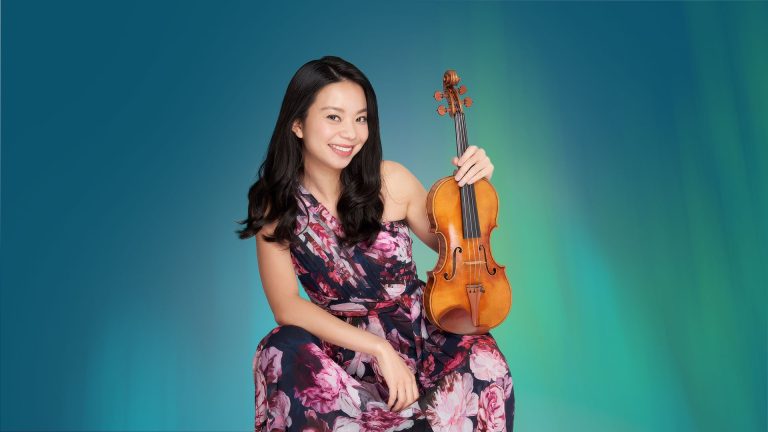
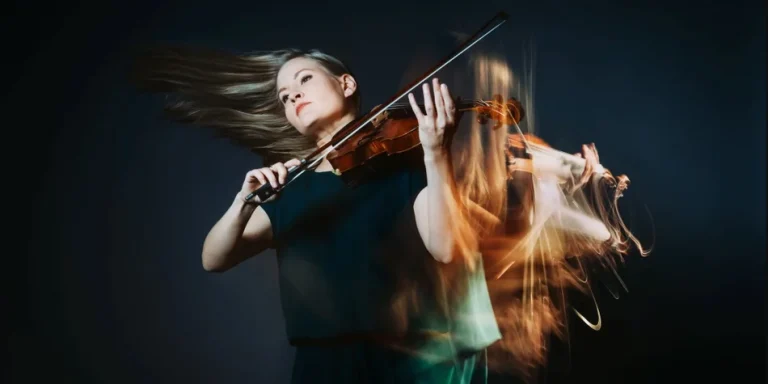
Maria et Stanislav Ioudenitch, père et fille, ont chacun des carrières de soliste de premier plan et se produisent ensemble, en duo. Tous deux mènent une prestigieuse carrière internationale, elle au violon, lui au piano. Nés d’une famille de musiciens, ils nous présentent un programme, qui met en lumière la tradition française, allant du romantisme flamboyant de César Franck à l’impressionnisme lumineux de Ravel, en passant par l’énergie et le lyrisme délicat de Poulenc. La prodigieuse violoniste Maria Ioudenitch a captivé l’attention des mélomanes du monde entier en remportant, en 2021, les premiers prix de trois concours internationaux de violon – Ysaÿe, Tibor Varga et Joseph Joachim, en 2021. Deux ans plus tard, elle remportait le Prix Opus Klassik dans la catégorie « Enregistrement de musique de chambre de l’année » pour son premier album, Songbird, chez Warner Classics. Malgré son jeune âge, elle a fait ses débuts avec le Deutsches Symphonie-Orchester Berlin, le MDR-Sinfonieorchester Leipzig, les Symphoniker de Düsseldorf et de Munich ainsi qu’avec l’Orchestre symphonique de Kansas City, sa ville natale. Elle a collaboré avec des chefs d’orchestre prestigieux tels qu’Andrey Boreyko, Alpesh Chauhan, Kevin John Edusei, Stanislav Kochanovsky, Andrew Manze, Ruth Reinhardt et Hugh Wolff. Stanislav Ioudenitch, grand maître du piano, consacré par de nombreux concours, dont les prestigieux Busoni et Van Cliburn, s’est produit à travers le monde, avec les plus grands orchestres et dans les salles les plus prestigieuses.

Maria Ioudenitch and Stanislav Ioudenitch, daughter and father, each enjoy leading solo careers and also perform together as a duo. Both pursue prestigious international careers : she as a violinist, he as a pianist. Born into a family of musicians, they present a program highlighting the French tradition, ranging from the flamboyant romanticism of César Franck to the luminous impressionism of Maurice Ravel, by way of the energy and delicate lyricism of Francis Poulenc. Violinist Maria Ioudenitch won first prizes in 2021 at the Ysaÿe International Music Competition, the Tibor Varga International Violin Competition, and the Joseph Joachim International Violin Competition. She also received numerous special awards at these competitions, including the Joachim Chamber Music Prize, the Prize for Best Performance of the commissioned work, the Henle Urtext Prize, and a recording contract with Warner Classics . Stanislav Ioudenitch, a grand master of the piano acclaimed through numerous competitions, including the prestigious Ferruccio Busoni International Piano Competition and the Van Cliburn International Piano Competition, has performed throughout the world with leading orchestras and in the most prestigious concert halls.

Programme

MAURICE RAVEL, Sonate pour violon et piano no 2 en sol majeur, M.77
LILI BOULANGER, Nocturne pour violon et piano
NADIA BOULANGER, Soleils couchants
FRANCIS POULENC, Sonate pour violon et piano, FP 119
CÉSAR FRANCK, Sonate pour violon et piano en la majeur

Program

MAURICE RAVEL, Sonata for violin and piano no. 2 in G major, M.77
LILI BOULANGER, Nocturne for violin and piano
NADIA BOULANGER, Soleils couchants
FRANCIS POULENC, Sonata for violin and piano, FP 119
CÉSAR FRANCK, Sonata for violin and piano in A major

POUR ACHETER VOTRE BILLET, C’EST ICI!

Ce contenu provient de Pro Musica et est adapté par PAN M 360

Techno

Dômesicle / SAT | First Techno Night Under the Dome, Account of A First Immersion

by Ariel Rutherford

11:36 a.m., SAT, I enter on the guest list with my +1. I feel pretty swell.

This Saturday, January 10, marks the kickoff of the tenth edition of Dômesicle, a series of winter DJ/VJ parties in the heart of the SAT’s immersive dome. My first time. Exciting. We go down one floor, coat check, the beats of the music echoing through the building. The dance floor awaits us three floors up and lets us know it.

Just a moment to put in our earplugs—hearing is precious, and off we go!

I was promised a pure techno evening, hypnotic rhythms intertwined with organic sounds, intensity. All coupled with projections that were as minimalist and hypnotic as they were enveloping and architectural.

We enter the dome under a cathedral-like kaleidoscope, Mike Larry has just started his set. The crowd is fairly calm. Passive, according to my friend: “North Americans don’t know how to party.” He drags me to the front of the turntables. There, people are dancing, shaking, getting carried away by the music. The DJ is good, repeatedly eliciting cheers from the crowd as he changes tracks.

I lean against the barriers, the DJ within sight. I soak up the atmosphere. Sustained, repetitive yet varied rhythms, from which unexpected sound samples emerge. We let ourselves be carried away. The strobe lights blind me, but I like the images on the dome. I have a soft spot for the most minimalist elements: the pulsating grid that hangs over the crowd like a neon red net, the unexpected starry sky formed by letters of the alphabet floating in space, the box filled with gray spheres that continually evaporate behind the DJ.

The crowd remains fairly placid, happy to be there, but few are dancing. Several are chatting.

My friend dances nonstop. Electro music is his thing. Me, not so much.

The volume, the flashes of light, it’s a lot for me, a little too much. I get overstimulated easily, which is a bad combination. I take breaks, then go back to dancing. Dance, break, dance. It’s paradoxical, but I think I would enjoy a more intense, noisier, more disjointed production more. Intensity can be an antidote to overstimulation, but I feel like I’m stuck in between.

Back from the break, one o’clock in the morning, the crowd has been getting more lively for a while now. Set change, Measure Divide takes the stage. The dome seems to be moving at full speed through a tunnel of light oscillating between blue and orange. A guy is wildly showing off his best moves at the entrance to the satosphere. The selection seems less varied to me than with Mike Larry, more intense perhaps.

When it’s time to go home half an hour later, my friend is having a good time but is falling asleep. My head hurts. I’ve been here for two hours and counting. I don’t think I’m the target audience. I regret missing XIA’s set. Despite this, I would be willing to try the experience again, as the setting is certainly impressive. Worth checking out with other genres of music.

classique / période romantique / Piano

OSM : Le grand retour de Lang Lang

by Rédaction PAN M 360

Le phénomène Lang Lang revêt, l’espace d’une soirée, les atours d’un empereur. Dans le Concerto n° 5 de Beethoven, il déploie une virtuosité flamboyante, souveraine, qui semble s’affranchir de toutes les pesanteurs. Sous le geste visionnaire de Rafael Payare, cette quête de lumière se prolonge dans l’Ouverture n° 2 d’Emilie Mayer puis culmine dans la Symphonie n° 2 de Sibelius, cri d’émancipation d’un peuple écrasé. De l’Europe napoléonienne à la Finlande sous tutelle russe, la musique devient au final un espace où l’esprit refuse de se soumettre. Une soirée où l’art rappelle que la liberté est d’abord une force intérieure.

For one unforgettable evening, the phenomenon that is Lang Lang takes on the mantle of an emperor. In Beethoven’s Piano Concerto no. 5, he unleashes a dazzling, sovereign virtuosity that seems to transcend all weight and constraint. Under Rafael Payare’s visionary direction, this quest for light continues with Emilie Mayer’s Overture no. 2 and reaches its summit in Sibelius’s Symphony no. 2—a cry of emancipation from an oppressed nation. From Napoleonic Europe to Finland under Russian rule, music becomes a space where the spirit refuses to yield. An evening where art reminds us that freedom is, above all, an inner strength.

Programme

Emilie Mayer, Ouverture nᵒ 2 (10 min)
Ludwig van Beethoven, Concerto pour piano nᵒ 5, op. 73 (38 min)
Jean Sibelius, Symphonie nᵒ 2, op. 43 (43 min)

Program

Emilie Mayer, Overture no. 2 (10 min)
Ludwig van Beethoven, Piano Concerto no. 5, op. 73 (38 min)
Jean Sibelius, Symphony no. 2, op. 43 (43 min)

LES BILLETS POUR CE SPECTACLE SONT ÉPUISÉS!

Ce contenu provient de l’Orchestre symphonique de Montréal et est adapté par PAN M 360
classique / noël / Pop-Rock

OM : Des airs de fêtes à la Maison symphonique

by Rédaction PAN M 360

Le retour tant attendu Des airs de fêtes de l’OM! Sous la direction de Yannick Nézet-Séguin, ce rendez-vous festif explore le sens des fêtes à travers les générations, des classiques d’antan aux incontournables d’aujourd’hui, entre jazz, gospel et mélodies de Noël. Avec la présence d’artistes exceptionnels, dont Louis-Jean Cormier, Dominique Fils-Aimé et Elisabeth St-Gelais, ce concert haut en couleurs et en émotions célèbrera toute la magie des fêtes.

The highly anticipated Holiday Melodies returns to the OM! Conducted by Yannick Nézet-Séguin, this festive program explores the meaning of the holidays across generations, from timeless classics to today’s standards, including jazz, gospel and Christmas melodies. Featuring exceptional artists such as Louis-Jean Cormier, Dominique Fils-Aimé and Elisabeth St-Gelais, this joyful and moving concert celebrates all the magic of the season.

POUR ACHETER VOTRE BILLET, C’EST ICI! (19 DÉCEMBRE)

POUR ACHETER VOTRE BILLET, C’EST ICI! (20 DÉCEMBRE)

Ce contenu provient de l’Orchestre métropolitain et est adapté par PAN M 360

Baroque / classique / Piano

Sir András Schiff | L’absolu Bach à la Maison symphonique

by Rédaction PAN M 360

Peu de pianistes contemporains ont exploré les œuvres pour clavier de Jean-Sébastien Bach de manière aussi fascinante que Sir András Schiff. Avec humilité et maîtrise, Schiff captive son public par sa relecture de l’une des œuvres les plus mystérieuses de Bach. Une expérience hors du temps, entre mystère et révélation.

Few contemporary pianists have explored Johann Sebastian Bach’s keyboard works in such a fascinating way as Sir András Schiff. With humility and mastery, Schiff captivates his audience through his reimagining of one of Bach’s most mysterious works. A timeless experience, suspended between mystery and revelation.

POUR ACHETER VOTRE BILLET, C’EST ICI!

Ce contenu provient de Place des Arts et est adapté par PAN M 360

Bossa Nova / Brazilian / pop symphonique

Jobim Sinfônico à la Maison symphonique

by Rédaction PAN M 360

Afin de célébrer le 100e anniversaire de naissance d’Antônio Carlos Jobim (Tom Jobim), né à Rio de Janeiro, l’Orchestre national de jazz de Montréal vous invite à une soirée qui n’a jamais eu lieu auparavant — et qui ne se reproduira peut-être jamais. Quatre artistes brésiliens monteront sur la scène de la Maison symphonique aux côtés de plus de quarante musiciens : Daniel Jobim, petit-fils du maestro, Joyce Moreno, Zé Renato, et Mario Adnet — chanteur, arrangeur et guitariste. Ensemble, ils donnent vie à plusieurs pièces tirées des quatre grands albums de la maturité de Jobim — Matita Perê, Urubu, Terra Brasilis et Passarim — ainsi qu’à quelques-unes de ses plus belles chansons : Águas de Março, Wave, Tempo do Mar, Dindi, The Girl from Ipanema. Ce ne sont pas seulement les chansons que vous connaissez déjà par cœur. Ce sont aussi les chansons que Jobim a composées lorsqu’il a cessé de vouloir conquérir le monde pour tenter de comprendre le Brésil — ses forêts, ses fleuves, ses oiseaux, sa tristesse, sa beauté impossible. Venez entendre ce que Jobim entendait. Venez entendre à quoi ressemble le Brésil quand il rêve.

To celebrate the 100th anniversary of the birth of Antônio Carlos Jobim (Tom Jobim), born in Rio de Janeiro, the Orchestre national de jazz de Montréal invites you to an evening that has never taken place before — and may never happen again. Four Brazilian artists take the stage of the Maison Symphonique alongside more than forty musicians: Daniel Jobim, the maestro’s grandson; Joyce Moreno; Zé Renato; and Mario Adnet — singer, arranger, and guitarist. Together, they bring to life several pieces drawn from the four great albums of Jobim’s maturity — Matita Perê, Urubu, Terra Brasilis, and Passarim — along with some of his most beautiful songs: “Águas de Março,” “Wave,” “Tempo do Mar,” “Dindi,” “The Girl from Ipanema.” These are not only the songs you already know by heart. They are also the songs Jobim composed when he stopped trying to conquer the world and began trying to understand Brazil — its forests, its rivers, its birds, its sadness, its impossible beauty. Come hear what Jobim heard. Come hear what Brazil sounds like when it dreams.

POUR ACHETER VOTRE BILLET, C’EST ICI!

Ce contenu provient de Place des Arts et est adapté par PAN M 360

Baroque / classique

La Passion selon saint Matthieu de Bach à la Maison symphonique

by Rédaction PAN M 360

La Passion selon saint Matthieu de Bach est un monument du répertoire sacré, où musique, récit et méditation ne font qu’un. Un chef-d’œuvre bouleversant. La Passion selon saint Matthieu de Bach est une fresque musicale d’une intensité rare, où récit, chœurs et airs solistes se répondent dans une tension dramatique saisissante. Présentée dans son intégralité par l’Ensemble Caprice et l’Ensemble ArtChoral sous la direction de Matthias Maute, cette interprétation promet une expérience puissante, immersive et profondément émouvante. Un grand moment de musique à vivre — une expérience à partager.

Bach’s St Matthew Passion stands as a monument of the sacred repertoire, where music, narrative, and meditation become one. A profoundly moving masterpiece. The St Matthew Passion is a musical fresco of rare intensity, in which narration, choruses, and solo arias respond to one another in gripping dramatic tension. Presented in its entirety by Ensemble Caprice and Ensemble ArtChoral under the direction of Matthias Maute, this interpretation promises a powerful, immersive, and deeply moving experience. A great musical moment to be lived — an experience to be shared.

POUR ACHETER VOTRE BILLET, C’EST ICI!

Ce contenu provient de Place des Arts et est adapté par PAN M 360

big band / Jazz / Pop

Bendik Hofseth à la Cinquième Salle

by Rédaction PAN M 360

Bendik Hofseth et l’Orchestre national de jazz de Montréal (ONJ) : une collaboration qui s’approfondit, un nouveau song cycle en création mondiale. Pour la troisième fois, l’ONJ accueille Bendik Hofseth – saxophoniste, chanteur, compositeur – à la Cinquième Salle. Jean-Nicolas Trottier a écrit pour lui un nouveau song cycle en création mondiale, conçu pour sa voix et son saxophone réunis. La soirée revisite également Smilets Historie LIVE (2023), arrangé pour 26 musiciens : une musique oscillant entre jazz, pop et grands espaces nordiques.

Bendik Hofseth and the Orchestre national de jazz de Montréal (ONJ): a deepening collaboration, and a new song cycle in world premiere. For the third time, the ONJ welcomes Bendik Hofseth—saxophonist, singer, composer—to the Cinquième Salle. Jean-Nicolas Trottier has written a new song cycle expressly for him, a world premiere conceived for his voice and saxophone together. The evening also revisits Smilets Historie LIVE (2023), arranged for 26 musicians: music that moves between jazz, pop, and the wide Nordic expanses.

POUR ACHETER VOTRE BILLET, C’EST ICI!

Ce contenu provient de Place des Arts et est adapté par PAN M 360

classique / pop-opéra

Andrea Bocelli : Romanza – 30th Anniversary World Tour au Centre Bell

by Rédaction PAN M 360

L’icône italienne légendaire et l’une des voix musicales les plus aimées et reconnues au monde, le Maestro Andrea Bocelli, a annoncé de nouvelles dates nord-américaines pour sa tournée mondiale Romanza – 30e anniversaire en 2026, célébrant son album emblématique Romanza, salué par la critique et qui a marqué sa percée en 1997. Reconnu comme l’une des voix les plus emblématiques de l’industrie du divertissement et vénéré par des fans du monde entier, le Maestro Andrea Bocelli a vendu près de 90 millions de disques à l’échelle mondiale et cumule plus de 20 milliards d’écoutes en streaming. En plus de ses concerts à guichets fermés dans des arénas et de ses diffusions en direct ayant battu des records, le Maestro Bocelli a partagé son talent lors de nombreux événements majeurs, notamment les Jeux olympiques, la Coupe du monde et Global Citizen. Il a remporté un Golden Globe, sept Classical BRIT Awards et sept World Music Awards, ainsi qu’une étoile sur le Hollywood Walk of Fame.

The iconic Italian legendand one of the most beloved and recognized musical voices in the world, Maestro Andrea Bocelli, announced new NorthAmerican dates for his 2026 Romanza 30thAnniversary World Tour,celebrating his widely-acclaimed 1997 breakthrough album Romanza. As one of the most recognizable voices in the entertainment industry and revered by fans internationally, Maestro Andrea Bocelli has sold nearly 90 million records worldwide and over 20 billion streams. In addition to his sold-out arena-sized concert events and record-breaking live-streams, Maestro Bocelli has shared his talents at many major events including the Olympic Games, the World Cup, and Global Citizen. He has earned a Golden Globe, seven Classical BRITs and seven World Music Awards, plus a star on the Hollywood Walk of Fame.

POUR ACHETER VOTRE BILLET, C’EST ICI!

Ce contenu provient d’evenko et est adapté par PAN M 360

classique / période moderne

OSM : Petrouchka de Stravinsky : entre danse et traditions

by Rédaction PAN M 360

Petrouchka, c’est toute la magie de la marionnette qui soudain prend vie, avec son lot de charme, d’espièglerie et de maladresse touchante. Stravinsky y déploie un théâtre sonore d’une inventivité folle, nourri de l’audace de ses complices d’origine – Fokine, Benois, Diaghilev – qui avaient rêvé un spectacle brouillant les frontières entre pantins et êtres humains. On entend encore dans la partition cet esprit avant-gardiste : une foire russe éclate en couleurs vives, les marchands crient, les orgues grincent et parmi la foule surgissent trois marionnettes qui se débattent avec des sentiments trop grands pour elles. Entre humour, rusticité et illusion poétique, Petrouchka reste un enchantement où la fantaisie tourne au vertige.

Petrushka is pure magic—the puppet suddenly coming to life, brimming with charm, mischief, and touching awkwardness. Stravinsky creates a sonic theater of wild inventiveness, fueled by the audacity of his original collaborators—Fokine, Benois, Diaghilev—who dreamed of a spectacle blurring the lines between puppets and humans. That avant-garde spirit still resonates in the score: a Russian fair bursts into vivid colors, merchants shout, barrel organs creak, and among the crowd appear three puppets struggling with emotions far too big for them. Between humor, rusticity, and poetic illusion, Petrushka remains an enchantment where fantasy spins into vertigo.

Programme

Violet Archer, Prelude-Incantation pour orchestre (12 min)
Wolfgang Amadeus Mozart, Concerto pour violon nᵒ 5, K. 219 (31 min)
Igor Stravinsky, Petrouchka (1947) (34 min)

Program

Violet Archer, Prelude–Incantation for Orchestra (12 min)
Wolfgang Amadeus Mozart, Violin Concerto no. 5, K. 219 (31 min)
Igor Stravinsky, Petrushka (1947) (34 min)

POUR ACHETER VOTRE BILLET, C’EST ICI!

Ce contenu provient de l’Orchestre symphonique de Montréal et est adapté par PAN M 360

Neoclassical

OM : Dream Requiem à la Maison symphonique

by Rédaction PAN M 360

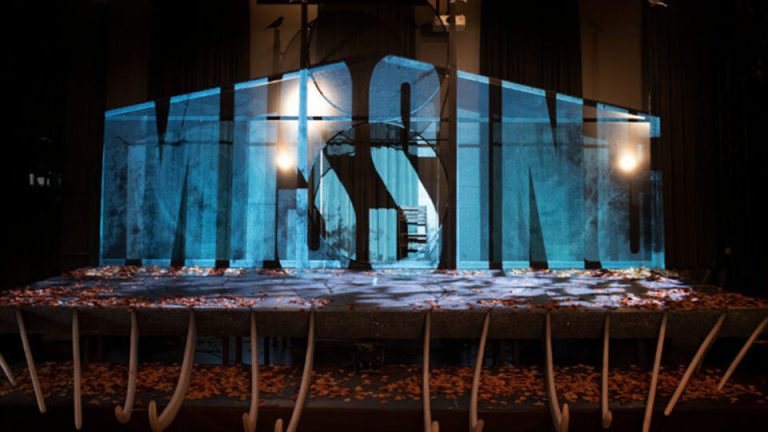
Le Dream Requiem de Rufus Wainwright réinvente la tradition des grandes messes pour les morts en y insufflant une force visionnaire. À la solennité du texte liturgique s’unit « Darkness », poème de Lord Byron écrit en 1816, où le monde s’effondre après une catastrophe climatique. Une réflexion puissante sur le deuil collectif, l’urgence de solidarité et la nécessité d’une transformation humaine et sociale. Autour de la narration par Rufus Wainwright lui-même, une fresque monumentale prend vie dans ce qui constitue sa toute première présentation canadienne : l’OM, le Chœur Métropolitain, les Petits Chanteurs du Mont-Royal et la soprano Angel Blue, réunis sous la direction de Yannick Nézet-Séguin. Une rencontre entre poésie et musique qui questionne notre époque et prolonge la tradition des grands Requiem.

Rufus Wainwright’s Dream Requiem reinvents the tradition of grand requiems by infusing it with visionary power. The solemnity of the liturgical text joins “Darkness,” Lord Byron’s 1816 poem depicting a world collapsing after a climate disaster. A profound reflection on collective mourning, the urgency of solidarity and the need for human and social transformation. Around Wainwright’s narration, a monumental scene emerges: the OM, Chœur Métropolitain, Petits Chanteurs du Mont-Royal and soprano Angel Blue, united under Yannick Nézet-Séguin’s baton. A dialogue between poetry and music that questions our present and preserves the tradition of the great requiems.

Programme/program

WAINWRIGHT, Dream Requiem

POUR ACHETER VOTRE BILLET, C’EST ICI!

Ce contenu provient de l’Orchestre métropolitain et est adapté par PAN M 360

Classical Singing / classique / période romantique

OM : Héroïnes et passions lyriques à la Maison symphonique

by Rédaction PAN M 360

Certains personnages traversent les siècles et inspirent les plus grands créateurs. Manon Lescaut, héroïne du roman de l’abbé Prévost, est l’archétype d’une passion fatale : amoureuse, séduisante, mais vouée à un triste destin. La soprano Sarah Dufresne nous transporte dans l’univers de cette figure mythique en mêlant les arias de deux adaptations célèbres, celles d’Auber et de Massenet, pour en tracer le fil psychologique. Autour de Manon, Keri-Lynn Wilson dirige l’OM dans des pages orchestrales de Clémence de Grandval, figure marquante de l’opéra qui a su se tailler une place dans un milieu alors essentiellement masculin. Puis, deux fresques symphoniques signées Tchaïkovski et Wagner nous entraînent dans les passions tragiques de Francesca da Rimini, héroïne de La Divine Comédie, et d’Isolde, amante mythique de Tristan.

Some figures endure through the centuries, inspiring the greatest artists. Manon Lescaut, the heroine of the Abbé Prévost novel, embodies tragic passion: smitten and seductive, yet doomed to a cruel fate. Soprano Sarah Dufresne brings this legendary figure to life by combining arias from two famous adaptations, by Auber and Massenet, to map out her psychological journey. Alongside Manon, Keri-Lynn Wilson leads the OM in orchestral works by Clémence de Grandval, a pioneering female composer who carved a place for herself in a predominantly male world. Tchaikovsky and Wagner’s symphonic masterpieces then carry us through the tragic passions of Francesca da Rimini, heroine of The Divine Comedy, and Isolde, Tristan’s mythical lover.

Programme

AUBER et MASSENET, Arias de Manon Lescaut
GRANDVAL, Pages symphoniques d’opéras
TCHAÏKOVSKI, Francesca da Rimini
WAGNER, Tristan und Isolde : Prélude et Liebestod

Program

AUBER and MASSENET, Arias from Manon Lescaut
GRANDVAL, Symphonic pages from operas
TCHAIKOVSKY, Francesca da Rimini
WAGNER, Tristan und Isolde: Prelude and Liebestod

POUR ACHETER VOTRE BILLET, C’EST ICI!

Ce contenu provient de l’Orchestre métropolitain et est adapté par PAN M 360
Subscribe to our newsletter

Inscription
Infolettre

"*" indicates required fields

Type of Suscribers