Baroque / classique

Viva Vivaldi : Quatre saisons & Gloria à la Maison symphonique

by Rédaction PAN M 360

Pour célébrer le 70e anniversaire des Petits Chanteurs du Mont-Royal (PCMR), cette soirée enchantera les spectateurs avec deux chefs-d’œuvre d’Antonio Vivaldi. Sous la direction d’Andrei Feher, le concert débutera avec les célèbres Quatre saisons, op. 8, une œuvre lumineuse et vibrante, mettant en vedette le violoniste solo Marc Djokic. Les quatre concertos, La primavera, L’estate, L’autunno, et L’inverno, exploreront les changements de saisons avec une intensité qui capte à la perfection l’esprit de la nature. Après l’entracte, le majestueux Gloria de Vivaldi, une œuvre sacrée envoûtante sera présentée avec Les Petits Chanteurs du Mont-Royal, dirigée par Andrew Gray.

To celebrate the 70th anniversary of Les Petits Chanteurs du Mont-Royal (PCMR), this enchanting evening will feature two masterpieces by Antonio Vivaldi. Under the direction of Andrei Feher, the concert will open with the famous Four Seasons, Op. 8, a luminous and vibrant work showcasing OCM’s concertmaster Marc Djokic as soloist. The four concertos, Spring, Summer, Autumn, and Fall, will explore the changing seasons with a striking intensity that perfectly captures nature’s ever-shifting moods. After intermission, the OCM will present the majestic Gloria, Vivaldi’s captivating sacred work, featuring Les Petits Chanteurs du Mont-Royal under their Musical Director, Andrew Gray.

POUR ACHETER VOTRE BILLET, C’EST ICI!

Ce contenu provient de la Place des Arts et est adapté par PAN M 360
classique / concours

Finale du CMIM | Épreuve Mozart à la Maison symphonique

by Rédaction PAN M 360

Vivez l’intensité de la Finale du Concours musical international de Montréal à la Maison symphonique! Lors de cette première étape de la Finale consacrée à la musique de Mozart, cinq finalistes rivalisent d’élégance et de virtuosité, accompagnés par l’Orchestre symphonique de Montréal – l’orchestre officiel du Concours – placé sous la direction du chef invité Sascha Goetzel. Découvrez comment ces cinq jeunes violonistes interprètent le génie de Mozart et font rayonner leurs personnalités à travers les pages du maître viennois. Un moment de finesse et d’émotion pure qui déterminera les trois finalistes de la Grande finale du Concours musical international de Montréal 2026.

Experience the intensity of the Concours musical international de Montréal’s Final at the Maison symphonique! In the first evening of the Final, dedicated to the music of Mozart, five finalists compete with elegance and virtuosity, accompanied by the Orchestre symphonique de Montréal—the Concours’ official orchestra—under the baton of guest conductor Sascha Goetzel. Discover how these five young violinists interpret Mozart’s genius and bring their personalities to life through the pages of the Viennese master’s music. A moment of finesse and pure emotion that will determine the three finalists for the Concours musical international de Montréal 2026’s Grand Final.

POUR ACHETER VOTRE BILLET, C’EST ICI!

Ce contenu provient de la Place des Arts et est adapté par PAN M 360
classique / concours / période romantique

CMIM : Demi-finales à la salle Bourgie

by Rédaction PAN M 360

À l’issue d’une Première épreuve chaudement disputée, les dix demi-finalistes se retrouvent sur scène pour livrer une nouvelle joute artistique lors de la Demi-finale. À cette étape déterminante et captivante du Concours, les concurrents et les concurrentes doivent présenter un programme de 50 minutes soigneusement sélectionné et comprenant :
• Une sonate complète de Bartók, Beethoven, Brahms, Debussy, Enescu, Fauré, Franck, Janáček, Prokofiev, Ravel, Schnittke, Schumann, Schubert ou R. Strauss ;
• Une œuvre au choix du concurrent de n’importe quel compositeur ;
• Une œuvre au choix d’une compositrice ou d’un compositeur canadien.
Réservez dès maintenant vos places pour le Concours musical international de Montréal 2026 et vivez la virtuosité sans frontières.

After a fiercely contested First Round, ten semifinalists take to the stage for another artistic showdown in the Semifinal. At this decisive and exciting stage of the Concours, each competitor must present a carefully selected 50-minute program comprising of:
• A complete sonata by Bartók, Beethoven, Brahms, Debussy, Enescu, Fauré, Franck, Janáček, Prokofiev, Ravel, Schnittke, Schumann, Schubert or R. Strauss
• A work of the competitor’s choice, by any composer
• A work of the competitor’s choice, by a Canadian composer.
Book your tickets now for the Concours musical international de Montréal 2026 and experience virtuosity without borders!

POUR ACHETER VOTRE BILLET, C’EST ICI! (SÉANCE 1 – 30 MAI À 19H30)

POUR ACHETER VOTRE BILLET, C’EST ICI! (SÉANCE 2 – 31 MAI À 13H30)

POUR ACHETER VOTRE BILLET, C’EST ICI! (SÉANCE 3 – 31 MAI À 19H30)

Ce contenu provient du Concours musical international de Montréal et est adapté par PAN M 360

Classical Singing / classique

Festival de musique de chambre de Montréal : Soirée à l’opéra! à la salle Bourgie

by Rédaction PAN M 360

Ce concert, avec la soprano Natasha Henry, la mezzo Jeanne Ireland, le ténor David Pomeroy, le violoniste Kevin Zhu et le violoncelliste Cameron Crozman, réunit les plus grands airs et les plus grandes œuvres instrumentales du théâtre lyrique.

Opera meets chamber music in a spellbinding program: beloved arias performed by opera stars Natasha Henry, Jeanne Ireland, and David Pomeroy, with violinist Kevin Zhu and cellist Cameron Crozman.

POUR ACHETER VOTRE BILLET, C’EST ICI!

Ce contenu provient du Festival de musique de chambre de Montréal et est adapté par PAN M 360

Caribbean / Gwo-ka / Jazz

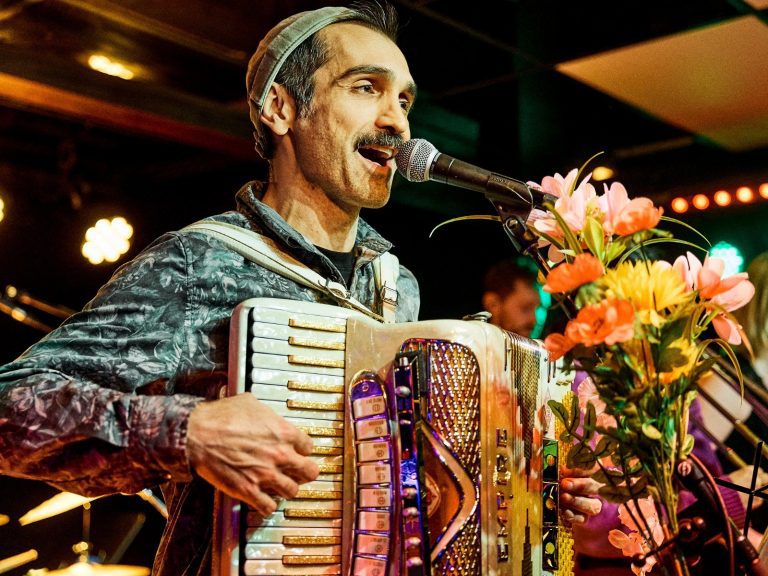
Kulusé Souriant, A Jazz Style Influenced by Caribbean Roots

by Sandra Gasana

By a twist of fate, I found myself covering the launch of Kulusé Souriant’s album Douvan at L’Entracte on May 21st. For the occasion, his quintet consisted of Geneviève Gauthier on alto saxophone, Antonin Bourgault on tenor saxophone, the renowned Santiago Ferrer on piano, and Sean Burke on double bass, while Kulusé himself was on drums. Having lived in Montreal for four years, Kulusé, a drummer and composer of Guadeloupean origin, is increasingly making a name for himself on the Montreal jazz scene. He collaborates with several artists, notably Rachel Therrien, who is preparing a rather original project for the Jazz Festival in which he will be participating.

Released on May 15, 2026, this 9-track album includes several collaborations, notably with Malika Tirolien on the track “Horizon.” Tirolien was present at L’Entracte, having just returned from a trip to Senegal for the Stereo Africa Festival and the Saint-Louis Jazz Festival. Douvan is a call to reconnect with what is important: with oneself, with nature, and with others, in order to move forward.

From one piece to the next, the musicians are showcased. The saxophones alternate, sometimes even synchronizing. During some of Geneviève’s solos, Kulusé seemed to savor the moment, closing his eyes to better absorb it. We are immersed in different musical worlds throughout the concert, moving from gentle and introspective to more intense moments with breathtaking solos.

“I’m moved to present this music that we’ve been preparing for two years,” Kulusé tells us between songs. This artist, who is questioning his personal and musical identities, seems to have found some answers through this album.

Apart from “Heritage” and “Compassion” which last less than five minutes, most of the tracks are long enough to immerse us in Kulusé’s repertoire, which mixes jazz with other styles such as gwo ka, as is the case in “Anecdote”, on which he collaborates with Léo Tibao Leborgne.

Santiago Ferrer dazzled us, as always. His soaring piano solos delighted the audience, who seemed completely captivated. At times, it felt like we were in a legendary New York jazz bar. L’Entracte was the perfect venue for the evening, offering this intimate setting. Kulusé actually lived in New York for a few years in 2019, where he studied at the New School of Jazz before moving to Montreal a few years later.

“I’m lucky to play with such talented musicians,” he confesses. Depending on the drumsticks he uses, the atmosphere varies. On “Solitude,” one gets the impression of hearing rather mystical rhythms, which allows him to reinvent jazz by adding Guadeloupean sounds.

That said, the highlight of the evening was undoubtedly Malika Tirolien’s performance of “Horizon.” Kulusé’s immense respect and admiration for his fellow countrywoman was palpable. The song features a variety of rhythms, evoking a range of emotions. Malika’s improvisational section captivated the audience, who responded with enthusiastic applause.

Salomé Perli, singer and multi-instrumentalist, also features on the album but was unable to attend the launch. One thing is certain: this album will truly propel Kulusé Souriant onto the Montreal jazz scene, as he had primarily focused on his studies before this release. So remember this name; you’re likely to hear it again and again.

A Cappella / classic rock / Classical

ArtChoral Sings the Beatles: The Classic Pop We Needed

by Alexandre Villemaire

Beatlemania entered the Maison symphonique with the ArtChoral Ensemble on Sunday afternoon, May 17th. Fans of the Fab Four, regular ArtChoral concertgoers (or a mix of both) gathered in large numbers to hear, in a classical setting, the great hits of the iconic 1960s pop/rock group.

Led by Matthias Maute and accompanied only by a small percussion section (essentially a drum kit and cowbell) under the direction of Philip Hornsey, with Antoine Joubert on piano providing occasional harmonic support and rhythmic drive, the singers of ArtChoral performed a string of Beatles hits. From “Yellow Submarine,” which opened the concert, to “Can’t Buy Me Love,” including “Penny Lane,” “Eleanor Rigby,” “In My Life,” and “Yesterday,” to name just a few, the ArtChoral singers, with their pure and powerful voices, delivered “their” interpretation of Beatles classics. It would be a mistake to dismiss any concert featuring the Beatles’ repertoire simply because the music isn’t complex, repetitive, or classical enough to be handled by ensembles of ArtChoral’s caliber.

The performance of “Michelle” and “Because” is the best example of this. Performing with only voices allows one to fully appreciate the richness of the harmonies and the complexity of the chords and timbres that shape these pieces. The interpretation of “Michelle” was ethereal, and “Because” created a mystical aura in the hall with its luminous chords and chromatic passages that constantly altered the piece’s character. John Lennon said that he composed this piece after hearing Yoko Ono play Beethoven’s famous “Moonlight Sonata” and, struck by the melody, asked her to play the chord progression backwards. Just as in the writing of this famous Beethoven piece, the language is precise, refined, and captivating. This demonstrates once again that the boundary between classical and so-called popular music is not so permeable. Another example of this connection can be found in the piece Black Bird, which, like I Saw Her Standing There, received a piano solo treatment from Antoine Joubert. The simple melody of Black Bird, itself also inspired by a piece from the classical repertoire, namely Bach’s Bourrée in E minor, provided Joubert with superb material to work with, delivering a performance with varied musical contours and great virtuosity that showcased the interpretive possibilities of this piece.

An ArtChoral concert wouldn’t be complete without at least one contribution from the Grand Choir, this ad hoc choir made up of singers from diverse backgrounds. They joined the ArtChoral singers for heartfelt performances of Let It Be and All You Need Is Love. To conclude the concert, everyone sang Hey Jude, and the audience was invited to join the musicians as the Maison symphonique was bathed in a light show reminiscent of major rock concert performances.

Matthias Maute’s deliberate choices in this concert clearly demonstrate that the repertoire of Paul McCartney, John Lennon, Ringo Starr, and George Harrison transcends genre boundaries, and that these two worlds are ultimately not so far removed from one another. Was it a concert of extreme virtuosity? No. But it wasn’t a dull concert either, presenting “classic” Beatles for the sake of presenting soulless classic Beatles. Everyone, from the conductor to the singers and the choir, was filled with the joy of performing this repertoire, without pretension, and sharing it with an equally enthusiastic audience who reciprocated the musicians’ enthusiasm. In these times, the love of music and the passion for sharing it are truly among the few things we need.

Photo credit: Tam Lan Truong.

Baroque / Musiques du Monde

Festival Accès Asie – Flutes of the World, Unite!

by Frédéric Cardin

The Accès Asie Festival knows how to take risks. And we can congratulate it. On Tuesday, May 19, a concert was held at the Bourgie Hall featuring very disparate flutes (with a cello and percussion to add some texture): a Renaissance flute, a Baroque flute (Western classical icons, therefore), a ney (Persian flute), shakuhachi and ryuteki (traditional Japanese instruments), and a dizi (Chinese flute). The repertoire, although “tagged” world music, had everything to please the most curious and demanding ears, flirting with the harmonic complexity associated with modern classical music (there were indeed several works from the 20th and 21st centuries on the program).

Vivaldi’s Spring, in an arrangement for solo flute, unfolded throughout the concert, each movement being interpreted as a sort of bridge between various parts. Mika Putterman demonstrated the full extent of her mastery of the baroque flute. The percussionist Ziya Tabassian offered one of his compositions, an exploration based on the rhythmic structure of a Persian poem by Hâfez, while Ziad Chbat played a series of arabesques titled Nostalgia on his ney, a flute of West Asian tradition (up to Turkey) with an enchanting sound, akin to the Armenian duduk (which is not a flute, FYI, but a double-reed instrument, like an oboe).

Two harmonically “contemporary” pieces, that is to say, flirting with and even diving into atonality, were presented: an original composition by Jean Lérigé-Laplante, Évanescence. The piece is a sound wave that intertwines the different timbres of the flutes present, while still offering a welcome place to the cello of the Trinidadian-born Montrealer Kyran Assing, too discreet until then, I find (it’s not his fault, he had almost nothing to play).

The other chromatically dissonant piece was a composition by Bruno Deschênes, a “harmonic complexification” of an ancient Japanese melody, Shin Etenraku. The melody, taken as is but passed from one section to another with modifications and densified combinations, offers no reference point for our Western ears, which are not very familiar with the authentic Japanese repertoire. In the end, we had a modernist work, quite austere but frankly interesting.

A Chinese piece for solo dizi had a lively effect on the audience, with its naturalistic effects, like excited birds, and its spectacular virtuosic flights. Excellent performance by Shuni Tsou.

Moreover, it should be noted the excellence of all the instrumentalists present, all solid performers of their instrument.

The French Baroque composer Joseph Bodin de Boismortier saw his Concerto for Five Flutes, Op. 15 No. 1, transcribed for the present flutes, something he probably never dreamed of. The arranger, Bruno Deschênes, admitted to having taken a risk with this idea. We won’t say it was a great success, even though the artists clearly put all their conviction into it. It is difficult to combine Western and non-Western flutes accustomed to microtonality in a tempered language (with equal intervals) like that of European Baroque. One sometimes wonders if what one hears is off tune, or if it is the natural inflections of the Shakuhachi or the dizi that clash more violently than harmoniously with their baroque sisters. The idea, interesting at first glance, deserves to be refined.

That said, we recognise the interest of this unusual meeting, and we hope, despite a few hiccups, that this type of chamber ensemble will return to us with new ideas because the principle is promising and stimulating.

And hey, why not add a few other instruments (even non flutes) like the clarinet, the duduk, the bassoon, the mandingue flute, the Inca quena, the Indian bansuri, some recorders (the bass one!) and other cellos?

Ensemble : 

Bruno Deschênes, shakuhachi and direction

Boaz Berney, Renaissance flute

Élisabeth Caty, shakuhachi and ryuteki

Kyran Assing, cello

Mika Putterman, baroque flute

Shuni Tsou, dizi

Ziad Chbat, ney

Ziya Tabassian, percussions

classique / Contemporary

SMCQ : Dialogues intergénérationnels – Carte blanche à Cristian Gort à la salle Pierre-Mercure

by Rédaction PAN M 360

Pour le dernier concert de sa série hommage spéciale 60e anniversaire, la SMCQ donne carte blanche au chef titulaire de l’Ensemble de la SMCQ, Cristian Gort, dans un programme qui, à l’instar de l’ensemble de sa saison, met en synergie les œuvres de plusieurs générations de compositeurs. Ce programme comportera notamment une création d’une commande de la SMCQ au compositeur Frédéric Lebel. Un concert qui s’annonce fascinant et explosif!

For the final concert of its special 60th-anniversary tribute series, the SMCQ is giving carte blanche to the Ensemble de la SMCQ’s principal conductor, Cristian Gort, in a program that, like the season as a whole, brings together works by several generations of composers. The program will include the world premiere of a new SMCQ commission from composer Frédéric Lebel. A concert that promises to be fascinating and explosive!

Programme

Circuits parallèles (2007), 16:00
Nicolas Gilbert
flûte, hautbois, clarinette, basson, cor, trompette, 2 pianos, 2 percussions, 2 violons, alto, violoncelle et contrebasse
Commande: SMCQ
Manipulation (2022), 9:00
Florence M Tremblay
flûte, clarinette, percussions, piano, violon et violoncelle
Accident (Tombeau de Grisey) (2004), 15:00
John Rea
2 clarinettes, cor, trompette, trombone, percussions, piano, 2 violons, alto, violoncelle et contrebasse
Commande: Festival MNM — Société Radio-Canada (SRC), Festival Présences — Radio France
De la fougue (2026), 15:00
Frédéric Le Bel
piano, flûte, hautbois, clarinette, basson, cor, trompette, trombone, percussions, 2 violons, alto, violoncelle et contrebasse
Création
De la texture (2007), 17:00
Philippe Leroux
flûte, clarinette, guitare, percussions, piano, violon, alto et violoncelle

Program

Circuits parallèles (2007), 16:00
Nicolas Gilbert
flute, oboe, clarinet, bassoon, horn, trumpet, 2 pianos, 2 percussions, 2 violins, alto, cello and double bass
Commission: SMCQ
Manipulation (2022), 9:00
Florence M Tremblay
flute, clarinet, percussion, piano, violin and cello
Accident (Tombeau de Grisey) (2004), 15:00
John Rea
2 clarinets, horn, trumpet, trombone, percussion, piano, 2 violins, viola, cello and double bass
Commission: Festival MNM — Société Radio-Canada (SRC), Festival Présences — Radio France
De la fougue (2026), 15:00
Frédéric Le Bel
piano, flute, oboe, clarinet, bassoon, horn, trumpet, trombone, percussion, 2 violins, alto, cello and double bass
Premiere
De la texture (2007), 17:00
Philippe Leroux
flute, clarinet, guitar, percussion, piano, violin, alto and cello

POUR ACHETER VOTRE BILLET, C’EST ICI!

Ce contenu provient de la Société de musique contemporaine du Québec et est adapté par PAN M 360

classique / Modern music / saxophone

OSM : Tableaux d’une exposition

by Rédaction PAN M 360

Dans cet Apéro Symphonique de 60 minutes, venez découvrir le talent du lauréat du Concours OSM 2024, Jason Xu, avec la Ballade de Frank Martin, mettant en valeur toute la richesse technique du saxophone. Camille Pépin vous plongera quant à elle dans l’énergie vibrante de Vajrayana tandis que Moussorgski vous transportera dans son musée imaginaire avec Tableaux d’une exposition, une œuvre puissante rehaussée par de somptueuses couleurs orchestrales.

In this 60-minute Symphonic Happy Hour, experience the extraordinary talent of Jason Xu, winner of the 2024 OSM Competition, as he brings out the full technical richness of the saxophone in Frank Martin’s Ballade. Camille Pépin will captivate you with the vibrant energy of Vajrayana, while Mussorgsky will take you on a journey through his imagined museum with Pictures at an Exhibition, a stunning work enriched by beautiful orchestral colours.

Programme

Camille Pépin, Vajrayana (12 min)
Frank Martin, Ballade pour saxophone et orchestre (13 min)
Modeste Moussorgski (arr. Maurice Ravel), Tableaux d’une exposition (35 min)

Program

Camille Pépin, Vajrayana (12 min)
Frank Martin, Ballade for Saxophone and Orchestra (13 min)
Modest Mussorgsky (arr. Maurice Ravel), Pictures at an Exhibition (35 min)

POUR ACHETER VOTRE BILLET, C’EST ICI!

Ce contenu provient de l’Orchestre symphonique de Montréal et est adapté par PAN M 360

classique / période romantique

OSM : Wagner et la légende de l’Anneau

by Rédaction PAN M 360

Le Ring sans paroles est une suite orchestrale composée à partir des thèmes musicaux les plus marquants de la tétralogie L’Anneau du Nibelung de Richard Wagner. Cette version condense l’essence musicale de l’œuvre monumentale de près de 15 heures en une fresque symphonique de 70 minutes.
Le Ring de Wagner c’est la quête et la malédiction de l’anneau de pouvoir. Cet anneau magique forgé par le nain Alberich avec l’or volé du Rhin donne un pouvoir absolu, mais apporte ruine et destruction à ses possesseurs. Wotan, roi des dieux, tente de contrôler l’anneau, mais son plan échoue et mène à la chute des dieux. Le héros Siegfried, manipulé et trahi est tué par Hagen, fils d’Alberich. Sa veuve la walkyrie Brünnhilde, fille de Wotan, restitue l’anneau aux eaux du Rhin, scellant ainsi la fin d’un monde.
Le Ring sans paroles offre une immersion intense dans cet univers wagnérien, mettant en valeur les moments les plus emblématiques en une seule symphonie, le prélude de L’or du Rhin, La Walkyrie, Siegfried et la fin apocalyptique du Crépuscule des Dieux. Entre le lyrisme exalté du Concerto de Schumann, interprété par le pianiste Yefim Bronfman, et le pouvoir destructeur de l’or dans Le Ring de Wagner, des forces opposées se déchaînent pour un concert de clôture qui marquera une fin de saison spectaculaire ! 

The Ring Without Words is an orchestral suite that distills the most iconic themes from Richard Wagner’s monumental tetralogy, The Ring of the Nibelung. This 70-minute symphonic fresco encapsulates the essence of the 15-hour epic, telling the tale of a magical ring forged by the dwarf Alberich from gold stolen from the Rhine. While the ring grants immense power, it also brings ruin and destruction to those who possess it. Wotan, the king of the gods, attempts to control the ring but fails, leading to the gods’ downfall. Betrayed and manipulated, the hero Siegfried is killed by Hagen, son of Alberich. Brünnhilde, the Valkyrie, daughter of Wotan and wife of Siegfried, returns the ring to the Rhine, marking the end of an era. The Ring Without Words offers an immersive journey through Wagner’s world, highlighting its most memorable moments, including the prelude to Das Rheingold, the Ride of the Valkyries, Siegfried’s death and funeral music, and the apocalyptic conclusion in Twilight of the Gods. In a thrilling season finale, the soaring lyricism of Schumann’s Piano Concerto, performed by pianist Yefim Bronfman, contrasts with the destructive power of gold in Wagner’s epic, creating a stunning clash of opposing powers.

Programme

Robert Schumann, Concerto pour piano, op. 54 (31 min)
Richard Wagner, Le Ring sans paroles (70 min)

Program

Robert Schumann, Concerto for Piano, Op. 54 (31 min)
Richard Wagner, The Ring Without Words (70 min)

POUR ACHETER VOTRE BILLET, C’EST ICI!

Ce contenu provient de l’Orchestre symphonique de Montréal et est adapté par PAN M 360

orchestre / Prog Rock

Festival Classica : L’Heptade intégrale d’Harmonium au Théâtre St-Denis

by Rédaction PAN M 360

Vivez un moment historique avec L’Heptade intégrale d’Harmonium, présentée pour la toute première fois dans son entièreté sur scène. Portée par les arrangements de Neil Chotem, cette œuvre culte renaît dans une version saisissante réunissant orchestre symphonique, formation rock, chanteurs et choristes. Sur scène, quatre membres d’Harmonium et des artistes de la nouvelle génération unissent leurs forces, tissant un pont vibrant entre passé et présent. Un rendez-vous d’exception, où poésie, rock symphonique et puissance sonore s’accordent pour un moment d’émotion inoubliable.

Experience a historic moment with L’Heptade intégrale by Harmonium, presented for the very first time in its entirety on stage. Guided by Neil Chotem’s arrangements, this cult masterpiece is reborn in a striking version that brings together a symphonic orchestra, rock ensemble, singers, and choristers. On stage, four members of Harmonium join forces with artists of the new generation, creating a vibrant bridge between past and present. This is an exceptional event where poetry, symphonic rock, and sonic power come together for an unforgettable emotional experience.

LES BILLETS POUR CES SPECTACLES SONT ÉPUISÉS!

Ce contenu provient de l’Espace St-Denis et est adapté par PAN M 360

art rock / hommage / Prog Rock

The Dark Side of the Moon Experience au Studio-Cabaret

by Rédaction PAN M 360

Le groupe Echoes – Hommage à Pink Floyd est présent sur la scène québécoise depuis 2005. Au cours de ces années le groupe présenta des centaines de spectacles dans des salles, des festivals et des événements corporatifs, un peu partout à travers le Canada. Echoes est composé de talentueux musiciens, soucieux de reproduire fidèlement l’œuvre musicale de Pink Floyd, accompagnée de son et des visuels d’une grande qualité! Le spectacle The Dark Side of the Moon Experience vous transportera dans l’univers de ce légendaire album culte, acclamé à travers le monde entier.  Pour ce spectacle unique s’ajouteront de superbes nouveaux effets visuels sur les écrans du Studio-Cabaret, offrant une expérience totalement immersive où l’imaginaire culte de Pink Floyd prendra vie. L’intégral de l’album sera précédé d’une première partie constituée d’autres grandes œuvres de Pink Floyd.

The band Echoes – A Tribute to Pink Floyd has been active on the Québec music scene since 2005. Over the years, they have performed hundreds of shows in venues, festivals, and corporate events across Canada. Echoes is made up of talented musicians dedicated to faithfully reproducing Pink Floyd’s music, accompanied by high-quality sound and visuals. The show The Dark Side of the Moon Experience will transport you into the universe of this legendary, cult album, celebrated worldwide. For this unique performance, stunning new visual effects will be added on the Studio-Cabaret screens, creating a fully immersive experience where Pink Floyd’s iconic imagination comes to life. The complete album will be preceded by a first set featuring other major works from Pink Floyd.

POUR ACHETER VOTRE BILLET, C’EST ICI!

Ce contenu provient de l’Espace St-Denis et est adapté par PAN M 360

Subscribe to our newsletter

Inscription
Infolettre

"*" indicates required fields

Type of Suscribers