Baroque / classique

Les Violons du Roy : Handel, Dixit Dominus à la Maison symphonique

by Rédaction PAN M 360

Un rendez-vous avec le sublime Dixit Dominus de Handel dont la virtuosité vocale et la puissance de l’expression musicale en font l’une des plus grandes réussites chorales du compositeur.
Le motet Jesu, meine Freude de Bach appartient lui aussi au plus beau répertoire sacré de toute l’époque baroque. En ouverture, un bref et très poignant motet du prédécesseur de Bach à l’église Saint-Thomas de Leipzig.

A meeting with the sublime Dixit Dominus by Handel, a work of remarkable vocal virtuosity and expressive power, making it one of the composer’s greatest choral masterpieces.
Bach’s motet Jesu, meine Freude also belongs to the finest sacred repertoire of the entire Baroque era. Opening the program is a brief yet deeply moving motet by Bach’s predecessor at St. Thomas Church in Leipzig.

Programme/program

J. Kuhnau, Motet Tristis est anima mea
J.S. Bach, Motet Jesu, meine Freude, BWV 227 
G.F. Handel, Concerto grosso en ré mineur, op. 6 n° 10, HWV 328 /G.F. Handel, Concerto grosso in D Minor, Op. 6 No. 10, HWV 328
G.F. Handel, Dixit Dominus, HWV 232

POUR ACHETER VOTRE BILLET, C’EST ICI!

Ce contenu provient de Place des Arts et est adapté par PAN M 360

Eastern European / Experimental / Contemporary / saxophone

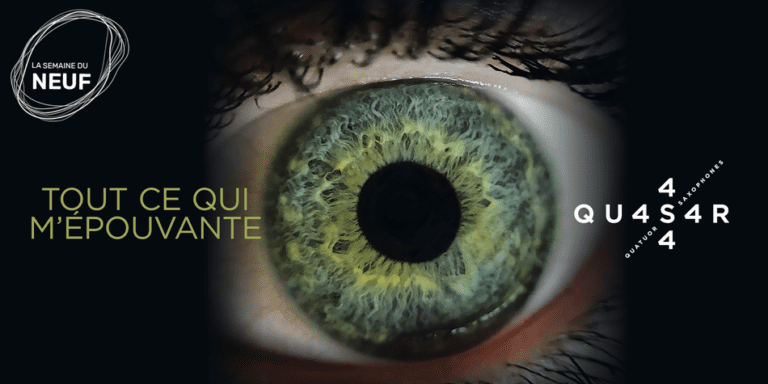
Semaine du Neuf 2025 : Quasar – Tout ce qui m’épouvante 

by Rédaction PAN M 360

Le quatuor de saxophones Quasar poursuit ses collaborations internationales et aborde avec sensibilité les grands enjeux de notre monde.
Ce concert présente en première nord-américaine trois œuvres lituaniennes, contrastées et fortes en évocations: Calligrammes (Kristupas Bubnelis), Trauma (Mykolas Natalevičius) et Azaya (Egidija Medekšaitė). S’ajoute l’œuvre The Saxophone Quartet/While Flying Up, de la compositrice ukrainienne Alla Zagaykevych, coup de cœur du quatuor, qui rend hommage à la lutte du peuple ukrainien.
Le titre Tout ce qui m’épouvante est tiré d’un poème de Guillaume Apollinaire, dont certains extraits sont récités dans la pièce de Kristupas Bubnelis. Cette citation évoque nos peurs, nos terreurs, dans ce monde de défis mondiaux, mais aussi le pouvoir salvateur et nécessaire de l’art.
Tu as fait de douloureux et de joyeux voyages
Avant de t’apercevoir du mensonge et de l’âge
Tu as souffert de l’amour à vingt et à trente ans
J’ai vécu comme un fou et j’ai perdu mon temps
Tu n’oses plus regarder tes mains et à tous moments je voudrais sangloter
Sur toi sur celle que j’aime sur tout ce qui t’a épouvanté

The Quasar saxophone quartet continues its international collaborations, tackling the major issues of our world with sensitivity.
This concert features the North American premiere of three contrasting and evocative Lithuanian works: Calligrammes (Kristupas Bubnelis), Trauma (Mykolas Natalevičius) and Azaya (Egidija Medekšaitė). Added to this is The Saxophone Quartet/While Flying Up, a work by Ukrainian composer Alla Zagaykevych, the result of a residency at Le Vivier, which pays tribute to the struggle of her people. Tout ce qui m’épouvante is taken from a poem by Guillaume Apollinaire, to evoke our fears in the face of global challenges, and to remind us of the redemptive and necessary power of art.
Tu as fait de douloureux et de joyeux voyages
Avant de t’apercevoir du mensonge et de l’âge
Tu as souffert de l’amour à vingt et à trente ans
J’ai vécu comme un fou et j’ai perdu mon temps
Tu n’oses plus regarder tes mains et à tous moments je voudrais sangloter
Sur toi sur celle que j’aime sur tout ce qui t’a épouvanté

Programme

Kristupas Bubnelis: Calligrammes (2024)*
Mykolas Natalevičius: Trauma (2024)*
Egidija Medekšaitė: Azaya (2024)*
Vykintas Baltakas: Saxopho(e)nix (2014) – 12′
Alla Zagaykevych: The Saxophone Quartet/While Flying Up (2009-2022) – 12′
*Création nord-américaine

Program

Kristupas Bubnelis: Calligrammes (2024)*
Mykolas Natalevičius: Trauma (2024)*
Egidija Medekšaitė: Azaya (2024)*
Vykintas Baltakas : Saxopho(e)nix (2014) – 12′
Alla Zagaykevych: The Saxophone Quartet/While Flying Up (2009-2022) – 12′
*North American Premiere

POUR ACHETER VOTRE BILLET, C’EST ICI!

Ce contenu provient du Vivier et est adapté par PAN M 360

Chanson francophone / hommage / orchestre

OSM : Ferland symphonique

by Rédaction PAN M 360

Dans le cadre de la Série Prestige & Patrimoine, GSI Musique et Oziko présentent Ferland symphonique; un hommage grandiose et vibrant créé sur l’œuvre du Petit Roi, l’unique Jean-Pierre Ferland.
Cette grande aventure musicale prendra vie grâce aux arrangements symphoniques de Blair Thomson et sera interprétée par l’Orchestre symphonique de Montréal, sous la direction du chef Alain Trudel. Des éléments de scénographie et de mise en scène seront annoncés sous peu… et à l’image de l’artiste qu’il était, ce sera rempli de poésie.
Grand poète et bâtisseur, Jean-Pierre Ferland aura tissé des ponts entre la chanson à texte et la culture populaire, d’où l’importance de célébrer son héritage exceptionnel.

As part of their Prestige & Patrimoine series, GSI Musique and Oziko present Ferland symphonique; a bold, vibrant tribute to the work of the Petit Roi, the unique Jean-Pierre Ferland.
This epic musical journey will come to life thanks to the symphonic arrangements of Blair Thomson and will be performed by the Orchestre symphonique de Montréal, under the baton of conductor Alain Trudel. Scenography and mise-en-scène elements will be announced shortly. In the image of the artist Ferland was, it will all be very poetic.
A crowd-pleasing poet, Jean-Pierre Ferland built bridges between literary songwriting and pop culture, hence the importance of celebrating his exceptional heritage.

POUR ACHETER VOTRE BILLET, C’EST ICI!

Ce contenu provient de Place des Arts et est adapté par PAN M 360

classique / humour

OSM : Pérusse symphonique – du Snack bar à l’OSM

by Rédaction PAN M 360

Verrez-vous François l’humoriste ? Entendrez-vous François le chanteur, Pérusse le musicien ? Vous ne voudrez certainement pas rater cette rencontre épique ! Du premier Album du Peuple qui célèbre son 35e anniversaire à aujourd’hui, son oeuvre immense, riche et humoristique en version symphonique risque de marquer l’imaginaire. Sous la direction du chef d’orchestre Simon Rivard et avec des arrangements symphoniques signés Hugo Bégin, François livrera plusieurs extraits célèbres de son imposant répertoire, entouré d’invités surprise pour l’occasion. Soyez aux premières loges !

Will you see François the comedian? Will you hear François the singer, Pérusse the musician? You definitely won’t want to miss this epic encounter! From the first Album du Peuple, which celebrates its 35th anniversary, to today, his immense, rich and humorous work in a symphonic version will certainly leave a lasting impression. Under the direction of conductor Simon Rivard and with symphonic arrangements by Hugo Bégin, François will deliver several famous excerpts from his imposing repertoire, surrounded by surprise guests for the occasion. Don’t miss it!

POUR ACHETER VOTRE BILLET, C’EST ICI!

Ce contenu provient de l’Orchestre symphonique de Montréal et est adapté par PAN M 360

R&B / rap-pop

Connor Price au MTelus

by Rédaction PAN M 360

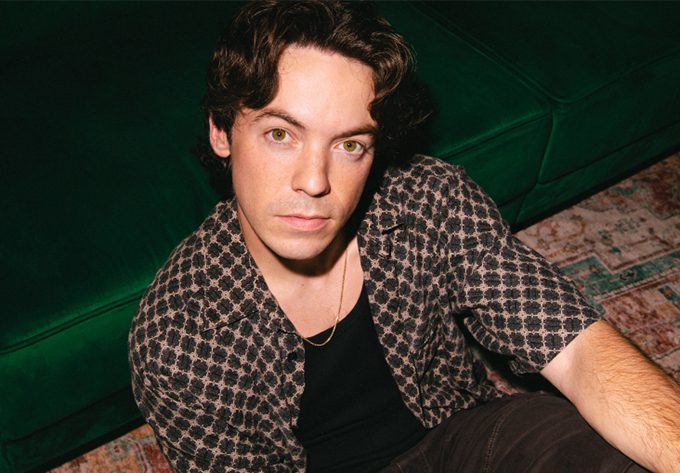
Connor Price est un acteur et rappeur canadien au flow assuré, aux paroles accessibles et au style de production captivant, mêlant hip-hop, R&B, soul et pop. Ancien enfant acteur, il a fait ses débuts sur grand écran aux côtés de Russell Crowe dans le film Cinderella Man, nommé aux Oscars en 2005. Originaire de Toronto, il est surtout connu pour ses rôles dans la série dramatique surnaturelle Being Human et dans le drame d’espionnage de la Seconde Guerre mondiale X Company, diffusé sur CBC. Passionné de hip-hop et de rap depuis toujours, Price s’est tourné vers la musique en 2018 avec la sortie de son premier EP, 4 of Clubs. L’isolement dû à la pandémie de COVID-19 lui a permis de se consacrer entièrement à la musique, enchaînant les singles inventifs, dont des collaborations avec Lil Uzi Vert, Evelyne Brochu, Chloe Sagum et 4Korners. L’année 2022 a marqué un tournant pour lui, avec les titres Spinnin (feat. Bens), Bankroll (feat. Nic D) et Buddy (feat. Hoodie Allen), cumulant des millions d’écoutes. Il a poursuivi sur sa lancée en 2023 avec la sortie de son premier album, Spin the Globe, un projet conceptuel dans lequel il collabore avec des artistes du pays sur lequel son doigt tombait au hasard.

Connor Price is a Canadian actor and rapper with an assured flow, relatable lyrics, and an engaging production style rooted in hip-hop, R&B, soul, and pop elements. A successful child actor who made his big screen debut alongside Russel Crowe in the 2005 Academy Award-nominated film Cinderella Man, the Toronto native is best known for his roles in the supernatural drama series Being Human and the CBC World War II spy drama X Company. A lifelong hip-hop and rap fan, Price set his sights on the music industry in 2018 with the release of his debut EP, 4 of Clubs. The isolation of the COVID-19 pandemic allowed Price to focus solely on music, and he delivered, issuing a flurry of inventive singles, including collaborations with Lil Uzi Vert, Evelyne Brochu, Chloe Sagum, and 4Korners. 2022 proved to be his breakout year, with the singles “Spinnin” (feat. Bens), “Bankroll” (feat. Nic D), and “Buddy” (feat. Hoodie Allen) racking up millions of streams. Price kept the momentum going in 2023 with the release of his first full-length effort, the aptly named Spin the Globe, which saw him collaborate with an artist from whichever country his finger landed on.

POUR ACHETER VOTRE BILLET, C’EST ICI!

Ce contenu provient d’AllMusic et est adapté par PAN M 360

Alt-Country / Americana / Blues Rock

A.J. Croce au MTelus

by Rédaction PAN M 360

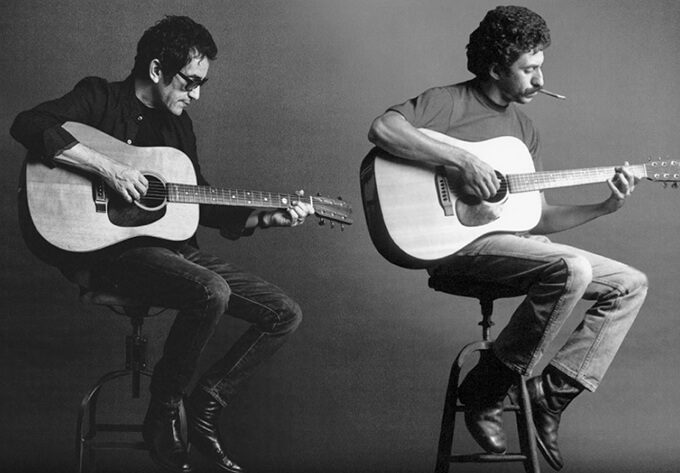
A.J. Croce s’est forgé une carrière distinctive grâce à un mélange chaleureux de blues contemporain et de roots rock soulful, teinté de diverses nuances pop. Fils du regretté chanteur folk Jim Croce, il s’est tourné vers la musique après une tragédie pour tracer sa propre voie en tant que chanteur et auteur-compositeur. Il a fait ses débuts au milieu des années 1990 et a reçu des éloges de la critique avec des albums comme Adrian James Croce (2004) et Cantos (2006). Plus tard, il a signé avec le label Compass et sorti un album de soul authentique, Just Like Medicine, en 2017. En 2021, après la perte soudaine de sa femme, Croce s’est replongé dans le répertoire de reprises qui l’avait accompagné au fil des ans et a publié l’album By Request.

A.J. Croce has built a distinctive career with a warm combination of contemporary blues and soulful roots rock threaded with various facets of pop. The son of the late folksinger Jim Croce, A.J. turned to music in the face of tragedy to made his own mark as a singer/songwriter, debuting in the mid-’90s and garnering critical acclaim during the next decade with albums like 2004’s Adrian James Croce and 2006’s Cantos. He later signed with the Compass label and issued a straight-up soul album in 2017’s Just Like Medicine. In 2021, after enduring the sudden death of his wife, Croce found comfort in classic songs from his old covers repertoire and released an album of them called By Request.

POUR ACHETER VOTRE BILLET, C’EST ICI!

Ce contenu provient d’AllMusic et est adapté par PAN M 360

classique / musique de jeux vidéo

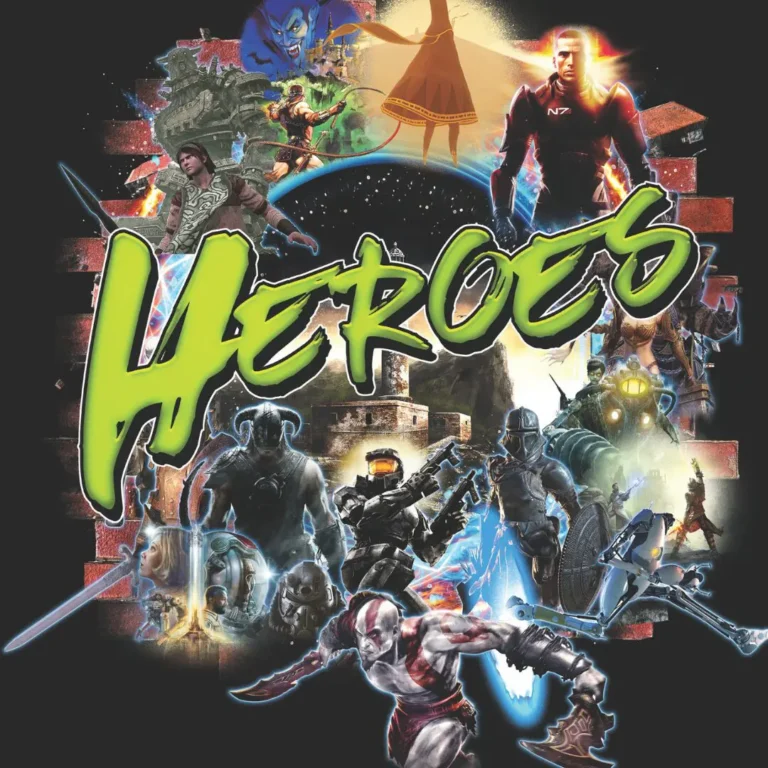
OSM : Heroes – Symphonie de jeux vidéo

by Rédaction PAN M 360

En mai, Heroes : Symphonie de jeux vidéo nous plongera, sous la baguette de Kevin Zakresky, dans les plus grands thèmes de jeux vidéo, de Fallout à Assassin’s Creed, en passant par World of Warcraft et Final Fantasy avec des projections et séquences de ces jeux marquants pour plusieurs générations.

In May, under the baton of Kevin Zakresky, Heroes : A Video Game Symphony will immerse us in the greatest video game themes, from Fallout to Assassin’s Creed, as well as World of Warcraft and Final Fantasy, with projections and sequences from these landmark games for several generations.

POUR ACHETER VOTRE BILLET, C’EST ICI!

Ce contenu provient de l’Orchestre symphonique de Montréal et est adapté par PAN M 360

classique / Electroacoustic / Jazz / musique du monde / Traditional

28th Opus Awards Gala | 32 Trophies For The Concert Ecosystem

by Judith Hamel

On Sunday, February 2, the entire Quebec concert music community gathered at Salle Bourgie to celebrate the highlights of the 2023-2024 season. Presented at Salle Bourgie by the Conseil québécois de la musique and broadcast (CMQ) on its FB page as well as on PAN M 360, this 28th Opus Awards Gala was, for the fourth year running, hosted by the enthusiastic Jocelyn Lebeau. A total of 32 awards were presented at a ceremony punctuated by interview blocks with the winners, encouraging dynamic exchanges on their respective projects.

This year’s Prix Hommage was awarded to Michel Levasseur to celebrate his 40 years at the helm of the Festival international de musique actuelle de Victoriaville (FIMAV). A key figure and builder of the experimental music and improvisation scene, this tribute was an opportunity to shine the spotlight on his hard work, which has greatly contributed to the development of the Quebec music scene.

Video testimonials from FIMAV loyalists Jean Derome and René Lussier were among the evening’s highlights. The tribute concluded by underlining the importance of the support of those around him throughout his career, as the audience gave a standing ovation to his family, friends and partners.

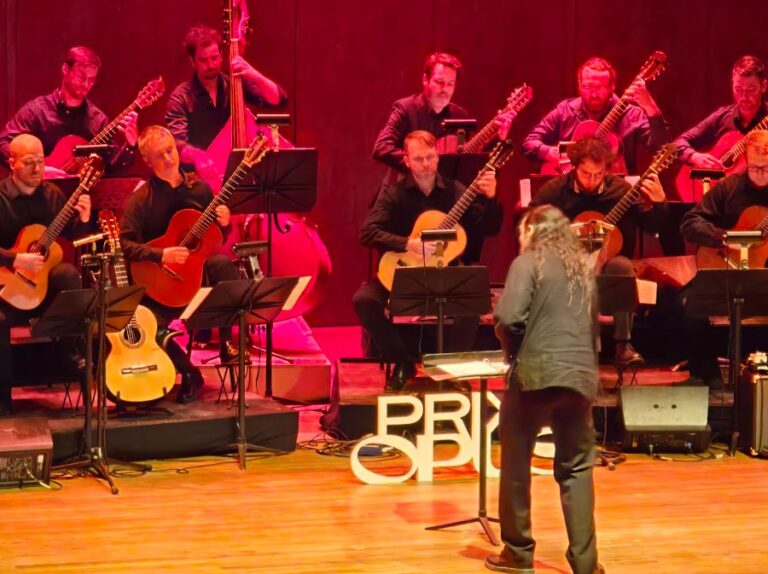
The evening’s musical highlight was provided by the Forestare guitar ensemble and its 13 performers, who took us from Denis Gougeon’s Une petite musique de nuit d’été to Bach, with the third movement of the Brandenburg Concerto No. 3 in G major closing the gala. Its conductor, Pascal Germain Berardi, also won an Opus for Musical Event of the Year, held at FIMAV in Bois-Francs: Basileus, an oratorio in 4 acts featuring the ensembles Horizon (brass), Forestare (guitars), Sixtrum (percussion) and the Growlers Choir (metal voices).

Traditional Québécois music was in the spotlight this year, with an outstanding performance by three traditional Québécois music duos. First, Cédric Dind-Lavoie and Dâvi Simard performed Alphonse Morneau’s Tenant mon frère from the album Archives, winner of the Concert traditionnel québécois de l’année award. A project in which recordings by the chansonniers of yesteryear are reborn and sublimated by an ambient musical setting. An album not to be missed. Then, Nicolas Boulerice and Frédéric Samson delivered Trois beaux garçons, before Alexis Chartrand, on violin and podorythmy, brought his energy to bear on Isidore Soucy’s Le Cyclone, accompanied by Nicolas Babineau on guitar.

Continuing this string resonance, guitarists Adam Cicchillitti and Stevan Cowan performed a beautiful arrangement of Germaine Tailleferre’s Sonata for Harp, with the two guitars in symbiosis, an arrangement sublimated by a meticulous sound system.

Among the double winners, pianist, composer and improviser Marianne Trudel was crowned Composer of the Year and received the award for Jazz Album of the Year for Time Poem: La joie de l’éphémère. Having returned in extremis from a concert on the Magdalen Islands, this is yet another distinction for this artist with a prolific career.

Roozbeh Tabandeh, an interdisciplinary artist nourished by Iranian and Western musical traditions, also distinguished himself by winning the Inclusion and Diversity and Discovery of the Year awards.

Montreal string ensemble collectif9, directed by Thibault Bertin-Maghit, walked away with the Artistic Direction and Performer of the Year awards.

Once again this year, I Musici distinguished itself by winning Creation of the Year with Denis Gougeon’s Spassiba Yuli, as well as Album of the Year – World Music for its participation in Continuum with Turkish artist Didem Basar under the label of the Centre des musiciens du monde.

The Orchestre Métropolitain, meanwhile, walked away with two Opus awards for its season-closing production of Aida, as well as for the Leningrad Symphony.

Early in the morning, the Concert of the Year Opus – Medieval, Renaissance and Baroque Music – was won by Arion Orchestre Baroque, for Aci, Galatea e Polifemo, conducted by guest conductor Francesco Corti, and featuring soprano Kateryna Kasper, contralto Margherita Maria Sala and bass Lisandro Abadie.

Finally, the interview format opened the door to some interesting discussions. Marianne Trudel and composer and improviser Joane Hétu, among others, spoke movingly of the contribution of sound engineers Rob Heaney and Bernard Grenon to the genesis of their works. Both passed away suddenly in recent years, leaving an indelible mark on the Quebec music scene. Their premature departure, like those of so many other artisans in the shadows, reminded us of how lucky we are to be here and to be making art,” said Marianne Trudel.

Congratulations to all the finalists and winners.

I invite you to check out PAN M 360’s other Opus Awards content.

Here is the list of winners for the 2023-2024 season:

Concerts

Concert of the year – Medieval, Renaissance and Baroque music

Aci, Galatea e Polifemo, Arion Orchestre Baroque, Francesco Corti, guest conductor, Kateryna Kasper, soprano, Margherita Maria Sala, contralto, Lisandro Abadie, bass, January 12 to 14, 2024

Concert of the year – Classical, Romantic and Post-Romantic music

Aida season finale, Orchestre Métropolitain, Yannick Nézet-Séguin, conductor, Angel Blue, Sarah Dufresne, sopranos, Matthew Cairns, SeokJong Baek, tenors, Ambrogio Maestri, baritone, Alexandros Stavrakakis, Morris Robinson, basses, Choeur Métropolitain, Festival de Lanaudière, August 4, 2024

Concert of the year – Modern and contemporary music

Two, Molinari Quartet, February 16, 2024

Concert of the Year – Contemporary and electroacoustic music

Monnomest, Ensemble SuperMusique, Joane Hétu, conductor, Vergil Sharkya, conductor, Productions SuperMusique, co-production Groupe Le Vivier, November 23, 2023

Concert of the Year – Jazz Music, accompanied by a $5,000 gift card from Instruments de musique Long & McQuade.

Sport national, Hugo Blouin, September 28, 2023

Concert of the Year – World Music

Continuum, Didem Başar, kanun, Patrick Graham, percussion, Etienne Lafrance, double bass, Quatuor Andara, Centre des musiciens du monde, February 13, 2024

Concert of the year – Traditional music from Quebec

ARCHIVES, Cédric Dind-Lavoie, multi-instrumentalist, Alexis Chartrand and/or Dâvi Simard, violins, November 15 and 19, December 10 and 16, 2023

Concert of the year – Répertoires multiples

Leningrad Symphony, Orchestre Métropolitain, Yannick Nézet-Séguin, conductor, Maria Dueñas, violin, November 18, 2023

Concert of the year – Ancient, classical, romantic, modern, postmodern impulses

Fabula femina, Cordâme, August 10, 2024

Creation of the year

Spassiba Yuli, for 2 cellos and strings, Denis Gougeon, Yuli’s legacy: Stéphane Tétreault and Bryan Cheng, I Musici de Montréal, April 25, 2024

Production of the Year – Young Audience, accompanied by $5,000 from the Ministère de la Culture et des Communications

J’m’en viens chez vous, Bon Débarras, February 11, 2024

Albums

Album of the year – Medieval, Renaissance and Baroque music

Calcutta 1789: At the crossroads of Europe and India, Christopher Palameta, Notturna, ATMA Classique

Album of the year – Classical, Romantic, Post-Romantic music

16 Histoires de guitares – Vol. III, David Jacques, ATMA Classique

Album of the year – Modern, contemporary music

Confluence, David Therrien Brongo, Ravello Records

Album of the Year – Contemporary and Electroacoustic Music

Limaçon, Léa Boudreau, empreintes DIGITALes

Album of the Year – Jazz

Marianne Trudel-Time Poem: La joie de l’éphémère, Trio Marianne Trudel, Productions Marianne Trudel, Indépendant

Album of the Year – World Music, accompanied by a $5,000 Mundial Montréal Mentoring & Conference package offered by Mundial Montréal.

Continuum, Didem Başar, Patrick Graham, Jean-François Rivest, I Musici de Montréal, Centre des musiciens du monde

Album of the Year – Quebec Traditional Music

Layon, Nicolas Pellerin and Les Grands Hurleurs, La Compagnie du Nord

Album of the Year – Ancient, classical, romantic, modern and postmodern impulses

Cendres, Vanessa Marcoux, Indépendant

Writing

Article of the year

“Du son vers la forme, le sens… l’Autre… : spectral thought and engaged art in the mixed works of Serge Provost”, Jimmie LeBlanc, Circuit, musiques contemporaines, May 1, 2024

Special awards

Opus Montréal Prize – Inclusion and Diversity, accompanied by $10,000 from the Conseil des arts de Montréal.

Roozbeh Tabandeh, Ensemble Paramirabo et Chants Libres, Songs of the Drowning, August 24, 2024

Prix Opus Québec

Festival Québec Jazz en Juin, June 20 to 30, 2024

Prix Opus Régions

Festival Ripon trad, September 14 to 17, 2023

Composer of the Year, accompanied by $10,000 from the Conseil des arts et des lettres du Québec.

Marianne Trudel

Discovery of the Year, accompanied by a video production courtesy of Télé-Québec’s La Fabrique culturelle.

Roozbeh Tabandeh, composer

Multidisciplinary Broadcaster of the Year

Salle Pauline-Julien

Specialized Broadcaster of the Year

Domaine Forget de Charlevoix

Artistic Director of the Year

Thibault Bertin-Maghit, collectif9
DJ set / Electronic

Solid Pink Disco with DJ Trixie au MTelus

by Rédaction PAN M 360

Trixie a profité de la pause inattendue imposée par la pandémie pour animer Full Coverage Fridays sur sa chaîne YouTube et explorer son intérêt pour le DJing. Elle s’est procuré une console, a commencé à travailler sur ses propres mix et a rapidement décroché des engagements locaux dès que l’occasion s’est présentée. Aujourd’hui, Trixie mixe partout dans le monde et tourne avec sa soirée Solid Pink Disco.

Trixie took the unexpected time off during the pandemic in stride, hosting Full Coverage Fridays on her YouTube channel and exploring her interest in DJing. She bought a board, started working on her own mixes, and then started taking gigs locally as soon as she could. Trixie now DJ’s around the world & tours her party Solid Pink Disco.

POUR ACHETER VOTRE BILLET, C’EST ICI!

Ce contenu provient de TrixieMattel.com et est adapté par PAN M 360

alt-rock / Pop-Rock / Post-Punk

Franz Ferdinand au MTelus

by Rédaction PAN M 360

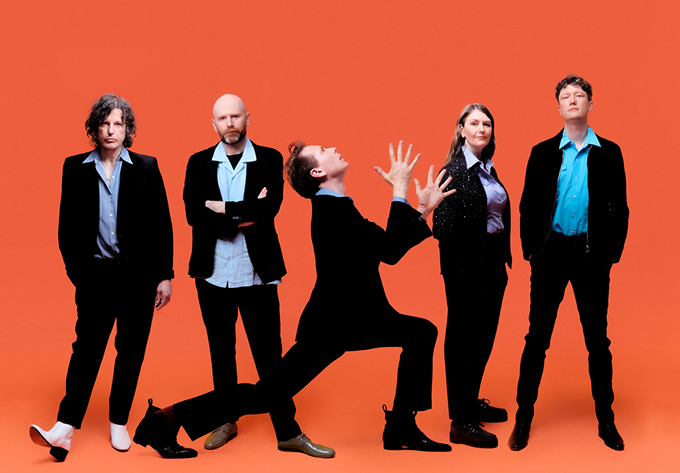
Avec leur mélange stylisé de rock et de musique dance, Franz Ferdinand ont apporté une sophistication ironique à l’indie rock tout en devenant l’un des groupes britanniques les plus populaires. Originaire de Glasgow, le groupe est apparu dans le sillage du renouveau rock du début des années 2000, à une époque où des groupes comme The Strokes et The Libertines rappelaient combien une musique à guitare accrocheuse pouvait être rafraîchissante et intemporelle.
Bien que Franz Ferdinand partage une affinité avec ces groupes, leurs influences incluent également le post-punk anguleux et incisif de Wire ainsi que les mélodies entraînantes et espiègles d’Orange Juice, un autre groupe de Glasgow. Dès leurs débuts, ils ont su transformer des références artistiques inattendues en une musique et une esthétique accessibles à un large public, qu’il s’agisse du graphisme inspiré du constructivisme russe sur leurs premières pochettes ou de l’hommage à Howlin’ Wolf dans les solos de guitare de leur tube Take Me Out en 2004.
Après avoir posé les bases de leur son avec leur premier album Franz Ferdinand (2004), récompensé par le Mercury Prize, certifié platine et nommé aux Grammy Awards, le groupe s’est aventuré vers de nouveaux horizons. En 2005, You Could Have It So Much Better a ajouté plus de nuances à leur style, puis Tonight (2009) a exploré le dub, tandis que Always Ascending (2018) s’est tourné vers une disco élégante. Dans les années 2020, Franz Ferdinand a continué d’enrichir son univers musical, intégrant des influences glam vintage sur les morceaux inédits de la compilation Hits to the Head (2022) et sur leur album The Human Fear, prévu pour 2025.

With their sharply stylish mix of rock and dance music, Franz Ferdinand have brought a wry sophistication to indie rock while becoming one of the U.K.’s most popular bands. The Glasgow-based group arrived in the wake of the early-2000s rock revival, with bands such as the Strokes and the Libertines reminding listeners just how refreshing — and evergreen — hook-driven guitar music could be.
While Franz Ferdinand had a kinship with those acts, their lineage also included the arch, angular post-punk of bands such as Wire and the witty, funky jangle of fellow Glaswegians Orange Juice. From the beginning, the group had a flair for translating arty, unexpected references into widely appealing music and visuals, whether it was the Russian Constructivism-inspired artwork that graced their early releases or the Howlin’ Wolf homage in the guitar solos of 2004’s smash single “Take Me Out.”
After laying the groundwork for their sound with that year’s Mercury Prize-winning, platinum-selling, Grammy-nominated debut album Franz Ferdinand, the band soon branched out. On 2005’s You Could Have It So Much Better, they added more nuance to their style, then explored dub on 2009’s Tonight and disco on 2018’s sleek Always Ascending. Franz Ferdinand further embellished their sound in the 2020s, bringing vintage glam influences on the new songs included on 2022’s best-of Hits to the Head and 2025’s full-length The Human Fear.

POUR ACHETER VOTRE BILLET, C’EST ICI!

Ce contenu provient d’AllMusic et est adapté par PAN M 360

Classical

The symphonic magic of age-old tales

by Frédéric Cardin

While Salle Wilfrid-Pelletier next door shook to the metal-symphonic sound waves of Voivod and the OSM, the Maison symphonique, the usual refuge of Rafael Payare’s musicians, vibrated to the thousand and one colours of musical tales from China and Russia. 

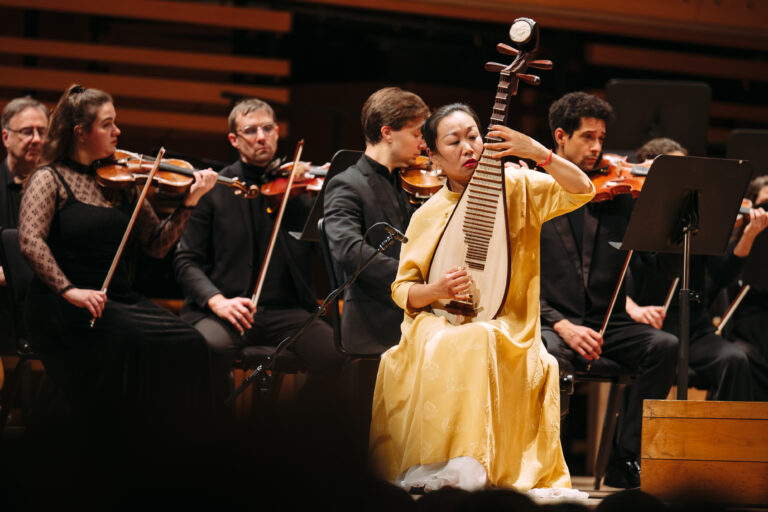
At the start of the programme, the Orchestre FILMharmonique, conducted by Francis Choinière, welcomed soloist Liu Fang, master of the Chinese pipa, an instrument in the lute family, in the creation of a new concerto for her instrument by Quebecer Christian Thomas. In 2023, Thomas gave us his Messe solennelle pour une pleine lune d’été (Solemn Mass for a Full-Moon Night), an opera based on the work of Quebec author Michel Tremblay, which was well received by audiences and critics alike. Much more romantic in its idiom than the Mass, the Pipa Concerto, nicknamed Dragon, allowed Ms Liu to show the full extent of her technical talent, despite some occasional hiccups in the first movement. I wrote about this concerto in a review elsewhere on the site (read it HERE), so I won’t go into that again, but I will say that the four-movement piece struck me as even more accomplished than when I first listened to it on digital files. This is a sign that listening to it is enough to sustain prolonged and repeated attention. In any case, the largely East Asian audience that packed the hall seemed to appreciate and enjoy the performance. It is to be hoped that other Quebec orchestras will programme this concert, giving fellow Quebecer (Chinese born) Liu the chance to tour as much in Quebec as she does internationally, hopefully.

The second piece on the programme was the Butterfly Lovers violin concerto with soloist and Opus Prize 2023 Discovery of the Year Guillaume Villeneuve. Villeneuve’s twirling, scintillating performance gave a superb breath of life to this Chinese Romeo and Juliet, whose original title is the Romance of Liang Shanbo and Zhu Yingtai. The concerto, written in 1959 by Chen Gang and He Zhanhao, is one of the first works of its kind in Chinese musical literature. The style and language are hyper-romantic, as if Tchaikovsky had lived in Beijing rather than St Petersburg, but the soloist has to achieve several effects that are clearly inspired by the traditional techniques of the erhu, a Chinese instrument that is similar to the Western violin. It’s a musical bonanza, with endearing, memorable melodies and abundant colour, especially in the woodwinds. 

Francis Choinière had chosen to conclude the evening with another evocative piece of music, Stravinsky’s The Firebird. A judicious choice, which allowed us to return to the more usual Western repertoire while remaining true to the enchanting spirit of the evening. The orchestra, made up of many young musicians, probably fresh out of Quebec schools, performed well, and the conductor’s direction was committed. A few technical imperfections in Kastchei’s dance did not detract from the energy that Choinière wished to infuse into the ensemble, which ended in a successful climax. 

An evening that clearly delighted a very mixed and diverse audience. If that was one of the objectives, it was achieved. 

musique contemporaine

Le Vivier InterUniversitaire | Interpreting the Eclipse

by Judith Hamel

On Saturday, January 25, the Espace Orange in the Wilder Building hosted the 9th annual Vivier InterUniversitaire concert, showcasing emerging composers in the field of contemporary music creation. Eight original works came to life in the hands of talented university performers.

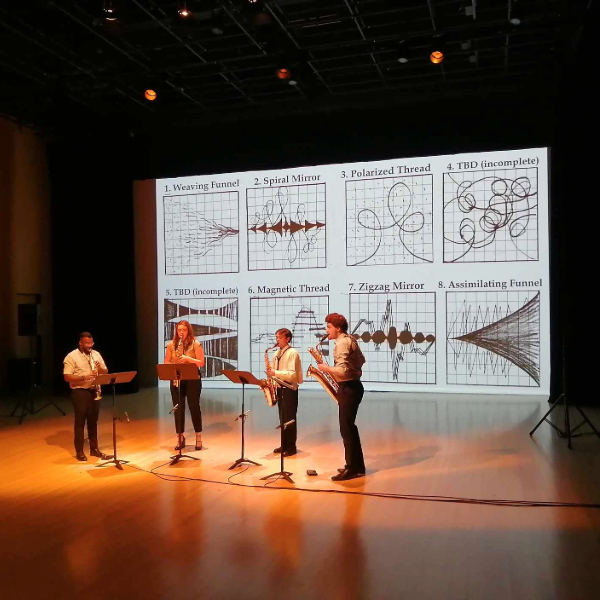
The concert opened with Leo Purich’s Shape Games for Saxophone Quartet (2022-2023). In this piece, visual elements projected onto a giant screen presented eight geometric designs. Four of these were used as musical inspiration to interpret these shapes and translate them into sonorities that pushed back their limits.

We continue with Edwin H. Ng’s Eclipse (2024), a work for solo viola inspired by the total solar eclipse of 2024. In it, the composer translates the darkness that imposes itself at the heart of the day, right down to the subtle rays of light filtering through the shadows. It is in understanding this process that the work takes on its full meaning. The viola’s timbre lends itself to this dichotomy between light and shadow, while the strings represent the movement of the darkening day and the rays that reach our well-protected pupils.

The third work on the program is Hélpide Dulce, Escampas (2023) by Pablo Jiménez. This piece for string quartet plunges us into a noisy world of sound. Clusters emerge, instruments overlap and create a background sound that is both organic and disquieting. A well-constructed, organic chaos that oscillates between refined language and raw, evocative expressiveness. A la Jacob Collier, Jiménez takes his salute, fangs in hand, to warm applause from the audience.

Then, Jonas Regnier’s Wistful Fragments (2024) for trumpet with live electronics invites us to explore our auditory memories, using recordings of everyday life. The selection of landscapes such as an urban ambience, birdsong, piano playing, and the sequence of fragments seemed to me to lack a little coherence, but despite this, the alliance between trumpet and electronic processing was skilfully constructed. The composer exploits to the full the expressive possibilities of the blend between these two sound sources.

The fifth work, Composition pour sextuor (2023) by Jules Bastin-Fontaine, features meticulous work on counterpoints and textures. The choice of instruments favors sonic superimpositions that generate new textures. Resonant bodies such as flutes and bass clarinet are used to create reverberant sound backgrounds. Although the expressiveness of this piece did not stand out for me, the care taken in the construction of the textures deserves to be highlighted.

The sixth work, Tracé, Fossile (2023) for violin and cello by Alexandre Amat, highlights the distortions produced by excessive bow pressure. This process generates noisy sonorities that permeate the entire piece. Rather than relying on pitch-based melodic motifs, the work explores a musicality centered on sound mass, which becomes denser or lighter according to musical intentions.

The penultimate piece is Anita Pari’s The Mockingbird (2024) for string quartet. The work favors an ensemble musicality where one feels a common breath throughout the performance. This cohesion amplifies the dramatic passages. As the title suggests, the work evokes a warbling atmosphere, combining a refined musical language with an organic, poetic dimension that resonates authentically.

The evening concluded with Alexander Bridger’s Shards of Bengaluru Bill (2023), a work for flute, clarinet, accordion, viola and double bass. Dressed in bright colors, two performers marked time in certain passages of the work, a gesture that seemed planned, but which seemed to us somewhat strange or with a floating doubt. That said, the instrumentation, in particular the use of accordion and double bass, provided an original sound dimension.

Among the works presented, those by Edwin H. Ng, Pablo Jiménez and Alexandre Amat were my favorites of the evening.

In short, it was an opportunity to discover the promising talents of the new generation of composers, the vast majority of whom are men, despite the values of accessibility and inclusion put forward in this context. Achieving parity remains a laborious and complex process, we have to conclude.

Photo Credit: Claire Martin

Subscribe to our newsletter