Arabic Traditional / Création

Festival du monde Arabe : L’Écho des mondes à la salle Pierre-Mercure

by Rédaction PAN M 360

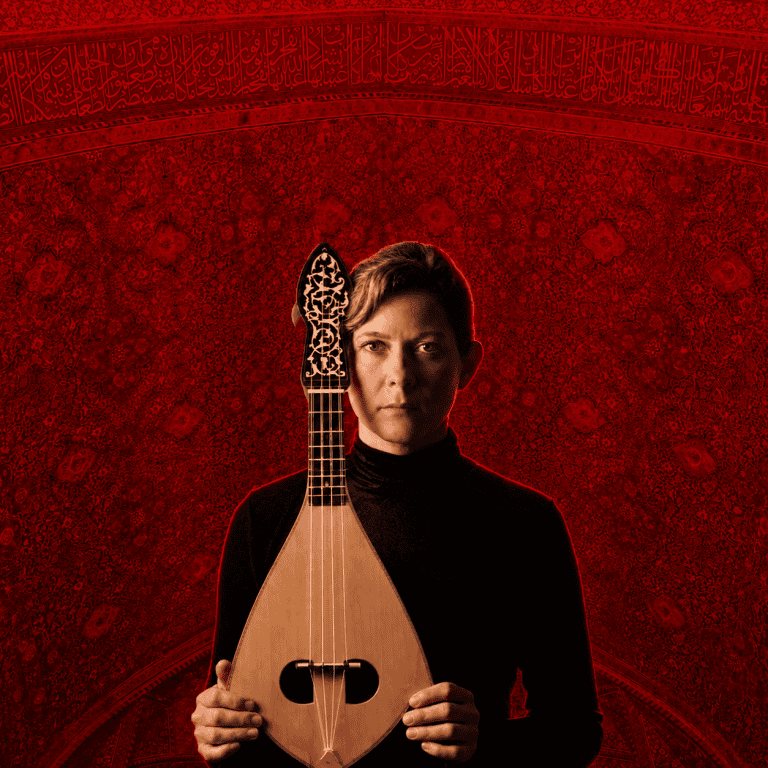
Cette soirée tisse des ponts entre les cultures. Des rives du Moyen-Orient aux élans de l’orchestre contemporain, elle fait dialoguer les traditions et les imaginaires, portée par une création mondiale de Katia Makdissi-Warren et des œuvres de Bechara El-Khoury, Fazıl Say et d’autres voix inspirées.

This evening weaves bridges between cultures. From the shores of the Middle East to the surge of the contemporary orchestra, it brings traditions and imaginations into dialogue, carried by a world premiere by Katia Makdissi-Warren and works by Bechara El-Khoury, Fazıl Say, and other inspired voices.

POUR ACHETER VOTRE BILLET, C’EST ICI!

Ce contenu provient du Festival du Monde Arabe de Montréal et est adapté par PAN M 360

classique / Contemporary / Tango Nuevo

Festival Montréal/Nouvelles Musiques : Origine(s) à la salle Pierre-Mercure – Centre Pierre-Péladeau

by Rédaction PAN M 360

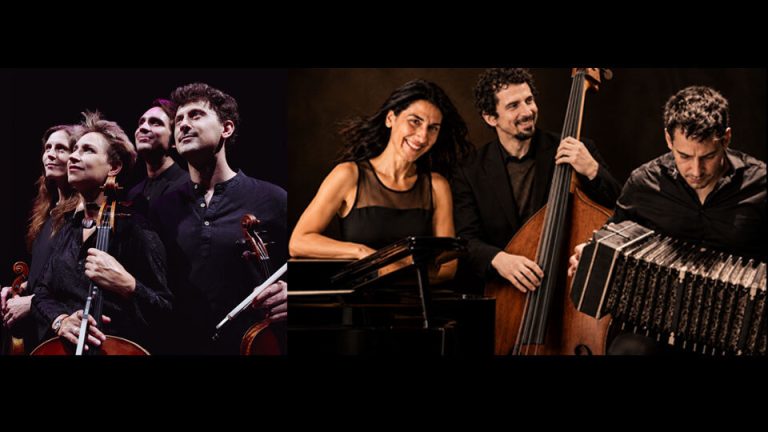
Origine(s) propose un voyage à travers la riche diversité musicale des Amériques, réunissant des compositeurs aux héritages autochtones et afro-diasporiques ainsi que plusieurs voix de la création sud-américaine. Portée par le Quatuor Kimya, Strum de Jessie Montgomery, œuvre vibrante aux accents de folk américain, côtoiera la première canadienne de The Fire Moon, ambitieuse pièce pour quatuor à cordes du compositeur cherokee Louis Wayne Ballard, ainsi qu’une création mondiale de Baptiste Cathelin. Aux côtés du quatuor, la pianiste Magali Goimard, le bandonéoniste Amichai Ben Shalev et le contrebassiste Pierre-Alexandre Maranda feront ensuite résonner les couleurs du tango. Des œuvres des compositeurs argentins Alex Nante et Saúl Cosentino seront présentées en premières nord-américaines, tandis qu’Amichai Ben Shalev interprétera son Tango inoxidable. L’incontournable Libertango d’Astor Piazzolla réunira finalement l’ensemble des interprètes pour conclure ce parcours aux origines et aux esthétiques multiples.

Origine(s) takes audiences on a journey through the rich musical diversity of the Americas, bringing together composers with Indigenous and Afro-diasporic heritage alongside a range of voices from the South American contemporary music scene. Performed by the Quatuor Kimya, Jessie Montgomery’s Strum, a vibrant work infused with American folk influences, will share the program with the Canadian premiere of The Fire Moon, an ambitious work for string quartet by Cherokee composer Louis Wayne Ballard, as well as a world premiere by Baptiste Cathelin. Joining the quartet, pianist Magali Goimard, bandoneonist Amichai Ben Shalev and double bassist Pierre-Alexandre Maranda will then bring the colours of tango to the stage. Works by Argentine composers Alex Nante and Saúl Cosentino will receive their North American premieres, while Amichai Ben Shalev will perform his Tango inoxidable. Finally, Astor Piazzolla’s iconic Libertango will bring all the performers together to conclude this journey through a multitude of origins and musical styles.

Programme

Strum (2012), 7:00
Jessie Montgomery
quatuor à cordes
The Fire moon (1998), 17:00
Louis Wayne Ballard
quatuor à cordes
Première (Canada)
[titre à déterminer], 10:00
Baptiste Cathelin
quatuor à cordes, piano, bandonéon et contrebasse
Création
Tango nuevo (1986), 5:00
Saúl Cosentino
bandonéon et piano
Première (Amérique du Nord)
Toccata Portena (1986), 5:00
Saúl Cosentino
quatuor à cordes et piano
Première (Amérique du Nord)
Convicciones (1997), 5:00
Saúl Cosentino
quatuor à cordes et piano
Première (Amérique du Nord)
Tango-Etude (2026), 10:00
Alex Nante
accordéon, violoncelle et piano
Première (Amérique du Nord)
Transcription pour bandonéon d’Amichai Ben Shalev
Tango inoxidable, 6:00
Amichai Ben Shalev
quatuor à cordes et bandonéon
Libertango, 10:00
Astor Piazzolla
Arr. Amichai Ben Shalev
bandonéon, quatuor à cordes, piano et contrebasse

Program

Strum (2012), 7:00
Jessie Montgomery
string quartet
The Fire moon (1998), 17:00
Louis Wayne Ballard
string quartet
Premiere (Canada)
[title to be determined], 10:00
Baptiste Cathelin
string quartet, piano, bandoneon and double bass
Premiere
Tango nuevo (1986), 5:00
Saúl Cosentino
bandoneon and piano
Premiere (North America)
Toccata Portena (1986), 5:00
Saúl Cosentino
string quartet and piano
Premiere (North America)
Convicciones (1997), 5:00
Saúl Cosentino
string quartet and piano
Premiere (North America)
Tango-Etude (2026), 10:00
Alex Nante
accordion, cello and piano
Premiere (North America)
Transcription for bandoneon by Amichai Ben Shalev
Tango inoxidable, 6:00
Amichai Ben Shalev
string quartet and bandoneon
Libertango, 10:00
Astor Piazzolla Arr. Amichai Ben Shalev
bandoneon, string quartet, piano and double bass

POUR ACHETER VOTRE BILLET, C’EST ICI!

Ce contenu provient de la Société de musique contemporaine du Québec et est adapté par PAN M 360
Contemporary Opera

Festival Montréal/Nouvelles Musiques : MISSING à la salle Pierre-Mercure – Centre Pierre-Péladeau

by Rédaction PAN M 360

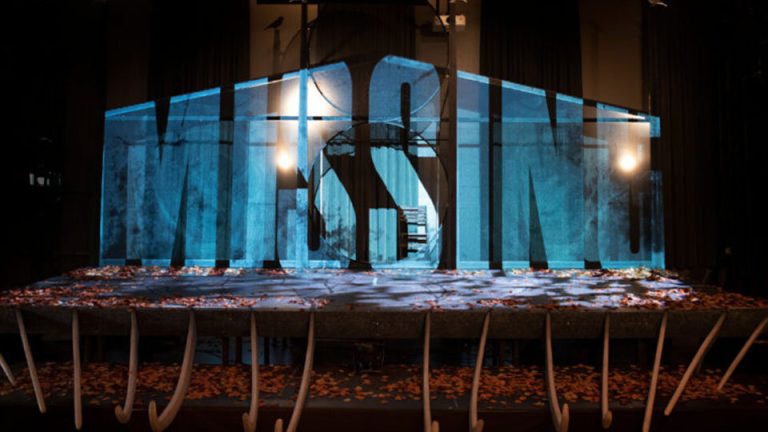
Un opéra puissant qui fait résonner les voix de milliers de femmes autochtones disparues. Une grande première québécoise pour cette œuvre bouleversante où musique, mémoire et récits poignants se rencontrent. MISSING, dont le livret est signé par l’autrice métisse et dénée Marie Clements (musique de Brian Current), aborde avec force la tragédie des femmes et des filles autochtones disparues et assassinées au Canada. MISSING mêle la tradition de l’opéra occidental aux langues et aux récits des autochtones. Interprété en anglais et en gitxsan, créé et développé en étroite collaboration avec les communautés concernées, cet opéra est bien plus qu’un spectacle: c’est un acte de mémoire, de guérison et de réconciliation. L’histoire se déroule entre le Downtown Eastside de Vancouver et la tristement célèbre Highway of Tears, dans le nord de la Colombie-Britannique. Il croise le destin d’Ava, une jeune femme bouleversée par sa rencontre avec une jeune femme gitxsan disparue, et celui d’une famille confrontée à l’absence et au deuil.

A powerful opera that amplifies the voices of thousands of missing Indigenous women. A major Quebec premiere for this deeply moving work, where music, memory, and poignant stories come together. MISSING, with a libretto by Métis and Dene playwright Marie Clements and music by Brian Current, powerfully addresses the tragedy of missing and murdered Indigenous women and girls in Canada. MISSING brings together the Western operatic tradition with Indigenous languages and storytelling. Performed in English and Gitxsan, and created and developed in close collaboration with the communities involved, this opera is much more than a performance: it is an act of remembrance, healing, and reconciliation. Set between Vancouver’s Downtown Eastside and the infamous Highway of Tears in northern British Columbia, the story intertwines the fate of Ava, a young woman deeply affected by her encounter with a missing Gitxsan woman, with that of a family facing absence and grief.

POUR ACHETER VOTRE BILLET, C’EST ICI!

Ce contenu provient de la Société de musique contemporaine du Québec et est adapté par PAN M 360
classique / Contemporary

SMCQ : Dialogues intergénérationnels – Carte blanche à Cristian Gort à la salle Pierre-Mercure

by Rédaction PAN M 360

Pour le dernier concert de sa série hommage spéciale 60e anniversaire, la SMCQ donne carte blanche au chef titulaire de l’Ensemble de la SMCQ, Cristian Gort, dans un programme qui, à l’instar de l’ensemble de sa saison, met en synergie les œuvres de plusieurs générations de compositeurs. Ce programme comportera notamment une création d’une commande de la SMCQ au compositeur Frédéric Lebel. Un concert qui s’annonce fascinant et explosif!

For the final concert of its special 60th-anniversary tribute series, the SMCQ is giving carte blanche to the Ensemble de la SMCQ’s principal conductor, Cristian Gort, in a program that, like the season as a whole, brings together works by several generations of composers. The program will include the world premiere of a new SMCQ commission from composer Frédéric Lebel. A concert that promises to be fascinating and explosive!

Programme

Circuits parallèles (2007), 16:00
Nicolas Gilbert
flûte, hautbois, clarinette, basson, cor, trompette, 2 pianos, 2 percussions, 2 violons, alto, violoncelle et contrebasse
Commande: SMCQ
Manipulation (2022), 9:00
Florence M Tremblay
flûte, clarinette, percussions, piano, violon et violoncelle
Accident (Tombeau de Grisey) (2004), 15:00
John Rea
2 clarinettes, cor, trompette, trombone, percussions, piano, 2 violons, alto, violoncelle et contrebasse
Commande: Festival MNM — Société Radio-Canada (SRC), Festival Présences — Radio France
De la fougue (2026), 15:00
Frédéric Le Bel
piano, flûte, hautbois, clarinette, basson, cor, trompette, trombone, percussions, 2 violons, alto, violoncelle et contrebasse
Création
De la texture (2007), 17:00
Philippe Leroux
flûte, clarinette, guitare, percussions, piano, violon, alto et violoncelle

Program

Circuits parallèles (2007), 16:00
Nicolas Gilbert
flute, oboe, clarinet, bassoon, horn, trumpet, 2 pianos, 2 percussions, 2 violins, alto, cello and double bass
Commission: SMCQ
Manipulation (2022), 9:00
Florence M Tremblay
flute, clarinet, percussion, piano, violin and cello
Accident (Tombeau de Grisey) (2004), 15:00
John Rea
2 clarinets, horn, trumpet, trombone, percussion, piano, 2 violins, viola, cello and double bass
Commission: Festival MNM — Société Radio-Canada (SRC), Festival Présences — Radio France
De la fougue (2026), 15:00
Frédéric Le Bel
piano, flute, oboe, clarinet, bassoon, horn, trumpet, trombone, percussion, 2 violins, alto, cello and double bass
Premiere
De la texture (2007), 17:00
Philippe Leroux
flute, clarinet, guitar, percussion, piano, violin, alto and cello

POUR ACHETER VOTRE BILLET, C’EST ICI!

Ce contenu provient de la Société de musique contemporaine du Québec et est adapté par PAN M 360
classique / Contemporary

SMCQ : Des classiques aux créations à la salle Pierre-Mercure

by Rédaction PAN M 360

Dans le cadre du 60ᵉ anniversaire de la SMCQ, placé sous le thème Dialogues intergénérationnels, l’Orchestre de l’Agora présente un concert alliant classiques et créations de la musique orchestrale québécoise. Aux œuvres de Jacques Hétu et Claude Vivier s’ajouteront deux créations mondiales signées Alexandre David et Maggie Ayotte (commande de l’Orchestre de l’Agora). Sous la direction du chef invité Benoît Gauthier, avec les solistes Marina Thibeault, Thomas Beard et Noémie Caron-Marcotte.

As part of the SMCQ’s 60th anniversary season, under the theme Intergenerational Dialogues, Orchestre de l’Agora presents a concert combining classics and new works from Québec’s orchestral repertoire. Alongside pieces by Jacques Hétu and Claude Vivier, the program will feature two world premieres by Alexandre David and Maggie Ayotte (commissioned by the Orchestre de l’Agora). Conducted by guest conductor Benoît Gauthier, with soloists Marina Thibeault, Thomas Beard and Noémie Caron-Marcotte.

Programme

Rondo pour violoncelle et orchestre à cordes, op 9 (1965)
Jacques Hétu
violoncelle et orchestre à cordes
Thomas Beard, violoncelle
Clochette (2026)
Maggie Ayotte
piccolo et orchestre
Création
Noémie Caron-Marcotte, piccolo
Et je reverrai cette ville étrange (1981), 15:00
Claude Vivier
6 musiciens
erre (2026)
Alexandre David
alto et orchestre
Création
Marina Thibeault, alto

Rondo pour violoncelle et orchestre à cordes, op 9 (1965)
Jacques Hétu
cello and string orchestra
Thomas Beard, cello
Clochette (2026)
Maggie Ayotte
piccolo and orchestra
Premiere
Noémie Caron-Marcotte, piccolo
Et je reverrai cette ville étrange (1981), 15:00
Claude Vivier
6 musicians
erre (2026)
Alexandre David
alto and orchestra
Premiere
Marina Thibeault, viola

POUR ACHETER VOTRE BILLET, C’EST ICI!

Ce contenu provient de la Société de musique contemporaine du Québec et est adapté par PAN M 360

classique / Contemporary

SMCQ : Carte blanche à la relève à la salle Pierre-Mercure

by Rédaction PAN M 360

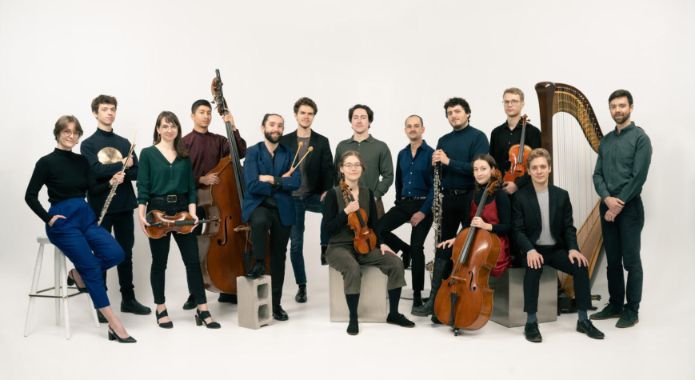
Dans le cadre du 60e anniversaire de la SMCQ, Ensemble Éclat présente six créations mondiales où musique, poésie et lumières se rencontrent pour célébrer la relève montréalaise. Un concert mis en scène avec Geneviève Ackerman sur des textes originaux du poète Frédérik Dufour. Œuvres originales de Olivier St-Pierre, Lily Koslow, Louis-Michel Tougas, Xue Han, Jeffrey Fong et Geneviève Ackerman mettant de l’avant le Quatuor Mémoire et la soprano Elisabeth Boudreault.

As part of the SMCQ’s 60th-anniversary celebrations, Ensemble Éclat presents six world premieres where music, poetry, and light come together to celebrate emerging Montréal talent. A staged concert created in collaboration with Geneviève Ackerman, set to original texts by poet Frédérik Dufour. Original works by Olivier St-Pierre, Lily Koslow, Louis-Michel Tougas, Xue Han, Jeffrey Fong, and Geneviève Ackerman, featuring Quatuor Mémoire and soprano Elisabeth Boudreault.

Programmation

Poème 1 — récitation
Midway to the Moon (2021, 26), 8:00

Xue Han
flûte, clarinette, percussions, piano, violon et violoncelle
Création
Poème 2 — récitation
[titre à déterminer], 12:00
Louis-Michel Tougas
voix, flûte, clarinette, percussions, piano, harpe, violon, violoncelle et basse électrique
Création
Poème 3 — récitation
Ave verum corpus (2026), 8:00
Geneviève Ackerman
percussions, violon, alto, violoncelle et contrebasse
Création
Poème 4 — récitation
everything waiting for midnight (2026), 10:00

Lily Koslow
voix, flûte, hautbois, clarinette, percussions, piano, violon, alto, violoncelle, contrebasse et instrument électronique
Création
Poème 5 — récitation
[titre à déterminer], 10:00

Jeffrey Fong flûte, clarinette, harpe, piano, violon, alto, violoncelle et contrebasse
Création
Poème 6 — récitation
Figurae (2026), 15:00

Olivier St-Pierre
quatuor à cordes, flûte, hautbois, clarinette, percussions, harpe, piano, violon, alto et contrebasse
Création

Program

Poem 1 — recitation
Midway to the Moon (2021, 26), 8:00

Xue Han
flute, clarinet, percussion, piano, violin and cello
Premiere
Poem 2 — recitation
[title to be determined], 12:00

Louis-Michel Tougas
voice, flute, clarinet, percussion, piano, harp, violin, cello and electric bass
Premiere
Poem 3 — recitation
Ave verum corpus (2026), 8:00

Geneviève Ackerman
percussion, violin, viola, cello and double bass
Premiere
Poem 4 — recitation
everything waiting for midnight (2026), 10:00

Lily Koslow
voice, flute, oboe, clarinet, percussion, piano, violin, viola, cello, double bass and electronic instrument
Premiere
Poem 5 — recitation
[title to be determined], 10:00

Jeffrey Fong
flute, clarinet, harp, piano, violin, viola, cello and double bass
Premiere
Poem 6 — recitation
Figurae (2026), 15:00

Olivier St-Pierre
string quartet, flute, oboe, clarinet, percussion, harp, piano, violin, viola and double bass
Premiere

POUR ACHETER VOTRE BILLET, C’EST ICI!

Ce contenu provient de la Société de musique contemporaine du Québec et est adapté par PAN M 360
musique contemporaine

‘’Fougue concertante’’ at the SMCQ: Gen Z at the helm

by Frédéric Cardin

The Fougue concertante (concertante fervour) concert by the Société de musique contemporaine du Québec (SMCQ) presented three concertos of very high musical quality last night, performed by as many soloists from Gen Z. At least it seems to me, at a glance from a man of the age of Gen X. Maybe one or two are actually in the previous category, two or three years over? Well, whatever, it made a good title…

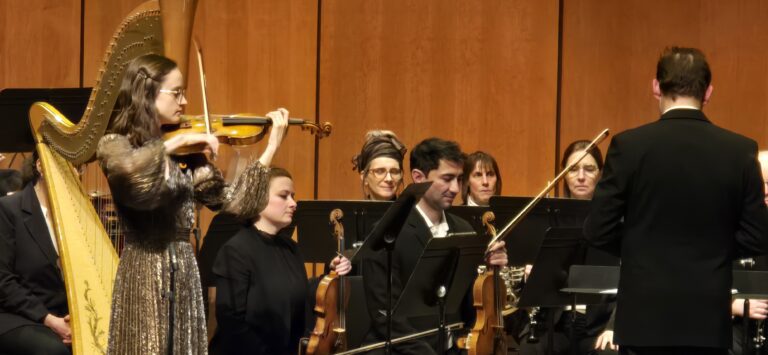
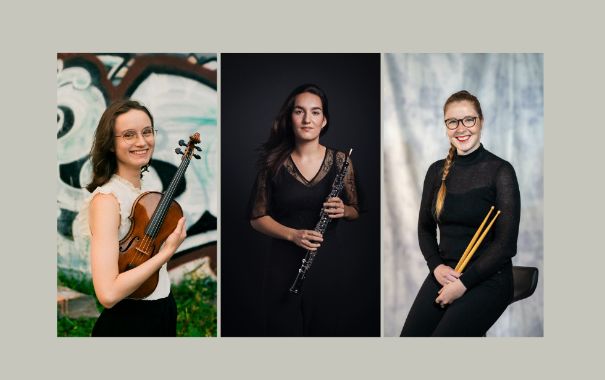
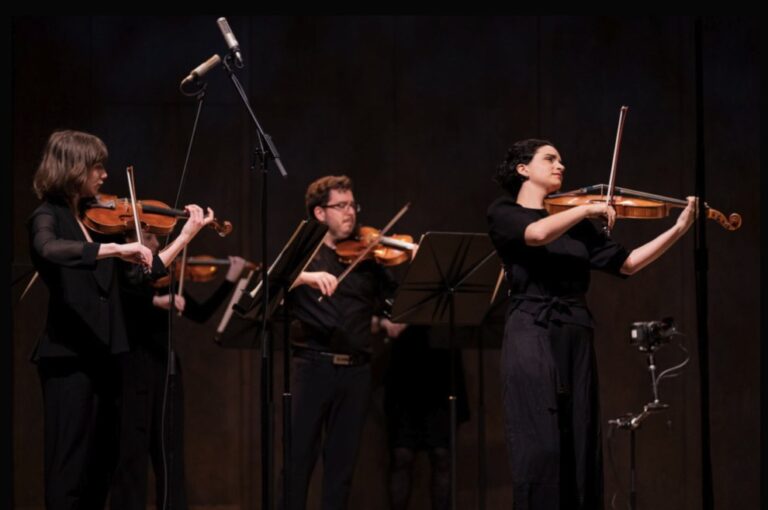
The first of the winter-spring 2026 concerts celebrating the 60th anniversary of today’s honourable institution of contemporary music, Fougue concertante thus provided an opportunity for three young soloists to shine in a recent concerto, Catherine Cherrier on percussion, Élise Poulin on oboe, and Bailey Wantuch on violin.

LISTEN TO THE INTERVIEW WITH SMCQ’S ARTISTIC DIRECTOR ABOUT THE ONGOING CONCERT SERIES (In French)

A very touching tribute

As a prelude to the main program, the SMCQ paid tribute to Margareta Jerić, a young Montreal-based composer of Croatian origin, who passed away at just 43 years old in November 2025.

The Echoes of the Adriatic, a work accompanied by video images of an old Croatian sardine production factory, deals with great vivacity with the opposition between the beautiful and the ugly, nature and industry. It is a playful, pixelated kind of music, where each note feeds the next to create a very seductive whole. The disappearance of this artist who studied with Ana Sokolovic (of Serbian origin) is all the more regrettable because she was in the process of building, with her former teacher, a kind of Balkan connection in contemporary Montreal music.

Musical divertion

In (d)Tourner (a play on words in French meaning to divert), Philippe Leroux evokes circularity. Not necessarily that of an object located and moving, but rather, for example, sounds in the scenic space or the rotation of melodic and rhythmic movements. And, as the title indicates, this round is not conceived as a perpetual refrain, or a repetitive and tonal approach like that of the minimalists, but rather as a movement leading to expansion and transformation in an atonal but beautiful environment. For the listener, this circularity is initially difficult to detect. We are here in an applied conceptual abstraction. But as the twenty-minute piece evolves, the idea takes shape better and better and crosses the space between the stage and the audience. Through a rather dense writing, the sonic “movements” take flesh and consistency. Until the last gestures of the soloist, who must turn on herself while playing the marimba, striking her sticks against each other and ending on the snare drum. Twice. Beyond this physicality imbued with theatricality, and finally giving physical incarnation of the core idea, Catherine Cherrier delivered an impeccable and dynamic performance.

LISEZ L’ENTREVUE D’ALAIN BRUNET AVEC PHILIPPE LEROUX

”Varèse who swings”

Following was a superb discovery for your humble chronicler: the excellent Trame I by Martin Matalon for oboe and ensemble. Made of sound interweavings and inspired by a homonymous poem by Jorge Luis Borges, Matalon’s concerto is a bubble of pleasure of some fifteen minutes where the infinite coloristic possibilities of the oboe and the ensemble offer a real buffet for the ears, in addition to inviting head nodding because the gentleman has an excellent sense of rhythm. “Varèse who swings,” to paraphrase the artistic director of the SMCQ, Simon Bertrand, with whom I was chatting before the concert. Élise Poulin, admirable in her virtuosity and flawless precision in this formidably demanding writing, all with a radiant instrumental sound, offered an impressive reading of this music.

The night’s Grail

The last work on the program, also the most substantial, was Graal Théâtre by the Finnish Kaajia Saariaho, a muscular concerto of about thirty minutes, for violin and orchestra. This entirely acoustic concerto, a rarity for Saariaho, who likes to incorporate electronics into her music, displayed an almost romantic textural and characterful breadth. There are many traits of a grand concerto inherited from the 19th century tradition: lyrical outbursts, athletic double strings, episodes of spectacular virtuosity, etc. All in the lady’s typical shimmering, crystalline language. To say that the young Bailey Wantuch, a Chicago native but firmly established in our metropolis now, was good, would be a gross understatement. The young lady of diminutive stature nonetheless exudes an astonishing and communicative expressive force. An exceptional violinist, certainly. Wantuch is also part of the brand new Quatuor Mémoire, which I recently told you about in a very positive review of their first album Chronos, Kaïros et Aiôn (READ THE REVIEW HERE).

Mentionnons avant de terminer l’apport de très très haute tenue de l’ensemble de la SMCQ sous la direction infaillible de Cristian Gort. Un ensemble presque entièrement renouvelé depuis l’arrivée de ce directeur musical efficace, bien que discret. Impeccable prestation en support à des solistes qui pouvaient se concentrer totalement sur leur jeu sans craindre quoi que ce soit.

The SMCQ has shown us that rumours linking a certain type of “generation” with laziness or negligence are just nonsense, at least in the creative and contemporary art scene. Here, three children associated with ‘Generation Z’ took control of creativity and took us on a pretty good journey with them. Getting back on board as soon as possible, please!

classique / Contemporary

SMCQ : Fougue concertante à la salle Pierre-Mercure

by Rédaction PAN M 360

Suite à un appel de dossiers auprès de jeunes solistes, dans le cadre de sa saison hommage 60e anniversaire, la SMCQ vous convie à une soirée de concertos contemporains, avec les solistes Catherine Cherrier, Élise Poulin et Bailey Wantuch, dans un programme qui vous en mettra plein les yeux, avec des œuvres puissantes et saisissantes de Leroux, Matalon et Saariaho. L’Ensemble de la SMCQ y sera dirigé par son chef attitré Cristian Gort.

Following a call for submissions from young soloists, and as part of its 60th-anniversary tribute season, the SMCQ invites you to an evening of contemporary concertos featuring soloists Catherine Cherrier, Élise Poulin and Bailey Wantuch in a program that will dazzle with powerful, arresting works by Leroux, Matalon, and Saariaho. The Ensemble de la SMCQ will be led by its principal conductor, Cristian Gort.

Programme

(d)Tourner (2016-17), 21:00
Philippe Leroux
percussion solo, flûte, hautbois, clarinette, cor, percussions, piano, 2 violons, alto et violoncelle
Trame I (1997), 15:00
Martín Matalon
hautbois, basson, cor, trompette, percussions et contrebasse
Concerto pour violon Graal Théâtre (1997)
Kaija Saariaho
violon, flûte (piccolo), hautbois, clarinette en si bémol, clarinette basse, basson, 2 cors, trompette, trombone basse, 2 percussions, harpe, piano, 2 violons, alto, violoncelle et contrebasse

Program

(d)Tourner (2016-17), 21:00
Philippe Leroux
solo percussion, flute, oboe, clarinet, horn, percussion, piano, 2 violins, viola and cello
Trame I (1997), 15:00
Martín Matalon
oboe, bassoon, horn, trumpet, percussion and double bass
Concerto pour violon Graal Théâtre (1997)
Kaija Saariaho
violin, flute (piccolo), oboe, B-flat clarinet, bass clarinet, bassoon, 2 horns, trumpet, bass trombone, 2 percussions, harp, piano, 2 violins, alto, cello and double bass

POUR ACHETER VOTRE BILLET, C’EST ICI!

Ce contenu provient de la Société de musique contemporaine du Québec et est adapté par PAN M 360
classique / période romantique

Pro Musica : Maria Ioudenitch, violon & Stanislav Ioudenitch, piano à la salle Pierre-Mercure

by Rédaction PAN M 360

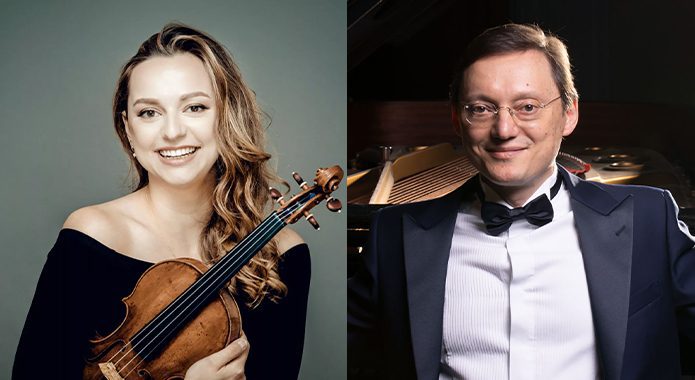
Maria et Stanislav Ioudenitch, père et fille, ont chacun des carrières de soliste de premier plan et se produisent ensemble, en duo. Tous deux mènent une prestigieuse carrière internationale, elle au violon, lui au piano. Nés d’une famille de musiciens, ils nous présentent un programme, qui met en lumière la tradition française, allant du romantisme flamboyant de César Franck à l’impressionnisme lumineux de Ravel, en passant par l’énergie et le lyrisme délicat de Poulenc. La prodigieuse violoniste Maria Ioudenitch a captivé l’attention des mélomanes du monde entier en remportant, en 2021, les premiers prix de trois concours internationaux de violon – Ysaÿe, Tibor Varga et Joseph Joachim, en 2021. Deux ans plus tard, elle remportait le Prix Opus Klassik dans la catégorie « Enregistrement de musique de chambre de l’année » pour son premier album, Songbird, chez Warner Classics. Malgré son jeune âge, elle a fait ses débuts avec le Deutsches Symphonie-Orchester Berlin, le MDR-Sinfonieorchester Leipzig, les Symphoniker de Düsseldorf et de Munich ainsi qu’avec l’Orchestre symphonique de Kansas City, sa ville natale. Elle a collaboré avec des chefs d’orchestre prestigieux tels qu’Andrey Boreyko, Alpesh Chauhan, Kevin John Edusei, Stanislav Kochanovsky, Andrew Manze, Ruth Reinhardt et Hugh Wolff. Stanislav Ioudenitch, grand maître du piano, consacré par de nombreux concours, dont les prestigieux Busoni et Van Cliburn, s’est produit à travers le monde, avec les plus grands orchestres et dans les salles les plus prestigieuses.

Maria Ioudenitch and Stanislav Ioudenitch, daughter and father, each enjoy leading solo careers and also perform together as a duo. Both pursue prestigious international careers : she as a violinist, he as a pianist. Born into a family of musicians, they present a program highlighting the French tradition, ranging from the flamboyant romanticism of César Franck to the luminous impressionism of Maurice Ravel, by way of the energy and delicate lyricism of Francis Poulenc. Violinist Maria Ioudenitch won first prizes in 2021 at the Ysaÿe International Music Competition, the Tibor Varga International Violin Competition, and the Joseph Joachim International Violin Competition. She also received numerous special awards at these competitions, including the Joachim Chamber Music Prize, the Prize for Best Performance of the commissioned work, the Henle Urtext Prize, and a recording contract with Warner Classics . Stanislav Ioudenitch, a grand master of the piano acclaimed through numerous competitions, including the prestigious Ferruccio Busoni International Piano Competition and the Van Cliburn International Piano Competition, has performed throughout the world with leading orchestras and in the most prestigious concert halls.

Programme

MAURICE RAVEL, Sonate pour violon et piano no 2 en sol majeur, M.77
LILI BOULANGER, Nocturne pour violon et piano
NADIA BOULANGER, Soleils couchants
FRANCIS POULENC, Sonate pour violon et piano, FP 119
CÉSAR FRANCK, Sonate pour violon et piano en la majeur

Program

MAURICE RAVEL, Sonata for violin and piano no. 2 in G major, M.77
LILI BOULANGER, Nocturne for violin and piano
NADIA BOULANGER, Soleils couchants
FRANCIS POULENC, Sonata for violin and piano, FP 119
CÉSAR FRANCK, Sonata for violin and piano in A major

POUR ACHETER VOTRE BILLET, C’EST ICI!

Ce contenu provient de Pro Musica et est adapté par PAN M 360

Amérique latine / guitare / hommage

Adam Cicchillitti, guitare / Denis Plante, bandonéon / Jean-Marie Zeitouni, chef | SABORLATINO à la salle Pierre-Mercure

by Rédaction PAN M 360

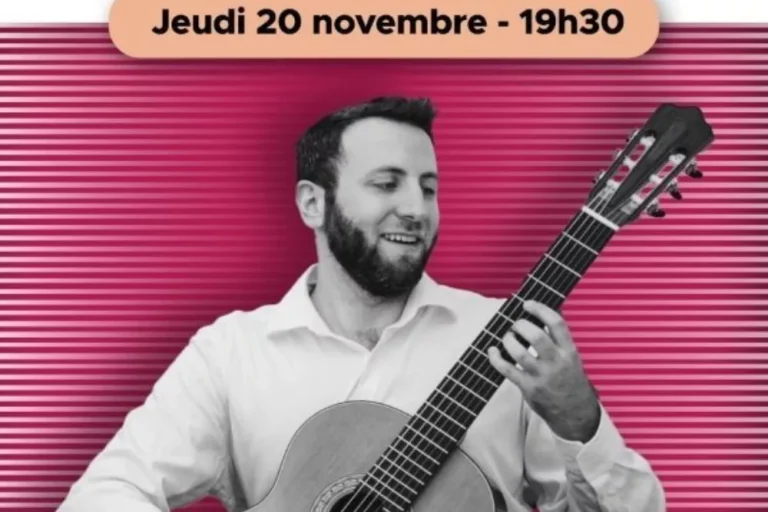
Plongez dans cette soirée vibrante dédiée aux trésors musicaux de l’Amérique latine. Sous la direction de Jean-Marie Zeitouni , ce concert mettra en vedette le guitariste Adam Cicchillitti et le bandonéoniste Denis Plante , dans un programme où le tango et les sonorités hispaniques s’entrelacent avec éclat. Du Concierto del Sur de Ponce aux tangos séducteurs de Piazzolla , en passant par une création du compositeur canadien Luis Ramírez , l’orchestre vous fera découvrir un univers où la passion et la virtuosité ne font qu’un. Un hommage enflammé à l’âme musicale de l’Amérique latine.

Immerse yourself in this vibrant evening dedicated to the musical treasures of Latin America. Under the direction of Jean-Marie Zeitouni, the concert will feature guitarist Adam Cicchillitti and bandoneonist Denis Plante in a dazzling program where tango and Hispanic sonorities intertwine with brilliance. From Ponce’s Concierto del Sur to Piazzolla’s seductive tangos, and including a new work by Canadian composer Luis Ramírez, the orchestra will transport you into a world where passion and virtuosity become one. A fiery tribute to the musical soul of Latin America.

POUR ACHETER VOTRE BILLET, C’EST ICI!

Ce contenu provient du Quartier des spectacles et est adapté par PAN M 360

classique / période romantique

Kornel Wolak, clarinette / KarolinePodolak, soprano / Jean-Philippe Sylvestre, piano / Andrei Feher, chef | DE CHOPIN À WEINBERG : SOIRÉE CLASSIQUE À LA POLONAISE à la salle Pierre-Mercure

by Rédaction PAN M 360

Plongez dans un voyage musical entre les rives de la Pologne et des sonorités classiques riches et variées. La Symphonie de chambre de Mieczysław Weinberg , aux influences polonaises, ouvrira la soirée, suivie de l’œuvre Histoire de pêche du compositeur québécois Maxime Goulet , explorant la beauté des cordes et de la clarinette solo avec le clarinettiste canado-polonais Kornel Wolak . La voix poétique de la soprano résonnera avec Dumka Zuzi de Stanisław Moniuszko , un air émouvant extrait de l’opéra Verbum Nobile , et l’air Sempre Libera de Verdi , extrait de La Traviata chanté par la soprano canada-polonaise Karoline Podolak . Le programme présentera aussi la Mazurka en si bémol majeur , le Nocturne en do mineur et le célèbre Concerto pour piano no. 2 de Chopin . Une soirée à ne pas manquer, sous la direction d’ Andrei Feher .

Embark on a musical journey between the shores of Poland and the rich, diverse colors of the classical repertoire. The evening opens with Mieczysław Weinberg’s Chamber Symphony, infused with Polish influences, followed by Fishing Story by Quebec composer Maxime Goulet, showcasing the beauty of strings and solo clarinet, performed by Canadian-Polish clarinetist Kornel Wolak.
The poetic voice of the soprano will resonate with Dumka Zuzi by Stanisław Moniuszko, a moving aria from the opera Verbum Nobile, as well as Verdi’s famous Sempre libera from La Traviata, sung by Canadian-Polish soprano Karoline Podolak. The program also features Chopin’s Mazurka in B-flat major, Nocturne in C minor, and his celebrated Piano Concerto No. 2.
An evening not to be missed, under the direction of Andrei Feher.

POUR ACHETER VOTRE BILLET, C’EST ICI!

Ce contenu provient du Quartier des spectacles et est adapté par PAN M 360

classique / Modern Classical

Pro Musica : Sergey et Lusine Khachatryan à la salle Pierre-Mercure

by Rédaction PAN M 360

L’exceptionnel violoniste Sergey Khachatryan possède une « sonorité à la fois chaleureuse et intensément pensive… La liberté et la rigueur y cohabitent » (Classique News).
“…She is a superb pianist, with a big sound and fiery technique …” (New York Times)
Sergey et Lusine Khachatryan, frère et sœur, ont chacun des carrières de soliste de premier plan et se produisent ensemble, en duo. Tous deux mènent une prestigieuse carrière internationale, lui au violon, elle au piano. Nés d’une famille de musiciens et originaires d’Arménie, ils nous font découvrir cette partie du monde, notamment en mettant à l’honneur Arno Babajanian, un compositeur et pianiste d’excellence, qui tout comme eux, est natif de Erevan.
Sergey Khachatryan a remporté le Premier Prix du VIIIe Concours international Jean Sibelius à Helsinki en 2000, devenant ainsi le plus jeune lauréat de l’histoire du concours. Et en 2005, il gagnait le Grand Prix du Concours Reine Elisabeth à Bruxelles.
Lusine Khachatryan, considérée comme une « poète du piano » s’est produite sur les plus grandes scènes internationales en Europe, au Japon et aux Etats-Unis . Elle est lauréate du Concours International de Piano à « Città di Ostra» (Italie 2023).

The exceptional violinist Sergey Khachatryan possesses a “sound that is both warm and intensely thoughtful… Freedom and rigor coexist” (Classique News).
“…She is a superb pianist, with a big sound and fiery technique…” (New York Times)
Sergey and Lusine Khachatryan, brother and sister, each have prominent solo careers and perform together as a duo. Both lead prestigious international careers, with him on the violin and her on the piano. Born into a family of musicians in Armenia, they introduce us to this part of the world, particularly by highlighting Arno Babajanian, an outstanding composer and pianist who, like them, hails from Yerevan.
Sergey Khachatryan won the First Prize at the 8th Jean Sibelius International Competition in Helsinki in 2000, becoming the youngest laureate in the history of the competition. In 2005, he won the Grand Prix at the Queen Elisabeth Competition in Brussels.
Lusine Khachatryan, considered a “poet of the piano,” has performed on the world’s greatest stages in Europe, Japan, and the United States. She is the winner of the 2023 International Piano Competition in Città di Ostra (Italy).

Programme

Saison Prodige – Duo Sergey Khachatryan, violon et Lusine Khachatryan, piano
LUDWIG VAN BEETHOVEN, Sonate pour violon et piano No. 1 en ré majeur, op.12
LUDWIG VAN BEETHOVEN, Sonate pour violon et piano No. 4 en la mineur, op.23
-ENTRACTE-
CLAUDE DEBUSSY, Sonate pour violon et piano en sol mineur
ARNO BABADJANIAN, Sonate pour violon et piano en si bémol mineur

Program

Prodigy Season – Duo Sergey Khachatryan, violin and Lusine Khachatryan, piano
LUDWIG VAN BEETHOVEN, Sonata for Violin and Piano No. 1 in D Major, Op. 12
LUDWIG VAN BEETHOVEN, Sonata for Violin and Piano No. 4 in A minor, Op. 23
INTERMISSION
CLAUDE DEBUSSY, Sonata for Violin and Piano in G minor
ARNO BABADJANIAN, Sonata for Violin and Piano in B-flat minor

POUR ACHETER VOTRE BILLET, C’EST ICI!

Ce contenu provient de Pro Musica et est adapté par PAN M 360

Subscribe to our newsletter

Inscription
Infolettre

"*" indicates required fields

Type of Suscribers