Contemporary / danse

Benevolent sisterhood of Les Veilleuses (the Watchers) at Bourgie Hall

by Frédéric Cardin

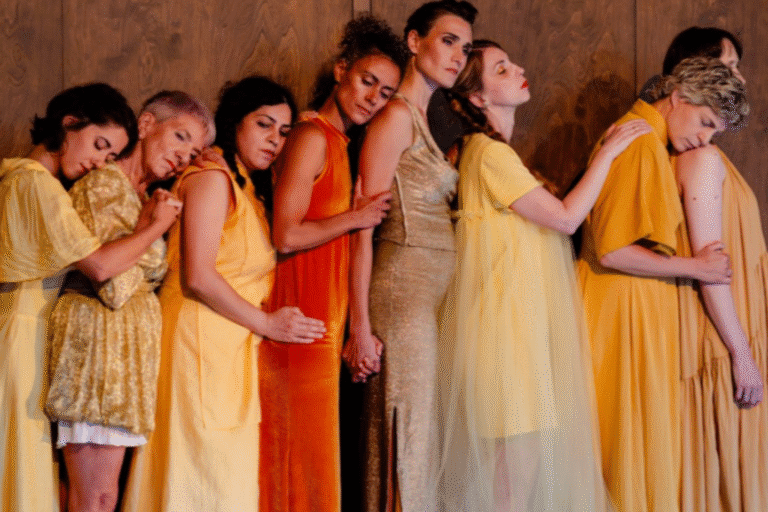
Nine women on stage, in a kind of grand theatrical gesture where all facets of a rich and complex sisterhood are evoked. From (mostly) benevolence to abandonment, from exclusion to reconciliation.

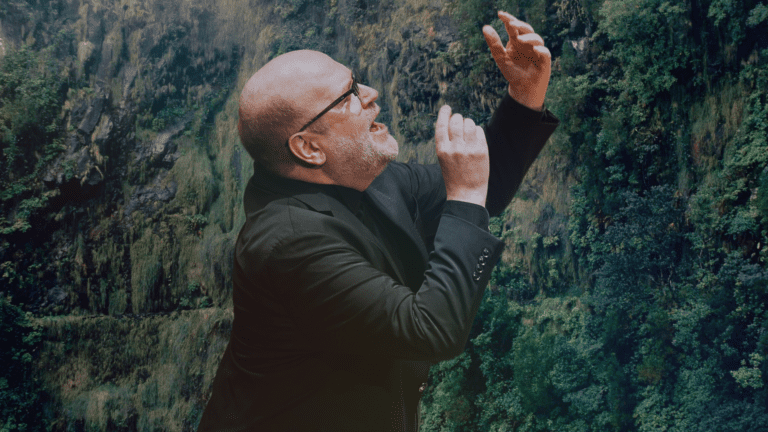
Les Veilleuses (The Watchers), by Simon Renaud (choreography and conception) and Romain Camiolo (music), thus rose on Wednesday evening at the Bourgie Hall of the Montreal Museum of Fine Arts. A rare incursion of the classical music hall into the world of dance (the first? I can’t confirm it…), but a very nice success. It must be said that the Veilleuses show is as much choreographic as it is musical. Six of the nine performers are singers in real life: Marie-Annick Béliveau, Salomé Karam, Kathy Kennedy, Elizabeth Lima, Hélène Picard and Ellen Wieser. They teamed up with professional dancers Marie-Hélène Bellavance, Nasim Lootij and Ingrid Vallus.

Of course, the dancers were not asked to sing fully, nor the singers to perform too acrobatic contortions, but the staging clearly aimed to integrate all the participants into a single community, that of these women of various sizes and builds, though not too heterogeneous. In a rather abstractly suggestive way, these women went through the hour-ish of the show to express different states of mind and above all the means to face them together, sometimes disunited, or to share them among all.

The play unfolds at a slow and measured pace. These women move in a world of mutual feeling that takes the time to express itself and be welcomed. It is the music that serves as a powerful bond for the psycho-emotional whole of the performance, supporting the visual coherence of the costumes, which are dresses of different chromatic hues related to yellow-orange-brown-ochre. The said music, all vocal (except for a pre-recorded electro drone acting as a harmonic cushion) and essentially tonal, is of course performed by the group’s singers, who act both as the emotional embodiment of each individual unit but also as a coalescence of the group relationship. Camiolo’s score is beautiful and seems to progress, at least that’s the impression I got, according to a historical chronological evolution.

At the very beginning, the voices take on a collective appearance of a Greek chorus, in a modal-type expression that subtly evokes something very ancient, perhaps archaic. Further on, one hears something like a mediaeval air. Further on, it gets closer to folk or popular song. But these are brief moments, emerging from a more ample and sustained framework of long melodic lines that would not displease several current composers working in neo-mystical choral music. On a few occasions, the harmonies tighten, until they reach saturation and a rough screech. It is in these moments, as the composer pointed out in the interview I conducted with him and the choreographer about the show (INTERVIEW TO LISTEN TO HERE), that the women of this symbolist sorority seem to drift away from each other and dissolve their bonds. The tactic is simple, but effective.

Ultimately, Les Veilleuses is a fairly accurate and poetic look at the strength, but also the perils, of a female community that has, for millennia now, had to stand together in the face of adversity and hold hands in bright episodes.

Les Veilleuses is a beautiful and complete show, complex but not hermetic, and above all perfectly suited to a wide range of engagements: in dance festivals as well as music or transdisciplinary proposals. A perfectly adequate launch for the Bourgie Hall’s Arts croisés (Crossed arts) series.

Les Veilleuses is a coproduction between Amour Amour, Salle Bourgie, Chants Libres and Corpuscule Danse
Baroque / classique / musique de film

Les Violons du Roy : Les Violons à Rome, de Corelli à Nino Rota à la salle Bourgie

by Rédaction PAN M 360

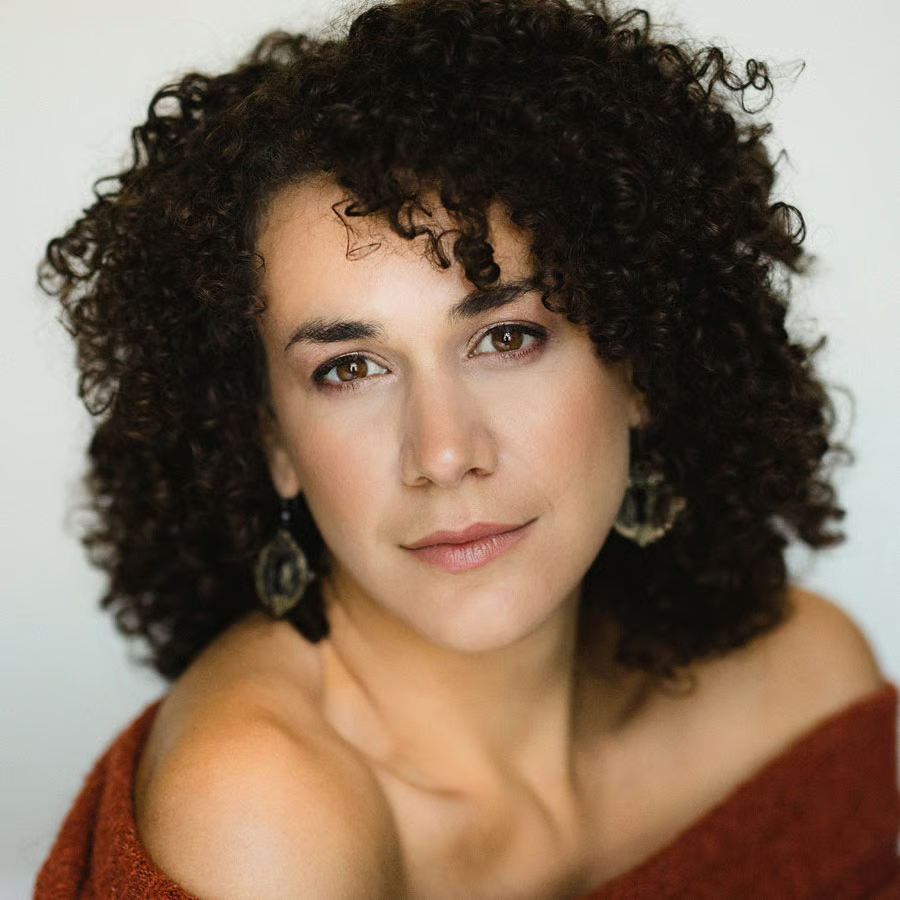
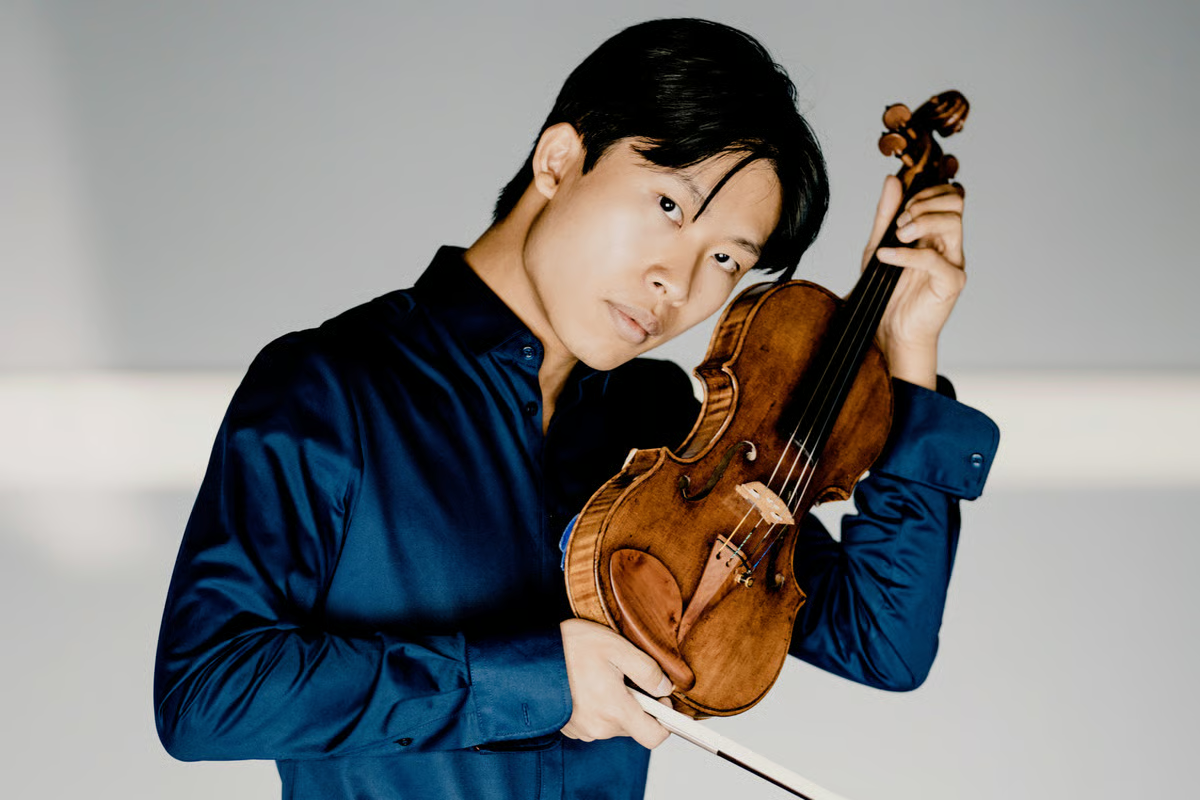
Corelli y a forgé le concerto grosso, Respighi en a célébré la beauté et Nino Rota y a signé d’innombrables musiques de films. Pour Handel, Rome a eu une importance déterminante alors qu’il était jeune compositeur, même si son opéra consacré au plus célèbre empereur romain a été composé à Londres. Un concert hommage à la Ville éternelle qui sera l’occasion des débuts de la contralto Rose Naggar-Tremblay et du jeune chef Kyrian Friedenberg avec Les Violons du Roy.

Rome is where Corelli developed the concerto grosso, where Respighi was inspired while celebrating its beauty, and where Nino Rota composed countless film scores. For Handel, Rome played a decisive role during his early career, even though his opera about the most famous Roman emperor was composed in London. This tribute to the Eternal City will mark the debut of contralto Rose Naggar-Tremblay and young conductor Kyrian Friedenberg with Les Violons du Roy.

Programme

A. CORELLI
Concerto grosso en fa majeur, op. 6 n° 6
G.F. HANDEL
Extraits de Giulio Cesare in Egitto, HWV 17
O. RESPIGHI
Il tramonto pour voix et cordes
N. ROTA
Concerto pour cordes

Program

A. CORELLI
Concerto grosso in F Major, Op. 6 No. 6
G.F. HANDEL
Excerpts from Giulio Cesare in Egitto, HWV 17
O. RESPIGHI
Il tramonto for voice and strings
N. ROTA
Concerto for strings

POUR ACHETER VOTRE BILLET, C’EST ICI!

Ce contenu provient des Violons du Roy et est adapté par PAN M 360

classique / Création / post-romantique

Les Violons du Roy : Beautés des Amériques à la salle Bourgie

by Rédaction PAN M 360

Le célébrissime quatuor de Dvořák prendra ici une dimension épique en version pour orchestre à cordes alors que Kerson Leong et Les Violons du Roy unissent de nouveau leur talent et leur fougue dans une complicité qui ne se dément pas. Ils promettent une rencontre électrisante à l’occasion d’une nouvelle œuvre de François Dompierre.

Dvořák’s renowned quartet takes on a more expansive scope in this arrangement for string orchestra, as Kerson Leong and Les Violons du Roy once again combine their talent and energy in a collaboration that remains as strong as ever. They promise an electrifying encounter on the occasion of a new work by François Dompierre.

Programme

H. VILLA-LOBOS
Bachianas brasileiras n° 9
F. DOMPIERRE
Concerto pour violon (création)
J. MONTGOMERY
Strum pour orchestre à cordes
A. DVOŘÁK
Quatuor n° 12 en fa majeur, op. 96 « Américain » (version pour orch. à cordes)

Program

H. VILLA-LOBOS
Bachianas brasileiras No. 9
F. DOMPIERRE
Concerto for violin (creation)
J. MONTGOMERY
Strum for String Orchestra
A. DVOŘÁK
String Quartet No. 12 in F Major, Op. 96 “American” (version for string orchestra)

POUR ACHETER VOTRE BILLET, C’EST ICI!

Ce contenu provient des Violons du Roy et est adapté par PAN M 360

classique / Création / post-romantique

Les Violons du Roy : Souvenir de Florence à la salle Bourgie

by Rédaction PAN M 360

L’une des pages les plus personnelles de Tchaïkovski donne son titre à ce concert qui promet un voyage dépaysant et sensible, aux trajectoires à la fois géographiques et à celles, plus intimes, de la mémoire et des impressions profondes. Le périple comprendra une escale proposée par la compositrice Barbara Assiginaak à l’intention de la flûtiste Ariane Brisson qui en assurera la création.

One of Tchaikovsky’s most personal works lends its name to this concert, promising a transporting and deeply felt journey that spans both geographical routes and more intimate paths of memory and profound impressions. Our voyage also includes a new piece by composer Barbara Assiginaak, written for flutist Ariane Brisson, who will be performing its premiere.

Programme

M. MOZETICH
Postcards from the Sky
B. ASSIGINAAK
Œuvre pour flûte et cordes (création)
G. FAURÉ
Fantaisie, op. 79 (arr. pour flûte et cordes Y. Talmi)
P.I. TCHAÏKOVSKI
Souvenir de Florence, op. 70 (version pour orch. à cordes)

Program

M. MOZETICH
Postcards from the Sky
B. ASSIGINAAK
Piece for flute and strings (premiere)
G. FAURÉ
Fantaisie, op. 79 (arr. for flute and strings Y. Talmi)
P.I. TCHAÏKOVSKI
Souvenir de Florence, op. 70 (version for string orchestra)

POUR ACHETER VOTRE BILLET, C’EST ICI!

Ce contenu provient des Violons du Roy et est adapté par PAN M 360

Baroque / classique

Arion Orchestre Baroque : Les larmes de Marie à la salle Bourgie

by Rédaction PAN M 360

L’on vous promet autant de larmes de bonheur que de tristesse, et parfois les deux à la fois, lors de ce programme qui a comme point focal le nom Marie. Marie comme la mère du Christ au pied de la croix dans l’émouvante cantate Il pianto di Maria de Giuseppe Battista Ferrandini. Mais aussi comme dans le prénom de trois compositrices d’exception du XVIIIe siècle qui ont laissé leur marque à l’opéra – Grimani, Walpurgis et Agnesi – cette dernière nous offrant également un concerto pour clavecin. Pour ce programme Arion accueille la contralto Anthea Pichanick qui vous ravira assurément, et la cheffe et claveciniste Marie van Rhijn, à la carrière florissante, que nous accueillons toutes les deux pour la première fois à Montréal.

You are promised as many tears of joy as of sorrow, and sometimes both at once, in this program centered around the name Marie. Marie, as in the Mother of Christ at the foot of the cross in Giuseppe Battista Ferrandini’s moving cantata Il pianto di Maria. But also Marie as in the first name of three exceptional 18th-century women composers who left their mark on opera – Grimani, Walpurgis, and Agnesi – the latter also offering us a harpsichord concerto. For this program, Arion welcomes contralto Anthea Pichanick, who is sure to delight you, and conductor and harpsichordist Marie van Rhijn, whose flourishing career brings her to Montréal for the first time, along with Pichanick.

Programme/program

Œuvres de/works by Maria Teresa Agnesi, Giovanni Battista Ferrandini, Maria Margherita Grimani, Antonio Vivaldi et Maria Antonia Walpurgis

POUR ACHETER VOTRE BILLET, C’EST ICI!

Ce contenu provient de l’Arion Orchestre Baroque et est adapté par PAN M 360

Baroque / classique

Arion Orchestre Baroque : Le Roi danse à la salle Bourgie

by Rédaction PAN M 360

À l’occasion du 300e anniversaire de la mort de Michel-Richard de Lalande, Arion renouvelle sa collaboration fructueuse avec le Centre de musique baroque de Versailles en présentant deux œuvres rares autant que magnifiques du grand compositeur français. L’on découvrira les beautés et splendeurs de la pastorale L’amour fléchi par la constance, créée en 1697, et des extraits du Ballet de la jeunesse, présenté à Versailles pendant le Carnaval en janvier 1686. Interprétées ici avec le concours de quatre voix lyriques exceptionnelles sous la direction de Mathieu Lussier, ces œuvres se démarquent autant par la grâce des lignes vocales que par la richesse des couleurs orchestrales.

On the occasion of the 300th anniversary of Michel-Richard de Lalande’s death, Arion renews its fruitful collaboration with the Centre de musique baroque de Versailles by presenting two rare yet magnificent works by the great French composer. Audiences will discover the beauty and splendor of the pastorale L’amour fléchi par la constance, premiered in 1697, along with excerpts from the Ballet de la jeunesse, performed at Versailles during Carnival in January 1686. Brought to life here with the participation of four exceptional vocal soloists under the direction of Mathieu Lussier, these works stand out as much for the grace of their vocal lines as for the richness of their orchestral colors.

Programme/program

Michel-Richard de Lalande (1657-1726)
L’amour fléchi par la constance, S. 143
Ballet de la jeunesse, S. 136

POUR ACHETER VOTRE BILLET, C’EST ICI!

Ce contenu provient de l’Arion Orchestre Baroque et est adapté par PAN M 360

Classical Period / classique

Arion Orchestre Baroque : « Les Adieux » à la salle Bourgie

by Rédaction PAN M 360

Lumineuse tout autant que virtuose, la violoniste franco-arménienne Chouchane Siranossian, adepte de l’alpinisme, nous fera gravir les degrés du bonheur afin de faire goûter deux œuvres symphoniques contrastées et une rareté du répertoire concertant pour violon. D’un Mozart âgé de 9 ans l’on entendra une symphonie, présage de son génie, écrite lors de l’étape aux Pays-Bas de son Grand Tour européen avec son père et sa sœur. Puis de son aîné et futur ami Haydn, la toujours étonnante Symphonie « Les adieux », d’un artiste au sommet de son art d’où il ne redescendra jamais, qui y passe un message peu subtil à son patron le prince Esterházy sur le congé auquel aspirent les musiciens de son orchestre. Entre ces deux œuvres, un brillant concerto pour violon sera l’occasion de découvrir le violoniste et compositeur allemand Andreas Romberg, admirateur de Mozart comme de Haydn et qui côtoya Beethoven.

Radiant as well as virtuosic, the French-Armenian violinist Chouchane Siranossian, an avid mountaineer, will lead us up the slopes of happiness through two contrasting symphonic works and a rarely heard concerto from the violin repertoire.
From a nine-year-old Mozart we will hear a symphony foreshadowing his genius, written during the Dutch stopover of his European Grand Tour with his father and sister. Then comes the ever-surprising “Farewell” Symphony by his elder and future friend Haydn, a masterwork from an artist at the height of his powers, never to descend again, in which he delivers a none-too-subtle message to his patron Prince Esterházy about the leave so earnestly desired by his orchestra’s musicians.
Between these two works, a brilliant violin concerto will offer the chance to discover the German violinist and composer Andreas Romberg, an admirer of both Mozart and Haydn, and a contemporary who once crossed paths with Beethoven.

Programme

Wolfgang Amadeus Mozart (1756-1791)
Symphonie n° 5 en si b majeur, K. 22
Andreas Romberg (1767-1821)
Concerto pour violon n° 7 en la majeur, SteR 47
Franz Joseph Haydn (1732-1809)
Symphonie n° 45 en fa # mineur (« les Adieux ») Hob. I: 45

Program

Wolfgang Amadeus Mozart (1756–1791)
Symphony No. 5 in B-flat major, K. 22
Andreas Romberg (1767–1821)
Violin Concerto No. 7 in A major, SteR 47
Franz Joseph Haydn (1732–1809)
Symphony No. 45 in F-sharp minor “Farewell” Hob. I:45

POUR ACHETER VOTRE BILLET, C’EST ICI!

Ce contenu provient de l’Arion Orchestre Baroque et est adapté par PAN M 360

Classical

Montreal Chamber Music Festival | But it was a nice concert…

by Frédéric Cardin

The next-to-last concert of the Montreal Chamber Music Festival, last Saturday, marked two days associated with June 21: the 40th anniversary of the Ordre national du Québec and National Aboriginal Peoples’ Day. After a blessing by spiritual leader Kevin Deer, the “official” theme of the Order, a neo-romantic miniature composed by Steve Barakatt, was played by a string quartet, followed by a number of arias sung by Elisabeth St-Gelais, in exquisite form. Two melodies by Métis-born composer Ian Cusson, bathed in post-French melodie writing, were logically followed by two (melodically superior) examples by Cécile Chaminade, Villanelle and Infini, which the Innu soprano recorded on her album released last year (a gem, which you can READ THE REVIEW of here). A short but lovely piece for violin and piano by Andrew Balfour followed (Karakett Nitotem), before moving on to the evening’s “classical” repertoire: Debussy’s Sonata for violin and piano in G minor, L. 140 and Dvorak’s Serenade for strings. Mohawk violinist Tara-Louise Montour gave a distinctive performance of Debussy, and the Festival strings played Dvorak with élan.

It was a lovely concert, even if the coherence of the program left one dubious. Your humble servant had the impression that the “native” had been artificially “glued on”, as if to check the item off a “to-do list”. But above all, this concert was bathed in a feeling of infinite sadness, as the Bourgie Hall audience was famishing, and I weigh the word. About 50 people were there (and how many of them had received free tickets?). Bourgie can accommodate 450. That’s 10% of the hall. 10%. I asked around: the 2025 season was “difficult”, attendance-wise. Not as bad as this 10%, which was the worst performance, but averaging around 50%, which is disappointing. The following day’s final concert at the Maison symphonique did better, with violinist Kerson Leong exerting his strong pull, of course, but in a special, reduced gauge (audience on stage and in the back bleachers).

What’s happening with the Montreal Chamber Music Festival? Marketing? Event branding? Personality? Programming? Compared with the Montreal Baroque Festival, which took place (and ended, as it was much shorter) on the same weekend, the difference is striking: the latter gives an impression of dynamism, youth and community involvement. Several concerts are sold out (albeit in smaller venues), and most are filled to appreciable levels (READ MY REVIEWS OF TWO MONTREAL BAROQUE FEST CONCERTS HERE and HERE). One has energy, the other seems out of fuel.

In short, it’s time to think about the future of the Chamber Music Festival. A city like Montreal can’t afford not to have a large-scale, unifying chamber music event – it would be a disgrace. But right now, we’re wondering how long it can last like this.

Baroque / Classical Period

Violons du Roy at Bourgie: symphonic excitement from Old France

by Frédéric Cardin

Les Violons du Roy closed the 24-25 season at Salle Bourgie last night with a program of musical bubbles worthy of Mme Cliquot. The symphony “à la française” was in the spotlight. Mind you, not Franck’s or Ravel’s, but rather the first symphony, that of the origins. We’re talking here about Gossec and Rameau, as well as a certain Duport whom most music lovers, even those in the know, have never heard.

Under the direction and thematic construction of Nicolas Ellis, the program kicked off with a sparkling symphony by François-Joseph Gossec (1734-1829), a composer still much underestimated today. And yet, this little three-movement work, one of the 49 or so he composed, has much to seduce and delight: dashing melodies, an orchestration of exciting contrasts and cheerful rhythms make it a highly recommended listening pleasure for anyone with a passion for the vivacity of a Mozart or Haydn.

This was followed by a Cello Concerto, No. 6 in D minor, by Jean-Louis Duport (1749-1819), apparently a great virtuoso of the instrument in question. There’s no doubt about it, given the formidable nature of this score, and I weigh my words carefully. When you consider that even such a luminary as Raphaël Pidoux, a member of the Wanderer Trio (which is no mean feat), is not always able to emerge unscathed from the technical pitfalls imposed by Duport, it’s clear that this work represents a formidable challenge. That said, Pidoux has injected a dose of elegance and lyricism (very lyrical central andante cantabile) that is utterly seductive, and has been well received by the public, and rightly so. Here’s a work that deserves to attract the most seasoned of today’s soloists: there’s plenty to do!

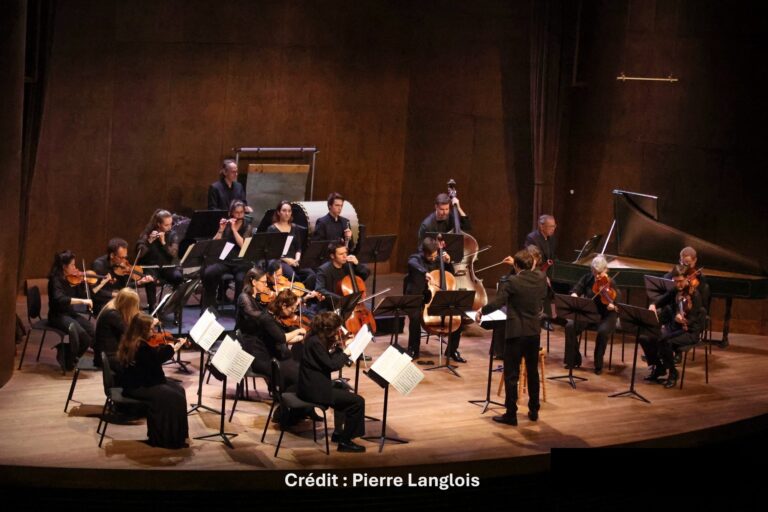
Raphaël Pidoux et Les Violons du Roy – crédit : Pierre Langlois

The final part of the concert featured Jean-Philippe Rameau’s (1683-1764) “cosmic symphony”. The what? No, Rameau didn’t really write a “cosmic symphony”. In fact, it was a construction by conductor Nicolas Ellis, who drew on Rameau’s repertoire of operas and ballets to concoct a vast fresco in four movements evoking the creation of the world, the seasons, the earth, the wind, storms and even time. A fifth movement, a return to the interstellar, depicted the explosion of a supernova and featured a piece by Jean-Féry Rebel (1666-1741), Chaos, taken from his Élémens.

Ellis’s architecture works very well: the contrasts between the pieces create a narrative line that refuses to bore, and makes judicious use of some of the composer’s well-known tunes.

What impressed most – and this will come as no surprise – was the striking limpidity and surgical technicality of Les Violons du Roy. What a pleasure to hear this quality of playing, these abrupt contrasts perfectly achieved, these flights of tenderness chaining together piquant shears, and this perfect rapport with the discourse of the scores. Nicolas Ellis conducts with infectious freshness.

A very successful season finale.

Baroque / classique

Les Violons du Roy : Deux siècles en France avec Nicolas Ellis

by Rédaction PAN M 360

Pour conclure la saison, le premier chef invité des Violons du Roy Nicolas Ellis dirige un programme de musique française, avec des œuvres composées avant ou juste après la Révolution française, comprenant une grande suite orchestrale de Rameau, une superbe symphonie de Gossec et un concerto pour violoncelle de Duport, véritable trésor oublié dont Raphaël Pidoux, dans ses débuts avec l’orchestre, en fera découvrir toute la richesse.

To round off the season, Les Violons du Roy Principal Guest Conductor Nicolas Ellis leads a programme of French music, with works composed before or just after the French Revolution, including a magnificent orchestral suite by Rameau, a superb symphony by Gossec and a cello concerto by Duport, a forgotten treasure which Raphaël Pidoux reveals in all its richness in his first performance with the orchestra.

Programme

F.J. GOSSEC
Symphonie en ré majeur, op.3 n°6
J.-L. DUPORT
Concerto pour violoncelle n°6 en ré mineur
J.-P. RAMEAU
Suite pour orchestre extraite d’opéras

Program

F.J. GOSSEC
Symphony in D Major, Op.3 No.6
J.-L. DUPORT
Cello Concerto No.6 in D Minor
J.-P. RAMEAU
Suite for orchestra from operas

POUR ACHETER VOTRE BILLET, C’EST ICI!

Ce contenu provient des Violons du Roy et est adapté par PAN M 360

Baroque / classique

Les Violons du Roy : Chaconnes et passacailles avec Bernard Labadie

by Rédaction PAN M 360

Bernard Labadie propose un brillant programme de musique italienne, française et anglaise, mettant en lumière ses propres arrangements de deux chefs-d’œuvre baroques réalisés spécialement pour Les Violons du Roy : la monumentale Passacaille et fugue en do mineur de Bach et la poignante Chaconne en fa mineur de Pachelbel.

Bernard Labadie offers a brilliant programme of Italian, French and English music featuring his own arrangements of two Baroque masterpieces especially made for Les Violons du Roy: Bach’s monumental Passacaglia and Fugue in C minor and Pachelbel’s poignant Chaconne in E minor.

Programme

H. PURCELL
Chaconne en sol mineur, Z.730
J.-B. LULLY
Chaconne (Phaëton)
J.S. BACH
Passacaille et fugue en do mineur, BWV582 (arr. B. Labadie)
J. PACHELBEL
Chaconne en mi mineur (arr. B. Labadie)
F. GEMINIANI
Concerto grosso n°12 La Follia (d’après Corelli)

Program

H. PURCELL
Chaconne in G Minor, Z.730
J.-B. LULLY
Chaconne (Phaëton)
J.S. BACH
Passacaglia and Fugue in C Minor, BWV582 (arr. B. Labadie)
J. PACHELBEL
Chaconne in E Minor (arr. B. Labadie)
F. GEMINIANI
Concerto grosso No.12 La Follia (after Corelli)

POUR ACHETER VOTRE BILLET, C’EST ICI!

Ce contenu provient des Violons du Roy et est adapté par PAN M 360

Classical Singing / classique

Concours musical international de Montréal : Première épreuve du CMIM | Étape 2 – Mélodie

by Rédaction PAN M 360

Dans cette étape libre de 15 minutes de musique, les 24 concurrents internationaux doivent chanter au moins un lied allemand et une mélodie française.
Au terme des trois séances, cinq finalistes passeront à la finale de cette étape, déterminé par le jury.
Vivez une aventure musicale inoubliable aux côtés de chanteurs et chanteuses d’exception!

In a 15-minute program, the 24 international competitors must perform at least one German lied and one French mélodie, alongside to other works from the sublime Art Song repertoire.
At the end of the three sessions, five finalists will get to the final round of this stage, as determined by the jury.
Enjoy an unforgettable musical and emotional experience in the company of exceptional singers.

POUR ACHETER VOTRE BILLET, C’EST ICI! (28 MAI, À 13H30)

POUR ACHETER VOTRE BILLET, C’EST ICI! (29 MAI, À 13H30)

POUR ACHETER VOTRE BILLET, C’EST ICI! (29 MAI, À 19H30)

Ce contenu provient de Place des Arts et est adapté par PAN M 360

Subscribe to our newsletter