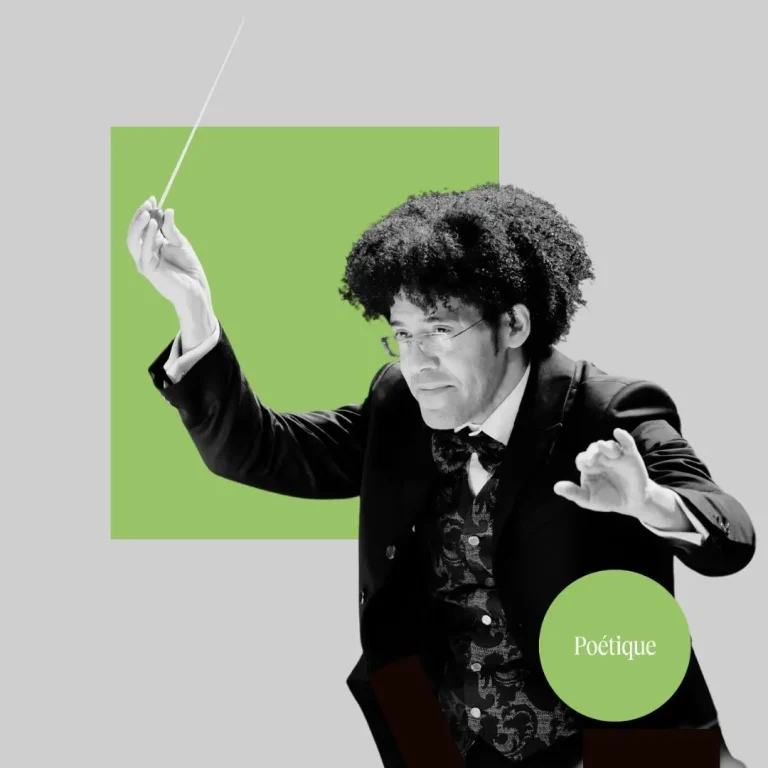
Depuis la sortie du film Harry Potter à l’école des sorciers, il y a 25 ans, l’engouement pour la célèbre série fantastique et ses personnages de Poudlard n’a cessé de croître. Redécouvrez les mélodies légendaires de ces films emblématiques, composées par John Williams. Que vous soyez Serpentard, Gryffondor, Poufsouffle ou Serdaigle, revêtez les couleurs de votre maison et venez vivre cette aventure en famille!
Since the release of the film Harry Potter and the Sorcerer’s Stone 25 years ago, the beloved fantasy series and its Hogwarts characters have continued to captivate audiences. Relive the unforgettable melodies from these iconic films, composed by John Williams. Whether you belong to Slytherin, Gryffindor, Hufflepuff, or Ravenclaw, don your house colours and bring the entire family for this magical adventure!
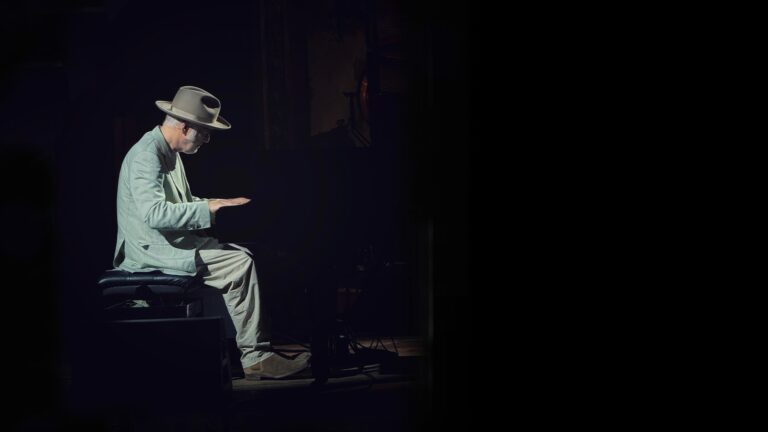
Lauréat du Concours OSM en 2022 et du Concours international de piano de Leeds, le Canadien Jaeden Izik-Dzurko amorce une brillante carrière pianistique. Venez l’écouter dans ce concert au format réduit animé par Philippe-Audrey Larrue-St-Jacques, dans le Concerto de Grieg : une œuvre qui séduit par son irrésistible mélange de lyrisme et de vigueur. Laissez-vous ensuite charmer par la féérie de L’Oiseau de feu, dont les somptueuses couleurs orchestrales créent un véritable enchantement sonore.
Canadian pianist Jaeden Izik-Dzurko, who launched a stellar career after winning the 2022 OSM Competition and the Leeds International Piano Competition, takes the stage in this intimate concert hosted by Philippe-Audrey Larrue-St-Jacques. Hear him perform Grieg’s Piano Concerto, a piece known for its captivating mix of lyricism and vigour. Then, allow yourself to be swept away by the enchanting beauty of The Firebird, where lush orchestral colours paint a mesmerizing sonic landscape.
Programme
Edvard Grieg, Concerto pour piano, op. 16 (30 min) Igor Stravinsky, L’Oiseau de feu, Suite pour orchestre (1919) (23 min)
Program
Edvard Grieg, Concerto for Piano, Op. 16 (30 min) Igor Stravinsky, The Firebird, Suite for Orchestra (1919) (23 min)
Le chef émérite de l’OSM, Kent Nagano, dirige le poignant Requiem allemand de Brahms, tel qu’il fut donné en 1868 à Brême en Allemagne. Cette version historique, présentée pour la toute première fois à l’OSM, intègre des extraits d’œuvres baroques, de la Passion selon St Mathieu de Bach et du Messie de Handel. Ces pièces musicales mettent en perspective l’héritage de Brahms et soulignent le lien du compositeur avec la grande tradition musicale germanique. Une œuvre qui invite à une réflexion profonde sur la vie et la mort. Un rendez-vous musical unique !
OSM Conductor Emeritus Kent Nagano leads a moving performance of Brahms’ A German Requiem, as it was presented in 1868 in Bremen, Germany. Making its debut at the OSM, this historic recreation includes excerpts from Baroque masterpieces such as Bach’s St. Matthew Passion and Handel’s Messiah. These musical selections offer insight into Brahms’ artistic heritage and underscore his profound connection to the rich German musical tradition. This masterpiece invites deep contemplation on life and death, promising a truly exceptional musical journey.
Programme
Johannes Brahms, Un Requiem allemand, sur des textes de l’Écriture sainte, op.45 (version Bremen 1868) Johann Sebastian Bach, Passion selon Saint Mathieu, BWV 244 : « Erbarme dich, mein Gott » Georg Friedrich Handel, Le Messie, HWV 56 (orch. W. A. Mozart) – extraits Œuvres pour violon et orgue de Bach, Tartini et Schumann
Program
Johannes Brahms, A German Requiem, from words of the Holy Scripture, Op. 45 (1868 Bremen version) Johann Sebastian Bach, St. Matthew Passion, BWV 244: “Erbarme dich, mein Gott” (6 min) George Frideric Handel, Messiah, HWV 56 (orch. W. A. Mozart) – excerpts
Successful Evening at The OSM: Steven Banks Makes The Saxophone Shine
by Jeremy Fortin
On Wednesday evening, the OSM presented the concert López, Childs, and Mahler: Hope in Exile, a rich and diverse program that explored the different facets of classical music.
The first part of the concert featured two contemporary pieces, beginning with Perú Negro by Jimmy López, composer-in-residence with the OSM. This six-movement work was the ideal way to start the concert. Drawing inspiration from Afro-Peruvian music, López takes us on a journey through Peruvian culture in a rhythmic atmosphere, punctuated with effects and strongly supported by percussion.
The concert continues with American saxophonist Steven Banks, who is visiting to perform composer Billy Childs’ saxophone concerto, Diaspora. The piece, which traces the exile of the African American people, illustrates a dark world rooted in fear and internal strife for this people sent by ship to America by slave traders.
Steven Banks’ performance lived up to expectations. Not only did the saxophonist deliver a series of virtuoso passages, but he also demonstrated great sensitivity during the cadences surrounding the three sections of the piece. After two dramatic movements, the work ends on a much more joyful note, illustrating the resilience of the African American people.
As for the second part of the concert, Rafael Payare continues his cycle of Mahler symphonies with the composer’s Fourth. If you are used to associating Mahler with drama, think again, because this is certainly not the case with this symphony. Here, Mahler uses a much more classical language than in some of his other works.
Payare, for his part, successfully illustrated the numerous changes in character, as well as the wide range of nuances required to bring the piece to life. The concert ended with the fourth movement, which featured soprano Nikola Hillebrand, who stepped in to replace Vuvu Mpofu, who was unable to attend. The German soprano gave a brilliant performance of this final movement, offering a particularly interesting vocal texture.
A very beautiful idea to combine the organ with the arts of the circus! At first glance, one might think that it is the organ that needs the acrobatics of the other to increase its visibility and popularity. But once seated in the packed Maison symphonique here in Montreal, and paying attention to the “vibe,” one realises that quite a few people were there to enjoy the organ and the music offered in the program. Particularly the excerpts from the music of the film Interstellar by Christopher Nolan, which Hans Zimmer memorably dressed with a score of minimalist/epic colours, where the organ takes a lot of space. On its own, this film music has contributed more than any “democratisation” activity to give a new “coolness” to the king of instruments.
In short, the large audience seemed to be waiting for it. And there was no disappointment, the soloist Jean-Willy Kunz showcasing his most beautiful and grand gestures to powerfully fill the entire hall. The final resonance had no time to unfold before the thousands of people were already applauding.
100 years of organ music
Beyond this iconic music, the audience was able to hear a selected journey through the last hundred years at the organ: the Cortège et Litanie by Marcel Dupré (1922), the Banquet céleste (1928) by Messiaen, works by Philip Glass (Mad Rush and Études 6 and 8), Spiegel im spiegel by Arvo Pärt, and two pieces I was not familiar with: the Toccata Andromeda (1999) by Paul Halley and the very recent Limina Luminis (2023) by Olivia Belli.
Stellaire : l’orgue fait son cirque – crédit photo : Gabriel FournierStellaire : l’orgue fait son cirque – crédit photo : Gabriel FournierStellaire : l’orgue fait son cirque – crédit photo : Gabriel FournierStellaire : l’orgue fait son cirque – crédit photo : Gabriel FournierStellaire : l’orgue fait son cirque – crédit photo : Gabriel FournierStellaire : l’orgue fait son cirque crédit photo: Gabriel Fournier
Symbiotic acrobatics
The acrobatics offered by Cirque Le Monastère were quite classic, but their union with the music brought a touch of often seductive poetry. I was particularly struck by the very beautiful hair suspension act on bungee, which, with Pärt’s ethereal music, lifted the audience with it into a very appealing and serene weightlessness. Also, the MultiLED cable act, in which Manolo Gonzalo twirled to a Glass Etude, had a rather attractive cyber-chic vibe.
The Cyr wheel number was perfectly suited to fit with Glass’s Mad Rush and its fluttering arpeggios in perfect harmony with the swirling rounds performed by artist Cléa Perion. Camille Tremblay dared to do something that probably no one had done before: a balancing act partly performed on the organ keyboard! Jean-Willy Kunz did not seem too thrown off by it. The finale, with all the artists gathered and Olivia Belli’s post-minimalist music, offered a satisfying conclusion.
The designers of the show had the good idea not to feel the need to accompany each piece with choreography. Thus, Cortège et Litanie, Le Banquet céleste, and part of Interstellar could be appreciated simply as music, played on stage by Jean-Willy Kunz. The organ therefore did not serve exclusively as a mere backdrop, but rather as an equal partner with the circus.
A beautiful idea, simple and effective, successfully executed.
OSM : López, Childs et Mahler – l’espoir au cœur de l’exil
by Rédaction PAN M 360
Bien que contrastées, les trois œuvres présentées au programme s’harmonisent autour d’une réflexion sur l’espoir face à la souffrance. López et Childs plongent au cœur de la douleur du déracinement et de la séparation, tandis que Mahler, en quête d’un Paradis unificateur, nous transporte vers une vision lumineuse des joies célestes de l’enfance. Un programme fascinant qui vous invite à réfléchir sur l’humanité, l’aspiration spirituelle et la beauté de la vie à travers la musique classique.
This program brings together three contrasting works, each exploring the theme of hope in the face of hardship. López and Childs delve into the pain of displacement and loss, while Mahler, in his quest for a transcendent refuge, paints a luminous picture of the heavenly joys of childhood. A compelling program that uses the power of classical music to inspire reflection on humanity, spiritual yearning, and the beauty of life.
Programme
Jimmy López, Perú Negro (17 min) Billy Childs, Diaspora, Concerto pour saxophone et orchestre (23 min) Gustav Mahler, Symphonie no 4 (54 min)
Program
Jimmy López, Perú Negro (17 min) Billy Childs, Diaspora, Concerto for Saxophone and Orchestra (23 min) Gustav Mahler, Symphony No. 4 (54 min)
En route pour un voyage au milieu des étoiles où les arts du cirque jonglent habilement avec la multitude de sonorités du Grand Orgue Pierre-Béique. Découvrez ce spectacle inédit au son des musiques de Philip Glass et de la spectaculaire Suite Interstellar de Hans Zimmer. Ouvrez grand vos yeux et vos oreilles!
Embark on a journey to the stars in this unique concert where the circus arts seamlessly blend with the majestic sounds of the Grand Orgue Pierre-Béique. Immerse yourself in this extraordinary spectacle, accompanied by the music of Philip Glass and Hans Zimmer’s awe-inspiring Interstellar Suite. A true feast for the eyes and the ears!
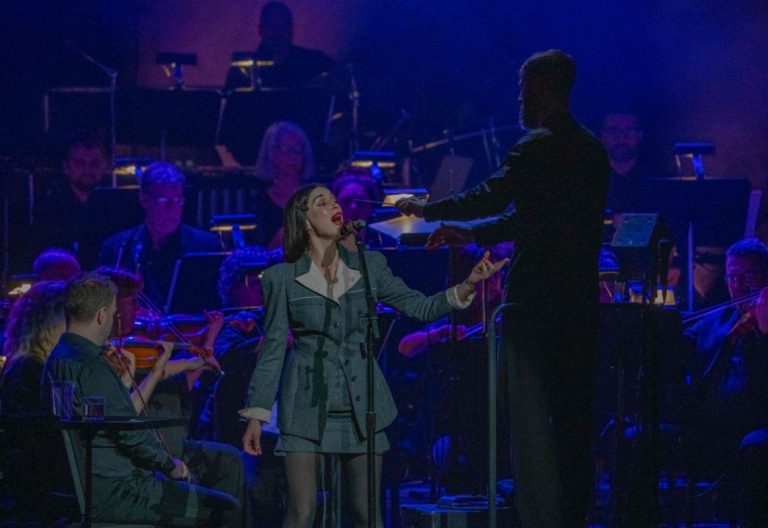
Lors de ce concert éclaté, Barbara Hannigan vous réserve quelques surprises. Musique et danses sont au rendez-vous en compagnie d’œuvres d’Offenbach, Weill, Glenn Miller, ainsi que d’autres choisies par Barbara Hannigan, pour vous faire passer une soirée haute en couleur!
Barbara Hannigan has some exciting surprises lined up for you in this edition of the Concerts éclatés series. Prepare for a vibrant and unforgettable evening where music and dance take centre stage, featuring works by Offenbach, Weill, Glenn Miller, and other carefully curated selections chosen by the conductor herself.
Programme
Jacques Offenbach, Gaîté parisienne (arr. M. Rosenthal), extraits (25 min) Et autres œuvres de Glenn Miller, Frederick Loewe, Kurt Weill, etc.
Program
Jacques Offenbach, Gaîté parisienne (arr. M. Rosenthal), excerpts (25 min) And other works by Glenn Miller, Frederick Loewe, Kurt Weill, etc.
Vibrez aux rythmes enivrants d’Offenbach et de la nostalgie sensuelle du tango dans Youkali avec Barbara Hannigan! Acclamée pour ses performances exceptionnelles à la Maison symphonique en 2022 et en 2024, la cheffe d’orchestre et soprano canadienne revient pour une soirée placée sous le signe de l’intensité. Son talent et sa présence charismatique sauront vous séduire dans ce programme aussi original qu’attrayant!
Barbara Hannigan returns for an electrifying evening, bringing the intoxicating rhythms of Offenbach and the sultry nostalgia of the tango in Youkali. Renowned for her stunning performances at the Maison symphonique in 2022 and 2024, the Canadian conductor and soprano is set to mesmerize with her extraordinary talent and magnetic presence in this bold and captivating program.
Programme
Joseph Haydn, Symphonie no 90, Hob. I : 90 (24 min) Aaron Copland, Dance Symphony (20 min) Jacques Offenbach, Gaîté parisienne (arr. M. Rosenthal), extraits (25 min) Kurt Weill, Lost in the Stars (4 min) Kurt Weill, Youkali (6 min)
Program
Joseph Haydn, Symphony No. 90, Hob. I:90 (24 min) Aaron Copland, Dance Symphony (20 min) Jacques Offenbach, Gaîté parisienne (arr. M. Rosenthal), excerpts (25 min) Kurt Weill, Lost in the Stars (4 min) Kurt Weill, Youkali (6 min)
Laissez-vous emporter par le talent du pianiste Emanuel Ax, gagnant de huit Grammy Awards, qui insufflera toute sa sensibilité au Concerto n° 3 de Beethoven, une œuvre fascinante à la croisée du romantisme. Plongez ensuite dans l’épique Symphonie n° 5 de Prokofiev, composée pendant la Seconde Guerre mondiale, où chaque note résonne comme un triomphe éclatant. Assistez à la naissance d’une œuvre de la compositrice Isabella Gellis, étoile montante qui se distingue par la finesse et l’éloquence de son écriture.
Let yourself be swept away by the masterful touch of eight-time Grammy winner Emanuel Ax as he brings his deep sensitivity to Beethoven’s Piano Concerto No.3, a fascinating bridge between the elegance of Classicism and the passion of Romanticism. Then, dive into the grandeur of Prokofiev’s Symphony No.5, a wartime masterpiece brimming with triumphant energy. The evening also features the world premiere of a new work by rising star Isabella Gellis, renowned for her refined and expressive compositions.
Programme
Isabella Gellis, Création – commande de l’OSM Ludwig Van Beethoven, Concerto pour piano no 3, op. 37 (34 min) Sergueï Prokofiev, Symphonie no 5, op. 100 (46 min)
Program
Isabella Gellis, Premiere – OSM commission Ludwig Van Beethoven, Concerto for Piano No. 3, Op. 37 (34 min) Sergei Prokofiev, Symphony No. 5, Op. 100 (46 min)
OSM : L’orchestre selon Duke Ellington et Rachmaninov
by Rédaction PAN M 360
Plongez dans l’univers vibrant de Harlem de Duke Ellington et voyagez à travers la puissance émotionnelle de la Symphonie n° 3 de Rachmaninov. Stravinsky, de son côté, jette un regard vers le XVIIIe siècle pour sublimer le violon dans son Concerto, magnifié par la captivante Alina Ibragimova. Ce programme musical vous propose une expérience où la musique symphonique dévoile une large palette de couleurs orchestrales. Un véritable kaléidoscope sonore qui mêle jazz, énergie et émotions pour une soirée alliant des univers musicaux riches et variés!
Step into the exciting world of Duke Ellington’s Harlem, then journey through the deep emotions of Rachmaninoff’s Symphony No. 3. The violin takes centre stage as Stravinsky looks back to the 18th century in his Concerto, brought to life by the captivating Alina Ibragimova. This program explores the full spectrum of orchestral colour, blending jazz, energy, and heartfelt expression. A dazzling musical adventure through diverse musical landscapes!
Programme
Duke Ellington, Harlem (18 min) Igor Stravinsky, Concerto en ré majeur pour violon (22 min) Sergueï Rachmaninov, Symphonie no 3, op. 44 (40 min)
Program
Duke Ellington, Harlem (18 min) Igor Stravinsky, Concerto for Violin in D Major (22 min) Sergei Rachmaninoff, Symphony No. 3, Op. 44 (40 min)
Le phénomène Lang Lang revêt, l’espace d’une soirée, les atours d’un empereur. Dans le Concerto n° 5 de Beethoven, il déploie une virtuosité flamboyante, souveraine, qui semble s’affranchir de toutes les pesanteurs. Sous le geste visionnaire de Rafael Payare, cette quête de lumière se prolonge dans l’Ouverture n° 2 d’Emilie Mayer puis culmine dans la Symphonie n° 2 de Sibelius, cri d’émancipation d’un peuple écrasé. De l’Europe napoléonienne à la Finlande sous tutelle russe, la musique devient au final un espace où l’esprit refuse de se soumettre. Une soirée où l’art rappelle que la liberté est d’abord une force intérieure.
For one unforgettable evening, the phenomenon that is Lang Lang takes on the mantle of an emperor. In Beethoven’s Piano Concerto no. 5, he unleashes a dazzling, sovereign virtuosity that seems to transcend all weight and constraint. Under Rafael Payare’s visionary direction, this quest for light continues with Emilie Mayer’s Overture no. 2 and reaches its summit in Sibelius’s Symphony no. 2—a cry of emancipation from an oppressed nation. From Napoleonic Europe to Finland under Russian rule, music becomes a space where the spirit refuses to yield. An evening where art reminds us that freedom is, above all, an inner strength.
Programme
Emilie Mayer, Ouverture nᵒ 2 (10 min) Ludwig van Beethoven, Concerto pour piano nᵒ 5, op. 73 (38 min) Jean Sibelius, Symphonie nᵒ 2, op. 43 (43 min)
Program
Emilie Mayer, Overture no. 2 (10 min) Ludwig van Beethoven, Piano Concerto no. 5, op. 73 (38 min) Jean Sibelius, Symphony no. 2, op. 43 (43 min)
LES BILLETS POUR CE SPECTACLE SONT ÉPUISÉS!
Ce contenu provient de l’Orchestre symphonique de Montréal et est adapté par PAN M 360
Subscribe to our newsletter
Gérez votre confidentialité
Nous utilisons des technologies telles que les cookies pour stocker et/ou accéder aux informations des appareils. Nous le faisons pour améliorer l’expérience de navigation et pour afficher des publicités (non-) personnalisées. Consentir à ces technologies nous permettra de traiter des données telles que le comportement de navigation ou les ID uniques sur ce site. Le fait de ne pas consentir ou de retirer son consentement peut avoir un effet négatif sur certaines fonctionnalités et fonctions.
Functional
Always active
The technical storage or access is strictly necessary for the legitimate purpose of enabling the use of a specific service explicitly requested by the subscriber or user, or for the sole purpose of carrying out the transmission of a communication over an electronic communications network.
Preferences
The technical storage or access is necessary for the legitimate purpose of storing preferences that are not requested by the subscriber or user.
Statistics
The technical storage or access that is used exclusively for statistical purposes.The technical storage or access that is used exclusively for anonymous statistical purposes. Without a subpoena, voluntary compliance on the part of your Internet Service Provider, or additional records from a third party, information stored or retrieved for this purpose alone cannot usually be used to identify you.
Marketing
The technical storage or access is required to create user profiles to send advertising, or to track the user on a website or across several websites for similar marketing purposes.