Classical

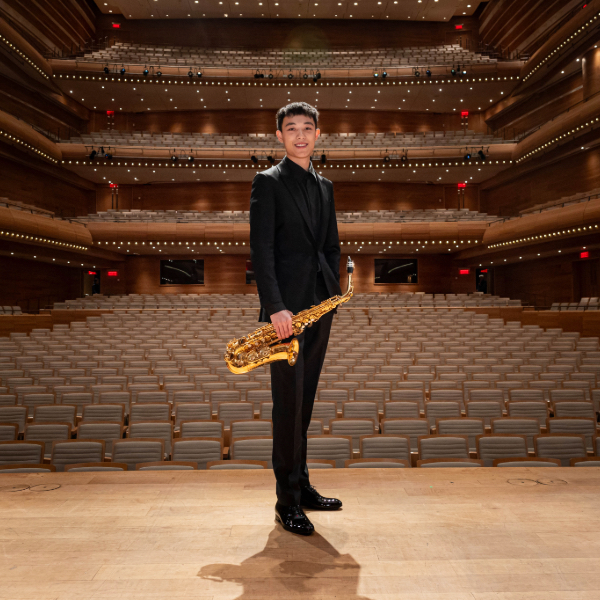
Jason Xu, first saxophonist to win top honors at the OSM Competition

by Alexis Desrosiers-Michaud

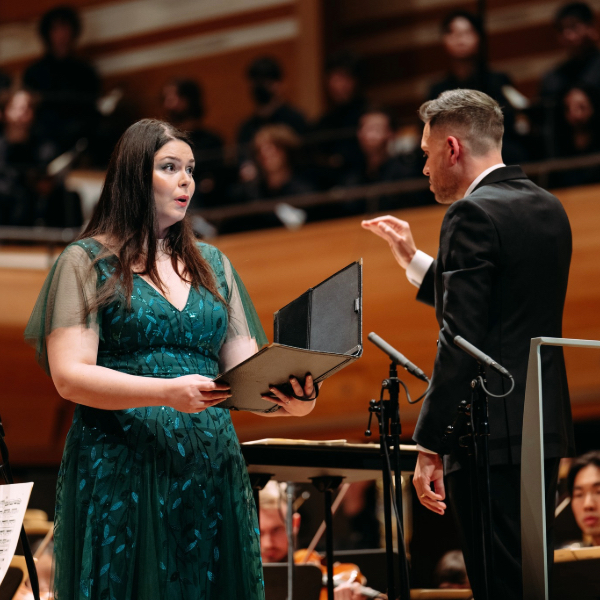
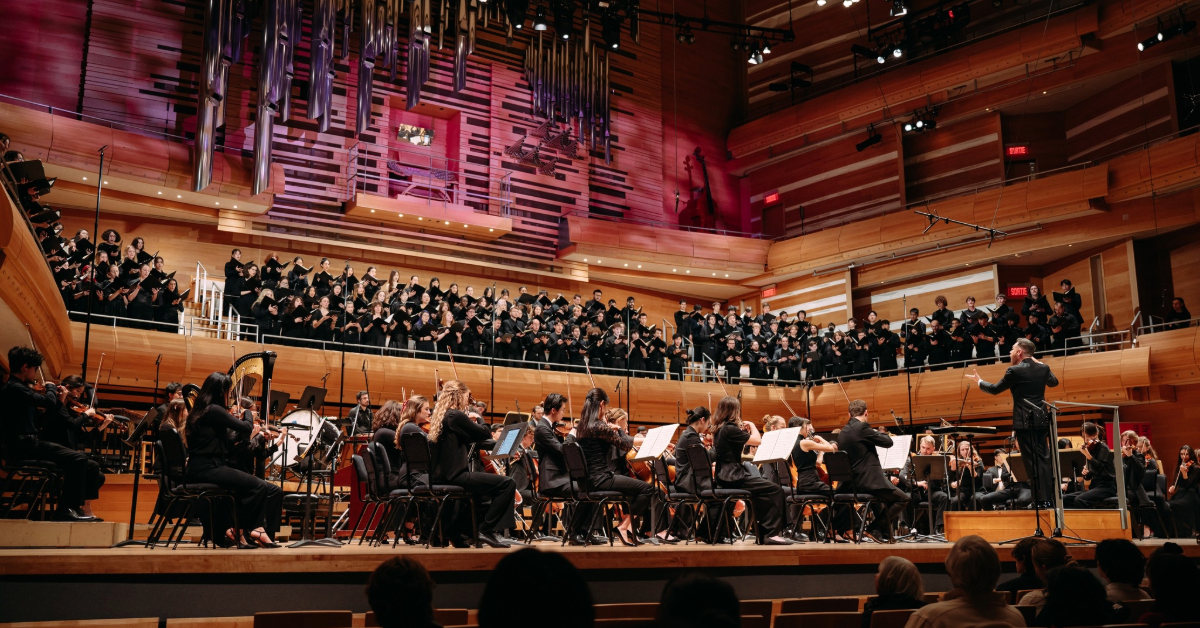
For the first time in its history, the finale of the OSM Competition featured not one, but two saxophonists, in addition to a trumpeter and a bass trombonist. And for the first time in its history, the top prize went to a saxophonist, Chinese-Canadian Jason Xu.

It was with him that the final of the competition opened, with a performance of André Waignien’s Rhapsodie for alto saxophone. This piece gave him no respite. There aren’t many lyrical passages, but he’s able to make the lines sing in a virtuosic way. Xu has a beautiful, expressive and silky sound. However, we lose him a little on the soft nuances, but the orchestra, conducted by Jacques Lacombe, could have played less loudly. Otherwise, one of his qualities is to make a whole with the latter. You can quickly sense the chemistry between soloist and orchestra.

The second candidate was Ottawan trumpeter Charles Watson in Franz Joseph Haydn’s Trumpet Concerto. Stoic, he took up the challenge of playing with a rounded sound, without force or flamboyance, using finesse and clean articulations. However, there was a slight lack of nuance and phrasing. No one knows if concentration earns points, but he was occasionally disturbed, notably by applause in the wrong places, despite the warnings, and by the cries of a toddler. Also, a concerto cadenza is not a jazz solo: you don’t applaud at the end of it and when the orchestra resumes! Despite this, Watson remained unperturbed.

After the intermission, it was Malena Lorenson’s turn to perform John Williams’ Concerto for Tuba (yes, him), but adapted for bass trombone. Despite a few cracks at the start, her performance was breathtaking. The sound is even throughout the instrument’s vast register, and Lorenson easily rises above the orchestral ensemble. It should not be forgotten that the concerto is designed to be played by a valve instrument, whereas on the trombone, it is the arm alone that moves a slider to make the note changes. Lorenson renders these complex gymnastics with impressive ease, and also outdoes herself in the articulations of the lower register. A native of Alberta but currently studying in Montreal, she was roundly applauded by the audience.

The afternoon line-up concluded with Bingchen He. The second saxophonist of the evening chose to perform Henri Tomasi’s Concerto for alto saxophone. There are plenty of notes, but little added value in virtuosity. As in Williams’ Concerto, the orchestration is very dense and, unfortunately, the saxophone is eaten alive on several occasions. He takes up more space on stage than the others, and there’s a sense of less symbiosis with the orchestra. After lengthy deliberation, the results were as follows:

1st prize: Jason Xu

2nd prize: Malena Lorenson

3rd prize: Bingchen He

4th prize: Charles Watson

The international jury, chaired by Aline Sam-Giao, General Director of the Orchestre philarmonique royal de Liège, was comprised of : Leone Buyse, Ida and Joseph Kirkland Muller Professor Emeritus of Music at Rice University, Manon Lafrance, trumpeter and teacher, Louise Pellerin, oboist and professor at Zurich University of the Arts, Rafael Payare, Music Director of the OSM, Jacques Lacombe, conductor and Peter Sullivan, principal trombone with the Pittsburgh Symphony Orchestra.

photo : Antoine Saito

classique / post-romantique

OSM : Ravel et Debussy à l’orgue

by Rédaction PAN M 360

De Couperin à Robin, découvrez la musique française pour orgue avec des pièces originales et des transcriptions. Bien que Ravel et Debussy n’aient pas écrit pour cet instrument, leur musique toute en nuances de couleurs et de timbres sonnera merveilleusement sur le Grand Orgue Pierre-Béique.

From Couperin to Robin, discover French organ music in original organ works as well as transcriptions. While Ravel and Debussy never composed for this instrument, their music, full of subtle colours and timbres, will resound with splendour on the Grand Orgue Pierre-Béique.

POUR ACHETER VOTRE BILLET, C’EST ICI!

Ce contenu provient de l’Orchestre symphonique de Montréal et est adapté par PAN M 360
classique / Jazz

OSM : Les années folles avec Gershwin & Gatsby

by Rédaction PAN M 360

En compagnie de l’OSM et du pianiste Marc-André Hamelin, virtuose hors pair, improvisateur et musicien éclectique, revivez l’ambiance des années 1920. Du jazz symphonique d’Antheil à la célébrissime Rhapsody in Blue de Gershwin, en passant par le fox-trot et les évocations nostalgiques de la vie tumultueuse de Gatsby le magnifique, retrouvez l’Amérique des années folles lors d’une soirée trépidante!

Relive the atmosphere of the 1920s in the company of the OSM and pianist Marc-André Hamelin, an eclectic musician, improviser, and unrivalled virtuoso. From Antheil’s symphonic jazz to Gershwin’s legendary Rhapsody in Blue, as well as the foxtrot and nostalgic evocations of the great Gatsby’s eventful life, return to the America of the Roaring Twenties during a wild night!

POUR ACHETER VOTRE BILLET, C’EST ICI!

Ce contenu provient de l’Orchestre symphonique de Montréal et est adapté par PAN M 360
classique

OSM : La symphonie « Pastorale » de Beethoven

by Rédaction PAN M 360

Mozart vouait un amour particulier à la clarinette pour laquelle il a composé un superbe Concerto qui fera ressortir toutes les qualités de Todd Cope, clarinette solo de l’OSM. Dans cette œuvre, le compositeur exploite habilement la virtuosité et le lyrisme de l’instrument, notamment dans l’Adagio d’une beauté épurée. Beethoven, quant à lui, redouble de verve poétique pour dépeindre la nature dans sa célèbre symphonie « Pastorale ».

Mozart had a special fondness for the clarinet and composed a stunning concerto for the instrument, which will highlight all the finesse of OSM Principal Clarinet Todd Cope. In this work, the composer deftly harnessed the instrument’s agile and lyrical qualities, notably in the exquisitely understated Adagio. Beethoven’s “Pastoral” Symphony, which draws on the composer’s poetic flair to depict Nature, needs no further introduction.

POUR ACHETER VOTRE BILLET, C’EST ICI!

Ce contenu provient de l’Orchestre symphonique de Montréal et est adapté par PAN M 360
acadie / classique / Electro-Pop

OSM : Soirée « À la Carte » avec Radio Radio

by Rédaction PAN M 360

Après sept albums de Radio Radio, des projets indépendants et plus de vingt ans de carrière, Jacques Alphonse Doucet et Gabriel B. Malenfant se donnent rendez-vous à l’OSM. Le duo acadien, révélé en 2008 grâce à Cliché hot, présentera ses succès, en plus de vous faire découvrir leur matériel solo sous un nouveau jour. De quoi faire « galoper » la salle entre des sonorités hip-hop, électroniques et… classiques!

After seven albums with Radio Radio, independent projects, and careers spanning over twenty years, Jacques Alphonse Doucet and Gabriel B. Malenfant visit the OSM. The Acadian duo that broke through with their album Cliché Hot (2008) will play several hits and explore some of their solo material in new ways. Music that will have you “galloping” between the sounds of hip-hop, electronica, and … classical!

POUR ACHETER VOTRE BILLET, C’EST ICI!

Ce contenu provient de l’Orchestre symphonique de Montréal et est adapté par PAN M 360
classique

OSM : Charles Richard-Hamelin et Andrew Wan en duo

by Rédaction PAN M 360

Un vent de fraîcheur souffle sur ce concert qui réunira Andrew Wan et Charles Richard-Hamelin dans le Concerto pour violon et piano de Mendelssohn, une œuvre teintée d’une insouciante allégresse. La Sérénade no 1 de Brahms, quant à elle, évolue dans une atmosphère champêtre et radieuse. Tout en laissant transparaître la puissance et la détermination du jeune compositeur, cette partition préfigure ses futures symphonies.

A bracing and invigorating wind runs through this concert bringing together Andrew Wan and Charles Richard-Hamelin in Mendelssohn’s carefree and high-energy Concerto for Violin and Piano. Similarly, Brahms’ Serenade no. 1 weaves its bucolic, luminous magic, conveying the composer’s energy and drive as a young composer, but also foreshadowing his later symphonies.

POUR ACHETER VOTRE BILLET, C’EST ICI!

Ce contenu provient de l’Orchestre symphonique de Montréal et est adapté par PAN M 360
classique / période romantique

OSM : Le brillant Concerto pour violon de Tchaïkovski

by Rédaction PAN M 360

La suavité et la souplesse mélodique du célèbre Concerto pour violon de Tchaïkovski s’opposent à l’intensité dramatique de la Symphonie no 11 de Chostakovitch. Chez ce compositeur, la musique devient un témoignage vivant de l’histoire humaine, et dans cette œuvre saisissante, éminemment troublante, Chostakovitch se fait le chantre des opprimés afin de dénoncer toute forme de répression. Ce concert marquera les débuts à l’OSM du jeune et brillantissime violoniste Sergey Khachatryan.

The gracefulness and melodic suppleness of Tchaikovsky’s celebrated Violin Concerto stand in stark contrast to the dramatic intensity of Shostakovich’s Symphony no. 11. With Shostakovich, music became a living testimony of human history, and in this arresting, powerfully disconcerting work, the composer is the eulogist of the oppressed, denouncing political repression in all its forms. This concert will mark the OSM debut of brilliant young violinist Sergey Khachatryan.

POUR ACHETER VOTRE BILLET, C’EST ICI!

Ce contenu provient de l’Orchestre symphonique de Montréal et est adapté par PAN M 360

classique

OSM : L’inoubliable Concerto pour violon de Bruch

by Rédaction PAN M 360

Charme mélodique, virtuosité et fougue sont les ingrédients que Bruch réunit dans son magnifique Concerto pour violon no 1, et c’est avec une extraordinaire ferveur que Dvorák exprime son émerveillement devant la nature dans sa Symphonie no 8. Deux compositrices seront également à l’honneur lors de ce concert : Florence Price, avec une pièce méditative, et Anna Thorvaldsdottir, pour un voyage spirituel en musique.

Melodic charm, bravura and verve are all elements of Bruch’s magnificent Violin Concerto no. 1, while Dvorák expressed his wonder before Nature with boundless fervour in his Symphony no. 8. Two women composers will also be featured in this concert, with a meditative piece by Florence Price and a spiritual journey through music by Anna Thorvaldsdottir.

POUR ACHETER VOTRE BILLET, C’EST ICI!

Ce contenu provient de l’Orchestre symphonique de Montréal et est adapté par PAN M 360

cinéma / classique

OSM : Le violon rouge en ciné-concert

by Rédaction PAN M 360

Sorti en 1998, Le violon rouge est un film du réalisateur québécois François Girard. L’histoire débute en 1681 à Crémone et s’achève en 1998 à Montréal lorsqu’un expert fait l’acquisition d’un mystérieux violon rouge. Dirigé par Dina Gilbert, l’OSM interprétera la musique oscarisée de Corigliano.

Conducted by Dina Gilbert, the OSM performs Corigliano’s Oscar Award-winning music composed for The Red Violin, a drama directed by Quebec filmmaker François Girard. A screening of the film will be presented during the concert.

POUR ACHETER VOTRE BILLET, C’EST ICI!

Ce contenu provient de l’Orchestre symphonique de Montréal et est adapté par PAN M 360

classique / période romantique

OSM : La Sixième Symphonie de Mahler par Payare

by Rédaction PAN M 360

Gustav Mahler exprime sa résignation face à l’inexorable marche du temps dans sa tragique et introspective Sixième Symphonie. En réponse à cette œuvre immensément bouleversante, les Lieder d’Alma Mahler évoquent les réminiscences d’une vie où l’amour et la nature apportent quelque réconfort. Tout l’art de cette compositrice sera ennobli par la voix profonde et émouvante de la jeune révélation Beth Taylor.

Gustav Mahler’s surrender to the relentless march of time is conveyed in his tragic and introspective Sixth Symphony. In response to this deeply poignant work, Alma Mahler’s Lieder call forth with consummate artistry the memories of a life in which love and nature brought a measure of solace, rendered by the deep and soulful voice of young breakthrough artist Beth Taylor.

POUR ACHETER VOTRE BILLET, C’EST ICI!

Ce contenu provient de l’Orchestre symphonique de Montréal et est adapté par PAN M 360

classique

Orchestre de l’Agora: Émile Proulx-Cloutier Symphonique

by Rédaction PAN M 360

L’univers musical d’Émile Proulx-Cloutier, aux textes foisonnants et aux musiques envoûtantes, adapté en version symphonique le temps de deux concerts événements!

Deux soirées à la Maison symphonique de Montréal qui s’annoncent aussi prodigieuses qu’excitantes, alors qu’Émile sera magnifiquement accompagné de l’Orchestre de l’Agora, dirigé par les chefs Nicolas Ellis (22 novembre) et Julien Proulx (7 décembre). Les arrangements seront signés par Francois Vallières et Guido Del Fabbro.

The musical universe of Émile Proulx-Cloutier, with its abundant texts and spellbinding music, adapted to a symphonic version for two concert events!

Two evenings at the Maison symphonique de Montréal promise to be as prodigious as they are exciting, with Émile magnificently accompanied by the Orchestre de l’Agora, conducted by Nicolas Ellis (November 22) and Julien Proulx (December 7). The arrangements are by Francois Vallières and Guido Del Fabbro.

POUR ACHETER VOTRE BILLET, C’EST ICI!

Ce contenu provient de l’Orchestre de l’Agora et est adapté par PAN M 360.

Classical

OM Beethoven Marathon, Evening 2: On Human Nature

by Alexandre Villemaire

Second stop on Friday October 18 for the Orchestre Métropolitain on its Beethoven marathon at the Maison symphonique with Yannick Nézet-Séguin.

After a heroic introduction the day before, the next kilometer to be covered by the metropolis’ orchestra was devoted to symphonies no 6, known as “Pastorale”, and no 7, preceded by a premiere by young composer Francis Battah, already the recipient of several distinctions in Europe and Canada. His Prelude to Urban Landscapes, which opened the evening, was specifically conceived to precede the first movement of Symphony no 6. In this short piece, Battah reuses several thematic materials from the “Pastorale”, deconstructing and modifying them through complex language and writing. The use of several playing modes (arco for strings, flatterzunge for winds) lends the work a dynamic character and a strong timbral dimension. The piece ends with a ghostly string glissando, before moving straight into the first movement of the Sixth Symphony. The transition is naturally astonishing and fluid, so much so that the musical quotations, which we do not necessarily recognize immediately, but which we distinguish by the evocation of timbre, have prepared our ears for “l’Éveil d’impressions agréables en arrivant à la campagne”.

One of the most descriptive pieces in Beethoven’s symphonic catalog, Symphony no 6 is also one of the composer’s best-known works, in which it can be easy to fall into easy listening and autopilot, so familiar are its themes that they have been played and heard over and over again. Yannick doesn’t take the easy way out. Conducting the entire symphonies by heart, the conductor calls on every musician in his orchestra to sculpt meaningful phrasing and lines. After the luminous energy of the first movement, the second (“Scènes au bord du ruisseau”) plunged the audience into a soothing, restful state with ethereal sonorities. The third movement exuded a genuine village festive spirit, with the winds standing out overall, despite a few minor inaccuracies. After the festivities, thunder is heard in the fourth movement, heralding the storm. A storm that YNZ gently initiates, as if in the distance, before building in intensity to the point of eruption. With careful control of dynamics, the pastoral song that follows concluded the symphony with serenity.

The second part of the concert, dedicated to the Seventh Symphony, offered a contrast in its bright, rhythmic and vital character. The first movement was regal in character, with a tempo that Nézet-Séguin deployed with elegance. Magisterial was the transition from attacca to the famous second movement, a dramatic funeral march, in which everything, from dynamics to nuances, was just right and balanced. The exposition of the movement architecture was finely constructed by the conductor, in particular by highlighting the interaction between the violin and viola lines. The third and fourth movements, marked Presto and Allegro con brio, were a fantastic, breathless ride in which the rider Nézet-Séguin had great fun, almost dancing on the podium, infusing the various sections of the orchestra with a festive, captivating vitality. This performance was the highlight of the evening. At the end of the run, the orchestra received long applause from a relatively large, jubilant audience.

Addressing the crowd, Yannick Nézet-Séguin issued this invitation: “Sunday, 11am. Tell your friends!” The invitation is made. And we’ll be there for the rest of the tour.

Subscribe to our newsletter

Inscription
Infolettre

"*" indicates required fields

Type of Suscribers