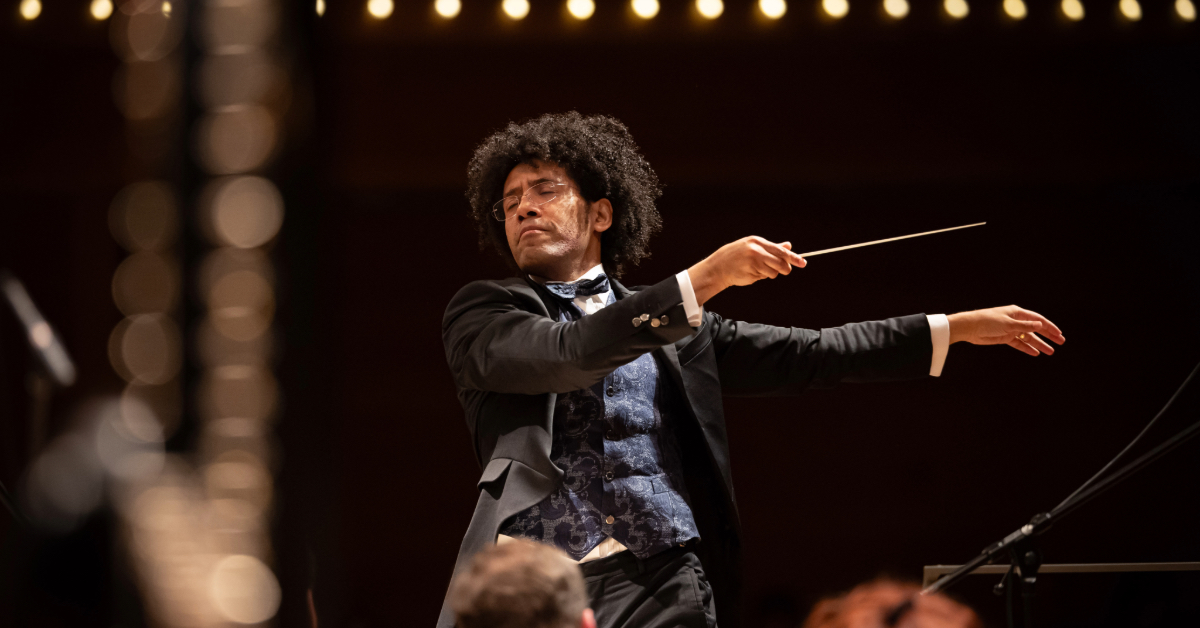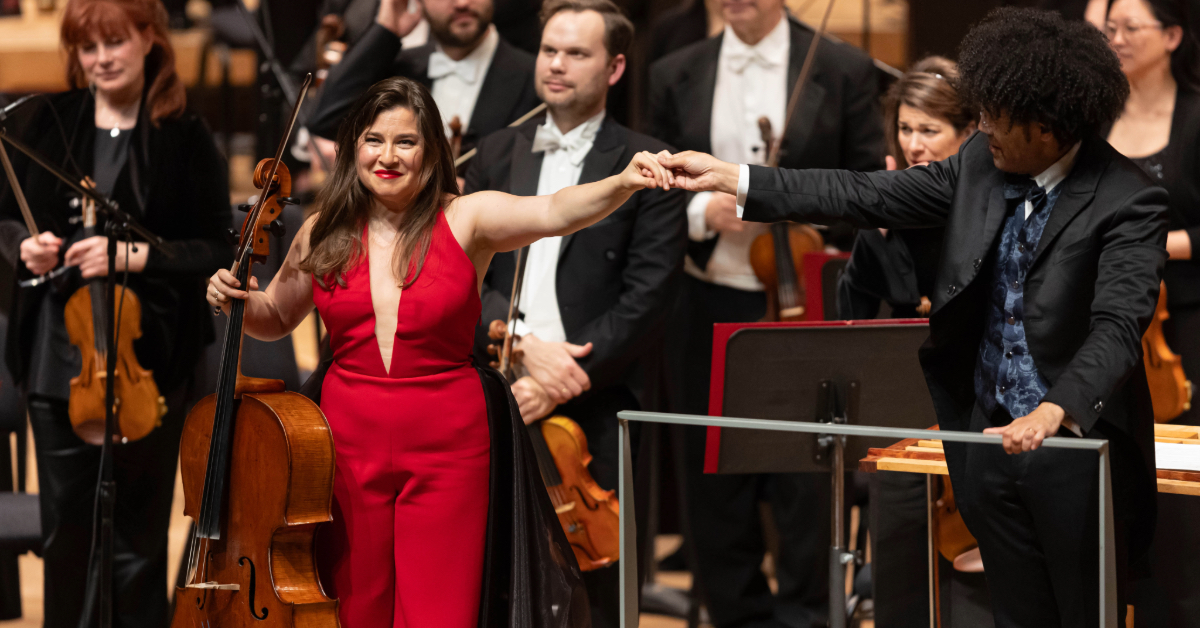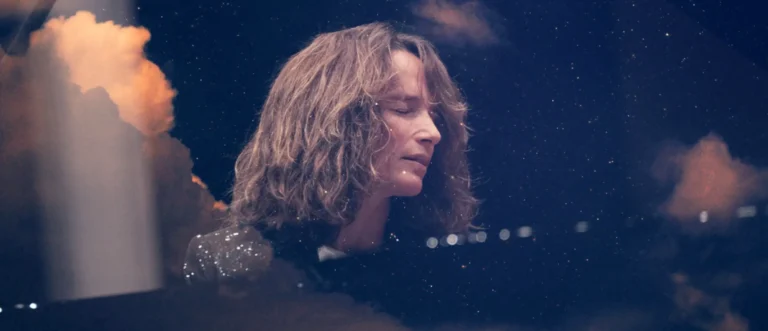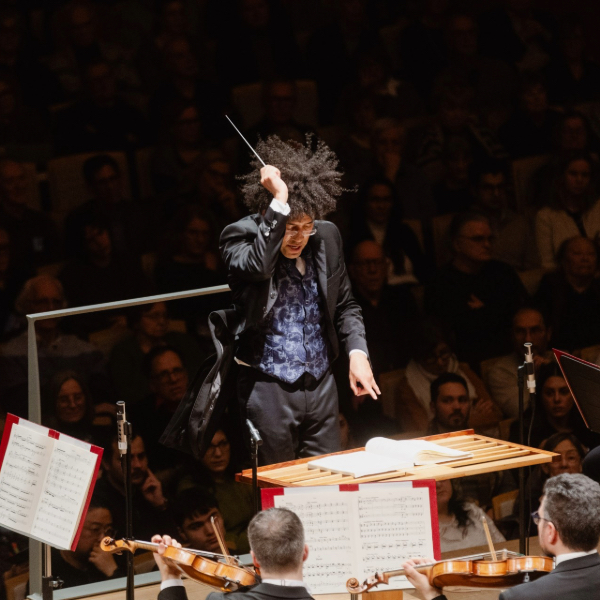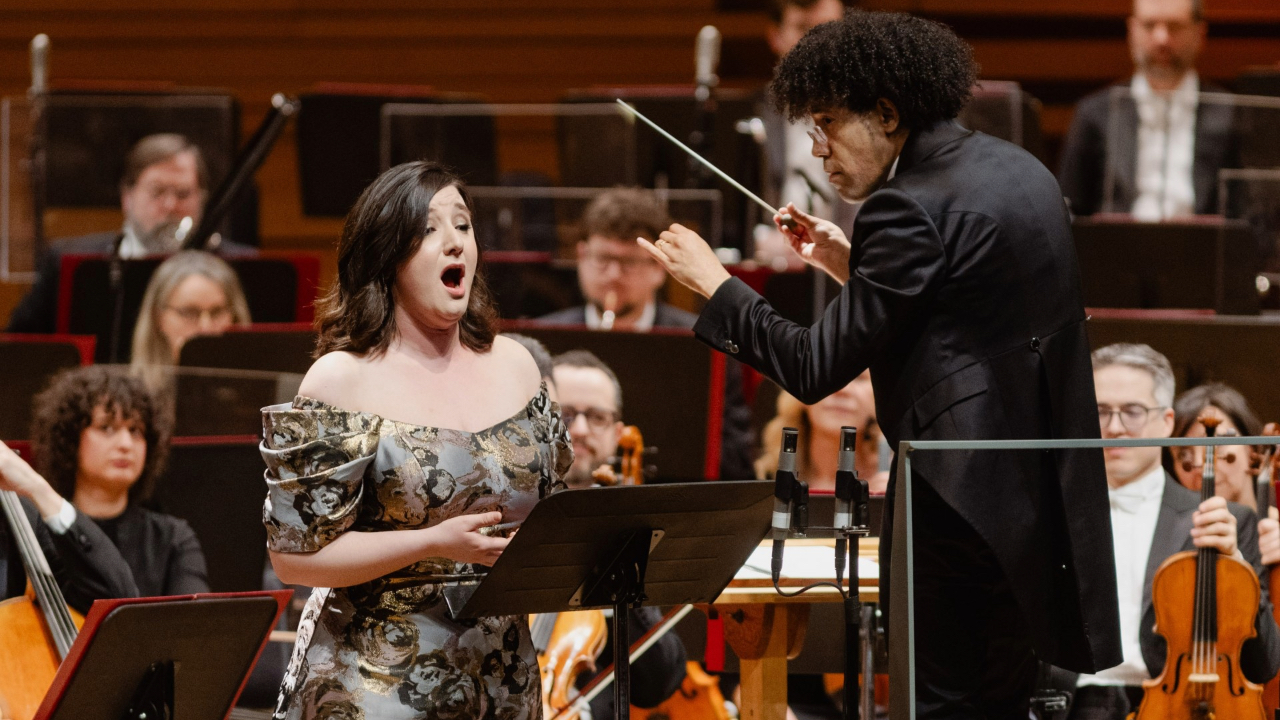
C’est l’espoir d’un monde meilleur, plus solidaire, plus empathique, qui a inspiré la programmation de ce concert dirigé par Yannick Nézet-Séguin, avec la pianiste Hélène Grimaud. « J’ose lever les yeux », nous dit Florence Price, première compositrice afro-américaine, dans son Chant d’espoir. Suivant ses traces, Margaret Bonds s’inspire directement du mouvement pour les droits civiques pour ses Variations Montgomery, dédiées à Martin Luther King. L’union nait des liens que l’on tisse, des ponts que l’on bâtit. Que ce soit entre humains ou entre genres musicaux. C’est ce que réalise Gershwin avec son Concerto pour piano près du jazz, interprété par l’une des pianistes les plus acclamées de notre époque, Hélène Grimaud. C’est aussi une marque de Bernstein qui, dans ses Chichester Psalms, balance entre optimisme et pessimisme, entre violence et réconfort.
Hope for a better, more united, more empathetic world inspired the programming of this concert, directed by Yannick Nézet-Séguin, with pianist Hélène Grimaud. “I dare look up,” says Florence Price, the first African-American composer, in her Song of Hope. Following in her footsteps, Margaret Bonds drew inspiration from the civil rights movement for her Montgomery Variations, dedicated to Martin Luther King. Unity is born of the bonds we forge, the bridges we build. Whether between people or between musical genres. Gershwin draws on this richness in his jazz-adjacent Piano Concerto, performed by one of the most acclaimed pianists of our time, Hélène Grimaud. This dynamic also comes through in the work of Bernstein, whose Chichester Psalms masterfully navigates the tension between optimism and pessimism, violence and compassion.
Programme
Price, Song of Hope Gershwin, Concerto en fa Bonds, The Montgomery Variations Bernstein, Chichester Psalms
Program
Price, Song of Hope Gershwin, Concerto in F Bonds, Montgomery Variations Bernstein, Chichester Psalms
Dans le cadre de la Série Prestige & Patrimoine, GSI Musique et Oziko présentent Ferland symphonique; un hommage grandiose et vibrant créé sur l’œuvre du Petit Roi, l’unique Jean-Pierre Ferland. Cette grande aventure musicale prendra vie grâce aux arrangements symphoniques de Blair Thomson et sera interprétée par l’Orchestre symphonique de Montréal, sous la direction du chef Alain Trudel. Des éléments de scénographie et de mise en scène seront annoncés sous peu… et à l’image de l’artiste qu’il était, ce sera rempli de poésie. Grand poète et bâtisseur, Jean-Pierre Ferland aura tissé des ponts entre la chanson à texte et la culture populaire, d’où l’importance de célébrer son héritage exceptionnel.
As part of their Prestige & Patrimoine series, GSI Musique and Oziko present Ferland symphonique; a bold, vibrant tribute to the work of the Petit Roi, the unique Jean-Pierre Ferland. This epic musical journey will come to life thanks to the symphonic arrangements of Blair Thomson and will be performed by the Orchestre symphonique de Montréal, under the baton of conductor Alain Trudel. Scenography and mise-en-scène elements will be announced shortly. In the image of the artist Ferland was, it will all be very poetic. A crowd-pleasing poet, Jean-Pierre Ferland built bridges between literary songwriting and pop culture, hence the importance of celebrating his exceptional heritage.
Verrez-vous François l’humoriste ? Entendrez-vous François le chanteur, Pérusse le musicien ? Vous ne voudrez certainement pas rater cette rencontre épique ! Du premier Album du Peuple qui célèbre son 35e anniversaire à aujourd’hui, son oeuvre immense, riche et humoristique en version symphonique risque de marquer l’imaginaire. Sous la direction du chef d’orchestre Simon Rivard et avec des arrangements symphoniques signés Hugo Bégin, François livrera plusieurs extraits célèbres de son imposant répertoire, entouré d’invités surprise pour l’occasion. Soyez aux premières loges !
Will you see François the comedian? Will you hear François the singer, Pérusse the musician? You definitely won’t want to miss this epic encounter! From the first Album du Peuple, which celebrates its 35th anniversary, to today, his immense, rich and humorous work in a symphonic version will certainly leave a lasting impression. Under the direction of conductor Simon Rivard and with symphonic arrangements by Hugo Bégin, François will deliver several famous excerpts from his imposing repertoire, surrounded by surprise guests for the occasion. Don’t miss it!
En mai, Heroes : Symphonie de jeux vidéo nous plongera, sous la baguette de Kevin Zakresky, dans les plus grands thèmes de jeux vidéo, de Fallout à Assassin’s Creed, en passant par World of Warcraft et Final Fantasy avec des projections et séquences de ces jeux marquants pour plusieurs générations.
In May, under the baton of Kevin Zakresky, Heroes : A Video Game Symphony will immerse us in the greatest video game themes, from Fallout to Assassin’s Creed, as well as World of Warcraft and Final Fantasy, with projections and sequences from these landmark games for several generations.
Programme/program
Jeremy Soule, Heroes Opening from The Elder Scrolls: Oblivion (orch. Robert Puff) Gareth Cocker, Prince of Persia : The Lost Crown (orch. Vicent Tobar) Jack Wall, Mass Effect, (orch. Robert Puff) Borislav Slavov, Baldur’s Gate 3: Main Theme (orch.Georgi Andreev) Garry Schyman, Bioshock, (orch. Robert Puff) Matt Uelmen, Russel Brower, Derek Duke, Neal Acree, Diablo Suite (orch. Arturo Matsumoto) Jesper Kyd, Assassin’s Creed: Ezio’s Family Theme (orch. Benoit Grey) Tyler Bates, God of War: Ascencion Main Theme (orch. Robert Puff) Mike Morasky/J.S. Bach, Portal 2 Variations (orch. Geoff Knorr, Andy Brick) Harry Gregson-Williams, Nobuko Toda, Metal Gear Solid IV (orch. Shota Nakama) Jason Hayes, World of Warcraft (orch. Adam Klemens) Inon Zur, Starfield, (orch. Paul D. Taylor) Inon Zur, Dragon Age (orch. Paul D. Taylor) Kinuyo Yamashita, Masahiro Ikariko, Michiru Yamane, Oscar Araujo, Castelvania Medley (orch. C. Seiter) Kow Otani, Shadow of the Colossus (orch. Nic Raine) Inon Zur, Fallout Suite (Paul D. Taylor) Marty O’Donnell, Michael Salvatori, Halo Medley (Andy Brick, Arnie Roth) Jeremy Soule, The Elder Scrolls: SkyrimDragon Bourne Theme (orch. Larry Kenton)
While Salle Wilfrid-Pelletier next door shook to the metal-symphonic sound waves of Voivod and the OSM, the Maison symphonique, the usual refuge of Rafael Payare’s musicians, vibrated to the thousand and one colours of musical tales from China and Russia.
The second piece on the programme was the Butterfly Lovers violin concerto with soloist and Opus Prize 2023 Discovery of the Year Guillaume Villeneuve. Villeneuve’s twirling, scintillating performance gave a superb breath of life to this Chinese Romeo and Juliet, whose original title is the Romance of Liang Shanbo and Zhu Yingtai. The concerto, written in 1959 by Chen Gang and He Zhanhao, is one of the first works of its kind in Chinese musical literature. The style and language are hyper-romantic, as if Tchaikovsky had lived in Beijing rather than St Petersburg, but the soloist has to achieve several effects that are clearly inspired by the traditional techniques of the erhu, a Chinese instrument that is similar to the Western violin. It’s a musical bonanza, with endearing, memorable melodies and abundant colour, especially in the woodwinds.
Francis Choinière had chosen to conclude the evening with another evocative piece of music, Stravinsky’s The Firebird. A judicious choice, which allowed us to return to the more usual Western repertoire while remaining true to the enchanting spirit of the evening. The orchestra, made up of many young musicians, probably fresh out of Quebec schools, performed well, and the conductor’s direction was committed. A few technical imperfections in Kastchei’s dance did not detract from the energy that Choinière wished to infuse into the ensemble, which ended in a successful climax.
An evening that clearly delighted a very mixed and diverse audience. If that was one of the objectives, it was achieved.
OSM | Between Icelandic Basses and Bruch’s “Unforgettable” Concerto
by Judith Hamel
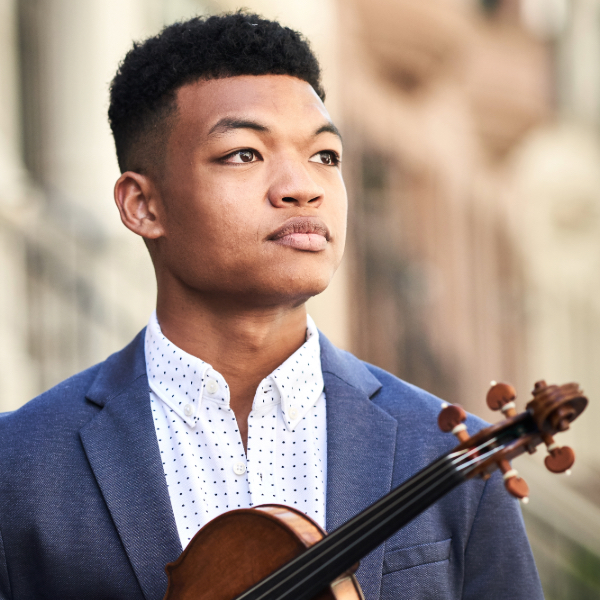
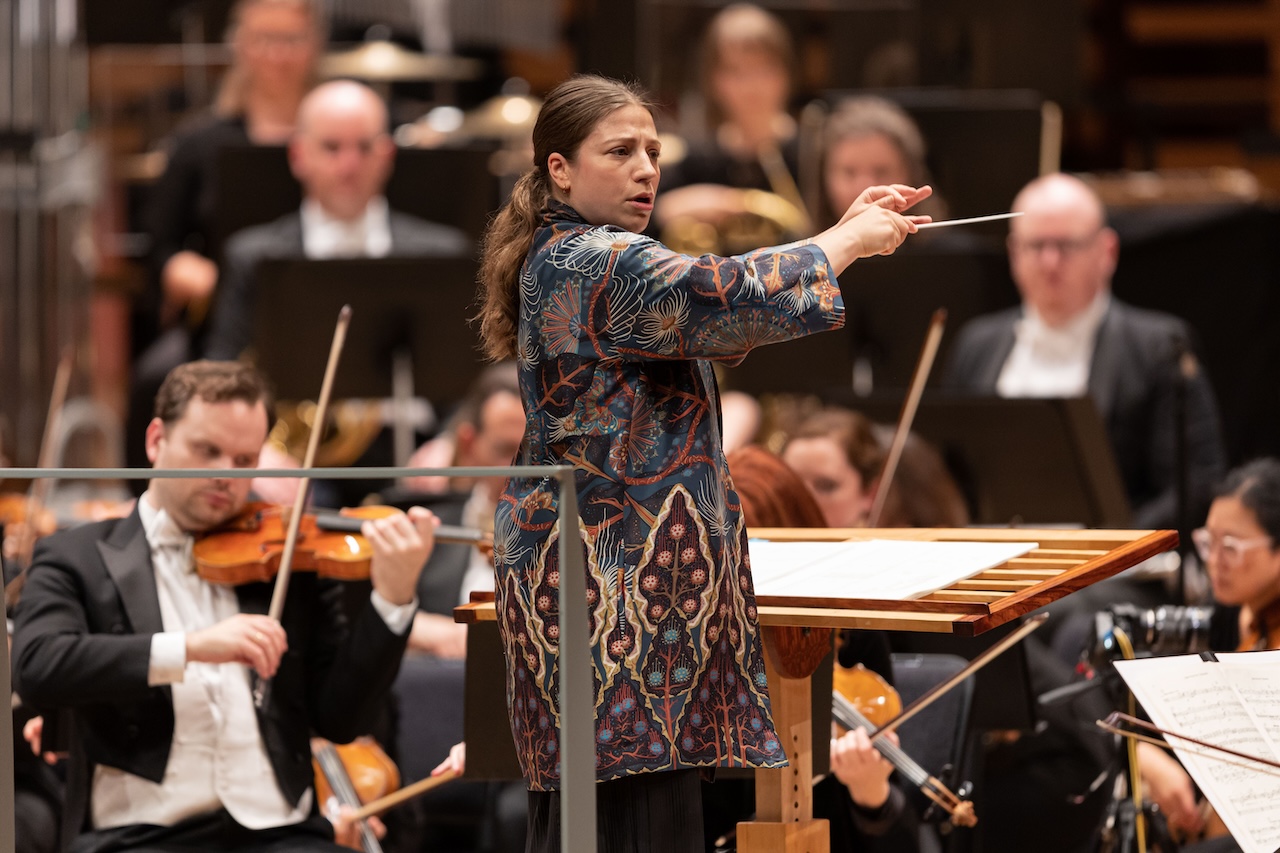
The Orchestre Symphonique de Montréal (OSM), under the direction of conductor Dalia Stasevska and violin virtuoso Randall Goosby, presented a program on Wednesday evening featuring composers Thorvaldsdottir and Price, as well as Bruch and Dvořák.
Anna Thorvaldsdottir’s Archora, commissioned by several major orchestras and premiered in 2022, opened the concert with a spellbinding 20-minute soundscape. Designed to evoke a textured universe, the work transports the audience into an exploration of the ensemble’s sonic and energetic potential.
From the very first notes, the hypergraves invade the space, creating an imposing, palpable sound mass. The screeching cymbals add an organic dimension, while the winds click their keys and use their breath to amplify the work’s mystical atmosphere. All this adds up to an almost living narrative. Then the organ, with its imposing presence, amplifies the impression of immensity, of a room larger than ourselves. The twenty minutes passed with great fluidity, like a single wave that sweeps over us. The apparent stability of the sounds, achieved by the interweaving of the musicians’ breaths, gave a superhuman impression.
American soloist Randall Goosby then took to the stage to deliver a straightforward performance, carried with finesse by his great mastery of the instrument. Max Bruch’s “unforgettable” Violin Concerto No. 1, though somewhat frustrating for the composer in its eclipsing power over his other concertos, remains a landmark work in the German Romantic repertoire. Tonight, in the “Adagio”, Goosby was able to express the full intensity of this inner romance. It was in the third movement, however, that the soloist really came into his own. He unfurled himself in the passionate, dancing themes that hint at Bruch’s Hungarian origins, as well as in the final, technical passages. These playful accents resonated particularly well with his light, easy-going playing. A young virtuoso who didn’t overwhelm us with his musicality, but whose technique and ease are impressive.
Florence Price’s Adoration opened the second half in an orchestrated version for violin and orchestra by J. Gray, putting a second female composer in the spotlight. This short piece was particularly well suited to Randall Goosby, who effectively conveyed the emotional charge through his straight but honest playing. However, an OSM concert is no exception: just as he was about to raise his bow, Goosby was interrupted by the telephone of an audience member who was listening to the recording of his performance of the first part at full volume. With humor and patience, he lowered his bow and said: “You can play it again if you want”. But no sooner had he started to play than a cricket buzzer sounded in the hall. Fortunately, the crickets were out of place, but they gave the audience a good laugh.
Although the concertante gave the evening its title, it was Dvořák’s Symphony No. 8, fiercely conducted by Dalia Stasevska, that stood out as the highlight. Dalia Stasevska’s conducting was particularly noteworthy for its emphasis on drastic contrasts of nuance and the exaggeration of certain rhythmic passages. This symphony, with its bucolic atmosphere, was thus deployed through moments of lightness, straight trumpet lines and the exaggerated popular character of certain dancing themes. The fourth movement, which opens with a flamboyant trumpet call and ends with groovy chromatic passages, ended the concert on a welcome note of youthfulness.
Photo credit: Randall Goosby – Kaupo Kicks ; Dalia Stasevska – Antoine Saito
OSM | Mahler, Payare and The OSM: Between Inner Turmoil, Light and Fatality, a Powerful Evening.
by Hélène Archambault
The OSM has made an enlightened choice to present the works of Alma Mahler and those of her husband, Gustav, in the same concert to inaugurate 2025. The performance of Alma’s works alongside those of her illustrious husband is a contemporary nod to a time when many female musicians are giving up their careers to support those of their husbands.
At the age of twenty-three, Alma, née Schindler, frequented the Viennese artistic scene, composing lieder and insisting on her artistic and intellectual independence. She met Gustav Mahler in November 1901. Twenty years her senior, he made a deal with her: to become his wife, she had to give up her aspirations as a composer. Passionately in love, she accepted, and the marriage was celebrated on March 9, 1902.
Despite this “ban” on composing, Gustav suggested that Alma rework the lieder and have them published (in the program notes, Catherine Harrison-Boisvert notes that “Gustav seems to have wanted to make amends”). It is fortunate that Alma’s Lieder have been rescued from anonymity in this way. Their performance is a first for the OSM. With these 5 lieder, the orchestra offers a sensitive listening experience, and, in my case, one of discovery. In meins Vaters Garten (In my father’s garden) is particularly touching. Mezzo-soprano Beth Taylor’s deep, radiant voice is enhanced by the composer’s expressive writing. My only downside? The orchestration by Colin and David Matthews. A slight mismatch between the two scores is unfortunately to the detriment of the voice.
Of the Sixth Symphony, called “Tragic”, Alma writes that it is her husband’s most personal work, the one that sprang most directly from his heart. She also reports that in writing the Sixth Symphony, Gustav anticipated his own life in music. Three blows of fate, symbolized by as many hammer blows in the finale – only two of which are retained – also befell him: the loss of their daughter Maria to scarlet fever, a diagnosis of incurable heart disease, and the loss of his position at the Vienna Opera. As Mahler’s Sixth was written before these events, this interpretation is debatable. But the story is worth telling, if only to stir the imagination! And perhaps also a little to allow ordinary people to become a little more attached to the composer?
Speaking of attachment, the OSM and Payare, in their interpretation, go the right way. From the very first bar, the tempo is energetic without being frantic. The tone is set. The first movement unfolds between the military and the evocation of Alma, embodied by the strings. The orchestra alternates between rumble and light. Payare seems to play with rhythm. Though regulated like a metronome, time with him seems more supple, more alive. The beautiful pages of the second movement feature a dialogue between woodwinds and brass, in which the orchestra’s playing is limpid. The third movement, almost dreamlike, and the finale follow one another without a break. This sequence seems to allow the orchestra to bewitch us, before plunging us into an emotional stampede in the style of “being Gustav Mahler” right to the end. Just writing it makes me breathless – the energy deployed by the conductor must be the envy of the greatest sportsmen and women. Tragic” symphony, you say? Between enchantment, sweetness and tragedy, one does not leave the symphonic house completely unscathed.
Les Violons du Roy : Gauvin, Lemieux – divin Handel
by Rédaction PAN M 360
Karina Gauvin et Marie-Nicole Lemieux occupent une place à part dans notre vie musicale en général et chez Les Violons du Roy en particulier! Depuis le tout début de leurs carrières respectives, elles font toutes deux partie des artistes invités préférés du public et des musiciens des Violons du Roy. Quelle chance de pouvoir les réunir avec nos musiciens et Jonathan Cohen pour marquer notre 40e anniversaire de façon exceptionnelle!
Karina Gauvin and Marie-Nicole Lemieux hold a special place in our music community, and even more so at Les Violons du Roy! Since the very beginning of their respective careers, they have both ranked among the favourite guest artists of the public and the orchestra. It’s a real privilege to bring them together with Jonathan Cohen and our musicians to celebrate our 40th anniversary with a truly exceptional concert!
Programme
Ouverture (Judas Maccabaeus, HWV 63) From this dread scene (Judas Maccabaeus, HWV 63) Sinfonia (Alexander Balus, HWV 65) Fury, with red sparkling eyes (Alexander Balus, HWV 65) Our limpid streams (Joshua, HWV 64) Ouverture (Solomon, HWV 67) Will the sun forget to streak (Solomon, HWV 67) Arrival of the Queen of Sheba (Solomon, HWV 67) Thou fair inhabitant – Welcome as the Dawn of Day (Solomon, HWV 67) Ouverture (Belshazzar, HWV 61) Great victor, at your feet I bow (Belshazzar, HWV 61) Ouverture (Theodora, HWV 68) Fly, fly, my brethren – As with rosy steps the morn (Theodora, HWV 68) But why art thou disquieted, my soul – Oh! that I on wings could rise (Theodora, HWV 68) To thee, thou glorious son of worth (Theodora, HWV 68) Streams of pleasure ever flowing (Theodora, HWV 68)
Program
Ouverture (Judas Maccabaeus, HWV 63) From this dread scene (Judas Maccabaeus, HWV 63) Sinfonia (Alexander Balus, HWV 65) Fury, with red sparkling eyes (Alexander Balus, HWV 65) Our limpid streams (Joshua, HWV 64) Ouverture (Solomon, HWV 67) Will the sun forget to streak (Solomon, HWV 67) Arrival of the Queen of Sheba (Solomon, HWV 67) Thou fair inhabitant – Welcome as the Dawn of Day (Solomon, HWV 67) Ouverture (Belshazzar, HWV 61) Great victor, at your feet I bow (Belshazzar, HWV 61) Ouverture (Theodora, HWV 68) Fly, fly, my brethren – As with rosy steps the morn (Theodora, HWV 68) But why art thou disquieted, my soul – Oh! that I on wings could rise (Theodora, HWV 68) To thee, thou glorious son of worth (Theodora, HWV 68) Streams of pleasure ever flowing (Theodora, HWV 68)
Montréal/Nouvelles Musiques 2025 : Ligeti, Kubrick et la musique de film
by Rédaction PAN M 360
De l’hypnotique «2001, l’Odyssée de l’espace» à l’audacieux «Eyes Wide Shut», en passant par l’inquiétant «The Shining», les films de Stanley Kubrick font une place de choix à la musique, en particulier à celle du grand compositeur hongrois György Ligeti. Plusieurs œuvres du compositeur sont d’ailleurs présentes dans la cinématographie du réalisateur. L’organiste Jean-Willy Kuntz, l’Orchestre symphonique de McGill et l’Ensemble à cordes de la SMCQ sous la direction de Alexis Hauser, interprèteront des pièces emblématiques de ces trois films iconiques. Également au programme, une création orchestrale du jeune compositeur Liam Ross Gibson, une voix émergente et singulière dans le paysage musical canadien (commandée par la SMCQ). Alexey Shafirov présentera quant à lui le second concerto pour piano de Prokofiev. Tandis que la spectaculaire fresque orchestrale de Ainsi parlait Zarathoustra, célèbre poème symphonique de Richard Strauss, fera aussi majestueusement écho au cinéma de Kubrick. Un concert à la Maison symphonique de Montréal qui s’annonce grandiose et mémorable.
From the hypnotic “2001: a Space Odyssey” to the bold “Eyes Wide Shut” and the eerie “The Shining,” Stanley Kubrick’s films give a prominent place to the music of the great Hungarian composer György Ligeti. Several works by the composer are in fact present throughout the director’s cinematography. Organist Jean-Willy Kuntz, the McGill Symphony Orchestra and the SMCQ String Ensemble under the direction of Alexis Hauser, will perform emblematic pieces of these three iconic films. Also on the programme: an orchestral premiere from young composer Liam Ross Gibson, a singular emerging voice on the Canadian musical landscape (commissioned by the SMCQ). Alexey Shafirov will present Prokofiev’s Second Piano Concerto, while the spectacular orchestral fresco Thus Spoke Zarathustra, Richard Strauss’s famous symphonic poem, will also majestically echoes Kubrick’s cinema. A concert at the Maison symphonique de Montréal that promises to be grandiose and memorable.
The sparkling magic of Christmas, Yannick Nézet-Séguin… and Antoine Gratton!
by Frédéric Cardin
Far be it from me to diminish the quality of yesterday’s performances by the guest artists at the (now) classic eclectic Christmas concert by the Orchestre métropolitain and Yannick Nézet-Séguin. Mélissa Bédard makes a strong impression in Glory Alleluia and Minuit, chrétiens (O Holy Night). Her full contralto (non operatic) voice, very accurate and free of unnecessary embellishments, stood out. Kim Richardson did the same with other classics such as White Christmas and I’ll be Home for Christmas. Then there was the lyrical sensation of the hour, Élizabeth St-Gelais, who gave us Les Anges dans nos campagnes (Angels We Have Heard On High) and a rather successful Sainte Nuit (Silent Night) sung in Innu (St-Gelais’ indigenous Nation). There was also a fine duet with Michel Rivard, with a heartfelt Gens du pays. Rivard also offered C’est dans la famille, initially a little vocally fragile, but authentic.
Taurey Butler, Mr ‘’Charlie Brown Christmas’’ at Bourgie Hall each season, with the excellent Wali Muhammad on drums and Morgan Moore on double bass, gave us some lovely jazz flights of fancy on the piano (no Charlie Brown, though. That’s reserved for the other hall) in a few traditional titles from the repertoire, and fiddler David Boulanger treated us to a very pleasant Petit concerto for Carignan and orchestra by André Gagnon, with Oleg Larshin, OM’s first violin. Well-controlled contrasts between the ‘classical’ solos of Larshin and Boulanger’s fiddlings, modern echoes of Yehudi Menuhin and Jean Carignan, for whom the work was composed. A true miniature masterpiece, it was accompanied by another of Gagnon’s must-haves: an extract from his 1992 album Noël, the warm and gently melancholy Ronde des bergers (Shepherd’s dance). I’d never paid attention to this detail before, but the horn solos are formidable! Even the ever-perfect Louis-Philippe Marsolais learned this the hard way. Of course, the finale was performed by everyone at the same time, an essential communion embodied by the Beau Dommages/Michel Rivard classic: 23 December. It was a great success, bringing people together in an ecumenical way and reflecting the image of a Quebec that is both ‘’traditional’’’ and coloured by its modern diversity. Well done.
In short, everyone rose to the occasion, and then some. Good humour reigned supreme, and the stage and the entire Maison symphonique shone with a thousand colours, in a cosy, inviting atmosphere. So hats off to them. But the reason I wanted to include Antoine Gratton’s name in my title is that the supreme link between all the pieces, all the performances, all the musical styles evoked in this secular and musical mass, the unifying factor that enabled us to spend almost two hours, without intermission and without any boredom, well hooked into the proceedings, this indispensable secret of success, is Antoine Gratton’s arrangements.
The singer-songwriter, who once called himself A Star, has also been a skilled arranger of symphonic pop concerts for some years now. Yesterday, he came up on top thanks to the originality of the scores he produced for the orchestra and choir, which provided a brilliant accompaniment to the above-mentioned performances. No matter how well-known the tunes, Gratton knows how to sprinkle his arrangements with a host of surprises for the ears, be they harmonic, colouristic or rhythmic. Here’s just one example: the counterpoint between the orchestra’s bells and the backing singers’ clapping hands in a passage from My Favourite Things. Delightful.
The arranger is too often forgotten in this kind of event, but he shouldn’t be, especially not in the case of this concert, which could have turned into a litany of syrupy melodies strung together interminably, had it been for other, less creative pens. Thousands of dinners of turkey, tourtière and cranberry sauce are the same all over Quebec during the festive season. But sometimes there’s a chef in the kitchen, hiding behind his or her pots and pans, who manages to reinvent the classics and bring them all together in a way that’s original enough to be noticed. And all this without going overboard and leaving a bitter taste in the mouth. In cases like this, let’s invite that person to the table and honour him-her (which is what happened on stage yesterday).
Let’s not doubt for a moment that there will be a 2025 edition.
OSM : Charlebois symphonique, une célébration grandiose avec l’OSM – Supplémentaires
by Rédaction PAN M 360
Après l’immense succès rencontré par le concert Charlebois symphonique au mois d’août dernier, l’OSM vous propose de retrouver Robert Charlebois et ses invités pour des supplémentaires de ce concert mémorable. Charlebois, ce géant de la musique, revisitera ses plus grandes chansons en version symphonique, dont Ordinaire, Je reviendrai à Montréal et quelques trésors cachés.
After the immense success of the Charlebois symphonique concert last August, the OSM invites you to join Robert Charlebois and his guests for additional performances of this memorable concert. Charlebois, a giant in music, will revisit his greatest songs in a symphonic version, including Ordinaire, Je reviendrai à Montréal, and a few hidden gems.
OSM : Ravel et Prokofiev par Weilerstein et Payare
by Rédaction PAN M 360
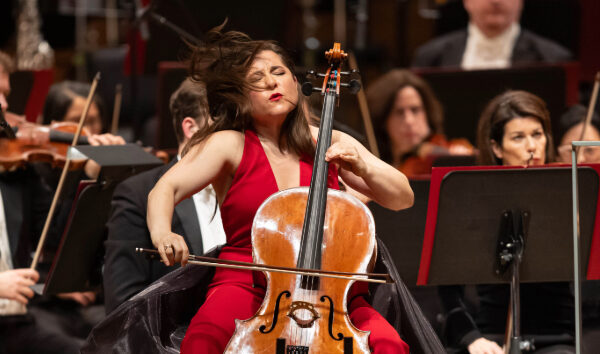
Le ballet Daphnis et Chloé est l’évocation poétique d’une nature idyllique et d’une Grèce rêvée par Ravel. Les couleurs chatoyantes de l’orchestre et la finesse de l’écriture confèrent à cette partition une délicate sensualité. Autre joyau au programme : la Sinfonia concertante de Prokofiev. Cette œuvre de caractère, teintée d’un humour sarcastique, sera servie par l’immense talent de la violoncelliste Alisa Weilerstein.
The ballet Daphnis et Chloé poetically conjures an idyllic natural setting combined with elements of Greek Antiquity as imagined by Maurice Ravel, to the orchestra’s glistening hues and subtle inflections, that endow this work with graceful sensuality. The program’s other precious gem is Prokofiev’s Sinfonia Concertante, a colourful piece tinged with sarcasm and humour, brought to life through Alisa Weilerstein’s powerful artistry.