With eight editions under its belt, the ninth edition of the Grandes Oreilles Festival is fast approaching and will be held on September 12, 13, and 14 on Laurier Avenue West and the surrounding area. Gunther Gamper, the festival’s general and artistic director, who is also a one-man band, shares the highlights of the program with us. This edition promises to be even more festive, as it will be held in collaboration with two key partners: the SDC Laurier Ouest and the Borough of Outremont.

PAN M 360: Before we begin, how was the name Grandes Oreilles chosen?

Gunther Gamper: It goes back a long way. We brainstormed ideas and came up with this expression that everyone knows. Since it’s a music festival, Grandes Oreilles made people smile while also referring to the expression “Open your ears wide!” And that’s what the festival is all about: introducing and offering musical diversity to parents and children in a festive atmosphere.

PAN M 360: And how did your involvement begin?

Gunther Gamper: I am the founder. I like to joke that I am the CEO, artistic director, and communications intern. I’m a one-man band, I do everything. To prepare for the 9th edition, I’m one and a quarter people: I have a communications intern and a logistics assistant who work a few hours. Right now, it’s a tiny team. Fortunately, I also have a board of directors and loyal partners.

PAN M 360: Tell us about your partners for this edition.

Gunther Gamper: We have two. A year and a half ago, I knew it was the 150th anniversary of the Fondation d’Outremont, and I suggested that we do something together to celebrate Outremont. I talked to several people about it, including the Borough of Outremont and the SDC Laurier Ouest, who are partners this year. We worked with them to create this big 150th anniversary celebration on Laurier Avenue West. Several things are happening for the first time this year: it’s the first time we’ve had such a large amount of funding, the largest budget since the first year; it’s the first time we’re not in a park but on a commercial street; and it’s the first time we have two partners, as we’ve always done previous editions on our own.

PAN M 360: What’s planned for the musical side of things?

Gunther Gamper: First of all, there are two brass bands: Urban Science Brass Band, which has ten members and will be playing on Saturday, and on Sunday we will have Burning BRASs Band, a group of women and non-binary people, also with ten members. In addition, there will be Waahli, who were supposed to participate in the 8th edition but unfortunately it rained. They will be a full band this time as we have a bigger budget. Then there’s DJ Poirier, who will be playing a two-hour set, and Sadio Sissokho, originally from Senegal, who will be performing a solo kora and vocal set. There’s also Imagicario, a company from Villeray-Parc Extension featuring giant puppets representing imaginary streetlights. There will also be performances by up-and-coming artists, a jazz combo from the University of Montreal, and, if all goes well, a performance by the winner of the 5th talent contest for 16-year-olds and under. This is the 5th edition of the contest. Finally, there will be craft workshops, dance workshops, including the Académie de danse d’Outremont, a surprise box dedicated to early childhood, and musical bicycles.

PAN M 360: So, there will be something for all ages and tastes?

Gunther Gamper: Exactly. The idea is that by offering different types of activities, everyone can have fun, regardless of what time they arrive or how old they are. No one will be bored.

PAN M 360: Is there a particular theme this year?

Gunther Gamper: It’s a music festival for the whole family. That’s really our focus.

PANM360: As a fan of Brazilian music, I noticed that there is Brazilian music at the festival launch.

Gunther Gamper: We are partners, but in the case of Diogo Ramos, it was presented by Outremont, but we consulted each other about it. Last year, I wanted to have Diogo Ramos, but there was a bit too much Latin music in previous editions, notably with Boogát and Ramon Chicharron.

PAN M 360: There’s another name that caught my eye in the lineup: Martha Wainwright, who is apparently from Outremont?

Gunther Gamper: Yes, it’s her 20th career anniversary, and it’s the tour for her very first album. She’s been touring with it for a year. She’ll be part of Friday’s double bill, the opening concert, presented by Outremont. The closing concert on Sunday evening will be presented by Grandes Oreilles, with Waahli and Imagicario, and the street lamps will be there during the performance.

PAN M 360: Do you have a backup plan in case of rain?

Gunther Gamper: Last year, we had the worst weather we’ve seen in eight years. We only managed to do two and a half hours, then we canceled as we went along, depending on what was happening. If it rains, we’ll announce it on all our social media channels. As there are three of us, you’ll need to follow us on Facebook, Instagram, and LinkedIn.

PAN M 360: I also saw that Geneviève Borne will be hosting fashion shows as well?

Gunther Gamper: She will be hosting all three evenings. There will be a fashion show in collaboration with the M.A.D Festival and Manika Gaudet of Manik Fashion. The fashion component is for the 150th anniversary celebration and is presented by SDC Laurier Ouest. After the fashion show, there will be a musical performance by DJ Jesse Mac Cormack, featuring a mix of pop, electro, and techno.

PAN M 360: We wish you pleasant temperatures! And long live this festival.

Gunther Gamper: Thank you. Come one, come all!

Photo of Urban Science Brass Band
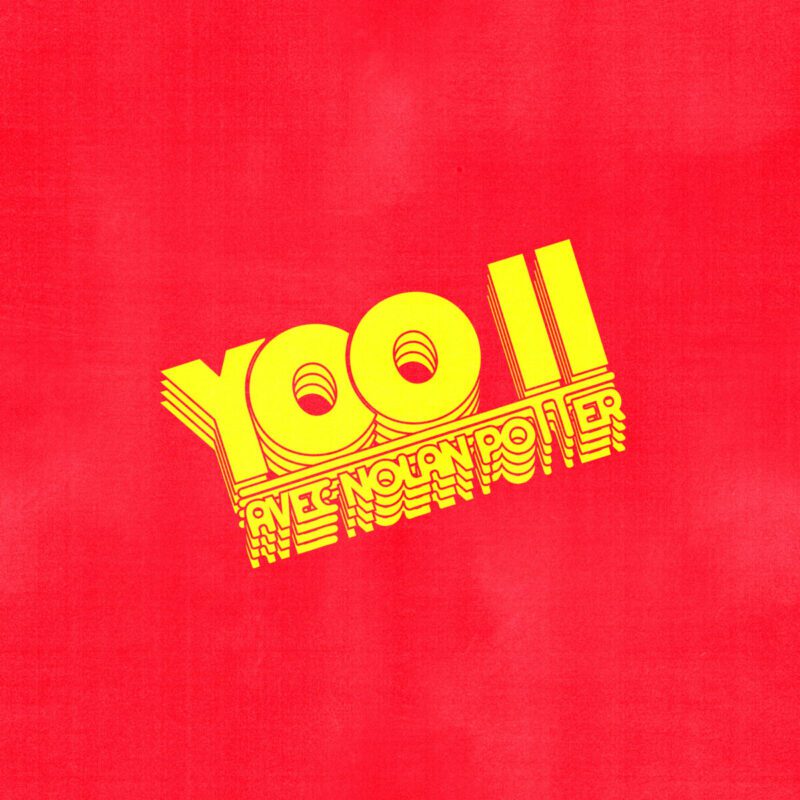
Within the weird experimental post-rock world of Montreal, Yoo Doo Right and Population II have been holding a wicked court through live shows and heavy albums—somewhat independently from each other. Now they have a collaborative project, You II Avec Nolan Potter.

As the name suggests, they paired up with Austin, Texas’ wacko multi-instrumentalist, Nolan Potter (Nolan Potter’s Nightmare Band) for a two-hour impromptu madness recording session during this year’s SXSW. The result is a bit of krautrock-inspired insanity with a dash of free jazz noise. We spoke with Nolan Potter about this collaboration and its influences ahead of their “secret” show at the legendary FME.

PAN M 360: How did you meet up with the Yoo Doo Right and Pop II boys, and what led to this improvised album? 

Nolan Potter: I’ve been friends with Pop II for several years. We met on tour in the States when we were both signed to Castle Face Records. We found we had a lot in common in terms of obscure musical tastes. I’d also been aware of Yoo Doo for a while as like-minded musicians, and SXSW finally allowed me to see them. Absolutely bonkers.

PAN M 360: Was there always the idea to make this into an album or just a jam? 

Nolan Potter: I definitely didn’t think it would be getting the full LP treatment on the day we recorded. I’ve done a lot of improvised recording projects, and they usually end up as Bandcamp-only releases, a fun diversion from writing and obsessing over details. But it was clear as soon as we hit record that something special was happening.

PAN M 360: You’re a multi-instrumentalist, but how did you decide what to play and add in each song (flute, saxophone, organ, etc)

Nolan Potter: On the day of the session, Tristan (Pop II) and Justin (Yoo Doo Right) had the guitars and keyboards fully covered. I looked around at what I had at the studio and thought wind instruments would be a nice addition and a departure from the styles of both bands. There’s a bit of a nod towards the electric era of Miles Davis that we all love too. I don’t really know how to play saxophone very well, but that ignorance led to some interesting choices.

PAN M 360: Where did the song titles come from? You wanted that French style since they’re both based in Montreal?

Nolan Potter: We struggled a bit coming up with a unifying theme for everything since it’s an almost entirely instrumental record. Do we give the songs silly names? Do we just number them? Track 1, 2, 3, etc? All credit to Pierre-Luc from Pop II for nailing down the titles and concept. It’s loosely based on the story of a doomed French explorer whose journey ties us all together geographically. The movie that plays in my mind is like The Revenant meets Aguirre, the Wrath of God. And yes personally I always wanted the titles to be mostly French. I wanted to do as little as possible to assert American influence on this project.

PAN M 360: Did you guys talk music influences, or just plug in and play?


Nolan Potter:
Over the years, Pop II and I have spent hours talking about musical influences. Any time I’m with them I’m constantly taking notes on what I should be listening to. When I met Justin and John from YDR it was clear we were on that wavelength as well. As a huge Can nerd their name alone told me we were on the same team.

PAN M 360: Can you talk about the vibe in the room during the recording process?


Nolan Potter:
It was heavy! My experience of “jam sessions” in the States is that it’s a generally very loose process that emphasizes fun over the finished product. This was not that. This was like being on a Viking longboat. The two bands were pushing and pulling in sync and extracting incredible sounds out of the air. We took advantage of every single minute in the studio and took no prisoners.


PAN M 360: Were there any overdubs on You II, or is this 100% improvised? 


Nolan Potter: I would say 90% of what you hear is improv. We added more layers remotely from our home studios. But the most fun for me was the editing. We had 90 minutes of music and had to get it down to 45. Cutting the tracks down is when I started to feel the album come to life, like a statue from a block of marble. It’s like time travel honestly, looking back at momentary, improvised decisions and making edits in the present that bring the best moments to the forefront. You can surprise yourself this way.

PAN M 360: With every band being “successful” in their respective hometowns and genres, were there any egos in the room? 


Nolan Potter: Not from my perspective! I can have a big personality in the studio, but was being very careful as the lone American in the band to not trample on the delicate nature of what we were doing. I have a massive amount of respect for both of these groups, and they’re honestly the sweetest guys.

PAN M 360: And now you’re about to play this Yoo II album live. Is that also going to be quite improvised? 

Nolan Potter: Yes and no. I think we’re all very attached to the way the album turned out. It seemed to write itself. It was an inevitability. That being said, there’s a lot of room to improvise within that framework, and some of the jams deserve to be way longer than what can fit on an LP. So we will stretch and expand, react to one another and see what happens!

photo by Rose Cormier

On September 24, 2025, the premiere of the show Les veilleuses (the watchkeepers) will take place at Bourgie Hall of the Montreal Museum of Fine Arts, as part of the Arts Crossroads series. A cross, indeed, between choreographic art and music, between dancers and singers, in order to embody a feminine universe made of empathy and symbolism. Nine women, some from the world of opera, others from the world of dance, will bring to life a musical score based on a mediaeval song whose origins are lost in history, Blanche comme la neige (White as Snow). From there, the duo composed of Romain Camiolo for the music and Simon Renaud for the choreography built a 75-minute show, the origins, meaning, and various details of which they explain to us in this interview.

Artists :

Marie-Hélène Bellavance, Nasim Lootij, Ingrid Vallus, dancers

Marie-Annick Béliveau, Salomé Karam, Kathy Kennedy, Elizabeth Lima, Hélène Picard, Ellen Wieser, singers

A co-production of Amour Amour, Salle Bourgie, Chants Libres, and Corpuscule Danse

DETAILS AND TICKETS FOR THE NIGHT WATCH

Complete version (in French)

Excerpt 1 (What is it about?)

Excerpt 2 (the music)

The Saint-Grégoire Concerts adventure continues on Sunday, September 14, at 3 PM, in a concert hall set up at Ferme Cadet Roussel of Mont-Saint-Grégoire. The artistic director of this summer series and renowned violinist Emmanuel Vukovich will perform alongside pianist (and conductor) Maria Fuller, originally from Saskatchewan and now based in Calgary. The two performers will showcase their talent in piano-violin works by Belà Bartok and Maurice Ravel, after premiering a work by American composer Sheila Silver, based in Hudson, New York: Resilient Earth Duos is a musical evocation of current environmental issues and Sheila Silver’s unwavering love for nature and Mother Earth. To better understand this approach, Alain Brunet talks here with the composer and her two performers.

PROGRAMME :

Resilient Earth Duos – Sheila Silver (world premiere)
Romanian Folk Dances – Béla Bartók
Rhapsody No. 1 – Béla Bartók
Gypsy Rhapsody for Concert – Maurice Ravel

MUSICIANS:

Maria Fuller – piano
Emmanuel Vukovich – violin

INFOS HERE

Tommy Crane may have grown up in Saint-Louis, then lived in New York, but it is in Montreal that the drummer seems to have really settled down. Proof of this is the album entitled The Isle, which is directly inspired by his adopted city, and for which the drummer, accompanied by his friend David Binney on saxophone (a guy from Los Angeles who loves our metropolis just as much), wrote instrumental pieces with titles such as The Plateau, Lazy Day Jarry, Canal Moms, Snow in Verdun, etc. The two musicians are supported by some of the big names in Montreal’s indie rock-jazz-alt-improv-underground scene: Dave Gossage (flute), Thomas Carbou (guitar), Parker Shper (piano), Levi Dover (bass/double bass). The Isle, although supported by these luminairies of improvisation sometimes ardent, even violently intense, is rather bathed in a soft light and a relaxed, laid-back energy.

READ THE REVIEW OF THE ISLE HERE

It’s a bit because Montreal has a beneficial effect on Crane and his friend Binney. I talked about the album, Montreal, and other things with Tommy Crane. The perfect opportunity to get to know this artist better, who arrived here shortly before the pandemic, settled here permanently, and is already one of the most sought-after artists in the Montreal ecosystem.

Tommy Crane will be with Simon Angell (from Thus Owls) on September 20th, at 180g café.

He will also play the music from his album Dance Music for All Occasions on September 30 at P’tit Ours.

The interview is divided into three parts

Part 1: INTERVIEW Tommy Crane (album: The Isle) – Who is Tommy Crane?

Partie 2 : INTERVIEW Tommy Crane (album : The Isle) – Why The Isle at this moment?

Part 3: INTERVIEW Tommy Crane (album: The Isle) – Evocations of Mtl

Complete interview

Aldo Guizmo is a Guadeloupean artist whose musical emergence is distinguished by a wide variety of sounds. His artistic approach reflects both the warmth and spicy character of the Caribbean, offering his audience an experience that exudes authenticity and passion.

Throughout his career, he has explored various musical horizons, flirting with several styles until creating a unique sound identity. His music, although enriched by multiple influences, remains deeply rooted in Caribbean culture. It embodies the desire to share and transmit the essence of Creole culture through rhythms and lyrics that resonate as much for their energy as for their sincerity.

With a passion for reggae and its variations, Aldo Guizmo is not afraid to push boundaries by incorporating touches of electro and hip-hop. This bold fusion allows him to offer original tracks that reflect the richness of his long musical journey and appeal to a diverse audience. The audience will have the opportunity to discover this vibrant universe during his performance scheduled for Saturday, August 30 at 7 p.m.

This event is part of SOUK DU SUD | Festival of Cultural Diversity, which is back for a second edition that promises to be even more colorful. Two days of festivities will bring Brossard to life with the rhythms of world cultures at Place de la Gare, Solar Uniquartier.

Admission is free! An invitation to celebrate diversity, dance, and soak up Aldo Guizmo’s infectious energy.

Publicité panam

On August 20, at the Théâtre de Verdure, MUTEK brought together musician Ouri and visual artist Charline Dally for a performance that was both delicate and hypnotic. In this dialogue between sound and image, Ouri’s voice and energy intertwined with Dally’s analog visual textures, revealing an artistic encounter filled with softness and healing. The day after this suspended moment, PAN M 360 spoke with Charline Dally to explore her creative process and the richness of this collaboration.

Panm 360: Congratulations on yesterday’s performance, it was truly amazing! How do you feel now that it’s over?

Charline Dally: Thank you so much. It was such a special moment; I feel very lucky to have been part of this event—both for performing on that beautiful stage by the water and for having had the chance to collaborate with Ouri, an artist I deeply admire. Even though many great elements came together for this concert, I have to admit that the creative conditions weren’t easy because of the technical constraints of this outdoor venue. A lot of things came together at the very last minute. Given the circumstances, I’m very happy with the result. I actually discovered the final outcome during the performance itself, at the same time as the audience. Talking with the person in charge of the lights is essential when there’s video projection, but it’s not always easy to have our requests understood and respected (which can be particularly challenging for women).

I had wanted to collaborate with Ouri for a long time. The world she envisioned was inspired by hypnosis, surveillance, and color therapy. Different healing practices, slowness, and softness as forms of engagement—these are also elements at the heart of my own work. The world is thirsty for softness and welcomes this kind of suggestion.

Panm 360: Both of you have such distinctive artistic worlds—Ouri with music and you with visual art. How did that influence the artistic direction of the show? And how free did you feel in your own practice?

Charline Dally: In this case, I was invited to create visuals for Ouri’s musical project. But she reached out to me because she already liked my visual universe, so I’d say there was a nice balance when it came to creative freedom. I couldn’t start completely from scratch with the time and budget we had. It was more a context where I could work with existing material and transform it a bit. I reprocessed this material through my analog machines—video synthesizers, mixers, circuit-bending modules—using different kinds of feedback. I’d say the meeting of our two worlds happened right there. I love the result: the images become more sensitive, especially when we play with abstraction, synesthesia, and blur. Images that are too sharp, too realistic, don’t carry that ambiguity I love. There’s a certain charm in analog images created with old technologies—a kind of poetry that’s quite hard to achieve with digital processes and high resolutions, in my opinion.

Ultimately, for this performance with Ouri, the goal was to craft a dreamy, soft, and hypnotic universe. With pink and hearts throughout, we embraced something cute, girly, and playful—even teetering on cheesy—but entirely intentional. In my practice, I also advocate for radical softness and for breaking down gender stereotypes.

Panm 360: To what extent was there room for improvisation despite the use of your respective equipment and time constraints?

Charline Dally: It was a balance between a pre-written score, a clear visual identity for each piece, and real-time improvisation with the different effects during the concert (blur, alterations, feedback, strobe, overlays, etc.). For each piece, I roughly knew which visuals I would use, but the timing, the way the images were mixed, the intensity, and the choice of effects were all decided intuitively in the moment.

Panm 360: Was this your first time creating visuals for an existing project?

Charline Dally: I know I look very young (laughs), but I’ve been supporting multiple music projects with visuals for over a decade now. There have been so many inspiring encounters—both in the world of electronic music and raves where I started, and in the world of experimental music, which opened up a whole other creative potential for me.

Panm 360: Are there particular styles or artists who inspire your practice?

Charline Dally: There are so many artists and writers who inspire me. If I had to name a few, I’d mention the pioneering painting practices of Hilma Af Klint and the video work of the Vasulkas and Mary Lucier. The installations of James Turrell and Hito Steyerl, the paintings of Tauba Auerbach, the magical realism of Apichatpong Weerasethakul’s films, Astrida Neimanis’s hydrofeminist theory, and the science fiction writings of Ursula K. Le Guin.

I’m fascinated by analog visual synthesis and the phenomena of feedback. By modulating an electrical current, I can generate a video signal instantly—a process that could be described as visual music. It creates organic, often hypnotic and abstract images that pair beautifully with music. What’s amazing is that I’ve been using this technique for years and never grow tired of it. My analog setup has evolved over time, yet I remain just as captivated by this method of video creation, which remains relatively unknown today, partly because the technology is considered obsolete.

Panm 360: It’s so interesting to better understand your creative process in detail, thank you so much. Do you have any upcoming projects we should know about?

Charline Dally: My next solo exhibition will be presented as part of the artch festival at Place Ville-Marie from October 14 to 19. I consider video projections for music to run in parallel with my artistic practice, where I create films, installations, prints, and sculptures. These projects are an opportunity for me to offer sensitive experiences and invite reflection on memory, healing, the relationship between art and science, and the poetry that can emerge from it. I’ll be present throughout the event, so it will be a great opportunity to meet and talk with people. I look forward to seeing you there!

Photo: Frédérique Ménard-Aubin

Sabrina Ratté returns to MUTEK after the success of her installation presented there last year. This time, the Montrealer offers us an immersive performance and intends to plunge us into a unique digital universe, where the boundaries of the medium are pushed back to question an essential question: what do we consider alive?

Internationally recognized for her work in video and 3D, Sabrina Ratté explores affiliations with animism, long perceived as opposed to technology. Her organic and colourful aesthetic, imbued with occult and magical elements, opens the way to more sensitive and spiritual relationships between humans and their tools.

Always driven by a thirst for exploration and new challenges, Sabrina Ratté has shaped a practice that evolves with technology, from the first video synthesizers and feedback experiments, to 3D software and, more recently, artificial intelligence. While continuing to use her earliest tools, her works trace a timeline that tells the story of the technologies that have shaped our modern world.

With her new piece Cyberdelia, presented at the S.A.T., she ventures for the first time into work fueled by AI, in collaboration with Roger Tellier-Craig, a regular at MUTEK. We spoke with her about the challenges of this process, this encounter between human and machine, and the thought process that led to Cyberdelia.


PAN M 360: First, I’d like to know more about the piece you’re presenting at MUTEK. Last year, you presented Inflorescence, an installation. So I was wondering: how do you approach performance versus installation?

Sabrina Ratté: That’s an interesting question because for me, live performances are often derived from an installation or a video. I consider myself more of a digital video artist, so I create images and I see it a bit like I do digital paintings, if you like. Then, it often translates into installations. It can be an interactive installation or one with sculptures, as you saw at Mutek last year. For me, the digital medium allows me to create several works from an idea, a concept, and therefore to adapt to many different environments, many different contexts.
In the case of Cyberdélia, which I’m presenting this year, it was originally an interactive installation project developed as part of a 10-week residency at Sporobole, on artificial intelligence. In the installation, I wanted to explore the idea that artificial intelligence was a form of collective unconscious that reflected our psychological projections back to us. Cyberdélia was born out of this residency, and then I created a live performance version of it.

PAN M 360: Artificial intelligence seems to be a big topic at Mutek this year, so it’s good to talk about it. I was wondering, since you already have a very strong 3D aesthetic, if there were times when AI generated things you didn’t want? What were the main challenges with artificial intelligence for you?

Sabrina Ratté: I created images as I normally do in 3D, using Blender, 3D scans, and so on. Then, I put these images into tools like ComfyUI, an open-source program, to see how the AI ​​would interpret my images. Since I began my practice 15 years ago, I’ve worked with very different tools, but among other things, when I started, I worked a lot with video feedback. I mention this because my relationship with AI is somewhat similar, in that these are tools that have random or difficult-to-control parameters.

It’s really a dialogue between control and the goal we want to achieve visually, and also the letting go we need to allow ourselves to be surprised by the results. For each video, I made maybe 30 to select just one that was in line with what I wanted. So it’s a different process than creating montages or 3D images, because here, it’s really about having a dialogue and then intuitively directing the AI ​​so that it goes in the direction we want to go.
But the difference, perhaps, with video feedback is that the AI ​​is also trained on models. And there are still cultural biases in this, for example, when working with bodies. Either it distorts them, or we also feel that the AI ​​has also been trained by porn. The bodies become very sexualized, and we sense the cultural biases behind it.

We also feel that there have been a lot of promotional videos, advertisements. So there is still a, let’s say, a visual register in AI that can quickly fall into something that would be less interesting. Hence the importance for me of being able to bring my images into the universe in order to create a more artistic space there.

PAN M 360: It reminds me of the concept of “working with your shadow.” When you talked about AI as a tool for understanding the collective unconscious, it also involves confronting all these facets of humanity on the internet. Ultimately, the darker ones.
Sabrina Ratté: Exactly.

PAN M 360: Hence the even greater importance of using your own images and integrating them into the AI ​​system. It seems to me to be an almost historical gesture. Which brings me to another question: your works often speak of obsolescence. This struck me in Inflorescence and Objet Monde. You address technological memory while using cutting-edge tools like 3D to create complex environments. How do you manage to navigate between memory and innovation in your work?

Sabrina Ratté: The history of technology is intrinsic to my work. As I mentioned before, when I started making video art, I was really interested in visual feedback and analog synthesizers. I was extremely influenced and inspired by the pioneers of computer animation and the beginnings of video art.

I feel like my journey was a bit like discovering the medium of video, as if I were remaking it chronologically. I started with video synthesizers and analog video. Eventually, I incorporated 3D. And now I’m trying new tools. It’s a way to enrich my language and develop other universes. It also challenges my way of working. Video synthesizers actually remain in my work. I often use them as textures that I integrate into the 3D universe. For me, it’s a bit like the ghost of analog video that continues to haunt the digital world. It’s also like different types of paintings because the textures of analog video are obviously very different from those of 3D. So, it’s as if I’m ultimately trying to integrate all the facets of the story. Or at least to keep track of the history of technology through my work.
Afterwards, I really questioned obsolescence, both technically and pragmatically. For example, Inflorescence is a bit like a hotel, a shrine for these hyper-complex, hyper-sophisticated objects that we throw away because they no longer have a use for today.

PAN M 360: This sensitivity to objects reminds me of your work Plane of Incidence, which is a series of photogrammetry based on objects found in Marseille and Montreal. This work touches on themes such as the agency of objects and the occult. Will this also be part of Cyberdélia?

Sabrina Ratté: So, there are probably images that are part of the creative process for Plane of Incidence, images transformed by AI. But Plane of Incidence is a bit of a pivotal point between Inflorescence and my other work, Pharmacon, which inspired Cyberdelia. In the case of Inflorescence, I was talking about the idea of ​​life forms that could emerge in symbiosis with these technologies in several million years. Then, with Plane of Incidence, it was really the question of the objects themselves. How do we perceive them? Is it a form of life? Do these objects have a weapon? In our modern anthropocentric vision, we have lost a little of this enchantment and this belief that objects have a soul. So, a form of animism that had been part of beliefs for a long time, since there are still many human beings on Earth who believe in it. I find it absolutely beautiful. I think that if we gave more soul to objects, we would throw them away less and give them a form of nobility that today, we are completely disenchanted with that. I think that it was a pivotal point in terms of spiritual reflection linked to the materialistic era in which we live.

PAN M 360: That’s very interesting. This path makes perfect sense: after Inflorescence, which imagined a new form of life, the question becomes one of observing and questioning what we consider to be alive. I wonder if this change of perspective also influences your practical practice. For example, in your relationship with your tools, does it change your way of working?

Sabrina Ratté: I think so. Already, when I delved deeper into the occult, then witchcraft, and spirituality, I think I integrate more rituals into my process. I think the question of ritual is very important. What I might focus on for my next project, I don’t know. I can’t tell you specifically how these learnings manifest themselves, but I think there is still an awareness of a form of gratitude. Often, people will say, “My phone isn’t working,” or “It’s always bugging out.” We often criticize technology, but in reality, it’s like, “Wow, thank you, you allow me to do things.” I think we just need to change the attitude around it, to realize how incredible the abundance is.

PAN M 360: I know you’ve been working with Roger Tellier-Craig for several years. I even saw one of your shows at WIP during the second edition of Sight + Sound, and it was quite impressive. I wonder how much influence music has on visuals, and vice versa?

Sabrina Ratté: I’ve been working with Roger for 15 years, since I started making videos, actually. At first, we had a duo, we called ourselves Le Révélateur, then it was more Roger’s musical project. Now, it’s more my projects. We worked a lot like that, he started his music project, then I made the videos. Then, when it was my video projects, he made the music. It was really an exchange, and it still is.

In the case of Cyberdélia, we did the residency together at Sporobole, so every day we worked together, he would play me what he was composing, I would show him my images. There was a real constant dialogue. I would say that image and sound are inseparable, this is the case with Cyberdélia and the case with all the works we worked on together. But here, in the case of Cyberdélia, all the music is composed with AI. That is to say, in music, he didn’t have the same technology as me. Literally everything was done with words. It wasn’t easy, and it was also a bit difficult for the quality and all that. Here, for the show, he added a few instruments and then changed the composition a little to make it richer in terms of sound.

Sunday 24 août à la SAT, Nocturne 6

Publicité panam

In 1995, Angèle Dubeau felt like “a little headless chicken,” running around everywhere because she was so feverish on the eve of the very first Music Festival in Tremblant, ‘’Fête  de la Musique’’. A “bold” bet according to the artist and artistic director of the festival, but one that she and her husband Mario Labbé were confident they would win. This was the case, so much so that on Sunday evening, the restaurants on Tremblant’s Public Square were closed… because there was no more food left! Since that time, the formula has returned year after year, with a solid, eclectic program, a classical heart but open to all musical genres, and, above all, completely free. This year’s 2025 edition continues in the same vein, because if it ain’t broke, don’t fix it. I spoke with Angèle Dubeau.

DETAILS OF THE 2025 MUSIC FESTIVAL (from August 29 to September 1, 2025)

How did you feel on the eve of the 1st Fête de la Musique? (in French)

Full interview (in French)

Above all a story-teller, Mexican artist Daniela Huerta tells us about the importance of mythologies in modern days as a way of conveying and preserving the collective memory and human essence. Weaving through multiple mediums, collaborations and practices like deep listening, what remains central in Daniela’s practice is connecting us humans to one another and to our primordial demons and dreams, reclaiming our forgotten stories through collective envisioning.

PAN M 360 : Hi! Thank you for making some time to talk a bit today. I’d like to start with your background. You come from fine arts, painting and sculpture more precisely. I always found myself making this analogy between matter and sound, where both are vibrations, but you can’t see you touching sound; so listening here becomes very special. I wonder if you could talk about this transition from working with matter and working with sound, how sound manifests as matter in your work.

Daniela Huerta: I did fine arts and I was mainly working with sculpture. So more about the three dimensional shapes… and sound really came as material. I started to include sound in my installations, and it just became another element that was part of the space. There were a few factors that led me to devote myself completely to sound and music. I was living in London and then moved to Berlin, and the music scene there is very strong, very vibrant, and very inspiring. I started to collect every type of vinyls, from musique concrete to jazz, experimental, world music… and that opened up a wide spectrum of possibilities and cultural contexts. And then I started to DJ, and after a while I thought to myself, well, maybe I should compose too.

PAN M 360 : Was there a moment you knew where you became a conscious listener, or started listening in awareness?

Daniela Huerta : Listening comes with experience, I think. It also has to do with my personal process of becoming conscious of life, and it sort of manifests itself in different ways – in the way you talk to yourself, the way you eat, the way you care about others – and it also has to do with my search in music, like Eliane Radigue, Pauline Oliveros… different people whose approach was very much about deep listening. I listen to those works and I’m like, what is this?

PAN M 360: Yeah, it changes your world, right? And you’re still studying in the Centre of Deep Listening, right?

Daniela Huerta: Yes, actually this year I will finish the second part of the course, where I will become a practitioner – it means I can teach all these methods. It’s super beautiful, I love it.

PAN M 360: Is it something you’re interested in, teaching?

Daniela Huerta: I don’t know if teaching per se, but I’m definitely super interested in understanding better these methodologies. I have this project with my partner, Natália Escobar, which is called KOAXULA, where we collaborate with dancers. I’m not a choreographer or a dancer, but having learned the deep listening foundations and exercises, I applied them with the dancers and did a lot of deep listening meditations while rehearsing, and it was so effective – we created a particular world where we were able to connect on a much deeper level. So it’s not necessarily about teaching but implementing in my own practice. 

PAN M 360: Yeah, bringing it to your practice and sharing it with others. Do you consider yourself a musician or more like a multimedia artist?

Daniela Huerta: Definitely a multimedia artist. For example, I collaborate with Cornelia Piers, she’s a photographer from Vienna, and we have this ongoing project for like 4 years where she takes photos of my body and recreates videos with them. So I would call this multimedia.

PAN M 360: Yeah, your work is very inter-sensorial – you work with bodies, images, and even the music is very cinematic. How do you navigate this question of the medium?

Daniela Huerta: I think it has to do with putting my attention into the story-telling. I work with myths, with mythologies. I don’t come from a music background, I don’t think in that way. I think in images, how a story evolves. And from that point, I think, ok, we have sound, but what if we add a body, or something that exists in the space like a sculpture. It’s something that somehow naturally unfolds, you know. But the basis of that is for sure thinking of a story that will be narrated through different mediums.

PAN M 360 : So you’d say you’re more like a storyteller.

Daniela Huerta: Absolutely, yes, I’m a storyteller! 

PAN M 360 : You work a lot in collaborations, and it’s clear that we’ve moved from this image of the lonely artist, very individualistic, and especially in recent years, where we’ve dealt with a pandemic, with genocide, mass deportation and so on. Can you talk a bit about the role of art in fostering community, and creating together as a more sustainable way of producing?

Daniela Huerta: I think it’s very important to collaborate with people, not just because of the reach of the work and having different minds and creative visions but I feel that, especially now, it’s super important to create communities where art acts like a catalyst, to transform visions and ambitions. If I can be more precise for example, with this collective piece we called “Deslenguadas”, I’m working with female archetypes that are seen as evil, poisonous, dark witches in the history of mythology. These archetypes have been repressed and suppressed in our psyche; I’ve been told in Mexico to not be like these women who want to be sexual and powerful and devouring; you have to lean towards being nice and calm. So in this piece we re-wrote a myth, it’s like we’re reclaiming this power that these female terrible archetypes have. I worked with my partner and six dancers, a choreographer and a singer, and this piece would have not been possible if it was just me. The synergy that was created between all of us 8 women trying to understand and to vocalise our femininity through this piece is a good example of how collective work is important. You need all of this. It’s super important to work collectively, especially now that we’re more isolated than ever.

PAN M 360 : And how is storytelling important, even sacred, to reclaiming and preserving the narratives of the oppressed?

Daniela Huerta: All of these stories and myths are sacred, as you say, because they’re part of the collective memory. If we don’t preserve it, they’re going to be erased. In museums you have reliques or antiques; if you don’t store it somewhere it might just disappear. It’s interesting because this myth that we worked with, a Mexican myth about the Aztec goddess Coatlicule – a lot of Mexican people didn’t know about it! And I ask myself, how? That’s why I’m very interested in myths. It’s not like I’m interested in reappropriating them, but the essence and the wisdom that is behind them and how I can embody them to who I am now, here, in 2025. And then, how do they resonate in the present moment? So I think yeah, history is such an important side in our collective memory and spirits.

PAN M 360 : Yeah, it’s a lot about resistance, to keep telling these stories and make people know of them. It’s the only way to keep them alive. And you also have this kind of storytelling practice in your DJing, right?

Daniela Huerta: Yeah, I was never interested in beat matching, I never even thought to be a DJ, to be honest. My way of DJing was about collaging fragments, to find a cohering thread that could make sense across all those different kinds of sounds that I was creating. It has been very intuitive, you know. No one ever told me how, or why, it’s more about how do I start, how do I build from that point, but never thinking about rhythms or tuning. 

PAN M 360: It’s like weaving! Very graphical.

Daniela Huerta: Yeah! It’s maybe where the sculpture comes back.

PAN M 360: And what do you think is the role of the DJ in communities?

Daniela Huerta: I love DJing. We’re also story-tellers, right? It’s very different from playing live. There’s somehow less pressure… I feel that I have become someone else. I have the freedom to completely dissociate from who I am; in a live set, you’re completely naked. In DJ you can create so many worlds, with such an endless choice of music. As part of the culture, it’s super important – just before coming to Montréal I played in this festival in the UK, Houghton festival; and it’s like, not just just a cool festival to go, it’s actually a ritual. It’s a space to detach from what there is and just enjoy together, it’s a space for togetherness through music – that’s actually what ancient rituals would do! – so back to your question, the role of DJs is about being able to deliver something for people to connect. You want something to blow your mind and fly somewhere far, and good DJs do that.

PAN M 360: It’s very special. You’re performing your debut solo album Soplo in MUTEK next saturday. Do you want to talk a bit about it? I was also curious about the titles; there’s some poetry about them.

Daniela Huerta: Soplo means breath. It’s this one Soplo that someone does when they die. I really love this word. The album comes from two films by Ivan Agote, he’s a Colombian filmmaker; so basically I combined the two soundtracks and made the album, and kind of created a third story. It’s about water and the transformative properties of water, thinking that we are water and what is my relationship with water. It’s a story that is related to the act of breathing too, so I guess it’s about what keeps us alive.

PAN M 360: And Soplo and Hálito might translate both to breath in English, but they don’t mean the same.

Daniela Huerta: Yeah, hálito is more like “hálito divino” [“divine breath”] – when God created men out of clay, he blew a “hálito”, a gasp of air, and this shape of clay became a human. It’s something divine, that gives life. 

PAN M 360: You told me earlier in our conversation about this residency you’re doing at UdeM. What is it about?

Daniela Huerta: Right now I’m at UdeM doing a residency with this collective called “Wilding AI”, I joined a bit later but they’ve been working together for 2 years. We’re working with AI and the creation of sound, how AI affects our creative processes, what are the possibilities, the errors and limitations of working with artificial intelligence. It’s been a 2 year of different stages. We did some workshops at Mutek Mexico last year, working with an interface at its earlier stage and now it’s being refined. We were also working in Monom in Berlin, another sort of residency but also an open lab for people to come and test the tools – it’s like a public experiment done collectively, where people are welcome to try. Here at UdeM we just finished a 45min piece which is going to be shown tomorrow at SAT. We’re now at this point of creation where there’s a lot of exchanging, talking about how we feel about the process, how we connect with it… I think AI can also isolate you a lot, but having this collective it’s been a beautiful experience – we’re such different people and it has been so nurturing.   

Daniela Huerta performs Soplo at Mutek – Nocturne 4 at SAT, next Saturday the 23rd.

To breathe, immerse and feel together.

Publicité panam

There are first times that determine a before and after. For SLIBERIUM, aka Tristan Sendji and Prince Amani Kouame, that moment arrives on August 22 at MUTEK, when they will finally unveil their universe to the world. After years spent creating in their cocoon, between trials, errors, and experiments without a safety net, the two artists are preparing to transform their musical intimacy into a collective experience.

Because SLIBERIUM isn’t just a sound project: it’s a world. A territory where hallucinatory dreams and raw everyday life, digital beats and pop sensibility, visual chaos and vibrant humanity intersect. Born from adolescent friendship, fueled by resourcefulness, the duo has forged a hybrid identity—simultaneously Cameroonian, Ivorian, Montrealer, and French. Their music, which they themselves describe as “raw, digital, and emotional,” is an attempt to capture the essence of who they are, without filter or compromise.
With The Infinity Door, SLIBERIUM promises a “collective hallucination” where the audience will be invited to lose their bearings and discover new ones. An invitation to step through the door, to see and hear differently.

PAN M 360: Hello to you, SLIBERIUM, who warmly welcomed me to LaSalle, a place I had never visited before today. I was curious to visit your little creative space, where your collaboration took shape. To begin, let’s start with a seemingly simple question. How would you describe SLIBERIUM?

Prince Amani Kouame: I would say it’s a constantly evolving universe. It’s a digital universe, but a human one. And there’s a part of our soul in it. That’s very important since it’s a very personal project. But Tristan has another way of seeing it too. It’s two brains.

PAN M 360: SLIBERIUM becomes the form of your shared entity, while also being the amalgamation of two artists.

Sendji: Of course. I would describe SLIBERIUM as audio ecstasy. First of all, I have to say it’s a very emotional, very creative way of life. Sonically, it’s digital, raw, and very melodic. So that’s SLIBERIUM. We’re always pushing the boundaries. And it creates this universe because… we’re only mixing the essence, the purest, the most naive of me and Junior [Tristan’s nickname for Prince]. And that’s been going on for a very long time. I’d say officially since 2020. Unofficially since 2007.

PAN M 360: Your project started during your early years of friendship, right?

Sendji: At least, yeah. I’ll pull out a picture for you here. It was me and Junior. Really short, shaved head. In front of a computer. The screen isn’t even flat. It’s curved. And I know we were watching Kesha. You see? We were there.

PAN M 360: Ah, I see, you owe your career to Kesha.
Sendji: No, zero, haha. Kesha was… That was the vibe. That was the era.
PAN M 360: One of the terms used in your MUTEK profile specifies that you transform dreams into sounds. What exactly does that mean to you?
Sendji: I’ll let you in on a secret. I don’t even know if it’s a problem, but I dream every day.
PAN M 360: It’s not a problem, I assure you!
Sendji: Every day. At least three dreams in one night. There are dreams where you’re fine and everything. These are dreams where it’s surreal. Although it’s always anchored in reality. I’m not there like in an anime; in fact, I’m always at the intersection of dream and reality. It’s always related. But you don’t understand it because it comes from your unconscious. And we put that into the music. We really like to create a universe. And you can’t create a universe without putting some of your own into it. That’s what we did in the music.

At first, I wasn’t making music. He [Prince] was making music. I was into something completely different… I was doing science, I was a student. Yet, I was making art, but in a different way. I was even more passive. And then the pandemic happened. We were bored. We got back together because we’d lost touch. He played me some stuff he was making on his phone at first. Imagine, he takes out a phone. A pair of Apple headphones that everyone has, and then he comes back to you with a banger. I was just like, how do you do that? Then we evolved. We went from there to the computer.

PAN M 360: So that’s when the idea of ​​collaborating germinated.

Prince Amani Kouame: I think it’s also because I was making music on my phone. Because that’s all I had at the time. It was with a pair of headphones, then I’d put it on the computer. I had a system that made me feel like I knew how to make music. And that interested Tristan.
Sendji: No, he knew, he’s humble. Then it really led to something quite special. We were bored during Covid, really! Then I saw him, he was doing crazy stuff. But it was really more rap-related. So I told him, okay, let’s do something. We went to France. That’s where it really started… we got really close in France. And I had zero knowledge of how to make music. And from there, we had other residencies, notably with Phi. And that’s when our sound started to change. Then there was MUTEK. I started learning because I was immersed in it. Without it, I made crappy music at first.

PAN M 360: Music isn’t easy to learn; it’s normal not to be able to do the best.

Sendji: Yes, but Junior [Prince]’s strength is really always finding beauty in something. And making it known. And enough to push you to continue.

PAN M 360: It’s a great quality to possess.

Prince Amani Kouame: There’s beauty everywhere.

Sendji:: Even I, if he had sent me the same thing, would have been, yes, but no. Honestly, we’re staying in the hood.

Prince Amani Kouame:You have to look beyond it. Because sometimes, when you see something that’s not finished, the essence is still there. Then it’s up to you to see how far it can go. And I always allow myself to see how far it can go. So, I end up finding beauty. It depends on your mood, I guess.

PAN M 360: Speaking of your musical practice, if we go back a little, last winter you released your first EP, 7REGIMENT, is that right?

Sendji: 7REGIMENT. Have you released it yet?

Prince Amani Kouame: Actually, it was… It was a mistake. Actually, it’s because we have a lot of things coming up, a lot. And then, this project isn’t finalized. So it was really a mistake. I didn’t manage to release it.

PAN M 360: However, you have an album coming out soon too, right?

Sendji: We have millions of albums. Millions of albums. Oh, but fuck, we don’t have the computer anymore.

Prince Amani Kouame: No, but I have them.

Sendji: I still have them. Actually, we have a flaw. We do a lot, but we don’t share much. You see, we started with a phone and headphones. And now we have to manage… If we really, really fast-forward, we’re at MUTEK, okay, we have a show and we’re playing a live performance. You know, at an incredible festival. Thank you very much MUTEK. Then there’s the social media, promotional part of the business, you know. Then you also have to balance it with your personal life and school. I make music all the time. That’s why I love summer. So yeah, finding a strategy so it doesn’t go unnoticed because we really have a lot of amazing stuff.

PAN M 360: You are artists first and foremost. That’s what guides your life before your other pursuits.

Sendji: It’s not even me who decides. It’s the creative energy. Yes, we have 7REGIMENT.

PAN M 360: I tried to find out some stuff about you. I went on your Soundcloud. Then I saw 7REGIMENT, which came out a few months earlier. I didn’t hesitate to listen to this EP to hear your sound, to identify your sonic identity.

Tristan: What did you think of it?

PAN M 360: Overall, I liked the mix of genres. Your music is driven by dense, vibrant synths and powerful bass. An aesthetic reminiscent of the RAGE subgenre popularized by artists like Playboi Carti, Bladee, and others. It also blends a pop sensibility… experimental, of course. You see, right now I’m wearing a JPEGMAFIA t-shirt…

Prince Amani Kouame: When I saw you, I respected you.

PAN M 360: Yes, haha! It made me think of all those things. Obviously, it’s very overdriven, very energetic, bouncy, almost chaotic. But there’s always a pop sensibility that unifies everything, evoking witch house for me. I also think you’re an interesting voice for Quebec with this style of rap. We shouldn’t forget the whole audiovisual aspect that’s affiliated with SLIBERIUM, which we’ll be able to talk about again. Anyway, I found it very exciting and I was already looking forward to hearing more. I admit that I was surprised to hear that it was a mistake. I didn’t approach it with that perspective in mind. I approached it as a finished product, and I really enjoyed it.

Prince: I’m really glad you got to hear it. It’s really cool.

Tristan: I’m really glad you enjoyed it.

Prince: At the end of the day, it’s one project among many. All those mixes you’ve heard are for this project specifically. Each project is a universe. Each song has its own universe too. So it’s cool that you got involved.

PAN M 360: If we go back to MUTEK with The Infinity Door.

Tristan : That’s another mistake too.

PAN M 360: What, another mistake, haha!

Tristan: Honestly, we’re very human. I’m not going to lie to you. You see us in the photos. You see, all that, the requests and everything. Nothing really prepares you for this. We learned everything on our own. Everything we do is really… Rock. We figure it out and find something. And we do what we love. And then we find solutions to problems. And there, in this thing, we had a whole mega concept. But this is the first time we’re going to do a live performance together. So, it’s not lip-syncing. And as you can see, we have a lot of elements, a lot.

PAN M 360: Yes, we can read that you’re going to use more traditional instruments with Ableton Push. There are also left-handers with a PS4 controller and a granular looper.

Tristan: So for us, it’s really, we’re digital, you know. Really, a… mechanical side. Digital, that’s the word. But anyway, to go back to The Infinity Door, we had an installation we were going to do. But then, with the computer issues and everything, we’re going to do even better. So, it’s more SLIBERIUM’s The Infinity Door specifically, but it’s SLIBERIUM.

Publicité panam

Without a doubt, Valentina Magaletti has become a prominent figure on the exploratory continents, including the MUTEK community, which is giving her a lot of visibility this year. An Italian native of Puglia (Apulia) in the south of Italy, she has been living in London for many years, where she is involved in a host of projects, including those presented here this week. Between sound checks and other professional obligations, she agreed to talk to us about her career, her current collaborations, and her approach to percussion in all the contexts that interest her: acoustic, electric, and electronic. Alain Brunet met with this extremely dynamic musician, who clearly has a gift for ubiquity.

PAN M 360: What you do is very interesting: you explore many different types of music and you play in a context that is very different from that of most high-level percussionists.

Valentina Magaletti: Yes, I did have an academic education.

PAN M 360: Classical or jazz?

Valentina Magaletti: I studied both. I studied a lot of jazz when I was younger, and then I studied classical timpani and other orchestral percussion instruments, such as the marimba/vibraphone that I use in my concerts. But let’s say that the approach and main objective of my practice is to deconstruct all these different forms of training. Over time, I’ve realized that the power of music doesn’t come from classical or jazz training, but from a continuous energy that you have to feed off of. And especially with percussion, I think that’s essential. So, I stray pretty freely from anything academic and draw inspiration from my experiences, what I listen to, and my interests in different types of music.

PAN M 360: As a player, can you explain how you deconstruct?

Valentina Magaletti: It’s a somewhat abstract and unpretentious process. My idea of deconstruction is based on challenging conventions while taking into account my playing environment. For example, when I give a concert, I try to go somewhere other than where the audience thinks I’m going. And then I take them in a completely different direction than the one they expected. By trying to avoid being a derivative, conventional, or predictable product, I engage in deconstruction.

PAN M 360: That said, you use musical references from jazz, classical contemporary music, and modern percussion, not to mention rock and the rhythms promoted by electronic music transposed to instrumental percussion. You also explore the vibraphone and other small percussion instruments. That’s where you take us.

Valentina Magaletti: Yes. I like to express myself on the ground for real or on stage; I need to be organically connected to the place where I’m going to perform. I also have the primary intention of capturing something that belongs to everyone right away.

PAN M 360: A desire for communication and accessibility without neglecting exploration, in a way.

Valentina Magaletti: And that’s what I love about percussion. There’s no filter between me and my academic background or my supposed talent. With drums, you can change the energy on stage!

PAN M 360: It’s understandable that you seek to innovate through your playing strategies, whereas most virtuoso percussionists innovate through technical prowess in a more conventional context. So you stand out in different contexts, such as your sets at Mutek, where people don’t necessarily have any prior knowledge of drumming. That’s pretty cool for you, isn’t it?

Valentina Magaletti: Yes! I was lucky enough to kick things off on Tuesday, and I was very honored to be the first to perform at this edition of MUTEK. I applaud the organizers’ decision, and I really appreciate it. I’m very pleased with the audience’s reaction and how everything went.

PAN M 360: When you work alone, how do you work with all the tools at your disposal?

Valentina Magaletti: When I started performing solo, it was a kind of acoustic journey. Then other sound elements and musicians became part of my compositions. Rather than evaluating me exclusively as an instrumentalist, people began to evaluate me as a composer and producer. People would say, “Oh, I really like this song, I really like this rhythm,” so I thought, why not create a kind of collage between what I had pre-recorded and what I was playing live, which seemed more complete to me. So I recorded my concerts, thinking it would be more complete to add something else. Especially since I’m a multi-instrumentalist, which allows me to offer a whole range of music that I’m capable of playing or producing.

PAN M 360: You mentioned the first concert in Montreal. What about the other two?

Valentina Magaletti: I’m playing quite late tonight, Wednesday, I think it’s midnight, alongside the fantastic Dutch producer Upsammy. We’re working together on an album that will be released this fall. It’s very exciting, so we’re presenting this material at the SAT, a sort of pre-recording of the album. With Upsammy, I’m working on drums and vibraphone, and she’s handling the electronics.

PAN M 360: Your colleague suggests sounds to you, but can you tell us a little more about his own creation and your relationship with Upsammy? How do you question each other?

Valentina Magaletti: It’s very simple, it’s a dialogue. We have different areas of expertise, mine is acoustic, his is electronic, and we try to establish communication, a dialogue between us.

PAN M 360: Do you value different types of percussionists, styles, and criteria for virtuosity?

Valentina Magaletti: Not really. There are so many! Please understand, I am an insatiable listener, I appreciate and admire so many musicians. My listening is always evolving, recordings and concerts, it’s a constant, ongoing process. There’s nothing interesting about settling into habits.

PAN M 360: Absolutely. Our tastes are constantly evolving through our discoveries and learning experiences.

Valentina Magaletti: And that’s why I’m also a record collector. I don’t always have time to browse in stores, but I see that in Montreal, there’s a lot of disco, funk, and dance music. I’ve been to a few shops and found some very interesting things, like dancehall, for example. I’m also a big jazz fan, and I hear a lot of jazz in Montreal.

PAN M 360: Yes, indeed, Europeans are familiar with Montreal’s disco reputation, which dates back to the 1970s. Montreal’s nightclubs and discos were conducive to DJ culture, which is closer to Europe than North America. Well, much less so now, anyway.

Valentina Magaletti: Yes! I visited a few record stores and found some very interesting and varied stuff, including a 7-inch dub record.

PAN M 360: Speaking of dub, you’re also going to play with Holy Tongue, with your colleagues Al Wotton and Songamin. A sort of London power trio?

Valentina Magaletti: That’s right! It’s more conventional, easier to understand, because I would say it’s a kind of live dub. If you’re familiar with dub, you’ll notice lots of elements that are reminiscent of the dub way of producing sounds, amplifying them, or adding reverb. It also has that old English post-punk vibe, which went well with dub. And it’s great to dance to!

PAN M 360: Your The Tumbling Psychic of Joy Now, which also features Sam Shackleton, is also jazz in spirit.

Valentian Magaletti: This collaboration with Shackleton has been very important to us. He joined the trio on stage a few times. We have just finished composing the new album, which I am very excited about because I think it is absolutely magnificent.

We will play a few of them at the SAT.

PAN M 360: Let’s talk about your relationship with Susumu Munkai, aka Zongamin, and Al Wootton. Tell us how this artistic relationship was built and how it has evolved.

Valentia Magaletti: I’ve known these guys for a long time, and I’m very picky when it comes to choosing my collaborators. Susumu Munkai is one of my favorite bass players; it’s a lot of fun to play with him—also with our duo VZ (Valentina and Zongamin), we made an album together. He’s also an incredible producer, and the same goes for Al, who I always played with when we shared the same programs back in the day. Then we launched the Holy Tongue project as a duo, after which I contacted Zongamin to join us.

I work with them a lot, and we share similar values when we’re in the studio. It’s always a pleasure to work with them.

PAN M 360: Do you still play a lot in strictly instrumental contexts?

Valentina Magaletti: Absolutely, yes, whenever I can. Solo, duets with cello or trombone, ensembles with guitar, anything is possible! I’m involved in so many wonderful projects. So when I’m not touring, I make music on my own or with others. I’m always open to collaborations, especially with other women at the moment. That’s my priority right now.

PAN M 360: For some, talking about sisterhood in music may have become a cliché. However, it is far from being an obsolete topic!

Valentina Magaletti: Yes! I understand this perception of cliché. It’s worrying… We currently live in a world where it’s really difficult to talk about anything without being judged or denigrated. And that’s very disappointing. When it comes to women and music, there are still a lot of prejudices and a lot of sexism today. We have to acknowledge that.

PAN M 360: You’re a real fighter!

Valentina Magaletti: Thank you, I appreciate it! I do my best. There are always forces that try to hold back your artistic impulses and diminish what you do. And we just have to not let that energy overwhelm us.

This Thursday at Nocturne 2, Holy Tongue will be performing at 12:15 a.m.

Publicité panam

Subscribe to our newsletter