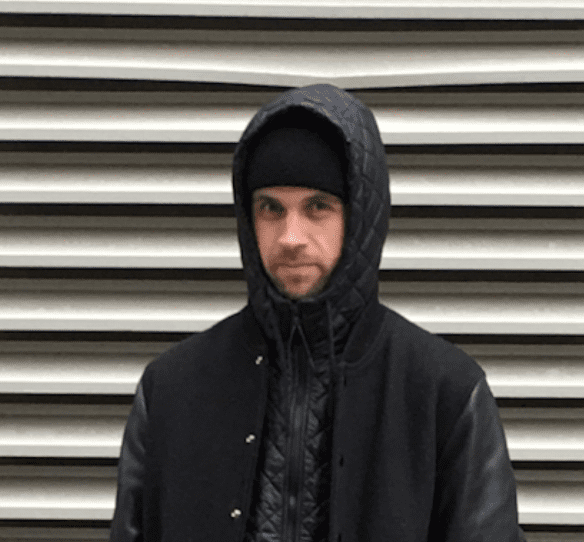
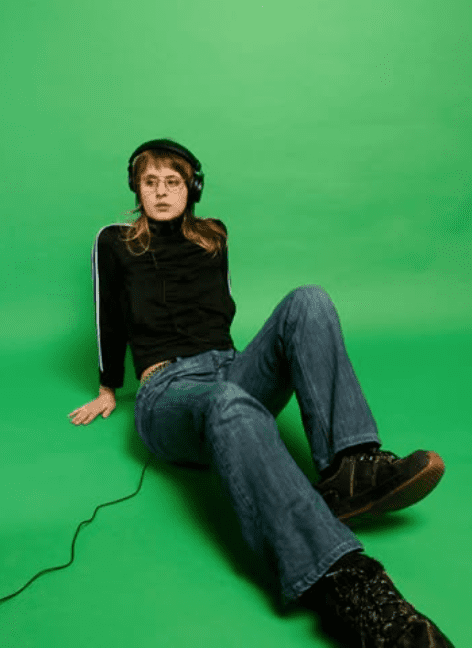
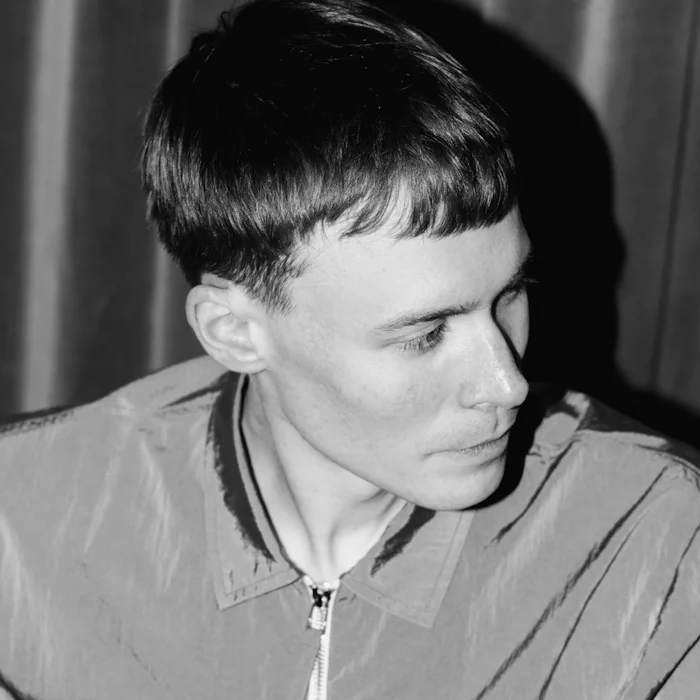
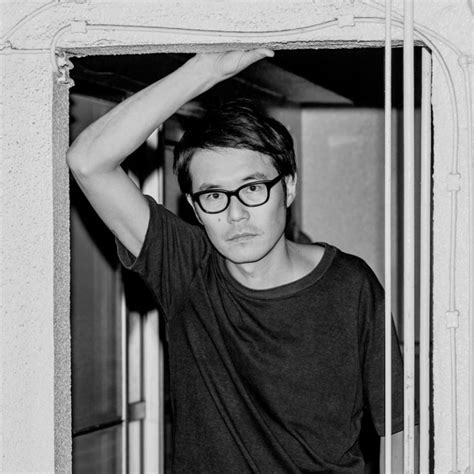
In February 2024, the Drummondville Symphony Orchestra, under the direction of Julien Proulx, launched the first symphonic project dedicated to the repertoire of Benoit Pinette, also known as Tire le coyote. Two years have passed since the experience was revived by the OSD and TLC, this time at the Maison symphonique, on Friday, January 9, at 8 p.m. It should be noted that the excellent Innu soprano Elizabeth St-Gelais is invited to perform several pieces with Tire le coyote. Julien Proulx will also be conducting the Quebec Symphony Orchestra for the same program, presented on March 4 at the Grand Théâtre de Québec. On the eve of rehearsals, Benoit Pinette graciously agreed to the following interview, conducted by Alain Brunet.
To kick off 2026, what could be better than a jazz concert where improvisation takes center stage? That’s precisely what Damián Birbrier, the half-Argentine, half-Brazilian saxophonist, offers in his project “Aguas: Time and Memories.” For this occasion, he will be accompanied by Vovô Saramanda on percussion, Manoel Vieira on piano and accordion, and Antoine Rocherfort on double bass. Damián has a special connection with water, as it has been the common thread throughout his family’s many moves over generations. To this, he adds the concepts of time and memory to trace his multiple identities through improvised music. In fact, an album of his latest live concert in a trio format with Vovô and Antoine is in the works and will be released soon. Our journalist Sandra Gasana spoke with him a few days before the concert which will take place on Thursday, January 8 at Casa del Popolo starting at 8 p.m.
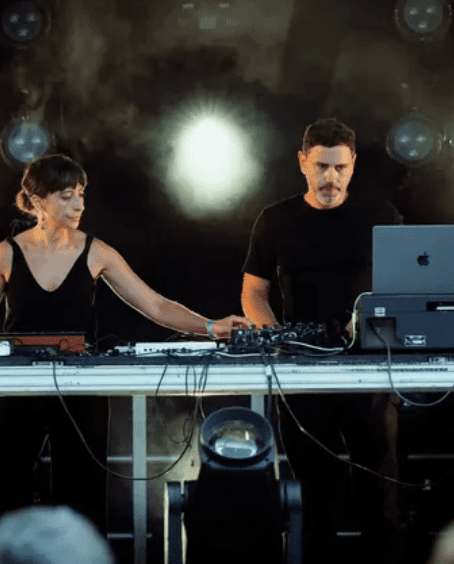
On January 10, SAT will kick off the Dômesicle winter series with a program of “hypnotic techno” featuring Fahad Ahmad aka Measure Divide, founder of Toronto’s electronic music collective FORMAT, alongside MTL DJs Mike Larry and Xia.
“A pillar of Toronto’s underground scene for over a decade and founder of the FORMAT collective, Measure Divide will deliver intricate, hard-hitting techno with unconventional arrangements. Montreal-based DJs Mike Larry and Xia will captivate the dancefloor—Mike with his marathon set blending frenetic beats and trance, Xia with her eclectic, ethereal, and psychedelic approach.
A night of pure techno that promises to transport you to another dimension.”
PAN M 360 editor Alain Brunet could interview Measure Divide before his coming in MTL. Here is the conversation !
*Pass through our doors before 11pm and benefit from preferential rates (limited quantity). ticket scanning at the SAT entrance must be done before the deadline indicated on your ticket please anticipate the possible wait at the entrance and the related scan times our staff will not be held responsible for any delays latecomers will pay the difference with the Last Chance rate
Initiated and still led by Le Vent du Nord, the Eve of the Pre-Vigil has become a Montreal tradition. The 2025 edition will, of course, feature Le Vent du Nord on stage, but also Le Diable à Cinq, the maternal blessing of Marilyn Castonguay, and much more: three hours of dancing under the guidance of the Aucoin Family. From Lévis and Bellechasse County, this clan has established itself among the best groups dedicated to traditional dance evenings. For their grooves, for their soloists Sabin Jacques (accordion) and Martin Aucoin (violin), for the harmonic support of Rachel Aucoin (piano), for the caller and violinist Capucine Maldague, and more, the dancing promises to be wild at Club Soda on Tuesday, December 30, from 7:30 p.m. until 1:30 a.m. the following morning!
Killing two birds with one stone, that’s a bit of the result of the recent release of a new album of contemporary Quebec music, Chronos, Kaïros, and Aiôn (READ THE REVIEW HERE). It’s a very young string quartet (formed in 2024) that performs three works by as many Montreal composers, moreover on a new label created for the occasion, Mnémosyne. And since everything is somehow linked, one of the composers featured on the album’s program, Louis-Michel Tougas, is also the founder of the label in question. At the end of 2025, this is not only a beautiful gift for the next generation of creative music, but also a promising initiative as the protagonists announce many other projects in 2026. PANM360 wanted to learn more and brought together the composer and label founder Louis-Michel Tougas, as well as the violinist Meggie Lacombe, a member of the Quatuor Mémoire, to talk about all of this.
PANM360: Hello to both of you. Let’s start with the Quartet. What inspired you to form a string quartet, Meggie, and what is your mission?
Meggie Lacombe: Our mission is the creation of contemporary music. In fact, Audréanne (Filion, cello) and I met at the Montreal Conservatory of Music. We were quite interested in contemporary music. Then we had the idea, during our master’s, of maybe one day having a contemporary music quartet. Then, at McGill, I met Bailey (Wantush, violin) who also specialises in contemporary music. After that, we heard about Marilou (Lepage, viola) and we decided to build this project together.
PANM360: It’s music that has been calling out to you for a long time… Why?
Meggie Lacombe: We each have our reasons, of course. As far as I’m concerned, what I really like about contemporary music is the search for different textures, different sounds. The search for music that breaks from tradition, that is quite different. So, it’s both discovering, but also, I would say, deepening my knowledge. It is also music that opens up the possibility of combining with other artistic mediums.
PANM360: Contemporary music is a very broad label. Do you plan to cover all genres, Avant-garde/experimental, Minimalism, Neo-romanticism, etc.?
Meggie Lacombe: For the moment, I think we’re aiming rather broadly. And maybe eventually, who knows, we’ll really discover a style that we really and exclusively want to go for. We would also like to do more experimental concert projects, with scenic elements. We particularly enjoy working with composers from Montreal. That’s an important focus.
PANM360: And it’s a hyper-rich environment, with a diverse and quite numerous next generation. Collectif9, No Hay Banda, Ensemble Éclat, Paramirabo…
Meggie Lacombe: Yes, we know each other well. I feel that we also support each other well among ourselves. No Hay Banda invited us on January 19 to do a double bill with them. Audréanne often plays with them. I think she’s going to play with Paramirabo too. That said, I would say that our difference is that we are a string quartet.
PANM360: There are two major contemporary string quartets located in Montreal, the Bozzini and the Molinari…
Meggie Lacombe: From a personal point of view, when I was young, it was my dream to have a quartet like the Molinari. The Molinari’s violist, Frédéric Lambert, was my teacher at McGill. He was Marilou’s teacher too. So, it happened that we had questions and then we asked them for advice. They have been a great support for us. Then, the Bozzini contacted us to participate in Québec Musque Parallèle 2025 with them.
PANM360: Let’s talk about the album. What led you to choose these works, including one by Louis-Michel?
Meggie Lacombe: The project started with Olivier Saint-Pierre, who wanted to record his piece. There was no talk of the album or recording other pieces yet. After that, the idea came to record Louis-Michel’s piece and Florence’s piece that we were already learning. The idea of the label was part of the projects we had. Finally, we combined everything. I didn’t expect it to happen so quickly, which is pretty awesome.
PANM360: Olivier St-Pierre’s piece is substantial, about 35 minutes. The theme is Time, according to the three concepts in ancient Greece. Tell me about Chronos, Kairos, and Aiôn.
Meggie Lacombe: It was a challenge. Olivier explores the relationship with time, with Chronos the linear time, Kairos the opportune time, like “the right moment,” and Aiôn the cyclical time. We have to play the piece with four metronomes, one for each of us, because we are at different tempos throughout the piece! At certain times, even though we have different tempos, we end up playing together. I think there are four places in the room where that happens. Then we shift again. Then, within the piece itself, there are parts where it is extremely calculated, which we can associate more with Chronos, and parts where we start to improvise a bit harmonically. They are like kinds of improvisation boxes. And there, we associate it with opportunity, Kairos. For Aiôn, the cycle, I see it in the canons that come back and are very carefully timed out.
I would say that one of the great challenges of the piece is that even though we have four different tempos, we still have to manage to play together and create atmospheres together. Then it’s a piece that was physically very demanding as well, because there was no stop. You have to play very slowly. I felt like I was falling into a bit of a meditative trance. I think of the Louanges in Messiaen’s Quartet for the End of Time. It’s almost painful for the body because it’s so slow. There was a bit of that, but it also brings us into a space that I find really interesting as an interpreter.
PANM360: It’s very interesting these insights you bring to the piece. It greatly enhances the listening experience and adds depth to my review of the album. Louis-Michel, you offered a Quartet (No. 2) for this album. What can you tell us about it?
Louis-Michel Tougas: In the piece, I tried to develop elements that I had started in my first Quartet, which was written for the Bozzini Quartet, notably the question of polyrhythm. It’s one of the aspects that made my piece join Olivier’s, the polytemporal treatment, if you will, the stratification of several temporalities. Then in the piece for Bozzini, I had also used independent metronomes, then it was a bit of a challenge to take up this idea of rhythmic stratification again, but without the technological aspect. It’s actually an idea from the late Middle Ages with Ars subtilia, correlation canons, having a motif that appears at a certain speed, then having the same motif in a related pattern that appears at a distinct speed, connected by a specific ratio.
It’s also somewhat of an idea that Olivier took for his quartet, to link the harmonic aspect and then the rhythmic aspect, that is, to have pitch intervals formulated by ratios that are also used in the rhythm. It’s the kind of technique we share in our ways of working. That has been an important aspect, so the kind of constant presentation of stretched, contracted patterns, then always simultaneously, somewhat like we find in some Renaissance or late Middle Ages music, but obviously with a different aesthetic.
That’s one aspect. Another aspect was, let’s say, having an accumulation of different materials. We start the work with one or two types of motifs, themes, if you will, that are in interaction, then at each section, one or two are added and culminate. The accumulation eventually creates this kind of maze of motifs that interact, then are exchanged between the members of the quartet. At certain moments in the piece, the motifs are presented individually, then at other times, they combine and create composite motifs, if you will, among the instrumentalists.
PANM360: In this quartet, what did you find the most difficult to master, Meggie?
Meggie Lacombe: I would say the rhythm. The tempo relationships between the sections, too. There is something very mathematical and it requires great precision. If we miss one of the transitions, we’ll be a bit lost for the rest of the piece. It was also about getting the rhythms just right, which can seem almost random, but are actually very, very calculated.
PANM360: Releasing this album on a brand new label, like two simultaneous births, was that planned from the beginning? It’s still courageous…
Louis-Michel Tougas: It was an incredibly lucky moment, I think. I had been thinking about this for a long time, not necessarily to start a record label or a company, but to have access to high-quality recordings of works that composers produce, particularly in Montreal. One of the issues we’ve been discussing with colleagues for years is that we compose works for six months, eight months, a year, then the work is played once, in a room that is not necessarily ideal, with all sorts of technical issues, etc. That’s the end of the work’s life in too many cases, unfortunately.
The idea of recording just came from that observation. The work cannot be redone many times, because they are expensive projects, they take a lot of time, they involve a lot of people, especially ensemble pieces. At least, if we can have a reference recording of those works, it ensures their longevity.
Through conversations with the composers around me, with the ensembles as well, we said to ourselves, well, it would be nice if we set up some kind of platform where people could propose their works, then we could record that, then give them a life after the creation. Ideally, of course, the works would be replayed, but at least, there would be this possibility of memory. Then it would also be an opportunity for composers, ensembles, to present this work internationally, on the Internet, to have some form of visibility.
When Olivier Saint-Pierre approached me, he said, I would like to record my piece. It would be nice to have a reference recording where it’s not just two mics at the front of the stage, at the creation concert. I did some work, not quite like a pop production job, but still a bit inspired by that. I have a background as a jazz and pop drummer, and also as a recording student at McGill.
I had a bit of production experience beyond just recording a concert like a documentary. That’s something that interested me, bringing that approach to contemporary and classical music, producing this album somewhat like a pop album, meaning we edited, there are sections, there are cuts, there’s mixing, there are eight mics on the string quartet, there are all sorts of subtle treatments. It doesn’t sound like a pop album, obviously.
When you listen to the album, you think it’s a realistic recording. We are definitely in a realistic aesthetic, but there is still that work that has been done to give, let’s say, the best possible version of the piece or one of the best possible versions.
PANM360: For the Mnémosyne label, is it the same mission as the Quatuor Mémoire? The Montreal/Quebec repertoire?
Louis-Michel Tougas: I wouldn’t say that we’re going to limit ourselves to 100% Quebec repertoire. For the moment, let’s say, these are the opportunities that are presenting themselves. There are ensembles I’m talking to who also want to record international pieces.
PANM360: What’s coming up for Mnemosyne?
Louis-Michel Tougas: I don’t know to what extent I can give names, because not everything is signed in the contracts. But I can tell you that there are several young contemporary music ensembles in Montreal that have shown interest in releasing albums. Also, several female composers. So, in 2026, there should be several releases, probably before the summer, depending on whether the conditions allow it. But we hope so.
PANM360: And for the Quatuor Mémoire, Meggie?
Meggie Lacombe: For winter and spring, we have three concerts coming up. On January 19, we have our double bill with No Hay Banda. We’re going to perform a piece by Hannah A. Barnes and Lily Koslow. We’re going to explore something a bit more theatrical with two singers.
On February 20, we’re playing another work by Olivier St-Pierre. It’s a concerto for quartet and orchestra. It’s going to be with the Ensemble Éclat. It’s organised by the SMCQ.
Finally, on April 17, we have a concert at the Chapelle du Bon-Pasteur (located at the Canadian Centre for Architecture until repairs to the original building are completed). It will be a piece by Francis Battah.
PANM360: Thank you both for being present, and especially for creating new opportunities for local classical music. Good luck.
Like a temple nestled in the vertiginous heights of the Himalayas, as suggested by the Neige sur le gong program, the Gamelan studio is isolated from the city, on the top floor of the UdeM’s music faculty. The space is filled with ancient objects, passed down from generation to generation, creating a fantastical atmosphere: representations of Hindu deities, paper lamps, and gilded ornamental banners.
It’s a world unto itself, a gateway to Balinese culture, kept alive with fervor for nearly 40 years, not only by the faculty but also thanks to the selfless dedication of its members. I’ve been playing gamelan for almost a year now, but some members of the group have been there since the very beginning, in the late 1980s. That clearly shows that something magical happens there.
The biannual gamelan concerts are among the most attended at the faculty. There are several reasons for this.
Although it may seem like a fringe art form in North America, gamelan is a vibrant cultural phenomenon in Bali, continuing to produce virtuoso composers and performers. Between conservatories and a vast network of villages with distinct sounds, there’s always something to revitalize this art, and the many members of Giri Kedaton who regularly travel to Bali return with a wealth of inspiration and skill.
Before the concert on December 20th, I met with Laurent Bellemare to better understand the pieces, the people and the story behind this music.
For ten years, the Dômesicle series has been transforming the Satosphere, the 360° dome of the Society for Arts and Technology, into a playground dedicated to dance music. The series pays tribute to Montreal’s dynamic music scene, creating a unique atmosphere where space, sound, and light merge with the nighttime crowd. To mark its tenth anniversary, SAT is pulling out all the stops this year by inviting headliners from around the world. Beyond this outward-looking perspective, the programming for the upcoming Dômesicle events also reflects a deep immersion in the collectives, labels, and record stores that shape Montreal’s musical ecosystem.
From La Rama to Voyage Funktastique, via support for emerging collectives such as Cybercunt, every Saturday ritual becomes a world unto itself. Behind this new artistic direction is Maxence Dorais. After successfully organizing events for Homegrown Harvest for several years and then joining the SAT, Dorais’ arrival coincides with a new wave of internal programming that has further strengthened the SAT’s position and its famous dome in Montreal’s cultural landscape. Building on information previously revealed by the EAF (see interview), this conversation explores Maxence Dorais’ vision for programming: balancing international and local artists, the role of local collectives, and the current pulse of Montreal’s electronic music scene.
This season marks a decade of late nights where sound, light, and space come together, bringing together international headliners and the collectives that shape Montreal’s electronic music scene.
With nine separate events scheduled between January 10 and March 21, Dômesicle could well be the light at the end of the tunnel as we wait for the northern winter to end. The artists have been announced and the dates are already marked on our calendars. As for the performances, they are given free rein, but with Maxence Dorais and the SAT team at the helm, there is no doubt that the whole thing will be a success.
In the meantime, here are short presentations by the Society for Arts and Technology of the collectives and artists featured in this new season of Dômesicle.
“Measure Divide, a pillar of Toronto’s underground scene for over a decade and founder of the FORMAT collective, will deliver detailed, powerful techno with unconventional arrangements. Montreal DJs Mike Larry and Xia will captivate the dance floor, the former with his marathon set mixing frenetic beats and trance, the latter with his eclectic, ethereal, and psychedelic approach.
A night of pure techno that promises to transport you to another dimension. “
Get ready for a night of groove, funk, house, and disco with Montreal collective Voyage Funktastique, represented by one of its co-founders, Walla P, and none other than Alina from the Ferias collective.
Embark on a boundless musical journey with Walla P, one of the two minds behind Voyage Funktastique—a radio show, record label, and monthly party. A Montreal DJ with over 12 years of experience, he’ll keep you dancing non-stop with an irresistible mix of boogie, disco, jazz, and modern funk. Alongside him, Alina, co-organizer of the Montreal collective Ferias, will get you moving with an eclectic set featuring funk, dub, Afro-Latin, breaks, and house.
Two worlds, one dance floor that will leave no one cold. Source: S.A.T.
An evening co-presented by La Rama featuring house, electro, techno, and rave music with the co-founders of the famous label Klasse Wrecks, Luca Lozano & Mr. Ho, and local DJs badgalquirit and donotstealmyname in b2b.
Make way for a legendary set somewhere between the UK and Hong Kong with a cult duo from the international club scene: Luca Lozano & Mr. Ho. They will deliver a set combining house, breakbeat, offbeat techno, and 90s rave influences, with their usual playful and unpredictable energy. Montreal DJs badgalquirit and donotstealmyname will captivate the dance floor with a b2b set fusing techno, house, and trancKe.
“Co-founder of the legendary Voam label, Pariah will offer an unpredictable, instinctive and powerful set, free from genre constraints and with an immediate impact on the body. Alongside him, the founder of Montreal’s underground electro festival HALTE, J.rom, will blend groove with powerful bass and experimental sound designs, while UME will transform the dancefloor into a sexy and playful space with his unique mix of breakbeat, acid and ghetto tech.
“Producer by day and master of psychedelic atmospheres by night, WataIgarashi will deliver a techno set that is as trippy as it is refined and meticulously precise. Marie Davidson will offer us her raw and elegant electro with post-punk energy, where the dancefloor becomes her outlet – to everyone’s delight. Asha, co-founder of the Ether collective, will also make her mark with her bass-heavy, percussive, and polyrhythmic sounds.”
“Punchy bass. Hypnotic synths. Solid grooves. Dr. Rubinstein will unleash her techno rave, blending acid basslines, eclectic selections, and non-stop energy. She is joined by two Montreal duos: Safia Nihil – a project of DBY and Shadya from Chez.Kito.Kat Records – who will take you on a journey through a set of downtempo lofi, modal jazz, acid, and North African sounds; and AGUMA, who will offer a live performance with polyrhythmic and immersive textures, somewhere between dub, jazz, and fourth world music.”
An evening to lose oneself in sound, between sonic experiments and moments of collective trance.”
“CCL is coming to Montreal for a set that will transcend genres, blending explosive techno, steppers, 80s-inspired synths, footwork, and psychedelic textures. An international figure in the electronic music scene, they have been praised for their bold vision and captivating sets – in other words, it promises to be something special. And that’s not even mentioning Montreal DJs laced (live) and Coussy, who will spice up this wild night with IDM and tech house sets that are as chaotic as they are mesmerizing.”
“Make way for a new generation of Montreal electro artists, whose energetic sets will draw you onto the dancefloor. BRIb2b NAË will open with a fiery mix of afro, house and UKG; SCOTTIEb2b MARCOCCINO will take over with a dose of hard-hitting techno and dark disco; and DAMACADAMb2b CHAR.L.N will close with a set between Latin groove, hypnotic techno and incandescent hard groove.
“From Berlin, top-tier DJ and producer SALOME lands at SAT to bring us her electro, techno, and acid sound that has set clubs and festivals ablaze worldwide. In a back-to-back set, our local gems Pyromane (from the Cybercunt collective) and Cori (from the T.I.T.S. collective) will deliver an eclectic and maximalist set with fast tempos, powerful kicks, and complex percussive structures.
No rules here. Just the night, the dance floor, and the music that gets back to the station.
Leading ensembles in the international, Canadian, and Quebec Baroque revival, Ensemble Caprice and Ensemble ArtChoral are still directed by their founder, conductor, choirmaster, composer, and flautist Matthias Maute. Caprice has released some twenty albums on the Atma Classique and Analekta labels. ArtChoral has released about ten outstanding recordings, also on the Atma Classique label.
In this particular case, Caprice’s baroque inclination is honored in this album dedicated to Vivaldi. This recording aims to be “both historical and imaginative: a reconstruction of Antonio Vivaldi’s lost concertos evoking four nations—La Francia, L’Inghilterra, La Spagna, and Il Gran Mogol. Mentioned in an 18th-century catalogue (1759), three of these concertos had fallen into oblivion, with the exception of Il Gran Mogol, rediscovered in 2010. Drawing on his expertise in baroque recomposition, Matthias Maute breathes new life into these lost works, scrupulously respecting the style of the Red Priest.”
The holiday season and its many musical programs include this year’s Mrs. Claus concert. Mezzo Kristin Hoff, soprano Jacqueline Woodley, and harpist Juliette Duguay will perform a selection of Christmas carols, including compositions by women, on Tuesday, December 16, at 5 p.m. in the magnificent Art Deco venue Le 9e. This venue is back in service, much to the delight of Montrealers. It was once the legendary dining room of the Eaton’s department store in downtown Montreal. The goal is to welcome families, parents and children to late afternoon concerts that are adapted to family life. Mère-Noël is an excellent opportunity to familiarize yourself with this format.
Kristin Hoff answers PAN M 360’s questions about this festive event. Our interviewee is the co-founder of Musique 3 Femmes (M3F), a contemporary opera company dedicated to “amplifying the work of female opera creators,” “to focus on promoting emerging female and non-binary composers and librettists,” and by “the collective desire to imagine opera through a new lens—a lens where female creators have the license to create innovative stories and define new worlds on the opera stage.”
Program Cantique de Noël – A. Adam Noël Blanc/White Christmas – I. Berlin O nuit de paix/Night of Silence – F. Gruber/D. Kantor Trois anges sont venus ce soir – A. Holmès, arr. G. Patenaude Do you hear what I hear? – G. Shayne He shall feed his flock/Come unto Him, Messiah – G.F. Handel A la nanita – J. Ramón Gomis Interlude, A Ceremony of Carols – B. Britten Nana – M. de Falla Mariae Wiegenlied – M. Reger Greensleeves – traditionnel, arr. G. Patenaude Marie-Noël – R. Charlebois Happy Christmas – J. Lennon, arr. J. Patenaude Petit Papa Noël – H. Martin, arr. G. Patenaude Noël, c’est l’amour – N. Glanzberg, arr. G. Patenaude
Artists
Kristin Hoff, Mezzo-soprano and artistic director of OpéraM3F at the 9e Grande Salle, she possesses “an appealing clarity and emotional weight.” – New York Times
Jacqueline Woodley, soprano, “Urgent and compelling… an emotional journey” – The Washington Post
Juliette Duguay, harpist, 2025 European Prize winner in the String Category
Among the jewels of choral singing, one of the great specialties of English music in the classical repertoire, The Tallis Scholars are considered pioneers. A veritable institution in the United Kingdom, founded in 1973 by Peter Phillips, whom we interviewed in the US during a tour by this magnificent vocal ensemble, which will be stopping in Montreal on Saturday, December 13, at St. Andrew & St. Paul’s Church (3415 Redpath Street, corner of Sherbrooke, Montreal, QC, Canada).
So, for an intimate, spiritual, and enveloping Christmas program, here is a suggestion that cannot disappoint anyone who loves sacred music. Let Peter Phillips kindly explain it all to us!
Publicité panam
PAN M 360: You have devoted your life to it, achieving great mastery. You will soon be arriving in Montreal with your ensemble. You will be presenting a very interesting program of English sacred music from several eras, from Benjamin Britten to John Taverner.
Peter Phillips : Yes, old John Taverner, since there are two of them—there is also his contemporary, without an r (John Tavener, 1944–2013).
PAN M 360: How do you feel about your position as music director today in 2025, after 52 years of working with the same ensemble, which has probably changed a lot over the years?
Peter Phillips : As you say, we have been singing this music for 52 years, and I myself believe I have become a true expert in Renaissance polyphony. I do not claim to be a conductor of orchestras, soloists, or large choirs. I am a specialist in a very specific field, namely chamber vocal ensembles with 10 singers. In the same vein, I have had a career as a conductor for other ensembles, but I also have a career as a conductor of other chamber vocal ensembles, particularly in Europe.
PAN M 360: Over the years, how have you been able to refine this approach and make it more sensitive?
Peter Phillips : You know, there are different stages to go through. Even if it’s early or baroque music, we’ve reached certain levels of interpretation and understanding of this repertoire. We’ve achieved this by working tirelessly, trying to understand what the composers of early music did, rather than trying to force it into a modern mold.
People have often tried to make this vocal music sound like those 19th-century romantic ensembles, with vibrato, incorrect intonation, in short, a bad mix. Soloists have also been highlighted, when in fact, with this kind of music, the spotlight is not on any one person. It is a collective activity, like that of a string quartet.
When we are on stage, there are 10 singers in front of me, and we can embody a very sensitive, very small ensemble that speaks to you. It’s done on a small scale; it’s not huge music.
PAN M 360: It’s more subtle, more intimate, and more spiritual.
Peter Phillips : Yes.
PAN M 360: Since The Tallis Scholars have been around for 52 years, one imagines a multigenerational team. How do you manage this artistically?
Peter Phillips : I would say that my vision hasn’t changed fundamentally. What I wanted from these singers from the beginning is what I want today, even though this style is much better known now. So the younger performers who sing with us arrive with greater knowledge. They know what they want and what is expected of them.
When we started, we began with nothing. Today, our oldest singers are now very experienced and they continue. I dare to believe that they are happy, that they sincerely love this repertoire, otherwise they wouldn’t spend all their time devoted to it!
PAN M 360: So, let’s talk about the program for this North American tour. First, Missa Puer natus est nobis (A Mass: A Child Is Born to Us) by Thomas Tallis (1505-1585).
Peter Phillips : Of course, we chose this piece for a Christmas concert. It is also one of Tallis’ most beautiful works. Written for seven voices, this music is grandiose and designed for a grand occasion. It was performed at the wedding of King Philip II of Spain and Mary Tudor, Queen of England. It was an occasion for the composer, and Tallis composed music as grand as he could. Sometimes this work is accompanied by instruments, but that is not the case here.
PAN M 360: Yes. Now let’s talk about this work by William Byrd (1540-1623), Votive Mass of the Virgin, composed of five parts.
Peter Phillips : It’s a somewhat mismatched list because the first part (Ave maris stella) isn’t actually part of this mass. I included it in this program because it’s very beautiful and supports the rest of the works. Ave maris stella is obviously a reference to Mary, and all the pieces that follow, as the title suggests, are votive antiphons for the Virgin. This music by Byrd, who excelled in composing for small ensembles, unfolds like a puzzle whose small pieces gradually come together. And if you understand what is happening during the performance, you realize that it is very satisfying to sing this and also, of course, to listen to it.
PAN M 360: Let’s continue with the contemporary work by Matthew Martin (1976-), Salve Regina.
Peter Phillips : It’s an exciting project, commissioned by Columbia University. In my opinion, it’s a great work by Matthew Martin, a young British composer who knows us well. What’s great about him is that he understands this aesthetic for small vocal ensembles. And the thing about him is that he knows how to write for such an ensemble, but it’s not ordinary or normal. He provides an unusual score, consisting of four soprano parts, and then two alto parts below the sopranos, which creates a very special sound. A composer who wants to write for us has to understand this use of voices, and Matthew is capable of doing that.
PAN M 360: How does this work fit into the contemporary corpus?
Peter Phillips : Yes, it’s wonderfully tonal, but it can also be very dissonant! The idea here is not simply to sound intelligent, and even less to produce a work that has nothing to do with the others.
PAN M 360: Dissonance here is a tool, a means to an end, not an end in itself.
Peter Phillips :I think so! I find this contemporary style very compelling. I enjoy listening to it all the time. We don’t want to exclude difficult pieces and stick only to the “normal” harmonies that we also like. We also enjoy recent contributions and mix them in with the rest. We present this ancient and contemporary music as a whole.
PAN M 360: Let’s move on to the second work by Thomas Tallis on the program: Missa Puer natus est nobis – Sanctus et Agnus Dei.
Peter Phillips : When listening to this piece, you may wonder where the Credo is. Well, there is no Credo, because it has been lost. The other movements have been found, but the score for the Credo has never been recovered. I’m afraid there’s nothing we can do about it, unless a miracle happens and this piece of the score is hidden away in other ancient manuscripts that haven’t been analyzed in depth or haven’t been found yet. So it’s a challenge for the ensemble to play this work without the Credo.
PAN M 360: Very interesting! Early music specialists like you are also historians, archaeologists, and investigators!
Peter Phillips : Yes, you’re right. It’s a kind of wonderful detective work! When you play early or Baroque music, if you don’t like history, you shouldn’t work on this repertoire. But the most important thing is to love this music.
PAN M 360: Of course. But historical knowledge is part of the enjoyment and passion that leads to a deep understanding of the period in which this music was composed.
Peter Phillips : That’s absolutely right. Also, one of the most exciting aspects of this work is, in fact, that some parts have a seven-voice structure. That’s how the score was written, even though we’re missing a piece of it. So it’s the job of a modern person like you or me to fill in those missing notes.
PAN M 360: Absolutely! Now Benjamin Britten (1913-1976), the second modern composer on the program, and my favorite English composer, whose work A Hymn to the Virgin you will be playing.
Peter Phillips : It’s a central theme of this program. And also, it’s extremely beautiful. Apparently, Britten wrote this music when he was 16 years old. Like Mozart, he was already excellent at that young age! You know, England and the United Kingdom don’t have that many great composers.
PAN M 360: On the other hand, the present period is very prolific, and you can count on a fantastic tradition in choral music. And The Tallis Scholars are at the heart of this tradition.
Peter Phillips :Yes, it’s exciting, that’s true.
PAN m 360: So let’s move on to John Taverner (1490–1545) and his work Mater Christi.
Peter Phillips : Well, it’s an antiphony and also a prayer to the Virgin Mary. Antiphony is a musical technique in which two vocal subgroups respond to each other alternately and come together in chorus. Mater Christi is also a central theme of the concert and an unusual piece for England, as the work was begun when Catholicism was very much present. This sacred work is very elaborate and rich, and Taverner was particularly skilled in this style, which he later had to adapt to the Protestant Reformation. In my opinion, it is one of his most concise pieces. His genius is very evident in it. So let’s perform the score from before the Protestant Reformation, which Taverner had kept. Another interesting aspect is that this piece was composed for young boys or castrati, with very high parts and also low parts. This compositional technique has been lost over time, but we manage to keep it alive in a way. For the high parts, we had to develop appropriate techniques to render the score properly. It was a difficult challenge.
PAN M 360: As we said earlier, the resurgence of baroque music dates back half a century now. There is a much deeper, more advanced knowledge, I would say. It’s your whole life. You’ve discovered so many things!
Peter Phillips : Yes. The expertise is very different from what it was in the 1970s. There are more people practicing this art, more talent, more interest. In the beginning, there were people who were passionate about it, but not necessarily the best singers. Now that passion is complemented by education, training, and technical refinement. We have both: passion and virtuosity. And singers can work more, instead of pursuing a career in opera.
PAN M 360: Let us conclude with the Magnificat by John Nesbett (?-1488).
Peter Phillips : It’s a difficult piece to describe, but it’s very enjoyable to perform. That’s why we chose it! It’s worth noting that this work appears very early in The Eton Choirbook, which brings together a large number of works written during this specific period. I don’t know how to describe this work without you hearing it, but it has a style of music very similar to brass instruments, with fairly sharp cuts. It’s really fun to sing! It’s also a beautiful conclusion to this program.
If you’re in Quebec City on December 11th, there are still tickets available for this very special Christmas program curated by Bernard Labadie. It’s a series of Baroque Christmas concertos, some rustic, others naive, and still others spiritual. These works were originally recorded in 1993 on the album Simphonies des Noëls, which enjoyed considerable success internationally, hence its re-release. Baroque and pre-Baroque works by Charpentier, Torelli, Corrette, Pez, and Corelli will be performed to warm hearts and evoke memories of Christmases past. Laurent Patenaude, Director of Artistic Administration at Les Violons du Roy, explains this exceptional program.
• Noëls pour les instruments, H. 531, H. 534 • Nuit extrait de In Nativitatem Domini Canticum, H. 416
G. TORELLI
Concerto a 4 en sol mineur, op. 8 n° 6 In forma di Pastorale per il Santissimo Natale
M. CORRETTE
Sinfonia I sur des Noëls François et Etrangers
J.C. PEZ
Concerto pastorale en fa majeur
A. CORELLI
Concerto grosso en sol mineur, op. 6 n° 8 Fatto per la note di Natale
Publicité panam
This fall, Le Vent du Nord released Voisinages, a highly mature album where all aspects of their creative vision are respected in this flagship of Quebec traditional music: mastery of the traditional repertoire, inventive songwriting, and a modernization of both the repertoire and its performance. Moreover, a new member has shone within the quintet since Simon Beaudry’s departure: André “Dédé” Gagné has found his place and completes the lineup, which also includes Nicolas Boulerice, Olivier “Olo” Demers, André Brunet, and Réjean Brunet. This Friday, December 13, Le Vent du Nord plans to fill the Grand Théâtre de Québec to capacity as part of a tour that began last October and will continue until the end of 2026, interspersed with symphonic concerts, including those on December 18 in Drummondville and December 21 in Victoriaville, not to mention La Veillée de l’avant-veille on December 30 at Club Soda in Montreal.