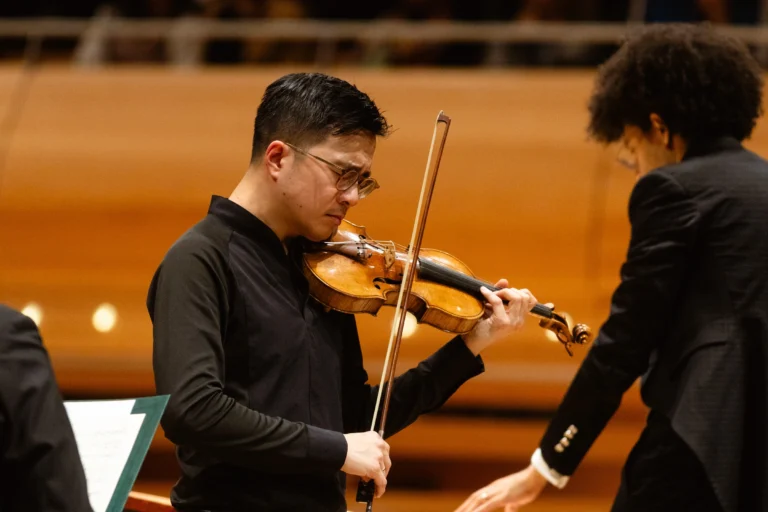
OSM | Andrew Wan and OSM’s Daring Collaboration

by Rédaction PAN M 360

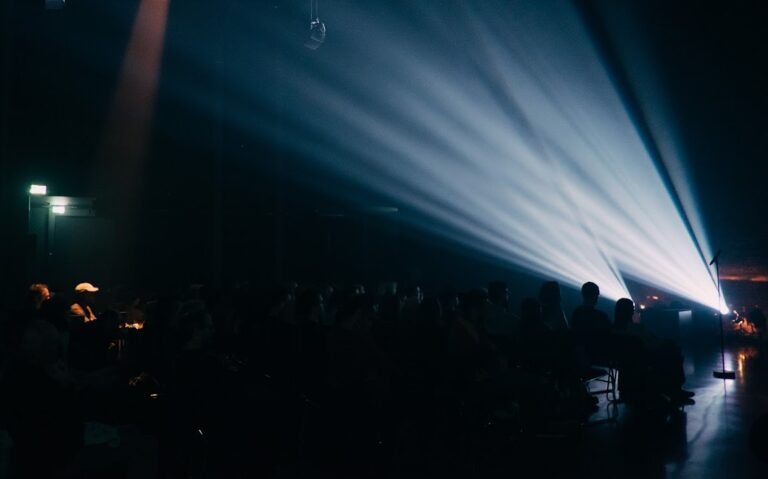
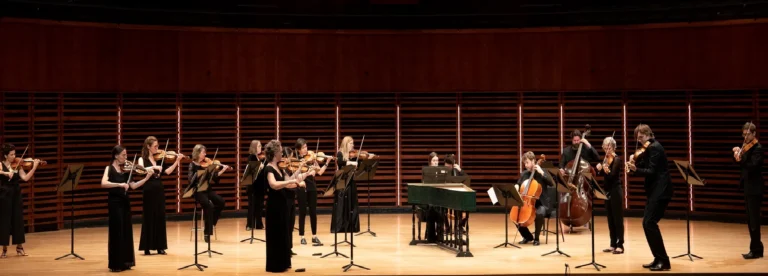
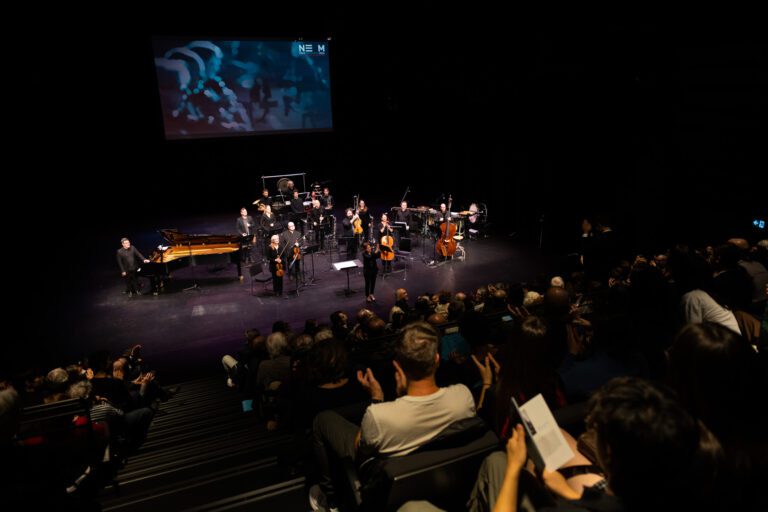
A packed house turned out on Wednesday evening for a concert featuring both the classics and the bold. From the stage of the Maison symphonique, the OSM offered an interesting arrangement of works orbiting around Beethoven’s Violin Concerto in D major. It was a concert that played with conventional form. We had Beethoven and Mozart, but instead of Haydn to complete the classical triumvirate, we had Bach and, above all, Webern!

The first part was organized as a demonstration of the long evolution of concert music. From the end of the Baroque period with Bach’s Musical Offering (composed in 1747), we move on to the very classical, but always pleasant and delightful, Mozart symphony, in this case, Symphony no. 35 in D major, often called Haffner, composed in 1782. The first part concludes with Webern’s Passacaglia, composed in 1908.

This work is something of a hidden gem in this program. The composer’s first published work draws both on the classical tradition and presents an overture to a new musical language. Not quite atonal yet, this language translates into a particular exploration of timbre, harmony and melody structure. Whereas Bach’s piece (arranged by Webern, it should be noted) presented the typical composition of the melody, and the Mozart demonstrated its intuitive and charismatic mastery, the Passacaglia opens Pandora’s box by exposing the possibilities. Graver and more intense than the other pieces on the program, this work is certainly more striking, and we are delighted to see it occupy such an important place on the program.

The orchestra rose to the challenges presented by the works throughout the concert. The strings were in the limelight, with impeccable playing and admirable finesse in a wide variety of works. The quality of the woodwinds and brass is also to be commended, particularly during a rather demanding Bach work. The virtuoso performance of the Webern probably captivated several members of the audience, especially as the intensity of the work matched the fiery new image of the OSM and its conductor Rafael Payare.

After the intermission, it was time for the pièce de résistance of the concert. Andrew Wan gave us a memorable version of this Violin Concerto in D major. The self-confidence and technical quality of the OSM’s first violin, here soloist, were evident, especially in the long solo parts of the concerto. We savour the notes that seem so precious under Wan’s virtuoso fingers. Throughout the work, one senses a remarkably balanced continuity, even through the modulations and transitions between sections. One admires the apparent collaboration between the orchestra and its first violin. We might have liked to see Wan take a little more space on stage, particularly in terms of volume and presence, but we can’t criticize his flawless interpretation.

As the first stage of the OSM’s Beethovenian journey, the concert can be heard again tonight, Thursday, October 26, at 7:30 p.m. The OSM will also present Symphony No. 7 on November 8. For more details, visit the OSM’s upcoming concerts page.

Photo credit: Gabriel Fournier
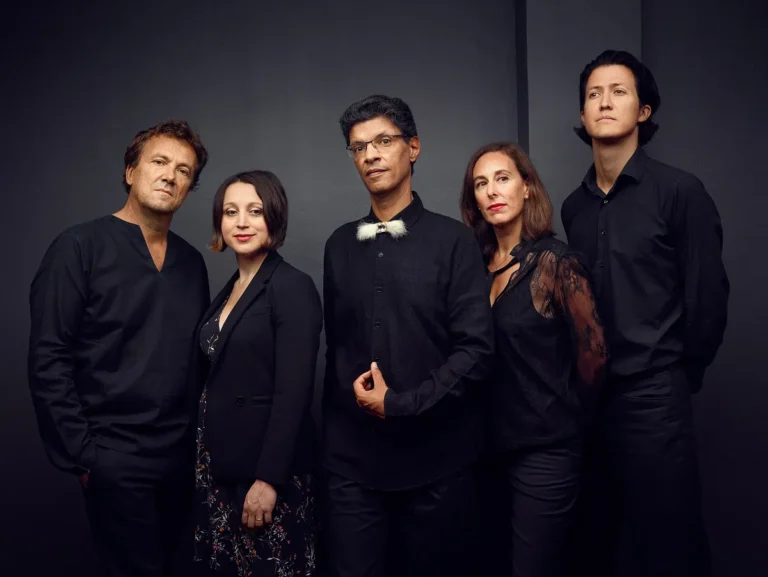
Le Vivier | Paramirabo and Ensemble Variances at Bourgie: Pulse, More Evoked Than Hammered

by Frédéric Cardin

Two simultaneous encounters took place yesterday at Salle Bourgie in Montreal: French and Quebec performers of today’s music joined forces, namely Ensemble Variances and Paramirabo, and two presenters, Bourgie itself and Le Vivier, co-produced the event. The concert’s title theme, Pulse, hinted at an evening dedicated to American repetitive music. Pulse is, in fact, the eponymous title of a piece by Steve Reich, a great master of the genre, placed second in the program order.

However, the presence of pulsation as a musical and architectural column was much more subtle and discreet than presumed. The pulsation was much more evoked than hammered home, in these five works written by two women and three men, two of which were world premieres, and one a North American one!

Still Life in Avalanche, by the excellent Missy Mazzoli, immediately fits the idea of repetitive minimalism, but its orchestration makes the beat’s linearity hesitate and hiccup, as well as the piece’s initial tonality. We end up with playful and, yes, pulsating episodes, John Adams-like in their sonorities, but which exchange pre-eminence with other, more mellow, chromatic passages sometimes tending towards the atonal. It sounds like a schizophrenic tango performed by a dysfunctional couple. Very interesting.

Steve Reich himself, with his own Pulse, relativizes our preconceptions of this music with a piece that appears substantially calmer than his better-known masterpieces such as Music for 18 Musicians, Different Trains, Drumming, Piano Phase and so on. Here, the pulsation so emblematic of the American’s music unfolds more gently and is much less percussive. In fact, there are no percussion instruments at all. The tempo is also slowed down. Reich, yes, but almost Zen-like.

The central pivot of the evening, the piece separating two parts of two pieces each, was Montrealer Marc Patch’s Les Mémoires du miroir de quartz, for solo piano. Composed in 1992, the piece was being performed for the very first time (hence its “world premiere” status!). I still fail to understand its relevance to the logic of the program. It’s a resolutely atonal exercise, made up of dazzling bursts of violent chords, Stockhausen-style, interspersed with passages of pearlescent, luminous cascades. This is more Darmstadt than minimalist New York. That said, don’t misunderstand me: Les Mémoires du miroir de quartz is an excellent piece, played with conviction, technical precision and brilliantly suggested contrasts by Thierry Pécou. But it has nothing to do with the rest. Perhaps, precisely, to create contrast? I have nothing against it, but it could have been explained.

Cassandra Miller, a Montrealer by adoption now living in London, followed with Perfect Offering, a North American premiere. Seemingly straightforward, it’s easy to imagine how extraordinarily difficult it was to set up this piece, which begins as a tribute to the Eno brothers, Brian and Roger. Within the first few minutes, one imagines oneself in Music for Airports, a cult work and founder of contemporary ambient. But unlike the latter, Miller’s piece evolves in a more fleshed-out fashion, swelling with power and resonance, a palpable crescendo that resolves into a false fade-out in the violin and clarinet, the latter becoming increasingly imperceptible, until an infinitesimal pianissimo, a real tour de force from the soloist (Carjez Gerretsen, remarkable). Is this the end? No. We’re off again, with a little more momentum than at the start, and now the pulse is more inviting. The real conclusion is more abrupt than I’d hoped. I think I preferred the false ending with the clarinet’s infinite disappearance. All the same, Perfect Offering, if not perfect, is nonetheless a much-appreciated offering.

The concert ended with a world premiere, a real one, written in 2023 by Thierry Pécou himself. The two ensembles were invited to perform Byar, inspired by Balinese gamelan music. Several Canadians are known to have been inspired by this music: Colin McPhee, one of the first, and Claude Vivier of course. Pécou summons up some of their visions, but enriches them with many others and emulsifies the whole in the crucible of his own already rich musical personality. Byar is reminiscent of an improbable circular watercourse, made up of tumultuous eddies and marked passages. Coloristic expressionism and structural cohesion inspired by repetition, but often broken up by spontaneous explosions, Byar is a work that I would describe as post-pulsation, post-repetition, or even post-modern, with no compunction about borrowing elements here from the avant-garde and elsewhere from classical minimalism. I need to hear it again to begin to appreciate all its nuances and implications. That’s a good sign.

Excellent performances by the musicians on stage (and often elsewhere in the hall, in multidirectional spatial and sound projection).

The audience, which filled Salle Bourgie to capacity (I’d have liked more, though), applauded warmly, and rightly so.

Electroacoustic / expérimental / contemporain

AKOUSMA , October 20 | Giannini, Benedicte, Merino, Block, Gonima, Aho Ssan

by Salima Bouaraour

Mechanical, electric and electronic: this 19th edition of Akousma offered us a closing evening with a line-up of Canadian and international artists  synthesizing the richness and variety of musique concrète born 75 years ago, renamed  electroacoustic over time.

Block 1: Nicolas Giannini (CA/IT), Bénédicte (CA), Elias Merino (ESP)  

Nicola Giannini  (Canada / Italy ).

The piece featurred here, Rebonds, was a rather academic overture, an exercise in style. Playing on the rhythmic figure of the sonic ricochet, this doctoral composer at the Université de Montréal presented 13 minutes of superimpositions and sequences of sound bodies, as well as repetitive spiral games of increasing speed. This choreography exploited the full potential of spatialization and immersion. In fact, it was the fruit of a residency at the Spoborole art center in Sherbrooke. Nicola Giannini has won numerous prizes and awards: first prize at the 2019 JTTP competition organized by the Canadian Electroacoustic Community, honorable mention at the XII° Fundación Destellos competition, finalist at the 2018 Città di Udine competition, and the Micheline-Coulombe-Saint-Marcoux prize at the first edition of the AKOUSMAtique competition in 2022. A fitting preamble  

Bénédicte  (Canada )

The Montrealer – an interdisciplinary artist whose real name is Maxime Gordon – veers off into electronic territory. Deep, round layers of spiraling synthesizers shape and distort the soundscape, culminating in the introduction of female vocal samples. Discerning ears were able to analyze  this symbiosis of sounds defying all genre boundaries. It should be noted  that she is a DJ, composer and performer. Her piece Halves Shoals seemed to be the  chassé-croisé of all her strings of skills. She took us into a sensual, interior universe of great candor. Her productions have played at MUTEK (Montreal), Institut du Son Spatial (Budapest), MONOM (Berlin), Eastern Bloc x Nuit Blanche (Montreal) and Glory Affairs x Punctum (Prague). She is currently working on a new album and organizing soundwalks across Montreal.

Elias Merino (Spain)

The evening’s Block 1 concluded with Synthesis of Unlocated Affections: empathy distress (2023)  lasting 30 minutes. A return to pure experimentation. The key words here were deconstruction, fractured contemplation and reverse immersion. Like a fantastic short story, this tale of abstract music transgressed the laws of nature. Between otherness and strangeness, the unease was perceptible, felt, palpable.  This Spanish artist is very interested in speculative futures and fiction. A well-crafted scenario between literature and music.  

Bloc 2 : Olivia Block (US), Evan Magoni / Gonima (US/CA), Aho Ssan (FR)  

Olivia Block  (United States)

24 minutes of diving under the waters of San Ignacio lagoon, Baja California Mexicana. A long, textured sound work based on in-situ or studio audio-synthesis recordings, inviting us into the whales’ living environment. This pristine site, protected by UNESCO, offers a glimpse of pure nature. American Olivia Block  and her work Breach conveyed a subaquatic and  abyssal universe. An emotionally rich piece. It was relatively easy to visualize the  different sound collages made like a scenario where different chapters  opened and closed. The climax of the piece was stormy, resulting in a downpour of driving rain;


Evan Magoni / Gonima  (United States / Canada)

A new jolt! This time in glitchy ambient electronica. Homeostasis by Evan  Magoni – under the pseudonym Gonima – raised the tension with finesse and subtlety.  This sonic work unfolded like a pointillist floral painting with parsimony and  multidimensional depth. This emotional and chaotic tension under control is also found in Autechre, Boards of Canada, Loscil, Aphex Twin, Marc  Leclerc (Akufen). Here are 15 minutes and 40 seconds of jerky, syncopated, ethereal beauty.  Gonima has succeeded in a fine genre exercise to leave room for the apotheosis.  

Aho Ssan  (France)

Niamké Désiré aka Aho Ssan brings the festival to a close in style. And what a beauty it was! Falling  Man is a work commissioned by the Groupe de Recherches en Musiques  -integrated into the Institut National de l’Audiovisuel since 1975 and based at the Maison de  Radio France- and co-financed by the Creative Europe program of the European Union . Inspired by a photograph taken during the World Trade Center bombing, this three-part piece is a pure masterpiece. Like a near-synthesis of the entire history of musique concrète,  contemporary, electronic, jazz and hip-hop, Falling Man deploys a richness and  finesse knowing how to combine the speed of progression of the scenario of all the sound bodies  the sparkle of the brass, the deep consistency of the rhythms and the final touch of  voices bringing hope and optimism that can triumph over obscurantism. Sometimes it’s worth noting that it’s largely possible to analyze an artist’s intellectual breadth through his or her musical works. Here, no doubt. Aho Ssan has produced a piece that is not only sonic, but also cinematographic, intellectual and even philosophical. Indeed, his latest album Rhizomes evokes the rhizomatic thinking of Gilles Deleuze, Félix Guattari and Édouard Glissant;

The Akousma festival closed with a musical questioning of current events, the world and its multiple crises, where instead of closing ourselves off, we should be thinking of our horizontality and multiplicity to better exist together.

Photo by Caroline Campeau

Les Violons du Roy at Salle Bourgie | Youthful Energy and Intoxicating Sonorities With Anthony Marwood

by Rédaction PAN M 360

Anthony Marwood and Les Violons du Roy visited Salle Bourgie on Friday evening for a concert featuring some rather unusual works, but which after listening to them in the company of these seasoned musicians, will certainly occupy a greater place in people’s memories.

Marwood makes a great impression on stage. His powerful playing and showmanship make him an exciting and enjoyable concertmaster. He performs virtuoso and, above all, highly charged melodic lines with brio and skill. During the second piece, by Mendelssohn, he conducted as a soloist, and his humble, confident presence seemed to center the orchestra around him. There can be no doubt about the quality of Les Violons du Roy’s musicians. Each section performed the often highly complex scores of the three works presented with accuracy and intensity, even in support. Isaac Chalk’s exemplary work on the viola was also noteworthy, with large solo sections in the last piece, whose sonorities were almost reminiscent of a full wind section.

What can we say about the works performed? We can start with the fact that all three works were composed during the youth of all three composers. The first work, Edward Elgar’s Serenade for Strings in E minor, was composed in 1892 at the age of 35 and predates his final musical maturation. It’s an uplifting, almost intoxicating work that sweeps you away with its enchanting largesse and sonorities. The second work, composed at the age of 13 by Felix Mendelssohn, is the Concerto for Violin and Strings No. 1 from 1822. The composition is simpler and more formal, but there is an energy and intensity both for the soloist and the surrounding orchestra. The style is almost classical (Mendelssohn had clearly not yet acquired his own style), but one senses the near emergence of a new language.

The final work is more paradoxical. Georges Enescu’s Octet in C major, fabulously arranged by none other than Anthony Marwood, bears witness to the ardour and ambition of the young composer who wrote it. Enescu was 19 in 1900, the date of the composition, and he clearly had a lot to say. Perhaps too much, because it’s easy to lose track of all the different ideas presented to us. The musical ideas are very interesting, but the note overload and lack of continuity leave the listener a little at a loss. It’s a work of quality, but it also shows that, sometimes, trying to say too much means saying too little in the end.

All in all, this was a very successful concert for Les Violons du Roy. Salle Bourgie is indeed well suited to this format and this ensemble. We hope to hear more of them in the future!

For more info about the Violon du Roy’s programming, click HERE.

Le Vivier | Premiers and Celebrations for Stick&Bow’s Fifth Anniversary

by Elena Mandolini

The atmosphere was festive last night at La Chapelle Scènes Contemporaines. The Stick&Bow ensemble, an atypical duo made up of Krystina Marcoux on marimba and Juan Sebastian Delgado on cello, is celebrating its fifth anniversary this year. In front of an enthusiastic audience, the two performers clearly wanted to indulge themselves by offering a program consisting almost entirely of new works. Almost all the composers were present for the first public performance of their works.

The timbre of the cello and marimba are a perfect match, and the hall at La Chapelle was just right for this kind of concert. The intimate atmosphere made the audience feel close to the performers, and there were no volume problems. The scenography of the concert was also commendable. The stage was sometimes bathed in half-light, sometimes illuminated by lamps suspended from the ceiling. These elements helped to create different moods, both mysterious and lively, adding a new dimension to each piece.

In fact, this was the concept of the concert: to mobilize several senses. Upon entering the concert hall, each audience member received a small bag containing various snacks to enjoy during the concert. A sometimes distracting feature during the speeches between pieces, but appreciated nonetheless. It really felt like a birthday party!

Musically, the duo showed us the full extent of their talent. The pieces required the use of several playing techniques, on both marimba and cello. The instruments were really used to their full potential, and the impression was given that these were two solo instruments, so demanding and intense were the scores. The audience was treated to a sonic journey that took them from introspective, soaring pieces to jazz-sounding works, to pieces full of intensity and fire. The pieces were interspersed with anecdotes from the ensemble’s first five years.

Stick&Bow’s anniversary gift to us was exciting, moving and impressive. The two performers clearly enjoy sharing these works with us, and the pleasure is contagious. For Stick&Bow, the adventure is just beginning!

For the Vivier’s full programme, click HERE.

Ciné-concert at the MSO | Tragedy, humor and humanity with Charlie Chaplin’s The Great Dictator

by Rédaction PAN M 360

On Wednesday evening, the OSM offered a small gift to the omnivorous Montreal public at the Maison symphonique. A pearl (tragic though it may be) from the cinematic repertoire, amplified and musically enhanced by an orchestra whose quality is no longer in doubt.

The Great Dictator, released in 1940, is a gem of its genre. Charlie Chaplin’s first truly spoken-word film features meticulous attention to sound aesthetics, such as found in Modern Times four years earlier, and exemplary choreography that is Chaplin’s hallmark. The film is almost like a ballet, evoking both grace and human misery. The globe scene is particularly striking in this respect. It’s necessary to contextualize the film, which was made long before the horrors of the Second World War were understood, but you can’t help but smile and laugh at the universal, well-judged humor.

Certainly, the presence of an orchestra like the OSM to provide the soundtrack enhanced, or rather illuminated, the experience. The musicians, led by Timothy Brock, accompanied the audience with clarity and fidelity to the original material. The brass were in demand, given the military nature of many scenes, and were perfect. At times, they even managed to elicit a few laughs of their own. As for the strings, which were very plentiful (especially in the double basses), they provided the foundation for the orchestra and the realization of the softer, darker emotions on screen.

The film’s music certainly doesn’t have the ambition or scope of a Mahlerian symphony, but it does have certain qualities that are to be applauded! The music is full of humor and freshness. Despite its highly functional aspect (music is essentially a dramatic tool), it’s fun to observe how the score is used to accentuate gags or emotions, whether sadness or joy, confusion or hope. Indeed, leitmotifs are frequently used.

Charlie Chaplin himself said he bitterly regretted making the film after the atrocities of the concentration camps were revealed to the world in 1945. In his view, it was no longer a laughing matter. Its presence in today’s context is also troubling. The film has many echoes of today’s situation – too many, in fact. We can’t criticize the OSM for having programmed this work, not knowing what was going to happen, but we can salute the organization for having kept it, with its above all optimistic and humanistic message. A welcome comfort.

The ciné-concert is performed this Thursday evening at 7:30pm, and other ciné-concerts are offered throughout the OSM season. For more details, visit the upcoming concerts page HERE.

Carminho brings the passionate, old & new history of fado to Montreal

by Stephan Boissonneault

A packed Outremont Theatre, full of Montreal’s Portuguese residents and lovers of fado music, was left stunned by Carminho and her band’s performance, which sometimes felt like an intimate opera, a live baring of one’s soul.

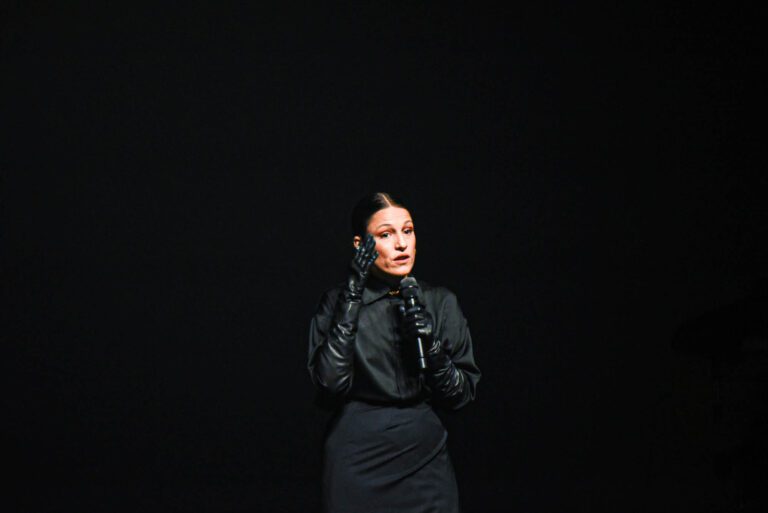
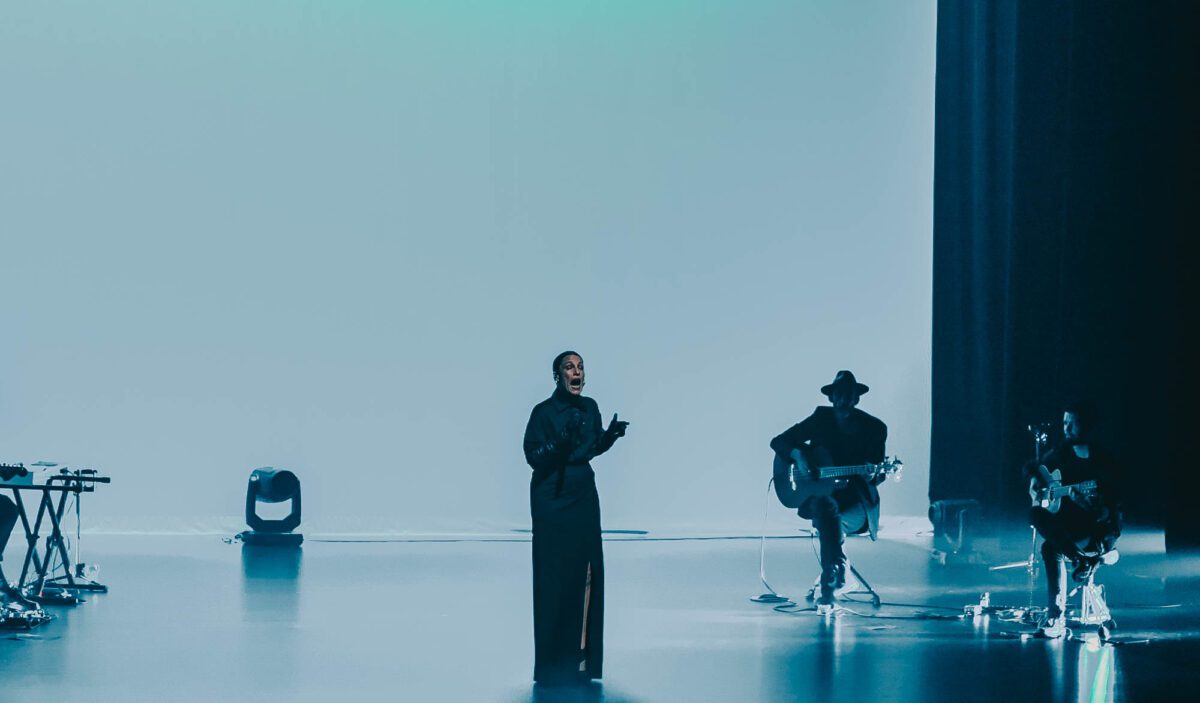
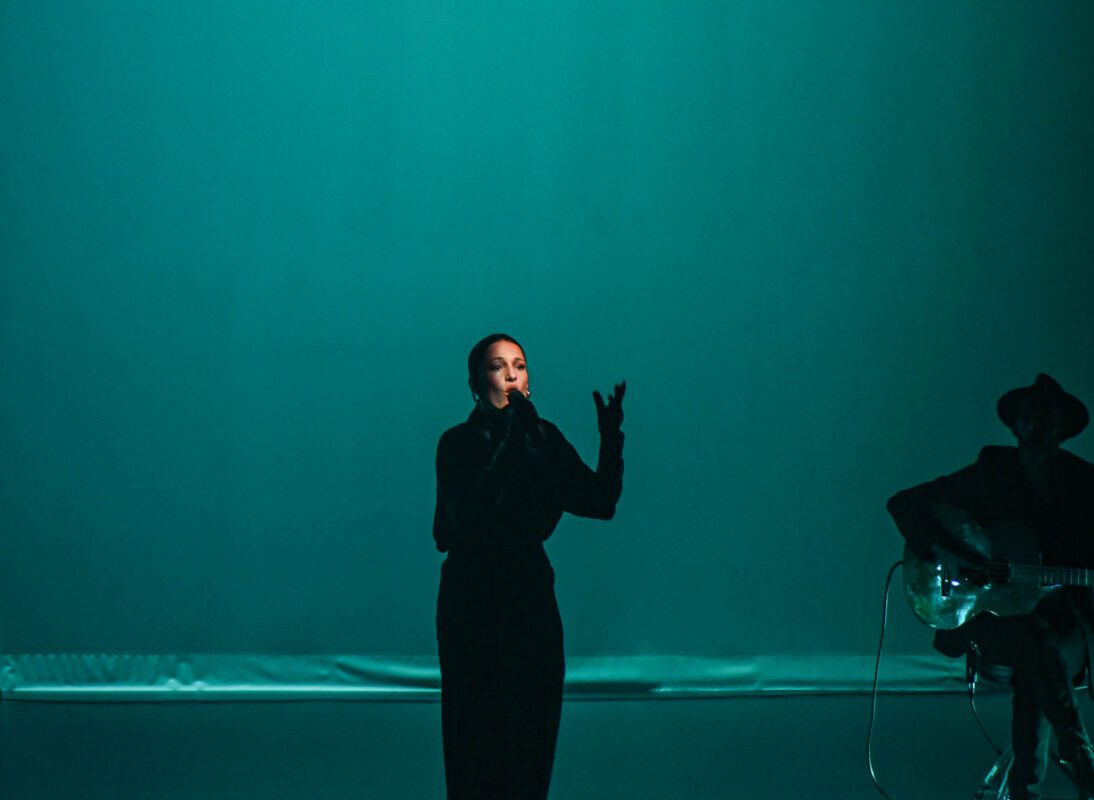
“I’ve been singing fado since I was in my mother’s womb,” Carminho told the audience, donning an all-black dress and black leather gloves. She kind of looked like a harbinger from the Underworld, and based on her professional demeanor, it seemed that she would be very serious. But her look was just that—a look—as she was actually quite humourous; cracking jokes with the audience, playing off her minimal French and broken English for a bit of levity between songs on her latest album Portuguesa and a few earlier works.

When she said she had been singing fado in the womb, this was no word of a lie. Her mother, Teresa Siqueira, is also a famous fado singer, and growing up, Carminho was surrounded by musicians in fado houses, so the lifestyle of fado music is deep within Carminho’s blood. And those who had no idea what fado was were given a brief history listen by Carminho. For her, fado is life, her language, a way to express the passion and hardships of the Portuguese people. With an origin story dating back farther than the 1800s, fado music follows a traditional structure and often sounds mournful, with long dramatic pauses for the singer to hold a specific impassioned note.

Carminho’s voice is full of life and sorrow, packed with a dramatic flare that shakes you into submission, leaving you speechless, whether you understand what the song is about or not. yet, Carminho wanted the audience to know what the songs were about, in fact, that was part of the show. A history lesson of fado, but also where the songs came from; what Portuguese poets wrote them, and which of Carminho’s friends gave her the blessing to add music to their poems.

One song was about two lovers who find they are feeling nothing for each other. “I’m wondering if there is a couple in the audience tonight who this song is about,” Carminho said as the audience chuckled. Another song was Carminho’s reimagining of a classic poem about a young girl going to a fountain, only to be bothered by “birds,” who it seems are actually men. Carminho rewrote the lyrics to have it be a man going to the fountain instead. “It’s true that lots of fado has always been, male and chauvinistic, with the men writing the poems for the women to sing, so I wanted to change that,” Carminho said. And changing that was no small feat. Carminho had to get a blessing from the original poet’s family and have it signed off by the Portuguese Society of Authors. When it comes to fado, poetry, and art in general, artistic merit and copyright seem to be of huge importance in Portugal.

Carminho has also been called an innovator of fado for introducing the mellotron, electric guitar, and lap steel guitar on top of the traditional setup of nylon bass, acoustic nylon guitar, and the Portuguese guitar. Due to this setup, during her set, there were more traditional fado songs focusing on the trills and scales of the Portuguese guitar and more modern reimaginings with the warm tones of the mellotron and haunting lap steel guitar lines. This made the performance varied, without a dull moment.

AKOUSMA, OCTOBER 18 | Dhomont, Delisle, Mourad Bncr, Côté, Guerra-Lacasse, Cano Valiño, Reid

by Laurent Bellemare

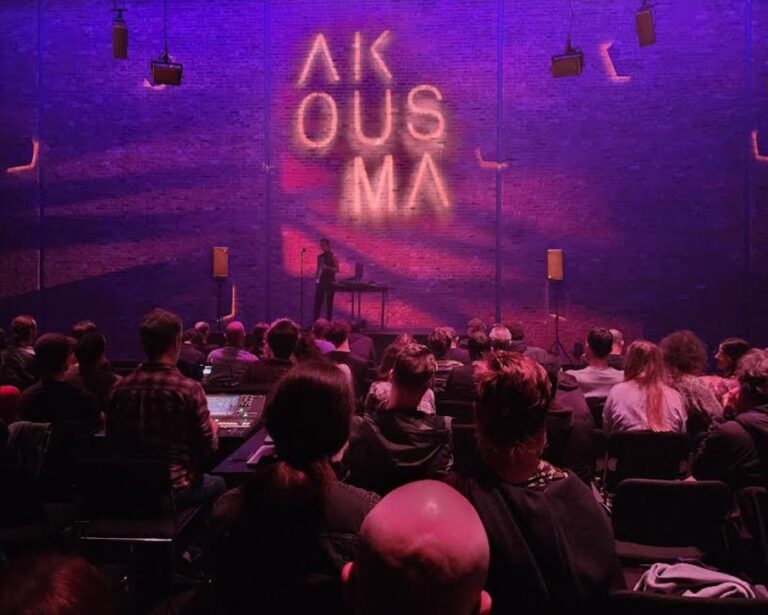
Is it possible to enter sound? That’s the question electroacoustic music seems intent on answering. Surrounded by the thirty loudspeakers of the acousmonium installed at Usine C, we had the impression of being enveloped in sound in motion.

To open its 19th edition, the Akousma festival offered a diverse range of works skilfully crafted using a variety of technological processes. With 7 decades of development behind it, this classic of electro music is no stranger to renewal. Yesterday, we could hear the most academic to the most secular aesthetics. Apart from the two performances, there was absolutely nothing to see, but plenty to hear. Everything was fixed in place, as if you were going to see a film with no image, but bouncing with action.

Francis Dhomont

At 96, Francis Dhomont has literally written the history of electroacoustics. In fact, his piece Somme toute acted as a ‘best of’ of his career. It was broadcast by Louis Dufort, Dhomont’s former student and artistic director of Akousma, who didn’t miss the opportunity to underline the French composer’s enormous influence. Circling noises, bounces, rolling objects and unpredictable articulations: all the key elements of a landmark concrete work were there. Although produced according to the rules of the art – rules partly written by Dhomont himself – the piece perhaps had the defect of its qualities. All in all, it was a very academic presentation, in which the retrospective aspect of the work could be perceived as jumping from one cock to another. Nevertheless, hearing a new piece by Francis Dhomont is always a pleasure, as well as a real privilege.

Julie Delisle 

Is Pipa Aura Suichi a title heralding the use of the Chinese pipa? You’d think so. Yet it’s a sound bank uniquely conceived of composer Jean-François Laporte’s invented instruments that is the source of this work by Montreal composer and flutist Julie Delisle. Completely acousmatic, this piece hid its game well. It featured a variety of crackling sounds, which at times sounded wet, like a boiling movement. There was a marked use of sound treatments, often camouflaging the nature of the sounds used. Although the whole developed according to a relatively conventional structure and phrasing, the piece nevertheless had a depth of field created by its different textural layers evolving concomitantly.

Mourad Bncr

What will the earth’s environment sound like when there are no more humans? One thing is certain, no one will be there to hear it. That doesn’t mean, however, that our world will be all silence. In Le monde après nous, multimedia artist Mourad Bncr imagines such a soundscape. As soon as he took the stage, the room immediately fell into a gloomy atmosphere, where the music slowly evolved into an aesthetic at the crossroads of drone, dark ambient and glitch.  Apart from the artist’s presence as well as the distant inclusion of a hushed North African flute melody, Bncr’s music was a disembodied affair, subtracting the anthropocene from the portrait to leave breathing music behind. Subtle articulations had all the space needed for their movement to be fully felt by the audience. Very different from the other proposals, Le monde après nous was a highlight of the evening.

Guillaume Côté

With Guillaume Côté, we were venturing into territories once proscribed by the academic teaching of electroacoustics. Discrete Stream of Light was a long twenty-minute piece, structured with a handful of long rises in intensity, juxtaposed one after the other. During one of these movements, we were bathed in a superposition of consonant arpeggios echoing the great principles of minimalist aesthetics. There was then a gradual densification of sound strata, culminating in a peak and a brief fall. A new wave could then begin. Harmonically, the whole was very static. There was no deviation from the major mode in the choice of notes. What’s more, most of the material used seemed to consist of synthesized sounds. If the impression was far from that of innovative and surprising content, the familiarity of the musical result made Discrete Stream of Light a highly satisfying work in terms of affect. If there was a moment of aural bonbon at Akousma last night, it was definitely this one.

Roxanne Melissa Guerra-Lacasse

There’s sometimes a gap between the artists’ thematic inspirations and the perception we might have of the final works. In La Berceuse de la veuve by Roxanne Melissa Guerra-Lacasse, it’s love that should be the creative driving force. Yet it’s not easy to spot a concept so vague yet so omnipresent in art. The same applies to the play of the same name that inspired the work. What we could hear, however, was a very well put-together acousmatic piece, in which a variety of more or less identifiable sound sources woo and dance a round above our heads. The piece is loosely narrative, and the articulations are gradual. There’s a story being told through this rather ambient framework and its inverted sounds, but we don’t know what it is. The relationship with theater is certainly interesting, and we can expect this contribution to bear fruit in the long term in Guerra-Lacasse’s music. An artist whose work will be worth keeping an eye on.

Rocío Cano Valiño

The same applies to the work of Argentine composer Rocío Cano Valiño, whose two works presented at Akousma (Astérion; Okno) were based on stories by Jeorge Luis Borgès and Silvina Ocampo respectively. In Asterion, I couldn’t find either a labyrinth or a Minotaur. However, I did hear music that was totally engaging. In both pieces, the articulations were such that attention was held from beginning to end. Squeaks, rattles and rattling effects abounded, and every second was densely packed with sonic information. The saturation of sounds over-stimulated hearing, provoking both pleasure and tickling the ear. A monumental amount of micromontage was required to compose these constantly moving works. The aesthetics were consistent from one piece to the next, and the technical precision was remarkable. These broadcasts by Valiño were the highlights of the event.

Sarah Belle Reid

With Sarah Belle Reid, the trumpet was put in all its states. The Canadian composer was the only one to present a mixed work, Manifold fortrumpet and electronics. This 25-minute performance featured the composer herself, playing her instrument in a highly unorthodox manner. For most of the composition, the trumpet was used as an amplifier for Reid’s breath, which was then picked up by a microphone that interacted with the computer device in place. Thus, with various breathing effects and mouth noises, the composer used her instrument both as a sound source and as a controller. She also manipulated certain digital parameters via potentiometers, even leaving her trumpet aside to devote herself to her machines for a brief moment. Towards the end of the piece, a few brassy notes could be heard, intervening somewhat like a deliverance resolving a long moment of tension. But for the rest, the music was frantic, with the flow of the trumpet interventions in total, but controlled, chaos. The interplay between human and machine was spectacular, and this work concluded the evening on a high note.

NEM and Le Vivier | NEM’s Opening Concert: Fascinating Explorations

by Rédaction PAN M 360

The Nouvel Ensemble Moderne (NEM) kicked off its 35th season on Monday evening. A concert that blended the diverse horizons of the ensemble, between creations, rearrangements and contemporary repertoire, all were able to find pleasure in the dazzling sonorities of these clearly talented musicians.

Among the musicians was François Vallière on viola, who arranged John Rea’s first piece for 15 instruments, and who was excellent throughout the evening. In fact, this was the motto for all the musicians: excellence. From the clarity of tone to the richness of timbre and accuracy, it’s hard to question the quality of the interpretation of the works, especially the premieres. The intensity of the percussion, performed by Julien Grégoire, is to be commended. And, of course, all was calmly and confidently conducted expertly by Lorraine Vaillancourt, the ensemble’s founding conductor, this 35th season being her last at the helm of the NEM.

Of the four pieces on the program, three were premieres, two of which were complete. John Rea’s Tableaux de La Meninas, variations on Schumann’s Kinderszenen, presented themselves as delicious musical tapas, taking the form of pastiches of various 20th-century composers. Very entertaining, and we’d love to hear more! The first of the two creations to follow, Samuel Andreyev’s Contingency Icons, effectively explores timbres and plays with extremes. The opening is reminiscent of one of the movements from Stravinsky’s Rite of Spring, which makes for a superb transition since the Rea ended with a pastiche of the latter. The second work, La persistance, l’éphémère by Tomás Diaz Villegas, explored the different effects and rhythms that the ensemble’s instruments could offer.

The final work, the pièce de résistance, was Harrison Birtwistle’s Secret Theatre. It was a synthesis of the other works presented that evening, with elements found at their core, but in a more structured form. There are also new elements, such as string slides that verge on the microtonal, and physical movements by the musicians, who gradually ascend a stage at the back as the piece progresses. Intriguing, the piece is warmly applauded by the audience and praised after the concert.

The Studio Théâtre at Espace Danse in the Wilder Building was pleasantly full. The presence of a large delegation in the audience testifies to the importance of the NEM for the Montreal and Quebec contemporary music scene.

A great opening to this anniversary season!

To learn more about the NEM’s next concert, click HERE.

For the Vivier’s complete programme, click HERE.

Photo credit: Philippe Latour

PHÉNOMÉNA & Arts in the Margins – Gabber Modus Operandi, Rani Jambak & Wok the Rock

by Laurent Bellemare

A few nights ago, at its headquarters in La Sala Rossa, the Phénoména festival hosted a rather unusual event by Arts in the Margins, was a rather unusual event. It’s rare indeed to welcome artists from Indonesia to our side of the ocean. Yet we were presented with three experimental electronic music artists from the islands of Java, Bali and Sumatra. Brought together under the banner of the Javanese label Yes No Wave Music, the group was in the midst of a Canadian tour to present a fine sample of the best the Southeast Asian archipelago has to offer in the field.

Wok the Rock

DJ Wok the Rock, founder of the Yes No Wave Music label, had the task of kicking off the evening. He warmed up the already packed room with his intriguing and catchy mixes. By way of introduction, the artist sampled the voice of singer Rully Shabara, known for his work with Senyawa, creating a special atmosphere as words in Bahasa Indonesia were repeated in a jerky rhythm. A second sample of the same voice was to be heard later, at the end of his performance. In the meantime, Wok the Rock was working with a wide variety of soundtracks, from Burmese hsaing waing drums to the most synthetic of sounds. Rhythmically, the music often moved at two speeds, superimposing frantic rhythms on a slower, freer sound texture. The whole thing progressed from time to time in surprising rhythmic modulations. One thing’s for sure: part of the crowd seemed to have already entered into a psychedelic trance, a state of mind that would only intensify as the evening wore on.

Rani Jambak

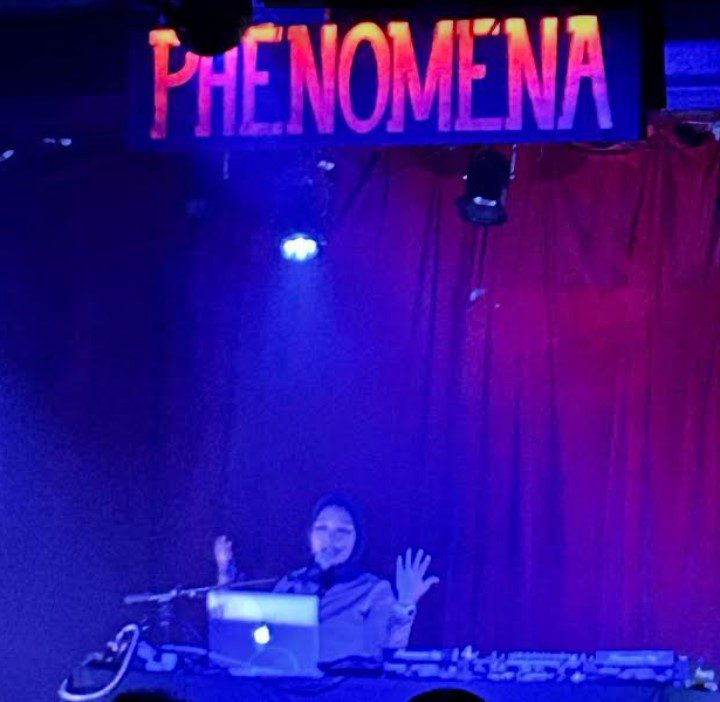
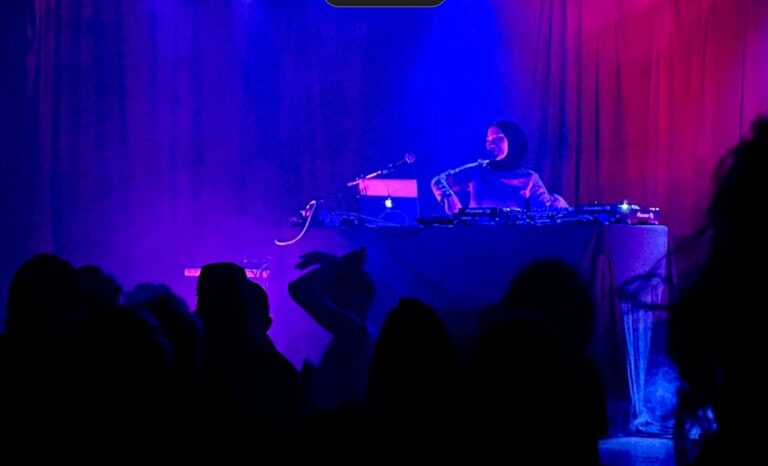
Rani Jambak is a sound artist of Minangkabau descent, an ethno-cultural group living in the province of North Sumatra. Her whole approach is centered on ecology and the reuse of sounds from her natural and cultural environment, endowing her music with a rich and unique sonic universe. In order to travel light, she unfortunately didn’t grace her audience with the Kincia Aia, an instrument she invented and inspired by traditional water mills. Instead, she delivered a minimalist performance with computer and microphone, here confidently showcasing a danceable side. Even her entrance to the stage was done in electronic music style, gradually taking the place of Wok the Rock in back-to-back mode. If everything was pulsating and very accessible, Jambak’s music was also colored by urban and forest soundscapes unknown to the general public. The artist also possesses a remarkable voice, which she put to good use by singing numerous vocal pieces. Of particular note was the excellent execution of the vocal lines, which were not only perfectly in tune but also full of expressivity, something that was also evident in Jambak’s body movements. The constant exchange of energy between the artist and the audience made this the highlight of the evening.

Gabber Modus Operandi

Residing on the island of Bali, Gabber Modus Operandi’s two artists are explicit about their music. Together, they create fast, aggressive, and psychedelic electronic gabber. As soon as they took to the stage, the volume of the speakers rose considerably and the insistent rhythms immediately whipped the crowd into a collective frenzy. It felt like a rave or one of Mutek’s Nocturnes. Speaking of which, last night amply made up for the Indonesia duo’s cancellation during the 2022 edition of that festival.

While one half of the band was running a DJ station, the second musician was mostly using his voice. He chanted, narrated, and shouted lyrics drowned out by reverb and effects, nothing resembling singing as ordinarily conceived. He was dressed halfway between a military man and a skier and donned gloves with green lasers attached. These fluorescent beams added greatly to the lighting and moved freely around the room as the singer danced frantically. In addition to these seemingly uncontrollable rhythms and voices, an original selection of samples added texture, such as gamelan instruments. The crowd will also remember the very approximate imitation of a Balinese kecak that the band attempted by asking the audience to sit cross-legged. Vaguely futuristic but immediately intense, Gabber Modus Operandi’s psychotropic delirium had everyone on edge throughout the show.

The Montreal stop for the Indonesian YesNoWave Tour was Co-presented with Festival Phénomena, Festival Accès Asie, Québec Musiques Parallèles and Arts in the Margins. 

PHÉNOMÉNA & Arts in the Margins | Java, Bali et Sumatra au programme

by Laurent Bellemare

Quelques jours plus tôt, à son quartier général de La Sala Rossa, le festival Phénoména accueillait un événement unique organisé par Arts in the Margins. Il est effectivement rare de recevoir la visite d’artistes venus d’Indonésie de notre côté de  l’océan. C’est pourtant trois fameux artistes de musique électronique expérimentale des îles de Java, Bali et Sumatra qui nous étaient présentés. Réunis sous la bannière du label javanais Yes No Wave Music, tout ce beau monde était en pleine tournée canadienne afin de présenter un bel échantillon de ce qui se fait de mieux dans l’archipel sud-est asiatique.

Wok the Rock

Le DJ Wok the Rock, fondateur du label Yes No Wave Music, avait la tâche de démarrer la soirée. Il a su réchauffer la salle, déjà bien remplie, en présentant des mix tout aussi intrigants qu’accrocheurs. En guise d’introduction, l’artiste échantillonnait la voix du chanteur Rully Shabara, connu pour son travail avec Senyawa, créant une atmosphère particulière alors que les mots en bahasa indonesia étaient répétés en un rythme saccadé. Un second échantillon de cette même voix allait d’ailleurs être entendu plus tard, à la fin de sa prestation. Entretemps, Wok the Rock travaillait avec des trames fort diversifiées, des tambours de hsaing waing birmans aux sonorités plus synthétiques. Sur le plan du rythme, la musique avançait souvent à deux vitesses, superposant des rythmes effrénés à une texture sonore plus lente et libre. Le tout progressait de temps à autre, ponctué par de surprenantes modulations rythmiques. Chose certaine, c’est qu’une partie de la foule semblait déjà être entrée dans une transe psychédélique, ce qui n’allait que s’amplifier au fil de la soirée.

Rani Jambak

Rani Jambak est une artiste sonore minangkabau, groupe ethnoculturel habitant la province de Sumatra du Nord. Toute sa démarche est axée sur l’écologie et la réutilisation des sons de son environnement naturel et culturel, dotant sa musique d’un univers sonore riche et unique. Afin de voyager léger, elle n’a malheureusement pas fait grâce à son public du Kincia Aia, instrument qu’elle a inventé et qui s’inspire des moulins à eau traditionnels. Plutôt, elle offrait une performance minimaliste avec ordinateur et microphone, assumant ici un côté dansant. Même son entrée en scène était faite dans les règles de l’art de la musique électronique, soit en prenant graduellement la place de Wok the Rock en mode back to back. Si tout était pulsé et très accessible, la musique de Jambak était également colorée par des environnements sonores urbains et forestiers inconnus du grand public. L’artiste possède également une voix remarquable, qu’elle a mise à profit en chantant de nombreuses pièces vocales. Il faut souligner l’excellence de l’exécution des lignes vocales, qui étaient non seulement parfaitement justes mais remplies d’expressivité, chose dont témoignaient également les mouvements corporels de Jambak. L’échange d’énergie constant entre l’artiste et son public aura fait de ce moment le clou de la soirée.

crédit photo Rani Jambak : Deanna Radford 

Gabber Modus Operandi

Résidants sur l’île de Bali, les deux artistes de Gabber Modus Operandi sont explicites quant à leur musique. Ils créent ensemble un gabber électronique rapide, agressif et psychédélique. Dès leur entrée sur scène, le volume des enceintes a considérablement augmenté et les rythmes insistants ont tout de suite entraîné la foule dans une frénésie collective. On se serait cru dans un rave, ou à l’une des Nocturnes du festival Mutek. D’ailleurs, on avait regretté l’annulation du duo indonésien lors de l’édition 2022 de ce festival. Voilà qui est rectifié.


Alors que la moitié du groupe gérait une station de DJ, le second musicien faisait surtout usage de sa voix. Il scandait, racontait et criait des paroles noyées de la réverbération et les effets, rien qui s’apparentait à du chant ordinairement conçu. Habillé à mi-chemin entre un militaire et un skieur, il enfilait également des gants sur lesquels étaient fixés des lasers verts. Ces faisceaux fluorescents ajoutaient grandement à l’éclairage et se promenaient librement dans la salle au gré des mouvements frénétiques du chanteur. À ces rythmes et ces voix qui semblaient incontrôlables, un choix personnalisé d’échantillons venait tapisser les trames, comme celle d’instruments de gamelan. La foule se souviendra également de l’imitation très approximative d’un kecak balinais que le groupe tentée en demandant au public de s’asseoir par terre. Vaguement futuriste, mais d’une intensité immédiate, Gabber Modus Operandi a su ameuter tout le monde grâce à son délire psychotrope.

Bach and Khayyam by Constantinople: A Magnificent Dialogue Across Time and Space

by Frédéric Cardin

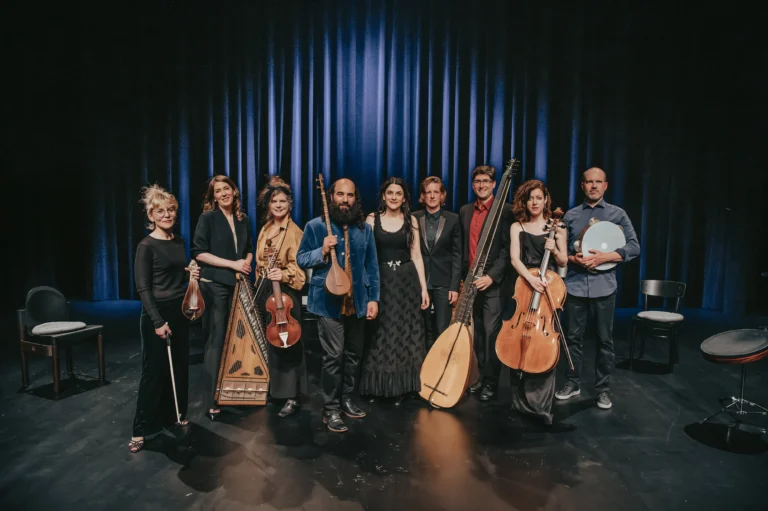
The Constantinople ensemble led by Kiya Tabassian invited audiences to a deeply moving and human encounter last night at Montreal’s Salle Bourgie. Bringing together musically and thematically the scores of Bach (1685-1750) and the texts of Persian poet Omar Khayyam (1048-1131), even 600 years apart, Tabassian and the musicians who accompanied him provided a vehicle for beautiful moments of communion for the large audience, diverse in age and cultural background. The choice of pieces was obviously made with great care, as the sequences between excerpts from cantatas (for example) and songs or instrumental pieces in classical Persian style flowed with great fluidity. Czech soprano Hana Blažíková has a beautiful voice, beautifully balanced and impeccably in tune.

The same concert, with the same performers, at the Abbatiale Sainte-Foy de Conques, on August 9:

Bach and classical Persian pieces were interwoven in a kind of inspired cohabitation in which the two giants exchanged, and sometimes even sang in a shared unison, about life, death, God and love. All this was done with great respect, leaving as much room for one as for the other, but also for closer, almost fusional interactions. It’s fascinating to note that two worlds which, 50 years ago and more, would have seemed irreconcilable to supposed musical connoisseurs and purists, now seem perfectly capable of getting along and stimulating sustained attention and enthusiastic reactions from the audience. The applause was warm indeed. It seems that music is once again a model that the human race should follow more closely!

Let’s also underline the high musical quality of the ensemble’s members, regulars like Didem Basar on kanun, Tanya LaPerrière on baroque violin, Michel Anger on theorbo and Patrick Graham on percussion (and Tabassian himself on vocals and setar), and guests like Turkish Neva Özgen on kemenche, Dutch Tineke Steenbrink on positive organ (also co-founder of Holland Baroque) and German Johanna Rose on viola da gamba.

Photo credit: Constantinople

Subscribe to our newsletter