‘Roots of Flamenco’ at Festival du Monde Arabe 23′
by Varun Swarup
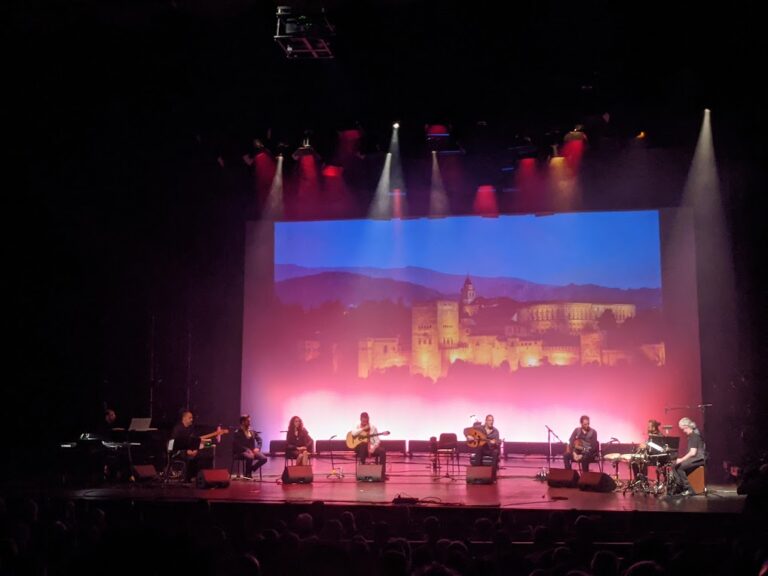
The Festival du Monde Arabe’s closing act, “Roots of Flamenco,” promised a captivating fusion of Iraqi and Andalusian song and dance, and while it mostly delivered, it fell short of embodying the authenticity expected from a traditional music evening. Despite commendable musicianship on stage, the performance struggled to maintain a clear focus as it endeavoured to intertwine myth and history, occasionally veering into a generic fusion sound.
The evening began rather theatrically, with Cheikh Sidi Bémol taking his role of storyteller in stride. Omar Bashir, the son of renowned oudist Munir Bashir and a complete virtuoso in his own right, gently plucked his oud underneath Cheikh as he spoke of his first encounter with the oud and the mythical player who revealed its stories. Gradually as the evening progressed, members of the rest of the nine-piece band were introduced as we charted course from Baghdad to Seville.
To witness the musical dialogue between Omar and the two flamenco guitarists was certainly spectacular but generally their virtuosic playing was relegated to the same minor chord progressions. Perhaps the most confounding aspect of this performance was the inclusion of the piano in this fine ensemble. It seemed somewhat out of place in the context of the performance, not seamlessly integrating into the narrative and occupying significant space in the overall mix. With three other stringed instruments already commanding attention, the piano added a layer that, at times, really diluted the essence of the performance.
The dancer and vocalist, Miguel Angel Orengo and Cristobal Muñoz respectively, integral components of such a performance, seemed to take a backseat for much of the show, only coming into prominence in the latter half of the second set. This was a bit disappointing as their presence would have added depth and nuance to the overall storytelling. Still, when they were given the limelight, they certainly brought the fire of flamenco alive in their performance.
Despite these shortcomings, the closing concert successfully underscored the significance of cultural exchange, emphasising the beauty of shared traditions and the fluidity of our cultures. While the lack of focus and occasional musical distractions may have tempered the overall experience, the festival’s finale ultimately celebrated the richness of cultural diversity and showcased the undeniable brilliance of flamenco on display.
20 years of Disques 7ième Ciel at the Bell Centre: 4 hours of celebration!
by Jacob Langlois-Pelletier
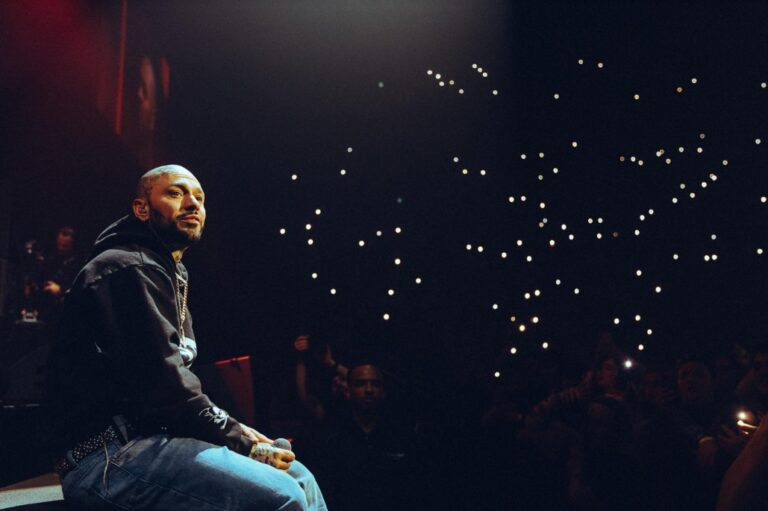
Announced several months ago, Disques 7ième Ciel’s 20th-anniversary concert was eagerly awaited by fans of hip-hop and rap keb. Founded by Steve Jolin aka Anodajay in 2003, the label has played an important role in the development of the musical genre in Quebec. Its roster includes FouKi, Koriass, Souldia, Manu Militari, Imposs and a host of other local artists. To celebrate, Jolin and his band put on a (very) long showcase-like performance, lasting over four hours, at the Bell Centre on Friday evening.
What better way to kick off the show than with owner Anodajay. Cheered by the crowd on arrival, he got the ball rolling with two of his own songs, including Le Beat à Ti-Bi, his famous song with Raôul Duguay. On stage, the Rouynorand native was alone, accompanied by a DJ and archive footage and video clips scrolling behind him. The rest of the evening unfolded with this minimalist approach and the sporadic appearance of a few musicians and backing singers.
After the opening set by Disques 7ième Ciel’s standard-bearer, veteran rappers Dramatik, Manu Militari and Koriass performed a series of their old songs, much to the delight of the more nostalgic fans in the room.
The show lasted two hours, most of the label’s artists having taken to the stage with two or three solo tracks. Souldia’s stage appearances were the loudest in the Bell Centre; the Prince of Limoilou has been cultivating an incredible connection with Quebec audiences for several years now. In addition to the headliners, Zach Zoya, the LaF collective and the Brown Family stood out from the crowd. Around 10 pm, an intermission is announced…
Twenty minutes later, Anodajay is back on stage and the show is back in full swing. In this second set, most of the artists return, and Koriass and Souldia are given plenty of space. As the evening wore on, the crowd slowly began to lose steam. Luckily, the various artists had reserved their most popular songs for the second half.
Around me, several rap fans quietly left their seats and headed for the exit. To describe the atmosphere, at times it felt like a bar where people were chatting and partying, with music playing in the background. The length and rather random sequencing of the various performances had a lot to do with this. You wanted rap, you got it!
Let’s focus on the positive. Over the course of four hours of rap, fans were treated to several highlights, including an excellent a cappella rap by Koriass, the presence of the great Diane Tell for a rendition of Jamais su with Anodajay, a remixed version of her famous song Souvent longtemps énormément, and an excellent cypher with most of the 7ième Ciel artisans to close this historic evening. The evening would have benefited even more from the creativity of this last segment.
Quebec hip-hop is doing well, very well indeed, and this great celebration is the umpteenth proof of that. Without Steve Jolin and Disques 7ième Ciel, we’d be light years ahead of where we are now as far as rap keb is concerned. It’s hard to say we’d have expected more from this show when we’ve been served up over 240 minutes of music, although everything could have been more concise and punchy.
But then again, it’s quite a challenge to pay tribute to so many years of Keb rap history in a single evening, 7ième Ciel style and the rendering did it justice nonetheless.
Alisa Weilerstein : Bach, sublimé, chamboulé et actualisé
by Frédéric Cardin
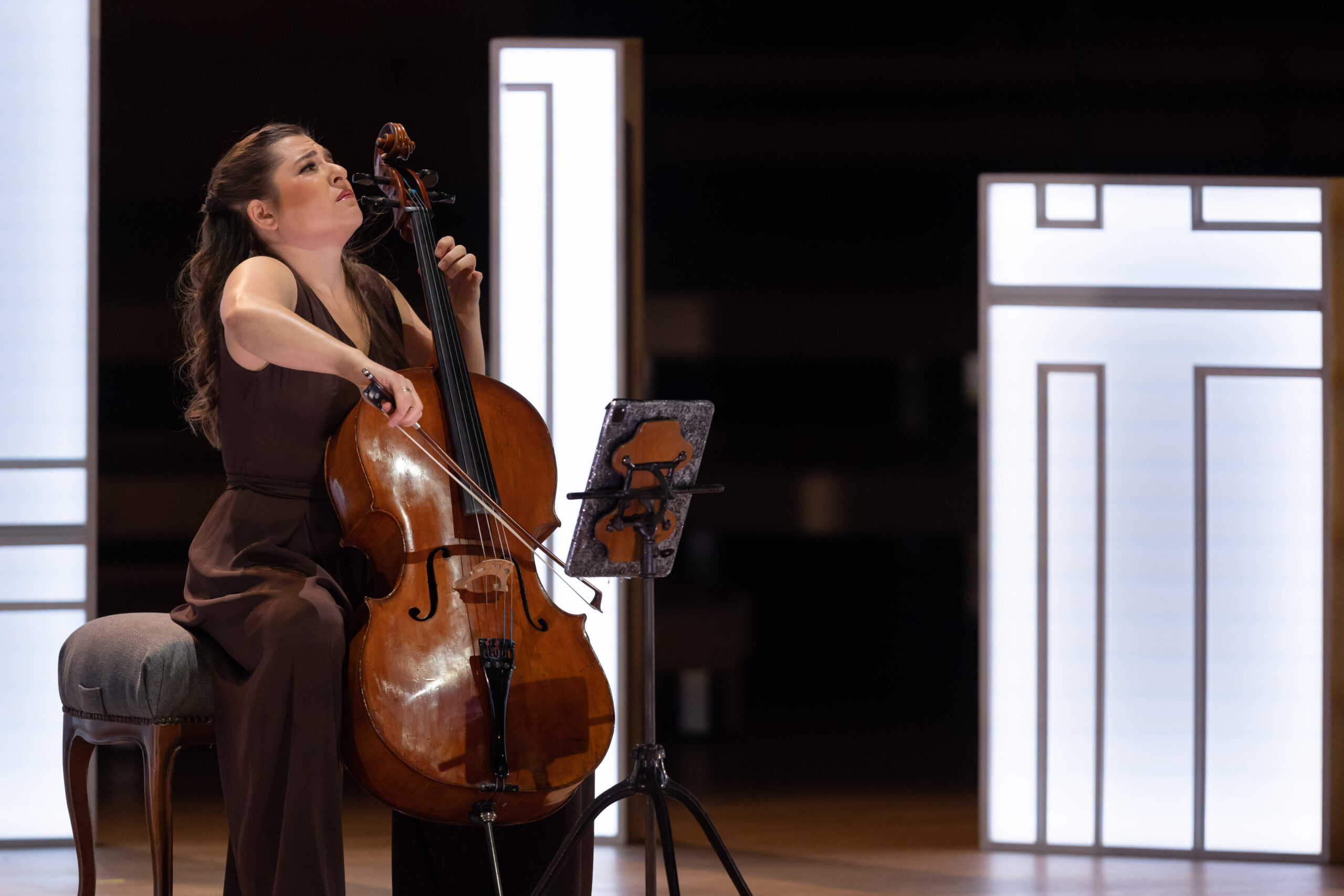
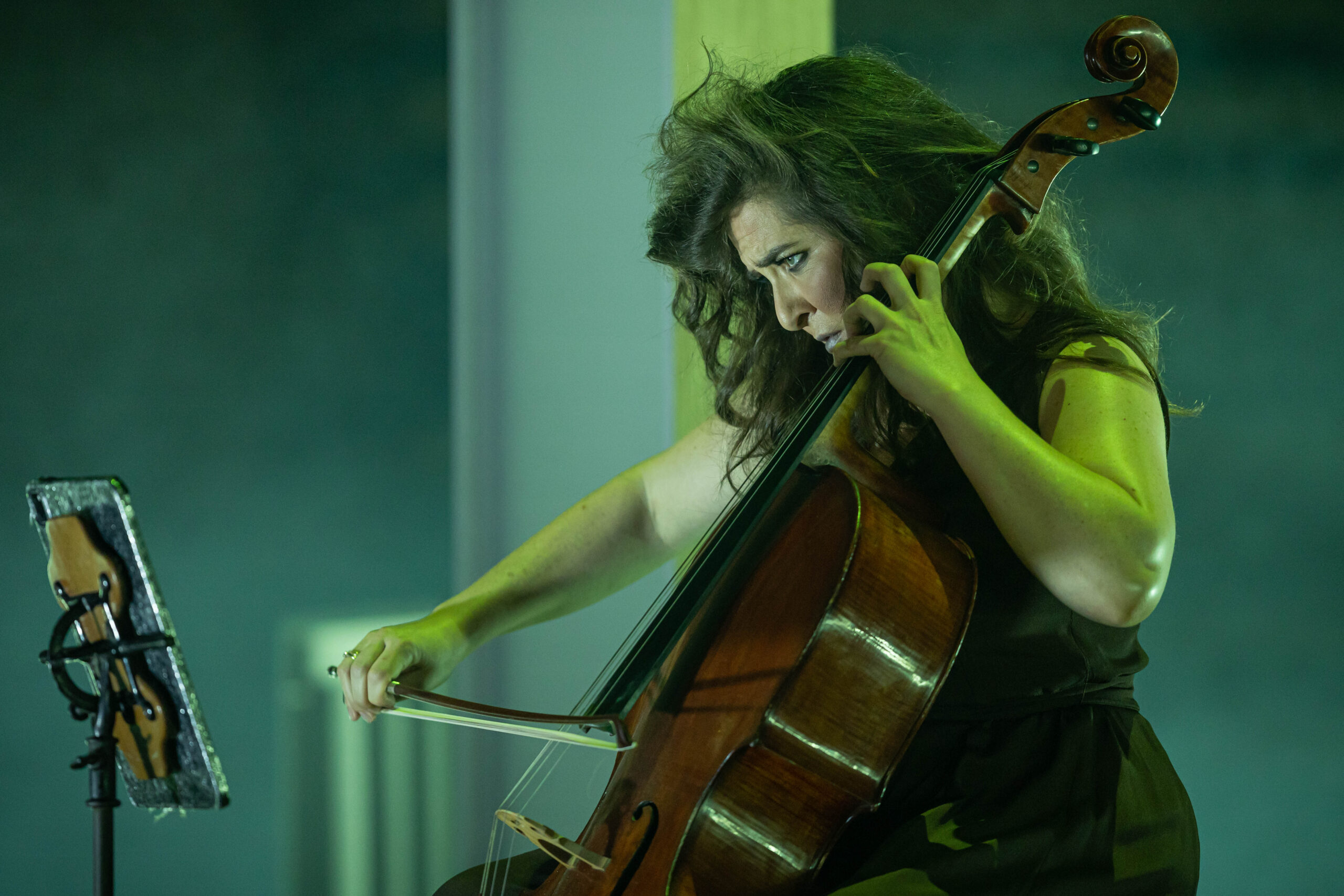
Alisa Weilerstein, violoncelle concert Fragments cr.: Antoine SaitoAlisa Weilerstein, violoncelle concert Fragments cr.: Antoine SaitoAlisa Weilerstein, violoncelle concert Fragments cr.: Antoine SaitoAlisa Weilerstein, violoncelle concert Fragments cr.: Antoine SaitoAlisa Weilerstein, violoncelle concert Fragments cr.: Antoine SaitoAlisa Weilerstein, violoncelle concert Fragments cr.: Antoine Saito
Last night, at the Maison symphonique de Montréal, an encounter took place that was both delightful (for some) and disconcerting (for others): a concept concert entitled Fragments, conducted intensely for two hours, solo, by cellist Alisa Weilerstein (Rafael Payare’s partner). How would you sum up the concept? There are six Suites for solo cello by Johann Sebastian Bach, as you probably already know. To each of these Suites, Weilerstein has added several compositions (also for solo cello) specially commissioned from a wide range of contemporary composers. Each suite becomes a cycle entitled Fragments (from 1 to 6).
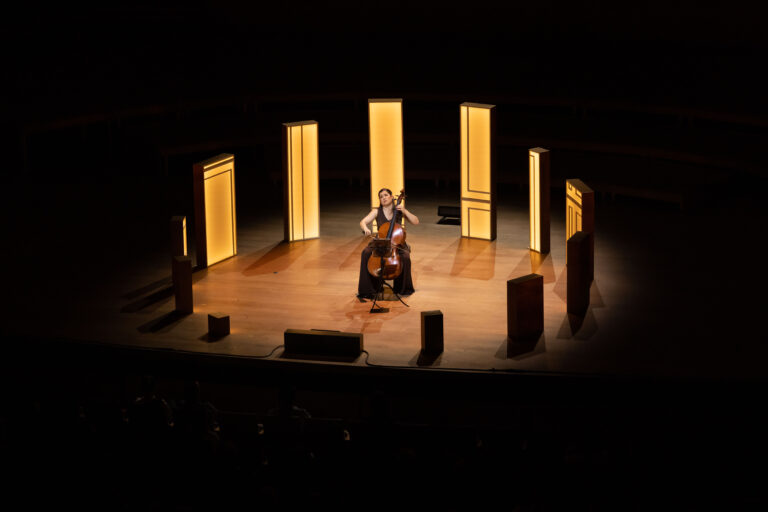
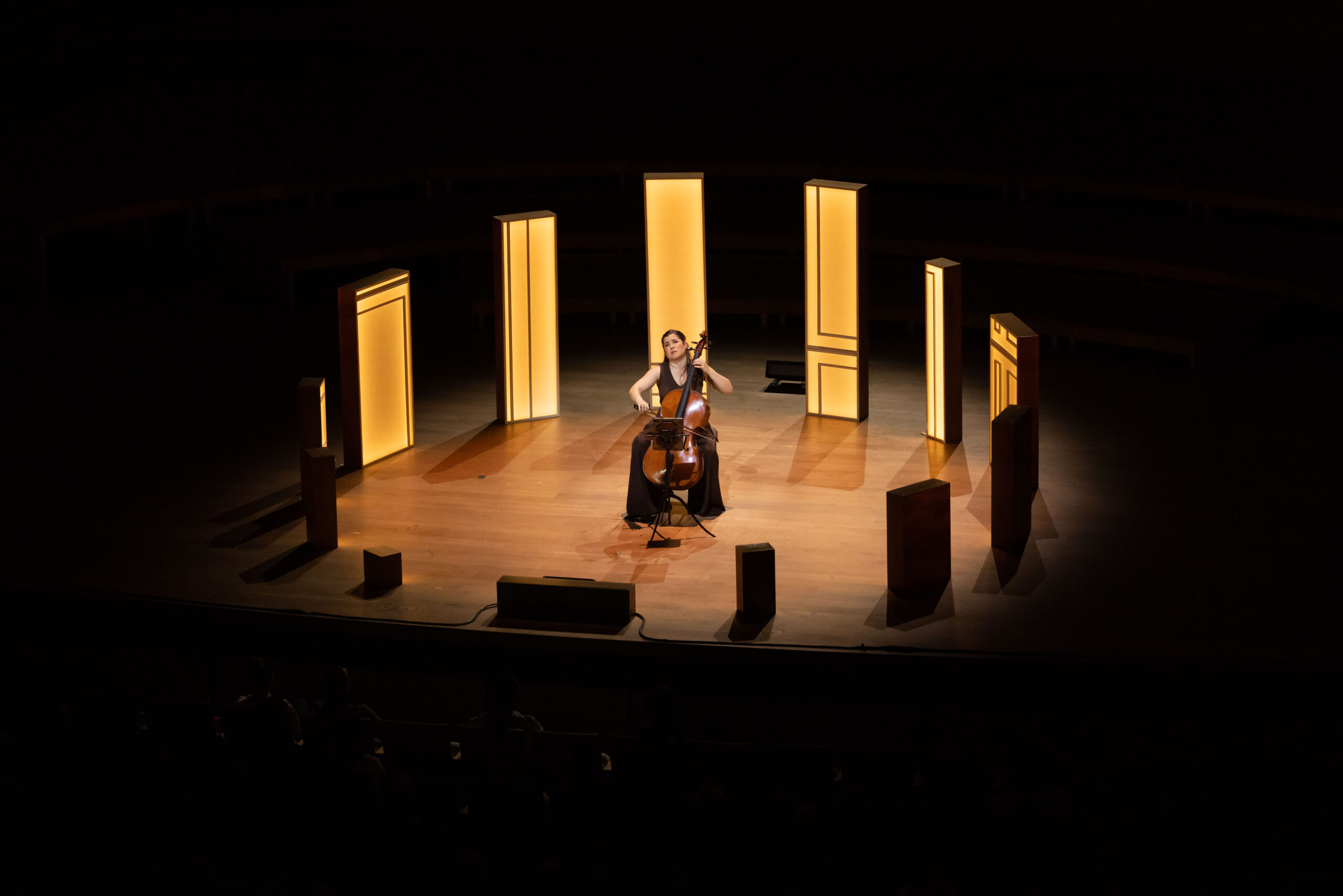
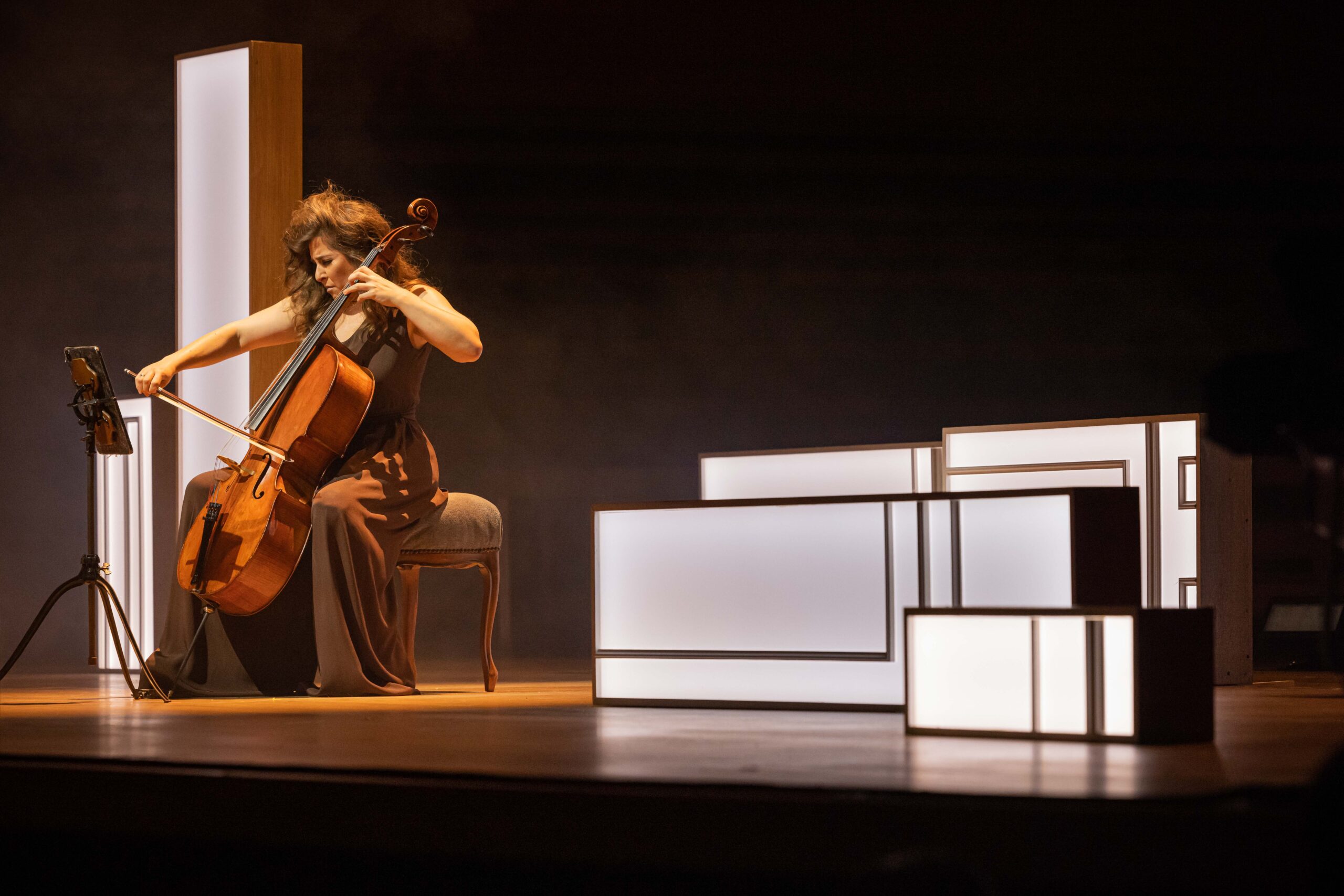
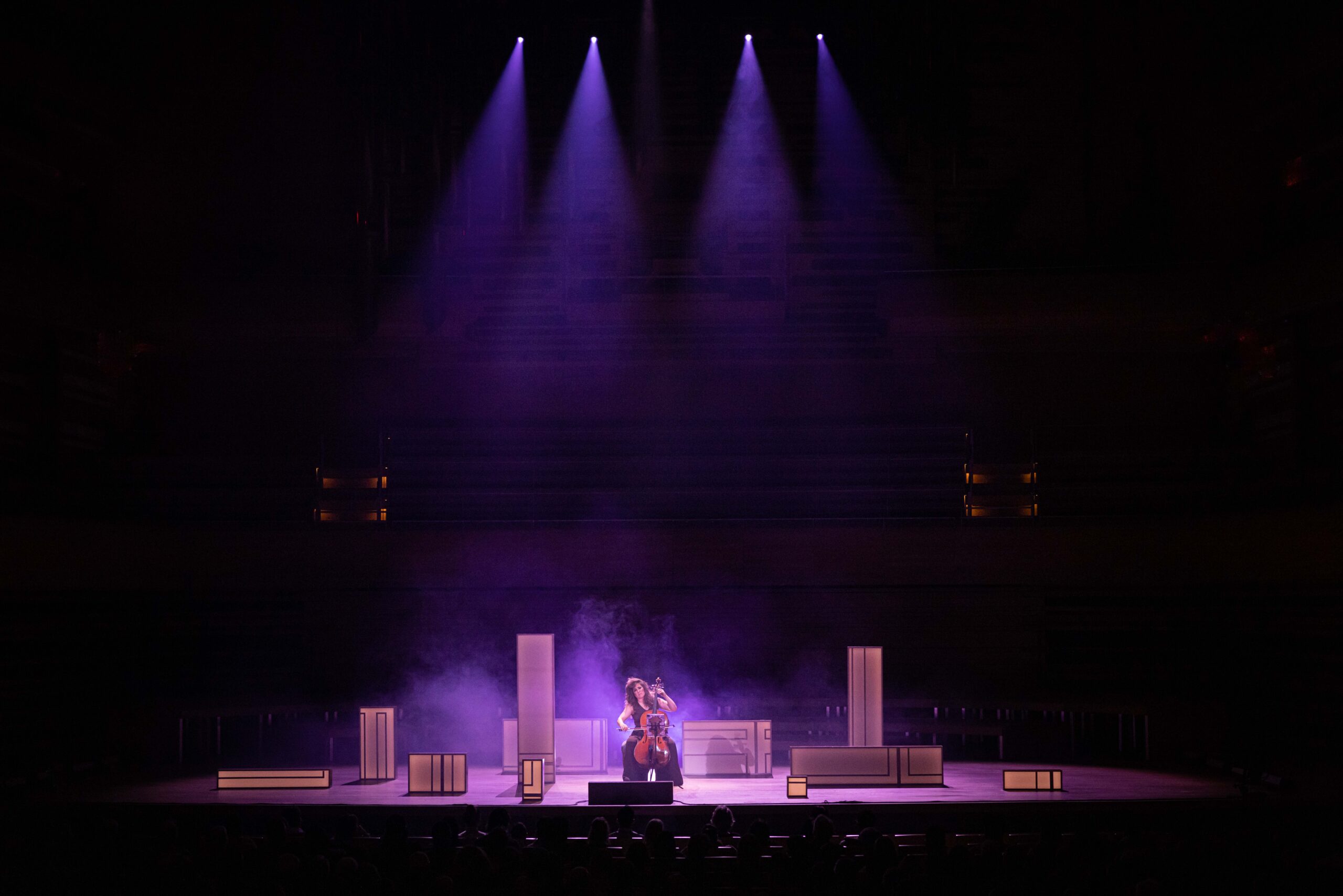
Within these Fragments, everything is mixed between movements from the suites (not even played in the usual order, with the famous Prelude from the first suite arriving at the end of Fragment I!) and new compositions. The only consideration is that the sequences follow a dramatic and expressive arc, supported by a rather sober but subtly expressive staging. This is achieved through two fundamental elements: variously placed blocks/panels lit from within (each Fragment has its own particular “placement”), and dynamic general lighting that changes as the Fragment in question unfolds. In this way, each hour-long Fragment becomes a musical theater with a unique dramaturgy. As you will have gathered, Weilerstein did not play all six Fragments of his total project yesterday. The concert would have ended in the middle of the night! Instead, we were treated to the first two in the series.
But then, you’re here to find out if it was any good, aren’t you? Of course, it depends on individual sensibilities, but for my part, I’m very happy with the result, and I’m very keen to get to know the other four cycles in the series.
I’m not going to inundate you with a description of every piece linked to every other piece, and this Bach movement and that. That would be like describing a grocery list. Instead, I’ll try to characterize each of the two Fragments heard, because that’s the whole point: it’s an artistic proposition that puts Bach back into context within contemporary musical cycles with their own unique personalities. At least, that’s what I understood from the exercise.
Fragments I is organic, fluid and “pacifist”. The relationship between the contemporary pieces and those taken from the Suite G major, BWV 1007 (No. 1) is generally benevolent, although there are occasional contrasting flashes. Joan Tower, Reinaldo Moya, Chen Yi, Gil Schwarzmann and Allison Loggins-Hull have created a dialogue of post-minimalism, lyrical modernism and even Latin and Chinese sounds (very diluted, no pop “crossover” here) with the great Johann Sebastian. The scenography and lighting are made up of fairly obvious symbolic characterizations: the cubes/panels are arranged in a balanced manner, in a perfect semicircle and encircling the soloist like the interior of a temple. A stage on the stage. What’s more, they turn white for each Bach movement (a symbol of purity?). For the others, we have warm shades of red, blue and orange. The transitions between pieces are quite natural. We’re on an emotional journey here, offering viewers a surprising yet friendly introduction. The modernity of the new pieces is not astringent, though still demanding in terms of attentive listening.
Fragments II is different. From the outset, Weilerstein is herself in a different persona: dressed more “moderately” and, above all, coiffed in a “glam-rock” style. The music gets off to a flying start: a rhythmic, dynamic frontal attack with a piece by Quebecer Ana Sokolovic that spits its virulence at the audience. The message is out: we’re somewhere else. In fact, the whole of Fragment II is marked by a much more aggressive personality than the first (but not only, as a superb final episode in which Weilerstein sings a gentle lullaby while accompanying himself offers a moment of great poetic tenderness). Fragment II is a cycle of striking contrasts, in which Bach and our contemporaries collide and pit themselves against each other. But there is a dialogue. An argumentative dialogue in which we don’t always agree, but which nonetheless reflects a very current reality: not everything is rosy and harmonious in a world of good intentions. New ideas and perspectives are born of the clash. The staging, once again, clearly characterizes this personality: the cubes/panels are, this time, scattered around the stage, some lying down. One has the impression that the temple evoked in the first Fragment is now in ruins. Bach continues to be in white, but the stage lighting is much cruder than in the first part. Edge-on spotlights often assault the soloist. The pieces in this cycle don’t follow on from one another, but bump into one another. So it’s the worlds of Ana Sokolovic, Caroline Shaw, Gity Razaz, Daniel Kidane and Alan Fletcher that have the wrong role here: that of making Bach seem salvific in a world in perdition.
That said, the new works by these composers are not, in all honesty, that terrible. We’ve heard far worse. True, they are often rhythmically motoric, or dynamically explosive, but the discourses offered are comprehensible. All the pieces “tell” something, dramatically speaking, although it can be anything, and very different depending on who’s listening. My point is that there is no example anywhere of dodecaphonic or cerebral serial atonalism. Nor is there anything that could be called experimental avant-garde. Nor, conversely, is there anything frankly neo-classical/romantic or strictly minimalist. Perhaps this is where Weilerstein could have dug deeper, to give a more realistic portrait of today’s music. I admit that the cohesive work would have been tenfold. But no one says that true creation is simple.
The majority of the audience at the Maison symphonique, although not full, reacted favorably. Some of the audience didn’t return after the first Fragment, and a few left during the second. Still, there was an appreciable number of young people, and I didn’t think they were among the deserters! I’m just saying…
One colleague suggested that there might be no point in the exercise if Bach had to be “hijacked” (in his defence, I think he was referring to Weilerstein’s very full, romantic approach to playing in the Suites excerpts, but his general opinion of the concept wasn’t much more enthusiastic…). I wonder how we can still be at this point in our thinking. I can’t find the reference anymore (who said this at the time?), but Liszt’s arrangements of Beethoven’s symphonies for solo piano generated the same kind of reactions from certain “specialists” in the 19th century. And probably all “revisits” of the great classics throughout the history of creation.
Cellist Alisa Weilerstein’s approach is resolutely contemporary. Not in the sense of a harmonic and now academic avant-gardism that in fact goes back a full century. Rather, and essentially, in the sense of a posture of listening and conception of music that is truly contemporary, worthy of the 21st century and the era of Spotify playlists or those on our phones. Traditional conservatives continue to listen to music from an absolutist perspective, where the first movement comes before the 2nd, and an Allemande from the Suite in D minor, BWV 1008 (no. 2) does not logically follow a stylistically alien piece entitled With One Foot Heavy and the Other Light, Johanna and Anna Lilted Across Long Years (Microfictions vol.2, I). And yet, in the 21st century, the new “listening” is deconstructed in this way, especially among the younger generation. Weilerstein (and she’s not the only one) proposes a different narrative for the concert. A scenario in which the concert is no longer simply the mirror image of a well-honed, structured repertoire, or the parrot of a discursive conception based on a list of works “to be played”, in the right order and with the right complements. In this proposal, and following the example of radio, which in the past has freed itself from the structure of the concert, the Weilerstein-style concert today frees itself from the traditional layout in which it has been confined since the 19th century. The days of the live Overture-Concerto-Symphony program (for the orchestral version) are numbered. The recital, less constrained, is nevertheless challenged by these Fragments.
Is this a good thing? A bad thing? It’s a fact of life. It’s futile to oppose it for ideological reasons rooted in some rigid conception of good taste, or “relevance”. We’ve had quarrels between the “Moderns” and the “Ancients”, between the Brahms gang and the Wagner gang, and between the partisans of Boulez and those of Glass. Nonsense, all these certainties. None of these camps has made the other disappear or become obsolete.
Nor is it relevant whether what Alisa Weilerstein proposes with these Fragments will become a “fashionable” form or not. Or whether it heralds a total deconstruction of classical concert-listening forms. What is certain, however, is that the artist is exploring a highly topical and relevant need to rethink the way classical concerts are performed and listened to. This questioning is very contemporary and necessary, whether we like it or not. It’s gratifying, too, because it shows that classical music continues to raise questions and that a younger generation is ready to experiment with it, not only by writing about it but also by presenting it in its own way and according to its own codes. That tells me it’s alive and well, and I’m very happy about that.
Weilerstein (who played spectacularly with an astonishing diversity of textures and sonorities) may not have found the magic formula (I’m sure there isn’t one anyway!), but she offered an idea and gave us a “show” whose “sequel” I can’t wait to hear.
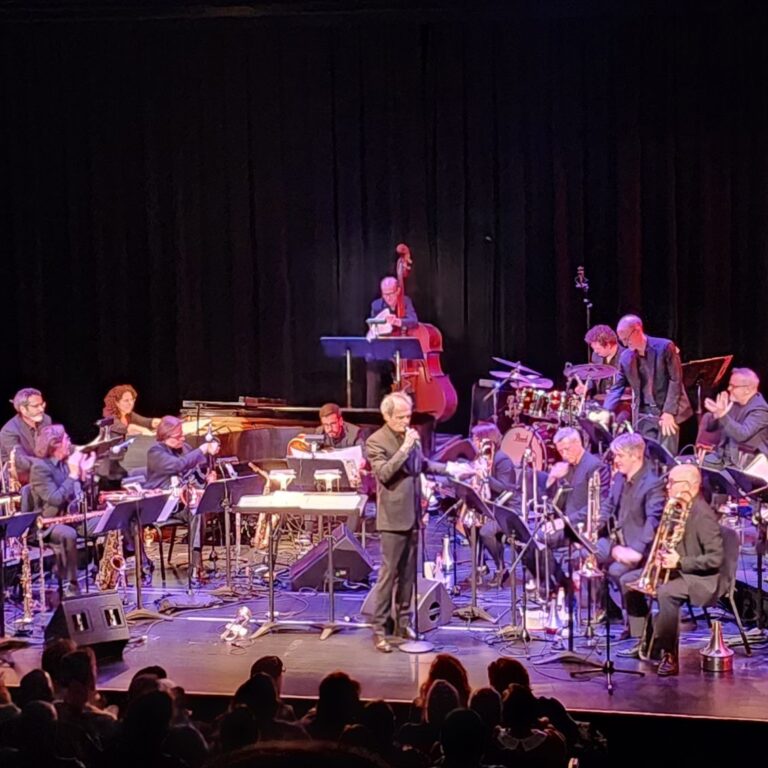
It’s no surprise the Orchestre National de Jazz de Montréal delivered a great performance last evening, but one could be left wondering whether it was fitting tribute to a luminary like Wayne Shorter after all. Similar to our impressions of Ron Carter’s performance with the Orchestre jazz des diplômés-es de l’Université de Montréal, under Ron Di Lauro’s direction once again, the ensemble may have missed the mark in honouring Mr. Shorter’s unique contribution to the jazz lexicon.
The evening at the Cinquième Salle at Place Des Arts began rather unceremoniously, with two fine but mostly forgettable arrangements unrelated to the rest of the programme. “Hammerhead”, the first Shorter composition we were treated to, was an underwhelming first choice. It’s an early and somewhat orthodox ‘hard-bop’ number written by the composer-performer during his years with Art Blakey and the Jazz Messengers, arguably before he really began to hit his stride. It simply felt somewhat dispensable given the vastness of the Shorter songbook. “Endangered Species”, the next feature, was just as much a curious selection and not one I imagine many were even familiar with. There was palpable excitement when the next tune called was “Armageddon”, a classic from Shorter’s golden years on Blue Note.
To be sure none of this is to point to any criticism as far as the musicians were concerned. Certainly each member of this very fine ensemble did their due diligence, with the saxophonist section of Jean-Pierre Zanella, Samuel Blais, André Leroux, Frank Lozano, Alexandre Côté, going above and beyond in their tribute to the master. If only they were featured on more memorable arrangements. “Yes or No” stood out as one of the tunes that came closest to channelling the vital and daring spirit of Shorter’s music.
Unfortunately the encore choice of “Speak no Evil”, done in a sort of latin style, didn’t quite cut it. By all means it was still a very enjoyable evening, but when an ensemble seeks to pay homage to icons like Wayne Shorter, it is essential for such endeavours to carefully curate a repertoire that truly honours the artist’s legacy. The absence of certain iconic compositions and the conservative approach to arrangements left me, perhaps many in the audience, yearning for a more authentic reflection of Shorter’s musical imagination.
OSM | Alban Berg and Beethoven’s 7th: Surprises and Elegance on the Menu
by Rédaction PAN M 360
The OSM continues the “Beethoven” parenthesis of its season with a concert echoing the previous one. Like the concert featuring the Violin Concerto, the graceful, dance-like 7th Symphony is presented in context with composers who have challenged classical composition.
It was the theme for both concerts. The first Viennese school (Haydn, Mozart and above all Beethoven) is set against, or rather in perspective with, the second (Schoenberg, Berg and Webern). We don’t seem to have the chance to hear any Schoenberg this year at the OSM, but Anton Webern was in the spotlight in October, and this time it was Alban Berg who was on the program.
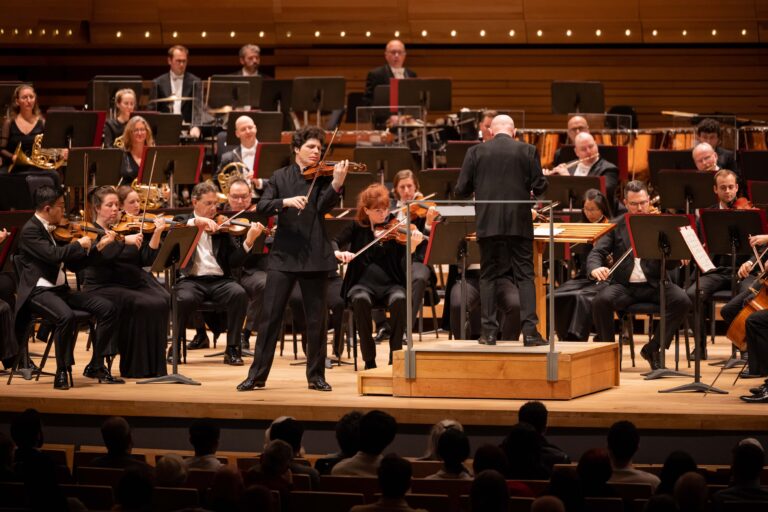
Subtly enough, one senses that it was Berg’s works that shaped the program, even if their presence is invisible in the title of the concert. The Three Pieces for Orchestra are complex and stunning. The contrasts and thunderous percussion are breathtaking. The aggressive sonorities of the score startle and astonish. The stage was packed, with a powerful orchestra playing very loudly, even too loudly at times. Berg’s second piece, the Violin Concerto, often called “In Memory of an Angel”, is often considered the culmination of twelve-tone language. You can sense pain and sadness in the sinuous melodic lines that seem impossible to resolve. Soloist Augustin Hadelich delivers a crystalline, controlled and hypnotic performance. The score being technically difficult and highly unpredictable, the performance of these two works was certainly a daunting challenge for the orchestra and Hadelich, but one that was brilliantly met. The soloist thanked the audience with an encore, the Andante from Bach’s Sonata No. 2.
Beethoven’s 7th Symphony announced in the concert title, is a work of incomparable elegance and majesty. Considered by many to be the “apotheosis of dance,” it’s easy to imagine oneself at a grand ball in the Prince’s palace, with the court in its finest attire. A more controlled opening paves the way for an interpretation based on a gradual but constant rise in intensity. The orchestra’s musicians seem to know the score by heart, and Christophe Eschenbach’s direction is effective. Seemingly very square, his movements indicate his investment in the various sections. This is an interesting way to appreciate both the Beethoven piece and the Berg pieces.
Obviously, the magnificent and much-acclaimed second movement of the Symphony steals the show. Still, there’s a certain pleasure in seeing the orchestra bring out the best in the other movements, especially the third and fourth, which are played with all the intensity we’ve come to expect from the current artistic direction.
Beethoven will be back in the spotlight in April 2024 with a visit from Kent Nagano. For more details on upcoming concerts, visit the OSM page HERE.
Photo credit : Antoine Saito
Coup de coeur francophone | Le Roy, la Rose et le Lou[p], When Rising Forces Unite
by Jacob Langlois-Pelletier
The day after the Gala de l’ADISQ 2023, what could be better than to see on stage the trio formed by the recipient of the Félix for “Revelation of the Year” in 2022, Ariane Roy, and two former nominees in this category in 2019 and 2021, Lou-Adriane Cassidy and Thierry Larose.
After reuniting on stage for a memorable concert at the Francos 2022, the three singer-songwriters announced a short nine-show tour last June. In front of a packed Club Soda on Monday night, Le Roy, La Rose & Le Lou[p] put in an excellent performance, worthy of their talent.
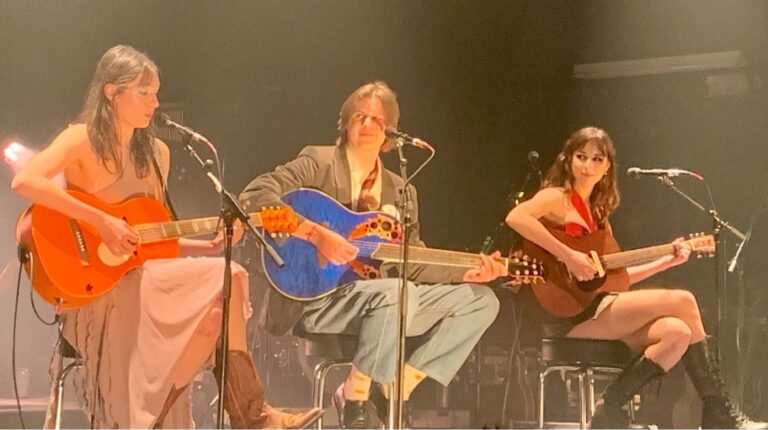
As the curtain rises, the three artists introduce themselves to the audience, each seated on a chair, guitar in hand. In this acoustic opener, they perform their band’s theme song, followed by a solo track from each member. It’s immediately clear that this is no simple show. The various songs are re-imagined as a trio, giving life to a superb version of Cantalou, adorned with Cassidy and Roy’s harmonies.
From the outset, a special connection is established between them and the audience. Almost silent at times, the crowd admires the talent unfolding before them. However, this short guitar-vocal moment was far from being a harbinger of the rest of the show…
At the end of the more intimate segment, Thierry, Lou-Adriane and Ariane get up and their band takes to the stage. The rhythm becomes frantic, and the drums and guitars go wild. Their voices blend perfectly. The three protagonists’ proposal is rock, it’s hair-raising and it gets Club Soda moving.
The three members jump, dance and smile at each other; their fun is contagious. They exchange the lead role as we browse through their respective discographies. The result is coherent, and we salute all the work that went into putting together such an evening.
Ce qui monte doit redescendre (What goes up must come down), Le Roy, La Rose & Le Lou[p] offered the audience a moment of gentleness and calm at the end of the show. At the piano and accompanied by Ariane Roy’s voice, Lou-Adriane Cassidy sang Ça va ça va. Her gentleness charmed those present and was unequivocally one of the highlights of the show.
After the song Les amants de Pompéi, carried along by the crowd’s singing, Thierry Larose cried out “Vive la musique québécoise! twice. If the art of these three promising artists doesn’t convince you that good music can be made here, you might as well call yourself a lost cause…
A Night with Pussy Riot: The Band that isn’t a Band
by Ann Pill
If members of the audience thought they were going to see a Pussy Riot concert then they might have been a little disappointed by their sold-out show Wednesday night at Theatre Rialto.
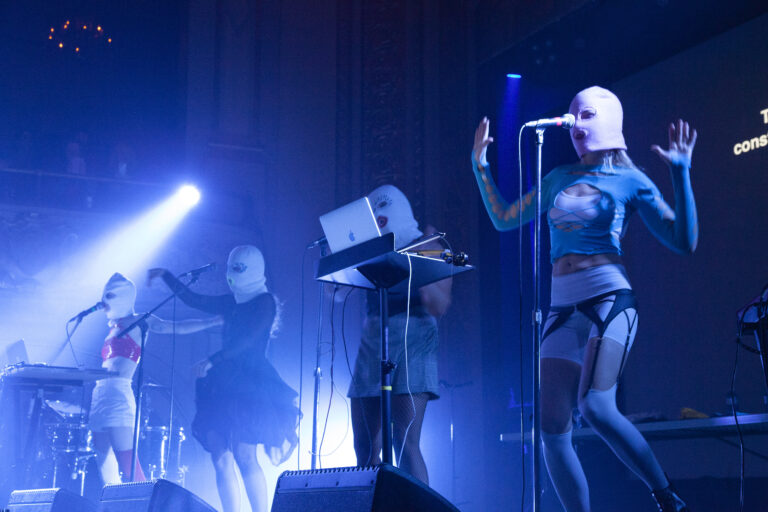
Those who were completely prepared for a multimedia activism experience, an absurd but moving and poignant piece of performance art—then they delivered. The room at the beautiful former movie theatre was completely packed yet the stage was oddly barren. A few drums, a couple of mic stands, a DJ set, and a long table with a ridiculous amount of water bottles (we will come back to the water bottles later).
The performance, called Riot Days is a “play” in the loosest of terms, based on the book by member Maria (Masha) Alyokhina. It’s a memoir about her two years in a gulag prison after their infamous “punk-prayer” action.
For the uninitiated, Pussy Riot is a feminist protest group and art collective. They famously put on one of their guerrilla-style performances in 2012 at Moscow’s Cathedral of Christ the Saviour Church, protesting the re-election of Putin and his ties to the church.
There have been 10-15 members of Pussy Riot throughout the years, but only four of them performed: Maria Alyokhina, Diana Burkot, Olga Borisova, and Alina Petrovna.
Alexander Cheparukhin, producer and video director of the Riot Days’ visual elements introduced the group. “They have never been a punk band,” he said to the crowd, “they were never a band at all.”
You could feel the uncertainty from some members of the audience as to what to expect from the night.
Codes to donate to Ukrainian children’s hospitals were scattered everywhere. The members of Pussy Riot never lost focus on the realities of the war and the situation in Russia during their performance.
The show began with a performance by Liza Anne, a perfect opener who set the odd activism tone of the night. It was both beautiful and emotional as she talked about coming out at 30 and how now she’s, “sober, in love, and it all makes sense.” In almost the same breath she broke out into a deliciously confusing choreographed number about how much she loves Shania Twain.
That combination of beauty, emotion, chaos, confusion, and humour was the common thread of the evening.
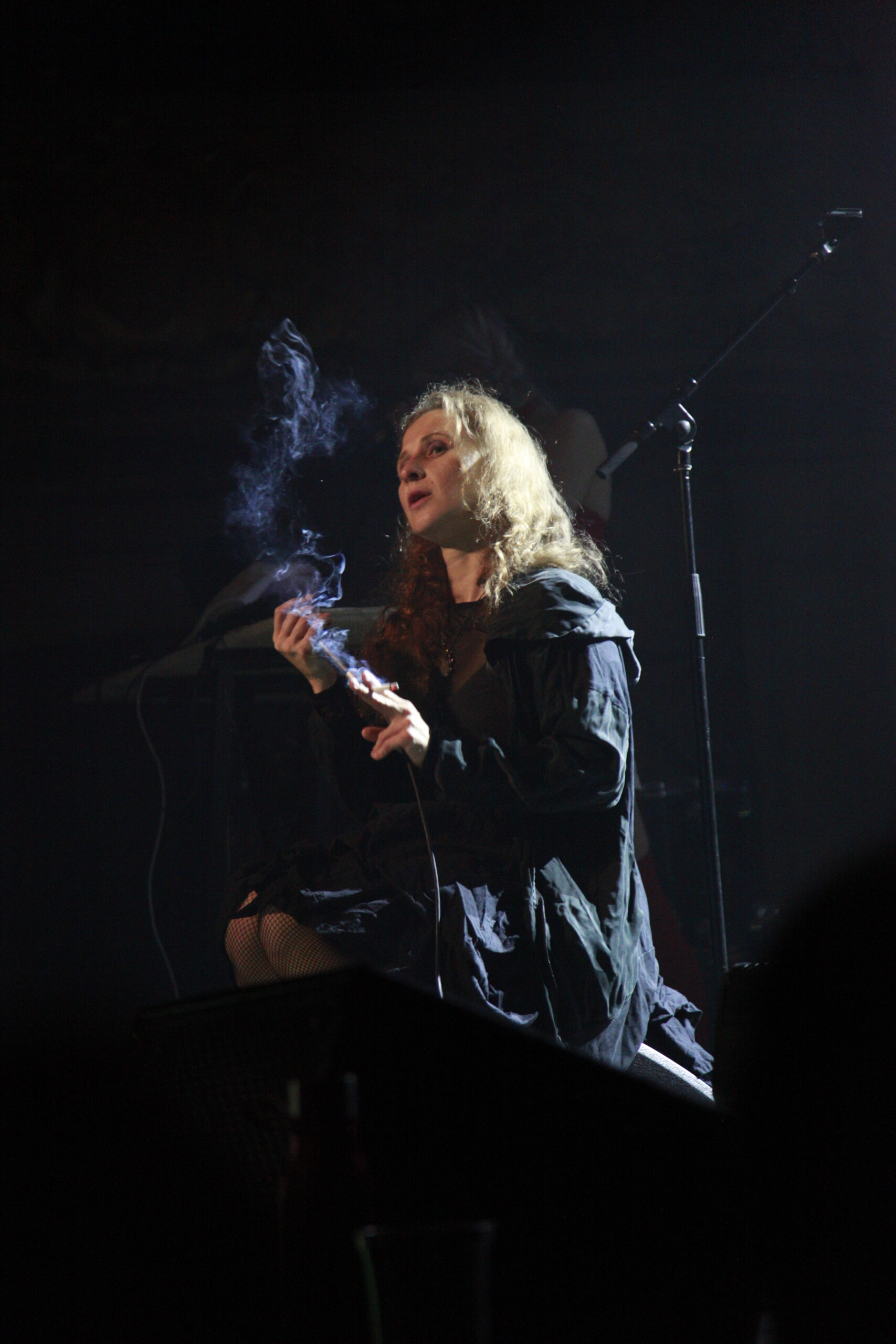
Pussy Riot’s performance put us on an intended high alert. At one point, Alyokhina stood in the centre of the stage pouring water bottle after water bottle on her head while Borisova showered the audience.
The now-drenched leader lit a cigarette, and the entire group began doing laps of the stage.
Each element of the performance needed the other. As a non-Russian speaker, the text on the screen made the narrative element of the performance clear. This also led to incredible parts of the show where in all-caps giant letters it read, “Putin peed his pants.”
There were videos of Pussy Riot at the time of their arrest and content from their infamous punk prayer that really put the audience in the context of Russia at that time. Every book should be accompanied by an hour-and-a-half retelling yelled at you in Russian while you are being doused in water.
Though it was unclear if this was what the audience signed up for, they were certainly engaged and no one could look away. The show really picked up speed after the water bottle dousing. Unfortunately, the sound was a bit funky. Occasionally, the mic and DJ setup would cut out. But the show was so synchronized and choreographed that the show blared on.
Pussy Riot has put out a lot of new music in the past couple of years with some really cool features but we didn’t hear any of those hits at this show. The music was mostly a tool to keep you engaged with Masha’s story. It was neither their old raw punk sound nor did it sound like their newer more accessible electronic pop music. It was an experimental almost industrial soundtrack to the show.
This was not a concert. Pussy Riot is not a band. They are a political activism group that has spread their message through music. But their feminist anti-Putin message is more important than ever. And if between the water in your eyes and the sensory overload happening on stage, perhaps the succinct takeaway message was “Putin peed his pants.”
Photos by: Sarah O’ Driscoll
Ligeti Festival at Salle Bourgie | Pierre-Laurent Aimard: Touching and Transcendent Perspectives
by Rédaction PAN M 360
One hundred years ago, the fascinating Hungarian composer György Ligeti was born. Although he passed away in 2006, his music has left an imposing mark on contemporary and contemporary music of the 20th and 21st centuries. Salle Bourgie and the Ligeti Quartet have invited a host of performers and composers to pay tribute to this diverse and moving architect of sound.
Ligeti’s music is difficult to define in a single worksince it evolves not only through the formats in which he composed but also through the periods. So it was impossible to adequately represent and honor his work through a single concert. That’s why this festival is made up of three separate, independent concerts, to represent the different aspects of Ligeti’s work and present it to an audience that is often already conquered, but still curious about such unusual music.
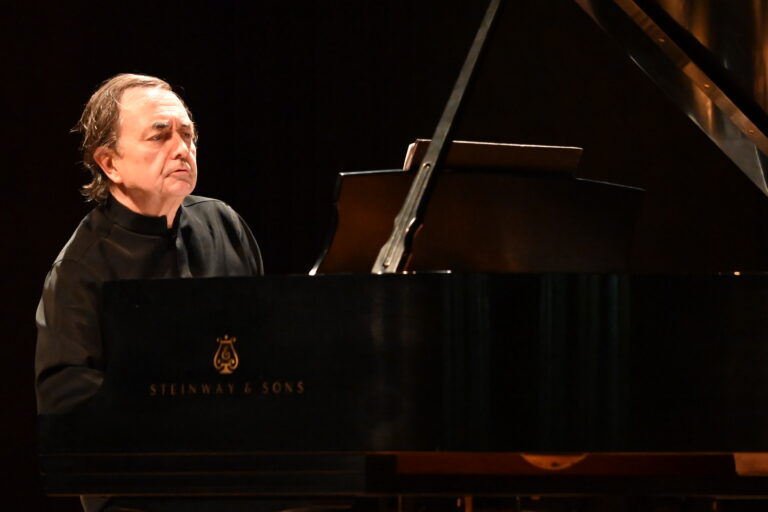
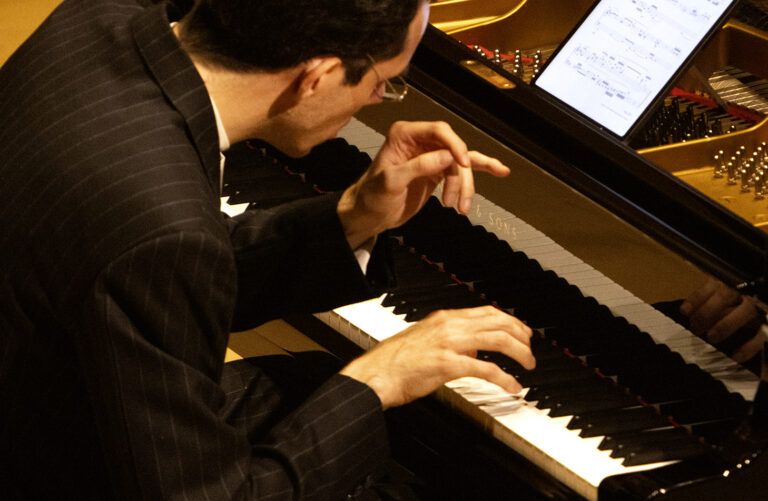
The final concert of the Ligeti Festival featured a distinguished musician. The fantastic French pianist Pierre-Laurent Aimard paid a heartfelt tribute to a close friend and collaborator in Ligeti. He offered a touching comparison of the composer’s piano works with those of the classical (with Beethoven), romantic (with Chopin) and modern (with Debussy) repertoires. It was also an opportunity to showcase Salle Bourgie’s new concert grand piano (a Steinway model D-274 from Hamburg).
The first part is entirely devoted to alternating movements from Ligeti’s Musica ricercata (1951-1953) and Beethoven’s Bagatelles (a selection from among them). We appreciate the way Aimard highlights the resonant ideas and close links between the two composers’ writing. We sometimes find ourselves losing track and confusing the two composers, at least if we don’t know the works by heart. One can only admire the pianist’s intense, magnificent interpretation.
The program for the second half was modified, again alternating composers, this time between works by Ligeti, Chopin and Debussy. This gives Aimard the opportunity to comment on each work on the program and explain its logic. The care with which he has reconstructed the program demonstrates his sincere love for Ligeti and his music and is evident in the harmonic, melodic and rhythmic exploration he has proposed. He even offered an encore, playing the work Fanfares which had been withdrawn from the program. A great success, and a fine opportunity to reflect on the echoes between eras.
The celebration of György Ligeti and his Festival at Salle Bourgie can only be described as a success. Whether it was an opportunity to discover or deepen one’s knowledge of the Hungarian composer, one thing is certain: it was impossible to remain passive in front of the intensely creative and breathtaking music of this monument of contemporary music.
Photo credit: Claudine Jacques
Ligeti Festival at Salle Bourgie | Quatuor Ligeti : How Do You Honour A Giant?
by Rédaction PAN M 360
One hundred years ago, the fascinating Hungarian composer György Ligeti was born. Although he passed away in 2006, his music has left an imposing mark on contemporary and contemporary music of the 20th and 21st centuries. Salle Bourgie and the Ligeti Quartet have invited a host of performers and composers to pay tribute to this diverse and moving architect of sound.
Ligeti’s music is difficult to define in a single worksince it evolves not only through the formats in which he composed but also through the periods. So it was impossible to adequately represent and honor his work through a single concert. That’s why this festival is made up of three separate, independent concerts, to represent the different aspects of Ligeti’s work and present it to an audience that is often already conquered, but still curious about such unusual music.
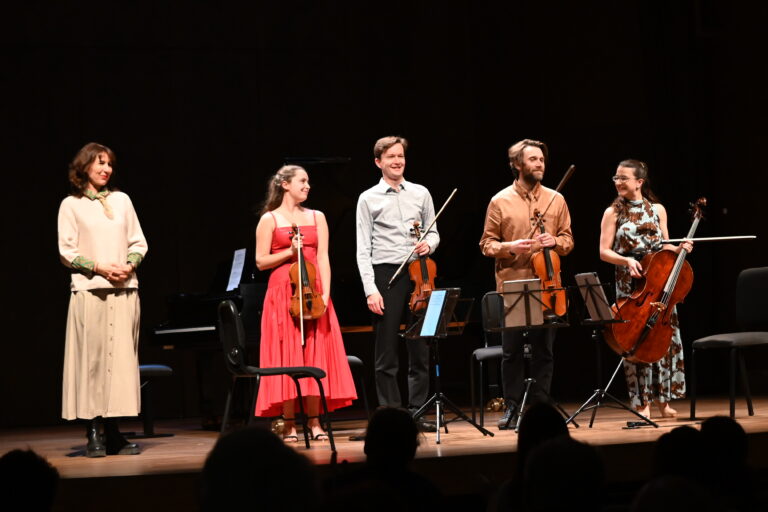
The second concert, on Sunday afternoon, was an opportunity for several composers to pay tribute to György Ligeti through works commissioned by the Ligeti Quartet. We hear works by Nicole Lizée, Xiaoyong Chen, Emily Hazrati, Mandhira de Saram, Rolf Hind, Sidney Corbett, Ana Sokolovic, and above all Lukas Ligeti, György’s son, whose work Entasis opened the program.
Their works evoke, pastiche and borrow from the particular style of Ligeti (father). Rhythms and timbres are explored in equal measure, with voice and whistling combined on several occasions with the harsh violin techniques often requested by the composer. During this first part, we realize just how much Ligeti knew how to use the breadth of contemporary musical language, adding dimensions of texture and intensity that inspired several generations of composers after him. The quality of the Ligeti Quartet is exemplary, perfectly communicating the intentions of the scores.
The concert ended with Ligeti’s two String Quartets, works that highlight the aggressiveness and anxiety-inducing delicacy of Ligeti’s more mature style. The contrasts are striking, in terms of sonority and intensity, and it’s easy to get caught up in the force of the writing. We’re exhausted by the end but leave satiated and marked.
To read the review of the third and final concert, click HERE!
Photo credit: Claudine Jacques
Ligeti Festival at Salle Bourgie | OSM Ensemble and Quatuor Ligeti: A Composer with Multiple Musicalities
by Rédaction PAN M 360
One hundred years ago, the fascinating Hungarian composer György Ligeti was born. Although he passed away in 2006, his music has left an imposing mark on contemporary and contemporary music of the 20th and 21st centuries. Salle Bourgie and the Ligeti Quartet have invited a host of performers and composers to pay tribute to this diverse and moving architect of sound.
Ligeti’s music is difficult to define in a single work since it evolves not only through the formats in which he composed but also through the periods. So it was impossible to adequately represent and honor his work through a single concert. That’s why this festival is made up of three separate, independent concerts, to represent the different aspects of Ligeti’s work and present it to an audience that is often already conquered, but still curious about such unusual music.
Saturday evening’s concert set the ball rolling, with talented guests either complementing the Ligeti Quartet with larger-scale works or offering their own interpretations of the composer’s works.
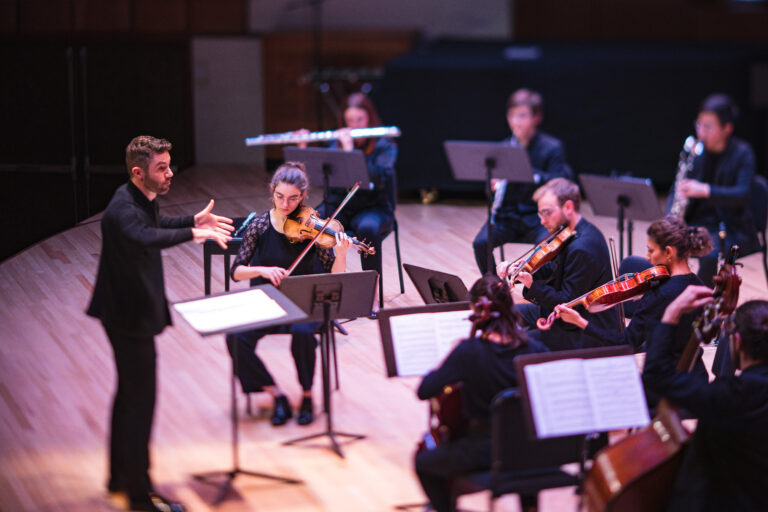
Conductor Jean-Michaël Lavoie and the Ensemble de l’Université de Montréal et de l’Université McGill made up of students from both music faculties, assisted the Quartet in Ramifications, a work dating from the late 1960s and firmly part of its more textured style now associated with suspense (thanks to Stanley Kubrick). The performance is exemplary, and the audience appreciates it.
An OSM delegation of wind instruments (brass and woodwinds) presented Kammerkonzert (Chamber Concerto, composed 1969-70), with an enlarged orchestra, and Six Bagatelles for Wind Quintet (1953). In both works, the marriage of timbres and textures was utterly delectable. The OSM musicians’ mastery of sound was more than adequate to pay tribute to such works.
A health problem forced a change of program, and for the first time, we had a more intimate encounter with the Ligeti Quartet, who kindly offered to play works that were not on the program. As a result, we were able to hear a wider range of Ligeti’s compositional styles, with some fine contextualizations by the quartet members. A window onto a more melodic style, the musicians’ impromptu effort was much appreciated, and the works (extracts from the string repertoire) were magnificent.
Coup de cœur francophone | Mission Accomplished for Likouri and Madame Autruche
by Michel Labrecque
Attending a show at Quai Des Brumes, that iconic bar of the Plateau Mont-Royal counter-culture, always brings back a ton of memories. The beers after choir rehearsals, the first shows of the then-unknown Lhasa De Sela. The place is magnificent and full of stories.
On Saturday, November 4, Coup de cœur francophone introduced us to two young singer-songwriters who are musically very different, but who complement each other perfectly.
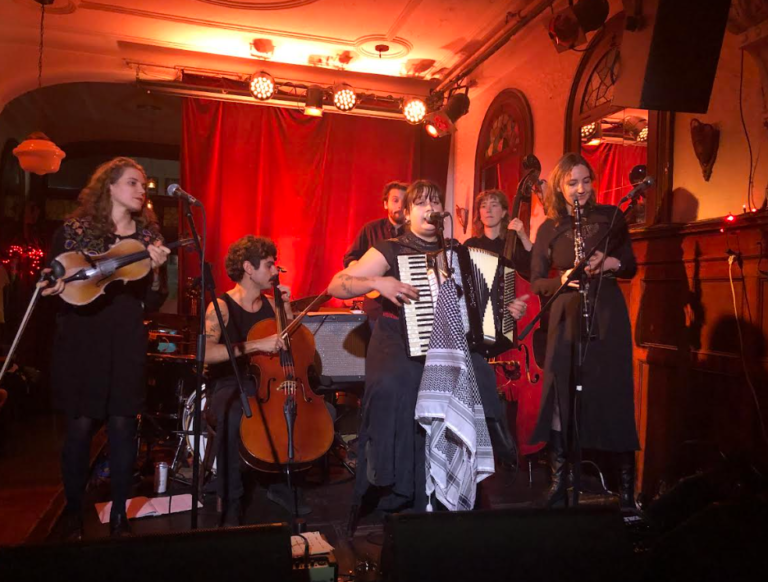
Likouri is a singer, accordionist and composer at the head of an acoustic sextet. She likes to tell her life stories, rather sad ones, but with a lot of humour. Right from the start, she invites us into her “organized chaos”, talking about escape, whisky and denial of paradise.
While his monologues are presented in Quebecois French, his songs are written in French from France. The music is a mix of valse musette, gypsy and klezmer, with a few jazz touches. Accordion, violin, cello, double bass, clarinet and bandolim. A nice mix, but the acoustics of the bar make it difficult to fully appreciate.
The show includes several songs from Likouri’s only album, Aza, as well as new pieces, two of which are sung in very decent Spanish.
But it’s Likouri’s self-deprecating personality that seems to have won hearts.
At the end of the performance, she donned a keffiyeh, the Palestinian scarf, to express her indignation at the Israeli bombardment of Gaza and the apartheid that has reigned there for decades. It was a heartfelt gesture. Except that she never mentioned the Israeli deaths on October 7. Which left me feeling a little uneasy.
Madame Autruche, aka Mélisande Archambault, took over, with her violin and trio of musicians. Folk, rock and atmospheric music, with very personal lyrics.
I discovered Madame Autruche last summer in a very unlikely place: Ste-Rose du Nord, a small village on the Saguenay Fjord, where she was performing in a tiny bar. I was seduced by the proposition. This woman had built a personal identity.
Later, I learned that Mélisande Archambault had worked with the groups Canaille, Groenland and Les Royals Pickles. And that Madame Autruche had made two albums: Les Pentes Glissantes in 2019 and Réveillez-moi quand il fera beau in 2023.
If there’s one thing Likouri and Madame Autruche have in common, it’s their capacity for self-mockery. Feminine. But with room for jubilation.
Mélisande Archambault is no violin virtuoso, but she knows how to make the most of her instrument. The three accompanying musicians are talented, especially the guitarist, who has put together some very inspired solos. We could have taken more.
The spirit of the Coup de cœur francophone is one of discovery. In this respect, this evening was mission accomplished.
SMCQ | À la croisée des pianos 8 : Moritz Ernst Completes the Cycle with Success
by Elena Mandolini
From November 3 to 5, the SMCQ presents a veritable piano marathon. A series of eight concerts will be presented in the concert hall of the Conservatoire de musique et d’art dramatique de Montréal, making this a not-to-be-missed event in contemporary piano. The PAN M 360 team will be attending the event and sharing their impressions throughout the three days.
For the last of the 8 concerts organized by the SMCQ around the contemporary repertoire, Moritz Ernst once again took to the stage to complete Sandeep Bhagwati’s cycle, Music of Crossings, a grand cycle of 36 fragments which had begun on Friday evening. This recital also closed the marathon offered by the SMCQ.
Ernst did not disappoint the audience, maintaining throughout the concert the high level of playing to which he had already accustomed us in his two other interpretations of Bhagwati’s music. From the fragments presented on Sunday, a more dreamlike and sometimes humorous theme seemed to emerge. Indeed, the fragments, always accompanied by a short text projected on the back wall of the hall, were at times spare, with resonant melodic lines. These extracts invited contemplation and contemplation. Conversely, some highly rhythmic fragments brimmed with contagious, sometimes playful energy. Once again, the repertoire on offer was full of contrasts, and Moritz Ernst was able to underline these contrasts in a very convincing manner. The pianist once again reaffirmed his great versatility as a pianist, as much in his agility as in his sensitivity.
The last notes of the last fragment, of the last concert of the evening and of the series, were played pianissimo, fading into the hall. The audience watched in silence as the final notes of the piece were played out, in a highly successful and contemplative manner. The pianist and composer were warmly applauded, and deservedly so. A superb conclusion to this marathon!
Nous utilisons des technologies telles que les cookies pour stocker et/ou accéder aux informations des appareils. Nous le faisons pour améliorer l’expérience de navigation et pour afficher des publicités (non-) personnalisées. Consentir à ces technologies nous permettra de traiter des données telles que le comportement de navigation ou les ID uniques sur ce site. Le fait de ne pas consentir ou de retirer son consentement peut avoir un effet négatif sur certaines fonctionnalités et fonctions.
Functional
Always active
The technical storage or access is strictly necessary for the legitimate purpose of enabling the use of a specific service explicitly requested by the subscriber or user, or for the sole purpose of carrying out the transmission of a communication over an electronic communications network.
Preferences
The technical storage or access is necessary for the legitimate purpose of storing preferences that are not requested by the subscriber or user.
Statistics
The technical storage or access that is used exclusively for statistical purposes.The technical storage or access that is used exclusively for anonymous statistical purposes. Without a subpoena, voluntary compliance on the part of your Internet Service Provider, or additional records from a third party, information stored or retrieved for this purpose alone cannot usually be used to identify you.
Marketing
The technical storage or access is required to create user profiles to send advertising, or to track the user on a website or across several websites for similar marketing purposes.