Le Vivier and Quasar | Selective Fluidity

by Rédaction PAN M 360

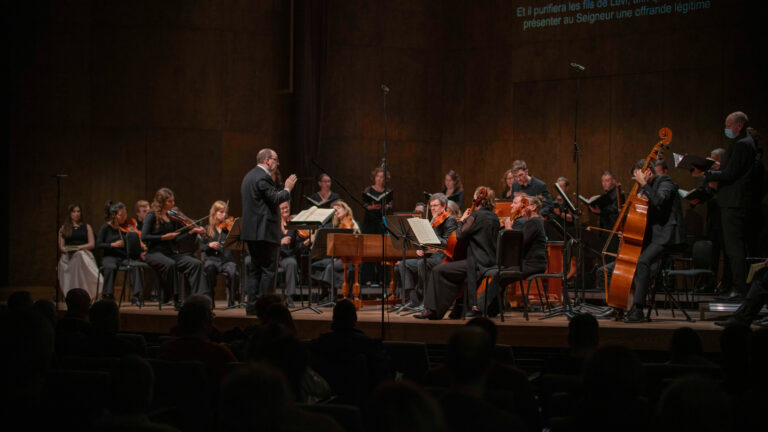
On Tuesday evening, the Quasar Quartet offered a tribute to Claude Vivier. Presented in October in Paris, Montrealers had the chance to see this highly interesting and, above all, highly creative concert. Le Vivier is certainly proud to organize this tribute to a composer who inspired many, and not just the name of the organization.

Quasar brings together saxophone virtuosos in a tight and impressive core, both technically and expressively. Their instrumental explorations are fascinating, and the ease with which they make their instruments snap, vibrate, jump and scream is an art in itself. Of all the atypical and often incongruous sounds heard last night, few seem to have really given the musicians a hard time.

The staging was unique and meticulous. A central stage, surrounded by a transparent curtain, occupied the Espace Orange. Sometimes in front of this stage, sometimes on it, the lighting and the floating aspect of the layout helped to create an intimate atmosphere. It was a pity that the lighting for much of the concert was so low, making it impossible to follow the (very beautiful) program, which would have been nice to consult to situate the works played in succession. Fortunately, several composers took the time to introduce the works played, and we immediately felt more engaged.

The works on the program were interesting but sometimes uneven. Claude Vivier’s opening piece, Pulau Dewata, offered a different perspective on Vivier’s music, with its almost minimalist aesthetic of repeated, evolving motifs. This is one of the few similarities with the other works on the program. The second piece, L’instant liquide by Florence M. Tremblay, was fluid and highly enjoyable. It explored the atypical registers of the instruments to excellent effect, and we felt carried away by the waves of the score. The other works by Gilles Tremblay, Paul Méfano and Émilie Girard-Charest all seem to have adopted this perspective, which had the effect of exacerbating the aggressiveness of certain sonorities. Some of the techniques used went well with the mood and narrative of the works, but by the end, for most of them, the novelty wore off. It felt like a workshop on different possibilities, rather than a uniform work.

The final piece, Cinq pièces liquides by Yassen Vodenitcharov, breaks out of this mould, and the effect is pleasing. At once an evocation of painting and a tribute to various departed artists, we are surprised by the added sound effects and a pleasant fluidity that we had lost since Florence M. Tremblay’s piece.

The works were each and every one of them bursting with creativity. The composers dared, and we greatly appreciate it. We’d like to have more, but probably in a different arrangement. In any case, the Quasar Quartet’s virtuoso performance paid tribute not only to Claude Vivier but to the composers present too.

For more details on the Vivier season and upcoming concerts, click HERE.
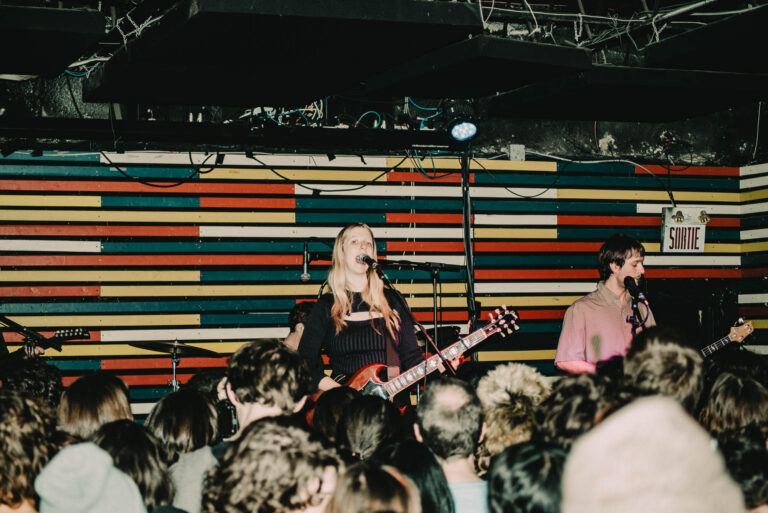
Slow Pulp Live is Sad Music for Happy People, or vice versa

by Stephan Boissonneault

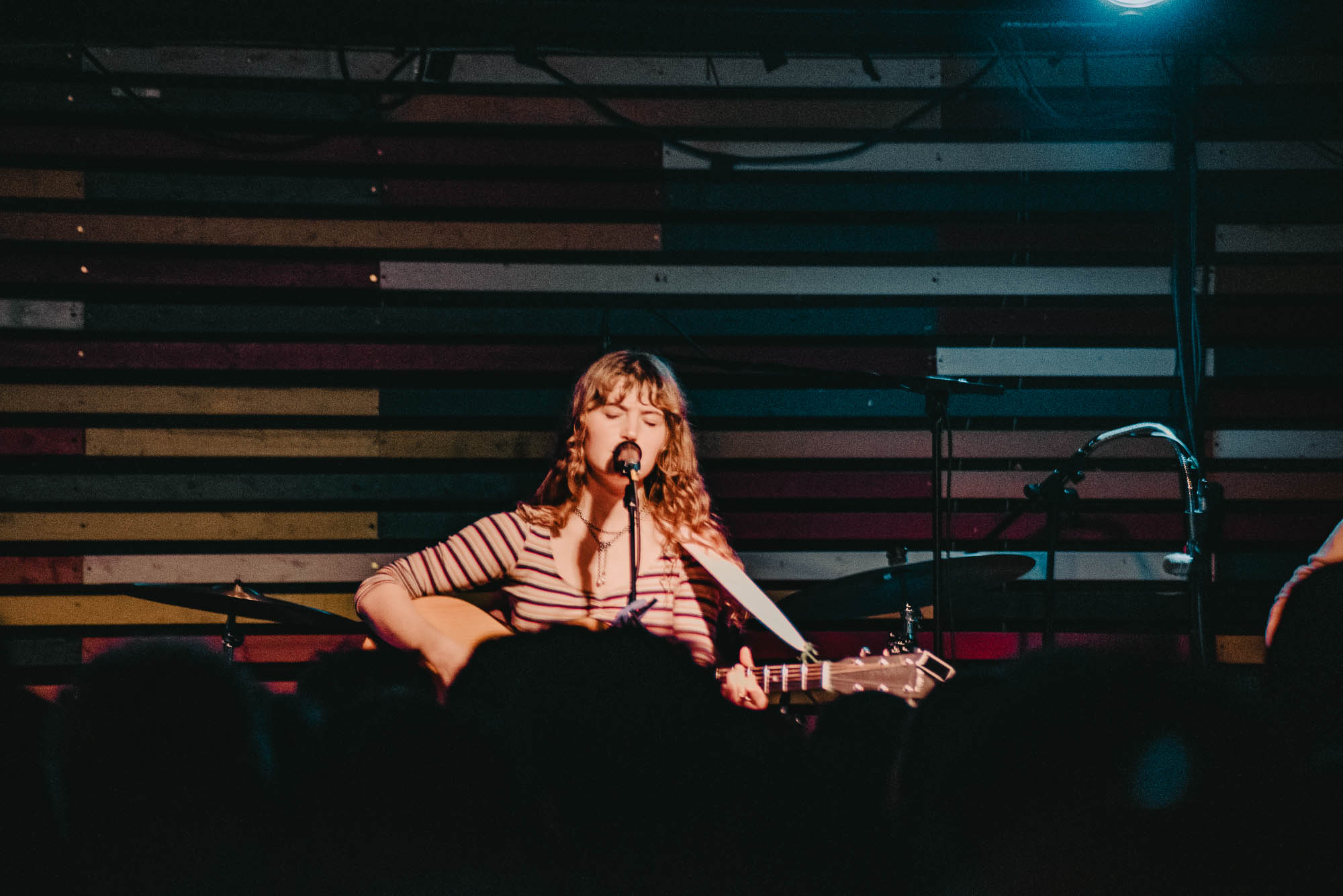
I’m not ashamed to say that I didn’t really know Slow Pulp, an indie/ heavy bedroom pop four-piece from Wisconsin, until a few weeks before their sold-out show at Bar Le Ritz. But boy damn, was I given the opportunity whenever I flipped through my Instagram or any music site. Their new album Yard, was dominating my social feeds with advertising months before it was out, so I definitely knew the name. Maybe that’s because of their signing on ANTI-, or Slow Pulp blowing up over Tik Tok, but either way, the name Slow Pulp was always in the back of my mind for the few months leading up to their Bar Le Ritz show.

But on one fateful October night, a friend played me their song “Slugs,” and I immediately felt the appeal. The 90s alt-rock and shoegazey edge, ala Mazzy Star, mixed with crushing emo-esque lyrics and lead singer Emily Massey’s hazy and gargantuan-sounding vocals. But nothing could really prepare me for their live performance at Bar Le Ritz, which I’d say was one of my top surprises of the year—and I see a lot of shows.

As we (the same friend who showed me Slow Pulp) entered the room, I realized I had never seen the room this packed before. It felt like waves of people smashed together like bugs under a microscopic glass. We grabbed a spot and checked out the last song of opener Babehoven, and man, do I wish we had seen more of them. It was a bit Alvvays meets Big Thief and their album, Light Moving Time, is gold. A perfect opener, whom I imagine will be back with their own headlining show soon.

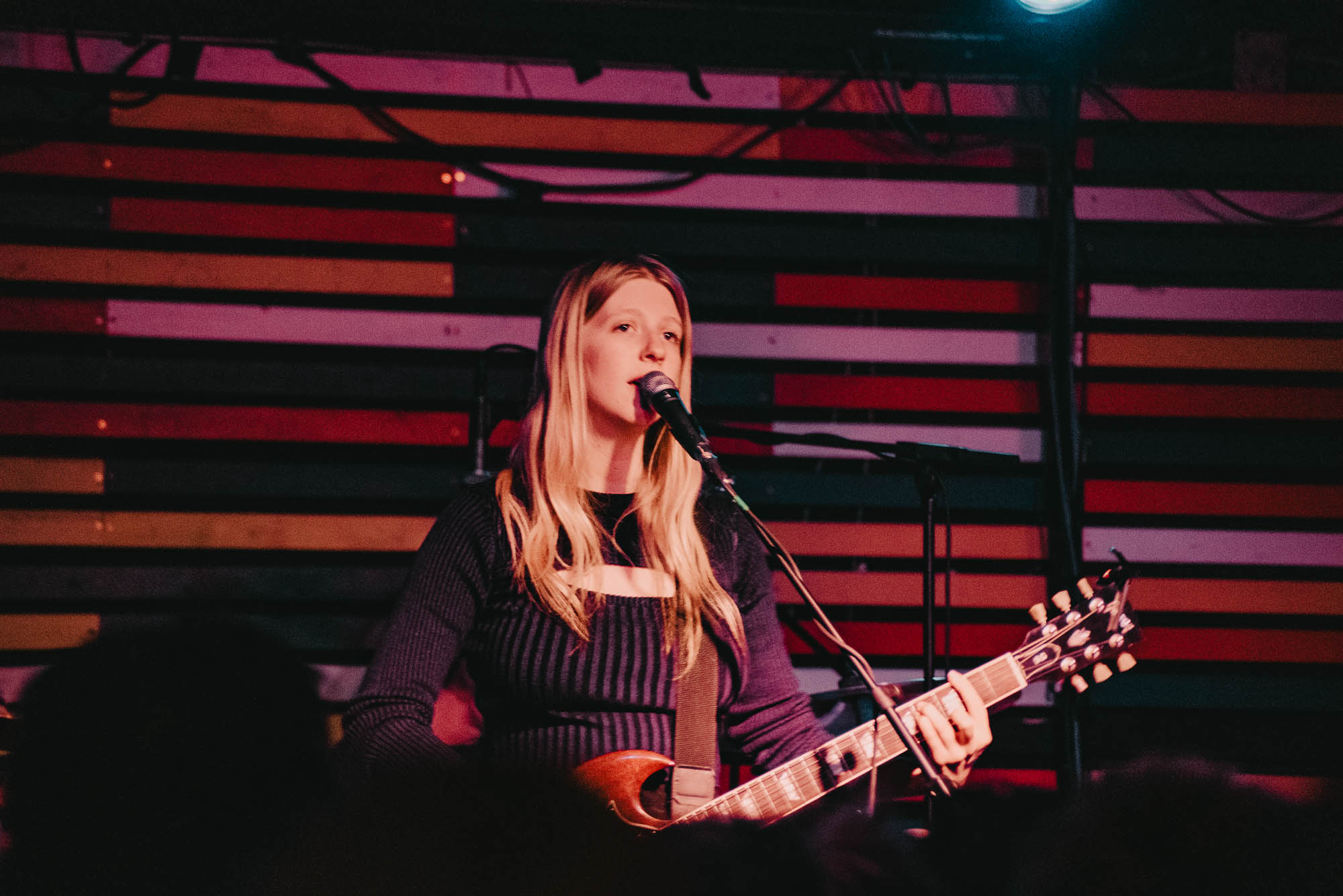
Then out came Slow Pulp, and for some reason, I had pictured Emily looking more rough and punk rock, but she seemed so innocent standing there in a purple sweater with her cherry red SG. Yet, the moment she sang a song like “Cramps,” or “MUD,” her voice filled the room and conveyed her vocal prowess. Her ability to sing an almost whisper and then belt out a powerful sustained note is nothing short of extraordinary. And the band, so unbelievably tight, with a highlight having to be their ‘guitarmonies’ for a few short lead lines. This band knows exactly when to lay it on thick and when to hang back and let Emily do her thing.

“It’s crazy to me that you’re all singing the lyrics to these new songs and that really makes us feel good,” Emily said to the crowd. Musically, there have been many bands like Slow Pulp throughout the ages—the female-fronted alt-indie bands like Alvvays—but their simplicity and overall refined sound feels like a warm collective hug to get sucked into. The songs are related and find that perfect equilibrium of being catchy and heavy at the same time. The band of course ended with their most popular song, “High,” about, well, being too high, almost to the point of greenout—a situation much of the crowd could relate to.

photos by Stephan Boissonneault

M For Montreal Day 4 | Alix Fernz, and Pelada

by Lyle Hendriks

The last night of the M for Montreal festival was studded with incredible acts, providing the perfect conclusion to a few unforgettable days of acts across Mile End, Plateau, and beyond. Here are two of my favourite shows from the final evening of 2023’s M for Montreal festival.

Alix Fernz Brazen Bravado


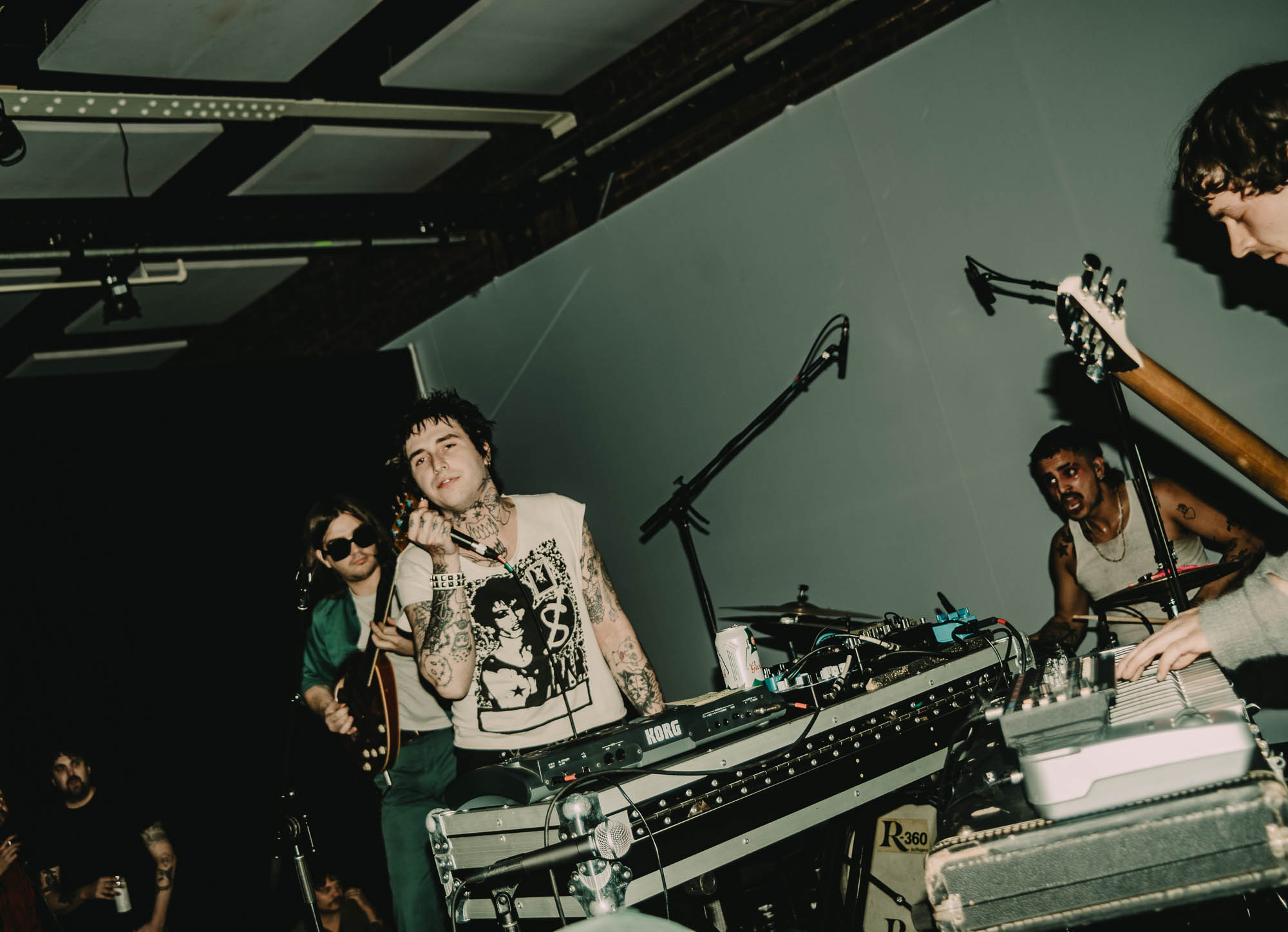
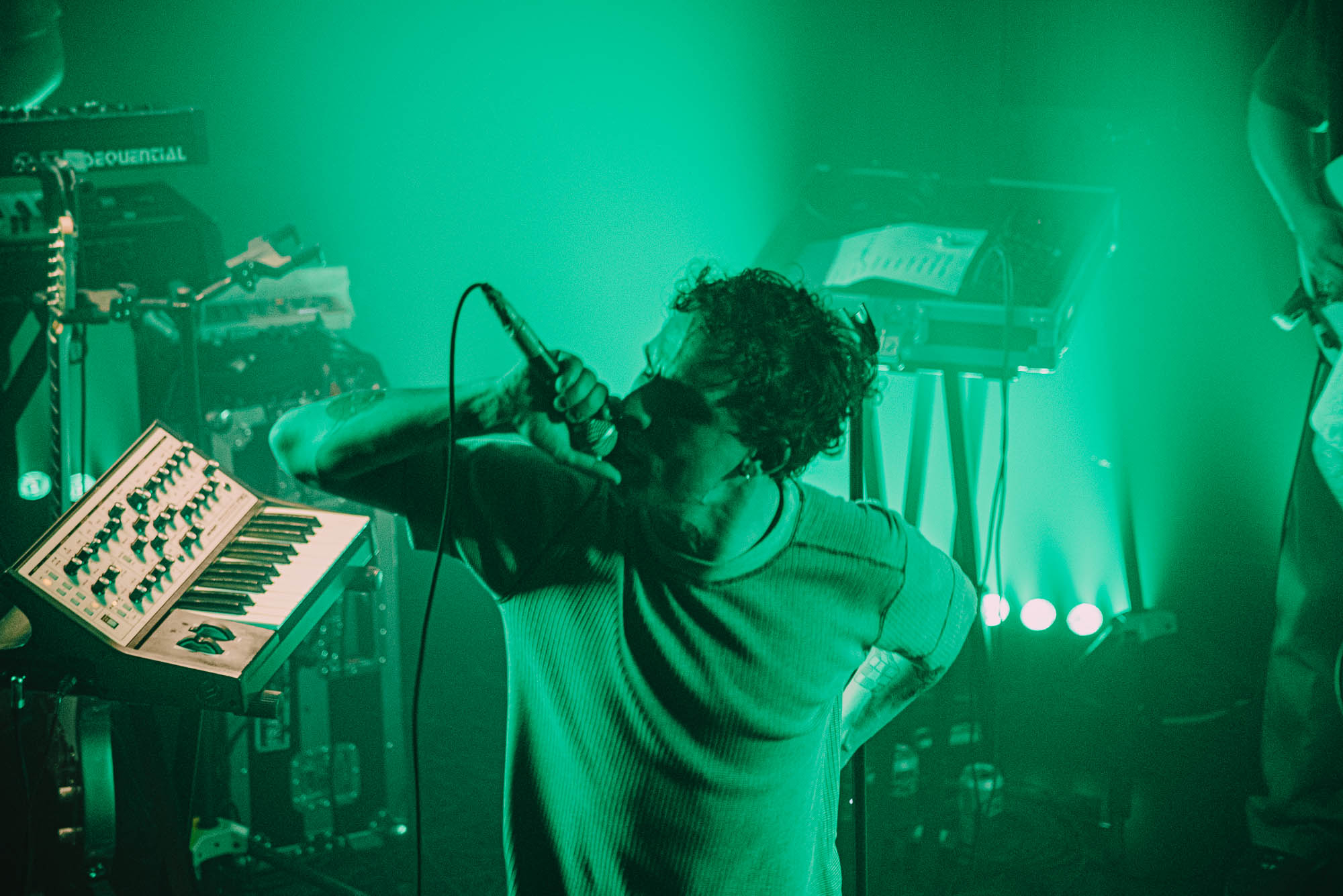
Oozing sex and a distinctly devil-may-care, diva persona, Alix Fernz was a pleasure to watch Saturday night at Ausgang Plaza. Gritty, angular punk rock married beautifully with Fernz’s irreverent, borderline bratty vocals, which feel almost otherworldly once they’ve been filtered through his eclectic circuit board of synths and effects laid out on the table in front of them. Despite Fernz’s intense, post-punk-driven direction, there was a groove and even a sweetness that was so apparent from the outset. He obviously doesn’t take himself too seriously, which is a good thing when it comes to his atypical brand of brazen bravado. Fernz’s band was also excellent, featuring powerful, driving drums, rock-steady bass, and a fantastic blend of synth and guitar to keep us guessing. Fernz’s set was all meat, no filler, and an absolute blast to watch.

Pelada – D&B From the Future

Montreal duo Pelada has become known for a number of things over the years, including their live performances. While I was initially disappointed to hear that the pair wouldn’t be busting out any live vocals for their Saturday night set at Fairmount Theatre, this feeling didn’t last long. Delivering a crunchy, gravelly, futuristic set of D&B, house, and strange, post-techno, Pelada invigorated. Thumping bass. Screeching synths. Dirty vocal samples. It’s the kind of music that makes you want to do something mildly illegal in a dirty club bathroom, or perhaps do triple the limit on a nighttime city street. It was a pleasure to see this side of Pelada’s sonic sensibilities, and only makes me more intrigued to see what the duo might do next.

Mundial Montréal at the Centre des musiciens du monde | From North, East and West

by Frédéric Cardin

Last Friday, November 17, the Centre des musiciens du monde in Montreal (CMM) hosted a concert in partnership with the Mundial Montréal festival. This is the second year for this relationship between the CMM and the showcase event, and it has already proved its worth. Firstly, the exceptional quality of the artists invited to perform at Mile End’s Saint-Enfant Jésus church (the venue for most CMM concerts), and secondly, the delightful difference in the type of music offered at these concerts compared to those at Mundial.

At CMM, the artists offer us intercultural encounters (this is the Centre’s basic principle), the result of which is often of a new, more learned and refined intellectual and musical nature than at Mundial. Whereas Mundial favours groups with an energy and scope closer to pop (without conforming to this style), CMM seeks to transcend differences with musical proposals that are often based on advanced research.

For example, in the first half of Friday’s concert, the duo of traditional singers Maling Thunell (from Sweden) and Jessica Paradis (from Quebec) presented the result of a creative residency during which the two artists compared and then brought together songs with similar resonances from the two folkloric terroirs. On stage, the two young ladies accompany each other on harp, harmonium and accordion, all the while singing and exchanging parts of melodies and texts with similar roots. From Sweden to Quebec, the attentive audience was treated to an enjoyable ethnology lesson in Folklore 101. The voices of the two artists are superb, on the order of classical ancient music singing. Above all, they overlap in a complementary way, Thunell’s a beautiful, luminous soprano and Paradis’s closer to a mezzo. Often, the versions of the songs (the Swedish and the Quebecois) embraced each other in a rich, perfectly balanced counterpoint. The encounter entitled Paysages nordiques (Nordic Landscapes) deserves to be presented everywhere in Quebec and in Sweden, of course. Beautiful, touching and enriching. Something to remember.

Maling Thunell solo :

Jessica Paradis : 

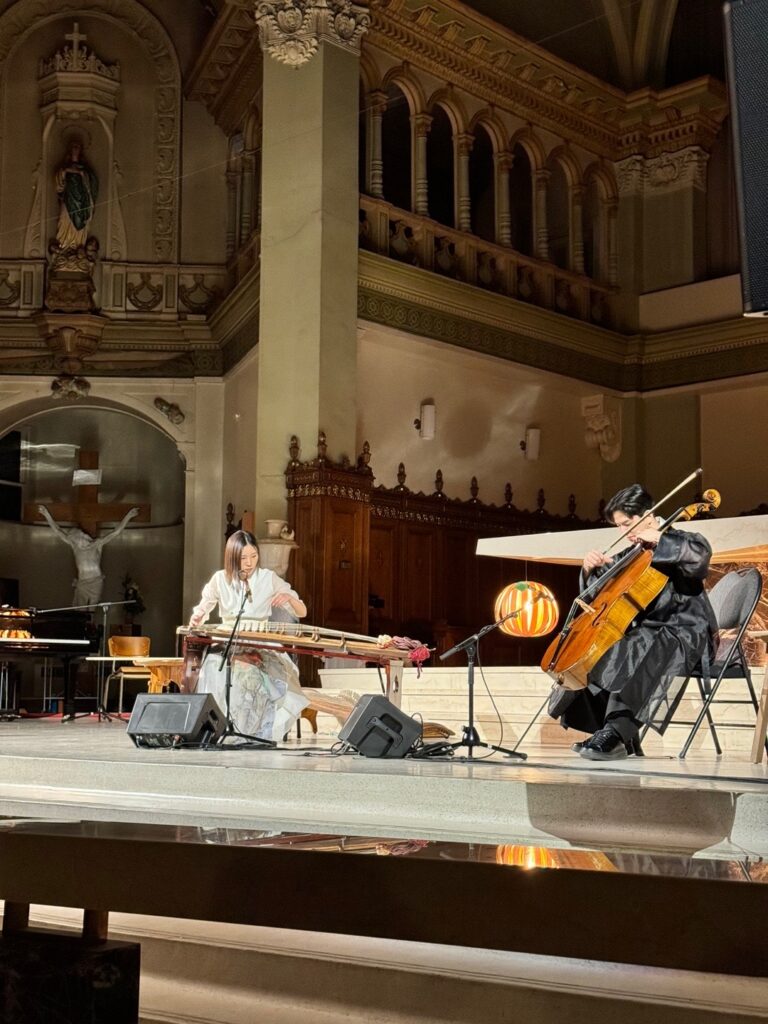
The second part of the concert featured the CelloGayageum duo. Cello for cello, of course (played by an Austrian of Korean origin, Sol Daniel Kim), and gayageum for the Korean instrument of the same name, a cousin of the Japanese koto (played by Korea’s Dayoung Yoon). The encounter here is between traditional Korean musical art and Western classical art, in a set of original pieces (the existing repertoire for this type of instrument being non-existent) that offer quite accessible, and above all playful, sonic adventures. The character expressed here is decidedly less learned and sophisticated than that of Paysages nordiques, but the encounter nonetheless succeeds in creating beautiful sparks and pleasing the audience in abundance. 

Mundial Montréal constantly offers us great discoveries in globalized world music, with a view to the festival market and large-scale gatherings. What the Centre des musiciens du monde brings to this dynamic is a more niche market orientation, but one that is so important and essential to our collective intercultural enrichment.

Orchestre de l’Agora et Atelier lyrique | Poppea, Masterful and Triumphant

by Elena Mandolini

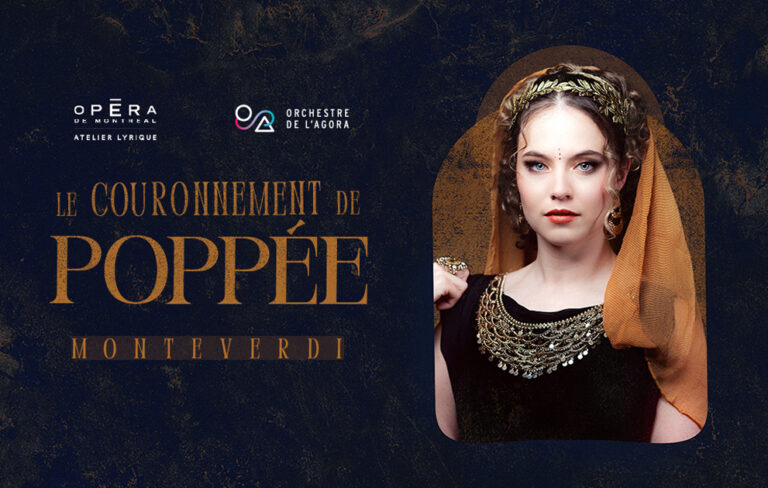
The Atelier lyrique de l’Opéra de Montréal and the Orchestre de l’Agora joined forces on Saturday evening to present Claudio Monteverdi’s mysterious opera The Coronation of Poppea. The limited size of Salle Pierre-Mercure at UQAM’s Centre Pierre-Péladeau did not prevent the performers from delivering a grandiose performance. An effective staging and a high-calibre cast made for an unsettling and memorable evening.

Monteverdi’s opera is said to be full of mystery, since Monteverdi’s original version has disappeared, and the stagings are reconstructions made possible by musicological research. Despite this, the opera is considered a jewel of the Italian repertoire and continues to fascinate audiences even nearly 400 years after its premiere. The libretto recounts the adventures of Poppea, lover of Emperor Nero, who wishes to ascend to the throne. After repudiating his wife Octavia, Nero marries Poppea, making her empress of Rome. Behind this argument based in ancient Rome lie timeless dilemmas: the struggle between love and duty, and the internal contradictions that inhabit us all.

The emotional complexity of the libretto is effectively represented by Aria Umezawa’s staging. The sets, initially uncluttered and open, become increasingly loaded with various objects left on stage by the singers. This makes the opera’s final tableau one of its most visually overloaded, illustrating the decadence and desolation suggested by the work. The costumes, too, are thoughtful and evocative, even allowing for dress changes in a matter of moments, right on stage.

As for the performers, both on stage and in the orchestra pit, they are all of exceptional quality. If one was initially concerned about the acoustics (the Orchestre de l’Agora, conducted by Nicolas Ellis, playing on period instruments for the occasion), one is quickly reassured. Each instrument is clearly audible, and in no way rivals the voices. Everything is perfectly calibrated in this respect.

The vocal quality of the singers is complemented by convincing acting that brings to life a whole range of emotions. We tremble at Nero’s anger (Ilanna Starr), worry at Poppea’s ambition (Emma Fekete), are moved by Seneca’s (Matthew Li) death, and are torn by Ottone’s (Ian Sabourin) dilemmas. All interpret the most difficult and virtuosic passages with ease and agility. All performances are to be commended and warmly applauded.

The Coronation of Poppea saw several forces unite to deliver a most spectacular performance. We can only congratulate them and look forward to another such collaboration.

Festival Bach | An Evening with Bach’s Sons

by Alexandre Villemaire

The 2023 edition of the Bach Festival opened Friday evening at the Maison Symphonique with a program featuring the music of two of J.S. Bach’s sons: Johann Christian (1735-1782) and Johann Christoph Friedrich Bach (1732-1795). Little-known and little-played pages from the so-called “London Bach” and “Bückenburg Bach” respectively, the two symphonies and concertos by each composer were conducted by German conductor Reinhard Goebel, a leading and legendary specialist in the early music repertoire who made the rediscovery of this forgotten repertoire his trademark for many years with his ensemble, Musica Antiqua Köln. His presence also held a special and familiar symbolic significance for the festival, having inaugurated its very first edition eighteen years ago, as its founder and artistic director, Alexandra Scheibler, mentioned in her introduction.

The German conductor took to the stage with an energetic, playful stride, drawing the musicians of the Bach Festival Orchestra into the world of Johann Christian. In stark contrast, the Symphony in G minor No. 6 plunges the listener into a velocity of energy fueled by a breathless string base, but whose musical ideas, though dynamic, eventually fade away. Guest soloist for the evening was the excellent pianist Schaghadjeh Nosrati, who performed the Concerto in E-flat major by the same composer. Typical of the classical tripartite form, the piano and orchestral material melted together in remarkable synergy, only to separate into beautiful musical dialogues in which the interventions of each part were highlighted with elegance and energy. The multiple dynamics and nuances expressed in the first part bore the hallmarks of the galant style, characteristic of Johann Christian, and of Sturm und Drang, an aesthetic movement of the second half of the eighteenth century emphasizing greater expression of feeling.

In the second half, we were treated to works by the elder Johann Christoph Friedrich. More dense in form, the Concerto Grosso in E-flat major brings together the full orchestra, a small section of instrumentalists and the soloist in passionate dialogue. Here again, Goebel and Nosrati’s mastery of textures and dynamics in this energetic yet elegiac work is committed and solid. The mark of Sturm und Drang is also still very much present, notably in the second movement Adagio, in the minor mode, at once melancholy and dance-like, marked by passages that call to mind early Romanticism. The Symphony in B-flat major stands out for its nuanced musical ideas, its jovial, bouncy energy reminiscent of Haydn’s symphonies, its refined, colourful orchestration, and its use of melodies taken from folk songs, particularly present in the third and fourth movements.

The conductor’s knowledge and ease with this repertoire were palpable throughout the evening. Reinhard Goebel breathes, transpires and inspires every phrase, every nuance, every musical trait. He knows them like the back of his hand and demonstrated this in a direction that sometimes had more to do with musical expression than technique in the strict sense. He lived this music. In this respect, let’s salute the excellent contingent of musicians in the orchestra, who responded with energy and ardour to his commands, particularly the flutes and oboes, who offered a fine sonic presence. Despite the disappointment caused by the cancellation of Sir John Eliot Gardiner – who interrupted his professional activities following an incident with a singer last August – the stylistically coherent and well-conducted performance by Reinhard Goebel, Schaghadjeh Nosrati and the Montreal Bach Festival Orchestra, nonetheless opens this new edition of this great rendezvous of 17th and 18th-century music in Montreal in a serene and solid manner.

This opening concert will be presented at the Palais Montcalm in Quebec City on Saturday, November 18, and at the Carleton Dominion-Chalmers Centre in Ottawa on Sunday, November 19. INFO AND TICKETS HERE.

Arion at Salle Bourgie | A Fresh Take On A Classic

by Elena Mandolini

For many music lovers, Handel’s Messiah rhymes with the holiday season. This great classic of Baroque music was presented last night at Salle Bourgie, much to the delight of the audience gathered for the occasion. The concert was also a collaboration between Arion Orchestre Baroque and the Studio de Musique ancienne de Montréal (SMAM). The musicians and choristers of both ensembles, under the direction of Andrew McAnerney of the SMAM, offered a luminous performance of remarkable precision.

As we could tell from the information projected on the back wall of the stage before the concert began, all the instruments used were period instruments or reproductions thereof. As a result, the sound quality was entirely characteristic of those Baroque orchestras that are committed to historically informed interpretation. There were a lot of performers for the tiny stage of Salle Bourgie, but the sound texture remained soft, almost intimate, without losing any of its depth. You could see the complicity between members of the same section, as they exchanged knowing glances and smiles.

The quality of the ensemble playing by Arion and SMAM is remarkable. The choir, composed of 3 performers per section, is homogeneous, and each section sings as if with a single voice. The precision of both choir and orchestra is equally commendable. And this consistency and rigour are maintained throughout the entire performance (2 hours and a half!). The same can be said of the soloists, whose impeccable diction lets you hear every syllable of the text, taken from the various books of the Bible. The vocal power of baritone Geoffroy Salvas, in particular, is impressive.

An interesting feature of this concert is the use of NEX-perience software, which enables the audience to obtain an interactive program on their smartphones during the concert. Throughout the concert, short facts scrolled across our phones without having to touch them. This information sometimes concerned Handel’s life, the creation of Messiah, or simply information on the musical rhetoric used in this oratorio. An interesting, easy-to-access offering that renews the concert experience.

Despite the very dark nature of some of the lyrics, this performance is nonetheless full of light and conveys a magnificent message of peace. We leave this long evening energized.

Two other performances will take place at Salle Bourgie: Saturday, November 18 at 4 pm and Sunday, November 19 at 2:30 pm. INFO AND TICKETS HERE!

M For Montreal Day 3 | Winona Forever, Sorry Girls, La Sécurité

by Lyle Hendriks

M for Montreal continued Friday with a line-up equal parts electric and eclectic. Stand-outs from the evening came from Cult MTL’s evening show at L’Escogriffe (featuring Alex Nicol, Winona Forever, and Sorry Girls), as well as the 6th annual M for Mothland show, featuring five of the best bands from Montreal’s favourite label. Here are a few of my highlights of the evening.

Winona Forever


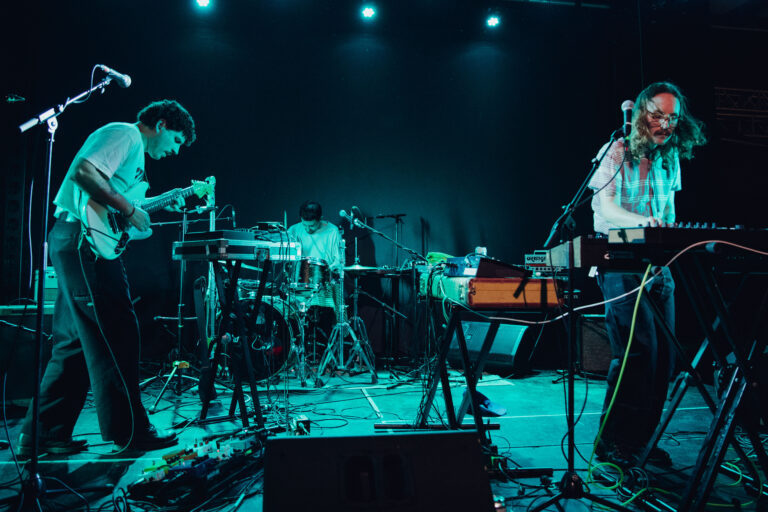
Vancouver indie-pop rockers Winona Forever always put on a good show. Complex, intricate arrangements marry with impeccable timing, oddball sensibilities, and a sense of chemistry that can only be gained through years of playing together. Featuring songs from across their catalogue, ranging from their latest album, Acrobat, all the way back to their 2016 debut, This is Fine. The band’s set has an undeniable polish to it that helps bring these weirdo tracks to life—whether it’s the battling guitar riffs courtesy of Rowan Webster-Shaw and frontman Ben Robertson, the rock-solid bass from Ruby Izatt, or the exceptional drumming from Alex Bingham. This is a group that has taken the time to refine their sound into something that evades comparison. If you’re after weirdo jams and the auditory equivalent of an afternoon in a sunbeam, Winona Forever is one group you shouldn’t miss.

Sorry Girls

Montreal pop dreamers Sorry Girls put on an excellent set Friday night at L’Escogriffe. With lush, soft instrumentation rising around us like warm bathwater, there was an emotional haze that settled upon us as Sorry Girls took the stage. It’s slow, deliberate, but never boring—Heather Foster Kirkpatrick’s vocals ground the swirling vortex created by her band, with beautifully delivered vocals that straddle the line of melancholy and optimism with finesse. Keys and guitar came together beautifully, evoking a strange alternate timeline where the 80s never ended and instead just became more goth and ethereal. I’ll be eagerly waiting for the next chance I get to sway to Sorry Girls.

La Sécurité

Few Montreal acts command the attention, the energy, and indeed, the respect of La Sécurité. Expertly led by the radiant Éliane Viens-Synnott, the band absolutely charged through their set of strange, entrancing art punk arrangements. Each member of the band has an extremely distinct role, with every part doing exactly what it needs to—nothing less, nothing more. This comes together into a sound and a vitality that had the room vibrating in no time at all, quickly creating a perpetual, reciprocating energy between the band and the crowd that seemed to propel both into an ever-greater frenzy. As Viens-Synnott danced and writhed on stage, exuding confidence and elegance alike, the instrumentation rose and fell in meticulous rhythm, locked in by outstandingly technical drums from Kenny Smith (Pressure Pin), pounding, urgent bass from Félix Bélisle (Choses Sauvages), and a melodic mosaic from guitarists Melissa Di Menna and Laurence-Anne. La Sécurité has often been heralded as a mega-conglomerate of some of the city’s best players brought under one spontaneous, truly unique umbrella. If you haven’t caught a La Sécurité set yet, you owe it to yourself to get into their next pit and give it hell.

Hip Hop / Keb Rap / Soul/R&B

M For Montréal | Super Plage, Hawa B, LaF au Club Soda

by Guillaume Laberge

Super Plage

It was with a brilliant performance that the Montreal trio, Super Plage opened the ball during this first of two evenings at Club Soda for Marathon (M for Montreal.) The electro-pop ensemble was able to capture the audience’s attention even before the first track, thanks to flamboyant clothes and also exuding a strong joie de vivre. From the first song, the “party was stuck” in good Quebecois. Super Plage chained tunes together, mixing them with great cohesion, and drawing fans one song at a time into their colorful universe. Their performance was very theatrical with a theme offered respecting the name of the trio. The lead singer was even in a swimsuit, barefoot, and without a shirt at one point. For the short time they played (20 min), the ensemble left everything on stage and managed with great ease to satisfy the audience from start to finish thanks to a solid performance.

Hawa B

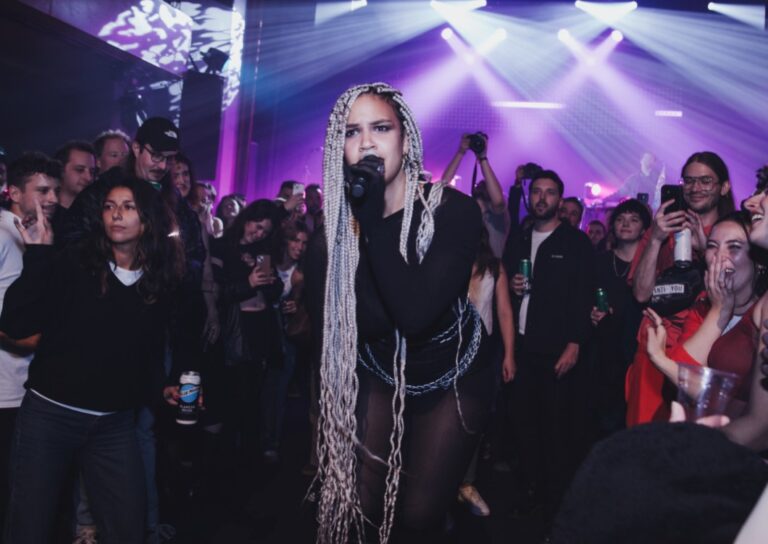
Subsequently, it was the talented Hawa B who took the stage. She, who accompanied FouKi as a backing vocalist at the Bell Centre last week, however, it was her solo project that the fans were treated to. Dressed in black and surrounded by chains, she made a remarkable entrance in front of the spectators who followed her every movement with their eyes. The first thing that strikes you about Hawa B is her voice. This one is rich and powerful, rather serious, but very piercing. This was definitely what made the crowd react the most to his performance. Hawa B submits an interesting musical proposal, which is immersed in rather experimental R&B, which can be compared to what the British FKA twigs offers. The sounds revolve mainly around distortion and synthesizers, with one or two instrumentals leaning towards trap, which transported fans to a zone more chaotic than Super Plage, although still warm. The only slight criticism to make was that the sound could seem one-dimensional to the untrained ear, with some songs blending into one another. Despite the short duration of her appearance, Hawa B delivered a colorful 20 minutes that was all the more relevant given the young artist’s limited material.

LaF

After filling the Bell Centre the week before thanks to the event organized by the record label 7ième Ciel, the rap collective LaF demonstrated that it still had a lot of gas in the tank with a performance of fire to end the evening in front of an audience that was definitely there for them. LaF relentlessly followed up more explosive songs with a few “slow jams”, ending with their more popular releases like their hit Tangerine. The rappers had a great bond, using solid flows and articulating the syllables very clearly. Amazing stage presence! Clearly, the collective was rapping with contagious pleasure and the crowd was devouring everything that was offered to them. We were even treated to a few modest “moshpits”, one of which led the rapper Mantisse to surf there. Although a mixer played the instrumentals on the turntables in the absence of a complete lineup, we were delighted that a flutist/saxophonist and guitarist/pianist joined the group on stage, adding a much more organic dimension to their concert. This beautiful energy and mastery of the stage made LaF the icing on the sundae of this program at Club Soda.

crédit photo: Camille Gladu

M For Montreal Day 2 | Teon Gibbs, Joseph Sarenhes, Chose Sauvages

by Lyle Hendriks

Teon Gibbs, one to keep an eye on

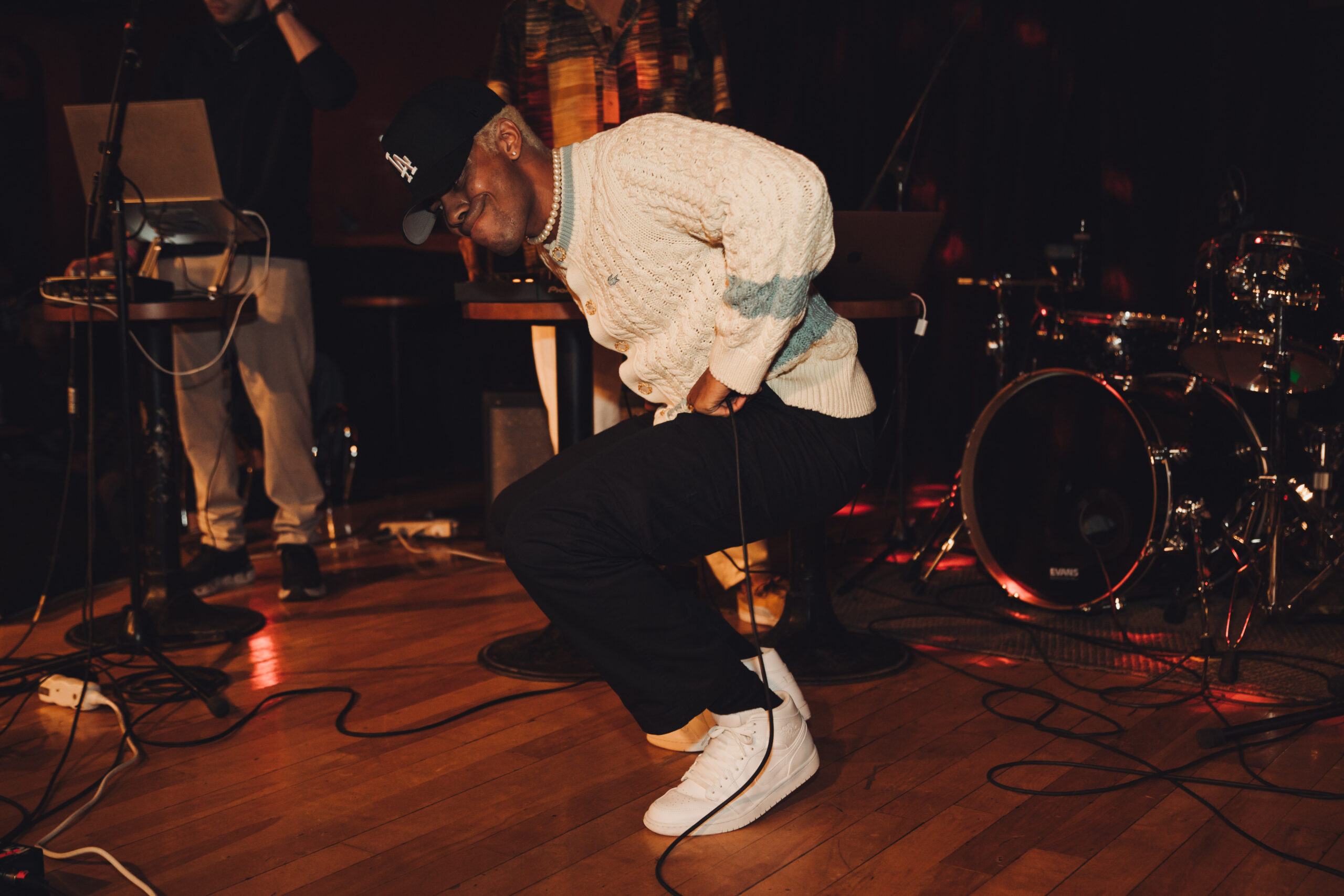
With a West Coast rap sound and palpable tenacity, Teon Gibbs commanded our attention from his vantage point on the stage at Café Cléopâtre. Despite bringing incredible energy to his performance—both in his vocals and his dramatic movement as he coiled around his mic—there was a sense of ease and relaxation in everything he did. Gibbs was supported by his usual keyboard player, Cameron James, who skillfully led the live instrumentation that complimented the pre-recorded beat so perfectly. For this show, Gibbs and James were also joined by Alex Bingham and Ben Robertson (of Winona Forever), delivering an analog energy that brought Gibss’ incredible lyricism to life. The energy and confidence of this young artist make him one to keep an eye on in the Vancouver scene and beyond.

Joseph Sarenhes, Grammy potential

The most apparent thing about Joseph Sarenhes’ set at Café Cléopâtre was his hunger and drive. Within a single song, it was infinitely clear that this Quebec City-based rapper was ready to bring the heat. He bounced around stage, supported by dual DJs who provided the beats, jumping between slow-danceable R&B, party rap tracks, djembe solos, West African proto-hip-hop beats, and impassioned, aggressive rap addressing Canada’s atrocities to Indigenous Peoples. He danced like he was playing for a stadium, delivering confidence from a seemingly bottomless reservoir as he fired the energy up ever higher. Between his vital commentary, exceptional charisma, and good old-fashioned bangers, it might be just like Joseph Sarenhes said before departing the stage: “See you at the Grammys.”

Choses Sauvages, nothing short of a local sensation

I should preface my impressions of Choses Sauvages’ show at Foufounes Électriques by saying that I had never listened to a single song of theirs prior. In fact, I had no idea what genre they even played, and based on the grungy, Buffy the Vampire Slayer-esque venue that they were playing in, I was ready for a heavy, grungy type gig. What I got instead was nothing short of a sensation. For those who are also ignorant of this Montreal treasure, Choses Sauvages is a whacked-out funk rock group akin to nothing I have ever seen before. At this particular show, they had seven members on stage, including two drummers and a veritable fleet of guitars and synthesizers. 

Lead singer Félix Bélisle commanded an intense, frantic kind of attention from his elevated stage, with a crazed look in his eye that went beautifully with his smudged circles of dark eyeshadow. And by just a song or two in, the fully-packed floor and mezzanine of Foufounes slingshotted into life, with chaotic but truly joyful moshpits erupting at every turn. I bounced, danced, and dodged splashing beer. I marveled as I saw crowd surfer after crowd surfer, propelled along this surface of thrashing bodies like semi-deflated pontoon boats powered by pure, uncut funk. People literally climbing the walls. Lost shoes and hats held high like lighthouses in a tempest. 

Watching the band, it was clear to see that each member was up there having the time of their life—huge grins stayed concretely on their faces as they watched the frenzy of their own creation. Bélisle thrashed about on the mic, wrapping the cord around his neck, dancing like a maniac, but never once faltering on the rock-solid instrumentation from the rest of his band. Some frontmen hit their cues—Bélisle pounces. More than once, he hopped into the crowd, whether to have us kneel in honour of an audience member’s birthday, or opening the pit and joining the fray for a climactic musical moment. When I thought he couldn’t possibly do anything more, he turned his back to us, hit a high note, and did a trust fall right into the audience, letting them pass him around the room before returning him to the stage, singing the whole time. Choses Sauvages is nothing short of a phenomenon, and one act that you should not miss under any circumstances.

Teon Gibbs & Joseph Sarenhes Photos by: Camille Gladu Drouin
Chose Sauvages Photos by: Stephan Boissonneault

M pour Montréal, Day 1 | Totalement Sublime, Kanen, and Mattmac

by Jacob Langlois-Pelletier

Totalement Sublime, ambient pop, and synth infusion

To get the first showcase evening at Ausgang Plaza off to a strong start, M For Montréal gave the microphone to the French-speaking electro-pop group, Totalement Sublime. Previously a duo composed of Marc-Antoine Barbier and Élie Raymond, the formation is now a trio with Thomas Bruneau Faubert who joined over time. Élie plays the drums at the back of the stage, Marc-Antoine jumps on the guitar and even the saxophone while Thomas is in front of his synthesizer. Together, they create soaring music that quietly covers the walls of the room. The synth layers are very present and coat everything. Both original members mix their smooth vocals into the arrangements. Both use it as an instrument and it is sometimes difficult to hear them. Repetition is at the heart of their art and transports the audience into a sonic spiral. Distortion effects are heard here and there, then the audience applauds. There is no doubt, the trio knew how to charm the various observers present.

Kanen, promising young Innu Voice

Directly after the performance of Totalement Sublime, we change sides of the street and musical register to find ourselves at Ausgang to see Kanen, this young Innu singer-songwriter that everyone is talking about, on stage. A little over a week ago, the 24-year-old young artist was crowned “Revelation of the Year” and “Indigenous Artist of the Year” at the 45th ADISQ Gala. Let’s see what she comes up with!

Kanen transports his pop-folk in a beautiful way on stage and the rendering reveals a more assertive rock facet. The musicians who accompany him are excellent; drums and electric guitar are predominant. Originally from the community of Uashat Mak Mani-utenam near Sept-Îles, she alternates between the language of her ancestors and French. With her voice both soft and powerful, Kanen connects directly to her audience through the emotions she conveys. We quickly understand all the excitement about it.

Mattmac, resilience incarnate

With his white cane, Mattmac, real name Matthews Monias, comes on stage and is guided near the microphone. Originally from the Garden Hill First Nation in Manitoba, the 23-year-old rapper was born blind. What is quite impressive is that he creates almost all of his music from A to Z, without being held back a bit by his disability.

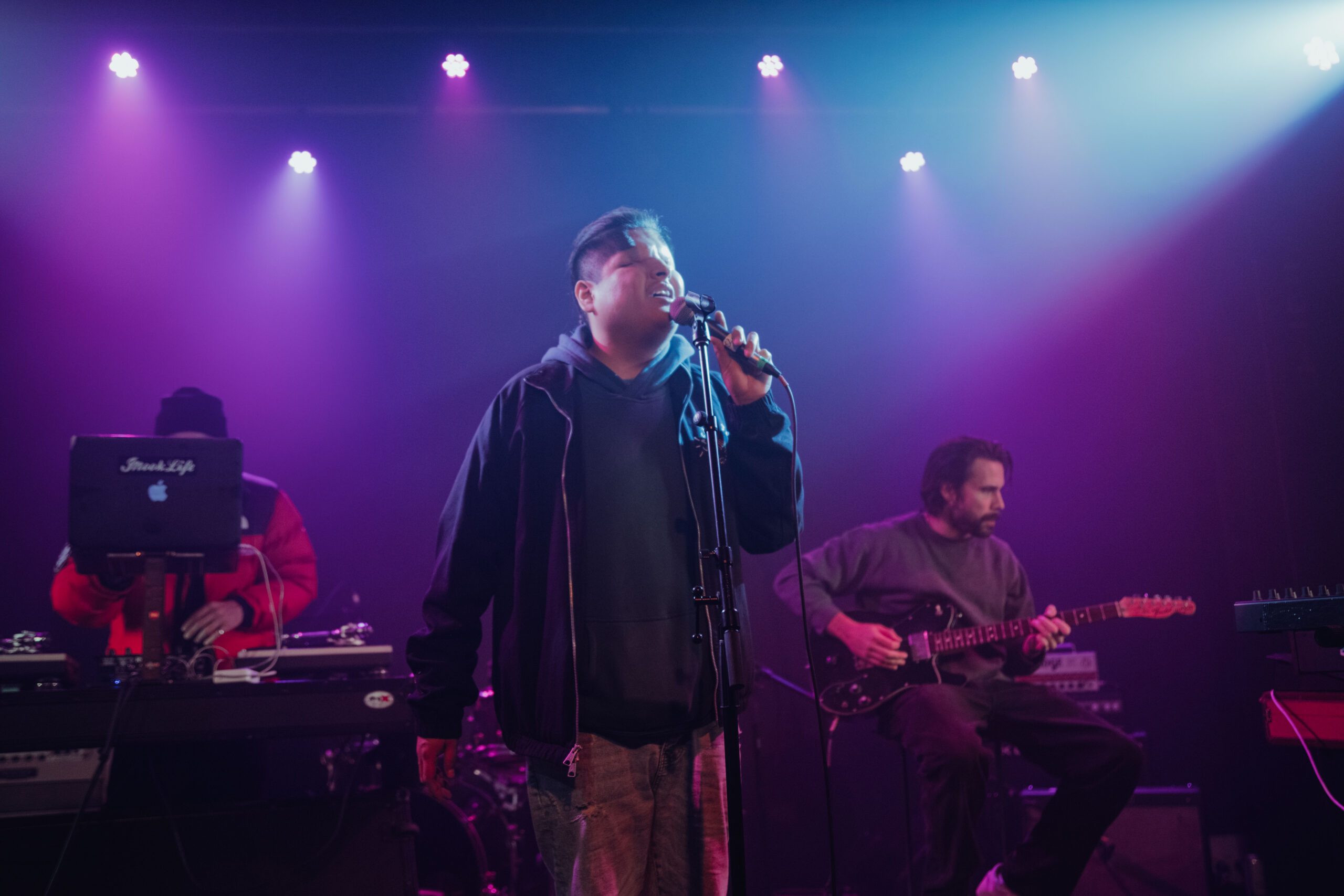
In recent years, he has won various awards and made his mark in the world of rap. His story is inspiring and his courage is transposed into his texts. His productions are hip-hop & R&B and influenced by American rap. Mattmac offers melodic rap with verses cut like clockwork. It’s during the choruses that he’s at his best and manages to get the crowd singing along. He ended his performance with “Rez,” his most popular song inspired by Akon’s “Ghetto.” Mattmac’s music is not revolutionary, but they are still quality rap songs and we salute the man’s immense resilience.

Photos by Camille Gladu Drouin

Mundial Montréal 2023, Day 1 | Bruno Capinan and Dumai Dunai Are Hired Without Hesitation!

by Frédéric Cardin

Last night was the first evening of showcases for Mundial Montréal 2023. Broadcasters and producers from Quebec, Canada and around the world gathered at the Lion d’Or to witness the performances of four bands vying for the attention of guests in the hope of securing professional engagements (or simply forging new relationships and expanding their networks). 

Two big “winners” emerged, if we accept the term in terms of their touring potential and public appeal both here and internationally: Toronto’s Bruno Capinan and Montreal’s Dumai Dunai.

Capinan is Brazilian and makes post-bossa tinged with MPB and Bahiatronica. His high-level musicality (what a beautiful voice!), the melodic ease of his compositions and his magnetic, hyper-communicative queer stage presence (he seduces the audience as if he were the little brother everyone loves) made him a superb discovery for your humble reporter. I sincerely hope we’ll be seeing him again in Montreal!

Dumai Dunai is better known back home, as the Ukrainian Slavic dub-punk ensemble that has been inhabiting the Montreal music scene since its formation in 2021. While Russia’s invasion of Ukraine helped propel the fiercely energetic band into the public eye, their growing fame and popularity have nothing to do with strictly geopolitical circumstances. The band is driven by boundless energy, fertile originality, hyper-honed group coherence and the individual musical and technical quality of its members. They have what it takes to tour the world.

We enjoyed the Mi’gmafrica duo, made up of Valérie Ivy Hamelin, a multidisciplinary artist from the Micmac Nation of Gespeg in Quebec, and Sadio Sissokho, a Montreal griot originally from Senegal. A fine blend of indigenous influences and Mandinka culture, with a clear influence of the latter. The uneven quality of the vocals, sometimes very beautiful, sometimes weaker (tonally speaking), will merit particular attention in order to refine the product adequately.

Finally, we were left (like some other members of the professional audience)… perplexed, by the product offered by Second Moon, a South Korean ensemble of traditional chants set to a Celtic musical and harmonic structure. K(eltic)-Pop? Not really, as the traditional melodies lack the simple yet direct appeal of true K-Pop or Celtic instrumental music. And, artistically, although the violinist, accordionist and other musicians are excellent (except for the voice, which is also uneven, capable of both impressive features and approximations), the final result doesn’t give the impression of a perfectly harmonious fusion, nor one that’s all that interesting. Once the curiosity has worn off, and the initial pleasure of seeing the colourful costumes over, one wonders if one really wants to listen to this for more than 10 minutes. Too bad. That being said, some people present seemed to have a lot of fun listening to Second Moon’s act. Maybe it’s just me…

Photo credit: Alain Brunet

Subscribe to our newsletter