FIJM | Thursday Ends With Suuns

by Marilyn Bouchard

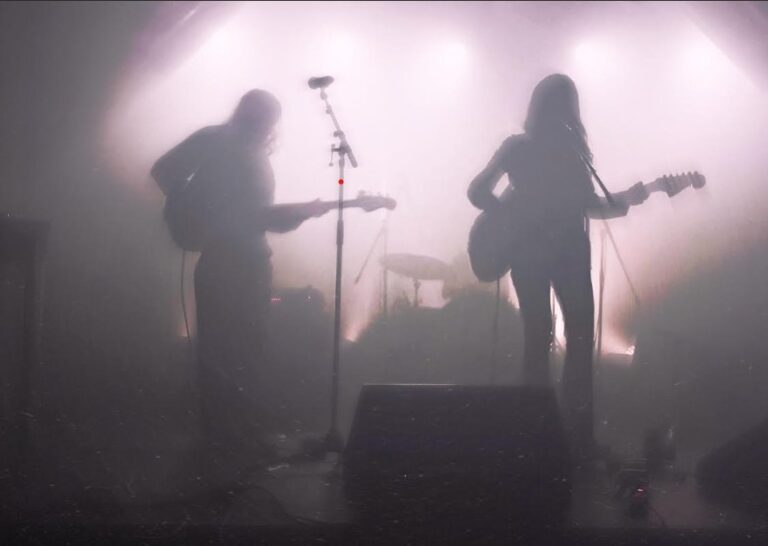
Montreal trio SUUNS was at Club Loto-Québec on Thursday, July 3, as part of the Festival International de Jazz’s Nocturnes Loto-Québec, a series of late-night, upbeat concerts.

Ben Shemie, Liam O’Neill and Joseph Yarmush mastered their repertoire for the occasion, and presented us with an amalgam of cult and lesser-known songs in front of giant inflatable letters of their names and primary-colored lasers.

They opened with a bang, delving into their legendary album Images du Futur with Music Won’t Save You, to which they returned later in the program with “2020” and “Edie’s Dream,” each time to the cheers of a lively crowd well-versed in their repertoire.

We were treated to selected tracks from their most recent album, The Breaks, as well as from Felt and Zeroes QC. It was really interesting to see how they managed to balance their different atmospheres live, seamlessly blending electro-clash with almost acoustic moments. We were also treated to extended progressions and moments of improvisation.

At the end of the evening, Ben surprised us with a heartfelt reinterpretation of Offenbach’s “Faut que j’me pousse,” whose message seemed to resonate deeply with him. They left us as they arrived: on electrified frequencies which, in the end, represent their emblematic and evolving avant-rock musical project.

Publicité panam
Ambient / Electro-Jazz / Electronic / Jazz / Post-Rock / Prog Rock

FIJM | Misc: Beat Bouquet Well Garnished!

by Alain Brunet

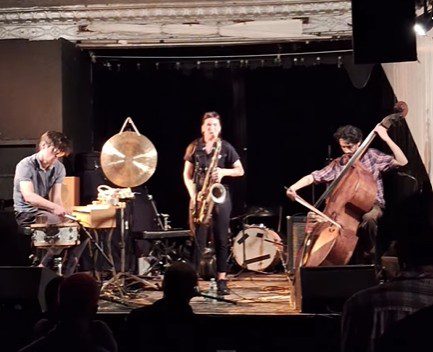
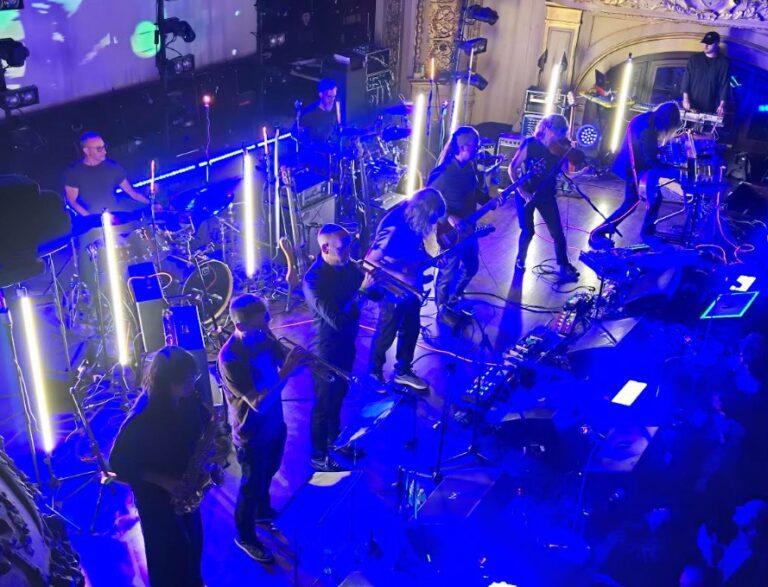
You had to be at Foufounes Électriques to feel the fragrance, as it was the occasion to present Beat Bouquet‘s launch concert, released at the end of May. The Montreal trio took center stage, surrounded by hundreds of fans who could observe, circulate, applaud and shout their contentment.

Misc likes to create special events, beyond the concert, and the installation at Les Foufs was comparable to a concept implemented by the same trio, this time at the Centre Phi to defend the material from their previous album, Partager l’ambulance.

Made up of keyboardist Jérôme Beaulieu, drummer William Côté and bassist Jérémi Roy, Misc’s seemingly jazz-influenced mix is typical of the movement of recent years, although it also features a variety of digital, electro ambient and hip-hop influences, as well as prog rock and post-rock. These authentic trippers have even convinced Daniel Bélanger, always prone to experimentation, and Zouz, one of QC’s finest rock bands of the moment, to each contribute a piece to the new album – Resté couché (November) and Feu de batteries respectively.

Since their beginnings (in the previous decade), these guys have been tripping together in the studio, their six-handed, three-headed compositions the result of long play sessions from which emerge the inspiration and works presented in Wednesday’s premiere.

They love complex rhythms, complex chords, complex sounds, they also love the grooves inherent in jazz or rock, they love chaos and they love organizing chaos. In short, they aim for a mix of the familiar and the new, a mix that’s well-balanced enough to go beyond the realm of the initiated. The performance was excellent. You need to be an educated instrumentalist of a very high standard to play what Misc play. And all to our great pleasure.

Publicité panam
Americana / Blues / Folk

FIJM | Allison Russel’s Apotheosis Concert in Her Hometown

by Michel Labrecque

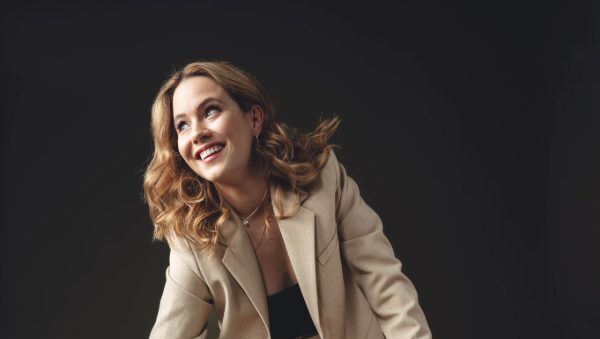
Incandescent, resilient, moving, burning, luminous, magnificent! All this and more can be said about Allison Russell.

Accompanied by a trio of musicians, the singer-songwriter revealed herself to a huge crowd on the FIJM stage. And it was a brilliant, magical moment!

After a short clarinet solo and an a cappella song, Allison followed up with her song Montreal, which recounts some very painful moments from her Montreal childhood. But it was also a way of telling the audience that she was happy to be back in her hometown. And that she was making it her own.

“It’s good for my spirit to be here with you,” she chanted.

It seems to me that Allison Russell is becoming more and more assertive, and that her voice is gaining in depth all the time. Her Americana mix moves us, makes us groove and also makes us think. The 43-year-old seems to be glowing, despite a turbulent past and a complicated career to say the least.

This concert also had a Montreal dimension: she sang several verses in French and addressed the crowd as much, if not more, in the language of Molière than in that of Donald Trump.

She also spoke of the importance of free access to culture in Montreal, of the art that literally saved her life when she was a teenager. She still loves Montreal.

The now Nashville resident also shared with us her anxieties about what her host country is becoming, the reversal of pro-diversity policies, of which she is a great supporter.

Who knows? Donald Trump may end up deporting her. She recently sang on a song with several groups called “No Kings in The USA.”

But last night, it was the music that dominated everything. And that voice! Allison Russell also took the risk of lowering the intensity in the middle of the concert to present us with a more acoustic “campfire” moment, singing the magnificent “Superlover,” which she recorded in the studio accompanied by Annie Lennox, the legendary singer of the British band Eurythmics. A song about tears in Palestine, Israel and Tennessee.

Then it was back to grooving for the last part of the concert, much to the delight of the crowd. By chance, we heard some bangs, probably fireworks, which for a moment made us think of an American invasion… I’m joking, but not completely.

I’m still amazed that many Quebecers don’t know Allison Russell, despite an interview she gave on Tout le monde en parle in 2023. I hope this free outdoor concert will give her the recognition she deserves here as much as anywhere else.

Photo: Victor Diaz Lamich

Publicité panam

FIJM I Best Dressed, Most Possessed: Fantastic Negrito Stupefies Rogers Stage

by Stephan Boissonneault

Xavier Dphrepaulezz, better known in the music world as Fantastic Negrito, is one of the most spellbinding artists in contemporary blues today. His albums, which have earned him Grammys, always have some combination of gospel, blues rock, unhinged roots, and freakiness to them, as if he’s a ghost from another world sharing his story. It’s a tough sound to translate to live, as he usually has a choir backing him for those huge-sounding gospel numbers, but his performance at Montreal Jazz fest was still nothing short of electrifying and surreal.

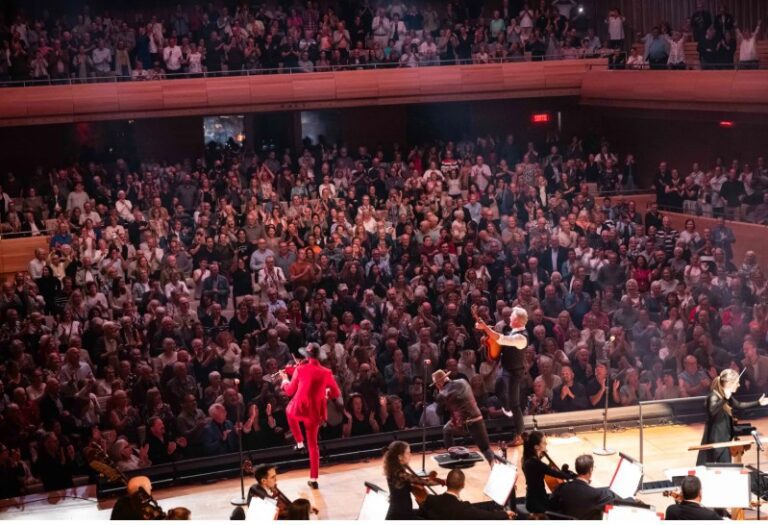
From the moment he strode onto the Rogers Stage, dressed in a bold, flamboyant ensemble—a vivid burgundy vest, huge ’70s bell bottoms, and that signature wide-brim pimp hat, wild, frazzled sideburns, and to top it all off, a golden cape with the words “Dictator of Taste,” spray-painted on—he claimed the title of “best dressed” without question. His wardrobe felt like an extension of the music: daring, soulful, and unapologetically unique. But it was his unhinged attitude that truly stole the show. His stage prescence is that of Kat Williams, a bit of Prince, and Chris Tucker in Rush Hour, that’s the only way to describe it in my eyes.

Musically, every riff, every soulful shout, and every stomp felt unleashed, teetering on the brink of chaos in the most thrilling way. Tracks from his latest album, Son of a Broken Man, felt heavy. One moment he was preaching directly to the crowd with soulful conviction, the next he was strumming wild guitar, jumping toward the edge of the stage, daring the audience to keep up. Some random 76-year-old named Pierre, that Negrito called his “cousin” randomly walked on the stage for a cover of James Brown’s “Sex Machine.”

“I didn’t know that guy existed,” he laughed. “Get on Ancestry.com”

The band matched Fantastic Negrito’s fervour at every turn, with drums pounding, organ swells amplifying the tension, and some filthy lead guitar. “Everyone thinks this next song is a love song, but it’s about trying not to cheat,” he told the audience before jumping into his grooving “I Hope Somebody’s Loving You.” I wish he had played “Lost In A Crowd,” but we did get some gospel type humming halfway through his set, so that was plenty. Long live Fantastic Negrito.

Photos by Frédérique-Ménard-Aubin

Jazz

FIJM 2025 | Beth McKenna : raising her Momentum

by Frédéric Cardin

You had to be in front of the Pub Molson stage last night at the Jazz Festival to hear a few tracks from the forthcoming album by Montreal saxophonist, composer and bandleader Beth McKenna. I love Beth’s music, I’ll admit. Not only her writing, but also her playing, present us with cinematic panoramas, within which images soar in sophisticated yet accessible lyrical flights. Beth creates modern jazz that communicates emotions directly to a wide audience, without ever abandoning the intellectual rigor required in the construction of her pieces. We can already anticipate that this album will be another solid opus. The title mentioned is Momentum, and Beth gave us a few excellent extracts to listen to, including “Raising Sam” (about taking care of her sick dog), “New Normal” (about all the negativity in the world) and the title track “Momentum” (about climbing up, against the odds and adversity).

After these ear-openers, which lasted for about half of the 6 p.m. set, the composer took us through excerpts from past albums, in a well-chosen program balanced between ballads and more assertive sonic outbursts. With her friends on stage, she confirmed her stature as one of the best musicians rising from the Montreal ecosystem.

photo by Frédérique Ménard-Aubin

Contemporary Jazz / jazz groove

FIJM | Julius Rodriguez, Jazz Groove Ace

by Alain Brunet

Under contract to Verve for the album Evergreen (2024) and having already filmed his Tiny Desk on NPR, Julius Rodriguez did what he had to do at Studio TD on a Wednesday, July 2, 2025: set the place alight.

Back in Montreal, the 26-year-old is one of those virtuoso keyboardists (especially of the right hand) who emerged with the jazz resurgence of the previous decade. We can’t yet assume a widespread presence, but these new formations are swarming the free FIJM stages and suggest that the wave has gained in intensity and coolness.

One thing’s for sure: Julius Rodriguez is one of the key players. The American keyboardist and composer (of Haitian origin) is nothing less than an ace groover! A multi-instrumentalist to boot, he throws us a drum solo interspersed with his sampled keyboard improvisations. Capable of anything!

It’s worth pointing out that he has perfectly assimilated his classics. Without a hitch, he appropriates Herbie Hancock’s “Butterfly,” making it an emblematic piece of his repertoire and accelerating the tempo just a tad in a quartet format (trumpet, bass, drums, keyboards). Very good.

Granted, the musician’s original compositions have nothing to destabilize music lovers of groove jazz or jazz at all, but there’s a freshness and an aspiration to go even further than what we heard Wednesday night in the Studio TD.

Take this improvised conversation between Rodriguez, with his keyboard slung over his shoulder, and the excellent trumpeter Alonzo Demetrius. This beautiful exuberance is enough to rekindle the jazz flame in anyone who witnesses such an exchange in real time.

In fact, these young musicians are all at the level of the world’s elite, and it’s easy to predict that the best is yet to come. And it’s all the more gratifying to see music lovers of their generation embracing this high acumen and fervour of playing.

Publicité panam

FIJM | Men I Trust Shines Brightly on The Place des Festivals

by Marilyn Bouchard

The reunion between the Festival International de Jazz audience and Men I Trust, long overdue since 2016, took place this July 3 under lightning and light rain, the show having been delayed by around twenty minutes due to the storm cells raging around it.

As soon as Emmanuelle Proulx took to the stage, however, the heat was on. To the cheers of the crowd, she greeted Montreal in French, and the show began as it ended, with a song from the new Equus Cabullus album: “To Ease You” and “Billie Toppy.” In between, we were treated to a selection of the band’s best-known songs, such as “Show Me How,” “Tailwhip,” “Seven,” “Serenade Of Water,” “Suga,” “I Hope To Be Around” and “Say You Can Hear,” before a conquered crowd that stretched farther than the eye could see.

Jessy Caron and Drago Chiriac also seemed possessed by the energy of a return to their roots, as they were both on fire, giving inspired performances on their respective instruments. Special mention must go to the lighting, with its magnificent backlighting reminiscent of Beach House’s stage aesthetic: a thing of beauty.

An electrifying evening in every sense of the word, with the Montreal trio shining brightly on the Place des Festivals. Not even the rain could dampen their spirits.

Photos: Frédérique Ménard-Aubin

Publicité panam
Jazz / Jazz Fusion

FIJM | Anomalie and Lettieri: A New Musical Friendship, Developing in Real Time

by Harry Skinner

Montreal artist Nicolas Dupuis, better known by the moniker Anomalie, has been releasing music for over a decade now. He is known in the local scene for his infectious beats and virtuosic keyboard playing, and has collaborated with notable artists across multiple genres, such as Chromeo, Polyphia, and Rob Araujo. 

During the Montreal Jazz Festival this year, however, he brought a new type of performance to the stage: fully improvised sets of music. Having already performed a set with drummer Larnell Lewis on the second night of the festival, he took to Gesù again on July 2nd with guitarist Mark Lettieri, famously of Snarky Puppy, and his longtime collaborator Ronny Desinor on drums.

Before the music started, it was confirmed that this evening would mark just the second time the two would play together in any capacity (certainly the first time in a trio with Desinor), which presented the audience with the unique opportunity to watch a new musical friendship between two heavyweights take shape in real time.

The start of the set seemed to have an emphasis on improvising pieces that felt like fully formed songs. Members of the band took turns starting tunes, each time jumping in headfirst with a fully formed groove, chord progression, or bassline. They exchanged solos and came up with bridges to their pieces that did well to drive the music forward. There were points in the set where one could be forgiven for not having realized that the music hadn’t been written beforehand. While undoubtedly an impressive feat, this did come off as somewhat safe at times. The music could have used more space for spontaneity, as Dupuis, Lettieri, and Desinor were at times more loyal to their initial ideas than was necessary.

By the end of the set however, it was clear that a deeper sense of familiarity was brewing. The band gradually started taking more risks with their ideas, and didn’t seem in as much of a hurry to fill empty sonic space. This resulted in pieces that would gradually change over their duration and end in completely different places than where they began. One particular passage that illustrated this shift in approach was a vamp the group settled into towards the end of the set. Centered around a repeated keyboard motif, the vamp grew for a few minutes and approached a strong climax, before suddenly shifting into a double time feel and gradually decaying for a period. When the section seemed to have ended, it slowly shifted into something completely new without the music ever stopping.

While the start of the set could be called safe, this was clearly less of a conscious decision and more so a product of the new setting the musicians had entered. It made it all the more interesting to see how different the band as a unit sounded by the end. While Anomalie and Mark Lettieri both impressed, it should be said that Ronny Desinor’s undeniable presence at the kit was also central to plenty of interesting musical developments. Given a week’s residency in this setting, the group would be sure to open up new worlds for themselves.

Publicité panam
Contemporary Jazz

FIJM | Linda May Han Oh, A Role Model for Female Double-Bass Players

by Alain Brunet

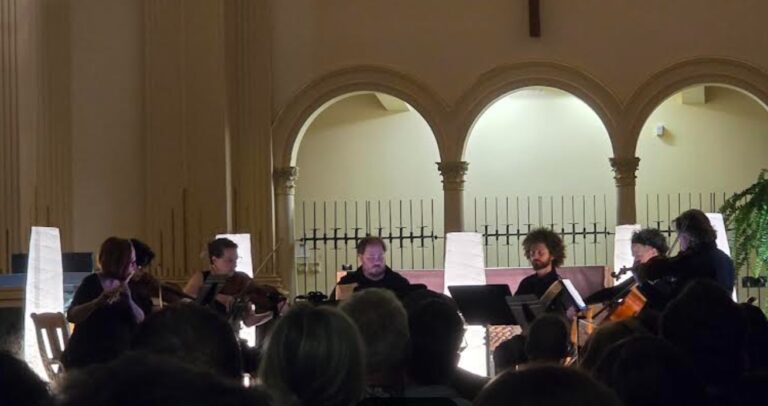
Double-bass player Linda May Han Oh is renowned for her excellent playing, and this time we had the opportunity to discover the composer and bandleader. Her work with Cuban-American pianist Fabian Almazan (her husband, as it appears) and drummer Mark Whitfield Jr (son of the guitarist who was once a member of the Tonight Show house band) is exciting and adventurous, without abandoning the jazz groove.

There are several rhythmic changes within each work, hatching is part of his compositional language, and everyone’s improvisations are part of this aesthetic. Emitted in conjunction with her large instrument, her vocalizations add depth to her aesthetic, without suggesting exceptional singing.

The double bass playing is always melodic, the articulation exemplary, the sound not extremely rich but well above average. In short, this 40-year-old has become a model of accomplishment, and it’s no surprise that she plays with the best and leads an outstanding band.

As for Fabian Almazan, he’s an excellent pianist (and keyboardist), his angular signature carries beautiful harmonic charges, his phrases are very often singular, he can count on an agile and supple right hand, and you’d have to listen to him more to get a clearer idea of his left hand. Interestingly, he avoids many Latin piano clichés, preferring the jazz tradition as developed in North America with its classical-contemporary extensions.

To round things off, drummer Mark Whitfield Jr. listens attentively to his colleagues and never overdoes it, although this does not rule out a few polyrhythmic virtuosos.

Delayed by twenty minutes or so due to rain on this Wednesday, this 8pm concert was able to finish later, so we were treated to almost the full hour promised. The jazz gods convinced the cloud gods…

Suoni | The Spiritual Quest, The End in Transcendence

by Rédaction PAN M 360

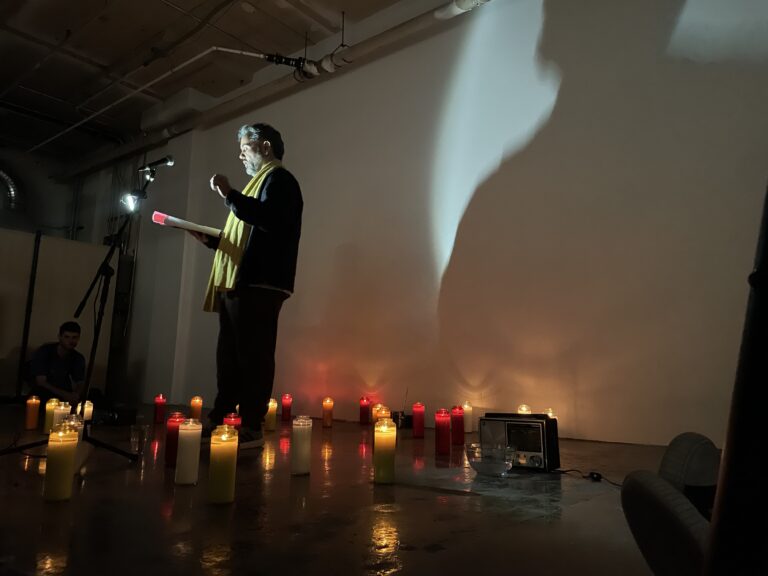
Last day of Suoni. From hypnotic to ethereal, a sacred night took place in the Église Sacré-Coeur de Jésus – one that we won’t forget so easily.

Crossing the tall entrance of the church, the atmosphere is already another short minutes into the start – eyes shut, ears open, the ear becomes full-body and there’s a feeling of trespassing into another realm of sensing things, being the architecture of a sound wave or the acoustics of space, being yourself or another.

Surrounded by an enigmatic scenography of instruments, with two upward piano soundboards pairing with a set of objects and percussions on one side and the mystical Ondes Martenot one the other, Noam Bierstone and Daniel Áñez carry us through the threads of a caring dissonance and noise and melodies that seem being drawn in the air – a crossroad of sonorities, perhaps unattended ones, but clearly the translation of a very meticulous and wise listening. There is continuity, flow, there is texture, there is gravity, there is attention, care and definitely astonishment—one that traverses the space through the air towards the opposite side of the church—beast takes the relay in the smoothest transition between sets and fills the church in a holy sonic bath for the next 40 minutes.

Walking around the space one could truly feel the psycho and the physical acoustics through the flesh and spirit, the structure of a sound wave as it lives in the space; how sound is physical and perception is body + space; how listening is a full body experience, is active, and it is part of the organised system of sounding. Beast, the local duo composed by Katelyn Clark (organ/historical keyboards) and ben grossman (hurdy-gurdy/vielle à roue), reminded this in a way that felt grounding into a moment of collective introspection, self-reflexion, and deep listening.

After the break, the acclaimed organist Kara-Lis Coverdale gifts us with a 1 hour long set—synesthetic twirls transition into soft blankets of sound, a colour on top of another fusion into depth, sound waves flow and break through wall reflections—this was the sonic  voyage and spiritual cleanse we needed to feel at peace with the end of these two weeks of the most varied and groundbreaking musics and performances. Coverdale is a spectral sculptor and an aural alchemist – she crafts the harmonic lane in which one drifts away, finds their way and transcends. Deep, luminous, ethereal – life is blissful.

Thank you, Suoni.

Publicité panam
Funk / Hip Hop / jazz groove / Jazz-Funk / Soul/R&B

FIJM | Thundercat, A Feline on The Loose

by Jacob Langlois-Pelletier

If there’s one thing to remember about Thundercat’s appearance at Salle Wilfrid-Pelletier on Tuesday, it’s that there are two very distinct sides to this internationally renowned virtuoso: the one we discover on the album, and the one he offers on stage. Fans in attendance were quick to recognize the latter.

For almost two hours, the American bassist transformed each of his tracks into a springboard for long, heartfelt and hypnotic improvisational outbursts. Iconic orange Ibanez six-string in hand, Thundercat – real name Stephen Lee Bruner – drew from the four corners of his discography, concentrating mainly on his most recent project, It Is What It Is.

At centre stage, the Californian was having the time of his life in the company of his long-time acolytes and excellent musicians: Justin Brown on drums and Dennis Hamm on keyboards. With a smile on his face, and more often than not with his eyelids closed, the 40-year-old artist let himself be carried away by his creative impulses, navigating between jazz fusion, R&B, funk and hip-hop.

As he abandoned himself to the task, the audience followed, carried along by sudden but always controlled changes of direction.


Opening with “Lost in Space” / “Great Scott” / “22-26,” “Interstellar Love” then “Overseas,” the trio set the tone for this almost videogame-esque jazz celebration. Looking like a modern George Duke or Marvin Gaye, Thundercat brilliantly superimposed his ethereal, dreamy voice on the trio’s enveloping foundations. At times buried by the instruments, the singer would have benefited from a more generous gain on his microphone.

With over twenty years’ experience on the music scene, everything seemed so easy for him. Thundercat was able to change moods and interact with the crowd with ease. The highlight of the evening came when he invited a young man on stage to dance during his two most popular songs, “Them Changes” and “Funny Thing.

The evening ended on a high note when the Festival de Jazz presented him with the Miles Davis Award, a distinction bestowed each year to a jazz artist in recognition of his or her contribution to the renewal of the genre. Whether for his many visits to Montreal, his solo offerings or his landmark collaborations with Kendrick Lamar, Erykah Badu, Childish Gambino or even Kamasi Washington, this recognition is more than deserved.

Seeing Thundercat on stage is a very different experience from what you might expect. Despite the fact that a few spectators have left the room, once you’ve grasped the delirium, you’re fully on board.

It’s already been five years since his last album. Can’t wait for some new material, sooner rather than later.

Photo Credit: Benoit Rousseau

Contemporary Jazz

FIJM | Bill Frisell, Thomas Morgan and Rudy Royston Exposed

by Vitta Morales

If you were to ask a jazz musician to describe what it’s like to play in a trio they would likely answer “exposed.” When there is suddenly one rhythm instrument, one bass instrument, and one instrument covering melody and harmony, (or at least implying harmony), each musical decision and interaction carries more weight.

However, with that exposure also comes more freedom to move in and out of different roles. The drums could look to play melodically with careful drum selection and tuning; the bass could look to play full chords; and the guitar could look to establish a groove with dead muted notes. And in addition to all that, polyphonic moments from all involved also become a tasteful possibility. 

Bill Frisell, Thomas Morgan, and Rudy Royston achieved these various feats (and others), as they blurred the lines of their instrument’s roles from one moment to the next. And it was fantastic to see.

During the opening song, we saw a prime example of polyphony in action as the trio played a jaunty and groovy tune. The bass and guitar played up and down their necks, inventing various lines and counterlines on the major scale.

This was after Frisell gave us an intro consisting of harmonics and a loop pedal. At various moments, things turned on a dime with moments of pointillistic dissonance, sections of blues rock, fuzzy 70s style rock, and sweet ballads all being played in quick succession.

Personally, my favourite selection of the evening was Billy Strayhorn’s “Isfahan” which Frisell interpreted with bluesy licks here and there.

Truly, my biggest takeaway from the evening was the decades spanning musical experience of this trio. In the moments where the music devolved into rock from a shuffle or swing, for example, it dawned on me that lesser players might try the same thing and have it sound like a cheap gimmick if unschooled in the genres. At seventy-four, however, Frisell experienced much of this music as it was being developed.

Rock, and post-bop for example, were being developed in his lifetime, and he internalized them sincerely and legitimately as a consequence, it seems to me. Incidentally, one of my favourite Frisell albums is Guitar in the Space Age! (2014) in which he interprets various ’60s selections in his unique way.

Indeed, on full display the entire evening was the trio’s experience where musical choices, and interactions were concerned, but so too was their wealth of knowledge of jazz and rock and their ability to fuse the genres with ease.

Publicité panam
Subscribe to our newsletter

Inscription
Infolettre

"*" indicates required fields

Type of Suscribers