Arabic Classical / Baroque / Electronic

Festival Flux : John Kameel-Farah à l’Église Sacré-Coeur-de-Jésus

by Rédaction PAN M 360

Célèbre pour des performances où s’entrelacent le contrepoint ciselé des maîtres baroques et la souplesse des improvisations issues de la musique arabe classique, le compositeur-improvisateur canado-palestinien John Kameel Farah s’impose comme l’une des voix les plus envoûtantes de la scène contemporaine. À l’occasion de Flux 2026, il élèvera une véritable cathédrale de claviers dans l’acoustique transcendante de l’Église du Sacré-Cœur-de-Jésus, à Montréal.
Puisant à la fois dans les siècles de tradition du maqâm arabe et dans l’architecture spirituelle de J. S. Bach, sa musique s’enracine dans l’héritage tout en s’ouvrant sans cesse vers de nouveaux horizons : paysages électroniques, textures expérimentales, mondes inédits.
Elle circule librement entre l’orgue d’église, le piano et les synthétiseurs analogiques anciens, pour façonner une architecture sonore complexe et mouvante. Les improvisations naissent comme des méditations contrapuntiques, s’enroulent en boucles électroniques hypnotiques, ou s’épanouissent en vastes mélodies inspirées des maqâmât.
Son parcours l’a mené des salles de concert aux clubs souterrains, de Jérusalem à Berlin, des fugues aux feedbacks. En 2023, il partageait la scène avec les légendaires Tangerine Dream, inscrivant son art dans la lignée cosmique de la musique électronique. Mais au cœur de sa démarche demeure une fidélité profonde : l’alliance de la rigueur baroque et de la liberté improvisatrice arabe, filtrée par le prisme de ses racines palestiniennes.
Dans l’intimité de cette cathédrale montréalaise, Farah métamorphose ses claviers en navires de mémoire et d’imaginaire – des vaisseaux portant l’héritage et le souvenir sur une mer de sons.

Renowned for performances that weave together the ornate counterpoint of Baroque masters with the fluid improvisations of Arabic classical music, Palestinian-Canadian composer/improvisor John Kameel Farah is one of the most compelling contemporary artists on the scene today. For Flux 2026, he’ll create a cathedral of keyboards in the transcendent acoustics of Église Sacré-Coeur-de-Jésus, Montréal.
Drawing on centuries of Arab maqam traditions and the spiritual architecture of J. S. Bach, Farah’s music is steeped in heritage, yet constantly opening outward, embracing electronic soundscapes and experimental textures. It moves fluidly between the church organ, piano, and vintage analog synthesizers, crafting an intricate sonic architecture. Improvisations are launched as contrapuntal meditations, spiral into hypnotic electronic loops, or blossom into expansive, maqam-inspired melodies.
Farah’s journey has brought him from concert halls to underground clubs, from Jerusalem to Berlin, from fugues to feedback. In 2023, he shared the stage with the legendary Tangerine Dream, paying homage to the cosmic lineage of electronic music. Yet at the heart of his artistry remains a profound devotion to heritage: the meeting of Baroque rigor and Arabic improvisatory freedom, refracted through the lens of his Palestinian roots.
In this intimate performance, Farah transforms keyboards into vessels of memory and imagination – ships bearing heritage and memory on a sonic voyage.

POUR ACHETER VOTRE BILLET, C’EST ICI!

Ce contenu provient du Festival Flux et est adapté par PAN M 360

dance / DJ set / Electronic

Piknic Électronik : NTO, anabasine, Anahit Vardanyan et plus au parc Jean-Drapeau

by Rédaction PAN M 360

Piknic Électronik a été fondé à Montréal en 2003 par un groupe de passionnés de musique électronique qui cherchaient à la rendre plus accessible en la diffusant au grand jour en proposant une expérience sociale immersive placée sous le signe de la convivialité. Situé dans un parc urbain à 10 minutes du centre-ville de Montréal, il rassemble des milliers d’amateurs de musique électronique tous les dimanches de l’été, de mai à septembre. Avec sa programmation variée, Piknic Électronik Montréal s’est imposé depuis plus de 15 ans comme un événement phare du circuit culturel estival montréalais.
Devenu un événement estival culturel et festif majeur à Montréal, Piknic Électronik s’exporte partout sur la planète. En 2012, un premier Piknic Électronik a vu le jour à Barcelone, puis se sont ajoutées les villes de Melbourne et Dubaï en 2014, Santiago en 2015 et 2019 verra la première édition de Paris prendre son envol. Sa formule innovante et populaire de Piknic Électronik en a fait une source de fierté locale pour chaque ville où elle s’est établie et a grandi. Le concept Piknic s’exporte au-delà des frontières de la métropole. D’autres villes à l’international sont pressenties pour se joindre prochainement à l’aventure. À suivre!

Piknic Électronik Montreal is an outdoor electronic music event aiming to offer immersive, social experiences in a friendly environment. Located in an urban park just 10 minutes from downtown Montréal, he brings together thousands of electronic music enthusiasts every Sunday from May to September. Piknic Électronik Montreal diverse programing has made it a highlight of the Montreal summer cultural circuit for over 15 years.
The Piknic concept has expanded beyond Montréal’s borders. In 2012, the first Piknic Électronik kicked off in Barcelona, followed by Melbourne and Dubai in 2014 and Santiago Chile in 2015 and Paris in 2019. More international cities are coming soon, so stay tuned!

POUR ACHETER VOTRE BILLET, C’EST ICI!

Ce contenu provient du Piknic Électronik et est adapté par PAN M 360

Afro Funk / Cumbia / dembow

MUZ : Lavanya & le projet Dharani avec invitée spéciale Likouri, Ramon Chicharron et Kizaba au Studio TD

by Rédaction PAN M 360

MUZ : Lavanya & le projet Dharani avec invitée spéciale Likouri

[aucune description disponible]

[no description available]

Ramon Chicharron

Ramon Chicharron fusionne des rythmes latins comme la cumbia, le dembow et la champeta avec une touche montréalaise, créant un son à la fois moderne et original. Ses concerts, débordants d’énergie, sont animés par des rythmes entraînants qui font danser le public. Son dernier album, Niebla, sorti à l’automne 2024 et nommé aux prix Junos, a été composé entre la jungle pacifique de la Colombie et les montagnes laurentiennes du Québec. Lauréat à deux reprises des Latin Awards Canada pour l’Album de l’année et du Félix Album de l’année – Musiques du monde à l’ADISQ, Ramon a fait des tournées importantes, notamment à SXSW, au Festival de Jazz de Montréal, ainsi qu’à travers la Colombie et les États-Unis.

Ramon Chicharron blends Latin rhythms such as cumbia, dembow, and champeta with a Montreal twist, creating a sound that is both modern and original. His high-energy concerts are driven by infectious rhythms that get the crowd dancing. His latest album, Niebla, released in the fall of 2024 and nominated for Juno Awards, was composed between the Pacific jungle of Colombia and the Laurentian Mountains of Quebec. A two-time winner at the Latin Awards Canada for Album of the Year and the Félix Award for World Music Album of the Year at ADISQ, Ramon has toured extensively, including performances at SXSW, the Montreal Jazz Festival, as well as across Colombia and the United States.

Kizaba

Lionel KIZABA, auteur-compositeur-interprète, Révélation Radio-Canada 2024-2025, est un multi-instrumentiste et pionnier de la musique électro-congolaise basé à Montréal. Québécois d’origine congolaise et citoyen canadien, il a su tracer un parcours musical unique, invitant un large public international à voyager dans son univers artistique futuriste.
Fusionnant le français, l’anglais, le kikongo et le lingala, ses compositions transcendent les barrières linguistiques et culturelles. Fier de ses racines africaines et de son identité canadienne, il fait rayonner ses cultures à travers le monde.
Son album « Kizavibe » a été salué par la critique et nommé aux Juno Awards 2024, notamment dans la catégorie Album de musique du monde de l’année. Il a également été nommé aux Prix Dynastie dans les catégories Artiste ou groupe international de l’année, Artiste ou groupe de musique du monde de l’année et Artiste ou groupe francophone de l’année, ainsi qu’aux GAMIQ dans la catégorie Album/EP World.
En 2022, il a entamé sa première tournée aux États-Unis, se produisant sur la scène principale du légendaire New Orleans Jazz Festival, aux côtés d’artistes de renom tels que Lionel Richie, CeeLo Green, Charlie Wilson et The Foo Fighters.
Son parcours se poursuit sur les scènes internationales : Festival international de Louisiane, Africa Oyé (Royaume-Uni), MAPAS (Espagne), Circulart (Colombie), WOMAD Chili, Mundial Montréal, M pour Montréal, Seoul Music Week (Corée), Global Toronto, Chine et Taïwan.
Kizaba marie habilement les vocalises ancestrales aux sonorités vibrantes du soukous congolais et de l’afrobeat, le tout porté par une esthétique afro-punk et une vision musicale futuriste.
Avec la sortie de son nouvel album « Future Village » le 12 avril 2025, il nous plonge dans une dimension musicale inédite, toujours mêlée de traditions ancestrales et de modernité électrisant. Il présentera en performance live ses deux albums, « Kizavibe » et « Future Village », lors de sa participation au WOMEX 2025 à Tampere, en Finlande, le 25 octobre 2025, dans le cadre de l’un des plus grands salons professionnels de l’industrie musicale mondiale.

Lionel KIZABA, singer-songwriter and Radio-Canada Revelation for 2024-2025, is a multi-instrumentalist and pioneer of electro-Congolese music based in Montreal. A Quebecer of Congolese origin and Canadian citizen, he has carved out a unique musical path, inviting a wide international audience to explore his futuristic artistic universe.
Blending French, English, Kikongo, and Lingala, his compositions transcend linguistic and cultural barriers. Proud of his African roots and Canadian identity, he showcases his cultures to the world.
His album Kizavibe has been critically acclaimed and nominated for the 2024 Juno Awards, including in the World Music Album of the Year category. He has also been nominated at the Dynastie Awards in the categories of International Artist or Group of the Year, World Music Artist or Group of the Year, and Francophone Artist or Group of the Year, as well as at the GAMIQ Awards in the World Album/EP category.
In 2022, he began his first U.S. tour, performing on the main stage at the legendary New Orleans Jazz Festival, alongside renowned artists such as Lionel Richie, CeeLo Green, Charlie Wilson, and The Foo Fighters.
His journey continues on international stages: Festival International de Louisiane, Africa Oyé (UK), MAPAS (Spain), Circulart (Colombia), WOMAD Chile, Mundial Montréal, M pour Montréal, Seoul Music Week (South Korea), Global Toronto, China, and Taiwan.
Kizaba masterfully combines ancestral vocal traditions with the vibrant sounds of Congolese soukous and afrobeat, all infused with an afro-punk aesthetic and a futuristic musical vision.
With the release of his new album Future Village on April 12, 2025, he takes us into an unprecedented musical dimension, blending ancient traditions with electrifying modernity. He will perform both albums, Kizavibe and Future Village, live at WOMEX 2025 in Tampere, Finland, on October 25, 2025, as part of one of the largest global music industry trade fairs.

POUR ACHETER VOTRE BILLET, C’EST ICI!

Ce contenu provient de MUZ et est adapté par PAN M 360

classique / post-romantique / quatuor à cordes

Quatuor Molinari : Passages au Conservatoire de Montréal

by Rédaction PAN M 360

Le premier concert de la saison de la série Vingtième et plus est intitulé Passages et présente des œuvres tirées des deux plus importants cycle de quatuors à cordes écrits au 20e siècle. Dimitri Chostakovitch et Béla Bartók ont écrit pas moins de 31 œuvres pour cette formation.
Du premier, vous pourrez entendre son 4e quatuor, écrit pendant le régime stalinien et créé après la mort de Staline en 1953 et le 1er quatuor du hongrois Béla Bartók, dont les trois mouvements forment un parcours étonnant, du désespoir à l’espoir, du chant funèbre à la danse hongroise. Pour compléter le programme, les musiciens offriront le Quatuor III du bulgare naturalisé français André Boucourechliev, œuvre écrite pur le Concours international de quatuors à cordes d’Évian de 1995.

The first concert of the season in the Twentieth and Beyond series is entitled Passages and features works from the two most important string quartet cycles written in the 20th century. Dmitri Shostakovich and Béla Bartók wrote no fewer than 31 works for string quartet.
From the former, you will hear his Fourth Quartet, written during the Stalinist regime and premiered after Stalin’s death in 1953, and the First Quartet by the Hungarian Béla Bartók, whose three movements form an astonishing journey from despair to hope, from funeral dirge to Hungarian dance. To complete the program, the musicians will perform Quartet III by the Bulgarian-born French composer André Boucourechliev, a work written for the 1995 Évian International String Quartet Competition.

Programme

André Boucourechliev : Quatuor III
Dimitri Chostakovitch : Quatuor no 4
Béla Bartók : Quatuor no 1, opus 7

Program

André Boucourechliev: Quartet No. 3
Dmitri Shostakovich: Quartet No. 4
Béla Bartók: Quartet No. 1, Opus 7

POUR PLUS D’INFORMATIONS SUR LE SPECTACLE, C’EST ICI!

Ce contenu provient du Quatuor Molinari et est adapté par PAN M 360

heartland rock / Pop-Rock

Bryan Adams au Centre Bell

by Rédaction PAN M 360

Avec un Grammy Award, une enviable collection de prix Juno et 21 prix SOCAN, le célèbre auteur-compositeur de Vancouver Bryan Adams occupe une place prééminente sur les scènes rock canadienne et internationale. Né à Kingston, en Ontario, en 1959, Adams a passé son enfance à voyager en Angleterre, en Israël et en Europe, où son père servait comme officier de l’armée et diplomate, avant de s’établir à Vancouver. Nourri par la musique d’Elvis Presley, Bob Dylan, Deep Purple, Jimmy Page et Eric Clapton, Adams chantait déjà à 16 ans pour le groupe de glam-rock Sweeney Todd. Puis, à 18 ans, une rencontre fortuite avec Jim Vallance, également intronisé au Panthéon des auteurs et compositeurs canadiens, lança sa carrière solo d’enregistrement.

With a Grammy award, an enviable collection of Junos and 21 SOCAN awards, superstar Vancouver songwriter Bryan Adams holds a pre-eminent place on the Canadian and international rock music scenes. Born in Kingston, Ontario in 1959, Adams’s childhood travels included England, Israel, and Europe, where his father served as an army officer and diplomat, before he settled in Vancouver. Steeped in the music of Elvis Presley, Bob Dylan, Deep Purple, Jimmy Page, and Eric Clapton, at 16 Adams was singing for the glam-rock band Sweeney Todd. Then at 18 came the coincidental meeting with fellow Canadian Songwriters Hall of Fame inductee Jim Vallance that launched Adams’s solo recording career.

POUR ACHETER VOTRE BILLET, C’EST ICI!

Ce contenu provient de Canadian Songwriters Hall of Fame et est adapté par PAN M 360

classique

OSM : Labadie, Faust et les grands classiques viennois

by Rédaction PAN M 360

Deux grands interprètes sont réunis dans un programme consacré à deux figures emblématiques du classicisme viennois : Beethoven et Haydn. Ce dernier rompt audacieusement avec les conventions dans sa Symphonie n°103, tandis que Beethoven infuse une expressivité romantique dans son Concerto pour violon. Les mystérieuses interventions des timbales, qui ouvrent les deux œuvres, tissent un dialogue fascinant et surprenant offrant au public une expérience riche et inoubliable. Ne manquez pas cette occasion de redécouvrir deux des plus grands compositeurs de l’histoire de la musique.

Two great performers come together for a concert dedicated to two iconic figures of Viennese classicism—Beethoven and Haydn. With his Symphony No. 103, Hadyn made an ambitious break with convention, while Beethoven’s Violin Concerto is full of romantic expressiveness. Both works open with mysterious-sounding timpani passages, creating a captivating dialogue that is always appreciated by audiences. Don’t miss your chance to rediscover two of the greatest composers of all time!

Programme

Joseph Haydn, Symphonie no 103, Hob. I : 103, « Roulement de timbales » (30 min)
Ludwig van Beethoven, Concerto pour violon, op. 61 (42 min)

Program

Joseph Haydn, Symphony No. 103, Hob. I:103 (“Drum Roll”) (30 min)
Ludwig van Beethoven, Concerto for Violin, Op. 61 (42 min)

POUR ACHETER VOTRE BILLET, C’EST ICI!

Ce contenu provient de l’Orchestre symphonique de Montréal et est adapté par PAN M 360

Garage Rock / Indie Rock / noise-pop

Black Rebel Motorcycle Club au Théâtre Beanfield

by Rédaction PAN M 360

La graine qui allait donner naissance à Black Rebel Motorcycle Club (BRMC en abrégé) a été plantée en 1995, lorsque Robert Levon Been (alias Robert Turner) et Peter Hayes se sont rencontrés alors qu’ils fréquentaient le lycée à San Francisco. Les deux ont formé une solide amitié et une camaraderie fondée sur une passion commune pour des groupes britanniques des années 90 tels que Ride, les Stone Roses, The Jesus and Mary Chain et My Bloody Valentine. Malgré ces goûts similaires, chacun a rejoint des groupes différents — Hayes a notamment joué dans Brian Jonestown Massacre autour de l’album Give It Back! — et ils ont travaillé séparément pendant plusieurs années, bien qu’ils se soient parfois tenus au courant en assistant aux concerts de l’un et l’autre. En 1998, cependant, Turner et Hayes se sont retrouvés et ont ajouté le batteur britannique Nick Jago au groupe. Le groupe a commencé à jouer en live en novembre 1998 sous le nom d’Elements, un nom qu’ils ont rapidement abandonné en découvrant qu’il était déjà utilisé par plusieurs autres groupes. Ils ont ensuite emprunté leur nouveau nom à la bande de motards dirigée par Marlon Brando dans The Wild One.

The seed that became Black Rebel Motorcycle Club — or BRMC for short — was planted in 1995, when Robert Levon Been (aka Robert Turner) and Peter Hayes met while attending high school in San Francisco. The two formed a solid friendship and a shared camaraderie based on a mutual love of early-’90s U.K. bands like Ride, the Stone Roses, the Jesus and Mary Chain, and My Bloody Valentine. Despite such similar tastes, both joined different bands — Hayes spent time in the Brian Jonestown Massacre circa Give It Back! — and worked apart for several years, although they occasionally kept in touch by attending each other’s gigs. In 1998, however, Turner and Hayes regrouped and added British drummer Nick Jago to the fold. The band began performing live in November 1998 as the Elements, a name they quickly ditched after discovering many other bands that shared the same title. They purloined their new moniker from the Marlon Brando-led biker gang that stormed into that dusty California hamlet in The Wild One.

POUR ACHETER VOTRE BILLET, C’EST ICI!

Ce contenu provient d’AllMusic et est adapté par PAN M 360

Alt-Pop / cloud rap / Trap

2hollis au MTelus

by Rédaction PAN M 360

2hollis est le pseudonyme énigmatique et fantasque de Hollis Frazier-Herndon, un chanteur et rappeur à l’imaginaire débridé dont les productions auto-réalisées fusionnent rage rap et hyperpop. Souvent comparé à Playboi Carti – l’une de ses influences déclarées – mais aussi à Justin Bieber, Frazier-Herndon a sorti plusieurs projets marquants, tous en autoproduction : White Tiger (2022), 2 (2023) et boy (2024).
Des placements dans des jeux vidéo ainsi qu’une tournée étendue à travers les États-Unis, l’Europe et l’Asie – incluant une première partie pour Ken Carson – ont permis à cet artiste originaire de Los Angeles de faire grandir son public bien au-delà des réseaux sociaux.

2hollis is the enigmatic and fantastical persona of Hollis Frazier-Herndon, a wildly imaginative singer and rapper whose self-produced output crosses rage rap with hyperpop. Likened to artists ranging from definite inspiration Playboi Carti to Justin Bieber, Frazier-Herndon’s projects include White Tiger (2022), 2 (2023), and boy (2024), all of which have been self-issued.
Video game placements and extensive touring across the U.S., Europe, and Asia — including a stint opening for Ken Carson — have helped expand the Los Angeles native’s audience beyond social media.

POUR ACHETER VOTRE BILLET, C’EST ICI!

Ce contenu provient d’AllMusic et est adapté par PAN M 360

expérimental / contemporain / Piano

Le Vivier : Joseph Houston — Quietly Rising à l’espace Ste-Hilda

by Rédaction PAN M 360

S’ouvrant sur le doux et lumineux Quietly Rising de Bryn Harrison, ce programme explore les profondeurs de résonance du piano. Tout au long du concert, l’instrument se transforme : l’électronique vient le doubler et le prolonger grâce à des ondes sinusoïdales et à des sons préenregistrés. Ces ajouts mettent en valeur certains aspects du piano tout en en révélant d’autres, plus cachés. La répétition, tour à tour méditative et exploratoire, est le fil conducteur de ces œuvres, qui se déploient progressivement jusqu’à l’aboutissement du programme, Philip the Wanderer de Cassandra Miller, une pièce portée par une énergie extatique.

Opening with Bryn Harrison’s soft and luminous Quietly Rising, this program explores the edges and depths of the piano’s resonance, uncovering hidden and hushed corners of sound and beauty in various guises. The use of electronics, including a blended doubling of the piano, sine waves, and other prerecorded electronics, illuminates both existing aspects of the instrument, as well as revealing dimensions previously obscured or unrealised. Repetition forms a central idea through which each of the works unfold, the program reaching its conclusion with the ecstatic energy of Cassandra Miller’s Philip the Wanderer. Consisting of a collection of repeated hushed phrases — each slower than the last — Bryn Harrison’s Quietly Rising is a restrained albeit spatially expansive release of the piano’s sonority. By meticulous use of the sustain pedal, a shimmering, gently sifting harmonic field is created of which a distinct aspect is revealed in each successive iteration. The second piece, Duo, sees the seamless melding of identical material presented by the acoustic piano and its pre-recorded acousmatic double. Eschewing any means of coordination however, these two lines necessarily diverge, constantly entering into and out of focus. Silence and vertical chords interrupt the landscape until finally a restless, but ultimately static, cloud of gradually shifting, nearly inaudible pitches takes over, drawing the ear into a flickering void. In her piece Constellations I-III, composer Chiyoko Szlavnics combines the piano with sine waves to create a delicate and fragile soundscape. Variously perceived as a single expanded instrument, or as distinct entities, Szlavnics painstakingly traces a beautiful and otherworldly sonorous architecture. The first half of the programme concludes with Linda Catlin Smith’s The Underfolding: a work whose multi-layered harmonies and colours establish a meditative and deeply textured landscape. The composer writes: “I wanted to find a way to condense the texture of my compositional world. Since the piano can sustain, there is an inherent possibility for the layering of sounds, like the undertones in painting, where many colours can be layered to create an overall hue or atmosphere….There is a sense of hidden or implied melody everywhere, clothed in the surrounding pitches and shades, though there is a line, a deep melody, that is unadorned.” Ágnes Wrote, by Max Murray, is a vertiginous exploration of the deep resonances of the piano. The sounds of prerecorded bass drums, piano resonance and sine waves envelop the acoustic instrument, slowly revealing a formal architecture at once tectonically vast, and intensely intimate, often held at the the threshold of the audible. The last piece in the programme, Cassandra Miller’s Philip the Wanderer, is a three-movement work based on transcriptions of Mandowa II, played by the Mozambican musician Zhukake Masingi. The piece begins in the lowest octave of the piano before a distant melody gradually moves to the sonorous fore. The second movement’s descending scales are interrupted by the increasingly ecstatic chords before the feverishly joyous world of the third movement drifts away into the piano’s upper octaves.

POUR ACHETER VOTRE BILLET, C’EST ICI!

Ce contenu provient de Le Vivier et est adapté par PAN M 360

expérimental / contemporain / Free Improvisation / saxophone

Festival Flux : Camila Nebbia / Pablo Jiménez / Antoine Létourneau-Berger+ Eduardo Cossio + Jen Yakamovich/Roxanne Nesbitt à la Casa del Popolo

by Rédaction PAN M 360

Camila Nebbia

Camila Nebbia (saxophone ténor), originaire de Buenos Aires et installée à Berlin, est saxophoniste, compositrice, improvisatrice, artiste visuelle et commissaire d’exposition. Décrite par le magazine Jazz PT comme « une saxophoniste essentielle de notre époque ». L’artiste pluridisciplinaire fonde sa pratique sur la création et la destruction de la mémoire archivistique, explorant les concepts d’identité, de migration et de mémoire à travers son travail. Son dernier album solo – « una ofrenda a la ausencia » (une offrande à l’absence) sur Relative Pitch Records – a été décrit par le NYC Jazz Record comme un « album intrinsèquement humain et personnel, qui surprend les auditeurs par son approche passionnée du jazz ».

Camila Nebbia (tenor saxophone) from Buenos Aires, based in Berlin, is a saxophone player, composer, improviser, visual artist and curator. Described by Jazz PT magazine as “an essential saxophonist of our time”. The multidisciplinary artist layers her practice through the creation and destruction of archival memory, exploring the concepts of identity, migration, and memory. Her work includes improvised and composed music, film creation, and audiovisual performances, forming a constellation of interconnected practices. Her most recent solo album –’una ofrenda a la ausencia’ (an offering to absence) with Relative Pitch Records– was described by the NYC Jazz Record as an ‘innately human and personal album, surprising listeners with a passionate approach to jazz’.

Pablo Jiménez

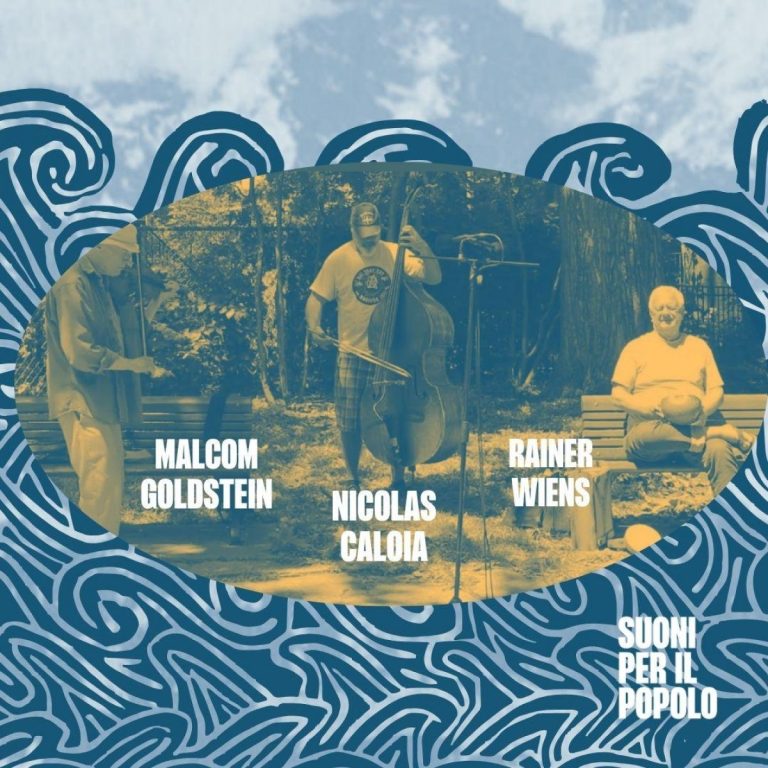
Pablo Jiménez est contrebassiste et compositeur né à Bogota et établi à Montréal. Utilisant l’improvisation comme moteur créatif profond, son travail cherche à établir un langage musical rigoureux basé sur le mouvement. Il collabore souvent avec des ensembles et des musiciens de la scène des musiques actuelles et contemporaines au Québec et au Canada, dont l’Ensemble SuperMusique, Malcolm Goldstein, Lori Freedman et Scott Thomson. Il s’est produit et a participé à des festivals tels que le Festival International de Musique Actuelle de Victoriaville, Suoni per il Popolo, et les Darmstädter Ferienkurse, où il a étudié avec Anthony Braxton et interprété sa musique.

Pablo Jiménez is a double bassist and composer born in Bogota and based in Montreal. Using improvisation as a profound creative force, his work seeks to establish a rigorous musical language based on movement. He often collaborates with ensembles and musicians from the contemporary music scene in Quebec and Canada, including Ensemble SuperMusique, Malcolm Goldstein, Lori Freedman, and Scott Thomson. He has performed and participated in festivals such as the Festival International de Musique Actuelle de Victoriaville, Suoni per il Popolo, and the Darmstädter Ferienkurse, where he studied with Anthony Braxton and performed his music.

Antoine Létourneau-Berger

Antoine Létourneau-Berger (percussion) est un compositeur multi-instrumentiste originaire du Bas-Saint-Laurent. Percussionniste classique de formation, il poursuit ses études en composition de musique de film et développe un intérêt marqué pour la production sonore. Il porte selon l’occasion les chapeaux de réalisateur d’album, compositeur, concepteur et mixeur sonore autant que celui de musicien professionnel et improvisateur. Antoine est un touche à tout qui est aussi à l’aise avec les musiques expérimentales d’avant-garde que la chanson folk, le rock, le jazz ou encore les musiques électroniques. Il fait notamment partie des formations Talfast, Equse, Bascaille, Manta et GGRIL, en plus d’avoir produit 6 albums solo sous le nom de L’Oeil et le Monocle. De retour à Rimouski depuis 2014, il compose régulièrement pour le théâtre, le cinéma, la télévision, le cirque et la radio.

Antoine Létourneau-Berger (percussion) is a multi-instrumentalist composer from the Bas-Saint-Laurent region. Trained as a classical percussionist, he continued his studies in film music composition and developed a keen interest in sound production. Depending on the occasion, he wears the hats of album producer, composer, sound designer, and mixer, as well as professional musician and improviser. Antoine is a jack of all trades who is equally comfortable with avant-garde experimental music, folk, rock, jazz, and electronic music. He is a member of the bands Talfast, Equse, Bascaille, Manta, and GGRIL, and has produced six solo albums under the name L’Oeil et le Monocle. Back in Rimouski since 2014, he regularly composes for theater, film, television, circus, and radio.

Eduardo Cossio

Eduardo Cossio (cithares préparées et électronique) est un musicien et artiste visuel péruvien-australien basé à Boorloo (Perth, Australie occidentale). Sa musique s’inspire de la composition électroacoustique et expérimentale, et il se produit généralement avec des cithares, des harmonicas et des instruments électroniques. Eduardo s’est produit dans toute l’Australie, en Europe et à Taïwan. Il a collaboré étroitement avec Annette Krebs, Axel Dörner, Sabine Vogel, Alice Hui Shen Chang et Jim Denley. Il est également un organisateur prolifique, animateur de radio et écrivain. Son travail en art visuel a fait l’objet de trois expositions individuelles.

Eduardo Cossio (prepared zithers and electronics) is a Peruvian-Australian musician and visual artist based in Boorloo (Perth, Western Australia). His music draws from electro-acoustic and experimental composition, usually performing with zithers, harmonica and electronics. Eduardo has performed widely across Australia, Europe, and Taiwan. He has collaborated closely with Annette Krebs, Axel Dörner, Sabine Vogel, Alice Hui Shen Chang, and Jim Denley. He is also prolific organiser, radio broadcaster, and writer. His visual art has been the subject of three solo exhibitions.

Jen Yakamovich

Jen Yakamovich est une batteuse et improvisatrice basée à Vancouver qui travaille dans plusieurs disciplines en tant qu’interprète, compositrice, chercheuse et éducatrice. Elle considère sa relation avec la batterie, un système de sons et de parties interdépendantes, comme une exploration des relations entre son propre système interne et des réseaux socio-écologiques plus larges. Son approche de l’improvisation et de la composition spontanée trouve ses racines dans le Creative Music Workshop de Halifax, en Nouvelle-Écosse, où Yakamovich a grandi. De 2024 à 2025, Yakamovich a étudié avec la percussionniste, compositrice et preneuse de son Susie Ibarra (New York/Berlin).
Au cours de l’année écoulée, Yakamovich a travaillé avec le programme DAAD Artists-in-Berlin / bauhaus Campus Stadt Nature, Now Society’s 8east, Vancouver Coastal Jazz, Active Passive Performance Society, The Only Animal et grunt gallery. Elle a récemment contribué à des projets avec le percussionniste Adrian Avendaño (Vancouver), les artistes Roxanne Nesbitt et Ben Brown (Montréal), le guitariste Sam Wilson (Halifax), l’artiste psychédélique persan Niloo (Victoria), le groupe d’art rock Heaven For Real (Montréal), le producteur Miguel Maravilla (Vancouver), les improvisateurs Mustafa Rafiq (Edmonton) et Jairus Sharif (Calgary) pour Active Passive, et le groupe folk balkanique Fetele Din Balkani (Vancouver). Elle se produit régulièrement avec l’artiste pop expérimental Wallgrin (Vancouver) et a récemment formé le duo d’improvisation Notice Flower avec la pianiste Bahar Khazei. Elle mène également un projet folk expérimental en solo intitulé Troll Dolly.
Yakamovich souffre d’une déficience visuelle progressive appelée rétinite pigmentaire. Elle est titulaire d’une maîtrise en études environnementales de l’université Dalhousie.

Jen Yakamovich is a Vancouver-based drummer and improviser who works across disciplines as a performer, composer, researcher, and educator. She sees her relationship with the drum set—a system of interrelating sounds and parts— as an inquiry into relationships with both her own internal system and wider socioecological webs. Her approach to improvisation and spontaneous composition is rooted in the Creative Music Workshop in Halifax, NS, where Yakamovich grew up. From 2024-2025 Yakamovich studied with drummer, composer & field recordist Susie Ibarra (New York/Berlin).
Over the past year Yakamovich has worked with the DAAD Artists-in-Berlin / bauhaus Campus Stadt Nature program, Now Society’s 8east, Vancouver Coastal Jazz, Active Passive Performance Society, The Only Animal, and grunt gallery. She has recently contributed to projects with percussionist Adrian Avendaño (Vancouver), artists Roxanne Nesbitt & Ben Brown (Montréal), guitarist Sam Wilson (Halifax), Persian psych artist Niloo (Victoria), art rock group Heaven For Real (Montréal), producer Miguel Maravilla (Vancouver), improvisers Mustafa Rafiq (Edmonton) & Jairus Sharif (Calgary) for Active Passive, and Balkan folk group Fetele Din Balkani (Vancouver). She regularly performs with experimental pop artist Wallgrin (Vancouver), and recently formed the improvisation duo Notice Flower with pianist Bahar Khazei. She has a solo experimental folk project called Troll Dolly.
Yakamovich has a progressive vision impairment called retinitis pigmentosa. She holds a Master’s degree in Environmental Studies from Dalhousie University.

Roxanne Nesbitt

Roxanne Nesbitt est designer, compositrice et artiste sonore. Après des études en contrebasse classique et en architecture, Roxanne travaille entre les domaines de la musique et du design. Ses recherches explorent la conception d’instruments, le point de rencontre entre la composition et l’improvisation, la céramique sculpturale et les installations sonores participatives. Roxanne collabore avec des concepteur.ice.s d’instruments, des musicien.ne.s, des compositeur.ice.s et des chorégraphes pour créer ses œuvres.
Sa musique a été jouée à travers l’Europe et l’Amérique du Nord, notamment lors de performances au Gaudeamus Muziekweek à Utrecht, au November Music à Den Bosch, au Bauchhund à Berlin, au Western Front à Vancouver et au Center for New Music à San Francisco. Son processus de création célèbre l’intimité, la curiosité et l’exploration.

Roxanne Nesbitt is a designer, composer, and sound artist. Following formal studies in classical double bass and architecture, Roxanne works between the fields of music and design. Her research explores radical instrument design, the meeting place of composition and improvisation, sculptural ceramics and participatory sound installation. Roxanne collaborates with instrument designers, musicians, composers, and choreographers to create work.
Her music has been played across Europe and North America including performances at Gaudeamus Muziekweek in Utrecht, November Music in Den Bosch, Bauchhund in Berlin, Western Front in Vancouver, and the Center for New Music in San Francisco. She celebrates process making work that is intimate, inquisitive, and exploratory.

POUR ACHETER VOTRE BILLET, C’EST ICI!

Ce contenu provient du Festival Flux et est adapté par PAN M 360

expérimental / contemporain / Free Improvisation

Le Vivier : GGRIL • C-IME • Ensemble Supermusique — Des nuées de ritournelles à la Chapelle Scènes Contemporaines

by Rédaction PAN M 360

Rencontre entre les improvisateurs de l’ensemble rimouskois GGRIL et de l’Ensemble Supermusique, avec les musiciennes et artistes sonores du collectif belge C-IME. L’idée de ritournelle nous vient de la saxophoniste et compositrice belge Audrey Lauro. Bien qu’elle ne soit pas du voyage cette fois, son esprit nous accompagne pour ce concert pensé et repensé, tout fait d’improvisation, de fragilité et d’écoute. Des membres du GGRIL et de C-ÎME collaborent depuis quelques années grâce à une heureuse rencontre au festival Citadelic à Gand. En 2022, suite à une résidence à Rimouski, Audrey Lauro a composé Ritournelle Reverse, une pièce pour le GGRIL. Dans un fabuleux désir de collaborer au sein d’un processus créatif partagé où habiter l’espace et la physicalité du son, trois musiciennes de l’ensemble C-ÎME (Belgique), cinq musicien·nes du GGRIL (Rimouski) et deux invitées de l’Ensemble SuperMusique (Montréal) se rejoignent sur scène le temps d’une ritournelle montréalaise.

A meeting between the improvisers of the Rimouski-based ensemble GGRIL and Ensemble SuperMusique, together with the musicians and sound artists of the Belgian collective C-IME. The idea of the ritournelle comes from Belgian saxophonist and composer Audrey Lauro. Although she won’t be traveling with them this time, her spirit accompanies this concert—conceived and reconceived—made of improvisation, fragility, and attentive listening. Members of GGRIL and C-IME have been collaborating for several years, following a serendipitous encounter at the Citadelic Festival in Ghent. In 2022, after a residency in Rimouski, Audrey Lauro composed Ritournelle Reverse, a piece for GGRIL. In a marvelous desire to collaborate within a shared creative process—one that inhabits space and the physicality of sound—three musicians from C-IME (Belgium), five musicians from GGRIL (Rimouski), and two guests from Ensemble SuperMusique (Montréal) come together on stage for a Montréal ritournelle.

POUR ACHETER VOTRE BILLET, C’EST ICI!

Ce contenu provient de Le Vivier et est adapté par PAN M 360

classique / post-romantique

OSM : Ainsi parlait Zarathoustra

by Rédaction PAN M 360

Brian Manker et James Box sortent des rangs de l’Orchestre pour offrir des performances époustouflantes en tant que solistes. Ce programme fascinant explore des œuvres marquées par des influences philosophiques et spirituelles où Strauss, Wagner, Bloch et Moussa nous introduisent, à leur façon, à des thématiques profondes. L’œuvre de Strauss est un poème symphonique inspiré du livre philosophique de Friedrich Nietzsche. Son introduction majestueuse utilisée dans le film 2001: l’Odyssée de l’espace de Stanley Kubrick est devenue mondialement célèbre. Un concert incontournable, alliant musique saisissante, réflexion captivante et maîtrise impressionnante.

Brian Manker and James Box step out of their usual roles in the orchestra to deliver breathtaking performances as soloists. The program features works shaped by philosophical and spiritual influences, as Strauss, Wagner, Bloch, and Moussa each explore profound themes in their own unique way. Strauss’ piece, a symphonic poem inspired by Friedrich Nietzsche’s philosophical work Thus Spoke Zarathustra, opens with a majestic introduction made world-famous by Stanley Kubrick’s 2001: A Space Odyssey. An unmissable concert bringing together striking music, deep reflection, and masterful artistry.

Programme

Richard Wagner, Tannhäuser : « Ouverture » (12 min)
Samy Moussa, Concerto pour trombone « Yericho » (25 min)
Ernest Bloch, Schelomo, Rhapsodie hébraïque pour violoncelle et orchestre, B. 39 (20 min)
Richard Strauss, Ainsi parlait Zarathoustra, op. 30, TrV 176 (33 min)

Program

Richard Wagner, Tannhäuser, Overture (12 min)
Samy Moussa, Concerto for Trombone (“Yericho”) (25 min)
Ernest Bloch, Schelomo: Rhapsodie Hébraïque for Violoncello and Orchestra, B. 39 (20 min)
Richard Strauss, Thus Spoke Zarathustra, Op. 30, TrV 176 (33 min)

POUR ACHETER VOTRE BILLET, C’EST ICI!

Ce contenu provient de l’Orchestre symphonique de Montréal et est adapté par PAN M 360

Subscribe to our newsletter

Inscription
Infolettre

"*" indicates required fields

Type of Suscribers