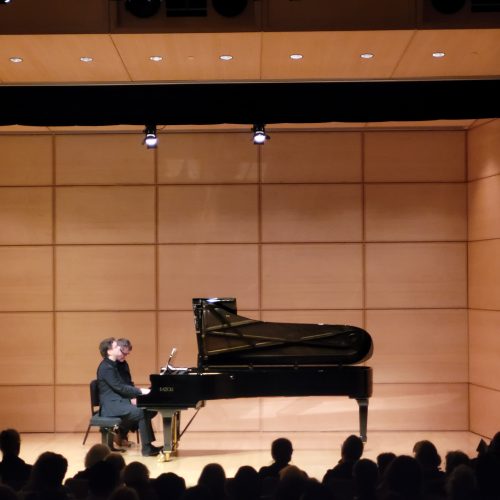
It was a well-attended symphony hall that discovered the sensitive playing of pianist Martin Helmchen and the deep voice of mezzo-soprano Beth Taylor. These two internationally renowned performers won over a diverse audience, ranging from seasoned classical music lovers to those experiencing the atmosphere of the symphony hall for the first time.
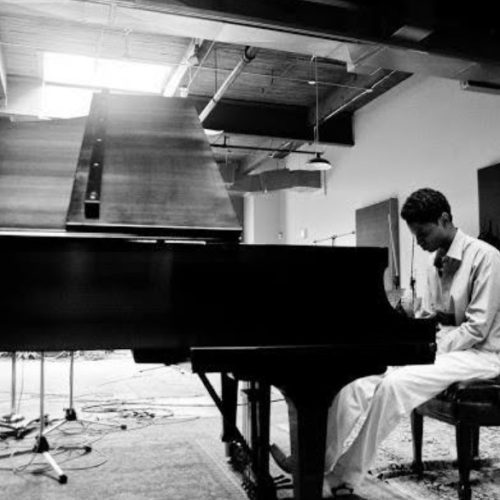
In terms of repertoire, they were treated to two works of great contrast. In the first part of the concert, Martin Helmchen performed Mozart’s Piano Concerto No. 24 in C minor, K. 491. One of the composer’s last works, this penultimate concerto in his series of twelve is filled with theatrical flourishes and nuances in the interplay between the piano and the orchestra, which Payare and Helmchen brought out with finesse. Martin Helmchen’s playing is delicate and agile, even in the more lively moments. One of the qualities of Helmchen’s interpretation is also his sense of musical phrasing and his use of silences in the music. He allows the pauses in the music to breathe naturally, particularly in the final cadenza of the concerto, with great theatricality.
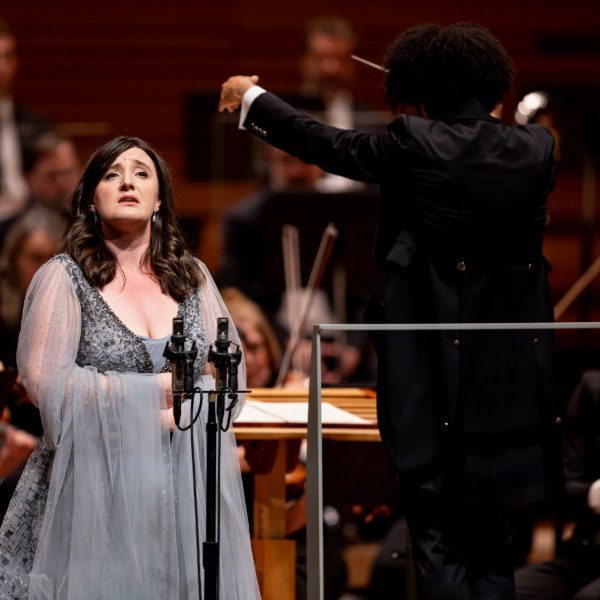
The stylistic contrast was striking with mezzo-soprano Beth Taylor’s interpretation of British composer Edward Elgar’s Sea Pictures cycle. The work, based on five poems by different poets, evokes the sea in all its forms, from its immensity and calm to its unpredictable nature. Bath Taylor conveyed the different emotions conveyed in the text and music with a vivid interpretation. From the very first note of “Sea-Slumber Song,” the Scottish mezzo-soprano’s round timbre, both dark and luminous, struck us and transported us into a world of sound and poetry. There was a slight misstep in the second verse of the fourth poem, “Where Corals”—whose perpetual offbeat rhythm can be tricky—but it did not lead to a major derailment of the vocal line. She concluded the concert with a performance of interpretive aplomb.
It was an evening of concert finesse, albeit punctuated by noise from the audience. There are some things that can be overlooked in the context of the Virée Classique experience, but bringing a young baby to hear this type of repertoire does no one any favours.
Photo : Antoine Saito