Classical / Classical Period / Modern Classical / musique de chambre / période romantique

Les Violons du Roy | Trios inattendus: The Intimate Charm of Chamber Music

by Mona Boulay

Early in the evening, as part of the “Apéro Series,” we meet up with Les Violons du Roy for the concert Dvořák et Cie: Trios inattendus. The concert, shorter in duration than Les Violons du Roy’s usual concerts, draws its repertoire from pieces written for bourgeois or noble private settings: receptions, dinners… So many occasions to be entertained by smaller instrumental ensembles.

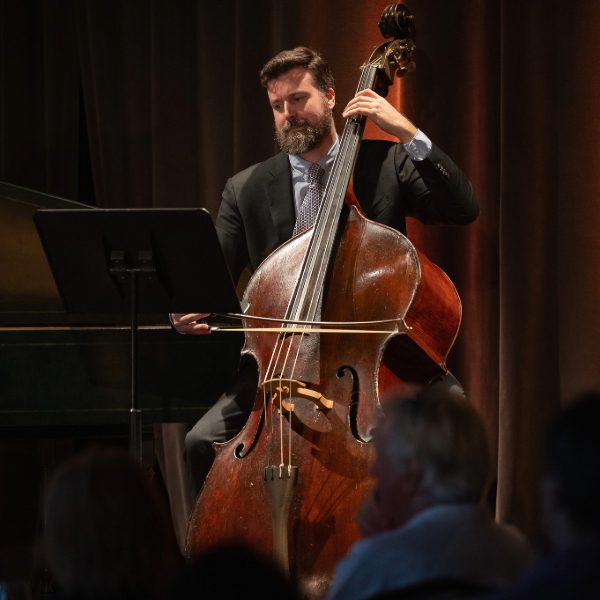
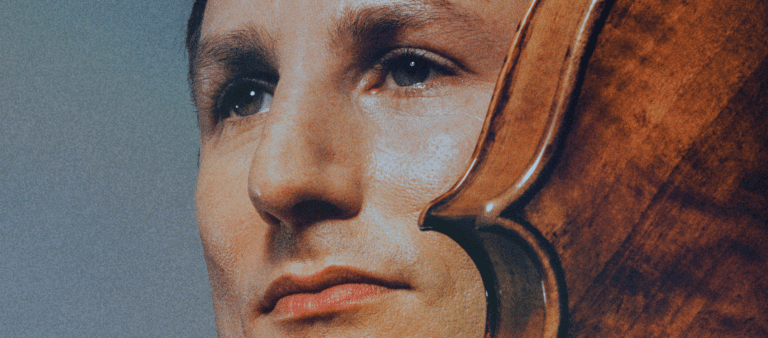
The first piece, Mozart’s String Trio in B-flat major, features two violins accompanied by the double bass, an uncommon alliance in Baroque trios, but one that was surely practiced at the time to carry the bass a little more than the cello at private parties. The “Adagio” gives us a chance to hear some lovely exchanges between the three musicians, while the “Menuetto” is much more bouncy. The musicians play nicely together, and all the variations, whether in the phrasing of the eighth notes or in the rallentandos, are gracefully executed. The trio format lays the musicians bare, and there are occasional tiny bow snags, particularly on the double bass, but that’s also part of the charm of these small ensembles.

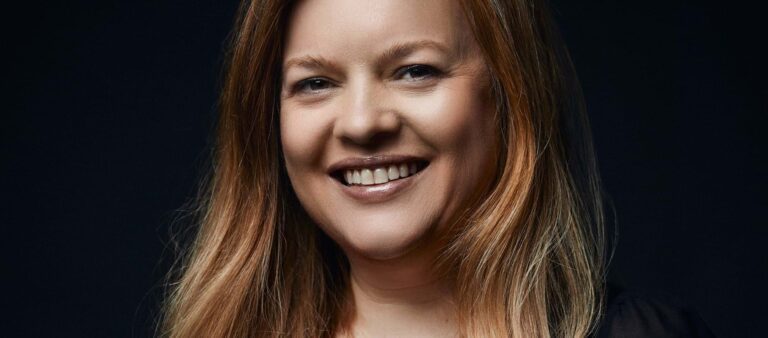
The concert continues with Dvořák’s Terzetto for two violins and viola in C major, alternating between rapid homorhythmic passages, very well executed, and gentler question-and-answer games. The viola is superb in the “Larghetto” and energizes the “Scherzo”. The final section of the piece features a magnificent surge of energy and emotion from the first violinist, Pascale Gagnon, who gives a splendid performance. The audience is won over. This is followed by Kodály’s Serenade for two violins and viola, a much more modern piece in which Hungarian music colors are mixed with more experimental approaches for the time. From the outset, the hall is captivated by the high-pitched playing of violinist Katya Poplyanski, who had already won me over as first violinist at a previous Les Violons du Roy concert. The latter possesses a sharp musical sense and total mastery of her instrument, but always retains a central place for emotional phrasing and flights of fancy: playing that is both methodical and free.

The “Lento” presents an exchange between violin 1 and viola, supported by a chordal texture from violin 2. It is a truly special section, but one in which we really see the two soloists conversing. The final movement, “Vivo,” is more playful and brings the piece to a beautiful conclusion.

To end the concert, the viola gives way to the double bass, which returns to perform Strauss’s Wiener Carnaval-Walzer. A much simpler piece, perhaps even too much so, after the previous two daring ones. The whole thing is well-executed and amusing, without shining through.

A fine musical success, this concert is also an opportunity to get to know the musicians of Les Violons du Roy in a different, more intimate setting.

Baroque / Choral Music / Classical / Classical Singing

Violons du Roy and La Chapelle de Québec | An Evening of Discovery in The Footsteps of Bach’s Early Cantatas

by Mona Boulay

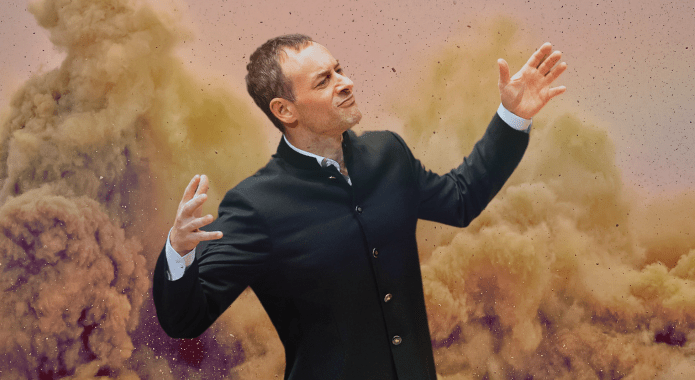
Les Violons du Roy, accompanied by the chamber choir La Chapelle de Québec and conducted by Bernard Labadie, presented an interesting repertoire on March 6: Bach’s early cantatas, the first works of the man who was to become the absolute benchmark of Baroque music.

The concert opens with a brief, but very light-hearted, introduction by Bernard Labadie. We have no record of his compositions before his apprenticeship, with the exception of one piece written around the age of sixteen. What did he write during his student years, before publishing his first cantatas? A great mystery, which makes us all the more curious to hear these famous early works broadcast.

The first notes of “Cantata BWV 150 Nach dir, Herr, verlanget mich” echo through the Palais Montcalm. As throughout the rest of the concert, the ensembles are split up: this time, there are no violas, just a cello, double bass and bassoon. Immediately, we hear colors that, without knowing Bach perfectly, we would not have imagined coming from the composer’s mind: daring harmonies, lively tempo changes, and, thanks to the particular formation, a singular sound balance. Les Violons du Roy render the beauty of this cantata with excellence. The choral passages are perfectly successful, but we felt that the first passages by the soloists (from La Chapelle) were a little more timid.

“Cantata BWV 131 Aus der Tiefe rufe ich, Herr, zu dir” continues the evening, and this time it’s the violin section that becomes rarer. The violas return to the balance, and above all, an oboe makes its appearance, almost to the rank of soloist as it knits in counterpoint with the solo singers, and responds to their interventions. It seems that this work is at times taxing, and although the majority of the cantata is very well mastered by the musician, one can detect certain tensions in places (it should also be pointed out that the score requires quite impressive respiratory endurance). During the Arioso sung by the bass, Stephen Hegedus, the tempo seems to be disputed between the singer, the oboe and the organ, giving a feeling of imprecision without it being clear who is to blame. Nevertheless, the overall impression of the piece is good, with a perfectly mastered finale that leaves us with a taste of splendor before the intermission.

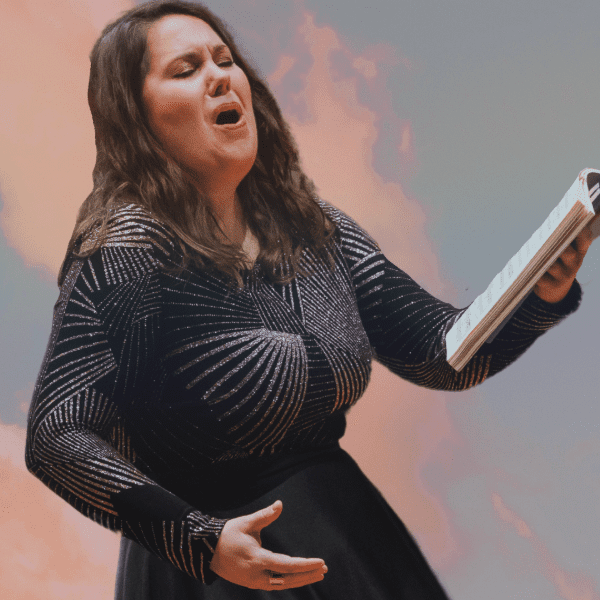
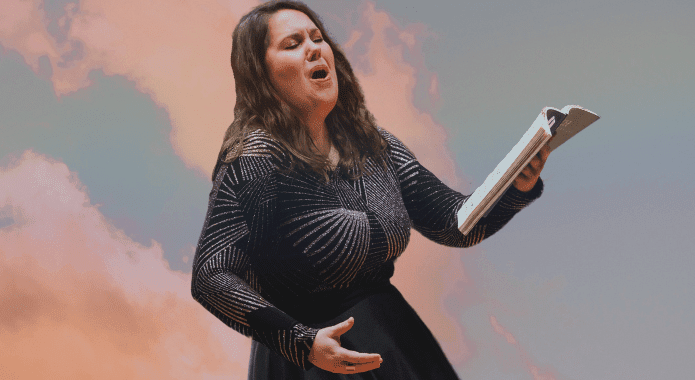
An even more atypical formation opens the second half of the concert, with two violas da gamba and two recorders replacing the violin section in Cantata BWV 106 Gottes Zeit ist die allerbeste Zeit. A well-assumed early-music color, evocative of Renaissance instrumentations, which nonetheless gives rise to a few inaccuracy challenges. The soloists seem to have come into their own, and their interventions are more striking, notably the “Ja, komm, Herr Jesu, komm!” performed by soprano Myriam Leblanc with brio. The cantata unfolds, with a fine mezzo solo by Marie-Andrée Mathieu, previously unheard, pleasantly supported by tenor Hugo Hymas.

To close the concert, the Cantata BWV 4 Christ lag in Todes Banden was chosen. This time, the Baroque line-up is a little more standard. The cantata is more austere, in keeping with the text, with the exception of the Alleluias that punctuate the end of each verse. There’s a fine duet between Myriam Leblanc and countertenor Daniel Moody, although the latter loses some of the beauty of his timbre on the higher notes. Later, we hear Stephen Hegedus’s voice, highlighted more prominently than in his previous performances, in his Aria for verse 5. The concert ends with a final, grandiose “Alleluia”.

The concert BACH, LES PREMIÈRES CANTATES AND BERNARD LABADIE, will be presented again in Quebec City on March 7, 2025 and in Montreal on March 8 2025.

TICKETS AND INFO HERE
Alternative Rock / nu-métal / post-grunge

Deftones au Centre Vidéotron

by Rédaction PAN M 360

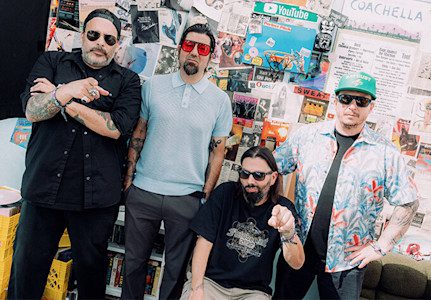
Pionniers du mouvement nu-metal des années 90, Deftones mêlent leurs influences individuelles pour créer un hybride artistique de metal alternatif qui équilibre beauté et brutalité. L’un des premiers groupes à alterner riffs lourds et chants hurlés avec des passages plus éthérés et des voix murmurées, ils ont rapidement dépassé la scène nu-metal, influençant une génération de musiciens avec leur trilogie d’albums certifiés platine : Adrenaline (1995), Around the Fur (1997) et White Pony (2000), considéré comme un album majeur du genre. Dans les années 2000 et 2010, le groupe repousse encore plus ses frontières sonores, s’éloignant des structures de chansons grand public au profit d’ambiances de plus en plus expansives, comme sur Deftones (2003), Diamond Eyes (2010) et Gore (2016). En 2020, ils entament leur quatrième décennie en tant que groupe avec leur neuvième album, Ohms.

As one of the progenitors of the ’90s nu-metal movement, Deftones embrace their individual influences to create an artistic, alternative metal hybrid that balances beauty and brutality. As one of the first groups to alternate heavy riffs and screamed vocals with more ethereal music and hushed singing, they quickly evolved beyond the nu-metal scene, influencing a generation of musicians with their trio of platinum-certified early albums: 1995’s Adrenaline, 1997’s Around the Fur, and 2000’s seminal White Pony. In the 2000s and 2010s, they pushed their sonic boundaries even further, departing from mainstream-friendly song structures in favor of increasingly expansive atmospherics on sets like 2003’s self-titled effort, 2010’s Diamond Eyes, and 2016’s Gore. In 2020, they kicked off their fourth decade as a unit with their ninth album, Ohms.

POUR ACHETER VOTRE BILLET, C’EST ICI!

Ce contenu provient dAllMusic et est adapté par PAN M 360

classique

Les Violons du Roy : Dvořák et cie – Trios inattendus

by Rédaction PAN M 360

La formation du trio à cordes réunit habituellement un violon, un alto et un violoncelle. Il existe aussi d’autres types de formations, plus rares, telles ces trios inattendus : deux violons et un alto, puis deux violons et une contrebasse. Le Terzetto de Dvořák est au sommet de la production de musique de chambre du compositeur qui joua lui-même la partie d’alto lors de la création de l’œuvre.
À tour de rôle, musiciennes et musiciens s’adressent au public à propos des œuvres choisies, les compositeurs ou les particularités d’un instrument ou d’une technique de jeu.
Une formule 5 à 7 animée par les artistes incluant une consommation et des bouchées.

The string trio usually consists of a violin, a viola, and a cello. However, other, less common formations also exist, such as these unexpected trios: two violins and a viola, or two violins and a double bass. Dvořák’s Terzetto stands at the pinnacle of the composer’s chamber music output, with Dvořák himself playing the viola part at its premiere.
Taking turns, the musicians speak to the audience about the selected works, the composers, or the unique characteristics of an instrument or playing technique.
A 5-à-7 event hosted by the artists, including a drink and hors d’oeuvres.

POUR ACHETER VOTRE BILLET, C’EST ICI!

Ce contenu provient des Violons du Roy et est adapté par PAN M 360

classique

Les Violons du Roy : Jonathan Cohen, Mozart et l’amitié

by Rédaction PAN M 360

Trois talentueux musiciens solistes se joignent aux Violons du Roy sous la direction de Jonathan Cohen dans un concert sous le signe de l’amitié et de l’admiration de Mozart pour le clarinettiste virtuose de l’époque, Anton Stadler, et trois confrères compositeurs qui auront durablement marqué le jeune prodige de Salzbourg.
Jonathan Cohen, chef
Isaac Chalk, alto
Stéphane Fontaine, clarinette
Mélisande McNabney, piano-forte

Three gifted soloists join Les Violons du Roy, conducted by Jonathan Cohen, in a concert dedicated to Mozart’s friendship and admiration for Anton Stadler, the greatest virtuoso clarinetist of his time. The programme also features works by three fellow composers who left a lasting impression on the young prodigy from Salzburg.
Jonathan Cohen, conductor
Isaac Chalk, viola
Stéphane Fontaine, clarinet
Mélisande McNabney, fortepiano

Programme

W.F. BACH
Sinfonia pour cordes en fa majeur, Fk. 67
M. HAYDN
Concerto pour alto et piano-forte en do majeur, MH 41
C.P.E. BACH
Symphonie en mi bémol majeur, Wq. 179
W.A. MOZART
Concerto pour clarinette en la majeur, K. 622

Program

W.F. BACH
Sinfonia for Strings in F Major, Fk. 67
M. HAYDN
Concerto for viola and fortepiano in C Major, MH 41
C.P.E. BACH
Symphony in E Flat Major, Wq. 179
W.A. MOZART
Concerto for Clarinet in A Major, K. 622

POUR ACHETER VOTRE BILLET, C’EST ICI! (14H)

POUR ACHETER VOTRE BILLET, C’EST ICI! (19H30)

Ce contenu provient des Violons du Roy et est adapté par PAN M 360

Baroque / classique

Les Violons du Roy : Requiem pour cordes avec Antoine Tamestit

by Rédaction PAN M 360

Après ses débuts mémorables couronnés d’un prix Opus en 2023 avec l’orchestre, le grand altiste Antoine Tamestit revient auprès des Violons du Roy pour une nouvelle rencontre qui s’annonce tout aussi exaltante et bouleversante avec une transcription pour orchestre à cordes du Quintette op. 111 de Brahms.

After his memorable Opus Award-winning debut with Les Violons du Roy in 2023, renowned violist Antoine Tamestit returns to the orchestra for a new collaboration that promises to be just as exhilarating and moving—a transcription for string orchestra of Brahms’ String Quintet Op. 111.

Programme

J.S. BACH
Choral Für deinen Thron tret ich hiermit, BWV 327
P. HINDEMITH
Trauermusik pour alto et cordes
J. DOWLAND
Flow my tears (arr. A. Tamestit)
If my complaints could passions move (arr. A. Tamestit)
B. BRITTEN
Lachrymae pour alto et cordes, op. 48a
J. BRAHMS
Quintette à cordes ne 2 en sol majeur, op. 111 (version pour orchestre à cordes A. Tamestit)

Program

J.S. BACH
Choral Für deinen Thron tret ich hiermit, BWV 327
P. HINDEMITH
Trauermusik for viola and strings
J. DOWLAND
Flow my tears (arr. A. Tamestit)
If my complaints could passions move (arr. A. Tamestit)
B. BRITTEN
Lachrymae for viola and strings, op. 48a
J. BRAHMS
String Quintet No. 2 in G Major, op. 111 (version for string orchestra A. Tamestit)

POUR ACHETER VOTRE BILLET, C’EST ICI!

Ce contenu provient des Violons du Roy et est adapté par PAN M 360

Baroque / classique

Les Violons du Roy : Bach, les premières cantates et Bernard Labadie

by Rédaction PAN M 360

On s’imagine facilement et même presque exclusivement le grand Johann Sebastian Bach en homme âgé, pétri des plus grands savoirs  musicaux que seuls l’expérience et le temps  apportent. C’est pourtant un tout jeune homme, au début de la vingtaine, qui nous lègue les puissants et parfaits chefs-d’œuvre que sont ses toutes premières cantates. Des œuvres qui ouvrent l’une des plus importantes sommes musicales de tout l’Occident, livrées ici avec La Chapelle de Québec, dans toute leur splendeur.
Bernard Labadie, chef
Myriam Leblanc, soprano
Daniel Moody, contre-ténor
Hugo Hymas, ténor
Stephen Hegedus, baryton-basse
Avec La Chapelle de Québec

It is easy to imagine the great Johann Sebastian Bach almost exclusively as an elderlyman, steeped in the greatest musical knowledge that only time and experience can bring. Yet it was a young man in his early twenties who handed down to us the powerful, true masterpieces that comprise his very first sacred cantatas. These works are the first of one of the most important musical collections in the whole of the western world, delivered in all their splendour here with La Chapelle de Québec.
Bernard Labadie, conductor
Myriam Leblanc, soprano
Daniel Moody, countertenor
Hugo Hymas, tenor
Stephen Hegedus, bass-baritone
With La Chapelle de Québec

Programme

J.S. BACH
Cantate Christ lag in Todes Banden, BWV 4
Cantate Gottes Zeit ist die allerbeste Zeit, BWV 106
Cantate Aus der Tiefe rufe ich, Herr, zu dir, BWV 131
Cantate Nach dir, Herr, verlanget mich, BWV 150

Program

J.S. BACH
Cantata Christ lag in Todes Banden, BWV 4
Cantata Gottes Zeit ist die allerbeste Zeit, BWV 106
Cantata Aus der Tiefe rufe ich, Herr, zu dir, BWV 131
Cantata Nach dir, Herr, verlanget mich, BWV 150

POUR ACHETER VOTRE BILLET, C’EST ICI!

Ce contenu provient des Violons du Roy et est adapté par PAN M 360

hommage / Morna

Cesária Évora Orchestra – Hommage à la Diva aux pieds nus

by Rédaction PAN M 360

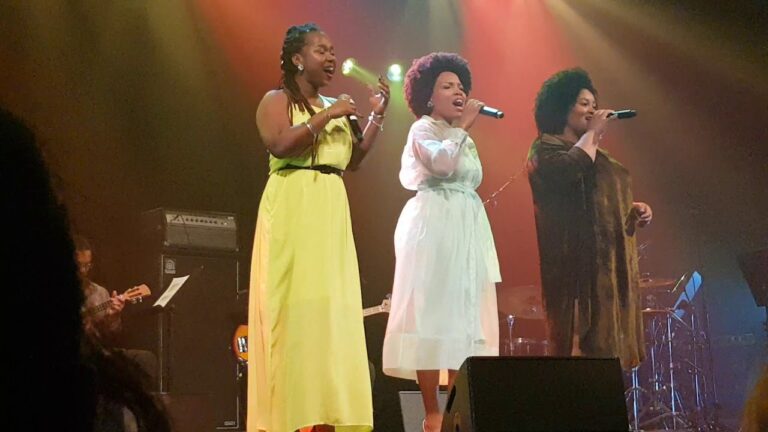
Le Cesária Évora Orchestra réunit la crème des chanteuses et des musiciens du Cap-Vert autour de la musique de « la diva aux pieds nus ». Elida Almeida, Teófilo Chantre, Lucibela, Ceuzany et d’anciens membres du groupe de Cesária Évora s’arrêteront à Québec pour célébrer ce magnifique répertoire.
Cesária Évora est incontestablement la chanteuse la plus célèbre du Cap-Vert. Avec son timbre mélancolique si caractéristique et son style inimitable, elle a conquis des millions de cœurs et captivé les publics du monde entier. C’est en 2014, soit trois ans après la disparition de l’icône des musiques du monde, que ses musiciens ont décidé de reprendre la route afin de rendre hommage à cette interprète unique, aimée et admirée. Ils ont parcouru le globe depuis et s’arrêtent à Québec pour la toute première fois. Un rendez-vous rare à ne pas manquer!

The Cesária Évora Orchestra brings together the finest singers and musicians from Cape Verde to celebrate the music of the legendary “barefoot diva.” Elida Almeida, Teófilo Chantre, Lucibela, Ceuzany, and former members of Cesária Évora’s band will make a stop in Quebec to honor this magnificent repertoire.
Cesária Évora is undoubtedly the most famous singer from Cape Verde. With her uniquely melancholic voice and unmistakable style, she won the hearts of millions and captivated audiences worldwide. In 2014, three years after the passing of this world music icon, her musicians decided to hit the road again to pay tribute to this beloved and admired artist. Since then, they have traveled the globe and are now coming to Quebec for the very first time. A rare event not to be missed!

POUR ACHETER VOTRE BILLET, C’EST ICI!

Ce contenu provient du Palais Montcalm et est adapté par PAN M 360

Baroque / Choral Music / Classical / Classical Singing

Les Violons du Roy and La Chapelle de Québec | Brilliant Messiah!

by Mona Boulay

QUÉBEC

To commemorate their fortieth anniversary, Les Violons du Roy are offering a series of exceptional concerts, including the following: Handel’s Messiah with Bernard Labadie.

First of all, the visual impact of such an ensemble on the stage of the Palais Montcalm cannot be overstated: a baroque chamber orchestra with an eye-catching theorbo in the center, behind which the soloists perform and wait, all overlooked by the choir of La Chapelle de Québec, thirty singers harmoniously arranged in a semicircle around the stage. The view is grandiose, worthy of the famous oratorio we’re about to hear.

Conductor Bernard Labadie, founder of Les Violons du Roy, returns to take his place for the duration of the concert, a chair he has left since 2014 to Jonathan Cohen. It’s under his guidance that our concert begins, with a perfectly executed instrumental overture. We continue immediately with the first soloist, tenor Andrew Haji, who captivates us from the very first notes of “Comfort Ye”. The singer handles nuances with great virtuosity and never tries to overdo it: his notes held without vibrato are a real treat for our ears, as are his perfectly mastered melismas. The choir then makes its first appearance with “And the glory of the Lord”, and its power is striking: what an impact! The group seems to form a single angelic voice, the purity of the sopranos mingled with the depth of the basses, the blend of timbres total. And already we hear “Thus saith the Lord”, the first solo by bass William Thomas, a young British singer with a great future ahead of him. This is contrasted by countertenor Iestyn Davies’s “But who made abide”, an impressive performance supported by the chamber orchestra, particularly with its velocity and precision of prestissimo. As the oratorio continues, we finally hear Liv Redpath, soprano. Her entrance is perhaps less remarkable at first than that of the other soloists, with a play in nuances that at first seems restricted, despite impressive vocal precision. The first interventions seem to lack a little life.

Messiah unfolds throughout the evening, punctuated by strong moments (how could one not shudder during the “Hallelujah” closing the second part?), but also occasionally by a few long stretches. A case in point is “He was despised”, a long countertenor solo that never ends. Whether Handel’s hand was too heavy, or the interpretation lacked direction, I couldn’t say, but time seemed to run longer during this aria). It ends beautifully with the perfectly executed “Amen”, a profusion of intense joy.

The concert is made brilliant by the instrumental ensemble, which has had the opportunity throughout to demonstrate its great capacity for contrast, always handled with the elegance and purity typical of Baroque music. Not once is a note overemphasized, not once does it fall into the realm of excess. For once, Les Violons du Roy excel in subtlety. The soloists are each outstanding, despite the criticisms set out above, one is aware of hearing a certain elite of lyrical singing. The choir of La Chapelle de Québec is excellent in its role, and doesn’t disappoint us once: its interventions are always a moment of great pleasure. All in all, a successful evening, and a brilliant one at that.

Photo Credit : David Mendoza Hélaine

Handel’s Messiah with Les Violons du Roy and Bernard Labadie will be presented at the Maison symphonique de Montréal on Saturday, December 14 at 7:30 pm. Tickets are available here.

chanson keb franco / Folk

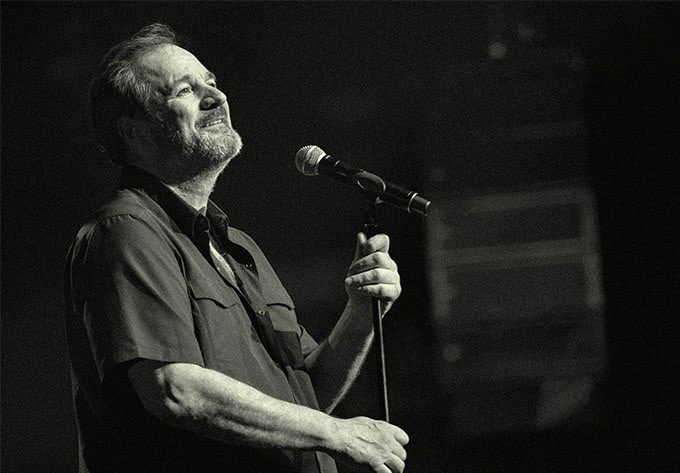
Paul Piché à la salle Louis-Fréchette

by Rédaction PAN M 360

Depuis plus de vingt-cinq ans, Paul Piché s’impose comme l’un des auteurs-compositeurs les plus importants de la scène musicale québécoise. Prenant directement racine dans notre héritage culturel, sa poésie est franche et directe tout en demeurant d’une finesse et d’une subtilité remarquables. Abordant des thèmes sociaux qui lui tiennent à cœur ou chantant simplement l’amour avec ses joies et ses tourments, Paul Piché sait toucher par la sincérité et la franchise qui habitent son propos.

For over twenty-five years, Paul Piché has stood out as one of the most important singer-songwriters on the Quebec music scene. Deeply rooted in the province’s cultural heritage, his poetry is both frank and direct while maintaining remarkable finesse and subtlety. Whether addressing social issues close to his heart or simply singing about love in all its joys and sorrows, Paul Piché captivates with the sincerity and honesty that define his work.

POUR ACHETER VOTRE BILLET, C’EST ICI!

Ce contenu provient de PaulPiché.net et est adapté par PAN M 360

Country Folk

Joe Grass au Théâtre Petit Champlain

by Rédaction PAN M 360

Joe Grass a consacré l’essentiel de sa (relativement courte) vie à explorer les sons et les chansons. Depuis qu’il a quitté Moncton pour s’établir à Montréal, il est devenu l’un des partenaires musicaux les plus recherchés de la métropole. Il a notamment collaboré avec Lhasa, the Barr Brothers et Klaus, son propre groupe d’avant-pop. Il a également coréalisé l’album d’Elisapie, The Ballad of the Runaway Girl, lauréat d’un prix Polaris et Juno, et a réalisé son nouvel album, Inuktitut. Il a aussi contribué à l’écriture et aux arrangements de Love Songs for Robots et Wave de Patrick Watson.
Le spectacle en direct de Joe Grass consiste en une exploration de chansons et de formes où le public devient le quatrième membre du groupe. Les musiciens se mêlent à la salle de façon dynamique : ils vous font voyager, vous jettent des sorts et vous racontent des histoires ancrées dans le présent, tout en projetant dans l’avenir les voix de nombreuses traditions riches. Défiant les genres, le trio se livre à la guitare (Joe Grass), à la basse (Morgan Moore) et à la batterie (Robbie Kuster) et s’adapte en fonction du moment. Ils interprètent actuellement des chansons tirées du dernier album de Joe, Falcon’s Heart.

Joe Grass has devoted most of his (relatively short) life to exploring sounds and songs. Since moving from Moncton to Montreal, he has become one of the city’s most sought-after musical partners. He has collaborated with Lhasa, the Barr Brothers and Klaus, his own avant-pop band. He also co-produced Elisapie’s Polaris and Juno Award-winning album, The Ballad of the Runaway Girl, and produced her new album, Inuktitut. He also contributed to the writing and arrangements of Patrick Watson’s Love Songs for Robots and Wave.
Joe Grass’ live show is an exploration of song and form in which the audience becomes the fourth member of the band. The musicians mingle dynamically with the audience, taking you on a journey, casting spells and telling stories rooted in the present, while projecting the voices of many rich traditions into the future. Defying genres, the trio indulges on guitar (Joe Grass), bass (Morgan Moore) and drums (Robbie Kuster), adapting to the moment. They are currently performing songs from Joe’s latest album, Falcon’s Heart.

POUR ACHETER VOTRE BILLET, C’EST ICI!

Ce contenu provient de Simone Records et est adapté par PAN M 360

chanson keb franco / Folk Pop

Louis-Jean Cormier à la Chapelle spectacles

by Rédaction PAN M 360

Ce nouveau spectacle se veut comme un retour aux sources. Un désir d’aller à l’opposé de la dernière tournée de Karkwa, de s’éloigner du bruit et de retrouver l’essence du musicien que je suis et de ses créations. Évidemment, je replongerai dans le répertoire de ma carrière solo mais j’irai aussi fouiller dans les bacs, dans les souvenirs de jeunesse pour réinventer plusieurs chansons d’autres artistes. Quand je suis seul sur scène, il y a une connexion profonde qui se crée avec vous. C’est une symbiose qui n’a pas d’égal…
Et ça me manquait.

This new show is a return to our roots. A desire to go in the opposite direction from Karkwa’s last tour, to get away from the noise and rediscover the essence of the musician I am and his creations. Obviously, I’ll be delving back into the repertoire of my solo career, but I’ll also be delving into the bins and memories of my youth to reinvent a number of songs by other artists. When I’m alone on stage, there’s a deep connection with you. It’s a symbiosis that has no equal… And I missed that.

POUR ACHETER VOTRE BILLET, C’EST ICI!

Ce contenu provient de Simone Records et est adapté par PAN M 360

Subscribe to our newsletter

Inscription
Infolettre

"*" indicates required fields

Type of Suscribers