Jazz / Moyen-Orient / Levant / Maghreb

Festival du monde Arabe : Diwane | Grooz au Ausgang Plaza

by Rédaction PAN M 360

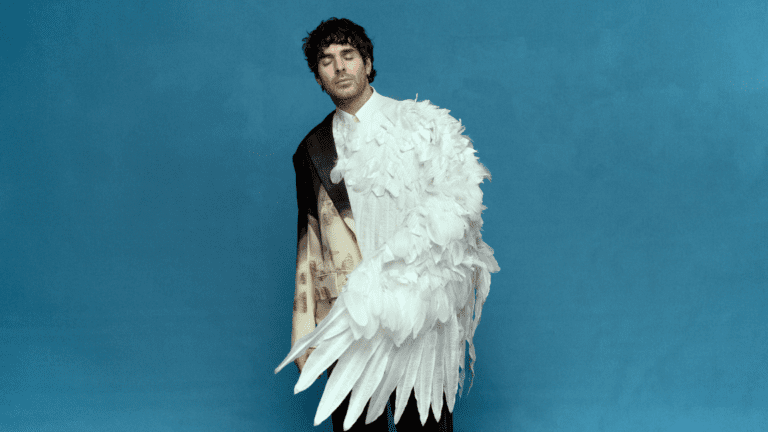
Diwane, héritage ancestral de l’Algérie, est bien plus qu’un rythme, c’est un voyage. Une tradition de transe, de mémoire et de spiritualité portée de génération en génération. Grooz s’en empare pour la réinventer, lui offrant une nouvelle vie et une énergie résolument moderne.
Artiste aux multiples facettes, bassiste, chanteur, compositeur, Abdel Grooz puise aux sources infiniment riches du Maghreb et du Sahel pour forger une musique actuelle et atypique.
Sur scène, les percussions envoûtantes du désert épousent les harmonies du jazz, le groove des musiques urbaines et la puissance brute des chants traditionnels. Abdel s’entoure de l’élite de la scène musicale montréalaise, formant un collectif à la sonorité organique, libre et électrisante.
Diwane devient alors une cérémonie où se rencontrent la fête populaire et l’extase mystique. Une odyssée sonore qui trouve son inspiration dans les paysages métissés du sud-ouest algérien. Une expérience généreuse, habitée et profondément universelle !

Diwane, Algeria’s ancestral heritage, is more than a musical genre: it takes listeners on a journey through tradition, trance, memory, and spirituality passed from generation to generation, carrying the imprint of collective experience and ancestral resilience. Grooz seizes this legacy and reinvents it, giving it new life and injecting it with resolutely modern energy.
A multifaceted artist, bassist, singer, and composer, Grooz draws from the deep cultural wells of the Maghreb and the Sahel to create contemporary music that is unmistakably original. Mesmerizing desert percussion melds with jazz harmonies, urban groove, and the raw power of traditional chants. Backed by a veritable who’s who of Montréal’s music scene, Grooz assembles a sonic force that’s organic, untamed, and electrifying.
Diwane invites audiences to a ceremony where communal celebration meets mystical ecstasy. Embark on a sonic odyssey inspired by the textured landscapes of southwestern Algeria, an experience at once inclusive, soulful, and profoundly universal.

POUR ACHETER VOTRE BILLET, C’EST ICI!

Ce contenu provient du Festival du monde Arabe et est adapté par PAN M 360

Electroacoustic / expérimental / contemporain

Le Vivier : Codes d’accès — Troubles et Méandres à la Salle Bleue de l’Édifice Wilder

by Rédaction PAN M 360

Un concert électroacoustique et de musique mixte qui met en avant la créativité des nouvelles générations d’artistes sonores.
Au programme, des œuvres sélectionnées dans le cadre des appels à projets de Codes d’accès, offrant un panorama de la création émergente en musique contemporaine. Deux des pièces ont vu le jour lors de résidences au Centre PRIM, soulignant l’importance de l’expérimentation et du soutien à la production pour les jeunes compositeurs et compositrices. Actif depuis plus de 35 ans, Codes d’accès se consacre à la promotion et à la professionnalisation des artistes émergent·es du Québec, en musique contemporaine, électroacoustique et expérimentale. Avec ce concert, l’organisme poursuit sa mission : offrir une vitrine de haut niveau à la diversité des pratiques et des tendances en musique nouvelle.

An electroacoustic and mixed music concert highlighting the creativity of a new generation of sound artists.
The program features works selected through Codes d’accès’ calls for projects, offering a panorama of emerging creation in contemporary music. Two of the pieces were developed during residencies at Centre PRIM, underscoring the importance of experimentation and production support for young composers.
Active for over 35 years, Codes d’accès is dedicated to promoting and professionalizing emerging artists in Quebec in the fields of contemporary, electroacoustic, and experimental music. With this concert, the organization continues its mission: to provide a high-level showcase for the diversity of practices and trends in new music.

POUR ACHETER VOTRE BILLET, C’EST ICI!

Ce contenu provient de Le Vivier et est adapté par PAN M 360

Classical Period / classique

Arion Orchestre Baroque : « Les Adieux » à la salle Bourgie

by Rédaction PAN M 360

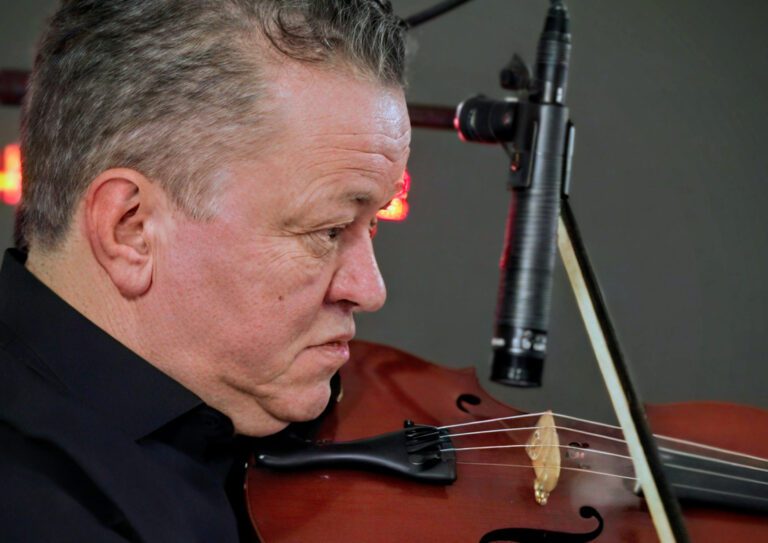
Lumineuse tout autant que virtuose, la violoniste franco-arménienne Chouchane Siranossian, adepte de l’alpinisme, nous fera gravir les degrés du bonheur afin de faire goûter deux œuvres symphoniques contrastées et une rareté du répertoire concertant pour violon. D’un Mozart âgé de 9 ans l’on entendra une symphonie, présage de son génie, écrite lors de l’étape aux Pays-Bas de son Grand Tour européen avec son père et sa sœur. Puis de son aîné et futur ami Haydn, la toujours étonnante Symphonie « Les adieux », d’un artiste au sommet de son art d’où il ne redescendra jamais, qui y passe un message peu subtil à son patron le prince Esterházy sur le congé auquel aspirent les musiciens de son orchestre. Entre ces deux œuvres, un brillant concerto pour violon sera l’occasion de découvrir le violoniste et compositeur allemand Andreas Romberg, admirateur de Mozart comme de Haydn et qui côtoya Beethoven.

Radiant as well as virtuosic, the French-Armenian violinist Chouchane Siranossian, an avid mountaineer, will lead us up the slopes of happiness through two contrasting symphonic works and a rarely heard concerto from the violin repertoire.
From a nine-year-old Mozart we will hear a symphony foreshadowing his genius, written during the Dutch stopover of his European Grand Tour with his father and sister. Then comes the ever-surprising “Farewell” Symphony by his elder and future friend Haydn, a masterwork from an artist at the height of his powers, never to descend again, in which he delivers a none-too-subtle message to his patron Prince Esterházy about the leave so earnestly desired by his orchestra’s musicians.
Between these two works, a brilliant violin concerto will offer the chance to discover the German violinist and composer Andreas Romberg, an admirer of both Mozart and Haydn, and a contemporary who once crossed paths with Beethoven.

Programme

Wolfgang Amadeus Mozart (1756-1791)
Symphonie n° 5 en si b majeur, K. 22
Andreas Romberg (1767-1821)
Concerto pour violon n° 7 en la majeur, SteR 47
Franz Joseph Haydn (1732-1809)
Symphonie n° 45 en fa # mineur (« les Adieux ») Hob. I: 45

Program

Wolfgang Amadeus Mozart (1756–1791)
Symphony No. 5 in B-flat major, K. 22
Andreas Romberg (1767–1821)
Violin Concerto No. 7 in A major, SteR 47
Franz Joseph Haydn (1732–1809)
Symphony No. 45 in F-sharp minor “Farewell” Hob. I:45

POUR ACHETER VOTRE BILLET, C’EST ICI!

Ce contenu provient de l’Arion Orchestre Baroque et est adapté par PAN M 360

arabo-andalou / Moyen-Orient / Levant / Maghreb

Festival du monde Arabe : Le qanoun, soixante-dix-huit cordes, une infinité d’émotions à l’Espace culturel Kawalees

by Rédaction PAN M 360

La jeune virtuose aux doigts d’or, Chaima Gaddour, nous présente le qanoun sous un jour radicalement nouveau. Cet instrument, héritier des anciennes harpes mésopotamiennes, a voyagé à travers les siècles et les cultures, de Bagdad à l’Andalousie, pour devenir la pierre angulaire des orchestres classiques orientaux. Ses 78 cordes en font l’architecte mélodique des maqams.
Le maniant avec dextérité, Chaima Gaddour transforme cet instrument en une palette émotionnelle vibrante où se rencontrent la sagesse ancestrale et l’audace contemporaine. Elle n’interprète pas simplement la musique, elle la respire, la vit et la réinvente.
Son talent rare transcende la technique ; elle ose, improvise, et fait dialoguer les répertoires avec une liberté qui déjoue toutes les attentes. Sous ses doigts, le qanoun chante, pleure, danse et nous emporte, nous offrant un moment musical rare où la jeunesse rencontre l’éternité.

The young virtuoso Chaima Gaddour reveals the qanun in a radically renewed light. Descended from the ancient harps of Mesopotamia, this instrument has journeyed across centuries and civilizations, from Baghdad to al-Andalus, to become the melodic cornerstone of classical Oriental ensembles. Its seventy-eight strings construct the very architecture of the maqams, shaping the modal frameworks of Middle Eastern music.
In Gaddour’s hands, the qanun becomes a vibrant emotional palette where ancestral wisdom meets contemporary audacity. She does not merely perform music; she breathes it, lives it, and reinvents it. Her artistry transcends technical mastery: she dares, she improvises, she initiates dialogues between repertoires with a freedom that overturns all expectations.
Through her performance, the qanun ceases to be a static instrument and instead emerges as a living voice, singing, lamenting, dancing, carrying listeners into a rare musical moment where youth encounters eternity.

CE SPECTACLE EST GRATUIT!

Ce contenu provient du Festival du monde Arabe et est adapté par PAN M 360

arabo-andalou / Classical Singing / conférence

Festival du monde Arabe : Musique, voix et migration – regards croisés de femmes artistes à l’Espace Culturel Kawalees

by Rédaction PAN M 360

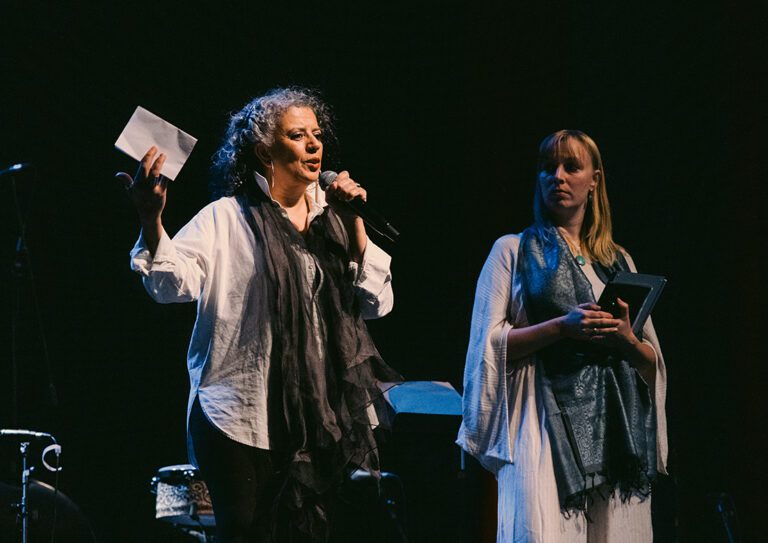
La migration trace des sillons invisibles dans l’histoire des répertoires musicaux, sculptant aussi bien les œuvres que les destinées de celles et ceux qui les portent. Au détour de cette causerie, l’entrelacement des migrations humaines et musicales prend vie avec éclat grâce à deux voix majeures de l’Algérie : Lila Borsali et Fairouz Oudjida. Ces artistes font vibrer sur scène la musique arabo-andalouse, héritage artistique façonné par les vagues migratoires traversant les siècles, tout comme leurs propres parcours se sont tissés au rythme des déplacements et des rencontres, sur des terres multiples.
Ces artistes d’une grande expérience, partagent les méandres de leurs trajectoires, guidées tant par les répertoires que par les horizons traversés. Elles dévoilent les défis – visibles ou invisibles– auxquels font face celles qui choisissent la voie de la musique, tant dans leur pays natal que dans ces terres d’adoption qui deviennent foyers d’inspiration.
Ce moment d’échange est animé par Caroline Marcoux-Gendron (UQAM / HEC) et Kayvan Jafarinejad (EHESS / CRAL), chercheurs et co-organisateurs du cycle « Musiciennes en migration : conjuguer les défis liés au genre, à la mobilité et à la professionnalisation », où cette causerie s’inscrit. Ensemble, ils invitent à écouter non seulement les notes, mais aussi les silences qui portent la mémoire des exils, les élans qui transcendent les frontières et la force des voix qui, malgré tout, chantent l’avenir.

Migration carves invisible traces in musical repertoires, shaping both the works themselves and the destinies of those who carry them. This conversation brings to life the interplay of human and musical migration through the voices of two eminent Algerian artists: Lila Borsali and Fairouz Oudjida.
Their testimonies intersect with those of researchers Caroline Marcoux-Gendron (UQAM/HEC) and Kayvan Jafarinejad (EHESS/CRAL), co-organizers of the cycle Musiciennes en migration. Together, they highlight the gendered, professional, and cultural challenges of artistic mobility, while revealing the silences and strengths that underpin exile and creativity.

CE SPECTACLE EST GRATUIT!

Ce contenu provient du Festival du monde Arabe et est adapté par PAN M 360

atelier / Moyen-Orient / Levant / Maghreb

Festival du monde Arabe : Découverte de la musique arabe à l’Espace culturel Kawalees

by Rédaction PAN M 360

L’univers envoûtant des traditions musicales arabes s’offre à vous sous la guidance de Ridha Ben Mansour, violoniste, luthiste, compositeur et docteur en musicologie.
Cette rencontre exclusive dévoile la fascinante diversité des écoles musicales arabes, des riches héritages du Maghreb aux expressions du Golfe, en passant par les traditions mésopotamiennes et les patrimoines égypto-syriens.
Une sélection d’extraits audio-visuels et de démonstrations instrumentales vous initie à la complexité modale des maqams, la subtilité des cycles rythmiques et la profondeur historique de ces traditions millénaires. L’expiration de cette immersion collective s’achève sur une session collaborative où le public rejoint l’artiste pour une pratique rythmique et vocale partagée.

Violinist, oud player, composer, and doctor of musicology, Ridha Ben Mansour guides audiences through the dazzling diversity of Arabic musical traditions.
From Maghrebi legacies to Gulf expressions, from Mesopotamian repertoires to Egyptian-Syrian heritage, this session explores modal maqams, rhythmic cycles, and the deep history of Arab music. The encounter concludes with a collaborative session where the audience joins the artist in shared rhythm and voice.

CE SPECTACLE EST GRATUIT!

Ce contenu provient du Festival du monde Arabe et est adapté par PAN M 360

DJ set / EDM / Electronic

After Palomosa : REBECCA BLACK (DJ SET) et ODDLY SATISFYING à la SAT

by Rédaction PAN M 360

On continue à danser jusqu’aux petites heures du matin à la SAT, après Palomosa!

Let’s keep dancing and partying all night long at the SAT, right after Palomosa!

POUR ACHETER VOTRE BILLET, C’EST ICI!

Ce contenu provient de la SAT et du Festival Palomosa et est adapté par PAN M 360

DJ set / EDM / Electronic

After Palomosa : SPF INFINI X LIVE FROM EARTH • FCUKERS (DJ SET) à la SAT

by Rédaction PAN M 360

On continue à danser jusqu’aux petites heures du matin à la SAT, après Palomosa!

Let’s keep dancing and partying all night long at the SAT, right after Palomosa!

POUR ACHETER VOTRE BILLET, C’EST ICI!

Ce contenu provient de la SAT et du Festival Palomosa et est adapté par PAN M 360

Jazz

FIJM 2025 | Beth McKenna : raising her Momentum

by Frédéric Cardin

You had to be in front of the Pub Molson stage last night at the Jazz Festival to hear a few tracks from the forthcoming album by Montreal saxophonist, composer and bandleader Beth McKenna. I love Beth’s music, I’ll admit. Not only her writing, but also her playing, present us with cinematic panoramas, within which images soar in sophisticated yet accessible lyrical flights. Beth creates modern jazz that communicates emotions directly to a wide audience, without ever abandoning the intellectual rigor required in the construction of her pieces. We can already anticipate that this album will be another solid opus. The title mentioned is Momentum, and Beth gave us a few excellent extracts to listen to, including “Raising Sam” (about taking care of her sick dog), “New Normal” (about all the negativity in the world) and the title track “Momentum” (about climbing up, against the odds and adversity).

After these ear-openers, which lasted for about half of the 6 p.m. set, the composer took us through excerpts from past albums, in a well-chosen program balanced between ballads and more assertive sonic outbursts. With her friends on stage, she confirmed her stature as one of the best musicians rising from the Montreal ecosystem.

photo by Frédérique Ménard-Aubin

Alternative / college rock / Indie Rock

Pixies au MTelus

by Rédaction PAN M 360

Suscitant une révolution avec leurs guitares tranchantes, leurs dynamiques en stop-start, leurs harmonies masculines et féminines entrelacées et leurs paroles évocatrices, Pixies est l’un des groupes les plus influents du rock alternatif. Sur des albums tels que Surfer Rosa (1988) et Doolittle (1989), ils ont renversé les conventions, mêlant punk et indie rock, pop classique, surf rock et riffs monumentaux avec les paroles fragmentées du chanteur/guitariste Black Francis, abordant des thèmes comme l’espace, la religion, le sexe, la mutilation et la culture pop. Ses mots pouvaient être cryptiques, mais la musique était puissante, jetant les bases de l’explosion du rock alternatif au début des années 90. Du grunge au britpop, l’ombre des Pixies était omniprésente ; il est difficile d’imaginer Nirvana sans la dynamique caractéristique des Pixies, avec ses alternances de fort et de doux et ses solos de guitare bruyants et déstabilisants. Cependant, le succès commercial du groupe n’a pas égalé son impact : MTV était réticente à diffuser leurs vidéos, et les radios rock modernes ne diffusaient pas régulièrement leurs singles. Lorsque Nirvana a ouvert la voie au rock alternatif en 1992, les Pixies étaient effectivement séparés. Pendant le reste des années 90 et dans les années 2000, ils ont continué à inspirer des groupes allant de Weezer, Radiohead et PJ Harvey aux Strokes et Arcade Fire. La réunion des Pixies en 2004 a été aussi surprenante que bienvenue, et leurs tournées fréquentes les ont conduits à enregistrer des albums, dont The Night the Zombies Came en 2024, qui a élargi leur son révolutionnaire en y incorporant des influences country et folk.

Sparking a revolution with their jagged guitars, stop-start dynamics, intertwining male-female harmonies and evocative lyrics, Pixies are one of alternative rock’s most influential bands. On albums such as 1988’s Surfer Rosa and 1989’s Doolittle, they upended conventions, melding punk and indie rock, classic pop, surf rock, and stadium-sized riffs with singer/guitarist Black Francis’ fragmented lyrics about space, religion, sex, mutilation, and pop culture. His words may have been cryptic, but the music was forceful, laying the groundwork for the alternative explosion of the early ’90s. From grunge to Brit-pop, Pixies’ shadow loomed large; it’s hard to imagine Nirvana without Pixies’ signature loud-quiet-loud dynamics and lurching, noisy guitar solos. However, the band’s commercial success didn’t match its impact — MTV was reluctant to play their videos, while modern rock radio didn’t put their singles into regular rotation. By the time Nirvana broke down the doors for alternative rock in 1992, Pixies were effectively disbanded. During the rest of the ’90s and into the 2000s, they continued to inspire acts ranging from Weezer, Radiohead, and PJ Harvey to the Strokes and Arcade Fire. Pixies’ 2004 reunion was as surprising as it was welcome, and the band’s frequent tours led them to record albums including 2024’s The Night the Zombies Came, which expanded their groundbreaking sound with country and folk influences.

POUR ACHETER VOTRE BILLET, C’EST ICI! (8 JUILLET)

POUR ACHETER VOTRE BILLET, C’EST ICI! (9 JUILLET)

Ce contenu provient d’AllMusic et est adapté par PAN M 360

Funk / Hip Hop / jazz groove / Jazz-Funk / Soul/R&B

FIJM | Thundercat, A Feline on The Loose

by Jacob Langlois-Pelletier

If there’s one thing to remember about Thundercat’s appearance at Salle Wilfrid-Pelletier on Tuesday, it’s that there are two very distinct sides to this internationally renowned virtuoso: the one we discover on the album, and the one he offers on stage. Fans in attendance were quick to recognize the latter.

For almost two hours, the American bassist transformed each of his tracks into a springboard for long, heartfelt and hypnotic improvisational outbursts. Iconic orange Ibanez six-string in hand, Thundercat – real name Stephen Lee Bruner – drew from the four corners of his discography, concentrating mainly on his most recent project, It Is What It Is.

At centre stage, the Californian was having the time of his life in the company of his long-time acolytes and excellent musicians: Justin Brown on drums and Dennis Hamm on keyboards. With a smile on his face, and more often than not with his eyelids closed, the 40-year-old artist let himself be carried away by his creative impulses, navigating between jazz fusion, R&B, funk and hip-hop.

As he abandoned himself to the task, the audience followed, carried along by sudden but always controlled changes of direction.


Opening with “Lost in Space” / “Great Scott” / “22-26,” “Interstellar Love” then “Overseas,” the trio set the tone for this almost videogame-esque jazz celebration. Looking like a modern George Duke or Marvin Gaye, Thundercat brilliantly superimposed his ethereal, dreamy voice on the trio’s enveloping foundations. At times buried by the instruments, the singer would have benefited from a more generous gain on his microphone.

With over twenty years’ experience on the music scene, everything seemed so easy for him. Thundercat was able to change moods and interact with the crowd with ease. The highlight of the evening came when he invited a young man on stage to dance during his two most popular songs, “Them Changes” and “Funny Thing.

The evening ended on a high note when the Festival de Jazz presented him with the Miles Davis Award, a distinction bestowed each year to a jazz artist in recognition of his or her contribution to the renewal of the genre. Whether for his many visits to Montreal, his solo offerings or his landmark collaborations with Kendrick Lamar, Erykah Badu, Childish Gambino or even Kamasi Washington, this recognition is more than deserved.

Seeing Thundercat on stage is a very different experience from what you might expect. Despite the fact that a few spectators have left the room, once you’ve grasped the delirium, you’re fully on board.

It’s already been five years since his last album. Can’t wait for some new material, sooner rather than later.

Photo Credit: Benoit Rousseau

Jazz / Middle Eastern

Festival International de Jazz de Montréal : Dhafer Youssef au Théâtre Maisonneuve

by Rédaction PAN M 360

Dhafer Youssef est reconnu comme un artiste pionnier qui a contribué à faire entrer la musique du Moyen-Orient sur la scène internationale du jazz et de la musique du monde.
Le jeu de oud de Dhafer Youssef est exceptionnellement expressif, techniquement brillant et défie les genres. Son profond respect de la tradition et son approche novatrice du son ont fait de lui l’un des oudistes les plus influents de la scène musicale contemporaine.
Le jeu de Youssef n’est pas seulement impressionnant d’un point de vue technique, il est aussi fascinant d’un point de vue émotionnel. Sa capacité à exprimer des émotions complexes – qu’il s’agisse de mélancolie, de joie ou de mysticisme – à travers son instrument est l’une des caractéristiques de son jeu. L’oud lui-même, avec ses sonorités chaudes et résonnantes, devient un canal pour son expression personnelle, ce qui donne à chaque représentation un caractère intime et profondément personnel.

Dhafer Youssef is recognized as a pioneering artist who has helped bring the music of the Middle East into the global jazz and world music scene. Dhafer Youssef’s oud playing is uniquely expressive, technically brilliant, and genre-defying.
His deep respect for tradition combined with his innovative approach to sound has made him one of the most influential oud players in the contemporary music scene.
Youssef’s oud playing is not just technically impressive, but also emotionally compelling. His ability to express complex emotions — whether melancholy, joy, or mysticism —  through his instrument is one of the hallmarks of his playing. The oud itself, with its warm, resonant tones, becomes a conduit for his personal expression, making each performance feel intimate and deeply personal.

POUR ACHETER VOTRE BILLET, C’EST ICI!

Ce contenu provient de Place des Arts et est adapté par PAN M 360

Subscribe to our newsletter