Métal / Noise Rock

Pyrrhon et Couch Slut à la Casa del Popolo

by Rédaction PAN M 360

“Tout ce que fait Pyrrhon émane d’un noyau de death metal obsidional, mais cette musique est bien plus expressive et son impact bien plus inquiétant que presque tout ce qui se fait dans le genre.
-Decibel

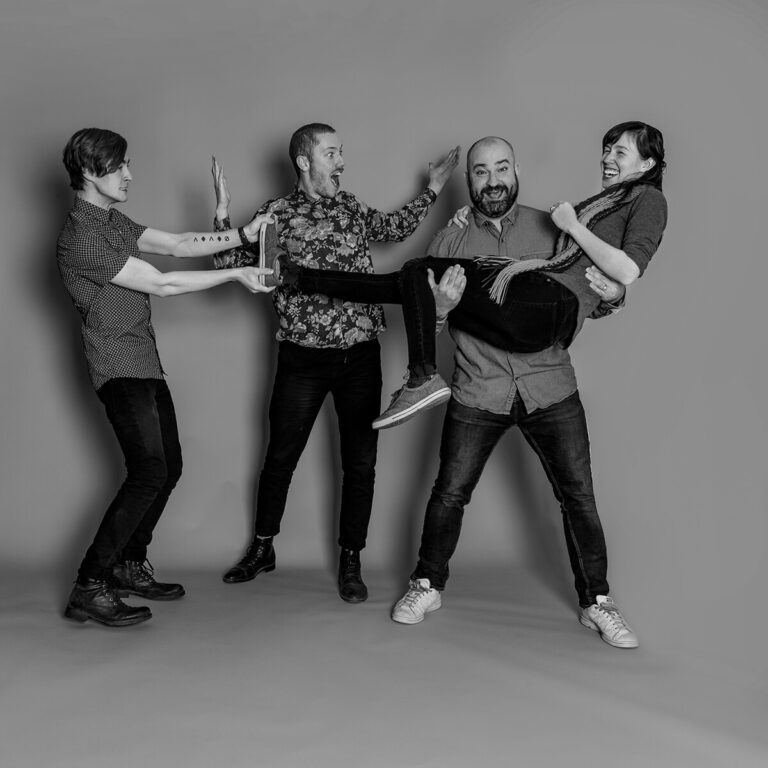
Doté d’un cerveau et de muscles, Couch Slut fait de la musique qui frappe les tripes et stimule l’esprit. La version déchirante du rock de l’album Contempt est à l’image de sa ville natale – sale, dangereuse, éblouissante – et assure la place du groupe dans la lignée des grands documentaristes de NYC, de Sonic Youth à Swans, d’Unsane à Pyrrhon.

“Outré as they get, everything Pyrrhon do emanates from an obsidian death metal core – just that this music is that much more expressive, its impact that much more disquieting than almost anything else in the genre.”
-Decibel

Sporting brains and brawn, Couch Slut makes music that punches the gut and stimulates the mind. Contempt’s harrowing version of rock reflects its hometown – dirty, dangerous, dazzling – and secures the band’s place in the line of great NYC documentarians, from Sonic Youth to Swans, from Unsane to Pyrrhon.

POUR ACHETER VOTRE BILLET, C’EST ICI!

Ce contenu provient de Pyrrhon et de Couch Slut et est adapté par PAN M 360.

Electronic / House

Wax Motif au Théâtre Beanfield

by Rédaction PAN M 360

Daniel Chien, plus connu sous le nom de Wax Motif, est considéré comme l’un des principaux orchestrateurs du développement du son house aux États-Unis. Avec des influences musicales telles que le R&B, le disco et la basse britannique, ce producteur né en Australie et basé à Los Angeles apporte un style unique au studio, ce qui fait de lui un producteur très recherché.

Daniel Chien better known as Wax Motif is regarded as a major orchestrator in developing house sound across the US. With musical influences like R&B, disco and U.K. bass, the Australian-born, LA-based producer brings a unique style to the studio, making him a highly sought-after producer.

POUR ACHETER VOTRE BILLET, C’EST ICI!

Ce contenu provient de Wasserman Music et est adapté par PAN M 360.

MUTEK 2023 | A/Visions 2 : Hatis Noit, DATUM CUT, SPIME.IM

by Laurent Bellemare

The PAN M 360 team brings you comprehensive coverage of MUTEK Montreal 2023. Here’s a selection of the best performances on Saturday night at Théâtre Maisonneuve, as part of the A/Visions series.

Crédits photos : Nina Gibelin Souchon

Hatis Noit

“I only use my voice, is it okay to play at Mutek?” This was the question Hatis Noit posed during her first address to the crowd. The London-based Japanese artist effectively had only a loop pedal and projections as technological hardware, operating the bulk of her art from her vocal folds. From a technical point of view, Noït was impressive, moving easily from operatic singing to yodeling very close to what Eastern European singers do in traditional music. Imitations of animal cries and other textures were also on the menu. Voices were superimposed in arrhythmic textures, always tonal. However, the composer did not take a maximalist approach, her pieces limiting their thickness to a few loops. The various melodic layers were therefore always perceptible to the ear wishing to break down the mass. With her movements and stage presence, the artist delivered a performance out of the ordinary, and one of the most unique of the festival. Verbal communication with the crowd between pieces and Yuma Kishi’s projections were a bonus. Even with sound alone, the show would have been just as captivating. Yes, Hatis Noit, it’s okay that you’re playing at Mutek!

DATUM CUT

Behind his screens and synthesizers, Maxime Corbeil-Perron composed a massive yet harmonically simple drone. One had the impression of being immersed in a chord throughout the entire performance, the artist taking the time to deconstruct and vary the harmonic content in all its forms. A complex sequence of rougher sounds was added to this relatively static framework. With no discernible pulse, the composition was nevertheless highly rhythmic, with rapid, sporadic percussive attacks. The music developed in micro-montages, revealing complex sonic events hidden within the overall texture. The highs seemed to have been filtered, which clearly softened the aggressiveness of the noisier sounds. Aesthetically, it was reminiscent of a band like Yellow Swans, who develop a form of “harmonic noise”. Visually, photographs of metallic textures alternated with computer-generated images in a neon palette. Inex.materia was a good example of an accessible work informed by academic practice. This is just one of the sonic manifestations of Corbeil-Perron, who operates under several aliases.

SPIME.IM


Italian collective SPIME.IM certainly don’t beat about the bush when it comes to kicking ass. In duo format, the artists began the performance in a rather minimalist fashion, with rhythmic industrial and noise music lit up by white strobes. But it soon became much more eclectic… and political. All the abjections of our contemporary world were represented: military culture, digital individualism, pollution, overconsumption, materialism, obscenity, the destruction of the natural world and so on. These images were decomposed and recomposed in sequences that were sometimes refined, sometimes visceral. Particularly striking was a long mise en abîme in which the pixels of each new image expanded to plunge into new images, which in turn expanded to reveal new images. There was something therapeutic about seeing all these representations of violence being reused in an artistic way.

The music, always highly experimental, became increasingly intense, hammering out highly saturated sounds with a few echoes of harmony when the desired dramatic effect demanded it. For example, a sudden progression of chords interspersed with silences allowed the words “Where are we going then? to appear one by one. This passage, like many others in the performance, could well have closed the number. Perhaps that was SPIME.IM’s flaw: not knowing when to stop. The dramatic climaxes were so frequent that the audience applauded them like the end of a solo in a jazz show. In short, the audience was treated to a scathing critique of the media images that pervade our daily lives. The apocalyptic soundtrack accompanying these surging clichés skilfully underscored the brutality of the issues we face. Captivating from start to finish.

MUTEK 2023 | Expérience 5: Sara Berts, Sheenah Koh, OBUXUM, ROSINA

by Théo Reinhardt

MUTEK Montréal 2023 and PAN M 360, a combination that makes perfect sense! That’s why our team is focusing on it this week. Fans of cutting-edge electronic music and digital creation are in Montreal this week, so follow our team’s vibrant coverage through Sunday!

Photos credits : Bruno Aiello Destombes

Sara Berts

Sara Berts is a designer of parallel worlds. I arrived slightly after the start of her performance, and from the first sounds I heard as I left Saint-Laurent station, I felt gently transported elsewhere.

The Italian composer and sound artist uses round, smooth tones and others that clatter a little like a marimba, as well as recordings of wave sounds, crickets and other nocturnal noises, all in a very elemental way. It’s a real treat for the ears. Often, while the low melodies move slowly, other, higher-pitched sounds spin much faster: arpeggiated chords, little synthesized soap bubbles, electronic chirps… The compositions are layered, from underground to ground, from ground to clouds, from clouds to atmosphere.

In this way, Berts creates sonic spaces that strangely resemble living worlds, rich and ripe for the act of contemplation. Calm, strangely wild worlds, harmonious all the same. “A conversation between natural ecosystems and synthesizers,” explains the artist’s page on the MUTEK website. 

It’s a sound very reminiscent of the crazy, tribal electro flavors The Knife advanced on their album Shaking the Habitual, only more relaxed. The same world, perhaps, but on a different continent, in a different era, under different skies, with different creatures. Just as enchanting.

Sheenah Ko

“I’m not a DJ,” says Sheenah Ko before beginning her 100% improvised performance. “The energy I’m going to get from you, I’m going to send back to you”. A spontaneous set, then.

It begins with a slow percussion loop and a buzzing bass. The artist quickly darkens the sound, using an unusual scale. It doesn’t take her long to start singing some reverb-drenched semblance of lyrics. After gradual changes in effects, polyrhythmic interplay, heavier bass stabs and intensified vocals, we’re in strangely celestial territory. One wonders where the Chinese-Irish musician might go next. She, too, probably.

The percussion is then buried, and the overall pace slows, for a new section. New, angry, metallic percussion sounds, accelerated tempo, luminous chord progressions that swell like waves, adding a touch of clarity and hope to the atmosphere. Fifteen minutes later, a whirring bass and club rhythm take over, while arpeggiated chords of varying intensity sail overhead, their timbre mostly reminiscent of the ’80s, an aesthetic that the artist often uses in her work.

The whole thing ends with a very cinematic musical brightening, a general zoom-out wide shot… on the synthesizer, followed by a panning movement towards the sky… also on the synthesizer. Back to the real world. A very fluid performance, certainly the result of rigorous preparation on Sheenah Ko’s part, as well as impressive mastery of her sonic arsenal. Above all, a satisfying glimpse into her atypical creativity.

OBUXUM

OBUXUM’s sounds are varied. We go from what might be a hip-hop sample to drums and sticks, to retro cyberpunk electro, to an abstract industrial groove, and lots more of these sounds that don’t seem congruent at all. All the same, and despite the abrupt transitions, there’s a narrative sense to the experience. We feel that a story is being built, that each little piece will eventually fit into the order of the others. 

Through the confusing rhythms, the 90-degree turns, and the generally kaleidoscopic nature of its approach, OBUXUM is perhaps making an anthological work, a somewhat random raking over different eras of musical history. What she presents is a mosaic of creative samples from the four corners of the world and the mind, a great exercise in variety, in historical sonic bricolage that an hour can barely contain… or something like that. A towering work surely hides behind this music, and it’s not hard to appreciate.


ROSINA

It may be said of Rosina that they are not “people-pleasers”. Yet let’s look at their demands: a world where anyone can love the person they like, a world where people have their basic needs met, a world where people can feel joy. Wouldn’t these things make people happy?

The ROSINA trio is led by poet, singer and producer ROSINA, as well as drag performer and multidisciplinary artist Franny Galore-Wngz, with producer Murr at the DJ station. Eccentric personalities, the two pretend to be English during their performance, adopting the accent and everything. This is just a glimpse of the mischievousness that radiates from these two people.

The members of ROSINA like to play their music at dusk. A symbolic reminder of their mantra: that nothing lasts forever, that everything is ephemeral, both joy and suffering. “We’re tired. We don’t want to be mad all the f****** time.”, says ROSINA (the artist). In the face of adversity, these weeds that grow in the cracks of hope decide to turn towards love, towards others, to embrace the sensual weirdness of our outer and inner worlds. A reconquest of the world through a reconquest of the self, which, as they say, can be scary. All of this with a self-assured, liberated, almost punk attitude, the DIY spirit in full force, against a backdrop of danceable music, embellished by affirmative lyrics like “I want to feel joy”, and mantras that seem to come from a pure, unadulterated train of consciousness. Consciousness that has surely been tested, bent, twisted and scratched by the world, but honest nonetheless.

Maybe not the most coherent, or smooth, or musically impressive performance, but ROSINA’s strength definitely lies in the free-flowing energy. One of the best, rooted in the euphoria, the terror, the flourishing rollercoaster that is queerness, and ultimately provoking great pleasure, and, no doubt, great liberation to whoever needs it.

MUTEK 2023 | Métropolis 1: .VRIL, E-Saggila, SYNC. (AtomTM & Peter Van Hoesen)

by Salima Bouaraour

Legs numb from dance, eyes full of stars and shouts of joy: Métropolis 1 was a profusion of love! This first MUTEK evening devoted to Techno was astonishingly formidable right up to first light. The finely thought-out programming offered the public a more than effective formula. The result: a crowd electrified by dazzling binary rhythms.

Crédits photos : Bruno Aiello Destombes


.VRIL

VRIL wandered through break, house and female vocals, bringing a smooth, percussive and progressive set to a powerful kick. In the middle of the night, the atmosphere was enriched by cold, repetitive industrial sounds, creating the sine qua non for an experience worthy of a German underground club.


E-Saggila

Using energetic strings, Canada’s E-Saggila raised the intensity of the high-voltage evening. The composer activated the detonator with a mass of heavy, round and massive beats. The bass picked up your body and your heart. Delicately interspersed with steamy synth sounds, her performance plunged us into the hidden abysses of the festival.


SYNC. (AtomTM & Peter Van Hoesen)

The long-awaited AtomTM & Peter Van Hoesen took to the stage with a long, 3-meter table featuring a hybrid hodgepodge of analog machines, modular, drum machines, effects pedals, controllers and a CDJ…. Although all the sets were of the highest quality, the hardware performance was outstanding. After an introduction tinged with groovy bass, the duo let loose in a wild free dialogue for three hours!

In an arborescence of pure techno, the packed Métropolis generously lost itself in the knowledge that MUTEK’s wild ride will continue unabated on Saturday and Sunday!

MUTEK 2023 | Nocturne 3 : upsammy & Jonathan Castro, Nick León, Halina Rice, Quan & DBY

by Alain Brunet

The PAN M 360 team brings you exhaustive coverage of MUTEK Montréal 2023. Here’s a selection of the best sets presented Friday night at the SAT, as part of the Nocturne series.

Crédits photos : Nina Gibelin-Souchon

upsammy & Jonathan Castro

Cabalistic shapes are projected onto screens on plant surfaces. In the middle of it all, a woman, a man. Dutch DJ, producer and multidisciplinary artist upsammy (Thessa Torsing) likes to illustrate extremes: comfort, discomfort, harmonious beauty, desolation. She uses different colors to paint her sound frescoes: processed voices, varied rhythms and tempos, the sounds of water, the sounds of tactile manipulation, melodic-harmonic fragments, a few feverish bursts of beats contrasting with cold, arrhythmic sequences. This approach, illustrated in space by Peruvian artist Jonathan Castro Alejos, a graphic designer by profession and visual artist of the digital universe, is said to be experimental techno and IDM. Perhaps… For our part, this approach has no apparent genre a priori, apart from the use of rhythms drawn from minimal techno and cerebral ambient. What we have here is a composite language with electroacoustic underpinnings that can nevertheless hook the night owl with a few electroshocks that can make him restless.


Nick León

Floridian Nick León is an enthusiast of Latin advances in electronic music, particularly Puerto Rican and Colombian. A psychedelic curve envelops the rhythms, transforming their original identity. Psychedelia and electronica have been going hand in hand for half a century, and here we have a Latin version. Reggaeton, afrobeats, cumbia, krautrock and ambient come together live. Just enough groove for a Friday, just enough nourishment for a set worthy of MUTEK. From a partner at his side, top-notch projections back it all up, moving jewel patterns, shimmers, stylized kaleidoscopes and more. Listening to this utterly conclusive set, it’s interesting to note that reggaeton has already generated some of its most refined forms. Clearly, Nick León and his stage partner are doing great things.


Halina Rice

A suite of harmonies and melodic fragments on the keyboard, pre-recorded music modulated live. Cerebral techno, electroacoustic, IDM. Londoner Halina Rice doesn’t have the look for the job, no extravagance in her clothes on stage, you could easily see her leading a doctoral seminar. Appearances are deceptive, however, for Halina Rice creates excellent technoid music, with a convincing variety of consonant arrangements, a superb selection of industrial sounds, techno, big beat, female choral singing, and synthetic hooting not unlike that of Arab women. This succession of contrasting climates, misted with dry ice and visuals designed by the main artist herself, illustrates the conceptual scope, superior intelligence, and sensitivity of this woman who, we predict, will leave her mark on her profession.

Quan & DBY

At the heart of the night, a Montreal tandem from the Chez.Kito.Kat label plays minimal techno, archly binary for the obvious needs of the dance floor at this hour of the night – 2am to 3am. The overdubs are relatively discreet, and there’s absolutely nothing ostentatious about this program deployed at the SAT: various whispers, raucous lines, boiling micro basses and other synthesized borborygms produce a counterpoint without overpowering the beat. Rather than displaying all the science they’re known for, breakbeat, deep house, acid, ambient, dub, bass music, dub, all produced by impressive lutherie, notably the purpose-built modular synthesizers Quan and Dog Bless You (hence the acronym D.B.Y.), Samuel Ricciuti’s real name) will give us a conclusive hour of small modulations and big beats for dancers who haven’t migrated to MTELUS, where Sync is playing at the same time.

MUTEK 2023 | A/Visions 1 : Kyoka & Shohei Fujimoto, Alexis Langevin-Tétreault & Guillaume Côté, Alessandro Cortini & Marco Ciceri

by Laurent Bellemare

For the first part of its A/Visions series, the MUTEK festival welcomed its audience in a Théâtre Maisonneuve equipped with a single giant screen. It was indeed through projections and loudspeakers that all the artistic action was communicated to the audience, at least for the first of the acts. In all, three artist duos were featured in this concert of experimental and immersive videomusic.

Crédits photos : Bruno Aiello Destombes

Kyoka & Shohei Fujimoto

The first quarter of Cinema Blackbox immediately sounded like a Ryoji Ikeda pastiche, with its high-pitched, sinusoidal tones and disembodied visuals. In fact, it featured many of the codes of the Japanese master of sound installations: exclusive use of black, white, and red, stroboscopic lines and rectangular shapes, minimalist aesthetics, and an abundance of synthesized sounds. Later, the composition became more complex, tackling more structured rhythms and multiplying visual planes tenfold into fast-moving mosaics. A brief moment of static brought in a few defined pitches, coloring an otherwise very industrial music, true to Kyoka’s performance presented the day before at the festival. Samples of voices and water drops also brought the work back to the earthly plain. Otherwise, Cinema Blackbox seemed to deliberately adopt a self-referential stance, where technological art chooses to represent technology itself. On the screen, we could see countless elements of sonograms, encephalograms, radar quadrants, and programming codes.

Alexis Langevin-Tétreault & Guillaume Côté

For the second part of the show, a table with electronic devices was added to the set. This was only natural, as Alexis Langevin-Tétreault’s approach is based on “electroacoustic performance”, i.e. the live creation of music usually conceived entirely in the studio. With his partner Guillaume Côté, he effectively evolved the sound mass that is Aubes by varying the timbral and melodic layers with a modular synthesizer. The meticulousness imposed by the highly academic style of electroacoustics could be heard, as the textures were rich and complex. However, the atmosphere always remained that of a reverie, even an escape from the physical world. The harmonic content always kept the audience in major keys, filling an otherwise rather cerebral proposition with hope and emotion. The visuals, too, were composed of colorful yet complex textures, confirming a balanced formula of experimentalism and catchy elements. It’s easy to forgive the intrusive, highly recognizable Macintosh sound that punctuated an abrupt change at the center of the work.

Alessandro Cortini & Marco Ciceri

The Italian duo presented a much heavier performance. In addition to a much slower tempo, the whole piece retained a minor key and was therefore perceptibly more melancholy. Arpeggios played on the synthesizers progressed slowly, resulting in a relatively static framework that grew happily denser during the finale. At this point, the harmonic spectrum quietly approached white noise, while the melodic elements were still clearly perceptible. Visually, the projections were a kind of study of the microscopic patterns of bee wings. Alessandro Cortini impresses with his invented synthesizer and a resume full of prestigious collaborations from Nine Inch Nails to Merzbow. His performance at A/V Visions, however, was less enthusiastic. Without being soporific, the music on offer was far from out of the ordinary. It was nonetheless effective as a mantra to reflect on the possible disappearance of pollinating bees and the disruption of plant fertilization cycles.

Electronic

MUTEK : Métropolis 2

by Rédaction PAN M 360

La série Métropolis se consacre aux formes plus rythmées et envoûtantes de musique électronique avec une scénographie dynamique. Les deux soirées sont les meilleures options pour en profiter jusqu’à l’aube tout en satisfaisant sa curiosité artistique : le vendredi soir est dédié à la musique techno alors que le samedi s’inspire des sonorités électro et house.

The Métropolis series is dedicated to the more rhythmic and spellbinding forms of electronic music, with a dynamic scenography. The two evenings are the best way to enjoy it until dawn while satisfying your artistic curiosity: Friday night is dedicated to techno music, while Saturday is inspired by electro and house sounds.

Rich Aucoin CA — Synthetic

Originaire d’Halifax, le musicien, auteur-compositeur, producteur et interprète Rich Aucoin débute en solo sur scène en 2007 avec l’EP Personal Publication. Il s’est rapidement fait un nom en associant sa musique pop ambitieuse et exploratoire à d’impressionnants exploits d’endurance, notamment une tournée à vélo d’un océan à l’autre et une autre qui impliquait plusieurs marathons de course à pied, chacune de ces prouesses soutenant une œuvre caritative différente. Ainsi, avant même la sortie de We’re All Dying to Live en 2011, son premier album complet (sur lequel figure plus de 500 invité·e·s !), Aucoin jouissait d’une réputation d’artiste de scène hautement captivant. Les albums suivants, comme Ephemeral en 2014 et Release en 2019, n’ont fait que renforcer sa renommée d’auteur indie-pop. En 2020, il continue de défier les attentes, enregistrant United States, un carnet de voyage psychédélique. Cet effort a été suivi en 2022 par Synthetic : Season 1, le premier volume d’un quadruple album tentaculaire composé à partir de la collection de synthétiseurs rares et historiques du Centre national de musique de Calgary, où il était artiste en résidence. Aucoin a livré la suite en 2023, Synthetic – A Synth Odyssey : Season 2, sur laquelle il a de nouveau joué de tous les instruments, y compris 40 synthétiseurs de la collection basée en Alberta.

Halifax-born musician, songwriter, producer and performer Rich Aucoin made his solo live debut in 2007 with the EP Personal Publication. He quickly made a name for himself by combining his ambitious, exploratory pop music with impressive feats of endurance, including a coast-to-coast bike tour and another that involved several running marathons, each in support of a different charity. So, even before the release of 2011’s We’re All Dying to Live, his first full-length album (featuring over 500 guests!), Aucoin enjoyed a reputation as a highly captivating live performer. Subsequent albums, such as 2014’s Ephemeral and 2019’s Release, have only strengthened his reputation as an indie-pop auteur. In 2020, he continued to defy expectations, recording United States, a psychedelic travelogue. This effort was followed in 2022 by Synthetic: Season 1, the first volume of a sprawling quadruple album composed from the collection of rare and historic synthesizers at the National Music Centre in Calgary, where he was artist-in-residence. Aucoin delivered the follow-up in 2023, Synthetic – A Synth Odyssey: Season 2, on which he again played all the instruments, including 40 synthesizers from the Alberta-based collection.

Aux 88 US

AUX 88 a cimenté sa place dans l’histoire pour ses contributions à la techno et à l’électro à Détroit et dans le monde entier. Composé à l’origine du producteur Tommy « Tom Tom » Hamilton et du DJ Keith « K-1 » Tucker, AUX 88 est né de l’engouement des protagonistes pour les rythmes futuristes de Kraftwerk et de Cybotron. Depuis sa formation en 1993, le groupe de Détroit a été le fer de lance d’une réécriture de l’électro-funk breakbeat des débuts de la Motor City. Souvent appelé techno-bass, ce style intègre des éléments de l’électro de Détroit et de New York, de la bass music originaire de Miami et de l’aspect sombre et analogique de la techno de Détroit. Le premier album du groupe, Bass Magnetic (1993), a connu un succès immédiat et les sorties suivantes, comme les EPs My AUX Mind et AUX Quadrant (1995), annoncent une renaissance de l’électro de Détroit. Tucker a quitté AUX 88 en 1995 pour se lancer en solo et le groupe est resté sous la responsabilité de Hamilton qui a continué l’aventure Aux 88 avec l’ancien danseur William « BJ » Smith (alias Posatronix). Le duo sort Is It Man or Machine? en 1996. Après le départ de Smith en 1998, Aux 88 est devenu le projet solo de Hamilton, qui enregistre seul Xeo-Genetic en 1998, véritable succès critique et public. Un an plus tard, la compilation Electro Boogie a suivi sur !K7 Records. Smith a ensuite réintégré le groupe, tout comme Tucker qui est toujours demeuré discrètement dans le giron d’Aux 88, de même qu’Anthony « Blak Tony » Horton. En 2005, la formation sort son troisième album, tout simplement intitulé Aux 88, puis Mad Scientist (2009) et Black Tokyo (2010) suivirent dans la foulée. Dernier en lice, Counterparts est paru en 2020. Moins prolifique sur disque depuis une décennie, AUX 88 se concentre de plus en plus sur les nouveaux talents, le mentorat d’artistes, la sensibilisation et l’éducation de la communauté, tout en inaugurant la prochaine génération d’artistes de Détroit via son propre label, Electrostatic.

AUX 88 has cemented its place in history for its contributions to techno and electro in Detroit and around the world. Originally made up of producer Tommy “Tom Tom” Hamilton and DJ Keith “K-1” Tucker, AUX 88 grew out of the protagonists’ infatuation with the futuristic rhythms of Kraftwerk and Cybotron. Since its formation in 1993, the Detroit band has spearheaded a rewriting of the breakbeat electro-funk of the Motor City’s early days. Often referred to as techno-bass, this style incorporates elements of Detroit and New York electro, Miami-based bass music and the dark, analog feel of Detroit techno. The group’s debut album, Bass Magnetic (1993), was an immediate success, and subsequent releases, such as the EPs My AUX Mind and AUX Quadrant (1995), heralded a renaissance in Detroit electro. Tucker left AUX 88 in 1995 to go solo, and the band remained under the care of Hamilton, who continued the AUX 88 adventure with former dancer William “BJ” Smith (aka Posatronix). The duo released Is It Man or Machine? in 1996. After Smith’s departure in 1998, Aux 88 became Hamilton’s solo project, and he recorded Xeo-Genetic alone in 1998, a critical and public success. A year later, the Electro Boogie compilation followed on !K7 Records. Smith then rejoined the band, as did Tucker, who remained discreetly in the Aux 88 fold, as did Anthony “Blak Tony” Horton. In 2005, the band released their third album, simply entitled Aux 88, followed by Mad Scientist (2009) and Black Tokyo (2010). The latest, Counterparts, was released in 2020. Less prolific on record over the past decade, AUX 88 is increasingly focusing on new talent, artist mentoring, community outreach and education, while ushering in the next generation of Detroit artists via its own label, Electrostatic.

Eris Drew & Jeisson Drenth US+NL

Eris Drew dirige le label T4T LUV NRG avec sa partenaire b2b Octo Octa depuis une cabane en rondins dans le New Hampshire. Drew enregistre ses productions auprès de son propre label, Interdimensional Transmissions (Détroit) et Naive Records (Lisbonne). Elle dirige également les Psychedelic Rites of the Motherbeat avec son entourage au Hot Mass de Pittsburgh et à Room 4 Resistance à Berlin.
Ses expériences de musicienne et de danseuse lui ont permis d’entrevoir la rave comme un outil puissant pour transformer les vies individuelles et celles des communautés. En plus de présenter des conférences dans le monde entier sur les liens entre la culture de la musique de danse et d’autres traditions extatiques, elle défend la cause des personnes trans/non-binaires/queer et encadre des DJ et des musicien·ne·s électroniques en début de carrière.

Eris Drew runs the T4T LUV NRG label with her b2b partner Octo Octa from a log cabin in New Hampshire. Drew records with her own label, Interdimensional Transmissions (Detroit) and Naive Records (Lisbon). She also runs the Psychedelic Rites of the Motherbeat with her entourage at Hot Mass in Pittsburgh and Room 4 Resistance in Berlin.
Her experiences as a musician and dancer have enabled her to see rave as a powerful tool for transforming individual lives and communities. As well as lecturing around the world on the links between dance music culture and other ecstatic traditions, she is an advocate for trans/non-binary/queer people and mentors emerging DJs and electronic musicians.

Cinthie DE

Propriétaire de la boutique de vinyles Elevate, fondatrice des labels we_r house et 803 Crystal Grooves (et du sous-label Collective Cuts), DJ et productrice : Cinthie compte parmi les personnalités les plus en vue de la scène house berlinoise. Initiée à la musique d’artistes tels que Steve “Silk” Hurley et WestBam dès son enfance, Cinthie se plonge rapidement dans l’univers de la house et de la techno, orchestrant ses premiers DJ sets dans les années 1990 alors qu’elle est adolescente. L’unicité de son approche en tant que DJ et l’étendue de ses connaissances musicales lui vaudront la reconnaissance de nombreuses légendes qu’elle écoute assidûment au cours de sa jeunesse passée à Chicago et à Détroit, tout comme les figures de proue des scènes house et techno actuelles. Traversant une large gamme de genres musicaux, ses productions comme ses DJ sets englobent l’étendue de la musique électronique en s’appuyant largement sur les vinyles qu’elle collectionne avec zèle.

Owner of the Elevate vinyl store, founder of the we_r house and 803 Crystal Grooves labels (and of the Collective Cuts sub-label), DJ and producer: Cinthie is one of the most prominent figures on the Berlin house scene. Introduced to the music of artists such as Steve “Silk” Hurley and WestBam as a child, Cinthie quickly immersed herself in the world of house and techno, orchestrating her first DJ sets as a teenager in the 1990s. The uniqueness of her approach as a DJ and the breadth of her musical knowledge earned her the recognition of many of the legends she listened to assiduously during her youth spent in Chicago and Detroit, as well as the leading figures of today’s house and techno scenes. Traversing a wide range of musical genres, her productions and DJ sets encompass the breadth of electronic music, relying heavily on the vinyl she zealously collects.

Jennifer Cardini FR/DE

La niçoise Jennifer Cardini s’intéresse à la musique électronique à l’adolescence, influencée d’abord par la new-wave ainsi que par l’émergence des musiques de Chicago et de Detroit. Ayant commencé à mixer dès 1992, elle s’installe à Paris en 1998 et devient DJ résidente du Pulp, avant d’être ensuite sollicitée par le Rex Club, entre autres. Après la parution de quelques 12 pouces, elle sort le maxi Don’t Stay en 2005 avec le producteur Laurent Hô sur Cross Town Rebels. Un second EP, August in Paris, est lancé l’année suivante sur Mobilee. D’autres EP’s paraîtront sur Mobilee ou encore chez Kill The DJ, sous le pseudo Jennygoesdirty. Suite à son déménagement à Cologne, Cardini est devenue la première femme à signer chez Kompakt avec la sortie de Feeling Strange en 2008. En 2011, elle démarre le label CORRESPONDANT (électro, house), puis, une fois installée à Berlin, co-fonde Dischi Autunno (Italo disco, underground techno, électro) en 2017. Færies, son tout nouveau label, se veut ouvert à toute la jeune scène artistique transdisciplinaire et post-genre. Bien qu’elle ait sorti de temps à autre quelques 12 pouces et remixes, ou assuré régulièrement la coordination musicale des défilés de mode pour Ami ou Kenzo, sa réputation s’est surtout forgée grâce à ses talents de DJ. Sa philosophie du dancefloor se reflète non seulement dans ses sets et dans la musique publiée sur ses labels, mais aussi dans son engagement en faveur de la communauté LGBTQIA2S+. Championne de l’électro, de la house, du disco et de la techno minimale, Jennifer Cardini est depuis longtemps associée aux nuits fauves des clubs et festivals les plus prestigieux de la planète.

Jennifer Cardini from Nice became interested in electronic music as a teenager, influenced initially by new-wave and the emergence of Chicago and Detroit music. Having started mixing in 1992, she moved to Paris in 1998 and became resident DJ at Pulp, before being called upon by Rex Club, among others. After releasing a number of 12-inch tracks, she went on to release the Don’t Stay EP in 2005 with producer Laurent Hô on Cross Town Rebels. A second EP, August in Paris, was released the following year on Mobilee. Further EP’s were released on Mobilee and Kill The DJ, under the pseudonym Jennygoesdirty. Following her move to Cologne, Cardini became the first woman to sign to Kompakt with the release of Feeling Strange in 2008. In 2011, she started the CORRESPONDANT label (electro, house), then, once settled in Berlin, co-founded Dischi Autunno (Italo disco, underground techno, electro) in 2017. Færies, her brand-new label, aims to be open to the entire young transdisciplinary and post-genre artistic scene. Although she has released the occasional 12-inch and remix, or regularly provided musical coordination for fashion shows for Ami or Kenzo, her reputation has been forged above all by her talents as a DJ. Her dancefloor philosophy is reflected not only in her sets and the music released on her labels, but also in her commitment to the LGBTQIA2S+ community. A champion of electro, house, disco and minimal techno, Jennifer Cardini has long been associated with the wild nights of the world’s most prestigious clubs and festivals.

POUR ACHETER VOTRE BILLET, C’EST ICI!

Ce contenu provient de MUTEK et est adapté par PAN M 360.

Experimental Techno

MUTEK : Play 3

by Rédaction PAN M 360

Autre innovation de cette 24e édition, la présentation de trois programmes d’écoute en après-midi dans un cadre intimiste pour apprécier le caractère original et intriguant de performances en direct délicates.

Another innovation of this 24th edition is the presentation of three afternoon listening programs in an intimate setting, to appreciate the original and intriguing character of delicate live performances.

Michael Gary Dean

Détenant une Maîtrise en technologie musicale ainsi qu’une Licence de musique et d’informatique, Michael Gary Dean est un compositeur et un artiste médiatique canadien qui chevauche à la fois les frontières avant-gardistes de l’art numérique et les veines traditionnelles de la musique classique. Ses œuvres ont été présentées à travers le monde dans une variété de formats, y compris le film, la performance et l’installation. En 2015, Dean a commencé à dévoiler son travail lors d’événements tels que MUTEK et le Symposium international d’art électronique. Plusieurs collaborations audiovisuelles ont rapidement suivi, amenant Dean à présenter un peu partout des films entièrement immersifs et des performances audiovisuelles pour les planétariums équipés d’un son surround. En 2017, Liquid Architecture, son premier film, a été suivi de plusieurs nouvelles collaborations avec l’artiste médiatique Cadie Desbiens-Desmeules (aka Push 1 stop), notamment Membrane, une performance audiovisuelle en direct pour des projections volumétriques ; Frozen Music, une installation pour des surfaces de projection massives, et le court métrage expérimental Previz. Alors que ces projets continuent d’être présentés dans des lieux tels que le LEV Festival, le Sónar Festival et la Somerset House de Londres, Dean a plus récemment exploré la musique néoclassique, publiant plusieurs albums pour piano et cordes après une résidence au Banff Centre for Arts and Creativity en 2020.

With a Master’s degree in Music Technology and a Bachelor’s degree in Music and Computer Science, Michael Gary Dean is a Canadian composer and media artist who straddles both the avant-garde frontiers of digital art and the traditional veins of classical music. His works have been presented around the world in a variety of formats, including film, performance and installation. In 2015, Dean began unveiling his work at events such as MUTEK and the International Symposium of Electronic Art. Several audiovisual collaborations soon followed, leading Dean to present fully immersive films and audiovisual performances for planetariums equipped with surround sound all over the place. In 2017, Liquid Architecture, his first film, was followed by several new collaborations with media artist Cadie Desbiens-Desmeules (aka Push 1 stop), including Membrane, a live audiovisual performance for volumetric projections; Frozen Music, an installation for massive projection surfaces, and the experimental short Previz. While these projects continue to be presented at venues such as LEV Festival, Sónar Festival and London’s Somerset House, Dean has more recently been exploring neoclassical music, releasing several albums for piano and strings after a residency at the Banff Centre for Arts and Creativity in 2020.

Ale Hop

Alejandra Cárdenas (aka Ale Hop) est une artiste sonore, une chercheuse et une musicienne expérimentale d’origine péruvienne basée à Berlin. Elle commence sa carrière dans les années 2000 alors qu’elle intègre la scène musicale underground de Lima : période durant laquelle l’artiste se joint à de nombreux groupes dont les styles varient du punk au garage en passant par la musique pop. En 2012, elle entame un projet solo centré autour de la musique électronique expérimentale avec une première performance au Boiler Room pendant sa résidence à la Red Bull Music Academy de New York. L’artiste conjugue depuis de nombreuses productions individuelles et collaboratives, dont la plus récente, Agua Duce, a été réalisée avec la percussionniste et bassiste Laura Robles. Possédant un répertoire complexe de techniques spécifiques à la guitare électrique dont elle module les effets par l’entremise de synthétiseurs, Ale Hop produit des compositions viscérales d’une profonde intensité physique et émotionnelle. Son approche minutieuse envers les sujets qu’elle étudie dans le cadre de sa pratique artistique reflète son parcours d’universitaire et de chercheuse – parcours qui ne cesse de contribuer à ses explorations sonores. Son travail prend la forme de performances, d’albums, d’installations sonores et vidéos, de recherches sur le son et la technologie, ainsi que de compositions musicales pour des productions cinématographiques et de danse.

Alejandra Cárdenas (aka Ale Hop) is a sound artist, researcher and experimental musician of Peruvian origin, based in Berlin. She began her career in the 2000s, when she joined Lima’s underground music scene: a period during which the artist joined a number of bands whose styles ranged from punk to garage to pop. In 2012, she embarked on a solo project centered around experimental electronic music, with a first performance at the Boiler Room during her residency at the Red Bull Music Academy in New York. The artist has since combined numerous individual and collaborative productions, the most recent of which, Agua Duce, was produced with percussionist and bassist Laura Robles. Possessing a complex repertoire of techniques specific to the electric guitar, whose effects she modulates via synthesizers, Ale Hop produces visceral compositions of profound physical and emotional intensity. Her meticulous approach to the subjects she studies as part of her artistic practice reflects her background as an academic and researcher – a background that constantly contributes to her sonic explorations. Her work takes the form of performances, albums, sound and video installations, research into sound and technology, and musical compositions for film and dance productions.

POUR ACHETER VOTRE BILLET, C’EST ICI!

Ce contenu provient de MUTEK et est adapté par PAN M 360.

Electronic

MUTEK : Expérience 5

by Rédaction PAN M 360

Le point de rassemblement en plein air du festival. Accessible, gratuite et teintée de joie, la scène extérieure accueille les Montréalais·es et les touristes sous le signe de la fête, de l’éclectisme et de la rencontre des styles musicaux. Un excellent point d’entrée dans l’univers MUTEK.

The festival’s outdoor gathering point. Accessible, free and full of joy, the outdoor stage welcomes Montrealers and tourists alike under the banner of celebration, eclecticism and the meeting of musical styles. An excellent point of entry into the MUTEK universe.

Sheenah Ko CA/QC — Future is Now 

Passant son temps entre Montréal et Saguenay, la musicienne Chinoise-Irlandaise Sheenah Ko a eu une dernière année bien occupée, entre le lancement de son nouvel album Future is Now et d’un EP en collaboration avec le musicien Navet Confit, Sheenah Ko X Navet Confit. Loin d’être nouvelle dans la scène musicale canadienne indépendante, elle a joué du synthétiseur pour un grand nombre de projets musicaux dont The Besnard Lakes, Le Couleur et Antoine Corriveau. L’attitude enjouée et positive de Ko se ressent partout dans son projet solo, que ce soit dans les beats très dansants, les visuels colorés ou dans les lignes de synthétiseur et mélodies de voix accrocheuses. Il y a dans sa musique une certaine nostalgie. On sent qu’elle s’inspire du meilleur de la musique pop des années 80s, mais la musique de Ko est également indéniablement unique. Avec sa musique synth-pop sucrée, elle partage son énergie et son optimisme de façon sentie, sincère. Elle travaille en ce moment sur un nouvel album.

Spending her time between Montreal and Saguenay, Chinese-Irish musician Sheenah Ko has had a busy past year, between the launch of her new album Future is Now and a collaborative EP with musician Navet Confit, Sheenah Ko X Navet Confit. Far from being new to the Canadian independent music scene, she has played synthesizer for a number of musical projects, including The Besnard Lakes, Le Couleur and Antoine Corriveau. Ko’s upbeat, positive attitude is evident throughout her solo project, from the danceable beats and colorful visuals to the catchy synth lines and vocal melodies. There’s a certain nostalgia in her music. You can tell she’s inspired by the best of 80s pop, but Ko’s music is also undeniably unique. With her sweet synth-pop music, she shares her energy and optimism in a heartfelt, sincere way. She is currently working on a new album.

Obuxum CA — Interconnectedness 

OBUXUM est une productrice et beatmaker somalienne basée à Toronto, dont le son luxuriant et caractéristique célèbre la narration. Elle a fait connaître sa présence avec des performances remarquables en festival au Wavelength Festival (Toronto), Kazoo! Fest (Guelph, Ontario), Electric Eclectics (Big Head Valley, Ontario) et Venus Fest (Toronto). En 2018, le magazine NOW l’a classée parmi les « musicien·ne·s électroniques à surveiller ». Récemment, le projet Re-Birth d’OBUXUM a été sélectionné pour le Prix Polaris 2020. Le live set d’OBUXUM se déroule en extérieur comme une occasion d’explorer sa pratique artistique en musique électronique In situ. Elle explore les configurations afrofuturistes de la musique électronique en réaction aux parallèles entre le passé et les environnements post-pandémiques récents. L’examen des paysages sonores par OBUXUM, sur ces outils électroniques « privilégiés », a une histoire profondément ancrée dans les écarts socio-économiques entre le privilège des rêves capitalistes et les réalités des ressources inaccessibles des communautés noires. Dans cet examen visuel et sonore, la juxtaposition des explorations électro d’OBUXUM avec des images d’archives sur les graffitis, la naissance du hip-hop, les innovations électro des musiciens noirs, des Black Panthers et des activistes, et le pillage des magasins, révèle un modèle systémique de batailles mutuellement assurées pour les consommations cosmopolites en matière d’accessibilité, de liberté et de ressources socio-économiques.

OBUXUM is a Toronto-based Somali producer and beatmaker whose lush, distinctive sound celebrates storytelling. She has made her presence known with notable festival performances at Wavelength Festival (Toronto), Kazoo! Fest (Guelph, Ontario), Electric Eclectics (Big Head Valley, Ontario) and Venus Fest (Toronto). In 2018, NOW magazine named her one of the “Electronic Musicians to Watch”. Recently, OBUXUM’s Re-Birth project was shortlisted for the 2020 Polaris Prize. OBUXUM’s live set takes place outdoors as an opportunity to explore her artistic practice in In situ electronic music. It explores Afrofuturist configurations of electronic music in response to parallels between the past and recent post-pandemic environments. OBUXUM’s examination of soundscapes on these “privileged” electronic tools has a history deeply rooted in the socio-economic gaps between the privilege of capitalist dreams and the realities of inaccessible resources in black communities. In this visual and sonic examination, the juxtaposition of OBUXUM’s electro explorations with archival footage of graffiti, the birth of hip-hop, the electro innovations of black musicians, Black Panthers and activists, and the looting of stores, reveals a systemic pattern of mutually assured battles over cosmopolitan consumptions of accessibility, freedom and socio-economic resources.

Sara BertsIT 

La pratique de la compositrice et artiste sonore italienne Sara Berts fait penser à une recherche expérimentale qu’on pourrait faire sur les propriétés sonores d’un monde parallèle. Décrivant sa propre musique comme un « espace d’échange actif entre deux bandes passantes de réalité », il nous est facile d’expériencer ses compositions ainsi. En utilisant plusieurs synthétiseurs (tel que le fameux et envoûtant synthétiseur Buchla) ainsi que des enregistrements de field recording modifiés, la compositrice sculpte sons naturels et textures afin de créer des moments qui sonnent étranges, comme une trame sonore subtile et enveloppante pour imaginer la vie différemment. Berts a gradué en tant qu’ingénieure sonore au SAE Institute, à Milan, et a collaboré avec la Scuola Holden en tant que designer sonore. Elle a travaillé avec plusieurs organisations et festivals tels que le Club2Club Festival, Primavera Sound et Elementi.

The practice of Italian composer and sound artist Sara Berts is reminiscent of experimental research into the sonic properties of a parallel world. Describing her own music as a “space of active exchange between two bandwidths of reality”, it’s easy for us to experience her compositions in this way. Using several synthesizers (such as the famous and bewitching Buchla synthesizer) as well as modified field recordings, the composer sculpts natural sounds and textures to create strange-sounding moments, like a subtle, enveloping soundtrack for imagining life differently. Berts graduated as a sound engineer from the SAE Institute, Milan, and collaborated with Scuola Holden as a sound designer. She has worked with a number of organizations and festivals including Club2Club Festival, Primavera Sound and Elementi.

ROSINA CA 

ROSINA est né de la misère du monde afin d’évoquer la joie et la bienveillance avec une sensualité affranchie et une approche espiègle. ROSINA cherche à libérer nos esprits dans l’univers et nous reconnecter au divin. ROSINA, ce sont des amoureux·ses des océans, des rivières, des forêts, des paysages naturels et de la technologie, qui honorent nos ancêtres vivants et non vivants, humains et non humains, bien qu’iels soient originaires de la ville.

ROSINA was born out of the misery of the world, to evoke joy and benevolence with an emancipated sensuality and mischievous approach. ROSINA seeks to free our spirits in the universe and reconnect us to the divine. ROSINA are lovers of oceans, rivers, forests, natural landscapes and technology, who honor our living and non-living ancestors, human and non-human, albeit from the city.

Nick León US (DJ set)

Marqué par une approche dystopique à la musique de club et inspiré de l’écosystème diversifié de la Floride, le style musical du DJ, producteur et artiste sonore Nick León a évolué audacieusement au fil des années. Son intérêt pour la scène musicale se développe dès son jeune âge, alors qu’il plonge dans l’univers du rap : passion qui le mènera à collaborer avec certains des plus importants rappeurs de la scène underground du sud de la Floride. Musicien autodidacte, León multiplie les explorations et s’intéresse très tôt aux sonorités latines provenant de Porto Rico et de la Colombie pour éventuellement se concentrer sur la création de son propre travail en tant que DJ et producteur. Suivant une période de recherche texturale et de compositions stratifiées, León réalise plusieurs projets, dont le EP Aguacero, produit par le célèbre label mexicain NAAFI. L’album transmet l’anxiété croissante d’une génération grandissant dans une ville menacée par cela même qui en fait la beauté : une invitation à danser malgré la précarité et les catastrophes imminentes provoquées par les changements climatiques.

Marked by a dystopian approach to club music and inspired by Florida’s diverse ecosystem, DJ, producer and sound artist Nick León’s musical style has evolved boldly over the years. His interest in the music scene began at an early age, when he immersed himself in the world of rap: a passion that led him to collaborate with some of the most important rappers on the South Florida underground scene. A self-taught musician, León’s early interest in Latin sounds from Puerto Rico and Colombia led him to focus on creating his own work as a DJ and producer.
Following a period of textural research and layered compositions, León completed several projects, including the Aguacero EP, produced by the renowned Mexican label NAAFI. The album conveys the growing anxiety of a generation growing up in a city threatened by the very thing that makes it beautiful: an invitation to dance despite the precariousness and impending catastrophes caused by climate change.

CET ÉVÈNEMENT EST GRATUIT!

Ce contenu provient de MUTEK et est adapté par PAN M 360.

Electronic

MUTEK : A/Visions 2

by Rédaction PAN M 360

Les œuvres audiovisuelles sensorielles et de grande envergure qui fusionnent l’image, le son et la technologie sont au cœur des deux programmes A/Visions. Intelligence artificielle, neuroscience, synthétiseurs modulaires et paysages visuels analogiques rencontrent l’art lyrique et les vibrations électroniques pour une expérience organique et transformative.

Large-scale, sensory audiovisual works that fuse image, sound and technology are at the heart of both A/Visions programs. Artificial intelligence, neuroscience, modular synthesizers and analog visual landscapes meet lyrical art and electronic vibrations for an organic, transformative experience.

Hatis Noit & Yuma Kishi JP — Aura

Hatis Noit est une chanteuse japonaise basée à Londres, dont l’apprentissage autodidacte ne cesse de surprendre. Elle s’inspire de tous les styles, du gagaku (musique classique japonaise) à l’opéra, en passant par les chants bulgares et grégoriens, la musique d’avant-garde et la musique pop. C’est à l’âge de 16 ans, lors d’un périple au Népal pour visiter le lieu de naissance de Bouddha, qu’elle entrevoit sa vocation pour la première fois. Au cours d’une promenade matinale alors qu’elle séjourne dans un temple pour femmes à Lumbini, elle entend un chant presque imperceptible. Après un examen plus approfondi, elle constate que la mélodie provient d’une femme moine qui entonne, en solitaire, des chants bouddhistes. L’harmonie émeut Hatis Noit si profondément qu’elle est instantanément traversée par le pouvoir viscéral de la voix humaine ; un instrument primitif et instinctif qui nous relie à l’essence même de l’humanité, de la nature et de notre univers.

Hatis Noit is a London-based Japanese singer whose self-taught training never ceases to amaze. She draws inspiration from all styles, from gagaku (Japanese classical music) to opera, Bulgarian and Gregorian chant, avant-garde and pop music. It was at the age of 16, during a trip to Nepal to visit the birthplace of Buddha, that she first glimpsed her vocation. During a morning walk while staying at a women’s temple in Lumbini, she heard an almost imperceptible chant. On closer examination, she realized that the melody came from a female monk who was chanting Buddhist songs in solitude. The harmony moves Hatis Noit so deeply that she is instantly moved by the visceral power of the human voice; a primitive, instinctive instrument that connects us to the very essence of humanity, nature and our universe.

DATUM CUT CA/QC — inex.materia

DATUM CUT (Maxime Corbeil-Perron) est un artiste basé à Tiohtià:ke/Mooniyang/Montréal, dont la pratique se déploie à travers une multiplicité de médiums : performance audiovisuelle, cinéma expérimental, composition électroacoustique, improvisation, art sonore et installation. Adoptant une approche liée à l’archéologie médiatique, ses œuvres récentes s’intéressent aux rapports possibles entre des médias désormais obsolescents et les technologies contemporaines d’où peuvent émerger de nouvelles esthétiques.

DATUM CUT (Maxime Corbeil-Perron) is an artist based in Tiohtià:ke/Mooniyang/Montreal, whose practice unfolds through a multiplicity of media: audiovisual performance, experimental cinema, electroacoustic composition, improvisation, sound art and installation. Adopting an approach linked to media archaeology, his recent works explore the possible relationships between now-obsolete media and contemporary technologies, from which new aesthetics can emerge.

SPIME.IM IT — Grey Line

SPIME.IM est un collectif artistique basé à Turin (IT) dont les projets transdisciplinaires sondent les approches esthétiques et les langages dérivés de réalités numériques désormais omniprésentes. Le collectif associe les nouvelles technologies, les rendus artistiques 3D et la musique électronique afin de créer des expériences audiovisuelles immersives qui explorent les limites de l’identité, du corps et de la perception. La majorité de leurs performances sont réalisées à l’aide du Remidi T8, un contrôleur MIDI portatif sur mesure introduit pour la première fois à Sónar +D (ES) en 2016. Leur travail a été présenté à de nombreux festivals d’art numérique internationaux, tels que Ars Electronica, Club to Club, L.E.V., Lunchmeat, Rhizom et Lost Music Festival. Récemment, ils ont réalisé une production multimédia intitulée The End of the World en collaboration avec le pianiste et compositeur Lubomyr Melnyk et la violoncelliste Julia Kent. Fidèle aux performances et aux albums précédents, le projet réfléchit à l’urgence de certains enjeux contemporains dont la non-résolution menace l’équilibre délicat de la planète et de ses habitants. SPIME.IM réunit les artistes Davide Tomat, Gabriele Ottino, Matteo Marson et Marco Casolati.

SPIME.IM is an artistic collective based in Turin (IT) whose transdisciplinary projects probe aesthetic approaches and languages derived from now ubiquitous digital realities. The collective combines new technologies, 3D artistic renderings and electronic music to create immersive audiovisual experiences that explore the limits of identity, the body and perception. The majority of their performances are realized using the Remidi T8, a custom-built handheld MIDI controller first introduced at Sónar +D (ES) in 2016. Their work has been presented at numerous international digital art festivals, such as Ars Electronica, Club to Club, L.E.V., Lunchmeat, Rhizom and Lost Music Festival. Recently, they produced a multimedia production entitled The End of the World in collaboration with pianist and composer Lubomyr Melnyk and cellist Julia Kent. Faithful to their previous performances and albums, the project reflects on the urgency of certain contemporary issues, whose non-resolution threatens the delicate balance of the planet and its inhabitants. SPIME.IM brings together artists Davide Tomat, Gabriele Ottino, Matteo Marson and Marco Casolati.

POUR ACHETER VOTRE BILLET, C’EST ICI!

Ce contenu provient de MUTEK et est adapté par PAN M 360.

Indie Pop

Yoke Lore au Studio TD

by Rédaction PAN M 360

Le projet indie pop new-yorkais Yoke Lore est le projet musical solo d’Adrian Galvin, anciennement membre de Yellerkin et de Walk the Moon. Yoke Lore superpose les harmonies de Panda Bear, les rythmes soul de M83 et la pop moderne de Blackbird pour raconter “l’histoire de nos liens”. Les chansons de Galvin combinent des vagues de banjo, de voix et de percussions pour créer une musique pop saisissante, avec une candeur et une conviction tactiles.

New York indie pop project Yoke Lore is the solo musical venture of Adrian Galvin, previously of Yellerkin and Walk the Moon. Yoke Lore layers the harmonies of Panda Bear, the soulful beats of M83, and the modern pop of Blackbird to tell “the stories of how we are bound.” Galvin’s songs combine echoing waves of banjo, vocals, and percussion to create arresting pop music with tactile candor and conviction.

POUR ACHETER VOTRE BILLET, C’EST ICI!

Ce contenu provient de Wasserman Music et est adapté par PAN M 360.

Subscribe to our newsletter

Inscription
Infolettre

"*" indicates required fields

Type of Suscribers