Disco / House / Indigenous peoples

Présence Autochtone: DJ Pøptrt

by Rédaction PAN M 360

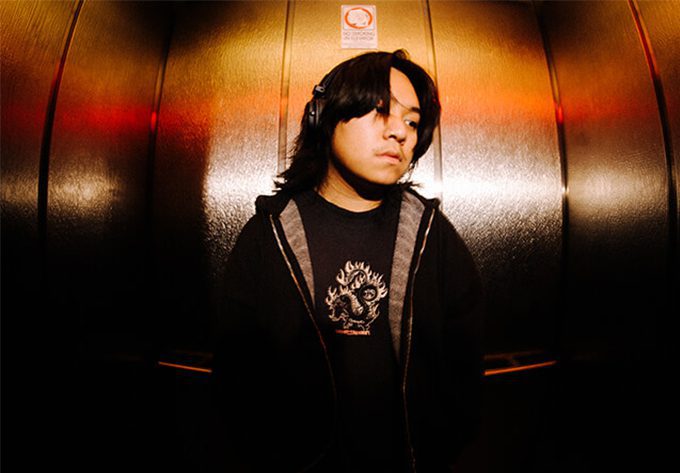
DJ Pøptrt est une célèbre artiste autochtone originaire de la nation mohawk de Kahnawá:ke. Son son combine son héritage Kanien’kehá:ka avec la musique électronique contemporaine, culminant dans une esthétique unique et captivante. Le parcours de Pøptrt en tant qu’artiste a commencé en 2015 lorsqu’elle a plongé dans le monde des médias et de l’art à Montréal, où elle s’est rapidement imposée en tant qu’artiste multidisciplinaire en pleine ascension dans l’industrie. Ses sets dynamiques couvrent plusieurs styles de house, tech house, disco house et plus encore. L’art de Pøptrt fusionne harmonieusement ses influences culturelles et ses sensibilités pop-art, ce qui donne lieu à une expérience artistique à la fois immersive et captivante. Elle s’est produite dans certains des événements et lieux les plus prestigieux du Canada, notamment Piknic Électronik, Future Forest, Igloofest. En tant que pionnière sur la scène canadienne de la musique et des arts visuels, Pøptrt est largement reconnue pour son talent exceptionnel et son point de vue unique. Sa vision artistique lui a valu de nombreuses récompenses et a inspiré des publics à travers le Canada à embrasser leur héritage culturel et leurs passions créatives.

DJ Pøptrt is a celebrated Aboriginal artist from the Mohawk Nation of Kahnawá:ke. Her sound combines her Kanien’kehá:ka heritage with contemporary electronic music, culminating in a unique and captivating aesthetic. Pøptrt’s journey as an artist began in 2015 when she plunged into the world of media and art in Montreal, where she quickly established herself as a multidisciplinary artist on the rise in the industry. Her dynamic sets cover many styles of house, tech house, disco house and more. Pøptrt’s art seamlessly fuses her cultural influences and pop-art sensibilities, resulting in an artistic experience that is both immersive and captivating. She has performed at some of Canada’s most prestigious events and venues, including Piknic Électronik, Future Forest and Igloofest. As a pioneer on the Canadian music and visual arts scene, Pøptrt is widely recognized for her exceptional talent and unique point of view. Her artistic vision has won her numerous awards and inspired audiences across Canada to embrace their cultural heritage and creative passions.

CET ÉVÉNEMENT EST GRATUIT

Ce contenu provient de Présence Autochtone et est adapté par PAN M 360.

amapiano / Soul/R&B

Osheaga, Day 3 | Tyla, Tigress on the Loose

by Jacob Langlois-Pelletier

Judging by the size of the crowd eager to see her arrival early in the evening, the presence of South African sensation Tyla was one of the most anticipated events of the weekend. The new princess (let’s wait before proclaiming her queen) of amapiano and R&B certainly did not disappoint with a fiery performance where dancing and sensuality were the order of the day. And to think that she is only 22 years old…

It was on a giant tiger that the young singer made her entrance, to the cries of her admirers. To date, Tyla has only one project in her discography, her self-titled album. Needless to say, it was mostly material from her project released last March that she offered to festival-goers.

On stage, Tyla and her troupe performed a lot of dance moves, as if it wasn’t hot enough on this scorching day. The crowd watched her every move and applauded her every hip movement. “This is my first time here. I’ll remember it for the rest of my life,” she said between two songs, pleasantly surprised by the warm welcome.

Her rendition of No.1 , an excellent collaboration with Nigeria’s Tems, was vocally brilliant, as was her entire set. Tyla has been riding the wave of Water for several months, a song that propelled her internationally, and it’s this song that she will have reserved for the very end. A fiery finale for a high-quality R&B performance.

Crédit photo: Benoit Rousseau

Hip Hop / rap / Rap français

Osheaga, Day 3 | Hamza, from Belgium to Montréal

by Jacob Langlois-Pelletier

“Saucegod, Saucegod, Saucegod!” shouted the many festival-goers as Hamza arrived on stage. For several years, the Belgian rapper has had a wonderful relationship with Montrealers; another chapter in this beautiful story was written Sunday night at Osheaga.

Last year, Hamza earned a special place in our top 100 albums with Sincérement , a superb offering combining trap and R&B. It was with a string of tracks from this project that the Belgian began his set, starting with the excellent Codéine 19 . Although he started with his most recent material, he didn’t hesitate to dip into his classics such as Gasolina and FADE UP . There’s nothing wrong with the selection of tracks, a good mix highlighting the diversity of his discography.

Where the shoe pinches is in what is offered on stage. What is played is mostly pre-recorded soundtracks to which Hamza adds his grain of salt, autotune of course at the rendezvous. Don’t get me wrong, the eternal lover still offers a good show, but without artifice.

Regardless, the style of performance offered by the rapper did nothing to dampen the crowd, who were jumping from start to finish. The 30-year-old artist’s honeyed flow and catchy choruses are in a class of their own, here is another demonstration.

Crédit photo: Benoit Rousseau

Publicité panam
Publicité panam
Publicité panam
Disco / Funk / Soul/R&B

Osheaga, Day 3 | Party time with Jungle

by Jacob Langlois-Pelletier

Shortly after rapper Hamza’s last words on the adjacent stage, numerous beams of light gave festival-goers an orange hue, the color of Volcano, Jungle’s most recent project. On the notes of Busy Earnin’, a 2014 hit, the British soul-funk band made their entrance in remarkable fashion.

From the very first moments, the band’s different impulses had the crowd dancing. The music of Tom McFarland, Josh Lloyd-Watson and, most recently, Lydia Kitto, is one of the liveliest and most festive around. It’s no surprise that inflatables and balloons roamed among the fans throughout the performance; the mood was festive, to say the least. Jungle has a way of making us enjoy the moment.

The balance between recording and live creation couldn’t have been better. The three protagonists get involved vocally and contribute with various instruments such as guitar and synthesizer. The arrangements are danceable, and the vocals as bewitching as on record. Two percussionists and a bassist rounded things off brilliantly.

On two occasions, artists appeared on the big screen for the duration of a song. This was the case for Erick the Architect during the disco hit Candle Flame, a song on which the crowd burned a lot of calories, rest assured.

Several times, the band addressed the fans in both English and French. The Brits seemed delighted by the welcome they received from Montrealers, who responded by singing along to their various choruses and clapping their hands. There’s no doubt that Jungle’s appearance was one of the highlights of the weekend’s festivities.

Crédit photo: Benoit Rousseau

Jazz / latino

Palomosa: Jai Paul, Yves Tumor, BADBADNOTGOOD, Nana Zen et plus encore!

by Rédaction PAN M 360

Les artistes du jour: Jai Paul, Yves Tumor, BADBADNOTGOOD, The Dare, Pelada, Delachute, Nana Zen, SHYGIRL, LSDXOXO et Angelita.

POUR ACHETER VOTRE BILLET, C’EST ICI!

Ce contenu provient du Palomosa et est adapté par PAN M 360.

Electronic / Hip Hop / rap

Palomosa: Gesaffelstein, Destroy Lonely, Yung Lean et bien plus!

by Rédaction PAN M 360

Artistes du jour: Gesaffelstein, Destroy Lonely, Yung Lean, Yaeji (DJ Set), Snow Strippers, underscores, distraction4ever, Andrea de Tour, horsegiirL, Young Marco, Jump Source et Laurence Matte.

POUR ACHETER VOTRE BILLET, C’EST ICI!

Ce contenu provient du Palomosa et est adapté par PAN M 360.

Blues / Bossa Nova / Brazilian / Gospel / Jazz / Soul

A Choir at Balattou for Bïa Ferreira

by Sandra Gasana

“The last time I was here, I said I was going to come back to Montreal and speak French. But I still don’t speak it. But I ordered my supper in French!” Brazilian singer Bïa Ferreira proudly shares in English, as she begins her second concert in Montreal. And just as she did the first time, she divided her concert into two parts, one dealing with love and the other with activism.

“If you leave here different from when you arrived, then I’ll have done my job,” she adds. And it’s off to a prayer-like start, as whistling, voice and guitar mingle to deliver a beautiful sonic cocktail. Indeed, she may be alone on stage with her guitar, but at times it feels like there are five of them.

She also serves us Xote, a Brazilian musical rhythm often danced in pairs. “When I wrote this song, I was very much in love. But I was the only one in love,” she reveals. With her powerful voice and distinctive timbre, she masters her relationship with the microphone, knowing when to step away from it and when to approach it. With my friend Juliana, who’s just as much of a music lover as I am, we thought her music was a mix of blues, jazz, soul and gospel, all with a Brazilian flavour. Her signature is the whistle, which recurs in several songs and which she masters very well, as well as the many other noises she makes with her mouth, in addition to beatboxing. In fact, on one of her tracks, she adds a bit of Lionel Richie’s Easy Like a Sunday morning, which is a surprise but an instant crowd-pleaser.

“The last time I was here was in February and it was very cold. So I thought I’d come back in the summer. And here I am!” to applause from the audience.

On the track Saudade, you sometimes get the impression of hearing cajón and sometimes piano, whereas she does it all with her guitar. She then finishes with a bossa nova rhythm, which adds depth to the track. “It’s hard to translate Saudade. It’s not ‘I miss you’! It’s something else, it’s a feeling that makes you sick!”

Bïa Ferreira is also an excellent storyteller. She takes the time to explain all the songs, but even during certain tracks, she tells us stories, sometimes with a very rapid but always theatrical vocal delivery. This is notably the case on Molho Madeira, which will feature on Ellen Oléria’s forthcoming album, mixing passages where she talks and raps, waltzing between gentleness and aggression, banging on her guitar which serves as percussion.

“Every church has a choir. So to end this first part, I’ll need your help on the raggamuffin-tinged Levante a bandeira do amor (Raise the flag of love).

The second part, more committed and political, kicks off with an a capella rendition of Seu Jorge’s Zé do Caroço, a classic of Brazilian music.

After a tribute to Leci Brandão, the queen of samba, she kicks off the second half with a rhythmic reggae track, with a bit of beatboxing, which sets the tone for what’s to come. She first pays tribute to women around the world in Não precisa ser Amélia, in which she screams at times, showing off her vocal cords in full action.
The high point of the evening, in my opinion, came with the song Diga não (or Say no!), in which she denounced silence in the face of the genocide raging in Palestine. “By remaining silent, you are choosing a side. Your silence helps the oppressors! The audience takes its role as choir very seriously, especially on the song A conta vai chegar (or the bill will arrive), alluding to the debts linked to colonization.

She ended on a high note with Sharamanayas, the principle of keeping what’s good for you, and getting rid of what’s bad. One thing’s for sure, Bïa Ferreira’s concert was good for the people who came to see her, even if I would have expected a fuller house, as on her first visit. Having just come out of the Festival Nuits d’Afrique, this event may well have slipped under the radar of many a fan of her music.

Photo Credit: Inaa

Publicité panam
classique

OSM: Payare dirige les Gurre-Lieder de Schoenberg

by Rédaction PAN M 360

En compagnie de solistes renommés et à la tête d’un effectif vocal et orchestral colossal, Rafael Payare dirigera un monument du répertoire postromantique : les Gurre-Lieder de Schoenberg.
In the company of renowned soloists and at the head of a colossal vocal and orchestral ensemble, Rafael Payare conducts a monument of the post-Romantic repertoire: Schoenberg’s Gurre-Lieder.
POUR ACHETER VOTRE BILLET, C’EST ICI!

Ce contenu provient de l’Orchestre Symphonique De Montréal et est adapté par PAN M 360

Electronic / Modern music / Pop

Habitat Sonore: Listening Room at Centre Phi

by Rédaction PAN M 360

Tune out outside noise and immerse yourself in one of Montreal’s only spatial audio listening rooms.

The artists: 
Dominique Fils-Aimé
Michael Gary Dean
SlowPitchSound
Tanya Tagaq


TO BUY YOUR TICKET, CLICK HERE!

This content comes from the Centre Phi and is adapted by PAN M 360

Africa / Congolese Rumba / Cumbia / Folk / Soukouss

PAN M 360 at Nuits d’Afrique 2024 | Final Evening With a Congolese and Colombian Flavour

by Jacob Langlois-Pelletier

Around 6pm on Sunday at the Festival international Nuits d’Afrique, it was the turn of Blaise LaBamba, a Congo-Kinshasa-born artist who has been based in Montreal since 1999, to take the big outdoor stage. From the outset, the 2022 Syli de Bronze winner’s intentions were clear: LaBamba would get the crowd dancing to infectious Congolese rumba, zouk and soukous.

On stage, the former member of General Defao’s Big Stars is accompanied by a host of musicians, dancers and backing singers. The Congolese singer’s various offerings are enhanced by guitar, drums, keyboards, synthesizers, percussion and numerous whistle blasts. The latter dictate the many swaying movements of the dancers on stage and people in the crowd.

The frenetic pace of the performance certainly charmed the impressive throng of festival-goers lining the TD – Radio-Canada stage. Clapping their hands on numerous occasions, the crowd showed their appreciation for the long instrumental flights of Blaise LaBamba and his band. It was hard to ask for a more festive offering to kick off this final evening of FINA 2024 activities.

Stephanie Osorio charms us with some cumbia

After having had a blast with Blaise LaBamba, fans on hand were treated to a gentler, more controlled offering from Stephanie Osorio, Colombian and Quebecer by adoption. Established in Canada in 2010, the singer-songwriter has been on the road for over a decade, and recently reaped the rewards of her efforts. In addition to being crowned “Female Artist of the Year” at the Latin Awards Canada in 2022 and 2023, Osorio has shone internationally thanks to her contribution to the theme song of the popular American series The White Lotus.

In March 2023, she released Fruta del Corazón, her first solo album at the confluence of cumbia, pop, folk and Afro-Latin. A large proportion of the tracks on this project were performed at her show.

Dressed in a long, colorful skirt, Osorio is confident on stage, maracas or guitar in hand. Like LaBamba, the singer is well surrounded; saxophone, bass, guitar, drums, various percussion instruments and flutes. A few minutes after her entrance, the Colombian compared her music to fruit. “There are a lot of different flavors and smells in what I do,” she explains.

Although she draws some of her inspiration from her Carthaginian roots, Osorio incorporates many contemporary elements into her music. Towards the end of her performance on the Loto-Québec stage, the singer offered a superb a cappella moment. The crowd fell silent in admiration, lulled to sleep by her hushed voice.

With no glitz or glamour, Stephanie Osorio took us to a place where it’s hotter than Montreal on this July evening.

Crédit photo: André Rival

Africa / Central African traditional music

PAN M 360 at Nuits d’Afrique – Les Aunties, from Ndjamena to Montreal

by Sandra Gasana

Nine women, quite ordinary, in the image of other Chadian women, mothers, all dressed in orange skirts and black tops, sitting in a circle, each with her microphone and calabash.

In fact, they always massage their calabashes before tapping them. And despite heavy rain from the very first minutes of the concert and for a good part of it, the audience remained on hand, with their umbrellas or raincoats, for those who had planned ahead.

Depending on the song, one of them starts singing, while the other eight respond in unison. Sometimes, they walk in circles, with one singing and the others providing backing vocals. At other times, one of them sings, another starts dancing around her, and the others stay behind. In short, we had several configurations on stage, but all of them captivated the audience’s attention, fascinated to see these ladies of a certain age on stage.

Right next to the stage, I could see the great Chadian star Afrotronix, who had come to encourage his compatriots. It was only at the end of the show that we learned that he was behind the group. “It’s a movement that’s just beginning. We grew up seeing our mothers, and it was these women who made us what we are today,” he says, mentioning in passing that his mother is in the audience.

Les Aunties often talk about women and their right to education in several tracks that evening, as well as domestic violence. “Montreal woman, how are you doing ?” asks one, then replacing Montreal, with Kinshasa, Cameroon and Ndjamena. At this point, we hear applause from the crowd, and it soon becomes clear that Montreal’s Chadian community is represented.

At a certain point in the show, they all wear a traditional Chadian dress, over their original skirts, and continue to sing together, seated or standing, with or without calabash, in a circle or in a row. During a song, the title of which I don’t know, the music is quieter and they line up as if going to a mosque for prayer, before taking off their traditional dress and returning to their initial attire. Sometimes, one of them takes center stage, and all the women around her encircle her, addressing her sympathetically and obviously singing for her.

At some point during the concert, each of them takes the floor and addresses the audience in their native language. This is where Afrotronix takes on the role of translator, translating the words into French.

No way!” she says to the applause of the crowd. It’s clear that these women are not afraid of words, and that they speak from experience in their desire to break the silence. From that moment on, it was madness on stage: we witnessed dance performances by several members of the Chadian community who came to perform traditional dance steps, in the center of the circle formed by Les Aunties.
The step they often performed consisted of moving shoulders and chest movements, rather like Ethiopia’s Eskesta. A percussionist also joined in, improvising on one of the tracks, while one of Les Aunties was at the turntables, headphones on and console in front of her. From time to time, Afrotronix came to adjust buttons on DJ Aunty’s console. In fact, the entire Chadian artistic community was on hand to contribute to the success of this original group on Saturday night. Moral of the story: there’s no age limit to following your dreams. If Les Aunties have done it, then anyone can.

Publicité panam
Subscribe to our newsletter

Inscription
Infolettre

"*" indicates required fields

Type of Suscribers