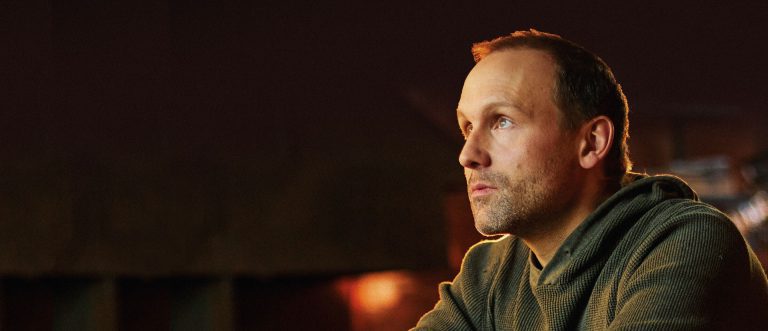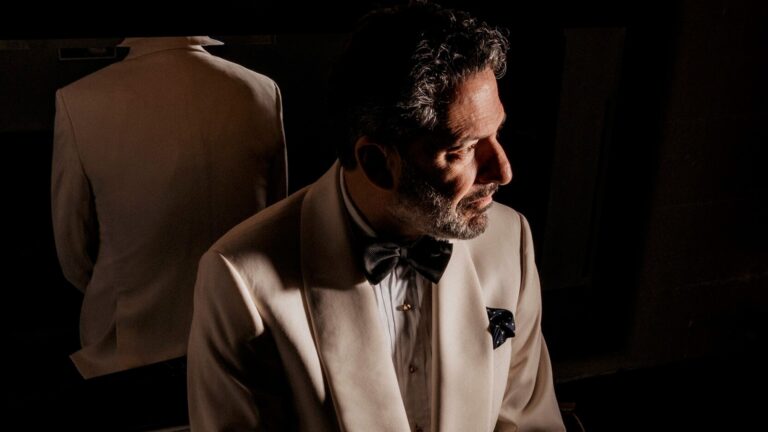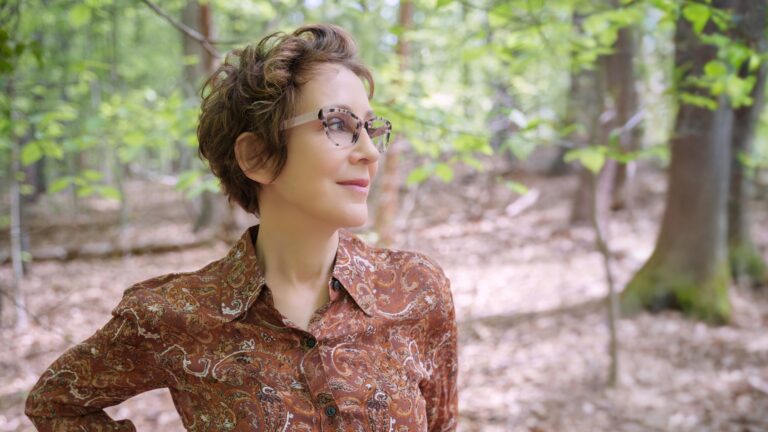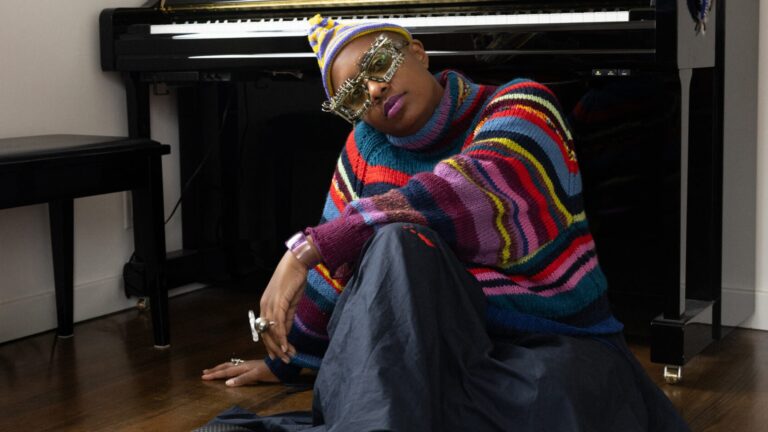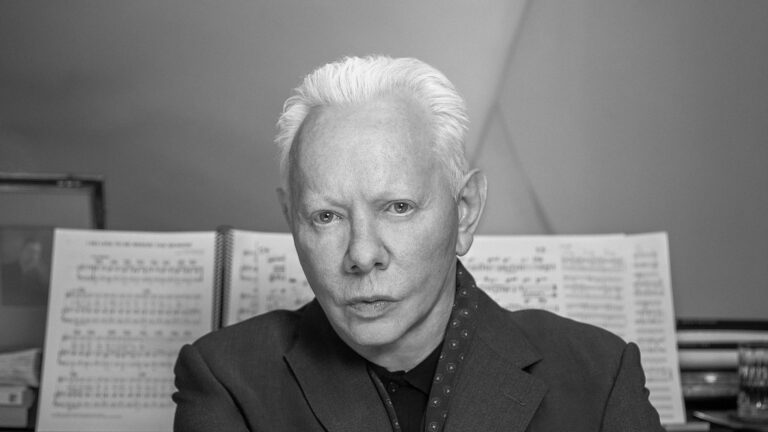
Voyez Joe Jackson à Montréal avec son nouvel album Hope and Fury,une soirée qui s’annonce inoubliable entre grands succès et nouvelles chansons. Avec plus de quatre décennies de carrière, Joe Jackson demeure l’un des artistes les plus polyvalents et respectés de la scène musicale. De son album culte Look Sharp! à son œuvre primée aux Grammy Awards Symphony No.1, Joe Jackson ne cesse de repousser les frontières du rock, de la pop et du jazz.
Don’t miss Joe Jackson live in Montreal with a brand-new album, Hope and Fury, for an evening of unforgettable songs and masterful musicianship. With a career spanning over four decades, Joe Jackson remains one of the most versatile and accomplished artists in modern music. From his breakthrough Look Sharp! to the Grammy-winning Symphony No. 1, Jackson has continually reinvented himself across pop, rock, and jazz.
Ichiko Aoba compose une musique qui semble flotter entre rêve et réalité. Avec sa voix cristalline et sa guitare classique, elle crée des univers fragiles mais infinis, où chaque note ouvre une nouvelle porte à l’imaginaire. Ses albums, dont Windswept Adan et Luminescent Creatures, sont acclamés pour leur beauté intemporelle. Sur scène, elle se présente souvent seule, guitare en main, captivant son public par une intimité brute et une sensibilité rare. De Tokyo à Londres, Ichiko Aoba est devenue une figure incontournable du folk contemporain, offrant des moments musicaux qui résonnent bien au-delà du concert.
Ichiko Aoba invites listeners into music that feels at once fragile and boundless. Ichiko Aoba has built a worldwide following with her ethereal, dreamlike sound. Known for Windswept Adan—her breakthrough “soundtrack for a fictional film”—and her latest release Luminescent Creatures, Aoba blends intimacy and imagination like few artists can. While her recordings feature lush orchestration, her live shows often strip everything away—just voice and guitar—revealing a raw intimacy that holds audiences spellbound. With performances that have graced iconic venues from Tokyo to London to Los Angeles, Aoba has become a singular voice in contemporary folk, weaving worlds of sound that linger long after the final note.
Gala Dynastie : La fin d’une ère au Théâtre Maisonneuve
by Rédaction PAN M 360
Le Gala Dynastie célèbre en 2026 une étape majeure de son histoire avec sa 10e édition. Depuis une décennie, il met en lumière l’excellence, le talent et les parcours inspirants des artistes, créateur·trices, et personnalités issues des communautés noires qui se distinguent dans les milieux des arts, de la culture et des médias. Véritable rendez-vous culturel et artistique, le Gala est reconnu pour la qualité de sa direction artistique, sa scénographie soignée et ses performances marquantes. Cette édition anniversaire promet une soirée exceptionnelle, ponctuée d’hommages d’envergure, de prix spéciaux, de prestations artistiques inédites et de moments forts empreints d’émotion et de célébration. Un événement phare qui souligne dix ans d’impact culturel et collectif.
The Gala Dynastie will mark a major milestone in its history in 2026 with its 10th edition. For the past decade, it has shone a spotlight on excellence, talent, and inspiring journeys of artists, creators, and leading figures from Black communities who stand out in the fields of arts, culture, and media. A true cultural and artistic landmark, the Gala is recognized for the quality of its artistic direction, its refined staging, and its powerful performances. This anniversary edition promises an exceptional evening, featuring major tributes, special awards, original artistic performances, and unforgettable moments filled with emotion and celebration. A flagship event celebrating ten years of cultural and collective impact.
Gala du XXIIe Festival de l’AOJQ au Théâtre Maisonneuve
by Rédaction PAN M 360
Le XXIIe Festival de l’Association des orchestres de jeunes du Québec rassemblera pour cette édition 2026 huit orchestres sous la direction de trois chefs réputés : Andrei Feher, Adam Johnson et Simon Rivard. L’AOJQ regroupe les orchestres de jeunes du Québec pour promouvoir la musique et favoriser les échanges entre les jeunes.
The Association des orchestres de jeunes du Québec XXIInd Festival of 2026 will feature eight orchestras conducted by three renowned conductors: Andrei Feher, Adam Johnson and Simon Rivard. The AOJQ unites youth orchestras from across Quebec to promote music and encourage exchanges between young people.
Legends of Motown est un groupe de 16 chanteurs et musiciens reproduisant les allures et les sonorités en hommage à The Supremes, Four Tops, Temptations, Marvin Gaye, Stevie Wonder, Smokey Robinson, Jackson 5, les Vandellas et plus encore. Ils proposent également toutes vos chansons préférées de l’ère Motown! Avec une chorégraphie éblouissante, des costumes authentiques, des performances vocales époustouflantes et un groupe fabuleux sur scène, ce spectacle énergique avec de la musique intemporelle est à ne pas manquer!
Legends of Motown is a 16-piece cast of singers and musicians performing live look-a-like/sound-a-like tributes to The Supremes, The Four Tops, The Temptations, Marvin Gaye, Stevie Wonder, Smokey Robinson, Jackson 5, Martha and the Vandellas and more! They also feature all your favourite songs of the Motown era. With dazzling choreography, authentic costumes, stunning vocal performances and a fabulous live band, this high-energy show with the most timeless music of our lives is not to be missed!
In Age of Content, presented from February 27 to March 7, 2026, at the Maisonneuve Theatre of the Place des Arts in Montreal, the audience is hit head-on by a rolling fire of post-industrial transhumanist urban aesthetics. I can testify to the power of this hyper-contemporary creation that questions human nature, and this in a construction that goes against contemporary developments.
Machinist fetishism
The interior of an industrial warehouse. A car enters through the curtains at the back of the stage. A car carcass, rather, a simple remote-controlled skeleton, on which a first dancer will begin to curl up, leading to a kind of sexual fetishism reminiscent of David Cronenberg’s Crash. Isn’t there a kind of selfie masturbation in every person who seeks to appropriate a tool (mechanical/electronic) in order to climb to its peak and go viral? Why? Attracting attention? That’s exactly what happens. And when we invite others to admire what we are and what we possess, we also potentially invite them to want to take it away from us. There, you understand what’s coming.
Human beings are conflict.
Another dancer arrives, wants to take over the machine. Fight. Others join the brawl, which turns into a civil war. The car itself dances (an ingenious hydraulic system making it sway from left to right and back and forth), to music that oscillates between ambient electro, celestial choral, and pulsating techno. Bravo Pierre Aviat (excerpts from pieces like The Age of Dragons, Army of Love, Shishi Odoshi, etc.) for avoiding drowning everything in beats, while occasionally indulging in it. It makes the whole thing much more subtle, more refined, less literal. And absolutely not superficial.
Finally, what is this? A humanity that bows before machinery? Who fades away in front of the synthetic technique/culture of the web? That’s what we can guess. But there might be more as well. Your humble chronicler missed the pre-show discussion. I therefore allow myself to jot down some impressions and intuitions here. Also aided by the indispensable “+1” that accompanied my evening. Thank you, Claudia, for your insights!
Impressions and intuition will indeed be the main recourse for most of those who go to see this stunning show.
Here is the first act (there will be four) dissected. We are already captivated. LA(HORDE) is a trio of choreographers/dance artists who lead the National Ballet of Marseille. Have you ever seen that elsewhere, a classical dance company led by a trio of artists raised on street/geek/platinum culture? Well, hats off for the audacity. It works great.
But let’s continue.
Androids and their fantasies
A second tableau features a first character that we quickly identify as a robot. Not the kind from the 80s, a bit too stiff in its movements. Rather the more recent models. Those that are about to enter our homes, our factories, our restaurants. And who will do work similar to ours. There is still something jerky about the movements, but with a more beautiful elegance, a kind of fluidity punctuated by vital pulses, like mechanical breaths. In short, the aforementioned roboto is joined by others, and more. They are everywhere. Have they replaced humans? Dunno. But something is happening: they begin to examine each other, to “physicalise” together in violent and clumsy simulations of a kind of sexual exchanges.
At the back of the stage, the curtains have given way to a dark and misty set. We’re in Blade Runner, or something like that. Do Androids Dream of Electric Sheep? That’s the original title Philip K. Dick gave to his novella that inspired the well-known film. Here, we wonder if they have sex using telescopic rods and motor oiled cavities. Always this music that mixes minimalism, choral transcendence, and a rumbling beat. Uncertainty, then, but beauty, seduction, despite the strangeness. And it moves, it bubbles with contained energy then released. You can’t look away.
Choreographing group intercourse
The third tableau leaves one a bit more perplexed, even though it is fascinating. One wonders if the humans have returned or if the androids have “mutated”? In short, continuing from the previous momentum, we see them become completely lascivious, in a sort of virtuoso orgy, both explicit and anti-vulgar. I have rarely seen such an ability to evoke different sexual acts, almost pornographic, with such perfect success in doing so with elegance and respect. You will have to see it to understand.
Final ecstasy
The final act is a kind of sensory ecstasy that summons the eyes (a true choreographic whirlwind) and the ears (music by Philip Glass: The Grid excerpt from Koyaanisqatsi). For about fifteen minutes, which turn into a collective buzz and an aesthetic-spiritual trance, the dancers seem to celebrate life in the most visceral and cathartic way possible, in an explosion of happiness.
Victory of the human? Humanism? Or a perfect symbiosis between machine and organic, what is called transhumanism? It doesn’t matter. It’s just masterful, captivating, enchanting, utterly gripping. We are out of breath. We can’t even imagine the artists themselves.
Age of Content continues until March 7, 2026. Don’t miss it.
Pour une autre histoire d’un soir au Théâtre Maisonneuve
by Rédaction PAN M 360
Trois des plus belles voix du Québec, Joe Bocan, Marie Carmen et Marie Denise Pelletier, se retrouveront de nouveau ensemble sur scène, avec Pour une autre histoire d’un soir, une version revisitée du spectacle qui leur a valu le Félix du Spectacle de l’année Variétés/Réinterprétations en 2022 et plus de 50,000 spectateurs. Dans une mise en scène renouvelée de Michel Poirier, voici un spectacle qui n’aura rien perdu de son charme. Un hommage à l’auteur-compositeur-interprète Germain Gauthier, décédé en août dernier, s’inscrira parmi les nouveautés. Et rassurez-vous : la rumeur veut que L’aigle noir, Repartir à zéro et Tous les cris les S.O.S. soient de nouveau au programme ! Pour une autre histoire d’un soir est une occasion pour les fans de la première heure de revivre des moments inoubliables tout en découvrant quelques surprises. Pour les autres, l’occasion de comprendre pourquoi ce spectacle a récolté tant d’éloges de la part du public et des critiques. Pour une autre histoire d’un soir, la porte s’ouvre sur une nouvelle aventure où se reflètent le meilleur du passé et des découvertes de grande envergure.
Three of Québec’s most beautiful voices, Joe Bocan, Marie Carmen, and Marie Denise Pelletier, will reunite once again on stage with Pour une autre histoire d’un soir, a refreshed version of the show that earned them the Félix Award for Variety/Reinterpretation Show of the Year in 2022 and attracted more than 50,000 spectators. Staged in a newly reimagined production by Michel Poirier, this performance has lost none of its charm. Among the new elements is a tribute to singer-songwriter Germain Gauthier, who passed away last August. And rest assured : the word is that L’aigle noir, Repartir à zéro, and Tous les cris les S.O.S. will once again be part of the program! Pour une autre histoire d’un soir offers longtime fans the chance to relive unforgettable moments while discovering a few surprises along the way. For newcomers, it’s the perfect opportunity to understand why this show has received such widespread praise from audiences and critics alike. With Pour une autre histoire d’un soir, the door opens onto a new adventure, one that reflects the very best of the past alongside exciting new discoveries.
Dance and music symbiosis : breathtaking ”Sol Invictus” in Montreal
by Frédéric Cardin
At PanM360, we love music (obviously). Music for its own sake, of course, but also music in its relationship with other arts. We don’t often take the time to revisit dance or theatre performances with an important music presence, simply due to scheduling and availability reasons. But if the opportunity arises, we are more than happy to do so.
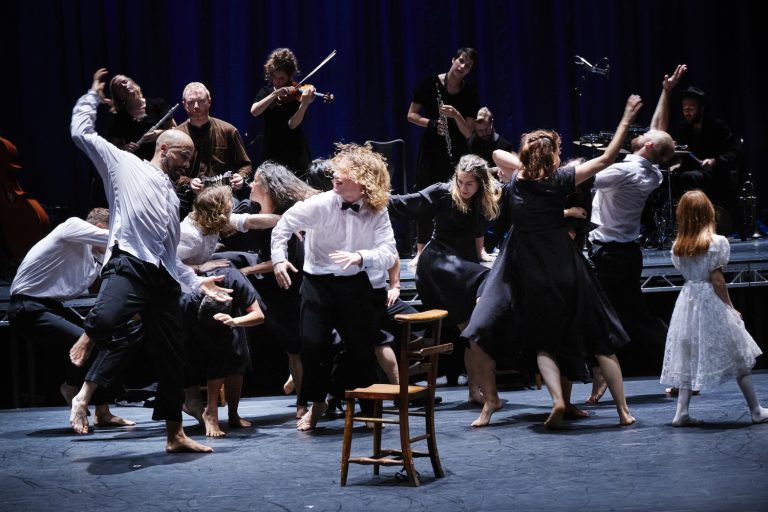
Last night, I attended Sol Invictus by the Franco-Algerian choreographer Hervé Koubi. In this masterful creation (which means ‘’Sun undefeated’’), which Koubi describes as an ode to life, gestures and movements from contemporary urban culture, such as Breakdance, Hip Hop, and Brazilian capoeira, are combined with dazzling virtuosity. Contemporary dance is also grafted onto it, in an ultra-modern, but also baroque and choral, ballet propelled a thousand miles from the dark, gloomy and dirty clichés associated with street culture.
Koubi is right when he talks about an ode to life. He also mentions the joy of children dancing. There is indeed a youthful vital force in this explosion of solar and unifying energy.
Let’s first talk about the dancers, of fabulous beauty in their prominent bodies and almost aerial malleability. Bodies that almost never stop spinning, that fall to the ground like soft fabric, without a bump or heaviness, that transform without apparent transition into gymnasts, circus artists, a spinning top and a modern performer with studied and learnt gestures. Koubi went to find the best, he says. No doubt about it.
All of this could have been a bluff to impress the well-to-do bourgeois who are superficially tuned into street culture. If it’s much more than that (and it is), it’s certainly thanks to the music that soundtracks the movements.
Over an uninterrupted nest of about 75-80 minutes, Koubi’s choreography breathes and evolves through several states of mind and as many allegories that ultimately form a complete narrative construction. A construction which sometimes leaves room for interpretation because the discourse is generally more symbolic than explicit, inviting the more thoughtful to engage in hermeneutics and the rest of us to primarily enjoy the audio-visual aesthetics of the moment.
Be that as it may, varied emotional time spaces follow one another but, above all, balance each other throughout the show. Beethoven (Seventh Symphony) brings a dramatic force for a few minutes, a kind of gravity that contrasts with other hyper-festive moments, supported by powerful music made of tribal rhythms, rumbling brass, and very effective staccato strings. Elsewhere, it is the mediaeval Hildegard of Bingen and her angelic vocal hymns that grant the group of about fifteen dancers a kind of spiritual elevation that seems to make them float above the asphalt. Some excerpts from the music of the film Midsommar by Bobby Krtic flesh out and link the visual with an intangible sensory experience. And then, in between all of that, a relatively soaring and ambient electronic backdrop, abstract (signed by Mikael Karlsson (collaborator of Lykke Li, Alicia Keys) and Maxime Dobson), like a sound bed from which the mentioned pieces and some others regularly emerge, like spontaneous manifestations of enlightened human communion.
At the beginning and end of the show, Steve Reich (propulsive Music for 18 Musicians, almost a stereotype in this kind of proposal) serves as an expressive tool to paint a picture of virtuosity that gives the impression of being orchestrated with perfect precision. And yet, when we know that Koubi does not “count,” and prefers, as in jazz or other improvised music, to identify precise (musical) cues between which the artists on stage are given a certain freedom, we can only be amazed by the overall cohesion of these exceptional bodies, capable of astonishing individuality, but which perfectly submit to a collective and holistic vision.
Sol Invictus Danse Danse
Beyond the fluttering physical movements, which are constantly impressive, the staging occasionally uses, with a pleasant sense of imagery, a few artifices such as a large golden sheet, illuminated by appropriate lighting (the Sun, of course), which transforms into a dazzling whirlwind when placed on one of the dancers (one-legged!) in the middle of a human top spin. In another beautiful allegory, a dancer dresses himself with said golden ‘’fleece’’ to appear as a sort of luminous Apollo god. Elsewhere, sparklers (I think?) timidly illuminate a few dancers in total darkness, a rare absence of the sun god in favour of the night. It’s simple, but beautiful.
Sol Invictus is magnificent, aesthetically, and emotionally memorable. We return without hesitation, both to relive moments of great artistic strength, but also to delve even deeper into the understanding of this spectacle rich in symbols and significance.
Festival International de Jazz de Montréal : Joshua Redman Group au Théâtre Maisonneuve
by Rédaction PAN M 360
Le nouvel album de Joshua Redman, Words Fall Short, marque une évolution naturelle dans son art plutôt qu’un changement radical suite à son précédent album Where Are We. Alors que celui-ci mettait en vedette un chanteur, son nouvel opus s’articule autour de nouvelles compositions inédites, développées pendant la pandémie et interprétées par un quatuor jeune et plein de fraîcheur. Redman a réuni le pianiste Paul Cornish, le bassiste Philip Norris et le batteur Nazir Ebo, des musiciens qu’il décrit comme exceptionnellement talentueux, intuitifs et collaboratifs. Le groupe a développé une alchimie unique au cours d’une année de concerts, ce qui a conduit Redman à réaliser qu’ils étaient prêts à enregistrer. Les participations exceptionnelles de la saxophoniste Melissa Aldana, du trompettiste Skylar Tang et de la chanteuse Gabrielle Cavassa ajoutent de la profondeur à certains morceaux, soulignant l’engagement de Redman en faveur d’un jeu expressif et conversationnel plutôt que de solos compétitifs. Plusieurs titres et thèmes s’inspirent d’œuvres littéraires, notamment celles de Cormac McCarthy et Yiyun Li. Le nom de l’album vient de Where Reasons End de Li, faisant écho à la conviction de Redman dans la résonance émotionnelle de la musique et du langage, même lorsqu’ils sont insuffisants. Au fond, Words Fall Short est une réflexion sur l’imperfection humaine, la créativité et la connexion, embrassant la beauté ineffable que l’on trouve dans la collaboration spontanée et l’expérience partagée et imparfaite de l’être humain.
Joshua Redman’s new album Words Fall Short follows his acclaimed Where Are We, marking a natural evolution in his artistry rather than a departure. While the previous album featured a vocalist, this latest work is centered around new, previously unheard compositions developed during the pandemic and brought to life by a fresh, younger quartet. Redman assembled pianist Paul Cornish, bassist Philip Norris, and drummer Nazir Ebo—musicians he describes as exceptionally talented, intuitive, and collaborative. The group cultivated a unique chemistry over a year of performances, leading Redman to realize they were ready to record. Guest appearances by saxophonist Melissa Aldana, trumpeter Skylar Tang, and vocalist Gabrielle Cavassa add depth to select tracks, highlighting Redman’s commitment to expressive, conversational playing rather than competitive soloing. Lyrical inspirations and literary references, including works by Cormac McCarthy and Yiyun Li, inform several titles and themes. The album’s name comes from Li’s Where Reasons End, echoing Redman’s belief in the emotional resonance of music and language—even when they fall short. At its core, Words Fall Short is a reflection on human imperfection, creativity, and connection, embracing the ineffable beauty found in spontaneous collaboration and the shared, flawed experience of being human.
Plume Latraverse – Rémissionnaire (Le Trio Laid frappe encore) au Théâtre Maisonneuve
by Rédaction PAN M 360
Depuis des siècles, depuis de nombreuses années, sur les scènes des cabarets et des théâtres, Plume Latraverse a traîné sa carcasse, sa guitare et ses chansons… Entraîné dans une mission ménestrelle sans issue, missionnaire autoroutier et souterrain à travers toutes les folies de ce monde. Et qu’est-ce que ça lui a donné? Un public fidèle, fantôme et grandissant qui, une fois de plus, viendra se greffer à la mythologie plumesque pour cette tournée RÉMISSIONNAIRE… en compagnie de Jean-Claude Marsan, à la guitare, et de Grégoire Morency, à la basse. Hé oui… LE TRIO LAID frappe encore!
For centuries—for many years now—on the stages of cabarets and theaters, Plume Latraverse has dragged along his frame, his guitar, and his songs… Swept up in a minstrel’s mission with no way out, a highway and underground missionary through all the madness of this world. And what has it given him? A faithful, elusive, ever-growing audience that, once again, will join the “plumesque” mythology for this RÉMISSIONNAIRE tour… alongside Jean-Claude Marsan on guitar and Grégoire Morency on bass. Yes indeed… LE TRIO LAID strikes again!
Festival International de Jazz de Montréal : Dominique Fils-Aimé au Théâtre Maisonneuve
by Rédaction PAN M 360
Dominique Fils-Aimé, autrice-compositrice-interprète montréalaise et double lauréate d’un prix JUNO, s’impose comme l’une des voix incontournables du jazz vocal actuel. Avec son nouveau projet My World Is The Sun, elle poursuit sa quête de liberté sonore, créative et spirituelle, et propose sur scène un spectacle immersif qui vous invite à plonger dans les racines de son âme. Son dernier album, Our Roots Run Deep, a remporté en 2024 le JUNO de l’Album jazz vocal de l’année, ainsi que le Félix de l’Album de jazz de l’année à l’ADISQ, confirmant l’importance de sa démarche artistique, à la croisée du jazz, de la soul et du blues. L’album numérique Live At The Festival International de Jazz de Montréal, sorti en 2025, témoigne également de la force de sa présence et de sa capacité à tisser un lien intime avec son public. Ces dernières années, elle s’est produite sur des scènes prestigieuses telles que le Blue Note New York, le Blue Note Los Angeles, le Monterey Jazz Festival, ainsi qu’à Jazz à Vienne et au North Sea Jazz Festival.
Two-time JUNO Award-winning Montreal singer-songwriter Dominique Fils-Aimé has established herself as one of today’s leading voices in vocal jazz. Her latest album, Our Roots Run Deep (2023), earned the 2024 JUNO Award for Vocal Jazz Album of the Year as well as the 2024 Félix Award for Best Jazz Album at ADISQ, affirming the importance of her artistic vision at the crossroads of jazz, soul, and blues. In February 2026, she will unveil the second chapter of her sophomore trilogy with a new studio album My World Is The Sun, preceded by the single Going Home (November 20, 2025). With this project, Fils-Aimé continues her exploration of sonic, creative, and spiritual freedom. On stage, she offers an immersive performance that invites audiences to delve into the roots of their soul, guided by a profound quest for connection. Live at the Montreal International Jazz Festival (2025), her first live album, is a testament to the strength of her stage presence and her ability to forge an intimate bond with her audience. In recent years, she has performed on prestigious stages including the Blue Note New York, Blue Note Los Angeles, and the Monterey Jazz Festival, as well as Jazz à Vienne (opening for Jamie Cullum) and the North Sea Jazz Festival. In 2026, Dominique Fils-Aimé will bring her new album to the stage on a world tour, with concerts announced in Europe at La Maroquinerie (Paris) and Le Botanique (Brussels), in Canada at the Montreal International Jazz Festival, and across the United States.
Festival International de Jazz de Montréal : Hiromi’s Sonicwonder au Théâtre Maisonneuve
by Rédaction PAN M 360
Avec plus de 20 ans de carrière, la pianiste de jazz Hiromi est passée avec brio d’un projet fascinant à un autre et s’est forgée une réputation comme l’une des artistes les plus explosives de l’histoire du jazz et comme ambassadrice mondiale de cet art. En 2023, elle a sorti Sonicwonderland, présentant peut-être le groupe le plus expressif, dynamique et polyvalent de sa carrière. Baptisé Hiromi’s Sonicwonder et composé d’Hadrien Feraud à la basse, de Gene Coye à la batterie et du trompettiste Adam O’Farrill, le groupe a poussé plus loin l’alchimie musicale distinctive de Hiromi : l’esprit de la fusion jazz-rock classique mêlé à une virtuosité d’origine classique, un funk envoûtant, des touches pop et, grâce à la trompette d’O’Farrill, le jazz acoustique à la pointe de la technologie.
Over more than 20 years as a recording artist, the jazz piano phenomenon Hiromi has shifted seamlessly from one spellbinding project to the next. In the process, she’s earned a reputation as one of the most explosive live performers in jazz history and a global ambassador for the art form. In 2023, she released Sonicwonderland, debuting perhaps the most expressive, dynamic and versatile working band of her career. Called Hiromi’s Sonicwonder and featuring Hadrien Feraud on bass, Gene Coye on drums and the trumpeter Adam O’Farrill, the group furthered Hiromi’s distinctive musical alchemy: the spirit of classic jazz-rock fusion melded with classically rooted virtuosity, entrancing funk, pop flourishes and, through O’Farrill’s trumpet, acoustic jazz’s state of the art.