classique / période romantique

Musique et danse : Tout ce qu’il reste à la salle Bourgie

by Rédaction PAN M 360

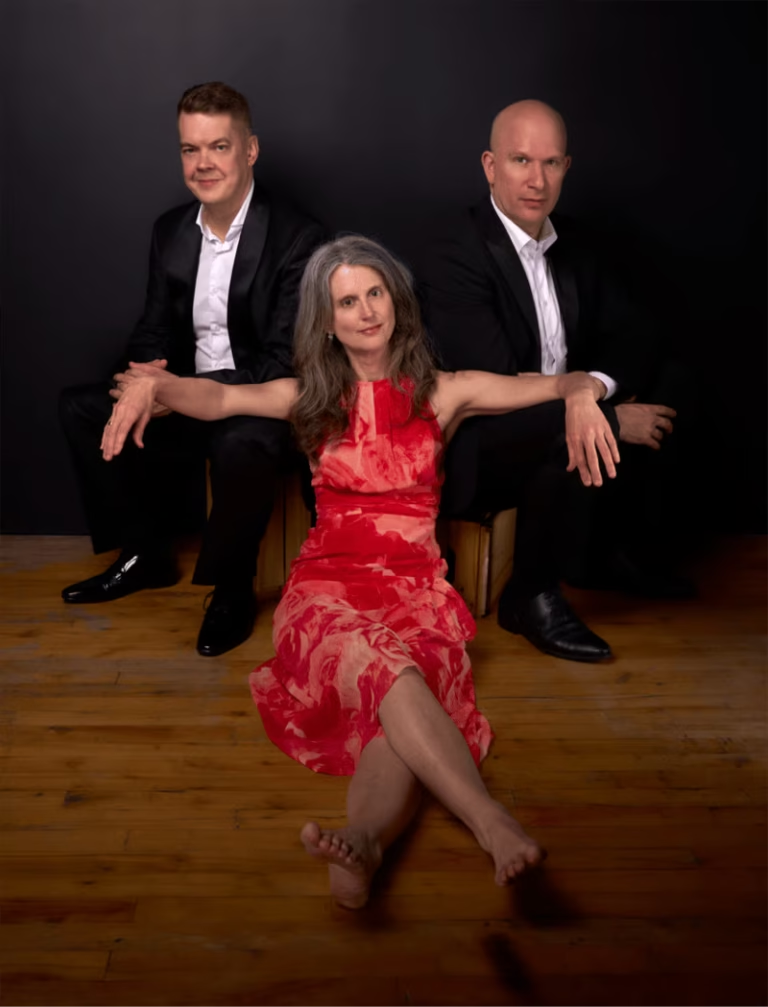
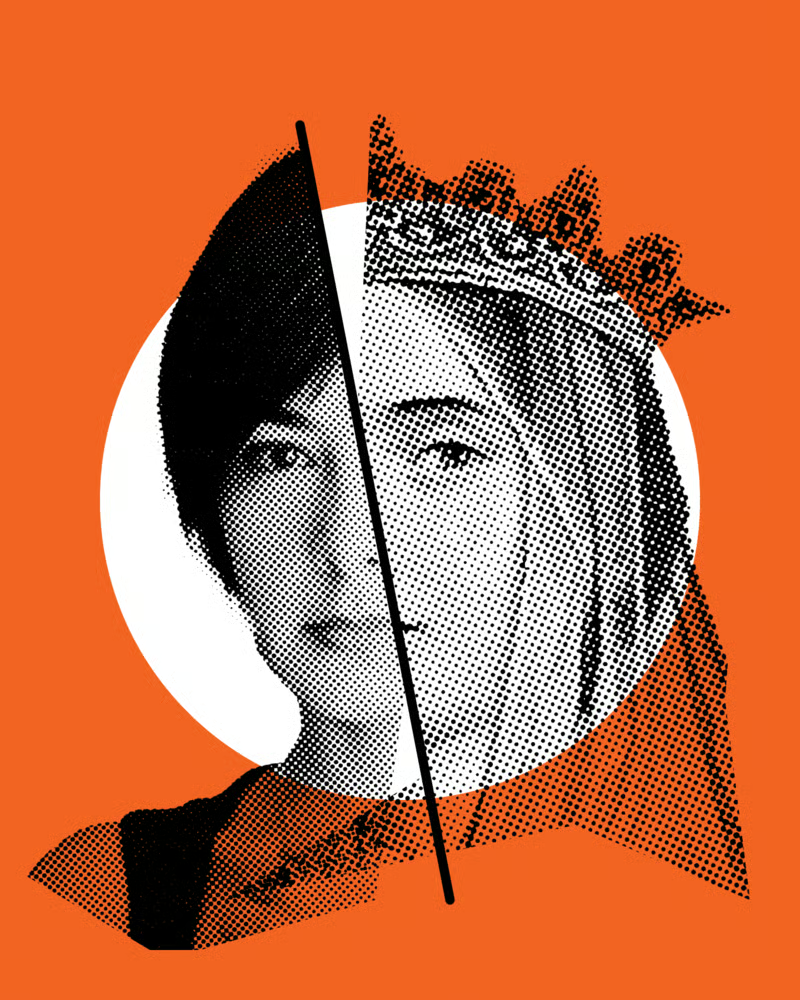
Les chorégraphes Paco Ziel et Diana León invitent le public à redécouvrir l’œuvre de Schubert sous un angle inédit. En jouant sur la relation intime entre la danse, la musique et la poésie, les artistes incarnent un état d’obsession créative, proposant une œuvre qui déborde dans l’espace, nourrie par la complexité émotionnelle caractéristique des lieder de Schubert. Voix, piano et mouvement s’entrelacent en toute liberté.

Choreographers Paco Ziel and Diana León shine a new light on the music of Franz Schubert. In this performance, artists play on the intimate ties between music, dance, and poetry, embodying creative obsession as they collectively overflow into the space of Bourgie Hall. Voice, piano, and movement are free to intertwine, nourished by the unmatched emotional complexity of Schubert’s lieder.

POUR ACHETER VOTRE BILLET, C’EST ICI! (28 MARS)

POUR ACHETER VOTRE BILLET, C’EST ICI! (29 MARS)

Ce contenu provient de la salle Bourgie et est adapté par PAN M 360

classique / Piano

Marc-André Hamelin et Charles Richard-Hamelin en duo! à la salle Bourgie

by Rédaction PAN M 360

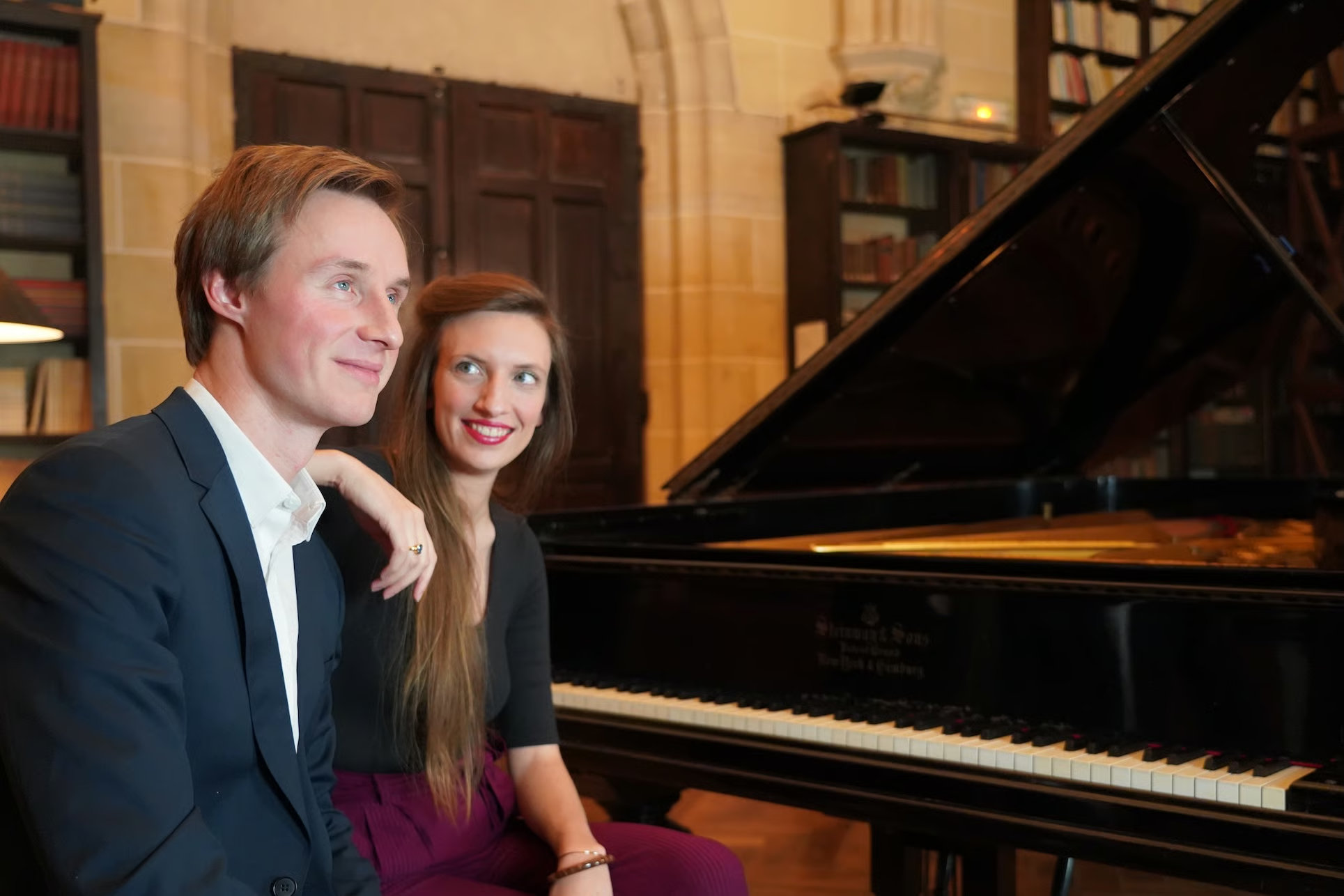
Tous deux acclamés sur la scène internationale pour leur technique impeccable, leurs interprétations sensibles et réfléchies, passant du répertoire classique aux œuvres virtuoses avec une aisance sans faille, ces deux sommités du piano unissent leurs forces pour leur tout premier récital en duo à la Salle Bourgie. Un événement à ne pas manquer !

Internationally acclaimed piano virtuosos Marc-André Hamelin and Charles Richard-Hamelin are both renowned for their impeccable technique, deeply sensitive interpretations, and effortless mastery of widely varied repertoire. Bourgie Hall welcomes them for an occasion not to be missed—their first-ever joint recital in Montréal!

Programme

MOZART Sonate pour deux pianos en ré majeur, K. 448
CHOPIN Rondo en do majeur pour deux pianos, op. 73
CHAMINADE Pas des cymbales, op. 36 no 2 
MEDTNER Deux pièces pour deux pianos, op. 58
GRAINGER Fantaisie sur Porgy and Bess de Gershwin

Program

MOZART Sonata for Two Pianos in D major, K. 448
CHOPIN Rondo in C major for two pianos, Op. 73
CHAMINADE Pas des cymbales, Op. 36, No. 2
MEDTNER Two Pieces for Two Pianos, Op. 58
GRAINGER Fantasy on George Gershwin’s Porgy and Bess

POUR ACHETER VOTRE BILLET, C’EST ICI!

Ce contenu provient de la salle Bourgie et est adapté par PAN M 360

classique / Contemporary / post-romantique

Tabea Zimmermann & Javier Perianes à la salle Bourgie

by Rédaction PAN M 360

Ces artistes d’exception sont de passage à Montréal dans le cadre d’une tournée internationale. Ils offrent un programme passionné autant que songeur, présentant des œuvres pour alto et piano s’échelonnant de 1849 à 1975, l’année de composition de la Sonate de Chostakovitch. Ce dernier a puisé dans ses ultimes ressources pour en achever l’écriture, un mois avant sa mort.

An international tour brings this outstanding chamber duo to Montréal. Their programme is both fiery and contemplative, spanning more than a century of music for viola and piano from 1849 to 1975. In that year, Shostakovich composed his Sonata, for which he drew upon his last ounces of strength in order to complete it one month before his death.

Programme

R. SCHUMANN Fantasiestücke, op. 73
BRAHMS Sonate pour alto et piano en mi bémol majeur, op. 120 no 2 
BRITTEN Lachrymae, op. 48
CHOSTAKOVITCH Sonate pour alto et piano en do majeur, op. 147

Program

R. SCHUMANN Fantasiestücke, Op. 73
BRAHMS Viola Sonata in E-flat major, Op. 120, No. 2 
BRITTEN Lachrymae, Op. 48
SHOSTAKOVICH Viola Sonata in C major, Op. 147

POUR ACHETER VOTRE BILLET, C’EST ICI!

Ce contenu provient de la salle Bourgie et est adapté par PAN M 360

Baroque / classique

Constantinople & Holland Baroque – Dialogos à la salle Bourgie

by Rédaction PAN M 360

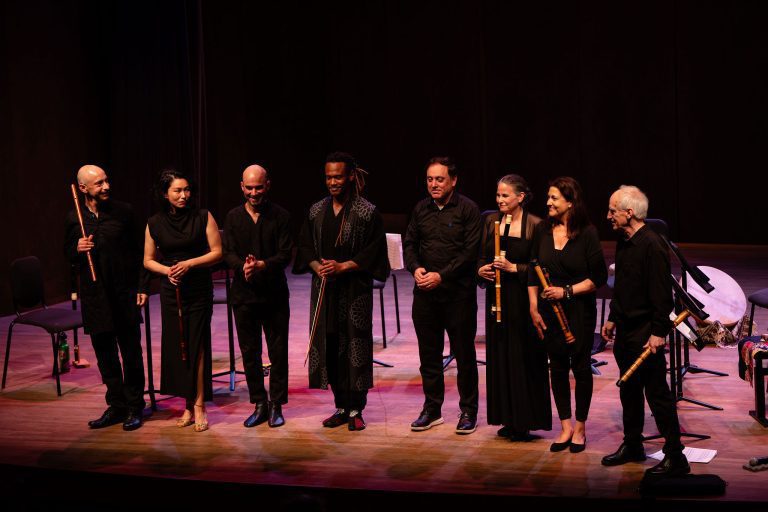
Pour cette création inspirée de la rencontre historique entre François d’Assise et le sultan Malik al-Kâmil, Constantinople s’associe à l’un des ensembles de musique ancienne les plus audacieux d’Europe, Holland Baroque. Au cœur des Croisades, ce dialogue inattendu, empreint de respect et d’écoute, est devenu un symbole intemporel de paix et de compréhension. En mêlant traditions musicales anciennes et nouvelles, issues de l’Orient et de l’Occident, les deux ensembles font résonner cet héritage spirituel à travers un langage musical libre et novateur. Cette collaboration transcende les frontières, célèbre l’altérité, et invite les publics à vivre une traversée émouvante où la musique devient un pont entre les mondes, une célébration de notre humanité partagée.

For this creation inspired by the historic encounter between Francis of Assisi and Sultan Malik al-Kâmil, Constantinople joins forces with one of Europe’s most bold and imaginative early music ensembles, Holland Baroque. Amid the turmoil of the Crusades, this unexpected dialogue—marked by mutual respect and attentiveness—became a timeless symbol of peace and understanding. Blending ancient and contemporary musical traditions from both East and West, the two ensembles bring this spiritual legacy to life through a free and daring musical language. This collaboration transcends borders, celebrates otherness, and invites audiences on an emotional journey where music becomes a bridge between worlds—a celebration of our shared humanity.

POUR ACHETER VOTRE BILLET, C’EST ICI!

Ce contenu provient de la salle Bourgie et est adapté par PAN M 360

classique / conférence / période romantique

Poésie et musique dans les lieder de Schubert : une histoire intime à la salle Bourgie

by Rédaction PAN M 360

Quels poètes Schubert choisit-il ? Quels poèmes ont sa préférence ? Quels thèmes l’occupent davantage dans son parcours créateur ? Au cours de cette conférence, nous verrons que dans l’immense production de lieder de Franz Schubert (1797-1828), les relations entre poésie et musique jouent un rôle déterminant dans sa composition musicale et qu’elles orientent son travail. Il choisit souvent ses textes par nécessité intérieure, mû par un besoin d’exprimer sa vision du monde au sein du romantisme naissant, parfois aussi en fonction des événements de sa vie personnelle. Schubert va donc, à travers son choix de poèmes et de poètes, parvenir à dire « je » sous le couvert d’un autre.

What poets did Schubert choose? What poems was he drawn to? What themes did he return to time and time again in his compositional career? This lecture shows how the relationships between poetry and music play a crucial role in the vast catalogue of lieder by Franz Schubert (1797–1828), profoundly shaping the composer’s work. Schubert chose his texts because he was driven by an inner imperative, or because he felt the need to express his worldview within the budding Romantic movement, or sometimes even because of events in his personal life. Thus, Schubert successfully spoke in the first person through the poems that he chose, becoming the hidden “I” behind the poet’s “I” within his songs.

POUR ACHETER VOTRE BILLET, C’EST ICI!

LA CONFÉRENCE EST GRATUITE POUR LES MOINS DE 34 ANS ET LES MEMBRES DU MBAM!

Ce contenu provient de la salle Bourgie et est adapté par PAN M 360

Baroque / Classical / Classical Singing

Arion Baroque Orchestra: Il pianto di Maria: Tears of Joy

by Alexandre Villemaire

For the penultimate concert of its season, Arion Baroque Orchestra invited Montreal’s music-loving audience to immerse themselves in Baroque Italy—an Italy in all its “caricatured” glory, to borrow the artistic director’s words to the audience, where emotions are expressed in their raw, unfiltered form.

For it is indeed emotions—sorrow and pain, certainly, but also love, friendship, joy, and elation—that run through this program curated by harpsichordist and guest conductor Marie van Rhijn. A program that also celebrated women composers during this International Women’s Day weekend.

To convey the various emotions of these works, the spotlight was on the voice, featuring French contralto Anthea Pichanik. In the first part, which opened with Antonio Vivaldi’s cantata *Cessate, omai cessate*, the power of her voice captivated us, as did her embodied portrayal of this rejected lover lamenting his rejection by his Dorilla. Pichanik possesses a rich, brassy timbre in her mid-range, with full-bodied high and low notes, which were, however, sometimes lost in the orchestral mass and at certain phrase endings, yet she displayed a commanding stage presence and a grounded, committed performance. In the excerpt from Maria Margherita Grimani’s cantata *Pallade et Marte*, the aria of the god Mars—a triumphant march with a distinctly martial style, yet retaining a very light touch—was performed with verve. It is above all the dialogue between the cello and the bassoon that captures the listener’s attention in this work. Originally composed for cello and obbligato theorbo, Marie van Rhijn adapted it by replacing the theorbo with the bassoon, writing a specific part for it, much to the delight of Mathieu Lussier. The dialogue between the two instruments effectively illustrated the relationship between the two protagonists, Athena and Mars, with an almost humorous exchange that one would not have imagined possible in this way within the 18th-century repertoire. A short concerto for harpsichord, subtitled “Madrigalesco” by Vivaldi, served as a bridge between these two pieces in the first part, showcasing the harmonic richness of the composer’s language.

The second part was entirely devoted to the voice, featuring excerpts from Maria Teresa Agnesi’s Serenata Ulisse in Compania and Giovanni Battista Ferrandini’s cantata Il pianto di Maria, whose title inspired the name of this concert. Ferrandini’s cantata, much like a Stabat Mater, recounts the suffering of the Mother of Christ as she watches her son on the cross. Originally composed for soprano, the version performed in this concert was transposed down a third. Too high for a contralto in the original key and even too low for a soprano, this version—adapted for the occasion to suit the voice on stage—gave the work a very maternal quality. In the cavatina “Se d’un Dio fui fatta Madre”—the Virgin expresses her pain and even her indignation at seeing her son die. The musical and harmonic line is simple yet rich, carried with warmth by Pichanik’s voice and supported by the orchestra and Marie van Rhijn in phrasing and conducting of a thrilling and touching intensity.

With a program that this year features a thoughtful blend of well-known composers and new discoveries—including a third of its 2025–2026 season dedicated to female composers—Arion continues to bring a breath of fresh air and a welcome variety to the repertoire of 17th- and 18th-century music on the Montreal scene.

Photo Credit: Elliana Zimmerman

classique / post-romantique / violon

Mayumi Seiler & Kyoko Hashimoto à la salle Bourgie

by Rédaction PAN M 360

Ce concert se veut à l’image de ses interprètes, en faisant écho à leurs racines japonaises et européennes. De beaux liens qui se retrouvent aussi dans l’œuvre de l’éminent compositeur japonais Tōru Takemitsu qui fut lui-même inspiré de Debussy. Les sonates de Mozart et de Brahms, pleines de vitalité et de lyrisme, viennent compléter parfaitement ce programme.

This concert echoes the performers’ Japanese and European roots—a blend of influences also found in the music of Tōru Takemitsu, an illustrious Japanese composer who was profoundly influenced by Debussy. Spirited and lyrical sonatas by Mozart and Brahms perfectly round out this programme.

Programme

MOZART Sonate pour violon et piano no 35 en la majeur, K. 526
DEBUSSY Sonate pour violon et piano en sol mineur, L. 140
TAKEMITSU Hika [Élégie], pour violon et piano
BRAHMS Sonate pour violon et piano no 1 en sol majeur, op. 78

Program

MOZART Violin Sonata No. 35 in A major, K. 526
DEBUSSY Violin Sonata in G minor, L. 140
TAKEMITSU Hika [Elegy], for violin and piano
BRAHMS Violin Sonata No. 1 in G major, Op. 78

POUR ACHETER VOTRE BILLET, C’EST ICI!

Ce contenu provient de la salle Bourgie et est adapté par PAN M 360

Africa / classique / Kora

Zal Sissokho & Laurent Perrault-Jolicoeur – Racines à la salle Bourgie

by Rédaction PAN M 360

Racines, c’est le dialogue entre le jazz et la musique mandingue; la rencontre entre les quatre cordes de la contrebasse occidentale et les vingt-et-une que possède la kora africaine. Laurent Perrault-Jolicoeur et Zal Sissokho cherchent à retisser les liens entre ces deux traditions musicales grâce à leurs compositions qui mêlent rythme, harmonie et improvisation.

Roots is the dialogue between jazz and Mandinka music—the place where the Western double bass with its four strings meets the African kora with its twenty-one. Laurent Perrault-Jolicoeur and Zal Sissokho work to forge new ties between their musical traditions, using captivating rhythms, harmonies, and improvisation in each of their compositions.

Programme/program

Laurent PERRAULT-JOLICOEUR
Farka
À petit feu
Racines
Après la fin
Zal SISSOKHO
Miniamba
Sila
Nadiara
Traditional Mandinka
Bara
Kéléfa
Traditional
Jarabi

POUR ACHETER VOTRE BILLET, C’EST ICI!

Ce contenu provient de la salle Bourgie et est adapté par PAN M 360

Baroque / classique

Arion Orchestre Baroque : Les larmes de Marie à la salle Bourgie

by Rédaction PAN M 360

L’on vous promet autant de larmes de bonheur que de tristesse, et parfois les deux à la fois, lors de ce programme qui a comme point focal le nom Marie. Marie comme la mère du Christ au pied de la croix dans l’émouvante cantate Il pianto di Maria de Giuseppe Battista Ferrandini. Mais aussi comme dans le prénom de trois compositrices d’exception du XVIIIe siècle qui ont laissé leur marque à l’opéra – Grimani, Walpurgis et Agnesi – cette dernière nous offrant également un concerto pour clavecin. Pour ce programme Arion accueille la contralto Anthea Pichanick qui vous ravira assurément, et la cheffe et claveciniste Marie van Rhijn, à la carrière florissante, que nous accueillons toutes les deux pour la première fois à Montréal.

You are promised as many tears of joy as of sorrow, and sometimes both at once, in this program whose focal point is the name Marie. Marie as in the mother of Christ at the foot of the cross in Giuseppe Battista Ferrandini’s moving cantata Il pianto di Maria. But also Marie as in the first name of three exceptional 18th-century women composers who left their mark on opera – Grimani, Walpurgis, and Agnesi –the latter also offering us a harpsichord concerto. For this program, Arion welcomes contralto Anthea Pichanick, who is sure to delight you, and conductor and harpsichordist Marie van Rhijn, whose flourishing career brings her to Montréal for the first time, as we welcome both artists to the city.

Programme/program

Œuvres de/works by Maria Teresa Agnesi, Giovanni Battista Ferrandini, Maria Margherita Grimani, Antonio Vivaldi et Maria Antonia Walpurgis

POUR ACHETER VOTRE BILLET, C’EST ICI!

Ce contenu provient de l’Arion Orchestre Baroque et est adapté par PAN M 360

Baroque / classique

Les Violons du Roy : Autour de Don Quichotte à la salle Bourgie

by Rédaction PAN M 360

Don Quichotte a inspiré un grand nombre d’œuvres d’art. Le prolifique Telemann en a fait une suite savoureuse comme le compositeur finlandais Sallinen, une œuvre concertante très originale et spectaculaire pour violoncelle qui fera ici appel à toute la virtuosité de Johannes Moser qu’on entendra aussi dans le plus célèbre concerto de C.P.E. Bach.

Don Quixote has inspired innumerable works of art, including a delightful suite by the prolific Telemann and a spectacular concertante piece for cello by Finnish composer Sallinen. In this performance, cellist Johannes Moser will showcase his full virtuosity in Sallinen’s work, then also appear in C.P.E. Bach’s most famous concerto.

Programme

G.P. TELEMANN
Suite en sol majeur, TWV 55:G10 Burlesque de Quichotte
C.P.E. BACH
Concerto pour violoncelle en la majeur, Wq. 172, H. 439
A. SALLINEN
Chamber Music III, The Nocturnal Dances of Don Juanquixote
L. VAN BEETHOVEN
Quatuor n° 11 en fa mineur, op. 95 « Serioso » (version pour orch. à cordes)

Program

G.P. TELEMANN
Ouverture-Suite, TWV 55:G10 Burlesque de Quixotte
C.P.E. BACH
Concerto for Cello in A Major, Wq. 172, H. 439
A. SALLINEN
Chamber Music III, The Nocturnal Dances of Don Juanquixote
L. VAN BEETHOVEN
String Quartet No. 11 in F Minor, Op. 95 « Serioso » (version for string orchestra)

POUR ACHETER VOTRE BILLET, C’EST ICI!

Ce contenu provient des Violons du Roy et est adapté par PAN M 360

classique / période romantique / Piano

Ronald Brautigam – Les impromptus de Schubert à la salle Bourgie

by Rédaction PAN M 360

L’un des meilleurs interprètes actuels du pianoforte propose un programme tout Schubert, à l’image de son plus récent disque paru chez BIS. Celui qui fut l’élève du grand Rudolf Serkin est réputé expert dans le répertoire du romantisme naissant et en fait ici la démonstration avec ces Impromptus attachants.

One of the world’s leading fortepianists presents an all-Schubert programme in the wake of his 2024 Schubert sonatas album for BIS Records. Brautigam, who studied under the great Rudolf Serkin, displays his mastery of the early Romantic repertoire by performing Schubert’s beloved Impromptus.

Programme/program

SCHUBERT Impromptus, D. 899 et/and D. 935

POUR ACHETER VOTRE BILLET, C’EST ICI!

Ce contenu provient de la salle Bourgie et est adapté par PAN M 360

classique / musique contemporaine / Poetry

Brett Polegato & Stephen Hargreaves à la salle Bourgie

by Rédaction PAN M 360

La poésie est au cœur de ce concert qui illustre la manière dont les compositeurs puisent leur inspiration dans les textes de grandes femmes de lettres, de la Torontoise Gil Adamson à l’Américaine Emily Dickinson. Leurs mots sont ici portés par le baryton Brett Polegato, renommé pour sa voix brillante et envoûtante.

This vocal recital has poetry at its core. With his brilliant baritone voice, the renowned Brett Polegato sings the words of great women authors from Emily Dickinson to Torontonian Gil Adamson, showing clearly why their poems have inspired composers past and present.

Programme

VAUGHAN WILLIAMS Four Poems by Fredegond Shove (extraits)
Julian PHILIPS Swift Partitions (extraits) sur des poèmes d’Emily Dickinson  
John ESTACIO Création inspirée sur des poèmes de Gil Adamson 
Matthew RICKETTS Songs for Judith sur des poèmes de Edna St. Vincent Millay

Program

VAUGHAN WILLIAMS Four Poems by Fredegond Shove (excerpts)
Julian PHILIPS Swift Partitions (excerpts) on poems by Emily Dickinson  
John ESTACIO New work inspired by poems by Gil Adamson (premiere)
Matthew RICKETTS Songs for Judith on poems by Edna St. Vincent Millay

POUR ACHETER VOTRE BILLET, C’EST ICI!

Ce contenu provient de la salle Bourgie et est adapté par PAN M 360

Subscribe to our newsletter

Inscription
Infolettre

"*" indicates required fields

Type of Suscribers