Africa / Haitian / Kora

Jean Jean Roosevelt and Ballaké Sissoko: A Haiti-Mali Connection

by Sandra Gasana

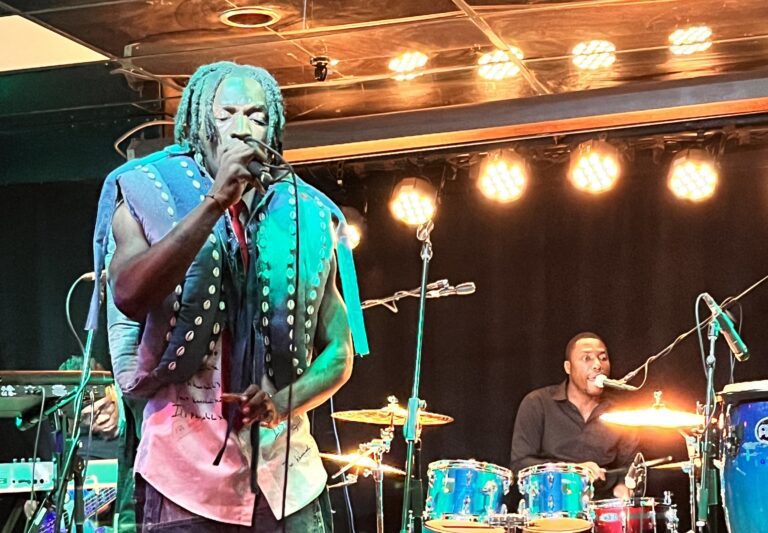
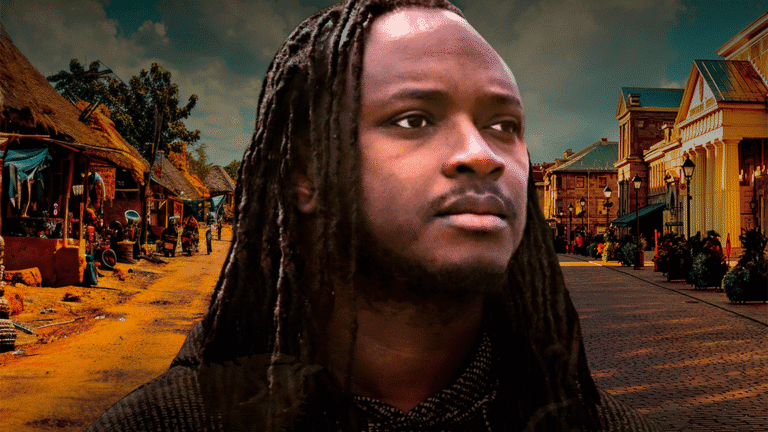
It’s not often that African communities, as diverse as they may be, and the Haitian community come together in the same space for a performance. Well, that was the case last night, during the concert at Balattou featuring Haitian artist Jean Jean Roosevelt and his special guest Ballaké Sissoko, a kora virtuoso from Mali.

The evening began with a solo performance by Jean Jean Roosevelt, playing guitar and vocals, during which he performed “Dessine ta destin”. Clearly, his fan club was well and truly present at the Balattou, as they could be heard singing along to the artist’s most popular songs, such as “Agoye” and “Acclimatisation”.

“Tonight, I am not alone, I have the honor of welcoming Ballaké Sissoko,” he announced to a standing ovation, before singing “L’Île de Gorée.” Very humbly, the kora master sat down at his instrument, before mixing it with Jean Jean’s guitar. Time stood still, silence reigned in the performance hall, apart from a few noisy spectators who disturbed their neighbors nearby.

On several occasions, Jean Jean involved the audience, who played along quite well. He is one of the few artists who has contributed to bringing African and Haitian peoples closer together. This initiative is a concrete example. One could feel the complicity between the two artists, and at times, Ballaké would make sounds like “yeah” when Jean Jean sang, seeming to approve of what he was hearing.

Then it was Jean Jean’s turn to leave us with Ballaké so he could have his solo moment as well. And off we went again for a soaring session. His fingering on the strings of the kora was both dazzling and soothing, his body movements following the rhythms of the sounds emitted by his instrument.

My favorite moment will be the song in which he pays tribute to his 13-year-old daughter, Maimouna, who was born prematurely. We didn’t want the song to end, and when it did, the audience rose to their feet for a second standing ovation.

“Behind this concert, there is a woman who made it all possible. She knew Ballaké, she put us in touch, and today we are here!” Jean Jean told us between two songs, before introducing us to a certain Nadine.

The concert ended with a return to the duo format of the two artists, between guitar and kora, and this time Jean Jean had two microphones at his disposal, switching from one to the other according to the desired effects. In the song “Libres ensemble,” he also inserts Lingala, the language spoken in the Democratic Republic of Congo, another indicator of the artist’s curiosity and artistic openness. He seemed very moved after the song, which calls on Africans to visit Haiti. He ended strongly with “Pinga,” which got the Balattou moving before closing the evening. All the kora and West African music lovers in general were present and rushed to Ballaké Sissoko for photos while Jean Jean’s fan club rushed to greet their favorite artist. We should have more of these spaces of communion between Africa and Haiti, rather than seeing them as silos. One thing is certain: Jean Jean Roosevelt will be one of the precursors.

Photo Credit: Peter Graham

Africa / Kora / saxophone / West African traditional music

The Cissoko Brothers, A Trio to Discover Without Moderation

by Sandra Gasana

I was told that the Cissoko Brothers concerts were quite an experience and that it was a MUST to see them live! Well, I did and I was not disappointed. Even though some kora concerts can be gentle and calm, this was not at all the case with this brotherhood from Senegal. Indeed, for the occasion, the Cissoko Brothers were equipped with two koras, played by Noumoucounda and Sadio, while Fa was on percussion. With them, there was Raphaël Ojo on drums, Dauphin Mbuyi on bass and David Mobio on keyboards.

The band performed in front of a nearly full Balattou, much to the delight of music lovers who seemed to be regulars with the trio. Starting with two energetic pieces, including Mama Africa, they continued with a calmer piece, much to the delight of those who appreciate the softly played kora.

“You can dance, we’re family here!” Sadio reminded us between songs. This didn’t fall on deaf ears as several dancers took to the dance floor, including Ginola, a Guinean artist, and two professional dancers who performed acrobatics during the show.

We also enjoyed the singing talents of Noumoucounda, the one everyone is fighting over, and who notably features in the most recent music video by Senegalese rapper Nix. His powerful voice filled the Balattou, making it vibrate as he improvised in the form of dialogue with his brother Sadio.

I noticed several African artists in the room, including Dicko Fils from Burkina Faso and Carine au Micro from Togo. Some of Fa’s work colleagues had also come to cheer him on, dancing on the dance floor during the show.

My favorite moment of the evening was, of course, when saxophonist Alain Oyono, who has been in our city for a few weeks, took the stage at the invitation of the Cissoko Brothers. “I know them all very well,” he confessed to me before going up with his instrument. The mix between the saxophone and the kora is simply magical. These two instruments complement each other perfectly, and Alain was able to add his unique touch to the show. Unfortunately, this magic only lasted for one song, but it will encourage us to follow this artist who is increasingly making a name for himself on the Montreal art scene. A very wise choice on the part of the Cissoko Brothers.

Photo Credit: Les Production DO-LA

Folk Pop / latino

Sara Curruchich in concert : great songstress of mayan roots and feminist intensity

by Frédéric Cardin

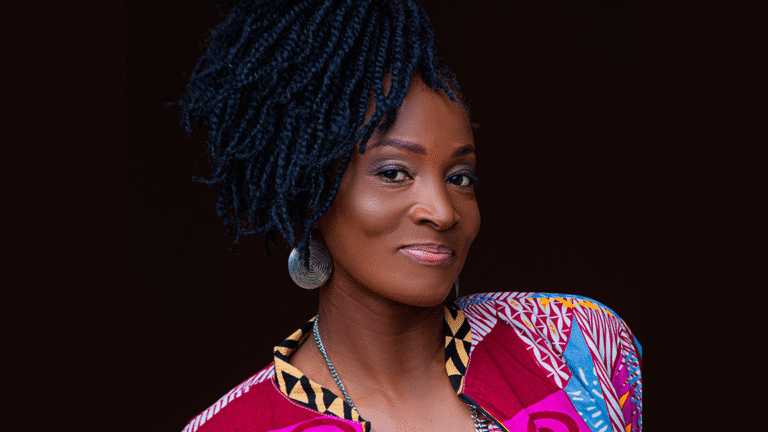
A Maya descendant, specifically from the Kaqchikel group, and located in Guatemala, Curruchich not only defends the rights of her people, but as a contemporary intersectional activist, she also speaks out for the women of her country. An indigenous and feminist activist, then, who expresses herself through folk-pop music tinged with rock, but above all with commitment and intensity.

The lady was at the Balattou club last night. The same strong stage presence we noticed at the Mundial Montreal showcase last year is there, immanent and communicative. There’s something of Llasa de Sela in Sara, but more extravagant, affirmative. The melodies sound just right, authentic (and sometimes they are, drawn from local or more broadly Latin American folklore), but most of them come from the artist’s nimble pen. She is accompanied by a drum kit, a bass, and, most importantly, a marimba, which brings all the specific colour to this music. Curruchich sings and plays the guitar, but sometimes joins his colleague on the aforementioned marimba in invigorating four-hand bursts.

The voice, sometimes fragile but generally very accurate, has a slightly raspy quality steeped in nature and the local terroir. However, it is not without lyrical power, and when those moments arrive, the roundness is beautiful, balanced.

Here’s an artist who tickles both the emotions and the conscience in an original and personal way. Let’s hope she comes back often.

Saharan Blues

Nuits d’Afrique 2025 | The next global star of Tuareg blues is born, and it is in Montreal

by Frédéric Cardin

As you will learn in the interview linked below, Boubé has been living in Montreal for just over a year, but has already won the heart of the city. His desert blues, that of the Tuaregs, a nomadic people from whom he comes (more specifically from Niger) is rooted in the great tradition of Moctar and Bambino, artistic sources from which he has drawn, is authentic, dynamic, catchy and exciting. On the Balattou stage, Sunday night, in front of a large audience packed tightly into the small space, which gives the Montreal club all its personality and appeal, Boubé ran through his already rich repertoire of hits and earworms that we like to hear as often as possible.

Excerpts from his first and only album to date, the aptly named Voyager, (READ MY REVIEW HERE), the tracks followed one another in a crescendo of intensity, spread over two well-crafted sets, leading to a finale overflowing with energy and sublimated by totally invested musicians: Sylvain Plante (ecstatic drums!), Carlo Birri (quiet but irrepressible force on bass), Ibrahim Seydi (with flights of percussion), Vincent Duhaime Perreault (excellent guitarist whose fiery duets with Boubé have something of the great rock shows of lore), and of course Boubé himself on guitar and vocals. We had already perceived the talent and potential at the 2024 Syli d’Or, where he received the silver award. But since then, the progress has been quite rapid, and I feel that the opening of the doors to the international market is not far off. Vincent Duhaime Perreault, the band’s guitarist and also Boubé’s manager, promises us important projects to come, without naming them yet. We are very, very excited, because, starting from Montreal, which he says he loves very much and where he has found a family and a warm home, Boubé has everything he needs to become the next international star of Desert blues.

LISTEN TO THE INTERVIEW CONDUCTED WITH BOUBÉ BY MY COLLEAGUE KEITHY ANTOINE

Kora / West African traditional music

Nuits d’Afrique 2025 | Sousou and Maher Cissoko: benevolence and complicity

by Frédéric Cardin

The concert by Sousou and Maher Cissoko, a Senegalese-Swedish guitar/kora/vocal duo, had a benevolent and entirely appropriate vibe. For the third time in their career, the man and woman, a couple in real life, took the stage at the Balattou club last Thursday. We knew what to expect, as their albums give a good idea of the sound and atmosphere, which are well respected live. A few new songs were offered, those that are most likely to be found on a future album (we don’t know when yet). Sousou had actually promised us this in the interview she gave me before the concert.

READ THE INTERVIEW WITH SOUSOU CISSOKO

The two artists are life and music partners, and you can tell. The looks are sincere, imbued with love and tenderness, but not ostentatiously so, as if to hammer the point or play a part. No, it’s just something that one detects and feels. This energy is carried by and within the music, always with equal energy, like a companion to the stroll through the time and space of the African griots’ world. A few pieces stir the air of the Balattou a bit more, but it remains essentially music that caresses, that does not seek to outdo urgency and excitement. Music that feels incredibly good in a time of frankly exhausting ambient stress.

A music that, by its very nature, but also thanks to its authentic and inspiring pair of performers, border-crossers and bearers of humanism, fills us with hope and optimism.

Soul/R&B / West African Traditional

Nuits d’Afrique | Soul Bang’s, The King of Improvisation

by Sandra Gasana

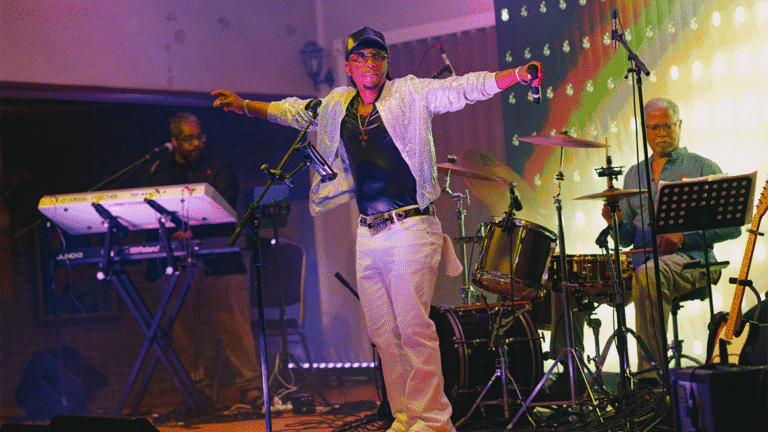
Whether in English, French, or Bambara, Soul Bang’s manages to improvise, drawing inspiration from the context of the moment. He does this several times during his concert at Balattou, sometimes responding to comments from the audience, which is mainly made up of young people but also includes some older folks.

I have rarely seen Balattou so full. Even at the start of the concert, seats were already scarce, but throughout the evening, festival-goers continued to flock in until this legendary venue was packed. Unable to bring his band with him, he surrounded himself with local musicians who had learned the songs beforehand, including a young and talented keyboardist, a drummer, a bassist, a guitarist, and a percussionist.

Dressed in traditional attire, including stylish harem pants, white sneakers, and a hat to match, he takes the stage like a star, judging by the audience’s cheers. Rather than soul, he decides to kick things off with dancehall, setting the tone for the rest of the evening. Indeed, he alternates between dancehall and soul, interspersing a few traditional Guinean rhythms, with great control over his voice.

He interacts with his audience, getting them to sing along to his biggest hits. “Today is a special day, it’s my first time in Canada, my first time at Balattou, a venue steeped in history, but also, my album Victoire, Chapitre 1 is out today,” he says, the first song of which is dedicated to his late mother.

At times, it felt like we could hear the kora through the guitar, especially during the solos, and at other times the bass sounded like a guitar. I later learned that the guitarist was Senegalese. The song Djere Lele, released in 2023, seemed to be particularly popular with my neighbor on the right. In fact, he was the one who told me the name of the song. The whole room sang along, and we enjoyed other similar moments throughout the evening. This Guinean superstar has several hits to his credit.
Even though the new album Victoire was released on Friday, July 19, some people already knew the lyrics that same evening. That says a lot about the star’s status.

His duality, sometimes soul and sometimes dancehall/ragga, allows him to navigate between these two worlds, but the place given to the traditional could be better exploited. He chose the second half of the evening to invite his wife and singer Manamba Kanté on stage for a few songs. She will perform on the main stage on July 20, but gave the audience a preview of her husband, who was equally delighted to see her. Her deep voice, worthy of the griot she is, descended from a family of griots on both sides, enchanted us and complemented her husband’s voice.

Another highlight was the kompa section of the concert. As with Blaiz Fayah, the crowd greatly appreciated this nod to a style of music that has been steadily gaining popularity since the Joé Dwet Filé effect.

Would a collaboration between Soul Bang’s and a Haitian artist be a good move in your opinion? Something to consider.

Photo Credit: André Rival

Publicité panam
Africa / Saharan Blues

Festival International Nuits d’Afrique : Boubé au Balattou

by Rédaction PAN M 360

“Essentiellement, des guitares, des basses et des percus propulsent des mélodies super accrocheuses et généreuses et la voix attachante du jeune musicien qui parle de sujets enracinés dans la nature nomade du peuple touarègue. Comme un sirocco qui frappe fort tout en apaisant l’âme” (PanM360, 2025). Surfant sur les titres de son dernier album Voyager (Disques Nuits d’Afrique/Believe, 2025), fier représentant de la culture Tamasheq qui a travaillé avec Bombino et Mdou Moctar, les figures les plus respectées de la musique Touareg, Boubé marque sa singularité en éventant son authentique blues du désert, rythme des nomades berbères du Sahara central. Le fougueux, attachant et charismatique auteur, compositeur et interprète, lauréat du Syli d’argent de la musique du monde en 2024, ondoie entre mélodies méditatives et rock indomptable, à la guitare, acoustique et électrique, aux percussions et à la batterie.

“Essentially, guitars, bass and percussion propel catchy, generous melodies and the engaging voice of the young musician, who talks about subjects rooted in the nomadic nature of the Tuareg people. Like a sirocco that hits hard but soothes the soul” (PAN M 360, 2025). Surfing on the sounds of his latest album, Voyager (Disques Nuits d’Afrique, 2025), Boubé is a proud ambassador of the Tamasheq culture; he has worked with renowned Tuareg musicians, Bombino and Mdou Moctar, and distinguishes himself with his authentic desert blues, following the rhythm of the central Saharan nomadic Berber people. To the sound of acoustic and electric guitar, percussion and drums, the spirited, engaging and charismatic singer-songwriter, winner of the 2024 Syli d’argent de la musique du monde, easily moves from meditative melodies to uninhibited rock.

POUR ACHETER VOTRE BILLET, C’EST ICI!

Ce contenu provient du Festival International Nuits d’Afrique et est adapté par PAN M 360

Afro Funk / Blues / Rock

Festival International Nuits d’Afrique : Boulila Gnawa-rock avec Mourad Kebali au Balattou

by Rédaction PAN M 360

Le gnawa. Un rite, une musique, des danses. Un art inscrit au patrimoine culturel immatériel de l’humanité de l’Unesco. La mémoire ancestrale, mystique, d’une ascendance d’Afrique sub-saharienne. Profondément ancrée dans la tradition, portée par les vibrations graves des cordes du guembri et le son claquant des karkabous, amplifiée par des répétitions entêtantes, ferment d’une transe libératrice, la musique de Boulila, lauréat des Syli d’or de la musique du monde 2021, renouvelle les codes de ce genre à la fois festif et thérapeutique par une instrumentation alliant guitare, saxophone, basse, piano et batterie, révélant l’africanité des musiques populaires occidentales.
La versatilité des rythmes marocains sera à l’honneur de ces trois soirées étoilées où Boulila jammera avec trois émissaires de la scène montréalaise.
Soirée gnawa-rock | avec Mourad Kebali: Avec ses allures de vieux routier du rock qui en a vu d’autres, Mourad Kebali crée un blues-rock lancinant, ponctué de vibratos et de longs accords de guitare distordus que ne renierait pas Santana. Une invitation à fermer les yeux et à se laisser porter par la musique en battant le tempo.

Gnawa. Ritual, music, dance. This artistic form of expression, inscribed on UNESCO’s Representative List of the Intangible Cultural Heritage of Humanity, stems from a distant and mystical cultural memory rooted in sub-Saharan Africa. Boulila’s music is strongly grounded in tradition, carried by the low vibrations of the guembri’s strings and the clinking of the krakebs, and is amplified by intoxicating repetition and the ferment of a liberating trance. Winners of the 2021 Syli d’or de la musique du monde, the group revisits the conventions of this festive and therapeutic musical genre with instrumentation that combines guitar, saxophone, bass, piano and drums, exposing the African roots of popular Western music.
The versatility of Moroccan rhythms will be the focus of these three star-studded evenings, as Boulila jams with three emissaries from the Montreal scene.
Gnawa-rock evening | with Mourad Kebali: Looking like a rock veteran who’s seen it all before, Mourad Kebali creates a haunting blues-rock sound, punctuated by vibratos and long, distorted guitar chords that Santana wouldn’t disavow. An invitation to close your eyes and let yourself be carried away by the music, beating out the tempo.

POUR ACHETER VOTRE BILLET, C’EST ICI!

Ce contenu provient du Festival International Nuits d’Afrique et est adapté par PAN M 360

Cumbia / latino

Nuits d’Afrique | Less Toches: A Latin-Montreal Fusion Worth Discovering

by Michel Labrecque

The Montreal cumbia group Less Toches performed three times at Nuits d’Afrique. Each concert was different, with special guests, allowing us to explore the diversity of this style… while getting everyone dancing.

It all began on July 13 with a Vallenato evening featuring Remberto Zuniga, a veteran singer and percussionist based in Montreal. Vallenatos are a kind of Colombian griot who travel from village to village singing.

After five minutes, no one was sitting down anymore, even though the crowd was small on this late evening of torrential rain. This concert would have to be repeated in a different context.

The second concert on July 14 aimed to bring cumbia closer to traditional Quebec music. The special guest was Alice Bro, a tattooed banjoist with a radiant, contagious smile and a husky voice, who offered a Tom Waits version of trad-keb. The mix wasn’t perfect, but it was very promising. To be explored further. The crowd, significantly larger than the previous day, danced enthusiastically, including a Serbian university professor whom we met by chance. These concerts provide opportunities for unexpected encounters.

The third concert, on the 15th, was the only one I missed. The guest was Ons Barnat, a musicologist, professor at UQAM, and reggae and dub music enthusiast. Another bold choice, which must have brought a lot of people to the dance floor at Balattou.

Less Toches are anthropologists of cumbia. Daniel Rodriguez, the percussionist and flutist who perfectly imitates birdsong, tells you, in impeccable French, lots of stories about the different styles and their more recent adaptations. A bottomless well of knowledge.

Less Toches is a gathering of new Montrealers of Colombian, Argentinean, Cuban, and Mexican origin. Unlike other recent cumbia offerings, such as Brussels-based Chiva Gantiva, heard at Nuits d’Afrique on July 8, Less Toches does not mix cumbia with electronic music. Nor does it mix it with brass instruments. The group is based on multiple percussion instruments and the accordion, with electric bass providing support and sometimes the traditional flute. But it hits the mark.

It will be interesting to follow Less Toches in the coming months. The group is currently working on its first full-length album. In the meantime, it will be performing at numerous festivals this summer. Get ready to “cumbier”!

Photo Credit: M. Belmellat

Publicité panam
Africa / Reggae

Festival International Nuits d’Afrique : Kabey Konaté au Balattou

by Rédaction PAN M 360

N’est pas n’importe qui qui fait les premières parties d’Alpha Blondy et de Tiken Jah Fakoly ! Le reggae du charismatique Kabey Konate, établi à Montréal depuis 2017, est ponctué de sonorités traditionnelles mandingues qui lui donnent une saveur particulière, celle d’être imprégné par la sagesse des anciens. Celui qui se définit comme le Griot du reggae offre des prestations hautes en couleur, ses propos engagés pour la paix et l’unité étant portés par un enthousiasme contagieux, par l’entrain et la gaieté dans sa voix. À l’occasion du 35e Festival international Nuits d’Afrique, il a composé une chanson hommage à l’événement avec les artistes Kayiri et King Shadrock.

It’s not just anyone who gets to be the opening act for the likes of Alpha Blondy or Tiken Jah Fakoly! The reggae style of this charismatic musician, who has been living in Montreal since 2017, is punctuated with mandinka rhythms, giving it a unique flavour—that of being steeped in the wisdom of the Old Ones. Considered the griot of reggae, Kabey Konate delivers an extremely colourful performance, while his lyrics advocating unity are carried by the infectious enthusiasm in his voice and his spirited joyful presence. In 2021, along with Kayiri and King Shadrock, composed and performed a song in honour of Nuits d’Afrique’s 35th anniversary.

POUR ACHETER VOTRE BILLET, C’EST ICI!

Ce contenu provient du Festival International Nuits d’Afrique et est adapté par PAN M 360

Afro Funk / afro-pop

Festival Nuits d’Afrique 2025 | Sahad: The star of Dakar Shines on Balattou

by Frédéric Cardin

It is said that he embodies the renewal of Senegalese music, an honor that the singer and guitarist Sahad carries as a responsibility, in order to make the art and culture of his country shine.

READ THE INTERVIEW WITH SAHAD

Last night, at the Balattou club, and on the occasion of the 2025 Nuits d’Afrique Festival in Montreal, the energetic and devilishly effective artist lit up the famous Montreal bar with his captivating blend of afrobeat, sometimes leaning towards pop, plenty of funky and well-brass-heavy tunes, and rare echoes of mbalax, because Sahad doesn’t really do mainstream Senegalese pop music, but is not impervious to it either. He rather offers a tightly woven fusion propelled by lively singing and simple yet effective melodies. An ultra-coordinated band responded to the Senegalese star’s every command. They deserve to be named, exceptional as they were, and all-Montreal based : Rémi Cormier (trumpet), Lou Gael Koné (bass), Raphael Ojo (drums), Louis Plouffe (alto sax), and David Ryshpan (keyboards). Sahad is with family in Montreal, so he invited local friends like Vox Sambou, Freddy Massamba (who raised the roof with an exciting Funk rant), Afrotronix, Seydina Ndiaye, and the duo Def Mama Def. A tour of the existing albums made up the first set and the beginning of the second, but the end of the latter allowed us to appreciate a few tracks from the next, African West Station, scheduled for the fall. Funky Nation, We Can Do, tracks that made us sing and sway, and which promise a rather remarkable album, thank you. Yes, Sahad is truly one of the most captivating and irresistible voices in the Senegalese artistic firmament.

Publicité panam
Afro Funk / Afropop / Reggae

Festival International Nuits d’Afrique : Yawo au Balattou

by Rédaction PAN M 360

Fier fils du peuple Éwé, citoyen du monde influencé par Fela Anikulapo Kuti, Youssou N’Dour et Sting, Yawo promouvoit avec abnégation, générosité et optimisme la paix, le dialogue et la tolérance. Son talent pour la composition et l’arrangement musical, son aisance à la guitare, à la basse et à la flûte traversière, ses voyages autour du monde et son désir de propulser un mouvement international pour une musique togolaise innovante, l’ont amené à explorer avec une tendance jazzy les confins des sonorités ancestrales en leur adjoignant des rythmes afrobeat, afrofunk, afropop et reggae.

Proud son of the Ewe people, this citizen of the world has been inspired by the likes of Fela Anikulapo Kuti, Youssou N’Dour and Sting. He selflessly promotes peace, dialogue and tolerance with a sense of generosity and optimism. His gift for composition and musical arrangement, his fluency on guitar, bass and flute, his world travels and his desire to promote the International Movement for Innovative Music-Togo he launched, have all led him to explore the boundaries of ancestral rhythms with a jazzy edge, while incorporating afrobeat, afrofunk, afropop and reggae grooves.

POUR ACHETER VOTRE BILLET, C’EST ICI!

Ce contenu provient du Festival International Nuits d’Afrique et est adapté par PAN M 360

Subscribe to our newsletter

Inscription
Infolettre

"*" indicates required fields

Type of Suscribers