Hermeto Pascoal, who passed away on Saturday, September 13, at the age of 89, is now considered an absolute genius of Brazilian music, with the Montreal National Jazz Orchestra (ONJ) dedicating a full program for big band jazz to him on Thursday, September 18, under the direction of his former collaborator Jovino Santos Neto. Paradoxically, his passing could help to make him better known and introduce him to the pantheon of the greatest musicians of our time. In any case, PAN M 360 is working on it!

From a compositional point of view, his body of work is so vast that it surpasses all of his most famous Brazilian contemporaries, predecessors, and successors, with the possible exception of composer Heitor Villa-Lobos (1887–1959). Let us state here that Hermeto Pascoal is musically superior to Tom Jobim, Joao Gilberto, Caetano Veloso, Marcos Valle, Gilberto Gil, Chico Buarque, Elis Regina, Chico Science, Tom Zé, Edu Lobo, Eumir Deodato, Joao Donato, Suba, Joyce Moreno, and others.

Frowning? Good for you! Listen to his music instead, an immersion that could last for months. Let’s make it even thicker: this body of work is as considerable, diverse, and substantial as those of Frank Zappa, John Zorn, Wayne Shorter, Sun Ra, Miles Davis, and Duke Ellington.

Absolutely unclassifiable, Hermeto was mistakenly associated with jazz fusion because he was once invited, along with his frontline musicians, percussionist Airto Moreira and singer Flora Purim, to participate in the recording sessions for Miles Davis’ album Live-Evil. After that, Flora and Airto were recruited to the famous American group Return to Forever, led by the late Chick Corea, and Hermeto Pascoal returned to his laboratory.

Listening to his music over time, we conclude that he is not exactly a jazz musician, but nevertheless one of the most astute improvisers, coupled with one of the most brilliant contemporary composers in the southern hemisphere.

His creative materials were countless: modern jazz, traditional indigenous or Afro-Brazilian music, samba, bossa nova, musica popular brasileira, noise music, early beatboxing, instrument invention, free improvisation, tonal, modal, atonal, serial, acoustic, electric, and electronic music, to name a few. Nothing escaped him since his modest beginnings as a quasi-traditional accordionist.

An unparalleled multi-instrumentalist, this super-virtuoso has never sought fame, but rather the total freedom of exuberant, downright brilliant expression.

This Thursday at the Cinquième Salle at the PdA, we will be treated to just a tiny fragment of his mind-blowing repertoire, this time composed for big band under the direction of Jovino Santos Neto, whom we contacted as soon as he arrived in Montreal.

PAN M 360: Jovino, you are from Rio de Janeiro, but you have lived in Montreal. Tell us about your journey from Brazil to North America.

Jovino: Before devoting myself entirely to music, I was a biologist. I first studied biology at university in Rio when I was 18, and then I ended up in Sainte-Anne-de-Bellevue at McDonald College, where a friend’s brother was studying. So I was in Quebec from 1974 to 1977. That was 50 years ago!

PAN M 360: You subsequently became a musician. In fact, you were already a musician at the same time and you chose music.

Jovino: Even in Montreal, I played keyboards in a local band with whom I played keyboards during my stay. We were influenced by Weather Report, Gentle Giant, jazz rock, and prog.

PAN M 360: How did you join Hermeto Pascoal’s group after leaving Quebec?

Jovino: I returned to Rio to continue my biology studies and my research on the forest. I was supposed to join the Amazon Research Institute in Manaus. So I was in Rio to obtain financial support for my scientific work. That’s when I met Hermeto because he was my parents’ neighbor in the Jabour neighborhood—he had moved there after living in the Northeast, originally from Lagoa da Canoa, then residing in Recife.

One day, I took a chance and knocked on his door to say hello and tell him how much I admired his work. His wife answered and introduced me to him. He was alone in his rehearsal room, playing the electric piano. Without hearing me play, he invited me to play with him the following Friday because he needed a keyboardist so he could play more flute and saxophone. I said okay, but I couldn’t always be there because I had to continue my biology studies. He said, “No problem, you play with me for the next concert, then you can leave…” Fifteen years later, I was still there! Yes, I had passed my exam, I had been offered a job in Manaus, and I had said no, thank you, I’d rather stay and play with this crazy albino!

PAN M 360: What was it like working with him?

Jovino: It was a daily rehearsal routine: five days a week, six hours a day. We were always there rehearsing at Hermeto’s house, and he never stopped writing for us. He was an inexhaustible source; the water never stopped flowing from the rock. It was like that for a good ten years. Hermeto didn’t rehearse with us during rehearsals, it must be said.

He composed constantly, sometimes while watching a soccer game on TV, with a cavaquinho slung over his shoulder. We toured all over the world with this group, a lot in Brazil. I was in the group from 1977 to 1992, after which I worked with him occasionally on special projects. When he came to Montreal in 1987 for the jazz festival, I was in the group and accompanied him to his interviews to serve as his interpreter.

PAN M 360: Oh, really?!! I interviewed Hermeto back then, so you were the one translating!!!

Jovino: That’s right!

PAN M 360: Wow! And what did you do after your long stint with Hermeto?

Jovino: I composed and played for Airto Moreira and Flora Purim, among others, as well as for American musicians. Thirty-two years ago, I moved to Seattle in the United States, where I still live. I spent a good part of my career teaching there, in addition to playing and composing. Today, I am a freelance musician. I have nevertheless remained the archivist of Hermeto’s work, which is so considerable and yet still little known. We only know a fraction of it!

In a generation or two, the music world will recognize his genius. He has worked in all kinds of orchestral configurations, instrumentations, and stylistic contexts. Everything Hermeto has accomplished will survive the ages. Today, we are still too close to the mountain; we will need distance to grasp its magnitude.

PAN M 360: How do you explain the relative obscurity of such a giant in the music world?

Jovino: Hermeto never stopped being creative. He gave us the example of Herbie Hancock, who, according to him, was a fantastic musician who had had a lot of success with certain songs, but then became a prisoner to them. Because his audience still keeps asking for them. Hermeto used to say that he would never have those big hits that would become his prison. He dreaded the obligation to play his hits over and over again and stop innovating. And this was always in connection with nature. Hermeto was the most fervent environmentalist of all the musicians I have known.

PAN M 360: So in Montreal this Thursday, we’ll have some very jazzy lighting from the master.

Jovino: Yes. What we are going to do with the ONJ at the Cinquième Salle at Place des Arts is only a tiny part of his work. I don’t think he was a jazz musician; he himself described his music as universal. That said, we will be working with five saxophones, five trumpets, five trombones, piano, bass, drums, percussion, guitar, and keyboard. I will be the conductor and may also play a solo piano piece in tribute to the master who has just left us.

PAN M 360: This synchronicity is incredible. The first time we play Hermeto’s music in Montreal in ages, and he dies just before the concert.

Jovino: Yes! And everywhere Hermeto Pascoal is known, people do the wave in his memory. We need his music so much in this terrible global context, to correct the vibration.
Publicité panam

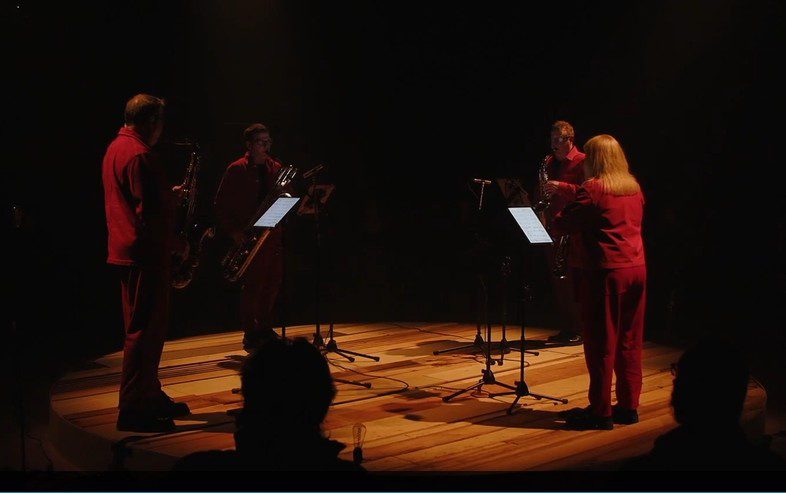
The saxophone quartet Quasar continues its international collaborations by joining forces with the Zukan Trio, originally from the Spanish Basque Country. This Thursday, September 18 at 7:30 p.m., in the Espace Orange at the Wilder. Quasar thus launches its Montreal season for the 2025-2026 season, co-broadcast with Le Vivier. After a successful first meeting held in 2021 (Quebec-Basque Country), Quasar reunites with the Zukan Trio (percussion, accordion and txistu) as part of the Chambre d’écoute program. This program offers “an in-depth encounter of new Quebec and Basque music in a unique and immersive concert.” Marie-Chantal Leclair, soprano saxophonist and artistic director of Quasar, tells us more.

PAN M 360: Tell us about your relationship with the Zukan Trio:

Marie-Chantal Leclair: I met Trio Zukan during a mission organized by CALQ in 2019 in the Spanish Basque Country. Trio Zukan established itself as our natural interlocutor. Like us, this ensemble is completely dedicated to contemporary music and more specifically to the development of the repertoire and sound exploration. Our first concert brought us together in the fall of 2022. We had to stick to this project to welcome international guests and to travel abroad in a time full of constraints and uncertainties where the borders had just reopened. But it was worth it. The chemistry worked and the mayonnaise took between the two ensembles and we wanted it to continue! Trio Zukan has a very strong stage presence and an intensity of playing that combines perfectly with that of Quasar.

PAN M 360: Can we identify the Spanish Basque identity of this trio through the works they perform on stage or in the studio?

Marie-Chantal Leclair: The instrumentation of the Zukan Trio is deeply linked to Basque identity, as it includes a txistu. This is a traditional instrument that is a flute played with one hand, the other hand being used to strike a small drum. This instrument is a symbol of Basque cultural identity. It is of course used for traditional music, but also now in contemporary music, particularly under the leadership of Zukan. So Basque cultural identity is at the heart of the trio but completely transcended in its music.

PAN M 360: More specifically, how is this identity manifested in the works on the program, by Miguel Matamoro and Ramon Lazkano?

Marie-Chantal Leclair: Identity in music is very difficult to define and we can quickly fall into clichés. I would simply say that in parallel with this desire to assert the identity of the Spanish Basque Country, there is in the field of music an artistic freedom that transcends identity. If we return to txistu, it is a beautiful image, because, yes, there is a reminder of the roots, but one that unfolds in modernity and that dialogues with the rest of the world.

PAN M 360: The opening concert will feature the work Chambre d’écoute 2 by Quebec composer Chantale Laplante, which lends its title to the concert, as an international premiere. What justifies the choice of this work by Chantale Laplante and how does it fit into this program?

Marie-Chantal Leclair: I’ve been wanting to work with Chantale for a long time and have been following her work. I admire her listening skills, the refinement of her materials, and how she sculpts sound in space and time. The work she’s presenting is a concert-installation type. This work has profoundly influenced my perception and approach to the other works in the program. And I think it will be the same for the audience. In Chantal’s words, she has imagined “an all-encompassing and dynamic listening device for our listening bodies.” I can’t wait!

PAN M 360: The same goes for the works of Émilie Girard-Charest, whose instrumentation also includes the accordion and the txistu, “traditional” instruments?

Marie-Chantal Leclair: Émilie is a close composer who has been close to Quasar for several years. We have presented her quartet, Bestiaire, around the world. During our first collaboration with Zukan in 2021, we commissioned a work from her for our two ensembles. The members of Zukan were thrilled by Émilie’s work and decided to commission a trio from her, which we will have the opportunity to discover at the concert. You mention the accordion as a traditional instrument, and yes, it is. However, in Europe it is also a “classical” instrument that is very common in contemporary music.

PAN M 360: Several orchestral configurations are planned. Explain them to us!

Marie-Chantal Leclair: The audience will be treated to a wide range of configurations and therefore a great variety of colors and through the play of combinations and orchestration. Works will be presented in quintet (4 saxophones and accordion) with electronics, saxophone quartet, trio (percussion, txistu, accordion) and septet (Quasar-Zukan).

PAN M 360: Roughly speaking, what will be the next steps in your 2025-26 season, which we will be specifically looking at throughout the season?

Marie-Chantal Leclair: The major projects for the season revolve around a music-dance production in partnership with Mexico and the 10th edition of the Electro Series. In both cases, creative residencies bringing together composers and performers will take place in the fall. We are talking about nine new works written by composers from Quebec, Canada, and abroad. We will also have the opportunity to perform our concert “Cinq pièces liquide, Hommage à Vivier” as part of the Conseil des arts de Montréal en tour. Finally, we will be touring various Canadian provinces in the winter of 2026.

INFO AND TICKETS HERE

Program

  • Chantale LaplanteChambre d’écoute 2 , 2025 pour quatuor de saxophones SATB, accordéon et électronique  – création
  • Miguel MatamoroConcerto Grosso 2021 (**Commande par Trio Zukan) pour quatuor de saxophones (SATB), percussions, accordéon, txistu
  • Émilie Girard-CharestArtefaktuak , 2024 (Création canadienne) pour percussions, accordéon et txistu
  • Ramon Lazkano: Jalkin , 2012 (Création canadienne) pour quatuor de saxophones SATB
  • Émilie Girard-CharestQuantum Statistical Zero-Knowledge 2021 (**Commande de Quasar) pour quatuor de saxophones (SATB), percussions, accordéon, txistu

Artists

The SAT and Making Time, a popular niche festival in Philadelphia, are joining forces to celebrate the 25th anniversary of this event, which will be held this weekend in Philly. The Montreal edition will take place from Saturday, September 27 at 10 p.m. to Sunday, September 28 at 6 a.m.

Over the past few years, Making Time has presented a number of events at the SAT, but this upcoming one promises to be much more ambitious. A dozen internationally renowned artists and other local discoveries will take over the SAT’s three floors. 

More specifically, we will be treated to performances by Ireland’s Maria Somerville (shoegaze), DJ Python, James K (deep house, Latin electro), Djrum (avant-garde, contemporary classical), Britain’s aya (multi-genre electro) and America’s Dave P (multi-genre), founder of Making Time. They will perform on the ground floor. Afro-British artist SHERELLE (footwork, ghetto-tech, gabber, etc.), Montreal artist Honeydrip (dub, dancehall, dubstep), and local duo Zillas on Acid (death disco, dub, etc.) will present their sets under the dome. In addition, a new lounge area will be set up on the second floor, where local artists CPR Annie, URA, and Myfanwy will perform.

In a spirit of collegiality. This program was designed by Dave P, the American mastermind behind Making Time, and Alexandre Auché, co-founder of PAN M 360 and senior member of the SAT, to whom we owe this program, which is intended as a celebration of its own eclecticism: shoegaze, electro, hip-hop, and cutting-edge techno.

To learn more and prepare for this entire night of Making Time, PAN M 360 spoke with Alexandre Auché. 

photo: Alex Auché & Dave P

PAN M 360: Making Time, then. What led you to do this project? Tell me about the origins of your relationship with Making Time.

Alexandre Auché: Dave P has been the artistic director of Making Time events in Philadelphia for 25 years.

PAN M 360: How did you meet Dave P?

Alexandre Auché: I met him through friends on tour; I’m involved in much the same music scene as him. We bumped into each other several times in Barcelona, we saw each other in New York, we even saw each other at Coachella, and I ended up attending his festival in Philadelphia. I consider him a very good friend and I think he has great taste in music. For 25 years, Dave P has been hosting these kinds of events combining live rock and DJs; he’s always had a culture of mixing things up. Since his events in Philadelphia are so successful, there are a lot of artists I’ve booked in Montreal that he’s been able to book in Philadelphia.

PAN M 360: Making Time is a signature, then.

Alexandre Auché: Yes, Dave P decided to turn it into a festival three years ago. Before that, it was more of a series of events that he organized in clubs under the banner Making Time. It was even a radio show. He decided to create all this for his own enjoyment, to create the festival of his dreams, especially in North America where it’s more difficult to get this kind of lineup. It’s similar to Sonar or Primavera Sound, but without the scale.

PAN M 360: An American festival inspired by Europe, then?

Alexandre Auché: You could say that, but… David P’s idea was to bring all his favorite artists together in a rather magical location, Fort Mifflin, situated on the banks of a river, very close to Philadelphia airport. A magical, magnificent location. There are vaulted stone rooms inside and wetlands around it. In addition to the outdoor stages, the Making Time festival has set up a 200-seat experimental lounge, visual art installations, restaurant areas, natural wine bars, cocktail bars, and more.

PAN M 360: So, it inspired you, and ultimately you decided to create a Montreal counterpart, is that right?

Alexandre Auché: David P and I had worked together on three events prior to this one. I first invited them to participate in a project under the dome in February 2023. There was Dave P, Priori, and Claire Rousay, an experimental folk musician. It was a great mix. After that, I invited Dave P for New Year’s Eve while the SAT was undergoing renovations, and then he came back last year as a DJ. We talked about a bigger event at the SAT, a sort of mini-festival whose goal was to recreate the atmosphere of the Philadelphia festival at the SAT.

PAN M 360 : Comment reproduire à Montréal l’ambiance du Making Time de Philadelphie?

Alexandre Auché : Ce qu’on a gardé de Philadelphie, c’est l’esprit de plusieurs salles avec des ambiances complémentaires : l’espace SAT au rez-de-chaussée, le dôme, et on va ouvrir aussi notre espace galerie SAT en tant que lounge avec installation vidéo, éclairages et fauteuils. Pour l’occasion, l’habillage visuel de la SAT sera assuré par Klip Collective, en collaboration avec Bloom studio. Klip Collective est une part très importante de Making Time à Philadelphie, ayant fait toutes les installations vidéo/éclairages du festival, tant sur les scènes extérieures que dans les salles du fort. C’est une partie super importante de l’événement. Pour adapter l’événement à la SAT, Klip Collective fera donc une collaboration avec Bloom Studio. 

PAN M 360: What do you consider to be your best catches? M

Alexandre Auché: I would say all of them, actually. I know it sounds a bit generic, but I’m really proud of this lineup. We had the opportunity to select quite a few different artists. We kept the cream of the crop from what was offered to us. We were very selective, so we’re very proud to have each artist. And that’s what’s great about it. The idea was really to mix genres. Not to be uniform. We’re not doing a techno night, we didn’t do a drum & bass night. We’re not doing a shoegaze rock night. We did all of that at the same time.

PAN M 360: Some examples?

Alexandre Auché: Maria Somerville has turned everyone’s world upside down. It’s a bit like the shoegaze revival, with everything that goes with it, everything we loved about that English scene back in the day. Luster, her new album, has received rave reviews internationally, as has James K on the deep house side. Friend is a magnificent album. Aya is coming with a completely crazy live set! I’m not going to compare her to Arca, but there’s something about her… Djrum is one of the most interesting artists in electronic music, mixing jazz, hip-hop, dubstep, and even experimental contemporary music. He’s capable of creating dancefloor hits as well as very sophisticated tracks. British producer SHERELLE is also excellent.

PAN M 360: It starts on Saturday evening at 10 p.m. and ends the next day at 6 a.m. 

Alexandre Auché: In fact, we are taking advantage of this new legislation to be able to pursue the context a little further. But is the legislation weekly, is it always now, or? Yes, you have to request it. We have to request exemptions. From time to time, we get a 24-hour Saturday. We do this for very specific projects that we’ve really worked hard on.

PAN M 360: And you really worked hard on this MTL version of Making Time!
Alexandre Auché: I’m really thrilled with the lineup! I think it’s one of the strongest I’ve put together in my career since the MEG days. With an event like this, we encourage people to get out a little more, to see and hear things they don’t know, to feel the vibe of the night.

Publicité panam
Publicité panam

A few days before the final unveiling of the Polaris Prize, which will determine the outstanding Canadian album of the past year on September 16, we are posting this interview with Lou-Adriane Cassidy, conducted in mid-July in the whirlwind of her absolute triumph on the French-speaking scenes of America, very clearly at the top of this new wave of artists that some call the golden age of this culture, nothing less. Since Lou-Adriane is among the 10 finalists in Canada for her album Journal d’un Loup-Garou, the subject was unavoidable and is now one of the important factors in her current influence. The other elements of “her situation,” just as important, are obviously addressed in this interview.

PAN M 360: Since you’ve been giving interviews about your last two albums since their respective releases last winter and spring, and since I’m the 250th person to talk to you about your own phenomenon (just kidding), we’ll do it differently: by first talking about your nomination for the Polaris Prize short list and then going in-depth about your recent work.

First, I remind you that only one group/artist expressing their art in French has won the Polaris since its founding 19 years ago: Karkwa in 2010. If you win this year, you will be the 2nd. But… as I have pointed out several times, Canadian coolness is not exactly on the French-speaking side these days. Normally, you should be a very serious contender for the prize. So if you win, it is because the majority of the members of the “grand jury” will have understood the importance of your contribution and the new French-speaking wave that you embody. It would then be a historic achievement.

Lou-Adriane Cassidy: Yes, it’s crazy! It makes you wonder about Canada’s view of Quebec. I think that sometimes it creates such a strong reaction that it could be really disturbing to win. Didn’t Karkwa create a controversy by winning at the time?

PAN M 360: There were still people from the Rest of Canada who said something like Who the fuck is Karkwa???

Lou-Adriane Cassidy: The Polaris is not a popularity award, I don’t see the connection… Yes, there is the language barrier and at the same time several Canadian artists have won in languages ​​other than French or English, Jeremy Dutcher has won twice.

PAN M 360: Jeremy Dutcher, Lido Pimienta, Pierre Kwenders, etc. And… it seems that the linguistic expression that represents 25% of pop has won 5.25% of the Polaris Prizes. And it has little to do with quality and everything to do with perceptions.

Lou-Adriane Cassidy: I ​​have nothing against a victory for diversity, I am absolutely for diversity but we can wonder why we (French speakers) are not included.

PAN M 360: We are the first to applaud the victories of Indigenous artists or artists from cultural communities; that’s not the problem. The problem lies in our near impossibility of winning since the prize’s inception. This tells us a lot about the perception of non-French-speaking Canadians who vote on all Polaris juries. Obviously, it’s not malicious, but the results speak for themselves.

Lou-Adriane Cassidy: But did Francophone coolness ever exist in English Canada?

PAN M 360: There has already been an interest among some. At the time when Pierre Elliott Trudeau was perceived as cool (before October 70), there was an interest in Francophone culture. Among Anglo prog fans, for example, we were impressed by Harmonium or Cano. But… you’re right to ask the question, because it’s actually very thin. Given our history of the two solitudes, more tense than relaxed, something is being expressed unconsciously, the Polaris Prize selection process is no exception. I don’t think it’s deliberate, however. We’ll know more on September 16!

So let’s move on to other topics. Have you ever lived in Montreal?

Lou-Adriane Cassidy: I ​​lived there for two years and then returned to Quebec City, where I settled. I was born in the Saint-Roch neighborhood and I live in Limoilou. I left the city because I wanted to get away from home. I’m at home in Quebec City; there’s a way to live here and contribute to the community of artists in my city while doing everything else. There’s a way to make ends meet and stay here. And I like to contribute to that too, to the flourishing of my city.

PAN M 360: It’s really cool that you’re from Quebec… Well, it’s worth repeating: this is your year! It doesn’t happen often in a lifetime, such success. Maybe you’ll be able to repeat this feat, it’s impossible to predict. But just to have achieved it is already very big. Did you see it coming? How did you see the heat rise?

Lou-Adriane Cassidy: Well no, I didn’t see it coming. I don’t think you can see it coming. I experienced it a little from the outside when Darlène launched Hubert Lenoir. I was part of the tour, it was very intense. I think it was harder than this year because everyone was younger. Hubert was very polarizing too, which made things less easy to live with.

PAN M 360: And this time?

Lou-Adriane Cassidy: I ​​didn’t expect to experience this at all. I had a career I was very proud of, it was still developing. I had an audience, I already felt very privileged, in fact. I was really proud of the album Loup-Garou. I had hopes, of course, we have them all the time. But I hadn’t dared to go that far in my head. That’s why I don’t think these things can be measured or calculated. Dis-moi dis-moi was played on commercial radio… a lot. I really didn’t think this song would have this effect.

PAN M 360: In the vast majority of cases, it’s commercial radio that decides what to broadcast. But sometimes, as was the case with Dis-moi, dis-moi, an “alternative” song becomes too big a hit and exceeds the criteria, and FM is then forced to get on board. A great victory for quality over prefabrication!

Lou-Adriane Cassidy: Yes, really. And I’m really happy to be moving to commercial radio. We’re the first to say that there’s no more diversity and openness in genres. So, if commercial radio is starting to open up a little, I’m happy to be a part of it. I’m very happy! I’m still doing what I’ve been doing all the time for the last 8 years: shows, albums.

So it’s not an inner change that explains this success. In fact, I’m happy to be experiencing this, that it’s happening on commercial radio. Because I really did this out of complete love for music and what I wanted to do. We worked a lot and there’s something very satisfying about experiencing this. Because that’s not always the case, in fact! So for me, this work remains independent and this adequacy is a great source of pride for me.

PAN M 360: It’s natural, it’s organic, indeed. Your friends Ariane Roy and Thierry Larose could have had an impact. Whether the sauce takes more for one or the other remains an intangible phenomenon, there are no rational explanations to suggest to explain such success. It’s luck, but you made your luck, it’s fully deserved. That being said, you have more popular success than your best friends with whom you work. So, it’s sure that creates a disparity, but at the same time, there’s no explanation to be had to know why it’s you and not the others.

Lou-Adriane Cassidy: I ​​still think we lift each other up. For me, there’s not such a big gap being created. I think it’s more, let’s say, mainstream. But Ariane and Thierry have many loyal fans. They have very successful careers.

PAN M 360: There’s no doubt about it. What I mean is that there’s a difference between a great career and being on the biggest festival bills. It’s still a whole different ball game, but it has nothing to do with quality. We’re as excited about Ariane Roy and Thierry Larose as we are about your work; we don’t see any clear differences in terms of quality. Broadly speaking, you’re artists of equal quality. It’s great that you maintain your friendship in this context.

Lou-Adriane Cassidy: Yes, I admire them a million times over! I think we contributed to my success together. We built a lot of things together. We learned a lot together. For me, this bond is very strong.

PAN M 360: Clearly, you’re going through a period of intense creativity. Two separate albums in a single quarter!

Lou-Adriane Cassidy: Actually, Loup-garou didn’t happen quickly; it was a long gestation period. When we were finishing this album, I still had some of Stéphane Lafleur’s songs that he had sent me over the last few years – he had already written me a song on my second album, we both really liked this collaboration. It helped him, I think, with the creation of his own repertoire, because he said he was having trouble writing for Avec pas d’casque at that time. And he would send me songs from time to time.

I have a lot of admiration for his talent, but it didn’t fit with Loup-Garou. I then started writing the song Adieu, and the idea came to make a different album, in complete reaction to the previous one.

The idea was to make an album where we would have a short production time and everyone would have to play together in the same room. I’m not saying I invented anything, but we don’t do that much anymore.

PAN M 360: Live recordings for the album Triste animal, then.

Lou-Adriane Cassidy: Yes, everyone together, with the vocals, the backing vocals, all that. Nothing was recorded over it. That was really it, played and sung in the moment, no alterations. I found that process really exciting and really different from what we had done before. I booked the studio in the fall of 2024. I had three songs at the start and I had an album at the end.

Sometimes it’s interesting to test your creative limits a little, to see where you go when you’re pushed to your limits. I almost canceled the studio a few days before because some texts were missing. I think there’s a little masochistic side to it, it’s very uncomfortable but the satisfaction of getting to the end is great and rewarding. What’s going to happen? How are we going to get there? We have anxieties, there are mysteries and… things happen.

PAN M 360: Inspiration remains a mystery…

Lou-Adriane Cassidy: How is it channeled? It’s mysterious indeed. You need an impulse. Then you can develop the work. If you don’t have this impulse, it can become panicky!

PAN M 360: And what happens next after the big summer festivals?

Lou-Adriane Cassidy: A new show is planned for the fall. It will run through 2025 and 2026.

PAN M 360: With the program, mainly a mix of the two albums, is that it?

Lou-Adriane Cassidy: Yes, that’s it, new staging and everything. A mix of both albums and also the essentials. I recently realized that I could count on a real repertoire, and not have the choice of doing this or that song in a show. I’ve like crossed over to the other side.

Editor’s note: Alain Brunet conducted this interview with Lou-Adriane Cassidy in mid-July. We talked about Polaris with the new queen of French-speaking indie pop from Quebec, among other topics covered in this interview, which justifies posting this interview online two months after it was conducted. However, the author of these lines did not know at the time that he would be selected for the Polaris Prize “grand jury”, which would determine the final winner of the famous pan-Canadian prize. The invitation to this “grand jury” thus came AFTER this interview was conducted. The comments made here are therefore in no way colored by the author’s participation in the final jury of the prize and do not constitute in any way an indication of the discussions held within this jury, secret discussions which can under no circumstances be made public.

The Société de musique contemporaine du Québec (SMCQ) presents here the fall portion of its 2025-2026 season and maintains the course set by the current artistic direction embodied by composer Simon Bertrand since Walter Boudreau retired to his land to devote himself exclusively to composition and composer Ana Sokolovic spent a brief time there. Led by Simon Bertrand’s artistic direction, the very conclusive experience of the Montréal/Nouvelles Musiques 2025 festival has breathed new life into the SMCQ, which is proposing a 25-26 season focused on intergenerational dialogue, the renewal and growth of its audience, as well as the embracing of its American identity.

PAN M 360: The intergenerational perspective on creative music is the central theme of the 60th season of the SMCQ. What justifies this choice?

Simon Bertrand: Normally, since we are coming off a year of the M/NM festival, we should be in a tribute season. However, this usually revolves around a single composer. However, since it is the 60th anniversary of the founding of the SMCQ, I preferred to pay tribute to all the composers who have left their mark on the SMCQ, but also to those who are the guarantors of its future. So, it is also about the composers of today and tomorrow, hence this idea of ​​an intergenerational dialogue between several generations of creators, a sort of bridge between the generations which, in my opinion, is essential and which we have often cruelly lacked.

PAN M 360: How is this applied? Retrospective approach?

Simon Bertrand: What I wanted to avoid, precisely, was a retrospective approach with a heavy dose of self-congratulation for a glorious past, or an overly historical approach.

My goal is rather to create a dialogue between the works, and to create a dialogue between their musical and human testimonies. As Varèse said, “to be modern is to be natural, to be an interpreter of the spirit of one’s time.” It’s as “simple” as that! (smiles)

PAN M 360: How then to interweave the repertoires of six decades?

Simon Bertrand: For the October 30th concert, a highlight entitled “au chœur du Québec”, the common thread is of course writing for choir, but with extremely different aesthetic approaches.

In the case of the first Montreal concert on November 15 at the Claude-Champagne Hall, it is a celebration of the 60th anniversary of the SMCQ, but also the 75th anniversary of the Faculty of Music of the UdM. However, it turns out that several composers who played an important role in the SMCQ also did so for the Faculty of Music of the University of Montreal. This is how we find Garant, Tremblay, Sokolovic, Boudreau and a creation commissioned by the SMCQ from the young composer Maxime Daigneault in this program.

The concerts for the second half of the season after Christmas will be announced later. We will try to meet the challenge of bringing together several generations and aesthetic approaches. The full program will be announced soon, but I can already tell you that we will have as guests the Éclat ensemble, the Orchestre de l’Agora, the Ensemble de la SMCQ, and also a piano concert of Quebec music with Philippe Prudhomme and Louise Bessette, and that the season will be interspersed with numerous creations commissioned by the SMCQ especially for its 60th anniversary. It is essential to continue to place commissions with composers so that they can give us a precious musical testimony of our time, and that is my hobbyhorse at the SMCQ: to make composers work, and to serve them as best as possible.

PAN M 360: How can we create an intergenerational dialogue between composers, knowing that today’s aesthetics are distancing themselves from contemporary music as it was heard in the 50s, 60s, 70s and 80s?

Simon Bertrand: Dialogue doesn’t mean putting together works that say the same thing, and in the same way. Otherwise it would be too monochrome.

There is no longer a major aesthetic movement, or dominant school of thought as there was from the 1960s to the 1990s: composers no longer feel the need to affiliate themselves with a specific musical system or language and aspire to integration, fusion and synthesis, and they have very singular approaches.

So I’m not trying to create any links of filiation; contemporary music today is a marvelous Tower of Babel with an abundance of different languages ​​and approaches. Composers are, more than ever, wonderful polyglots!

PAN M 360: Until recently, the audience for contemporary music was aging year by year, without growing. This leads to the question: is creative music truly intergenerational, beyond the interest of young composers and other music students?

Simon Bertrand: Above all, and more than ever, they are multidisciplinary. And that’s where the opportunity lies for developing the audience, that is, by reaching out to audiences interested in visual arts, cinema, etc. In short, finding an audience interested in other art forms and their encounter with creative music. Also, as the boundary between instrumental music and electroacoustic music or written and improvised music is increasingly thin, or even non-existent, this also opens the door to new audiences.

PAN M 360: And here is a first sign of success for this vision: particularly in the context of M/NM 2025, a shift has been made, with the main result being an increase in your audience. Who is your new audience?

Simon Bertrand: It is obvious that a large part of our audience and our community but also by ramifications other artistic communities, but we must not underestimate the need and desire of the public to discover totally unusual and new things and to explore new sound worlds: during M/NM 2025, we saw people at the concerts that we had never seen before, and I think that the collaboration with the visual arts community helped a lot.

PAN M 360: The SMCQ has just presented works by Canadian female composers in Colombia, in Manizales, where the CiMa International Music Festival is being held. Are you now looking for Americanness?

Simon Bertrand: We always thought that the solution was to repeat the European model in Quebec, and to emulate what is done there, for example in Darmstadt, at Domaine Musical, at IRCAM, etc. For my part, I have always had doubts about this approach. I think that contemporary European music is a rather colonialist invention, I don’t think that the future of creative music necessarily passes only through Europe but also through other continents. And that is the impression that this extraordinary trip to Colombia left me with. I think that we must begin by questioning what we ourselves have to say with our own ways of expressing ourselves, that is to say that we need a kind of introspection.

PAN M 360: Are you then seeking to distance yourself from the dominant influence of Europe in contemporary music, on which Quebec composers of the first two generations were largely dependent?

Simon Bertrand: There’s no need to distance ourselves from it; this influence has naturally faded over time. Of course, composers know the music of Stockhausen, Messiaen, Ligeti, and other big names of the 20th century. And sometimes they even assimilate them into their own language, but without feeling the need for a direct connection with a school of thought or a national school. But isn’t this a perfect reflection of the world we live in? It’s not insignificant to see that creators are more than ever seeking singularity in a world where we have such easy access to all information.

PAN M 360: What will be the main vector of your future development?

Simon Bertrand: M/NM 2027 will be dedicated to the music of the Americas, whether it comes from southern Patagonia to the North Pole. It will be an opportunity to question what the music of the Americas and Americanness are, despite the orange monster that is currently raging south of our borders. So, it will be a good time to develop our connections in South America, Central America, the United States (still!) and Canada, and also to give a place to indigenous artists.

VISIT THE SMCQ WEBSITE

Quasar’s first concert was given in November 1994, 30 years ago, 31 in two months. At the end of its 2024-25 season and at the dawn of its 2025-26 season, shortly before the saxophone quartet’s Montreal return to the Wilder on September 18 alongside the Basque trio Zukan, PAN M 360 suggested a retrospective interview to its members, in order to highlight this excellent ensemble, a bearer of creative music throughout the world and a promoter of our composers.

PAN M 360: The Quasar Quartet is celebrating its 30th anniversary. This has included several notable events for your 24-25 season. Which ones do each of you think they are?

Marie-Chantal Leclair: We kicked off the 2024-25 season with a fantastic tour of Lithuania and Sweden in the fall. The reunion with the Stockholm Saxophone Quartet here in Quebec, Sweden, for Project Saxoctet was memorable. In fact, the entire season was based on international exchanges, with Sweden (Saxoctet), Lithuania (Automn Festival), and Germany (aDevantgarde Festival). And above all, 11 premieres of works by composers from Quebec and the countries mentioned above. Eleven premieres that represent as many significant encounters with composers with whom we have had the pleasure of working.

Jean-Marc Bouchard: Phew! It’s been a busy season marked by international collaborations.
October 2024. First, a fantastic tour of Lithuania and Sweden in October; meeting composers, premiering new works, meeting new audiences, all under the banner of friendship and collaboration. In Sweden, we shared the stage with our friends from the Stockholm Saxophone Quartet with the “Saxoctet” project. A few weeks later, the “Saxoctet” project continued in Quebec with a three-concert tour, starting at the beautiful Bourgie Hall in Montreal and then Chicoutimi and Quebec City.


March 2025: Everything that scares me…, this production, which took place at the Espace Bleu du Wilder, was the Montreal revival of the concert presented in Lithuania in October. Three powerful works by Lithuanian composers and one by a Ukrainian composer. It was a significant and memorable artistic encounter.

May 2025: Third international encounter, and no less significant: Montreal-Munich. Six creations by three Quebec composers and three Bavarians. A big program, as they say, but how enriching! And the good news is, we’re reprising this program in Munich.

July 2025: Three major international collaboration projects, twenty-five concerts in Quebec, not to mention masterclasses, and film presentations. In short, a fantastically busy season.

PAN M 360: 30 years and the same alignment. We also imagine that friendship still reigns!

Marie-Chantal Leclair: Friendship, a deep attachment, even love, I would say!
Jean-Marc Bouchard: Gilles Vigneault said that “a friendship that ends is a friendship that never existed.” Friendship is alive, it constantly evolves, it adapts, it requires generosity and commitment. Yes, friendship always reigns.
Mathieu Leclair: Yes, of course, there were some heated discussions at times, but apparently we handled it well. Friendship and the pleasure of playing together are paramount, and that’s probably why we’re still together after 30 years.

André Leroux: Friendship and family spirit merge and evolve, swinging towards each other. In the end, despite differences and minor conflicts, we rely on the feeling of belonging to something greater than each of us and we remember the main reasons that motivate us.

PAN M 360: Could each of you share your thoughts on why you are a quartet?

Marie-Chantal Leclair: Creating works is our driving force, and it has always been since Concert 1 in 1994. Our process has evolved over time, but the mission hasn’t changed. Exploration, laboratory work, and the performer-composer tandem are at the heart of our approach. Sharing them with the audience, the stage, is also very important, and it gives meaning to all this work.

Jean-Marc Bouchard: Our raison d’être is a project: to create an original repertoire for our ensemble by working closely with composers of all generations, from here and elsewhere. To reach out to the public, to constantly offer the best of ourselves. To play music! To create an atmosphere that takes you on a journey and redefines the composer’s intention in an authentic way. The impression of being a soloist and in a group gives a powerful result.

Mathieu Leclair: Everyone contributes in their own way to moving the project forward, with their strengths, skills, and expertise. I think there’s a certain complementarity between the four members of the quartet, which allows everyone to find their place.

PAN M 360: Remind us of the first steps of Quasar

Marie-Chantal Leclair: I remember very well that first concert held on November 26, 1994, presented by Codes d’accès at the Monument National. It was a defining moment, our entry onto the Montreal new music scene. It gave us a tremendous boost. Our participation in the Gaudeamus Competition-Festival in Rotterdam in 1996 was also important because it opened us up to the world (pre-internet era, we will remember!). In the same vein, our participation in the Présence Festival in Paris in 1999 with the SMCQ was significant and marked the beginning of a long and fruitful collaboration with the SMCQ, which continues today.

Jean-Marc Bouchard: Since college, I have been passionate about the saxophone quartet, the sound, the power, the intimate character of this group. It was like love at first sight and I still love this group which offers so many possibilities of timbres, nuances, colors etc…

Mathieu Leclair: A quartet project and an opportunity to present a concert (with Codes d’accès on November 25, 1994 at the Monument National). After that, things happened one after the other, slowly at first, but ultimately took up quite a bit of time. Over the years, we noticed that the summer vacation period was getting shorter.

PANM 360: How did each of you join the quartet?

Marie-Chantal Leclair: It was Jean-Marc (Bouchard) and I who initiated the quartet project, which Mathieu (Leclair) naturally joined. Since André and Jean-Marc studied at the same time, it was through this relationship that Jean-Marc recruited André (Leroux), so to speak.

Jean-Marc Bouchard: Marie-Chantal and I first formed a quartet with two university colleagues. The lineup changed when Mathieu became a member of the group. And then, finally, André joined us for the concert on November 25, 1994, replacing our tenor at the time. We’ve been together ever since! It’s been 30 years now.

André Leroux: Jean-Marc and I played in a quartet for 5 years at St-Laurent and at UdM until 1987. We developed a connection, having even been roommates… We met again around a pool table a few years later and I mentioned to him that I missed playing in the 4th. He told me at the end of the evening that it hadn’t fallen on deaf ears…

Mathieu Leclair: It’s a family affair, so my sister (Marie-Chantal), her boyfriend (Jean-Marc), and I were already quite close. André joined us for the first concert and he stayed!

PAN M 360: Family History! Spouses, brother, sister, and André. What more can be said about this relationship?

Marie-Chantal Leclair: Family history, certainly, many shared moments, moments of joy, more difficult moments too, it’s part of the “game”, but always this resilience, and strong bonds.

Jean-Marc Bouchard: They say that family businesses are the ones that last. This seems to be true in our case.

Mathieu Leclair: In fact, it’s a fairly classic story in both the cultural and business worlds (Steinberg, Ricardo Cuisine, Molson, there are many examples in Quebec!). Why change a winning formula?

André Leroux: Resilience and acceptance of our differences, as in any good family.

PAN M 360: What do each of you consider to be your own unique qualities as a performer within the quartet?

Marie-Chantal Leclair: I think I’m very committed when I play. I love playing! Also, I have a great attention to detail, to respecting the score. I can linger for a long time on the end of a phrase, to get the perfect sound, to work on the group attacks, the entrances. I listen very attentively. A bit of a maniac…

Jean-Marc Bouchard: Unconditional commitment. I always aim to do better, telling myself that if I do better, the whole team will do better.

André Leroux: Versatility and my adaptability; having worked as a freelancer in all musical spheres (or almost…), several reflexes in terms of aesthetics, rhythm and stage contexts seem natural, like a certain déjà vu.

Mathieu Leclair: Rigor and hard work. Presenting the various works on the program requires essential qualities. And teamwork.

PAN M 360: How do you handle the artistic direction and the selection of works for your programs? Does an artistic director decide after brainstorming? How does it work between the members and their artistic director?

Marie-Chantal Leclair: I am officially the artistic director. I make choices and proposals based on what I want for the quartet, but also based on a desire to serve and contribute to the new music community. I try to develop a program that is stimulating for the community and the public. All of these decisions are based on my life with the other members of the quartet.

It’s together that we’ve evolved aesthetically, developed the group’s sound, and its technical and expressive abilities, and it’s together that we meet the composers. Although they’re not part of the quartet, they’re part of our experience, our life. For me, it’s going well, I let the others answer! As Jean-Marc (baritone sax) is also my partner, we have a lot of artistic discussions, let’s say we bring work home… These exchanges have a great influence on my artistic choices.

Jean-Marc Bouchard: The artistic director is Marie-Chantal, there’s no doubt about it. Making artistic choices means having antennas, always being on the lookout, constantly informing yourself. It requires very specific qualities and she is gifted in this area. In addition to artistic direction, there is production, administration, work organization, communications. In short, everyone has plenty to keep them busy.

André Leroux: All members have their say on the pieces in the programs, but the artistic director of each program decides after some consultation.

Mathieu Leclair: We have a strong artistic director, and we get on board. Then we row everyone together to make sure we arrive safely. The artistic projects are daring, and the composers often challenge us. I’m thinking in particular of our latest projects, such as Chaleurs (Walter Boudreau), Thierry Tidrow’s musical theater, or “classics” such as Licks & Brains (Klas Tortensson) or Xas (Iannis Xenakis).

PAN M 360: Can we talk about cycles in the evolution of Quasar over 30 years?

Marie-Chantal Leclair: Yes, absolutely! However, the quartet’s main focus has always been new music and creation. When we started, we were four very young, recently graduated musicians with a lot of determination but very little experience, of course. Our processes have become much more refined, particularly with regard to supporting creation. This began in the early 2000s with the first edition of the Electro series, where we organized a first series of research and creation workshops with composers well in advance of the concerts. This marked a turning point in our way of working, and it now applies to practically all projects. Workshops and creative residencies are at the heart of our practice. Another cycle is that of developing the international component. This began with a first tour in 2006 and, since 2018, has also included co-productions, co-commissions, and exchanges, and it is very stimulating.

Jean-Marc Bouchard: Nothing comes to mind on this subject. I rather have the impression that things are moving forward inexorably. There are always new works to perform. We are constantly meeting new people. We are visiting new countries. In short, we are moving forward.

Mathieu Leclair: I think there’s more of a constant evolution. Today we have more resources and it’s possible to plan projects over a longer period. Although it’s not necessarily “easier,” we have experience that facilitates the implementation and realization of projects. Whether they’re large-scale projects, with other artists, tours…

André Leroux: Pouvez-vous répéter la question?

PAN M 360: What do you consider to be the most significant programs in your history?

Marie-Chantal Leclair: Licks & Brains, Chaleurs, Entre Nous, Ode au métal.
Jean-Marc Bouchard: The complete triptych Licks & Brains, by Swedish composer Klas Torstenson with the SMCQ ensemble and Walter Boudreau in 2003. And most recently the premiere of Chaleurs by Walter Boudreau, a colossal 50-minute work premiered on February 26, 2021 at the Pierre-Mercure Hall in Montreal. There have been many others…

André Leroux: Klaus Torstenson/SMCQ for the immensity of the challenge that brought us to the Conzert Geb in Amsterdam, Bach to Zappa for the travels and the diversity of the audiences, Chaleurs by Boudreau during the pandemic…

Mathieu Leclair: The first concert at the Monument National on November 25, 1994, the most stressful concert of my life. I almost wished for a car accident on the way to the concert hall to avoid it. My first trip to Europe for the Gaudeamus competition in Rotterdam. Wow, the Amsterdam train station. In short: Électrochocs (January 24, 2003 / start of a concert series that is still going); From Bach to Zappa, our classic, our Broue; Chaleurs; Entre nous; our collaborations with the Stockholm saxophone quartet, Licks & Brains with the entire SMCQ: A fire alarm during the intermission just before the big part with the whole ensemble. We came close to not playing in concert this undoubtedly significant work of these 30 years!

PAN M 360: What are each of you most proud of having accomplished in this quartet?

Marie-Chantal Leclair: What makes me most proud is the artistic project we carried out and realized. The new repertoire, carried by a collaborative process which, I humbly believe, has inspired others to work in this way. And ultimately to have contributed to positioning Montreal, Quebec, as a creative hub for music creation on an international scale.

Jean-Marc Bouchard: I am proud that we are still here, the same four people and still so committed to this magnificent project.

Mathieu Leclair: Building a long-term artistic project. A project that has resonated both in Montreal and abroad.

André Leroux: To inspire young artists to persevere and believe in their own voice, however marginal it may be.

PAN M 360: And there you have it! Your 30th anniversary is making a lasting impression on music lovers in Quebec! Thank you so much for your excellence and commitment.

NEXT QUASAR CONCERT, BROADCAST BY LE VIVIER AT THE WILDER, SEPTEMBER 18

@michaelbrun rocked Montreal as part of OFF @piknicmtl with a new stop on his Bayo tour! On August 22nd, he invited us to a unique event where Haitian, Caribbean, and house sounds came together for a memorable evening. Originally from Haiti, Michael Brun is an internationally recognized DJ and producer. For the past ten years, he has organized Bayo, a concert that has become a must-see in several major North American cities. To mark this decade of musical celebration, he has chosen to expand his tour with new dates, including a stop in Montreal. Keithy Antoine took advantage of this stop to get to know him better, as we are sure he will be back soon.

Publicité panam

Tallandskiinny is indeed tall and slender as her nickname indicates. An excellent DJ, she plays afrobeats, bailefunk, Congolese afro-electro, Haitian beats, soul, R&B, hip-hop, nothing escapes her! Interviewed by Félicité Couëlle-Brunet in Palomosa, Tallandskiinny introduces herself and invites us to dive into her trip which is only just beginning!

Publicité panam

After a little over 15 years at the helm of the Quebec City Summer Festival programming, Louis Bellavance is back with a new festival with a young and refreshing concept that has taken up residence in the neighborhoods of Laval University: the FONO festival, which will take place from September 11 to 13. In its second edition, and although primarily aimed at young students, FONO can also attract older students and children. We took the time to speak with Louis Bellavance at BLEUFEU headquarters to learn more about the festival’s programming and the atmosphere to expect.

This interview was conducted as part of a partnership with the Vitrine Culturelle, which includes the FONO festival in its extensive calendar.

Publicité panam

PAN M 360: How did you develop the idea for the FONO festival? Did the idea come from a specific impetus?

Louis Bellavance: BLEUFEU wanted to diversify, after St-Roch XP and Tobogan, so that our portfolio would be versatile and each event would be different, so that we could maintain a dialogue with the industry. This way, we have more opportunities to reach artists, regardless of the stage of their career. The FONO festival is our latest, and we needed another event in Quebec City to welcome impactful names. We searched for a long time, years in fact, until, in consultation with Université Laval, we discovered that it had the space and the desire to energize its campus and host a festival there.

PAN M 360: How would you define FONO’s artistic direction?

Louis Bellavance: The FONO Festival is the most “classic” of our products in our portfolio. It’s a festival that is in the vein of, if we can take the alpha in this range, Coachella, which generated Osheaga under the 3-day formula. So it’s not a niche metal or electro festival but it remains a popular, urban (pop, indie pop, indie rock, rock) and contemporary program (nostalgia is limited to 15-20 years back for FONO). We wanted to give an event to 18-24 year olds.

PAN M 360: As you have been at the helm of FEQ programming since 2011, how have you distinguished FONO?

Louis Bellavance: We have a much more directed orientation, compared to the FEQ with which we go as far as possible and in all directions haha! The changeovers are much longer (45 minutes) because we want people to walk around and see the other stages around since we have a classic/closed perimeter, which we don’t have at the FEQ. FONO is made to be in motion and there is a lot of attention paid to the event aspect. We want people from general admission to have the VIP treatment: we build structures, areas and experiences that would usually be reserved and we make them accessible to everyone. The artistic direction is a big bag, the FEQ when you look at it, it can seem like anything (Mariah Carey with Slipknot) with counter-programming which means we have a mini festival, a route for each person and there is no possible confusion since we have great oppositions like Rod Stewart and Alicia Cara haha!

PAN M 360: How did you develop this passion for musical programming, which you have specialized in for over twenty years?

Louis Bellavance: It will be thirty years in two years haha! Before the FEQ, I programmed the Francos, the Nuits d’Afrique, the International Jazz Festival in Montreal and I helped create the music department at Stingray! Before that, being a native of Rimouski, I started at Festi Jazz there in the late 90s. It was still a rather “atypical” path to get into music programming, there were only a few people and organizations working there! I always loved music, I make it myself and I come from a family where it was business, so I went to study administration. And my father, who was a big music lover, supported the administration of Festi Jazz so I started there as an administrator but along the way, we lost our programmer so I had to grab the ball and that’s what opened the door to music programming for me. It was destiny haha! Then I think it was my keen understanding of the business part of the word show business that made me stand out.

PAM M 360: The choices for your programming for this second edition are free and inspired: LOUD, Qualité Motel but also Kaya Hoax, Mint Simon and Been Stellar. Some names we know and others less so. What was your motto for 2025?

Louis Bellavance: At FONO, we want you to be excited by this lineup, even if you’re from New York or Paris. We’re really looking for artists who have strong credibility in their niche but who aren’t necessarily known here yet. Like, for example, the Irish band Amble, who just sold out a stadium in Dublin and are super popular in Europe. We also have Alice Merton; what she does is truly extraordinary, but it hasn’t completely landed here yet. I saw Been Stellar at a festival in Europe this summer and it was extraordinary, but not many people are talking about their coming to Quebec City haha! So it’s a bit daring, if I dare say so, and that’s why we also have well-known Quebecers to reassure people about their purchase. We balance the lineup between headliners, like Alex Warren, whose song Ordinary became one of the most streamed of the year, and discoveries!

PAN M 360: The festival takes place on the Laval University campus, but we’re not just targeting students, are we?

Louis Bellavance: Yes, the venues are huge and we have the opportunity to bring back alumni, students, international students and of course, people from Quebec who, via the bridges, can come and rediscover and reclaim the magnificent campus spaces. The challenge for this event is for the students to make it their own, but at the same time, we want people who are not from the university to think that it’s also for them. Last year, my kids LOVED it: they told me it was their favorite festival haha! So we’re going for both, hoping to reach as many people as possible!

PAN M 360: Are you already thinking about the third edition?

Louis Bellavance: Yes, absolutely! We already have offers for headliners, so we’re definitely there next year! We’re really excited about this project. It takes time to set up a festival and schedule several, haha, but it’s really a big and beautiful project!

TO LEARN MORE ABOUT FONO’S PROGRAMMING, CLICK HERE!

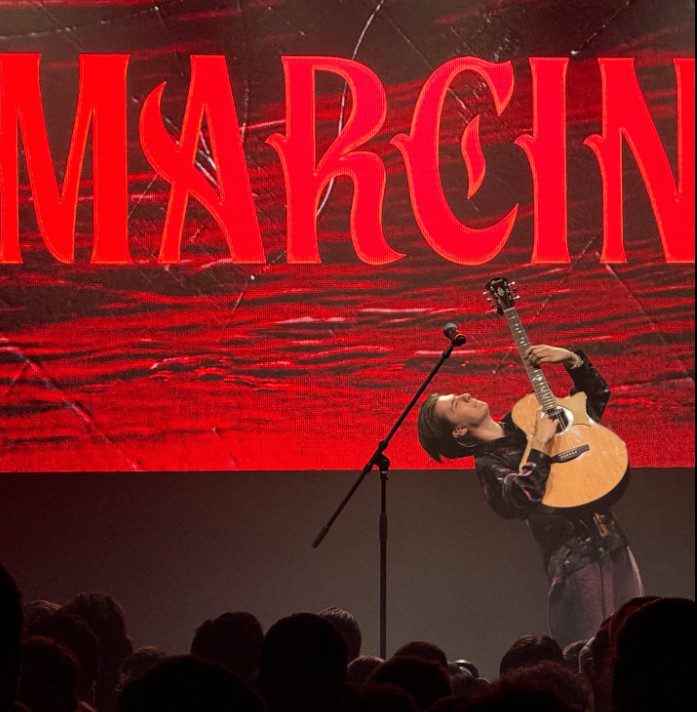
Polish acoustic guitar sensation Marcin Patrzałek will fill the Palais Montcalm for a second consecutive year. The rendezvous with Quebec music lovers is scheduled for this Saturday, September 13, as part of his Solo Dragon tour, which follows the album Dragon in Harmony, released in 2024.

A polystylistic virtuoso, he intersperses his interpretations with eighth notes and other technical feats. Highly accessible despite his extreme velocity, percussive acuity, and insane finger-picking, this 24-year-old musician aims to lead his audience down a highway marked by lively and spectacular eclecticism, yet paved with well-known references.

Marcin’s recordings and concerts are thus crossed by flamenco nuevo, metal (recently with guitarist RJ Pasin), grunge (Nirvana), jazz (Miles Davis), jazzy soul (Sade), classical soul (Bill Withers), modern classical music (Claude Debussy), romantic music (Bizet) or the Great American Songbook (Cry Me A River). He even does indie pop, having recorded with the voices of Delaney Bailey Hayato Sumino, Ichika Nito, and more.

An interview is necessary!

PAN M 360: We can describe you as a polystylistic virtuoso. You use different playing techniques; you’ve built your own technique. A very vast universe! How did you organize it?

Marcin: What I do technically is a very niche style. It’s sometimes very close to the bass, I also do several things. But what I’m best known for is my percussive way of playing the acoustic guitar. And it’s very niche, because most people who play this way don’t manage to go beyond the circles of initiates. I quickly realized that if I remained stuck in this circle, I wouldn’t be able to grow as an artist, so I became interested in several musical styles, I agreed to several collaborations. It was a must because people don’t listen to much instrumental music, except classical music or film music. Solo guitar remains an extreme niche.

PAN M 360: You talked about a percussive, finger-picking approach, and we’re thinking of Michael Hedges, Tommy Emmanuel, Andy McKee, and Adrian Legg, all of whom you’ve certainly listened to and observed closely.

Marcin: I love the artists you mentioned. Michael Hedges is the one who most developed the percussive side of the acoustic guitar, and many others have since developed this approach. Antoine Dufour excels in this style. When I was a teenager in Poland, I watched the best artists on YouTube while I was learning classical guitar and the works of Francisco Tarrega or Heitor Villa Lobos. I enjoyed it, but I felt like I was in a small circle, even if I won national competitions in Poland or even international competitions. I also felt like I had to focus on things that didn’t seem artistic to me, but rather mathematical or technical. I couldn’t see myself spending my life doing that, especially since the classical guitar repertoire seems very limited to me.

And then I explored flamenco, artists like Carlos Piñana and Yerai Cortés. Carlos Piñana, by the way, gave master classes in Poland, I had seen him play when I was 12 or 13. I was used to classical players and I discovered this proud musician, comfortable in his body, really cool. I went to one of his workshops, he liked my playing, he saw potential and gave me some scores that I then learned on my own, making mistakes. A year later, I played his piece Farruca for him remotely and he was impressed…

PAN M 360: Very interesting, because you don’t play with a flamenco guitar and you take up several elements of flamenco playing.

Marcin: It was very different from classical guitar, it was closer to electric guitar and much more percussive, that’s why I like it. But I’m not apologetic, I don’t claim to be part of anyone. This way of doing things seems academic to me.

PAN M 360: So let’s talk about your new concert. How will you present yourself on stage on September 13th at the Palais Montcalm?

Marcin: Last year I played at the Palais Montcalm, it was full and it was very good, I’m proud of it. Things have progressed since then, I have a production team at my side, my organization has more resources. I will be alone on stage, with a program that I am also very proud of. For me, the idea is to give the best show possible. I want to be original but I also have to give a show to the best of my abilities.

PAN M 360: How is the program constructed?

Marcin: This concert is called Art of Guitar. I play three different instruments.

First there is the percussive acoustic, that’s the main focus, to which I add the electric to play heavier stuff. There is also a nylon string part. I don’t play untouched flamenco or classical covers, I improvise from two pieces: the first is Capricho árabe by Tarrega followed by an improvisation session and then I play a new arrangement of Schubert’s Ave Maria. When I play the nylon part of Ave Maria you can feel the emotion that swells in the room!

PAN M 360: What is your primary goal in concert?

Marcin: My hope is that you can say when you leave the concert, “I’ve never heard anything like this before!” Fingers crossed.

TICKETS AND INFO HERE


The Ripon Trad Festival takes place from Thursday, September 11 to Sunday, September 14, right in the heart of the village, which has evidently become the epicenter of traditional music in the beautiful Petite-Nation region. Notably, the residents of Ripon open the doors of their homes and backyards to festival-goers for intimate concerts, adding a unique twist to the programming of Ripon Trad on its main stage. Ripon Trad is also a nonprofit organization formed by the local community, with leadership provided by the interviewees from PAN M 360, namely Martin Sabourin, president of the nonprofit, and his son Éloi Gagnon-Sabourin, artistic director of the event and also a member of the group Le Diable à Cinq – along with his brothers Samuel and Félix, as well as cousin André-Michel Dambremont and childhood friend Rémi Pagé. Besides Le Diable à Cinq, several groups from La Petite-Nation and other artists from outside are performing this year at the 6th Ripon Trad: Arc en Son (reunited after a very long break), Nicolas Pellerin and the Grands Hurleurs, the Trio Chant d’Elles, La Famille LeBlanc, Rose Latulipe, and Vishtèn are among the invited artists at Ripon Trad. It’s worth talking about!

INFO AND TICKETS HERE

Publicité panam

This content is the result of a partnership with La Vitrine culturelle, which announces the event of Ripon Trad.

The organization Code d’Accès has been around for 40 years in Montreal. Nevertheless, it is quite possible that you have not heard of it. That’s because his work, initially carried out by enthusiasts on a voluntary basis in the early years, and later professionalized, is focused on artists. Mentorship programs, career development assistance, etc. constitute a significant part of the activities. But there is of course a series of concerts and other public events, to which everyone is invited. And that too is important. Music lovers with adventurous ears can have exciting, surprising, and fascinating encounters there. On the occasion of Code d’Accès’s 40th anniversary and the launch of the 2025-2026 season accessible to the general public, I met with An Laurence, the organization’s Artistic Director (and also an artist and composer in experimental music), to talk to us about it.

CODE D’ACCÈS

Subscribe to our newsletter