PAN M 360 readers are familiar with this artist, having interviewed him several times. This time, we’re talking about his performance at the 15th edition of MUZ, on Thursday, October 2nd. With his world inspired by his roots, he created desert blues by adding his electric guitar, which he masters particularly well. He will be accompanied by his faithful musicians who have been with him for several years now, and together, they will take us on a journey without leaving our seats. Keithy Antoine asked him a few questions for PAN M 360 a few days before his performance.
Interviews
Nadine Altounji is no stranger to MUZ. She has already participated in a previous edition, but this time she will be accompanied by Assane Seck, among others, to share songs from her previous EPs with us. After playing guitar for others for several years, she began learning the oud and composing her own songs. She sings in French, English, Spanish and Arabic and will be performing on Thursday 2 October at Studio TD. Keithy Antoine spoke with her for PAN M 360.
Originally from São Luís de Maranhão in Brazil, also known as the reggae capital, Rommel arrived in Quebec 20 years ago. Since then, he has met other artists, notably Vox Sambou, with whom he is preparing an album project due for release next year. In the meantime, he is preparing a concert with musicians who have been accompanying him for several years, and together they will get us grooving with Brazilian popular music (MPB) mixed with other influences such as reggae, Afrobeat, funk and jazz. Keithy Antoine spoke with him to learn more about his career and what we can expect on 2 October at Studio TD.
You might think this isn’t his first time performing at MUZ, but it is. And for the occasion, Boogát will be accompanied by two musicians, one of whom is practically a member of his family. He will offer us a mix of Latin American music mixed with Afrobeat, dancehall, and many other inspirations. A regular on the art scene, he remains humble and considers himself a perpetual student. He shared his many passions with our collaborator Keithy Antoine, a few days before his show scheduled for Thursday, October 2 at Studio TD.
Yvern is inspired by the dramatic decline of winter in southern Quebec. Gabo Champagne, its creator, is an artist working in the fields of contemporary music and the performing arts. A trained composer, she has also studied theater, dance, and performance art. Her multidisciplinary background has led her to design various productions, and now we find ourselves at the heart of Yvern.
Gabo’s recent works are close to opera and/or experimental musical theater. She aims to “dissipate the divisions between the visual and the audible,” that is, to make the distinctions between the two increasingly imperceptible in transdisciplinary works.
This time, however, Gabo is working primarily with instrumentalists who are involved in this work, which premiered on Thursday, October 2, at Théâtre La Chapelle, as part of the Flux festival in partnership with Le Vivier and Québec Musiques Parallèles.
PAN M 360: Tell us about the genesis of this work:
Gabo Champagne: We first did a residency at the Pointe-aux-Trembles Maison de la culture in 2024, then we filmed our residency exit for our records. It was never made public.
PAN M 360: This work evokes your perception of the unfortunate changes in Quebec’s winter climate in the context of climate change.
Gabo Champagne: Yes, exactly. I see winter changing, with less and less snow and more and more rain. We now have exceptionally high temperatures in January and February. I find this prospect truly alarming. So I tried a different or alternative way of talking about these environmental disasters. In the case of winter, it’s closer to the heart and to culture. For me, Quebec culture revolves first and foremost around winter, around our relationship with our northern identity, with the cold, with our resilience to the cold. I was born on November 15, which is when the first snow falls. It’s always a very powerful moment for me. I realized that it affects me in a unique way.
PAN M 360: We have reached a climate that prevailed several hundred kilometers south of where we live.
Gabo Champagne: Exactly. Climate forecasts tell us that there won’t really be any snow in southern Quebec by the end of my lifetime. That’s extremely alarming to me. It pains me greatly. I wanted to express that because I also think winter is an unloved season.
People often say that we’re fake northerners in Quebec and all that. I wanted to create a work that would allow us to reconnect, or at least connect more deeply, with that season, and to realize that even if it’s not always easy, and even if we don’t always have a lighthearted love for that season, it’s something to be cherished because it’s not permanent and will eventually disappear. And so this work focuses on that observation and that disappointment, or rather that inner turmoil.
PAN M 360: Let’s see how it all fits together. You will be working with theater, audiovisual media, music, sound, etc. Several practices are presented in superimposition. So explain to us how you built Yvern.
Gabo Champagne: I have a master’s degree in music composition, so I really have that background in describing scores and so on. Then I became interested in musical theater in the style of Kagel, in particular.
In this project, I am working with a team of instrumentalists. My musical theater goes a little further with this proposal. In fact, there are moments that are composed with scores, but there are also many moments where we worked together in the studio. We spent nearly 80 hours together developing the material for the work. All the instrumentalists are invited to move around, to act, and thus to become part of the theater through their performance, which intertwines and blends with the theatrical plot.
PAN M 360: And what is your role in this program? How are you involved on stage?
Gabo Champagne: I act more as a performance artist. I speak, I can also generate a little sound, I am the theatrical heart. The instrumental ensemble accompanies me, and you could say that our style of playing is similar to contemporary music: directed improvisations, “comprovisation,” but also respect for a structure that we established together in the studio beforehand.
PAN M 360: Before the stage production, Yvern wasn’t recorded on film?
Gabo Champagne: No, it will be the first time on stage. There are no audiovisual elements of the finished work at this time.
PAN M 360: You have, right? That’s the result of the residency you completed at Le Vivier (St. Hilda’s Church) a week before the premiere?
Gabo Champagne: Last year, we had a week-long residency at the Maison de la culture Pointe-aux-Trembles and we filmed the whole thing. After that, I continued to rework it, develop ideas, see what wasn’t working in the recording, and then rewrite it. Then we spent nearly 80 hours at Le Vivier, building on what we had developed during the previous residency.
PAN M 360: You had your final rehearsals on Friday, September 26.
Gabo Champagne: After that, we go straight into the theater. So, there’s Jenn Mong on piano, Yan Cheng on percussion, An Laurence Higgins on guitar, Thomas Gauthier Lang on saxophone, Émilie Fortin on trumpet, and Audrey-Anne Fillion on cello. In addition, there’s a stage manager, JJ Houle, and Darah Miah on lighting.
PAN M 360: And you, you move around on stage, you are part of the work, you intervene as Gabo Champagne, who arrives in the work which, as I understand it, is much more musical and sonic than audiovisual, isn’t it?
Gabo Champagne: Yes, exactly. This time, it’s really built around musical instruments.
PAN M 360: No pre-recorded music?
Gabo Champagne: None, no.
PAN M 360: It’s completely live, the music is performed according to your instructions or improvised, is that right?
Gabo Champagne: Yes. The work is structured in three parts, which is not always obvious to perceive. There is a part, let’s say, that is not transparent to the audience, but for us, it focuses on childhood around winter, then a part about adulthood that may evoke adversity in the face of winter, and a final part that illustrates my death coinciding with the disappearance of winter.
PAN M 360: Yes… The climate in southern Quebec will then be similar to what Delaware or Maryland currently experience.
Gabo Champagne: Part of the text is actually a conversation between winter and me, a sort of epistolary relationship.
PAN M 360: OK! A continuous conversation with winter, from childhood to death.
Gabo Champagne: Exactly. Through this framework, I can also manipulate objects, move around the space, get close to the musicians, and play with them. I navigate these waters.
PAN M 360: In short, you are the visual!
Gabo Champagne: Yes, that’s right, I see myself as the heart, the visual, theatrical, performative element of the work. But there are also moments when the focus is on certain instrumentalists who can also move around the space, producing sounds with their voices and other means. Everyone participates in this environment, but you could say that the theatrical heart is me acting, me speaking the text, me performing the actions.
PAN M 360: How long is the work?
Gabo Champagne : 40 minutes.
PAN M 360: How did you work to indicate who should play what?
Gabo Champagne: Some parts are actually written down, solo moments, etc. For my part, I work out the main sections, what will happen in general terms. After that, we get more and more specific.
During my residency, I will describe the actions that will take place and the desired sound environment. There is a moment of discovery, then of immersion and sharing, of collaboration with the whole group.
PAN M 360: Do instrumentalists contribute to the design process?
Gabo Champagne: I don’t have a clear idea of what I want to hear. I really like asking my musicians for suggestions, I like to be surprised by what they come up with. Then we try this or that. Once a scene is apparently finished, people continue to play music, which inspires me to create something else on my own. New scenes emerge one after another. So a large part of the work is the result of collaboration, of a community that comes together around a central project.
PAN M 360: To what extent is each person free to add their own creative input? We imagine that it starts with improvisation in the workshop, then ends up being finalized to a certain extent as the work progresses. Is that right?
Gabo Champagne: Yes, that’s right. Then there are times, you know, when I listen to them play, and then I do some sound painting, on the volume or the instrumentation, I raise my hand to say what I want. We try things like that together.
PAN M 360: And after a few dozen hours, it finally starts to take shape.
Gabo Champagne: Yes. We’re now working on sequences, and after that, we have three days of rehearsals. So we’re really going to keep rehearsing, fine-tuning, and working on sequences.
PAN M 360: Will you be making an audiovisual document with the creation at La Chapelle theater?
Gabo Champagne: Yes, we hope the recording will be incredible. Normally, everything is set up for us to achieve that.
Programme
- Elijah Daniel Smith: Perihelion , 2025 (12′)
- Gemma Peacocke: Dwalm , 2018
- Roshanne Etezady: Keen , 2004
- Antonin Bourgault: Quand je ne dis mot je parle encore , 2025 (7′) pour quatuor de saxophones – création
- Gabo Champagne: Yvern , 2025 (40′) – création
Artistes
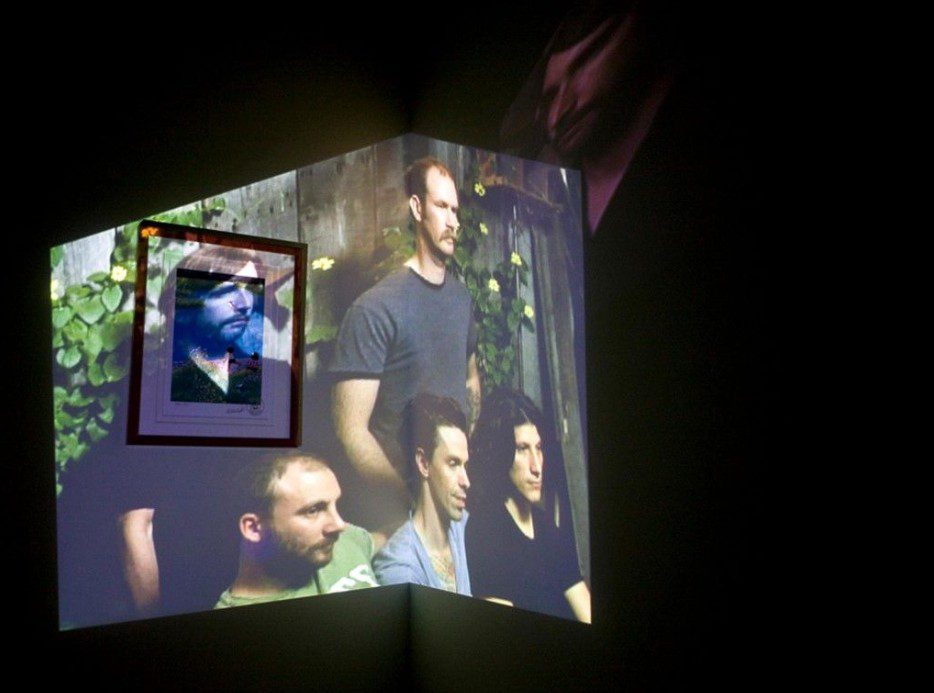
- Gabo Champagne (performance, composition, co-mise en scène)
- Yang Chen (percussions)
- Jenn Mong (piano)
- An Laurence 安媛 (guitare)
- Émilie Fortin (trompette)
- Audréanne Filion (violoncelle)
- Treffpunkt Saxophone QuartetGuy Lavoie (saxophone soprano)Thomas Gauthier-Lang (saxophone alto)Antonin Bourgault (saxophone tenor)Edmond Forest (saxophone baryton)
Since last year, the FLUX Festival has been presenting its artistic program on the Montreal experimental music scene. Until October 11, 2025, Flux offers a unique mix of concerts, workshops, round tables, presentations, conferences, and launches, all focused on performance, landscape, and politics.
Several local and international artists will bring this program to life, kicking off on October 2 with Gabo Champagne, followed by a rapid-fire lineup until the 11th, featuring Navajo artist Raven Chacon, African-American percussionist Andrew Cyrille, Thai composer Liew Niyomkarn, Argentine saxophonist Camilla Nebbia, and more.
Arts in the Margins oversees FLUX, an event based on partnerships with other players in the field: daphne, EAF, Innovations en Concert, International Institute forCritical Studies in Improvisation, Interzone, Urban Culture Laboratory, Le Vivier, Mardi Spaghetti, No Hay Banda, Québec Musiques Parallèles, Canadian Network for New Music , Small Scale Music.
Depuis l’an dernier le Festival FLUX soumet sa proposition artistique dans le paysage montréalais des musiques expérimentales. Jusqu’au au 11 octobre 2025, Flux souhaite offrir un mélange unique de concerts, d’ateliers, de tables rondes, de présentations, de causeries et de lancements, le tout axé sur la performance, le paysage et la politique.
Plusieurs artistes locaux et internationaux feront vivre cette programmation et ça commence vraiment le 2 octobre avec Gabo Champagne, et ce sera un feu roulant jusqu’au 11, avec l’artiste Navajos Raven Chacon, le percussionniste afro-américain Andrew Cyrille, la compositrice thaïlandaise Liew Niyomkarn, la saxophoniste argentine Camilla Nebbia et plus encore.
L’organisme Arts in the Margins chapeaute FLUX, un événement fondé sur des partenariats avec d’autres joueurs du milieu : daphne, EAF, Innovations en Concert, Institut international pour les études critiques en improvisation, Interzone, Laboratoire de culture urbaine, Le Vivier, Mardi Spaghetti, No Hay Banda, Québec Musiques Parallèles, Réseau canadien pour les musiques nouvelles , Small Scale Music.
INFOS ET BILLETS / INFOS & TICKETS HERE
Originally from the Democratic Republic of Congo, Kizaba performs on stages both nationally and internationally. Named Radio-Canada’s Revelation of the Year for 2024-2025, he has had a very busy summer and is already preparing to hit the road again, heading for WOMEX. The show he will present at Studio TD will be a preview of what he will be doing at WOMEX, so we will have an exclusive in a way. The man known as the ‘pioneer of Congolese electro music’ spoke with Keithy Antoine of PAN M 360 about his dizzying career evolution.
Lavanya is an artist who needs no introduction. She is often seen at Vision Diversité events, but also elsewhere in the city and province. She is accompanied by musicians from Brazil, Mali, Bangladesh and Haiti, and her music incorporates all these influences. With her background in classical Indian singing taught by her father, she has added Quebec and North American music with her own unique touch. Keithy Antoine spoke with her to learn more about her career, and she will be at Studio TD on Sunday, 5 October to close the 15th edition.
Dan Seligman is the founder and still creative director of Pop Montréal, Montreal’s premier fall happening. He leads the team that recruited the artists and bands scheduled for Wednesday, September 24th to Sunday, September 28th. As is the case every year, PAN M 360 asked him to identify the 5 daily must-haves of his artistic direction. Here are the priority choices for the 5th and final day of POP MTL 2025!
“Do Make Say Think is, in my opinion, Sunday’s top pick, the biggest deal. I’ve been a huge fan of this band on the Constellation label since 1997; the last time I tried to invite them, the concert unfortunately had to be canceled. Experimental, post-jazz, improvisational, both jammy and constructed, defies all categories. I haven’t seen them in a long time; they’ve been working since 1995. POP’s bio tells us that Do Make Say Think established themselves as one of the pioneers of post-rock, then migrated to other hybrids.”

“Mellonella is the band of Neptune Lightburn, daughter of Natalia and Murray of the Dears. It’s one of the very good emerging bands in Montreal, very proggy, punk too. There’s currently a whole emerging scene of artists in their early twenties. My 16-year-old daughter keeps me informed because she’s very involved in this scene. The lineup at Le P’tit Ours today is a testament to that.”
Mellonella’s bio reads: “We are inspired by King Crimson, ELP, Genesis, and Yes, but also by modern experimentalists like Black Midi and Geordie Greep. Our music features many odd time signatures, complicated song structures, and long-form compositions.”

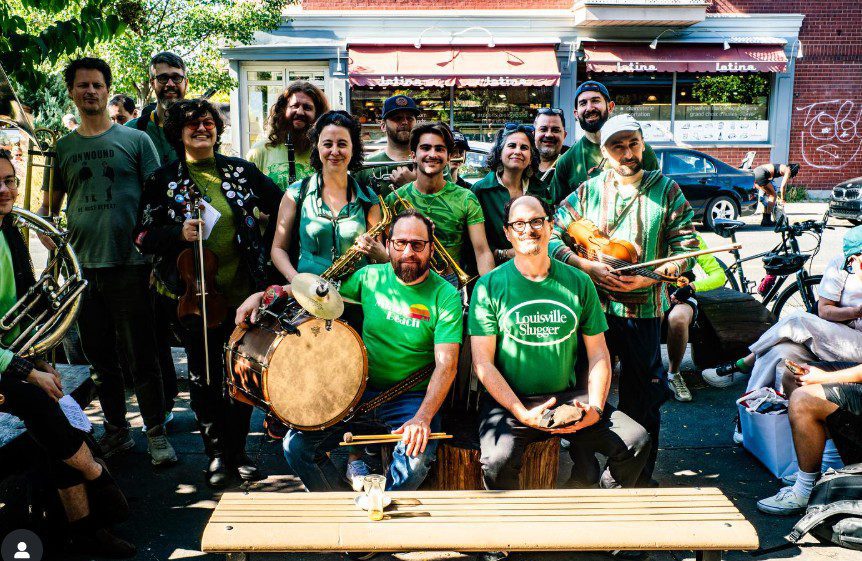
“The parade kicks off at 1 p.m. from the Social Club. Performers include Josh Dolgin’s (Socalled) marching band. Fanfargenign is the name of a Yiddish folk music project, a klezmer marching band experience rooted in Yiddish traditions. With Josh as ringmaster, this is the main band of the Mile End Parade, also featuring Hawt Dawg, Avery Jane, Fraud Perry, and guests.”

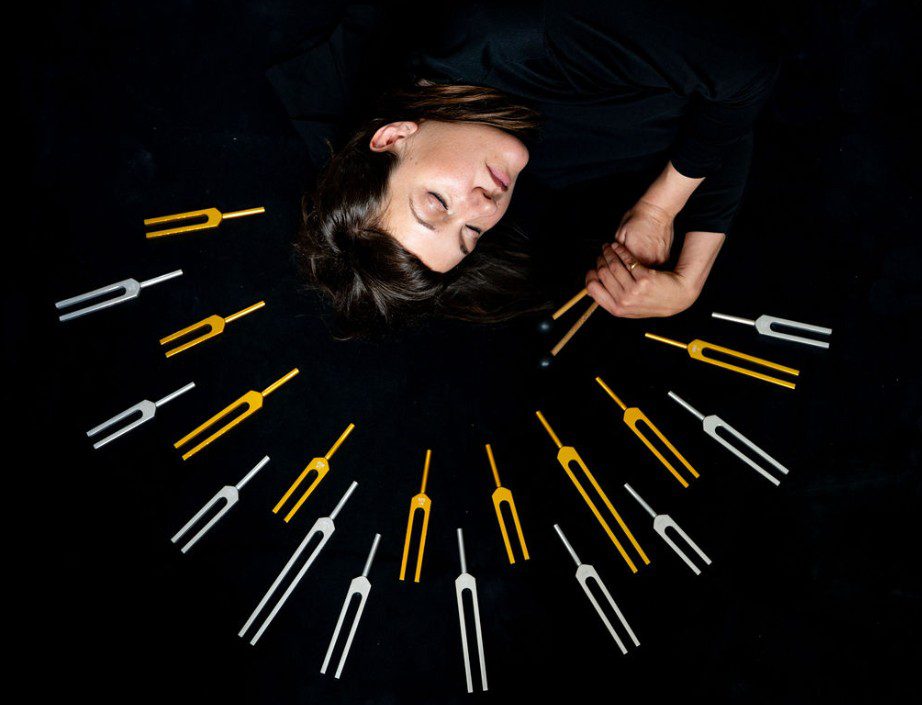
“Sunday PM, the Sound Bath is led by Lisa Iwanycki (Creature), Robbie Kuster (Pat Watson, René Lussier, etc.), Laurel Sprengelmeyer (Little Scream), and promises to be a calming and healing event. We take off our shoes, close our eyes…”

“Unessential Oils is the new project from Warren Spicer, lead singer of the Montreal band Plants and Animals. The project draws inspiration from jazz, folk, Tropicália, Jorge Ben, Daniel Lanois, Miles Davis, and more. In a way, it manages to recreate the original magic of Plants and Animals: that open, experimental, folkie side that’s also prone to improvisation.”

Before their show at Théâtre Fairmount to open the POP Montréal festival last Wednesday, Siggi invited me to talk with two of the core members of múm, Gunnar Örn Tynes and Sigurlaug Gísladóttir. They greeted me warmly and generously answered my questions about their creative practice. Their album History of Silence, released just a couple of days prior, gives a unique twist to their hybrid instrumentation of strings and electronics. In orchestral fashion, the two worlds meet in long swells reminiscent of the collaboration between Floating Points and the London Symphony Orchestra—a soothing wave that calms the mind.
In this interview, Gunnar and Sigurlaug discuss the album’s production, the role of live electronics, and their approach to performance.
PAN M 360: I think where we could start is the most obvious announcement from múm, which is that you released an album on September 19th, just a couple days ago. First of all, just talking about the title, History of Silence. It’s very evocative. How did you get to this title?
Gunnar: Well, we love having names of songs and albums that kind of invoke thoughts in the listener or people that perceive it. So we like not to have a strict definition of things. It’s more up to the listener. But I mean, there were a couple of titles floating around, but this somehow won. I mean, it is intriguing. The album also has moments of silence in it. And obviously, we haven’t released an album for 13 years or something. So maybe it’s referring to that silence as well.
Sigurlaug: There’s definitely a correlation between negative space in music, where you allow for silence to be a part of the composition, like the absence of something. So the title sort of hints at it, but nothing is literal in our way of doing stuff. There’s many ways to interpret the title. And the most fun is to hear what other people take from it. If someone listens and then puts it together, and they come up with a context that might be new to us, which is always part of the journey of releasing art. It’s never complete until there’s someone else involved also—an audience.
Gunnar: Our second album is called Finally We’re No One, which is a really hard thing to explain as well. But somehow people get it. It has a meaning, but the meaning is a little bit abstract and open to interpretation. And once it’s interpreted, I think that someone has their own emotional attachment to it.
PAN M 360: You mentioned negative spaces. I want to develop on that a bit, because I think one thing that’s very particular about your band is that there are a lot of you. So I guess in order for that to work, everybody has to be very aware of these negative spaces. You’d figure that with that many people, there’d always be a sound going on. But in your music, there’s actually this very quiet sensitivity. So how did this come about? Is it because of the people you choose? Is there an orchestration happening when you’re playing?
Gunnar: No, we’re very democratic and liberal.
Sigurlaug: I have to say, there’s a benefit in the two main composers. There are two people for whom it is your project, and people come and collaborate. There’s not so many cooks in the kitchen, so to speak. There’s not too many cooks. There are two cooks in the kitchen, and then a bunch of sous-chefs. So that also really helps the direction. It would be a lot if we had to be democratic about every decision in the minutia of it. And for us, the other people, it’s so fun to be in this project led by them. I would say there are two people that have the power to edit it down to where you do have space. So that’s super helpful in this specific process. But then when we do play live, it’s a different animal because then it feels more like a band, and we all contribute. It’s not like they are so much the boss when we’re playing live. Then we have a better democracy there. But in the recording process, it’s really helpful to have people there.
PAN M 360: Talking about the live aspect, we’re going to see your show tonight, so it’s a bit relevant. This is a question that regularly comes up: when you’ve released an album and you’ve put a lot of time into production—it can be precise, it can be very dynamically contrasted—when you’re approaching playing a live show, like you were saying, now everyone is contributing a bit more, are you looking to reproduce as close as possible to what is on the album? Or do you have more of an improvisational approach?
Gunnar: We usually let our songs get their own life. So they’re kind of reborn when we start to play them live. And very often they change a lot after playing them live; especially for years, some songs we radically change. So they get a second life when we play them live. It sounds weird, but… There are obviously some parts we want to adhere to, but now we’re more free with it, I think. We kind of let them sail the direction they want to sail.
Sigurlaug: And it also depends on the line-up of the band, because it’s changed so much over the years. Some people are more improvisational, like Róberta, who is our amazing guitarist now—she almost never plays the same thing, which is a delight for everyone on stage because she’s so incredible.
PAN M 360: I had a question about electronic music instruments. You’ve been playing with electronic instruments for over a decade. What is your relationship to progress in this field of technology? How do you handle “obsolete” technology?
Gunnar: There are a few gears that you have to give up because you just can’t use them anymore. But, yeah, mainly samplers. I mean, analog stuff is just as relevant. I think, like any other instrument, it’s always fun to get a toy that excites you and gives you inspiration. Sometimes it’s new technology. Sometimes it’s just old technology that I haven’t experienced before. Sadly, a lot of new electronic instruments are geared towards a very specific type of music. So a lot of electronic instruments are kind of made to make a certain type of music; a lot of it is kind of geared towards dance music or clubbing music. So we usually kind of go on the other side. Weirder. The reason why we’re the band we are today, live performing at least, is that we started with a lot of electronic stuff and had like live MIDI sequencers on stage and we’re doing that. But then we ended up just kind of finding it a little bit boring just to stand behind electronic instruments and just push buttons. That’s why we kind of started playing instruments with the electronics, because sequencing is something you do at home anyway. You’re living a lie if you’re pretending that you’re doing it live. I mean, you could, but it’s sequencing. It’s a pattern that you pre-define.
Sigurlaug: It’s also just a crazy passion to have these huge tables of synthesizers. If you’re touring like that, it’s a bit nuts. And it’s also just so much more alive when you have these string instruments mostly. And there’s dynamics. We are listening to each other in a very different way. It’s a different way of communicating through the instruments. And that’s appealing to us in this context. Because it’s not like the electronic elements are not being presented; the actual instrument just doesn’t have to be on stage.
PAN M 360: Talking about how technology can shape the process, this album was made a lot over long distances. Is that correct?
Gunnar: We started it all together in one room. And then we kind of refined it over long distances. We spent time editing it down and kind of shaping the songs a little bit and then recording vocals.
Sigurlaug: My favorite part was we were sort of in a time crunch at the very end, and then I was doing backing vocals in Athens and Gyða was in Reykjavik, and we were trying to do it at the same time and sending it within a couple of hours. I was sending it over, she was over there doing her part, sending it back, and then back and forth. It was really quick ping-pong. Normally you’d do your vocal recordings, send them on, hear back after a while. But that was kind of an exciting little evening of shooting vocals back and forth across the ocean.
PAN M 360: A question for the chef: Talking about this process of sending tracks back and forth and this long bubbling process of almost 13 years of coming up with these songs and ideas, how do you decide when to turn off the stove? When do you decide that a song is done?
Gunnar: Very often, it’s just setting and booking a mastering studio. That’s the day you have to be done. It’s the same with visual artists. They just book a show and then you just have to put it on the wall at some point. Otherwise, you can just let it simmer forever. Sometimes, you know. It’s different. Some songs, you’re just like, this is done. You don’t need anything more. But some songs, you kind of twist them around until the last minute. It’s hard. Especially with your own stuff. I’ve done a lot of production and recording for other bands. Then you can kind of have a clear vision and help them to do that. But with your own stuff, you get a little bit cuckoo in the head.
Sigurlaug: You’re lost in the sauce.
PAN M 360: Speaking about the evolution of your live sets, what’s the energy that you’re bringing? Is there a message that you’re trying to bring through the live sets?
Gunnar: I think by default, we’re not cool. We’re not one of these bands that’s trying to be cool. If we’re cool, it’s by luck. We’re playing, we’re having fun, we’re just doing our thing. We’re not trying to put on a show. I don’t know, it doesn’t make sense. We’re not trying to pretend to be anything else than we are. Sometimes we come off as… playfulness, maybe. I don’t know. It’s hard to say.
Sigurlaug: I feel very grateful to be in this band that you’re in. I’m pretty happy to be spending time together. It’s basically just fun.
PAN M 360: I think that’s a good note to end it on. Your music is playful, you’re having fun, you’re not pretending to be anything. It definitely just shows; just being here, the band feels super close, like you’ve been friends forever.
Dan Seligman is the founder and creative director of Pop Montreal, Montreal’s premier fall music festival. He leads the team that booked the artists and bands scheduled to perform from Wednesday, September 24 to Sunday, September 29. As it does every year, PAN M 360 asked him to identify the five daily must-sees from his artistic direction. Here are the must-sees for Saturday, September 27!
“Ribbon Skirt is one of my favorite bands from Montreal, and I’ve been following them for three or four years. Every time I hear them and see them again, this band has gotten even better. It’s a great formula, post-punk rock and Indigenous music. Led by Anishinaabe musician Tashiina Buswa, they released Bite Down on Mint Records in April 2025. Against a rock backdrop, the singer raises themes of memory, Indigenous identity, and historical issues.”

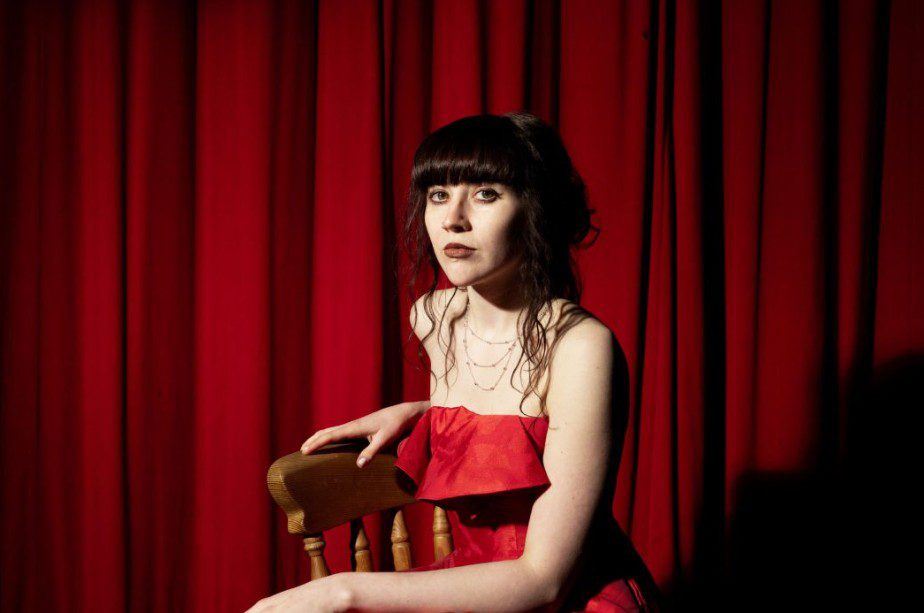
I saw Dilettante at South by Southwest and loved her. She told me she had applied to Pop MTL. It was really cool. I don’t know if she’s coming alone or with her excellent band, but I know she plays the saxophone, which she also uses in loops. It’s pop, but it’s a strange, fun, arty, very rhythmic kind of pop. Dilettante is the pseudonym of multi-instrumentalist Francesca Pidgeon, based in Manchester, UK.”

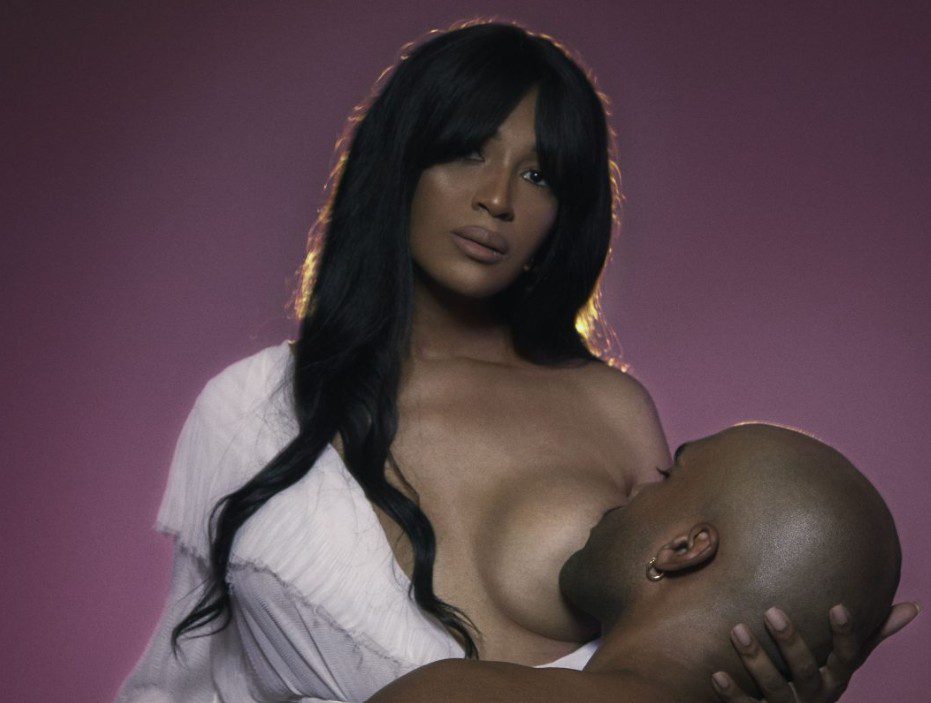
I think her new album, Black Space, is one of the best of the year, but I think Elle Barbara is one of Montreal’s most special artists. She has her own thing, her own universe. I’ve been supporting her since she started her career, and she’s one of those artists who pushes the boundaries of pop. There are also elements of classical, punk, R&B, disco, synth-pop, glam rock, and other unexpected combinations. The Polaris in 2026? Maybe! Elle Barbara is a transgender artist who excels in art pop, is interested in experimental theater, has done community work, and remains a central figure in Montreal’s underground scene.

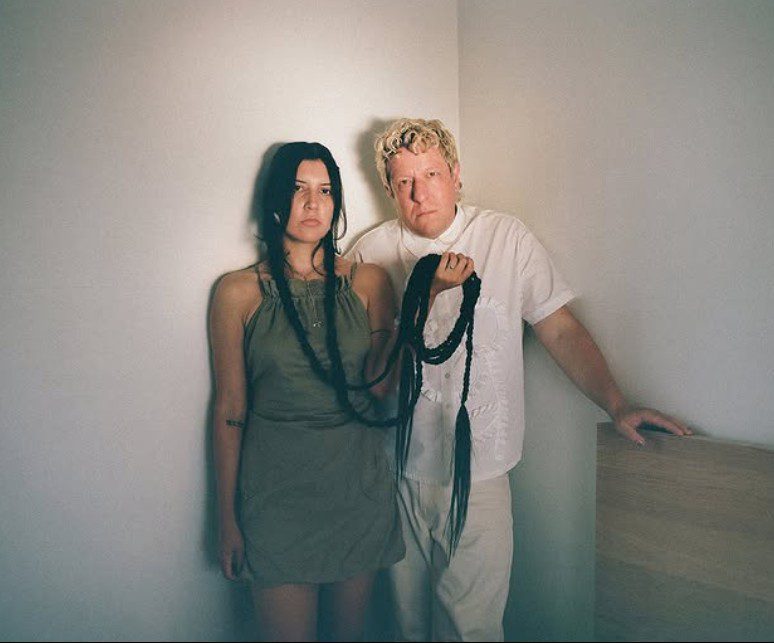
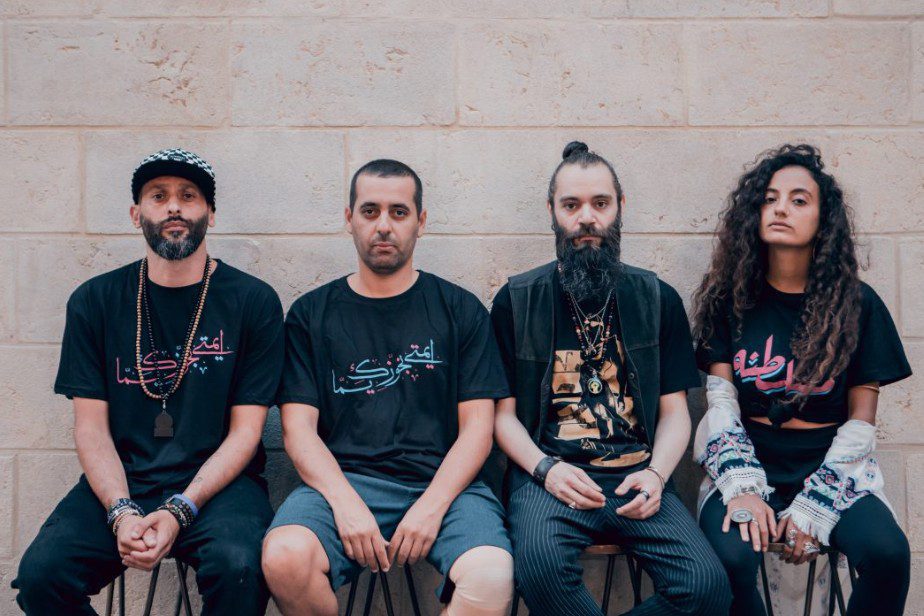
DAM is definitely a must-see on Saturday night. This Palestinian rap group, one of my favorites at POP this year, was one of the first hip-hop groups in Palestine and the Arab world, and they make excellent hip-hop. Today, the perspective of Palestinian citizens of Israel is based on a deeply meaningful identity that is of the utmost importance. And their music is really cool. DAM means “eternal” in Arabic. Formed in the late 1990s, Tamer Nafar, Suhell Nafar, and Mahmood Jrere wanted to tell their story through hip-hop.”

“Soltera, from Los Angeles, will be playing for free this Saturday afternoon. I saw this band for the first time at the Slut Island festival in Montreal (held in October). Very cool, Latin, electronic, and punk. Soltera is made up of outsiders in synth music. Soltera was initially the project of American-Colombian artist Tania Ordoñez. Soltera became a dynamic duo with Pacoima Techno on co-production and vocals.”

Sarah Rossy has cherished this project for eight years. Putting the pieces of the puzzle together, financing, finding support, refining the production, recruiting performers, arranging, producing, recording, mixing, and presenting the material for Lucid on the stage of the Ministère, on a Thursday, September 25th, in front of her extended community, her family, and her close friends.
Sarah Rossy is not ordinary.
A trained pianist and singer, passionate about modern classical and modern jazz, in tune with the orchestral pop of her time, the Montrealer performed most of the tracks from Lucid, an album released the same evening, surrounded by 10 musicians and choristers, among the most competent of their generation in Montreal.
Like her colleague and friend Thanya Iyer, who was also a backing singer for this magical evening, Sarah Rossy offers an ambitious, rich and invigorating chamber pop. She chooses her colors: contemporary jazz, free improvisation, prog, avant-pop, synth-pop, vocalizations from the Levant (given her Lebanese origins), Great American Songbook, soft noise, all melted into a melting pot of virtuosity and orchestral cohesion. Superb integration!
It’s hard to predict what will become of this hot recording project, so skillfully transcribed on stage. A singing teacher and artist, she happily pursues her two careers simultaneously and tries to take her art further.

PAN M 360: Such an ambitious project at the beginning of a career takes a long time to complete. If we go back to the origins of its production?
Sarah Rossy: Part of the album was produced in a more traditional way, in 2017. Over the following years, we really reworked it, we also did a lot of digital production. These many layers of studio time took us a lot of hours!
PAN M 360: So you worked on this album for several years, then you took it further with a director accomplice.
Sarah Rossy: At the end of the process, in 2023, I decided I really wanted to finish the album. So I went to New York, where I have a good friend there, guitarist Jack Broza, who became the co-producer of the album. We worked together in his small studio for four days, and we went over all the layers of this music together: vocals, guitar, percussion, electronics, etc. I can’t even count them!
PAN M 360: A whole community of musicians has supported you on this long journey. Tell us about it!
Sarah Rossy: Yes, the album features some of the musicians from the original lineup I had when I started working on it: Frédéric-Alexandre Michaud (violin), Victor De Coninck (viola), Natalie Yergatian (drums, percussion) and Jonathan Arsenault (bass). These are all musicians I met through McGill University (Schulich School of Music), incredible humans from all over Canada – Gaspé, Ottawa, Acadia, Vancouver, etc. A pan-Canadian group, in a way. Each one was involved with incredible influences. I really chose those I worked with based on their personality and their heart. And then this group stopped until Jack Broza (guitar, bass, co-production) helped me finally conclude.
PAN M 360: Listening to your music, we quickly understand that you have a background in jazz and modern classical music. This doesn’t stop you from making songs close to chamber pop, from being in tune with the times. So, how does an educated musician create songs that are somewhere between cutting-edge music and pop?
Sarah Rossy: That’s a really good question. I think this album was really challenging because the songs I wrote were pop songs. When I was studying at the time, I felt a lot of judgment about what I was creating. You know, the academic way can be very cerebral, it’s less from the heart.
PAN M 360: Yes, musicians who try to master the past perfectly do not necessarily create something new.
Sarah Rossy: Exactly. But I’ve been really grateful to have incredible mentors who have shown me this open-mindedness, despite being in an academic space. People like John Hollenbeck and Christine Jensen. I’m so grateful! Because they’ve shown me that, yes, you don’t have to recreate what’s already happened—which I also love doing, by the way. And yes, you can have your own voice. Having mentors has been key.
PAN M 360: Finding the balance between the emotion of a song and the depth of the composition is indeed not easy in this context. How do you achieve this balance?
Sarah Rossy: In this particular case, it took a lot of thought, concentration, a powerful connection to my heart and not just my brain.
PAN M 360: As a singer, did you receive a classical education?
Sarah Rossy: I never studied classical singing. I started out as a pianist. And I started singing while I was studying piano.
PAN M 360: And you became a teacher.
Sarah Rossy: I teach music, mostly voice, sometimes jazz history, sometimes. This semester, I’m teaching four voice classes. Sometimes I teach music history, music appreciation, music literature…
PAN M 360: How did you want to transcribe this recording for this concert at the Ministère?
Sarah Rossy: I decided to mirror the process of this album. It was a long, collaborative effort, so I invited the original lineup, partnering with my most recent collaborators – Tommy Crane (drums), Claire Devlin (saxophone), Thanya Iyer (vocals), Ruiqi Wang (vocals) and Corey Gulkin (vocals).
PAN M 360: Extended Family!
Sarah Rossy: It’s incredible! It’s a huge circle of sharing and creative support. So 10 people on stage. We worked hard all week to adapt the material. We left space in the songs to breathe better and improvise. The intention behind all of this is the expression of our love and dedication to music. I’m so grateful that these wonderful artists made the trip for me, for this evening.
PAN M 360: And here we are at the top of something.
Sarah Rossy: It’s like a ceremony. So far, this album is the main legacy of my career.
PAN M 360: This means you are ready for the next steps!
Sarah Rossy: I hope so, yes. It’s my baby!
PAN M 360: What makes you proud?
Sarah Rossy: To have followed through with my ideas, without compromise. And to have been part of this extraordinary community of artists, all so important to me. So I think I honored the process by bringing them together on stage.