Established since 1989, the 15-member chamber orchestra founded by Lorraine Vaillancourt under the banner Nouvel Ensemble Moderne (NEM) is launching its 2025-2026 season under the artistic and musical direction of Jean-Michaël Lavoie, who is in his second season at the helm of the NEM. Two programs are presented on as many evenings, on October 15 and 16. Under the shared direction of Jean-Michaël Lavoie and Lorraine Vaillancourt, the first program, entitled NEM and the Next Generation, highlights renowned composer Brian Current and features three premieres by composers Christina Volpini, Tom Lachance, and Francis Battah. The second program is dedicated to the accordion through works by Snezana Nesic and Denis Gougeon, and the main course is quite surprising: the performance of Igor Stravinsky’s The Rite of Spring, in an arrangement for chamber orchestra by François Vallières, violist with the NEM. This is why PAN M 360 presents this interview with Jean-Michaël Lavoie.

Publicité panam

From October 9 to 13, 2025, Les Rendez-vous ès Trad is holding its 34th edition in the National Capital Region. A 5-day fall gathering where storytelling, family activities, traditional songs, and jigging come together for young and old. Located at the magnificent Domaine des Maizerets, the event is a perfect opportunity to combine activities and living heritage during the Thanksgiving long weekend. We caught Cassandre Lambert-Pellerin, one of the co-directors of the organization, between two whirlwind tasks to learn a little more about the program and the atmosphere that can be experienced there during the long weekend.

This content was produced in partnership with La Vitrine


Publicité panam

PAN M 360: What was the idea behind creating the És Trad Festival?

Cassandre Lambert-Pellerin: The Centre for the Promotion of Living Heritage has existed since 1981. Initially, it was called Les Danseries de Québec, because at Laval University in the 1970s there was a group of young people who organized traditional dance evenings. Since they were all art students, they also appreciated storytelling and music, so they started thinking about an event that in 1991 saw the light of day under the name Contes et Violons. The idea of ​​creating a highlight during the year continued to be renewed and now, it kind of kicks off our season; during the year, we organize many other dance evenings, concerts, activities, craft fairs and school tours. So, the idea was to perpetuate the original mandate by adapting it to modernity.

PAN M 360: What sets your event apart from other traditional music festivals?

Cassandre Lambert-Pellerin: First of all, it’s not just music, we also have a lot of dance and we also have the song component! (haha) What sets us apart from other festivals is that we don’t have a lot of concerts, we have a lot of activities! We move away from the typical logic of the passive consumer of culture, we’re really not into that. The public is encouraged to participate and everyone is an actor in their culture by coming. In traditional arts, there is this idea and this desire for community that is very, very strong. We are tightly knit as they say, so we try to instill this mentality. In addition to that, we try to push back a little the formats we see in other festivals, like for example Les Trios Éphémères where we draw, from the festival participants, three artists who don’t know each other and will create something together. We also have La Joute Chantée, which is like an improvisation match, but where the answers to the referee’s questions are traditional musical responses. And the audience gets to vote! It’s really great fun and you don’t see it at other festivals.

PAN M 360: Are you targeting a specific clientele in the Capitale-Nationale region?

Cassandre Lambert-Pellerin: We’re definitely happy to welcome people who already love living heritage and traditional arts, but we always find it’s an opportunity to reach out to new audiences. We’re based at the Domaine des Maizerets, which is a superb site and is in a residential area. So there are people who are close by and who are used to visiting the estate who also join us since our program is free. Children are always welcome; living heritage is very intergenerational, and so this year, we’ve set up three new activities for them, at ten o’clock in the morning, really designed for families. Our evening events are very varied: we have gangs from the university as well as retirees! (haha)

PAN M 360: What can people who have never attended the event expect?

Cassandre Lambert-Pellerin: They’re going to meet their future new best friends that they don’t know yet! (haha) I want to emphasize that, even for dance activities, it’s really normal to come alone. The events are designed so that everyone can find a partner on site! I remember, when I first set foot at the festival, someone introduced me to another person, who decided to go around introducing me to everyone (haha)! That’s the atmosphere: a big family!

PAN M 360: What kind of facilities are there on the site?

Cassandre Lambert-Pellerin: We have a large marquee, with a huge wooden floor for dancing. The marquee is at the back of the main building, and since it’s autumn and not so hot, we have a little heating. We also have a few activities taking place in the small chapel, including a private viewing and an introduction to screen printing, as well as the Chalet Lacroix where we hold workshops for the family, singing aperitifs, and late-night jams, where we play music until late.

PAN M 360: Tell us a little about the site chosen to host the festivities?

Cassandre Lambert-Pellerin: This is our third year at Domaine des Maizerets and we are really happy! The activity that concludes the festival each year is a singing hike in the forest, inspired by the time when people sang to cover long market journeys. Previously, we changed parks each year and then eventually we came to the Domaine, where we already sometimes held dance evenings in the main building. It is such a majestic place with its large trees and the community already had a lot of affection for the place so we thought we would contact them to establish the festival’s street frontage!

PAN M 360: What subgenres of music can we find during the weekend?

Cassandre Lambert-Pellerin: The two shows we have this year are Galant, tu perds ton temps, a quintet of traditional Quebec music sung a cappella with lots of harmonies and accompanied only by percussion, and the duo Alexis Chartrand, who is a baroque violinist who grew up in a traditional family and who presents a subtle Quebec repertoire accompanied by the American Nic Gareiss on the jig, or rather flat-footing. It’s a percussive dance originating from the Appalachians, which is much closer to the ground. This means that sometimes the jig becomes more melodic and the violin more percussive, so these are really two super interesting exchanges, well supported by the percussion, which we are very, very excited about and which can refresh the idea we have of traditional performances!

PAN M 360: Why choose early autumn as the event window?

Cassandre Lambert-Pellerin: Traditional music is all year round! (haha) Sometimes people have preconceived ideas, saying: “Ah! Traditional music is good during the holidays! It’s good on Saint-Jean!” aiming at these very specific moments as being those for living heritage, but we established ourselves right in the middle of the two, to remind everyone that there is no bad time. Also, in the Quebec City region, the festival calendar is so full that we are happy to have our little niche in the fall, during the long vacation when people are free.

PAN M 360: Is the team already thinking about the 2026 edition?

Cassandre Lambert-Pellerin: We have lots of great ideas for the next edition that we’re accumulating, guest suggestions and all that, but at the same time we’re also thinking about what’s going to happen in January since we’re also collaborating with Kaléidoscopes, so we can’t wait to be able to unveil all that. But obviously, since we’re two co-directors who took over the organization six years ago and we have a very part-time assistant who helps us a little, we’re getting ahead of ourselves to organize around 300 activities per year! (haha)

MORE INFO AND TICKETS HERE

Ahead of Vibrations Festival 2025, an event that will include a symposium in addition to several musical performances, we at PAN M 360 spoke to Joao Lenhari, the director of the UdeM Big Band. The ensemble is set to perform at the Outremont Theatre on October 16th and will celebrate its forty-fifth anniversary, with students and members of the department sharing the stage. Ahead of the show, we spoke about his plans for the future of the ensemble, some musicology, and a few career highlights.

TICKETS & INFOS HERE

PAN M 360 : The UdeM Big Band has been under your direction since 2023. What are some long term and short term goals for the ensemble? Is there anything you were particularly happy to have achieved with the ensemble already?

Joao Lenhari: Good question. What I can tell you is that my long-term project with the UdeM Big Band is to increasingly spark the interest of younger generations in playing in a big band. We all know about the rise of artificial intelligence in music, and I value human knowledge. At the university level, I want to continue the legacy of excellence at the Université de Montréal. To achieve this, short-term goals are essential, and my aim each year is to help students challenge themselves and grow together. Jazz is democratic — we’re always interacting and engaging with different musical perspectives. However, within a large group like a big band, we need to dedicate ourselves to achieving the best possible musical result. By doing this, I’m confident that all the students who have been part of the Big Band with me will carry this experience with them throughout their lives. That is my greatest goal as a professor: to prepare my students for success in the professional world and, most importantly, to teach them to conduct themselves properly and ethically.

Yes, I have some accomplishments that I’m very proud of since taking over the Big Band: the concerts with our international guests — who are major names in jazz — and the recording of the UdeM Big Band’s fifth album. In fact, I’d like to take this opportunity to say that you’ll soon hear news about this album, which pays tribute to the female singers of jazz. The album will be called Intemporel Vol. II – Hommage à la Voix Féminine. Stay tuned — it’s our surprise anniversary gift to the public.

PAN M 360: I see there are some great selections on the program, including arrangements of Monk, Gil Evans, and Benny Golson, as well as several composers from the Tin Pan Alley era. As a director and performer of big band music, what is your favourite era? Any favourite composers?

Joao Lenhari: I don’t have a specific period that I favor more. All periods are important and contain wonderful works. It’s worth mentioning that most of the arrangements we’re going to perform are essential for the musical development of young musicians. I chose them precisely to give students the opportunity to explore different styles of arranging and to encourage individual research in order to interpret the pieces as coherently as possible. With my knowledge, I can highlight specific interpretive elements from each era — things like vibrato, attack, blend, note endings, time feel, and many other aspects relevant to each period.

So, to briefly answer your question: I don’t have a preference for any particular era, but I can tell you that I am crazy about Thad Jones!!!

PAN M 360: When considering Brazilian musical styles and their influence on jazz, it seems that samba and bossa nova from the 1960s are the most cited examples. As someone well-versed in both jazz and Brazilian music, are there any other Brazilian styles that you think were important in the development of jazz? Are there styles you think people should be more familiar with?

Joao Lenhari: As everyone knows, Brazil is a vast country, so we can say there are many “Brazils” within Brazil. The styles that gained the most international recognition were samba — first with Carmen Miranda during the U.S. government’s “Good Neighbor” policy era — and later bossa nova, especially with the Getz/Gilberto album and the Carnegie Hall concert in 1962. I also believe that Milton Nascimento’s music is extremely important for the development of modern jazz, particularly due to his close relationship with Wayne Shorter. Hermeto Pascoal’s music, which is classified as “universal music,” also had a strong influence on jazz. As for musical styles, I believe that once we see music as something divine and elevated — not just a commercial product — everyone should open their minds and listen to as many styles as possible, absorbing the unique elements of each one. Ultimately, music is infinite, and everything we can absorb and appreciate is beneficial for everyone.

PAN M 360 : As a seasoned arranger of music, what are the best ways one can become effective and quick in their writing? What skills would you say are essential when writing for film and television?

Joao Lenhari: First of all, it’s essential to listen to a lot of music. I believe that learning music should be like learning a new language: we first learn the sounds of the words, then how sentences are built, and finally how to organize those sentences into a text. Writing an arrangement follows a similar process — first, we hear a sound in our minds, then we choose the elements we want to include, and finally we organize them.

I like to say that theory is a tool to help us express what we have inside in an organized way. But what truly matters for an arranger is what they carry within — their creativity, their ability to make a simple musical passage evoke emotion according to their vision.

I think this also answers the question about music for film or TV: you need to watch the scene many times and feel the emotion you want to convey through the music. Music is present in everything, and as an arranger, I enjoy bringing out small details that may be imperceptible but make a huge difference.

PAN M 360 : I couldn’t help but notice that you’ve accompanied Roberto Carlos on several occasions. It occurred to me that those less familiar with Latin music may not grasp his enormous popularity in Brazil and in Spanish-speaking Latin America. How would you explain his significance to someone unfamiliar with his work?

Joao Lenhari : You really did your research on me! haha I’ve had the great pleasure and honor of working with Roberto since 2008. My last tour with him was in the summer of 2024 in the United States. Since then, I haven’t been able to coordinate my schedule here in Montreal to travel to Brazil for the concerts. What I can say about Roberto is that he is simply the greatest singer in the history of Latin American popular music. You could say he’s the Frank Sinatra of Latin America — he’s sold more records than The Beatles in the region, which is incredible. I’ve had the privilege of traveling to more than 25 countries with him, and thanks to that work, I’ve met many people, experienced the culture of various places, and learned a lot about the traditional music of each country. I can highlight the live concert at the iconic Copacabana Beach in Rio de Janeiro for more than 500,000 people and the show in Jerusalem in 2011, these two concerts were very special for me.

Publicité panam

The 24th edition of La Virée Trad takes place from October 10th to 12th for the final weekend of festivities of the season. This event will take place in Carleton-Sur-Mer, in the Gaspé Peninsula, serving as a springboard for traditional music and thus honoring our musical and cultural heritage. Young and old, local or international: everyone is welcome during the weekend where activities, conferences, performances, and dancing will take place between the sea and the mountains. We managed to chat for a few moments with its director, Samuel Téguel, to learn a little more about the program and the surprises we can expect during this long festive break.

This content was produced in partnership with La Vitrine

Publicité panam


PAN M 360: What makes La Virée Trad different?

Samuel Téguel: First, the season, since La Virée takes place on Thanksgiving weekend. It’s one of the last festivals of the season in Eastern Quebec. So, in a fall setting, it adds to the uniqueness of the event. Then, of course, the program: we stand out from other festivals where there is only song or pop. We also offer a lot of workshops, whether it’s an introduction to jigging or the violin, and the artists are very accessible. Finally, the atmosphere! You really have to experience the festival to understand the human energy that emanates from it! It’s a place of celebration, gathering, and exchange: between memory and today. La Grande Veillée is the perfect example: if you arrive alone, you will clearly leave having met a lot of people!
PAN M 360: What goal or mission did you have in mind when creating the Festival?

Samuel Téguel: Initially, the idea was really to extend the festive season, while focusing on the four pillars: cultural, social, financial, and environmental. We didn’t just want to have another event that would add to the overabundance of offers during the high season. We wanted an event that would bring people together and reflect who we are. And when we thought about it, we quickly realized that there was a gap in the dissemination and influence of traditional music and song.

PAN M 360: The festival has been running since 2001, more than 20 years, do you have a big team to coordinate everything?

Samuel Téguel: I would have liked to answer yes (haha)! In fact, the team leading the project is that of the multidisciplinary broadcaster, of which I have been the general manager for 25 years. It’s a broadcaster with a dual mandate: we operate a performance hall year-round and we also manage the La Virée Trad project. At the heart of all this are two permanent employees. That gives you an idea of ​​the workload for two people!

PAN M 360: You developed this project in the region, in the enchanting setting of Carleton-Sur-Mer. Was this a way for you to boost the cultural offerings of the Gaspé?

Samuel Téguel: Yes, absolutely! And through the four pillars on which the mission is based, it’s not only the cultural sector that benefits from the positive spinoffs, but all communities: organic food producers and artisans too, since we’re setting up the largest public market in Eastern Quebec. You can fill your fridge with good things, embellish it with original creations, and fill your ears with musical heritage.
PAN M 360: What subgenres of music can we expect during the traditional weekend?

Samuel Téguel: This year, we will have the chance to welcome musicians from Quebec, Acadia, and Belgium. It’s one of the most artistically challenging editions: we will have the opportunity to see and hear Startijenn, who come from Brittany and have been touring their traditional music throughout Europe and Asia for 30 years. We will also have the Traverse project, which won the Opus Prize for Best Traditional Album in 2024. We also have Gentilcorum, winner of the 2024 Canadian Folk Music Award. On the Acadian side, we welcome La famille Leblanc, made up of the two parents and their three daughters who recently performed at the Festival Interceltique de l’Orient in Europe. We are also very excited to present La Sporée, a contemporary dance company presenting the show L’écho des racines, where jig and flamenco blend. Finally, to close the Saturday evening, we will have the rather special and always very appreciated passage of DJ DaOve, the project of Dâvi Simard where he puts all sorts of recent Quebec and Acadian folk pieces into the electro twister, always with the intention of honoring the original piece. This paints a small portrait of the diversity of the program that we can expect!
PAN M 360: Are you targeting a particular audience category with this event?

Samuel Téguel: I would say that the essence of trad is to reach an intergenerational audience. There are few musics that generate such enthusiasm among teenagers as well as people aged 80 and over. During La Grande Veillée, which I was talking about earlier, we have more and more young people participating and on the dance floor, we find the little ones, the parents in their thirties or forties and the still-spirited grandparents who come to dance a square set. It gives a beautiful and unusual mix that we rarely find elsewhere! On the other hand, we find ourselves with an audience coming from all over Quebec, the United States and Europe too! We have a very, very broad panel of festival-goers!
PAN M 360: Why did you choose autumn as your period of activity?

Samuel Téguel: Well, we wanted to extend the tourist season and since there are already a maximum number of events in the summer and during Labor Day, we thought about Thanksgiving weekend because the school community is on vacation and since it’s a long weekend, people have the freedom to move around.

PAN M 360: Are you already working on the 2026 selection?

Samuel Téguel: Yes, a little bit! (haha) Next year will be the 25th anniversary of the festival, so we’re working on preparing another great edition for you, but I can’t give you too many clues yet.

INFO AND TICKETS FOR LA VIRÉE TRAD HERE

Tama is the latest album by Kabey Konaté, an artist originally from Burkina Faso but raised in Ivory Coast. Based in Quebec since 2017, he collaborated with big names in Montreal’s reggae scene to complete this project. Among others, he worked with Ons Barnat, a leading figure in Montreal’s reggae scene, as well as Sol-Etienne Labess, who will accompany him on drums during his October 11 show at Club Balattou. Sandra Gasana spoke with Kabey a few days before his highly anticipated show.


For its 20th anniversary, Voces Boreales and organist Henry Webb are offering  a major program, presented on Saturday, October 18, at the Église du Très-Saint-Nom-de-Jésus in the Hochelaga-Maisonneuve neighborhood.

Under the artistic direction of choral conductor and arranger Andrew Gray, who kindly answered questions from PAN M 360, this program will offer “a musical journey intertwining the quest for peace and humanity”…”A concert that plunges into the heart of the quest for meaning, love, and absolute beauty.”

Founded in 2006, the elite choir Voces Boreales has become

a staple of the Canadian music ecosystem. Two decades later, Voces Boreales has racked up a string of daring collaborations, including singer Karen Young, poet Hélène Dorion, the Bozzini Quartet, the Quasar saxophone quartet, and BradyWorks. Let’s celebrate the choir’s 20th anniversary season with this first program, which justifies conducting this interview.

Founded in 2006, the elite choir Voces Boreales has become

a staple of the Canadian arts scene. Two decades later, Voces Boreales has racked up a string of daring collaborations, including singer Karen Young, poet Hélène Dorion, the Bozzini Quartet, the Quasar saxophone quartet, and BradyWorks.  

For its 20th anniversary, Voces Boreales and organist Henry Webb have put together an impressive program, which will be presented on Saturday, October 18, at the Église du Très-Saint-Nom-de-Jésus in the Hochelaga-Maisonneuve neighborhood.

It promises to be “a musical journey intertwining the quest for peace and humanity”…”A concert that plunges us into the heart of the quest for meaning, love, and absolute beauty.”


PAN M 360:  What do you consider to be Voces Boreales’ main achievements, 20 years after its founding?

Andrew Gray : I feel that one of our main successes (apart from still being around after two decades – no small achievement given the ever-present struggles for financial support) is having remained relevant both artistically and culturally, whilst developing within our mission. Artistically speaking, we continue to support emerging artists in multiple ways (whether singers, composers or conductors), we maintain a programme of cultural outreach and education through workshops and masterclasses, as well as giving concerts outside of the metropole (Dorval, Pointe Claire, Repentigny, Valleyfield, La Prairie, Laval, Joliette, etc.). For two decades we have prioritized offering work to Montreal singers, helping them to develop their skills and experience with the ensemble and often go on to establish fine solo careers. This very much reflects the path that I myself took as a singer and then towards conducting. 

We are also particularly proud that we were able to keep active and indeed grow the organisation during the pandemic with some clever project design and innovative performances. Many other organisations had to significantly reduce activities or even close their doors entirely during the same period. Branches of these projects continue to be in development for the years ahead.

Another achievement – and long may it continue(!) – is our record of Canadian repertoire programming, being able to regularly commission new works from Canadian and Quebec-based composers and to give premiere performances of many contemporary works not previously sung in Canada / Quebec / Montreal.

Voces Boreales has become an accepted and recognized part of ‘la fabrique culturelle’ with a growing number of collaborations with major arts organisations (eg. collaboration with SMCQ 2024, with CIOC 2025)

PAN M 360: Broadly speaking, how does this translate into the choice of works and the
ensemble’s preparation for your 20th anniversary?

Andrew Gray : One of the beauties of contemporary music is that it is both born and then breathes in real time, within our lifetimes. Most of the repertoire that we explore has been written recently or within living memory (with some exceptions of course). And so, for the 20th season large and widely embracing themes were important to me to not only include works that I have wanted to present for a long time, but also themes that could move and touch people across all humanity. 

Schœnberg’s Friede auf Erden (Peace on earth), one of the most challenging choral masterpieces of the 20th century, is a work that I’ve wanted to present for a long time. It takes centre stage around which the rest of the programme is structured. There’s not enough time or space here to write about all the incredible elements of this 8 minute piece – but suffice it to say that it’s an absolute must, both for singers and audiences. The works that surround it include themes that touch us all : birth, childhood, family, death, forgiveness, redemption, and love. The dramatic, emotional and dynamic scale of these works take us from some very quiet, relaxing and restful places to immensely powerful and climactic experiences : perfectly reflecting the breadth of human experiences that unite us.

Our existence in the natural world and sharing this planet is another theme common to all.  Here in Montreal the St Lawrence river is of dramatic importance – physically, historically, culturally. My family and I live on its banks and, as most Quebecers, we have explored it along its path, heading both west to the great lakes and beyond and to the east out into the ocean. Peter Anthony Togni’s Sea Dreams trilogy beautifully encapsulates the importance and greatness of major bodies of water and in commissioning him to add a fourth movement specifically about the Fleuve Saint Laurent seemed like the perfect starting point. Pieces from other Canadian composers as well as works from around the world will again showcase the group’s virtuosity, pay homage to its origins from 20 years ago (with a substantial Scandinavian work) as well help us explore this unifying central theme. 

PAN M 360: Could you tell us a little about your partnership with the Canadian International Organ Competition?

Andrew Gray : Our collaboration with the CIOC came about very organically (pardon the pun!) and was set in motion with the programming of two stunning choral works that require organ ; Jonathan Dove’s Seek Him that maketh the seven stars, and Sir John Tavener’s Mother and Child. In working to include these pieces in an otherwise a cappella programme, speaking with Jean Willy-Kunz, the CIOC’s artistic director, was the obvious first step and we subsequently invited Henry Webb, a very talented young organist, to collaborate with us on this project. The CIOC have been incredibly helpful in the process as well as helping to organise access to the church and its amazing twin organs (one at each end) which Henry will use to great effect, playing them both from one single console.

PAN M 360: More specifically, let’s look at the program for October 18: could you please briefly comment on the choice of each work in the program and tell us the challenges posed with their performance?
Andrew Gray:
Arnold Schönberg (1874-1951) Friede auf Erden

– see above plus:

This is a work that, as Schœnberg himself said later in his life, was written at a time when he believed that ‘peace’ was an achievable goal. Disillusioned as he was by the realities of war, the work now represents the absolute requirement of us all to continue to believe in and strive for peace – globally, internationally and towards our neighbours in the streets of our own cities. And everything that is going on around the world at this very moment reinforces the importance of this message, this theme, the pertinence of this programme.
Sir John Tavener (1944-2013) Mother and Child

– Peace starts at home, in the love from a Mother’s gaze. It is all encompassing and ever guiding. Tavener’s music encapsulates the mystic, the awesome, the everlasting and refers to the ancient sanskrit word for ‘that from which everything comes and unto which everything shall return’.
Ramona Luengen (born 1959) O süsses Licht

Wonderful Canadian composer draws on ancient Gregorian chant combined with her own contemporary style to set texts from Edith Stein. Stein and her sister died in Auschwitz. To work for lasting peace one has to remember the lessons of the past.
Alexander L’Estrange (born 1972) The Prophet

Lebanese-American poet Kahlil Gibran believed in the unity of religion, welcomed people of all faiths into his home and wrote about the human condition in his work The Prophet. When I heard that my good friend (I am godfather to his youngest boy) and renowned composer Alexander L’Estrange had set some parts of the texts for an a cappella ensemble, I knew it would be a fit for this programme. His music is beautiful, incredibly sensitive to the text and highly accessible. It will also be the Canadian premier performance. 
Florence B. Price (1887-1953) Adoration

A short work for organ in a quiet and meditative style is included to create a moment of calm and quiet reflection. Discovered just 15 years ago in Illinois amongst other lost works (it was written in 1951) the piece evokes a sacred devotion that reflects the nature of the composer’s deep faith. Listening to this work will allow space to reflect on the themes presented during the evening and enjoy the sounds of the Casavant organs.
Henryk Mikołaj Górecki (1933-2010) Veni Sancte Spiritus, op. 61

This relentlessly peaceful setting of the ‘Come Holy Spirit’ text is meditation in music. A gentle yet repetitively insistent prayer that includes such phrases as ; ‘Heal our wounds and pain, Bend what is hard and stubborn, Warm our cool and rigid hearts, Guide all those who are astray’. It seems to me that these sentiments are as important today as they ever were and show us the path to peace. 

Slava Morotow Psalm 70
Canadian composer Slava Morotow was a featured guest at one of our emerging composer workshop weekends and his sketch of his setting of Psalm 70 was subsequently completed and we will give its premier performance at the concert. At the psalm’s centre a plea to stop those who wish to do us ill. 

Jonathan Dove (1959 – ) Seek Him that Maketh the Seven Stars

Seek him that… turneth the shadow of death into the morning. Yea, the darkness shineth as the day, the night is light about me. 

The theme of light, and star-light in particular, is an endless source of inspiration for composers and is another unifying theme for all. The anthem begins with a musical image of the night sky, a repeated organ motif of twinkling stars that sets the choir wondering who made them. The refrain ‘Seek him’ starts in devotional longing but is eventually released into a joyful dance, finally coming to rest in serenity. It’s a message of unity and hope. 

Publicité panam

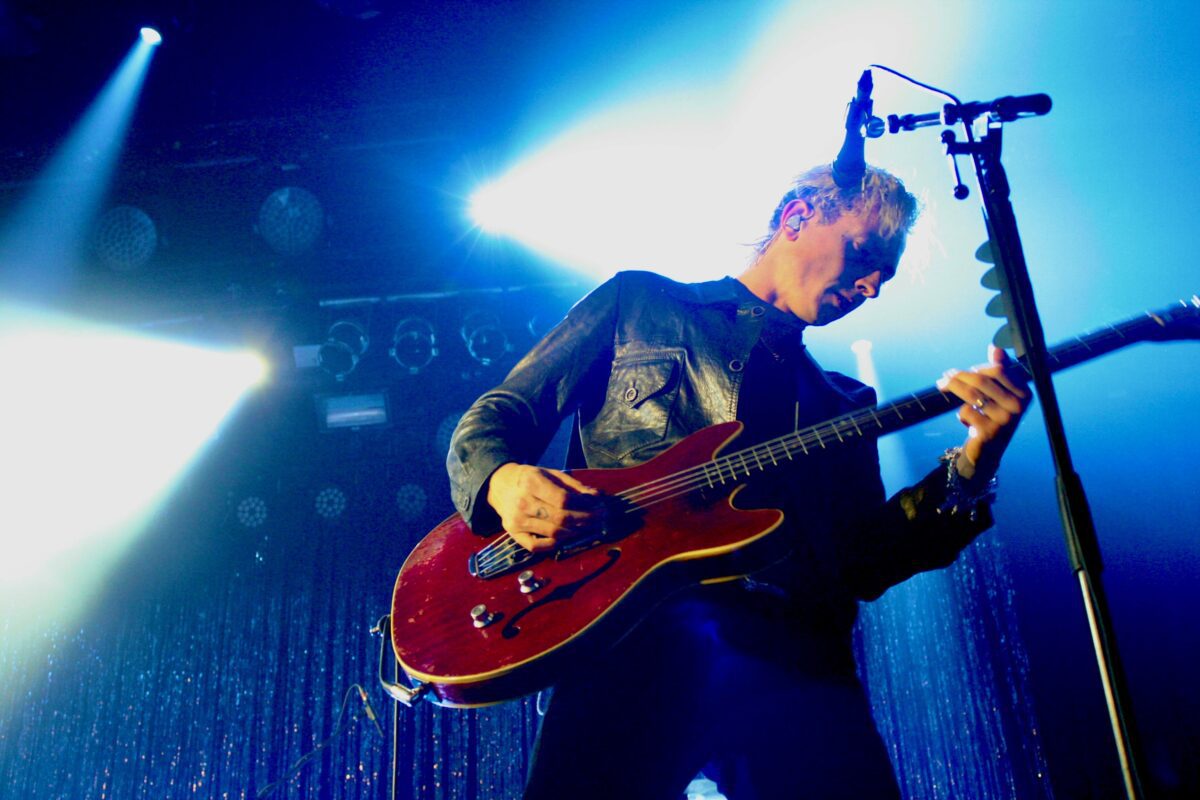
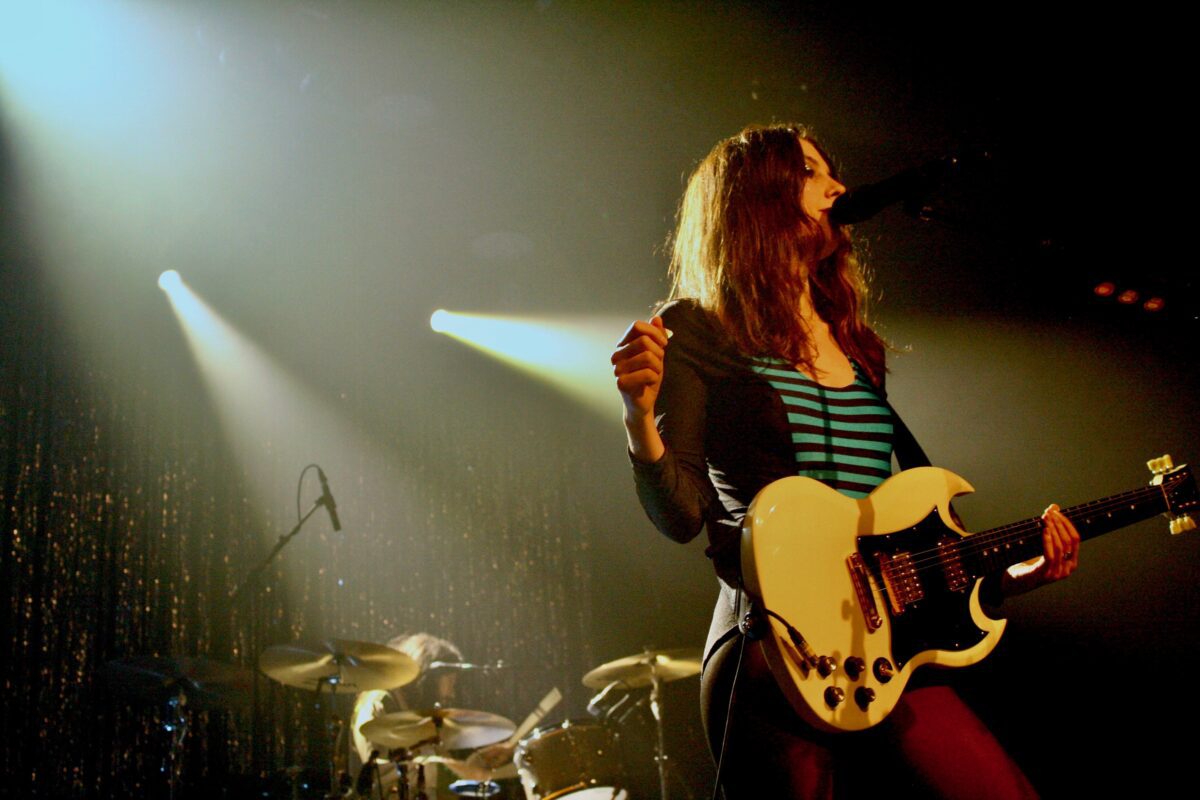
The music industry is dominated by the desire for independence, reflected in the ever-growing population of solo artists. It is extremely refreshing to see a band in its truest form, built on shared taste and collaboration. There is an undeniable chemistry between the members of Wolf Alice, who have now been together for over a decade. Their performance was well polished, but had space for improvisation and for the bandmates to simply be friends playing their music. If there’s one thing Wolf Alice can be commended for, it is the power and command they hold over a room. There was a comfortable intimacy between the crowd and the stage at Théâtre Beanfield, with the band welcoming a fan onto the stage to sing “Safe From Heartbreak.” This was very touching, given that it’s not a common occurrence. The fan just asked if she could and the band said, “yeah why not.” The set was a beautiful mix of songs from their most recent album, The Clearing,  and old classics, as well as varying levels of energy from rock anthems like “Play The Greatest Hits” and “Formidable Cool” during which frontwoman Ellie Rowsell shouts into a megaphone and crawls around the stage whipping her hair, to slower numbers like “Play It Out.”

The stage was adorned with a  glittery curtain and disco ball, and gave a timeless glam rock vibe, which matches well with the sound of their latest album. Ellie was decked out in a retro leotard with knee high boots and stood in a power stance for the majority of the set. She is a total powerhouse and really maintains her position as a woman of rock. Bass player Theo Ellis also did his fair part in riling the crowd up, pumping his arms at the front of the stage, he has total frontman energy, too. PAN M 360 met with the Wolf Alice band members before the show to discuss the influences and creative process behind the album The Clearing.

PAN M 360: The album has a very timeless, clean sound. Paired with the overall aesthetic, it’s as if it could have come straight out of the ’70s. Would you say it was inspired by this time period specifically?

Theo Ellis: I think we had some inspiration from the ’70s, yes, and certainly some key albums that came out in that decade. We loved George Harrison’s All Things Must Pass. We’ve said a few times that we love parts of Fleetwood Mac’s catalogue. We love the sonics and how there’s not too much going on; the song just sort of shines through. We also love Alex G, we love Haim. Lots of modern stuff too. 

PAN M 360: Compared to your past albums, it is far more sonically sparse, fewer elements going on. Was that something you were focusing on?


Theo Ellis:
Yeah, it’s something we wanted to try. I think a lot of times, making things feel exciting and vital in the studio is by doing something new. And yeah, I think there is a certain way of recording that we feel comfortable with and by trying to see how good we can make the song, with using less, was an exciting constraint for us. And I think that principle leads you to the ’70s because they do lean more on the rudimentary part doing the work.

PAN M 360: How has your musical taste changed since Blue Weekend?

Theo Ellis: I was appreciating a lot of organic instrumentation straight after Blue Weekend. I started listening to John Prine and Townes Van Zandt a lot. 

PAN M 360: When you’re writing, are you thinking more about how a song is going to sit in the record or about how it’s going to translate to the live performance?

Ellie Rowsell: I think we used to just think about the record, and I think this time, I thought about the live version a lot more. We really wanted to not feature too many things that we wouldn’t be able to replicate live. 

PAN M 360: Are there some non-musical influences that helped with the world-building for the album? Movies, cities, smells, fabrics, etc. 

Theo Ellis: I suppose “All That Jazz” by Bob Fosse keeps coming up in relation to the “Bloom Baby Bloom” music video. It’s a mixture of very natural elements, like going for a walk in the woods, but also putting on sparkles.

Joel Amey: I’ve just been wearing blue denim jeans for the last eight months. For the last album, I felt like I was constantly ironing suits. I decided that this was our denim album, our denim phase.

Photos by Elizabeth Dovolis

Needless to say, the arts mastered by Indigenous Peoples today go far beyond the expression of their ancestral heritage or their modern adaptation to American aesthetics, more specifically country, folk, or rock music. Artists of all genres are emerging and shining, and opera singing is no exception. 

That is why PAN M 360 gives pride of place to Innu soprano Élisabeth St-Gelais, guest soloist with Les Violons du Roy under the baton of Jonathan Cohen, performing three arias by German Baroque composer Christoph Willibald von Gluck (1714-1787). 

As the respected and esteemed Florent Vollant pointed out at an ADISQ Gala (when an Indigenous category was inaugurated), this artist was not invited to this prestigious program for political correctness, but simply because she is excellent!

Elisabeth St-Gelais now has an international career. Her journey speaks for itself: 

An Innu from the community of Pessamit (near Baie-Comeau), raised mainly in Saguenay, she holds a master’s degree from McGill University in the Voice and Opera program. Her great talent earned her the prestigious Wirth Vocal Prize as well as first prize in the 19-30 age category at the 2022 CANIMEX Canadian Competition. In 2023, she won the Prix d’Europe at the Conservatoire de Musique de Montréal. That same year, she also won first prize and the audience prize at the Canadian Opera Company Centre Stage Competition in Toronto. Named Radio-Canada Classique’s Revelation for the 2023-2024 season, she was selected in 2024 for the regionals of the Met Laffont Opera Competition, where she won the Encouragement Award. Committed and responsible, the singer has also been a member of the board of directors of the Conseil québécois de la musique since April 2023.

PAN M 360: You are a flagship of indigenous modernity, whose artistic expression is much more diverse than people realize. Bravo!

Elisabeth St-Gelais:  It’s wonderful to hear you say that! If only you knew how much it means to an Indigenous artist.

PAN M 360: You trained in classical Western music and are known for your classical performances, but you are also deeply rooted in and committed to your ancestral culture.

Elisabeth St-Gelais: Absolutely. So, my training, in fact, what I want to do, and I think people can get a little confused about my goal. That goal is very simple: to be an opera singer.

Through this, I am a representative of Canada’s First Nations, Métis, and Inuit peoples, who are Canada’s first peoples. I have a platform, as I am somewhat well-known in the classical music world. If I achieve my goals and my career progresses, perhaps my role as a representative will become a little more apparent.

PAN M 360: Like any artist in the world who excels in opera singing, you don’t limit yourself to your own culture, which is perfectly normal. 

Elisabeth St-Gelais : Absolument.

PAN M 360:  Of course, you have to master the great repertoire. And if there are indigenous composers, so much the better. The renaissance of indigenous culture is far from over! We are still in the golden age of the phenomenon.

Elisabeth St-Gelais: Exactly. And as more and more Indigenous composers are finding greater opportunities to express themselves, collaborations are being considered on a larger scale. In this era of truth and reconciliation, Indigenous peoples are becoming more empowered in all spheres of society. So now is really the time when we can see the full potential of Indigenous artists.

PAN M 360: Let’s talk about your invitation to Les Violons du Roy for this grand opening concert in Quebec City and Montreal, conducted by Jonathan Cohen. Big deal!

Élisabeth St-Gelais : Yes, indeed!

PAN M 360: In this program, you perform three arias by Gluck, namely arias WQ40, WQ45, and WQ44. Tell us about them!

Élisabeth St-Gelais: Of course. I first had discussions with Laurent Patenaude (co-executive director and artistic administrator of Les Violons du Roy) to choose the Baroque repertoire for me, which is more romantic, because this orchestra specializes (mainly) in that period.

So we went with Gluck and found excerpts from three different operas: Iphigénie en Aulide (WQ 40), Armide (WQ 45) and Alceste (WQ 44). So we will have the interpretation of three strong characters at pivotal moments in each opera.

PAN M 360: How did the preparation go?

Elisabeth St-Gelais: I just got back from a rehearsal with Les Violons du Roy, and I was very impressed by the ensemble and its extraordinary conductor, Jonathan Cohen. Today’s rehearsal has definitely given me even more inspiration. The orchestra is extraordinary. It’s a great opportunity for me to deepen my musical language, to play with performers of this caliber, and with a conductor of Mr. Cohen’s stature. Yes, and Baroque singing is quite different from 19th-century singing.

PAN M 360: Vocal technique is different when it comes to baroque music. Tell us about the adjustments you make.

Élisabeth St-Gelais: There are several possible approaches, in fact. We are taking a slightly more intellectual approach here than usual, as far as I am concerned, but it is still extremely passionate. It really inspired me.

PAN M 360: Apart from working with conductor Jonathan Cohen, did you work with anyone else to adapt to Baroque singing?

Elisabeth St-Gelais : Oui, notamment avec Alexandre Dratwicki, directeur du Palazzetto Bru Zane à Venise, qui collabore régulièrement au Domaine Forget de Charlevoix. J’ai aussi travaillé avec ma coach Louise Pelletier et mon professeur de chant Stefano Algieri. 

PAN M 360: That’s quite a mandate, three arias of this caliber. Big contract!

Elisabeth St-Gelais: Not just big, but beautiful too!

PAN M 360: Upcoming projects?

Elisabeth St-Gelais :  October is a very busy month! There’s the Stella Musica Festival on October 17 at the Cinquième Salle at Place des Arts. Then there’s the opening of the Agora Orchestra season, a recital at the Théâtre du Lac-Brome with Louise Pelletier, and then I’ll be heading off to Berlin for a while.

PAN M 360: Opera singers always travel!

Elisabeth St-Gelais : Oui!

Raoul-Jobin Hall at Palais Montcalm, Thursday, October 9, 7:30 p.m. Information and tickets HERE.

Maison Symphonique, Friday, October 10, 7:30 p.m. Information and tickets HERE

Programme

J.-B. LULLY

Suite Le bourgeois gentilhomme

C.W. GLUCK

• Dieux puissants que j’atteste… Jupiter lance la foudre (Iphigénie en Aulide, Wq. 40)
• Ah ! Si la liberté me doit être ravie (Armide, Wq. 45)
• Ah, malgré moi, mon faible cœur… O Ciel ! Quel supplice, quelle douleur (Alceste, Wq. 44)

A. VIVALDI

Concerto pour violoncelle en do mineur, RV 401

J.S. BACH

Ouverture pour orchestre n° 3 en ré majeur, BWV 1068

Concert d’ouverture des Violons du Roy

PROGRAMME

J.-B. LULLY

Suite Le bourgeois gentilhomme

C.W. GLUCK

• Dieux puissants que j’atteste… Jupiter lance la foudre (Iphigénie en Aulide, Wq. 40)
• Ah ! Si la liberté me doit être ravie (Armide, Wq. 45)
• Ah, malgré moi, mon faible cœur… O Ciel ! Quel supplice, quelle douleur (Alceste, Wq. 44)

A. VIVALDI

Concerto pour violoncelle en do mineur, RV 401

J.S. BACH

Ouverture pour orchestre n° 3 en ré majeur, BWV 1068

SOLISTES

Elisabeth St-Gelais, soprano

Cameron Crozman, violoncelle

CHEF

Jonathan Cohen
ABehind Liew Niyomkarn’s meticulously calculated concepts lies a profound, poetic sensitivity to the stories and relationships that shape sound. This affective approach has fueled collaborations with artists across the globe, weaving dispersed imaginaries into expansive human narratives that play on the borders of reality and fantasy. An established voice in the arts, her upcoming performance in Montreal is not to be missed. While preparing for her Flux collaboration with Anne F. Jacques, Liew Niyomkarn took a moment to reflect on her journey and share the elements that make her practice so unique.

PAN M 360 : You are part of the A.Hop collective with Anne F. Jacques, with whom you will be collaborating this Monday. Can you tell us how this collaboration came about, and how you have been preparing for the show?
Liew Niyomkarn : Anne-F is one of my favorite sound artists, and I always wanted to play a gig together, plus I was so thrilled that we’re in a collective! I knew early that I’m going to be in Montreal this time so I researched out to her. The preparation is quite organic and straightforward, we sent each others ideas and sound to get acquainted and we’ll be using some of Anne-F’s sound as time keepers like we do in some of A.Hop’s scores too.

PAN M 360 : You have released music with Chinabot, a collective that presents left-field music from Asia. We hear a lot about Brussels being a creative hub for this type of art form, with schools like Ars, but I’d like to better understand the ecosystem of experimental artists and collectives in Thailand, as it’s not something we often hear about. Who are some artists and collectives in Thailand, or in Asia, that have shaped you as an artist today?
Liew Niyomkarn : Back then, there weren’t too many experimental artists in Thailand, but most of the art scene was clustered around Bangkok and Chiang Mai. I looked up to the pop duo Stylish Nonsense, the record label Small Room, and the gallery WTF (Wonderful Thai Friendship)—they were my go-to spots when I lived there. After I left Bangkok more than a decade ago, the scene has really blossomed into a cornucopia of artist-run spaces. There are so many talented artists and musicians in Thailand. These days you can check out places like Speedy Grandma, N22, Storage Gallery, the music venue Noise House, and Jam Café. There’s also a thriving queer underground community, NonNonNon—just to name a few. The city has never stopped offering fun/exciting stuff!

PAN M 360 : Yuri Landman creates instruments which focus on creating unheard timbres, but his instruments also expand the possibilities of interaction. Why did you choose to use his instruments for this record, and what do they bring to your practice?
Liew Niyomkarn : I had a series of intensive meetings with Yuri a few years back. We mostly dug into fundamental physics (his background), tunings, and the harmonic series. He’s really well-versed in all of it. For him, math works almost like an autopilot—he speaks in mathematics, which I still can’t fully wrap my head around. But I’ve come to terms with the division of harmony over string instruments, and we even started building a few of them so I could grasp it more directly.
We drew on Glenn Branca’s harmonic system as a foundation, and Yuri worked out his own adaptation. What I love about this approach is that the more options you lay out, the more you’re pushed to lean on your ears and intuition to decide what you want—or what sound truly speaks to you. For me, it’s always exciting to pick up the theory, but at the end of the day, I fall back on my ears and my feelings.

PAN M 360 : Your musical practice clearly has a strong connection to physical space, with collaborations extending across the globe and combinations of field recordings that imagine boundless new worlds. Conversely, what we see in the media is that where boundaries are undemarcated, for example on the border between Thailand and Cambodia, there is potential for conflict. Do you think it is possible for humanity to exist without borders, in a state of peace?
Optional: How do you, in this boundless music, consolidate different actors; different states?
Liew Niyomkarn : Yes—if those in power stopped using borders as weapons, humanity could already be living without them.
[ answer A ] for music — I’m not sure I intentionally bring them together. I just let the music bring out different states, so they end up colliding, overlapping, and unraveling on their own or at least I hope it comes across that way.

PAN M 360 : As someone based in Brussels, Bangkok, and L.A., you have a unique perspective on these three distinct cultures. Can you give us your insights on the collective notion of a division between Eastern and Western cultures?
Optional: How would you interpret these differences musically speaking?
Liew Niyomkarn : I’m not sure if there’s really a division like that. I think culture tends to adapt for human survival — we inevitably find ways to move forward. These are big cities with a wide array of multicultural environments. I can’t quite put my finger on it, but I’m pretty sure the vibe of these cities finds its way into my music

PAN M 360 : The above-mentioned cities are very dense urban areas and megapolises, but your music on the other hand feels completely detached from these urban landscapes. It is not only minimally composed, but also incorporates elements of field recordings from what sounds like a jungle on “feels like liquidity”, and talks about the stars in “comet of curiosity”. Can you talk to me about this dichotomy; of the outside-inside spaces which you occupy between life and music?
Liew Niyomkarn : One cool thing about using sound and music as a medium is that it bypasses rational thought and elicits a kind of fantasy. Science and fundamental physics are a good place for me to go psychologically. Using field recordings is, for me, not only a way to preserve memory but also to construct simple narratives—ones that I hope we could live in as alternatives to the real world.

PAN M 360 : Glenn Branca and Sonic Youth are noted amongst the influences on your most recent album “In All Possible Places at Once”. The No Wave movement which broadly connects these two artists was partly inspired by early American Avant-Garde, which I can hear in your music. But beyond this, the sonic textures of these albums are almost in contradiction to your soft plucked combination of string instruments and gently introspective environments. You mentioned tunings and compositional forms, but what inspires you conceptually about artists like Glenn Branca and Sonic Youth?
Liew Niyomkarn : I like that they treat sound as a spatial, material force. They explore texture, dissonance, and resonance to shape immersive environments rather than just melodies, and embrace the overlaps and chaos that arise when sonic layers interact.

PAN M 360 : You have worked on films, soundwalks, theatre pieces and even some installations of your own. In what ways does your live performance practice differ from your other sound practices, and in what ways are they similar?
Liew Niyomkarn : I love live performance because it really wakes up your inner clock in a way no other form can. What overlaps for me is the sense of space, the environment, and the collaborations that grow out of them.PAN M 360 : A final question: What are you most excited about artistically right now? Is there a specific project which is inspiring you the most?
Liew Niyomkarn : I’m writing a score for Savant Flanuer, where we’ll be performing at Send+Receive in a few weeks, and a live performance collaboration with three Thai artists for a Ghost 2568 Festival in Bangkok. Mostly, I’m researching music notation and want to write more scores, create an exhibition, and expand my work into a sound installation.

MONDAY OCTOBER 6, SALA ROSSA, 7:30 PM. INFOS + TICKETS HERE

Publicité panam
Publicité panam

Nick Blacka, playing alongside pianist Chris Illingworth and drummer John Scott, is the bassist for the British trio GoGo Penguin. Since 2012, the Manchester trio has released seven studio albums, two EPs, three live recordings, and was nominated for the Mercury Prize shortlist in 2014.

We’re not really talking about an emerging band on the ice floe of jazz in the grip of climate change, much less a rallying cry for Sidney Crosby’s team!

Over the previous decade, GoGo Penguin had been identified among the leading trios of this new aesthetic, certainly associated with jazz, but also with math rock, prog and cutting-edge electro.

These acoustic trios (or almost) have in common the primacy of collective work, and a more tenuous approach to individual expression. A trend, certainly.

Last June, the album Necessary Fictions was released, and we can well imagine that its material will be the main course of the group’s Quebec and Canadian tour, of which the Palais Montcalm will be an important stop on Thursday, October 16.

And that’s why PAN M 360 was put in touch with Nick Blacka for the following interview:

PAN M 360: Let’s start with your new album, Necessary Fictions. What has been accomplished if we take a chronology of your recording development?

Nick Blacka: V2.0, our second album, was nominated for the Mercury Prize. That’s when we started paying more attention to what we were doing. And then we signed to Blue Note, where we released the albums Man Made Object, A Humdrum Star and GoGo Penguin (of the same name). Two more albums followed on XXIM Records, including our latest album. It’s been a long journey… even though life is short!

PAN M 360: Yes, life goes by very quickly, but it’s a very good purchase to record 9 albums, 9 collections of new songs, and it continues.

Nick Blacka: Like life, isn’t it? You look at a photo of yourself years after it was taken, and you realize you’ve aged. We always say that each of our albums is a snapshot, a Polaroid of who you were at a specific time. So the idea of ​​a new album is to stay true to ourselves, honest and open about who we’ve become.

PAN M 360: There is indeed a danger of finding yourself a prisoner of your image and marking time, as is so often the case in music.

Nick Blacka: Right, so we don’t worry too much about what the outside world thinks of us. We still have to take risks. We want to explore new territories.

PAN M 360: And what are these new territories, in the case that concerns us?

Nick Blacka: We’ve always used a bit of electronics and synthesizers, but I think there’s more of that on the new album. However, for a long time now, using these machines has made us think differently about composition.

PAN M 360: Can we be more specific about some examples? Our readership is also interested in knowing the parameters of your compositions.

Nick Blacka: A good example would be a track on the new album, What We Are and What We’re Meant to Be. The electronic influence is very clear: the very heavy bass comes from a synthesizer. Then we play the acoustic instruments over it, but it’s very close to dance music. Only a few tracks on this album carry these kinds of ideas, I’m also thinking of Naga Ghost.

PAN M 360: The electro influence therefore led you to play it in addition to evoking it acoustically.

Nick Blacka: In the past, we often talked about dance music forms, which we expressed with our acoustic instruments. Now, we sometimes try to use synthesizers, even though bass and drums remain at the heart of what we do.

PAN M 360: Many music lovers who enjoy improvisational music and new hybridizations of jazz and other styles know Gogo Penguin and appreciate your music. Your success is also attributable to the trend you emerged from: small, cohesive jazz ensembles, very rhythmically solid, and less inclined to solos.

Nick Blacka: As you say. But there are times when we improvise, of course, and especially live, things change. There are of course bass, piano, or drum solos, but that’s when it serves the music, rather than every piece.

PAN M 360: And, just before the emergence of your generation, there had been precedents.

Nick Blacka: When I was a teenager, I was influenced by bands like Portishead (trip-hop) or Ronnie Size Reprazent (drum’n’bass). These bands, among others, took samples of double bass or drums, it was really inspiring. And we always come back to it. Personally, I studied jazz at school, I did my jazz degree, I learned about all these different styles, and I became very excited about playing bebop and standards. But there was a point where it was cool to do something else and we stayed true to our interest in new fusions.

PAN M 360: We can still talk about a trend: in the 2010s, we saw several groups of this kind emerge in the UK – Get the Blessing, Neil Cowley Trio, The Comet Is Coming, Sons of Kemet, etc. Now we can see it elsewhere in Europe and also in North America. What’s next?

Nick Blacka: I think the way we play and write music is just in tune with the musical culture of our time. We come from that melting pot. In Manchester, our city, there are so many different styles of music and the local scene is so vibrant, there’s bound to be some crossovers happening. Because it’s so hard to fund it, a DIY attitude has developed. So we’re always putting things together.

The two things that always stand out about Manchester are football and music. For a city not as big as London, Manchester has contributed a lot musically. Maybe because it rains a lot… I don’t know. Everyone wants to make music here!

PAN M 360: One thing is certain, teamwork trumps all when it comes to you!

Nick Blacka: It’s more than just teamwork, it’s also the joy of being in a band. Everyone has their strength, everyone contributes, it’s not done alone. That’s the beauty of it all. Each of us could have solo careers, but we prefer to stay within this band. It’s great, this feeling of musicians working together. That’s what we feel, anyway.

PAN M 360: Whatever form it may take!

Nick Blacka: Yes, we’ve gotten to the point where we don’t worry about whether it’s jazz or something else. We make music, we try to write songs, and we want it to resonate emotionally. That’s our focus.

PAN M 360: How does it work on a daily basis?

Nick Blacka: The music is mostly written by Chris and me, who live in Manchester. We do a lot of development work together. John is in London, and he comes to work with us for intensive work sessions. So we spend a lot of our lives together, we evolve together. These shared lives are definitely reflected in our music.

Yes, yes. If you ask anyone in the world, the two things they’ll say about Manchester are music or football. Those are the two things. For a city that’s not as big as London, the history and heritage of the city and what it’s contributed in terms of music is considerable. Maybe because it rains a lot… I don’t know. Everyone wants to make music here!

PAN M 360: And how can all this stand the test of time?

Nick Blacka: We’re older, we’re in the middle of our lives, but we’re still wondering what’s next. We’re still looking to move forward with authenticity and the desire to communicate something personal, without the challenge of changing everything.

Publicité panam

If you watched the state funeral of the great sociologist Guy Rocher on TV, you also saw and listened to the Molinari Quartet, whose musical activities PAN M 360 has been covering since the platform’s inception. Music lovers will still be eager to hear this excellent ensemble, which begins its 2025-26 season on Tuesday, October 7. With Olga Ranzenhofer, we explore this first program under the Passages banner, consisting of works by Bartók, Shostakovich, and Boucourechliev. We also talk about the quartet’s new member, violist Cynthia Blanchon, and we look ahead to the new season that is just beginning.

PAN M 360: Let’s start with the renewal. You’ve reached parity with the arrival of violist Cynthia Blanchon. Bravo! Why did you choose her specifically? What are her strengths?

Olga Ranzenhofer: We chose Cynthia after auditioning several violists. Her rich sound, her keen sense of phrasing, her great musicality, and of course her great technical mastery of the viola convinced us that she was the violist we were looking for. She also has extensive experience in chamber music.

It’s a great pleasure for me to have another woman in the quartet. The work atmosphere is cheerful and we all really enjoy working together. Cynthia’s arrival gives new impetus to the Quartet.

PAN M 360: Why play on a Tuesday as the season opener?

Olga Ranzenhofer: Usually, our concerts are on Friday evenings, but with the arrival of our new violist, we had to change because Cynthia was unable to perform on the date we had planned. It’s as simple as that! The other concerts will be on Friday evenings again.

PAN M 360: We will be returning to your 2025-26 programs several times this season, but can we talk about a general perspective for this 29th season?

Olgan Ranzenhofer: We have maintained our mandate to perform the great works of the 20th and 21st centuries and to premiere new works since our beginnings, and this season is no exception! Our first concert features works by two of the most important quartet composers of the 20th century, Béla Bartók and Dmitri Shostakovich, who wrote no fewer than 21 quartets between them! It is essential for a quartet to play these works, as they are the foundation of the string quartet repertoire.

We were supposed to perform the complete Shostakovich quartets last May, but unfortunately the concerts had to be canceled at the last minute. We are very happy to announce that we will be performing this complete set with Cynthia next May. We also have two beautiful premieres this fall; Denis Dion wrote Coin Darling for us, a work in tribute to Guido Molinari, and we will premiere Blair Thomson’s first quartet, Internesses, in December. We will also finish our complete Philip Glass quartets in February and record them for ATMA. So, continuity and new releases are on the menu for our 29th season.

PAN M 360: The first concert of the season of your series Vingtième et plus is entitled Passages. Why?

Olga Ranzenhofer: There are several reasons for this title. First, there is the passing of the torch to our new violist. Second, Bartók’s First Quartet represents the transition from post-Romanticism to the path of modernity, and the three movements of this quartet form an astonishing journey, from despair to hope, from funeral dirge to Hungarian dance. Finally, the premiere in 1953 of Shostakovich’s Fourth Quartet opened the way to greater artistic freedom with the death of Stalin.

PAN M 360: Tell us about the challenge of Shostakovich’s 4th Quartet, written during the Stalinist regime and premiered after Stalin’s death in 1953. What are its special features? How did you prepare for it this time?

Olga Ranzenhofer: This 4th quartet was performed at the very first Molinari concert in November 1997. I’ve been playing this quartet for almost 30 years now, and I always discover something new in it. That’s the sign of a true masterpiece! Of course, we change our interpretation over the years, and that’s what’s extraordinary about live music. It’s always renewed. The structure of this quartet is very classical, both in its four movements and in the internal form of its movements. The second movement is a small masterpiece in itself, with its very touching, intimate theme that contrasts with the very orchestral first movement. The last movement is particularly incredible, with its long, intense buildup. It’s always a great pleasure to play this work.

PAN M 360: Same question for Béla Bartók’s 1st quartet, opus 7, “whose three movements form an astonishing journey, from despair to hope, from funeral song to Hungarian dance.”

Olga Ranzenhofer: This quartet takes us through a whole range of emotions. The sighs of despair at the beginning transform over the course of the work into a return to life and then a joy of living with dance rhythms. Bartók’s quartets always represent a great challenge because everything is intertwined and depends on what came before. The work is in constant accelerando; you have to carefully balance the tempos and intensities to be able to reach the end of the work!

PAN M 360: To complete the program, the Quartet III by the Bulgarian composer (naturalized French) André Boucourechliev (1925-1997), a work written for the 1995 Evian International String Quartet Competition. Why this choice? What are its particularities? How do you approach it?

Olga Ranzenhofer: This quartet is very interesting. Boucourechliev, who was also a musicologist and writer, composed about thirty works. These three quartets offer great challenges to the musicians because we must be more than performers… we participate at several moments in the composition of the work. Boucourechliev created “open” sections in which the musicians must make decisions about the material to play, the order in which to play it, and the choice of intensities and speeds. All this must be done not by chance, but by attentively listening to the other voices and following a common thread. We create a new work every time we play this quartet.

I invite music lovers to listen to the episode entitled “Passages” of our podcast “Le studio du Quatuor Molinari.” Host Jean Portugais welcomes Cynthia Blanchon for an interview and presents the works on the program for the concert on Tuesday, October 7.

PAN M 360: How did the Molinari Quartet (and your daughter Odile Portugais, soprano) experience the state funeral of sociologist Guy Rocher? Remind us of your interpretation choices!

Olga Ranzenhofer: Guy Rocher was a great builder of modern Quebec. He was also a great music lover and a loyal supporter of the Molinari Quartet. At 98, he still came to our concerts! My husband, Jean Portugais, knew him well at the University of Montreal, and we were very touched to be invited to see him in palliative care in August.

I brought my violin and played Bach, Handel, and Massenet for him. After his death, his daughter Anne-Marie called me to ask the Molinari Quartet to play at the National Tribute in his honor.

We chose to play the first movement of the magnificent Quartet No. 2 by Quebec composer Jacques Hétu and the first movement of Shostakovich’s 1st Quartet, two works conducive to contemplation. One of the pieces I had played for Mr. Rocher was Handël’s Lascia ch’io pianga, which is an aria for soprano. The family wanted this work, so we asked Odile to do it with us. We were also asked to play the well-known song Adieu Monsieur le professeur, so my colleague Antoine Bareil made an arrangement for voice and quartet. It was a very touching moment at the very end of the ceremony when the Katimavik Vocal Ensemble, conducted by Frédéric Vogel, sang the chorus and invited the crowd to join us.

Publicité panam

With her vibrant look of bright colours and sometimes improbable shapes, reminiscent of Émilie in a phantasmagorical and alternative Paris somewhere between Yves Saint-Laurent and the aesthetics of the film The Fifth Element, the American Sophie Grey is increasingly making a name for herself on the pop scene. She has opened for Sting and Shaggy, but is now taking the reins of her own musical destiny with the Retro Electro tour, which is also the title of her most recent album. It was after studying classical piano that the very young lady was carried away by the music of the 1980s, its melodic ease, its simple and catchy rhythms and its hyper-expressive visual theatricality. What she offers with Retro Electro is a respectful but not pastiche revisit of 1980s pop music, with all the panoply of gestures and tics of this archetypically styled aesthetic, but using the richness of contemporary electronic lutherie to give it a little extra “oomph.” It is perfectly suited to the retro-futuristic movement that is coming to life everywhere in cinema, literature and visual arts. Before her performance at Bar Le Ritz PDB in Montreal on October 12 (her only stop in Canada!), I had the pleasure of speaking with the artist who, what a nice surprise, also speaks quite exquisite French (for a short part of the interview). Here is the interview:

DETAILS AND TICKET FOR SOPHIE GREY’S CONCERT AT THE RITZ PDB BALL IN MONTREAL, ON OCTOBER 12, 2025.

Subscribe to our newsletter