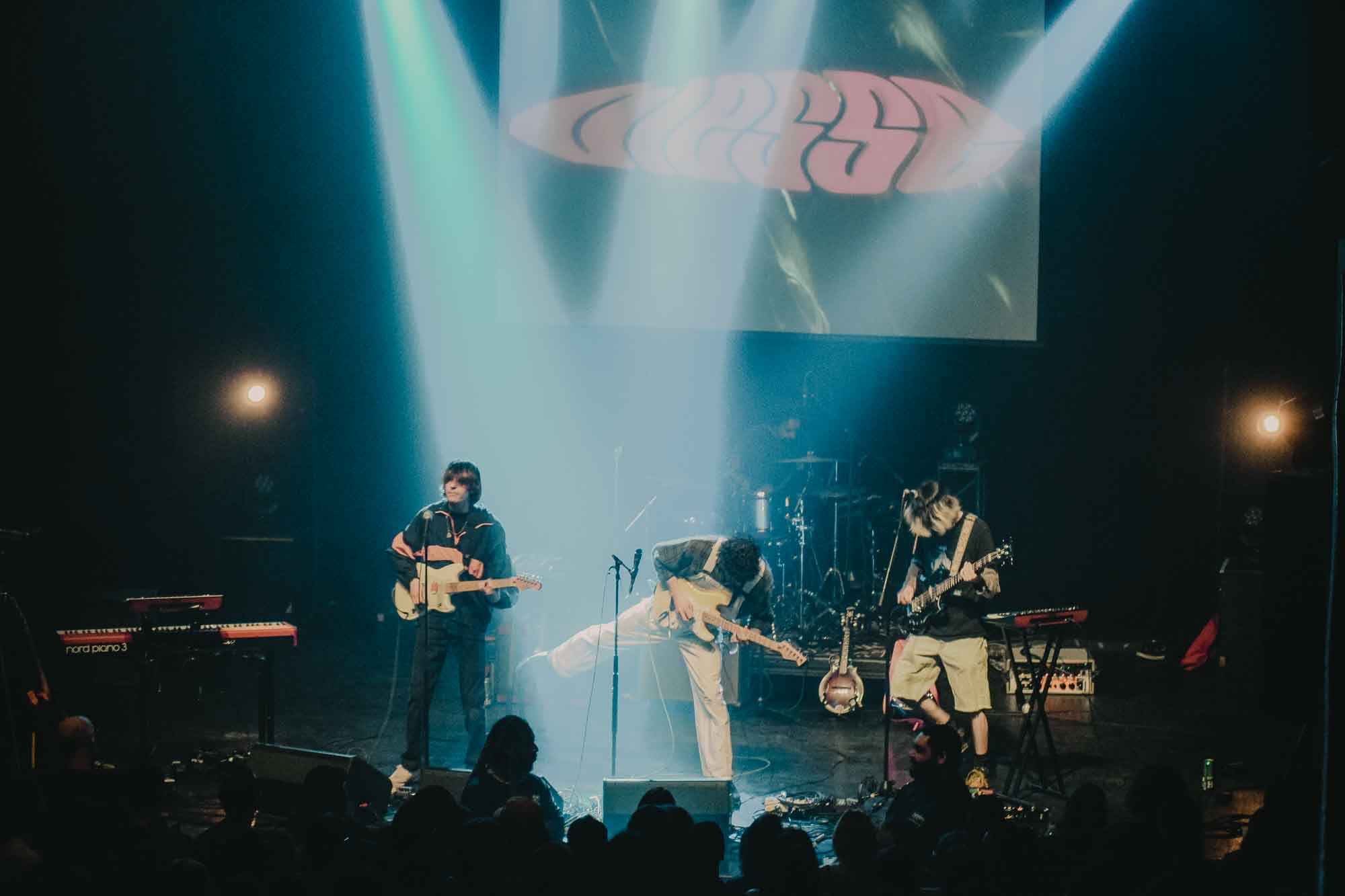
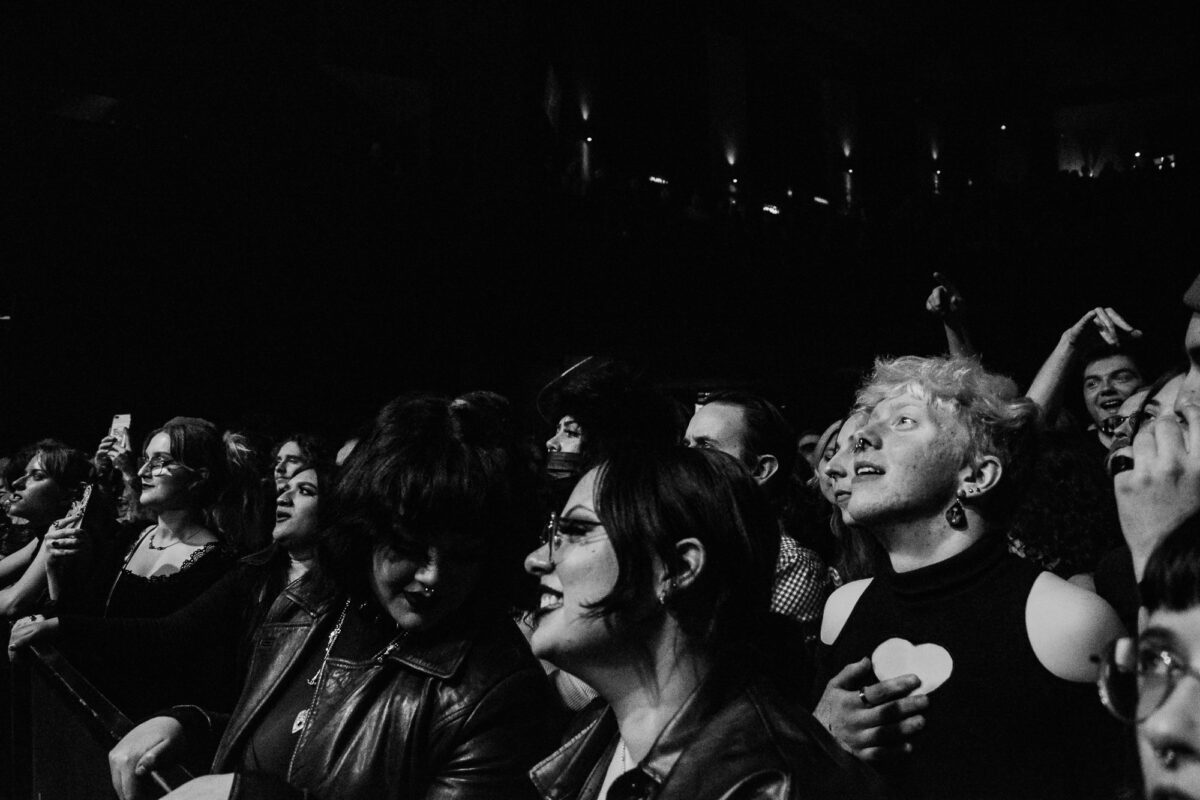
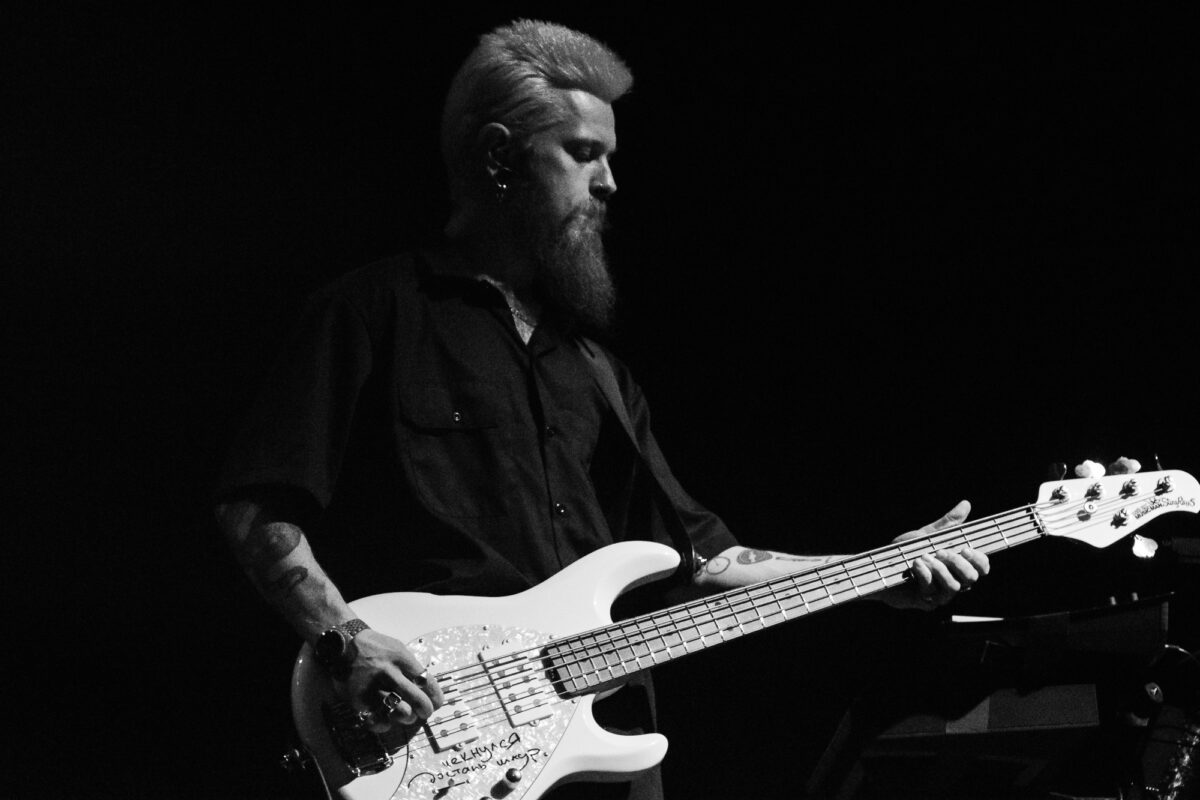
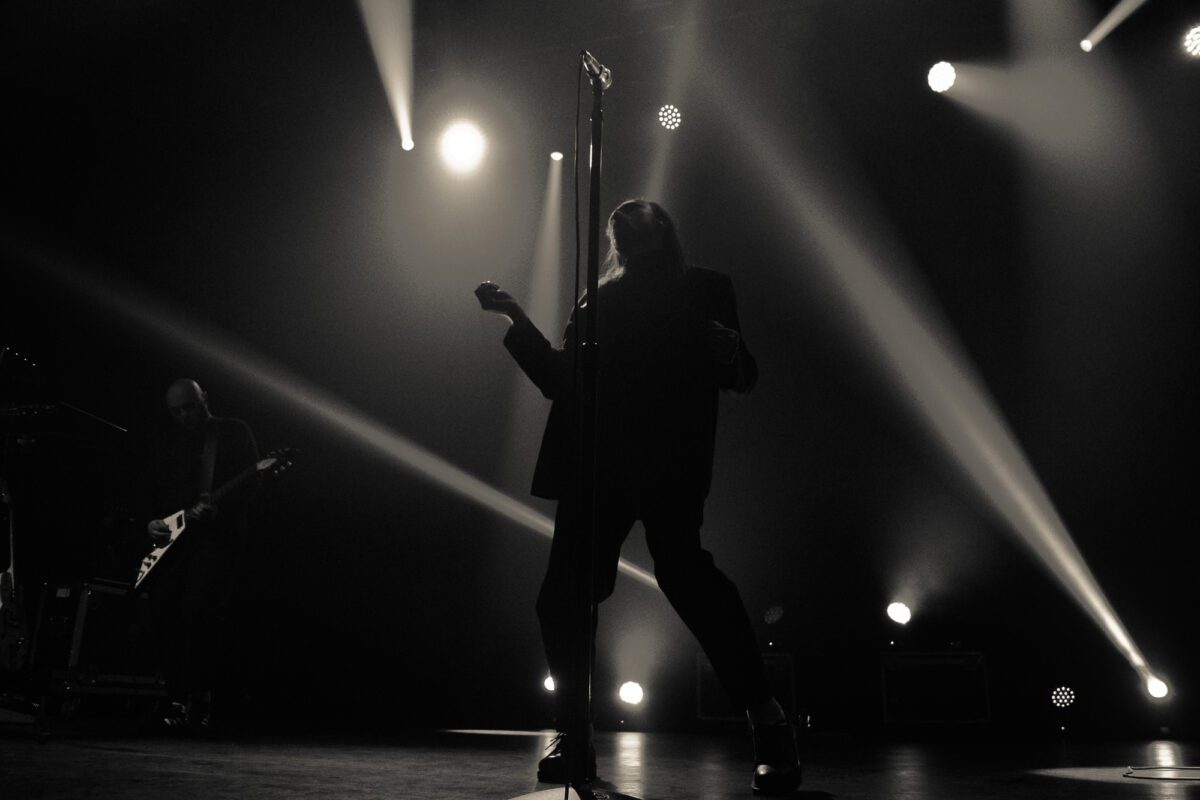
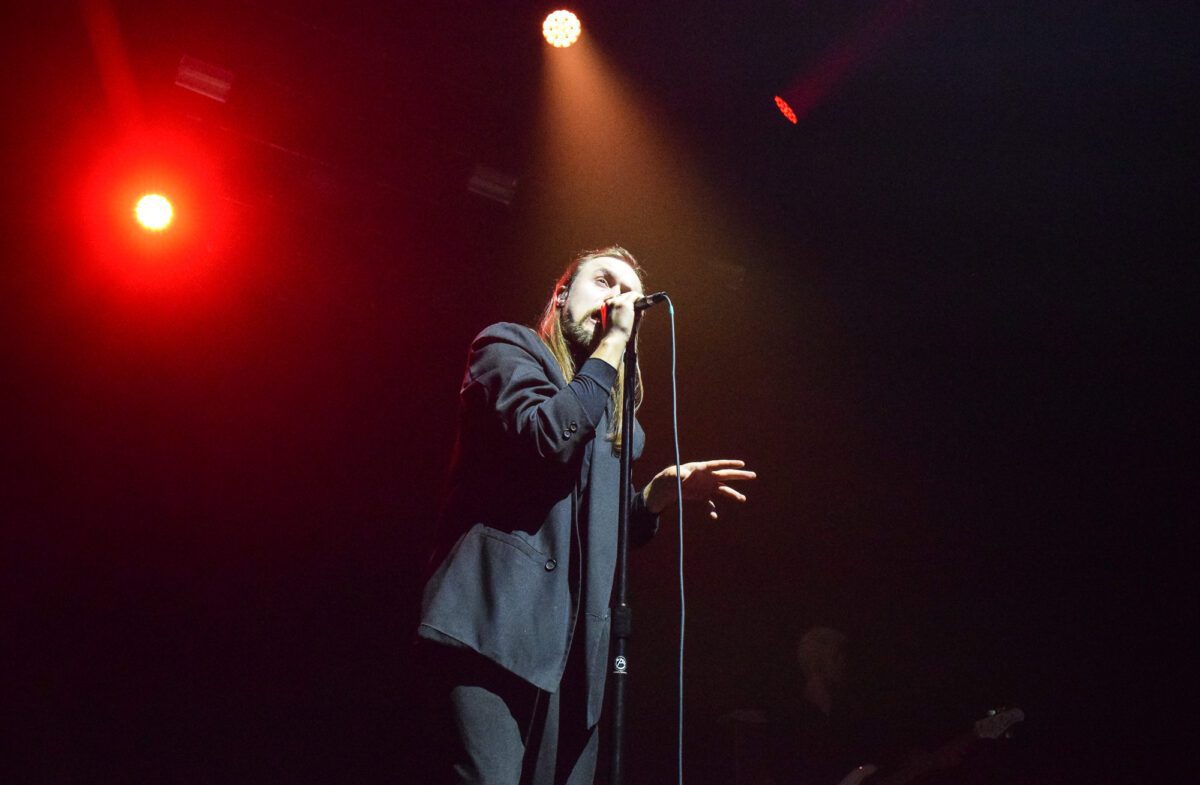
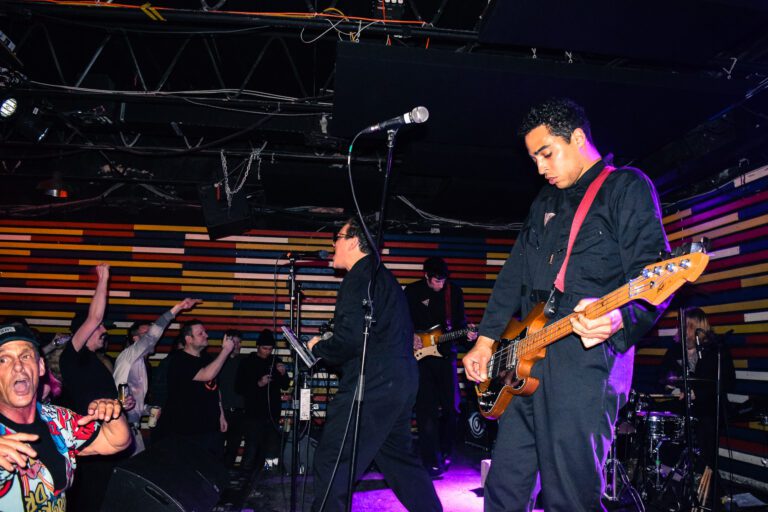
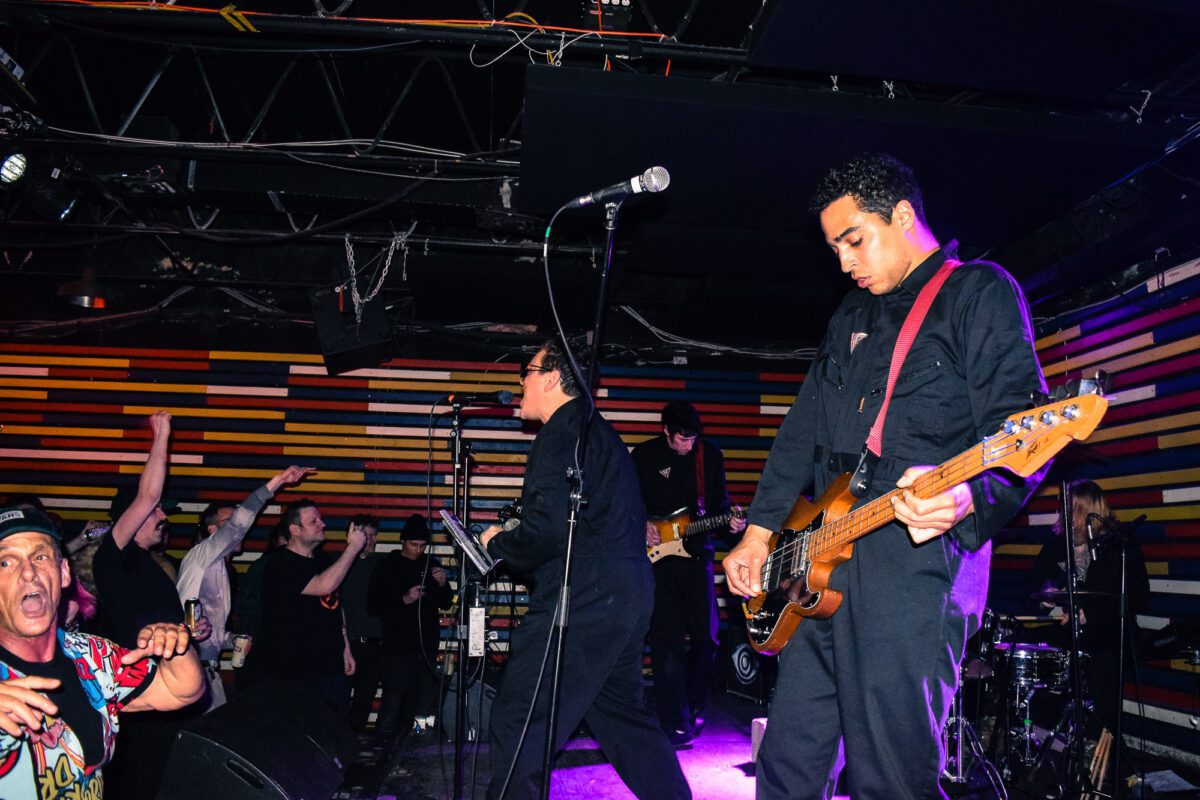
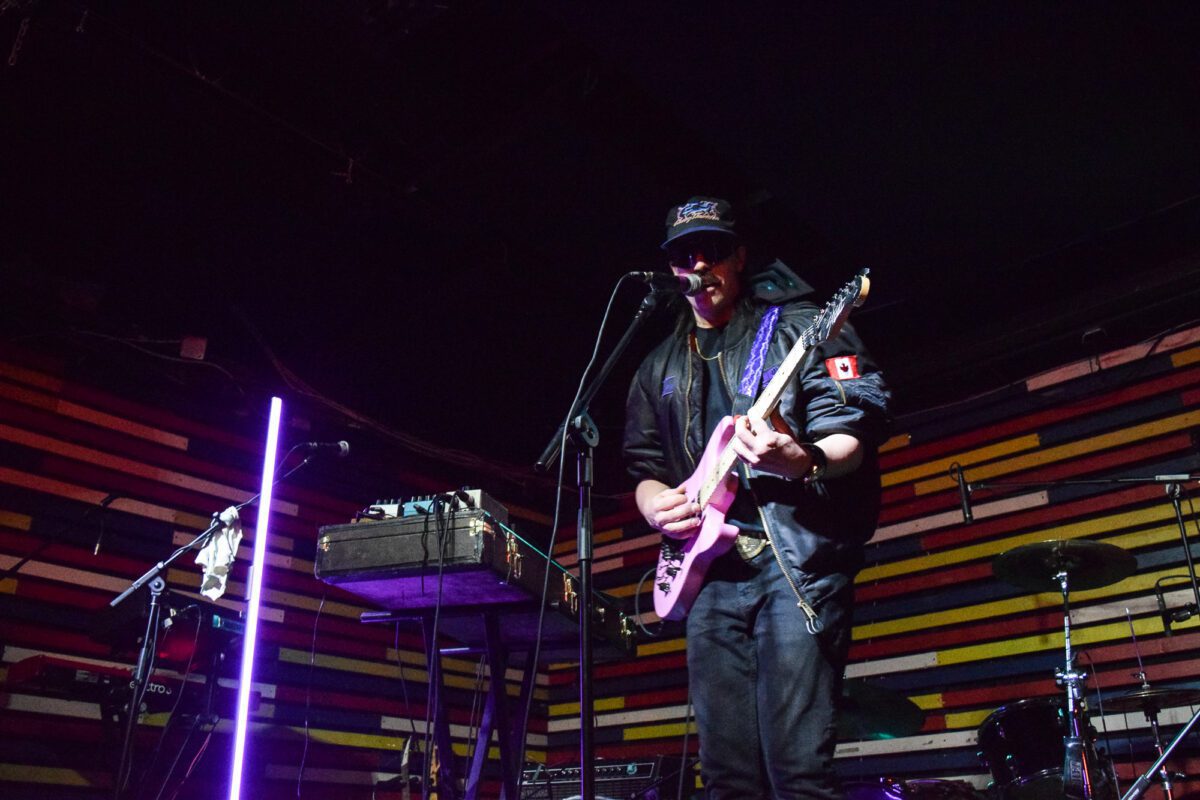
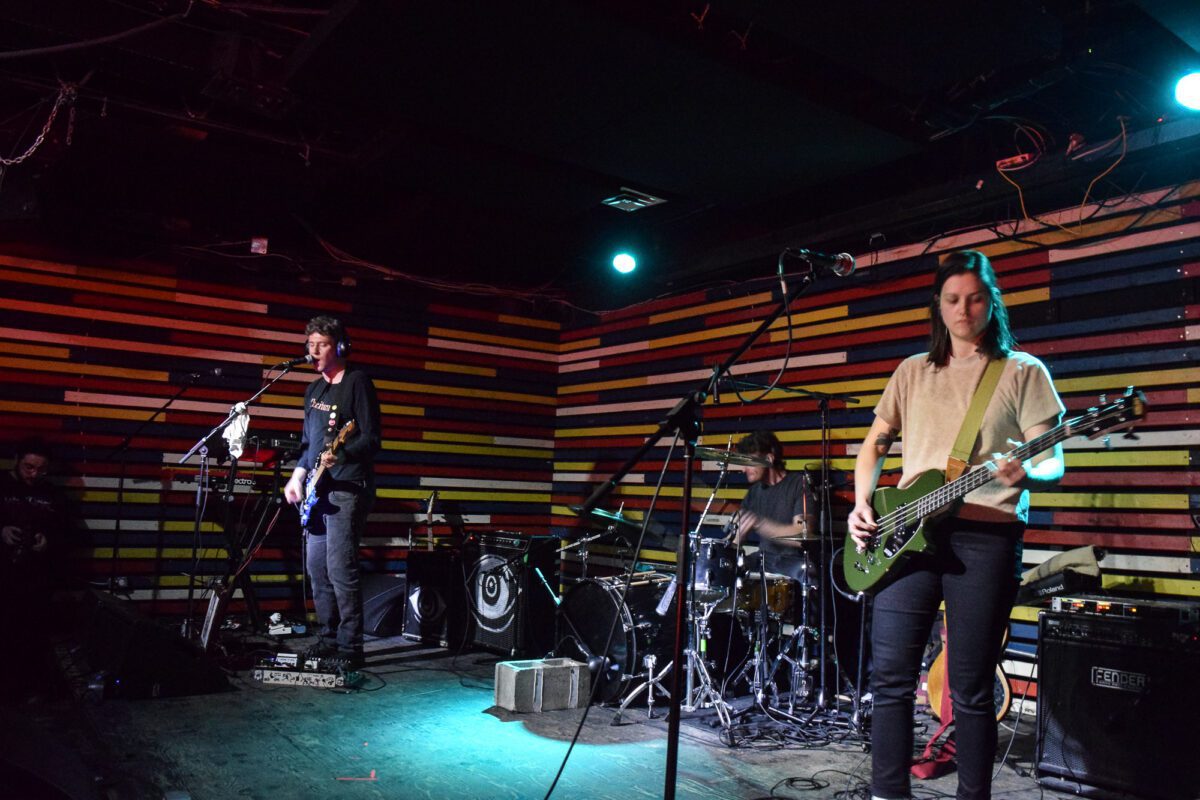
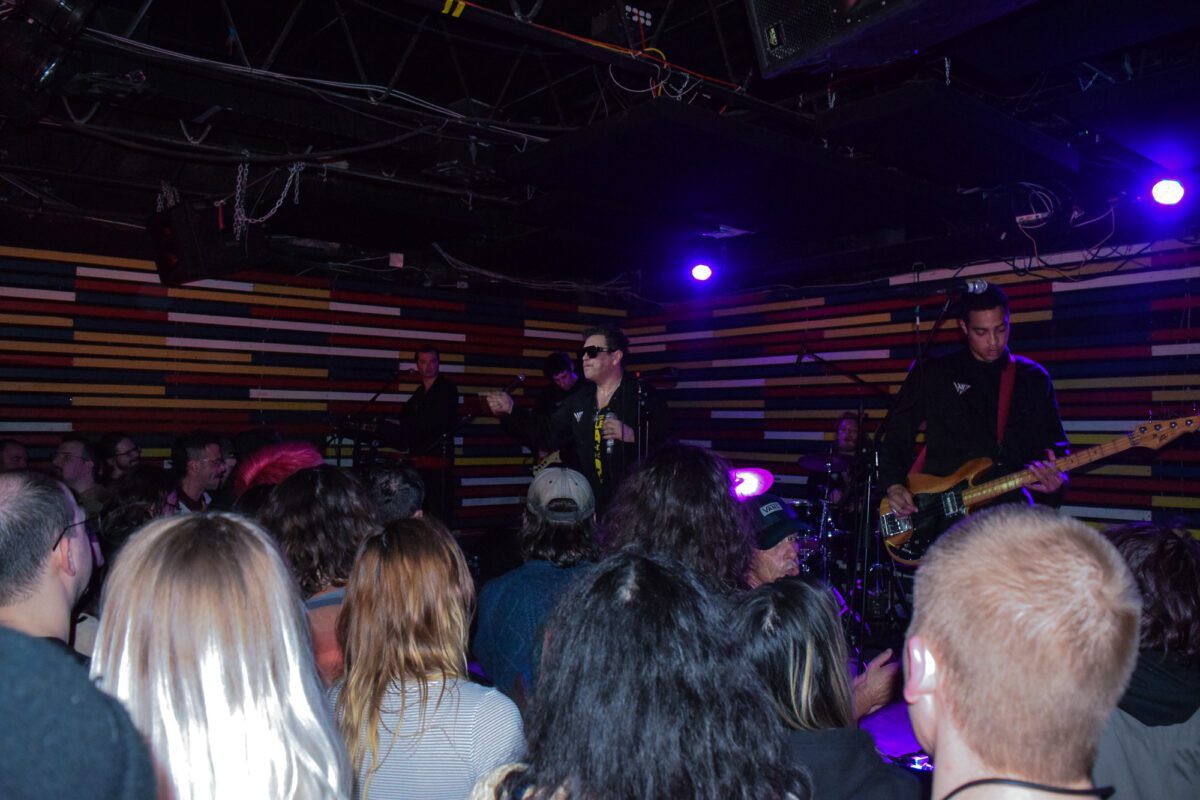
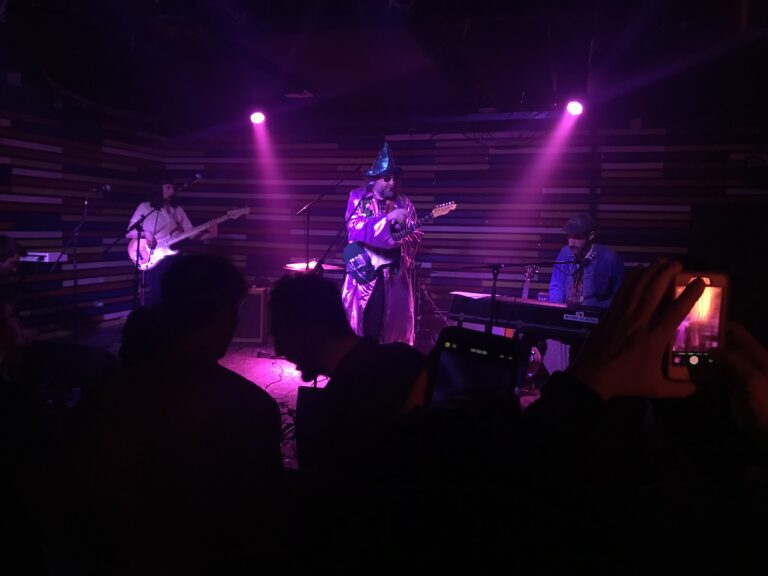
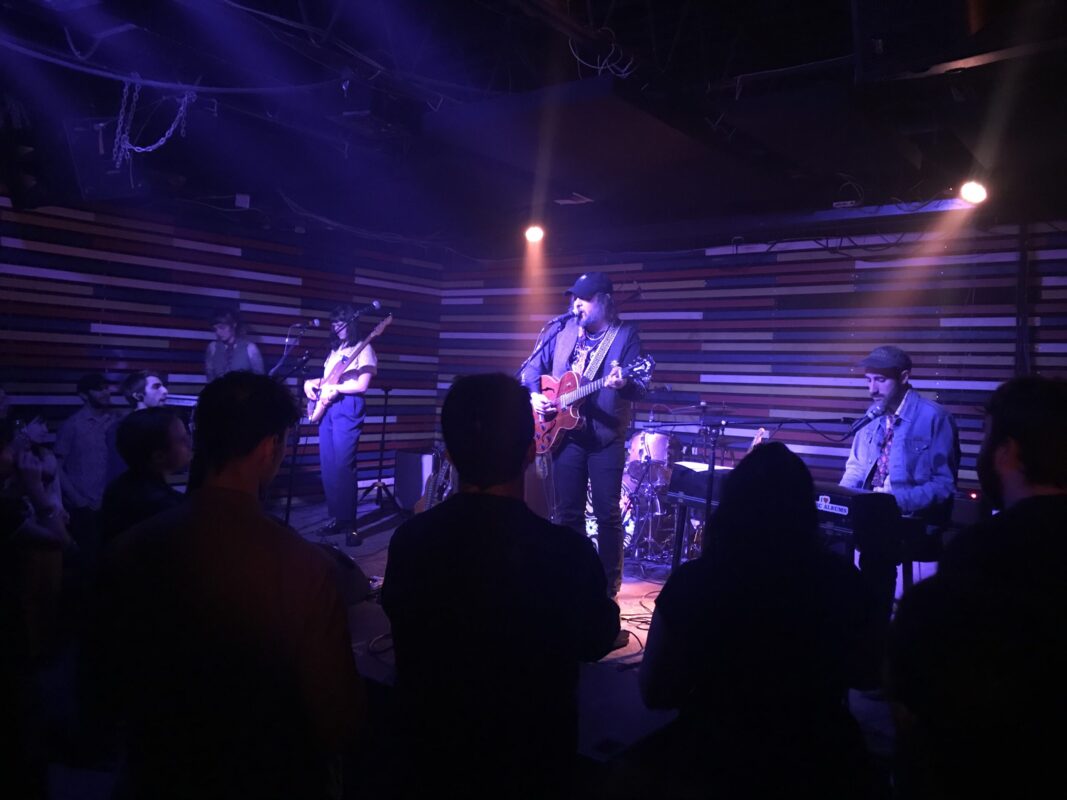
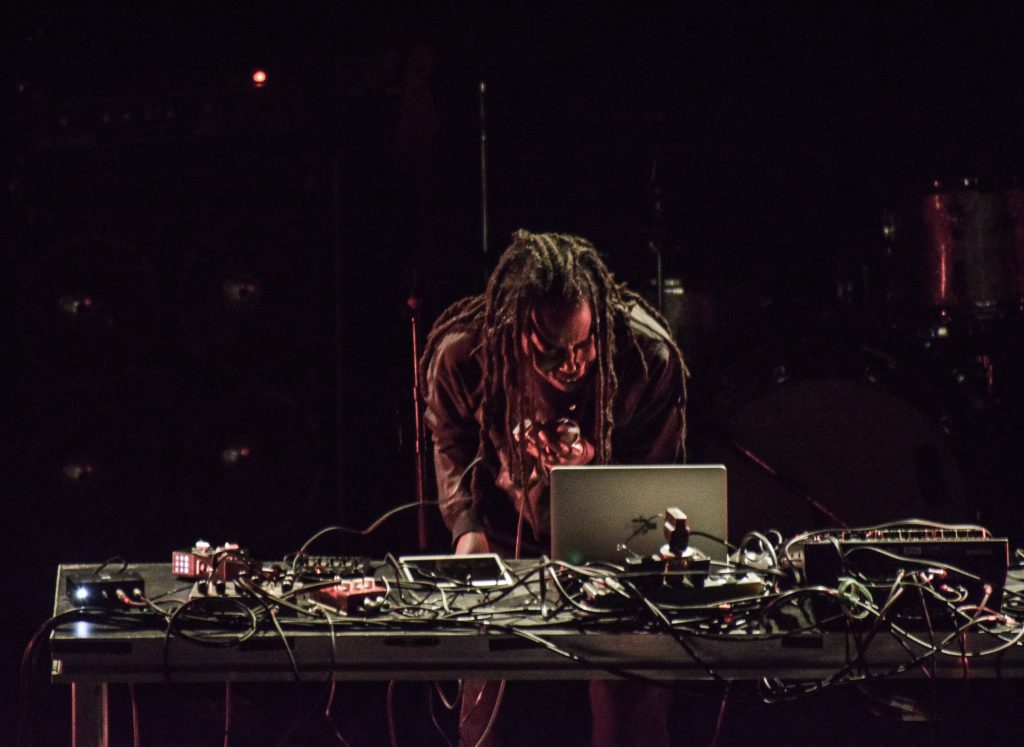
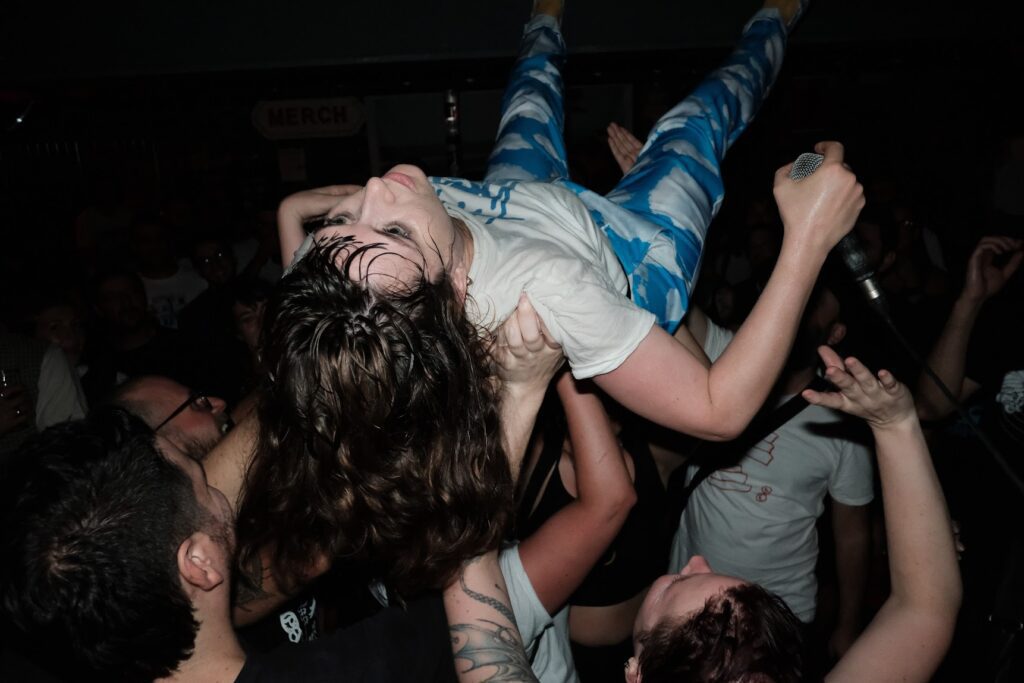
The evening begins with the electrified stylings of a scrappy punk band from New York, called Been Stellar, and ends coated in sweat, thanks to shame, one of the biggest UK punk bands right now.
The darkened upstairs venue of Les Foufounes Électriques—a storied venue with its own punk rock history, like housing Nirvana in the early ‘90s or the current incarnation of Black Flag—is packed, and everyone is waiting patiently in the growing line for beer—cash only of course. Been Stellar just ended their set and it was nothing short of stellar, but the real event is moments away.
The words “shame” hang over the stage’s curtains across a background of black and blue and stars. It’s nothing fancy, no flashing lights or video backdrop, just a tour sign that looks rugged and worn. By just looking inside the venue, you wouldn’t know it was 2023, and that’s part of the charm.
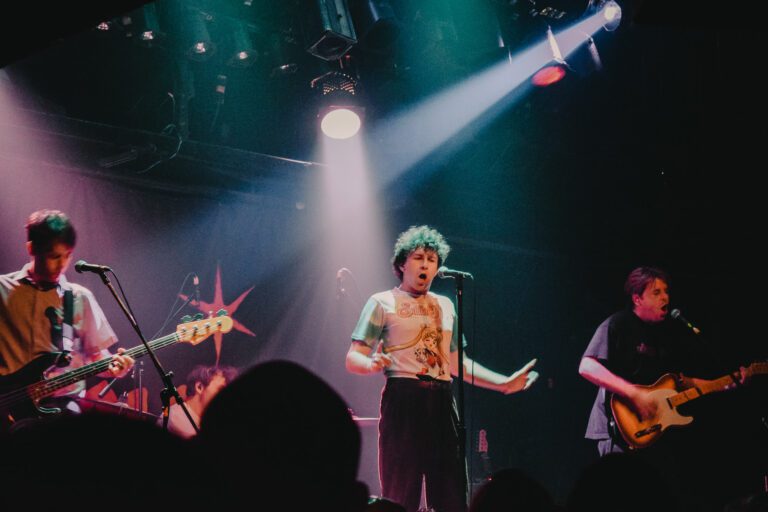
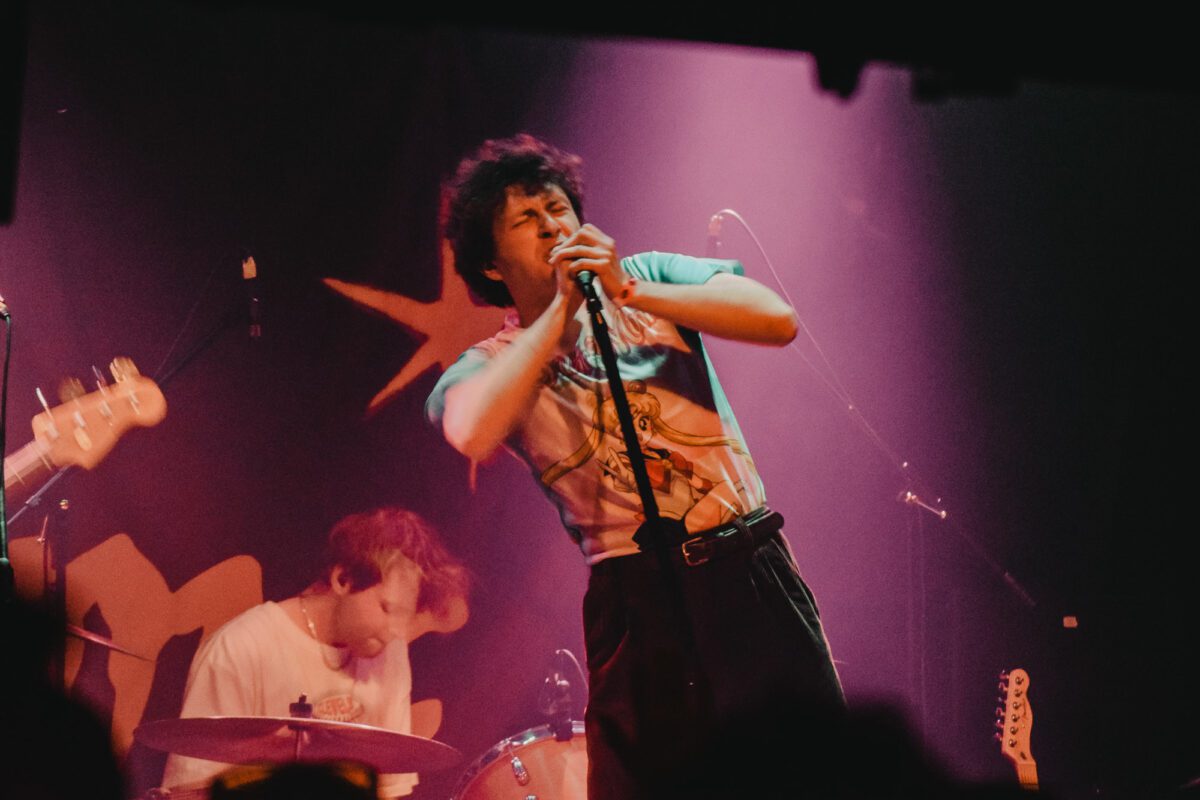
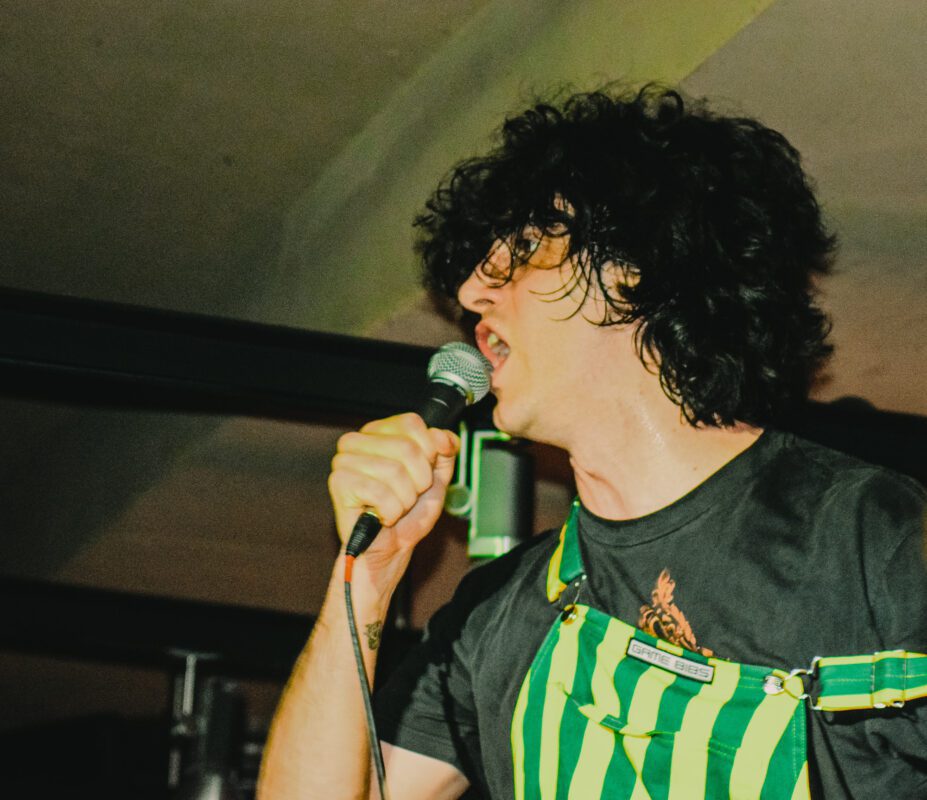
Shame takes the stage with the frenetic “Fingers of Steel,”— the opener to the new album, Food for Worms—as the minor-keyed, dueling guitars swap out riffs. Lead singer Charlie Steen is wearing a tight (it looks like a child-sized) Sailor Moon T-shirt, already sweating a minute into the song, as he rhythmically beats his chest between screaming verses. His voice has the magical quality of pulling you in closer, wanting to absorb its power. He has the audience under his spell, actually, the whole band does, but Steen holds out his hands composing like a maniacal puppeteer.
Bassist Josh Finerty begins stampeding across the stage as the band jumps into “Alphabet,” the opener from 2021’s Drunk Tank Pink, and the crowd moshing begins. We move in closer, close enough to see the whites of Steen’s eyes as he looks as if he’s about to dive off the stage. But not yet. He does so quickly during the older track, “Concrete,” again commanding the audience to move by his will as they chant along “No more questions.” A moment to give some praise to drummer Charlie Forbes, an absolute beast holding his band together as they trill-pick their guitars, chant vocals, and run around, unhinged.
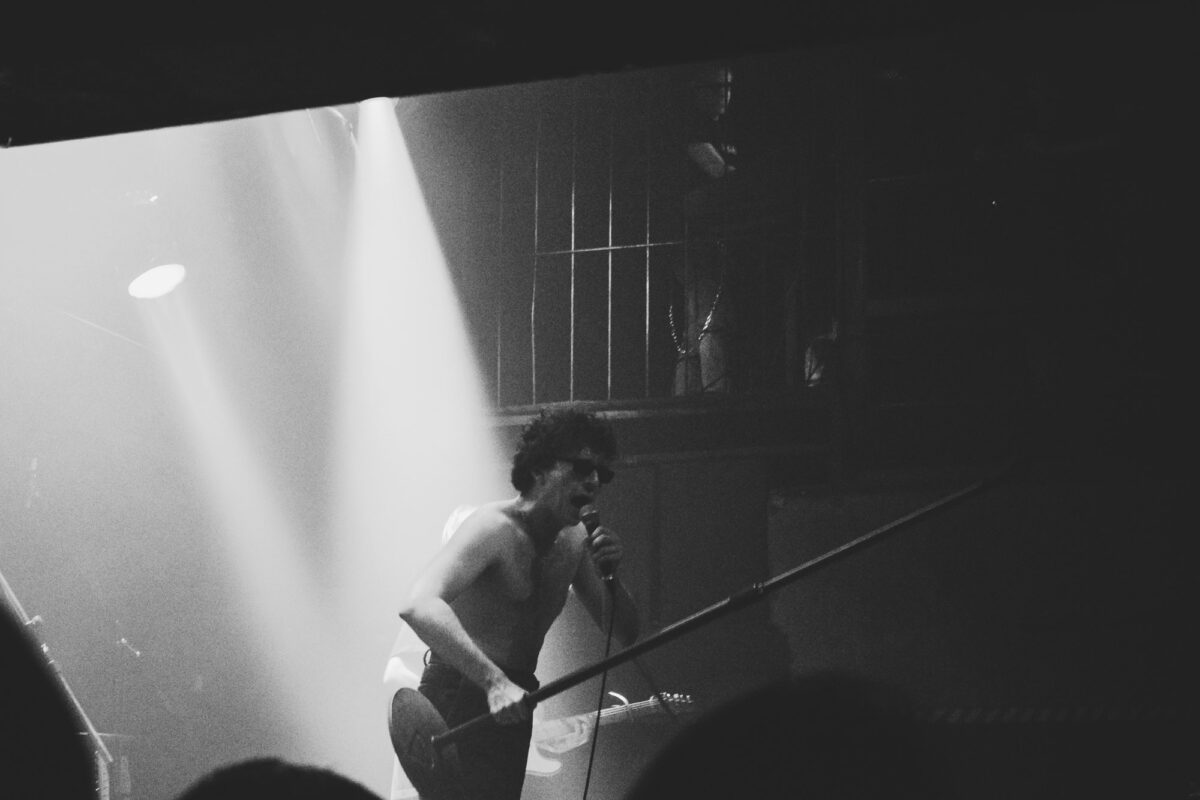
There’s a point where someone in the crowd asks what we are all thinking—where did Steen obtain the Sailor Moon t-shirt? “I got this in Chinatown, in your beautiful city Montreal!” he screams. “In fact, let’s all cheer for Chinatown!” The crowd breaks into a thunderous applause right before shame launches into “Six Pack.” Steen of course removes his shirt, revealing his South London tough guy strong physique, and begins flexing invisible dumbbells in unison with the muffled wah-wah guitars.
Every frontman has their own style when playing the stage, and at this point until the end of the show, it seems Steen wants to work out and sweat as much as he possibly can, doing reps with the mic stand and flexing his pecs and arms. It’s funny for a bit, but after a while, you realize he has to keep moving, or perhaps he’d run out of steam. I’ve never seen Iggy Pop in his heyday, but it must be something like that, minus the bodily mutilation. The only point where Steen and the crowd switch from moshing to swaying is during the human equalizer “Adderall,” a solemn number about how half of the world is on some sort of medication to get them through the day.
The pièce de résistance of the entire night is during the last three songs from the shame debut album, Songs of Praise, but the real cherry was during “Gold Hole,” when Steen crowd surfed towards the venue rafters and climbed them until he jumped off backward and was caught with ease. You don’t see shit like that at every show. Shame brought the intensity and the crowd was happy to oblige.
Laura Krieg and Renonce Prove that Francophone Darkwave is alive and well
by Max Seaton
Last Thursday evening, a rather rare event took place at Bar Le Ritz: An almost 100 per cent francophone darkwave concert. The two headliners, the local queen of this genre, Laura Krieg, and the new post-punk/industrial group Renonce, who were launching their first album, Ombre, being two projects that favour the surrealist and dark language of Rimbaud and Baudelaire with their music. So I was very happy to go to Ritz (a room that I usually don’t particularly like) after a delicious dinner with good friends in an excellent little Indian restaurant near the venue in Parc-Extension. I arrived around 8:30 p.m., happy to warm my buttocks after walking for a while in the cold wind of this yet-still-cold-spring evening, just in time to say hi to some of my friends through the growing crowd, moving to the front, moments before the show began.
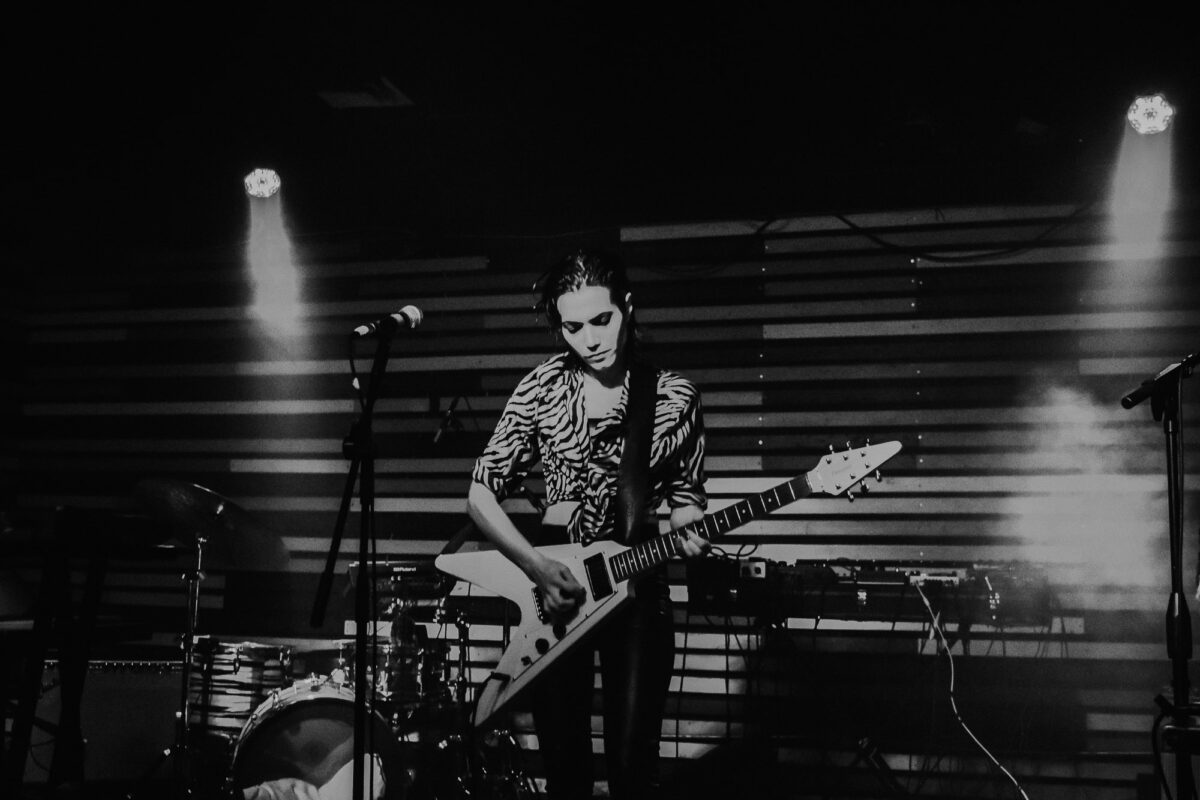
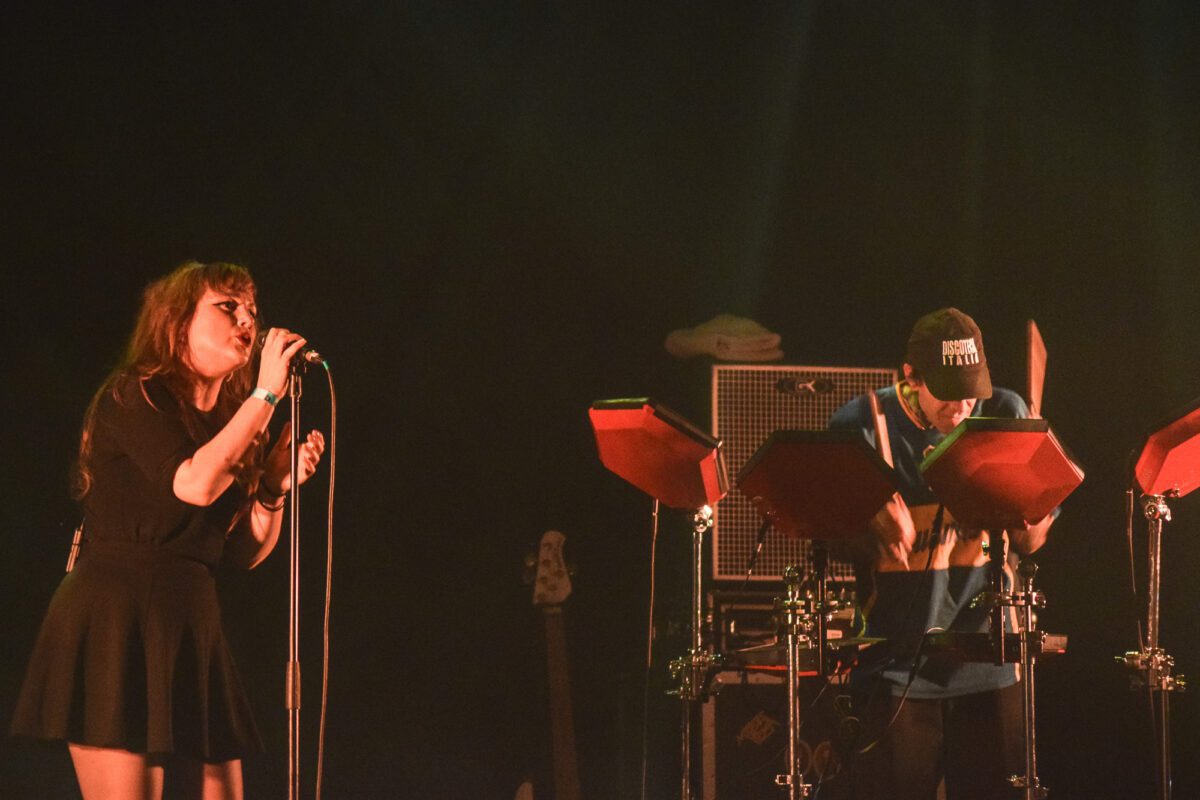
Their made-up faces, their exaggeratedly lacquered hair, and wearing of new-wave/glam androgynous clothes reminiscent of the style of the iconic brand of the early ‘80s Parachute, Laura Krieg and her usual musical sidekick, the veteran figure of the post-punk scene, Johny Couteau, arrived on stage to a wave of enthusiastic applause from the curious spectators who quickly gathered in front of the duo. The performance started strong with an extremely catchy drum machine and synths backing track over which Johny plays minimal, mechanical, and very effective bass lines, as well as epic percussion on a drum pad, while Laura sings in a casual, but still intoxicating way, and occasionally plays guitar. Fans of the band, like me, will have recognized several pieces from their repertoire such as “Tout s’effondre, tout va bien,” “Angst,” and “Fin du travail, vie magique.”
Laura Krieg Shredding / Stephan Boissonneault, PAN M 360
“Fin du travail, vie magique” / Laura Krieg
Playing for nearly half an hour, the Laura Krieg duo did a good job of finally getting the crowd moving, which at first seemed a bit frozen, thanks to new tracks that I had never heard before that had a more Italo-disco or even almost euro-pop influence which I hope to hear on a new album very soon.
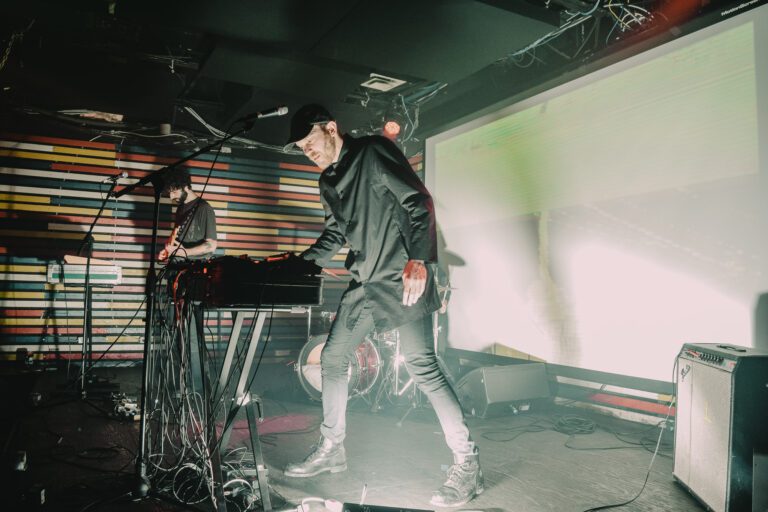
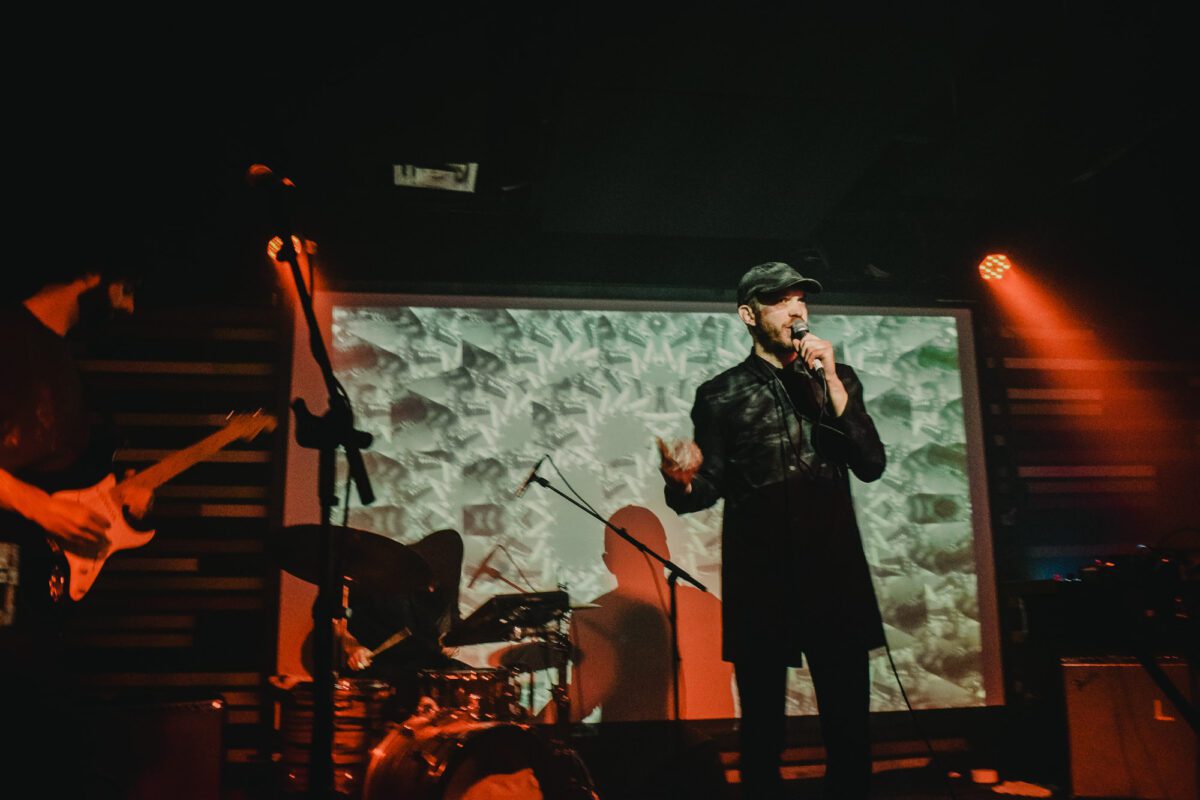
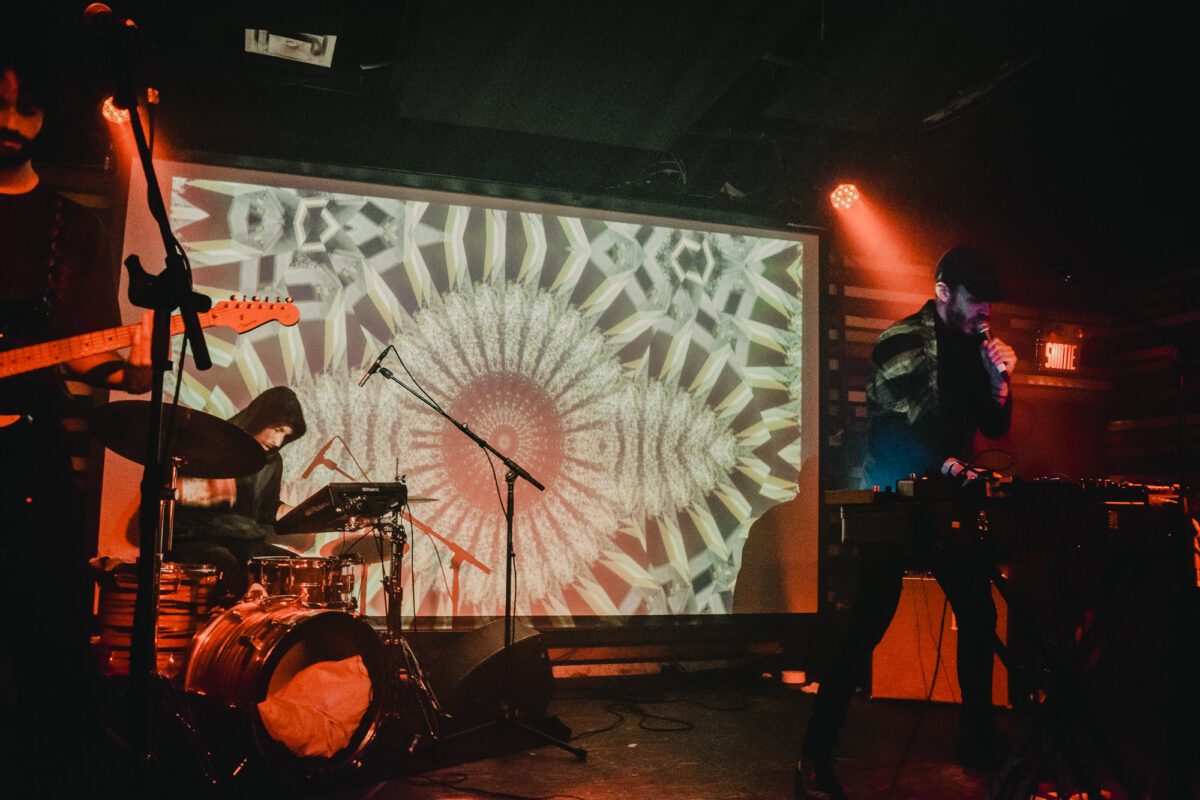
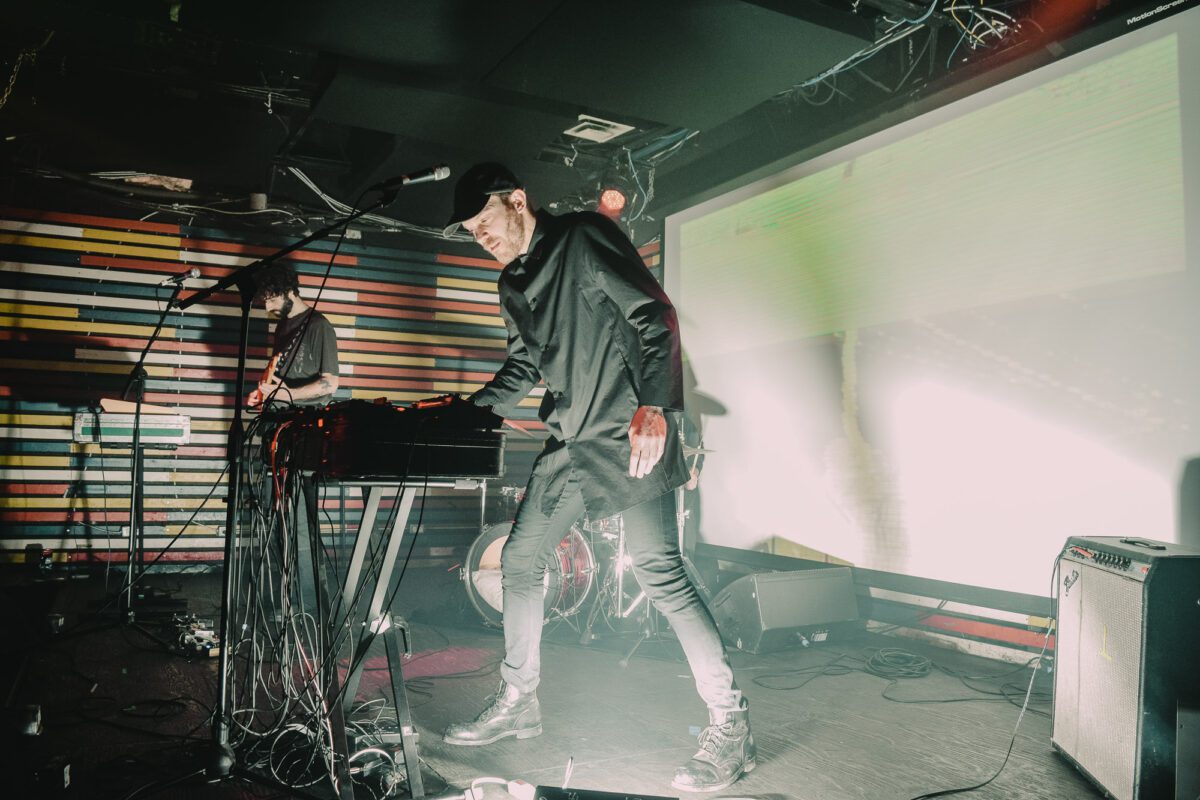
After a short intermission of about twenty minutes, it was Renonce’s turn to storm the ears of the audience with their industrial-flavored darkwave tones. Founded in 2021, the solo project of Frédéric Nogarede, who notably played with the group Adam Strangler a few years ago, was celebrating the release of his first album, Ombre. This being my first time seeing Renonce in concert, I didn’t know what to expect. To my surprise, the musician took to the stage accompanied by two additional players, a guitarist, and a drummer, which pleased me enormously since we see more and more solo musicians who only sing along over backing tracks played on a laptop.
Renonce @ Bar Le Ritz
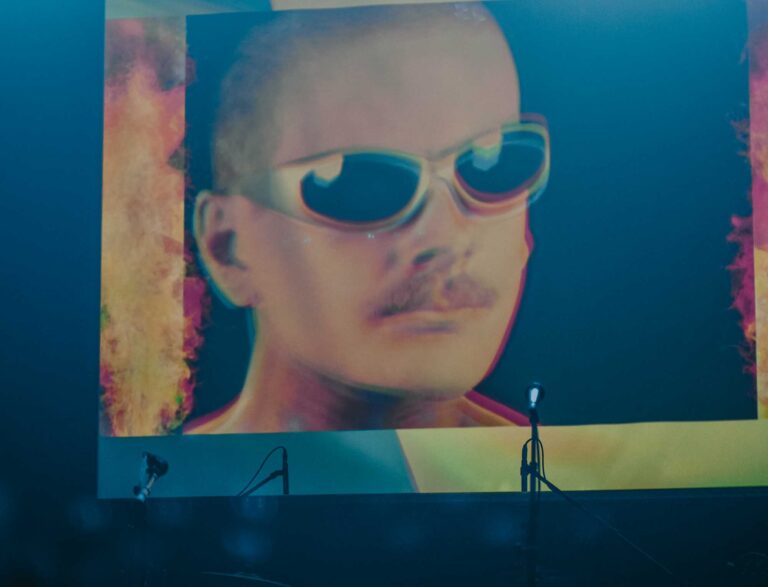
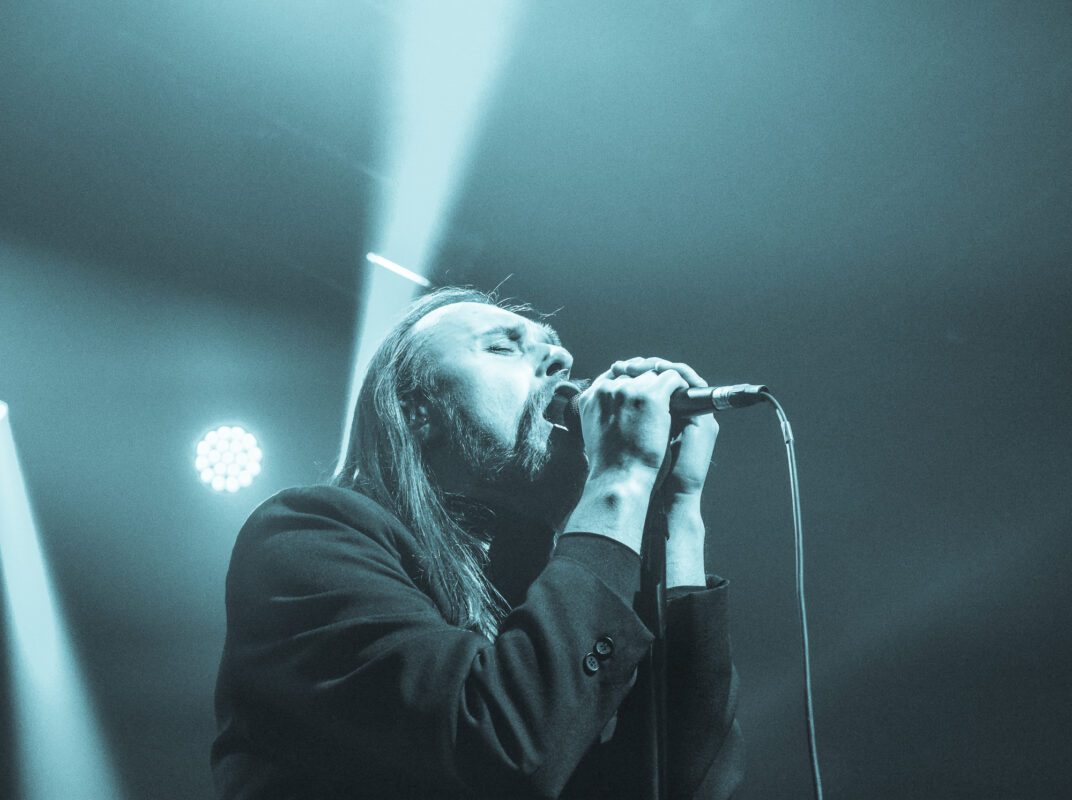
The group was able to deliver a very energetic performance, chaining heavy industrial songs in a quasi-continuous way, interspersing them with impressive instrumental soundscapes built on an array of analog synthesizers spread out on a table in front of the singer. The drums being very powerful and tight sounded almost like a machine and the guitar used feedback, among other things, in a very skillful way. The vocals, for their part, sometimes went from being soft and introspective to a sharp scream reminiscent of Nivek Ogre of the classic industrial band Skinny Puppy. Another cool aspect was the use of projections on the wall behind the trio, which greatly added to the ambiance of the performance.
A beautiful evening that gave me even more confidence in the fact that the alternative French-speaking Montreal scene is booming and has recovered very well from its pandemic misfortunes of recent years.
Photos by Stephan Boissonneault
Laura Krieg and Renonce prove that Francophone Darkwave is alive and Well
by Max Seaton
Last Thursday evening, a rather rare event took place at Bar Le Ritz: An almost 100 per cent francophone darkwave concert. The two headliners, the local queen of this genre, Laura Krieg, and the new post-punk/industrial group Renonce, who were launching their first album, Ombre, being two projects that favour the surrealist and dark language of Rimbaud and Baudelaire with their music. So I was very happy to go to Ritz (a room that I usually don’t particularly like) after a delicious dinner with good friends in an excellent little Indian restaurant near the venue in Parc-Extension. I arrived around 8:30 p.m., happy to warm my buttocks after walking for a while in the cold wind of this yet-still-cold-spring evening, just in time to say hi to some of my friends through the growing crowd, moving to the front, moments before the show began.
Their made-up faces, their exaggeratedly lacquered hair, and wearing of new-wave/glam androgynous clothes reminiscent of the style of the iconic brand of the early ‘80s Parachute, Laura Krieg and her usual musical sidekick, the veteran figure of the post-punk scene, Johny Couteau, arrived on stage to a wave of enthusiastic applause from the curious spectators who quickly gathered in front of the duo. The performance started strong with an extremely catchy drum machine and synths backing track over which Johny plays minimal, mechanical, and very effective bass lines, as well as epic percussion on a drum pad, while Laura sings in a casual, but still intoxicating way, and occasionally plays guitar. Fans of the band, like me, will have recognized several pieces from their repertoire such as “Tout s’effondre, tout va bien,” “Angst,” and “Fin du travail, vie magique.”
Laura Krieg Shredding / Stephan Boissonneault, PAN M 360
“Fin du travail, vie magique” / Laura Krieg
Playing for nearly half an hour, the Laura Krieg duo did a good job of finally getting the crowd moving, which at first seemed a bit frozen, thanks to new tracks that I had never heard before that had a more Italo-disco or even almost euro-pop influence which I hope to hear on a new album very soon.
After a short intermission of about twenty minutes, it was Renonce’s turn to storm the ears of the audience with their industrial-flavored darkwave tones. Founded in 2021, the solo project of Frédéric Nogarede, who notably played with the group Adam Strangler a few years ago, was celebrating the release of his first album, Ombre. This being my first time seeing Renonce in concert, I didn’t know what to expect. To my surprise, the musician took to the stage accompanied by two additional players, a guitarist, and a drummer, which pleased me enormously since we see more and more solo musicians who only sing along over backing tracks played on a laptop.
Renonce @ Bar Le Ritz
The group was able to deliver a very energetic performance, chaining heavy industrial songs in a quasi-continuous way, interspersing them with impressive instrumental soundscapes built on an array of analog synthesizers spread out on a table in front of the singer. The drums being very powerful and tight sounded almost like a machine and the guitar used feedback, among other things, in a very skillful way. The vocals, for their part, sometimes went from being soft and introspective to a sharp scream reminiscent of Nivek Ogre of the classic industrial band Skinny Puppy. Another cool aspect was the use of projections on the wall behind the trio, which greatly added to the ambiance of the performance.
A beautiful evening that gave me even more confidence in the fact that the alternative French-speaking Montreal scene is booming and has recovered very well from its pandemic misfortunes of recent years.
Photos by Stephan Boissonneault
Andy Shauf, The Sad Magician
by Stephan Boissonneault
With the nature of my job, I’ve been to many live shows as of late, and all of that excitement and potent energy can definitely take its toll, mentally and physically. So it’s safe to say that I really appreciated the rather laid-back, quaint, and tranquil set from Saskatchewan’s gifted, sometimes almost Lynchian, baroque-pop storyteller, Andy Shauf, this past week at L’Olympia.
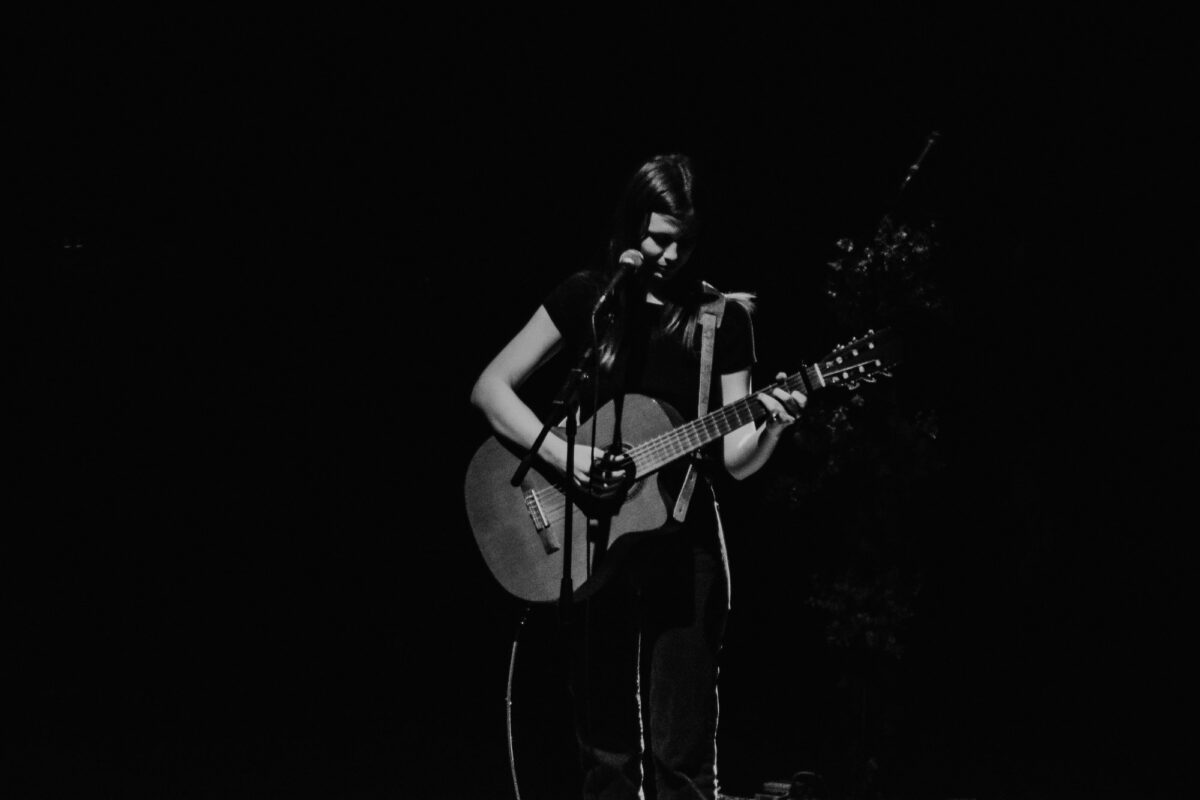
Starting the night off was opener, Marina Allen, a newer singer-songwriter from Los Angeles. Her sound on her newest album, Centrifics, is certainly folk (in the vein of someone like Joni Mitchell) with a tinge of Americana and alt-country, but live, she played a solo stripped-back acoustic set. Her voice is gorgeous, with a falsetto that could make angels weep, and a highlight was when she used that resonating falsetto with the word “motherfucker.” While I was waiting for more of a band performance, as was most of the crowd I’d wager, she set the tone of the evening beautifully. Also, hiring a full band for your first Canadian tour cannot be cheap, so I can’t fault her for that.
I was surprised that only the floor of L’Olympia was open with the above mezzanine completely blocked off. Perhaps there was another show (or several) or perhaps Andy Shauf is no longer as big in Eastern Canada as I expected. Regardless, this made the evening more intimate—perfect for Shauf’s music. The set up was seated as well, another reprieve from the usual standing-for-dear-life concerts I have been attending.
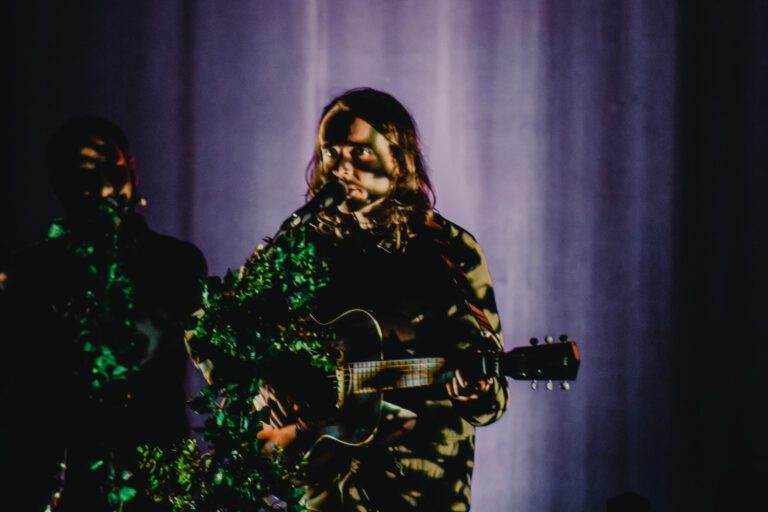
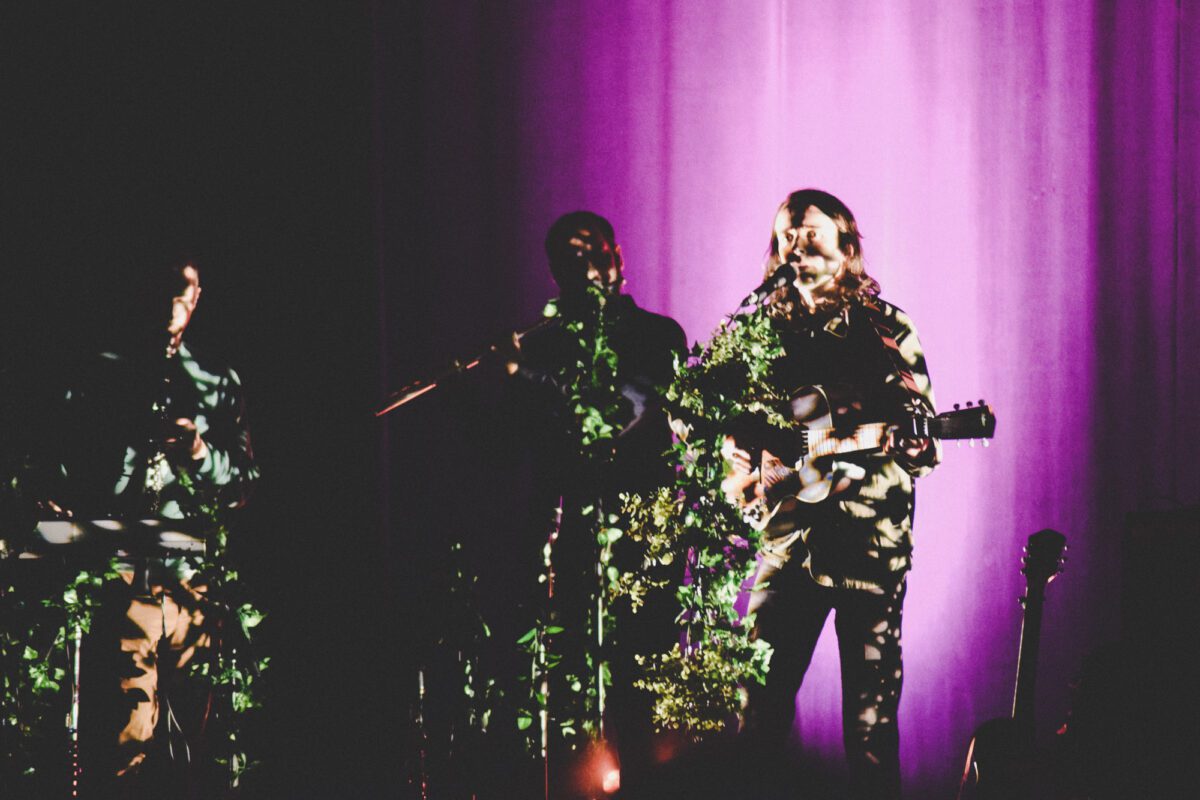
Shauf appeared on stage, behind a microphone covered in vegetation. Actually, most of the mics had plant life attached to them. He jumped into “Wasted On You,” the opener to his recent album, Norm. It sounded exactly like it does on record, almost to a tee. The first five or six songs were all from Norm—what could be considered one of his darker down-tempo records, perhaps following a stalker named Norm? The character of Norm appears throughout the record, and his desire for love may or may not be coming from an unhinged mind.
Shauf only leaves breadcrumbs in his simplistic day-to-day life narratives, like opening a book to his choose your own adventure novel. He also loves to end his songs halfway through the story with a lyrical phrase like “Jeremy walks over and, to my surprise, Sherry puts her arm around his side,” in his sad boy, the guy at the party, ode “Quite Like You,” from 2018’s The Party. It leaves you guessing with his music, and live it’s pretty fantastic. Maybe it’s because many of his songs come from a solemn state, from someone who is usually on the fringes of “normal society.” We’ve all felt like that at one time or another and Shauf always sings from the perspective of the sad clown, or let’s call him the sad magician.
The lighting for the show seemed to be reflective of Shauf’s general vibe and interaction with the crowd. You could never quite see his face due to the shadows being projected onto his figure, and whenever someone called at him from the crowd, he usually whispered, “Thank you.” The lighting also went with the vegetation theme, when, at times, Andy seemed like he was singing and playing his acoustic guitar obscured, inside a hedge of leaves.
I wouldn’t be surprised if Shauf has played whole sets without even acknowledging the crowd in an almost Nick Drake style. He seems like a very reserved, keeps-to-himself guy who, even a decade into his successful indie career, is still reconciling with his fame.
His band didn’t miss a beat, and the bass clarinet, bass guitar, jazzy drums, and sultry keyboards added to the calming, but grooving atmosphere. There was also a fantastic, low-key drum solo that the crowd was not expecting.
Shauf of course finished with “The Magician,” during his one-song encore and left the theatre feeling warm and sated. I’d recommend anyone interested in laid-back, jazzy, baroque pop to check out Andy’s next appearance in Montreal.
The gecs in our stars, a review
by Stephan Boissonneault
If you’ve been doing it long enough, there are points in every music writer’s career when you feel behind the trends; when an artist’s musical vocation goes beyond what you’re trained to fully understand or even comprehend. As the great gutter poet and last rock n’ roll gonzo journalist, Lester Bangs, probably once said, “You either adapt or you die, I choose to die.” But he was most likely talking about The Beatles diving into Vishnu psychedelia on Sgt. Pepper’s Lonely Hearts Club Band, and not the multi-sensory overload that is a 100 gecs show. He would not have been prepared for this viral hyperpop monster that has been categorized as a meme band by fans and music critics alike.
It’s funny to me that the term hyperpop is now so intrinsically linked to 100 gecs, primarily an Internet band, when I believe it was first used in the ‘80s to classify the music of Cocteau Twins, pre-Internet. I guess that’s the perfect example of how genre is only a placeholder that can transition on a dime.
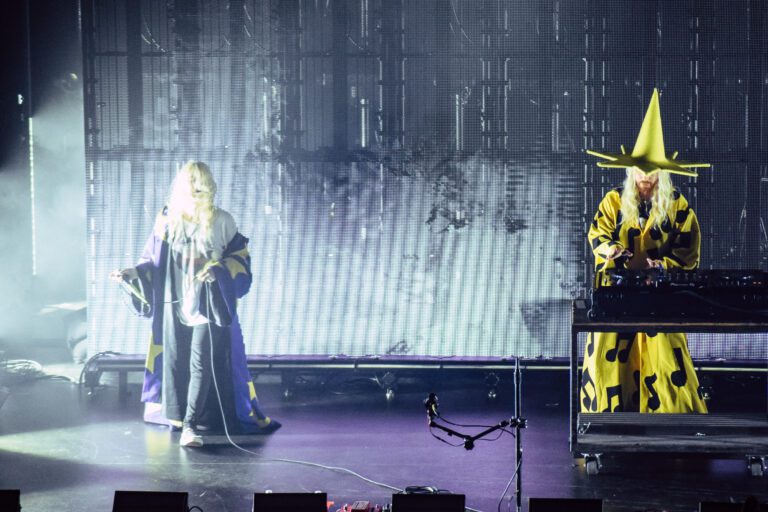
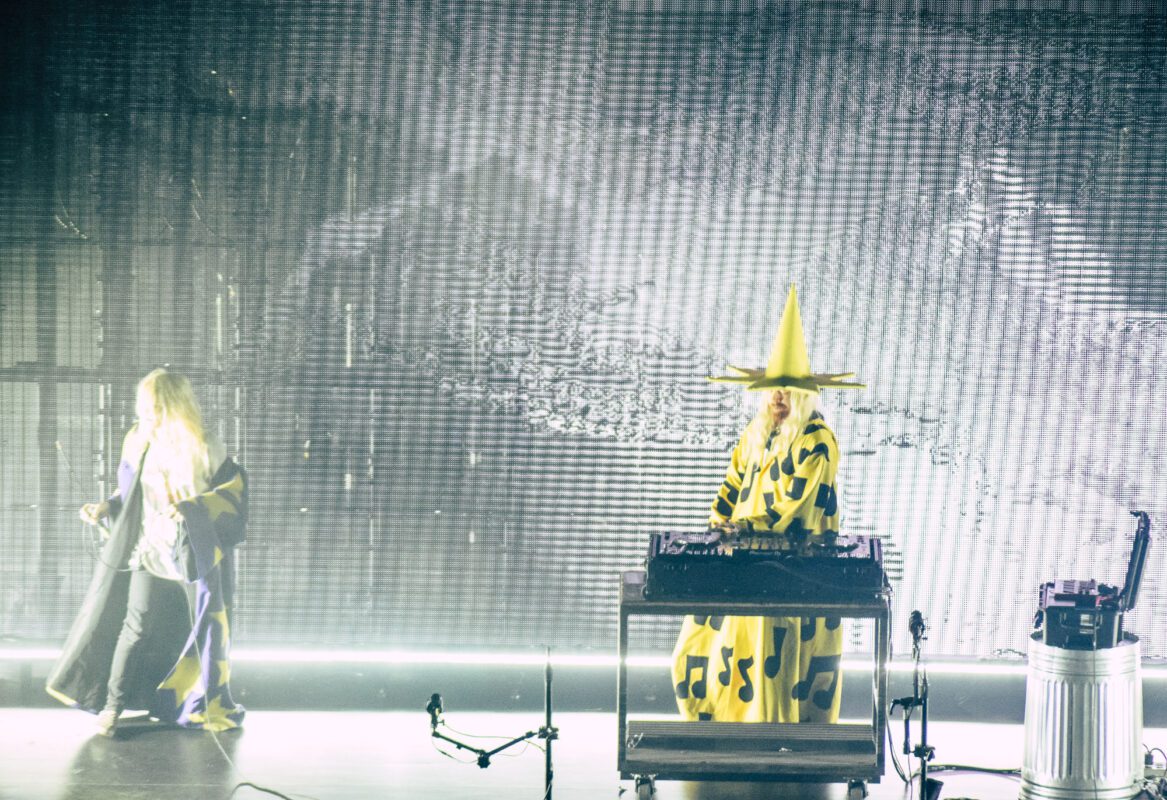
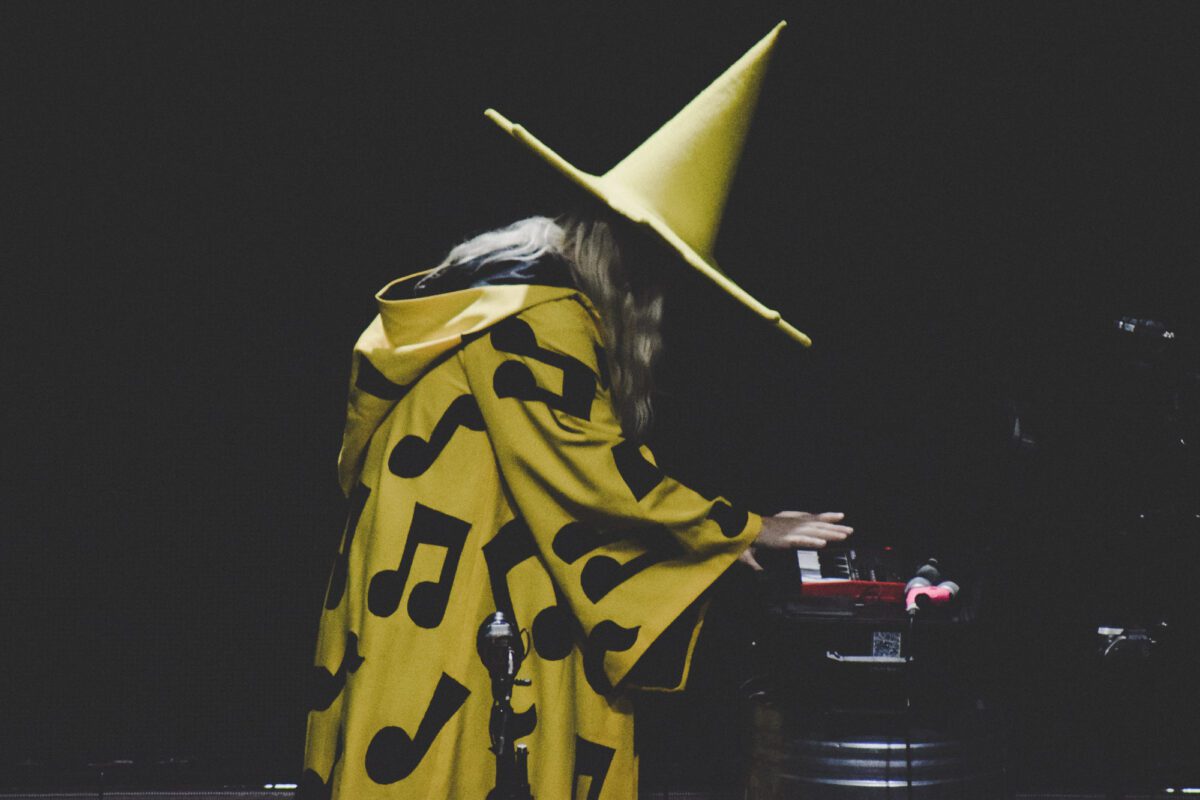
Still, I had the opportunity to witness 100 gecs live once at Osheaga, after two hip-hop sets from the United Kingdom’s slowthai, and emcee mastermind, Freddie Gibbs. From what I remember, that particular 100 gecs set was not my speed. I distinctly remember vocalist Laura Les growling into her auto-tuned microphone while her music partner, Dylan Brady danced around in a wizard costume wearing a bright yellow-pointed star hat, as a shifting bass beat jumped around. Back then, I briefly roasted 100 gecs in my Osheaga review, which you can read here if you so please.
“I don’t get it, maybe we’re too old,” said my festival companion. At the time, I agreed that it was just misplaced, over-saturated noise for a younger generation (I’m approaching 30 for background), and we moved on. But even so, 100 gecs seemed to pop up into my musical lexicon more. In musical writing spheres, bands were compared to them, such as the glitchy art-pop duo, Jockstrap, whose debut album, I Love You Jennifer B is one I still play frequently. The viral hit 100 gecs hit, “money machine,” followed me like a disease on the weekend.
I know that lots of music journalism; especially the review world—and I’m not talking about small DIY publications like the one you are reading this on—can be full of bullshit vernacular from writers who constantly find the worst in an album to be avant-garde. It’s a shame that a number rating from Pitchfork or a bad rating from Anthony Fantano can completely sway someone’s mind on an album or artist, but hey, that’s the streaming review world we find ourselves in.
Having said all that, these are the thoughts that consumed my mind as I stepped through the doors of MTelus to the most recent 100 gecs Montreal show—one that I will now refer to as “Gecigeddon.”
As I turned the corner, to the back of the venue, my ears were aurally assaulted by a band called Machine Girl, which briefly sounded like the worst over-the-top grindcore of the 2000s. I was expecting a more industrial synth wave from the name and was not prepared for a cochlear root canal. It was something neither I nor the party of 10 I attended with, were anticipating. Though there was a literal spotlight pointed at the crowd, following the lead singer, Matt Stephenson, as he weaved through them, screamed, and balanced on the mezzanine awning and venue bar, dressed as a manic jester, I couldn’t get into the digital hardcore vibe Machine Girl was creating.
My opening experience to the whole vibe of Gecigeddon was definitely soured, amplified after witnessing a blue-haired girl dressed in zebra-striped pants pass out (probably from heat exhaustion and whatever drug was coursing through her body) behind our group, moments after Machine Girl’s set. Was this going to be a crowd that couldn’t hold their own during the opener??? A crowd who hasn’t learned the basics of respectfully partying with drugs and taking care of yourself? Drink some damn water, please!
I tried to turn off my critical brain and just enjoy the whole scene; multi-colored wizards, a man with devil horns and a white T-shirt that said “I GOT MY TOOTH REMOVED,” parachute pants, a fair bit of corpse paint, emo and scenes kids that look like they just stepped off the bus from the Gathering of the Juggalos, the more goth and kink outfit crowd (latex, garter belts, collars, you get it) that was mostly down for chilling on the second floor. There was also an older crowd either with their kids or actual fans of this ridiculous pop music. I spotted the stage and the 100 gecs DJ computer setup, which was being housed in what looked like a nuclear bomb case, balanced atop a steel trash can.
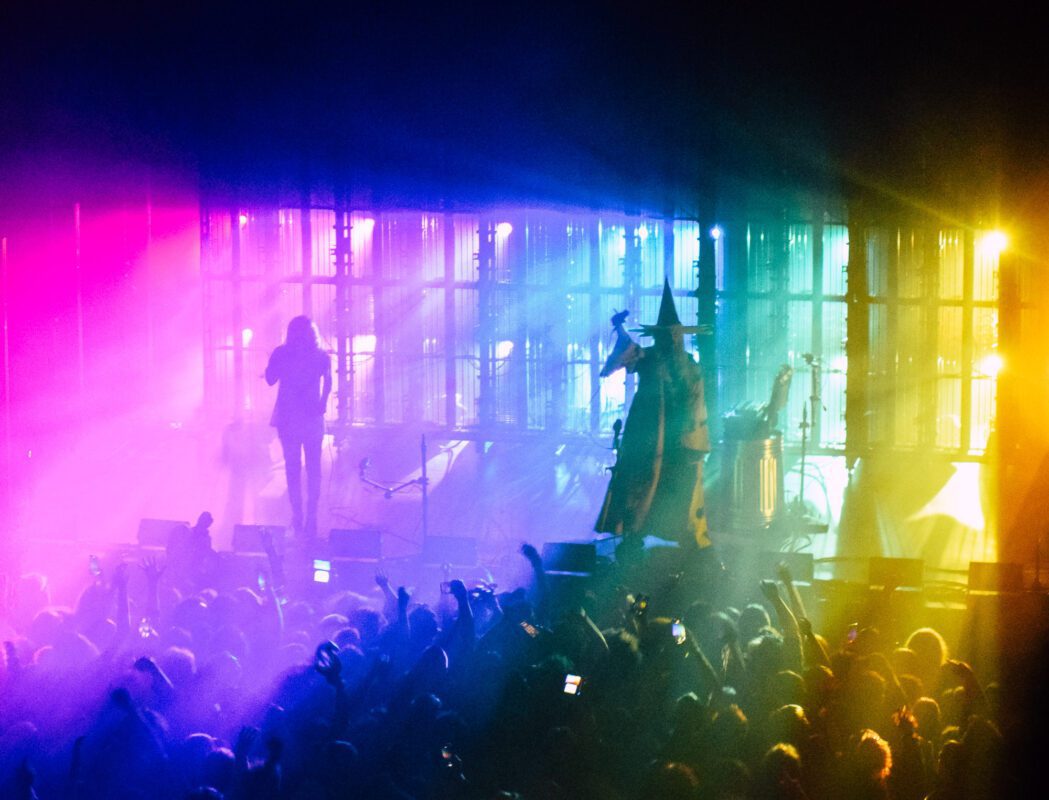
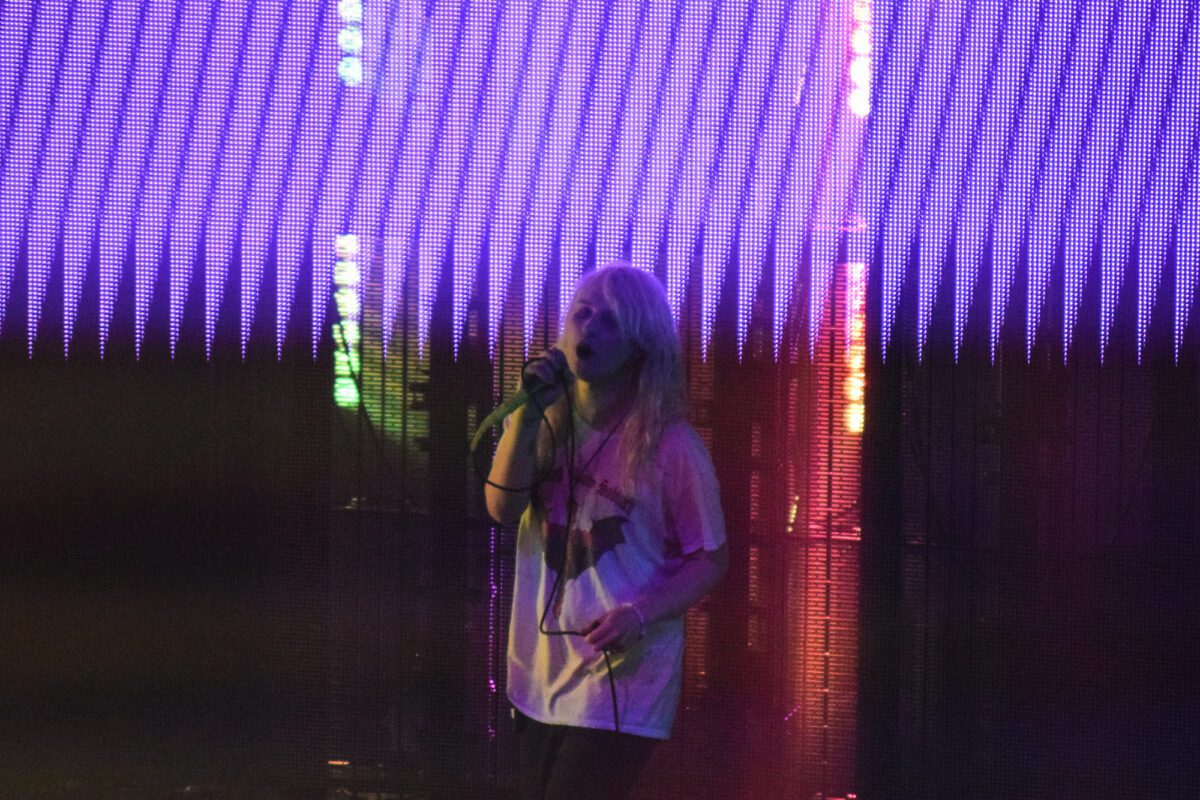
The lights went down and the deep noted THX productions sound quickly filled the room as the screen backdrop sporadically flashed all manners of white light. This was not the opening to a high-budget film, but 100 gecs’ “Dumbest Girl Alive,” off the new album 10,000 Gecs. The Limp Bizkit-esque butt-rock guitar riff kicked off and Laura and Dylan took the stage, donning the iconic yellow and purple wizard outfits.
If 100 gecs is good at one thing, it’s creating earworms that burrow deep into your psyche, even when you don’t want them to. The visual production was also insane; vibrant Windows ‘98 screens quickly descending into a green and pink mist as strobe lights mangled our minds. It was like staring directly into the sun on repeat.
I’ve never been a fan of auto-tune, but I have to admit that it works and is needed for 100 gecs’ music. Without it, you get a song like “Frog On The Floor,” a funny, but purposefully out-of-key vocal haphazard that takes the worst bits of childish ska-pop and makes a song. You could tell the gecs themselves were laughing before playing it live. There wasn’t much stage banter from 100 gecs other than introducing the next song and Laura going “cool,” before jumping in the next number. Most of the theatrics came from Dylan, balancing an acoustic guitar on his chin and biting into an onion like a maniac after a fan threw one on stage.
“No one throws any more onions, or I might shit,” Laura laughed.
Even a few days after the show I still have “Hollywood Baby” quickly making its way through my amygdala. I also can’t deny the sheer energy at Geccicon. The floor crowd knew every lyric, not missing a beat as they jumped and moshed to the new and older 100 gecs repertoire. At this moment, I could have decided to be like Lester Bangs and not open myself to this Myspace-era debauchery or I could try and have a good time. I chose the latter. Otherwise, what was the point? I ran into the crowd, camera bag attached to my shoulder, and moshed my heart out. During “Billy Knows Jamie,” I stood on my tippy toes, gasping for air like a guppy in an overcrowded tank. I chanted the chorus of “Doritos & Fritos,” and aided a shirtless man in pushing up a girl to crowd surf during “money machine.” Basically, I dove into my inner gec—like a teenager discovering Nirvana for the first time, looking for fun angsty mayhem.
Looking back on my decision to join the madness with thousands of gec fans, the motivation came from watching the duo, yes, recreate this laughable meme-era insanity live, but also from the community aspect felt in the crowd. Everyone was losing their mind, sweating together like pigs to slaughter. The sheer glee from some of these gecizens was palpable, and no matter how much I used to despise this band’s sound, during those 20-something songs, felt a part of it. I got gecced.
100 gecs is not music I’ll be playing in my spare time, but again, I can’t deny the whole live experience and I had a weird, but enjoyable time. Their fan base is more scattered than I imagined and though they are known as a meme band, live, everything they’re doing comes off as 100 per cent genuine—even an absurd vocal phrase like “Queen of California / Hot like the heat is / Got Anthony Kiedis suckin’ on my penis.” I even appreciated Laura’s guttural growls this time, due to the fact that it was built up to and earned.
Who knows if I’ll be at the next Gecigeddon/Geccicon/Gecivent, but it will be one memory I’ll have stored in the bank for years to come.
On the same evening at Place des Arts, pianists Bruce Liu and Nils Frahm triumph before two different audiences. Opposite worlds?
by Alain Brunet
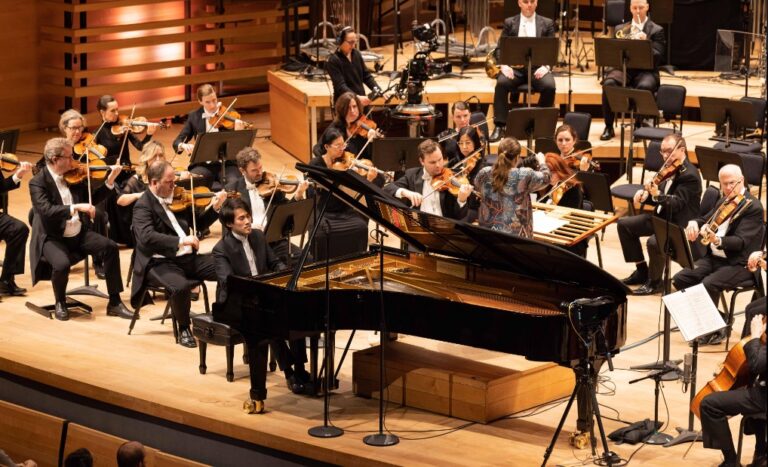
On Thursday night in Montreal, two halls at Place des Arts were almost sold out: at the Maison symphonique, Montreal pianist Bruce (Xiaoyu) Liu, the winner of the 2021 Frederic Chopin International Piano Competition in Warsaw, considered by many to be the most prestigious piano competition on the classical planet, performed Chopin’s Concerto No. 2 for piano and orchestra, with an encore of a baroque excerpt by French composer Jean-Philippe Rameau (Les Sauvages).
Since this historic victory, the young Quebec-trained prodigy has performed for a second time with the Orchestre symphonique de Montréal since last summer, this time under the direction of Finnish maestra (who also has Ukrainian origins) Dalia Stasevska, who also led the OSM in a more than acceptable performance of the Scandinavian composer’s (late 19th century) Symphony No. 6 in D minor, Op.104 by Scandinavian (and Finnish) composer Jean Sibelius, preceded by a contemporary work by Russian composer Sofia Gubaidulina, demanding and full of substance.
Chopin’s Concerto No. 2 was the main course, given the audience’s expectations of the young virtuoso with the huge international prize that has propelled his career onto stages around the world. Back home, Bruce Liu did not disappoint anyone in his performance.
Already at 25 years of age, one feels free to express his already singular personality, to impose his own style. We felt not only an exceptional fluidity in the execution but also an ability to reach grace without ever pressing his effects too much. We are not talking here of casualness, but of grace, agility and suppleness in the service of a work that can lend itself to excesses of affect even if great virtuosity is present.
And let’s not compare Bruce Liu to Charles Richard Hamelin, another winner of the Chopin Competition (2nd place in 2015) whose playing meets the same standards of excellence. Two distinct personalities of the piano here stand out, let’s applaud the diversity of pianistic expressions at this level of performance, even in this world of written music where the parameters suggested by the score still leave a space of freedom to its most eminent players.
And back to Thursday night: right next door to the Maison symphonique, in Salle Wilfrid-Pelletier, German pianist and electronic producer Nils Frahm offered a new performance involving classical, romantic and impressionist music, with improvisations and synthesizer additions. I wasn’t there personally, but I’ve already attended two Nils Frahm concerts with audiences who were amazed, transported, conquered, and who seemed to be living a remarkable first experience in piano or keyboard music.
Is there a link between these two worlds? If there is, it is still very thin.
Today, we can see that symphonic music composed for film and video games is attracting increasingly large audiences. We can also see that neo-classical composers who drink from European tonal and consonant music, romantic and post-romantic, have already conquered large audiences. The new album by Thomas Bangalter, the illustrious half of Daft Punk, is a new example among many others. We can also observe that neo-classical pianists offering “compositions” clearly inspired by Chopin, Liszt, Brahms, Rachmaninov, Satie, Ravel or Debussy, are filling their halls and enjoying an immense love rating, we are obviously thinking of the new album and the new recital of Montreal pianist Alexandra Stréliski.
Needless to say, these two worlds seem to remain relatively sealed.
On the one hand, the neoclassical public does not question the stylistic origins of the recent works that transport them. it only loves it ! What is more, this audience may disapprove of the tense decorum of the classical world, its absolute silence, the gala clothes of its performers, the rigidity of the performances, the virtual absence of freedom in the interpretation, etc.
On the other side of the coin, the public of the classical world deplores the neo-classical watering down of the “true” romantic, post-romantic or pre-modern repertoire, as well as the technical inferiority of its interpreters, whose inability to make a career in “great music” is suspected.
Do classical music lovers despise those of neoclassicism? In some cases, absolutely.
In turn, do neoclassical fans despise classical music snobs? In some cases, absolutely.
Is the truth to be found elsewhere? In all cases, absolutely.
One thing is certain, the dispute is far from resolved and we will have many more opportunities to discuss it.
P’tit Belliveau Announces Independence
by Stephan Boissonneault
During his April Club Soda Montreal show, P’tit Belliveau, the professional artist name of the Acadian indie folk/ pop rock, troubadour, Jonah Guimond, let it slip that he is going 100 per cent independent and that he will also be back at Club Soda in exactly one month. He’s currently signed on the French language music giant, Bonsound, but there was also some speculation amongst the crowd that he would be dropping another album after the show. This still hasn’t happened.
Regardless, P’tit Belliveau’s show was a wacky combination of Acadian banjo folk rock, synthy hyper pop, hip hop, and even nu metal after he busted out a cover of Papa Roach’s 2000 anthem “Last Resort”—which he killed by the way.
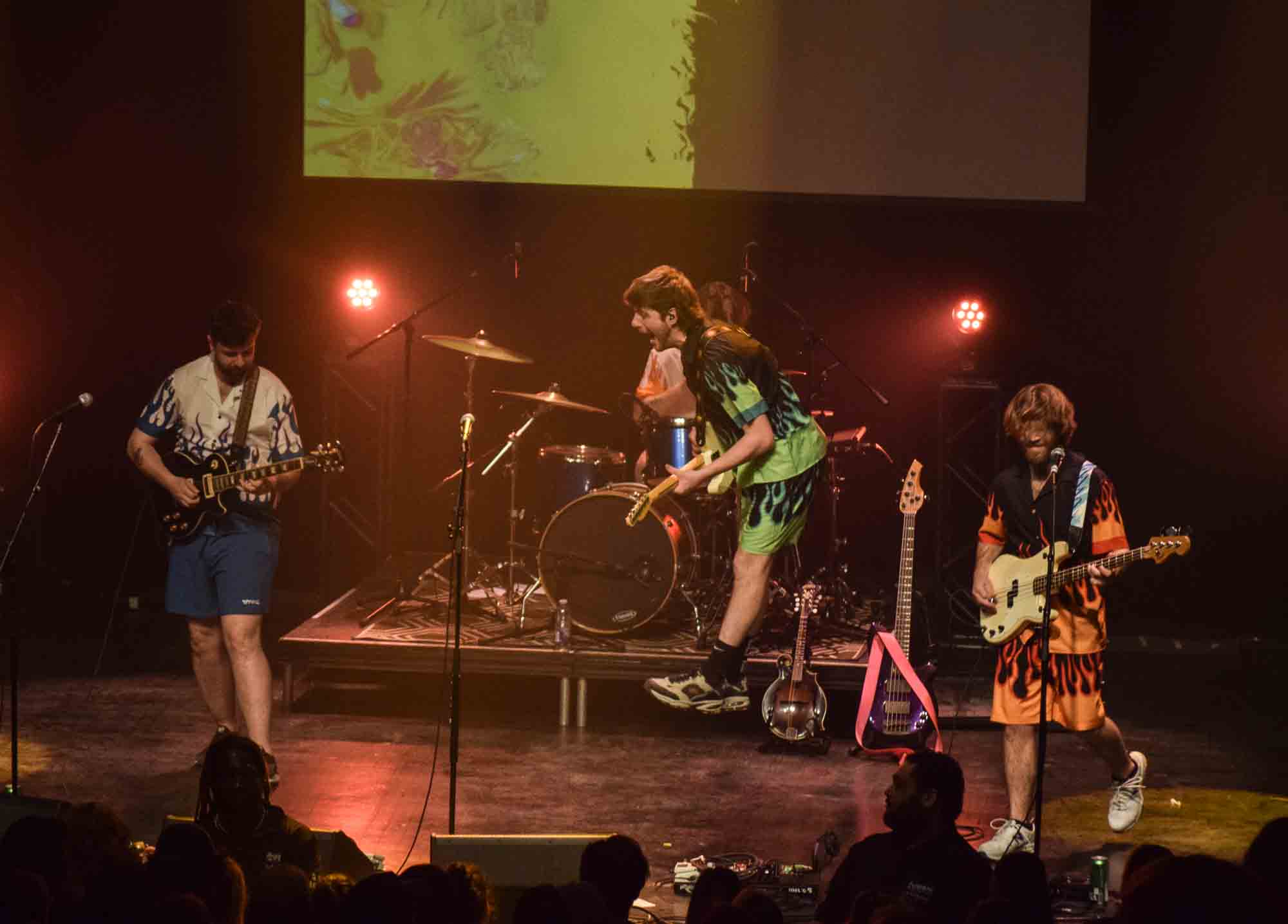
Before he took that stage at around 9:30, we were able to witness blesse, another indie French rock oddity, and then Peanut Butter Sunday which came out decked in Guy Fieri flame shirts. Each opener’s music felt like we were in the alt-rock heydays of 2008 and the crowd ate it up.
As P’tit Belliveau approached the stage, he was wearing a black hood, like a satirical goblin executioner. He have a huge smile and jumped into the trippy, vibey bluegrass opener “L’eau entre mes doigts.”
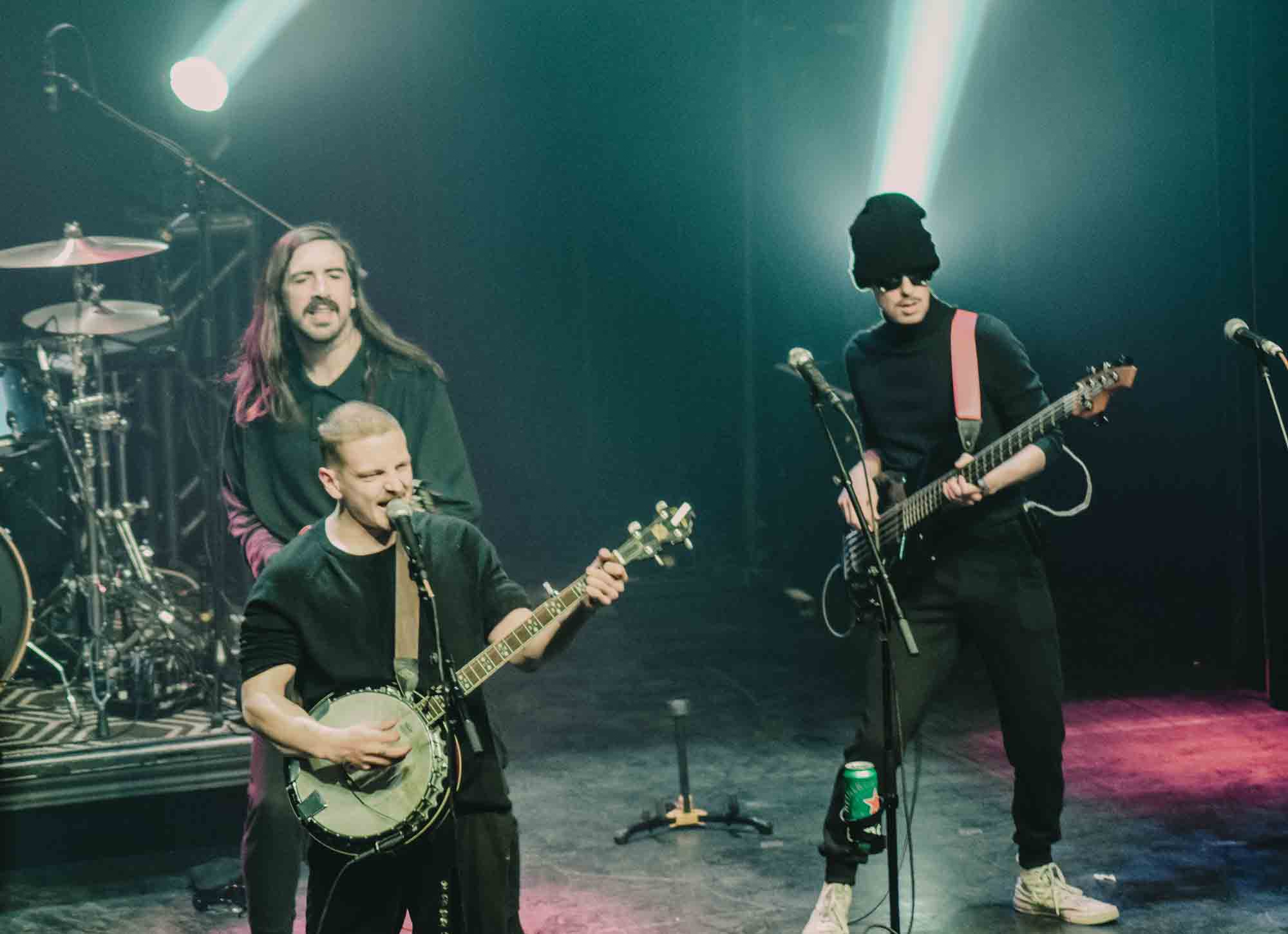
P’tit Belliveau’s energy comes off as a guy ridiculously happy to be playing his music live. His humour, which you could call, blue-collar cheek, was harnessed as he ripped on the banjo with his band; synths, guitar, mandolin, funky bass, and a tight-as-hell drummer.
The visuals looked like they were made on MS Paint; especially during his hit bluegrass indie ode “J’aimerais d’avoir un John Deere,” which featured pixelated tractors driving around the classic Windows green field. Another highlight has to be the crude P’tit Belliveau caricatures dancing around as he had the crowd chanting the words to “Demain.” Actually, these caricatures made multiple appearances, sometimes in a more psychedelic fashion that kind of felt like the weirdness during the movie Being John Malkovich.
P’tit Belliveau knows his brand—a combination of internet memes, nostalgia for a simpler time when websites like Newgrounds, Nexopia, and even Neopets ruled the high-speed web, all led by a guy you could split a six-pack with while talking about sports or the WWE. Combine that with a penchant for infectious musical hooks, and a bunch of Acadian Frenglish, and you’ve got a P’tit Belliveau track. And live, it’s just too much fun.
The crowd got rowdy as well, moshing during the hilarious “Income Tax,” following P’tit as he sang about blowing all of his money on Taco Bell, WALMART, liquor, and gas cards. It’s so Canadian, funny, and relatable for anyone who has lived pay cheque to pay cheque.
No matter the reason why P’tit Belliveau is going independent, it’s easy to see why he’s been such a success in the last five years since his debut. He’s 100 per cent genuine and has a fan base that will follow him wherever he goes. Whether that’s independent or supported by a big record label, like Bonsound.
Молчат Дома – Buck wild coldwave, post-punk & despair
by Lyle Hendriks
There’s a moment near the midpoint of Michael Mann’s film masterpiece Heat (1995) when Robert DeNiro’s character is alone in his stunning penthouse apartment. He’s dressed in a black suit, having a stiff drink, surrounded by opulence and wealth on a dark summer night. Marbled glass and floor-to-ceiling windows carry stunning blue light into the space. It’s beautiful, serene, and yet so clear that the character could not be further from anything resembling happiness.
This very specific mood is the best way I can describe the atmosphere of Molchat Doma’s performance on April 2nd at MTELUS. Beauty, serenity, sadness. Wrapped together, interwoven, creating something as imperfect as it is imperative.
The night began with a solid set from opening act Nuovo Testamento, a synthy, ‘80s-pop-inspired duo that evoked Italian ice on the pier as the sun dips below the horizon. With tight, booming percussion courtesy of Giacamo Zatti and powerful, anthem-worthy vocals from Chelsey Crowley, the tone was set.
Molchat Doma’s three members showed up on stage dressed for a semi-formal heist, which is appropriate, because they stole the show. There’s something very special about seeing more than 2,000 young people desperately screaming out for a man like lead vocalist Egor Shkutko, dressed like an enforcer for the Belarusian mob.
To call Molchat Doma’s work ‘moody’ would be an understatement. Retro synths, emo-derivative guitar riffs, and signature coldwave basslines all came together into melancholic tracks that simultaneously drone and inspire. And despite Egor’s low-register vocals, dramatic intonations, and the fact that he sings solely in Russian, there’s something in these songs that has the uncanny ability to reach out and touch us.
I, like many, discovered Molchat Doma during the early days of the pandemic with their biggest hit, “Судно.” Fun, yet serious, energetic, but morose, this track, has always filled me with a unique sense of nihilistic urgency—it would be my first choice if I got hold of the aux in the getaway vehicle. And since I don’t speak Russian, I’ve always called this one “The Crime-Doing Song.” That felt like a good descriptor until I looked up a translation of the lyrics. Here’s an excerpt from the chorus, which has graced countless TikToks and cooler-than-average house parties over the past two years:
Enameled bedpan Window, bedside table and the bed — Not cozy at all — hard to live But it’s cozy to die And the drops fall from the tap quietly And life is just a fucking mess It’s (life) getting outside like from the fog And sees it — bedside table and the bed
Does this sound like music to rage to? You might not think so, but the 2,300 youths going completely buck wild on Sunday’s show would have to disagree.
The energy in the room that night was palpable—as if each and every person in there was letting something raw and primal loose from its cage within them—whether they were opening the pit during one of Molchat Doma’s signature breakdowns or contributing to a cascading domino effect of teenage crowd surfers. In one particularly incredible moment, a young girl managed to hit the splits atop the throng of concertgoers beneath her, showing just what this music can do for those who need it.
Throughout the evening, I couldn’t get the thought of Heat out of my head. The thought of sadness and guilt polished to a mirror sheen in a stunning apartment parallels Molchat Doma’s glamorous production and nostalgic arrangements, all crafted to carry central messages of despair, longing, and regret. And much like Robert DeNiro’s character in Heat, there’s a quiet intensity to Molchat Doma that feels like it could snap from sadness to rage at any moment.
Molchat Doma is music for those going through tough times. But unlike the sad track you put on after a breakup, this is sad music with energy and urgency. And there’s no better way to understand the vitality of this specific breed of Eastern European coldwave post-punk. The music of Molchat Doma pushes us. It sees us. It recognizes a part of us that feels desperate for sudden, radical, violent change in our lives and the world at large.
Words: Lyle Hendriks Photos: Stephan Boissonneault
Italian Disco Punk, Supersonic Shoegaze, and a Coked-up Televangelist
by Max Seaton
I didn’t have high expectations for last week’s Warmduscher show at Bar Le Ritz, due to the fact that it was on a Wednesday evening and the temperature was acting up that day. A cold rain began to fall as I hurried back to the venue at dusk, freezing me to the bone and almost making me wish I hadn’t left the comfortable warmth of my apartment. Luckily, I made it to the Ritz, so far half full, only moments before the music started, just in time to buy myself an overpriced beer and find myself a spot in the front.
Groupe B, the solo project of Stephen Baird, ex-member of several Montreal groups, including Double Date With Death and Bland, started the evening quite explosively, framed by two columns of purple lights that flashed to the rhythm of the songs, holding a candy pink guitar and wearing large Pit Viper sunglasses. The music boils down to pre-recorded synth and drum machine tracks immediately reminiscent of Italian Giallo horror movie soundtracks that often combine funky disco beats with more sinister synth melodies, as well as more punk or even heavy metal guitar riffs. The range of songs goes from epic, romantic ballads, to more hard rock, ‘guitar hero’ style tracks, to more electro-punk tracks. One thing is certain, Groupe B knew how to keep us spellbound and I can’t wait to see them in concert again.
After a short intermission during which the room quickly filled up, it was Boar God’s turn to take the listeners’ eardrums by storm. Active since 2017, this veteran group of the Montreal underground scene, which has always been able to please fans of supersonic shoegaze, once again did not disappoint the crowd. Intricate, effect-packed and extremely loud guitar lines (probably why the band’s vocalist and guitarist, Eric Bent, always wears noise-cancelling headphones while playing) are backed by very solid bass lines that stand out and punch through the immense wall of sound. The drums do a great job of being tenacious and persistent, allowing you to really get mesmerized by the songs. The whole thing is crowned by a magnificent harmony of the voices of Eric and bass player Sabrina which recalls the formation My Bloody Valentine at their peak. If you’re a Boar God fan, new or old, I highly recommend New Zealand record label Flying Nun, who in the ‘80s and ‘90s captured the hearts of post-punk fans with bands like The Clean, Tall Dwarfs and Bailter Space.
A jam-packed Ritz enthusiastically welcomed the headliner, London-based band Warmduscher, who were in town for their first North American tour. The roster arrived on stage to a torrential downpour of applause, all dressed in dark blue boilersuits emblazoned with the “WD” logo at heart level. After only a few seconds of music, the dance floor ignited and stayed that way until the last note of the evening. The rhythm section plays a mix of disco and completely crazy funk while the guitar adds an energetic touch of more garage tones. For its part, the synth lends a low-budget ’70s porn movie vibe over which the lead singer, Clams Baker Jr., tells often crazy and sordid stories with the flow and ardor of a coked- up televangelist.
To the delight of the excited spectators, the band was able to offer an excellent selection from their catalog, including several of their singles, such as “Midnight Dipper,” “Disco Peanuts,” “Fatso,” “1000 Whispers,” and “Burner,” (which they dedicated to rapper Kool Keith who appears on the studio version of this song).
All in all, a very nice evening that surprised me and reminded me why sometimes it is worth going out and giving yourself a hangover in the middle of the week—to take a good warm bath of culture.
Words By: Max Seaton Photos: Stephan Boissonneault
The Weird Wizardly World of King Tuff
by Lyle Hendriks
From the moment he took the stage at Bar Le Ritz PDB, it was abundantly clear that Kyle Thomas, better known as King Tuff, is a weird dude.
King Tuff’s March 28th show was supported by Tchotchke, an excellent indie rock group from Brooklyn, NY. The all-female trio played with fantastic energy, with a particularly strong performance from drummer/vocalist Anastasia Sanchez that carried each track’s momentum through to the end.
After a short break, the King himself (along with his merry troupe) arrived onstage, opening up in short order with the whimsical opener of his latest album, “Love Letters to Plants.” Featuring restrained keys, subdued yet complicated drums, and imperfect, impactful vocals, this weirdo track did an excellent job of setting the tone for the rest of the set.
After a little banter about Montreal and its bagels (including the controversial move of pledging allegiance to Fairmount Bagel), Thomas carried on through his setlist, mainly playing cuts off his latest album, Smalltown Stardust. As with the record itself, King Tuff’s Montreal performance was one that could be summed up in a single word: confidence.
There was an overwhelming sense of ease in everything played by Thomas and his band—a distinct sense of humility backed up by decades of practice and experience. While Thomas no doubt has the skills to melt our faces at a moment’s notice, he clearly doesn’t feel the need to prove it with these new songs, opting instead to include the bare necessities of what each song requires. These tracks feel like they were made for Kyle Thomas above all else, and the fact that anyone else cares to listen is simply a bonus.
Despite Thomas’ apparent maturity and growth, he still had his moments, including cursing a floppy mic stand and asking irreverent questions to the audience about our options for local swimming holes. To our delight, it got to a point where even Thomas’ own guitar player told him he was a freak—a statement which was not denied by the King or his bandmates.
At this point, we all figured we had a bead on King Tuff’s oddball vibe. He’s a grown man with years of experience and the skills to match, yet still maintains a youthful streak in the way he talks and performs. I figured he’d soon be wrapping up, suddenly he stopped and said he forgot something backstage, vanishing to the back hall.
After an awkward pause, Thomas’ drummer shrugged, hit a fill, and led the band through a few minutes of jazzy elevator music. Shortly after, King Tuff reemerged, having donned a pink, iridescent wizard robe with accompanying hat and shades. With the tone severely and suddenly shifted, the band jumped into some older, heavier songs, including the truly awesome “Black Moon Spell,” and iconic “I Love You Ugly.” Thomas shredded, screamed, and howled through these last few tracks, delivering the energy and intensity that he had so gracefully held back to that point.
King Tuff is a psychedelic vision in a shaggy beard. A fork of lightning that strikes wherever it damn well pleases. A whimsical wizard armed with a Telecaster and a Rhodes piano. King Tuff is a weird dude, and you can’t help but love him for it.
The calm of each passing breath, ephemeral, flickering hesitant lights pouring in from the skies, mutating machinery and twisting construction yards, a black kite’s turn for redemption. We stand on the precipice as a species and loving one another has never been more important. Fractured ink blots over images of bombs dropping from the heavens. The noise never stops and we don’t want it to. Days seem like hours, hours seem like minutes, minutes turn into the very semblance of time itself until it’s pulverized and nothing becomes everything. Transmission detritus.
That bit of prose may read like a one off from a madman who has disregard for most things, or perhaps love for everything, and maybe it is, but it’s also a testimonial, an account of my encounter with Godspeed You! Black Emperor, one of the progenitors of post-rock—a shapeshifting genre which continues to spawn new bands, seemingly out of thin air.
They played the first show of two at MTelus (a place the band commonly refers to as the Telephone Venue) and the merch was an anarchist book fair on on side and various vinyls spanning their illustrious career on the other. That’s with no word of hyperbole: they’ve made seven records since their genesis in the late ‘90s. The latest is G_d’s Pee AT STATE’S END!which homes in on the heavy tenacity and experimentation of this Montreal eight-piece. About a year before its official release in 2021, I heard an early pressing of this album in an Edmonton record store before moving to Godpseed’s home of Montreal. The clerk would only tell me, “It’s a new Godspeed record, but I can’t dare say more.”
This album might be the band at their most fractured and angry since Yanqui U.X.O. It was written on the road during a tour that was halted because of the pandemic, which in a way presented a twisted opportunity for musicians to reconcile with why they make music in the first place.
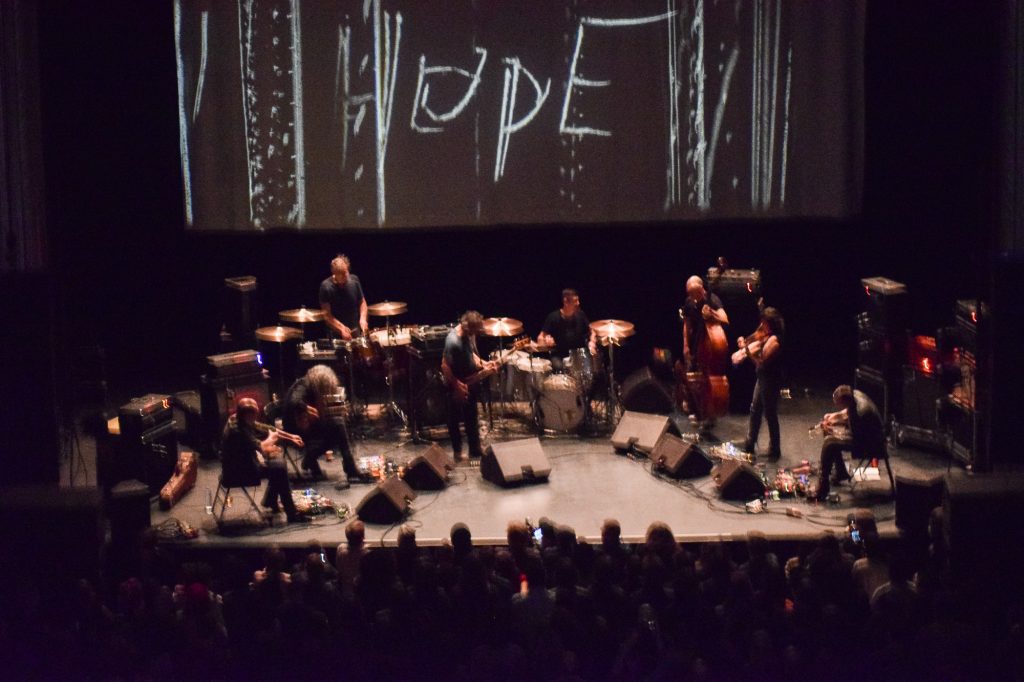
16mm projections created by Karl Lemieux & Philippe Leonard were as much part of the show as the eight musicians sitting and standing on stage. Incandescent alabaster sculptures took the scenery by surprise and footage of dog fights were filtered through tones of dirty craven yellow.
There was no pageantry. The members of GY!BE took their seats (or stood in the case of the string section which includes a thundering bass guitar) and slowly began “Hope Drone,” a song that has been in a state of metamorphosis since its live debut in San Francisco in 2013.
The final moments of “Hope Drone” dripped into “First of the Last Glaciers” which, despite its obscurity, is one of the heaviest songs GY!BE has ever conceived (though it’s really part two of the song “A Military Alphabet,” from G_d’s Pee). I know, it’s hard not to think of the person writing this as some pretentious twit who hides in his basement and only listens to Godspeed records, but it’s important to give proper credit to art. And that’s what this is. ART. This band has its own mythology and it’s hard to not get consumed by it.
The next hour and a half was a blur. All I can say for sure is the crowd was enraptured by the performance—head banging, crying, sneezing, wheezing, gasping for air on the crowded floor. GY!BE has never called itself political, but it’s hard to not think about the turmoil and bloodshed much of the world has been subject to during a song like “Bosses Hang” from Luciferian Towers. Music is a weapon, or a means to sonic revolution. GY!BE tricks your mind into experiencing all of the sounds—the crashing drums, whirling guitars, gargantuan bass, trilling violins—and take you on a voyage to a dystopian yet close-to-home world where reptilian overlords rule over a capitalist regime, where the only communication is through fading radio transmissions. As we are forced to hold one another in the shadows, we watch our loved ones wither away…
That was also the whole point of opener Moor Mother’s set—who honestly deserves her own write up and, who knows, might get one in the future. This songwriter, composer, vocalist, poet, and visual artist, Camae Ayewa, is also a professor at the University of Southern California’s Thornton School of Music and her set at times felt like an experimental lecture or sermon.
“I know I’m bringing up a lot of really heavy stuff but it’s not heavy enough. People are hurting and we are living on that hurt, ”she said to the crowd after opening with songs from 2022’s Jazz Codes.Static noise and pulsating bleakness formed a backdrop to spoken and screamed word compositions worthy of “the poet laureate of the apocalypse,”setting the tone for GY!BE.
Moor Mother live @ MTelus
The dystopian world in both Moor Mother’s and GY!BE’s music is unfortunately our own.
And though GY!BE will never directly tell you to take up arms and fight to fix our broken reality and topple its presiding regime, there is a revolutionary edge to much of their work. Just read the liner notes on some of their albums… I would be remiss not to mention how important their work is to grassroots protests. But that’s a story for another review.
I am fortunate enough to live in Canada or Kanata, which is for the most part free despite its shadowed past, but that doesn’t for one second allow me to think that nothing is wrong. There’s lots wrong with the world. And without going on a whole tirade, seeing GY!BE makes those wrongs the fuel, no, the catalyst for change. As you can tell, watching this band live stirs up an unquantifiable emotion, a melody that will stick with you for the rest of your days.
GY!BE still reverberating in our minds
2012 saw a resurgence of many things—the Mayans believed it would be the end times—but for many at this show, this year represents the return of Godspeed from a 10 year hiatus with the album, ALLELUJAH! DON’T BEND! ASCEND! On this fateful Montreal winter night, GY!BE began the second part of their live set with that album’s opening song, “Mladic.” In music, context can be everything. And this is certainly the case in a song like “Mladic”—Middle Eastern in its sinister drone guitar work (all four guitar players pour in the light) and chimerical string section. The drums, my god, the drums. It’s like a panic attack that you can’t escape or never really want to because it’s all you know. The country you live in may have a flag, but in this moment, this is all you know. ALLELUJAH! DON’T BEND! ASCEND! was one of, if not the, best comeback record a band has ever invented. And we were able to hear and see some of it live.
In this socio-political landscape, independent music culture is at a crossroads, fighting, some would say a losing battle. It’s a nihilistically sad story we’re all living, sharing, resisting, protesting, deconstructing and trying to change for the better. I can’t take credit for that last line. It’s lifted from the liner notes and bandcamp scroll from ALLELUJAH! DON’T BEND! ASCEND! Again, credit where credit is due.
The next passage was also a blur. It never ended, but it was around 44 minutes… as the band wrapped up “Mladic,” silence took the air until one fan screamed “FUCK YEAH,” as if he was at a metal show. I can’t fault him for that. “Mladic” is a heavy trip and he wanted more. Of course, GY!BE was happy to oblige.
There are many reasons I go to see live music, but I especially always cherish hearing a truly deep cut live. That occurred with the last droning number, “BBF3,” a transmutable soundscape that has snippets of an interview with Blaise Bailey Finnegan III aka Blaze Bayley, who appeared in Godpseed’s 1998 album, F#A#. That album was also my first introduction to the band, experienced in a weed stupor in a frozen garage.
Blaze Bayley was also the vocalist of Iron Maiden during arguably the worst years of the UK metal group. But he has a mouth on him and a distaste for the capitalist system in North America that’s perfect for GY!BE. I had no idea we would hear “BBF3,” it’s a deep cut indeed, from a two song album that many people gloss over. Live, this song is anxiety inducing, especially when Bayley recites which automatic guns he owns as GY!BE converges in whirring static.
…
Interviewer: Do you think things are gonna get better before they get worse?
Blaise Bailey Finnegan III: No way. Things are just gonna get worse and keep on getting worse. Like I said, America’s a third world country as it is and… and we’re just basically in a hopeless situation as it stands.
Interviewer: What do you think this country’s gonna look like in the year 2003?
Blaise Bailey Finnegan III: Y’know, I’ll tell you the truth – nothing against you guys, but I don’t wanna answer that question because… I haven’t even got a mind that’s that… that inhumane.
…
16 mm madness
My god, this song live was another excursion and it continued blaring on even after the band vacated the stage. A super fan, who said this was his 23rd time seeing the band live, told me to “stay after the music was over.”
But it was never really going to be over. I’m still there. And much like the first time I saw them live, almost a year ago to the day in a much smaller venue in Victoria, BC, this show will be a memory I hold confusingly dear.
People have called GY!BE transcendental, orgasmic, euphoric, mind-bending, anxiety inducing. They are all that and more. The closest you will get to astral projecting without eating peyote from the bottom of a barrel. I should really grab a ticket for tomorrow’s show. Oh wait—it’s sold out. Catch them whenever they play in your city—or don’t, it doesn’t matter to them. They’re indifferent, an elusive band who loves its fans and will make music until they no longer can, but will never tell you the key to understanding their sonic message. That, you must discover for yourself.
Written during the hours of the early morning, as the sun just peeked up over the apartment buildings. Photos by writer.
Godspeed You! Black Emperor plays MTelus Mar. 9 (SOLD OUT)
PyPy is back, All Hail ππ
by Stephan Boissonneault
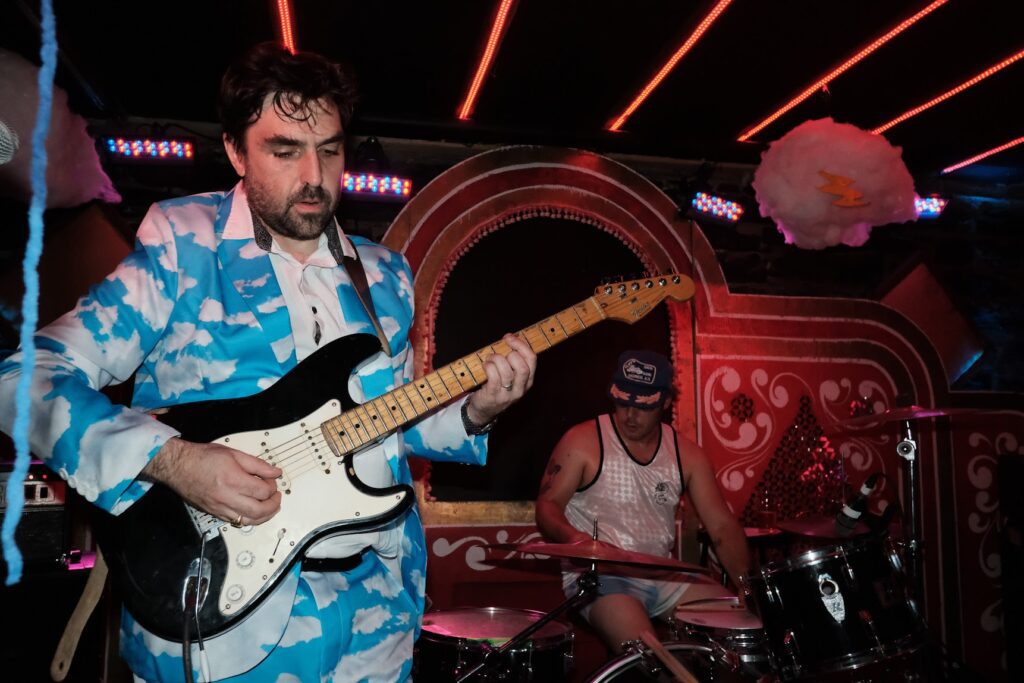
While the corporate big wigs and plastic, robotic, people headed to the clubs, close to two hundred scuzzy punks crowded into l’Escogriffe to witness the rebirth of PyPy—a Montreal psychedelic garage punk supergroup made up of members from Duchess Says, Red Mass, and CPC Gangbangs—one of the more batshit crazy punk groups to emerge from Montreal. This PyPy show, complimented by the hanging cloud props peppered throughout l’Esco’s room, was for the true heads who lived within the Montreal music scene pre-Covid; a show for the fans who knew about the 2014 release Pagan Day LP and know how it still holds up within the garage psych rock echelon.
I, however, am not a true head, and only learned of PyPy a month or so before this glorious live show. Fortunately, I discovered them after a friend played me the Pagan Day record in its entirety as we pre-drank the day away before this year’s Osheaga. As I heard the banshee-like growls of co-lead singer Annie-Claude Deschênes—a voice I know well from the Duchess Says era—complimented by in-the-red guitar wankery and disco-punk waves, I knew this was something special.
So, it’s quite serendipitous that this PyPy live show, (their first since Distortion 2017 and 2018 when they toured as PyPy/Duchess Says), my first PyPy show, was one of my favourites in recent memory. And I go to a lot of shows … It’s kind of my job.
To start off the night, I saw Crasher, a dance-punk three-piece, that seems to get better and better with every live performance. This is because frontman, Ash Wood, donning an ’80s black, shining dress shirt and smoke show eye makeup is a chameleon of the stage: shifting between a more subtle stage presence of someone like LCD Soundsystem’s James Murphy for the Crasher ballads, and the Descendents’ Milo Aukerman for the faster tracks. If that means nothing to you, then basically, Wood knows how to read the energy of a room, harness it, and throw it back as he bounces from the mic to synth, having his super tight band hold it all down.
Pypy @ l’Escogriffe / David Leclerc
PyPy took to the stage and the energy and anticipation of the room were palpable. Guitarist and singer, Roy Vucino, a main staple in the experimental/garage scene of Montreal, strummed a few fuzzy chords, wearing a two-piece sky blue cloud suit, and the crowd lost it. Annie took the mic and, also wearing the same cloud wardrobe (ah the hanging clouds make sense now) and people in the front row immediately began moshing. Her face was sometimes deadpan, grimaced, or absolutely manic, like that of a circus leader, leading a troupe of freaks through a march or dirge.
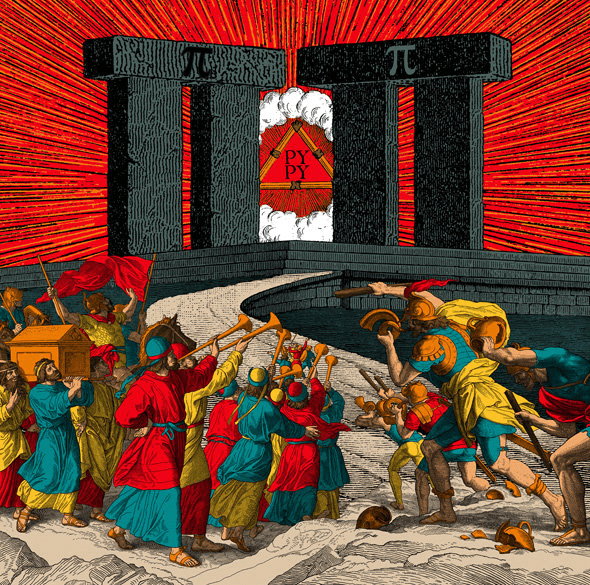
Pagan Day by PyPy. LP Cover by Elzo Durt
I know there have been many shows since Montreal re-opened, but watching PyPy’s performance, and the crowd’s reaction, filled me with glee. I joined a bit of the mosh, splashing around my pilsner in the process, and saw the big stupid grins of the punks, old and new as we whipped each other across the room. I’ve been in Montreal for two years and this was one of the first times I felt at home in a crowd of complete strangers. For us, the pandemic was nothing but a fleeting memory and at this moment, we knew it was time to lose our minds for some of Eastern Canada’s best psych rock. In fits of euphoria, the hanging clouds were punched, kicked, and ripped from the ceilings and PyPy was ushered back in for a three-song encore. Annie crowd-surfed (probably smacking her head on the ceiling once or twice), finished that last track and sat on the barwood as the rest of PyPy jammed a frenetic instrumental surf doom rock to close the performance.
Annie-Claude Deschênes finishing the PyPy set / David Leclerc
I had no idea if this set from PyPy was only for nostalgia, but Annie announced that a song or two were from “the next PyPy” album.
All we can do is wait in anticipation.
Subscribe to our newsletter
Gérez votre confidentialité
Nous utilisons des technologies telles que les cookies pour stocker et/ou accéder aux informations des appareils. Nous le faisons pour améliorer l’expérience de navigation et pour afficher des publicités (non-) personnalisées. Consentir à ces technologies nous permettra de traiter des données telles que le comportement de navigation ou les ID uniques sur ce site. Le fait de ne pas consentir ou de retirer son consentement peut avoir un effet négatif sur certaines fonctionnalités et fonctions.
Functional
Always active
The technical storage or access is strictly necessary for the legitimate purpose of enabling the use of a specific service explicitly requested by the subscriber or user, or for the sole purpose of carrying out the transmission of a communication over an electronic communications network.
Preferences
The technical storage or access is necessary for the legitimate purpose of storing preferences that are not requested by the subscriber or user.
Statistics
The technical storage or access that is used exclusively for statistical purposes.The technical storage or access that is used exclusively for anonymous statistical purposes. Without a subpoena, voluntary compliance on the part of your Internet Service Provider, or additional records from a third party, information stored or retrieved for this purpose alone cannot usually be used to identify you.
Marketing
The technical storage or access is required to create user profiles to send advertising, or to track the user on a website or across several websites for similar marketing purposes.