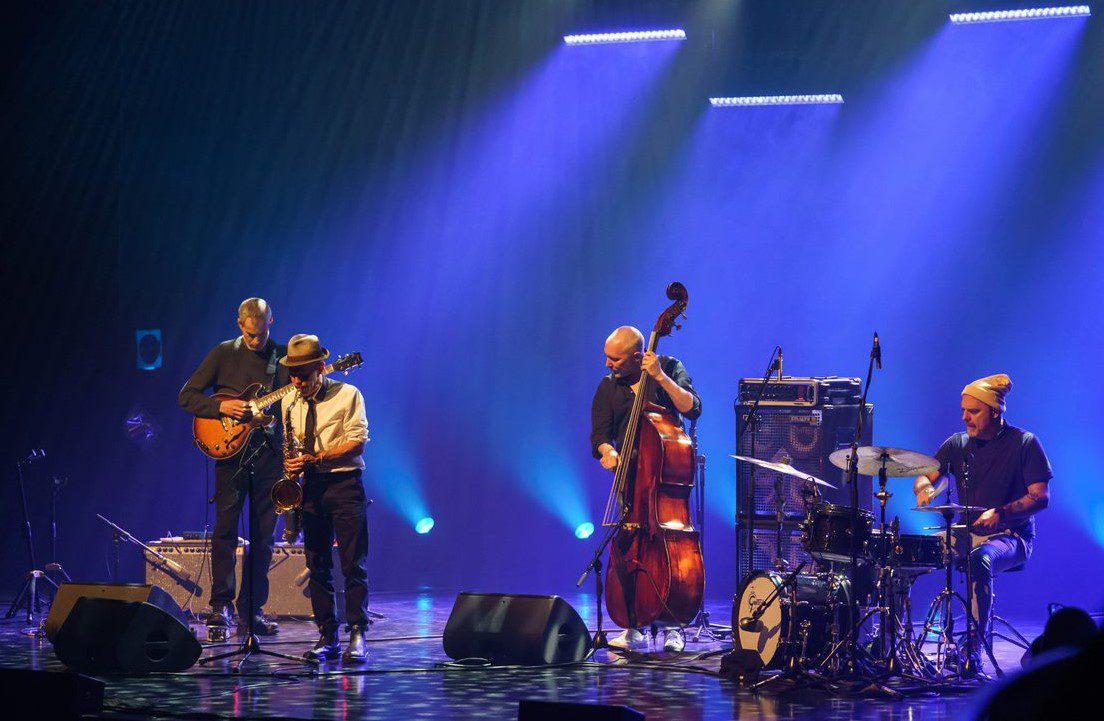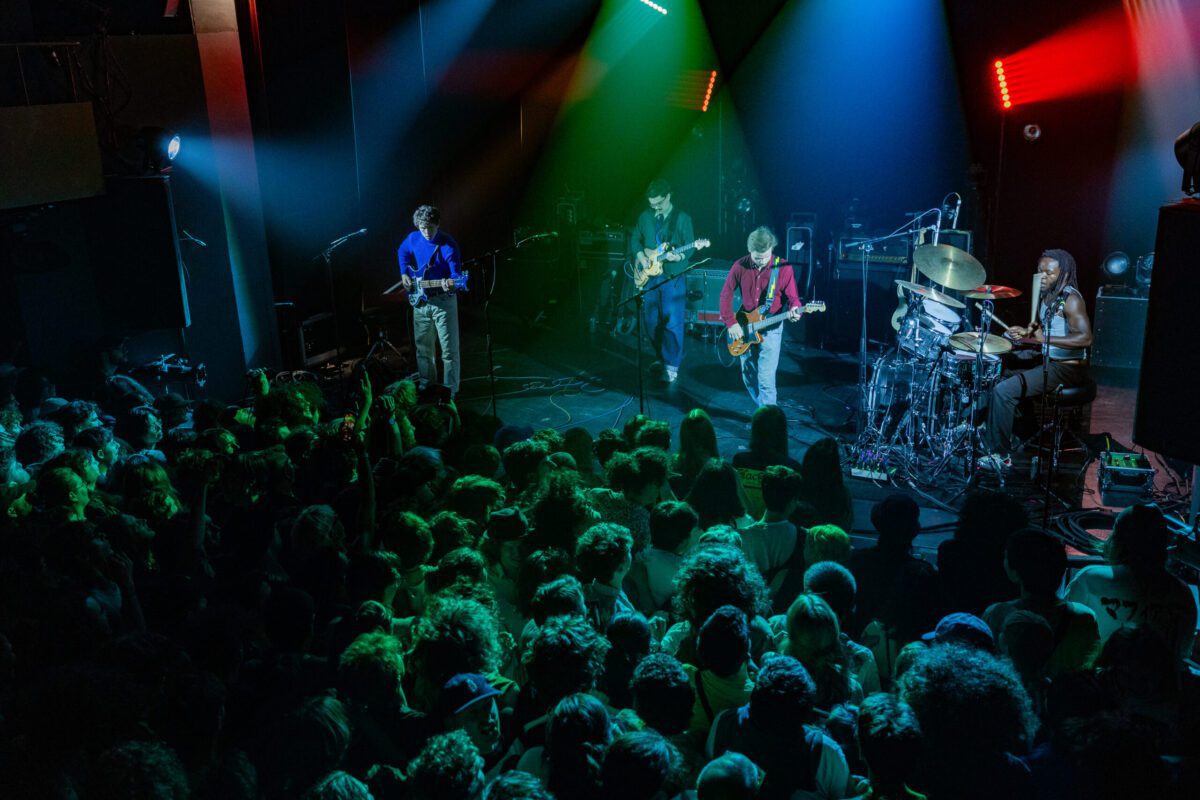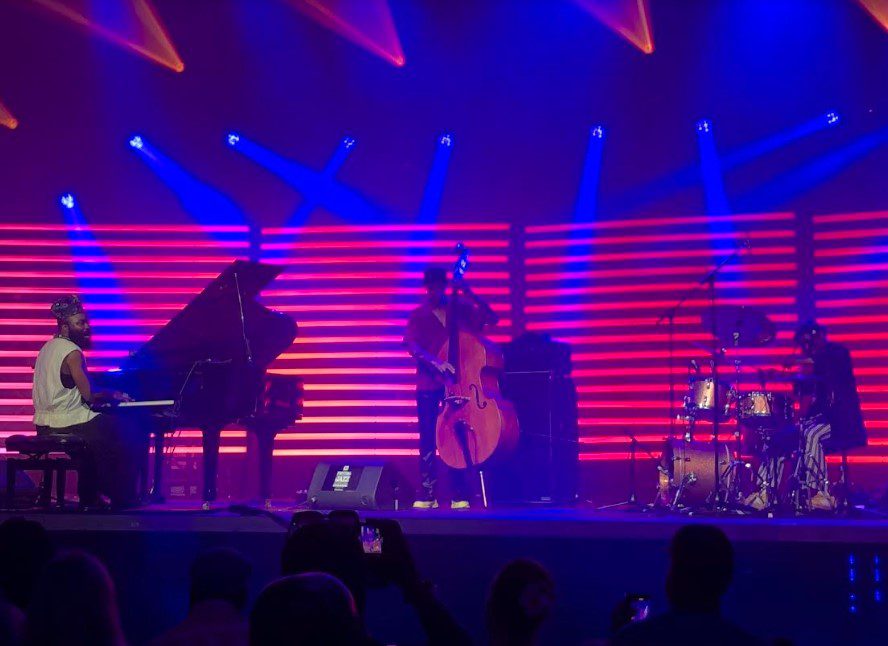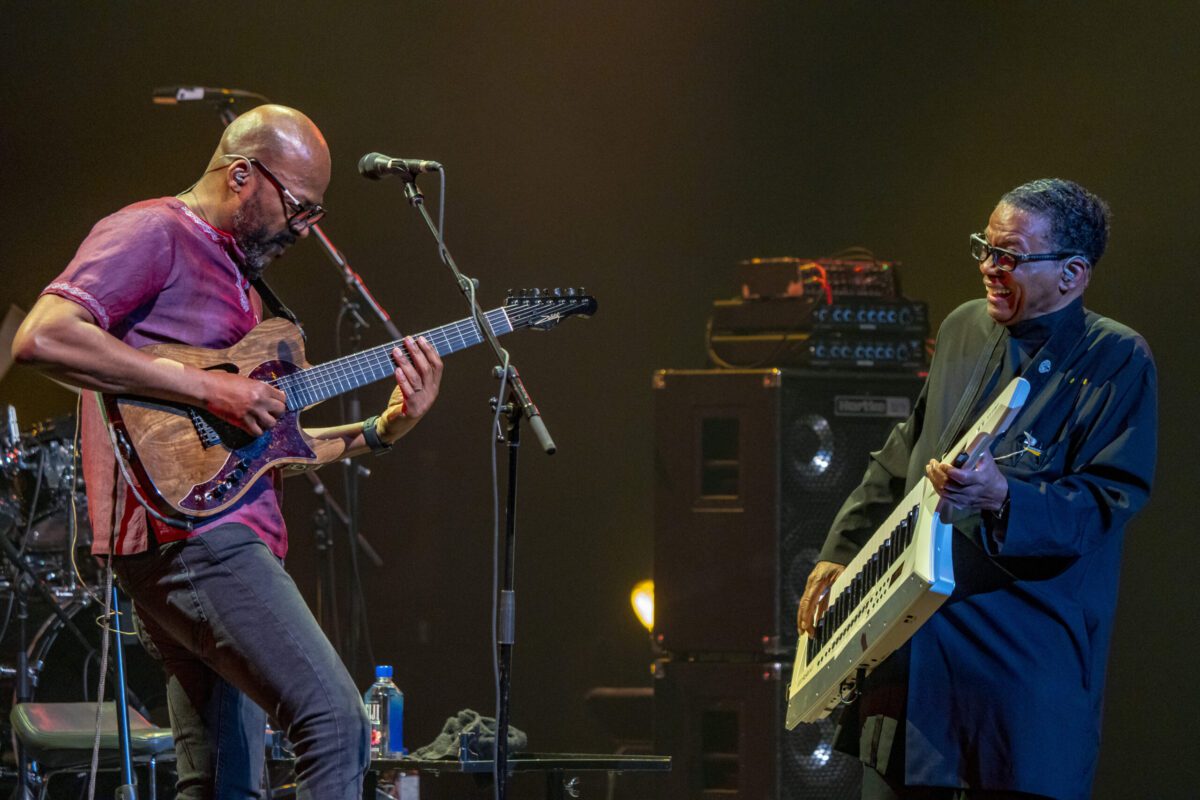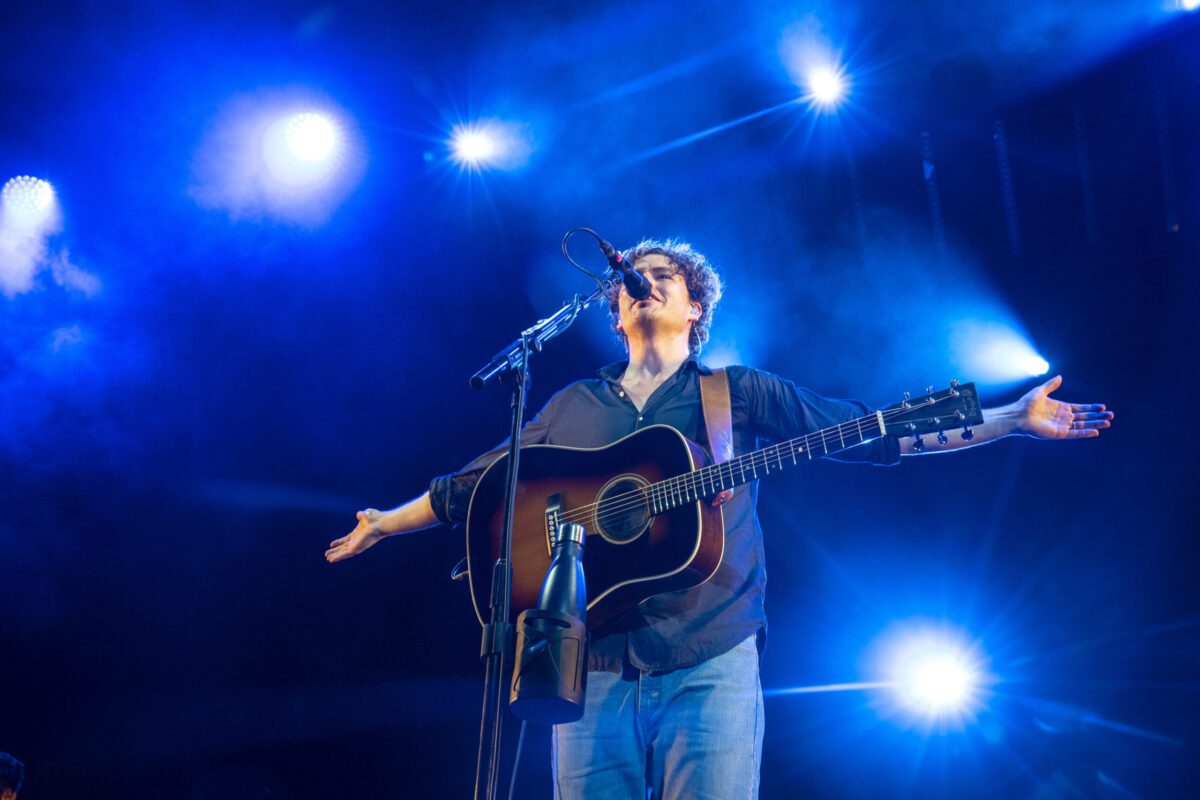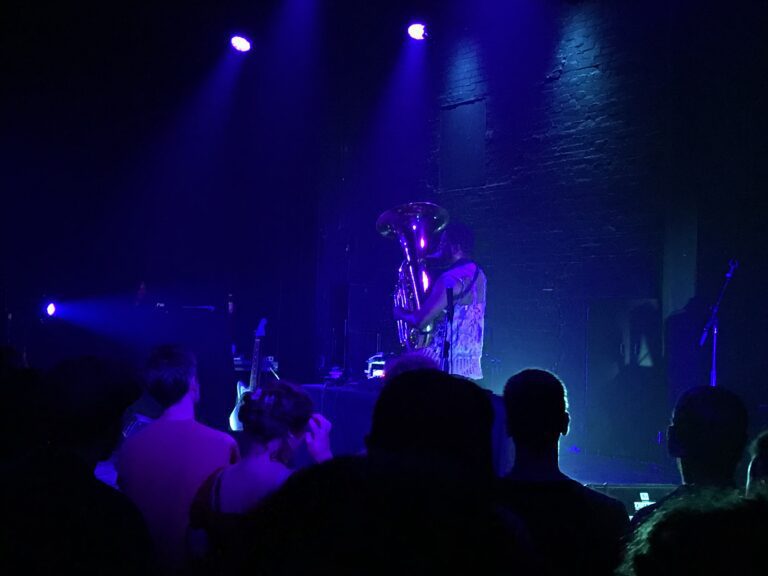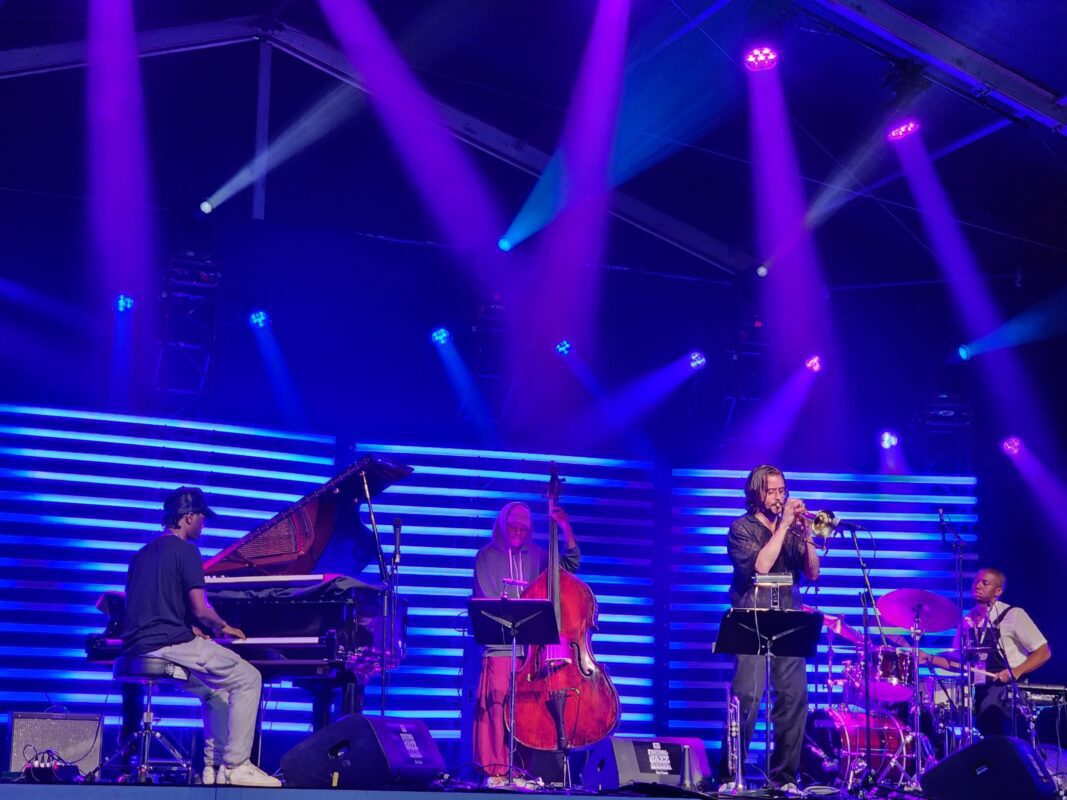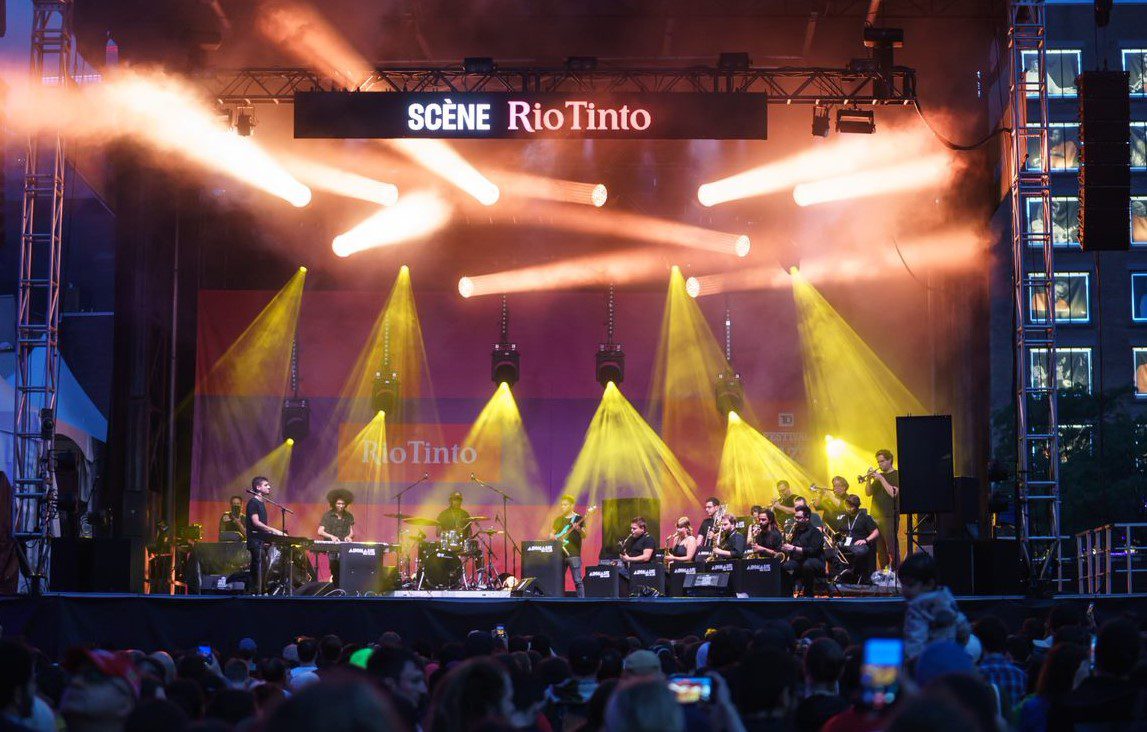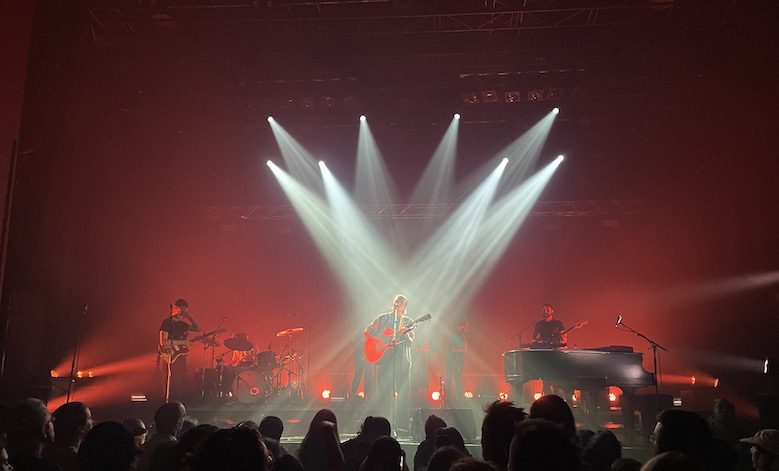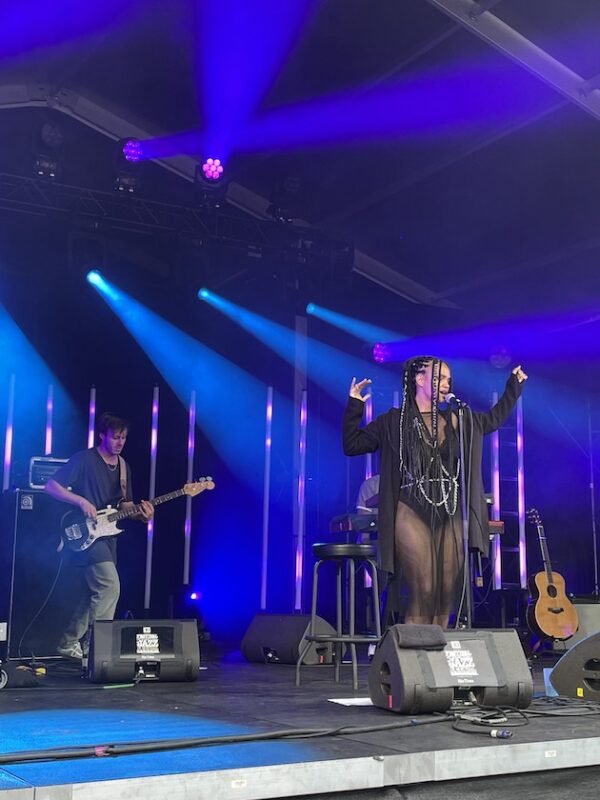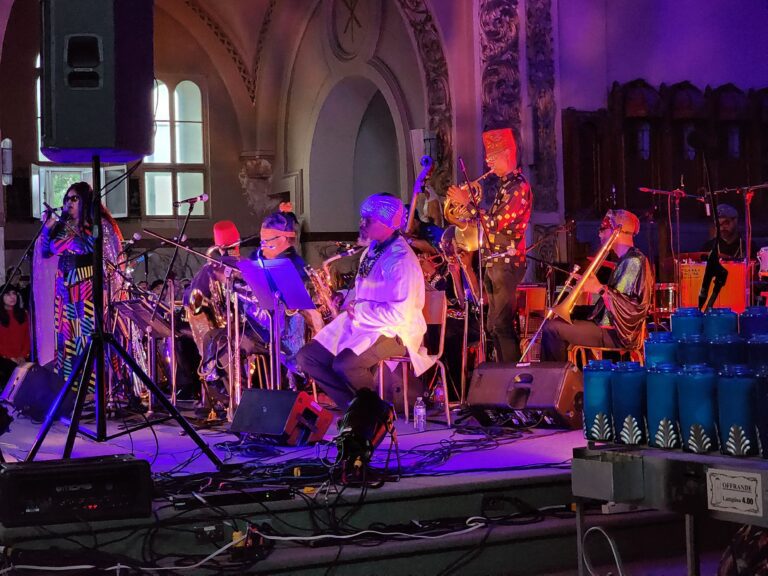
A July 8 at FIJM: The Brooks, Braxton Cook, Édelène Fitzgerald, High Klassified

by Rédaction PAN M 360

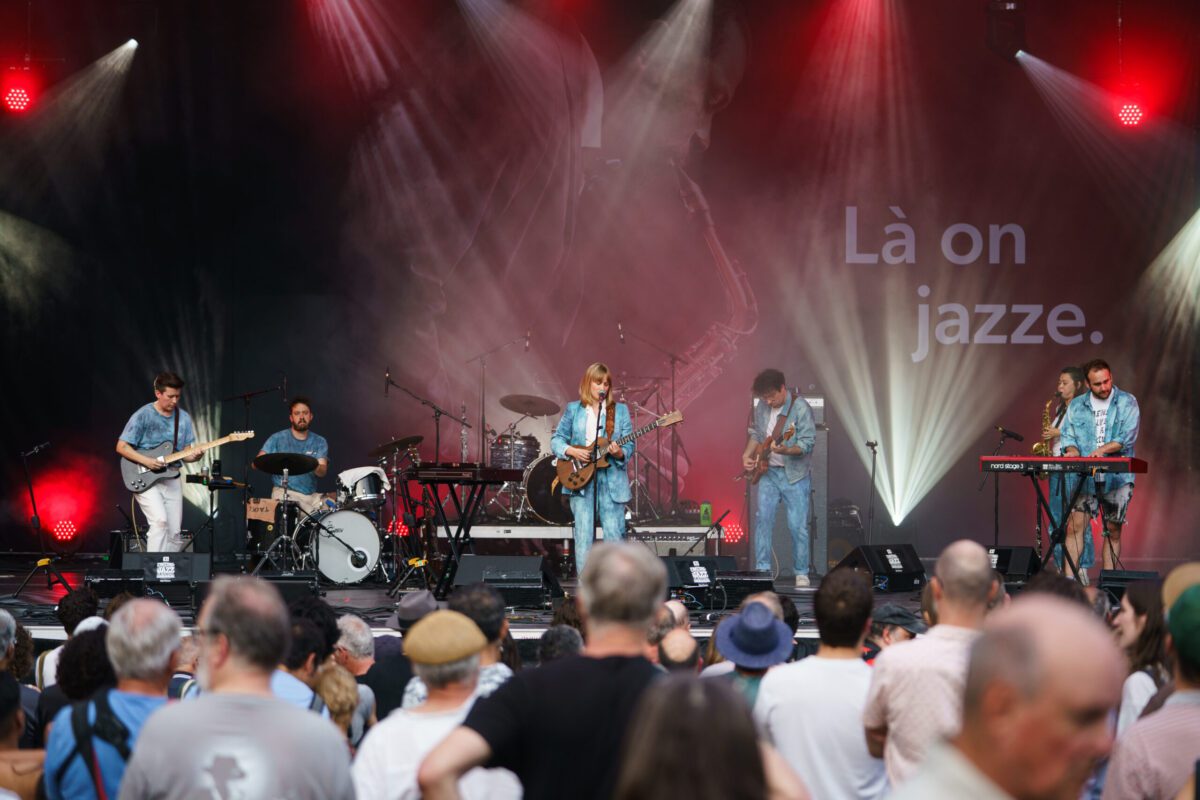
The Brooks bring the Place des Festivals to a close at FIJM
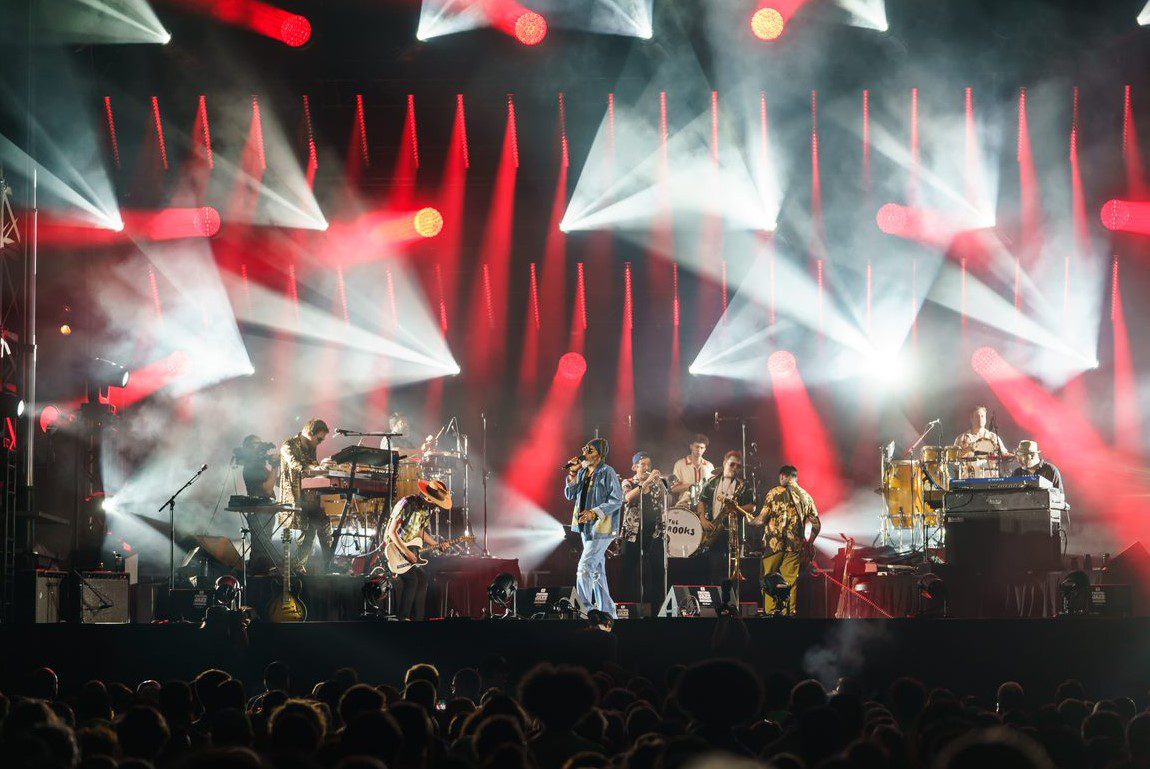
Crédit photo : Benoit Rousseau

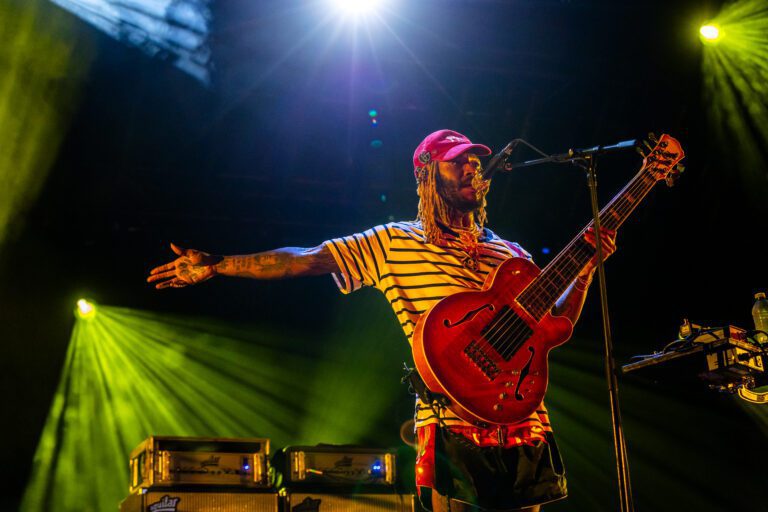
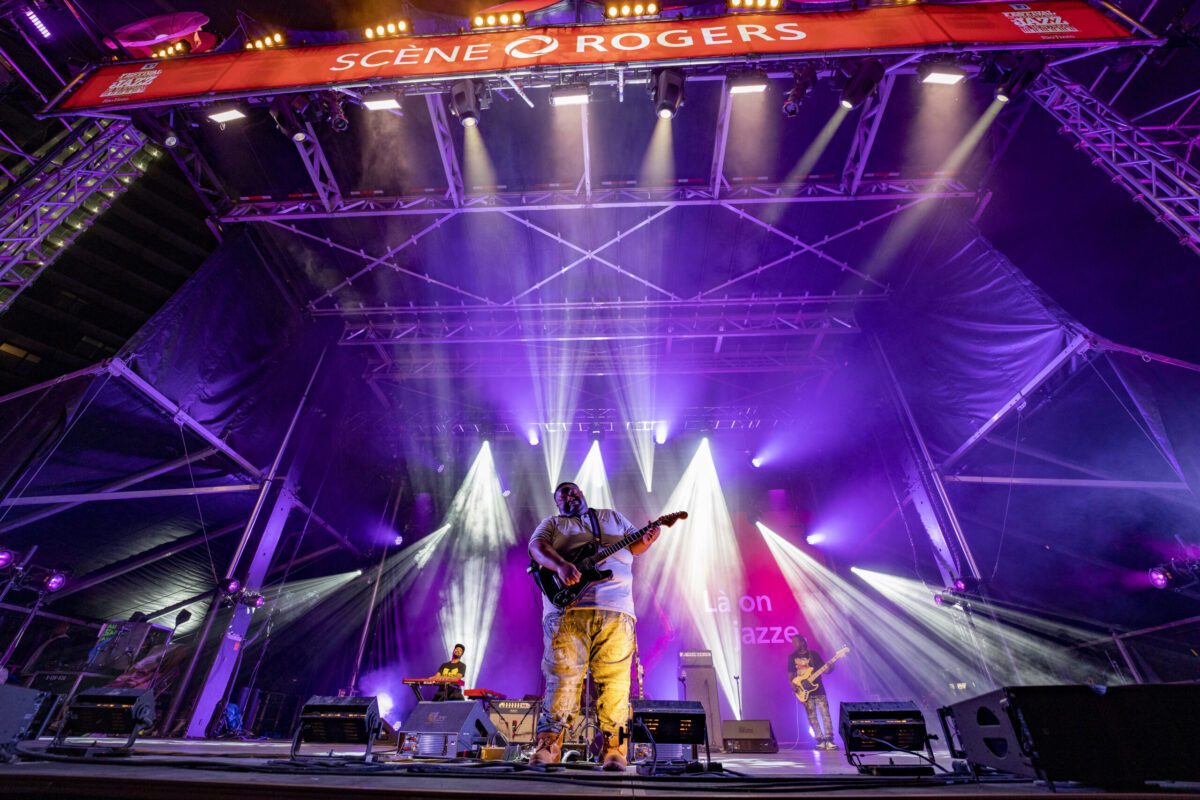
Called in last Wednesday to replace Macy Gray, who was initially scheduled to perform on the FIJM’s main stage on the Place des Festivals, Montreal jazzy funk band The Brooks performed brilliantly at the closing concert of the 2023 edition. Led by Alan Prater on vocals and Alexandre Lapointe.

On Saturday night, the band navigated funk, jazz and soul with ease. The Brooks performed their best tracks, such as “Priceless” and “Pain & Bliss,” and delivered music that’s sure to get you moving. Throughout the show, each member of the collective had his moment to shine, culminating in an exhilarating solo from guitarist Philippe Look. The band’s singer and musician, Alan Prater, is a true showman and gave it his all; Prater was in full control on the big stage.

As an added bonus, The Brooks called on much-loved singers Dominique Fils-Aimé and Hanorah. Fils-Aimé set the pace as soon as she arrived, transporting the audience into her quieter, shadier world. As for the second guest, she charmed the audience with her cover of Macy Gray’s famous song I Try, probably a small consolation for fans hoping to see the American singer at the festival. After almost 90 minutes of performance, Alan Prater had one last trick up his sleeve and made way for a guest to propose to his girlfriend. Naturally, the main character accepted the big proposal and was ecstatic. What better way to close the FIJM.

Jacob Langlois-Pelletier

Braxton Cook, a close-up look at a rising star
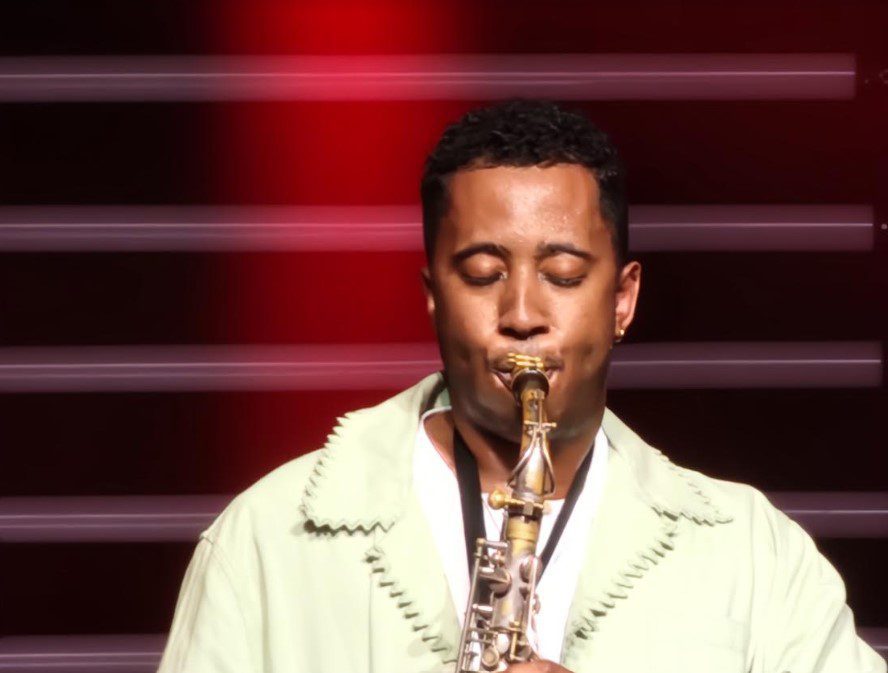
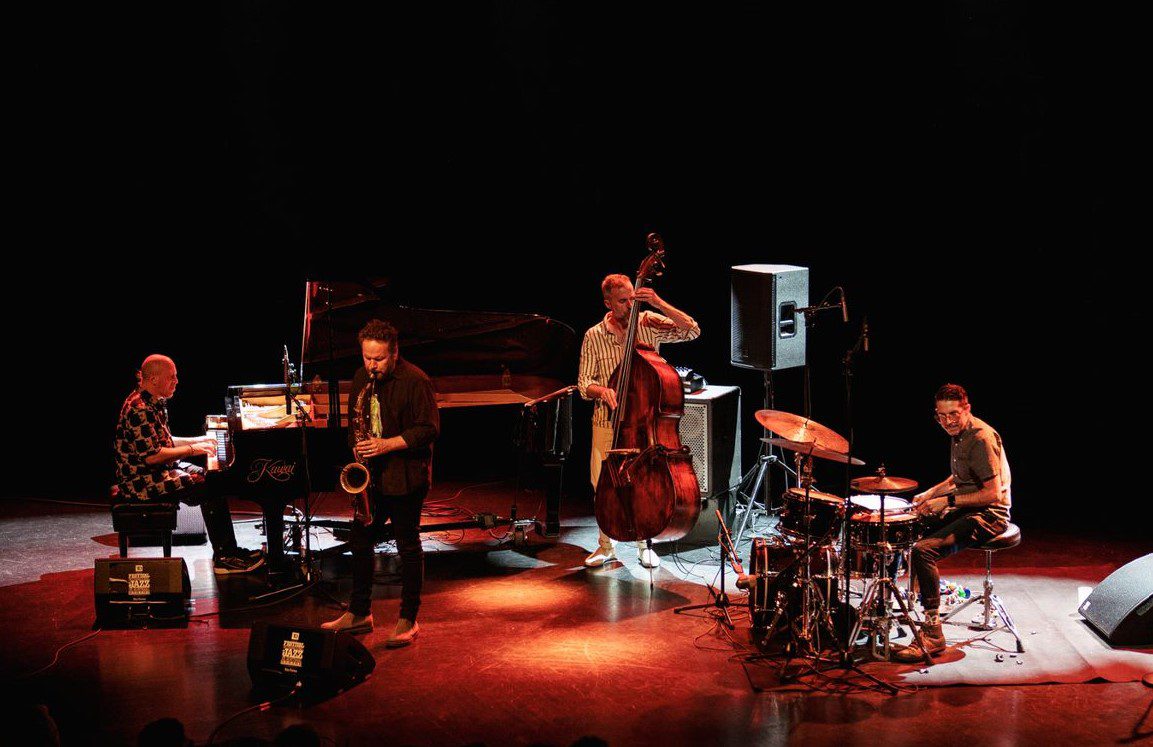
Braxton Cook and his quartet lit up the stage at the Pub Molson tent last night with a passionate performance that was both fiery and soulful. Something of a rising star in the jazz world, Cook’s masterful saxophone work is always a pleasure to listen to, but this evening was also a showcase for Cook’s singer-songwriter side.

Braxton inaugurated the concert with one of his most well-known compositions, “No Doubt,” an uptempo and emotional number that the seasoned band burned through with ease. He followed this up with “M.B,” the first track off of his latest album,  Who Are You When No One is Watching, a heavy number with sort of a trap beat that is a dedication to Ma’Khia Bryant, one of the many victims of police brutality and system racism in the United States. Cook had a charismatic and kind stage presence, he took the time to engage the audience throughout the night, offering some insight as to how and why some of this material was written.

The band then took a more pop turn, with a performance of some of the songs on Cook’s latest album, like “90’s” which features Masego on the original. Cook’s voice shined but the venue choice wasn’t the best suited to creating intimate moments between audience and performer. Still, people seemed to very much enjoy themselves, and I’m sure a few people in that audience might have discovered their new favourite artist.

Varun Swarup

High Klassified and friends enjoy a late-night party
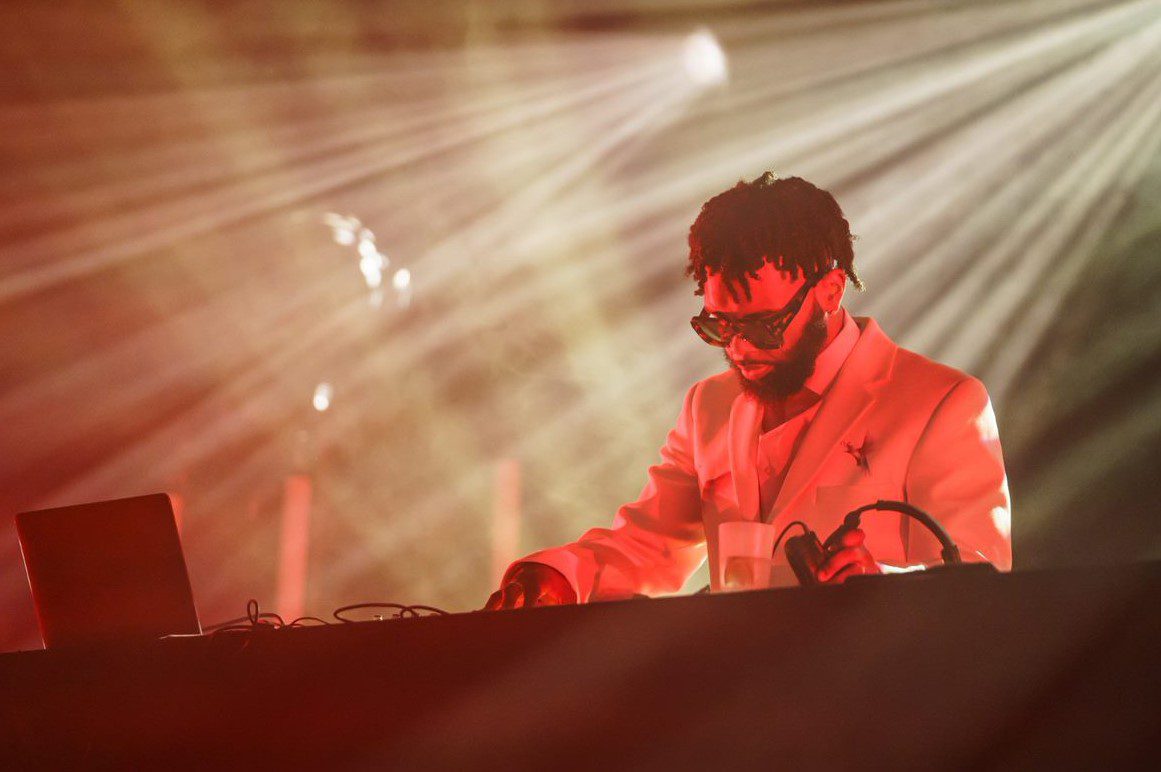
Crédit photo : Benoit Rousseau

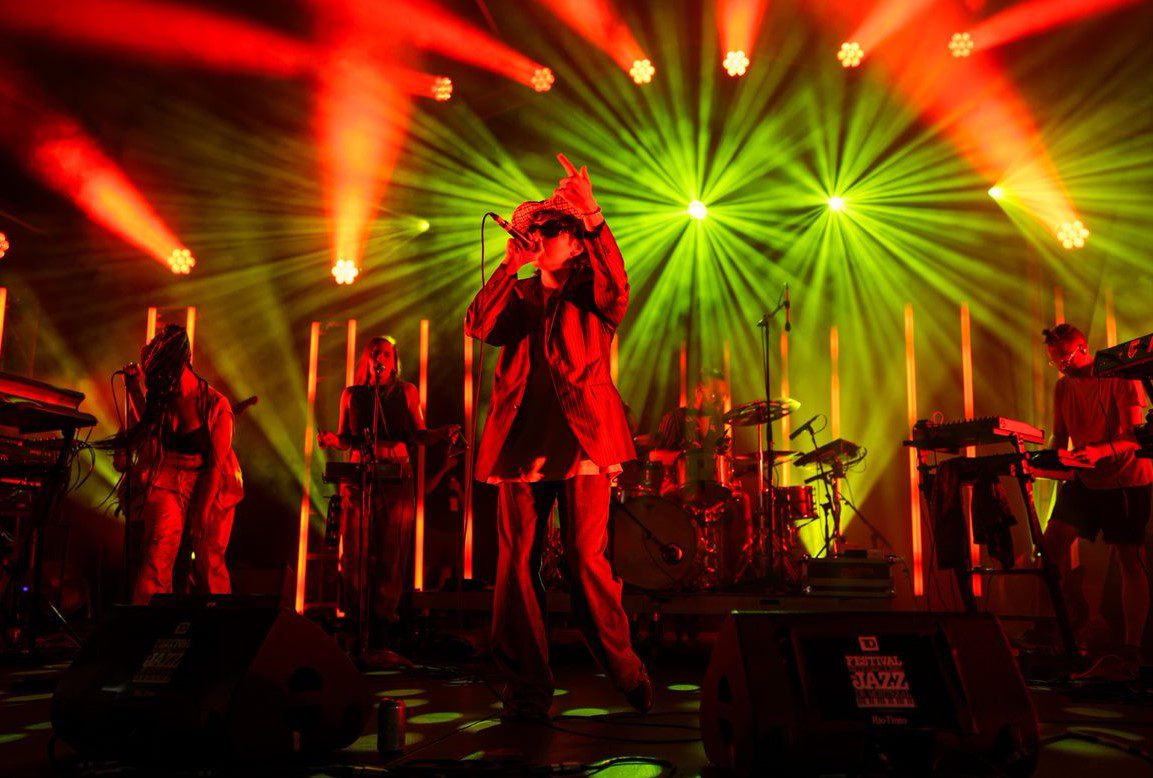
The very last show of the 2023 FIJM edition was entrusted to Montreal producer High Klassified, and his performance was eagerly awaited, judging by the mass of festival-goers present on the Esplanade de la Place des Arts at around 11 pm. In recent years, the beatmaker has enjoyed a meteoric rise in the music world, notably as the man behind The Weeknd and Future’s Comin Out Strong.

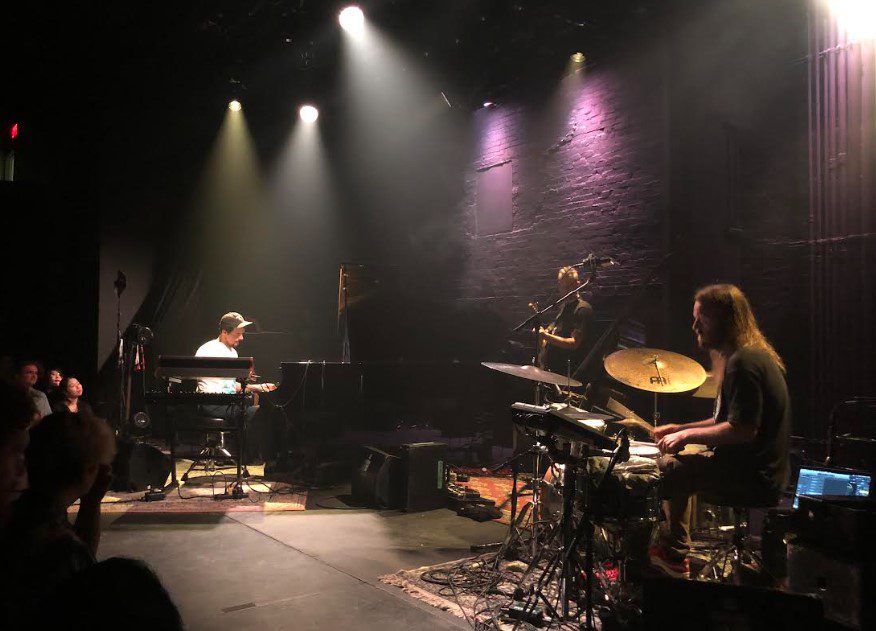
When we saw his name on the FIJM evening menu, we didn’t really know what to expect. Accompanied on stage by pianist Nathan Dumont, drummer Alexis Gagnon, and bassist Paul Charles, he offered a “100% Klassified set” of his most popular tracks reimagined in band formula, ranging from R&B to EDM to drum N bass. Maintaining that he was the “conductor of the evening”, the producer essentially played recordings of his various tracks fleshed out by the work of the three musicians. During the show, High Klassified acted more as host, dropping a few words on the mic here and there. It must also be said that the moments of silence between the different songs broke the rhythm of the concert, especially in the first section.

Fortunately for the audience, High Klassified called on three artists during his set: Hubert Lenoir, Zach Zoya and Cherry Lena. The various guests performed some of their own tracks produced by the Quebecois, including DIMANCHE SOIR for Hubert Lenoir. One thing’s for sure, it’s interesting to see the Lavallois perform live, but this formula needs to be reworked. Nevertheless, we salute the producer’s efforts in transforming these songs for the occasion.

Jacob Langlois-Pelletier

Edelène Fitzgerald, Oliver-Jones Prize fully deserved
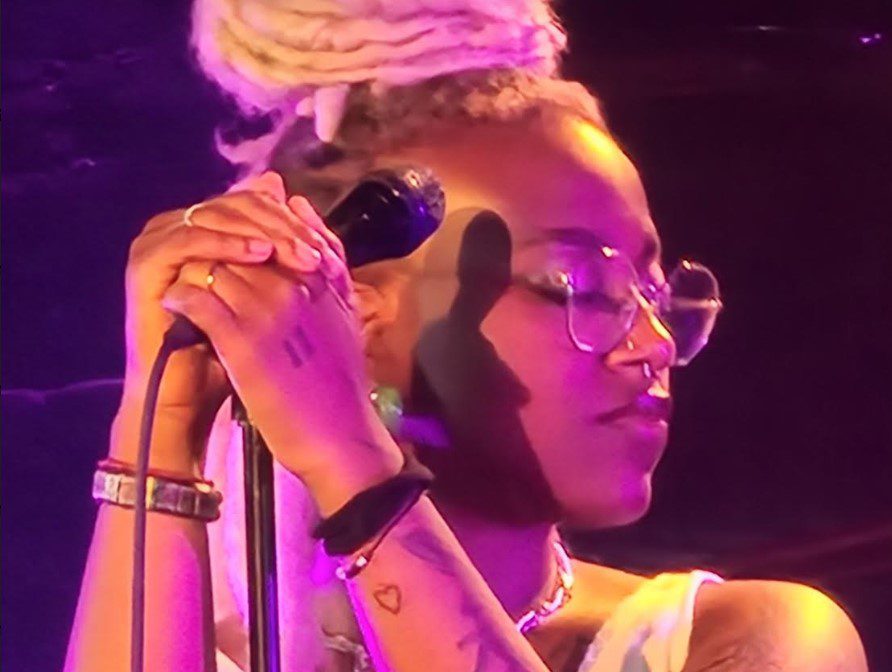
Édelène Fitzgerald received the Oliver-Jones Prize on Saturday, 6PM at Studio TD, establishing her as one of Quebec’s rising young artists in our jazz world. Despite his 89 years, the famous pianist generously presented her with the prize that bears his name, declaring that “Quebec talent is here” and that we should “be proud of our youth”.

Édelène’s launch into the world of jazz with a rather well-known surname (!!!) is a double-edged sword. So far, at least, it’s a double-edged sword! A trombonist for eight years and more, she finally turned to singing, given her obvious aptitudes: warm alto voice, diversity of vocal textures, good sense of improvisation, and power to spare.

She’s just as capable of appropriating the “hair-raising” music of Nubiyan Twist or Genevieve Artadi, as she is of beautifully adapting Queen B or even Dizzy Gillespie’s A Night In Tunisia. In my opinion, this is the avenue that best suits him, clearly distinguishing him from his peers.

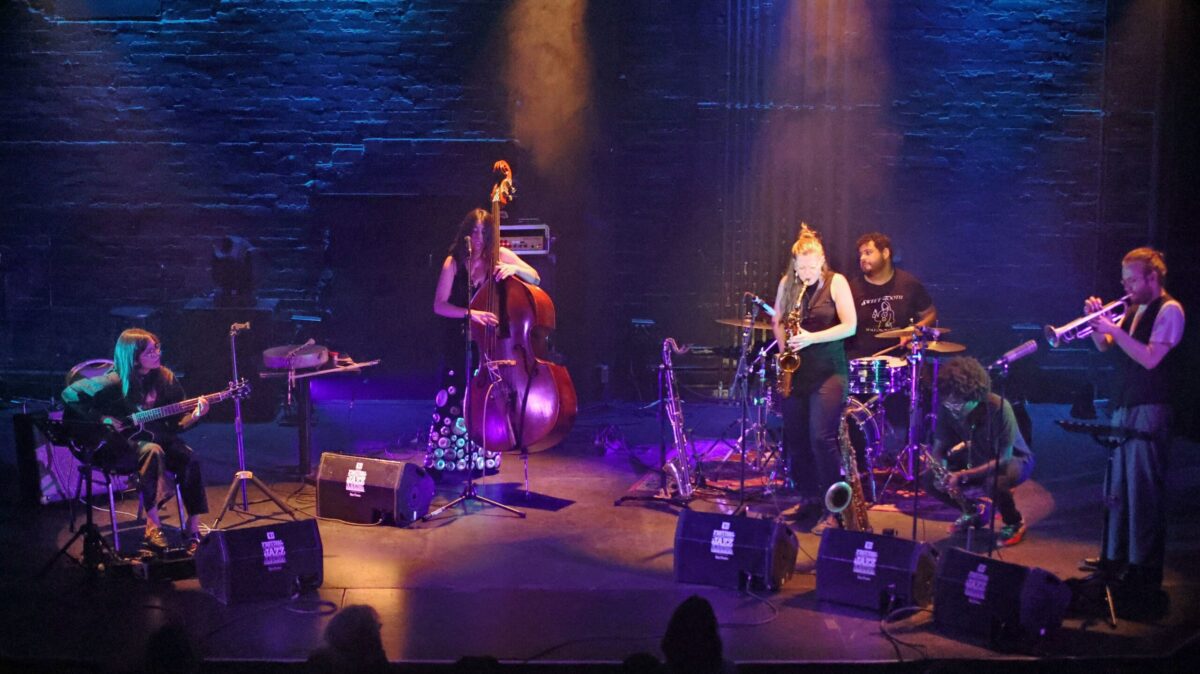
Here sidemen performance is quite generous: keyboards, bass, drums, electric guitar, saxophone, and trumpet.
It’s not always impeccable, and sometimes you’re looking for a common thread in this repertoire. It quickly becomes obvious that Edelene Fitzgerald and her colleagues, all very promising indeed, are not yet very far from their own musical education, and that they bring together several of their apprenticeships within the same set without welding the aesthetic links.

But… more than an hour’s concert is enough to conclude that this is a raw talent that absolutely must be developed.

Alain Brunet
A July 7 at FIJM: Robert Plant, Alison Krauss, BADBADNOTGOOD, TEKE::TEKE, Mali Obomsawin

by Rédaction PAN M 360

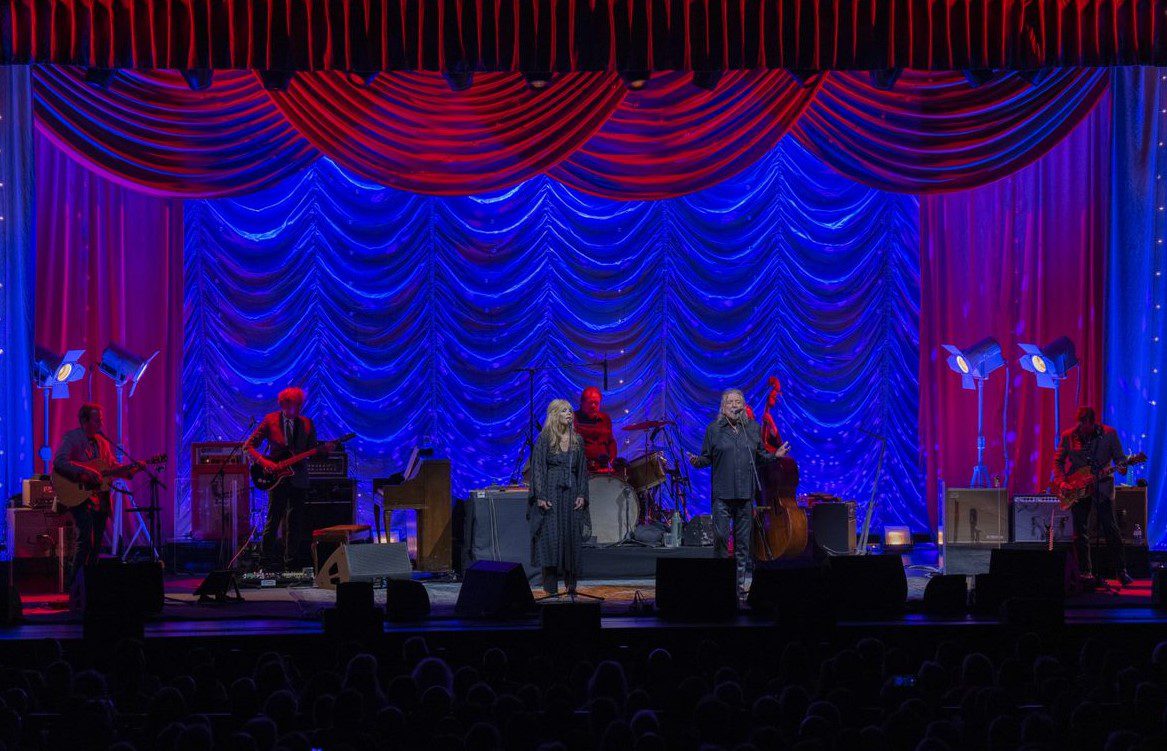
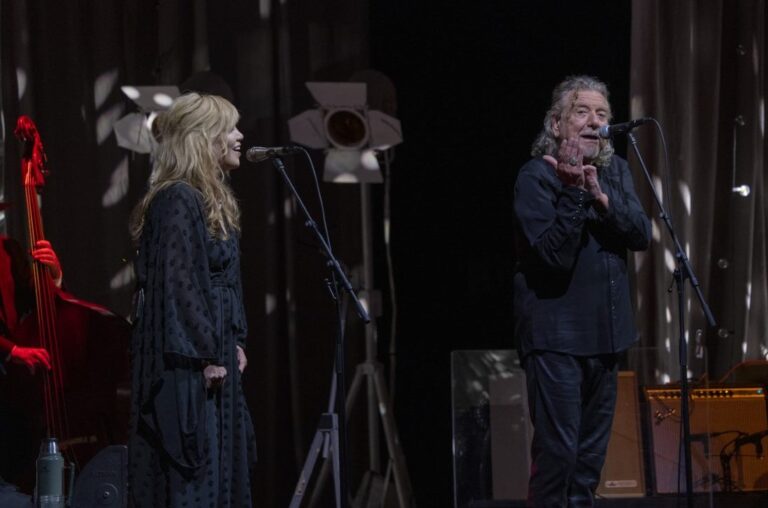
Alison Krauss & Robert Plant: Mastery, Refinement, English Touch, Americana… Memorable !

crédit photo: Victor Diaz-Lamich

It’s worth pointing out once again: very few popular artists are capable of nurturing their inspiration all the way to the end of the road, and Robert Plant is one of those rare iconic figures to have achieved this feat. On Friday evening at Salle Wilfrid-Pelletier, a concert of the highest quality once again eloquently demonstrated this: the superb tandem formed with Americana artist Alison Krauss and an exceptional band.

Robert Plant’s longevity is also due to the consistency of his approach over a lifetime. Let’s not forget that Led Zeppelin started out as a British band inspired by American rock’n’roll, blues, and folk, with the particularity of considerably beefing up their sound through the trances generated by the heavy rhythms of the late John Bonham, the acid riffs of guitarist Jimmy Page and Robert Plant’s paroxysmal voice. We’ll also remember the inspired use of oriental referents and brilliant arrangements by bassist John Paul Jones, inspired by modern Western classical music. 

All this was perceptible on Friday night (except the classical music) but in a very different context. The line-up featured top-flight American musicians, the crème de la crème of Americana – Jay Bellerose, drums, Stuart Duncan, banjo, cello, mandolin, Viktor Krauss, bass, guitar, JD McPherson, guitar and opening act Dennis Crouch, double bass. Without a doubt, this instrumentation was conducive to all kinds of crossovers between the constituent elements of American popular music, and also to brilliant adaptations of Led Zep.

Tandem covers of “Rich Woman” (Lil’ Millet), “Fortune Teller” (Benny Spellman), “Can’t Let Go” (Randy Weeks), “The Price of Love” (Everly Brothers), followed by a perfect Led Zeppian rereading of “Rock and Roll and” an inspired cover of “Please Read the Letter” (Plant and Page), followed by “High and Lonesome” (Plant and T Bone Burnett), “Trouble With My Lover” (Allen Toussaint & Leo Nocentelli), “In the Mood” (Plant), then a pair of traditional songs with a pair of soloists, Marty Groves and Gallows Pole, before drawing to a close with a magnificent orientalized adaptation of a Led Zeppian folk song, “The Battle of Evermore.” We close the books in total rapture with “When the Levee Breaks” (Memphis Minnie and Kansas Joe McCoy).

Half a century after reaching rock’s pinnacle, Robert Plant has never abandoned these referents, yet he is the only member of Led Zep to go down the path of great creation – although John Paul could still be relevant. 

So, for the past fifteen years, Plant has been exploring the foundations of Americana culture as few Britons have done on such a high level – blues, rock, bluegrass, Louisiana R&B, folk, country, Appalachian music, and so on. He does it in North America as well as in Europe, with Band of Joy (2010), Lullaby and the Ceaseless Roar (2014), Carry Fire (2017) and Raising Sand (2007) and Raise the Roof (2021), his two duet albums with Alison Krauss, being applauded in turn. Understandably, Raising Sand is the gateway to this extraordinary cycle. Needless to say, Alison Krauss, a singer, and fiddler exemplary for her aesthetic allegiance to country-folk-American singing and traditional fiddling, forms an ideal duo with Led Zep’s ex-frontman.

And that’s exactly what we saw on Friday night at FIJM, even more so than in 2011 when Plant performed Americana-style at PdA with the inspired and capable Buddy Miller on musical direction. Although … it was just as excellent 12 years ago. This just goes to show how enduring this English singer is, one of the greatest of them all.

Alain Brunet 

TEKE::TEKE, all the elements for a celebration of creativty

crédit photo Frédérique Ménard-Aubin

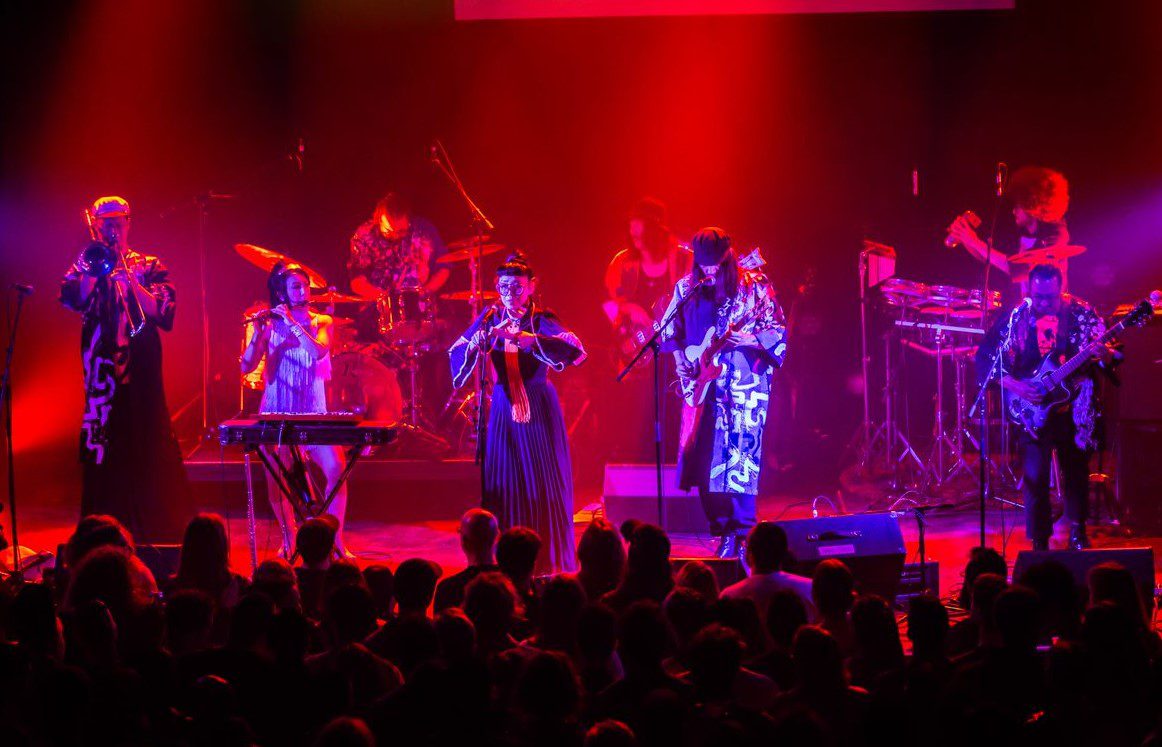
In our interview with TEKE::TEKE, they were a little nervous about having enough people attend their FIJM performance, but really they had nothing to worry about. Playing to a packed house at the Club Soda, this evening was a celebration of this unique Montreal band, with an audience of friends, family, and a lot of fans.

The whole evening had a sense of spectacle to it as the septet ceremoniously took to the stage with some film music behind them. Setting the tone with “Gotoku Lemon” – an excellent introduction to their art-rock meets eleki soundworld – any looks of hesitancy quickly vanished, and it quickly dawned upon the audience that we were in for something special.

Maya Kuroki, the siren at the helm, had a bewitching stage presence. Clad in traditional Japanese dress, her voice carried the weight of ancient folklore, piercing the veil between reality and imagination. She would dance and sway, leading the congregation into a trance-like state – “tonight we are all phantoms” she says. The megaphone was an especially nice touch!

Behind her, the sextet swiftly played through their unique, funky, cinematic arrangements, and the setlist was mostly a showcase for their new album Hagata. The energy they bring is truly contagious and I love that the band leans into the theatricality of it all. They put on a show in the truest sense of the word and could tell that the band members were living their best lives up there. TEKE::TEKE’s music is a celebration of creativity, of cross-genre and cross-cultural
experimentation, and to be a part of that celebration was a privilege.

Varun Swarup

BADBADNOTGOOD’S AUDIO-VISUAL EXPERIENCE

crédit photo: Benoît Rousseau

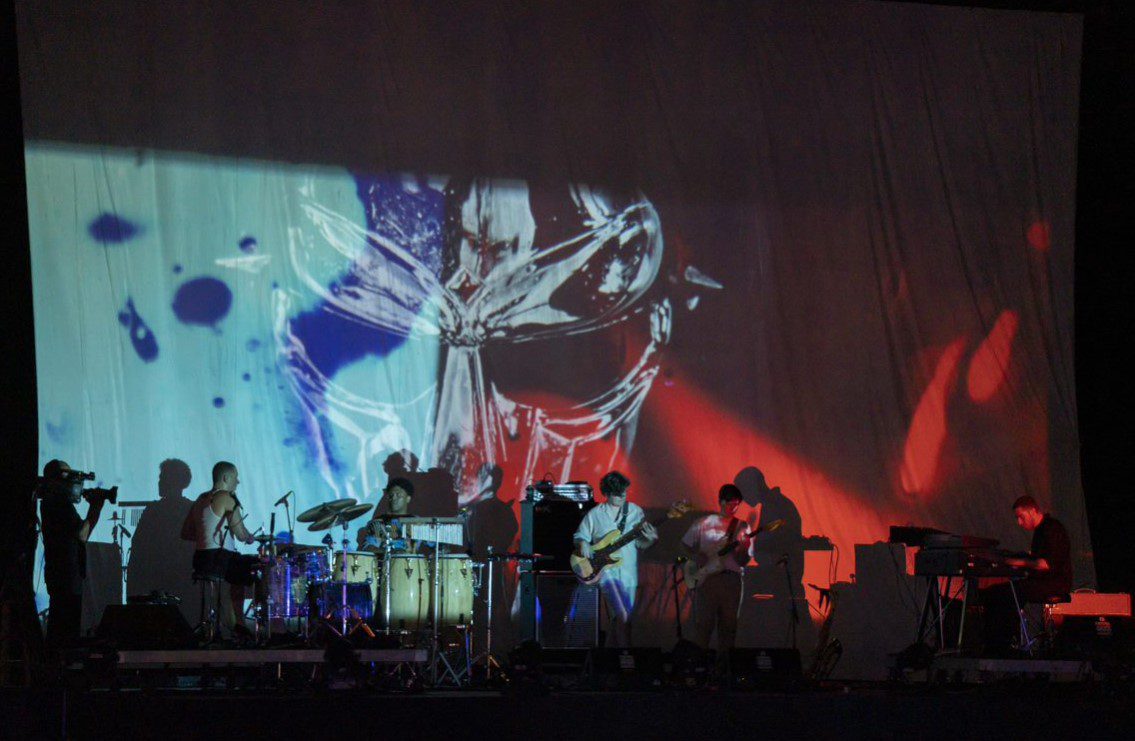
It wasn’t bad, but it wasn’t good … It was BADBADNOTGOOD, the shape-shifting instrumental jazz monster three-piece, though they played live as a five-piece on the main stage of FIJM. The set began with a recorded, way too loud “War Pigs,” before bassist Chester Hansen flipped on his fuzz pedal. It started more like a doom rock show than a jazz one and the crowd seemed a little weirded out, but once the rest of the band—Alexander Sowinski on drums, Leland Whitty on saxophone and guitars, Felix Fox on keys, and Juan Carlos on world percussion, came out the show took shape as they dove into “Signal From The Noise,” off the latest album, Talk Memory

This time the Toronto outfit came loaded with a fantastic 16mm film backdrop, calling the show an “audio-visual experience” multiple times. The band has been missing founding member Matthew Tavares on keys since 2019 and has replaced him live with Felix Fox, an equally measured keyboard player, but the core three remaining members were the main stars of the show, each taking their own grooving improvised solos between songs from Talk Memory. Sowinski took the role of the show’s hype man, urging the crowd to jump, clap, and ‘woo’ at certain, scripted points. 

There were a few improvised tributes to the late Gal Costa and MF Doom, which got the crowd bumping, but nothing compared to when they played  “Lavender” off of IV, arguably their most put-together jazz hooky album. I’ll say that Talk Memory is a more enjoyable experience live than the recording, and though the set mostly consisted of that and I was hoping for more of IV and maybe some Sour Soul renditions, it was still a memorable show. 

Stephan Boissonneault


FELP and Friends’ UFO land on the Esplanade

The Besançon-born multi-instrumentalist and producer brought his recent album HELP and other surprises to the Club Montréal TD stage.

After a long, atmospheric intro with undulating keyboard-bass and saxophone tones, Félix Petit took over the background and let the guests featured on his album perform one by one. Laurence-Anne plays the sinister Dino, whose post-chorus propulsion always seems to come out of nowhere. Then the mic is taken over by Klô Pelgag, with her dreamy nonchalance, performing Babyfoot, an icy song that demands such an attitude. Greg Beaudin, HAWA B, Besançon rapper Miqi O, and Bellflower spearhead Em Pompa all took to the mic for the songs that feature them.

The concert starts to surprise from the halfway point, as Félix Petit and his musicians begin an instrumental section. What seems to be a simple interlude, in the end, continually bends and changes. The music alternates between rhythms, each more interesting than the last. At the end of this ten-minute or so medley, you almost forget that there’s one last guest left, but you soon remember… because Hubert Lenoir arrives and immediately steals the show, shines, rocks, and takes control of the stage to an overwhelming finish. Hard to see him as only a guest artist.

Although the live setting doesn’t allow for as much detail as HELP offers in our ears, this show, with its team of star players, was truly worthy of the world’s greatest jazz festival.

Théo Reinhardt

Mali Obomsawin: The Aboriginal Renaissance Involes Jazz

crédit photo: Pierre Langlois

Since we’re still in the midst of a renaissance in Aboriginal culture, any new manifestation of creativity titillates our curiosity, and that of Abenaki bassist Mali Obomsawin is no exception. The Studio TD was packed for her first concert as a sextet: Magdalena Abrego (guitar), Scott Bevins (trumpet), Allison Burik (clarinet), Noah Campbell (saxophone), Zack O’Farrill (drums), Mali Obomsawin (double bass and vocals).

The bandleader grew up in New Hampshire, but knows Odanak very well, an Abenaki stronghold not far from Pierrevielle, near the Saint-François River and Lake Saint-Pierre. She expresses herself in Angais and Abenaki, and is fully committed to asserting her Aboriginal identity, along with an acerbic and perfectly legitimate critique of white colonialism and Catholic oppression. 

Musically, this desire to update aboriginal cultural heritage in a jazz context translates into a contemplative aesthetic, occasionally punctuated by jolts and eruptions. Native songs are used as melodic vectors around which improvisations develop in real-time. Tempos are generally slow. In fact, lament and anger, but also pride and hope, manifest themselves in an apparent calm whose nature we come to decipher.

Mali Obomsawin’s native melodies and rhythms are simple and pure. Integrating these traditional materials into contemporary jazz with a little touch of free improv, a necessarily more complex musical practice, is an essential step in the development of First Nations through musical creation. The double bassist, singer, and leader can count on a solid musical education in contemporary chamber jazz, as can her colleagues, without however revealing an exceptional level of playing. 

Nonetheless, we have a good time with Mali Obomsawin, enjoying her playing, singing, and direction, as well as her touching cover of Buffy Sainte-Marie’s « Little Wheel Spin And Spin ».

And we’re curious about what’s next. Aboriginal jazz doesn’t have so many practitioners, and we know mainly (and not enough) about swing singer Mildred Bailey (1907-1951), from the Coeur d’Alene nation in Idaho, an authentic pioneer of jazz singing who was a great influence on the greats – Ella Fitzgerald, in particular. We also know Jim Pepper (1941-1992), a fine tenor saxophonist from the Muscogee Creek nation, who was responsible for the hymn “Witchitai To,” known to all Robert Charlebois fans without necessarily knowing its origins. There are certainly more if you do your research, and we imagine there will be many more in the not-too-distant future.

Alain Brunet

A July 6 at FIJM: Tank & The Bangas, Chucho Valdés, Kassa Overall, Colin Stetson…

by Rédaction PAN M 360

Au Festival International de Jazz de Montréal, les experts de PAN M 360 assistent aux concerts qui secouent les mélomanes. Suivez notre équipe !

Tank & The Bangas, 2023 New Orleans Jambalaya

crédit photo: Benoît Rousseau

We associate New Orleans with Louis Armstrong, Wynton Marsalis and his family, Terence Blanchard and so many brass bands. In short, jazz in its many forms.

But New Orleans is also funk, R&B and bounce, as we call the regional variety of hip-hop. If there’s one band that embodies the musical fusion of the Louisiana metropolis in 2023, it’s Tank and the Bangas.

This group blends all the styles of New Orleans and makes its own sound, just as the city’s Creole cuisine blends French, West Indian, Spanish and American cuisine.

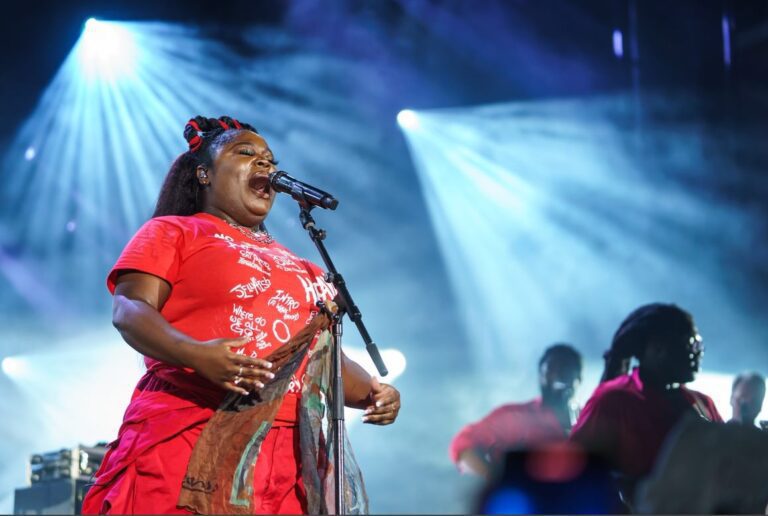
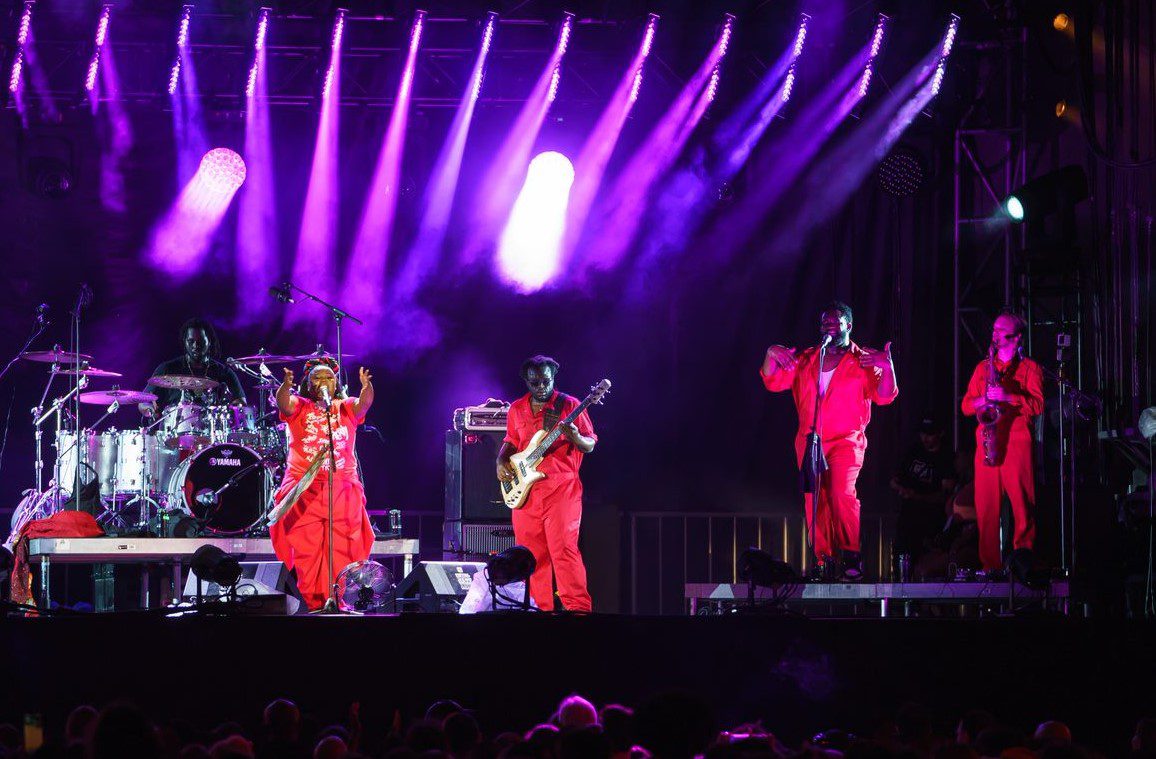
Last night on the Place des Festivals, Tarriona “Tank” Bell and friends demonstrated this flamboyantly. The whole band was dressed in red, in the image of the Red Balloon album, released in 2022. There was no doubt about it: we were going to dance, raise our arms and clap our hands, but in front of an elaborate musical canvas.

Saxophonist and flutist Etienne Stoufflet breathes jazz soul into the band. Jonathan Johnson’s bass provides the funk base. And the rest of the band joins in. But there is no Tank and the Bangas without Tank Bell, who is the epicenter of the band. Tank can sing soul, rap, wax poetic, shout, whisper. The crowd follows. The curvaceous singer is both a strong and vulnerable woman, and that’s what moves the audience.

Throughout the evening, the band will alternate between furious rhythms and introspective ballads.

A beautiful evening, a warm evening! The smiles on the faces of the diverse crowd were enough to convince anyone.

Michel Labreque

Chucho’s immense legacy

crédit photo: Frédérique Ménard-Aubin

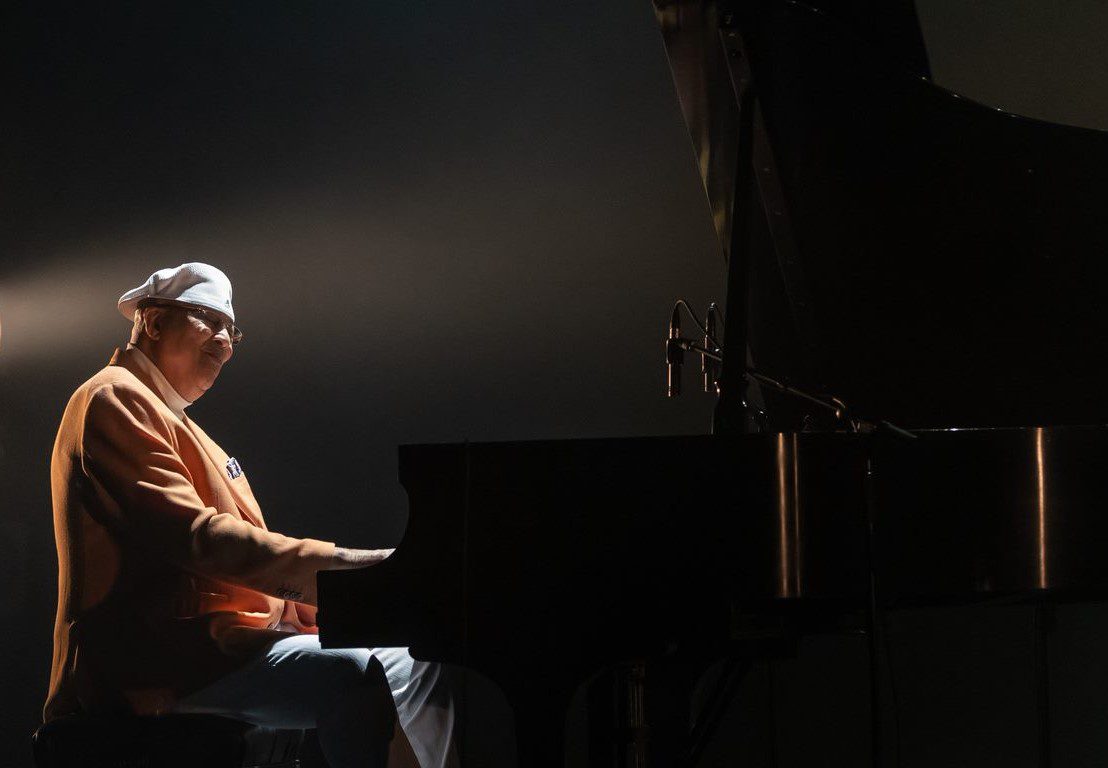
Pianist Jesus “Chucho” Valdes is a Latin jazz monument, as much for his colossal physique as for his immense contribution to modern jazz of Latin American inspiration and African descent. Once leader and principal composer of the legendary Cuban group Irakere, Chucho has long been Ze reference for Latin jazz piano, despite the ever-present (and still ridiculous) tensions with Los Estados Unidos. 

In 2023? We’ll forgive the octogenarian for strictly managing his estate, much to the delight of his fans who packed the Théâtre Maisonneuve to capacity on Thursday night.

An octogenarian in full possession of his powers, the pianist and his brilliant acolytes perfectly summed up this legacy in a warm performance.

Chucho’s technique has long been considered exemplary: Soviet-style classical training (in his impros, we heard him still quoting Mozart, Chopin, Debussy, Rachmaninov), a complete knowledge of modern and contemporary jazz piano (his cover of Chick Corea’s « Armando’s Rhumba » was cool), and his own contribution in adapting this knowledge to the piano grooves and music of Cuba – Rubén Gonzales, Frank Emilio, Emiliano Salvador, etc. – which he has also developed in his own way.


Of course, we owe him some singular innovations at the keyboard, notably those ultra-fast motifs executed in ostinato by the right hand, in perfect synchronicity with melodies or other harmonic motifs articulated by the left hand. Of course, tumbaos and other typical Latin piano devices are also on Chico’s menu, and he expresses himself almost exclusively in Spanish. Can you blame him for picking and choosing? Sometimes, his percussive exuberance on the ivories is a bit too much as far as I’m concerned, but people love that kind of overflow in Latin jazz. What more can I say?

As you might guess, the legendary pianist doesn’t surround himself with celery stalks: Horacio Hernandez, drums, José A. Gola, bass, Roberto Jr. Vizcaino, percussion. This congas supravirtuoso was particularly impressive, his hallucinatory mastery of Afro-Latin percussion reminiscent of great masters such as Giovanni Hidalgo.

This Afro-Cuban rhythm section was simply breathtaking, and this Chucho Valdés ensemble, now 81, presented the nec plus ultra of Latin jazz, of course linked to another era, that of his generation. We salute them.

Alain Brunet

Kassa Overall: Jazz-Hip-Hop Fun Chaos

crédit photo: Marie-Emmanuelle Laurin

Busy, a tad messy, groovy, always friendly. A graduate of the famous Oberlin Conservatory in Ohio, this Seattle-born drummer is also a rapper and singer. His vocal skills, however, are less impressive than his remarkable percussive abilities. His flow is not like that of his guests (Danny Brown, Lil B, Shabazz Palaces, etc.) on his album Animals, released this year by Warp, a label normally inclined to electronic music, but this time open to jazz with beatmaking.  His vocals are tenuous, and not always right in front of an audience, but Kazza Overall manages well despite his shortcomings. 

Alongside Kazza Overall, excellent percussionist Bendji Allonce (a Montreal native) expresses his Haitian culture by including voodoo and Afro-Caribbean patterns in his approach; fluid pianist Ian Fink possesses the necessary assets for an international career; on soprano sax and percussion including drums, multi-instrumentalist Tomoki Sandera brings beautiful colors and the support of bassist Giulio Xavier Cetto proves impeccable.

Kazza Overall, 40, grew up with hip-hop and perfected his education in jazz and classical percussion, his project clearly fuses all the constituent elements of his personal culture, and this culture is unpacked in a joyous mess on stage, chaos nevertheless organized despite a few moments of wandering.

Alain Brunet

Colin Stetson and The Infinite Breath

In a darkened Gèsu, furnished with abstract projections and stroboscopic effects, it felt more like Suoni Per Il Popolo than FIJM. This no doubt explains the hasty departure of a handful of spectators from Colin Stetson’s first multiphonic complaints. Insiders, on the other hand, were well served.

The musician was alone on stage, but the sound sources were multiple. Stetson developed his iconoclastic style by stapling microphones all over his air columns. Among other things, this intricate pickup allows percussive playing on the instrument’s keys to be brought out, as well as the subtlest dynamics of breath on contact with the mouthpiece. A piezo sensor placed on the throat also amplifies vocal effects, which are then modulated as they pass through the instrument. Even knowing this, the performance was no less mystifying, as we sometimes struggled to identify which combination of techniques could produce complex textures. Yet there were no pedals or loops involved.

When listening to his albums, it’s easy to forget the prowess required for such a performance, when it’s always theoretically possible to fall back on overdubbed recordings or post-production work.
Seeing Colin Stetson perform immediately confronts the listener with the fact of his circular breathing, which seems to be able to go on forever at will. In full control of his sonic universe, the saxophonist delivered a hypnotic performance of his repertoire, which was centered on relatively drone-like pieces with long developments.In addition to a selection of pieces from his latest album When We Were That What Wept for the Sea, a few more rhythmically-based pieces from All of this I do for Glory would have rounded off the program nicely.

Laurent Bellemare

A July 5 at FIJM: Thundercat, Genevieve Artadi, Annahstasia, Ping Pong Go, An …

by Rédaction PAN M 360

Thundercat is the Funky Space Cowboy of Our Dreams

Thundercat / Benoit Rousseau

Despite the oppressive heat on July 5, thousands gathered at Scene TD to witness Thundercat—the virtuoso bassist who has been responsible for producing music for some of the most influential and genre-transcending music in the last decade; Kendrick Lamar, Flying Lotus, Gorillaz, Ariana Grande, Anderson .Paak, etc.

He of course was playing his own music, mostly from his latest jazz-fusion album, It Is What It Is. From the beginning moments, Thundercat (real name Stephen Bruner) made the crowd aware that this performance was going to be jazzier than most—I mean, he is playing the FIJM—by playing a ridiculously free bass solo on his classic burnt orange six-string bass, ripe with pops and turns to make our heads spin. Hello Victor Wooten?

No, Thundercat is his own sort of master and makes it look too easy and you can tell he loves it, smiling a big Cheshire grin between songs. And his vocal falsettos soared—as if he was a modern Marvin Gaye with a bit more echo filter delay. But his band, Justin Brown on drums, and Dennis Hamm on keys, was just as capable, taking their own five minutes solos between songs. One thing that separates Thundercat from others is his adoration for pop culture; anime, movies, and video games, and he made it known during his set, speaking about how he is more than excited for the final three episodes of the ninja fantasy epic, Naruto. You can’t really separate this aspect from Thundercat; it’s all throughout his lyrics, and his stage outfit—a golden Sonic the Hedgehog necklace, Felix the Cat striped t-shirt, and a treasure trove of videogame/anime reference tattoos, [See You Space Cowboy…] shows a man who knows what he’s all about.

The setlist was mostly newer tracks within the last two years, but there were a few deep hits from Drunk like “A Fan’s Mail,” “Tron Song” and “Friendzone.” One surprise, just for FIJM was when Thundercat brought out Louis Cole, to slay on drums for the track “I Love Louis Cole.” Turns out the two are very good friends and Cole once brought Thundercat back to life after he got a little too sauced on the juice. Everyone was waiting for “Them Changes,” and Thundercat delivered with a more improvised version of his bass funk epic. He then left and arrived again, laying down “No More Lies,” the song he released a little while ago with Tame Impala. It might have made more sense to switch the order of those two last songs as the crowd went way more electric for “Them Changes.” Still, a FIJM show to burn in our memory banks.

Stephan Boissonneault

Genevieve Artadi, songwriting of another kind with Louis Cole and Chiquitamagic

Genevieve Artadi is part of the not-so-new Los Angeles new jazz scene that has been underway since the late 2000s, with Flying Lotus, Thundercat, Terrace Martin, Sounwave, Cameron Graves and more.  With three albums to her credit, she is one of the few female singers to formulate such proposals: creating choruses, verses and bridges on complex harmonic frameworks and rhythmic figures inspired by contemporary jazz, jazz-fusion and electro-jazz.

As the night wore on, Studio TD was packed to the rafters to welcome this atypical singer. Did we fall for her? Her high, clear voice is limited in power and texture, but her outgoing personality makes up for this relative vocal tenuity that can be an annoyance. The tension between this small voice and the strength of the rhythmic support is reminiscent of Deerhoof, but the comparison ends there, because we’re really on jazz territory here, and Ms. Atardi’s super drummer is Louis Cole, whose big band we absolutely love.

The other members of the line-up are Adam Ratner, an excellent guitar player, and none other than keyboardist Isis Giraldo, aka Chiquitamagic, a highly gifted Colombian who studied jazz piano in Montreal and is now pursuing a career in the big leagues. She’s progressed to production, beatmaking and real-time keyboard playing, has been hanging out with Louis Cole’s extended family for a few years, and now she’s the musical director of Genevieve Artadi.  Bravo and cool party at Genevieve Artadi.

Alain Brunet

Ping Pong Go Make a Playing Field out of the Cosmos

At 7 pm on the Esplanade, the band, formed by keyboardist Vincent Gagnon and drummer P-E Beaudoin was cooking in all the right ways. These two have been swarming all over the emerging Franco-Quebec scene in recent years, with the likes of Hubert Lenoir, Keith Kouna, Lou-Adriane Cassidy, Tire le coyote, and many others. For their FIJM concert, Lysandre Ménard and Cédric Martel joined the team, on keyboards and bass respectively.

It’s fair to say that Ping Pong Go gives back the galactic meaning to the word “nebulous.” The band’s music seems to come from (or go towards) the cosmos, no doubt thanks to the sounds of its many synthesizers. Whether it’s an epic journey through the planets or a nocturnal soaring voyage over a retro cityscape, both are equally valid. Even under the 7 pm sun, in the suffocating heat of the day, they managed to take us elsewhere, not forgetting a detour to Billie Holliday’s world, and a pass through a very Talking Heads-y space. 

Seeing Ping Pong Go play on stage, the band’s name takes on its full meaning. Each track is a game of back-and-forth: bass and percussion raise the table, keyboards pass the ball, the rhythm rises … and the whole thing ends with a smash!

In short, make way for screeching synth solos, a relentless pitch bend use, technical and technological prowess, space-jazz-prog-jam, grimaces, smiles, knowing glances, and all that vibrancy. Make way for Ping Pong Go!

Théo Reinhardt

Annahstasia, A Beautiful Moment of Introspection

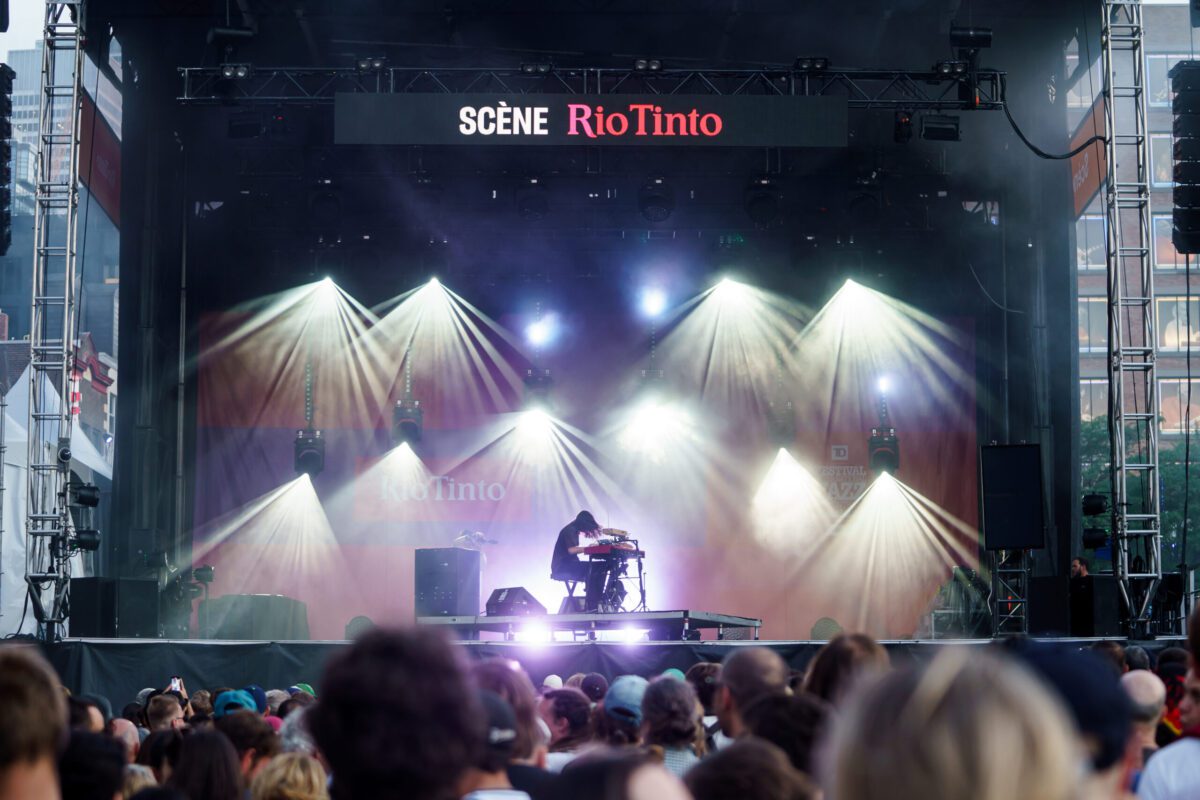
I knew nothing about Annahstasia when I arrived on the Rio Tinto stage at the festival. I was immediately drawn in by this voice. In a rather gentle musical envelope, Annahstasia is sometimes heartbreaking. This young lady knows how to alternate between extreme sweetness and screaming.

I learned that Annahstasia Enuke is a Nigerian-American based in Los-Angeles. She released an EP this year entitled Revival.

Is she soul, folk or jazz? More folk, I’d say, but with soul-jazz leanings. The mix of cello with guitar, bass and keyboard adds depth to the arrangements.

Some of the crowd were truly captivated, despite the sweltering heat of the evening. I’m always fascinated by an audience’s ability to listen when it’s essential. And this hour’s concert was essential.

This voice, which can play in several octaves, invited us into a kind of intimacy, a kind of essential energy.

Annashtasia tells us to be kind and respectful. And many of the songs are about feminine power.

She ended up asking in French; “C’est bien?” I replied, “c’est très bien.”

Michel Labrecque

Jupiter on Earth

Jupiter Bokondji, born Jean Pierre Bokondji Ilola, offers a frenetic infusion of Congolese music crossed with a clearly globalist pop culture. The music of this ebullient frontman (and his band Okwess) is based on rumba / soukouss, the foundation of modern Congolese pop music, but also of a punk-rock attitude rarely found on the black continent. Even though his deep, husky voice barely exceeds an octave, the singer’s authority on stage is unmistakable. The curious onlookers who came to meet him will have appreciated the energy and independent spirit of this artist who is so popular with rock stars such as Damon Albarn and Massive Attack. Solid stuff !

Alain Brunet

A July 4 at FIJM: Marisa Monte, The Weather Station, Mezerg, The Bad Plus, black midi …

by Rédaction PAN M 360

The Weather Station at FIJM / Benoit Rousseau

The Weather Station Offers A Marvelous Climate to FIJM

Along with her band, decked out in acid-wash blue attire, Tamara Lindeman aka The Weather Station, brought the emotional heat and rain to the FIJM with her jazzy baroque pop and siren-esque voice. Actually, her voice can switch from a low, conversational register, to a bright soprano, in seconds—hypnotizing the audience on a dime. Her band is also a marvel, taking the instrumentation to another level with saxophone freakout solos, washed-out and delayed guitar riffs, and a rhythm section that gets the bodies swaying. The Ignorance album seemed to be on the main setlist and few from the companion piece, How Is It That I Should Look At The Stars. Part of me really wanted to hear older material, but I did arrive late, and that’s sometimes just showbiz.

But one girl on the side of the stage, who I think was the daughter of a guest band member and had to be no older than 12, was dropping some fantastic unchoreographed dance moves during the hits “Robber” and “I Tired To Tell You,” adding levity to songs with heavy topics like climate change and a darkening geopolitical worldwide structure. I think that’s the extraordinary draw of The Weather Stations’ music; no matter how dark or sad it gets, you can always dance to it.

Stephan Boissonneault

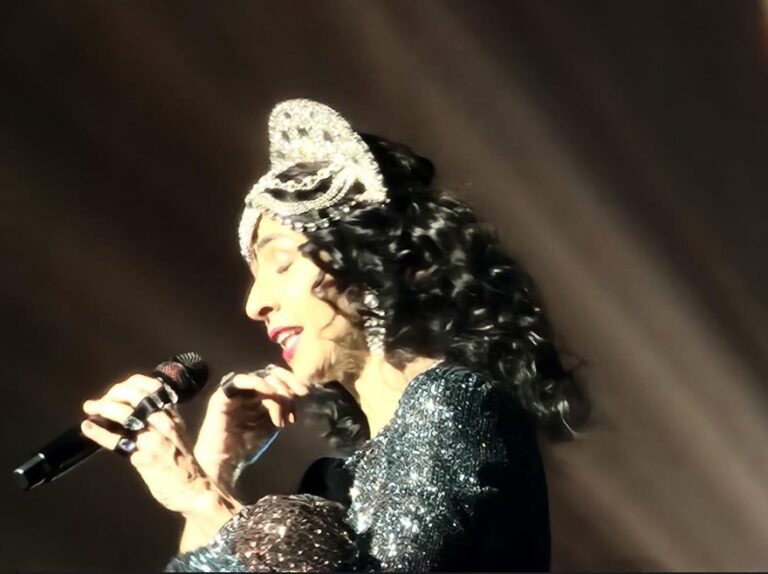
Marisa Monte’s sensual high mass (with Rommel as a bonus)

On Tuesday evening at Théâtre Maisonneuve, we were somewhere between Montreal and Montrecife. A mostly Brazilian audience, overexcited and dressed to the nines, had gathered to welcome Marisa Monte.

Many of them were surprised by the arrival on stage of the opening act, Rommel.

The songwriter, born in the northern Brazilian state of Maranhao and now based in Montréal, quickly won over the audience. Following in the footsteps of Chico Cesar and, to some extent, the Lenin of the early years, he presented excerpts from Karawara, his sixth album, which pays tribute to the world’s indigenous peoples. It was a wonderful showcase offered by FIJM, opening for a great Brazilian star. And Rommel didn’t miss a beat. He has made many new friends. His creations are increasingly original. 

The room was already warmed up when Marisa Monte appeared on stage, to a very atmospheric Pink-Floydian tune.

Then she launched into her rendition of Portas, her first original album in ten years.

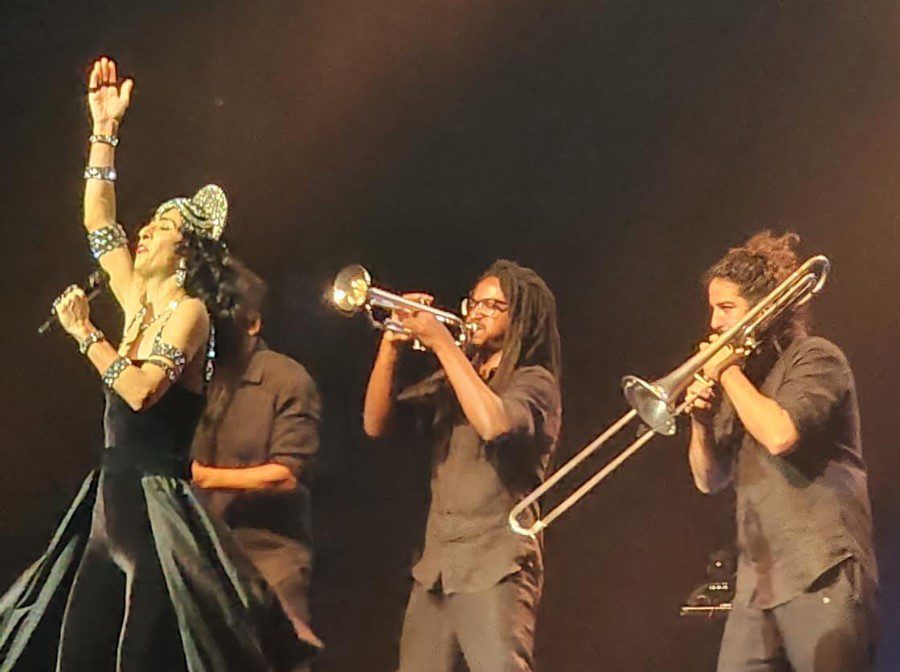
Once again, this blend of sophistication and popular music jumps out at us. The arrangements by trombonist Antonio Neves’ wind-copper trio are hyper-sophisticated and harmonize fabulously with Marisa’s voice. At times, it sounds like Steve Reich, but with less repetition. 

And what a voice! It’s really in concert that you realize the extent of her vocal range, as the lady has long been a classical singer. 

Another surprise: she did all her song presentations in French. Even in front of an essentially Portuguese-speaking audience. Bravo madame!

After the section devoted to the new album, the radiant singer-songwriter launched into the interpretation of numerous past hits. 

Between songs, she introduced one of her musicians at length before giving him a hug. To show the importance of the team.

When I left, shortly before the end, Théâtre Maisonneuve was in a trance.

Marisa Monte is intelligence, sensuality and openness.

On the other hand, Marisa, drop your blinking, eye-sore opening gown.

Michel Labrecque

Mezerg at Rio Tinto Stage / Benoit Rousseau

Mezerg Turns the Outdoor Rio Tinto Stage into a Darkened Nightclub

If you’re like me and follow a bunch of musicians on Instagram after watching their virtuosity during a few videos, you might already be aware of Mezerg, a French, one-man band techno machine who only uses live instruments like the synth keyboard, theremin, and kick to create a wild dance party.

It’s interesting to watch Mezerg in action as he decides what synth line to loop or what drum kick to start off his song. He’s a man built on improvisation, honed in by his depth-defying theremin skills that completely wash over the audience—like he’s commanding us all to go to war. The light show was also grand, sometimes syncing up with Mezerg’s kick, which I’m pretty sure he controls with MIDI, but who knows? Mezerg is probably more suited to play Montreal’s MUTEK than FIJM, but the crowd was in awe of his techno-jazz skills and more than happy to move within his created outdoor club.

Stephan Boissonneault

The Bad Plus as a Quartet

Photo Benoît Rousseau

Two decades earlier, or perhaps a little more, The Bad Plus had been dubbed “the heaviest acoustic trio in jazz”. At the time, we loved The Bad Plus for their jazzified covers of cool music of the moment, from indie rock to electro. What’s more, we appreciated their own compositions, very much in tune with the jazz trends of the last quarter-century.

We also remember a magnificent collaboration with saxophonist Joshua Redman in the mid-2010s. The acoustic trio was transformed after the departure of pianist Ethan Iverson. Double bass (Reid Anderson) and drums (Dave King) had to make other alliances. And the one we found ourselves in front of, on Tuesday evening at the Monument National, was quite distinct from the old one. A homonymous album, released in 2022 on Edition, bears witness to this.

Reid Anderson did not lack for humor, notably in introducing his piece “Motivations 2” and reporting on the apprehensions of some as to whether this work was more motivating than “Motivations 1”. Or that piece “You Won’t See Me Before I Come Back” where he indicates that he went to Tim Hortons. Haha!

Big difference in instrumentation: Ben Monder is clearly a jazz guitar master of our time, both for his virtuoso articulation and his creative direction as a composer and improviser. On the sax (tenor in this context), Chris Speed has long been a fixture in the New York jazz ecosystem, his reputation well established and his high virtuosity beyond doubt. 

The program at the Monument-National now focuses more on the original repertoire than on a singular performance of old and new standards. As to whether the identity or brand of The Bad Plus is absolutely necessary to the long-term success of this very interesting (and less spectacular) quartet, we’ll give it to you straight.

Alain Brunet

black midi at FIJM / Frédérique Ménard Aubin

black midi Bring the Hellfire to Club Soda During FIJM

Playing to a full house at Club Soda, black midi put on a show worthy of their name. With their frenzied post-punk, math rock, and indie jazz – all wrapped in a cloak of avant-garde experimentation – the crowd of mostly young concertgoers was treated to a spectacularly chaotic evening.

After being warmed up by opener Joseph Shabason, the British quartet ambled onto the stage with an air of nonchalant confidence, resembling a motley crew of mad scientists about to set out to work. Geordie Greep, the band’s enigmatic frontman, clutched his guitar with an intensity that bordered on possession. His piercing gaze and schizophrenic stage banter suggested a conduit to some ethereal realm that lay just beyond the reach of mortal comprehension. Drummer Morgan Simpson proved to be a real force of nature, and I spent the concert mostly spellbound by his sheer athleticism.

Playing a lot of material from Hellfire, the band also delighted with some classics from Shlagenheim.  It did not take long for a debauched mosh pit to quickly form at the front of the stage, and at times I had the impression that the band was something like Roman senators commanding their legions in a work by Hieronymus Bosch.

Varun Swarup

Makhathini hits hard !

I began my July 4th musical evening with a jazz trio, and ended it with another very different.

The trio of Cuban-Quebecois Rafael Zalvidar, accompanied by alto saxophonist Luis Deniz, offered a learned jazz, a little academic for me, but satisfied the crowd, which was in great numbers at the TD studio, at 6:00 pm.

On the other hand, South African Nduduzo Makhathini offered a much more iconoclastic performance at Pub La Traversée Molson Export. EsplanadeTranquille was anything but tranquille (quiet in French).

Some call it spiritual jazz, others might say destructive jazz. I arrived halfway through the 10 PM concert. Makhathini, bassist Zwelakhe-Duma Bell and drummer Francisco Mela were already sweating.

These young jazz wolves hit their strings, their skins and their ivories hard. But all this exudes an urgency to live, a crazy energy. And at the end, beauty.

They play hard, but it remains acoustic and jazz, with some free jazz. 

Not perfect jazz, but very meaningful. Very likely to appeal to a young audience. And the old man enjoyed being shaken up.

I was, however, a little worried about the state of the piano at the end of the concert…

Michel Labrecque

A July 3 at FIJM: Herbie Hancock, Domi & JD Beck, Nate Smith, Emmet Cohen, Focus & Elements…

by Rédaction PAN M 360

At the Festival International de Jazz de Montréal, PAN M 360 experts attend concerts that shake up music lovers. Follow our team!

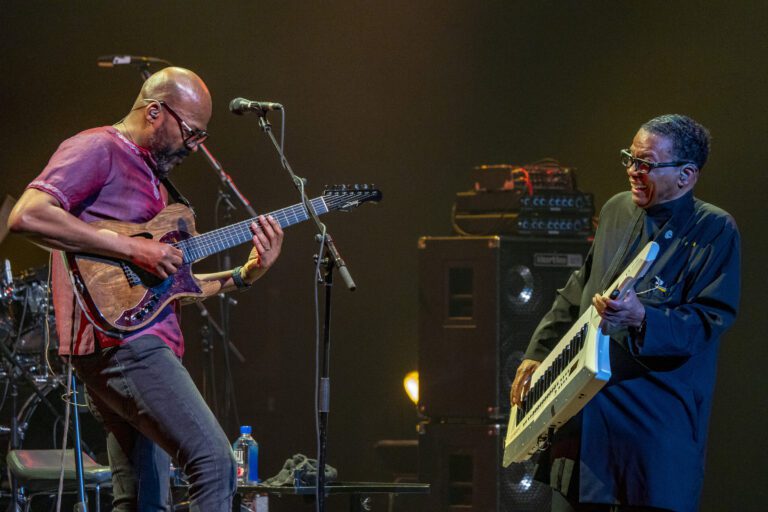
Herbie Hancock, Phenomenal Greenness!

The piano is an instrument conducive to the longevity of its user, as Herbie Hancock brilliantly demonstrated on Monday evening at Salle Wilfrid-Pelletier. Undiminished by his age (83!!), the most respected living pianist on the jazz planet displayed phenomenal verve, exemplary articulation, and unparalleled wit. We could have forgiven him for a few shortcomings, but we really didn’t have to.

Herbie began with an ambitious Overture, introduced by an electro-acoustic passage (not as “weird” as its creator had announced), accompanied by elements, riffs, or themes from his immense repertoire, familiar to any self-respecting jazzophile – “Butterfly,” “Chameleon,” “Rockit,” etc. Some of the works on the program were played by the musicians themselves.

Some of the works on the program were played in their entirety and transformed by the sidemen, and not the least: trumpeter Terence Blanchard, guitarist Lionel Loueke, bassist James Genus and drummer Jaylen Petiniaud lent their respective personalities to the work of the coolest octogenarian active on the jazz planet.

A tribute to Wayne Shorter, a lifelong friend with whom he had played Footprints, a standard by the late saxophonist and composer, once magnified by the Miles Davis Quintet of which they were both prominent members, was to be expected.

Less predictable, however, was the fact that a small part of the program was made up of jazz-funk pieces, including Actual Proof (Thrust album) and Come Running to Me (Sunlight) with Vocoder, the ancestor of Autotune.

To conclude? The mega tube “Chameleon” (Headhunters, homonymous album), of course. For this, the leader chose to sling his synth over his shoulder and improvise with each of his colleagues rather than perform at the piano in the bridge. Some would have preferred the structure of the original recording, but our monumental Herbie has opted for the risk of a full-scale re-reading, for better or for worse.

But isn’t that what you’d expect from a great jazzman?

Alain Brunet

Domi & JD Beck, the phenomenon of the hour

They’re the talk of the town, far beyond the jazz world. The viral propulsion of these two artists barely out of their teens is matched only by their talent. Domi (Domitille Degalle), originally from Nancy, and JD Beck, from Dallas, who met in the USA while studying at Berklee College of Music, were already the subject of a real buzz.

A rather clumsy, lazy, and disjointed concert by Robert Glasper had led me to migrate to this most refreshing of concerts, given in a packed Club Soda. It was not long after the release of Not Tight, a debut album that appealed to a wide audience, far beyond the jazz world.

A year later, the phenomenon has taken off. Anderson. Paak, Snoop Dog, Thundercat, and even Ariana Grande recorded with them, which goes to show their appeal.

We were treated to much the same material as on Monday at Wilfrid’s, when Domi multiplied the prowess of her right hand, extreme speed and extreme precision of articulation, and dazzled with her left hand, which she uses in the manner of electric bass, notably when she plays Jaco Pastorius, Weather Report era, or Wayne Shorter with Endangered Species (Atlantis album).

How to explain this buzz? By the youthfulness of its protagonists, by the visual aesthetics with their naïve backgrounds, by their teenage looks that don’t give a damn about anything… and above all by this hallucinating virtuosity acquired at such a young age – around twenty. JD Beck has already absorbed and mastered many of the techniques of his predecessors, and his small drum kit and borrowings from electronic music are impressive. Anyone who appreciates instrumentalists of this level is sure to be delighted, even with the technical problems they had to face in front of Herbie Hancock’s audience.

Alain Brunet

Nate Smith and the spirit of groove

On the second night of his three-concert road trip, super-drummer Nate Smith produced the desired effect: delighting groove fans with material from an obscure “beat tape” he’d recorded for his 40th birthday, “a few years ago” as he quipped. Alongside specialists in this exercise, keyboardist Kiefer and bassist CARRTOONS, Nate Smith brought this soul-funk minimalism to the fore.

The approach consists of repeating a very simple, soul/R&B-inspired harmonic progression for ten minutes or more. Simplistic? Redundant? Nay. Nate Smith and his seasoned colleagues are quick to make you appreciate the micro-variations of these grooves, bringing out all their suavity. This has been the case since the heyday of CTI in the ’70s, a label with a penchant for jazzifying soul.

The comeback of instrumental soul/R&B via hip hop in the jazz world is accompanied by related phenomena, including this one, reinvigorated by instrumentalists doubling as beatmakers, armed with a vast culture of African-American popular music in the digital age. Who’s going to complain?

Alain Brunet

Emmet Cohen, the reincarnation of swing

I’d be lying if I were to write a full concert review for the Emmet Cohen Trio. Upon arriving at Studio TD almost an hour before the 10PM show, the line-up was already very large. For an artist so deeply rooted in the now almost hundred-year-old tradition of swing, this was a nice surprise, but perhaps no surprise really. With his electrifying performances and his strong online presence, Emmet is now something of a piano icon whose mission is to keep the spirit of swing alive.

Upon arriving about halfway during their set, there was a special feeling in the air. Somewhere the spirit of Ahmad Jamal was present, as the band channeled the elegance and drama of Jamal’s minimalist-maximalist trio arrangements. The trio’s dedication to engaging the audience was commendable too. Cohen made it a point to make the crowd really feel a part of the show, sharing anecdotes and insights into the music they were about to perform. To end the evening, their third encore, they absolutely rocked the Ellington classic, “Satin Doll,” and by the end of the show we all knew we were aside from something special.

Varun Swarup

Focus and Elements : Cynic and Atheist finally reunited

Yesterday, on the fringes of the Jazz Festival, Montreal hosted two luminaries of jazz fusion-infused progressive metal. Cynic and Atheist, both with a 35-year track record, respectively presented the entirety of Focus (1993), as well as selections from Piece of Time (1990), Unquestionable Presence (1991) and Elements (1993). In front of a packed Fairmount Theatre, both bands delivered flawless performances of their repertoire. Atheist impressed with their inexhaustible energy, easily matched by the complexity of the songs they played. In

deed, it’s rare to see such a successful combination of instrumental technicality and fierce stage presence. Singer Kelly Schaeffer, the only original member of the band, has surrounded himself with young musicians half his age to form his latest band. However, his bandmates’ enthusiasm was matched only by his own, as Schaeffer has clearly lost none of his charisma and madness. While replaying the classics might have been more than enough, especially for a quiet Monday night, Atheist far exceeded expectations.

Cynic then kicked off their show with a chronological rendering of their debut album, which has become a cult death metal staple. More angular and aggressive than the band’s more recent material, these compositions were interpreted with all the desired nuance. In particular, the interplay between vocoder-sung and screamed vocals was true to the album. As for the guitar timbres, these were carefully crafted and adapted to each musical section via digital processors. After a brief incense tribute to the late Sein Reinert (drums) and Sean Malone (bass), Cynic followed up with four tracks from their more recent discography. These pieces, sometimes serene, sometimes intense, but always very dynamic, closed the evening well, even if the audience was left wanting more.

A July 2 at FIJM: Samara Joy, JaRon Marshall, Elliot Maginot, Blue Moon Marquee, Vance Joy …

by Rédaction PAN M 360

At the Festival International de Jazz de Montréal, PAN M 360’s experts attend the concerts that shake up music lovers. Follow our team!

Photo credits : Benoît Rousseau

Samara Joy Defies All Suspicion

Was there any reason to be suspicious? Samara Joy wins a Grammy, two Grammys, revelation of the year, jazz album of the year. The 23-year-old has two albums, one of them self-produced. And now the Grammys jury has decided that a classical jazz singer outshines all the emerging pop singers of 2023. Listening distractedly to Samara Joy, we say to ourselves, well, here’s another jazz fundamentalist titillating the bien-pensants of American culture. Not very excited, then.

But then I think, let’s not avoid the subject, let’s not snub it. That these widely publicized victories, legitimate or not, deserve our attention. So it wasn’t without skepticism that I volunteered to cover Samara Joy. And… once again, preconceptions are shattered. We hear her during a short appearance on Saturday evening, guest of piano prodigy Julius Rodriguez. Hm, not a museum replica of Sarah Vaughan, perhaps more than that. Then PAN M 360 is offered an interview with this young woman.

She’s very tall, she’s brilliant, she’s nice. No pretensions. Two hours later, we turn up at Monument National. She’s swapped her relaxed outfit for an evening gown and heels. She intones This Is the Moment, our ears flutter, our eyes widen. So this wasn’t one of those incoherent, disconnected choices the Grammys are sometimes capable of.

Samara Joy has an alto register but can push into that of a soprano. This is not just the result of rigorous technique, but a gift of nature. The variety of timbres, modulations and variations in power are all assets for this exceptional singer.

Superbly at ease on stage, humble and proud, very funny, entertaining to the max. She knows how to make her own a standard like Hoagy Carmichael’s Stardust or Tom Jobim’s Chega de Saudade, or a vocal adaptation of Nostalgia by bop trumpeter Fats Navarro, or the hybridization of Stevie Wonder and Nancy Wilson, or even those incandescent lines in homage to the great Betty Carter, an influence more evident in Samara Joy. Which is excellent news for the future.

Alain Brunet

JaRon Leads Us All to the Cosmos

JaRon Marshall, the keyboardist for the Black Pumas, revived a sleepy crowd at Rogers Stage, as he played 80s percent of his debut full-length solo album, earth sounds on Sunday night at FIJM. Backed up by a fantastic drummer and bassist—who he only started playing with on the same day—JaRon lead the crowd through a whirlwind of cosmic jazz that was a bit Return to Forever and Pharoah Sanders. The main instrument was, of course, two keyboards that JaRon commanded with ease.

It looked as if he didn’t break a sweat during his synthy freakout solos or complex chord arrangments. The band did a great job of keeping the groove for the crowd, without diving too much into the realm of free jazz. JaRon is clearly a maestro who loves emotional jazz music and we were lucky to witness him on a smaller, more intimate, stage because this guy could easily be playing the main stages in a year or two.

Stephan Boissonneault

Elliot Maginot Nests on the Esplanade

At 11 pm, singer-songwriter Elliot Maginot performs on the Esplanade at Place des Arts. On the stage, garlands of lights run through the space, climbing over the equipment and delimiting the playground. Six decorative owls are scattered around the front of the stage and on the equipment… an animal that has apparently become the artist’s symbol of choice, judging by his communications on social networks.

Elliot Maginot’s concert kicks off with an atmospheric sound, to which a few guitar ripples are added. A soaring sound that both builds tension and relaxes muscles. As the musicians prepare, the audience warms up. Then it’s off to 55 minutes of flattering folk-pop, sometimes bouncy, sometimes contemplative, and above all luminously tinged with saxophone, marimba, cello, and West African touches. The drums resonate in the chest, and the artist’s voice, in the mind. 

Elliot Maginot stands out for his pinched, breathy voice, and also for his intense yet restrained performance. When he sings, his body and face tense with emotion, and his voice is shot through with a quiver – not a vibrato – that lifts the longer words and ends of phrases. An unusual singer, perhaps, but a singer nonetheless. You can tell when you see him on stage.

In short, a charming show! Let’s just say that the branch on which Elliot Maginot is perched doesn’t make you want to leave.

Théo Reinhardt

Blue Moon Marquee Brings their Raspy Gypsy Blues to FIJM

It was nice to see Blue Moon Marquee, an Albertan band with humble beginnings as a two-piece, play to a larger crowd at Scene Loto Quebec. They were competing with Vance Joy at the same time, but the true heads—the crowd looking for something a bit more than generic folk, began to grow and grow. It must have been the haunting, Tom Waits-esque vocals, from A.W Cardinal, or the rhythm section, played by Jasmine Colette on stand-up bass and drums. You read that right. She plays both and literally punches the crash cymbals while playing and singing. Nothing more punk rock and DIY than that. Without her the band is nothing.

It’s usually just a two-piece, but this show they were joined by a saloon-style keyboard/ organ which added a whole other dimension to the bluesy lead guitar and thumping bass. This band is full of intensity and their energy is wild and untameable. Cardinal ended the set by singing without a microphone and his raspy voice carried to the back of the crowd. Make sure you check out Blue Moon Marquee next time you get the chance.

Stephan Boissonneault

Vance Joy Charms the FIJM Crowd

Just over a year after the release of his third album, In Our Own Sweet Time, Australian singer-songwriter Vance Joy took the FIJM stage late Sunday evening. In front of a jam-packed Place des Festivals, the 35-year-old performed a happy mix of tracks from his various projects for almost 90 minutes. Placed in the middle of the stage, with his guitar or ukulele in hand, Vance Joy was accompanied on stage by various musicians, including a trumpet player and a saxophonist, bringing even more richness and depth to his best hits. With all smiles, the Australian kicked off his performance with ”Missing Piece”, a track from his latest opus.

Halfway through, Vance Joy got the crowd going when he took to his ukulele for his track Saturday Sun, then slowed the tempo with his ballad “We’re Going Home”. During the latter, people gathered in front of the stage waved their lights, making for a superb moment. Without a doubt, the highlight of the show was when he sang his most popular track to date, Riptide. It was party time, and the crowd went wild singing the song’s lyrics. Just when you thought the performance of his biggest hit signalled the end of his set, the artist surprised everyone with a well-done cover of ABBA’s “Gimme! Gimme! Gimme!” There’s no denying that Vance Joy has captured the hearts of millions of listeners with his pop over the years, and last night was no exception!

Jacob Langlois-Pelletier

A July 1st at FIJM: Julius Rodriguez, Theon Cross, Moon Hooch, Anomalie, Micheal League, …

by Rédaction PAN M 360

At the Festival International de Jazz de Montréal, PAN M 360’s experts attend all the concerts that shake up music lovers. Follow our team!

Julius Rodriguez: One of the Greats at 24

Despite a first set cut short due to “weather conditions”, young pianist-drummer-composer Julius Rodriguez had the crowd tucked away under the shelter of the La Traversée Molson Export pub in the Quartier des Spectacles’ Place Tranquille totally glued to his vivacity, intelligence, and virtuosity. Rodriguez’s method is simple: always base himself on a motif, a melodic-rhythmic phrase, a riff, or a simple, catchy theme, and then unleash all his expressive possibilities.

Rodriguez is a young musician as instinctive in improvisation as he is remarkably well-educated in technique (classical AND jazz). His limpid and frankly exciting playing is imbued with emancipation that he knows how to communicate to his partners on double bass, drums (as he has mostly played piano), and trumpet. They are as at ease with their interpretative boldness as they are with the task of making it all coherent with their leader’s vision.

A few Hancock gems (including “Butterfly”), but plenty of material from his two active albums (one full-length and one EP, just in) and some new material too, which he hasn’t named yet. I suggest Rainy Night in Montreal, because it’s sure to be a memorable moment. As a bonus, for just one track (“In Heaven,” featured on Let Sound Tell All released in 2022): the masterful voice of Samara Joy, who is rightly compared to Ella, Nina, and Sarah. A true lesson in vocal expressivity. The next time Julius comes to Montreal, it will be in a concert hall, at a high price.

Frédéric Cardin

Theon Cross Uncovers the Mysterious Sounds of the Tuba

Theon Cross plays the tuba like someone who has discovered every secret the instrument possesses. No one really knew what we were in store for inside the walls of TD Studio but most of the show was Theon Cross and a reverb-y guitar player making some cosmic sounds, that reminded me of the interludes in a song from The Comet is Coming.

The guitar almost acted like a feedback machine, diving more into the ambient rock realm, as the tuba was always at the forefront of the performance. A few pieces had only Cross playing the tuba with complex breathing techniques that made the instrument sound like a screeching cat. To be honest, after 15 minutes of this kind of solo performance, I had seen what I needed to. He’s very skilled but you can only be amazed at how many sounds you can make with the tuba, so many times.

Stephan Boissonneault

Moon Hooch: Jazzy, Brassy, EDM for this Generation

Moon Hooch exists at a weird impasse where they could be a straight EDM band led by saxophones, or a more soundscape jazz trio. Though, they definitely favoured the danceability of their music during their rainy, indoor, Canada Day performance at Gesu. The venue may have hosted seats, but it only took 15 minutes for Moon Hooch to get everyone standing and dancing to their impressive dueling saxophone music.

The drummer really needs a mention here because he keeps the time and groove as Michael and Wenzl keep the madness going. Some of the songs sounded like straight-up techno or house music and if I wasn’t watching them switch between baritone, alto, and tenor saxophones live, I would have sworn the songs were coming from the synth patches. Moon Hooch basically takes turns acting like DJs hyping up the crowd while their other bandmates are playing their hearts out. I think the venue choice was an odd one because a band with that much energy should have played on an outdoor stage.

Stephan Boissonneault

Anomalie en formule big band, ce n’est qu’un début !

photo credit: Benoît Rousseau

On Rio Tinto stage, more than 15 musicians were involved in Anomalie, a jazz-fusion-soul-R&B-dancehall project led by Montreal keyboardist and composer Nicolas Lemieux.


The prediction is easy to make: in any configuration, Anomalie is promised to a brilliant international career in the instrumental pop world . This big band formula is not commonplace in the local jazz scene, but it is becoming increasingly so among the generation of 30-somethings who have imbibed the hip-hop of Kendrick Lamar, the electro of Flying Lotus, and the jazz groove coming out of the new scenes in Los Angeles, Chicago and London.

As he explains in an interview, Nicolas Lemieux does not seek to transcend the forms of modern jazz, but rather to compose orchestral music as if it were a pop song with jazzified extensions. On Saturday, the thousands of soaked fans after a long downpour cut the 90-minute performance in half. The audience was nonetheless happy to vibrate to rhythms closer to instrumental hip-hop than jazz, to powerful, harmonically consonant riffs, and to a handful of choreographed soloists such as trumpeter Andy King or the leader himself on keyboards.

This instrumental pop speaks to anyone who has experienced adolescence or young adulthood over the past two decades. Everyone can find their way around it, the markers are clear and there’s no head-scratching on the horizon. Nicolas Lemieux’s songwriting doesn’t lead to atonal explorations, takes few non-binary rhythmic paths, and sticks to catchy melodies and friendly riffs. All good reasons to believe in Anomalie’s present and future success.

Alain Brunet

League, Brock, Thomas, Spark: magnificent mix of instruments and styles

Snarky Puppy is that iconoclastic American jazz band, who performed on June 30 at the Jazziest as a large ensemble, to celebrate their latest album Empire Central. 

On July 1, we were treated to a quartet from Snarky Puppy. Violinist Zach Brock, drummer JT Thomas, keyboardist Bobby Sparks and bassist and leader Michael League. 

Violin , keyboard, drums, bass – it’s a rare combination.

These four musicians have worked with so many people, from David Crosby to Stanley Clarke to David Liebman, the RH Factor, Fred Hammond. And they’ve all known each other for a long time.

The quartet took off like a lion, to a Wayne Shorter theme, followed by Stevie Wonder. I didn’t recognize the piece, so powerful was the jazz improvisation. 

These four free spirits improvise on well-known themes, but don’t know where their complicity will lead them. Sometimes it’s pure jazz, sometimes heart-rending soul, sometimes on the rock edge..

Michael League explained the origins of this quartet to us: in the early days of Snarky Puppy, in Texas, in 2007, League, Sparks and Thomas went to a small club in Dallas every monday night to improvise non-stop. Violinist Zach Brock occasionally joined in. 

The Jazz Festival offered Michael League a second night’s performance, and he chose to resurrect the experience.  

And no one was bored: Jt Thomas sang a Bill Whiters song Who is He And What Is He To You, which led to some wild improvisations… Violinist Zach Broch was all subtlety, Bobby Sparks went wild on his organ. 

Then there was De Angelo’s Voodoo. And a blues whose name I’ve forgotten.

Throughout the show, Michael League, as usual, held things together with his roaring electric bass. He even allowed himself a few solo flights, including one with a fuzz pedal that scratched our spines.

I’ve said it many times on this site: Michael League is one of the most creative American musicians of his generation. He demonstrated this once again.  

And the crowd, multi-generational, would have taken it again.

Michel Labrecque

A June 30 at FIJM: Buddy Guy, Avishai Cohen Trio, Mark Guiliana Quartet, Snarky Puppy…

by Rédaction PAN M 360

At the Festival International de Jazz de Montréal, PAN M 360’s experts attend all the concerts that shake up music lovers. Follow our team!

Buddy Guy Keeps The Blues Alive at FIJM

Buddy Guy at FIJM / Benoit Rousseau


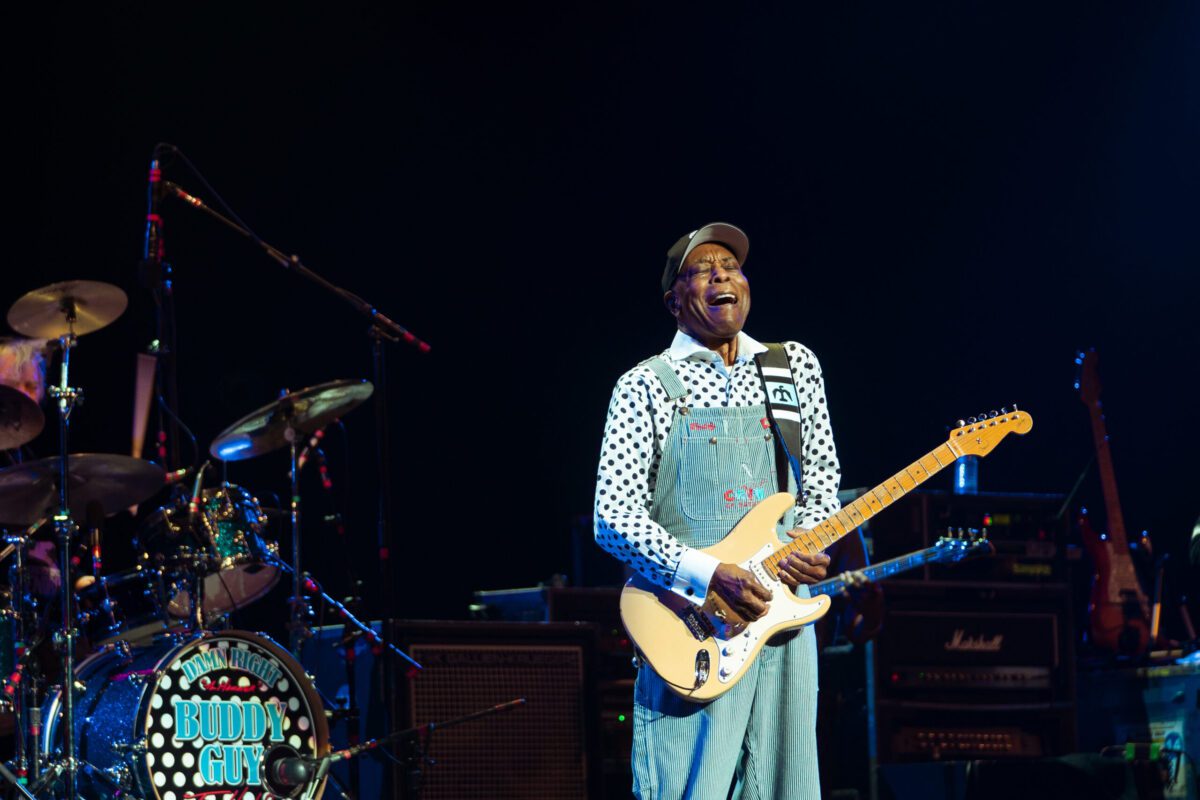
At 86-years-old, Buddy Guy conveyed to a sold-out crowd at the Salle Wilfrid-Pelletier why he is a revered OG blues legend, during the FIJM. After an hour of the young opener, Christone “Kingfish” Ingram—who is taking up the mantle left by guys like Buddy Guy—the legend himself walked slowly onto the stage in jean overalls and a polka dot shirt. His voice still sounds as pure and soulful as the day he started—as if he’s leading the crowd through a religious sermon. But instead of god, he’s preaching the blues, the very thing he is somewhat responsible for popularizing and really keeping alive in the last few years. “They’ve stopped playing this kind of blues music in the States and I’m not sure why,” Buddy Guy said in a hushed tone to the crowd. “And those hip-hoppers get to swear on the radio so, now I’m like, well shit, I gotta start swearing at my shows.”

On the stage, Buddy Guy is part comedian, gyrating and thrusting into his guitar, perfectly making his guitar sound like it’s crying or laughing. He’s still got the same charisma you’d expect from Buddy Guy. He could have easily sat in a chair and no one could fault him, but no, he moved across the stage, cracked jokes at the expense of the crowd—a real showman. And he’s still got the chops, soloing like a bored god with an in-the-red guitar tone and sound. During the blues standard “How Blue Can You Get,” he stopped halfway saying “I don’t want anyone saying ‘Oh I came to the show and it was good, but he didn’t play this or that.'” He then busted out a one-minute version John Lee Hooker’s “Boom Boom,” and followed it up with Jimi Hendrix’s “Voodoo Child (Slight Return),” perfectly parroting the distinctive guitar styles. The night ended on a high when he brought out the Kingfish for a jam, but Buddy Guy let the young 24-year-old take the spotlight as he sang “Cheaper to Keep Her.”

“Ladies and gentlemen I remember being in Mississippi and hearing this young man play and thinking ‘Hmm I gotta do something bout that,'” Buddy said to the crowd. This is indeed the farewell tour of Buddy Guy, but I get the sense that he will never stop playing, never stop preaching the blues, or finding the next crop of young talent. “Bye Montreal, I’ll see y’all next time.” Sure Buddy. See you then.

Stephan Boissonneault

The Avishai Cohen trio // Benoit Rousseau

Avishai Cohen Brings The Shifting Sands

For fans of Avishai Cohen, the last two years of the festival have been a special two years. Avishai was scheduled to perform with his trio last year but, at the last minute, his pianist was unable to make the show. To his credit, Avishai made the best of the situation and performed an intimate set of Israeli folk songs with him singing and playing piano, as well as playing some duo with the phenomenal drummer Roni Kaspi. This year, Avishai returned to the Théâtre Maisonneuve and delivered what was first promised and more.

The night was brimming with anticipation, and the band played through a setlist of crowd favorites like “Seven Seas,” “Dreaming,” and “Beyond.” The trio featured some material from their latest album, Shifting Sands, but catered the show as a showcase that everyone could enjoy. The sound and lighting team did a really wonderful job creating a sense of atmosphere.

At times it felt like the group may as well be the Roni Kaspi Trio since she seemed to take much of the limelight. Her solos were consistently thrilling and had everyone at the edge of their seats, and during one particular solo, there was a standing ovation while she was playing!

Varun Swarup

Mark Guiliana ,The sound of Listening and more Mischief

photo credit : Benoît Rousseau

The Gesù was sold out for Mark Guiliana’s quartet, an excellent choice in FIJM’s 2023 program.

Relocated to the West Coast with his partner Gretchen Parlato and their son, Guiliana continues the journey across an acoustic plateau begun in the middle of the previous decade. Important was this impression of a musical language freed from its founding evidences.

Having dazzled us in the days of Beat Music, an electro-jazz ensemble with which he allowed himself brief returns, Mark Guiliana chose acoustic instrumentation several years ago.

The line-up here was highly cohesive, comprising tenor saxophonist Jason Rigby (also an excellent clarinettist, but not on this evening), bassist Chris Morrissey and pianist Jason Lindner. One might have expected to hear Shai Maestro, who plays in the same band on the superb recordings The Sound of Listening and Mischief, but it was Lindner who offered up his circumspect, refined playing.

Based on Guiliana’s very particular playing style and tastes, this acoustic quartet has acquired a maturity of expression that few ensembles of this type achieve. The whole spectrum of emotions is soberly covered, but there is room for more testosterone and adventure. 

We find ourselves in movements comparable to the acoustic ensembles of David Binney or Brian Blade, that is to say, formations that are clearly jazz for their swing augmented by very contemporary rhythmic cells. The same is true for melody and harmony, i.e., there are enough consonant lines for us to be willing to admit certain more learned passages.

A pure delight.

Alain Brunet

Snarky Puppy, as expected…

For over fifteen years, bassist and composer Michael League has been building his career through the web and other means once considered parallel or indies when he starded. Today, it’s said to have become an inescapable way of building a career. Today, Michael League’s main vehicle, Snarky Puppy, is a must-see, filling 2000+ capacity venues wherever it lands.

MTELUS was obviously packed on Friday night, and it was an evening of full-on groove fusion, with wind section, two sets of keyboards including a Hammond B3, guitar, violin, bass and percussion. In short, a lot of restless people on a restless stage.

Snarky Puppy is renowned for its jazzy groove crossovers, its unifying melodic themes and its ample shapes with relatively demanding bridges for its performers. Generally speaking, this music is good for partying, lifting elbows while “czech la passe”, and offers just enough virtuoso pretension to delight some more seasoned music lovers.

That’s about it… as expected.

Alain Brunet
A June 29th at FIJM: Hiromi, Kingfish, Aftab-Iyer-Ismaily, Misc, Hawa B, etc.

by Rédaction PAN M 360

At the Festival international de jazz de Montréal, PAN M 360’s experts attend all the concerts that shake up music lovers. Follow our team!

Hiromi // Victor Diaz Lamich
Courtesy of Festival International De Jazz De Montreal

Hiromi, somewhere in between Oscar Peterson and Joe Hisaishi

Somewhere in between Oscar Peterson and Joe Hisaishi you’ll find the music of Hiromi Uehara. Armed with a virtuosic classical technique and
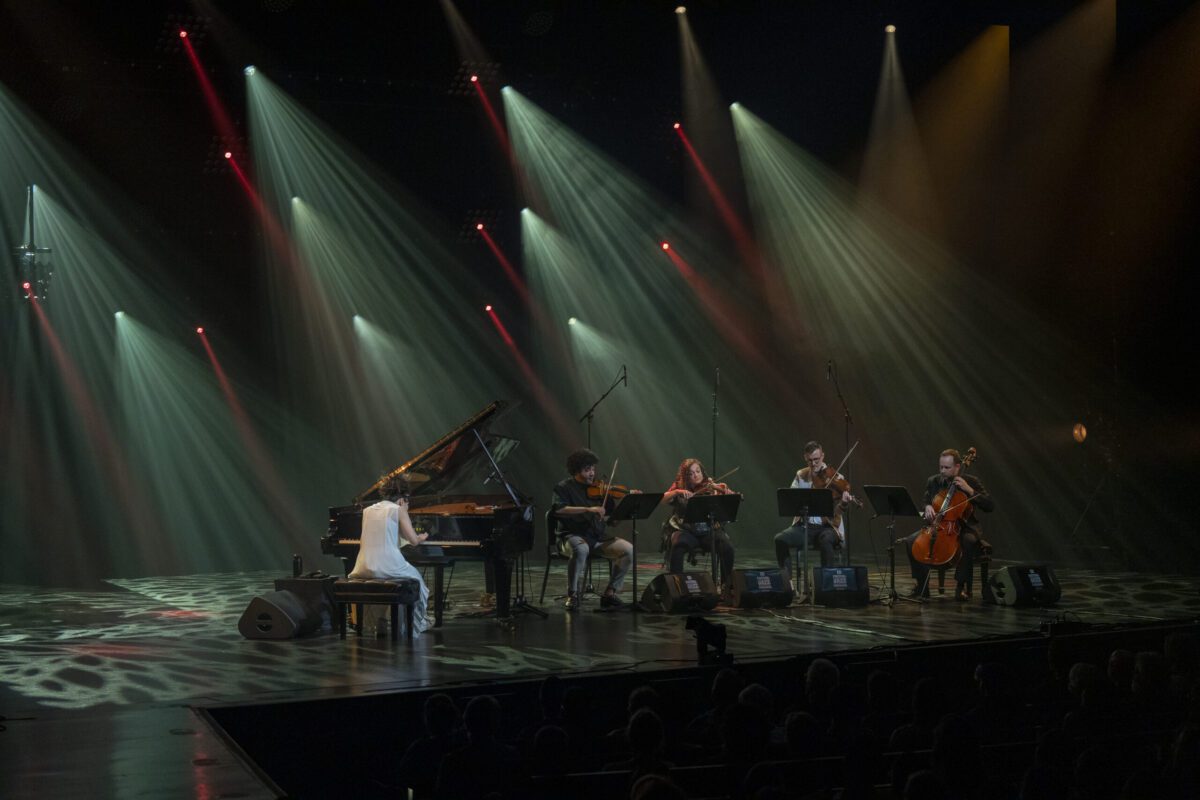
formidable fluency in the jazz language, watching Hiromi is like seeing an athlete at the top of their game. Returning to Montréal after six years, Hiromi’s concert at Théâtre Maisonneuve tonight was something of a special occasion. With PUBLiquartet, a string quartet from New York, she performed the entirety of her “Silver Lining Suite”, a work which seamlessly blends jazz, classical, and fusion. The evening thus had a classical air to
it and there was plenty of Beethoven-esque drama.

What is truly amazing to see is the electric energy that Hiromi is able to harness from the piano as well from the crowd. Her fingers effortlessly navigated the intricate orchestral passages, executing lightning-fast runs and intricate melodic lines with precision and clarity. There were moments of applause throughout the pieces as people simply couldn’t hold their excitement any longer. Yet, at a moment’s notice she could arrive at the tenderest pianissimo. While she may be too much of a showman for some, it is undeniable that Hiromi’s musicality is something truly special.

Varun Swarup

The Kingfish leaves the Rogers stage in AWE

Christone “Kingfish” Ingram at Rogers Stage / Victor Diaz Lamich
Courtesy of Festival International De Jazz De Montreal

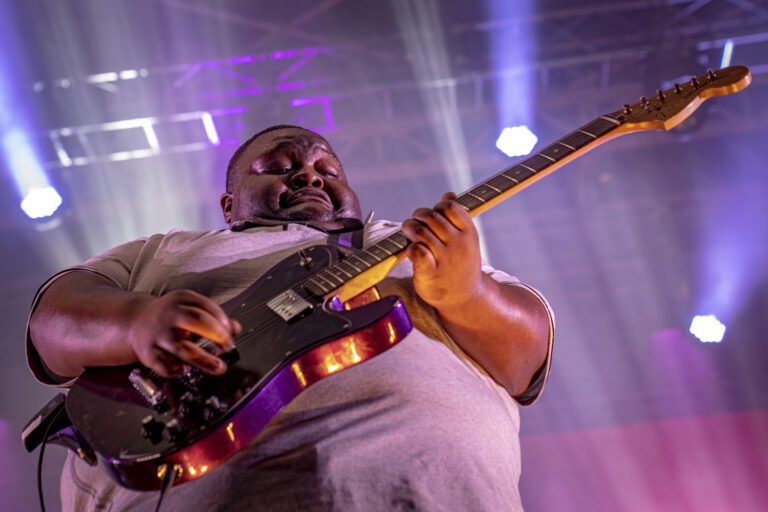
After some fantastic jazzy afrobeats courtesy of London, UK’s Kokoroko, I walked over to the Rogers’ stage for a night of bluesy wildness. As the lights dimmed, a band started playing some standard 12-bar blues with organ, drums, and bass, and a fierce lead guitar took over the speakers. For the next five minutes, there was no player on stage, until the beast of a man—or boy, as I just learned he’s 24 years old…—Christone “Kingfish” Ingram—walked onto the stage wielding his gorgeous purple Telecaster. He took the mic and let out a voice that would give B.B. King a run for his money. As if Howling Wolf and Muddy Waters had a secret lock-and-key Mississipi grandson they decided to never tell the world about.

For the next hour, the Kingfish toyed with the crowd, only actually playing five or six songs, but with solo interludes that went on and on for 15 minutes with facial expressions too good to ignore. And it was sublime. Kingfish’s solo style is one built around a narrative. I can only imagine he’s a shy guy at heart who lets his lead guitar-playing do the talking, confessing his deepest, darkest secrets. The highlight of the show was when the Kingfish left the stage and let his band jam for a few minutes until the ghost guitar playing took the speakers again. Fans whipped their heads and saw Kingfish playing within the crowd, bullets of sweat dripping off his forehead.

“I’ll see y’all back at 10 when we play another set.” It was 9:50 p.m … Kingfish came back to the microphone. “I’ll see y’all at 11!” That’s right, he was going to do this all again in an hour. This kid’s skill is unquestionable and there is chatter he will be playing with the one and only Buddy Guy for a later performance. That will be something to not miss.

Stephan Boissonneault

Arooj Aftab, Vijay Iyer, Shahzad Ismaily: tension and release in North America… and South Asia

Piano, Fender Rhodes, synths, human voice, electric bass. Arooj Aftab, Vijay Iyer and Shahzad Ismaily would normally have filled the Monument National given the critical success of their recent album Love In Exile. In front of an audience a little too sparse for the singer’s taste, we’re treated to four heartfelt improvisations, spread over just over an hour. Too short? A little too short, but generally conclusive.

To reduce this concert to a meditation session would be simplistic. As the artists explain in their interview, what we’re really talking about is a subtle tension-release dialectic, which doesn’t exclude rises in intensity and volume. We’re sure you’ll appreciate this in the final sections of this rich performance. Another deconstruction of clichés: no, this is not Indo-Pakistani music revisited in a jazz context, but rather a cultural interweaving in the context of a global expression.

Arooj Aftab is not a singer of qawwalî, Carnatic or Hindustani music; her vocal technique has little to do with the classical music of South Asia. Instead, we have before us a talented autodidact who has managed to evolve her vocal organ and find a voice inspired by Western pop singing. What’s more, her deadpan posture, sometimes bordering on the cynical, her wine ball in hand and her modern clothes would defy any traditionalism in Pakistan.

As has been pointed out many times in the past, Vijay Iyer is not a classical Indian musician either, although he certainly knows the melodic scales. What he’s looking for is something else, not excluding some of the colors of his parents’ culture. The son of Pakistani immigrants, Shahzad Ismaily evolves in the same open territory, harmonically rich and conducive to magnificent textural research.

Alain Brunet
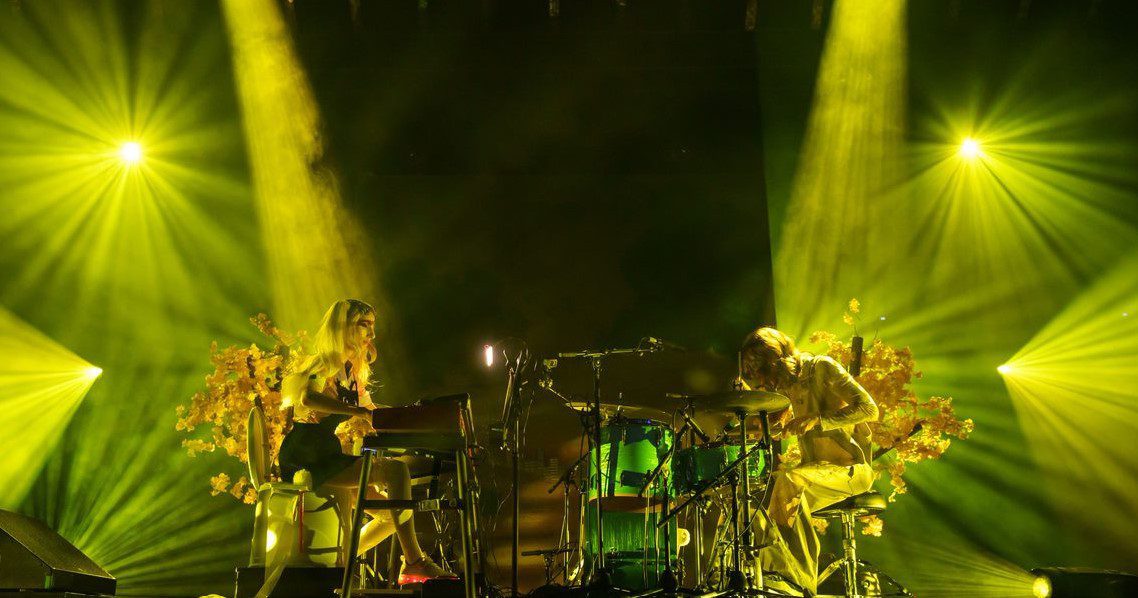
In the Midst of Misc

After free performances by Britain’s Kokoroko and France’s Ibrahim Maalouf, those who weren’t quite drunk on music could head to the TD studio to hear Quebec trio MISC. The mostly young audience didn’t regret it for a second. MISC is keyboardist Jérome Beaulieu, drummer William Coté and bassist (acoustic and electric) Frédéric Roy.

“I’m extraordinarily lucky to be playing with my two best friends,” exclaimed Beaulieu two-thirds of the way through the show. This complicity is musically obvious. MISC is the antithesis of Brad Meldhau’s trio.

There are no long solos or deluge of notes. The three friends play more percussive jazz. Even Beaulieu’s piano is percussive. We often flirt with rock, but it’s the overall sound that comes first. They also use a lot of reverb and electronic fiddling. A number of pieces were taken from the 2021 album Partager l’aAmbulance. But the trio has become much more cohesive and innovative since its release.

William Coté plays the cymbals like a skilled jazz drummer, but can also go full throttle into heavier rhythms, but never without subtlety. The same goes for bassist Frédéric Roy, who alternates between double bass and electric bass, sometimes even in the same piece. Jérome Beaulieu, who also works with several groups, including Daniel Bélanger’s, is constantly gaining in maturity. There are hundreds of piano, bass, and drum trios. It’s not easy to make your way through this dense jazz jungle.  

But if MISC is playing near you, go for it! You’ll have a great time.

Michel Labrecque

The Franklin Electric Inaugurates MTelus

The rumor mill at MTELUS was abuzz as the audience waited, patiently or otherwise, for the arrival of this collective band created and led by Jon Matte.

The concert was dedicated to the new album, Oh Brother, released a few hours later. The first half of the show served to let us feel the wind of these new songs, after which we allowed ourselves to go back in time. At one point, Jon Matte sat down at the piano and asked if there were any questions from the audience. Obviously, the first question was “Can you do your old songs?” to which Matte replied, “Yes … but you just stole the punch, man!” 

With a full band and three violinists, the folk-pop songs shone with a twilight quality and their atmosphere filled the room. Jon Matte is also vocally adept, as much at rendering his more textually dense passages as his melodic outbursts. He also has a fine head voice, which he used to try and get the crowd to sing along to some of the songs.

In short, the show was surprising in places, such as when Matte brought out his trumpet for solos, and touching in others, such as the acoustic pieces with just him and his guitarist, in harmony.

Théo Reinhardt

Hawa B Meanders on the Esplanade

The Place des Arts Esplanade was fairly free on Thursday evening, just before 7pm … but that didn’t last long. HAWA B turned heads and stopped the hurry-ups in their tracks.

The group, led by singer-songwriter Nadia Hawa Baldé, presents a seamless blend of alternative rock, R&B, jazz, and soul. A wide range of influences—from Radiohead to Beyoncé—are wonderfully encapsulated in songs with an evolving structure, surprising chord progressions, and a mostly restrained character, allowing the musicians to shine and the crazy flights of fancy when they come.

The artist seems to have carved out a comfortable stage niche for herself between nonchalance and intensity. She moves slowly, but decisively, crouching or bending in half to reach notes at the high end of her register, twirling her hair, stepping off stage several times to join the crowd, throwing her mic stand downstage, kicking her stool around … all in a curiously detached, almost robotic way, but one that is also purely spontaneous. It’s like watching an explosion in slow motion. All the intensity is there, but you can savour every chemical exchange, feel the discharge of energy that reaches you, and live the experience without being blown away in the moment, remaining transfixed.

Théo Reinhardt

A June 28th at FIJM

by Rédaction PAN M 360

At the Festival international de jazz de Montréal, PAN M 360’s experts attend all the concerts that shake up music lovers. Follow our team!


crédit photo: Frédérique Ménard-Aubin

Music spirits are with the Brad Mehldau Trio

What an auspicious start to the jazz festival with the Brad Mehldau Trio at the Théâtre Maisonneuve, on Wednesday Night. In an atmosphere brimming with anticipation, the band worked their way through some old bebop heads, some old originals, and some new, making for an evening of beautiful music and thrilling performance.

Larry, Jeff, and Brad, have been playing together for almost twenty years now, and their chemistry is truly something to witness. By the end of the hour long set It seemed the audience simply couldn’t get enough and the band played to three encores!

Mehldau of course dazzled with his utter command of the piano with plenty of looks of disbelief and amazement in the concert hall. Some of the highlights were getting to hear the gorgeous original, ‘Ode’, a hypnotic and emotionally stirring journey, a trio rendition of the Mehldau classic ‘Resignation’, and a very Monkish take on the standard ‘Sweet and Lovely’ which was a nice showcase for the band’s sense of humour.

Always a great pleasure to see these masters at work. 

Varun Swarup

crédit photo: Frédérique Ménard-Aubin

Natalia Lafourcade: an introspective Mexican fiesta.

Were we in Montreal or in Monterreyal? Or Montrexico? In the large lobby of the Maison Symphonique, you could hear mostly Spanish .

Natalia Lafourcade and her group of talented musicians immersed us in the abysses of the Mexican soul. Death, love, witchcraft, fauna. She made us sing the sound of cicadas. The concert was profound , beautiful, sultry.

The first part of the concert consisted essentially in De Todas Las Flores, MS Lafourcade recent album. Then, she celebrated Mexican traditional music and songwriting . She delivered a complex and original version of “La Llorona”, written by Chavela Vargas as well as traditional songs from her region of origin, Veracruz. She ended the concert with some original songs from previous albums. 

The crowd was happy and it made a lot of noise at the end of songs. Felicidad.

Natalia Lafourcade knows how to create happiness, but always in an introspective, meditative way. Her voice reaches the deepest parts of our soul. The music mixes tradition and modernity with great subtility. 

What else to say?

Michel Labrecque

Suoni: the Sun Ra myth lives on

by Alain Brunet
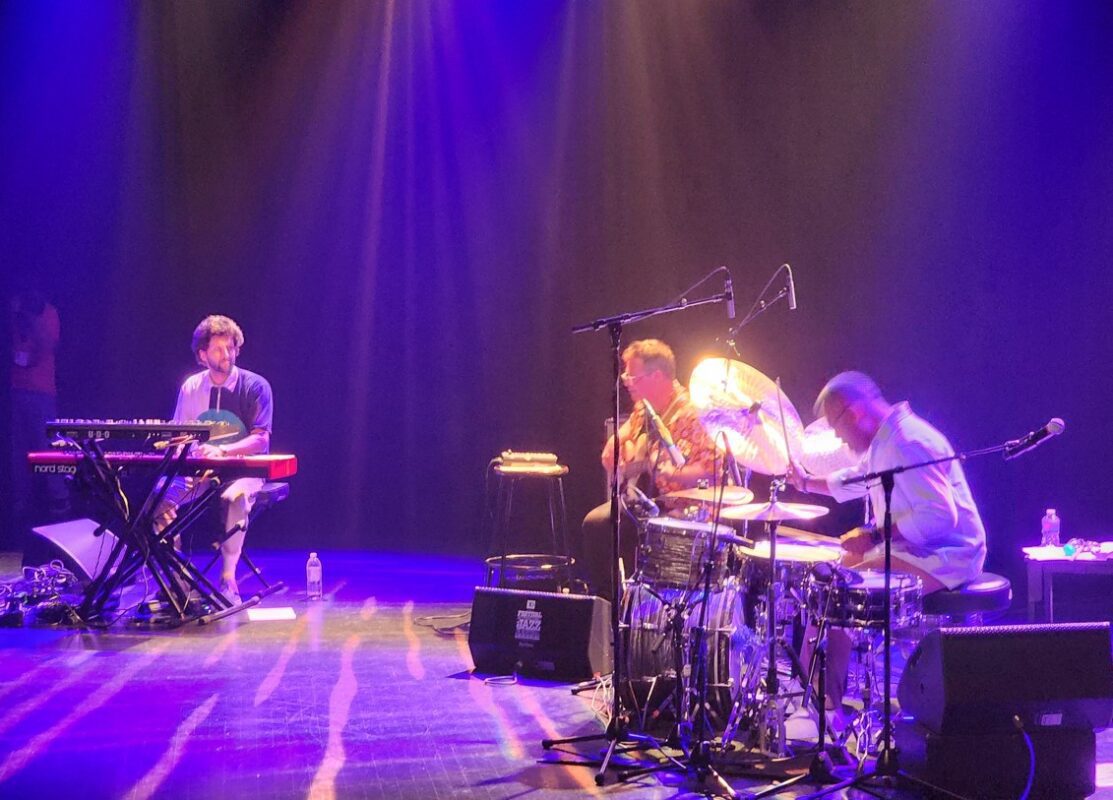
Against all historical odds, the myth of Sun Ra (1914-1993) is one of the most enduring in the history of jazz, a myth that was once again observed this Sunday at Église Saint-Denis. Temporarily converted to Afrofuturism, the Christian temple was packed to capacity with trippers of all ages, who had come to commune with the spirits of the cosmos and the planet Saturn, the symbolic birthplace of the famous musician whose pseudonym the orchestra still bears, 70 years after its foundation.
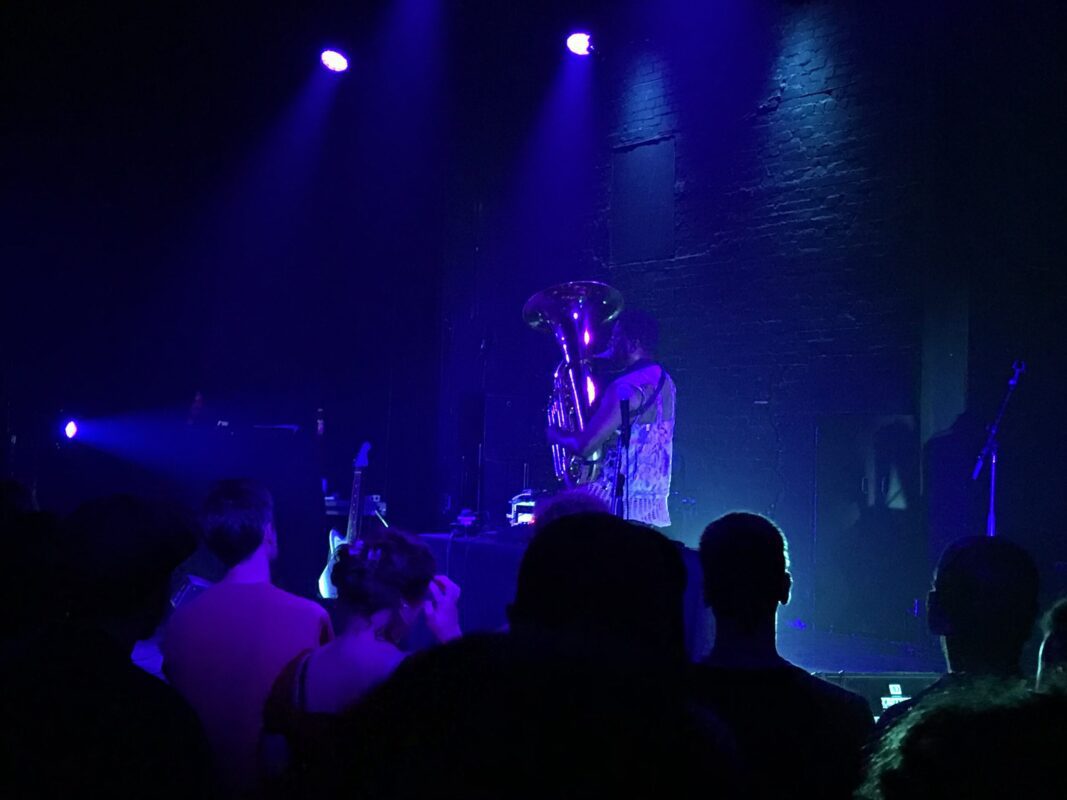
Born Herman Poole Blount, nicknamed Sonny Blount in his early days as a sideman and arranger, this iconoclastic pianist was a conscientious objector during the Second World War. For this, he was imprisoned and deemed schizophrenic by prison doctors. Released into the wild in 1942, the creature did as it pleased.
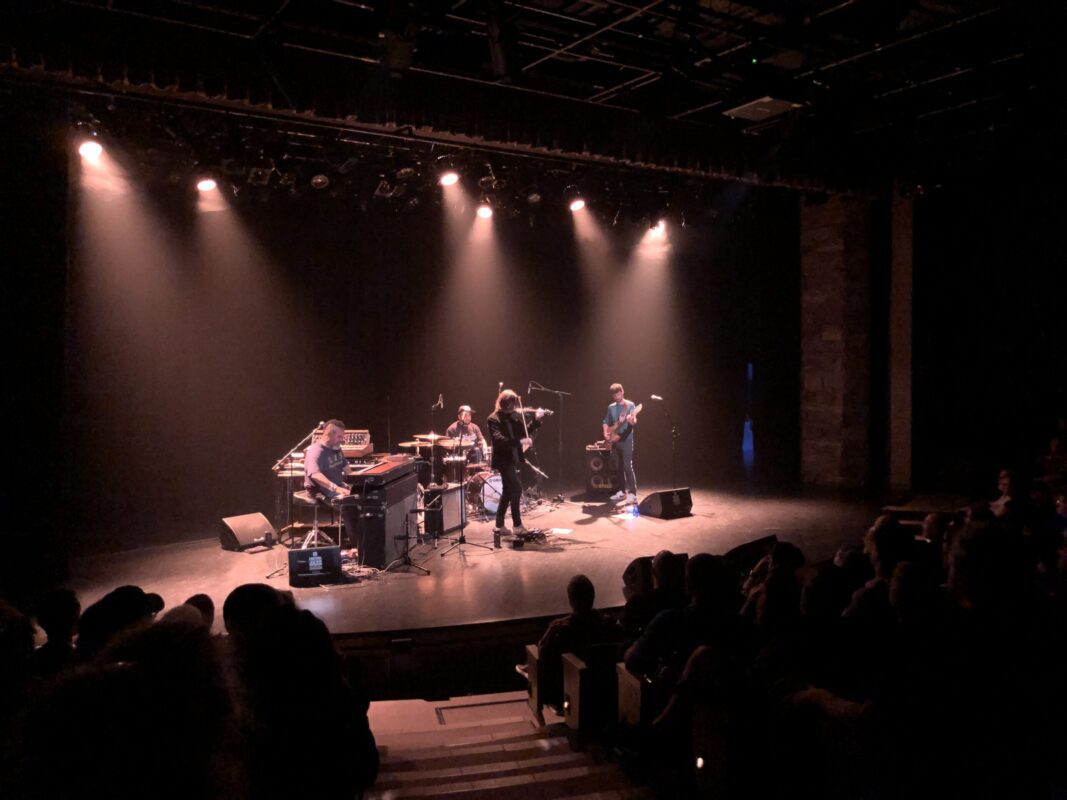
Alabama-born Herman “Sonny” Blount began his career in the 30s on the blues and jazz circuit. Settling in Chicago in the 40s, he worked as an arranger for Fletcher Henderson and as a sideman for tenorman Coleman Hawkins. His big band was founded in 1953, and renamed the Sun Ra Arkestra in 1955. Sun Ra’s pseudonym was inspired by ancient Egypt, whose sun god was named Ra. Think of it!

From then on, the musician’s discourse was a series of intergalactic parables. It’s hard to say whether this rhetoric was the result of a real schizophrenia permeated by a fantasy rhetoric now associated with Afrofuturism, or whether it was a conscious way of escaping the reality that Herman Blount had to face in spite of everything – racism, difficult artistic conditions, economic precariousness, rejection by his peers, etc. Having interviewed him myself, I can testify that the enigma remains.

Considered very strange in the golden age of modern jazz (bebop and hardbop), at best a curiosity if not a freak show, Sun Ra included atonal sequences in his orchestrations long before Ornette Coleman named the approach free jazz and Miles Davis called Ornette downright stupid.

At the end of the ’60s, the Arkestra moved to Philadelphia, its instrumentalists all living in the same house, in the manner of the hippie communes of the time.

Over the decades, the Sun Ra Arkestra performed all over the world, including several concerts in Quebec City, Montreal and Victoriaville in the 70s, 80s and 90s…. After Sun Ra’s death in 1993, artistic direction was taken over by John Gilmore until his death in 1995. Then alto saxophonist Marshall Allen became the Arkestra’s grand helmsman, a force of nature now aged 99! Understandably, the soon-to-be centenarian hasn’t been on stage (or very rarely) for some time now! While Marshall Allen is still officially in charge of the Sun Ra Arkestra, Knoel Scott (alto and baritone saxes, percussion, break dancing) is its on-stage leader, and singer Tara Middleton is its priestess.

On Sunday evening, some fifteen instrumentalists made up the Sun Ra Arkestra, most of them elderly, but still animated by the solar and saturnian flames of their late leader. In front of us, a century of jazz unfolded with a certain grace and, at times, delicious imprecision: blues, swing, bebop, hardbop, soul, gospel, Brazilian jazz, but also free-jazz and other experimental approaches.

In fact, the Sun Ra myth has never deflated, and the balloon is still flying over our heads in 2023. Today, the Arkestra’s free passages are integrated and understood by a large proportion of music lovers, well beyond the circles of improvised music. As has been the case since the 60s, young people were strongly represented at this multi-generational happening, as PAN M 360 likes them, courtesy of Suoni Per il Popolo.

There’s something to be said for coolness and classicism.

Subscribe to our newsletter